Tag: Claire Williams

  • F1 2018: Bahrain Gp Preview – Ferrari to drive home advantage?

    F1 2018: Bahrain Gp Preview – Ferrari to drive home advantage?

    Ferrari’s Michael Schumacher won the first Bahrain grand prix, held in 2004. While it was a new, never before raced at, venue for F1 it didn’t produce much excitement as it earned the unfortunate moniker ‘Bore-rain’ thanks to its processional races.

    However, in 2014, as the tenth anniversary of F1 in Bahrain rolled around, no pun intended, organisers decided to run the race under lights. It was a masterstroke as the formerly docile race came alive and produced some of the most exhilarating racing all season. It was Lewis Hamilton who beat then teammate Nico Rosberg to victory following thrilling wheel-to-wheel battle for the lead.

    In 2017 Valtteri Bottas scored the first pole position of his career but ultimately didn’t have the composure to hold of Sebastian Vettel and Lewis Hamilton. It is a new season though and Australia has not done much to reveal the true pecking order of 2018.

    Though Ferrari stood on the top step of the podium in the first race of the season the Sebastian Vettel was the first to admit that the opportunistic win had a definite element of luck infused. Further, he admits that the 2018 Ferrari isn’t yet where it needs to be. “I think our car has huge potential but I’m still struggling a little bit. When you talk about something that you miss as a driver, it’s because the car doesn’t respond the way you like. Ours is still sliding in places you don’t want it to slide. I want the car to be spot-on when I hit the brakes and turn in, and in that window, I’m not yet happy,” says Vettel.

    MERCEDES AMG PETRONAS

    The Sakhir International circuit is not the ideal test of an F1 car but it will allow them to stretch their legs a bit more than in Australia. Low speed corners dominate the circuit layout, which means that traction and tyre temperatures significantly influence the laptime. Specifically, management of rear tyre temperatures is the key in Bahrain.

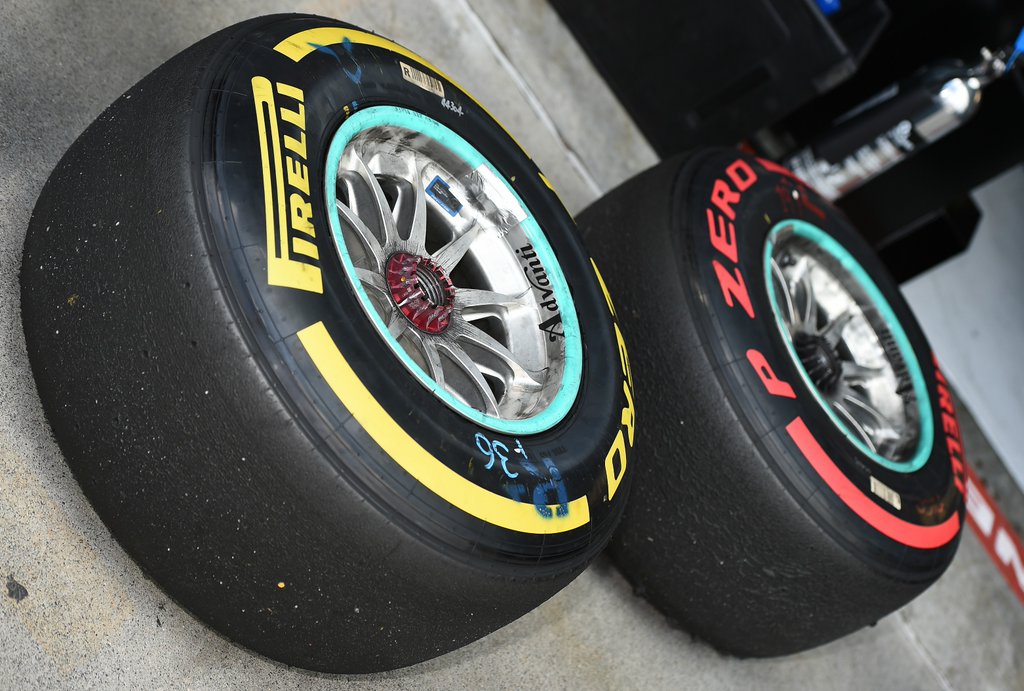
    The top three teams, Ferrari, Mercedes and Red Bull have made similar tyre choices for the weekend where the supersoft, soft, and medium tyre will be run. The high desert temps and difficulty in managing rear tyre wear could play to Ferrari’s favour as Mercedes has traditionally suffered on the softer compounds of the Pirelli range.

    It isn’t all about what happens at the sharp-end though as the tight mid-field battle has all the potential to produce some of the closest racing of all. The team to look out for is Haas. They were desperately unlucky that cross-threaded wheel-nuts forced both cars retire in Australia. However, Romain Grosjean and Kevin Magnussen were turning a genuinely quick pace and should be able to replicate it this weekend.

    Bahrain_NightMany drivers including Lewis Hamilton and both Red Bulls complained about the lack of overtaking opportunities in Australia. This should be somewhat alleviated in Bahrain partly due to its kilometer long straight.

    There was little question in Australia that Mercedes had a quick car. However, there are several factors, most notably the higher temperatures and rear tyre wear, that could play in Ferrari’s favour. Given that Vettel does not yet feel 100% comfortable with his Ferrari it could well be Kimi Raikkonen who has a record seven podiums in Bahrain.

  • F1 2018: Williams and Martini Split Ways

    F1 2018: Williams and Martini Split Ways

    It has been announced that the Williams F1 team will split ways with main sponsor Martini at the end of the 2018 season.

    Martini first came on board the Williams team in 2018 which saw a return of the famed red, white, and blue colour scheme to the world’s most elite racing series. While Williams were open to extending the sponsorship agreement the Bacardi Group, which owns the Martini brand, has stated their intention to withdraw all of their interest from Formula 1.

    “We have discussed extending beyond 2018,” says Williams deputy team principal Claire Williams. “While we would both like to do so, the Bacardi Group have told us that they will step away entirely from Formula 1 when our contract expires at the end of this year. They have many brands to support and obviously their strategic priorities evolve over time.”

    While Williams will have received a financial boost from Sergey Sirotkin’s SMP Racing sponsorship the loss of Martini will be a blow to the team.

  • F1 2018: Haas and Williams Launch New Challengers

    F1 2018: Haas and Williams Launch New Challengers

    As a new season of Formula 1 approaches the period just before testing commences is the most optimistic time of the year. Right now all new cars are aerodynamically flawless, more powerful than anything that’s ever been built, and lighter than a feather. But all too soon a modest stopwatch will humble them.

    The first team to launch their 2018 car was the Haas F1 team. The American team chose to forego a typical launch and opted instead for to release a handful of images online. The release of digital images was no doubt a ploy be Haas to keep their competitors, quite literally, in the dark as to the nitty-gritty of their 2018 design.

    Nevertheless, what was obvious from the images is that Haas has adopted a strikingly similar side-pod design to what Ferrari pioneered in 2017 and a considerably more intricate front-wing. Additionally, this early version of the Haas is sporting a scaled down version of 2017’s sharkfin and a significant focus on a predominantly white livery. As the technical regulations have remained largely stable and unchanged the changes from 2017 to 2018 cars won’t be as visually obvious. The most noticeable difference is the inclusion of the Halo head protection system. While it is certainly a big adjustment and change to the aesthetic of the car chances are it probably wont take as long as some might think to get used to.

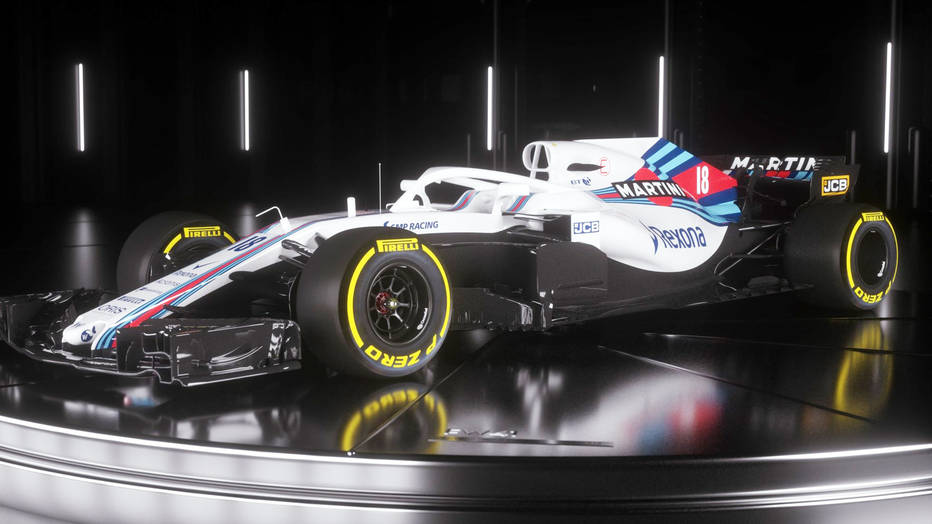
    sirotkinWilliams was the second team to introduce its car with a traditional online launch. Chief technical officer Paddy Lowe and head of aerodynamics Dirk de Beer have designed the FW41. Lowe said the car “has many new features, most of which are not all that obvious, but externally the team has pursued a very different aerodynamic concept which has allowed us some significant progress in aerodynamic performance.”

    “All Formula One cars are an evolution of what has gone before to some extent, but the FW41 does involve a number of departures from the directions that have been pursued in the past. Overall, the philosophy we are starting to see emerge is a new approach to the collaboration between aerodynamics and design to achieve the optimum working result.”

    While only lap times will tell if Williams have built a quick racecar the 2018 challenger undoubtedly looks more aggressive than its predecessor. In addition, the car has been designed with a longer wheelbase, which suggests that Williams have foregone the low-drag design philosophy of the last few years.

    Similar to Haas the Williams also sports the Ferrari-style side pods, which you’re likely to see on more of the mid-field cars this season. Naturally, and so as to avoid giving away any design secrets, some areas of the car has been shrouded in black paint.

    Haas1a_0Beyond the car that has been designed by Williams this season the other big unknown for the team is its driver line up. Nonetheless, de facto team principal Claire Williams has described the driver pairing for Sergey Sirotkin and Lance Stroll as “exciting” while highlighting Sirotkin’s impressive work with the technical team. Paddy Lowe echoed this sentiment by saying that the choice to sign Sirotkin was based purely on his ability.

    The Sauber and Renault teams are the next to launch their respective cars on the 20th of February followed by Ferrari and Mercedes on the 22nd, McLaren on the 23rd, and Toro Rosso on the first day of testing, the 26th of February.

  • Review: Williams Documentary

    Review: Williams Documentary

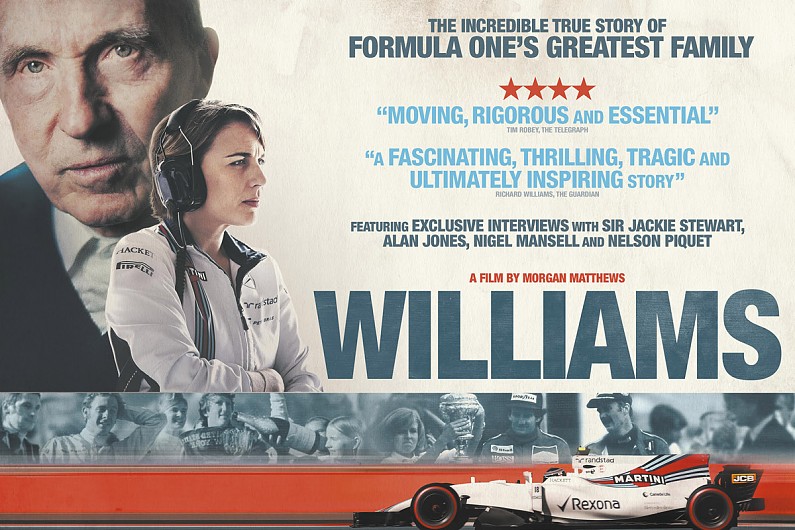
    In 2017 the Williams team celebrated four decades in Formula 1 with the release of a documentary that tells the most incredible story of one of the sport’s most successful teams.

    Often sports documentaries have a tendency to be predictable but the perspective from which the Williams story is told is simultaneously unexpected and profound. The film is mainly based on the 1991 book, A Different Kind of Life, written by Lady Virginia Williams, late wife of Sir Frank Williams. As a result the film is infused with the sort of extraordinary authenticity that elevates it well above the average sports documentary.

    There is marvelous input from co-founder and designer extraordinaire Sir Patrick Head who minded the store between 1991 and 1997 during which the team won 59 races and four drivers’ titles. It also charts the tumultuous and highly successful time of teammates Nigel Mansell and Nelson Piquet in 1986-7.

    But mostly it is about the seemingly unstoppable Sir Frank Williams and his legacy. With nothing but a single-minded obsession with speed Frank Williams created one of the world’s most successful and enduring F1 teams. Despite nearly losing his life in a 1986 car accident, which left him a tetraplegic, his unconquerable resolve and spirit endures to this day. Though the film charts not only the history of the team it also provides a compassionate portrait of not only Sir Frank Williams’ survival against the odds but his voracious passion.

    At 75 years old he remains, technically, as team principal but the duties and responsibilities have, since 2013, fallen to his daughter Claire Williams. Despite more than holding her own as deputy team principal she maintains that she never expected “to be given the keys to the shop”. Sir Frank’s faith in Claire is easily one of the most touching aspects of the film. Further, it is Claire’s presence in the film, her openness when questioned about personal matters, and her poignant readings of excerpts from her mother’s book that create the human connection and shows its sensitivity.

    This film is guaranteed to leave you with a deeper and perhaps even emotional appreciation for Williams and what it means to the sport. What’s more, it if wasn’t there before, it will probably leave you with an insightful reverence for the team. And it will leave you with the unmistakable realization that Williams will never stop fighting, never stop working, and never stop racing.

  • F1 2017: The Case for & against Robert Kubica

    F1 2017: The Case for & against Robert Kubica

    It’s been no secret that the Williams F1 team has been evaluating Robert Kubica over the last several months. Still, there is no announcement from the team on who will fill the second seat alongside Canadian teenager Lance Stroll.

    Kubica is no stranger to Formula 1 as his previous stints at Renault and BMW Sauber can attest. The Polish driver burst onto the F1 scene in 2006 with a pedigree and level of talent most drivers could only dream of. Both his spells with Sauber and Renault were underscored with tremendous speed and an easy prediction that he could one day become world champion. In 2011, a horrific crash at the Ronde di Andora rally partially severed his right forearm and devastated his Formula 1 career.

    While he labeled a return to F1 as “nearly impossible” he reverted to competitive rally racing. The dream of F1 was never far away from his thoughts and the rumours of a possible return began to spread through the F1 paddock. Subsequently, Renault drafted him into the car for a day of testing following the 2017 Hungarian grand prix. The test, according the Renault who’d named Kubica as a possibility for 2018, was used to assess his capabilities. While no definitive data was shared from the test Renault would cease any interest shortly thereafter. Since then he’s completed three days of testing for Williams who are also considering Russian driver Sergey Sirotkin.

    Yas Marina Circuit, Abu Dhabi, United Arab Emirates. Tuesday 28 November 2017. Robert Kubica, Williams FW40 Mercedes, leaves the garage. World Copyright: Zak Mauger/LAT Images ref: Digital Image _56I4591

    The case is easily made for Robert Kubica. He was blindingly quick in F1 and had all the makings of champion. His story is a goose bump-inducing achievement of the human spirit and there’s little doubt that if Kubica were to make an F1 return it would be one of the greatest comeback stories in all of sports. And to sweeten the pot even further he also comes with a nice chunk of change from Polish oil company Lotos.

    But the question about his competency continues to linger. It’s clear at this stage that if Williams were fully confident in Kubica’s capabilities they’d have already signed him up. It’d certainly be one heck of a PR win. Nonetheless PR isn’t at the forefront of Williams’ decision. Instead, it’s having two drivers with the ability to score vital points that ensures that Williams continues to earn vital prize money as they aim to return to the forefront of F1.

    The other driver in the running is 22-year old Sergey Sirotkin who also comes with a lucrative incentive from Russian backers. Rest assured that the fact that any sort of financial aspect must factor into the selection a driver doesn’t sit well with Frank or Claire Williams. Racing and Formula 1 is in their DNA but the nagging reality of the financial burden of F1, as an independent team, is a chronic symptom of a far too expensive sport. And it forces a team like Williams into considering a sponsor-backed driver like Sirotkin who likely wouldn’t have registered on the Williams’ radar without it.

    The expectation is that Kubica will be announced as a Williams driver for the 2018 season and if it eventuates the team would’ve have made the call based on the belief that is capable enough. Devoid of pressure the opinion from outside the Williams team has distinctly romantic note. After all, one of the biggest reasons we love sport is for the romance of it all, for human stories and achievements. But is that enough?

    Images courtesy of Pirelli Motorsport.

  • F12017: Brazilian Gp Preview – Free-for-all at Iconic Interlagos

    F12017: Brazilian Gp Preview – Free-for-all at Iconic Interlagos

    For all the innovation that Formula 1 continues to deliver there are some things in the sport that, untouched by too much change, remain and embodies the very essence of the sport. One such example is the Brazilian grand prix and the famed Autodromo Jose Carlos Pace.

    For decade after decade the Interlagos based circuit has delivered on everything a Formula 1 race should be. Through scorching temperatures and rain-soaked afternoons the Brazilian fan’s euphoria for F1 has always been palpable. And it has, since 1973, been driven by some of the most dramatic and memorable races in the history of the sport.

    There have been many highly emotional Brazilian grand prix throughout its history but none more so than Ayrton Senna’s majestic 1991 win in the McLaren after which he was so physically exhausted that he had to be extricated from the cockpit. In the decades since there’s been no let up on the drama with several of the most theatrical moments coming in the 21st century. In 2005 Fernando Alonso became, at the time, the youngest world champion and two years later, in 2007, Kimi Raikkonen won his world title in what had been, arguably, one of the most fascinating championship battles of all time. A year later thousands of Brazilian hearts sank as Lewis Hamilton snatched the title from local-favourite Felipe Massa, literally, on the last corner of the last lap whereas the 2012 grand prix marked the final race of the great Michael Schumacher storied career.

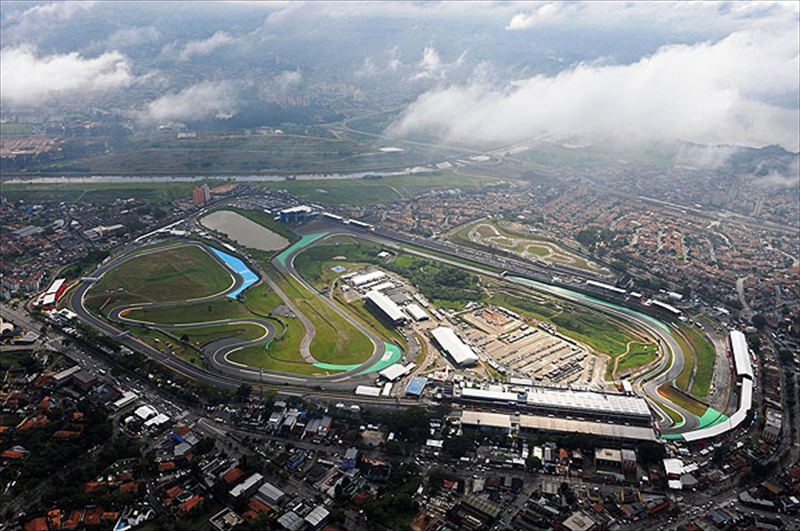
    Felipe Massa 2008The circuit, at roughly 4.3 kilometers, isn’t a long one and a lap time below seventy seconds is likely, especially for quali. Besides having the iconic, and tight, Senna S as Turn One its three sectors stand in contract to each other. A strait and several medium to high-speed corners dominate the first part of the lap while the middle sector is the more technical section before its capped by Junção, the final climb up the hill to the start/finish strait.

    Despite not having a Brazilian world champion since Ayrton Senna the fans have shown a fanaticism for the sport and other Brazilian drivers as fervent as you’re likely to see anywhere in the world. One driver responsible for inspiring said passion is Felipe Massa. The Williams driver has announced his retirement at the end of the 2017 season making this weekend his final Brazilian grand prix. Though never a world champion Massa has inspired countless fans, colleagues, and contemporaries with his incredible talent, generosity, passion, and sportsmanship. Obrigado Felipe.

    Nico Rosberg_Brazil 2014The fact that most positions in both the drivers and constructors championships have been settled adds a further element to this weekend’s Brazilian grand prix. No longer do teams such as Force India have to impose team orders on Sergio Perez and Esteban Ocon. Now they’ll be free to race and bang wheels to their heart’s content and this directive, pretty much, goes for everyone up and down the pitlane too.

    While the forecast predicts a dry race weekend the weather for the Brazilian grand prix has always been, at best, uncertain.

    One thing that is a certainty however is that there has rarely been a dull Brazilian grand prix and it shouldn’t be any different in 2017.

  • 2017 Italian Grand Prix: Friday Press Conference – Part 2

    2017 Italian Grand Prix: Friday Press Conference – Part 2

    PART TWO: TEAM REPRESENTATIVES – Robert FERNLEY (Force India), Claire WILLIAMS (Williams) Gene HAAS (Haas)

    Q: Bob, let’s start with you. We’ve seen the Pérez-Ocon situation escalating from a rivalry to something perhaps more damaging. Does the team feel that you’ve managed it well up to this point – and what can you really realistically do to impose instructions in future situations without favouritism?

    RF: I didn’t think I’d get that question! Our team manages things. The outside judges rather than the inside. From an internal point of view we’re working very closely with the drivers. We’re very blessed to have two very talented and equally very competitive drivers. They’re at different stages of their careers. You will expect, as is often the case in that sport, where you’ve got an elbows-out for a little while, that’s happened. I think it probably reached a crescendo in Spa. I think both of them realise they’ve probably not done themselves any good in terms of their reputation or their careers, and Vijay I’m sure has certainly made sure he tells them that form that point of view. What we need to do is to regroup, which we have done. They’ve been individually talked to. They’ve sat down together. I feel very strongly that they’re intelligent and very, very good team players. They’ve just lost their way a bit – and I don’t expect any problems going forwards.

    Q: Obviously there’s a great opportunity for you this weekend for some big points given that both Red Bulls are going to be starting from the back of the grid. You could be fifth and sixth on Sunday – so you have to execute. Right?

    RF: I think the lady next door to me is looking for that! Absolutely. We’ll both be fighting. It’s a Mercedes track. There’s no question it benefits our power unit and we are going to have to optimise that position and we don’t want anybody making in-roads on that fourth position. We want to consolidate it and that will require both our drivers to deliver.

    Q: Quick final question on this. It’s no secret that both of your drivers are on the wishlists of competitor teams for next season – in some cases the same competitor team. How determined are you to retain them both in 2018?

    RF: I think from our side we are fully committed to retaining them both and that will be our objective. There’s no question of that. But, y’know, driver markets are driver markets and it’s quite right and proper that their managers, and in particular Checo’s manager, is out looking at other programmes. He’s got to keep us on our toes. If he didn’t do that, he wouldn’t be doing his job, and we’ve got to make sure that we close that off and retain him for next year and keep the pairing. It’s a phenomenally exciting pairing. Might be difficult to control a little bit – but I’d like to have that problem.

    Q: Gene, already ahead on points compared to last season with eight races still to go so is it time already to take the next step and what kind of investment does that need to go up to that level?

    Gene HAAS: Well, I’m not comfortable with the points lead we have because I think in any given race we could drop back a position or two in the Constructors’ series because we’re all so close. If anything, I feel a little bit on needles because our biggest problem is execution, minimising mistakes, that seems to be our worst (indistinct) ourselves. We’ve had some component failures we’ve executed poorly and I think we’ve left 15 or more points on the table, even at this point. That’s really where we need to perform is just running a race team with less mistakes, more consistency and that’s what’s going to earn us our points. I think both of our drivers are very very capable racers. I think that they’re much much better racers than they are at practice and qualifying. I know Kevin has shown the ability to sometimes get two to three positions just at the start of the race so he’s an aggressive driver. I think Romain’s more reserved, he knows that you have to finish the race to get the points, so I think the combination of these two drivers bodes well for us in the race but we do need to finish the race.

    Q: Now the Ferrari chairman, Sergio Marchionne, said he would like a team to help develop Ferrari’s junior drivers like Giovanazzi and Leclerc. You seem to have gone the opposite way in driver choices for this year and next, as you’ve just highlighted. Do you rule out working with Ferrari on juniors in the future?

    GH: No, I don’t think we rule it out but from a business model it doesn’t really make a lot of sense. There’s no secret that it costs $60m to put a car on the track for the season and if someone gives you a driver and not just from Ferrari, from anybody, and they’re going to pay you five or six million dollars, there’s $55m deficit there somewhere, so it doesn’t really make sense to want to run let’s say a partner or a paid driver for compensation. I think our point of view has always been that we need to obtain points and that’s how we generate moving forward and making money, so that’s our business model. I think Ferrari respects that and based on that, if there’s some mutual agreement that we could come to we probably would be more open to that.

    Q: Claire, obviously this season’s not gone according to plan and the car just clearly isn’t fast enough is the core of it. The 2018 car will be the first obviously under Paddy Lowe’s technical stewardship, what’s he doing to step things up?

    Claire WILLIAMS: Yeah, as you would expect someone of Paddy’s calibre has a plan and ever since he joined us back in March this year he’s been undertaking a full analysis of the team back at the factory but also the race team operations on the ground trackside in order to understand where the weaknesses lie. We’ve gone through that as a board and now we’re looking at how we allocate resources moving forward into 2018 so that we can address those weaknesses. I think a lot of our weaknesses appeared at the midpoint in last year’s season and we can’t go into another season having the same issues that we’ve had so we have full trust in Paddy but also we’ve brought in a number of other senior personnel to work alongside, so Dirk de Beer heads our aerodynamic department now as well, comes from Ferrari this year to us, and some other senior engineers who are hopefully going to turn things around for us. But as I said, we can’t have another year like this.

    Q: You got a bonus year out of Felipe, is there another year in him or are you casting the net wider for a teammate for Lance Stroll for next year?

    CW: Yeah, Felipe has done a fantastic job like you say, it’s been a bonus year for us. He very kindly came back and he’s really delivered for us. Obviously the past couple of races have been tough for him with his medical issue but we’re through that now  and we’re looking forward to him delivering for the rest of the year and we really just have to wait and see. I think I’ve made it really clear that the team at the moment are focusing on the Constructors’ championship, we need to make sure that we consolidate our P5. I don’t think we’re going to close the gap to Bob, unfortunately, but there’s a lot of teams behind us that would love to overtake us and take that P5 and we can’t afford that, so for us the focus really has to be on track performance at the moment rather than diluting that effort with thoughts about driver line-up so there’s still eight races to go, there’s plenty of time to be thinking about next year.


    QUESTIONS FROM THE FLOOR

    Q: (Inaudible) Question to everybody: on Thursday, there was the launch of the new Formula Two car and it’s pretty similar to a Formula One car. On this occasion, Ross Brawn and Charlie Whiting were saying that the plan for the next years FIA and Formula One is to encourage Formula One teams to work closely with Formula Two teams. Do you think that makes sense from your point of view?

    BF: Well, I think historically we’ve tried to do that anyway. It’s not just a case of working closer with the teams. Usually you have some sort of driver link and that’s the bit that brings the two together so I don’t see any changes to that. Where you can, you support it but to have a direct link between the Formula One team and the Formula Two team is not easy. There are certain people who are doing it very well but all teams can’t embrace it because of the costs.

    CW: Yeah, I probably echo what Bob says really. Obviously we’re all looking at drivers in that championship and if there’s ways in which we can work with teams from that perspective then fine but I think from our perspective as a team at the moment we have our own issues that we need to be concentrating our full efforts on rather than diluting that down again with maybe other projects such as working with a Formula Two team.

    GH: We have an association with several F2 drivers and quite frankly it’s a learning experience but going forward, I think we could see ourselves working closely with the teams as development drivers. That would be a great way of bringing up talent which obviously we need. It would be a great way of maybe bringing up some teams, too.

    Q: (Dan Knutson – Auto Action and Speedsport) There’s been a lot of talk about what direction Formula One should take in the future. Auto manufacturers are interested in Formula E. Where, as representatives of independent teams, do you think F1 should go, bearing in mind road car relevance and also that it has to remain entertaining?

    GH: Well, certainly the battery revolution in cars is among us. I think we have to pay attention to these new drivetrain developments because it’s the future. I wouldn’t be surprised if we do see either more mainstream car companies get involved in this new sport of Formula E. How it relates to Formula One, what we can do, I think… we’re kind of the minnows here so we can’t really drive that technology but certainly today’s engine is somewhat of a hybrid technology, very very similar to the hybrid cars out there. There’s a lot of technology that goes into these cars so I think it’s an exciting new venture. Quite frankly, I don’t think I would mind being in it myself if I understood it better but we have our hands full of Formula One so I think it’s great.

    CW: I think from our perspective and as a business model, looking at it from that perspective I think there are some concerns we would have as an independent team, where Formula One could eventually be heading if we don’t take ownership of that direction now. Obviously we’ve got the manufacturers in our sport who are spending huge amounts of money and then independent teams in the middle that can’t ever dream of achieving that kind of expenditure in Formula One and that delta between our expenditure is creating the situations that we have at the moment in our business, certainly, where we are looking ahead at every year and really trying to make sure that we secure budgets in order just to be sustainable in this sport and that needs to change. There’s a huge amount of money that washes around Formula One and there should be enough for ten teams to be able to compete competitively amongst each other without being four seconds apart on the grid. So from my perspective, I’d really like to see Formula One move in a positive direction from a financial perspective, cost controls and budget caps, and I think that would bring about the entertainment that we need to see remain in Formula One but improving Formula One as well. I think we all want to see Formula One grow and I think the new owners have a handle on that. I think I’m personally really looking forward to seeing what they’re going to bring about from 2018 onwards. From that perspective I think they’ve done some great or brought about some great initiatives this year alone but I think there’s probably more to come and I think we need to grow the sport collaboratively as a whole with everybody’s best interests at heart rather than just a few.

    BF: Yeah, I completely agree with Claire. Force India in particular has been very vocal about the disparity between the top teams and the rest of the grid and you can’t have… we’re almost getting into a two tier championship at the moment where the top three teams are significantly far away from the fourth team and below. And to be able to say well we need to compete… the only way you can compete on that is adding 200m to your budget is quite ridiculous and we need to get that under control.

    Q: (Dieter Rencken – Racing Lines) Taking what the three of you have just said variously in reply to a question, it appears as though Liberty are intent on introducing a budget cap of about $150m by the end of 2020. This will have certain exceptions like engines etc but is $150m or $200m all in; is it actually a realistic figure, can it be policed and what would it do for your individual prospects as race teams compared to the big three or four?

    GH: Well, that would actually be an increase for us so we would fall under that budget cap at the moment. I think the bigger problem though is the bigger teams… I was over at Ferrari yesterday and they have a huge R&D department as I’m sure Mercedes do too and the question is where do these teams go and what they do and that’s even more of a question because they’re the ones that really bring the DNA of Formula One to the track. Formula One is considered to be the ultimate sport and after being in it for a while, I find that’s the most fascinating aspect of it is this technology that they develop and the extent and passion with which a company like Ferrari puts into developing these things. Having a budget cap and suddenly saying that you’re going to have to shelve 500 people is going to be extremely difficult and that’s where the new owners are going to run into some big obstacles when they simply say ‘ah well, here’s your new marching rules.’ If it’s contrary to where a company’s put 50 years into that’s just not going to work so that’s the dilemma they have is, trying to radically change something that’s been around for so long and it’s so firmly put into concrete. You just can’t change it overnight and I’m glad that I don’t have to be part of that decision at the moment.

    CW: There are some points that Gene has made that I would share. I think that it would be very difficult – or will be very difficult – if a cost cap comes in to that degree, $150m for teams like Ferrari and Mercedes and Red Bull to bring down their operations but in the past we’ve operated on those kinds of budgets and I think to say that those teams are the teams that bring the DNA to this sport is just incorrect. I think that teams like Williams are the very fabric of this sport  that we operate in and teams like Williams and Force India, the independents that have been in this sport for 40 years and delivered a huge amount of technology that have had benefits to other industries as a result, need to be protected as well. So from my perspective of course we would be absolutely behind the cost cap whatever that may be but from my perspective equally, I would want to see it come in a lot sooner than that.

    BF: We would want it to come in as soon as possible. The 150m is above our budget but I’d much rather be able to say that Force India was capable of bridging the deficit of 30m than 200m which is where it is at the moment, and I think it’s very important, I think, for the sport to have five or six teams that are capable of achieving a podium on merit. At the moment, that’s not possible. Even the top fourth, fifth and sixth teams are only capable of getting it on opportunity at this point and we need to be able to change that round to make the sport the spectacle that it is and to give the competition there. Teams like Mercedes, Ferrari, Red Bull will always have the advantage in terms of the fact that drivers’ salaries will be out of that budget cap and they will have the money to spend on the better drivers, but it means that we’re going to be to be looking at talented drivers which means we’re bringing through drivers and drivers become one of the key elements then going forward which to me is very very important.

    Q: (Ysef Harding – Xiro Xone News) Gene, the work that your foundation has done, the Gene Haas Foundation which has provided scholarships for young people and their communities, I was curious to know, are you planning to expand or have plans to expand that scholarship programme into your team, to where those young people would be interested in aerospace or engineering or want to get a position in F1?

    GH: Well, the foundation primarily funds the projects in relationship to community projects of teaching young people about manufacturing with an emphasis on machining. Whether a person decides to build race cars or rocket ships or simply work on next generation cars is fully up to them and I try not to… I don’t spend any of our foundation money particularly on racing. We are working in collaboration with Dallara and Ferrari on trying to set up a school that teaches, like, say, five axis machining so that’s probably as close as we’ve got into that so it’s mainly there to teach young people about manufacturing in today’s world and I can look at the racing as being a subset of that but not a primary goal to teach kids about racing. That’s the way we’re running it and that’s probably the way it will continue.

    Q: (Peter Hartig – BMF1) This has nothing to do with economy: Gene, at the magazine, we noticed that you tried the F1 experience so I have two questions for you: how was it to sit to ride on the back of a V10, beautiful noisy V10? And by the way, how is the back of your neck?

    GH: You know, I’ll tell you what, it’s exactly what they say: it’s an F1 experience. I think pulling out of the garage and the acceleration, going through gears, it just throws you in the back and then you come into turn one and your whole body goes to the… you know, slams into the front of the car. I never experienced that and then it feels like you’re pulling 5G side load going through the turns and quite frankly, I started to feel a little queasy doing that. It’s a heck of an experience, I would highly recommend it if you’re a thrill seeker but being an F1 driver is not easy. I don’t think I would ever want to be able to do that because to do that for 50 laps, that must just take the life out of you. It’s exciting, it’s a real experience and they did a great job, from everything from bringing you into the experience with the suit, the helmet, bolting you into the car, it’s all very very nicely done. I say I was pretty much exhausted by the time I got out of the car. It didn’t bother my neck at all. It didn’t bother it at all.

  • 2017 British Grand Prix: Friday Press Conference – Part 1

    2017 British Grand Prix: Friday Press Conference – Part 1

    PART ONE: TEAM REPRESENTATIVES – Christian HORNER (Red Bull), Claire WILLIAMS (Williams), Vijay MALLYA (Force India)

    PRESS CONFERENCE

    Q: Vijay, the target for this year was to match, or even improve, on last year’s Constructors’ standings. So far you’re pretty clearly in fourth. Tell us about that and the upgrade you have on the car this weekend.

    Vijay MALLYA: Well, there is a specific upgrade for Silverstone. We take this particular race very seriously because it’s our home race and there’s no question that development must continue through the season, given that this is a brand-new car, and we are in fourth with a fairly comfortable lead over Williams but nothing can be taken for granted and we wouldn’t like to be complacent. When I launched the car I said we must retain fourth or even aim higher. That still remains the objective – because I believe in setting the bar high – but whether we can actually catch Red Bull or not remains to be seen, particularly towards the tail-end of the season but we are pretty focussed on getting the job done.

    Q: What’s the strategy, could you share it with us, with regards to the name and the brand of your team going forward?

    VM: When I bought this team ten years ago – and we’re all very proud of the fact that, as an independent team we have survived amidst a great amount of speculation for ten years and are still going strong. It was Force India because it was the first time an Indian team showed up on a Formula One grid. It met the aspirations of millions of young Indians who never thought that would be possible but then we were running around in P23 and P24 and the then management seemed very happy about it. Since we have consistently now improved and are a serious contender on the grid, it’s time to broaden our horizons, attract more international sponsors and sadly there is no Indian Grand Prix any more. Indian sponsors seem to be passionate about putting all of their money into cricket and so we must appeal to a more international audience and so the idea of changing the name of the team was mooted. We’ve had several discussions, no decision has been taken but we have listed a few options and we’ll take it forward at the appropriate time.

    Q: Christian, Daniel was here in the press conference yesterday, talking about the upgrades situation, saying a decent step is expected for Budapest. From what you’re seeing from your relative development rates to the top two teams, are you likely to converge, do you think, in the second half of the season?

    Christian HORNER: I think certainly since the first European Grand Prix in Barcelona we’ve consistently managed to chip away and get closer to the front of the field. Daniel’s had a great run: five consecutive podiums including a victory in Azerbaijan, and I think our most competitive race of the season to date was actually last weekend in Austria, finishing within six seconds of the leader without any safety cars and obviously beating a Mercedes. So, incrementally, we’re getting the performance on the cars and hopefully that can continue over forthcoming grands prix.

    Q: You were with your peers in London at the live event this week. As the boss of a leading team and particularly one that has a strong marketing background, give us your opinion of that and what it all meant.

    CH: Well, of course, as Red Bull we’ve done an awful lot of those kind of events around the world with a team that we have dedicated to running show car activities but I think the London event was fantastic: it was taking Formula One to the public, it was free of charge, it was combining a music festival with running the Formula One cars, under the background of Big Ben, up to Trafalgar Square, around, y’know, from Whitehall. It was fantastic to see it so well supported and so many people coming out and the enthusiasm and passion and excitement. I think also to see the drivers having fun and enjoying it as well was a great advert. So hats off to FOM and the Liberty guys for putting the event on… As their first big statement of promoting Formula One.

    Q: The same question to you Claire, really. Your thoughts on what it did for Formula One in the UK – and is there open support from the teams for this kind of thing?

    Claire WILLIAMS: As Christian said, it was a fantastic event for all of us to be involved in. It’s great to see the new owners are thinking and having that kind of vision and involving all of the teams in doing something like that. And to come to London, it’s an iconic venue for us. To have all the teams there, the cars, the drivers, was just great to be able to take Formula One to a new audience and I’m sure a lot of those people probably haven’t been to a race before or watched us on TV, so hopefully it will extend our audience but the activities going on ahead of the actual running itself were fantastic as well – the education pieces that are so important as well. We had Dare to be Different, Formula One in Schools was there, we had a presence there, it was just really good to see all the children there as well.

    Q: Big weekend for Williams at the moment, for the team and for the family with the anniversary, with the film. Tell us what the feeling is about where the team – and the family – is at this major milestone.

    CW: It’s been quite a busy week! We launched the Williams film on Tuesday, which was very nice. It’s been a long time coming. It’s been about three years in the making. We had 300 people in London watching that on Tuesday night. We had a bit of rain which kind of dampened things a little bit but it was reviewed really positively, which is nice to see, and obviously it doesn’t tell the traditional story that that you might expect: a chronological tale of Williams and our track performance over our four decades in Formula One but rather the human story and the kind of story of my parents’ involvement in the team over those 40 years. So it’s a very personal account of Williams and one that we just hope Formula One fans, and fans maybe that aren’t fans of the sport, will enjoy seeing as well. Then, obviously, we’re celebrating 40 years here, so we seem to be celebrating 40 years a lot this year! The marketing team at Williams have been really busy but it’s been really good fun and it’s just great to be able to do all of that, and this weekend we’re showcasing a couple of our heritage cars: Nigel’s 1992 Red Five and the six-wheeler as well. Great to be able to show those to the fans here.

    Q: Just a quick one, Felipe Massa seems to be going along well, are you both thinking of going again next season?

    CW: Yeah, there’s a lot of talk already isn’t there, about drivers across the paddock. For us, we’ve decided we’re going to hold off a bit on our driver decision. We’ve got a fight on our hands on the race track at the moment and to be distracted by those kinds of conversations isn’t something that we want to be happening at the moment. As Vijay said earlier, they’ve got a nice points haul on us at the moment we need to focus on, rather than anything else.

    QUESTIONS FROM THE FLOOR

    Q: (Dieter Rencken – Racing Lines) Given that the mission of a Formula One team is effectively to market performance and Wednesday in London was actually a major marketing exercise, both for the teams and for the sport, would you ever consider making attendance at an event optional for your drivers?

    Christian?

    CH: Good old Dieter, he gets stuck in. Look, all the drivers were there, bar one. I thought it was a great turnout from the drivers. We didn’t insist our drivers had to be there, we asked them to attend and they were very happy to turn up and take part and I think they actually really enjoyed it as well. So, it was a shame there wasn’t a full complement but I don’t think it detracted from the show. The reaction from all the fans to pretty much all the drivers was fantastic.

    Vijay, your thoughts on that?

    VM: I thought it was an excellent event. I’m glad to see, at least in my ten years of time in Formula One, some very serious marketing that Liberty has commenced. Whether it’s social media, whether it’s the F1 event in London, I think Chase Carey summarised it when he said he wants every Formula One weekend to be like a Superbowl final. That can be only good for the sport. It will only promote the sport, get more revenue and hopefully we’ll get a share of it too.

    And on the subject of drivers turning up being optional Claire?

    CW: Yeah, I don’t want to get sit in judgement on anyone who didn’t turn up on that day when I don’t know the real facts behind it. I’d rather focus on the drivers that were there and the great job that they did. Ricciardo did a fantastic job – I think breaking a lot of the rules that all the drivers were told in the briefing!

    CH: They were controlled turns!

    CW: They were great turns. I thought they were fantastic turns! He did a great job, they all did a great job and to see our drivers… when Lance came in and was able to do the controlled turns, etc., the grin on their faces was great. I think they did a great job to promote Formula One, the drivers out there. To see them all in one place and to see them walk down Whitehall was a fantastic event. Talking about that, and the positives rather than anything else is what I would rather do.

    Q: (Dan Knutson – Auto Action / Speed Sport) Vijay, now that you’re spending all of your time in the UK, have you changed how much time you spend on the day-to-day running of the team?

    VM: In the past I used to be at the race track but, as I’ve always said, in any enterprise, there’s the front office and the back office. Both the front office and the back office are equally important. The team has enjoyed considerable success, particularly over the last two years. I’ve been more a part of the back office than the front office over the last year or so – but I’m delighted at the way things are going for us.

    Q: (Marc Surer – Sky Germany) Question for Christian. What is your opinion about the start of Bottas in Austria?

    CH: It was the perfect start. He had an unbelievable reaction and didn’t get caught – so in that case it was the perfect start. Daniel came on the radio and said that he thought Valtteri had jumped the start because he saw a little bit of movement. But I think a little bit of movement has been permitted because sometimes when the cars select a gear there’s a bit of movement, etcetera, etcetera. I think perhaps it’s something for the FIA to look at, the tolerances that are allowed because of course because sometimes a precedent gets set and then engineers try to grab that little bit of an advantage. Of course if you are moving slightly then it helps to pick up traction, you can see exploitation happening – so hopefully the relevant guys in the FIA will look to tighten it down so there’s very little tolerance.

    Q: (Pierre Durocher – Montréal Journal) Question for Claire. We made the trip to follow naturally Lance, I would like to get your comments on the progress Lance has made since the Canadian Grand Prix and, the second part of the question, it’s a weekend of celebration for Williams but at the same time I would like to know how you feel about the recent comments that Jacques Villeneuve made about Lance. He’s been quite hard on him. I wonder how you feel about it?

    CW: Hopefully I’ll have forgotten the second part of your question by the time I come to it. Lance has done a fantastic job in the last few races but he has actually all year. You may have only just seen the results on the race track but if you could see the hard work he’s put in behind the scenes over the course of the year, it’s been really impressive. We came out at the start of the year and said he, as a rookie, is going to take some time in order in order to familiarise himself with Formula One. This is a big step-up from the junior formulae. I think people can underestimate that step at times. So he’s taken the first few races to get used to Formula One, acclimatise himself, acclimatise himself with the engineering side of things, with the new circuits that he hasn’t been on before. And that’s taken some time but as you saw in Canada he broke that duck and scored his first points and then went to Azerbaijan and had a fantastic race and similarly in Austria after a really difficult weekend for the team, both our drivers managed to score points. So he’s delivered against everything we expected of him and I’m looking forward to seeing how he’ll move forward for the rest of the year. It’s great to now have two cars that are scoring points for us in the Constructors’ Championship. With regard to Jacques’ comments, he’s obviously been pretty vocal in the media. I don’t want to go into a huge amount of detail about it. I don’t think there’s any need. The way that Lance describes it, he just wants to get on and let his track performance do the talking. I think that’s what we should do – because that’s when the critics will stop: when Lance proves he deserves to be in Formula One, which we all at Williams believe anyway.

    Q: (Rob Harris – AP) Question to Vijay. Is removing India from the name of the team some sort of retaliation? Because obviously you have been charged with money laundering and they are fighting your extradition.

    VM: I’ve been charged with a whole variety of things – but let that be kept to one side and let the legal process take its own course. The potential removal of the word ‘India’ from the team name is nothing to do with the events surrounding me. As I’ve said before, we need to appeal to a more international audience. We need to cater to the needs of sponsors who have global businesses – and sponsoring Formula One isn’t exactly cheap. It was ten years ago that the team was named Force India in the hope that there would be an Indian Grand Prix, which took place but sadly stopped after that, in the hope that we would have a whole bunch of Indian sponsors – but they preferred to put their money into cricket. So I have to look elsewhere. And in doing so I also need to give a more international platform for the team for the next ten years. You can’t keep thinking of name changes every year or every other year. So, this is in a work-in-progress stage right now but certainly it’s something we are seriously thinking about.

    Q: (Ysef Harding – Xiro Xone News) To shift gears a little bit, this is for Vijay Mallya. As well as the success of the team you’ve also brought in a new sponsor and with that you’ve brought a unique colour to the grid but along with that it has allowed you to bring in a great organisation like breast cancer care. What is it like working with that group and what about your new sponsors this year?

    VM: Well, the car is pink because the sponsor, BWT, wanted a pink car. They sponsor other forms of motorsport and if you notice they also insist on pink cars. Now, at the end of the day I think that pink looks pretty attractive. As far as association with the breast cancer initiative is concerned, I have always supported charities. I have supported more than 20 different charities in my life. It came naturally to us, with a pink car, so we are very happy to be able to assist in this initiative.

    Q: (Graham Harris – Motorsport Monday) A question to all three of you: you’re sitting third, fourth and fifth in the race for the world championship and none of you are works teams. A question in two parts: one, what would you name as the single thing you most want to take you to that next step to fight Ferrari and Mercedes constantly, and second, with the new engine formula for 2020 are you looking further afield to bring in, possibly, new automotive suppliers to make you into works teams. Is it something you are discussing?

    CH: I think the first part of your answer is, we would love the engine to be a non-performance differentiator. Obviously there is still a pecking order and these engines are also extremely expensive, so as a customer it’s disproportionate the amount of money we are spending on these engines. I think what’s really interesting is that Formula One is effectively at a crossroads with the new regulations, because those regulations theoretically come in 2021 and there will be probably and eight to ten-year life on those engines, so what we are looking at is actually is Formula One’s relevance pretty much up to 2030. Now, by 2030 how many people are actually going to be driving cars? Are they going to be autonomous? Are they going to be electric? The world is changing so fast in that sector. So Formula One has some serious questions that it needs to answer today in the choice it makes for the engine for the future. What is Formula One’s primary purpose? Is it technology or is it a sport and entertainment, and man and machine at the absolute limit? I sense that with the new ownership that has come into Formula One that creating great entertainment, creating great content, the noise, the sound, the exhilaration of seeing the drivers as the star is of absolute primary concern to them. So I hope that with the opportunity there is with the regulation change that is being discussed at the moment that the fundamental aspects of cost, performance and attractiveness to the fans, therefore the noise, the acoustics of these engines, are a key factor in the set of regulations they come up with and I think that in turn will produce good racing, reduce costs and bring back some to the appeal that engines of a bygone era used to produce.

    CW: In answer to your first question, which was how would Williams improve on our position, lying currently in fifth. Probably the answer is twofold. We have to make sure that we have the resource in place back at Grove so that we could achieve that, whether that be personnel, equipment or budget. A lot of it is down to budget, as obviously the former doesn’t come without the latter. Budget for us comes through greater sponsor acquisition, a partnership with a manufacturer for example, or the redistribution of income in Formula One. So any of those would be great, they would considerably help us. As much as I always say it’s not about the money, it’s what you do with it, when you are competing with teams with three times the size of your budget it’s always going to be really difficult to make that jump into the top three in the championship. When it comes to engines, I think Christian answered it more eloquently than I probably could. We are looking at a road map for the next decade in Formula One where the engines are going to be and we must make sure that they probably aren’t as dominant as they have been, as much as we have benefited from our wonderful partnership with Mercedes, I think for engines not to play such a role in the performance differentiation would be a good thing and then, equally, as an independent team, for engines not to cost as much money would be really useful for us. But then the wider aspects of fan engagement, having engines that are lovely and noisy is something that we would like to see back in Formula One.

    VM: Well, we have always had a limited budget compared to the big teams in Formula One. We have a culture within our team to spend our money wisely and to get the maximum bang for buck and at the end of the day everybody is passionate about pushing that last pound as hard as you can. Having said that, if we get more sponsors we might spend a little bit more money, but I wouldn’t spent all of it, I would give some back to shareholders because I don’t believe that money can necessarily ensure that I’m going to be at the front of the grid. There may be people who spend a lot of money and who are able to therefore develop a car that is more easily at the front of the grid than we can, but if somebody turned up and gave me a hundred million more and asked me “well, can you beat Mercedes?” I don’t think I’m going to say “yes, I will”. It’s how you spend your money that is more important. The income distribution pattern: I think everybody knows my views, it’s completely lopsided and needs to be addressed. With a little bit more in our pocket we can make that incremental step and certainly fight in the top three consistently. As far as engines are concerned, as Claire has mentioned, we have also benefited from a fantastic power unit with Mercedes. I have been with Mercedes for nine years already and they are a fantastic partner but they are expensive. Going forward, as Christian said, looking ahead to let’s say 2030, we definitely need an independent engine our there at a reasonable cost, which is available to anybody.

    Q: (Luis Aguirre – Reforma Group) A question for Mr Mallya. I would like to ask you about the situation between Checo and Esteban in Baku and Montreal. How was it for you to see that fight and to watch your team having the big team’s troubles, no, I mean the fight between them and how is going to be the approach of the team to avoid those kind of things in the future?

    VM: You know, what happened in Montreal is not something that really concerns me. Esteban wanted to overtake Checo because he felt he could attack Ricciardo. Checo felt he was better placed to do the same job. Ultimately none of them succeeded in doing that but nevertheless the team scored points. What happened in Baku clearly was a great loss to the team, otherwise there was almost a podium for us. That’s unacceptable with our two cars hitting each other. I don’t think it’s road rage. I don’t think it was deliberate in any way. It was just the excitement of the moment and an error of judgement. Both drivers have been spoken to. We don’t believe in making team rules or giving team orders but at the end of the day I think both of them fully appreciate that is their responsibility to bring the cars home and score as many points for the team, because that’s precisely what Claire is going to be doing with her drivers and we need to stay ahead.

    Q: (Dieter Rencken – Racing Lines) Taking everything that has been said earlier on about the Mercedes advantage, the engine differentiation, going to the next step etc there is a team/engine partnership that appears to have got its calculations wrong and they are looking at possibly taking a Mercedes engine next year. Given that this would require certain regulatory concessions, or so it appears, how do you feel about the fact that Mercedes could actually be supplying a team with substantially better resources than both the Mercedes engines and Christian how do you feel about a team that could suddenly possibly beat you?

    CH: First of all, it’s got to happen first. We’ve been there before, from our side of the fence, and it didn’t happen. Speaking to Zak the other day he said he thought he was watching the same movie that we lived through a couple of years ago, so it didn’t sound particularly hopeful that there was going to be a Mercedes in the back of a McLaren next year. But whatever issues there are it’s McLaren’s business and if they had that engine… they have had it before… if they had that engine they would be more competitive than they are today.

    CW: I’m not privy to the conversations that may or may not be going on between McLaren and Mercedes. Clearly, it would not be ideal for us but I don’t think Williams have a place to interfere with that. Those are conversations that need to going on without us.

    VM: We all want McLaren to be competitive. It’s a team with great history, a great presence in Formula One and I’m personally sorry to see them struggling the way they are. So it would be good for the sport in general if McLaren returned to being as competitive as they have been always. But having said that, if they want a Mercedes engine it’s really between Mercedes and them. As far as regulatory aspects are concerned well those have to be ironed out, because I don’t believe that the FIA are going to silent spectators to a situation where McLaren has no engine. But that’s a second step. Clearly, Mercedes has to agree to supply McLaren, if McLaren indeed disengages with Honda. But, if I remember correctly, at the last press conference that happened, I believe in Austria, both McLaren and Honda confirmed that they were still together.

  • F1 2017: Canadian Gp Review – Hamilton Strolls, Ferrari Struggles

    F1 2017: Canadian Gp Review – Hamilton Strolls, Ferrari Struggles

    As far as grand prix wins go Lewis Hamilton’s win in Canada appeared no more taxing than a leisurely Sunday afternoon drive. Untroubled, the Mercedes driver, for the sixth time in his storied F1 career, reached the chequered flag first on the circuit Gilles Villeneuve.

    Hamilton’s unchallenged run to the chequered flag was set up by an exquisite qualifying lap on Saturday which netted him a 65th career pole position. It was this premium starting position on the grid, and a steady get-away, which ensured that he stayed clear of the mess of the first few turns. Though championship leader Sebastian Vettel started alongside in second he fell victim to Max Verstappen who rocketed off the line from fifth to second. In his charge to the front, the Red Bull driver clipped Vettel’s front-wing prompting the Ferrari driver to pit for a replacement and dropping him to 18th place.

    The carnage wasn’t only contained the sharp-end of the grid either. Toro Rosso’s Carlos Sainz triggered a crash that damaged Romain Grosjean’s Haas and ultimately eliminated himself and William’s Felipe Massa from the race all on lap one. The incident prompted a short safety-car period on the first lap. The race resumed with Hamilton able to easily pull away from second-placed Max Verstappen. The Dutchman was running comfortably in second until the Red Bull grinded to a halt with a battery failure on lap eleven. It cleared the way for Bottas in the second Mercedes but the Finn was unable to keep pace with Hamilton for the majority of the race.

    Circuit Gilles Villeneuve, Montreal, Canada. Sunday 11 June 2017. World Copyright: Steven Tee/LAT Images ref: Digital Image _R3I0800

    Behind Daniel Ricciardo drove faultlessly to maintain third place ahead of the Force India pair of Sergio Perez and Esteban Ocon. While both the Force India cars sat within striking distance of Ricciardo they were never able to get close enough to attempt an overtake. By now Ferrari had opted for a different strategy that had both Raikkonen and Vettel on the ultrasoft tyre for the last 30-odd laps of the race.

    Finally, the Ferrari’s were able to run at the pace that was initially expected of them as they closed down on the battle for the final podium spot. However, as Raikkonen closed on the back of fifth-placed Ocon he suffered a brake-by-wire issue that cost him six seconds a lap. Ultimately, the Ferrari was nursed home seventh place. Vettel, without such issues, boldly scythed his way past both the Force India drivers to finish an impressive fourth.

    Ferrari’s pace didn’t simply evaporate into thin air either more so it was the fact that they were unable to run in clean air, which is indicative of how an F1 car’s true pace and performance can be nullified if it is running in traffics. It’s no secret that all F1 cars are designed to run in clear air and as soon as that air becomes disturbed, by a car in front, the ‘dirty’ air causes too much instability to run as efficiently as possible. This is an issue, which Ross Brawn, as part of the new F1 brain trust, has earmarked in his quest to make F1 more “raceable.”

    Motor Racing - Formula One World Championship - Canadian Grand Prix - Race Day - Montreal, CanadaOn any other day Force India would’ve been pleased with a double-points finish but Perez’s ignored called to swop positions with teammate Ocon, on significantly fresher tyres, likely cost the team a podium finish. Nevertheless, the pair finished fifth and sixth ahead of an ailing Raikkonen in seventh. Nico Hulkenberg brought his Renault home in a solid eighth ahead of Montreal-native Lance Stroll who scored his first F1 points with a fine ninth-place finish ahead of Haas’ Romain Grosjean in tenth.

    After the struggles of the Monaco the Canadian grand prix was a must-win for Hamilton and Mercedes. He now trails championship leader Vettel by twelve points ahead of the Baku grand prix in two weeks time.

  • F1 2017: Chinese Gp Preview – China Set For Mercedes Reaction

    F1 2017: Chinese Gp Preview – China Set For Mercedes Reaction

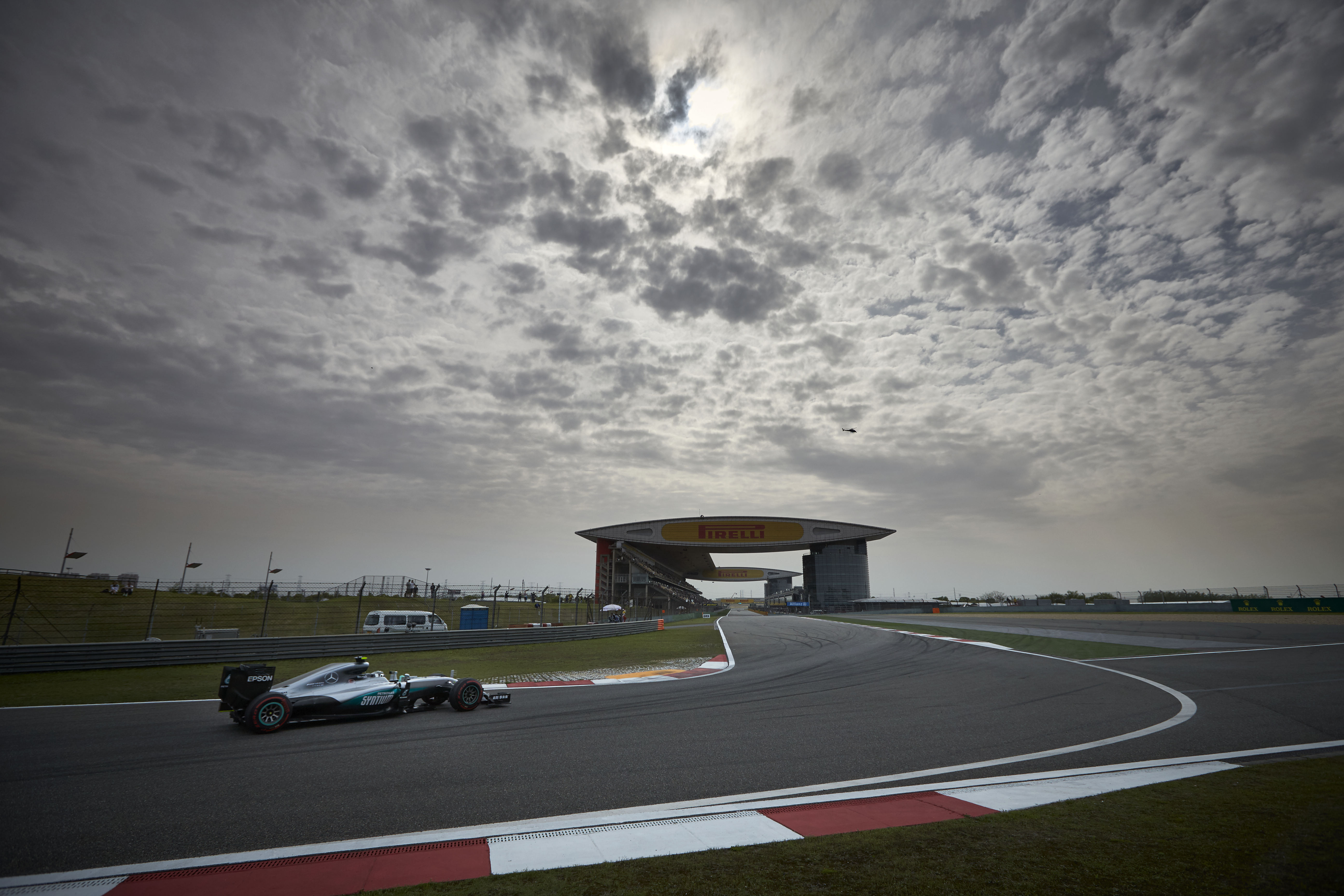
    From the quaint streets of the Albert Park circuit in Australia the Formula 1 paddock heads the grand architecture of the Shanghai International circuit in China for the second round of the 2017 season.

    Remarkably, F1’s latest visit to China marks the 14th year that the Shanghai circuit has been on the calendar. There is a bit of history about the circuit too. Its inaugural race in 2004 was won by then Ferrari driver Rubens Barrichello and in 2006 Michael Schumacher scored what would be his 91st and final victory. A year later Kimi Raikkonen’s win in changeable conditions would set up an unlikely championship triumph while, in 2012, the Chinese grand prix was also the very first race win for the reigning champion Nico Rosberg.

    Nevertheless, while these stats and victories remain firmly in the history books the 2017 crop arrives with what is still very much an era in its infancy. While Ferrari has won the first race of the season the Shanghai International circuit demands a far different type of car performance. For one, this circuit is far more front limited which means that a car will need to work well with its front tyres to set competitive lap times. The tyres too will be tested more than in Australia as the Chinese circuit is far more abrasive.

    Tyre wear may prove to be a significant factor, especially for Mercedes. It was this issue that Lewis Hamilton singled out as the reason for his defeat by Sebastian Vettel and Ferrari. What’s more, in Australia it was clear that Mercedes W08 is not as comfortable following other cars as the Ferrari appears to be which, by itself, can substantially influence tyre degradation and wear.

    Driver tyre choices for Chinese Grand PrixHowever, these aren’t the only issues Mercedes are facing and the team has admitted that it needs to reduce the weight of its 2017 car. An overweight car not only costs lap time but also takes away the teams ability to position ballast in the car to aid handling. What’s more, Haas team principal Guenter Steiner thinks that Ferrari’s 2017 power unit might be on a par with than that of Mercedes, if not better. The make up of the Chinese circuit, which includes several high speed corners, and long straits, will be a good test of Steiner’s theory.

    But by no means is Mercedes ruled out of taking the top step of podium this weekend. The prediction of fairly low temperatures for the race weekend will be in their favour as cooler condition will mean less overheating of their tyres. But they’ll have to work hard if they are to withstand the threat of Ferrari. For Red Bull the fight is highly unlikely to be for the podium considering the deficit of the Renault engine to that of Mercedes and Ferrari.

    Shanghai_F1_Circui_01Several critics have railed about the difficultly of overtaking in 2017. The detractors felt vindicated by the overall lack of overtaking in Australia but Albert Park, as a semi-street circuit, is not the best barometer in this case. While the jury is still out in what is still a fairly immature point of the season the Shanghai International circuit, thanks to its two long straits, will offer more overtaking opportunities. It will not be definitive but it will begin to reveal how easy or difficult overtaking will be in 2017.

    Since the start of the hybrid era in 2014 Mercedes have been an unstoppable juggernaut only rarely tripped up by themselves. In these three years the world has witnessed how the Mercedes team runs and conducts itself as the dominant force. At the start of 2017 they are by no means down and out but are, at the very least, perceived to be ever so slightly on the back foot. Therefore, it will be fascinating to observe how they respond.