Pirelli Racing Manager Mario Isola gives us a little run down of the tyre choices for the 2013 Hungarian Grand Prix at the Hungaroring.

Pirelli Racing Manager Mario Isola gives us a little run down of the tyre choices for the 2013 Hungarian Grand Prix at the Hungaroring.
There is only one word to describe the weather for the 2013 Hungarian Grand Prix, and that word is hot! It is the middle of summer in Hungary and it is the first time this season that we are going to see a proper “hot” race.
The weather from Friday through to Sunday will be clear, sunny and hot. Temperatures will stay in the mid 30’s for the entire weekend. With Pirelli bringing the medium and soft compound tyres with low and high working ranges respectively, it will be a very strategic race.

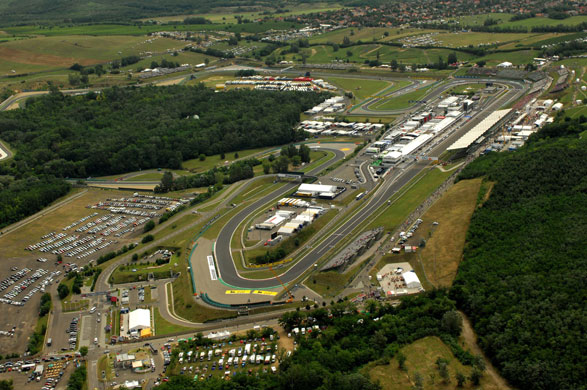
Round 10 of the Formula 1 World Championship takes us to the Hungaroring in Budapest for the Hungarian Grand Prix. The Hungarian Grand Prix has been on our calendars since March 1986. The bumpy and twisty nature of the track makes overtaking very difficult which usually leads to processional type races. Back in 2003, turn 1 was lengthened and made tighter in a bid to make overtaking more easy. Predictions, after the change in tyres, is that Ferrari and Lotus will be very stong, but as always, Red Bull and Mercedes will be waiting in the wings to steal the show.
Here are the broadcast times for the 2013 Formula 1 Hungarian Grand Prix:
Free Practice 1: Friday 10:00
Free Practice 2: Friday 14:00
Free Practice 3: Saturday 11:00
Qualifying: Saturday 14:00
Race: Sunday 14:00
All times are GMT+2
As always you can catch our live updates on Twitter(@F1_Madness) for qualifying and the race with periodic updates throughout all the free practice sessions.

The FIA’s World Motor Sport Council have confirmed regulation changes for Formula One pit lanes, after the council voted in favour of the changes in order to increase safety in F1 pit lanes.
In response to an incident where FOM cameraman, Paul Allen, was hit by Mark Webber’s loose wheel, the FIA announced that it wanted to make immediate changes to the regulations and pit lane rules. These changes were set to only be made in 2014 but the WMSC has voted that the changes will be made with immediate effect.
Starting from the Hungarian Grand Prix, the pit lane speed limit will be reduced from 100 kph to 80 kph.
Furthermore, a rule has been introduced that stipulates that all F1 team members who work on a car during pit stops must now wear helmets.
This is stated in Article 23.11 of the revised F1 Sporting Regulations: “All team personnel carrying out any work on a car during a race pit stop must be wearing head protection.”
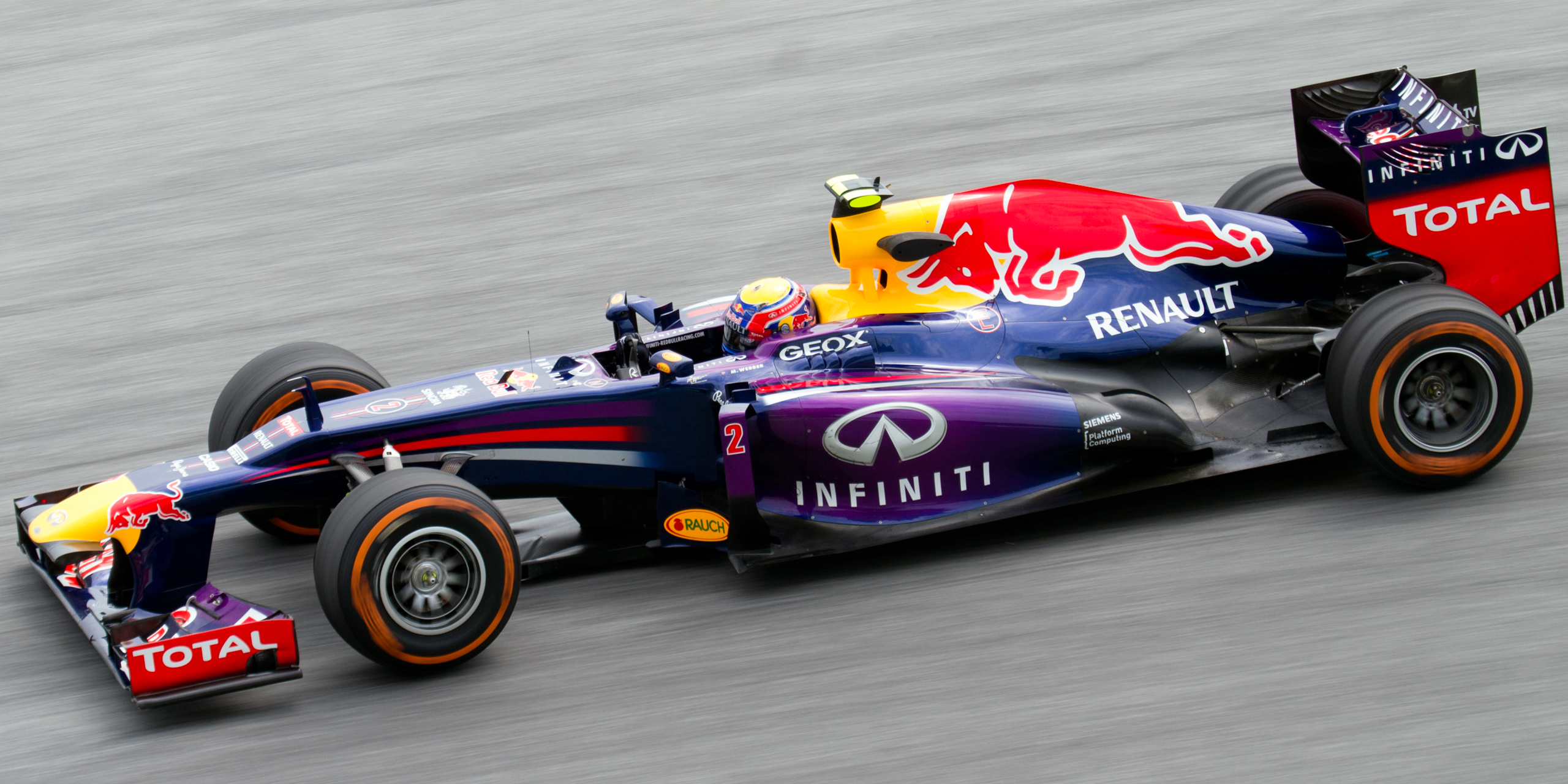
With the 2013 Formula 1 season already halfway through, we thought we’d give you a little technical round up of some of the major changes the teams have made to their cars. There were some drastic changes and some not so drastic. A big complication for the teams has been the tyres deforming under load and changing the aerodynamic properties of the tyre and indirectly, the car. Teams have had to become rather creative in their efforts to minimise the effects of the deforming tyres.
Red Bull
 Red Bull have made significant changes to their front wing.
They now have a 7 tiered front wing with the biggest change being the addition of vertical vortex generators at the bottom of the wing (bottom tier). These vortex generators serve two functions. Firstly, they help direct airflow more efficiently over the top of the first tier and below the bottom of the second tier. It also allows them to run the wing at a greater angle of attack without stalling it to some extent. The second function is that it also prevents rubber marbles from being lodged between the elements which can affect the efficiency of the wing.
The nose of the RB9 has also undergone some changes. The “hammer head” nose has been dropped and the FOM cameras are now being placed further back along the nose of the car.
 At the rear of the car, just in front of the tyre, Red Bull have added three slots in the floor along with a second vertical vane. The slots in the floor help to minimise the tyre squirt, which affects the efficiency of the diffusers. The extra vertical vane helps to better channel the exhaust gasses towards the rear diffuser. The rear wing features the same vertical slot on the endplate as seen on the McLaren, Marussia and Force India. This also helps to minimise the effect of the tyre squirt.
Tyre squirt is the turbulent air around the tyre that is generated by the spinning tyre while the car is moving forward.
Ferrari
Starting at the front with Ferrari, they’ve added an additional slot on the outer section of the front wing endplate. Unlike Red Bull, their front wing has only 6 tiers.

The front wing pillars have changed from their launch spec. It now features a straighter design, instead of the previous stepped configuration.
There was also a different low down force configuration front wing which was used at the Canadian Grand Prix. It is very likely that we’ll see this wing again at the Italian Grand Prix.
The new side pod airflow conditioners that run across the top of the side pod, which we’ve seen at the Spanish Grand Prix, have been dropped for the more conventional design the car had on when it was launched. They’ve never reverted back to the new design since.
There’s also been an addition of another horizontal vortex generator just ahead of the wing mirror. This improves the airflow around the side of the car and over the side pod to assist the coanda exhausts.
Behind the side pods, but just ahead of the exhaust, Ferrari have introduced a series of cooling ducts. These ducts help with the cooling, but also aid in re-attaching the airflow around the bottom of the car.
Mercedes
The Brackley based Mercedes F1 team have given us the impression that they’ve been working much harder than all the other teams, especially with their very high tyre degradation problems. They’ve introduced lots of changes around the car in order to find the balance between their qualifying pace and their race pace.
Starting with the front wing, the most noticeable change is that they now have a 5 tiered wing. This was done by adding an additional slot to the main plane and creating and extra upper flap.
 The vertical element has also been changed by adding a turning vane to the leading edge. The front wing pillars have a similar took to the Ferrari solution and extend from the nose of the car downward to the wing.
Under the nose cone, Mercedes have been running slotted turning vanes. The slots allow for improved airflow around fast corners.

Under the wing mirrors they’ve replaced the three horizontal vortex generators with
The floor in front of the rear wheels features one slot, as opposed to the three slots that Red Bull are running. There is also a longer strake running perpendicular to the tyre to better manage the exhaust gas flow to the diffuser.one large one to better control the airflow over the side pods.

Kimi Raikkonen, Romain Grosjean, Eric Boullier and Alan Permane look ahead to the upcoming Hungarian Grand Prix. Here are their preview quotes for the Lotus F1 Team.
Kimi Raikkonen, Lotus
“I have finished second in Hungary too many times, so I know how important it is to lead the race after the first corner. DRS or not, it’s never easy to overtake at the Hungaroring. To get the weekend right, you have to have good sessions in FP1, FP2 and FP3, then a strong qualifying session and finally a perfect start to the race. It is always nice to go to Hungary. The circuit is not the most difficult of them all, but it is a really challenging venue as it’s usually very hot which makes it a demanding race. Of course, the heat has helped us with the car so far this year so that will make things better, but only if it’s a win will you not suffer from the heat. It’s such a slow, twisty circuit, so two things are really important there; good turn-in and good traction. If you have those, you have a strong car for the race. Obviously you need to get to the front in the qualifying, but also avoid the dirty side of the track on the grid. When you look back through the races this season, it seems the dirty side of the track is a real disadvantage in the starts. Many times Hungary has been called ‘the Grand Prix of Finland’. A lot of Finns go to this race every year and it is always nice to see the blue and white flags waving. Hopefully we get the result we are looking for. It would be nice to take the break after this race and recharge the batteries in the middle of the season with a good result on the board, but most importantly, it would be good to have the points.”
Romain Grosjean, Lotus
“I can remember feeling frustrated last year in Budapest as we did have a chance to be fighting for the win before we got held up by a driver who didn’t respect the blue flags, but that’s certainly a better frustration than missing out on the podium or even worse. Taking third in Germany was great so I certainly have a positive feeling heading to Hungary. What’s the key to a good result in Budapest? It’s a tight and twisty track so you need a good qualifying result. We showed last year that being on the front row certainly helps and it would be fantastic to be back there again this year. We’ve also seen that high temperatures work well for us and it’s usually hot in Budapest, so we’ll be hoping for plenty of sun again. It’s a circuit that I quite like and one where I have had good experiences in the past. I scored my first GP2 Series pole position there in 2008, then finished first and third in 2011 which was a pretty good weekend. In 2012 I had my third podium finish of the year and qualified P2 on the grid which was a great way to end the first half of the season. In terms of driving, it’s not the most physically challenging layout in terms of high speed corners, but the heat you experience in the cockpit can be quite intense. It can also be a difficult circuit early in the weekend as the track is not used very much, meaning it’s quite slippery when you first go out.”
Eric Boullier, Lotus Team Principle
“Budapest will be the real test, but we’re confident we have enough data (on the revised Pirelli tyres, from the Silverstone test) to say that there shouldn’t be any nasty surprises. We performed well in Hungary last year and we’re eager to do the same again this season too.”
 Alan Permane, Lotus trackside operations director
“We believe the original allocation of medium and hard compounds would have been a very conservative choice for Budapest. Of course, the situation is still somewhat different as – for the first time this season – we’ll see a combination of the 2013 compounds with 2012 construction used in a race scenario. This has brought something of an unknown into the equation with this year’s car, as the tyres are of a slightly different shape and will react differently to camber, toe in/out and so on. We’ve had the opportunity to get a better understanding of how they’ll behave at the Young Driver Test so there are no concerns on that front. On top of that, our knowledge of this construction from the 2012 season carries over quite well to this new configuration; giving us a good baseline in terms of such considerations as ride height, camber and toe sensitivity.
“In terms of upgrades, we had a tightly packed schedule over the three-day test at Silverstone, to the point where even with a few extra days and sets of tyres we would still have had more than enough development work to keep us occupied. This has given us plenty to think about heading to Hungary and indeed the second half of the season.
“In terms of track evolution, this circuit doesn’t get a great deal of use and it can get pretty dry and dusty out there, so it generally improves steadily throughout the weekend; not to Monaco levels, but notable enough to be worth factoring into our preparations for qualifying in particular. We saw Nico Rosberg getting caught out by an evolving track during qualifying at the Nürburgring – a circuit that is far more frequently used – so it’ll keep us on our toes on Saturday afternoon.
“Qualifying is crucial. It’s a track where passing opportunities are few and far between, making overtaking very difficult even with a reasonable pace advantage, so we’ll be doing our utmost to qualify further up the field than we have been. Mercedes have proven themselves to be the class of the field in terms of single lap pace so it will be very difficult to qualify in front of them, but we’ll be looking to at least get very close to them on the grid to give our drivers the best chance possible of overhauling them in the race. We’ve seen in the past that they have struggled with tyre degradation on a Sunday which should work to our advantage – particularly in hot conditions as we often see in Hungary – with the medium / soft compound allocation also potentially giving us a broader scope in terms of strategies.”
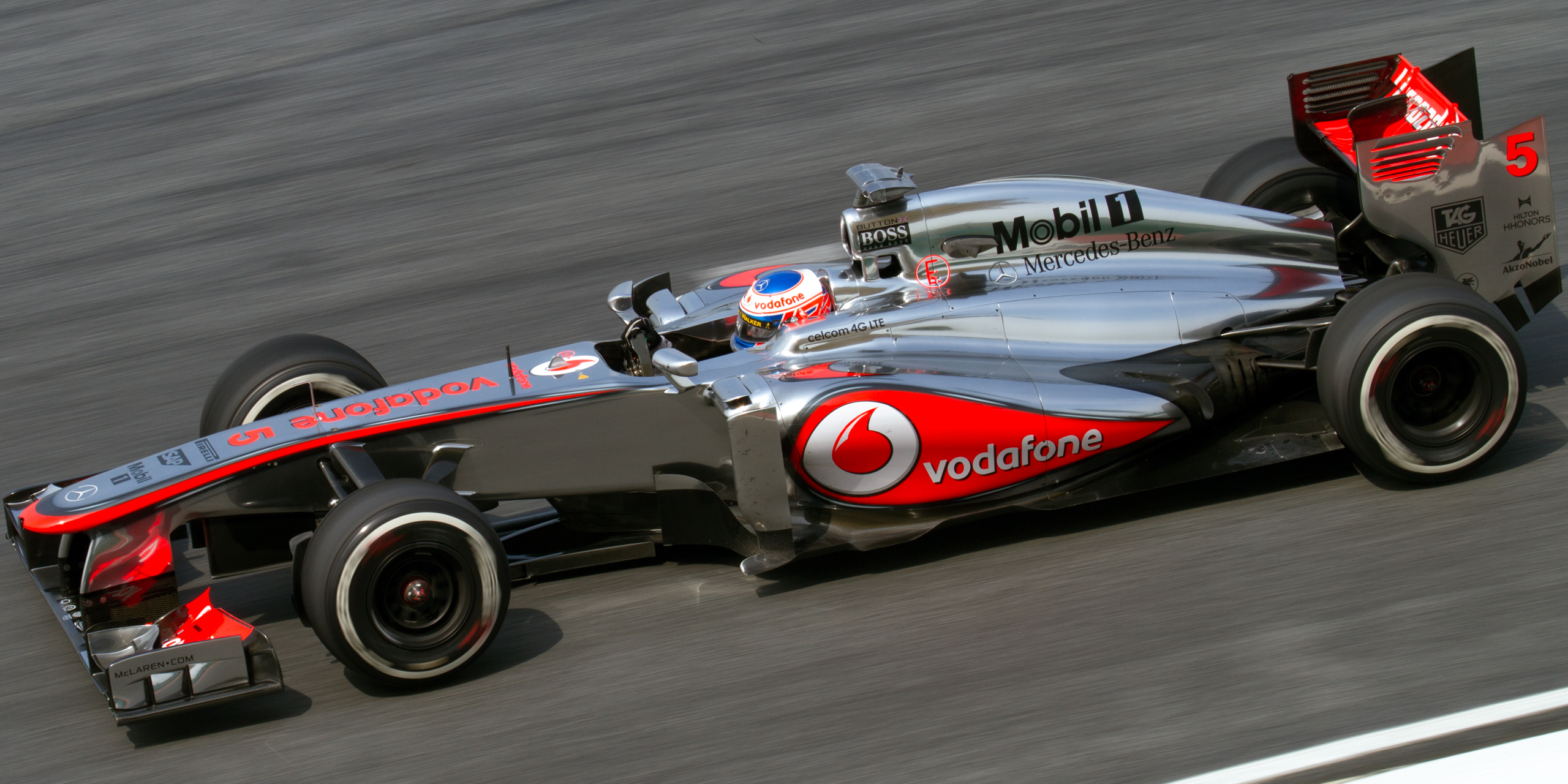
Round 10 of the Formula One season is next, and we move to the Hungaroring in Budapest.
Here are the Hungarian Grand Prix Preview Quotes from the McLaren F1 team.
Jenson Button, McLaren
“Great circuit, great place. I have so many positive memories of racing at the Hungaroring – obviously, I won my first Grand Prix there back in 2006, which was incredibly emotional – and also feels such a long time ago now! – and I also won my 200th race there back in 2011. That was one of those days when everything went right, the car was a dream to drive and I just brought it home. Every victory in Formula One is special, but that’s right up there as one of my favourite days in the car. Of course, a win in 2013 is going to be difficult, but I actually think the team is working very well right now: in Germany, our tyre-usage, strategy and management of the race was as good as it’s ever been. It would be good to have a car with a little more pace to enable those calls to have a bit more impact at the front of the pack, but, for the moment, we can be satisfied by doing the best possible job in qualifying and on Sunday afternoon.”
Sergio Perez, McLaren
“I haven’t had the best results in my two previous outings at the Hungaroring, which is a shame because I enjoy the circuit, have usually qualified well there, and think the race is a great event for Formula One. So, for this year, I’m going to Hungary with realistic ambitions: after a positive weekend at the Nurburgring, we’re focused on further improving and understanding MP4-28. I think the race in Germany showed that, when things come together, we’re able to be a force in the race, even if we can’t quite set the pace at the front. That is extremely motivating during a difficult year. Hungary is the last race of the first ‘half’ of 2013; it’s the final event before the official summer break, so there’s usually a good feeling in the paddock. For everybody on the race team, or working back at the MTC, it would be great to send everybody off on their summer holidays with another strong points finish.”
Martin Whitmarsh, McLaren team principal
“The Hungarian Grand Prix has become a firm staple on the Formula 1 calendar – the race is a popular hotspot for many fans across Europe, and is invariably supported by a large contingent of vocal and passionate supporters. The Hungaroring itself is a uniquely challenging low-speed track that requires a good balance of mechanical grip and aerodynamic traction to maximise performance through the many corners. The race often rewards tenacious, charging drivers who enjoy the relentless pace of this twisting course. Of the 27 Hungarian Grands Prix that have been held since 1986, McLaren has won 11; while we don’t expect to add to that tally this year, we’ve been buoyed by our positive result in Germany earlier this month, and the whole team is looking forward to maximising our package at a circuit we all enjoy.”

With Christian Horner having confirmed that Daniel Ricciardo is on a very short list of candidates for outgoing Red Bull driver Mark Webber’s racing seat, all eyes were on the young Australian as he tested in the RB9 at the Young Driver Test at Silverstone.
After what was probably the most important test session of his Formula One career, Daniel Ricciardo spoke to the FOM.
Q: Daniel, you spent the afternoon driving the world championship-leading car. How was it?
Daniel Ricciardo: It was good fun. It was a busy day so at the moment it’s a bit of a blur having jumped out of one car and into another. I did quite a few laps and I was happy with how it went. I had a small off earlier but it was a pretty trouble-free day.
Q: What caused the off?
Daniel Ricciardo: It was my mistake – I just lost the rear on the entry to the corner. I was probably pushing a little too hard. The gravel was a bit like quicksand – I thought I’d get out but I couldn’t. I could see the guys weren’t very busy in the garage so I thought I’d give them a job to do to clean the car! (laughs) No, it was just a small error.
Q: What are the differences between the RB9 and the Toro Rosso STR8?
Daniel Ricciardo: Umm, to the media I’m not very descriptive! (laughs). I’ll keep it blunt – it was a good opportunity to get the drive and to get the half day and to have a look what it is like. There are some differences (between the two cars) – I can’t really say what, but it was good to get the comparison for myself.
Q: Did you take your chance today?
Daniel Ricciardo: Yeah, I think I drove to my ability and did what I could. It was a bit tricky with the circumstances – we weren’t really allowed to adjust the car. Ideally you’d like to make some mechanical changes and set the car up for the conditions, but it’ll be the same for the other guys. It was a good opportunity to get behind the wheel and experience two different beasts.
 Q: Christian Horner wanted to see how quick you’d go in the Red Bull. He reportedly thinks it is down to you and Kimi Raikkonen for the seat next year. Are you feeling any pressure yet?
Daniel Ricciardo: No. It’s fun, it’s exciting. You know, whatever happens, happens. It was nice to get a few laps in the car – obviously testing is pretty limited, so to get that opportunity and to see what it was like, if I don’t get a chance further down the track, that was a nice little bonus. I’ll watch Seb’s (Vettel’s) times tomorrow (Friday) and hope he doesn’t put me to shame. (laughs).
Q: So if it is down to you and Kimi for the drive, what turns the decision in your favour?
Daniel Ricciardo: I don’t know. It’s not my decision. I’ve still got the season ahead with Toro Rosso. The last few races have been better so I have to keep continuing like that. I think this test is something for Red Bull to look at, but there is still the rest of the season which I’m sure they’ll observe. So I won’t get too caught up in today and now I’ll switch my focus back to Toro Rosso.
Q: What’s your overall feeling at the end of the day?
Daniel Ricciardo: I feel good. As I say, it’s still a bit of a blur. It was a pretty hectic day, even yesterday going between meetings in both teams’ trucks trying to soak it all in. I’ll look back on a few things tonight and probably wake up tomorrow with a better understanding of how it all went.

Sebastian Vettel topped the time sheets on the final day of the Young Driver Test at Silverstone.
Vettel put in 78 laps this afternoon evaluating the Pirelli tyres which will be used at next week’s Hungarian Grand Prix.
Vettel set the fastest time of all three days of running at Young Driver Test with a time of 1.32.894.
Adrian Sutil’s fastest time from the morning session was fast enough to end the day second fastest, nearly four tenths adrift of Vettel’s time.
Here is the time sheet for today’s testing at the Young Driver Test:


F1 2013 Classic Edition gives FORMULA 1™ fans the chance to compete against legendary drivers in cars from different eras of FORMULA ONE with a range of classic content from the 1980s. F1 Classics, introduced by legendary broadcaster Murray Walker, allows players to race iconic 1980s cars from Williams, Lotus and Ferrari against drivers including Mario Andretti, Nigel Mansell, Emerson Fittipaldi and Gerhard Berger, with more to be announced, on classic circuits Brands Hatch and Jerez.