Latest

  • 2013 Formula 1 Mid Season F1 Technical Round Up – Part 3

    2013 Formula 1 Mid Season F1 Technical Round Up – Part 3

    In the final part of this F1 technical round up we take a look at the remainder of the teams on the grid.

    Sauber F1 Team

    The 2012 Sauber C31 was a very good car. It was very kind to the tyres and it had very good race pace. This season’s C32 is not as quick as the car from the previous season and they have been struggling for pace. They’ve been bringing new developments to each race to try and get the car back on pace. The team are making slow progress and with their recent financial issues all sorted out now, they should be able to continue development on the 2013 car.

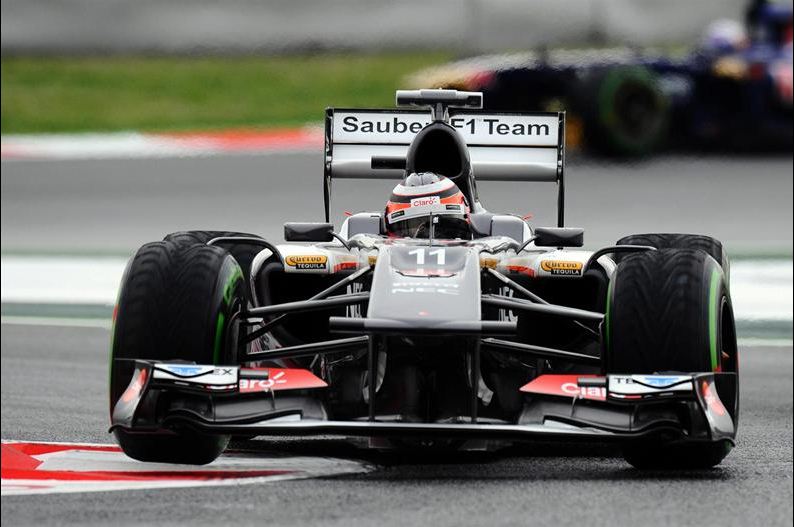
    Sauber_FrontWingBulgeSauber have been regularly changing the nose of the car. At the Spanish Grand Prix they had a front wing with the FOM camera mounted at the tip of the nose, giving it a hammerhead shark-like appearance.

    At the next race in Canada there was a bulge (like a pelican beak) on the underside of the nose cone with the FOM cameras moved slightly back. The front wing itself has been pretty much unchanged since Spain with only slight changes made to the front wing cascade.

    At the start of the season Sauber had a dipped rear wing. The central portion of the wing Sauber_RearWing Comparisonwas extended a bit further down.

    This configuration allowed them to run a little less aggressive angle of attack while still maintaining down force.

    At the Spanish Grand Prix, the team brought a more conventional straight wing and have stuck with that configuration since.


    Williams

    Williams_FrontWing

    The Williams F1 team have really been struggling with their 2013 car. The car is nowhere near the pace of their 2012 car. They had tremendous qualifying pace last season, yet this season they struggle to make it through to Q2 in some qualifying sessions.

    They haven’t been able to stick to one front wing design. At the German Grand Prix they tested two different types of front wing designs. While this is normal for any team, they have not yet been able to find a design that works for them. Each configuration has a different cascade and is often missing the inverted “L” cascade near the center of the wing.

    They’ve also changed the nose of car. The front pillars were similar to that of Ferrari’s at the Spanish Grand Prix, where the pillars extend from the tip of the nose to the wing. At the British Grand Prix they introduced a nose with a bit of a bulge on the underside with the pillars joining further back.

    Around the side of the car they’ve added four vertical vortex generators to help Williams_Vortex_Generatorsthe airflow to the exhaust.

    At the rear of the car they’ve been running their boomerang wing which bends upwards from the main plane.

    Toro Rosso

    Like Force India, Toro Rosso have had a rather good start to the season. In the last few races they’ve shown that they can be competitive with Daniel Ricciardo finishing in the points.

    Toro Rosso, F1 Qualifying, Spain 2013

    The big change came to the car at the Spanish Grand Prix where they implemented a cross-under tunnel layout similar to their big brother team, Red Bull. Unlike the Red Bull solution where the cross-tunnel is totally closed off, Toro Rosso’s is only partially closed off.

    This does not mean that it’s less effective though. The Red Bull has a Renault engine and the Toro Rosso runs Ferrari engines. They both have very different characteristics when they’re off throttle, on the throttle etc. This is probably why the Toro Rosso solution differs slightly.

    They also have their own version of a low down force rear wing which is similar to the wing that Sauber was running at the start of the season. They returned to a straight rear wing set up at the British Grand Prix.

    It does look like the team have found a good balance between speed down the straights and speed around the corners. It will be interesting to see how they get on in the remainder of the season.


    Caterham

    Caterham started the 2013 season with a 2012 spec’d car. At the Spanish Grand Prix the team introduced a whole raft of changes Caterham_NewBodywork_spainwhich made it more like a CT-03 v2.0.

    They re-profiled the whole nose cone. The new spec used a vanity panel and featured a bulge on the underside. The front wing was also changed with new cascades.

    The side pods featured twin element air flow conditioners with the rear element curving over the top of the side pods. Very similar to what Ferrari tested.

    The rear wing was improved to make it more efficient and horizontal strakes were added to the endplate to direct airflow.


    That rounds up our look at F1 technical upgrades and updates that the teams have made to their cars throughout the season so far. It is going to be very interesting to see who can up their game for the remainder of the season, and which teams will be left behind. We’ll bring you all the F1 technical updates we can throughout the rest of the season. But now, on to Hungary!


  • Hungarian Grand Prix Preview Quotes – Ferrari

    Hungarian Grand Prix Preview Quotes – Ferrari

    Preview Quotes from Felipe Massa on behalf of Ferrari ahead of this weekend’s Hungarian Grand Prix at the Hungaroring where he suffered his nasty crash back in 2009.

    Felipe Massa, Ferrari

    “The Hungarian Grand Prix is a very special event for me, that brings back a lot of memories. Naturally, there are some negative memories from my [2009 Hungaroring] accident, but also positive ones in that I am here today, getting ready for Budapest, healthy and still racing. I love the fans in Hungary, as I actually have a lot more of them since my accident, so it’s somewhere I am always pleased to go back to and of course I hope I can have a good race there this weekend.

    “It’s a short track, with a lot of corners one after the other with no long straights. Overtaking is difficult, with changes of direction all the time, which make it a fun track. So it’s an old style race track and Sunday afternoon can be tough, but I like going back to these old fashioned venues.

    Felipe Massa at the Young Driver Test“For sure people say the characteristics of our car are not best suited to this circuit and that it will be tough for us to fight for the win here, but I am not sure this is an accurate assessment, because there have been other circuits where we expected our car to be very strong and it was not and vice versa. The important thing will be to get a good understanding of exactly how the car is reacting as quickly as possible. The circuit requires as much downforce as possible, because the speed down the straight is not so important here. You need a car that is very stable and that is kind to the tyres to avoid degradation. I think we can be competitive, so I’m hoping our weekend goes in the opposite way to what people are expecting.

    “I expect the tyres will be critical again, especially in relation to temperature. They will perform very differently in qualifying and the race and I hope we can make the most of the high temperatures.”


  • 2013 Formula 1 Mid Season F1 Technical Round Up – Part 2

    2013 Formula 1 Mid Season F1 Technical Round Up – Part 2

    In this second part of our F1 technical round up we take a look at McLaren, Lotus and Force India.

    McLaren

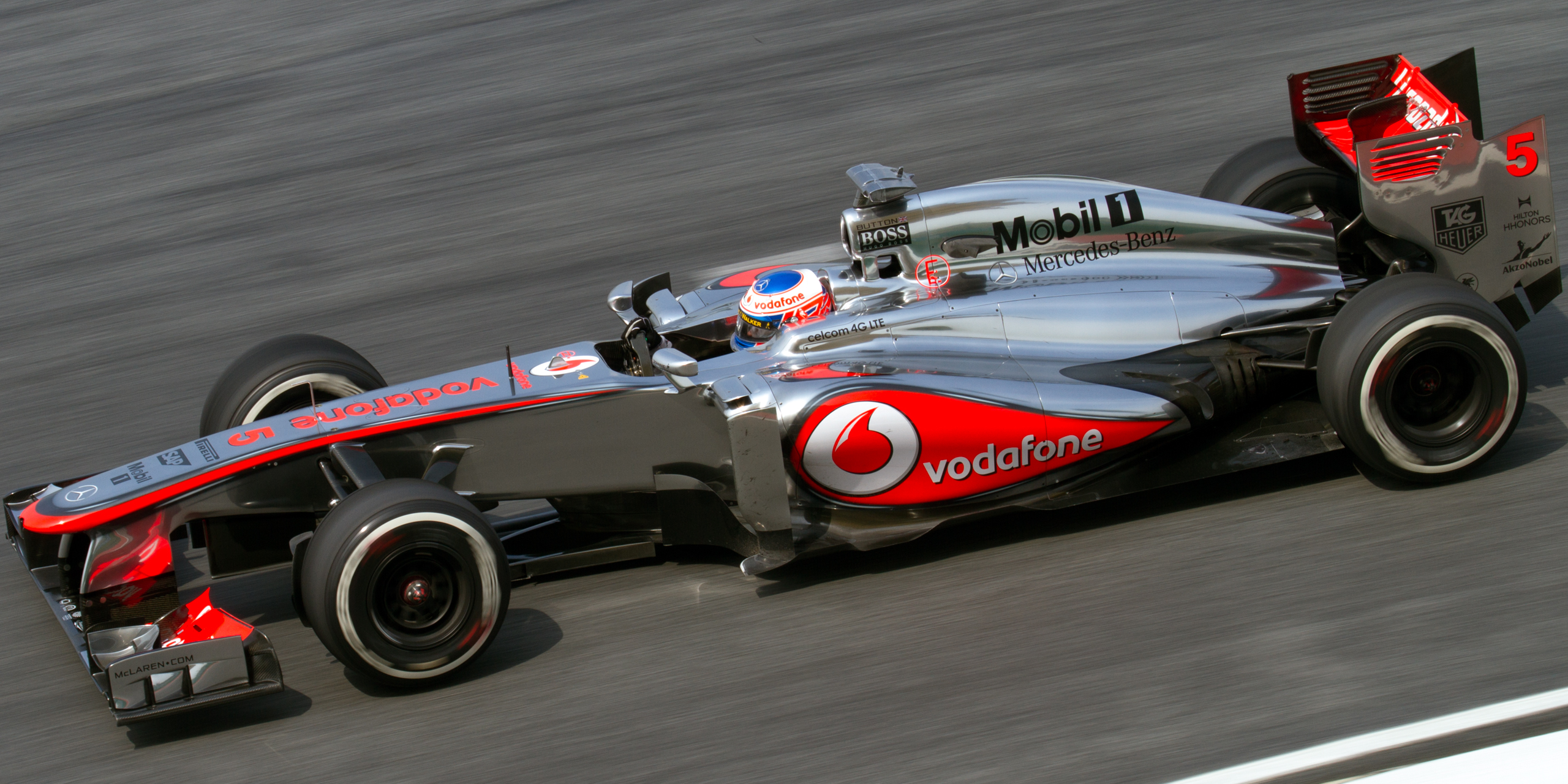
    McLaren have had a very tough start to the season. Their 2013 car is nowhere near their 2012 contender, the MP4-27. With a whole new front suspension setup, McLaren have had their fair share of hardship this season.

    At the front of the car, McLaren have kept most of the design of their front wing from the 2012 car. While other teams are are sporting 5 to 7 tiered wings, the front wing on the McLaren has three tiers. This configuration has hardly been touched throughout the season and they’ve been running the same front wing for the past few races.

    McLaren_MP4-28_VortexGenAround the side of the car, they’ve ditched the horizontal side pod airflow conditioners at the top of the side pods for curved vertical vortex generators from the Spanish Grand Prix with the Red Bull type “D” wing to condition the flow around the side of the car.

    Towards the rear of the car, they’ve tightened up the bodywork in the coke bottle region. They’ve added a vertical slot on the rear wing endplate to minimise tyre squirt.

    With McLaren now concentrating on next season’s car, it is unlikely that they will make many further updates to the current car. We should see development parts for the 2014 car surface during free practice in the last few races.

    Lotus F1 team

    Lotus kicked off their 2013 campaign very well with a victory in the F1 season opener in Australia and Kimi Riakkonen has also consistently scored points for the Enstone based team.

    LotusE21FrontWingLotus is running a 4 tiered front wing with a split vertical element. The split element helps to direct the airflow whenever the car changes direction. They’ve also added a curved horizontal vane on the front wing endplate to help create a vortex of air around the side of the car.

    In a few races this season, they’ve run a bulge on the underside of the nosecone, which helps the airflow along the underside of the car.

    Lotus are also running a similar cross-under tunnel to Red Bull, where the air from the outer edge of the side pods is directed to the center of the car to exit at the diffuser.

    LotusE21DRDThe one big F1 technical development which Lotus were testing throughout the second half of the 2012 season and again at the British and German Grands Prix is their passive DRS or DRD.

    The device works by receiving high speed air from intakes around the air box above the driver’s head. The air then travels down the back of the car and exits from a periscope type outlet just below the rear wing, which then stalls the rear wing at high speed. This reduces the rear wing’s effect and it gives the car a higher speed.

    The trick to this device lies in when the wing stalls. You don’t want it to stall half-way through a high speed corner. Nor do you want to it not to stall down a straight where DRS is not active. It’s quite tricky to get it right but it looks as if Lotus have found a way around this problem. They’ve added a bleed pipe that exits just above the monkey seat. The reason that this is legal is that it requires no input from the driver to activate. It uses the speed of the air coming into the airbox to stall the wing.

    Force India

    Force India have been the strongest of the mid-field teams so far this season. They’re currently even ahead of McLaren in the Constructors’ ForceIndia_FWing_GuideStrakesChampionship.

    As far as their F1 technical upgrades go, Force India have a 4 tiered front wing with the same vertical guide vanes on the main plane of the wing that we can see on the Red Bull.

    These guide vanes work in conjunction with the guide vanes on the back of the wing to guide the air to the edge of the wing for better vortex generation.

    On the underside of the nose cone, they have followed the top teams in splitting the turning vanes. The split in the turning vanes helps to keep the airflow under the car a bit more constant when the car changes direction.

    And around the back of the car, they too, have a slot in the end plate of the rear wing that helps to minimise the tyre squirt.


    And that’s it for part two of our F1 technical Round Up. In part three we’ll look at the Sauber, Toro Rosso, Williams, Caterham and Marussia F1 teams.

  • F1 2013: Hungarian GP Preview – Qualifying king at the Hungaroring

    F1 2013: Hungarian GP Preview – Qualifying king at the Hungaroring

    After a three week gap the 2013 Formula 1 season restarts with the Hungarian grand prix.

    In its own right the Hungarian GP has written its own part in Formula 1 history. The circuit has rewarded Damon Hill (1993), Fernando Alonso (2003) and very memorably Jenson Button (2006) with their first victories in Formula 1.

    The first grand prix held at the Hungaroring was the first to be held behind the Iron Curtain. Formula 1 has been frequenting the Hungarian grand prix since 1986 and the Budapest located circuit is a guaranteed staple of a Formula 1 race calendar until 2016.

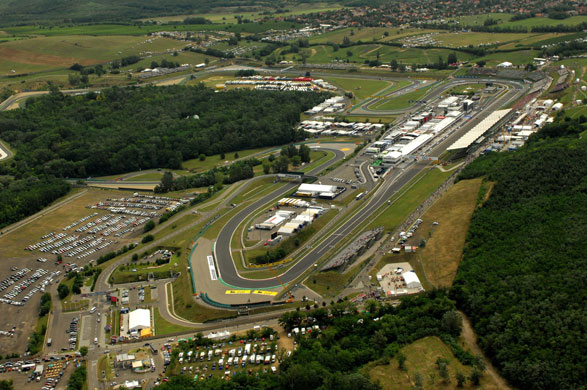
    As a high downforce circuit the Hungaroring is famous for its tight and twisting nature. The dusty track surface confirms how little action the track sees which makes track evolution at the Hungaroring a crucial aspect for judging a qualifying effort. Throughout the 4.381 km lap the Hungaroring’s old-school layout is packed with fourteen corners.

    Hungaroring_AerialThe Hungaroring is technically demanding, bumpy and narrow, loved by drivers and adored by fans for its traditional atmosphere. The key to a good result here is a good grid slot. Having the fastest car will mean nothing if you’re stuck in the pack. In 1990 Thierry Boutsen in a sluggish Williams held off a much quicker Ayrton Senna to win the race. The chances of overtaking, even with DRS, are slim to none. No one knows the frustration of not being to overtake better than Lotus’ Kimi Raikkonen. The Finn has finished second at the Hungarian GP on four separate occasions.

    The new tyres, tested during the three days of the young driver’s test at Silverstone last week, will be used this weekend in Hungary. The test was opened to current race drivers by the FIA to assist Pirelli. Sauber’s Nico Hulkenberg pointed out that testing the new tyres wasn’t a “day and night” difference and that running on the new compounds for the first time in Hungary “will be fine too.” The 2013 Pirelli P Zero tyres have been matched with 2012 construction to enhance consistency and improve safety.

    Pirelli’s initial conservative choice of the medium and hard compounds would’ve hampered teams such as Lotus and Ferrari who thrive on getting the softer tyre to its working temperature quicker and stretching the life of the tyre. However, coupled with high temperature, forecast at mid-thirties, Pirelli’s reversion to the medium and soft compound will play to the strengths of the two teams.

    McLaren have won eleven of the twenty-seven Hungarian grands prix but victory this weekend is unlikely to be a possibility for the Woking based team. Jenson Button believes that the team are moving the right direction. “A win in 2013 is going to be difficult, but I actually think the team is working very well right now: in Germany, our tyre-usage, strategy and management of the race was as good as it’s ever been.”

    Sebastian Vettel was the quickest of the drivers at the three day young driver’s test at Silverstone last week. He will no doubt want to continue in the same vein this weekend. Red Bull has never been very prolific at the Hungaroring and of the two it is only Mark Webber who has won here before. Then again, a few weeks ago Vettel hadn’t won the German GP either.

    Mercedes have proven their prowess in qualifying which makes the likelihood of the Silver Arrows locking out the front-row of the grid, or getting a car on pole very good. Given the lack of overtaking on the circuit they will have a prime opportunity to control the race and win it. However, the unknown for Mercedes this weekend will be their performance on the new Pirelli tyres.

    Fernando Alonso’s Ferrari hasn’t looked anything special in qualifying trim but his lightening starts can potentially transform fifth on the grid to second – a vital part to a successful race. The key to this weekend is having a car that can cope with the twisting demands of the Hungaroring. But even more so, qualifying and making a good start to the race can be the difference between winning or not.


  • Austrian Grand Prix to return to F1 in 2014

    Austrian Grand Prix to return to F1 in 2014

    It has been announced that the Austrian Grand Prix will return to the Formula One calendar in 2014 after an 11 year absence.

    According to a very brief statement by Red Bull, the event will be held at the Red Bull Ring on July 6th.

    The statement explained, “Dietrich Mateschitz (Red Bull owner) and Bernie Ecclestone have reached agreement to the effect that Formula 1 will come back to Styria next year”.

    Red Bull Ring - Austrian Grand Prix to return to F1 calendar in 2014The last Austrian Grand Prix was held in 2003 after which it fell off the calendar when redevelopment plans stalled. New owner, Red Bull, spent time considering what to do with the venue but eventually pushed in a massive investment which eventually saw the circuit reopen in 2011 under a new name – the Red Bull Ring. It has since hosted rounds of the DTM championship, as well as the Formula Renault 3.5 Series.

    We came very close to seeing and Austrian Grand Prix on this year’s calendar as a replacement for the New Jersey race but a deal could not be agreed on.

    The FIA will still need to formally approve the return of the Austrian Grand Prix when it finalises the 2014 calendar at a meeting with its World Motor Sport Council.

    Photos: Redbull.com


  • Video: 2013 Hungarian Grand Prix Pirelli Tyre Preview

    Video: 2013 Hungarian Grand Prix Pirelli Tyre Preview

    Pirelli Racing Manager Mario Isola gives us a little run down of the tyre choices for the 2013 Hungarian Grand Prix at the Hungaroring.


  • Weather Report for the 2013 Formula 1 Hungarian Grand Prix

    There is only one word to describe the weather for the 2013 Hungarian Grand Prix, and that word is hot! It is the middle of summer in Hungary and it is the first time this season that we are going to see a proper “hot” race.

    The weather from Friday through to Sunday will be clear, sunny and hot. Temperatures will stay in the mid 30’s for the entire weekend. With Pirelli bringing the medium and soft compound tyres with low and high working ranges respectively, it will be a very strategic race.

    Hungary_Weather

  • Broadcast Times for the 2013 Formula 1 Hungarian Grand Prix

    Broadcast Times for the 2013 Formula 1 Hungarian Grand Prix

    Round 10 of the Formula 1 World Championship takes us to the Hungaroring in Budapest for the Hungarian Grand Prix. The Hungarian Grand Prix has been on our calendars since March 1986. The bumpy and twisty nature of the track makes overtaking very difficult which usually leads to processional type races. Back in 2003, turn 1 was lengthened and made tighter in a bid to make overtaking more easy. Predictions, after the change in tyres, is that Ferrari and Lotus will be very stong, but as always, Red Bull and Mercedes will be waiting in the wings to steal the show.

    Here are the broadcast times for the 2013 Formula 1 Hungarian Grand Prix:

    Free Practice 1: Friday 10:00

    Free Practice 2: Friday 14:00

    Free Practice 3: Saturday 11:00

    Qualifying: Saturday 14:00

    Race: Sunday 14:00


    All times are GMT+2

    As always you can catch our live updates on Twitter(@F1_Madness) for qualifying and the race with periodic updates throughout all the free practice sessions.

  • World Motor Sport Council confirms FIA’s F1 pit lane safety clampdown

    World Motor Sport Council confirms FIA’s F1 pit lane safety clampdown

    The FIA’s World Motor Sport Council have confirmed regulation changes for Formula One pit lanes, after the council voted in favour of the changes in order to increase safety in F1 pit lanes.

    In response to an incident where FOM cameraman, Paul Allen, was hit by Mark Webber’s loose wheel, the FIA announced that it wanted to make immediate changes to the regulations and pit lane rules. These changes were set to only be made in 2014 but the WMSC has voted that the changes will be made with immediate effect.

    Starting from the Hungarian Grand Prix, the pit lane speed limit will be reduced from 100 kph to 80 kph.

    Furthermore, a rule has been introduced that stipulates that all F1 team members who work on a car during pit stops must now wear helmets.

    This is stated in Article 23.11 of the revised F1 Sporting Regulations: “All team personnel carrying out any work on a car during a race pit stop must be wearing head protection.”


  • 2013 Formula 1 Mid Season F1 Technical Round Up – Part 1

    2013 Formula 1 Mid Season F1 Technical Round Up – Part 1

    With the 2013 Formula 1 season already halfway through, we thought we’d give you a little technical round up of some of the major changes the teams have made to their cars. There were some drastic changes and some not so drastic. A big complication for the teams has been the tyres deforming under load and changing the aerodynamic properties of the tyre and indirectly, the car. Teams have had to become rather creative in their efforts to minimise the effects of the deforming tyres.

    Red Bull

    Red Bull Racing front wing for the Canadian Grand PrixRed Bull have made significant changes to their front wing.

    They now have a 7 tiered front wing with  the biggest change being  the addition of vertical vortex generators at the bottom of the wing (bottom tier). These vortex generators serve two functions. Firstly, they help direct airflow more efficiently over the top of the first tier and below the bottom of the second tier. It also allows them to run the wing at a greater angle of attack without stalling it to some extent. The second function is that it also prevents rubber marbles from being lodged between the elements which can affect the efficiency of the wing.

    The nose of the RB9 has also undergone some changes. The “hammer head” nose has been dropped and the FOM cameras are now being placed further back along the nose of the car.

    RBR_RearFloorAt the rear of the car, just in front of the tyre, Red Bull have added three slots in the floor along with a second vertical vane. The slots in the floor help to minimise the tyre squirt, which affects the efficiency of the diffusers. The extra vertical vane helps to better channel the exhaust gasses towards the rear diffuser. The rear wing features the same vertical slot on the endplate as seen on the McLaren, Marussia and Force India. This also helps to minimise the effect of the tyre squirt.

    Tyre squirt is the turbulent air around the tyre that is generated by the spinning tyre while the car is moving forward.

    Ferrari

    Starting at the front with Ferrari, they’ve added an additional slot on the outer section of the front wing endplate. Unlike Red Bull, their front wing has only 6 tiers.

    FerrariCanadaFrontWing2

    The front wing pillars have changed from their launch spec. It now features a straighter design, instead of the previous stepped configuration.

    There was also a different low down force configuration front wing which was used at the Canadian Grand Prix. It is very likely that we’ll see this wing again at the Italian Grand Prix.

    The new side pod airflow conditioners that run across the top of the side pod, which we’ve seen at the Spanish Grand Prix, have been dropped for the more conventional design the car had on when it was launched. They’ve never reverted back to the new design since.Ferrari_AirflowConditioner_Spains

    There’s also been an addition of another horizontal vortex generator just ahead of the wing mirror. This improves the airflow around the side of the car and over the side pod to assist the coanda exhausts.

    Behind the side pods, but just ahead of the exhaust, Ferrari have introduced a series of cooling ducts. These ducts help with the cooling, but also aid in re-attaching the airflow around the bottom of the car.


    Mercedes

    The Brackley based Mercedes F1 team have given us the impression that they’ve been working much harder than all the other teams, especially with their very high tyre degradation problems. They’ve introduced lots of changes around the car in order to find the balance between their qualifying pace and their race pace.

    Starting with the front wing, the most noticeable change is that they now have a 5 tiered wing. This was done by adding an additional slot to the main plane and creating and extra upper flap.

    FrontWing SideThe vertical element has also been changed by adding a turning vane to the leading edge. The front wing pillars have a similar took to the Ferrari solution and extend from the nose of the car downward to the wing.

    Under the nose cone, Mercedes have been running slotted turning vanes. The slots allow for improved airflow around fast corners.

    Mercedes F1

    Under the wing mirrors they’ve replaced the three horizontal vortex generators with

    The floor in front of the rear wheels features one slot, as opposed to the three slots that Red Bull are running. There is also a longer strake running perpendicular to the tyre to better manage the exhaust gas flow to the diffuser.one large one to better control the airflow over the side pods.