Latest

  • F1 2026 championship: Antonelli crowned, Ferrari falter and the fight for third tightens

    F1 2026 championship: Antonelli crowned, Ferrari falter and the fight for third tightens

    The short version

    • Kimi Antonelli won in Austin, sealed the F1 2026 championship in Mexico City at the age of 20, and Mercedes added the constructors’ title in Brazil.
    • Ferrari had the pace for a one-two in Mexico and finished second and fourth after their drivers clashed on the opening lap. They remain second in the standings, 95 points clear of Red Bull.
    • Red Bull and McLaren are separated by 17 points in the contest for third, with three rounds left: Las Vegas, Qatar and Abu Dhabi.

    Three races in three weekends settled both titles in the F1 2026 championship and left the places behind Mercedes still open. This is what happened in Austin, Mexico City and SĂŁo Paulo, and where it leaves each of the leading teams.

    RaceWinnerSecondThird
    United States (25 October)Kimi AntonelliCharles LeclercMax Verstappen
    Mexico City (1 November)Max VerstappenLewis HamiltonKimi Antonelli
    SĂŁo Paulo (8 November)Lando NorrisMax VerstappenIsack Hadjar

    Three races in brief

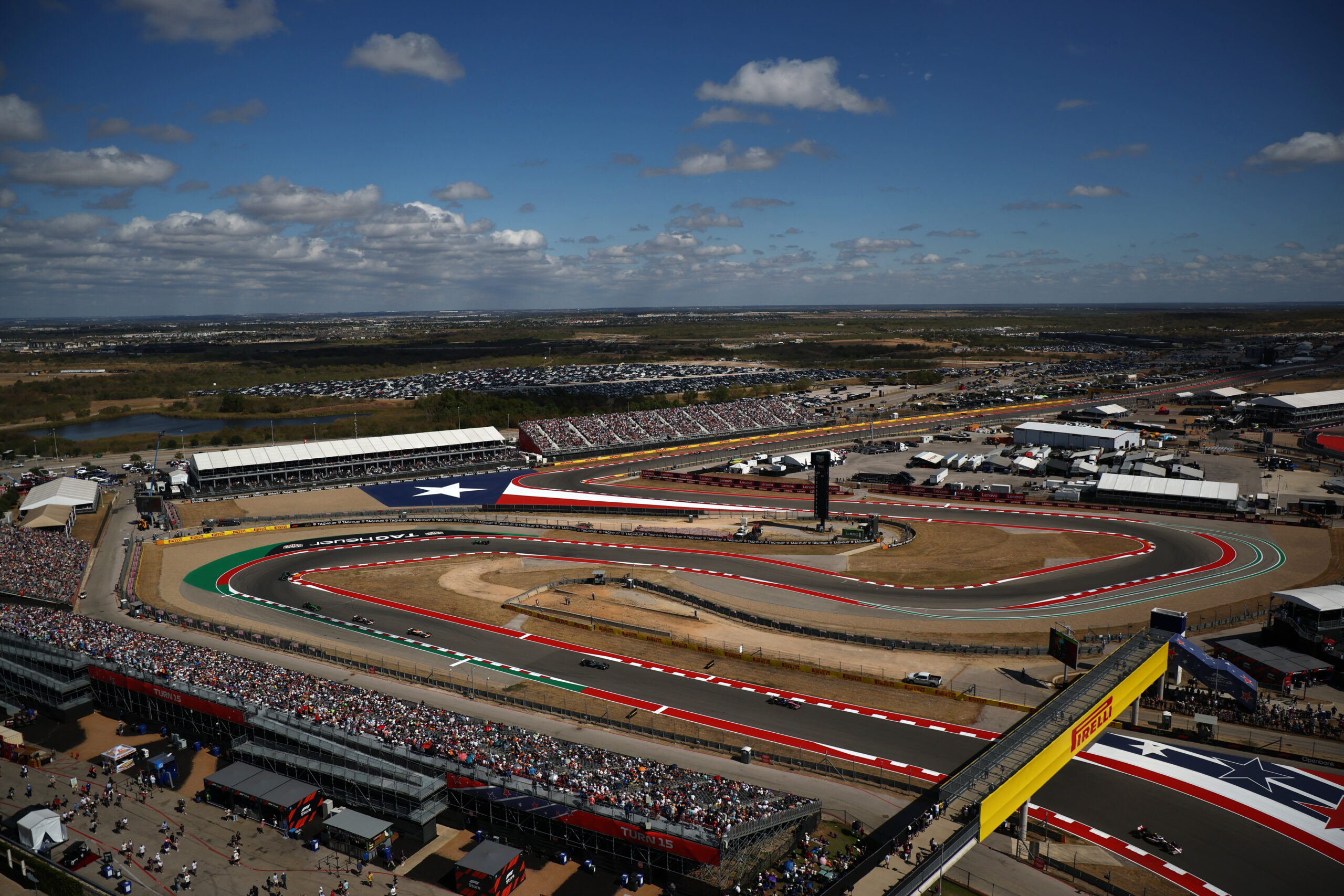
    In Austin, Antonelli won from pole on a one-stop strategy while most of the field stopped twice. It was his ninth victory of the season. Leclerc passed Verstappen late on for second, and Red Bull conceded afterwards that they had misjudged the hard tyre.

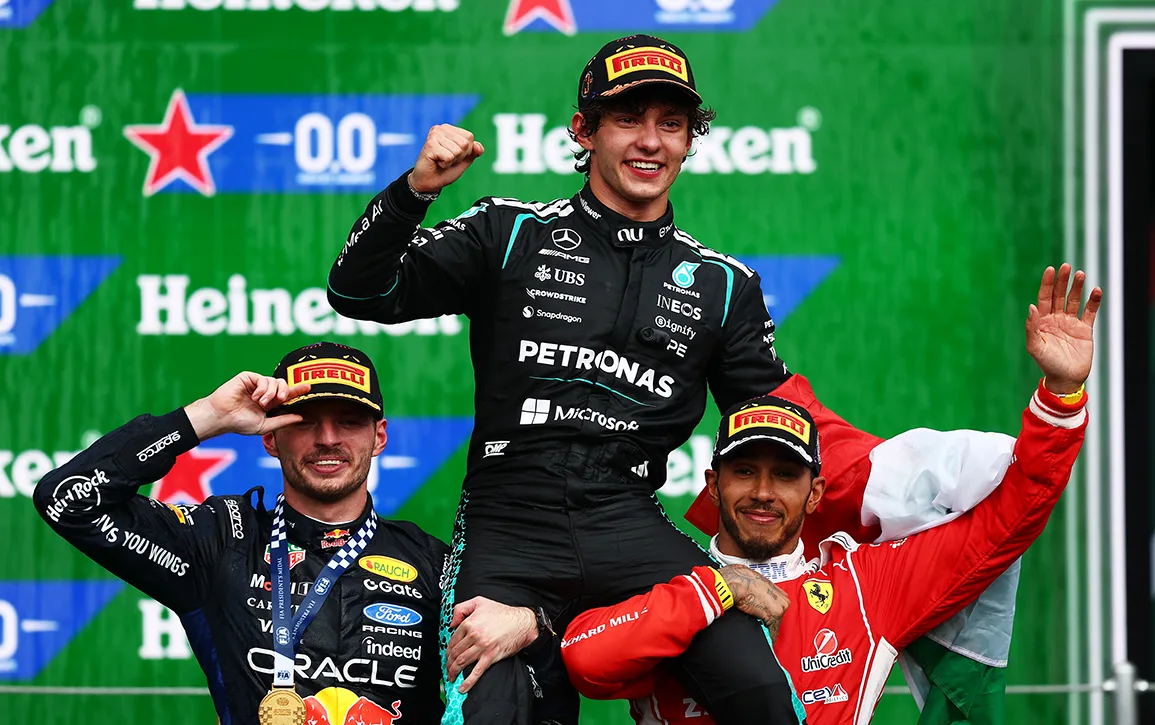
    In Mexico City, Hamilton took his first pole position for Ferrari, but Verstappen won from fifth on the grid after the two Ferraris tangled on the first lap. Antonelli finished third, which was enough to make him champion with four rounds to spare.

    In SĂŁo Paulo, Norris converted pole into a 14.6-second win in a race that began wet, dried out and ended in rain. Antonelli led early, spun at Turn 1 on lap 20 and finished fifth. With George Russell fourth, Mercedes secured the constructors’ championship. Verstappen started 21st after a power unit change and finished second.

    Ferrari: the win that got away in Mexico

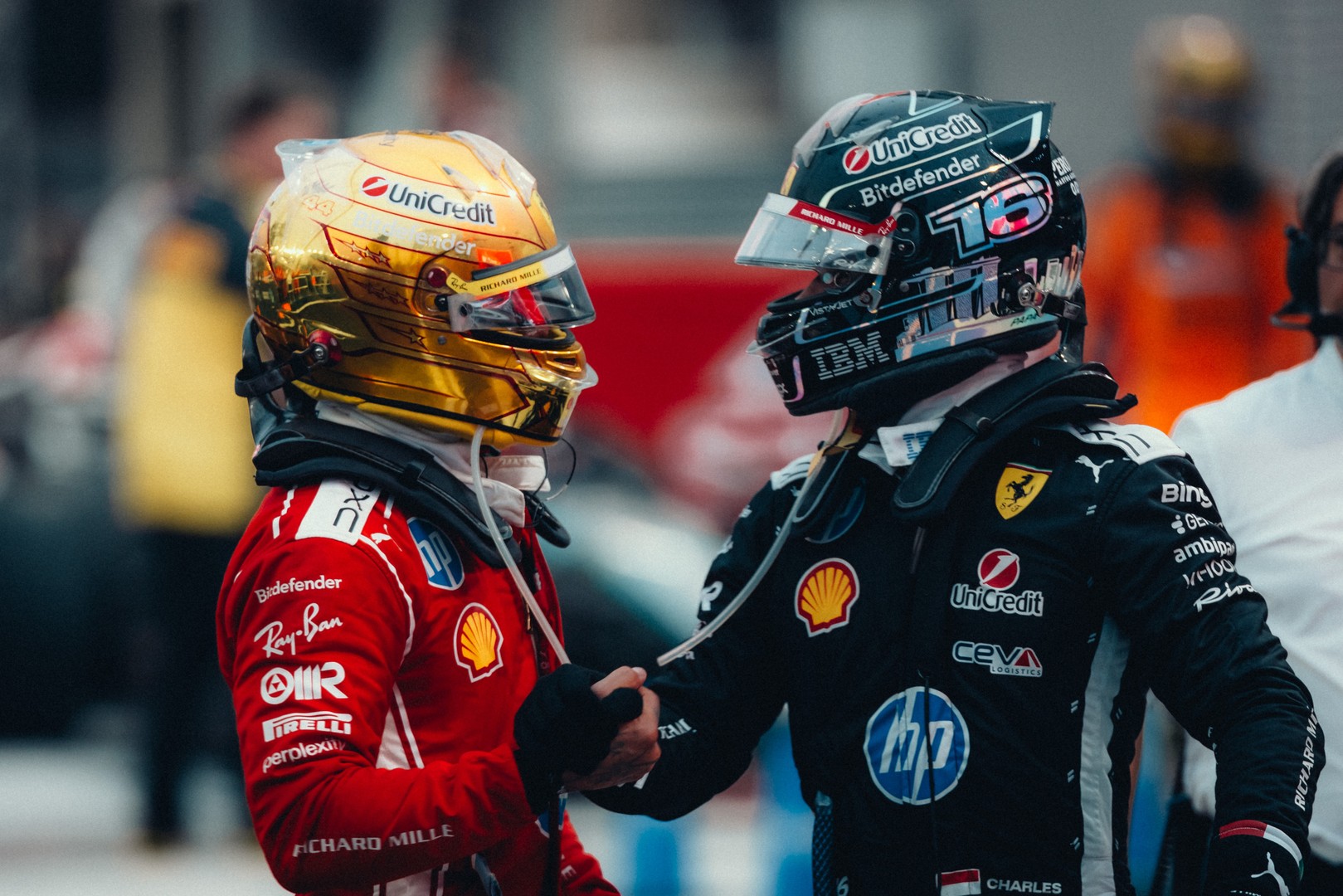
    Mexico was Ferrari’s best opportunity since the summer. Hamilton started on pole and Leclerc third. On the opening lap the pair went side by side through Turn 4, both ran wide, and Leclerc emerged in the lead. The stewards gave him a five-second penalty for gaining an advantage off the track.

    He served it at his pit stop, which handed the lead to Verstappen. Hamilton finished 0.8 seconds behind the Red Bull and Leclerc was fourth. Hamilton said the incident cost Ferrari the race. Fred Vasseur said “we had a 1-2 on the table”, criticised both drivers for a lack of respect towards the team’s staff, and declined to say which of them was at fault.

    The facts support the view that the move was the turning point. Leclerc was the driver penalised, and without the penalty Verstappen would not have inherited the lead. Whether Ferrari would have held a charging Red Bull to the flag is less certain, but second and fourth yielded 13 points fewer than a one-two.

    It was also not the first time. At Monza in September the two made contact at the first chicane; Hamilton went through the gravel and finished sixth, and Leclerc, who accepted the fight had gone too far, crashed out a lap later. At Zandvoort, Hamilton was left behind his team-mate on fresher tyres and finished fourth. Brazil brought a further six points from eighth and ninth places.

    Antonelli: how the title was won

    Russell won the opening race in Australia. Antonelli then won five in succession (China, Japan, Miami, Canada and Monaco) and led the championship from Japan onwards. A retirement in Barcelona and a non-score at Silverstone briefly narrowed the gap, and he answered with victory in Belgium.

    The decisive weekend was Monza. He started 19th after an engine penalty and won, while Hamilton, his closest challenger at the time, fell from 59 points behind to 76. By the end of Austin the margin over Russell was 123 points. He now has 390, with Verstappen second on 279.

    His approach has drawn as much comment as his results. Toto Wolff has singled out the maturity with which he handles pressure, and described him as grounded and entirely focused on racing. The detail bears that out. He lives in a flat near his family home, washes his own car, does not drink, and will keep the number 12 next year in place of the champion’s number 1, saying it helps him stay humble. Those accounts come from Antonelli, his family and his team, so they are a sympathetic portrait, but they are consistent.

    Red Bull: a narrow window and a driver who widens it

    Red Bull’s car remains difficult to predict. It won in Malaysia, Singapore and Mexico, yet in Austin the team misread the tyres, and in Brazil Verstappen described the car as a disaster to drive, with severe oversteer that the team has yet to explain. Its management has acknowledged a recurring problem in which the car’s performance deteriorates during a stint.

    Verstappen’s results have been far steadier than the car. He finished third, first and second across these three races, the last of them from 21st on the grid, and has three wins for the year. Red Bull scored a double podium at Interlagos through Hadjar’s third place, which is why they hold third in the standings.

    McLaren: a welcome win, but not a title defence

    Norris was the class of the field in Brazil: fastest in first practice, on pole in the wet and composed through changing conditions. The team had brought upgrades, and the result will lift a group that has had little to celebrate.

    It does not alter the wider picture. The reigning champions are fourth with 398 points, 254 behind Mercedes, and Norris has three wins all season. Oscar Piastri has 152 points to Norris’s 246. One strong weekend is encouragement for 2027; it is not the form of a team defending a title.

    The constructors’ fight

    TeamPoints
    Mercedes (champions)652
    Ferrari510
    Red Bull415
    McLaren398
    Racing Bulls114
    Alpine69
    Haas31
    Audi28
    Williams12
    Aston Martin7
    Cadillac0

    Ferrari’s hold on second is more secure than recent weeks suggest. They lead Red Bull by 95 points with a maximum of 129 available, so it would take a collapse to lose the place. The trend is less comfortable: Red Bull and McLaren each took 25 points out of that lead in Brazil alone.

    The points dropped at Zandvoort, Monza and Mexico matter for that reason. Converted, they would have put second place beyond doubt by now. The live contest is for third, where Red Bull lead McLaren by 17.

    The midfield

    Racing Bulls are comfortably fifth and Alpine sixth. Below them the gaps are small. Haas lead Audi by three points for seventh, and Williams are five ahead of Aston Martin. Cadillac have yet to score.

    The drivers’ table is closer still. Liam Lawson is the best of the rest on 89 points. Pierre Gasly (42) is four ahead of Arvid Lindblad (38) for tenth, with Franco Colapinto (27) and Oliver Bearman (23) next. Gabriel Bortoleto and Nico HĂĽlkenberg are level on 14, and Esteban Ocon, Fernando Alonso and Carlos Sainz are tied on seven.

    What comes next

    Las Vegas is next on 22 November, followed by Qatar and Abu Dhabi. The titles are decided. Third place in the constructors’ championship, second in the drivers’ standings and most of the midfield are not.

  • F1 2027 regulations: the FIA’s new rules to wall off F1 staff from non-F1 work

    F1 2027 regulations: the FIA’s new rules to wall off F1 staff from non-F1 work

    The short version

    • From 1 January 2027, F1 teams must keep people who work on F1 apart from people who work on non-F1 projects: separate work areas, separate IT systems, and no information flowing from the non-F1 side into F1.
    • Moving staff between the two sides is allowed, but it is slow. Going into F1 means three months of doing no work on either side, then 12 months of F1 work only. Going the other way locks you into 12 months of non-F1 work.
    • The FIA can walk into a factory and audit the IT. Teams have to keep access records for three years, and the team principal has to sign off the IT policy.

    The 2027 F1 regulations were issued on 19 October 2026, and Article F6 of the Operational Regulations is where the 2027 F1 regulations spell out how teams must separate their F1 operation from everything else they do. Here is what it actually says, in plain English.

    Who it applies to

    The article covers every company in a team’s legal group, with exceptions for companies that only ever do one type of work and share no facilities or restricted IT with the other side. Staff fall into three groups:

    GroupWho is in it
    Restricted F1 workforcePeople working on F1 (and power unit supply, customer team support and FIA projects)
    Restricted non-F1 workforcePeople working only on non-F1 activities
    Non-restricted workforceThe CEO, team principal, CIO and board, plus staff in marketing, HR, finance, legal, catering, facilities, procurement, logistics and IT support, among others

    The first two groups must never access each other’s areas or each other’s work. The third can work on either side.

    Physical separation

    F1 and non-F1 staff must work in separate premises or in separate, dedicated parts of a building. Nobody in either restricted group may do their job from a shared space. Teams need an electronic access system to control and monitor entry.

    Type of areaExamplesWho can use it
    F1 area / non-F1 areaOffices and workspacesOnly their own side
    Restricted shared areasWind tunnels, driver-in-the-loop simulators, dynamometers, test benches, data centres, meeting roomsBoth sides, but never at the same time
    Non-restricted shared areasEntrance halls, corridors, canteens, wellbeing areas, manufacturing and assembly, storage, car parksEveryone at once, but no core work there

    There is one carve-out. A team can designate a small number of F1 staff as approved operational support personnel, who may enter a shared area while the non-F1 side is using it, but only for support, safety or facility management that cannot wait. They must not do F1 work in that time, and must not pull anything useful back from what they see. The team has to keep written justifications and contracts covering sensitive information, and keep records of every approved person for a rolling three years.

    IT separation

    This is the stricter half. The aim is that nobody on the F1 side can access, change, download or use anything produced by the non-F1 side. Systems must be virtually segregated, or duplicated if virtual separation isn’t enough, with one copy for F1 and one for non-F1.

    • Every user gets a unique login. Shared logins are allowed only where there is no reasonable alternative, with a written justification kept for three years, and never across the F1 and non-F1 sides.
    • Output from each side must be stored in an area the other side cannot see.
    • Firewalls and network controls must block connections between the two sides’ restricted systems.
    • Systems need audit trails, and the team must keep evidence of permissions for three years.
    • The team must write an IT segregation policy, signed by its CIO, CFO and team principal, covering how it grants access, audits itself and trains staff, and make it available to the FIA.

    The one-way street

    Information is allowed to travel from F1 to non-F1, but only as a formal permitted transfer. The non-F1 side must request it, the F1 side must approve it, and it must be recorded. Any discussion has to be limited to how the output might be used outside F1, held on a recorded and transcribed video call, and the recording is available to the FIA. Nothing flows the other way. The rules say outputs from the non-F1 side may not be shared with the F1 side in any circumstances.

    Moving people between sides

    MoveWhat is required
    F1 to non-F1New contract with a new job title. Old IT permissions withdrawn by the end of the working day before the move, and new ones (including a new email account) issued, with no access to F1 data. Then 12 consecutive months of non-F1 work only.
    Non-F1 to F1At least three months before the move: no F1 or non-F1 work, no restricted IT access, and old permissions withdrawn. New contract and new IT permissions. Then 12 consecutive months of F1 work only.

    In both cases the person’s pay for the entire year of the move counts toward the team’s relevant costs, subject to the financial regulations. Teams must log every permission withdrawn and granted, and keep those logs for three years.

    No sneaking round it

    Article F6 also lists banned workarounds at length. Teams may not use messaging systems, external drives, permitted transfers, staff movement, contractual arrangements or third-party go-betweens to get around the rules, or to swap or solicit know-how between F1 and non-F1 work. The FIA can carry out physical inspections of facilities and IT forensic audits at any time, and teams must cooperate and act in good faith.

    What it means

    The regulations do not say why they exist. The long-running paddock concern is that sister companies and side projects could feed know-how into F1 teams while their pay sits outside the cost cap. Nothing has been proved, and the rules do not name any team or project. What they do is replace trust with paperwork: separate buildings, separate logins and a three-year paper trail that the FIA can ask to see at any time. Compliance will cost money too, and teams with big non-F1 operations will feel it most. Whether it closes the loophole or just rewards the team with the best lawyers is a question for 2027.

  • 2026 United States Grand Prix preview: Antonelli’s title shot, McLaren’s mess and Red Bull’s momentum

    2026 United States Grand Prix preview: Antonelli’s title shot, McLaren’s mess and Red Bull’s momentum

    The short version

    • Kimi Antonelli can clinch the championship in Austin, but only if he wins, George Russell finishes ninth or lower, and Lewis Hamilton finishes fifth or lower. At 20 years and 61 days he would be the youngest world champion in F1 history.
    • Max Verstappen has won the last two races and cut McLaren’s constructors’ lead to seven points. Lando Norris’s sprint crash with Oscar Piastri didn’t help McLaren.
    • There is no sprint this weekend, and the forecast is hot and dry.

    Antonelli: the youngest champion ever, maybe

    Antonelli leads Russell by 102 points, 340 to 238. A title in Austin would make him 20 years and 61 days old, taking the youngest-champion record from Sebastian Vettel, who was 23 years and 134 days when he won in 2010.

    The maths is stricter than the headline suggests. Five rounds remain after Austin, which leaves 125 points on the table. A win takes Antonelli to 365. If Russell finishes ninth he reaches 240, a gap of exactly 125. A tie on points would go to race wins, and Antonelli would have nine against a maximum of eight for Russell. So ninth is the cut-off for Russell. Hamilton, on 229, must finish fifth or lower, because fourth would keep him inside the gap.

    Austin resultWhat it means
    Antonelli wins, Russell P9 or lower, Hamilton P5 or lowerChampion in Austin
    Antonelli wins, but Russell or Hamilton finish higherTitle decided in Mexico at the earliest
    Antonelli doesn’t winCan’t clinch this weekend

    A win would also end the title hopes of Verstappen (119 back), Leclerc and Norris. Verstappen is mathematically alive unless Antonelli outscores him by six or more.

    The catch is that Russell, who is on 238 points, has to have a bad day. He did finish ninth in Singapore, but from the back of the grid after a power unit penalty. Short of a mechanical failure or one of Mercedes’ puzzling weekends, he’s more likely to be on the podium. The most probable outcome is that the party gets postponed.

    Red Bull’s surge

    Verstappen has taken the last two grands prix and the Singapore sprint, and was second in Baku. He was seven points short of a perfect score across that triple-header. He’s fourth in the standings on 221 points, and Red Bull’s recent form has people asking who really has the quickest race car. Mercedes lead the championship but are still working out the upgrade they brought to Malaysia.

    McLaren: how to lose points to yourself

    On the final lap of the Singapore sprint, Norris dived up the inside of Piastri at Turn 5 and the two collided. Piastri retired and Norris limped home eighth. McLaren banked one point from what should have been about nine. The stewards took no action, ruling that both drivers contributed.

    Norris’s reaction took two days to arrive. On Saturday he insisted the move was on. On Sunday, after finishing fourth in the race, he reversed himself. He said he should never have attempted it, even if the move was on, apologised to the team and said he’d been told off in internal talks. Piastri, for his part, said he wasn’t that bothered by a sprint result. The team principal was blunter, calling the damage to the team material.

    Constructors’ points are the cost. The gap to Red Bull was 18 before Singapore, then 11 after the sprint, then 7 after the race. One former technical director estimated the lost points could cost McLaren around $10 million, although how he got to that number isn’t explained, so take it as a ballpark. McLaren are bringing further upgrades to Austin.

    Constructors’ standings and the midfield

    TeamPoints
    Mercedes578
    Ferrari444
    McLaren339
    Red Bull332
    Racing Bulls100
    Alpine68
    Haas30
    Audi23
    Williams12
    Aston Martin7
    Cadillac0

    The top four is a proper fight. Ferrari are 105 clear of McLaren, but McLaren and Red Bull are separated by seven. The midfield is less tight than it sounds. Racing Bulls lead Alpine by 32, and Alpine are 38 clear of Haas. The real scrapping is further down. Haas lead Audi by seven, Williams lead Aston Martin by five, and Aston Martin lead Cadillac by seven. Cadillac are the only team still without a point, and with no sprint in Austin there are fewer points to go around.

    The weather

    After Malaysia and Singapore, Austin should feel like a holiday. Forecasts put highs near 30°C on Friday and Saturday and around 29°C on Sunday. Rain chances are low: about 3% on Friday and 7% on Saturday and Sunday. The only weather problem is heat, which will test tyre management.

    Also in the paddock

    F1 has signed a 10-year deal for a Rwanda Grand Prix, its first African race since Kyalami in 1993. Haas have also signed Rafael Camara for 2027 to partner Oliver Bearman.

    What to watch

    A 20-year-old could be crowned on Sunday. Verstappen is chasing a hat-trick of wins. McLaren have a mess to clean up, and the whole thing starts at 22:00 on a hot Texas evening with no rain in sight. Clear your Sunday night and stock up on coffee.

    Image courtesy Pirelli Motorsport

  • Ferrari strategy in Singapore: a sound plan, a costly call and a trust problem

    Ferrari strategy in Singapore: a sound plan, a costly call and a trust problem

    The short version

    • Verstappen won the Singapore Grand Prix by 7.0 seconds from Charles Leclerc. Lewis Hamilton went from third on track to sixth after staying out under the Virtual Safety Car.
    • Ferrari say they told both drivers to pit. Hamilton says he missed the pit entry, then chose to stay out, and has taken the blame. Both can be true, and the radio that would settle it hasn’t been published.
    • Ferrari already have more points than in the whole of 2025 (444 against 398). That is real progress. At Ferrari, progress is not a result.

    Ferrari strategy has always been a spectator sport, and Singapore added another episode. A split plan, a Virtual Safety Car, a missed pit entry and an apology on the cool-down lap. What it doesn’t settle is the bigger question: when the pit wall and the driver disagree, who is supposed to win the argument?

    How the race went

    Verstappen took pole, Leclerc was second and Hamilton third. Verstappen and Leclerc started on softs. Hamilton started on mediums, Ferrari’s way of covering both bets on a tyre nobody could read. Leclerc had a run at Turn 1, Verstappen closed the door, and Leclerc stayed within a second for the first 15 laps. Then Verstappen pulled away.

    LapWhat happened
    StartVerstappen pole. Leclerc P2 on softs, Hamilton P3 on mediums
    19Hamilton pits from the fading mediums to softs
    25Leclerc pits for mediums, about 9s behind Verstappen
    33Verstappen pits and keeps the lead
    39VSC for Lance Stroll’s stopped car. Leclerc pits for softs, about 17s behind. Hamilton stays out
    FinishVerstappen, Leclerc (+7.0s), Antonelli, Norris, Piastri, Hamilton

    Hamilton’s old softs faded. Leclerc passed him, then Antonelli, Norris and Piastri all followed him past. A likely podium became sixth place.

    The strategy: clever or chaotic?

    Splitting the strategies at the start was defensible. Ferrari were unsure whether the medium or the soft would last, and the sprint, affected by wet running, gave them poor tyre data. The medium turned out to be the worse race tyre, so Hamilton stopped early. That is a plan working as designed, not a plan going wrong.

    The trouble came after. One analysis of the race argues Leclerc’s lap-25 stop dropped him in front of Hamilton, who was quicker at that point, and cost Hamilton roughly two seconds. Reports say Hamilton asked to be let through, and offered to swap back, and heard nothing. Vasseur defended the call. Whichever side you take, the optics are the same: two cars, one team, and a driver asking a question the pit wall didn’t answer.

    The VSC call

    This is the part everyone is arguing about. Vasseur says Ferrari called both cars in for a double stack and Hamilton chose to stay out. Hamilton says the team called him in, he missed the pit entry, and he then decided to hold track position. After the flag he said: “Sorry boys. I let you down today with that strategy.”

    There is also a theory, popular online, that the pit call never reached him. The evidence for that is a gap in the published radio, which proves nothing either way. What is reported, though not confirmed by Ferrari, is that Hamilton had asked for the pace of soft-tyre runners at the end of their stints and was given current lap times. If true, that is thin information to base a gamble on.

    The cost was real. Vasseur said P2 and P3 were on offer. One analysis has Hamilton losing about 2.5 seconds per lap to Leclerc over the closing stint. Hamilton has taken full responsibility, which deserves to be said plainly. Whether the information he had justified the decision is a separate question, and that’s the one Ferrari need to answer.

    Does Hamilton trust the pit wall?

    Three recent races tell the story, and none of them paints Hamilton as a rebel.

    RaceThe situationHamilton’s responseResult
    ZandvoortFerrari didn’t swap him past a slower Leclerc on older tyresSarcastic radio, then compared Ferrari unfavourably with MercedesP4
    SepangPit wall floated an intermediate gamble on lap 5Declined and stayed on slicksP3, 4.9s behind Verstappen
    SingaporeCalled in under the VSCStayed outP6

    Sepang was a week earlier, and it taught Hamilton that overruling the pit wall can work. Singapore taught him it can also cost a podium. Neither race proves he distrusts the team. They show a driver who backs his own read when the information is thin, and a team that has handed him thin information more than once. Zandvoort suggests the communication is the pattern, not the exception.

    Could Leclerc have won?

    Probably not. Verstappen led by about 9 seconds when Leclerc stopped on lap 25 and about 17 when he stopped under the VSC. Leclerc finished 7.0 seconds behind, so on fresh softs he took about 10 seconds back in 23 laps. That sounds promising until you remember Verstappen was managing his race.

    Leclerc himself said Red Bull had too much pace in the opening stint. He also thinks he misjudged Verstappen’s early power deployment problems and didn’t spend battery to force a pass. He doesn’t think that changes the result. Had he got ahead at Turn 1, he would have led with the faster car sitting behind him on a track where passing is hard. That’s a long way from a win. The honest answer is that second was the realistic ceiling, and Ferrari got it.

    The Ferrari tax

    Context matters. In 2025 Ferrari finished fourth with 398 points, with no wins, and Hamilton had no podiums. This year they are second with 444 points, two wins and a seven-time champion who is third in the drivers’ standings. Mercedes have 11 wins, so Ferrari are clearly the second-best team on the grid and clearly not the best.

    That is the Ferrari problem. Anything short of a win is failure, a seven-time champion in red adds extra scrutiny, and every sketchy call arrives with an audience. Sepang’s slick gamble and Singapore’s split-and-pray plan did the team no favours.

    And then there is Vasseur

    Strong rumours have been circulating since late September that Ferrari’s senior leadership has a succession plan to ease Vasseur out after this season. Nothing has been confirmed, and nobody has ruled it out either. Ferrari moved quickly, saying within days that they have full confidence in him. Both drivers backed him publicly: Hamilton called him a fantastic leader and Leclerc said he trusts him. Vasseur says his relationship with CEO Benedetto Vigna and chairman John Elkann is a very good one. Christian Horner, a man with time on his hands, called Ferrari a dream job.

    None of that is confirmed, and Ferrari have publicly backed him. But the story hasn’t gone away for weeks and reappears after every race. Smoke isn’t fire. Still, a team that issues a vote of confidence and then has to repeat it a week later is telling you something. No change has been announced at the time of writing. Austin is next.

    📸 courtesy Ferrari Media

  • 2026 Singapore Grand Prix preview: Mercedes need answers, the FIA needs dry weather

    2026 Singapore Grand Prix preview: Mercedes need answers, the FIA needs dry weather

    The short version

    • Round 17 is the final sprint weekend of 2026.
    • George Russell, last year’s winner, starts Sunday’s race from the back after taking a fifth power unit. Kimi Antonelli leads him by 84 points and cannot clinch the title this weekend.
    • The FIA says it has found the cause of Sepang’s software failure. Nothing new is planned for Singapore, and a further wet-weather update is due before Austin.

    Mercedes: a penalty and a question

    Mercedes were quickest in two of three practice sessions at Sepang, then lost their pace in qualifying. Deputy team principal Bradley Lord blamed a mix of the new upgrade, track temperature and surface. He said the drivers were on the throttle in slow corners, which hurt tyre temperatures. Marina Bay has plenty of slow corners.

    Russell’s lap-50 retirement was a mechanical failure on the power unit side, Lord said, and the root cause is still unknown. The replacement is Russell’s fifth unit of the year, beyond the four-unit allocation, so he starts Sunday from the back of the grid.

    Antonelli leads 320 points to 236. Singapore offers 33 per driver (eight for the sprint, 25 for the race), which is not enough to settle anything. The earliest he can clinch is the US Grand Prix on 25 October. Even then he would need to outscore Russell by at least 42 points across the two weekends, out of a maximum possible swing of 58. A long shot, but not a closed door.

    What the FIA found at Sepang

    The FIA’s review is complete. It blames a bug in the power unit software that limits electrical power around the lap. In the wet a 250kW reduction applies, and some cars running low revs in certain sectors lost more power than intended and could not recover it. That is how a formation lap became a car park. The FIA says it found the fault within minutes and sent teams a revised configuration during the red flag. It rejects the suggestion the code was never tested, saying it ran in simulation and in first practice at the Belgian and Dutch Grands Prix. Whether a bug that sailed through those sessions counts as tested is a question for the philosophers.

    For Singapore no further changes are planned. If it rains, cars revert to what reports call the Malaysia configuration, though they don’t say whether that means the original or the patched version. A further wet-weather update is due before the US Grand Prix.

    The forecast is less settled than the software. There is chance of rain at 30% on Friday and 40% on Saturday and Sunday. Humidity could reach 83% at the start of the race. Weather forecasts in F1 are proving less reliable than the Aston Martins at this stage. Things could change.

    Ferrari: a podium, a stall and noise upstairs

    Lewis Hamilton’s third place was his first podium since Silverstone, and it followed a scare. His car stopped on the straight during the formation lap and had to be restarted. Ferrari still can’t explain why, and Fred Vasseur said on Sunday he had no clear answer. Ferrari are second on 405 points, 151 behind Mercedes.

    The leadership story has not moved. Ferrari said on 29 September that it had made its choices and had full confidence in Vasseur. Hamilton said on 1 October that “there are also people above” the team principal, and Vasseur called his relationship with Benedetto Vigna and John Elkann a very good one. No change has been announced as of Thursday.

    Red Bull and McLaren

    Max Verstappen arrives with Red Bull Ford’s first win and first pole, level with Lando Norris on 188 points. Red Bull sit 18 behind McLaren in the constructors’ table. Singapore remains a gap on his record: four podiums, three of them second places, and no win.

    McLaren concede the MCL40 may not suit Marina Bay’s slow 90-degree corners, and say the latest upgrade hasn’t delivered in Baku or Sepang. They did win here in 2024 and clinched last year’s constructors’ title at this race.

    The circuit and the tyres

    Marina Bay is 4.927km, with 19 corners and 62 laps, and Hamilton holds the lap record: 1:33.808, set last year. Every edition up to and including 2023 had at least one Safety Car, 24 deployments in total, but 2024 and 2025 had none. Russell won last year’s race from pole without one, so the old certainty has been downgraded to a tendency.

    Pirelli bring the C3, C4 and C5 (hard, medium and soft) again and expect a one-stop to be the preferred strategy. The soft may get a look from more than one team on Sunday. With a single practice hour, the sprint is where teams will learn how it behaves.

    Midfield

    TeamPoints
    Racing Bulls90
    Alpine68
    Haas27
    Audi17
    Williams12
    Aston Martin7
    Cadillac0

    Racing Bulls lead Alpine by 22 after Alpine failed to score at Sepang. Fernando Alonso’s eighth place there was Aston Martin’s best result of a difficult season and cut the gap to Williams to five points. Cadillac remain the only team without a point, though the sprint pays down to eighth, which gives the back of the grid a second chance this weekend.

    Sepang showed what happens when everything that can go wrong does. Marina Bay, with its humidity, one practice hour and a sprint thrown in, is a decent venue for a rematch. Bring a towel.

  • 2026 Bahrain Grand Prix: Verstappen wins Sepang’s long, wet afternoon as Russell’s title hopes fade

    2026 Bahrain Grand Prix: Verstappen wins Sepang’s long, wet afternoon as Russell’s title hopes fade

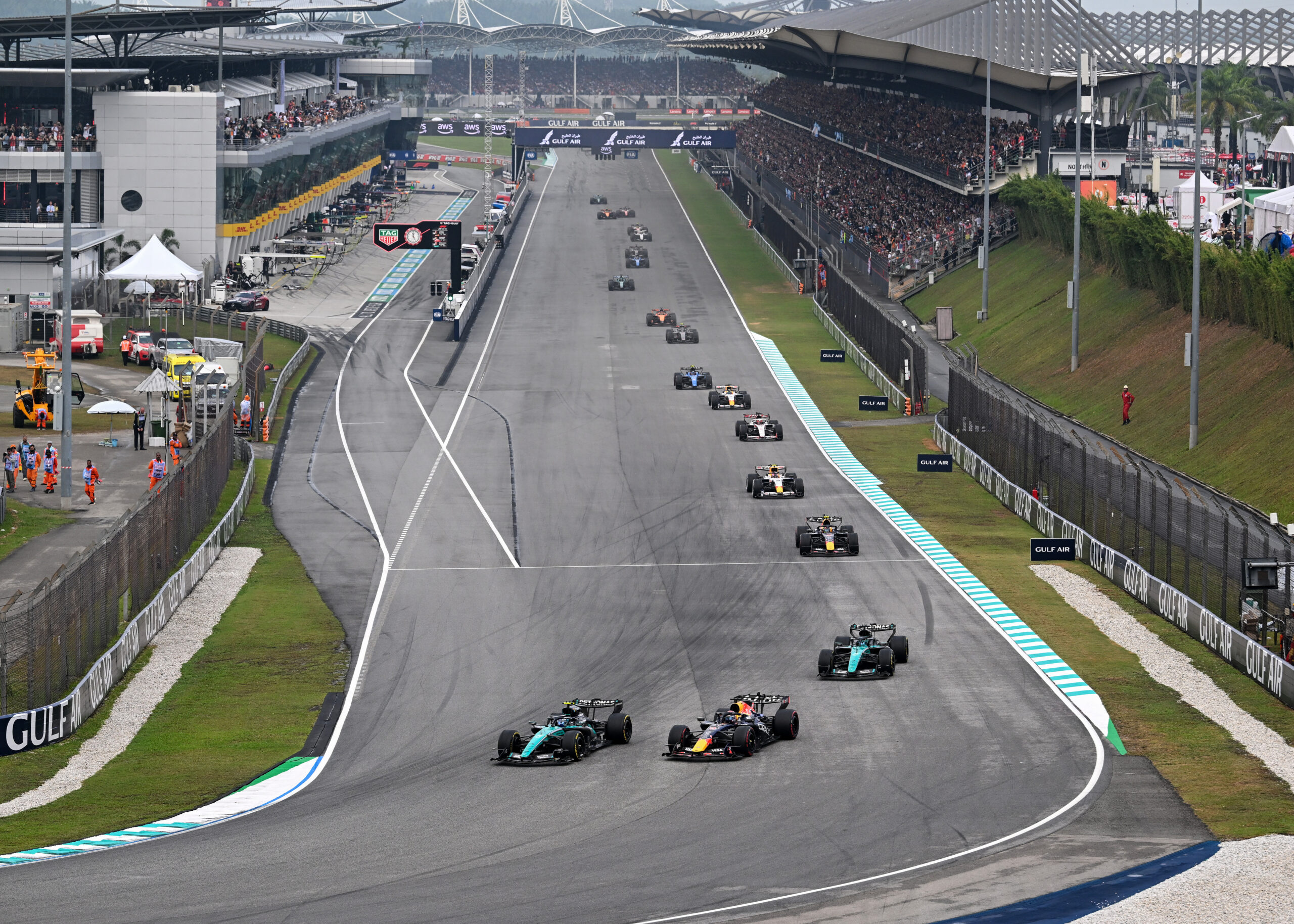
    Formula 1 came back to Sepang after nine years and found it much as it left it: hot, wet and unpredictable. What nobody expected was a software problem. By the time the field was finally racing, the Bahrain Grand Prix in Malaysia had already been through a thunderstorm, a red flag and an emergency software update. Max Verstappen was the only man who seemed untroubled by any of it.

    The Dutchman had been quickest in all three parts of qualifying. His 1:35.130 put him three tenths clear of Lewis Hamilton. It was his first pole of the season and the first for the Red Bull-Ford partnership, and Ford’s first pole since Rubens Barrichello’s Stewart at Magny-Cours in 1999. Isack Hadjar qualified third but took a five-place engine penalty, which promoted Kimi Antonelli to third on the grid. Mercedes had brought an upgrade to Malaysia and looked baffled by it. George Russell qualified eighth and started seventh.

    A storm arrived just before the scheduled start, and the start was delayed by 40 minutes. When the field finally left on the formation lap on intermediates, the queue bunched up and several cars nearly stopped. A number of them, Verstappen and Hamilton among them, then would not go again. The drivers had their feet on the throttle and nothing happened. The red flag came out.

    The explanation is simpler than it sounded on the radio. Nearly half of a 2026 car’s power is electrical, and the way that power is deployed is governed by standard software the FIA supplies. That software had a flaw nobody had found, because this season has produced almost no proper wet running to test it. When a car slowed to a near standstill, the bug stopped the electrical power from being released again. FIA single-seater director Nikolas Tombazis admitted the software had not been tested as thoroughly as he would have liked. His engineers wrote a fix on the spot, sent it to the teams, and the teams loaded it onto every car. The fix itself took about 20 minutes. Getting the race restarted took 53. Sergio PĂ©rez compared the experience to a rental kart running out of time. Fernando Alonso, whose Aston Martin has failed to finish half its races this season, joked that nobody had ever stopped a race on his account.

    When they finally got underway, only nine cars started on intermediates, among them Verstappen, both Mercedes and Hadjar. The Ferraris, the McLarens and most of the midfield gambled on slicks. Piastri, Stroll, HĂĽlkenberg and Bortoleto lost their nerve and pitted for intermediates before the standing start. The Mercedes pair got away better than Verstappen, and Liam Lawson flew into fourth. The slick runners lost time by the lap, and Leclerc, having clipped HĂĽlkenberg, gave up and pitted at the end of the first lap.

    Verstappen passed Russell on lap six and was all over Antonelli when Valtteri Bottas beached his Cadillac in the Turn 13 gravel. The safety car came out just as slicks had become the faster tyre. The leaders got a cheap change onto slicks and the gamblers got a reprieve. On the restart Verstappen went around the outside of Antonelli at Turn 1, and Russell took his teammate at Turn 5. Antonelli eventually repassed Russell on lap 21 without any help from the pit wall, and Verstappen’s lead had grown to 11 seconds by the second round of stops. Alex Albon’s stopped Williams brought out a virtual safety car and then a full one. Verstappen pitted, briefly lost the lead and took it back a lap later when Antonelli stopped. With four laps left he controlled the restart and won by 2.3 seconds. It was Ford’s first Grand Prix victory since 2003.

    Ferrari needed a good afternoon and got one. Hamilton went from the front row to 15th on the slick gamble, worked his way back to fifth by lap 22 and passed Hadjar into Turn 1 three laps from home for his first podium since Silverstone. Leclerc came from the pit lane on lap one to finish fourth. After a week in which the Italian press was openly writing Fred Vasseur’s successor’s name, a 27-point haul will not settle the question, but it gives his critics less to work with.

    Russell had the worst of it. He was running third on lap 50 when his power unit failed, his third retirement of the year. Toto Wolff said the failure had nothing to do with the safety car and apologised on the radio. Antonelli now leads by 84 points with seven Grands Prix and a sprint remaining. The arithmetic still allows a comeback. Russell needs to outscore Antonelli by around twelve points every weekend from here, and he himself called a fightback exceptionally unlikely. The Italian has eight wins and a teammate with an unreliable car. Short of something dramatic, the title is his.

    Further back, Lawson’s seventh and Arvid Lindblad’s tenth put Racing Bulls 22 points clear of Alpine, who failed to score. Esteban Ocon ran sixth early and finished fifteenth. Red Bull closed to within 18 points of McLaren. Alonso’s eighth place is Aston Martin’s best result of the season and moves them to within five points of Williams. Lance Stroll finished twelfth, which at Aston Martin this year counts as news.

    Honourable mentions go to Lawson for the start of the day, Hadjar for climbing from eighth on the grid to fifth, Norris for recovering to ninth after a trip through the gravel, and Pérez, who reached the flag after seven pit stops.

    Singapore follows next Sunday. Mercedes have a week to find the speed they lost here, Red Bull arrive with momentum for the first time this season, and Vasseur will face the same questions again.

    Media courtesy Pirelli Motorsport

  • 2026 Bahrain Grand Prix Preview: Sakhir’s race, Sepang’s weather

    2026 Bahrain Grand Prix Preview: Sakhir’s race, Sepang’s weather

    The 22nd Bahrain Grand Prix will be held roughly 6,000km from Bahrain. The race was due at Sakhir on 12 April, but it and the Saudi Arabian Grand Prix were scrapped after the outbreak of war with Iran made the Gulf unsafe for Formula 1. On 26 July, F1 and the FIA confirmed an agreement with the governments of Bahrain and Malaysia: the event would be revived at the Sepang International Circuit from 2–4 October, running as the “Formula 1 Gulf Air Bahrain Grand Prix in Malaysia” and slotting in as round 16 between Baku and Singapore.

    Who pays

    Bahrain keeps its race, and it keeps the bill. According to Sepang International Circuit CEO Azhan Shafriman Hanif, Bahrain is covering the F1 hosting fee, estimated at US$70–80 million. It also keeps all ticket revenue and sets ticket prices. Malaysia’s cost depends on who you ask. Prime Minister Anwar Ibrahim put it at RM16 million in track preparation. The circuit puts Malaysia’s share of local operating and preparation costs closer to RM40 million. Either figure is small next to the roughly RM300 million a year Malaysia estimates it would cost to run its own Grand Prix. That cost, along with falling ticket sales, is what pushed Sepang off the calendar after 2017.

    What’s changed at Sepang

    The 5.543km Hermann Tilke layout is the same one Formula 1 left behind. Sections were resurfaced in 2023, and more levelling work began in early September, but Pirelli says the surface behaves much like it did in 2017: abrasive, with little grip on Friday. The bigger change is the cars. In 2017 they ran on 13-inch wheels; the 2026 cars run on 18-inch rims and use active aerodynamics. The FIA has confirmed four Straight Mode zones: the start/finish straight, the back straight, the run out of Turn 3 and the run out of Turn 8. Pirelli is bringing the C2, C3 and C4 compounds, one step softer than the conservative choice.

    Meanwhile, since 2017…

    • Max Verstappen won the last race here, the day after his 20th birthday. He has since won four world titles.
    • Championship leader Kimi Antonelli was 11 years old.
    • Lewis Hamilton added three more titles and swapped silver for red.
    • The halo arrived and made believers of its critics.
    • Drive to Survive turned the paddock into a cast list.
    • DRS came and went.
    • Lando Norris became world champion, which some people still haven’t come to terms with.

    The weekend: bring an umbrella, and maybe a calculator

    Forecasts disagree. Friday is the most likely day for rain, with a 60–81% chance depending on the provider. Qualifying looks drier. For Sunday, estimates range from 30% to around 50% at lights out to 90%.

    Formula 4 South East Asia is the only support series, so there will be little rubber laid down. This could also be the first properly wet running for the 2026 cars, which would mean energy management on a wet track in a humid 35°C-plus heat index. Sepang has history here: the 2009 race was red-flagged in a downpour and awarded half points..

    The title fight

    Antonelli leads Russell by 66 points, 302 to 236, with eight rounds left including this one. Russell’s recent run has been his best of the year:

    • Monza: second, after a split-strategy call under the Virtual Safety Car handed the win to Antonelli.
    • Madrid: fifth, which pushed the gap out to 81 points.
    • Baku: pole position, then held off Verstappen by 0.196s for his third win of the season.

    The momentum is real. The maths still favours the driver with eight wins.

    McLaren’s pace is better than its points suggest. The team won in Hungary and Zandvoort, and at Monza Russell called them the team to beat. In Madrid, Norris was leading until the timing of the VSC and a slow stop dropped him to third. Baku was harder to explain. The upgrade package was held together with cable ties on Friday and the car was 1.4 seconds off the pace. By Saturday, Piastri had qualified third. He was running on the podium until he locked up at a restart and fell to 14th, and Norris was collected in the Alpine drivers’ collision. McLaren left with zero points.

    Ferrari are second on 378 points but 160 behind Mercedes. Hamilton’s win in Barcelona remains the high point. Since then, Leclerc has taken fourth place twice while Hamilton has managed a brake failure and a sixth. Reports suggest even the latest power-unit upgrade hasn’t moved them forward. Fred Vasseur is contracted until the end of 2027, but PlanetF1, GPblog and Corriere della Sera all report that Ferrari’s leadership is planning his succession. Antonello Coletta, JĂ©rĂ´me d’Ambrosio and, inevitably, Christian Horner have been named. Ferrari has confirmed nothing.

    The midfield

    The midfield “battle” is really two separate fights

    Racing Bulls lead Alpine by 15 points after Alpine’s drivers took each other out in Baku. Below that, Haas, Audi and Williams are separated by 15 points. In a rain-hit race, one lucky fourth place (12 points) would equal Williams’ entire season.

    The verdict

    Bahrain paid for it. Malaysia supplies the weather. None of the 22 drivers has raced this generation of car here, and half the grid has never raced here at all. Singapore is seven days later. Nobody should get comfortable.

  • F1 2023: Hungarian Gp Review – Red Bull’s Record-Breaking Streak: 12 Wins and Counting!

    F1 2023: Hungarian Gp Review – Red Bull’s Record-Breaking Streak: 12 Wins and Counting!

    There aren’t many superlatives that remain to be espoused in honour of the Red Bull team. So, we’ll give you the stats instead. The latest win in Hungary has taken Red Bull to a record-equaling twelfth win in a row. They share this auspicious record with the 1988 McLaren. The difference in 2023 is that there are still eleven races to be run. There’s no telling then where Red Bull’s record of consecutive wins will end.

    A seventh win in a row for Max Verstappen has also taken him into some elite company. From Ascari, to Michael Schumacher (twice), to Seb Vettel and Nico Rosberg, Verstappen joins a short list of drivers to win seven grands prix consecutively. The outright record of nine wins, is held by Seb Vettel. There is every expectation that Verstappen will blow past this record in relatively short time. This weekend’s Belgian Grand Prix could well be number eight.

    The Saturday qualifying result would have come as a surprise to many given the current run of form. Lewis Hamilton delivered a truly impressive lap to snatch pole position by just three thousands of a second. It was the Brit’s first pole since the Saudi Arabian Gp in 2021, some 33 races ago. The resurgent Hamilton brought with him a real sense of optimism that he could perhaps challenge for the victory. But it was nothing more than a short-lived fantasy.

    A poor start from Hamilton saw him drop behind not only Verstappen but also the two McLaren’s of Lando Norris and Oscar Piastri. And although he showed a good turn of pace towards the end of the race it wasn’t enough to recover to the podium.

    Formula 1 2023: Hungarian GPAs it were, once Verstappen took the lead, he disappeared into the distance quite rapidly. In fact, the Dutchman was leading by more than half a minute by the time the chequered flag appeared. In second place Norris drove yet another impressive race to hold off Checo Perez for a second consecutive podium finish. Perez, who qualified a lowly ninth, delivered the drive of the day, according to the fans’s vote, to finish third. The Mexican driver unquestionably pitched up on Sunday and delivered a drive that reminded everyone just how good he can be.

    Hamilton’s late charge saw him finish fourth ahead of Piastri in fifth. George Russell, who had to endure a qualifying faux pas, recovered from eighteenth to sixth place. It was yet another forgettable day for Ferrari as Charles Leclerc and Carlos Sainz trundled home in a lowly seventh and eighth; Leclerc having been demoted from sixth after incurring a five second time penalty for speeding in the pitlane. Aston Martin’s recent drop in performance was underlined too as Fernando Alonso and Lance Stroll finished ninth and tenth.

    The returning Daniel Ricciardo was rock solid in the AlphaTauri. He both outqualified and outraced teammate Yuki Tsunoda to finish thirteenth in what has been described as a very difficult car to drive. To deliver a performance such as that after only two days in a completely new car and environment is a perfect start to his return.

    Formula 1 heads straight to Belgium this weekend for a race around the famed Spa-Francorchamps circuit. Regardless of the weather conditions, which is notoriously unpredictable in these parts, there is unlikely to be any genuine threat to Red Bull’s dominance. At this point only unreliability or a freak turn of events are likely to stop Red Bull from owning the top step of the podium once more.

    All images courtesy of Pirelli Motorsport
  • F1 2023: Maximized Dominance: Verstappen Wins in Spain

    F1 2023: Maximized Dominance: Verstappen Wins in Spain

    The Max Verstappen winning juggernaut shows no signs of slowing down. With another commanding victory in Spain, the Dutchman has now amassed an impressive tally of 40 wins. What’s more, the prospect of his reign coming to an end seems increasingly distant, painting an ominous picture for his competitors. As Verstappen continues to assert his dominance, the rest of the Formula 1 grid faces an uphill battle to challenge his supremacy.

    Max Verstappen’s dominance in Spain was evident right from Friday practice. It carried through to Saturday qualifying too as, by nearly a half-second gap, he secured pole position, leaving his closest rival, Carlos Sainz, trailing in his wake. Verstappen’s performance on Saturday was so commanding that he didn’t even need to make a second run.

    There was no real hope of a close battle with Verstappen on race day but the start of any race brings with it at least an inkling of a chance. Nevertheless, as the lights went out  any and all hopes of a close battle for the lead quickly fizzled out. Verstappen expertly navigated the brief challenge for P1 and thereafter effortlessly extended his advantage, cruising his way to a third consecutive race win in the 2023 season. The Dutchman’s ability to maintain sustain his unmatched pace has undoubtedly solidified his position as the champion-elect this season.

    While Carlos Sainz showcased an impressive performance in qualifying, securing a solid starting position, Ferrari’s hopes for a strong showing gradually faded during the race. The pace of the Ferrari cars fizzled as the Spaniard struggled to maintain his position, eventually falling behind both Mercedes drivers by the end of the race.

    Formula 1 2023: Spanish GPDespite Ferrari’s upgrades, including a new sidepod configuration, it became evident that they hadn’t quite hit the sweet spot. The disappointment continued for the team as Charles Leclerc, plagued by a dismal qualifying session, failed to make it into the points, further adding to Ferrari’s frustrations. The race and performance by Ferrari served as a stark reminder that even with big upgrades, and perhaps big expectations, it may not play out as expected.

    While Ferrari’s upgrades failed to deliver the expected performance boost in Spain, Mercedes made notable strides in terms of race pace. Both Lewis Hamilton and George Russell showcased impressive performances, although they fell short of challenging Max Verstappen. Nonetheless, it was an encouraging step in the right direction for the Mercedes team. Like Ferrari, Mercedes introduced a newly styled sidepod along with several other upgrades. The second and third-place finishes for Hamilton and Russell, respectively, are certainly commendable results. However, Team Principal Toto Wolff remains cautious, emphasizing that there is still a long way to go before they can truly challenge Red Bull’s dominance. Nevertheless, these results serve as a vindication for the Mercedes team, as they now have confidence that they are heading down the right design path for their car.

    Checo Perez experienced yet another challenging qualifying session, which resulted in an eleventh-place start on the grid. However, the Mexican driver showcased his tenacity and skill by making a solid recovery, ultimately securing a fourth-place finish. Nevertheless, the truth remains that if Perez aims to mount a genuine challenge for the championship, his bad days need to be, well, not so bad. Elsewhere, Carlos Sainz trundled home in an underwhelming fifth place, highlighting the lack of pace from Ferrari. The two Aston Martin drivers, Lance Stroll and Fernando Alonso, showed respectable performances, finishing in sixth and seventh place, respectively. However, Aston, and likely the drivers, would be disappointed with this haul in a season that has been littered with podium finished for Alonso.

    Formula 1 2023: Spanish GPEsteban Ocon claimed the eighth position for Alpine and Zhou Guanyu of Alfa Romeo secured an impressive ninth-place finish. In the final points paying position was Pierre Gasly in the second Alpine car. Lando Norris secured a dazzling third place in qualifying but broke his front-wing against Hamilton’s rear tyre at the start of the race. The McLaren driver managed a lowly seventeenth place finish.

    Verstappen’s dominance in Spain showcased his exceptional driving skills and unwavering determination. With a commanding pole position and a flawless start, Verstappen effortlessly controlled the race from start to finish, securing yet another victory. His ability to consistently deliver exceptional performances, coupled with his relentless pursuit of success, is sight to behold as the second coming of Red Bull appears to gain more and more steam.

    All images courtesy of Pirelli Motorsport
  • F1 2023: Bahrain Gp Review – Verstappen picks up where he left off

    F1 2023: Bahrain Gp Review – Verstappen picks up where he left off

    The more things change, the more they stay the same. At least this is how most of the F1 field would feel after a complete domination of the opening race for the 2023 season.

    Red Bull ended pre-season testing without any great fanfare. But the defending champions were probably well aware of their own pace and what they might deliver in Bahrain. Despite appearances that Red Bull does not have the quickest qualifying car, to which there is certainly some proof, Max Verstappen and Checo Perez still locked out the front row of the grid.

    It was an equally straightforward start for Verstappen who led easily at lights out. It wasn’t quite the same for Perez who fell behind Charles Leclerc at the start. The Ferrari driver had opted out of a second Q3 run in Saturday qualifying to save a set of new soft tyres for the race start. It paid off too as Leclerc took second place. The strategy advantage didn’t come too much as it was evident straight away that Leclerc couldn’t live with Verstappen’s pace. By lap 13 the Dutchman had pulled a 10 second gap and never looked back.

    Behind the leading trio of Verstappen, Leclerc, and Perez was Carlos Sainz. However, the Spaniard didn’t seem to turn up this weekend and was well off the pace of the top three. Fernando Alonso had started fifth but was tagged by teammate Lance Stroll in the opening lap. Surprisingly, Alonso carried on without damage but with a bit of work to do if he was going to put the Aston Martin into a position worth shouting about.

    If you know Fernando Alonso, you’d know a few things about him. He’s had a knack of moving to teams at the absolute wrong time for most of his career. And to be fair, he has also been a highly destructive character within those teams. The time at McLaren and his treatment of the Honda mechanics is the perfect example of this. But. When he is on it there are few better to watch. This weekend he drove as brilliantly as he has ever done.; and that’s saying something given that this weekend marked his F1 debut a staggering 22 years ago. Aston Martin too have produced a car that Alonso has deemed “lovely”. It is genuinely competitive at this stage of the season, and it has made Alonso a very happy boy.

    Formula 1 2023: Bahrain GPAn audacious move up the inside of turn 10, where only Juan-Pablo Montoya had once dared to overtake, saw him snatch fourth place from Lewis Hamilton. As it were, an engine issue brought an end to Leclerc’s race and Alonso was now hunting down Sainz for the final step on the podium. The pair raced within centimeters of each other before Alonso scythed passed the Ferrari and into third. It’s no surprise at all that the two-time champion was voted driver of the day by fans as he not only drove a stonking race but that at the age 41 years old.

    While Sainz trundled home in fourth it won’t have been considered a good result for Ferrari. The team promised much more in pre-season. Granted, there is still the matter of 22 races to go this season, so there is some time yet. Hamilton was fifth for Mercedes but the once near-invincible team is clearly struggling, again, in 2023. So much so that Toto Wolff has seemingly already written off the season.

    In sixth place was Alonso’s Aston Martin teammate Lance Stroll. The Canadian driver deserves some big props for coming back from two fractured wrists and a broken toe just twelve days ago. It’s a mighty effort to finish as high as he did, and that without any testing in the car either. George Russell was seventh in the other Mercedes while Valtteri Bottas continues to shine as an Alfa driver in eighth. Pierre Gasly salvaged ninth for Alpine while Alex Albon took the final point in tenth, for Williams.

    Both McLaren cars of Oscar Piastri and Lando Norris failed to reach the chequered flag and Esteban Ocon, who racked up several time penalties, also racked up a DNF. Logan Sargeant, the American rookie, finished a solid twelfth for Williams.

    It’s on to Jeddah in two weeks with everyone already scratching their head about how they’re possibly going to beat Red Bull. It won’t be an easy prospect especially if you consider that the first non-Red Bull car finished roughly 35 seconds behind Verstappen and the first Mercedes was nearly a minute behind. There’s a long way to go yet in 2023 and so many incredible stories to tell. The question remains: Who is ready and able to take the fight to Max Verstappen and Red Bull?