

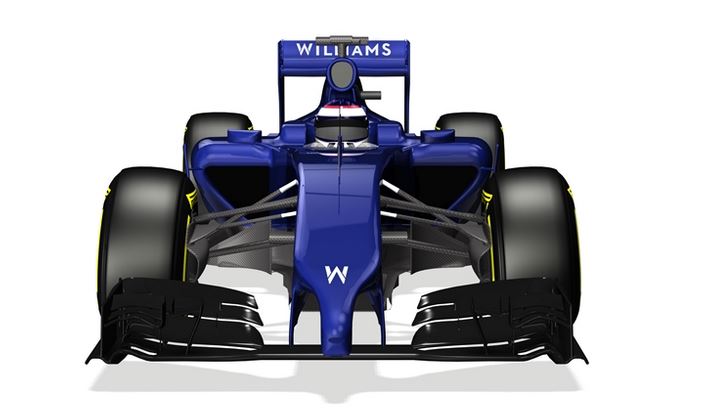
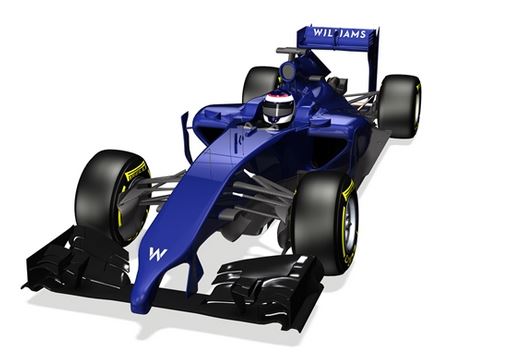
The Williams F1 team revealed the first images of their 2014 contender, the FW36 on Thursday via its website and Twitter.
The images released are a digital rendering of the car which is shown in an interim all-navy blue livery. The released images were met with much skepticism and criticism from fans on the social networks – specifically around the narrow nose which features on the FW36. The nose is far narrower and has even been reported to resemble that of an anteater but is necessary according to the team to meet FIA regulations while allowing for as much airflow as possible under the car. Most teams are expected to adopt similar solutions to meet the 2014 regulations.
According to the team, the FW36 is one of the “most technologically advanced Formula One cars produced by Williams” and is the culmination of more than two years’ research and development by the team’s technical departments. It is also incorporates the power unit from the team’s new partner, Mercedes-Benz.
 The FW36 will be the first Williams powered by a Mercedes engine, with the all new V6 turbo and Energy Recovery Systems. “This is the first time that Williams has worked with Mercedes in F1 and we’ve been very impressed,” says Williams Chief Technical Officer Pat Symonds. “Their professionalism and commitment have been notable and we’re as confident as we can be that the power unit will be competitive.”
“Overall the cars will need more cooling this year. The demands on water and oil cooling may be slightly diminished, but the ERS system is significantly more powerful and hence needs more cooling. We also have to cool the charge air from the turbocharger compressor which requires a substantial intercooler.”
According to the team, the FW36’s gearbox ran on the dyno for the first time at the beginning of November, before running with the full power unit several weeks later. It’s also the first eight-speed gearbox in Williams’ history.
Symonds explained, “We finished the gearbox relatively early. It’s completed a lot of running on the test rig and at Mercedes HPP in Brixworth, but you can’t take reliability for granted. It’s a completely new ‘box and it has to cope with a lot more torque than was the case with the V8.”
 The team also explained on their website that the weight of the car, when combined with the FIA’s ever more stringent crash tests, has been another big challenge for them. But they’re proud of the fact that the FW36 was one of the first cars to pass its crash tests prior to Christmas.


