Tag: testing

  • F1 2015: Australian GP Preview – All-set for Australia

    F1 2015: Australian GP Preview – All-set for Australia

    The pre-season testing sessions are complete and the Australian grand prix waits to either shatter the delusions or fulfil the promises made in Jerez and Barcelona.

    The Albert Park circuit in Melbourne, Australia is the first step in what can potentially be an enthralling season of Formula 1 racing.

    In a show of dogged determination and resolve the nearly defunct Marussia Formula 1 team has fought its way out of the abyss.   After months of hard work behind the scenes energy boss Stephen Fitzpatrick has been revealed as the investor behind the team which will now be known as Manor F1. While the team was unable to attend any of the pre-season testing sessions the car has passed the mandatory FIA crash tests. The governing body signed off on a revised 2014 chassis which will race in Australia.

    There is no doubt that McLaren will show up in Australia seriously underdone. The MP4-30 had a nightmarish amount of issues which ranged from oil pressure leaks to sensor problems to significant struggles with the MGU-K component. The Honda engine, in its first year of development, is rough around the edges and unable of being run at full-tilt by the team. At this stage it appears that Ron Dennis’ expectation of winning races will remain as nothing more than a wishful reverie.

    Fernando Alonso_Mclaren 2015To add to McLaren’s gloom Fernando Alonso has been advised by doctor’s not to race in Australia. The lack of details surrounding the Spaniard’s crash and subsequent “concussion” in Barcelona, while testing, has been the source for much confusion. Nevertheless, the team and driver have rightly opted to put safety above all. Reserve driver Kevin Magnussen will partner Jenson Button for the opening round of the season.

    By contract things could hardly have gone much better for Mercedes. The reigning world champs maintained quite a low profile during the first few days of testing. However, there is not an inkling of doubt that team has, at least, maintained its advantage at the head of the pack. The more than 6000 km in testing is the most of any team and the pace so nonchalantly put on display in the final two days in Barcelona sent an ominous message to the chasing pack.

    Ferrari’s 2014 driver pairing of Kimi Raikkonen and Fernando Alonso was a highly anticipated partnership which never reached the forecasted levels of grandstand finishes and epic duels. This time around the Finn is partnered by quadruple world champion Sebastian Vettel and team has committed to major changes in all departments.
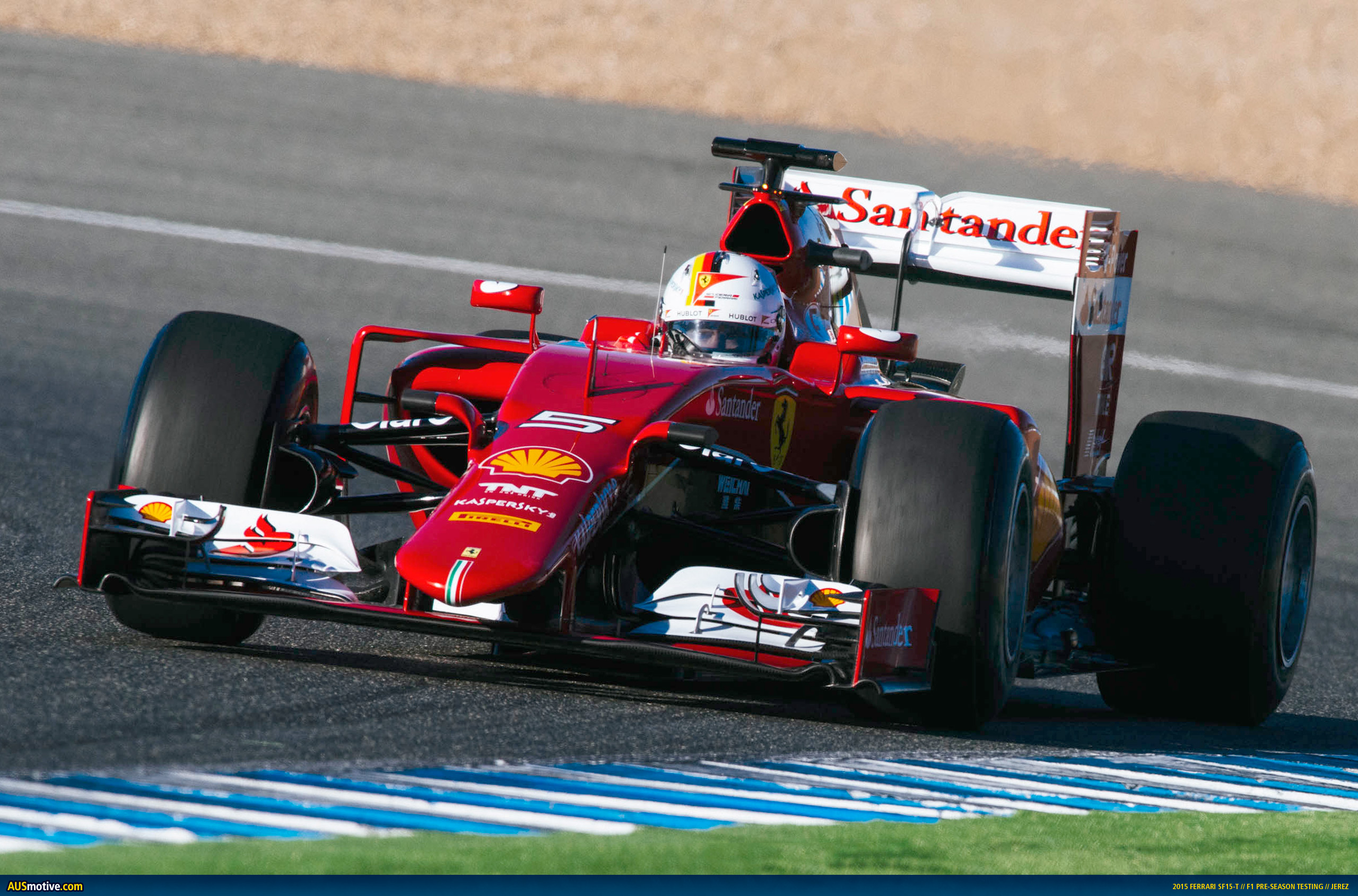
    Ferrari-SF15-T-Jerez-01The 2015 Ferrari surprised more than a few onlookers at the first test in Jerez with its inherent pace. In Barcelona the bigger picture revealed that although definitive strides were made the scarlet Ferrari still remains some way off the Mercedes pace. Along with a dramatically improved power unit both Raikkonen and Vettel are satisfied with the predictable front-end of the car.

    Ferrari is touted as having taken the biggest step forward of all the teams on the grid. Which isn’t too shabby a start for a team in turmoil just a couple of months ago. While Mercedes is still out of reach the Italian team could very well be sitting with the second fastest package on the grid.

    Of the new drivers on the grid Toro Rosso’s Max Verstappen will be scrutinized the most. The Dutchman has been talked up by his team for months. Since the team think it worthy to compare the 17-year-old to Ayrton Senna it will make watching his progress all the more fascinating.

    An average Formula 1 team employs an average of 300 people who are tasked with the job of ensuring that two grand prix cars are able to race. However, there is nothing average about the level of anticipation and expectation that millions of fanatics have ahead of the first race of a new F1 season.

  • F1 2015: Why you can read into F1 testing

    F1 2015: Why you can read into F1 testing

    For as long as cars have been running around test tracks, most have warned against reading too much into the pre-season. It is, after all, just that, a test. Teams truck their way to European race tracks with their new cars and set about an examination and assessment of what exactly the engineers and designers have rustled up.

    The first roll-out of the cars is closely observed by millions of fans who scour the internet and fervently stalk their favourite forums for the most minute updates and details. Sky F1, for example, sends a whole team of journalists to these sessions to document every move that the teams make. Yet, the warnings that the times at the end of the day don’t mean anything subsist.

    These warnings though aren’t necessarily always applicable. For one, should the goings-on from Jerez be disregarded you would fail to notice that Ferrari has made an enormous improvement from last year. Okay, it wouldn’t exactly be hard to build a better car than last season’s F14T which was a colossal waste of carbon fibre. But Sauber, who also runs with Ferrari power, has confirmed that the new power unit is a substantial step forward from the Italian manufacturer’s first attempt at the hybrid-turbo engines.

    KimiRaikkonen_PressConferenceWhat’s more, Kimi Raikkonen has said that he finds the handling of this car much better and to his liking. Let’s be honest the ever aloof and not-so-media-friendly Raikkonen will hardly be the type of guy to provide a sound bite just for the sake of it. Now, Ferrari hasn’t suddenly transformed into world beaters but they may just be on to something with the SF15T.

    The telltale, good, signs from testing would be stacks of laps and reliability. Here the Mercedes W06 is still way ahead of the curve. Nico Rosberg and Lewis Hamilton both completed nearly two full race simulations a day at Jerez. They set about completing their testing program in an ominously reserved manner. There were no proclamations that they were, again, going to blow-away the competition. There was just lap after lap of a car which can seemingly keep going forever.

    Even in testing where the laptimes don’t mean that much there is still the odd team/driver who’ll take out the fuel and set a flashy time. It happens for various reasons not least of all to attract a bit of media attention and please the suits that put up the sponsorship cash. The longer runs are what you want to pay attention to. The consistency in laptimes is an important barometer. The more consistent the time, the more it suggests a predictable car. The reasoning then is that the more confidence a driver has in the car’s behaviour the more assured he’ll be in pushing it around the lap.

    STR10- LifestyleWhile what happens at testing isn’t an out-and-out pecking order for the season there is much to learn from it. The next area is the press statements made by drivers. Yes, they get coached to the hilt but sometimes they do reveal a kernel of telling information. At Toro Rosso the engineers and owners are completely infatuated with Max Verstappen who they have dubbed the next Ayrton Senna. It’s noticeable in the Verstappen-obsessed chatter that they don’t talk much about their car which looks a bit of a handful.

    The most entertaining and puzzling statements have come from McLaren. New-old driver Fernando Alonso has declared himself impressed with Honda’s “scientific approach.” What did Ferrari use, witchcraft? Once more we see an attempt to deflect from what has been a pretty poor start for the McLaren-Honda alliance. Better that this be the headline than the handful of installation laps they were able to complete at Jerez.

    So, there is after all much to glean from testing. Pay attention to the press statements and what they try to detract attention from. Forget about the flashy-headline-grabbing-laptime and instead study the longer runs and determine how consistent the laptimes are. The second test takes place at the Barcelona circuit from the 19th to the 22nd of February.

  • Formula 1 Testing Diary – Jerez

    Formula 1 Testing Diary – Jerez

    The pomp and circumstance of multi-million rand glitzy launches that used to mark the unveiling of a new Formula 1 car is a thing of the past. Instead, some teams opt for an online release of a few images while others invite a few folk over to their factories for a bit of a show. The rest are happy to reveal their cars in the Jerez pitlane and get straight down to business.

    It is ultimately the laptimes and reliability that is most important in the early days before the 2015 season. But let’s take a minute to appreciate that Formula 1 is once again stunningly easy on the eye. In fact, it’s hard to pick the best looking car of the lot. At Red Bull they’ve played around with a rad-looking white-and-black camouflage livery. The new look is only interim however team Principal Christian Horner has promised to debut even stronger colours in Australia. The Ferrari SF15T has long, elegant swooping lines that carry all the way through to an elongated nose and the McLaren’s lustrous silver bodywork has been accented by swathes of red as a nod to new engine supplier Honda.

    Nevertheless, the most vital test is how, and if, these cars come alive on the track. The first four-day test session took place at the Jerez de la Frontera circuit in southern Spain.

    RB11Day one: Sebastian Vettel sets the fastest time of the day for the Ferrari team with a time of 1:22:690 with a lap total of 59. Fernando Alonso completed the least amount of laps, six, in his McLaren Honda. The MP4-30’s, dubbed the McHonda, problems centred mostly on their new Honda engine. The Lotus team were absent from the pitlane following their announcement that the E23 wasn’t quite ready to run.

    It was a remarkable day for Mercedes who clocked 157 with Nico Rosberg. Although Mercedes did have a shakedown at Silverstone to clock 157 laps in a day is an extremely good sign for the defending champions.

    Day two: Once again Sebastian Vettel tops the timing sheets with a fastest time of 1:20:984 in his Ferrari. The Lotus team did a terrific job to show up for the second day of testing and managed a total of 41 laps with Pastor Maldonado and a quickest time of 1:25:802. McLaren managed only a couple of installations with Jenson Button before spending the entire morning in the garage with more electronic issues.

    Ferrari-SF15-T-Jerez-01The final few hours of the second day of testing were blighted with rain however Lewis Hamilton was still able to complete 91 laps before a water leak brought an end to his afternoon. Sebastian Vettel racked up 89 laps and Sauber’s Felipe Nasr’s 88.

    Day three: Brazilian rookie Felipe Nasr set the quickest time of the day ahead of Ferrari’s Kimi Raikkonen. Nasr completes an impressive 108 laps in the blue-and-yellow Sauber but Mercedes’ Nico Rosberg racks up the most laps with 150.

    On their second day of testing Lotus is able to complete 91 laps with Maldonado and provide a consistent base for feedback on the E23. McLaren have a better day with Fernando Alonso who is able to complete 32 laps. However, the McHonda would later stop on circuit with a water pressure problem. Rookie Carlos Sainz Jr has a notable day out with the difficult Toro Rosso by completing 136 laps.

    Day four: The final day is topped by Kimi Raikkonen ensuring that a Ferrari-engine has topped all four days at Jerez. The 1:20:841 is the fastest of all four days but is kept in cautious perspective by Raikkonen who calls the SF15T “a good starting point.”

    Felipe Nasr and Lewis Hamilton complete the top three while Romain Grosjean’s day was brought to an early end with a “power unit issue.” Jenson Button has no easier time of it in the McLaren as engine problems and a fuel pump issue curtail the team’s program.

  • F1 2015: Jerez Testing Day 2 – Round-Up

    F1 2015: Jerez Testing Day 2 – Round-Up

    The second day of testing from Spain’s Jerez circuit was topped by Sebastian Vettel as he set a fastest time of 1:20:984 in his Ferrari.

    The morning started rather sedately as the several cars initially set about completing their installations laps. Ferrari’s Sebastian Vettel and Mercedes’ Lewis Hamilton got into their workload for the day relatively quickly while others camped in the pitlane for some time. The Lotus team did a terrific job to show up for the second day of testing and managed an initial installation with Pastor Maldonado able to complete 41 laps with a quickest time of 1:25:802.

    McLaren also managed only a couple of installations with Jenson Button before spending the entire morning in its pit garage. The Brit was able set a timed lap several hours later following a morning troubled by electronic issues. However, nearly all of the session on day two was lost to further gremlins.

    Red Bull’s Danill Kvyat caused quite a stir when he left the pitlane without a front-wing. Naturally, there were a few jokes about the camouflage livery living up to its name and hiding the front-wing. Ultimately, the explanation was that the front-wing had been damaged and while the team waited for a replacement Kvyat would do a short engine test without it.

    The final few hours of the second day of testing were blighted with rain however Lewis Hamilton was still able to complete 91 laps before a water leak brought an end to his afternoon. Sebastian Vettel racked up 89 laps and Sauber’s Felipe Nasr’s 88.

    Unofficial laptimes from Jerez de la Frontera:

    day2

  • F1 2015: Jerez Testing – Day 1 Round-Up

    F1 2015: Jerez Testing – Day 1 Round-Up

    Day one of winter testing ahead of the 2015 season kicked off today at the Jerez circuit in southern Spain.

    Sebastian Vettel set the fastest time overall for the Ferrari team with a time of 1:22:690. The German completed a total of 59 laps. Fernando Alonso completed the least amount of laps, six,  in his McLaren Honda.

    A relatively cool start to the day, weather wise, was amped with the official launch of several cars. Red Bull stole the limelight with a rather different livery. The Williams FW37 also launched with its official colours in the pitlane while Lewis Hamilton and Nico Rosberg unveiled the 2015 Mercedes. The Lotus team were absent from the pitlane following their announcement that were not quite ready to run the E23. Fernando Alonso took charge of the McLaren Honda for the first day Ron Dennis has said that the McLaren livery will change from its current guise but has remained coy on exactly when that will happen.

    RB11Last year’s stuttering start to testing at Jerez saw Kimi Raikkonen set the fastest time of the day in his Ferrari, a time of 1:27:104. Twelve months later, and a whole lot more knowledge on the turbo era of the sport, the cars have clocked times considerably quicker.

    It was a remarkable day for Mercedes who clocked 157 with Nico Rosberg. Although Mercedes did have a shakedown earlier in the week at the Silverstone circuit to clock 157 laps in a day is an extremely good sign for the defending champions.

    The first day of winter testing is always highly anticipated among fans, teams and drivers alike. It’s the opening salvo ahead of a new season and one that is keenly watched from all around the world. It is also a day for the teams to find their proverbial feet with their 2015 challengers and one where they look iron out small niggles while ensuring that all the systems run smoothly.

    Thus the first runs and opening couple of days are hard to read into and it is unwise to do so. There is one thing however that is not in doubt; for 2015 the teams have produced stunning pieces of machinery that are very pleasing to the eye.

    Daniel Ricciardo photo courtesy of @redbullracing

    Unofficial Laptimes from Jerez de la Frontera:

    day1

  • Mercedes Officially Launch the W06

    Mercedes Officially Launch the W06

    Drivers Lewis Hamilton and Nico Rosberg took the covers off Mercedes’ 2015 title defending car at the Circuito Jerez this morning.

    With the sun slightly peeking over the mountains the covers came off the new Mercedes W06 Hybrid.

    Technical Director, Paddy Lowe says that one of the key focus areas for the car was reliability. “It’s no secret that reliability let us down on a number of occasions in 2014”

    “Making a car reliable is a long gane and a lot of effort has gone in on that side. It’s not about fixing individual issues but about raising quality across the many thousands of parts and processes involved.”

    The rear wing has a single, central support pylon. This does provide some aerodynamic benefit as there is less disturbance to the air flowing below the main plane of the front wing.

    Mercedes say that they have a more extreme version of their front suspension this season. The W06 suspension system was built without FRIC from the begging after it was banned mid way last season.

    Photo’s courtesy Mercedes AMG Petronas Formula 1 


  • F1 Paddock Ups Its Game For Spain

    F1 Paddock Ups Its Game For Spain

    In some cases traditional can be interpreted as being out-dated or bland. But sometimes the tried and tested brings its own unique concoction of nostalgia and character to the table.  The Formula 1 paddock returns to Europe for a dose of Spain’s historic Circuit de Catalunya and the fifth round of the season.

    Despite the few opportunities for testing, all drivers know the 4.655 km layout like the back of their hands. The circuit is a highly challenging one which demands a good combination between power and aerodynamics – the perfect barometer for car performance.

    The return to Europe will be the hot-bed for major upgrades up and down the paddock. Some teams have stated more measured aims than others but the common thread will be improvement.  

    Sauber_RearWing ComparisonSauber

    Since the start of the testing season in January the C33 Sauber had a significant weight disadvantage. The Swiss team has so far struggled to match the heights of their 2013 season and have spent the last three weeks on reducing the car’s weight.

    The team, led by Monisha Kaltenborn, will also introduce a ‘major aerodynamic update.’  A modified front wing, new engine cover, and new sidepod fins and deflectors are believed to be among the parts being rolled out this weekend. In addition, Ferrari has provided a software update to its customer teams which will deliver improved performance from its power units.

    Sauber’s aim of a solid points finish seems modest however the team have not registered on the points table in any of the four races so far.

    McLaren

    The team’s fortune’s seemed to have turned when Jenson Button and Kevin Magnussen delivered a double podium finish in Australia. However, going pointless in both Bahrain and China has prodded a management re-shuffle.  The restructure and the appointment of key new aero staff have resulted in the hiring of Tony Salter from Sauber and Guillaume Cattelani from Lotus.

    Changes have also been made to the way the team operates as McLaren set out to “restore some leadership.” It’s clear that McLaren’s focus on running of the team tells that they believe the MP4-29 to be a good package. The only issue that exists, as McLaren’s re-shuffling suggest, is to find the most effective way of unlocking its potential and carrying it to the front of the grid.

    Lotus

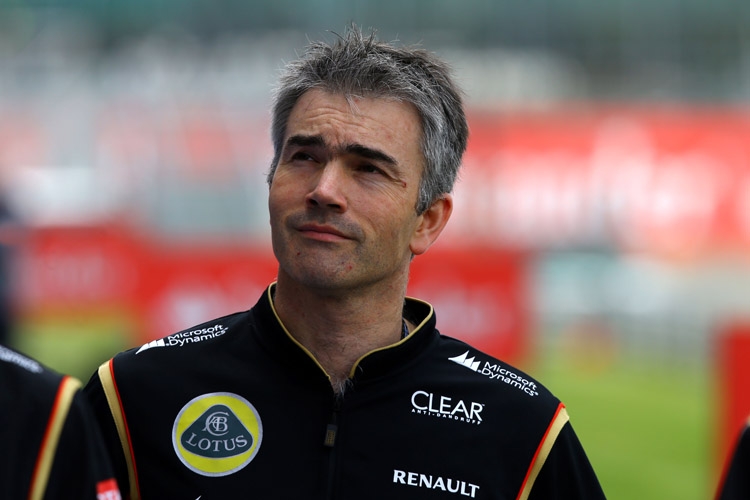
    The Lotus F1 Team has suffered the biggest loss of form in comparison to 2013. By reaching their simple goal of seeing the chequered flag the team can now start to focus on improving the drivability of the car. “We’ve got aNick Chester, Lotus F1 Team new cooling and bodywork package coming – quite a big upgrade – plus some updates to the rear wing and various other bodywork parts,” said technical director Nick Chester.

    Lotus, who runs Renault power, also welcomed more horsepower from Renault Sport F1 in China and is hoping for further upgrades in Barcelona.

    Mercedes

     Toto Wolff has cautioned his Mercedes team by saying that staying ahead of their competitors will not be enough to ensure victory at the end of the season.

    “Our aim must be to increase the advantage we enjoyed at the last race in China,” said Wolff. “We have seen already that our rivals are relentless in their efforts to close the gap.”

    Red Bull

    Sebastian Vettel has, unexpectedly, been in the shadow of teammate Daniel Ricciardo in nearly all of the first four races. Red Bull is not chalking up to one driver simply out-performing the other however. The team has been looking into whether an underlying fault with Vettel’s 2014 car has contributed to the reigning world champion’s struggles. If the team has found a fault with the four-time champion’s car they have not revealed it.

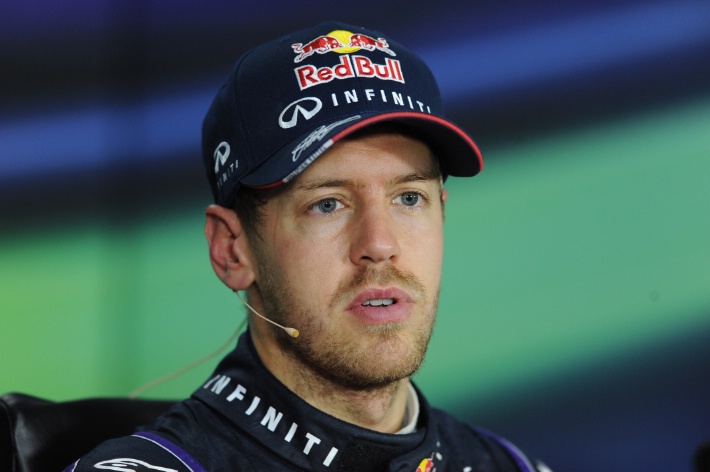
    Vettel_PressConferenceIt has been confirmed that a new version (chassis) of the RB10 has been built in Milton-Keynes and will be ready for use by Vettel in Spain.

    The Spanish circuit made its F1 debut in 1991 and has been the sight of several memorable victories. In 2014 Mercedes are the undoubted favourites. But the fascination of the weekend will centre on how close the opposition can get to unseating the high-flying Silver Arrows.

  • F1 2014: In Season Test,Bahrain – Rosberg Continues Mercedes Dominance

    F1 2014: In Season Test,Bahrain – Rosberg Continues Mercedes Dominance

    Mercedes driver Nico Roberg set the fastest time on the first day of testing in Bahrain.

    In-season testing returned to Formula 1 in 2014 with two days of running at the Sakhir International Circuit. Six further days, or three additional tests, are scheduled throughout the rest of the season. All eleven teams were present during the first of day of testing which was headed by Mercedes driver Nico Rosberg.

    The German driver completed a total 121 laps with a time of 1:35:697 nearly four tenths clear of Force India’s Nico Hulkenberg. Ferrari’s Fernando Alonso was third on the timing sheets but remained a second adrift of Rosberg’s Mercedes. However, the Spaniard believes that the Ferrari’s performance around the Bahrain track may be a once-off. “We are missing some of the characteristics that this track has so in China I expect [we will be] more competitive, Barcelona, Monaco, there are some circuits coming that we need to get some podiums at, hopefully,” said Alonso. “It’s not good. We would like to have extra speed and be able to battle with anyone but at the moment we miss on that aspect.”

    McLaren’s Kevin Magnussen finished fourth at the end of day one with a time of 1:36:634 and was the only other driver to complete more than 100 laps. The difficult start to the season continued for the Lotus team as new signing Pastor Maldonado completed only sixteen laps.

    Lewis Hamilton will take over testing for the Mercedes team on day two.

    timestest


  • FIA confirms changes to 2014 regulations

    FIA confirms changes to 2014 regulations

    The FIA today confirmed a number of changes to the 2014 regulations including the introduction of a penalty points system and in-season testing.

    Here are the changes to the 2014 regulations as published by the FIA.

    The following summarises the changes made to the 2014 Sporting Regulations:

    Further to a request from Mercedes, it will be permitted to supply engines to a maximum of four Formula One teams in 2014.

    A penalty point system for drivers will be introduced. If a driver accumulates more than 12 points he will be banned from the next race. Points will stay on the driver’s licence for 12 months. The amount of points a driver may be given for infringements will vary from one to three depending upon the severity of the offence.

    The procedure for a driver to be given the chance to give back any advantage he may have gained by leaving the track has been adopted.

    A significant reduction in the amount of wind tunnel testing and CFD work has been imposed to help reduce costs and potentially allow two teams to share one wind tunnel.

    Four two-day track tests will be allowed in season in place of the current eight one-day promotional days and the three-day young driver test. These will take place at tracks in Europe on the Tuesday and Wednesday after a race in order to ensure minimal additional resources are necessary.

    Track testing will now also be permitted in January 2014 in order to allow earlier testing of the new power units.

    For safety reasons all team personnel working on a car in a race pit stop will be required to wear head protection.

    Each driver will be provided with one extra set of tyres for use only during the first 30 minutes of the first practice session on Friday, to encourage teams to take to the track at that time without having to worry about using valuable tyre wear.

    A number of new regulations have been confirmed to govern the new, far more complex power units. It is agreed that only five power units may be used by each driver for the whole season. Any use of an additional complete power unit will result in that driver having to start the race from the pit lane. Any changes of individual elements above the permitted five, such as turbocharger, MGU or Energy Store, will result in a 10 grid place penalty.

    No manufacturer will be allowed to homologate more than one power unit during the homologation period from 2014-2020. Changes to the homologated unit will continue to be permitted for installation, reliability or cost saving reasons.

    Drivers must now use a gearbox for six consecutive events, an increase from the current five.

    No car may use more than 100kg of fuel for the race, from the time the lights go out at the start of the race to the chequered flag. This will be monitored by the use of an FIA approved fuel flow meter.

    The pit lane speed limit, which is currently set at 60km/h for the free practice sessions and 100km/h for the qualifying practice and race (60km/h for the whole event in Melbourne, Monaco and Singapore), has been amended so it is set at 80km/h for the whole event (except the three races mentioned which would stay at 60km/h for the whole event). This is for safety reasons, as most accidents happen during the race when the speed limit is higher; drivers also have very little chance to practice stopping from 100km/h until the race.


    FIAThe following summarises the changes made to the 2014 Technical Regulations:

    Measures have been put in place to ensure that the cars do not incorporate a step in the chassis behind the nose. These changes will also ensure that a genuine low nose, introduced for safety reasons, is always used.

    The minimum weight limit has been raised by 5kg, as the power unit is now likely to weigh more than originally expected. The weight distribution has also been changed accordingly.

    Electronic control of the rear brake circuit is permitted in order to ensure consistent braking whilst energy is being recovered.

    In order to ensure that side impact structures are more useful in an oblique impact and more consistent, they will become standard items made to a strictly laid out manufacturing process and fitted to the cars identically. The impact tests currently carried out will be replaced by static load push-off tests and squeeze tests. This will also help reduce costs as no team will need to develop their own structures.

    In order to ensure that the cockpit rims either side of the driver’s head are stronger, the amount of deflection during the static load tests has been reduced from 20mm to 5mm.

  • F1 2013: Monte Carlo Review – Lights to flag victory for Rosberg

    F1 2013: Monte Carlo Review – Lights to flag victory for Rosberg

    It has taken thirty years for a son to emulate his father’s victory around the tight and twisting streets of Monte Carlo.

    Mercedes’ chances in Saturday qualifying had always looked good but the test would come in the 78 lap race. The team’s struggles with tyre degradation had been well documented and many had expected them to fade on this Sunday as they had on so many other occasions. However, a controlled race from lights out had Nico Rosberg in the pound seats from the very first lap.

    The first thirty laps of the Monaco GP was an exhibition by Rosberg and Hamilton as the two Mercedes set a steady pace and managed their race to within an inch of perfection. The two Red Bull’s of Vettel and Webber had made better get-aways but the tight entry to Ste Devote meant they had nowhere to go and the pair of them slotted in behind the two Silver Arrows.

    So docile was the pace of Rosberg and Hamilton that the Caterham of Giedo van der Garde ran as the fastest car, by quite some margin, for a limited period of the race. Nevertheless, the twenty-five points and glory of winning the Monaco grand prix was the end goal and how they went about reaching it wasn’t of any concern.

    nico-rosberg-mercedes-f1After this display of ‘controlled aggression’ as coined by Mark Webber, the questions around Pirelli and what they are offering Formula 1 will deepen. Critics of the 2013 tyre compounds were undoubtedly armed with new ammunition after the Monaco GP and rightly so. Cruising around, three seconds a lap off the possible pace is not what fans want to see and more than likely not what drivers want to be doing. Formula 1 has always been about pushing the limits, daring to go the very edge of what is possible. It may be easy and comfortable to poke holes in Pirelli’s brief Formula 1 sojourn but it is also clear that something needs to change. A second tyre manufacturer to stir the pot perhaps?

    Despite the monotony of the opening sting of the race by lap 30 the most famous race on the calendar would be turned on its head. A car problem pitched Ferrari’s Felipe Massa into the barriers of turn one and deployed the safety car. The Brazilian was held at the side of the track for a while but was later reported as uninjured. Two Red Bulls, Raikkonen, Alonso and the two Macca’s made use of the safety car and dived into the pits for a fresh set of boots. It didn’t quite go to plan for Mercedes as they had to stack Rosberg and Hamilton in the pitlane with the latter slipping from second to fourth as a result.

    monaco-massa-crashWhile Rosberg was easily holding Vettel and Webber at bay, a crash triggered by Marussia’s Max Chilton would bring the race to a stop. After failing to see him, Chilton clashed with Pastor Maldonado on the entry to Tabac sending the Williams airborne into the barrier. The track, partially blocked by the Tecpro barrier, had to be cleared on debris before the race could be restarted.

    The carnage was far from over and to say Romain Grosjean had been experiencing a tough weekend could be considered the understatement of the year. The Lotus driver had crash on three separate occasions earlier in the weekend and the race was going to be no exception. Saving the most peculiar crash for last, Grosjean ran into the back of Ricciardo’s Toro Rosso on the exit of the tunnel. Grosjean’s Lotus was strewn across the track and the safety car deployed for a second time.  Grosjean later remarked that he didn’t grosjean-ricciardo-crash-monacoanticipate Ricciardo braking at that point. Can we deduce that in future he would prefer the car in front not to brake for the corner? Scarily, that almost makes perfect Grosjean-esque sense. The Frenchman has been given a ten place grid penalty for the next race and is believed to be on the brink of being replaced by his team.

    The drama was far from over when the race restarted on lap 67 as a rejuvenated Adrian Sutil first passed Button and then Fernando Alonso. A ridiculous call from the stewards instructed Alonso earlier in the race to give his sixth place to Sergio Perez after avoiding a collision with the Mexican. Spotting that it had already worked once, Perez tried the same move on Raikkonen into the Nouvelle chicane. kimi-perez-crash-monacoPerez, nowhere near enough to attempt an overtake, collided with Raikkonen. Checo was finally put out of his misery with a broken left-front suspension. There is no hesitation about the fact that the young Mexican has talent but his current way doing business and mistaking the rest of the field for bumper cars already has him well on his way of being branded F1’s newest crash-kid.

    As a result of the incident Kimi Raikkonen was forced to pit with a puncture and exited the pitlane in 16th place with seemingly no chance of scoring any points on the day. But with fresh tyres the undoubtedly angry Finn lapped six seconds a lap faster and passed five cars, in two laps, to take tenth and the final point on offer.

    Nico Rosberg drove a composed race to clinch his second career victory and he deserved every one of the twenty-five points for it. He wasn’t expected to rattle Hamilton’s cage the way he has in 2013. Rosberg has been the nearly-man in F1 for too long but the way he has upped his game with the arrival of the illustrious Lewis Hamilton has boosted his shares and earned widespread respect. Good on you Nico!