Tag: maurizio arrivabene

  • F1 2017: Australian Gp Review – Ferrari On Top Down Under

    F1 2017: Australian Gp Review – Ferrari On Top Down Under

    For the first time since the hybrid era started in Formula 1 a team other than Mercedes is leading the world championship. That team is Ferrari and the driver is Sebastian Vettel.

    It shouldn’t come as a big surprise that a Ferrari claimed the top step of podium as all signs in testing pointed to the fact that the Italian team had built a good car. While not too surprising, it was a breath of fresh air. Consider how refreshing it is to have a red car cross the finish line when you take into account that this is the Ferrari victory since the 2015 Singapore grand prix and the first time since November 2008 that Ferrari has led the constructor’s championship.

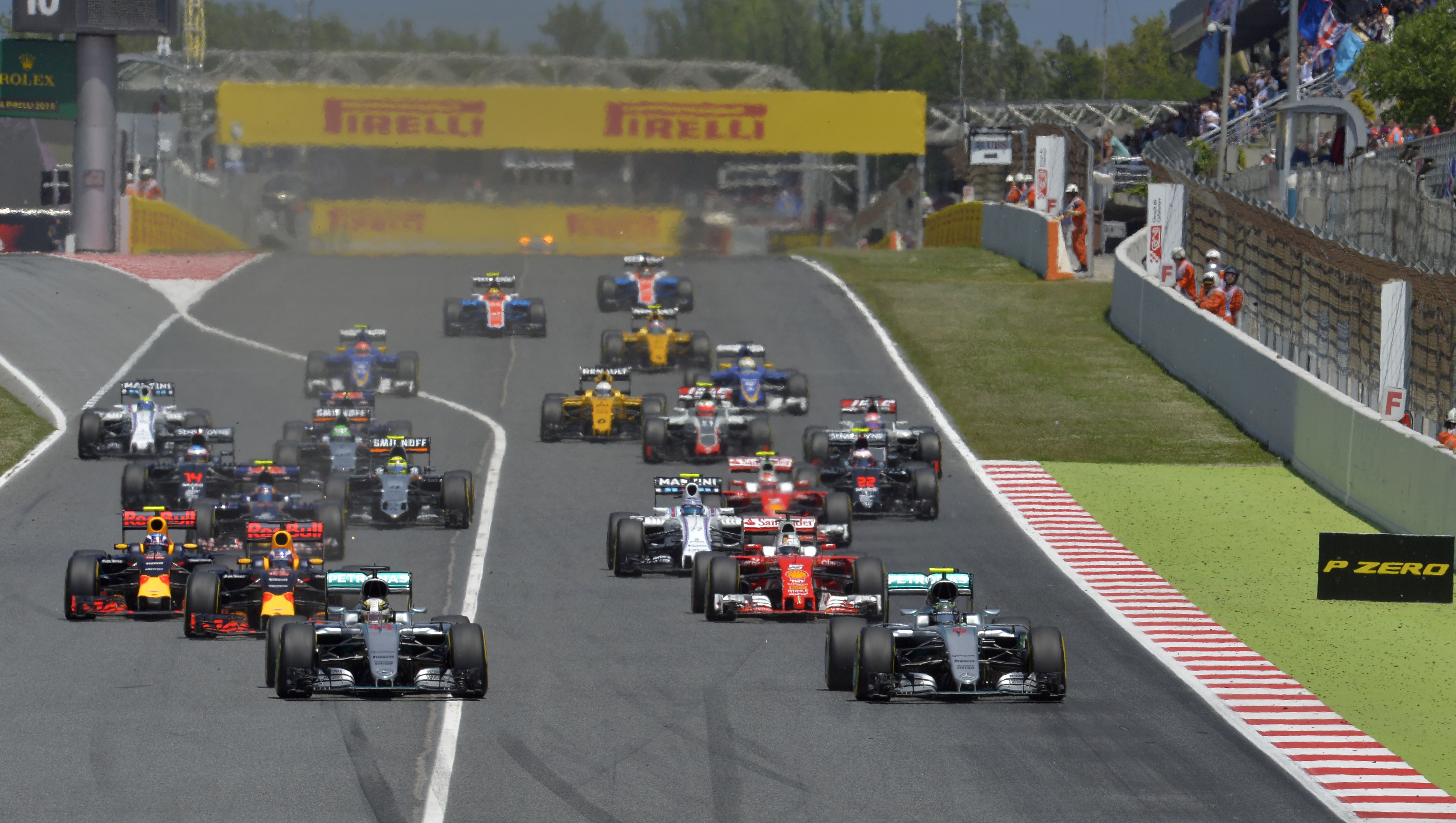
    It was a measured start to the grand prix that Lewis Hamilton led into turn one from pole position with Vettel in close attendance. There was however a coming together of Kevin Magnussen’s Haas and Marcus Ericsson’s Sauber a bit later in the lap. While the rest of the pack sorted themselves out Vettel was glued to the back of the Mercedes exhaust, this time Hamilton wasn’t simply scampering off into the distance.

    1169This meant while Hamilton could control the front of the race he couldn’t run at too conservative a pace. This meant that Hamilton was not able to extend the life of the ultrasoft tyres and was forced into the pitlane ahead of the Ferrari. This gave Vettel the impetuous to push ahead and take the lead of the race.

    Hamilton’s early visit to the pits came a surprise too many as the new-for-2017 pirelli tyres have a much long lifespan than their 2016 counterparts. Nevertheless, the three-time champ emerged behind the Red Bull of Max Verstappen and was stuck behind the Dutchman for a handful of laps while Vettel pulled away up front.

    Mercedes, and Hamilton, would have you believe that this is where the race was lost but Verstappen didn’t play as big a role. Firstly, Hamilton dived into the pitlane because he’d exhausted the tyres and was losing grip. Secondly, while he did lose a few seconds behind Verstappen he wasn’t stuck behind him for the remainder of the race, in fact, it wasn’t even half distance yet. The simple fact is that the Mercedes just didn’t have the pace to beat the Ferrari.

    Post-race Hamilton bemoaned the inability to overtake Verstappen. Given the unique characteristics of Albert Park it’s not yet clear whether overtaking in 2017 will be more difficult. Shangai, in two weeks time, should be a better barometer. But again, this didn’t seem like a valid point as several other drivers pulled of overtakes, including a stunning double-overtake from Force India’s Esteban Ocon on Fernando Alonso and Nico Hulkenberg. But we’ve seen before that the Merc isn’t a car that runs as efficiently as others in dirty air, and it seems, at least from Australia that it’s an issue that haven’t gotten on top yet.

    1142Valtteri Bottas impressed with his performance in third only two seconds off Hamilton. Ideally he’ll want to be ahead but he’ll take a lot of confidence from the margin to his teammate in only his first race with the team. Kimi Raikkonen came home a distant fourth and said that understeer in the first stint on the ultrasoft tyres put him in no-mans land. But when he swithced to the soft tyre he was able to run the pace of the top three and set the fastest lap of the race. Was fourth ideal? No, but the important thing is that Raikkonen and the team indicated that they knew where they’d gone wrong on the set-up and know what to fix for China in two weeks time.

    Max Verstappen, in fifth, brought the Red Bull home in a predictable position given the team’s pace. Daniel Ricciardo never recovered from a qualifying crash as he first broke down on the lap to the grid then joined the race two laps down only to break down again.

    Verstappen, in fifth, ended up pretty much where you’d have predicted for Red Bull. The unretired Felipe Massa was sixth for Williams ahead of the Force India of Sergio Perez and the Toro Rosso of Carlos Sainz in seventh and eighth. Daniil Kvyat was ninth in the other Toro Rosso ahead of Esteban Ocon’s Force India in tenth.

    1166It was a day to forget for McLaren as Stoffel Vandoorne finished last and Fernando Alonso retired with suspension failure. What is evident for the Honda-powered team is that 2017 will be another painfully long season.

    After Friday practice Hamilton was crowned champion at least seventeen different times and Ferrari had no chance of even getting close to the Mercedes. Just as it was premature to write off Ferrari after Friday it is equally unwise to declare them the team to beat after one race. It’s a new formula with a lot of room for improvement throughout the season. Even if a team dominates the first races it doesn’t mean that they will be the team to beat at the end of the year. The learning curve on these cars will be enormous.

    But Ferrari’s victory is no fluke, or once-off, the SF-70H is a good car that has every possibility of taking the fight to Mercedes through all of the nineteen remaining races.

  • 2017 Australian Grand Prix: Friday Press Conference

    2017 Australian Grand Prix: Friday Press Conference

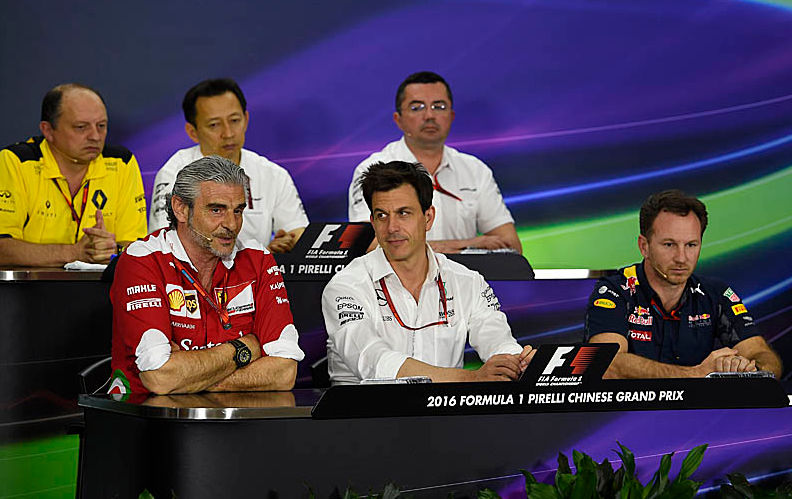
    TEAM REPRESENTATIVES – Toto WOLFF (Mercedes), Eric BOULLIER (McLaren), Maurizio ARRIVABENE (Ferrari), Christian HORNER (Red Bull Racing), Paddy LOWE (Williams)

    PRESS CONFERENCE

    Q: Opening question to all of you gentlemen: obviously it’s the opening day of a new season of Formula One. Lots of changes on the cars but sum up how your first day went? Eric why don’t you kick us off?

    Eric BOULLIER: Reasonably well. Obviously we didn’t add as many laps as we were expecting but if you compare with the testing it was a little bit better. Obviously the cars look more spectacular more aggressive, It was a good working day for us.

    Christian, obviously you had the incident with Max that lost you a lot of track time but Daniel’s long run looked pretty reasonable.

    Christian HORNER: Yes, not too bad. Certainly the first session today was encouraging. The few changes that we made the drivers didn’t like too much. Max did a little bit of grass mowing at Turn 12 and that compromised his session in the late afternoon but we got a lot of good information and we’re generally quite encouraged.

    And Paddy, how was your first day of action at Williams?

    Paddy LOWE: It was sort of a mixed day because we had a great first session, some encouraging pace. [It was] Lance’s first practice ever in Formula One, so he was taking it steady, step-by-step, making good progress. But into the afternoon we had an electrical problem on Felipe’s car, a short circuit, and that really ended his session very early. So we didn’t get the homework we would have liked on that car. But overall, quite encouraging for tomorrow.

    Maurizio, did today go as you thought it would?

    Maurizio ARRIVABENE: We were working mainly on car balance. This morning we were struggling a bit more than normal. But then in the afternoon we were still working on the car balance, but nothing different versus our Friday programme.

    Toto, Lewis looking very much the man to beat.

    Toto WOLFF: Yes, he had a very good day overall. For the team it was one of the better Fridays. Having had some question marks over testing in Barcelona it was encouraging to bounce back in that way, but it is a day that doesn’t matter.

    Q: Eric, coming back to you. We hear you are collecting quite a lot of air miles at the moment going forwards and backwards to Japan. How serious are your problems and what steps are you taking with Honda to resolve them?

    EB: Well, obviously we had a very bad winter testing, a lot of troubles, didn’t do many miles, no race simulations but like you said we are having many, many meetings with Honda. We both take it very seriously. All the options are open. Today we discussed how we can catch up and recover from that situation.

    Q: Toto, they say you should never change a winning team, but here you are after three dominant seasons with a new technical chief and a new driver, so how has the dynamic in the team changed?

    TW: It’s a very large organization, between Brixworth and Brackley it’s almost 1500 people and the dynamic is positive. Every year we are trying to reinvent ourselves without compromising performance and we are in good spirits.

    Q: Christian, a slightly quieter testing period than with Ferrari and Mercedes, but lots of new parts arriving on the car today. Tell us how the development race will impact this year’s championship. Is it going to be the deciding factor and are you going to come out on the right side of it?

    CH: Well, I think it’s going to be a big factor. These regulations are still very immature and there are going to be a lot of gains in a short space of time and it’s a matter of who can most efficiently develop their car and effectively get components on the car that drive performance forward. It wouldn’t be unrealistic to expect the cars to be 1.5s quicker by the time we get to Abu Dhabi than where we are here today. It will ebb and flow during the season but at the front of the grid hopefully we get a bit closer to Toto’s guys and have some closer races this year.

    Q: Paddy, you’ve gone back to the team you did some winning with back in the early 1990s, a dominant period with Mansell and Prost. Why is this move to Williams the right thing to do at this time of your career?

    PL: I had a great three years in my previous team, some great success there, but there was a great opportunity, a challenge at Williams. As you say, it’s going back to the team where I started my career in Formula One. It was quite emotional and special going back there a week ago, seeing people I literally hadn’t seen for 24 years, but fantastic team and we look forward to making substantial progress over the years to come.

    Q: Maurizio you have been downplaying expectations going into this season, but what I’d like to know is, inside the team, how hard it was to build what looks to be a very competitive car given all the technical changes and staff upheaval that you had in the second half of last year?

    MA: If you change something, it’s for the better, not to get worse. We have a change, the team is working very well together. Over the winter the guys were exchanging information; they have a common goal. Working all together, having a common goal and exchanging all the information they have, the car becomes not the car of one but the car of everybody and this is what has driven us until today and into the future.

    QUESTIONS FROM THE FLOOR

    Q: (John McEvoy – Daily Mail) To Maurizio. Liberty have arrived, and one of the things they have said they want to do early on is make everyone more available to the media, but after arriving here it seems you have gone in the other direction. One of your drivers was unavailable yesterday in advance of this big race at the beginning of the season, from an organization as big as Ferrari. I was wondering why that is, whether that will go on or whether that will be addressed?

    MA: Define media. What do you mean by media? Today, defining media is quite large in terms of communication media. It’s also social media. It’s not only what we are thinking about. Yesterday we had Sebastian who was talking and we were using social media and posting something related to Kimi. Liberty also said that in this business at the moment the digital platforms are used at only 1% of the potential. So, the good thing is to find the right balance. Instead of having two drivers on Thursday and talking and doing a copy and paste of one versus the other with the same questions we made sure that Sebastian was talking in one way and Kimi in the other. So we cover all the communication platform. Making happy also Generation Z.

    Q: (Seff Harding – Xero Xone News) – To follow up on that, a question for all of you, do you feel that there does need to be a change in accessibility to the press, to arrange interviews that may be on social media, Facebook Live, Instagram, to reach out to other audiences, in other markets and of course to other demographics?

    CH: I think the changes that have been put in place this year have been positive. I think that relaxing the rules regarding the digital platforms, allowing content to be generated… non-circuit content giving the ability for fans and followers to get a little bit beneath the covers and closer to seeing the personalities of the drivers in the build-up to a grand prix or pre-season is certainly positive. It’s a media business at the end of the day. Formula One is a media business. We have to engage with the media. It’s important that we give access to the drivers, access to the fans or how else are we going to promote the sport.

    Toto?

    TW: I think like Maurizio said, we have to cover three different generations. We have to cover the long-time followers, so-called middle ages, the Millennials and Generation Z. You kind of need to play the full span. For example, when we launched the car we put some time into the car launch, which is a risk on the engineering side, you’re compromising your time, and we did a Facebook Live launch, 360, and we had almost a million views in 24 hours and it was successful. We have to embrace all that, not forget any audiences within these groups but target all of them and Liberty’s approach has been right so far, in opening up.

    Q: (Giles Richards – The Guardian) Question for all of you: we’ve had the big regulation change this season, can you tell me whether you think we will actually see better racing and the reason why this is so or why if not?

    Eric, why don’t you start?

    EB: I think the car, obviously it’s a hot topic with everybody talking about overtaking numbers and manoeuvres and whatever. I think 90 per cent of the overtaking is thanks to DRS since this device has been introduced. So as far as we are concerned the DRS is still on so I don’t think there will be many changes on this: the number of overtaking. The car philosophy stays the same as the previous generation and, as long as it is dictated by this front wing, you will have this loss of downforce effect into the corners. On the positive side, I think the drivers were the ones lobbying us, all of us, to have a faster car, fastest cornering cars and clearly we have achieved this, I think, with bigger tyres, more downforce, fastest cars today and obviously that’s going to facilitate, or help the bravest drivers to try or attempt some manoeuvres to overtake. So, I don’t think there will be a big difference compared with before. I think, and the drivers as well, I can already feel – and I’m talking for McLaren only – Fernando clearly was the one who was complaining about the previous generation, and he’s clearly happier now with this kind of car. He enjoys driving the car and you can see the cars today, in some fast corners they are flat-out already on Friday afternoon – so I think it’s a good sign about what we wanted to achieve. I think all the drivers happier should make the show better.

    Paddy, any thoughts?

    PL: Yeah, I agree with what Eric said but on top of that I think the other element we will see with much higher loads now in the car, with higher cornering speeds, driver endurance is much more demanding, so we may see more mistakes in races, drivers more on their human limits. So, I think that could be another interesting factor.

    Anything to add Christian?

    CH: I think the guys have covered it pretty well. I think the cars are going to stretch the drivers. I think sitting here, and we don’t know whether the racing is going to be better over the year or not, but I think the drivers are going to be working harder, you’re going to get perhaps more differential between drivers and they’re going to have to work harder for overtakes when arguably some of them have been a little bit too easy over recent years.

    Q: (Dieter Rencken – Racing Lines) Based on comments that Ross [Brawn] made earlier today and also previously, it appears that the Commercial Rights Holder could play a more active role in the regulatory process. Which means that possibly entertainment could take precedence over technology etc. How do you feel about this? About the commercial rights holder getting increasingly involved in the regulatory process?

    Toto?

    TW: This is an entertainment platform and it should be around the entertainment of the fans and I think with Ross in place it’s the right individual. He has seen it from the other side; he knows pretty much what matters to the teams and now trying to seek a good balance between keeping the DNA of Formula One, keeping it at the pinnacle for racing drivers and for engineering and equally making sure it’s the best possible show for our fans will be the main priority. I think we are definitely in an interesting place and it looks positive.

    Maurizio?

    MA: I think for the future cost and performance, they are two key factors. Reducing the cost and increasing the performance, they are the two key factors. Then, of course, it’s an entertainment, what we are doing here. It’s part of the entertainment business. Everybody, they’re open to discuss and talk about new ideas in the appropriate places. At the moment we have governance, so talking to everybody to help the sport to grow is fine until we are all aligned to the actual governance. Or, if we want to change it, we have to sit and discuss about this.

    Paddy?

    PL: yeah, we welcome a focus on entertainment. That is what this sport is all about. I think the really encouraging thing is that Ross is building a team behind him who are going to do proper research into proposals that are under consideration, so I think there’s every reason to feel positive about the future.

    CH: I personally think there is far too much emphasis on technology at the moment and we’re spectacularly bad at communicating that. I think the average fan and viewer understands very little about the technology that’s in a Formula One car which, as Maurizio alluded, is enormously expensive. So, I think the Commercial Rights Holder, it’s their business at the end of the day. They have to decide what they want the sport to be and, if the route is fan-attraction and creating a really exciting product, and at the end of the day they want to create great content on TV then it’s vital they come up with an outline of what their vision of Formula One is. And then, obviously, the FIA have a regulatory position and the teams need to be involved in that process. We have a process that that can be achieved in if two of the three parties agree.

    EB: All has been said I think

    Q: (Flavio Vanetti – Corriere della Sera) To Maurizio, given the results of the test and what happened today, do you have an accurate idea of the position of Ferrari?

    MA: Yes, we have it in Barcelona and in Barcelona we have our programme, we follow our programme since the last week and as well it’s what we are doing here on Friday. On Friday we are working on the balance of the car, as on Day One in Barcelona we were working on finding the best performance day after day without panicking, without being under pressure and being focussed on what we were doing.

    Q: (Luigi Perna – La Gazzetta dello Sport) Another one for Maurizio. Daniel Ricciardo recently told us in an interview that Sebastian Vettel becomes even quicker and more motivated when he has a winning car in his hands. Do you expect him to give an extra performance this season? And what do you need: Ferrari and Seb to go home together, to sign another contract for 2018?

    MA: I’ll start from the end of the question. Talking about contracts now is only distracting the attention of our drivers so I’m not ready to talk about any contracts. Then, I would like to see Sebastian happy during the season because if Sebastian’s is happy that means the car is very quick.

    Q: (Jon McEvoy – Daily Mail) Maurizio, do you have as much belief that you can win this race now, as you did this morning. I hear what you’ve said and the work you’ve done during the day – but do you have as much belief that you can win it as you did at the start of the day?

    MA: We want to keep our feet on the ground. It’s Friday. We have to work this evening. Tomorrow we continue our job and then, until Sunday, we have a lot of things to do, still. So, I don’t want to do any prediction.

    Q: (Louis Dekker – NOS) For Christian. It’s only Friday but can you imagine Daniel winning on Sunday or is the gap too big?

    CH: I think, being realistic, the performance we’ve seen today from Lewis, he’s the absolute favourite. He was the favourite coming here and all today has done is underline that. But then it’s motor racing and anything can happen. We’ve seen spurious results in opening grands prix in previous years and obviously to have a home winner would be an unbelievable result – but if you look at the pecking order at the moment that is a long shot.

    Q: (Andre Leslie – DPA) Question for Mr Wolff, to do with the makeup of your team this season, with Valtteri Bottas now replacing Nico Rosberg, obviously Nico leaves a big hole in the team but Valtteri is keeping pace brilliantly today – we’ve seen twice. How do you see his role going forwards this season?

    TW: It’s obviously very big shoes to fill. Nico is the reigning World Champion and Valtteri has to fill those shoes. He has a couple of days of testing behind him which were very positive and the work with the engineers went very well and today was the first proper day on a race weekend. I think that in terms of the mindset, he has settled in very well into the team and how he has to find his grip and benchmark himself against probably the best driver in Formula One at this time. I’m very confident he is going to find the pace and his place in the team.

    Q: (Heath McAlpine – Auto Action) For all of you: today’s first practice session saw minimal running from the teams worried about engine mileage. Would you support a change in the engine regulations to increase the Friday running for your teams?

    EB: Good question. I think if we don’t run it is because we may have some technical limitation or let’s say no interest to gather data at that stage so if we do between let’s say 18 and 30 laps per session it’s because it depends on the engine plan generally. I know you can have a different regulation to have more laps but we could do it simply by making sure there is an interest for the teams to run.

    PL: I don’t entirely agree with what you’re saying, really. I think the teams are running pretty much a full programme during both sessions. If anything they’re limited by tyres more than engine mileage.

    Q: (Dieter Rencken – Racing Lines) I would imagine that this is the first Grand Prix that any of you have attended without having Bernie Ecclestone in overall control and charge. Have you, today, thought about the fact that you can’t just pick up the phone and phone Bernie if there’s some sort of issue?

    CH: How do you know he’s not still in charge? What Bernie’s done for Formula One has been amazing. The sport is what it is today because of what he created. I think in the role that he has, he’s still going to be in a position to contribute, he still has a huge amount of historical knowledge, respect and relationships around the world and I think that harnessed and used in the right way is an asset to Formula One. I’m sure he’ll be at some forthcoming events and yeah, I think hopefully the new owners can use him constructively and beneficially to build on the good work that’s already been done.

    MA: I think that Bernie deserves all our respect because if we are here and if the sport grows it is thanks to him. I think that the new group that is owning Formula One is here to make this sport grow even more so there is no future without the good historical base. If we have a good historical base then I think the new owners are looking forward to continue to grow and that’s thanks to Bernie for everything he’s done and now we need to look forward.

    Q: (Mat Coch – pitpass.com) Earlier there was a question about cars not running on the circuit; what can be done in the interests of entertainment to spice up the Friday action which is comparatively dry for those at the circuit, given that everyone’s involved in their own programmes, preparing for the weekend?

    PL: I don’t know. We used to have qualifying on Friday as well as Saturday back in the old days. Maybe that could be considered. I think the great thing now is that we have an evolving process to consider the rules properly and develop a sport that incorporates new ideas.

    TW: I think you need to differentiate because we had a very busy afternoon with lots of track action. We had a morning which is completely normal and a green track so there is not a lot of interest in testing cars on a track that’s going to develop a lot with the limitation on tyres, with the limitation on engine mileage and if you start to open that up it’s like Pandora’s box because we’re trying to limit costs. The question is that as much as you need an entertainment most of the time entertainment on track, I think we have a good compromise at the moment.

    Q: (Sam Tickell – Flagworld.com) We’ve had a lot of positive reaction to the change and the look and the appearance of the cars this year and it was mentioned previously that Liberty are looking to research for the future. How radical to the change in the appearance of the car would teams like to go to in the future, should the research suggest that a major change should be needed?

    MA: Radical change with the new rules, everybody already changed their car and I think these regulations are offering the possibility to the designers of the cars, to the aeros, to exploit even more in terms of creative approach is the first step and then in the future we can do something more. We need to make sure that the car it’s still looking like a car and not something that is a bit strange, that’s for sure.

    CH: I think the looks of the car… I think they currently look great. I think it’s all about evolution. I think that rather than focus on the looks I would prefer to focus on the sound. I think the best sounding car we have here this weekend is a 12-year old Minardi that 12 years ago had the worst sounding engine in it and was hopelessly uncompetitive and I think that when you hear the acoustics of a V10, you’ve only got to go and see the faces around the circuit to see what it embodies in fans of Formula One, so I would be far more focused on addressing that element than the aesthetics of the cars at the moment.

    TW: I think we’ve changed the aesthetics of the car. I think trying to figure out what we could do next is maybe too far. Like Christian says, if we can work on the sound of the car and if we look into a future generation of engines that is something that needs to be considered. There wasn’t enough emphasis on the sound in the past and if we can combine great technology, affordable technology with a lot of horsepower and a good sound, that would be really ticking a box.

    Q: (Luigi Perna – La Gazzetta dello Sport) Last year Ferrari lost the pace compared to Red Bull for example in the second part of the season. Are you confident you can have a quick and a more efficient development during the season this year?

    MA: What I can tell you is that we are putting all our effort to do all our work best to avoid the same result as last year. That’s it. What more can I say?

    Q: (Leon Alepidis – F1fan) Regarding the new commercial deal and the discussions that will be taking place soon, we have already heard from the new owners that they are planning to scrap the historical status for a team and the money that that brings. Would you agree that in order to have a more fair distribution of the prize money and a more competitive sport or not and why?

    MA: This kind of discussion you do it with the people who have the contract with you and not in public.

    EB: I guess if you ask the people for more money they will be against and you ask less money they will be in favour but this is a discussion behind the scenes, not to be done in public.

    CH: Well, there’s probably not a team principal in the paddock that would say they are happy to take less money. If they are, they’re mad so therefore I think it’s a question of bringing the bottom up rather than the top down and hopefully that may well be achievable.

    PL: Sounds like a good idea, we’ll support that one, yeah

  • F1 2017: Ferrari Launch SF-70H

    F1 2017: Ferrari Launch SF-70H

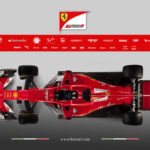
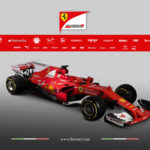
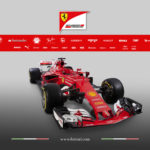
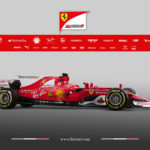
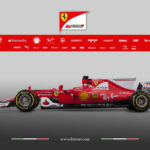
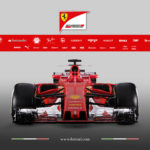
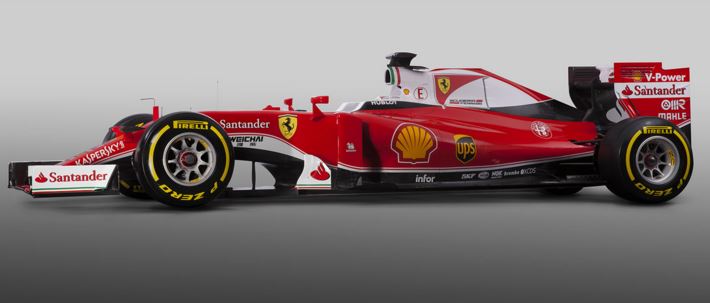
    The Ferrari Formula 1 team has launched its car for the 2017 Formula 1 season, the SF70-H.

    Ferrari is celebrating its 70th year which is commemorated in the naming of their latest Formula 1 challenger. The video, streamed live on Facebook and the team’s website, laster roughly five minutes. The start of the video depicted the assembly of the car at the team’s Marnello factory. Further, the video depicted every single seater racer car built by the Italian mark before lifting the garage door on the 2017 car at Fiorano. The livery reveals that Ferrari has chosen to return to all red livery in 2017.

    On hand at the presentation, decked out in the 2017 gear, were team principal Maurizio Arrivabene, chief technical officer Mattia Binotto, and race drivers Kimi Raikkonen and Sebastian Vettel.

    From the brief view of the car during the live stream, and the images released it appears as if Ferrari has opted to, initially, run with a type of thinner wing in front of the main rear wing. In addition, the Ferrari nose is also sporting a stub-nose design already seen on several other 2017 cars. Unlike Mercedes, Ferrari’s SF70-H has a prevalent shark-fin engine cover as well as narrow side pod air intakes.

    The car will hit the Fiorano circuit later today to complete a few laps as part of a filming day.

    The SF-70H: 

  • 2016 Formula 1 Brazilian Grand Prix: Friday Press Conference

    2016 Formula 1 Brazilian Grand Prix: Friday Press Conference

    TEAM REPRESENTATIVES – Christian HORNER (Red Bull Racing), Maurizio ARRIVABENE (Ferrari), Paul HEMBERY (Pirelli), Monisha KALTENBORN (Sauber), Guenther STEINER (Haas), Frédéric VASSEUR (Renault)

    PRESS CONFERENCE

    Christian, can we start with you: just looking at the track action that’s been going on today, the long run pace obviously looks quite close to Mercedes, but is it really that offers you the chance to fight for victory, or can you be a little more optimistic after today?

    Christian HORNER: Well, I think under normal circumstances the usual business will happen. Mercedes have been the dominant force all year and there’s no reason to expect any different this weekend. But, race pace over the last few race, on a Sunday we’ve managed to get close to them particularly their tail car. Perhaps with a little bit of weather… there are some unpredictable forecasts over the next few days and opportunities can hopefully present themselves to put a challenge on.

    Either way, there is a pretty good chance that you are going to wrap up second place in the Constructors’ Championship this weekend. Given where you’ve been, in transition from 2015 to 2016, does that constitute a success?

    CH: It would represent an enormous achievement for the whole team. We came into the year thinking, ‘you know what, to get into the top five will be difficult’. But the guys have produced a great car. The people at Renault have done a good job with the engine over the winter. Our season has just grown stronger and stronger. To be sitting here having achieved 14 or so podiums, two grand prix victories, Max’s first victory in Barcelona, Daniel with a one-two finish in Malaysia and to be sitting here ahead of Ferrari on points and the nearest competitor to Mercedes represents and extremely impressive season for the whole team.

    Maurizio, what about your side of that story: the battle with Red Bull. It’s not the team you set our to be battling against this year in the world championship but how and why did they get ahead of you?

    Maurizio ARRIVABENE: I think first of all we need to take into consideration… it’s not an excuse but it is circumstances that happened where we lose position on the grid and you know when you start a bit in front the story is going to change. Having said so, they have a strong reaction, as Christian said, and we are below of our expectation. By the way, as I said many, many times, we are not giving up here and not either in Abu Dhabi. I know it’s tough, but the championship is still not finished.

    Now you told Sebastian yourself, personally over the radio in Mexico, to “calm down”, quote-unquote, and he admitted sitting here yesterday that he did lose his cool in Mexico but he said it was not down to frustration, so how happy have you been in general with his performance?

    MA: I have zero problem with Sebastian. I mean, as I said many, many times, Sebastian is quite emotional. Sometimes he looks a bit more Latino than German. I think Christian knows the matter like I do. He’s very emotional, he’s very passionate, especially when he’s driving and it’s in a racing battle. It’s not a question of frustration. Sometimes he can be unhappy as we are unhappy because our expectations are different. But he’s not a guy who is giving up; he’s a guy that is pushing like hell. Sometimes when the adrenalin is going up to the sky, maybe he’s choosing a word more than what is expected, but then my role, like in Mexico, is also to call him and to invite him to be focused on what he’s doing.

    Paul, you brought soft and medium again this year to Interlagos, but also the hard tyre. It’s quite an unusual move, only the second time this season you’ve brought a harder tyre than the one that came last season. How’s that looking?

    Paul HEMBERY: Well, you wouldn’t want the supersoft here that’s for sure, so it sort of chose itself from that point of view. The soft tyre is suffering. It’s hot, an aggressive track, high wear, so it’s pretty much as we expected, but that was the majority choice as well of the teams.

    Important test coming up for you in Abu Dhabi. Can you give us a preview of what to expect and a general overview on progress, where you are with next year’s tyres?

    PH: Well, we’re clearly homing in on final solutions now. There are still going to be a lot of combinations tested next week in Abu Dhabi. Still some compounding work, we’re still working on some internal aspects of the tyre but we’re progressing as planned.

    Fred, coming to you, you’ve retained Jolyon Palmer for 2017 to drive along Nico Hulkenberg. What were the reasons for that and what do you expect from him in his second year?

    Frédéric VASSEUR: First we had to secure the first one. It was done with Nico around Suzuka, something like this. Then we were able to postpone a little bit the decision. If you have a look at the last event, I think that Jo did a very good job; he is improving. If you have a look also to what he did in the past in the junior series he was always able to improve step by step, year after year and we took the decision to move forward with Jo and I would expect that he will have the same improving curve that he did in the junior series and it will be good.

    Now, a lot hinges for next season, for you team and for Christian’s team, on the Renault engine taking a decent step. So will it?

    FV: I hope so! It’s in the pipe… I think Christian also thinks so… no, no we are working on the project of the new engine and I think everything is going well so far and we will see in Barcelona.

    Guenther, coming to you and continuing on the theme of the drivers, Esteban Gutierrez has said on social media this weekend that he is leaving your team and there are strong suggestions that Magnussen will be leaving Fred’s team to come and join you. What’s most important for you over the next couple of years? Is it to have consistent drivers that you can work with to develop the team and the cars or would you look to bring in an American or a rookie? What’s the most important thing?

    Guenther STEINER: I think the most important… just if somebody hasn’t seen the press release, it just came out maybe 10 minutes ago, we confirmed that Romain and Kevin will join us next year, that just came out 10 minutes ago. We want to grow the team and therefore we wanted some experience of drivers that have been on the podium and that have scored points and Kevin was fitting the bill, therefore we moved forward with him. I would like to take this moment to thanks Esteban for what he did for us over this year. I think he has got a good future; he did a good job and whatever people say he is a good driver. He helped us develop the team from nothing to be where we are so thanks a lot to him.

    Q: The Ferrari partnership has obviously got you started in 2016; you’ve scored plenty of points but as you now move forward, are you now looking to build your own capability in the future to be able to take control of your own destiny.

    GS: No, we have a long-standing contract in place with Ferrari that we can continue the business model we are doing. We are going forward like this for the next few years and then we see, we rethink. But at the moment we are very happy with Ferrari, what they did for us over the year to get again to the point where we are now. Hopefully we finish eighth if Fred’s team doesn’t pull out something very special, and we hope we move up next year. But in the moment, for sure you always develop your team and you keep on getting better and more people in and that will happen – but in general it stays like we are now.

    Q: Coming to you Monisha, staying again on the theme of the drivers, the other teams clearly as we’re hearing have been tying down their drivers and making their announcements, just a few moments ago in the case of Haas. You did yours here a couple of years ago I think. How far off being able to do the same thing are you and should we expect any changes?

    Monisha KALTENBORN: Well we are still in the process of analysing our options but it’s not going to take that long any more. We still have the target that we do want to announce in the season, so there’s not that much time left. So that’s all I can tell you now.

    Q: Jörg Zander has returned to the team. How had he benefitted from his years with Audi in particular and what will that bring to your team?

    MK: Well, we know Jörg Zander for quite a while. He was the chief designer in our team earlier and now, as we decided to actually take up a technical director again it was quite an obvious person to look at. He’s been working at Audi for very long, he has a lot of motorsport experience now, inside Formula One, outside Formula One, so we do think he fits in very well with that because we also have third party business outside Formula One. I’m sure he’ll bring many new ideas and the team can only benefit from that because we are now in a new era, you know it’s a new chapter in the team history and this kind of influence and these ideas will only be beneficial to move into the right direction.

    QUESTIONS FROM THE FLOOR

    Q: (Alessandro Giannini – Agência O Globo) For you Monisha, I would like to ask you a direct question about Felipe. How are the talks with him and if he has one chance to stay at the Sauber team?

    MK: Well, Felipe is certainly one of our options, that’s clear, we know him well, we know his skills. We’ve had a lot of experiences together with him: good ones, bad ones, so we can assess him very well. So talks are taking place, that’s what I can tell you.

    Q: (Andrea Cremonesi, La Gazzetta dello Sport) Question for Maurizio, yesterday you present an appeal now for the podium win in Mexico. I would like to know some more details, when you find out the new elements. If you can give us some more details about which are these elements.

    MA: Yes, if we present according with the International Sporting Code Article 14.1, we presented new elements, of course, as we said, what we think are new elements and we have the right to present it. If you want me to present all the elements here, is not something that I’m going to do because in 40 minutes we have a conference call and we have to discuss the matter. I think it’s not correct to share this kind of information here.

    Q: (Dieter Rencken – Racing Lines) As the previous question proves, there’s been a lot of controversy about the regulations etc and Christian, you and Maurizio have been particularly outspoken about them. You’re both members of the Strategy Group: would you like to take them up in the Strategy Group. Would you like to take them up in the Strategy Group? What would you like to see changed? And if anybody else would like to comment, feel free, please.

    MA: Back, if you refer to Mexico and many other races, I think, I understand the difficulties of the stewards because sometimes they have to take a decision immediately and to take this decision they need to collect in quick time all the available data and material – and it’s not an easy job, I think. That is further complicated by what we said many, many times at the strategy group level about sometimes the complication of the regulation. We ask many, many times to try to find a way to simplify the rules, so I think this is something that we need to think further for the future, making sure that we don’t have a Rule A that is covered by the Rule B that is covered by the Rule C and D and E and F and so on. If there is a rule it is A dot. And then we go to the B. I’m expressing my thought with all the respect for the people that is making the rule. But I think this sport, it is already complicated in terms of technology, in term of what we have to do to build-up the car and to make competitive the car. I think simplifying the rules could be a good help for everybody.

    Christian, your view.

    CH: Yeah, I think that we’re over-regulated in many respects, that the drivers need to take a rulebook with them really on a Sunday now in the car and consult it before they either defend or make an overtaking manoeuvre these days and there’s too much subjectivity and interpretation of different events. So Lewis Hamilton going straight on at the first turn last weekend, comes out half a kilometre up the road, is that an advantage or a disadvantage compared to Max going off and coming back in the same position he went off with, with dirty tyres later in the race. It’s very difficult for the teams, for the drivers and one can only think for the viewers as to what’s permitted and what isn’t. I think, like all things in life, keep it simple. Keep it straightforward. I’d say less rules in terms of… but more clarity in terms of what the rules of engagement are. Nobody wants to see dangerous driving but let the drivers race, let them go wheel to wheel. I mean everybody’s talking about the last five or six laps in Mexico because, let’s face it, the rest of the race was pretty boring. The last ten laps were fantastic and of course there’s been a whole bunch of discussion about it since then and that’s what Formula One needs to be and I think let’s avoid the situation that drivers can cut corners and gain an advantage. Put a gravel trap there. Put something to slow the cars down, and then it takes that subjectivity away from stewards having to interpret ‘well, is that result different to this one. Is that incident different to that?’ We can see so many examples of that that I think for the teams, for the drivers and most importantly for the fans, let’s come up with something straight forward and simple that’s easy to understand and interpret.

    Monisha, do you agree?

    MK: Well I agree with that but I think there’s another element to it which is how you actually apply the rules, and you would need to try to bring some consistency in there. At the end of the day it’s always up to an interpretation, it’s up to the discretion of the people who are doing it, so apart from making things simpler it’s also that you try to have consistency on the people. That you have somebody who is always there, or a group of people because this is how you will bring in certain consistency on how rules are applied. So I think you have to look at both sides: look at the rules themselves but also how they are implemented.

    Fred?

    FV: It’s not an easy point and to know if we are to take the decision during the race or not, the first one is that you will always have someone to complain: that if you take the decision during the race you will say that OK, the steward has to take time before to take a decision and, if they take the decision after the race, OK you will affect the results of the race, after the podium and so on. But for sure we’ll have always issue with the chicane and probably the only solution would be to do all the races in Monaco but even Monaco will be tricky. The solution to slow down the car when they cut the chicane would be the best one to be sure. We have to find a solution that the guy will be directly penalised, that will avoid discussion and the stewards and so and so and so because it will be always the same mess after the race.

    Final thought on this Guenther

    GS: I think everything was said. I think I’m good, y’know, they all spoke and I agree with all of which was said. It’s just to try to simply what we are doing.

    Q: (Silvia Arias – Parabrisas) Maurizio Arrivabene, just two days ago Bernie Ecclestone said that in his opinion maybe the problem with Ferrari not winning races is because it is 100 percent an Italian team. I would love to know if you agree with that and in which way the passion which we know the team has and which we know is fantastic is a handicap for your work?

    MA: First of all, we all know Bernie. The day after he said the opposite and he also came to me to explain himself without being requested to do so. If I’m not wrong, it’s said that I need somebody nearby me to help. I don’t need it. I’m part of the Ferrari racing department and I have hundreds of people who are nearby me. We have a new technical group led by Mattia Binotto. They are enthusiasts, they are working very very well. So we have a team. In terms of the passion, I was always passionate about Ferrari, all my life, I have to say, even before doing this job and Ferrari is about passion, it’s about emotion. When I’m at the factory and I cross the street to go in the GT department and I’m looking at new GT cars that are coming out from the factory, for me it’s a big emotion. And this is something that is not a handicap, it’s a dream.

    Q: (Andra Cremonesi – La Gazzetta dello Sport) Maurizio, it’s about the arguments of the last Grand Prix. Have you talked to Sebastian, have you tried to make a different approach for this Grand Prix, even because the FIA said they will not forgive another situation like this in the future?

    MA: Listen, first of all I think… I don’t know if you know but Sebastian asked… he excused himself in writing with Charlie and the FIA and the FIA responded to Sebastian in a way that we really appreciated. I spoke every day with Sebastian, and not only after the Mexican race. Somebody maybe thinks we have tension or things like this. No, we are honest  with each other. The word honesty must sometimes be put in the script or in the article, because we have an honest, open, straightforward relationship and if you are asking me, we are always in agreement, like all human beings, sometimes yes, sometimes no. We have a fantastic relationship and it’s based on an honest, day after day feedback. I respect him as a driver, he was four times World Champion. He’s putting all of himself into the job that he’s doing. A couple of months ago, I said sometimes even too much but it was not a criticism. I want to make it clear, once and forever. It’s because he’s putting all of himself – he tries to put all of himself into everything he’s doing and sometimes you just have to say, like in Mexico, ‘hey Seb, calm down, head down, look in front of you and push.’ And there’s nothing wrong with that so you ask me, you can ask him and you have the same version.

    Q: (Dieter Rencken – Racing Lines) I’m not Italian but the question’s for you, Maurizio, and I’d like to refer to yesterday’s teleconference call by your president to investors after your Q3 results. One of the things that Mr Marchionne didn’t do is rule out Ferrari possibly going into Formula E. And the second thing is that he said that Ferrari can’t continue throwing money at Formula One, which would indicate that the investors are starting to seek more value for money. How do you feel about these two comments? Could we see a red Formula E car and how do you see this for Ferrari’s future, that just maybe investor pressure could turn Ferrari away?

    MA: The strategy in terms of investment at Ferrari is not under my responsibility. Formula E, I think Mr Marchionne was very very clear, at the moment it’s not in the programme of Ferrari. If we’re talking about hybrid, we have Formula One, we are building up our experience in Formula One on that side. We could be but it’s not up to me to decide or to indicate the right strategy but Formula E, I don’t think so.

    Again, it’s not my responsibility to talk to the investors. I can talk about the word pressure. Everybody is talking about pressure when they are referring to our job and everything we are doing but there’s nothing strange in that. If you are working  in a team like this, the day that you sign a contract you know what you are doing, you know that the sport is pointing at you because we are Ferrari. Sometimes I am hearing ‘are you guys under a lot of pressure?’  It makes me laugh. So what, it’s expected when your name is Ferrari

  • F1 2016: Mid-season Review

    F1 2016: Mid-season Review

    Formula 1 is two weeks into its mid-season break, which provides the perfect occasion to reflect on the first half of 2016.

    Mercedes brilliant but not without bruises

    The reigning champions rocketed out of the starting gate in 2016 and haven’t faced a consistently noteworthy challenge from anyone. Nico Rosberg obliterated the competition with four victories in a row and built a commanding lead over teammate Lewis Hamilton in the driver’s standings.

    It appeared that Rosberg had finally mastered his mental demons and would make a serious bid for championship glory. But Lewis Hamilton was calm the face of Rosberg’s domination and sometimes even a bit detached from his points deficit. Nearly a decade and several clutch moments in the sport provided Hamilton with an abundance of experience and the knowledge that the championship was far from out of reach.

    He not only closed the gap but also took over the lead on the driver’s table going into the break. The nagging question about Rosberg’s psychological toughness has roared back to life especially after that controversial collision with Hamilton in Spain and Austria.

    While Rosberg and Hamilton rub carbon fibre instead of wheels Toto Wolff and co has threatened to enforce team-orders. But this is unlikely to happen, as neither driver will accept it. The championship is far from over but it’s clear that right now Hamilton has the edge on form and crucially in mentality.

    Spanish Grand Prix, podiumRed Bull storm back into contention

    The team started the season with Daniel Ricciardo and Daniil Kvyat in the cockpit of a car seriously lacking in grunt. Two vital changes turned the season around for the Austrian team. First, Kvyat was demoted to Toro Rosso in favour of Max Verstappen. The young Dutchmen immediately repaid the faith but winning the Spanish grand prix.

    The second big change came in the form of a power unit upgrade from Renault. It not only catapulted Red Bull past Ferrari on pace but summarily halved the gap to Mercedes. Yes, there is still work to be done for Red Bull to be serious competition for Mercedes but the manner in which they’ve recovered their 2016 season is an impressive feat.

    Ferrari stutter

    In pre-season testing the Italian team looked set to challenge for victories and perhaps even a championship title if thing well, it didn’t. In Australia the wrong strategy call kept Sebastian Vettel from victory. Several dubious and costly strategy calls would follow throughout the first half of the season.

    With that several gearbox penalties dogged particularly Vettel as he started race after the race down the grid. Team principal Maurizio Arrivabene finally admitted that their aggressive approach might have cost them points on reliability.

    But the biggest blow came with the departure of chief technical director James Alison. Whatever the reason for Alison leaving the team it’s never a good sign when a senior member leaves a team midway through a season. Rumours are abounding that Ferrari are trying to bring Paddy Lowe and James Key into the stable.  However, while both these men as exceptional at their respective jobs bringing them in at this point is unlikely to have a significant impact.

    Ferrari is flailing in a manner that is unbecoming to its history and the only reason why it’s not being called catastrophic is because of their two drivers who somehow wring results out of their car.

    McLaren moving forward

    McLaren-Honda Canadian Grand PrixHonda has slowly but surely started to claw its way up the grid. Both Fernando Alonso and Jenson Button making regular appearance in the top 10 of qualifying and scoring the odd handful of points.

    Though it’s still not where either of these champions want to be the Japanese manufacturer is doing just enough to keep Alonso and Button satisfied and believing that 2017 may be their year.

    Haas’ good start fades

    The American Haas team started the F1 season in spectacular fashion with Romain Grosjean. Several solid point scoring races and brilliant strategy calls belied the fact that this was a new team in Formula 1.

    However, as the season progressed so the good times were consigned to the past. As other mid-field teams like Force India began to move forward and evolve their cars Haas seemed to stumble. Gone were the regular points scores to be replaced by a confused and frustrated Frenchman over the radio.

    The good news for Haas is that Esteban Gutierrez’ performances have improved from the start of the season. There also isn’t an impression of negativity from the pitwall or the team boss. They are well aware that trying to hack it as a new team in F1 is a difficult prospect. They’re keeping their eye firmly on the ball and that’s what matters.

    Force India resurgence

    Motor Racing - Formula One World Championship - Hungarian Grand Prix - Qualifying Day - Budapest, HungaryThe season started rather mundanely for Nico Hulkenberg and Sergio Perez. But a genuine improvement has allowed the team to close the gap to Williams in the constructor’s championship.

    While Sergio Perez has scored two podiums Hulkenberg has none. Some would be surprised at this stat as Hulkenberg is so highly regarded in the paddock. If the team can keep the car competitive in the mid-field the fights between its two drivers should develop into one worth keeping an eye on.

    The F1 season returns 26 August with the Belgium grand prix.

  • Ferrari Admits It was the Wrong Decision to Pit Vettel

    Ferrari Admits It was the Wrong Decision to Pit Vettel

    Ferrari Team Principal Maurizio Arrivabene has admitted after Sunday’s Canadian Grand Prix race that it was the wrong decision to pit Vettel just as the Virtual Safety Car Period ended.

    “We overestimated the degradation of the tyres,” he said after the race.

    “Thats the reason why we called him[Vettel] in.

    “It was the wrong decision.”

    When it was pointed out that it was Ferrari’s second strategic blunder that cost them the race with the one being at the season opener in Australia and the second one in Canada Arrivabene was in no mood to entertain those thoughts.

    “Come on now. We don’t have to make the story bigger than it is. Today we made a mistake,” he replied.

    A bit later Arrivabene clarified Ferrari’s thinking on the matter.

    “As far as race strategies are concerned, we tried to take advantage of the Virtual Safety car period, which lasted way less than expected.

    “It could have proved a very good move, taking into account the predicted rate of degradation on the Ultrasoft tires: but this degradation did not materialize in the end.

    Sebastian Vettel was happy with his second place and felt that the team did not deserve any criticism for the strategy. He felt the win was possible and that, at the time, their data showed a two-stop strategy was quicker.

    “Today it was a great race, I enjoyed every single lap and it’s just a shame that the trophy is not as big as it could have been,” said Vettel after the race.

    “There’s no reason to give the team any criticism for the strategy: when I pitted for the first time we thought it would be quicker, so I was happy to come in.

    “We expected obviously the tires to last a little bit less, but they didn’t.

    “The good news is the car is working, we had a normal Saturday, which allowed us to have a great race. I had a perfect start, I reacted well to the light going off, I did not look at the others and only focused on myself and was able to fly past and by turn 1 it was done. I was very happy to be in the lead and push properly and then probably in the last corner I pushed a bit too much.

    “Of course I would have loved to hit more than 1 or 2 tenths per lap, maybe 3, maybe 7 tenths for lap, but I think it was a great race and you should not get overexcited with strategy.

    “In my point of view, I know that we have the best people in terms of strategy. I know that this car is a step forward, we know also that there’s still potential, and we’re not yet where we want to be.

    “I also think we put ourselves under enormous pressure because we want to win. As a team, we came here and did our best, this weekend we were very close and hopefully next week we’ll be there.”

    In contrast, Kimi Raikkonen had a weekend he would like to forget. He had a difficult race trying to balance tyre temperature with fuel consumption.

    “It hasn’t been an easy weekend, we tried to make the maximum out of that, but obviously we cannot be satisfied with the result,” he commented after the race.

    “The behavior of the car was pretty ok in certain parts of the track, but in some others, with the cool conditions, I was struggling with the tires.

    “When I was free to push it felt good, but then when I had to slow down for fuel saving the tires were losing temperature, they were cooling down and it was difficult to make them work again, and this went on for most of the race.”


    Photo credit: Scuderia Ferrari Formula One

  • Mercedes strongest F1 team in ten years – Maurizio Arrivabene

    Mercedes strongest F1 team in ten years – Maurizio Arrivabene

    Ferrari team boss Maurizio Arrivabene is of the opinion that their title challenge is being fought against the strongest team that the sport has seen in the last ten years.

    Arrivabene says the strength of the Mercedes team only increases the challenge facing Ferrari this year.

    Arrivabene said in a press conference following the Friday practice sessions ahead of the Chinese Grand Prix this weekend, “Concerning the expectation of the season, I can say the Mercedes team of this year is the strongest one that I saw in the last ten years because it’s quite a lot of years that I’m around and, I mean, to be able to win against them, you have to work and be better than them. So, we are doing all our best to have good results.

    “What’s happened in Australia and Bahrain, we explained it very, very well and I think I don’t need to give further explanation because what we said, it was absolutely true, like it or not.”

    Mercedes boss Toto Wolff was quick to return the compliment and applauded Arrivabene and the Ferrari team for pushing Mercedes very hard. “I’d like to give the flowers back – they are pushing us very hard and you have seen today that it is raw performance and we have seen the performance in the last couple of races. Ferrari haven’t been able to pull it together because they made a big step from ’15 to ’16, similar to the step of ’14 to ’15 and in order to have the package rolled properly deliver and be reliable, that isn’t an easy task but in terms of sheer performance, they are really pushing us. And that is good; this is how the competition should be.”

  • FIA Friday press conference – Chinese GP

    FIA Friday press conference – Chinese GP

    Here’s a look at who said what at the Friday Press Conference following practice ahead of the Chinese GP.

    TEAM REPRESENTATIVES – Frederic Vasseur (Renault), Yusuke Hasegawa (Honda), Eric Boullier (McLaren), Maurizio Arrivabene (Ferrari), Toto Wolff (Mercedes), Christian Horner (Red Bull Racing)

    PRESS CONFERENCE

    Maybe we could start with a general question for everyone. Obviously in the next couple of weeks there have got to be some decisions made on the future shape of Formula One, the regulations for 2017 and engines for 2018, so Christian, maybe we could start with you and how things are shaping up on the chassis side and where you think the discussion are, what shape we’re in and what we can look forward to?

    Christian Horner: Well, I believe that as far as the technical regulations are concerned, we’re pretty close to a conclusion on that. They were basically agreed at the last strategy meeting, so I think it’s just a formality to finalise those chassis regulations at the end of this month. I think most people are already tentatively looking towards next year based on those regulations anyway. As far as the engine regulations are concerned, again there have been some discussions recently, which again will go through the Strategy (Group) and subsequently onto the Formula One Commission but everything has to be fixed by the last day of this month for 2017, so I’m not expecting too many major surprises.

    And are you comfortable with where everything is at the moment, the shape of those regulations?

    CH: Well, they are the same for everybody at the end of the day. It represents a bigger change on the chassis side, so that inevitably is going to move things around a little. On the engine side there is obviously discussion still going on and that’s probably the bigger topic for the future, but as far as the chassis is concerned I think they are interesting rules, they add an element of variance compared to what we currently have, so you’ll see some different solutions no doubt from different teams, that you usually get from a regulations change such as that.

    Toto is that a situation that suits you, that there might be some variation in how the regulations suit the teams?

    Toto Wolff: Well, every variance challenges your organisation and I think we are well position to take up the challenge. Definitely making the cars look different, putting emphasis on new bits or innovation is interesting. Whether those rules can provide more interesting racing is another question. In hindsight, because we’ve voted on these regs already, we will see next if it works out. But yeah, I’m looking forward.

    Eric, what are your thoughts on this?

    Eric Boullier: Pretty similar to be honest to Toto and Christian. It’s exciting a little bit to have a new package. I guess the car will be faster and the drivers definitely will enjoy driving the car. So drivers happier, fans happier I guess. As far as we are concerned on the engine, we are seeking some stability, which would be the key to develop and have a better convergence in the future.

    Maurizio, Eric mentioned the fans there. These regulations are largely predicated on making Formula One more appealing, how important is it that Formula One gets these regulations right, now, for the next generation of Formula One fans?

    Maurizio Arrivabene: I think as my colleagues said, I think the regulations they are under discussion and nearly done, they are also especially to enhance the show in Formula One. Next year you are going to see a different car, tyres a bit larger and then if you want to make sure you do a good overtake you have to enlarge the track – no, I’m joking! I think it’s all following the direction to enhance the show and to make Formula One more interesting.

    Frederic, Renault has come back into the sport this year as a constructor, how difficult does it make it for you, or does it make it easier for you that everything changes next year?

    Frederic Vasseur: I don’t know if it will be easier or more difficult, but I think at least it’s new rules and it’s important for us also to start with this kind of game. But I think it’s not for sure much easier for us to start with a new regulation for next year, because we have to restructure the team and it’s not for us the best moment to change the regulations. But it doesn’t matter, it’s not the target, the FIA is not there to play the game for one team or another one but we have to try to push for Formula One and to find the most exciting way for the fan. And I think if the car is more impressive it will be much more fun for the fan and spectators.

    Hasegawa-san, welcome, your first time on this panel, and your second stint in Formula One. What’s Honda’s position on the engine regulations or the talks that are happening for 2018 in terms of power units for then? Are you satisfied with the progress that has been made there?

    Yusuke Hasegawa: As they mentioned still we need to have some further discussion but something like cost reduction and obligation. Yeah, from an engine manufacturer point of view, or as a member of Formula One society point of view, we have a kind of obligation to the fans and to this group, so Honda is happy to have that regulation, although we need to have some further discussion I understand.

    Just to the other people who engine manufacturers, what about the guaranteed supply that is being talked about for 2018. Is that something that you are comfortable with; is it deliverable? Toto?

    TW: It is a complex agreement. We have been given the task in coming up with solutions so that no team is left without an engine. I think all the engine manufacturers have acknowledged that, so we try to cover that. There is an aspect of price reduction, which is important to most of the teams, and we tried to cover that in the framework agreement. Obviously it’s very difficult to make everybody happy. Christian isn’t so happy. But I think we need to come up with a solution until the end of April. We need to ratify those regulations and at the moment everybody is working very hard to at least find the smallest common denominator.

    Christian, Toto mentioned that you may not be very happy. It’s obviously been an issue in the past. What’s your position on that supply going forward?

    CH: I think it’s a complex situation, but fundamentally there were four criteria that were requested by the governing body to be met to ensure stability moving forward. Those four criteria were: a significant reduction in cost to €12 million, the availability of supply or the guarantee of supply, power convergence to within a relatively small bandwidth and to address the noise. As we sit here now we are not anywhere near having met any of those criteria and I think unfortunately what will happen, as is often the case with these things, time will run out at the end of the month and nothing will be achieved and nothing will change. There is one more attempt in the Strategy meeting and the Commission meeting at the end of the month to discuss and table the concerns and where we’re at, but failing that regulations will inevitably stay as they are.

    Eric, Fernando back in the car today, maybe you could tell us what the process has been, how it worked with him today? And also maybe you could give us some insight into what Stoffel did at the last race and what he brought to the team.

    EB: Well, happily everything is back to normal. Fernando back in the car today was fine. The FIA wanted obviously to have another check and another go after practice one which was an easy one because he ran through practice one without any issues. He felt ready anyway before the Chinese GP weekend and I think this is a matter that is closed now. For Stoffel, obviously as far as we are concerned he did a very good job in Bahrain. Never easy to jump into an F1 car for a race weekend. I think he impressed everybody by how quiet he was and obviously by the good job he delivered. I think it’s a good driver for the future to have in our stable.

    Hasegawa-san, obviously the performance of McLaren has stepped up a little last year – what are your expectations for the rest of the season? Where do you see performance gains coming, when can you expect them to come?

    YH: It is too soon to say the exact number or position but obviously we’re not happy, we’re not satisfied with the current position. We can improve definitely with a decent level of step-ups so we are happy about that. Of course it is coming from the chassis as well but we can contribute with the power unit. It is important to show that we can improve in the step-ups. This is our target so far.

    Maurizio, one and two this afternoon, so a fairly good afternoon’s work. You’ve had two good results in Australia and Bahrain but a couple of technical issues as well. What’s been the response to those back at base and do you feel that that’s now been overcome?

    MA: What’s happened in Australia and Bahrain, we explained it very, very well and I think I don’t need to give further explanation because what we said, it was absolutely true, like it or not. Concerning here for the Chinese GP, it was a good Friday, not a bad one but unfortunately not gaining position on the grid or points in the championship. So, it’s a good short but the Chinese GP weekend is still long. Concerning the expectation of the season, I can say the Mercedes team of this year is the strongest one that I saw in the last ten years because it’s quite a lot of years that I’m around and, I mean, to be able to win against them, you have to work and be better than them. So, we are doing all our best to have good results.

    Toto, the best team in ten years! And Nico is performing very well at the moment. How have you seen him change over, not just the winter but if you look back to him in 2014-2015, do you think he came into the season with a different attitude? Is he a different driver?

    TW: Before answering the question I’d like to give the flowers back – they are pushing us very hard and you have seen today that it is raw performance and we have seen the performance in the last couple of races. Ferrari haven’t been able to pull it together because they made a big step from ’15 to ’16, similar to the step of ’14 to ’15 and in order to have the package rolled properly deliver and be reliable, that isn’t an easy task but in terms of sheer performance, they are really pushing us. And that is good; this is how the competition should be. In terms of Nico, he’s in a great place. I don’t see him oscillating a lot. People keep asking when Lewis had his winning streak last year, ‘is that going to knock Nico down?’ and then when he started winning after the championship was decided, ‘is it going to pull him up?’ Those guys perform on a very high level and it doesn’t particularly affect them whether they’ve had a good weekend or not. They’ve been in the job – or in motor racing – for 20 years or more, so the Nico I see today is developing as a personality, developing as a racing driver and learning – but also it’s not very much different to how I’ve known him the last couple of years.

    Frederic, you’re coming back to the grid as a constructor as we mentioned, you’ve had a couple of months now to assess where things are: what have you identified, or what did you identify as the things that needed immediate attention – and how is that progressing?

    FV: Nothing special and on every single matter because as we all know, we took over the company very late. The first challenge was to be on track for Barcelona and I think we did it but now, for sure, it’s a long term project and we have to improve on each area. There is no one, single matter to work on. We have to push on every single project and every single department of the company – but we know that it’s a long way and we are more than motivated and I hope that we will do it.

    Christian, these two gentlemen alongside you, they’re a little bit ahead but two fourth places in a row in Australia and Bahrain. Does that give you encouragement about the steps that have been made over the winter, not just on the chassis, on power unit as well. Where do you see it taking you this year?

    CH: Well we’re hoping to join their love-in. Sometimes two’s company, three’s a crowd… we’ve made good progress over the winter and I think at the last couple of races we’ve had arguably the third-fastest car. It’s a very tight pack fighting over that third place and the jump then to where these two teams are is quite a significant one. We’re hoping with further development on the power unit, that we expect around Montreal, to make good progress, certainly in the second half of the year and at certain circuits hopefully, try and get onto their shirt tails – but it’s quite a big gap that is inevitably going to take more than a season to close down.

    QUESTIONS FROM THE FLOOR

    Q: (Ben Edwards – Channel 4 TV) Frederic, about today, and about the tyre problem we saw on Kevin’s car and the decision not to run the car this afternoon; can you just explain that a little bit?

    FV: We investigated the problem at the end of FP1, that the problem came from the suspension and we had a lot of damage on the car and it was much better for us to stay in the garage for FP2 but we will be ready for tomorrow morning.

    Q: (Haoran Zhou – Top Driver) Question to everyone: during the last round of big regulation changes we heard that people like Ross Brawn were quoting downforce figures in the meeting to guide everyone how we should set these chassis rules. Presumably that sort of the discussion is present again in the strategy group; can you give us a rough range how much more downforce would next year’s car have on the chassis side? Is it one third or 20 points or something?

    TW: Interesting one! Around 80 percent! No, the numbers vary of course and they vary because of different interests so it goes from teams saying that it’s not a lot more than it is today until 30-35 percent.. So it could have quite a big effect on downforce which is in one sense good, because the cars will be more difficult to drive, will deploy much more G on the driver like in the past. But equally G isn’t visible for the spectator and the risk might be that overtaking could be more difficult and it will put an additional stress on the tyres. And all this is still in debate, but we have chosen the way forward and to come back to your question, that is the bit of the bandwidth I would say between zero and 30 percent.

    EB: It’s a little bit… yes, the debate was based as well on the tyres because we wanted to have more mechanical grip, let’s say, so there is a different tyre size, different compound and philosophy and all the discussion has been steered more about an improvement in lap time and on that point, I did agree with Toto. I think having a car with more downforce makes the drivers a little bit more confident to let’s say out-brake each other and obviously if you change the philosophy of the aero, less driven by the front wing, you improve the overtaking so I think it should be good.

    Q: (Joe van Burik – De Telegraaf) Mr Boullier, Stoffel Vandoorne received much praise for his performance in Bahrain; what more does he have to do to prove himself worthy of a fulltime racing seat or is that merely a matter of time?

    EB: Well, at this stage I don’t think he has to prove anything anymore, it’s just a question of having an opportunity.

    Q: (Haoran Zhou – Top Driver) Again, to presumably everyone: with the bigger tyre size for next year, presumably adding some weight, starting weight of the cars in race trim would be something like 820 kilograms and with Pirelli’s tyres being designed to degrade faster, that would significantly put a burden on how much the driver can push at the start of a race, which at the moment, at the start of the race, a Formula One car is not going that much faster than a GP2 car. Is there any way you can address that problem? And how much the drivers can push cannot really be solved by adding more aero to the cars in race trim.

    CH: First of all, I hope the cars aren’t 820 kilos. They’ve got a lot heavier with the new technology that’s been introduced over the last couple of years and compared to ten years ago, they’re more than a hundred kilos heavier than they were, almost approaching sports car weight, and that of course adds to the characteristic of making the car a little lazier than a lighter car but I disagree with you that by adding downforce and load back onto the car you’re going to give the driver a harder time. You’re going to give him much more of a workout. The drivers have been crying out for cars that are more challenging to drive. The cars that we have at the moment… it’s been discussed whether they are too easy to drive and I think that by making the cars edgier, by making them quicker you will get a bigger variance of drivers, the teams will get better value for money out of their drivers and they’ll have to start going to the gym again. So I think it’s a positive thing that we’ve got a regulation change but yes, the cars are a little bit on the heavy side. It would be nice to somehow get a hundred kilos out of them.

    FV: I think that Pirelli will adapt the tyres to the new regulations. It’s not a matter of downforce or degradation; it’s just the combination between the tyre regulations and degradation.

  • 2016 Formula 1 Australian Grand Prix: Friday Press Conference

    2016 Formula 1 Australian Grand Prix: Friday Press Conference

    TEAM REPRESENTATIVES:

    Cyril ABITEBOUL (Renault Sport)

    Toto WOLFF (Mercedes)

    Eric BOULLIER (McLaren)

    Maurizio ARRIVABENE (Ferrari)

    Christian HORNER (Red Bull Racing)

    Gene HAAS (Haas F1)


    PRESS CONFERENCE

    Cyril, let’s begin with you – welcome back as a Renault works team. Great history, 35 wins, two world championships and 100 podiums. How tough will it be to repeat those records against today’s competition?
    Cyril ABITEBOUL: I think it will be very tough and I know that there were a lot of comments regarding the time that it took us to make our decision last year. It’s not so much the appetite to be in Formula One but to be in a capacity to be successful in Formula One, that was the question mark. So we come in that competition with lots of humility. As you mentioned we have been there fro quite a long period of time, almost 40 years but we equally we know that the level has raised considerably. So we know it’s going to take time; it’s a long journey, a long-term plan but we think we have all the ingredients – financial, technical, the support of a large group – to make that a successful one. We’re going to take it step by step but it’s absolutely possible.

    What’s the plan for the engine this year? You’ve not used so many tokens so far. Do you expect to be close to Ferrari and Mercedes by the end of the season?
    CA: Well, actually, I think that this is a demonstration that we have used little tokens but I hope in connection to the fact that we have made a substantial step in terms of performance will be actual evidence that there is no connection between token use and performance. You can use a lot of tokens and bring absolutely nothing in terms of lap time, which actually is maybe something we did last year. I think the whole debate of tokens should go away and we should focus on performance. There is a plan to use more tokens during the course of the season, that’s the plan and we have made lots of comments about that. Hopefully it will happen, both for the benefit of the Renault works team and also Red Bull.

    Maurizio, coming to you – Sebastian told us here yesterday in the press conference he feels Ferrari has enough to challenge Mercedes this year. Tell us about the effort that has gone on behind the scenes to raise the level?
    Maurizio ARRIVABENE: We are doing our job. We are working very hard during the winter and we know where we are, but where you really are depends on what the other competitors are going to be. During this weekend we will know.

    We’ve got some new rules this year, qualifying rules, team radio rules, tyre rules etc coming into force, what differences do expect these to make, especially in the qualifying we’ll see tomorrow.
    MA: I don’t want to be against any changes, Ferrari don’t want to be against the change, I simply think that maybe giving a bit more time to the team to work on ideas was better. But I can’t say so with a certainty. The only certainty is that more probably tomorrow at the beginning of the qualifying we are going to see a line like on Saturday at the cashier of the supermarket – everybody wants to go out. Then we will see. It’s not fair to criticize before that has happened.

    Eric, your thoughts on that, the new regulations?
    Eric BOULLIER: Well, we’ll see this weekend. There is some upside and downside. The qualifying format we had before, I think we all agree, was a successful format. We were used to it. I think it is true that there will be more traffic at the beginning of each qualifying segment and there should be more unpredictability for the final result, but we will see.

    It was a tough year for McLaren last year to say the least. What’s the winter been like at Woking and what do you expect for 2016?
    EB: Well, I think every year we keep working harder and harder. It was a very, very busy winter for us. We’ll see. Obviously there is a lot of progress. We have been able to work through this Friday this weekend, which is good for both Honda and McLaren. We will see where we are. Obviously we don’t want to overpromise everything. We will go step by step and there is still some more to come.

    Coming to you Gene, a very warm welcome to Formula One. Your start-up has been a few years in the development. How does the reality match up to the expectation?
    Gene HAAS: Well, I’m nervous. I think there are a lot of things going on here that I’m new to and the team is new too. So, putting all of the pieces of the puzzle together along with all the personnel and having it all come together for the first time has been a learning experience. That’s really what we’re here for is to learn how Formula One really operates from the ground floor. Your can watch this racing your whole life but there’s nothing like being a participant to really understand it and I have a lot of respect for the teams that are here and the level of technical competence you have to have to even start one of these races. I’m pretty much in awe. It’s a challenge and I hope it’s a lot of fun.

    You’ve done it before, of course. You built a NASCAR team from scratch, won races, won championships. Formula One is obviously a different ball game from NASCAR but what would success in Formula One on a global scale mean to you?
    GH: I think you have to look at it in terms of years. I have the feeling that if you over-anticipate what you can do in the sport it will humble you very quickly. I think the first year or two just to be able to come to the races, be competitive, not make any major mistakes would be a tremendous achievement. I know a few of our drivers are hoping to score some points and that would certainly be an accomplishment.

    Christian, coming to you – a new season, several new partnerships for the team. It feels, maybe from the outside, a little bit like a team in transition. What’s the plan for the next stage?
    Christian HORNER: I think that it’s exactly that. I think we are in transition and I think we are hopefully getting on an upward curve now. We’ve had a positive winter, a busy winter. All the teams work hard. You know if you come into Formula One everybody works hard and arguably the smaller teams work the hardest as they have the least resource. But it’s about working smartly and I think this winter the team has worked not only hard but creatively and cleverly. We have a good basis of a car to develop throughout the year and with the different partnerships we have introduced, some exciting partnerships, welcoming Tag Heuer to the team not only as a sponsor but as branding on our power unit and also the announcement yesterday with Aston Martin, it’s very exciting for Red Bull Advanced Technologies.

    Coming back to the discussion about the rules, specifically on the team radio I’m interested. What are your thoughts on those restrictions and the repositioning of the driver as very much the man in control, the decision-maker?
    CH: Well I guess like modern technology these days and how people communicate, we’re working by text – maybe to SMS the driver would be an easier way, because we’re not allowed to say much these days. I think it’s going to be a voyage of discovery and I hope we haven’t gone too far on the radio stuff, because that’s taking away an element of dialogue between the engineer and the driver and some of that from behind the scenes can be quite entertaining, some it X-rated, but quite enthralling for the fans. We’ve got quite a few changes to take on board this year, let’s see how it goes.

    Coming to you Toto, obviously the last couple of years some records that pushed the boundaries a bit beyond where they have been before. But nothing lasts forever, as I’m sure Christian will tell you. How nervous do you feel and do you think you have enough this year to hold everyone at bay?
    Toto WOLFF: Before I answer the question, first of all I’d like to welcome the group and if you listen to what he says, that is certainly the right approach to enter Formula One. He’s been successful in NASCAR and obviously with his own company and I have no doubt that you will be successful in what you do here. You have to stay on your toes, that’s clear. You can be caught out quickly, either by regulations or just by not taking the right decisions and we’ve seen that over the last couple of years. There is a constant skepticism whether we have done a good enough job over the winter and we’re going to know more tomorrow.

    Mercedes has some young drivers coming through the system – Pascal Wehrlein racing here with Manor, Esteban Ocon coming through and seconded to Renault as a reserve. Will we see more of this sort of development of drivers coming through from Mercedes in the next couple of years?
    TW: I think it’s a good development. In the past it was only Red Bull holding up young drivers and transitioning them into Formula One on merit and now with Renault coming in and having Esteban Ocon, Kevin Magnussen being back in a car, Pascal Wehrlein in a Manor and an additional team which has financial resource, I think it’s good news and hopefully we will see more good young people come into Formula One based on merit. For us certainly it’s about finding the right places. It doesn’t make a lot of sense to start an inflationary system and just enter many young kids if you don’t have a place in Formula One. With Esteban and Renault I think we found a good solution for our mutual benefit. Equally with Pascal, a completely different challenge for him this year than last and we’ll see how that pans out.

    QUESTIONS FROM THE FLOOR

    Q: (Martin Moravec – DPA) Maurizio, last year you said that if Ferrari would win four races then you would go into the hills of Maranello barefoot. What would you do this year if Ferrari becomes World Champion?
    MA: I’ll let you know when it’s happened.

    Q: (Dieter Rencken – Racing Lines) Last month the Commercial Rights Holder was quoted as saying “this sort of thing is what is commonly known as a cartel and cartels are illegal. We are running something that is illegal. On top of all that it is anti-competitive.” Given the EU laws etcetera and also the complaint that’s also recently been filed, is Formula One really being run as a cartel? How do you feel about this comment? Any comeback on that?

    TW: Hi Dieter! It’s nice to start all over again. First of all, when you’re looking at today’s press conference, there’s a lot of positivity around what’s happening. Red Bull has bought Aston Martin back into the sport, a mega-brand. Renault is back as an official works team, Haas has entered the sport, an American team. But having said that, I don’t think there is any cartel around here, nor is the sport run as a cartel. Bernie is always good for controversy and throwing one in. If that were to run like a cartel we wouldn’t be sitting here. Some of us are part of multi-national global companies and we’re taking compliance very seriously. So… it just causes headlines but nothing else.

    Maurizio?
    MA: I think this talk of a cartel is simply ridiculous. Simply ridiculous. Everybody, they are doing their job, they try to do their best. We are talking here about brands who have a long story. They are not going to throw out of the window their story, their reputation for this comment that they don’t deserve even one word. I have to say, it’s strange because in this world you have to be careful sometimes because, if you are talking a bit more with somebody, if I’m going to go to the dinner with Toto or Cyril, I do a cartel? It’s simply a dinner! We have to learn something from rugby, that when you are in the field, you play very hard, you punch, whatever you have to do. And then afterwards, they go to the dinner and no-one is talking about having a cartel or creating some mismatch during the match. It’s simply ridiculous.

    Cyril?
    CA: No, I would not agree with that definition of cartel for the simply reason that we are all in a competitive environment, so at the end of the day Ferrari wants to win against Mercedes and hopefully one day Renault will want to win, I don’t know, against Ferrari. So, for that simple reason, any sort of unity will not last. So I will not agree with you. I will not concur with that. Plus, you have to accept that only a limited number of manufacturers have the financial capacity to subsidise the cost of the technology in accordance with the current regulation that we have all accepted. So no, I would not concur with that view.

    Christian, you’re on the outside of the manufacturer equation, what’s your perspective?
    CH: Look, I think you can understand that Bernie’s frustrated and his comments are borne out of frustration of being unable to influence change. You’ve got a dynamic in Formula One at the moment where the manufacturers collectively have a lot of strength. That primarily is through the technical regulations and the current situation regarding the power unit. I think Bernie’s frustration as a promoter is that he can’t influence that at this point in time. His comments obviously I think have come off the back of that. Our situation is different to that of a manufacturer team. As an independent team we rely on the manufacturers for the supply of an engine and, of course, there’s been great debate as to what price that engine should be, what format it should be and, of course, you have a divergence of performance as well. So, there’s some key issues that do need to be addressed. Hopefully consensus and agreement can be found on that in the near future.

    Eric, do you have a view on that?
    EB: I think it’s been debated.

    Gene?
    GH: Well, I think the complexity of the engine- turbo-electrical package was maybe underestimated by everybody, including Bernie and the teams of how hard it would be to build. It would seem to me that maybe in hindsight that maybe if there had been a price that had been set initially that said ‘this is what is has to be built for and what you have to sell to the teams for’ maybe the manufacturers would have had to make a compromise, saying “well, we can’t build the current package for that money, we’ll have to compromise.” I think it’s something that just wasn’t anticipated and unfortunately… I can certainly tell you what I know about the Ferraris is that the money they put into their [power unit] is probably well worth what they charge us for those packages but unfortunately that kind of technology doesn’t really make it back to the fan base, which is the people that we rely on. So, going forwards, those sort of things, cost, has certainly to be part of the equation before they make any kind of rulings.

    Q: (Peter Habicht – The Auto Channel) I have to two-part question, Gene, the first is to you and the next is to the team principals. So Gene, all credit to you, Gunther and the team and bringing America back to the sport after nearly 30 years. While there’s been little time for nostalgia, now that you’re here has there been anything more you’d like to share about your experience so far this weekend with American fans back home. And, to the rest of the team principals, do you have any words of advice for Gene?
    GH: Well, I tell you all of a sudden I’m sitting here in awe that I’m sitting among all these team principals from Ferrari, Mercedes and Renault and Honda and Red Bull, that’s pretty awesome for someone who… you look at these things in magazines. To be sitting among this group of elite is humbling, I can say that. It’s been a long journey, I’m not sure how I really got here but here I am. I think, if you probably ask everybody here, how you wind up here is somewhat unique. Things in life, I guess  you have to grab them. This is just part of the process of being able to compete at this level. It’s just awe inspiring. I know there’s some hard times ahead but I’m looking forward to it. Looking forward to the challenge.

    As for words of advice from the other team principals, maybe start with Christian.
    CH: I think it’s fantastic to have Haas join Formula One as an independent team, as a really credible independent team. Formual One’s a big challenge, it’s great to have an American, and a true American presence in Formula One. Words of advice… get a good lawyer!

    Eric?
    EB: Very similar. I think it’s very exciting for Formula One to have, as Christian said, a true American team and an American character like Gene joining us who had a deep understanding of racing, who has also useful experience in America with NASCAR, which he could share and I would be very happy to hear sometime. I don’t have any advice to give. He knows about racing enough and he is serious about what he had built already and I think it is going to be a nice surprise and maybe a difficult but a nice journey in Formula One.

    Cyril, you’re in a Renault shirt now but you were a team principal of a start-up. Any advice for Gene?
    CA: I was expecting that one. No. I think it’s interesting. I understand that you’re following and it’s interesting to see a new model, in particularly a collaboration with Ferrari because I think that there is a whole field of collaboration between teams which is not explored at this point in time by most teams, so I think I’ll be really curious and, to be honest, a bit frightened to see what it gives on Saturday. In terms of pieces of advice, I’ve heard a lot of people come in with big plans, willing to do things completely differently. So, don’t try to do things too differently because the good old recipes, they also work.

    Toto?
    TW: I think Gene doesn’t need any advice. He has done it very successfully in NASCAR and much more successful than all of us with his own company. If there is advice in Formula One it’s to manage expectations – because pressure is going to increase the better the results are and, the way you’ve been doing it, keeping both feet on the ground and staying humble, I think is the right approach.

    And Maurizio, presumably you speak all the time?
    MA: I think that what I have to say, we are talking most of the time about teams that left or want to leave Formula One and not enough about people like Gene. He’s a serious person, financially reliable, committed and with a lot of experience. I don’t have to give him any advice – but I have to congratulate people like Gene Haas, that they want to invest in Formula One and they want to take this sport seriously and not as a kind of speculation. In terms of a lawyer, he got a good lawyer – but he’s using his lawyer properly.

    Q: (Flavio Vanetti – Corriere della Serra) Maurizio, yesterday we read some quotes from president Marchionne. Is he putting too much pressure on the team or is he right to say that Ferrari is ready to win all the time?
    MA: If your editor is asking you to sell more copies, it is putting pressure on you. It’s normal that the president, when you do something, is not asking you, the following year, to do less than what you have done. The role of the president is to push his people to do better, better and better. If he’s going to create pressure this is normal, this is part of our job, this is part of any kind of job. He’s doing his role. He was giving to us what we were asking for and he’s pushing us to strive for the best.

    Q: (Peter Windsor – F1 Racing) Christian, you expressed some misgivings about the radio communication rules, which I’m sure some of us agree with. I personally agree with you but is there not a disconnect here, because we tend to think that nothing happens unless you guys have agreed to make it happen? Or am I wrong there? Can we not blame you for having it in the first place?
    CH: Not me personally, hopefully not. Look, I think out of well intention, sometimes we don’t think through the consequences. The intention of restricting the radio is that the drivers need to drive the car and I don’t think anybody enjoys hearing a driver being told how to operate his car. I think the problem that we have is that the complexity of these cars is so great now and the assistance that is required from the pit wall and behind the scenes is very different to Formula One of even three, four years ago. And it’s finding that line: is it right to help a driver find a bit of clear space in traffic or to pit now and so on? I think it’s going to be a bit of a voyage of discovery with this rule and I think applying it to the operation of the car is one thing; applying it to other sporting measures… we need to find that right balance and I’m not sure we’re going to achieve that immediately in one weekend.
    Q: (Peter Windsor – F1 Racing) Just to come back on that point, if you’re going to take away the radio, surely the logical thing is to replace that with other radio, because the fans do love to hear the radio, it’s part of the show now? And hearing the technology on the radio was actually a good thing, I think.
    CH: Absolutely, I think there’s entertainment through the radio and I think that what’s fascinating is to hear these guys communicating at the speeds that they’re achieving and in the heat of the battle – that radio content can produce good entertainment behind the scenes for the fans and it’s finding that balance. The bit that you should really hear is the intercom because there’s a far more interesting discussion going on on the pit wall on the intercom than there is on the radio and we, for sure, would love to hear the Mercedes intercom.

    Q: (Leon Alepidis – F1Fan.gr) Question to Mr Boullier: we presume that this season McLaren will be fighting with the midfield teams instead of at the front for the title, no title sponsor yet and two expensive drivers. Would you say that for now or with hindsight for the past that there has been a mistake, plans for investment for the development of the car instead of putting all this money into the drivers without having an actual good car to drive from the start of the project?
    EB: Well, definitely we at McLaren had a difficult year last year and we are not where we want to be and definitely we have the ambition to be. If you want to be the winning team you need to have all the best elements and if you have the best drivers before the best chassis or the best engine it’s a risk but it’s also a challenge than for the chassis and the engine to be the best. I think that as far as we are concerned, in terms of money, we have signed three new sponsors this year: Chandon, Richard Mille, Volvo Trucks. We have renewed another three sponsors. We are part of the McLaren Group which is profitable this year so I don’t think we have any issues on this part of the business. After that, it is just to be the best combination to catch Mercedes, Ferrari and Red Bull and others.

    Q: (Dieter Rencken – Racing Lines) Cyril, amongst all the announcements and personnel movements and promotions, one name wasn’t mentioned at all and that’s Rob White. Is he still with the company, what is he doing, is he involved?
    CA: Yes, he’s involved, he’s part of the company. There will be more announcements regarding the exact management structure in Enstone and in Viry but in particular in Viry after the appointment of Remy Taffin as our new technical director, so there will be more coming, so I will invite you to the staff meeting that we will do in that respect.

    Q: (Dan Knutson – Auto Action and Speedsport Magazines) Christian, in this room yesterday, Dan Ricciardo was asked about these rumours of Ferrari and among the things he said was that he’s completely focused on Red Bull and this season and then “not exactly out of contract either.” I realise these things are confidential but can you enlighten us a bit?
    CH: Yeah, he’s under contract, so I think he was pretty accurate with his comment. Red Bull invests in these guys at a young age, they develop them, they give them the opportunity through the Junior team and Toro Rosso. Sebastian Vettel was a prime example of that, Daniel Ricciardo is doing an excellent job, Dany Kvyat and the two exciting talents we obviously have in Toro Rosso. The contractual situation we have with Daniel Ricciardo is extremely clear. How long? That’s confidential.

  • F1 2016: Ferrari Launches 2016 Challenger – The SF16-H

    F1 2016: Ferrari Launches 2016 Challenger – The SF16-H

    In a week dominated by car launches Ferrari has joined the party by unveiling its challenger for the 2016 season – the SF16-H.

    In an online launch, hosted by F1 journalist James Allen, Kimi Raikkonen and Sebastian Vettel pulled the covers off their new car which Ferrari are calling the SF16-H.

    The first, most notable, change is the livery which has a distinctively more retro feel with the addition of the white inlay over the cockpit and airbox.

    Ferrari SF16-HTeam principal Maurizio Arrivebene was also in attendance for the unveiling of the SF16-H and shared his hope that the team and car will be able to challenge for the championship this season.

    “Normally I am not setting the objectives, my boss sets the objective for the team. I think this year, we need to push a bit more. We would like to fight until the end for the championship,” he said.

    “I know that is not going to be easy, because our competitors are not sleeping, but we are committed to do our best.”

    Ferrari SF16-HThe nose of the SF16-H is noticeably shorter than its predecessors and after an arguably failed attempt at running pullrod suspension Ferrari has opted to run a pushrod suspension configuration for 2016.

    Technical director James Alison noted that the SF16-H is different in “a number of areas.”

    “Last year was a decent step forward and we hope this car will be another good step forward to make us properly competitive,” he added.

    “We have improved across the board. All our hopes are in this car, and we can’t wait to see it on the track.”

    (SF16-H Images courtesy of ferrari.com)