Tag: f1

  • FIA Confident It Can Police Radio Ban

    FIA Confident It Can Police Radio Ban

    At the beginning of the 2016 season the FIA issued a directive stating that it will enforce Article 27.1 in a more stricter manner than it did in 2015.

    What that essentially means that all radio communication from the pit to the driver are banned except for “critical” events. What is deemed as critical is not very clear at this point.

    Some drivers voiced their dissatisfaction at this saying that it will be impossible to regulate.

    The FIA’s Charlie Whiting has said that they have the ability to police all the radio transmissions between the pit wall and the driver during all the sessions over a  race weekend.

    “We will hear every single message, I’m absolutely sure of that,” said Whiting.

    “We are listening to it in real time. We have four people in race control who are listening to three drivers each.

    “Then we have four or five software engineers listening to two or three each.

    On the topic of coded messages Whiting said that they will analyse the drivers telemetry after receiving a suspected coded message. If the driver has a similar pattern of behavior in the next race they will take action

    “With coded messages, we have to be a little bit careful about that.

    “We could, for example, if we have some suspicion that a message is rather odd, we could then look at the data from the car to see if the driver did anything in response to that message.

    “Then maybe, at the next race, if we hear the same message and notice the same switch change, then we will build up a little knowledge.”

    The pit boards which relay information to a driver at the end of every lap will be filmed throughout the race. This is to ensure that no additional information will be passed on to the drivers.

    “They are allowed to give the same messages that they are allowed to pass on the radio, and no more,” he explained.

    “There has been some suggestion that by putting the lap count for example in red, it means something, if it is yellow it is means one thing, if it is white it means another. Those sorts of things.

    “We have a camera looking at all the pit boards so if we see something unusual then we might have to ask why.

    “I think they will do their very best to try to get as much information as they can to the drivers, but I just hope that they continue to do it in a legal way.”
     

  • F1 2016: Australian GP Free Practice 1 – Hamilton Tops Wet/Dry Session

    F1 2016: Australian GP Free Practice 1 – Hamilton Tops Wet/Dry Session

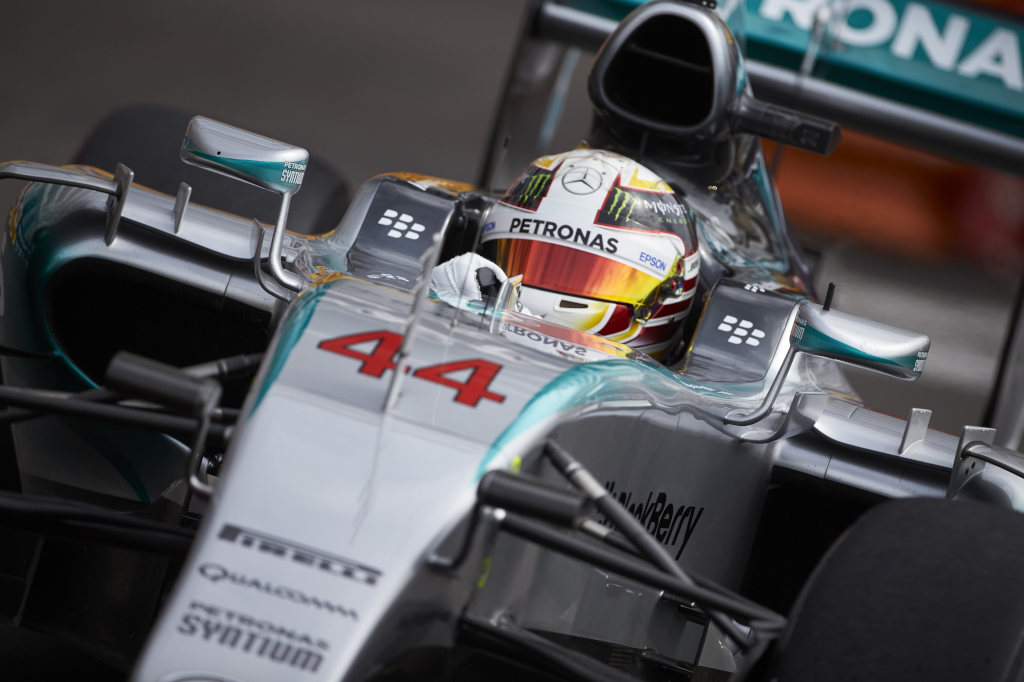
    Mercedes driver Lewis Hamilton topped the first free practice session for the 2016 Australian grand prix.

    The 2016 season got underway as Ferrari’s Sebastian Vettel ventured out onto track with the full wet Pirelli tyres fitted to his car. Overnight rain and a consistent drizzle in the morning had ensured a wet start to the first practice session.

    The track seemed to dry quickly with a blustery wind but just as driver were getting into their stride on the yellow-walled soft tyres the rain appeared once more. So it continued throughout the session which was difficult to classify either wet or dry.

    Lewis Hamilton set the quickest time of the session with a 1:30:364. The Red Bull duo of Dannil Kvyat and Daniel Ricciardo were second and third as the chequered flag dropped to signal the end of the session. Rather embarrassingly, Ricciardo dropped the Red Bull into the gravel at the end of the session. Given the slippery conditions and the fact that Ricciardo was on slicks means we can give him the benefit of the doubt.

    Force India’s Nico Hulkenberg and Toro Rosso’s Max Verstappen rounded out the top five. The 18 year old Verstappen had earlier spun his Ferrari-powered car but, luckily, didnt sustain any damage. Nico Rosberg, Fernando Alonso, Jenson Button,  and Sergio Perez rounded out the top ten.

    The changeable weather conditions mean that the first free practice session of the season didnt represent anything as to how the rest of the weekend may pan out.

  • Red Bull-Aston Martin Parntnership Paves the Way for Aston Martin Hypercar Project

    Red Bull-Aston Martin Parntnership Paves the Way for Aston Martin Hypercar Project

    Red Bull Racing and Red Bull Advanced Technology announced a partnership with British luxury sports car manufacturer Aston Martin to create the next generation hypercar.

    This collaboration will see Red Bull Chief Technical Officer Adrian Newey and Chief Creative Officer of Aston Martin, Marek Reichman team up to create a ground breaking Aston Martin hypercar.

    The project will be called “Project AM-RB 001 and will feature a blend of Formula 1 technology combined with Aston Martin’s signature luxury sports car design.

    As part of the deal, the Red Bull Racing Formula 1 car will carry the Aston Martin Logos on the sidepods and on the nose from the season opening Australian Grand Prix.

    “This is a very exciting project for everyone at Red Bull Racing,” commended Red Bull Team Principal Christian Horner.

    “Through this Innovation Partnership the iconic Aston Martin logo will return to grand prix racing for the first time since 1960, and Red Bull Advanced Technologies, led by Adrian, will be using Formula One DNA to produce the ultimate of all road cars.

    “It’s an incredible project and also realises a dream and vision long held by Adrian to design a road car. We are very much looking forward to what I’m certain will be a successful partnership.”

  • Watch:Tyre Rules Explained By Pirelli

    Watch:Tyre Rules Explained By Pirelli

    Still confused about the tyre rules? Pirelli has made a really cool video explaining how they work.

  • 2016 Australian Grand Prix Broadcast Times

    2016 Australian Grand Prix Broadcast Times

    The 2016 Formula 1 curtain raiser is finally upon us. Round one of the Formula 1 World Championship will get underway in Melbourne, Australia for the Australian Grand Prix.

    With testing done and dusted and with a few interesting observations that came out of it, the season ahead looks set to be a close one between Mercedes and Ferrari. But as we have seen many time in F1, what happens in testing is just that, testing. The real battle is on the track and it is expected that Mercedes will once again be ahead of the field.

    Mercedes have worked very hard during the off season and by looking at the raw testing data it does seem as if they are in a very good position going into the season. But while Mercedes have been working hard, other teams have been doubling their efforts. Ferrari emerged as the closest contender to Mercedes during testing and they look to be in a similar position as in 2015 only a little closer to Mercedes. They are quietly confident that they can take the fight to Mercedes this season.

    Mercedes and Red Bull are not far behind Ferrari and will be waiting in the wings and will pounce on any mistakes made by the Scuderia.

    The midfield looks to be even more competitive this season than last year. McLaren look like they are ahead of their engine issues that plagued them last year while Force India have carried the momentum from the great from they were in last season. New entrant Haas F1 are looking to fight in the mid field. If testing is anything to go by they are going to have a tough time. This is a learning season for them and they can only get better from here. Their close partnership with Ferrari also puts them in somewhat of a good position.

    The race will start in the late afternoon to make it favorable for the folks up in Europe. The practice sessions will be at a very early hour for most. Although there is nothing like a bit of Formula 1 to enjoy with your morning coffee.

    Session Day Local Time GMT GMT+2
    Free Practice 1 Friday 12:30 01:30 03:30
    Free Practice 2 Friday 16:30 05:30 07:30
    Free Practice 3 Saturday 14:00 03:00 05:00
    Qualifying Saturday 17:00 06:00 08:00
    Race Sunday 16:00 09:00 07:00
  • F1 2016: Australian GP Preview – F1 season of possibility

    F1 2016: Australian GP Preview – F1 season of possibility

    The question at the forefront of everything is can Ferrari take the fight to Mercedes. All indications are that the Italian team has made strides since last year and has closed the gap to Mercedes. All that remains to be seen is how close they can get.

    As F1 2016 gets under way this season will be longest in the sport’s history with 21 races. Germany’s Hockenheim makes a return to the calendar and Azerbaijan hosts its first ever race on the Baku City streets. The confirmation of the US grand prix gives the teams an added bonus. The F1 sporting regulation state that one engine must be used for four race weekends. As the US Gp makes it 21 races the teams will be given a fifth engine thanks to the wording of the rule.

    When the change to the qualifying format was announced it left many perplexed. The quali format hadn’t been a bad one so why fix something that isn’t broken? But, let’s give it chance and see how it pans out.

    The one hour session will still consist of three parts. Q1 will be 16 minutes, after the first seven the slowest car is eliminated. Thereafter, the slowest car is eliminated every 90 seconds. Seven drivers will be eliminated while 15 advance to Q2.

    Hamilton-Australia-MercedesQ2 will be a 15 minute session with the slowest driver eliminated after 6 minutes. Likewise, every 90 seconds will see the slowest car eliminated. Seven drivers will be eliminated in this session with eight advancing to Q3.  The Q3 session will run for fourteen minutes with the slowest driver eliminated after five minutes. The slowest driver will continue to be eliminated every 90 seconds. Two drivers will remain in the final 90 seconds of the session to shoot it out for pole position.

    An interesting aspect of this style of qualifying will be that the quickest cars will no longer be able to rely on getting through to the second part of qualifying on the harder of their tyre selection. It’s sure to throw the cat amongst the pigeons when there is rain about, and if it’s a lap longer than 1 minute 30 seconds. And let’s be honest anything that adds a bit of drama and intrigue is never a bad thing. What the new format has in its favour is that it takes the excitement from the final ten minutes of the session and spreads it throughout the entire hour.

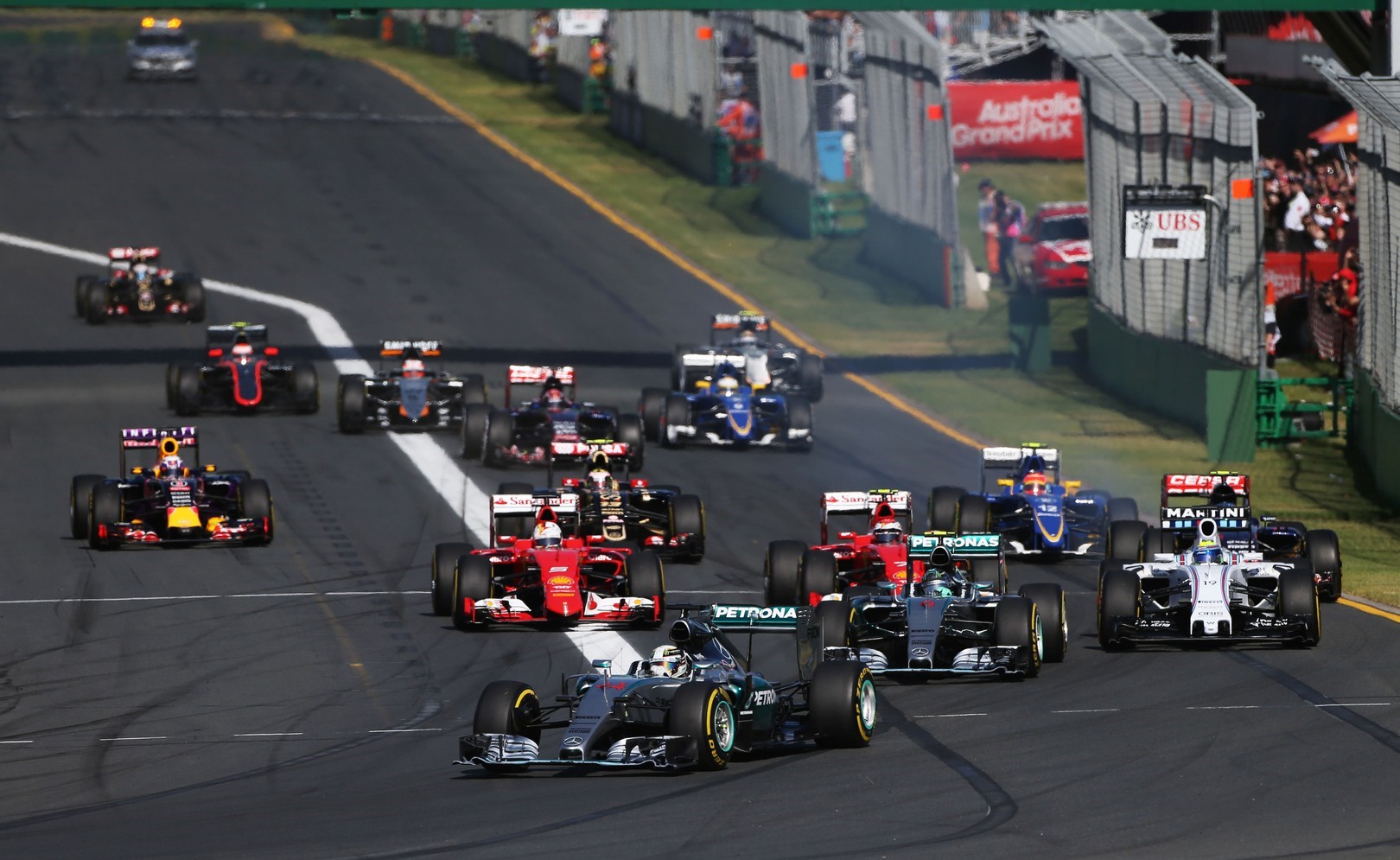
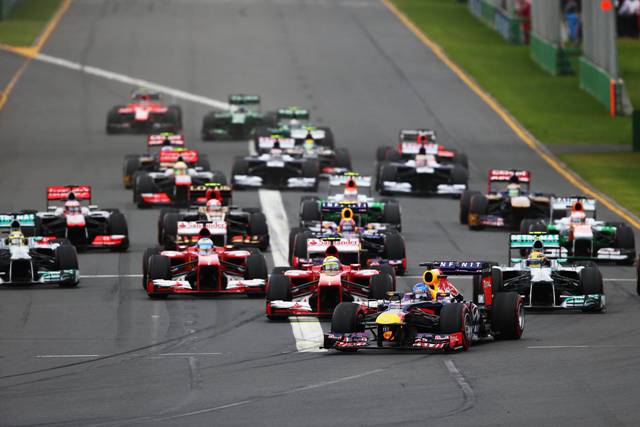
    australiaThe Albert Park circuit is a well known one. But there are many unknowns at the first race of the season. A new qualifying format, new tyre regulations, more driver freedom on strategy calls, to name a few. The clampdown on radio communication from the pitwall carries its own connotation, especially where the start of the race is concerned. Drivers are not allowed any feedback during the formation lap and are only being allowed to use one clutch at the start. This combined with Albert Park’s tight turn one could result in dramatic start to the grand prix. And all of this has the potential to combine into an explosive season-opening race.

    Mercedes has chosen to play up Ferrari’s performance so far. Choosing to send both Nico Rosberg and Niki Lauda into the press with statements of Ferrari being a great threat. It could just be some clever psychological play by the champions. Or it could be real and we could in for a F1 season to be remembered. One way or the other the more than 100 day wait is finally over.

  • Spanish Grand Prix Tyre Choices Revealed By Pirelli

    Spanish Grand Prix Tyre Choices Revealed By Pirelli

    Pirelli have revealed the tyre choices for round 5 of the Formula 1 World Championship at the Circuit De Catalunya.

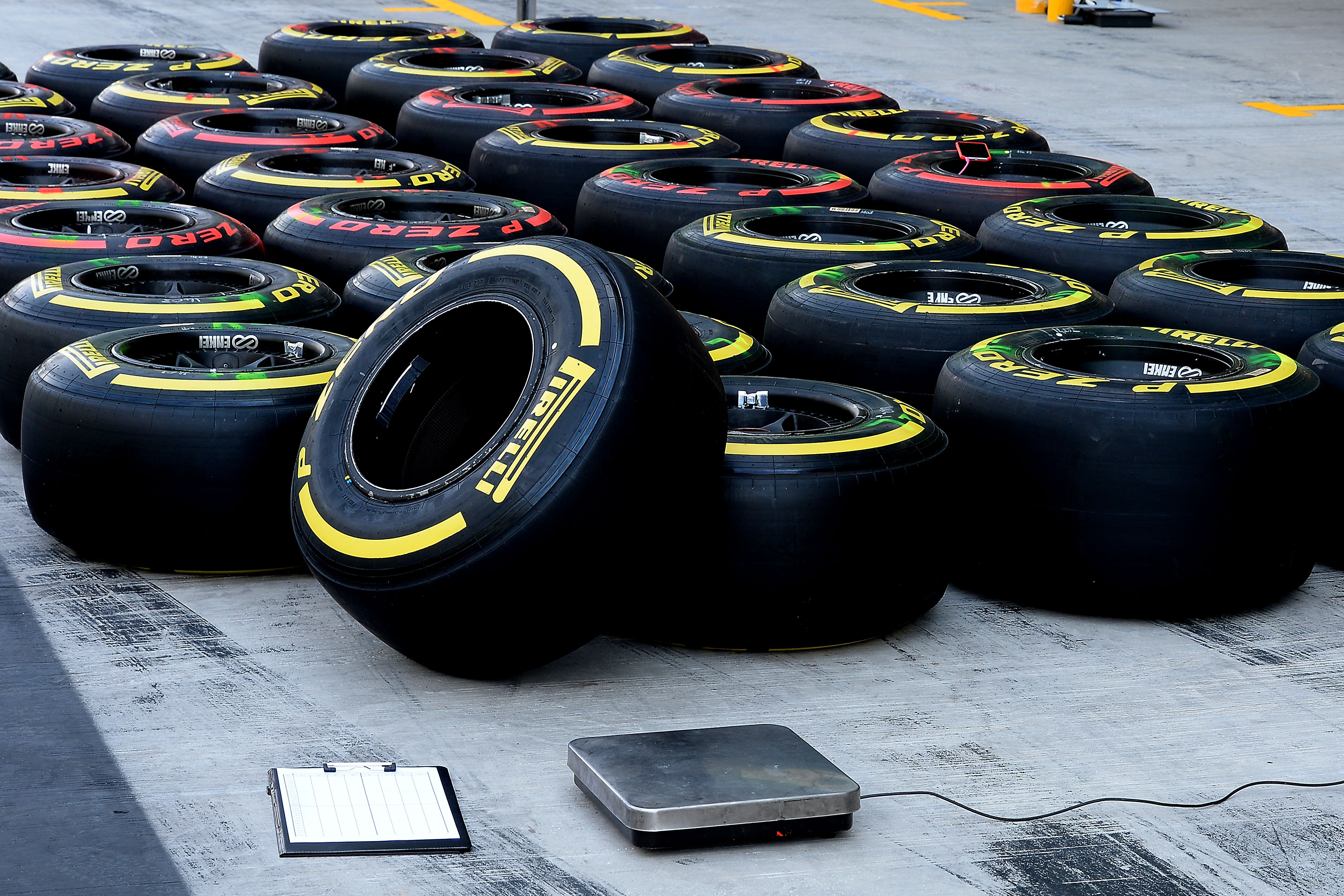
    For the Spanish Grand Prix Pirelli have nominated the Orange Hard, White Medium and Yellow Soft compound tyres. The hard and medium compound are the tyres that must be used at some point in the race. According to the rules each driver must have both sets available for the race and will have to use at least one of those sets.

    The soft compound tyre will be made available for Q3.

    The teams will be free to choose the remaining sets of tyres to make up the 13 sets in total for the race weekend.


    Picture courtesy Pirelli

  • Pirelli Reveals Driver Tyre Choices for Australian Grand Prix

    Pirelli Reveals Driver Tyre Choices for Australian Grand Prix

    Formula 1 Tyre supplier Pirelli has released the list of tyre choices for each driver for the Australian Grand Prix.

    01-AUSTRALIAN-SELECTED-SETS-PER-DRIVER-4k-EN-21


  • F1 2016: Testing Numbers and Stats

    F1 2016: Testing Numbers and Stats

    With the 2016 pre-season tests done and dusted the attention turns to the first race in Melbourne Australia in just a little over a week for the F1 season opener.

    There are quite a number of stats and number that were thrown around. The lap count and distance completed by Mercedes is one that stands out the most. The Mercedes team completed a total of 1 294 laps between their drivers that covered a total distance of 6 023.57km. This is quite a long way from Toro Rosso who completed the second highest test distance of 4 883.095km completeing 1 049 laps. That’s almost 19% less than Mercedes in terms of distance.

    Laps Per Team

    Total KM per Team

    The 6 023.57km completed by Mercedes translates into almost 20 complete race distances based on the 307.104km race distance of the Circuit de Catalunya track layout.

    Race Distances

    With 4 manufacturers supplying power units, its no surprise to see Ferrari and Mercedes very close to each other in terms of distance covered. Both manufacturers supply 4 teams each.

    KM per Manufacturer

    Total Number of Laps Per Driver

    Driver Team/Car Laps Distance (KM)
    1 Nico Rosberg Mercedes F1 W07 Hybrid 656 3053.68
    2 Lewis Hamilton Mercedes F1 W07 Hybrid 638 2969.89
    3 Max Verstappen Toro Rosso-Ferrari STR11 534 2485.77
    4 Carlos Sainz Toro Rosso-Ferrari STR11 515 2397.325
    5 Kevin Magnussen Renault R.S.16 509 2369.395
    6 Sebastian Vettel Ferrari SF16-H 488 2271.64
    7 Daniel Ricciardo Red Bull Racing-TAG Heuer RB12 457 2127.335
    8 Felipe Nasr Sauber-Ferrari C34/C35 455 2118.025
    9 Valtteri Bottas Williams-Mercedes FW38 445 2071.475
    10 Felipe Massa Williams-Mercedes FW38 411 1913.205
    11 Jenson Button McLaren-Honda MP4-31 377 1754.935
    12 Kimi Raikkonen Ferrari SF16-H 364 1694.42
    13 Daniil Kvyat Red Bull Racing-TAG Heuer RB12 358 1666.49
    14 Nico Hulkenberg Force India-Mercedes VJM09 357 1661.835
    15 Fernando Alonso McLaren-Honda MP4-31 333 1550.115
    16 Sergio Perez Force India-Mercedes VJM09 289 1345.295
    17 Jolyon Palmer Renault R.S.16 267 1242.885
    18 Romain Grosjean Haas-Ferrari VF-16 257 1196.335
    19 Pascal Wehrlein Manor Racing-Mercedes MRT05 252 1173.06
    20 Rio Haryanto Manor Racing-Mercedes MRT05 232 1079.96
    21 Esteban Gutierrez Haas-Ferrari VF-16 217 1010.135
    22 Marcus Ericsson Sauber-Ferrari C34/C35 187 870.485
    23 Alfonso Celis Force India-Mercedes VJM09 133 619.115


    Looking at the overall fastest times for the 8 days of testing Ferrari’s Kimi Raikkonen was the fastest with his 1:22.765 on the ultra soft tyres. These times should be taken with a shovel of salt when considering them as it is always hard to get the true pace of a car during testing. There are too many variables that factor into the final times.

    Pos. Driver Team/Car Best Time Gap
    1 Kimi Raikkonen Ferrari SF16-H 1:22.765
    2 Sebastian Vettel Ferrari SF16-H 1:22.810 0.045
    3 Nico Rosberg Mercedes F1 W07 Hybrid 1:23.022 0.257
    4 Nico Hulkenberg Force India-Mercedes VJM09 1:23.110 0.345
    5 Carlos Sainz Toro Rosso-Ferrari STR11 1:23.134 0.369
    6 Felipe Massa Williams-Mercedes FW38 1:23.193 0.428
    7 Valtteri Bottas Williams-Mercedes FW38 1:23.229 0.464
    8 Max Verstappen Toro Rosso-Ferrari STR11 1:23.382 0.617
    9 Daniel Ricciardo Red Bull Racing-TAG Heuer RB12 1:23.525 0.760
    10 Lewis Hamilton Mercedes F1 W07 Hybrid 1:23.622 0.857
    11 Sergio Perez Force India-Mercedes VJM09 1:23.650 0.885
    12 Kevin Magnussen Renault R.S.16 1:23.933 1.168
    13 Daniil Kvyat Red Bull Racing-TAG Heuer RB12 1:24.293 1.528
    14 Jenson Button McLaren-Honda MP4-31 1:24.714 1.949
    15 Fernando Alonso McLaren-Honda MP4-31 1:24.735 1.970
    16 Felipe Nasr Sauber-Ferrari C34/C35 1:24.760 1.995
    17 Alfonso Celis Force India-Mercedes VJM09 1:24.840 2.075
    18 Jolyon Palmer Renault R.S.16 1:24.859 2.094
    19 Pascal Wehrlein Manor Racing-Mercedes MRT05 1:24.913 2.148
    20 Marcus Ericsson Sauber-Ferrari C34/C35 1:25.031 2.266
    21 Romain Grosjean Haas-Ferrari VF-16 1:25.255 2.490
    22 Esteban Gutierrez Haas-Ferrari VF-16 1:25.422 2.657
    23 Rio Haryanto Manor Racing-Mercedes MRT05 1:25.899 3.314


    Best Times per Compound

    Tyre Driver Team Best Time Gap to H Gap to M Gap to S Gap to SS Gap to US
    Hard Bottas Williams 1:25.402 – 1.276 2.393 2.55 2.637
    Medium Rosberg Mercedes 1:24.126 -1.276 – 1.117 1.31 1.361
    Soft Raikkonen Ferrari 1:23.009 -2.393 -1.117 – 0.157 0.244
    Super Soft Vettel Ferrari 1:22.852 -2.55 -1.274 -0.157 – 0.087
    Ultra Soft Raikkonen Ferrari 1:22.765 -2.637 -1.361 -0.244 -0.087 –
  • FIA Confirm Changes to Qualifying Format

    FIA Confirm Changes to Qualifying Format

    The Formula 1 Governing body the FIA have approved changes to the F1 qualifying format on Friday 4 March. These changes will be introduced at the first round of the 2016 F1 season at Melbourne in two weeks time.

    A statement by the FIA said that the changes were unanimously accepted by the F1 commission.

    Qualifying will now be in a form of a knock out style with the slowest drivers being eliminated every 90 seconds instead of at the end of the session. The sessions remain unchanged from the previous format with three sessions.

    Q1

    • 16 minutes
    • After 7 minutes, the slowest driver is eliminated
    • Slowest driver will be eliminated every 1 minute 30 seconds (90 seconds) thereafter until the chequered flag.
    • 7 drivers eliminated, 15 progress to Q2.

    Q2

    • 15 minutes
    • After 6 minutes, the slowest driver is eliminated
    • Slowest driver will be eliminated every 1 minute 30 seconds (90 seconds) thereafter until the chequered flag.
    • 7 drivers eliminated, 8 progress to Q3

    Q3

    • 14 minutes
    • After 5 mins, the slowest drivers is eliminated
    • Slowest driver will be eliminated every 1 minute 30 seconds (90 seconds) thereafter until the chequered flag.
    • 2 drivers left in the final 1 minute 30 seconds to fight for pole position.

    The final wording for the new regulations will be submitted to the F1 Strategy Group and F1 Commission.

    The deadline for the 2017 Sporting and Technical regulations has been extended to 20 April 2016 to allow all the stakeholders to finalize all the relevant work. “Especially with regard to Power Unit regulations focusing on the four key areas of supply cost, obligation to supply, performance convergence, and further improvement of noise,” read the statement from the FIA.

    The bodywork regulations for 2017 have also been approved by the World Motorsport Council which was proposed by the F1 Commission and early indications point to cars being 4-5 seconds faster per lap on some circuits.