Tag: christian horner

  • 2019 Monaco Grand Prix: Thursday Press Conference

    2019 Monaco Grand Prix: Thursday Press Conference

    TEAM REPRESENTATIVES – Claire WILLIAMS (Williams), Christian HORNER (Red Bull Racing), Cyril ABITEBOUL (Renault), Zak BROWN (McLaren), Andrew GREEN (Racing Point)

    Q: Following the passing of three-time Formula One World Champion Niki Lauda this week, we asked all of the drivers yesterday for their memories and thoughts of Niki. We’d like to start in the same fashion with you today please. Cyril, is we could start with you: your thoughts and memories of Niki?


    Cyril ABITEBOUL: It’s another sad news for the Formula One community. Frankly, I had not a lot of interaction with Niki, but clearly he was one of the role models that form our youth and the reason we are admiring Formula One – for the fantastic animal that you come across in life. He was a model of resilience. He was taking the fighting spirit very, very hard and impressive what he managed to do over his career. Any meeting with him was kind of fun. You never knew what could happen. He will be another person badly missed in Formula One.


    Christian?

    Christian HORNER: It’s a huge loss for Formula One – the whole paddock. Obviously for Mercedes where he was so active as well. I think it was a shock for everyone. Obviously he’s not been in great health for the last pretty much 12 months. He was an iconic person. What he achieved in the sport was phenomenal. Just the most remarkable story. You only have to watch the movie, which I think is a pretty decent representation of actually what happened and the fight back that he had, which obviously happened prior to my really understanding of who he was. When I really came across him, he was working as a commentator, quite an outspoken commentator at that time, and he managed to where all these hats, commentating for RTL, running the Mercedes team as their chairman. He was just a larger than life character, obviously as an Austrian, and us an Austrian team, he spent a lot of time with us, particularly Helmut Marko, a very close friend of his, as they pretty much had grown up together. We’ll certainly miss the breakfast where he would come, pretty much every morning and Helmut and he would be like the two old guys in the Muppet Show, Waldorf and Statler I think it was, and they’d basically be commenting on all aspects of life, none of what I’m going to repeat here, that’s for sure – but his openness, his sense of humour, his ability to say “how did you screw that up?” something “was rubbish” – or complement you when you’d done well. He was a great guy, a great personality and he’ll be very, very sadly missed.


    Claire, your thoughts?

    Clair WILLIAMS: I obviously had the pleasure of knowing Niki through our relationship with Mercedes. I can’t profess to knowing him extremely well but everything that he’s achieved in motorsport is extraordinary and, as Christian said, watching that film really demonstrates exactly the kind of character that he was. Latterly, working with him in the Strategy Group meetings, he was always the voice of reason. When Niki talked, people listened. Personally, we always had a bit of a joke about my single status. I think I probably wouldn’t have got married as quickly as I have if Niki wasn’t pressuring my husband into proposing – so that will always be a nice memory for me. The sport has lost an icon, hasn’t it. Our thoughts go out to his family.


    Zak?

    Zak BROWN: Yes, I echo what everyone has said before me. He was an absolute legend of the sport. A loss for all of us. Never met anyone who didn’t like Niki. He was a real likeable guy, a real racer, had a strong opinion and when you look at what he came back from , that’s a real inspiration. I think not many would have been as brave as he was – not only to come back, but to go on, win World Championships. He won his last World Championship with McLaren. So, a lot of people in our factory, Mansour Ojjeh, one of our owners, were was super-close to Niki, so it feels like we lost a member of our family and, of course, the whole racing community has. Just wish his family the best and just grateful to have the fond memories here in Formula One forever.


    Andy?

    Andrew GREEN: Unfortunately I never had the honour to work with Niki. He was the background to my youth when I was watching Formula One. He was a big part of it. Some very big images from back then, and part of why I got into the sport. What he did from then until now is just incredible. He’s a real icon and will be sorely missed.


    Q: We’ll now turn our focus to this current season. Christian, we’ll start with you. For Red Bull it’s been a consistent start to the year. Max Verstappen in the top four at every race and this is usually a race that you target victory at. After the way FP1 has gone, is that a realistic target for you again this weekend?

    CH: I think it’s been a strong start to the year after the engine change over the winter. I think we’ve been very consistent, we’ve had two podium positions, we’ve finished in fourth place every other grand prix. Obviously, having introduced some upgrades in Barcelona, you ought to try to optimise those and Monte Carlos has always represented a track that we’ve performed well at. We’ve had an encouraging first practice but I think having seen Mercedes’ performance, particularly in the slow speed sector of Barcelona, they are absolutely the stand-out favourites for this event, so if we can get anywhere near them, and put a little bit of pressure on that, that would certainly be our target going in to the weekend.


    Q: Cyril, you’ve got last year’s Monaco Grand Prix winner driving for you this season – but currently sitting eighth in the Constructors’ Championship. Were you expecting to be a little bit higher at this stage of the season?

    CA: Yeah, of course, I think you can even say that it’s not the season start that we wanted, that we were ambitioning working for and advertised. It takes clearly a reaction from all of us. In my opinion obviously there has been a collection of issues, not excuse, but issues over the first five races that do not reflect the ambition, the level of our drivers, the level of the team. So it’s up to us to react and come up with clear answers to the different issues. We hope to see those answers starting to kick off with this weekend. Indeed, we have last year’s grand prix winner. It just creates another obligation to come up with the best possible car at this point of our journey.


    Q: Claire, the start to the season probably not gone the way Williams would have envisaged either – but since the start of the year you’ve had better qualifying performance in Barcelona and then the test, working on some new ideas. Do you feel like there are shoots of recovery now? Are you starting that rebuilding process?

    CW: Yeah, you say it wasn’t the start to the season that we envisaged – but I think we anticipated what was coming. Yeah, I definitely feel that we can see some light at the end of the tunnel now and I think probably just from the time sheets and the last race in Barcelona, we demonstrated that we are closing that gap. It may be slow but we all know that it takes time to bring performance to your car. There’s definitely a lot of good work going on back at the factory that people may not necessarily be seeing yet. The aero team are doing a great job finding performance in the tunnel and we’re going to be bringing that to races over the coming weeks and months with a package coming mid-way through the season that we will hope will bring some significant performance to us. Yes, there are definitely signs of improvement. I think there’s a certain positivity in the team at the moment. Morale is still pretty good, and that’s all we can ask of everyone: just fighting hard, not giving up and keep on brining performance to the car.


    Q: And Zak. I’m sure you’ll be facing questions about last weekend’s events in Indianapolis from the floor but focusing on Formula One right now, McLaren actually extended its advantage in fourth in the Constructors’ Championship in Barcelona. Would you say that’s actually ahead of expectations for this season?

    ZB: It’s early in the season and the midfield is so tight, I think the swing can swing at any one race. We’re pleased that we’re sitting forth in the Championship. We think that’s realistically, on our road to recovery, about as much as we’re going to be able to realistically achieve. So we will fight hard to retain that position, and those behind us are going to fight hard, of course, to knock us out of fourth, and we’ve got a long way to go, so I think anything can happen – but I’m really pleased with all the effort everyone at McLaren has put together. We had a better winter testing, and certainly have built a better race car. Drivers are doing an excellent job, we’re quick on pit stops now, so you can feel the team’s coming together. We have Andreas Seidl now and James Key who’ve joined, so I feel I’ve got all the right players on the field, so to speak and now we just need to put our head down and execute.


    Q: Andrew, if we look at Racing Point, that’s one of the teams looking to close down McLaren. You introduced a new upgrade package in Barcelona – but it looked like a tough weekend for you. So, what worked with the update and what still needs to be optimised?

    AG: Yeah, we were sort-of anticipating Barcelona was going to be a tough race for us. It has been, it’s been part of the DNA of the car for while, which is something we’re actively working on back at the factory. From what we see the upgrades did what they were supposed to do. I think we were quite content. We’ve got a route forwards and the car is evolving quite quickly and it will do over the next half a dozen races. We think we’ve got a good direction to go in – it just takes time. Like Clare said: you can’t change cars overnight, these things do take some time to evolve in the factory and come to the track. We’re happy with the route we’re going in. Are we happy with where we are now? No. But we can see that we’re going in the right direction.


    QUESTIONS FROM THE FLOOR


    Q: (Scott Mitchell – Autosport) Claire, in the build-up to this week you announced Jamie Chadwick as a development driver. You explained that it will involve simulator responsibilities to begin with. Is there a plan – or a hope – to give her on-track opportunities or the opportunity for that partnership to maybe evolve in the future?

    CW: Like you say, we’re delighted that Jamie’s joined the team. She’s obviously part of the W Series Championship this year. She won the first event and then she had a good run in Zolder last weekend. We announced her on Monday, she’s going to be doing simulator work, as you said. Full immersion in the factory, working with the engineers to support her campaign this year and to just help… well it all goes to promoting women in motorsport. Doing this for her is hopefully going to elevate her competitiveness. At the moment it is reserved to simulator work and then coming to a few races with us to see the team trackside and how we operate in F1. There are no plans at the moment to put her in an F1 car at this stage.


    Q: (Oliver Brown – The Telegraph) Question for Zak. The Indy 500. You gave a fairly remarkable interview to the Associated Press about the full reasons behind Fernando’s failure to qualify. I just wonder, how embarrassing has this episode been and how do you explain how a company of McLaren’s sophistication can make these kinds of errors.

    ZB: I’ve spoken a lot about Indy Car, as you pointed out, and I think this is a Formula One environment, I have my Formula One shirt on, so I prefer to talk about Formula One. To answer your question, we got it wrong and I thought it was important to be transparent and open as much as sometimes the truth hurts. I think the industry isn’t necessarily that open, that often. And we got it wrong and I’m responsible for that. I felt I needed to share with everyone. There’s of course little stories behind each of those individual issues and how they transpired but y’know, we didn’t execute and therefore we didn’t qualify for the Indy 500. It’s happened to the best of them before and we learned a lot. I was watching this morning, a little tribute to Niki and, when he grabbed his Laureus award, talked about how he learned more from losing, which is what made him a winner, so we’ll dust ourselves off. We’re racers. It was a big, public failure. I wanted to communicate what happened. Yeah, it’s embarrassing. It’s not to the McLaren standard. It’s not acceptable – but it happened and we’re going to learn from it and we’ll come back stronger.


    Q: (Dieter Rencken – Racing Lines/racefans.net) A question for all of you. Give or take a week we’re a month away from Formula One’s self-imposed deadline on the regulation changes for 2021. Given the magnitude of everything that’s required – governance, commercial, sporting, technical etc – can it actually get done in time?


    Q: Shall we work our way along the line with that one, starting with Cyril?

    CA: Thank you! It’s vast question and the usual question. Will we have a signed contract by FIA, Formula One and all 10 teams by end of June or mid-June for the World Motor Council? No, obviously no. But in my opinion there has been a lot of groundwork already covered. I think it’s all about trying to agree what will be the key principles for 2021, from a commercial perspective, financial perspective, the key principles on the technical side and the sporting side. And in my opinion we are probably 80% or 90% from that point, from that milestone, so with enough faith and enough goodwill from all participants and probably a bit of a push from the key stakeholders, FIA and Formula One, there is no reason why something cannot be presented at the World Motor Sport Council that will be advanced enough to give useful guidelines for the remainder of the year, so that we have a complete set of guidelines for the end of the year. That’s my opinion, obviously, but there is still some work to cover.


    Q: Christian?

    CH: I didn’t understand any of that.

    CA: We are not partners anymore. You can’t make fun of me anymore. It’s not part of the contract anymore!

    CH: But it’s still enjoyable. Sorry, what was you question about? Regulations coming out. Look I’m sure something is going to be presented. It will probably nowhere near what actually gets signed. I’m sure the regulations will change and evolve. Something will come out in June, it will change in September, October, probably in November, and yeah, there’s plenty of ground to cover, but there is a watershed where something will be put in front of us fairly shortly and then the fun really begins.


    Q: Claire, is June realistic?

    CW: I’m going to be really boring now after that, aren’t I? Clearly we’re getting close to ’21. When we first started these negotiations, it was a long time ago and we’re now at that point where we need to have that full set of regulations so that we can plan and prepare out businesses for that season. As Christian says, I’m sure there are going to be some further negotiations after that point. For a team in our position clearly when it comes top the technical regulations we wouldn’t want too much movement after that. People are going to start working on those, people are already working, and we don’t need to be wasting resources with a huge change subsequent to the issuance of the first draft. I don’t think there’s much choice. We have to get those regulations out and so I believe it should be done and I’m sure it can be done.


    Q: And Zak?

    ZB: I agree with everything that I’ve head. I don’t believe we’ll get it done in June and it will play out over the second half of the year and we’ll get there and racing will go on.


    Q: And Andy?

    AG: I can only speak from a technical aspect, but I know that the FIA and F1 have done a huge amount of work in the background on this. We were exposed to some of it last week in a technical working group meeting. We could see that it’s quite well evolved. It’s going to need some tidying up for sure. We have meetings planned from now until the end of the year, which is where we all anticipate it’s going to go to. It’s a significant set of changes, bit like I said, they have done a huge amount of work in the background and I think we can get there.


    Q: (Sam Collins – Racecar Engineering) Predictably, another question on regulations, but this time the 2025 power unit regulations, which we hear will be completely different to what we have now. I’d like to ask the whole panel this, as there are some different opinions on this, what you’d like to see in the new power unit for 2025, what technologies and what things are good and what things are bad?


    Q: We’ll reverse the order then and start with technical thoughts first.

    AG: What a question: 2025! I think what we have now is an incredible piece of engineering in the back of the car. But it could just be too incredible. I think what we have is potentially something where the technology bar of the power unit is just way too high and I think I would like to see something that is just slightly simpler. That’s my view. I think I’d never say no to more horsepower. I think the sport can’t have enough horsepower. We need to make the cars harder to drive. I think more power; a simpler power unit. That’s where I would be going.


    Q: Zak, your thoughts?

    ZB: More power would be great. Less expensive would be outstanding.

    CA: There is the message!

    ZB: And I don’t know that it’s achievable but if we could have some diversity in the engine itself and not be limited to a certain amount of cylinders, things of that nature, I think would maybe spice up the show. But whether that’s achievable or not… We don’t build engines, so Cyril is best to answer whether a scenario like that would be feasible.


    Q: Claire, your thoughts on 2025?

    CW: Again, at Williams we don’t build engines and I’m certainly not an engineer who is educated enough to give you a sensible answer. But from our perspective, as Zak says, something that is cost-efficient, environmentally appropriate and loud. Noisy would be nice.


    Q: And Christian?

    CH: Emotionally, a normally-aspirated, high-revving V10 or V12 engine would be a wonderful thing to have back in Formula One, but unfortunately I think they’re rather outdated now. I think as Andy was saying, the technology in these engines is phenomenal. We’ve now got a period of stability with the engines until 2023 I think or 2024, so it’s important that Formula One makes the right decision for the future. Obviously the automotive sector is moving an awful lot at the moment and what technologies are going to relevant then? Because when that engine comes in in 2025 that’s going to have to be for a 5-10- year period, so we’re actually talking up to 2035, which is a long way down the pipelines. The romantic in me says go back – loud, noise, high revs, normally aspirated.


    Q: And Cyril, from a power unit supplier point of view?

    CA: The romantic in me would say the same thing, but obviously in 2025 the world will be different, that’s for sure. Electrification will be a profound trend, so it’s not going to go away. In my opinion we need to look at the next couple of years to form an opinion regarding MGU-H road relevance, because it’s clearly a component that was introduced for that purpose. Right now, we don’t’ see any application on road cars but it may come. It may actually be in the pipeline of some manufacturers, so we need to be careful not to be basically in reverse in that respect. And then diversity of technology would be great but we need to be careful not to open up the field and create some discrepancy. One thing that might be interesting that starts to be discussed is not necessarily not the next generation of engine but the next generation of fuel, because we still believe that Formula One is about hybrid technology, not full electric, for a number of reasons. Clearly we need more power and sustainable power and long races, but there will be new forms of fuel coming up in the next few years, whether you are talking about more bio-fuel, so a different composition, or even synthesis fuel, coming from non-fossil sources, that could be attractive and that would require new development. So, probably the way forwards. Less exciting, obviously, than a very high-revving, normally-aspirated engine, but still probably the way forward if we want to be relevant, not just to car makers, but to society.


    Q: (Jerome Pugmire – Associated Press) A question for Zak. Just picking up on what you said earlier about the need for transparency and coming forward with the reasons for what happened. Is the motivation behind that because fans are owed those explanations or more the sense that the people who did not do their job properly need to face up to that or is it a combination of both that prompts that?

    ZB: No, I think anyone that maybe didn’t get the job done, you have a private conversation with them. I don’t think that would be ever be appropriate to discuss in an open forum, which is why names in a variety of areas were mentioned, and that was about being transparent with our fans and partners and not glossing over something that was not as minor miss but was a major miss. I felt obligated to explain that to the world and the best way to do that was via the media, to get the message out, and I’m glad we did it.


    Q: (Julien Billotte – Auto Hebdo) – A question for whoever would like to answer. There was some hope at the start of the season that the new regulations, the 2019 regulations, could shake things up a bit in terms of the pecking order, and here we are five races in, Mercedes is winning everything and the top three are miles ahead of the midfield. What makes you confident that 2021 can be the game changer that Formula 1 probably needs?


    Q: It was whoever wants to answer and you all look delighted to jump in. Christian, why don’t you start?

    CH: Thank you very much. Look, the regulation change this year; the outcome was rather predictable unfortunately and it’s up to us, the teams competing against Mercedes to close that gap down. I think for 2021 it’s a clean sheet of paper, it will be a big regulation change and I think one of the things that we debated is that you need to be a little bit careful, because if you release very early regulations then quite the teams that have more resource quite simply put that resource earlier on than the smaller teams. So it’s about finding that balance of when is the right time for full regulations to be released. And I think the cars will be a lot simpler. Inevitably teams will get it right and teams will get it wrong. But hopefully the concept of what they are looking at should put more inference on the driver to be a bigger variable than he or she currently can be. And that’s what Formula One desperately needs. It needs the drivers very much to be the stars, to be modern day chariot racers and that we have wheel-to-wheel, exciting, and to a degree, unpredictable racing, because serial winning like we have at the moment, the teams in many respects are getting too good at predicting the outcome of a weekend with the updates they introduce. Hats off to Mercedes, they’ve done a better job than anybody to be in the position they are, but hopefully the technical regulations will be the biggest driver to shuffle that around and change that, and hopefully introduce more variance.


    Q: Claire, for a team playing catch-up at the moment, does the late release of regulations do you think benefit you and equalise things a little bit across the field?

    CW: Yeah, as Christian said, if we can have those regulations released slightly later then clearly for a team like ours, then we’re not going to be battling as a team like Christian’s or Toto and Ferrari, who can all put so much resource across three programmes. For a team like ours, it’s much harder to do that but it’s just more about having clarity on when those regulations come out for us and to make sure that those regulations are defined as when they come out rather than people tinkering with them in the TWG or whatever and then there’s a second draft to them. We just need them as soon as possible but not too soon so that people can’t put an arms race against them.


    Q: Zak?

    ZB: Well, yeah, I would agree with what I’ve heard the additional add I would have is it’s going to come along with the budget cap so not only would the rules be very different, there also won’t hopefully be unlimited budgets to be able to put against developing the new car. As far as timing, coming out, I think later the better but they have such great resources, the teams at the front, that they will just have the ability to push out more boats in more directions over a shorter period of time so I think the technical rules, tied to the budget cap is what’s going to maybe drive some change in the sport.


    Q: Andy, from a technical point of view does it feel like a big opportunity?

    AG: Potentially. I think the technical regulations definitely focused on allowing cars to follow more closely, I think that’s quite clear, but I think, with every season there’ll always be teams that do a better job than the others so there’s always going to be a quicker team and a slower team and the problem is, you line those teams up and that’s the  order on Sunday afternoon and I think you’re going to get the same result so I think that somewhere along the line, there needs to be a look at the sporting aspect as well as just the technical side, otherwise we’re just going to end up with cars that can follow each other but they’re going to follow each other in a procession.


    Q: And Cyril?

    CA: The only thing I would say is that we basically need to do the opposite of what’s been done this year. I don’t think the intent of this year was really to change the pecking order; it could have been a secondary benefit but this year it was a superficial change, late and we need a drastic change early if we want to change things, in my opinion.


    Q: (Stuart Codling – F1 Racing) Claire, right at the top of the press conference you said you had a big development step coming in the next few months. Now, bearing in mind what you’ve already just said about the 2021 regulations, what is the Williams development road map over the next few months? How far do you take development of the current car? When do you start looking at 2020? Does 2020 in effect become a write-off as you start thinking about 2021?

    CW: No, nothing is a write-off at Williams, ever. It never has been and it never would be, regardless of where we are. It’s just not our mindset a Williams. We don’t write a season off just because we aren’t doing well. For us, at the moment, we’re really looking at ’19 and ’20 very much as almost two seasons, where it’s just evolution and development and we’ve just got to keep bringing performance at each and every race, and as I said earlier, we’ve definitely seen that we’ve done that, we’re closing the gap to the ninth-placed team and we’ve got to keep doing that as the season progresses and we’re looking at obviously what 2020 looks like from a development perspective, what we’re going to be focusing our resources and attention on, to make sure that we certainly do a whole lot better job next year for us. And then again, we’ve got to look at ’21 and make sure we’ve got the right resources in place and the focus in place to take advantage of that situation. Clearly, as everyone knows and have talked about a lot, ’21 could be a really great opportunity for us with the cost cap that’s coming and with whole new technical regulations.


    Q: (Daniel Horvath – Racing Line) Zak, Nyck de Vries is no longer part of the McLaren Junior programme. Could you tell us what was behind this decision?

    ZB: Well, we’ve got our junior drivers, junior driver and Sergio and we’ve got two very young – well, one very young Lando Norris and Carlos Sainz who we’re extremely happy with and we don’t see the need, at this point, to stack up some drivers and then run into a situation where you don’t have a home for them, so we felt that it was best – because we felt it would be highly unlikely he would end up in a McLaren, given our current driver situation – that he would be a free agent to be able to drive for other teams because often, when a Junior driver is under a contract that then deters other teams from taking them and then ultimately can end up sometimes hurting their career which we don’t think is the right thing to do.


    Q: (Louis Dekker – NOS) Christian, do you agree that this is your best chance to beat Mercedes and is Max ready for redemption in Monaco after difficult years?

    CH: Well Max’s track record here has been a tricky one and I think particularly last year, obviously, was a tough weekend for him. We had promising pace in the first session. I think Mercedes is a mighty machine this year but Max has been in the form of his life, he’s driving incredibly well and it probably does represent our best chance since the beginning of the year to at least get close to them and hopefully put them under a little bit of pressure. Yeah, hopefully we can build on the first session and through the rest of the weekend.


    Q: (Luke Smith – Crash.net) Zak, how much did last week’s failure to qualify for Indy impact your relationship with Fernando Alonso with McLaren? And how involved are you in helping outline Fernando’s future racing plans beyond the end of the current WEC season?

    ZB: Our relationship with Fernando has never been stronger. He was obviously very disappointed. We let him down, he deserved to be in the race, he was an absolute star as he always has been when he’s raced with us, and my personal relationship in working with him. What he does post-Le Mans is up to Fernando. We have a contract with him for some McLaren activities. I think when you come off an emotional weekend like that you want to take some time to reflect and see what he wants to do in the future and if that aligns with some of McLaren’s activities then that would be great but just like he’s been driving with Toyota, I think he’s a bit undecided on what he wants to do yet so we will pick up those conversations when I see him in Le Mans.


    Q: (Dieter Rencken – Racing Lines, Racefans.net) The equivalent FIA conference in Spain two weeks ago, Mattia Binotto said that they were negotiating to retain the Ferrari veto, the implication being that this was in order to save the teams or to protect the teams from any sort of dubious rule changes. How do you feel about them retaining the veto and do you think that Ferrari should be the watchdog?


    Q: Claire, can we start with you?

    CW: Why do you keep coming to me? No, I think it’s just silly if I can be honest. I have a problem in our sport anyway in the fact that I feel it’s far too democratic. I’ve been quite open about that. I feel that F1 and the FIA should take more ownership of the regulations. We run it too much in a collegiate way, which is detrimental when we all have our own agendas. We need to be looking at this sport and its sustainability into the future and protecting it and protecting the true DNA of that. By doing that by committee I think can be very difficult. And I really don’t feel that one team should have a right, a veto. That makes no sense to me at all.

    CH: It’s pretty outdated now. That veto was put in place – from my understanding – years and years ago to stop regulations changes. Ferrari had V12 engines, they didn’t suddenly want that to be vetoed, those rules to be changed because there were all these British garagista teams that were coming into the sport. But that was in the sixties and things have obviously moved on. I think it’s a right – if I’m not wrong – for the longest standing team, not bespoke just for Ferrari but they are the longest standing team. You can view it two weeks: you can say, OK, it’s a safety net, if they are there representing the teams, but ultimately they are there representing Ferrari. Probably, if we’re going for a clean sheet of paper it makes sense for it not to be there and as Claire says, same rules for everyone.

    CA: I would concur. I think we need Formula One to be progressive rather than defensive and the ability to block due process can be perceived or decided to be a positive for the sport is probably not good. Having said that, we completely recognise the specific value of Ferrari to the sport but which can be reflected probably in the commercial agreement and not in the governance.

    ZB: I think it’s very kind of him to offer to represent the teams’ interests but I think, as has been said before me, we all have varying interests and I think like Claire said, Formula One themselves want to do what’s in the best interests of the sport which I think ultimately is in the best interests of all us and we we’re best having our own individual negotiations when and if that is appropriate and as Cyril said, I think Ferrari bring a tremendous amount to the sport and that can be recognised in other ways.

    AG: I try hard not to get involved in F1 politics.


    Q: (Jerome Pugmire – Associated Press) Christian, you were speaking about Max being in the form of his life. Yesterday he said he’s matured a bit, do you sense that and is that linked to his form and in what ways do you think he has matured if he has?

    CH: I think really if you wind the clock back 12 months it was probably the lowest weekend, last year, of his career, having a car capable of winning and crashing in FP3 and not being able to take part in qualifying. That was very tough for him and I think he went away from that race and he reflected hard on it. Since Montreal last year he’s really just stepped things up a gear and he’s been a phenomenal force whenever he’s been in the car. The way he started this season has been outstanding. He’s overachieved in certain aspects and I think he’s got that roundedness of maturity and is very much leading the team development-wise. I think he’s enjoying and relishing that role as well, so yeah, if you compare Max Verstappen May 23, 2019 to the equivalent time last year he’s evolved a tremendous amount and I think that’s again the benefit of experience as well.

  • 2019 Azerbaijan Grand Prix: Friday Press Conference

    2019 Azerbaijan Grand Prix: Friday Press Conference

    TEAM REPRESENTATIVES – Claire WILLIAMS (Williams), Christian HORNER (Red Bull Racing), Otmar SZAFNAUER (Racing Point), Toto WOLFF (Mercedes), Cyril ABITEBOUL (Renault)

    Q: Claire, if we can start with you and the incident in FP1. What’s your reaction, and what’s the state of the car?

    Claire WILLIAMS: I knew you were going to start with me! My reaction is probably not a surprising one, I’m pretty annoyed. However, we have had it explained to us, the circumstances around the manhole and what’s happened. I don’t necessarily believe it’s probably anybody’s fault, but still it’s pretty disappointing for us. It just seems like it’s one thing after another for our team at the moment. However, it’s happened, we’ve got to repair the damage. Our chassis is cracked so we have got to revert to chassis three, the floor is a write-off, and we’ve got some other small bits of damage around the car. The guys are obviously working pretty hard to make sure that we deploy chassis three; we clearly won’t get out for P2 and George will just have to get all his learnings in tomorrow.


    Q: As you touched on, it’s been a difficult season for Williams so far, but you drafted Patrick Head back into the fold on a short-term consultancy basis. What impact has he had so far, and what’s the plan going forwards to turn around your fortunes?

    CW: Ahead of this weekend I was kind of feeling there was a bit of light at the end of the tunnel and then this happens this morning, but I’m not going to worry too much about that. It’s one of those things. So Patrick coming in, obviously for us is a great thing. He’s acting as a guide for our team of engineers at the moment, just making sure that they’re doing everything that they should be doing. We haven’t had the best year, clearly everybody has seen that. It started with not getting our chassis to testing, and we’ve had to really play catch up off the back of that. So we are now in a position where we have all our race quantities, we have the quality on those race quantities that we needed, and now we’re looking to bring the upgrades that have literally been sitting on a shelf as we’ve cleared the backlog out of manufacturing. So there is some light at the end of the tunnel, I think China demonstrated that we’ve brought a little bit of performance to the car, but we’re still far too far behind the ninth-placed team at the moment. We’re doing a lot of work back at Williams. If anyone thinks that we’re just hoping for a miracle or that things will just go our way at some point, that’s not the case — a lot of work has been going on to make sure that we put ourselves in the right position. Obviously Patrick is playing a role in that as well.


    Q: Otmar, if we could come to you next. Baku’s been a pretty good hunting ground for you in the past, and you’ve scored points in each of the three races this year. What are your expectations looking ahead to this weekend?

    Otmar SZAFNAUER: Well, we hope that we’re a bit more competitive here than we have been in the first three races, but we’ve managed to score points in every one, which is good. We want to continue that trend and maybe pick up a little bit more than we have in the first three.


    Q: The mid-field battle’s once again a closely fought affair. What have you made of that battle and how hard is it going to be for you guys to get on top?

    OS: Well, I believe this year it’s even tighter than years past, and for us to get on top means we have to do everything right. And you know the margins are smaller, so pit stops have to be quick and precise, the drivers have to do a great job in qualifying and the race, you know it’s just all the details you have to get right if the margins are that tight — the little details matter all the more.


    Q: And you’ve had fresh investment in the team this year. Can you talk a little bit about the developments that are coming and the updates that we can expect from Racing Point?

    OS: Well, that’s the other thing. You know we had a big regulation change, so the way I view this year and probably next as well is it’s going to be a development race. The fact that we have funding now to bring the developments to the car as quickly as our internal procedures will allow is a big benefit. We won’t be hampered by not having the funds to actually buy the components. So that will be a benefit, but the real issue is bringing developments to the car that make a performance enhancement, a performance difference, and that’s what we’re focusing on doing.


    Q: Christian, if we could come to you next. Honda have brought an updated engine to Azerbaijan this weekend. How impressed have you been with their reliability and performance so far, and how encouraged are you about what to expect for the rest of the year?

    Christian HORNER: Well so far, the engine’s run absolutely problem-free throughout testing, throughout all the races to date. This engine’s been introduced based on an issue they saw with the Toro Rosso engine, but it also enables us to run slightly more aggressive modes in the race as as well. It’s been hugely impressive, the effort and quality of stuff that’s been coming through from Honda.


    Q: Red Bull took four wins last year. How optimistic are you that you can add to that tally this year?

    CH: Trying to specify an amount of wins is always going to be extremely difficult; our goal is to converge to the where the current benchmark is, which is currently Mercedes. I think we’re doing that. Obviously we grabbed some opportunistic opportunities last year, and by the end of the year we had a car that was genuinely capable of winning on merit of its own and wasn’t circuit-specific. The whole team’s focussed very hard on getting development through on the chassis, obviously engine bits are coming through as well. It’s a long season, we’re at race three, so we’ve done three races and we’re on race four obviously now and we’re confident that hopefully we can continue to close that gap to Mercedes and Ferrari ahead.


    Q: Just a quick word on Pierre – it’s obviously been a difficult start to life at Red Bull, but he seems to be getting more comfortable with the car. Where is he struggling in particular, and what can the team do to help him get on top of those issues?

    CH: He had a tough pre-season, two incidents in the pre-season put him on the back foot and also probably confidence wise as well, but each grand prix we’ve been through so far he’s got stronger and stronger. I think China he’ll take a bit of confidence from, getting the fastest lap at the end of the race there as well. And yeah, I think just more seat time is extremely beneficial to him, and as we come back to circuits that he’s more and more familiar with I think we’ll see him make significant further progress.


    Q: Cyril, if we could come to you. Renault were really positive ahead of this season; it’s then been a difficult few races for you. How would you assess how the opening three races have gone?

    Cyril ABITEBOUL: I think it’s fair to say that it’s not exactly the start of the season we were willing to have, that we’ve been working for. I think that it’s important also to take a bit of distance of the emotions and of the constant drama we are living for in Formula One. We are already sitting P4 into the championship. It’s a tight championship, but we are already sitting P4 with only two cars finishing out of the six cars that have started the season so far. So if with two cars we are capable of doing P4, that’s already an encouragement. Last year we had to do everything extremely right to be able to secure that position, so I think it does say something about the step that we’ve done. It’s not enough, it’s never enough for sure. As a starting point we clearly need to improve the reliability of the engine; as you know over the winter we have been very vocal about the expectation but also about the ambition in terms of power gain on the engine. I think we’ve accomplished that, but in order to secure that we had to on a number of occasions to fast-track some of the internal processes because it’s a Catch-22. You’re running against time, and sometimes also running against limitations in resources, and clearly every single time we could, we biased our internal processes towards performance. So we are paying a little bit for that, but I hope that it’s short term pain for long term gain. On the chassis side, I’m extremely positive about the rate of development, which is stronger than it’s ever been, which is saying something about also the new Renault that we are starting to see in action.


    Q: And just a quick word on Daniel Ricciardo, he had a tough couple of opening races but got on the board. How much of a relief was it to see him score points in China?

    CA: It’s always good to score his first points, you know, and the sooner the better. But I think more important, he now has a car in which he has more confidence. In the first race in Melbourne we finally had the capacity to understand what he wanted. We’ve made changes, we prioritised the changes that he wanted to have, in particular on the systems that are related to drivers, so that he has more confidence in the car. Not exactly yet to the level of competitivity that we want, but so that he can attack and wait for the upgrades to come and hopefully pay some dividends.


    Q: Toto, thanks for waiting, and welcome back to the press conference again. I think that probably shows how successful Mercedes have been this year. When you look back on those opening three races, how pleased are you with what’s gone on, and how much confidence does that give you going forward?

    Toto WOLFF: First of all, it’s always nice to be here. It was a great start of the season; we had a difficult Barcelona testing where we started to understand how to set up the car toward the end of the test only, and then we came to Melbourne and we had a very positive surprise. That was met with a little bit more scepticism then in the second race, where clearly the Ferrari package was the quickest on track. Charles, I think it’s clear, would have won the race if it wouldn’t have been for reliability, but reliability is part of the equation and part of performance. We came back in China very strong, and that is very pleasing, but three races out of 21 is very early and we mustn’t be carried away with a great start.


    Q: And a word on Lewis Hamilton, who was back to his dominant ways in China. How impressed have you been with him this year and the way that he continually re-motivates himself?

    TW: It’s always impressive to look at sportsmen who have been very successful in the past, been setting benchmarks that they’re always able to start a new season very motivated and very energised. Certainly the Lewis that I have seen is in a great place, he’s eager to perform at the highest level, and that is good for him and good for the team.


    QUESTIONS FROM THE FLOOR


    Q: (Scott Mitchell – Autosport) Claire, I know you’ve got more pressing short-term problems at the moment, but last week it was reported that there was interest in serious investment in Williams from Dmitri Mazepin, and I just wondered if you could clarify that from your position and tell us whether or not the team is for sale?

    CW: Yeah, I saw those stories; I paid little attention to them. I haven’t met Mr Mazepin to talk about that. We had a brief conversation in the mid-part of last year, but subsequent to that there have been no conversations. I’d just like to be really categorical about it: Williams is not for sale. I have no intention of putting Williams up for sale. I don’t see why we would. I think certainly in times like this, that the team is going through at the moment, these rumours always come up, but with a business head on, when you’re team isn’t doing well selling at this juncture wouldn’t be the right time to do so. I think you would only investigate that opportunity if you are doing well. That’s the right time to sell. But Williams is in this sport and has been for more than four decades and we’ve never wanted to sell. This is what we do; we don’t have anything else to do. So, it is not on the market. I don’t want to sell it to everybody. I want to go out and prove that we can do what we are in this sport to do – and that’s to get back on the podium and to win races again. That may take us a long time, but it took Frank more than 10 years to do it when he first started in this sport, and I’m sure we’ll have a lot more stuff thrown our way, like we’ve had today, like we’ve had this year, like we had last year. But you don’t give up when times get tough. For me it’s a test of your character that you continue and to prove to everybody that you can do it. That’s certainly the belief everybody has at Williams: that we can do this and we’re not going to just give up because the moments have got a bit hard for us.


    Q: (Dieter Rencken – Racing Lines/racefans.net) Claire, sorry to hone in on you again after the first question. However, there’s been a report floating around about gender gaps and Williams didn’t come off particularly well. As the only female leader of a Formula 1 team, this was rather surprising. Could you substantiate some of the comments or where do we stand on this please?

    CW: Yes, another stick with which people are beating us at the moment. For me, certainly, the regulations by which we have to report our gender pay gap, which we have to do now in the UK, are misleading or they can bring about misleading results. Certainly, for me, the means by which you test how well you are doing to ensure gender equality within your business is firstly by the number of women you actually have and year-on-year we have more and more women coming to work at Williams and I’m pleased to say not just in the more female-dominated roles we’ve had in motorsport in the past, of admin and marketing. More women are coming up now in engineering roles; we’ve got more women in our aerodynamics department, in vehicle design, development etc. But it’s about how you support that talent as well. We’ve just recently launched, about four months ago, at the start of this year, a women at Williams network, and I think we are probably the only team to do that. It’s about not only encouraging talent to come into our team but it’s about how you support them when they are there. And secondly, the most important number for me when we are looking at gender equality is how you much you pay your female staff versus your male, and we went through a big analysis on this two years ago, before we even had to report on gender pay, and we made sure that every woman that was doing the same job as a man was paid the same amount as that male employee for doing that same job. For me, those are the three greatest measures of gender equality within a business and so I have absolutely no qualms knowing that the women in our organisation are treated on an equal standing as our men.


    Q: (inaudible) A question for Toto and Christian. Toto, you said after the Chinese Grand Prix that managing the two drivers might be quite tricky for Ferrari. Do you guys think that this could be an advantage for you and as team bosses how difficult is it to manage these kind of situations and how difficult is it to explain to the drivers the different circumstances and decisions?

    TW: From my standpoint, we’ve been quoted a lot about the Ferrari situation and I don’t think it’s right. We are not in the right place to comment from the sidelines about what is happening in Ferrari. What I can say is that we have been in a situation with Nico and Lewis that was tricky to manage at times, and equally not easy with Valtteri and Lewis, because two drivers that want to win races and do have the potential to win championships, that can be conflicting interests sometimes, and you just need to talk about it. And it’s not trivial. It’s a situation that certainly has an advantage for the team, because drivers are pushing each other and extracting more performance out of the car, but equally in managing personalities and strong characters is never trivial, whether it’s drivers or engineers or managers in general.


    CH: Yeah I think different teams have different philosophies. Arguably having a very clearly defined number one and number two driver is almost easier to work with. That isn’t our philosophy at Red Bull. We allow the drivers to race and sometimes that can be uncomfortable, as we saw 12 months ago here in Azerbaijan. But the philosophy that we’ve always had is to give both guys the same opportunity and let them establish who is the lead driver on track. I think so long as you have clear rules of engagement then we’ve been, I would say, 90 per cent successful with that. I think in the three years that Max and Daniel raced with each other there were only ever two incidents, which considering they were starting next to each other at 90 per cent of the races is a pretty decent ratio. But each team has its own philosophy. It doesn’t make one right or one wrong, it’s just unique to each team, how they choose to racing.


    Q: (Christian Nimmervoll – motorsport-total.com) Cyril and Christian, maybe we can create a little bit more fun for the Netflix people here. I recently listened to Natalie Pinkham’s podcast with Adrian Newey and Adrian basically admitted that there a bit of strategy in the criticism you did towards Renault in terms of a) making them invest more into the programme or b) making them exit altogether – I assume to get a new engine manufacturer. Christian, do you want to put any more context to that? And Cyril, obviously asking for your comment too.

    CH: Well, I read with interest Adrian’s comments about that and I think what he is referring to is actually back in 2015, where we’d had several conversations, we’d been to Paris, we’d seen Carlos Ghosn, we’d presented what our concerns were and I think by 2015, when the engine was arguably worse than it was in 2014, then frustration boiled over to the point that it was like ‘OK, if we are more open about what our frustrations are, maybe it will force a reaction’. It didn’t! I don’t think you were even involved at that stage were you Cyril?


    CA: I was just on my way back. I don’t know if that was a good thing or bad thing!


    CH: So Cyril came back into the full brunt of it. You were a customer the year before! So yeah, it was one of things that you try every mechanism that you can to try to generate competiveness and at that time it was felt that maybe Renault couldn’t possibly afford the embarrassment of these engines not being competitive and not being reliable and not delivering, but yeah, unfortunately it didn’t work.


    CA: How to respond? It was very good until the last word – it didn’t work. One thing we can give credit to Christian and Red Bull is that they are fantastic at communication strategy and communication is part of this world, it’s part of Formula 1, it’s part of your strategy and your tactics. It’s not the first team and it’s not the last team to use all the weaponry of this world, and frankly you guys, to influence what is going on. I was reading yesterday that Max is happy to take an engine penalty – amazing! You know, that’s part of this world, but I don’t want to lose sight of the fact, and I would concur with Christian in relation to that, our engine was not at the required level in 2014 and 2015. There are mitigating circumstances. You know, we were extremely happy and Renault has contributed to making Red Bull what it is today by winning four championships in a row – from a financial perspective with sponsors, from a technology perspective with talent, recruitment – Red Bull is what it is today thanks also to Renault. Thank your for giving me the opportunity to say that. But then, later on, indeed we lost a little bit the momentum and sight of what needed to be done for 2014 regulations. The rest is history and we;’ll see what the future is holding.


    Q: (Julien Billotte – Auto Hebdo) A question to all five please. What’s the latest on the 2021 regulations? There was a big meeting one month and ever since we haven’t heard much more. Do you have any more details and generally how pleased are you with the way F1 is moving forward?

    OS: Well, I think with every meeting we iterate what the regulations are going to look like. I believe there is a deadline of med-year for something to be published and I think we’re getting closer now. The FIA have asked the teams for feedback, which we’ve given. There are still some outstanding issues on some components that will either be supplied or not and when we know more information then I think we’ll get closer to that but mid-year something should be published.


    Q: Christian?

    CH: Yeah, it feels like we’re converging. There are still a few elephants in the room but yeah, it feels generally like on all front we are converging in the right direction, so hopefully over the next few months something can get sorted.


    Q: Toto, do you have anything to add?

    TW: Yeah, as Christian said, it’s difficult because there are so many important balls in the air, whether it’s prize fund redistribution or the cost cap, technical and sporting regulations and it is progressing slowly. We’d like to have it done sooner rather than later and this is the joint objective of all stakeholders involved – the FIA, Formula 1 and the teams.


    Q: Cyril?

    CA: Nothing much to add. Maybe just on timing, we really see the end of June as the deadline. That is a necessary deadline for the sport, for the OEMs and for all teams really, to know what the future is holding and to start to make plans accordingly.


    Q: And Claire, anything to add?

    CW: Yeah, I would agree. I think that the versions that FIA and FOM presented to us a few weeks, we were really pretty happy with. I know that there are a few things still being discussed at the moment, to clarify, but we’d be very happy when they come out to sign them.


    Q: (Dieter Rencken – Racing Lines / racefans.net) Further to my question to Claire earlier on about the gender pay gap, how comfortable are the other four teams that you’re actually fulfilling the moral obligations in this regard as well – not only the legislative ones. And then Christian, I see you were asked to comment on Adrian’s comments. Would you like to comment on Dr Helmut Marko’s comment that he didn’t think a women driver was up to Formula One?

    CA: I think frankly it was extremely well put by Claire and there is little that I can add. I think those indicators are good, because we live in a world of indicators but there are quantitative and we live in a Formula One world which is much more qualitative. Statistics are, in terms of quantity, pool of resources is much lower. I think really what matters is that, for a given position, there is equality and parity of treatment for a given position. And that’s basically, the hurdle. As far as we are concerned, we are obviously very keen. We go up massively in terms of resources, that’s given us the opportunity to attract with equality – but also our executive committee, our management committee is almost 50:50 between men and women, so I think it’s a clear demonstration that we are serious about that. And I will leave Christian to comment on Dr Marko’s point…


    Toto, do you want to give a Mercedes standpoint?

    TW: I think a lot has been said within Daimler. Within the Daimler board there is more female representation and when you look at the motor racing side, Britta Seeger who is on the board for sales & marketing and Bettina Fetzer, vice-president for marketing, they were strongly behind us going into Formula E and they are very engaged, also they are at Formula One very often and they are there on merit. The same in small is within the F1 team. I’m really happy to see that, from the young ones that are going us, it looks like the proportion of young ladies is much higher than it was in the past. Being an engineer, technician or mechanic is more of a career route than it was in the past. As you know, my wife has done a programme that was called ‘Dare to be Different’ and has joined forces with the the FIA now, in order to promote young women into the sport, so I’m the first one to have seen how powerful that can be and I think the proportion of females in our organisation will grow, or is growing as we speak – and that’s good.


    Otmar, do you want to answer that question?

    OS: Well, at Racing Point and Force India before, we don’t really differentiate by gender at all. So, we differentiate by the ability to do the job. There are many – well, not many – but a few departments that I can think of now where we have both men and women and they’re led by women and that’s just because they’re better at what they do. I think if that’s the philosophy, the gender pay gap should naturally become zero, so that’s how we go about things. The only other thing I’ve got to say is that, in my household, there are more women than men. You’ve got to try to treat everybody like you would want another boss to treat your daughter. So, if that’s the case, I think you get to the right place.


    Christian, thanks for waiting, and to deal with Dr Marko’s comments as well.

    CH: Well, as you all know, I’m all for Girl Power. I think it’s quite obvious that Claire should be paying herself significantly more than she obviously is. But, again, within our team, somebody that performs a role, it’s irrelevant whether they’re male or female. They’re paid the same for the role that they perform. We have some great engineers, some great designers, a growing contingent of more and more females coming into the business, which is great to see. Quite often we have a strategist on the pit wall that’s currently on maternity leave, in key and prominent positions. As far as Helmut’s comments were concerned, I think they were off-the-record comments, I think they weren’t… maybe they’ve been converted slightly. From a Red Bull perspective we’d be delighted to see more girls coming into the sport; we’d be delighted to see a girl get into Formula One and ideally be competitive. I think what he was alluding to is that there is nobody in a position to be competitive in Formula One at the moment and I think what that needs is for more girls to get involved at the grassroots, to get involved, to go karting and there needs to be a bigger pool of them coming through the sport. I think that way more opportunities will present themselves. There’s obviously a Formula W category now that starts shortly but again, where will that lead on to? They need to be able to move on from there. I think from a Red Bull perspective, we’d be totally in favour of seeing girls in motorsport come through – but I think it needs more involvement, and to appeal more as a sport where girls can get involved at a grassroots stage.


    Q: (Rebecca Clancy – The Times) To Claire. I appreciate it’s only a couple of hours old but do you have an idea of the scale and the cost of the damage, and will you be seeking compensation as Haas did when Grosjean hit a drain in Malaysia in 2017?

    CW: We obviously know what damage has occurred. To actually quantify that cost, it’s a little premature to do that but we will be doing it and we clearly will be discussing that with the FIA.


    Q: (Christian Nimmervoll – motorsport-total.com) Toto and Cyril, the two of you came forward last year with the suggestion of, in terms of the race calendar, probably doing less races rather than more. The idea, I believe, being more exclusive events and probably promoters paying more. Cyril, you also mentioned something about being fresher. Maybe the two of you – also anyone else who wants to comment, can elaborate on whether that has gone any further, and add your opinions to that at the end?

    TW: The balance you need to strike is between understanding that Formula One is a very aspiration and glamorous sport and obviously less can be more. But equally, as a company, we want to grow our revenue and the obvious revenue trigger is doing more races. I think FOM is pretty clear that, if more races are being added to the calendar, they need to be creative and they need to make all the way down to the bottom line or be very attractive races, tapping new markets. I think the mix at the moment and the discussions we are having is right.


    Cyril, do you have anything to add?

    CA: No, I think it’s that balance between quantity, quality, being aspirational, being something special but still being capable of existing enough in that world that is full of content and proposition in terms of sports properties. We need to make sure that we are different in the space that exists right now, and the media focus for Formula One. In the current business model the only way to grow the revenue indeed is to add up more races – or at least to keep the current number, so if we really think that it needs to be changed in future, we need to change our business model, so that we don’t need to keep on growing the revenue – and that means reducing the costs, reducing the necessity to spend to be competitive. That’s maybe one of the positives for the budget cap. Maybe not for the next cycle but maybe one cycle from now, have the ability to reduce that cost so that we can think a bit more strategically, rather than being a slave or revenues.


    Claire, how would affect an independent team like Williams?

    CW: I agree with what Toto and Cyril have said around striking a balance, and maybe wanting to go to fewer because of the aspirational side of Formula One. I think you add more races and if you don’t get that balance and don’t get the necessary income in for going to four or five extra races, the pressure that it puts on our team… our guys are already going around the world 21 times a year, plus the tests. That’s a long time to expect people to be away from home. Great if you’re a team that can afford to have a support team, or a support structure that you take personnel in and out, or if you’ve got a second race team that you can send around the world – but clearly for smaller, independent teams, that’s a much harder piece of work and just puts far too much pressure on the system. Not just from a personnel perspective but also from how many additional parts we’re going to have to manufacture etc., So there’s a whole series of considerations around it.


    Christian, do you have anything to add from Red Bull’s perspective?

    CH: I think it’s been pretty well summed up. I think what you have to appreciate is that a grand prix weekend. Not for us but the people down in the garage, it’s a week-long event and for many other functions that are involved in going to grands prix. 21 is already a big ask. Going beyond that is, I feel we’re a tipping point. You then have to look at the construction of the grand prix weekend. Do we need to do as much testing as we do? The duration of the season. All those factors and what impact it has on cost and budget caps and so on and, is ultimately it going to make a better show? A book can only have so many chapters and we want to make sure as many of those chapters are as entertaining as possible and it crescendo’s to something. What you don’t want to have is saturation. And I think it’s finding that balance of what is the right number and what is the right construction of a race weekend.


    And Otmar, Racing Point is obviously a team that’s growing, new factory is coming on. How does it affect your team?

    OS: We are growing and we’re recruiting now – but not at a pace where we’d take a half-step backwards. We’ve got to really be careful that the new factory that’s being planned now as well as our recruitment drive and some other things that are changing  don’ affect the performance at the end of the season. So it’s a fine balance to strike but it’s one we’re conscious of and working hard to make sure we get right.

  • F1 2019: Chinese Gp Preview – 1000 and counting…

    F1 2019: Chinese Gp Preview – 1000 and counting…

    At the end of the 2019 season I will have, officially, covered twelve complete seasons of the Formula 1 world championship. While this is not trivial by any means consider that this weekend’s Chinese grand prix marks the 1000thworld championship race.

    Without fail there are two questions I am asked. Almost always the first question is who is the best driver of all time? While it gives rise to superb conversations and debates the question is impossible to answer. For one, it is impossible to compare different eras of the sport given how much it has changed. If you’d have told Jim Clark that one day Formula 1 would not only be the technical and engineering pinnacle of any motorized sport in the world but that it would also lead the way in terms of safety he probably would’ve scoffed at such impossibility. In this era death was expected and several of the sport’s most dazzling drivers, including Clark, died in the cockpit of a racing car.

    In the 1950s Juan Manuel Fangio won five world titles with his tally of race wins reaching twenty-four. Imagine how staggered he would’ve been to know that someday a German driver named Michael Schumacher would not only win seven titles but also rack up a staggering ninety-one race wins. In 2000 a rookie named Jenson Button made his debut for Williams at an exceedingly young twenty-years-old. The mutters were that, at only 20, the young Brit couldn’t possibly be ready for F1. Imagine the outrageous thought then that less than two decades later Max Verstappen would make his F1 debut at a mere 17 years old.

    In its 999 races Formula 1 has endured great tragedy, celebrated the greatest champions, and made inconceivable advancements. Fans have lived through and run the gamut of emotions from drama to extreme stress to anger to unbridled passion. And that just in the first two races of the 2019 season!

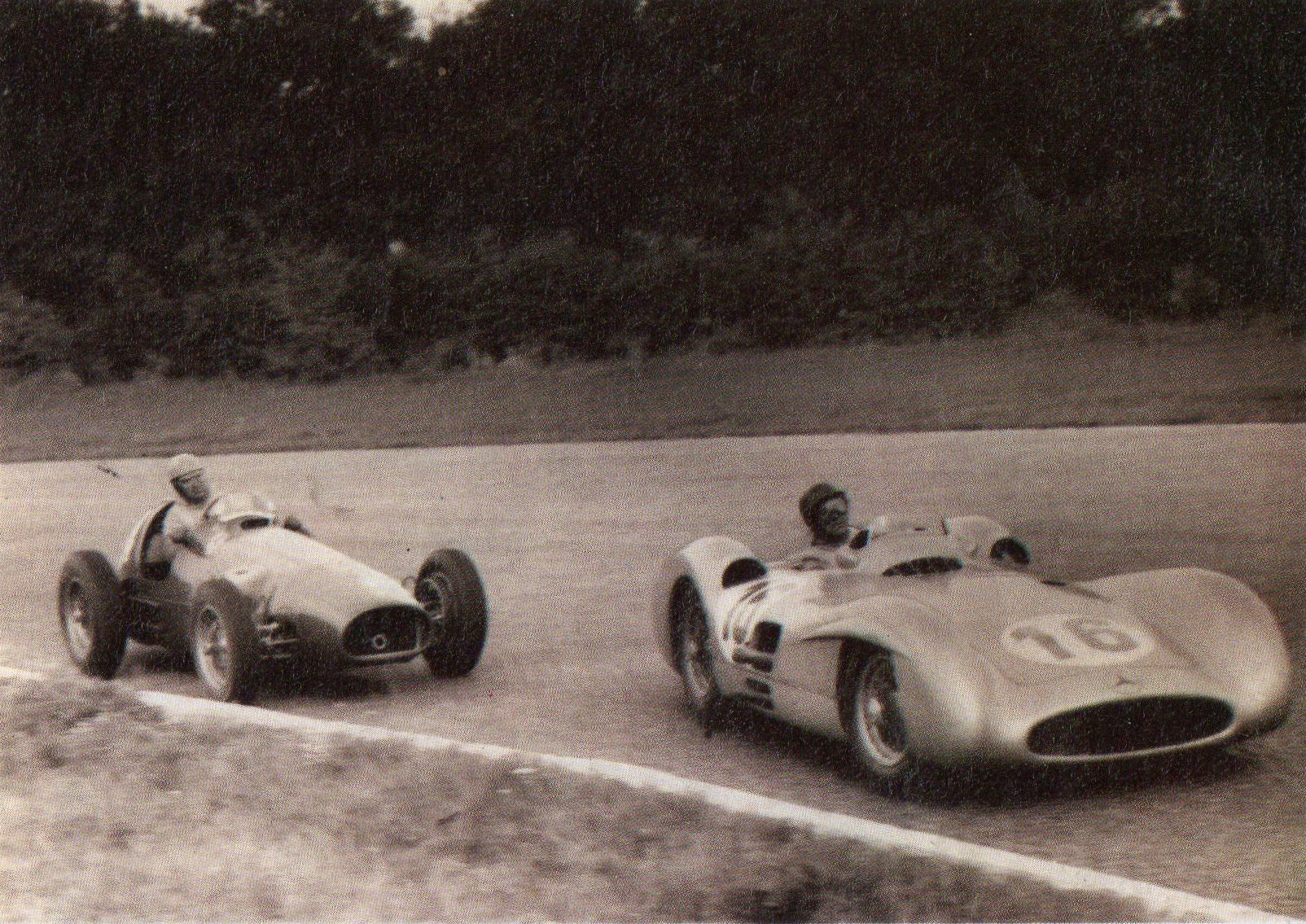
    Ascari chasing Fangio at the 1954 Italian Grand PrixThe second question that is consistently asked is why Formula 1? But here is the real question: How do you condense such passion, such unadulterated bliss and glorious emotion to just a few words? This is the deepest truth – It’s the greatest sport in the world and I am irrefutably richer for getting to live every magnificent moment of it. Here’s to 1000 more.

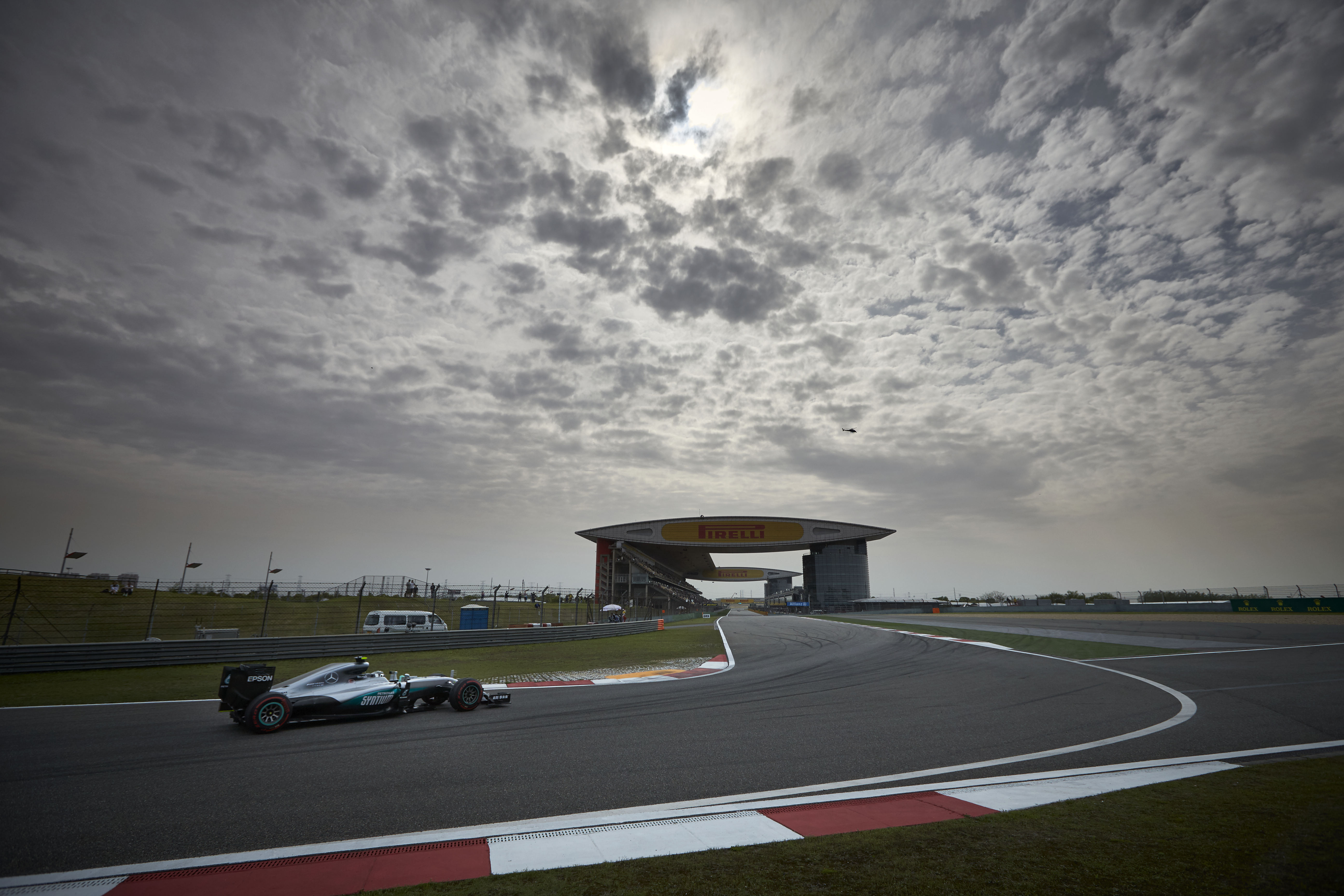
    Amongst the celebrations and nostalgia there is a race to be had this weekend. As the third round of the season the Chinese grand prix was the last of Michael Schumacher’s career wins in 2006. On the calendar since 2004 the Shanghai International circuit has delivered a fair few crackers in its time. It could even be considered as the watershed moment for Mercedes when in 2012 Nico Rosberg scored the team’s first race victory since its return to the sport.

    Last year a masterstroke on strategy from the Red Bull pitwall allowed Daniel Ricciardo the opportunity to pull off a remarkable string of overtakes that ultimately culminated in a thrilling and memorable victory for the Aussie. Twelve months later Ricciardo, now a Renault driver, arrives in China with a completely different mindset and slightly on the back-foot. The 7-time grand prix winner has admitted to still needing to understand the idiosyncrasies of the Renault before being able to unleash his considerable talent. Similarly, Pierre Gasly, teammate to Verstappen at Red Bull, has struggled in first two race weekends and will have to up his game before being catapulted out of the seat by the ruthless Dr. Marko.

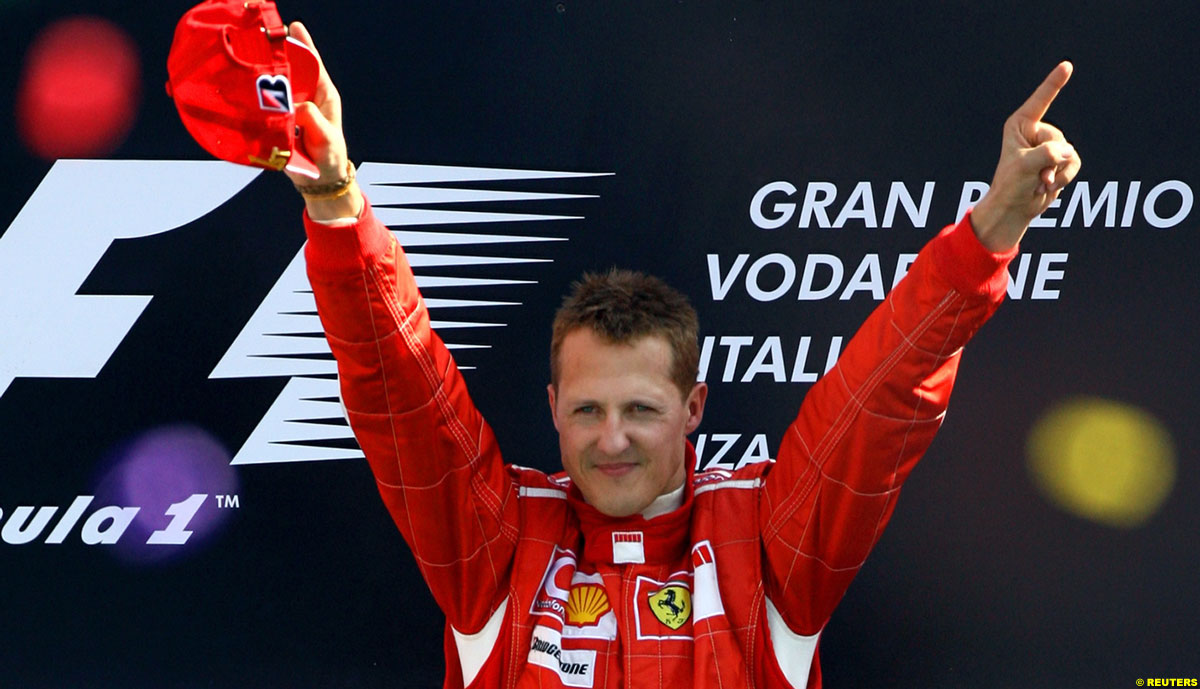
    Michael SchumacherThough it’s only two races into the 2019 season there are no such difficulties for Charles Leclerc who has settled in quickly at Ferrari. A devastating mechanical issue robbed him of victory in Bahrain but he is well served by accepting it as part of the sport.

    The good news for Leclerc is that his Ferrari team is confident that the Bahrain-issue caused no lasting damage to the engine and he will be able to race it in China. What’s more, while he rightly receives plaudits for his performance his teammate, Seb Vettel, is once again putting out fires in the media who have begun to ask uncomfortable questions of the German following his spin in the last race.

    Meanwhile, Mercedes will arrive in China with a quiet confidence. Leclerc may have outpaced them at the last race but they are beginning to understand the W10 more and more. Merc have also won four of the last five Chinese grand prix and it is generally a track where they excel. All that is missing then is Red Bull. While Honda is still not on par with Ferrari and Mercedes it has clearly made progress in 2019. It isn’t the only culprit either for Red Bull’s lack of pace in Bahrain. Instead teamboss Christian Horner has highlighted a need for improvement on the chassis and aero package.

    The questions then for this weekend is if Charles Leclerc can once again outpace his four-time world champion teammate or whether Mercedes will have a pace advantage. The ever-tightening battle in the mid-field certainly won’t relent either and with Kimi Raikkonen confirming that following one another is now easier it sets up then for overtaking fest like no other.

  • F1 2019: Ferrari – Gamble or Guile?

    F1 2019: Ferrari – Gamble or Guile?

    Much has been written about Ferrari’s drafting youngster Charles Leclerc into one of the most coveted seats in Formula 1. While expectations are exceedingly high for the young Monegasque driver there are other quite significant changes that have been made at Ferrari for the 2019 season.

    The sudden death of Sergio Marchionne was a big blow for Ferrari. As the architect and saviour of Ferrari Marchionne was a tremendously important figure for the company and the F1 team. It’s no surprise that, internally, his loss was felt in a big way.  A new CEO was announced in the form of Louis Camilleri, the former boss of Phillip Morris International and Ferrari board member. He immediately walked back Marchionne’s threats of quitting F1 and vowed to work in favour of keeping the iconic team in the world’s premier racing series.

    Camilleri also stated that there was no need for him to intervene or make any changes to the team given its positive performance. However, it wasn’t too long before he began to ring the changes. First, it was Charles Leclerc in for Kimi Raikkonen followed by an announcement that team principal Maurizio Arrivabene would be replaced by technical chief Mattia Binnoto. Rumours swirled throughout the season of unease between Arrivabene and Binnoto, which, at the time, were dismissed as untrue by Ferrari. However, the rumours sustained and grew to include several suspicions that the relationship between Sebastian Vettel and Arrivabene too wasn’t in a good way.

    Binnoto’s new role as team principal will mean that the technical department must be restructured too. After all, Binnoto can hardly be expected to wear both caps of team principal and technical chief at the same time. As team principal of Ferrari he will be tasked with and face an inordinate amount of pressure. First, he’ll be responsible for heading a team with a brand-new driver in the line-up. If, according to many expectations, Leclerc pushes teammate Vettel, ala Hamilton and Alonso in 2007, all the way he’ll have quite a job on his hands to contain such a situation. There is no doubt that as Ferrari team principal he will face relentless and unforgiving pressure to guide the famed team to championship success which has eluded them for a decade.

    It is curious however to know why Ferrari has chosen to restructure in this manner, as it isn’t a recipe followed by other front-running teams. At Mercedes it has been stability that has been one of its major strengths. As team manager Toto Wolff has James Allison, formerly of Ferrari, overseeing the technical side of the team while Christian Horner relies on Adrian Newey to keep his hand over the technical side of Red Bull. Even at Williams Claire Williams has Paddy Lowe at the helm of the technical department.

    The restructuring at Ferrari signals intent from the Italian team. But equally it reveals that they are still playing catch up with the likes of Mercedes and are yet to hit on an efficient method of running a cohesive team that can execute at the highest level week in and week out. The expectation will be that this reorganizing, across several departments, is the catalyst for finally getting the team onto the front foot from day one.

  • 2018 Japanese GP: Friday Press Conference

    2018 Japanese GP: Friday Press Conference

    TEAM REPRESENTATIVES – Christian HORNER (Red Bull), Franz TOST (Toro Rosso), Frédéric VASSEUR (Sauber), Masashi YAMAMOTO (Honda)

    PRESS CONFERENCE

    Q: Yamamoto-san, you introduced an engine upgrade in Russia. How much of a step forward is that? And in more general terms, how much progress have Honda made this season?

    Masashi YAMAMOTO: Regarding this season, we were not as quick in the development as we would have wanted to. However, recently, everything has been much better, especially regarding the combustion chamber. We have upgraded it, and it’s finally complete, and very successfully complete. Regarding Russia, and the problems we had with the other engine, it had regard to the calibrations but we have fixed it since Russia, and within this one week before the race in Suzuka, we have fixed that issue and so I suppose Mr Tost can look forward to great weekend.

    Q: How are preparations going for 2019 with Red Bull Racing? Do you feel a big pressure to deliver top results?

    MY: Yes, regarding 2019, we are very pleased to also work with another top team. We believe Red Bull is a top team in Formula One. We – me and Christian – we have had great communication throughout the year, and obviously there is pressure, however this pressure, we turn it into good energy, and this good energy will bring us fantastic and fabulous results. Of course, with Team Toro Rosso, Team Red Bull on both sides, pressure into great energy, great results for 2019.

    Q: Franz, you had a busy week leading up to Honda’s home grand prix. I believe Sakura on Tuesday, Wako Wednesday, Suzuka factory yesterday morning. Just tell us what you found in each place and about your experiences this week.

    Franz TOST: And Tochigi! You forgot another company. No, it was fantastic, the visit with the two drivers, all the different factories here, the research and development factories from Honda. The people were very enthusiastic and they liked to talk to us, to ask questions and I must say the Honda employees are really Formula One fans and I hope that we can provide them with good results, so they can see all the hard work which they have done in the last months come to a successful end.

    Q: It was announced recently that Daniil Kvyat is going to return to Toro Rosso next year. After a year with Ferrari, what kind of a driver are you expecting back in the Toro Rosso fold?

    FT: I was with Daniil Kvyat out in Sochi, we had a fantastic dinner together, he is relaxed, I have the feeling he is much more measured that the year before. I expect a competitive Daniil Kvyat. We all know he is very fast, that he has a very high level of natural speed and he just has to sit in the car, push the right-hand pedal and you will see he will show good results because he can do it. We all know this.

    Q: Christian, we’ve just heard from Yamamoto-san about Honda’s preparations, their hope for good results next season, can we just get your take on how things are going with Honda. How are advanced you are.

    Christian HORNER: We’ve been very impressed with the progress that Honda have been making during the course of this year. Obviously, we’re now working closely regarding… incorporating the engine into RB15 for next year. I have to say the communication has been excellent between both companies. We’re hugely impressed by the effort, commitment, desire, determination to succeed that there is in Honda. Certainly, when Yamamoto-san talks of energy, we’re not lacking any energy within Red Bull Racing, regarding the 2019 season.

    Q: Bringing it back to this year, you’re now 101 points ahead of Renault in the Constructors’ Championship, so you’re pretty much nailed-on for third place. How has that affected your preparations for next year? Have you started work on the new car earlier than would be normal?

    CH: Well, we have a regulation change coming for next year, the front wing changes the characteristics of the car quite significantly, so we’re effectively in no-man’s land in the Constructors’ Championship, so obviously, a large amount of resource is already being placed into next year’s programme – but of course any updates we can introduce and learn from, we’re bringing trackside.

    Q: When did you start work on next year’s car?

    CH: It becomes a transient process. So, obviously as soon as the regulations are released, you start to look at kind of impact that there is and then that ramps up through the summer months. So, pretty much all the design team now are obviously focussed on 2019.

    Q: Fred, excitement is building about Charles Leclerc and his move to Ferrari in 2019. We saw another great race from him in Sochi last weekend. Just wanted to ask you how much Charles has changed as a driver, and as a person? The driver who turned up in Melbourne, compared to the driver that’s now racing in Japan.

    Frederic VASSEUR: Compared to Melbourne, for sure he’s got a lot of experience. He struggled a little bit on the first event of the season with management, mainly due to the fact we had a very short winter session in Barcelona due to the weather. The first week. The first races were a bit difficult for him but then step-by-step, after second or third race he was able to put everything together and he improved consistently. I think he’s still improving.

    Q: Let’s throw it ahead now to 2019. Kimi Räikkönen was at your Hinwil factory a couple of weeks ago. What sort of work was he getting on with there?

    FV: He’s not designing the next car! We tried to sit him into the car. The next year car. It went well!

    Q: What about Giovinazzi? How excited are you about him joining the team?

    FV: For the whole team it’s a huge push that we have still a couple of guys who were there when Kimi drove for the team, and the reputation of Kimi at Sauber is still huge. When we did the announcement, that it was a great push for everybody and I think it will be helpful for the team.

    QUESTIONS FROM THE FLOOR

    Q: (Scott Mitchell – Autosport) Question for Franz, Christian and Yamamoto-san. Regarding Honda’s upgrade and the progress we’ve seen so far. Franz, what are you expecting the difference that will make in the midfield battle? Christian, do you agree with some of the comments from last weekend, that it puts Honda at least level, maybe ahead of Renault, and Yamamoto-san, how do you feel about the comments, the positivity the upgrade has had from Red Bull and Toro Rosso?

    MY: Regarding Spec-3, which we have brought in Russia, well, actually, obviously as you know, it hasn’t raced yet, so it will be the first opportunity to race with the new spec. According to the results that we’ll have after the race, it will be more comparable. We can start comparing data with the other ones that we have used before. So, not only the engine but of course the entire performance with the car.

    CH: Well, it’s obvious that progress – and good progress – is being made and that’s really encouraging for us. Our focus is not on where our current position is. It’s where the lead position is. That’s the same goal that Honda share. In-roads are being made to reduce that gap to the benchmark in Formula One. You need all elements to be performing to win in this sport, and of course the engine is a key element. We’re looking very much forward to 2019 and starting this relationship with Honda.

    FT: With the spec-3 engine we must be in Q3 and we must stay ahead of Sauber because they put a lot of pressure on us in the Constructors’ Championship. That’s the target.

    Q: (Dieter Rencken – Racing Lines, Racefans.net) A question to Christian and Franz. In the past the Red Bull group has had very close relations with the VW group across various categories – rally, DTM, etc. I believe that: a) you are reducing your DTM involvement and secondly, the relationship you now have with Honda covers two Formula 1 teams and MotoGP. Does this supersede your previous VW relationship or replace it or what are your plans going forward?

    CH: Obviously there was a historical relationship with VW across different elements of motorsport. The withdrawal from DTM coincides with other movements going on within DTM. Obviously it’s a growing partnership with Honda. And of course Red Bull, who operate in many categories of motorsport, work with many different manufacturers but of course this relationship in Formula 1 is extremely important. There has been a long and successful partnership within MotoGP and we hope some of that success will be mirrored in our Formula 1 activities.

    Franz, anything to add?

    FT: There’s not much to add. Toro Rosso was together with Volkswagen at the beginning and we had a real good co-operation also with them, especially on the sponsorship side, but then we changed the engines to Renault and now to Honda there was not any more the possibility to work together with Volkswagen and we are now with Honda for the next years and we are very happy about this.

    Q: (Luke Smith – Crash.net) A question for Yamamoto-san. Could I get a progress update on the Honda young drivers, Makino and Fukuzumi, in Formula 2 for 2019 and your plans to keep them there? And how important is it for Honda to get a Japanese driver on the F1 grid in the coming years?

    MY: Yes, obviously to have a Japanese driver on the Formula 1 grid is very important for Japan and for ourselves for the future of this motorsport in Japan. Regarding Making and Fukuzumi. As you know he has won in Monza. Regarding the series that they run in, as you know, the teams have been working with the new regulations, a lot of changes, trying rolling starts etc so it hasn’t been a very stable series this series itself. But they are both very good drivers and we are educating them for a bright future.

    Q: (Edd Straw – Autosport) A question for all four, please. There is a lot of talk about the longer-term future of Formula 1, 2021 and beyond, and there are a lot of competing objectives: cost reduction, making sure the on-track competition is close, the look of the cars, road relevance, driving technology. How do these competing objectives get balanced up, particularly with the fact that technology and road relevance often tend to drive up costs and sometimes have made the racing worse?

    CH: Formula 1 ultimately is a show, it’s an entertainment, and to be entertaining the racing has to be good, the drivers have to be the heroes and I think we need to improve the spectacle of what we currently have. I know a lot of work is going into trying to create cars that are easier to follow or promote better racing. Of course technology has a role to play in that but it shouldn’t be the predominant factor, it should be a complimenting factor, and I think if you get the ground rules and the shape of what the product should be and then the other elements will fit in with that and so we’re relying very heavily on Ross Brawn and his group and the experience that he has, together with the FIA, to come up with a set of regulations, both technical and sporting, that deliver the product, that deliver the spectacle and obviously the commercial terms that are allied with that will follow.

    Yamamoto-san, your thoughts?

    MY: As Christian has mentioned, Formula 1 is the top motorsports platform for the future and it is very important for us as a car manufacturer also to develop, an important platform to develop the latest technology. Also not only the technology itself but thinking about the world environment, so the future in all these different perspectives is very important and this is the perfect platform for us, so as Honda and Formula 1, branding, the fans, the entertainment point of view is very important, as well as the development of the technology of the future that will be released to the world.

    Franz?

    FT: Formula 1 is entertainment and currently, fortunately thanks to Hamilton and Vettel, we have two drivers who keep this entertainment on a higher level. But generally speaking there are three teams and the rest are far behind. That means that the FIA and FOM must come up with a regulation from a) the sporting side and b) the technical side, and they must also look that the costs come down. The cost cap is I think an idea that can be realised, that a minimum of five or six drivers are able to fight for the championship, because this is what the spectators want to see. In addition to this, there is always enough space and room for the manufacturers to develop, for example, the power unit or whatever, and that Formula 1 stays at the pinnacle of motorsports. Once more FIA and FOM has to come up now with solutions, because time is running away. We are talking about 2021 and we still don’t have a 100% fixed regulation a) for the chassis, and b) for the power unit and this needs to be clarified as soon as possible.

    And Fred?

    FV: Yeah, for sure it’s quite obvious that we need to improve to improve the show. That Sochi was a race with less than five overtaking, if I don’t consider the two red Bulls, but you won’t start from the back very single weekend and now for the target for the second part of the grid is to avoid to be lapped, more or less. Even when you are the first of the second pack, success is when you are not lapped. I think that we would have to find a solution to allow talented drivers in a small team to be not too far away from the podium in exceptional circumstances, and today we are far away from this. We saw last weekend that even though Ricciardo and Verstappen started from the back, after 25 laps they were five and six or something like this. We are not racing in the same competition.

    Q: (Scott Mitchell – Autosport) A question for Fréd, Franz and Christian. You all respectively have experience of working with drivers who are either F1 rookies or new to the team and in a high-pressure situation. What do you need from your driver to get the most out of them in that scenario, how important is their attitude and approach and how important is the team environment to helping them succeed?

    FT: First of all, the driver must be skilled. Second he must be passionate – that means 365 days Formula 1. Then he must be disciplined and he must be, I call it innovative. That means he must think about how best he can improve himself and then he has to be integrated into the team and of course with a young inexperienced driver the team has to take much more attention to him, take much more care of him and preparation, nutrition, physical preparation, then simulator work, then all the technical stuff. A young driver is many times during the winter months in our factory, sitting together with our engineers, discussing all the different topics regarding setting up the car, regarding power unit management from the steering wheel. It’s a lot of stuff. It’s a lot of work and therefore you need a 100% committed driver to bring him to the front.

    FV: For sure, the pace is the first skill. If you do not have the pace then you can forget about it. On the top of this we have a lot of guys with good pace who are not able to achieve in F1. Mainly for the same reasons. There is a huge step between the junior series and F1; you have much more things to manage. You have not so much test days. We spoke about it before but with the four days you have in Barcelona, it’s quote short and when two of them are under snow it’s a nightmare. Then they have a huge pressure from the press, from you mainly, at the first events, when it’s not working well. I would like to remember to everybody that after two races I had in the press conference questions about Leclerc, if it was not too early, it was a mistake to take him in F1. We have to be patient, because it’s a huge step and we have to take it step by step and to let them work. But they have to be fully committed and I think that when we are speaking about the young kids that we have I am convinced that that they are more than committed.

    CH: For us it’s very simple. We send our youngsters to Franz. If they can survive his 365-day training programme and graduate with that then they might make it into Red Bull Racing, so we’re very grateful for the education that Franz gives these young drivers and it’s obviously proved successful over the years.

    You’ve got Pierre Gasly coming into the team next year and Max Verstappen is still young. What do you have within the team to help these young guys?

    CH: Well, what annoys me about those two drivers is that their combined age, for the first time, is younger than my age. I think, again, it’s about creating the right environment, about creating an environment in which the drivers feel confidence, they feel heard, but they also know what their side of the deal is, what they have to deliver, because the expectation in Formula 1 is extremely high, especially in a front-running team, where you’re not just driving for yourself, you’re driving for the aspirations of 800 people within a team, all the partners and the shareholders that they represent as well. So the pressure is significantly higher. I think it’s finding that balance, that they still can enjoy what they do, but they still recognise the responsibility that they have.

    Q: (Dieter Rencken – Racing Lines, Racefans.net) To the three team principals: it’s just a little over two years since Liberty acquired Formula One’s commercial rights and just under two years since they formalised it. Obviously there were great expectations, great hopes. Have they actually managed the rights up to your expectations so far after two years?

    CH: I think Liberty have obviously gone through a learning process. They’ve had to understand what they’ve bought, what is Formula One and I think that there are many aspects that are easier than previously. They’ve invested heavily in marketing the sport, they’ve put on promotions, roadshows. They’ve opened up digital platforms, social networks etc to bring new eyeballs into the sport. They’ve introduced e-sports, so they’re exploring new territories with Formula One and I think the key element for them going forward is not so much the promotion, which they are proving to be well-equipped with, it’s what the product is and I think that’s what the key part now to the success moving forwards is, what are those regulations for 2021 going to be? What does Formula One look like over the next ten years? And obviously there’s a responsibility on Liberty and the FIA to get that right.

    FT: OK, up until now, they took over something that was very well organised from Bernie. There are contracts until 2020 and that means their influence was not so dramatic but nevertheless they’ve done a good job in promoting Formula One with all these new ideas, especially on the media side with social media and so on. But their decisive job is, as already said, to create the new regulations and to bring Formula One into this new period and then we will see how good they are working from 2022, 2023 onwards when the new regulations are really on top. They are quite well organised, they are very experienced people within FOM and together with the FIA they should be in a position to sort out all the smaller problems which Formula One, especially on the starting field that everything is more on an equal level and also on the money distribution and of course, also that the revenues stay on the level which was the case in Bernie’s time. These are the main topics they have to face and I’m quite convinced that they will do a good job.

    FV: Yeah, for sure they very open, they are investigating new projects, launching new ideas, opening new doors and so on but I think at one stage we will need to get results, that everybody will need to get results and we will see what will be the next step.

    Q: (Oleg Karpov – Motorsport.com) To all four gentlemen: Cyril Abiteboul and Toto Wolff recently said that Formula One should maybe think about reducing the number of races to 15 or 16, so the product is more exclusive. First of all, do you agree with that and secondly, if you do how could we achieve that? Should we reduce the number of races just like that or should we rotate races like Hockenheim and Nurburgring, something like that?

    MY:  Well, as you know, we are not constructors so we will accept what FIA and FOM decide.

    CH: Well, we are a constructor. 21 races, I think, is about saturation point. I think that there’s only so many chapters you can have in a book and I think at some point you go beyond what’s relevant. I think to go as low as 15 or 16 I think is too low – maybe Cyril was looking at grid penalties or something – but I think that 21 is the upper end. It’s tough. It’s tough for the guys in the garage, for the travelling staff, it’s tough for everybody involved and I think for the spectator and fans as well, beyond 24 races it reaches saturation, so I think it’s finding that balance. I think the really encouraging thing is that there are some great venues that want to host Formula One races and events and I think that that should provide natural competition for the venues that are already on the calendar.

    Q: Christian, what’s the ideal number?

    CH: I think we are it, I think 21 is max.

    FT: I think it’s not the number of races or the size, it’s the show which we offer and the level of the entertainment. If you have 15 boring races people will not watch any more. No, I think we should have around 20, 22 races and I think this is a good number and the exclusivity once more depends how good we are and we also should not forget that we are a global player and therefore we need a certain number of races to stay a global player. And I would absolutely refuse to go below 20 races. The year has 52 weeks, therefore we have a lot of time.

    FV: For sure we will never go more than 21 because that is, from my point of view, far too much and we have to keep…

    CH: If we could keep Christmas it would be good.

    FT: We should prefer a race at Christmas and New Year, far away, in New Zealand or…

    FV: I think at one stage also we are losing the exceptional of the event; the more races you are doing, everybody is used to and at one stage we have to keep the exceptional side of the races and for me it’s a bit too much but I will follow the calendar for sure. I won’t stop after 18 next year.

    Q: Fred, what’s the magic number for you? How many races?

    FV: Magic number? I think that below 20 would be fine but between 18 and 20 would be fine for me.

    Q: (Kazuki Kasahara – Car Watch) Question for Yamamoto-san: this Grand Prix is a Honda supported brand name (title sponsor)? Could you tell me why and also give your motivation for another 30 years?

    MY: Yes, well, as you well know, Honda started joining Formula One in 1964 and it has developed along the years, along with Formula One, so Honda has developed, F1 has grown and so it’s been a mutual development throughout the 30 years. In honour of this relationship that we have had for 30 years, we’ve decided to sponsor the title of the event in Japan here this year, just to thank everyone, including the fans, I know, for this great support and collaboration.

  • F1 2018: Hungarian Gp Review – Hamilton Cruises to Victory

    F1 2018: Hungarian Gp Review – Hamilton Cruises to Victory

    The Hungarian grand prix weekend was never one Mercedes would’ve marked as one where they had a clear shot at the win. Its tight and twisting layout rewards superior aerodynamics and a shorter wheelbase, which are two areas where Ferrari and Red Bull hold the upper hand.

    But Formula 1 in 2018 has arguably been one of the most unpredictable seasons of this decade and likely the previous one too. Extraordinarily a downpour during Saturday qualifying nullified Mercedes’s biggest weaknesses and brought their drivers’ prowess to the fore. Lewis Hamilton took a stunning 77thcareer pole and Valtteri Bottas ensured a team lock out of the front row.

    Mercedes biggest job on race was to orchestrate a clean start and from there Hamilton would be able to control the race.  It panned out beautifully for the Silver Arrows as Bottas slotted in behind with Vettel and Raikkonen in third and fourth. Before long Hamilton had built a handy lead with the assistance of his teammate Bottas who team boss Toto Wolff referred to as a “sensational wingman” post race.

    56i0670Try as they might Ferrari couldn’t make inroads on Hamilton who never looked troubled on his way to a sixth victory around the Hungaroring. It wasn’t quite the day Red Bull had envisioned either. Max Verstappen had made a rapid start from seventh to fifth but was soon forced into retirement with yet another power unit failure this time on the MGU-K. If the Red Bull/Renault relationship was fraught before it is now boiled over and some serious questions are likely to be asked by Christian Horner and co.

    The ever dependable and impressive Daniel Ricciardo, who started 12th, made his way through the field in true Honey Badger style as he dispatched several drivers with numerous brilliant overtakes. Still Hamilton was leading with ease with a significant gap to Bottas who was now beginning to struggle on his soft compound tyres.

    Vettel was on the gearbox of the Mercedes but never within striking distance of taking the place. However, it all went off the closing stages for Vettel as he elbowed his way into second. Bottas desperately tried to maintain his position and lost a good chunk of his front wing in the process, which also allowed Raikkonen through into third. Raikkonen finished just 2.9 seconds behind Vettel despite making an extra pitstop and losing time in the pitlane. His fifth podium in a row surely means that the Finn deserves to be signed up for 2019.

    54i6661It wasn’t the last of Bottas’ woes as he frantically tried to keep Ricciardo at bay by running into the side of the Red Bull in Turn One. Ultimately Bottas was handed a ten second penalty but still finished fifth on the road behind Ricciardo. For as quick as Bottas occasionally can be, i.e. Russia and Austria, he does not have the essential mettle against the top drivers. In Bahrain earlier this year he was mugged by Vettel, similarly in Silverstone and again in Hungary Vettel doffed him up.

    Unfortunately for Bottas he’s beginning to get a reputation of being soft in wheel-to-wheel combat. It’s unquestionably an issue that he should be pondering over the break.

    Elsewhere, Toro Rosso’s Pierre Gasly finished a superb sixth with Kevin Magnussen of Haas in seventh. Birthday boy Fernando Alonso finished eighth ahead of Carlos Sainz and Romain Grosjean in ninth and tenth respectively. Early on Charles Leclerc was out of the race with suspension damage. Verstappen joined him on the DNF list as did Stoffel Vandoorne whose McLaren conjured up yet another gearbox failure.

    Hamilton’s win ensures him a 25-point lead in the driver’s championship standings over Vettel ahead of the Belgium grand prix on August 26.

    All images courtesy of Pirelli Motorsport 

  • 2018 Australian Grand Prix: Friday Press Conference

    2018 Australian Grand Prix: Friday Press Conference

    TEAM REPRESENTATIVES –Toto WOLFF (Mercedes), Maurizio ARRIVABENE (Ferrari), Christian HORNER (Red Bull Racing)

    PRESS CONFERENCE

    A question to all of you to start with, what sort of shape are you in relative to each going into this new championship? After all, one of your is likely to be the world champion team at the end of it. Christian, why don’t you start?

    Christian HORNER: First of all, it’s great to be back in Melbourne, good to be going racing again. It seems like a long winter this one. A positive first session for us, though obviously difficult to read too much into times but you start to get an bit of an idea. You can see Mercedes taking off where they left off; they look in great shape. I think we made good progress with the car over the winter. The drivers seem happy and I’m envisaging a quite tight battle with Maurizio but I’m not sure at the moment what the delta is to Toto’s cars.

    Toto?

    Toto WOLFF: Again, like Christian said, it’s good to get started again. We’ve had a pretty good test, much better than last year. But you’re never very sure where that will end up in the first race and the first session was OK, as expected. We didn’t see the Ferraris on the tyres that we have been running, and we need a little bit more time to understand, but I would say it’s a decent start.

    And Maurizio?

    Maurizio ARRIVABENE: I totally agree. With the weather we had in Barcelona, by the way it’s the same for everybody, but at a certain point I was a bit laughing because I saw all the engineers panicking but it was for the temperature, for the weather. One day Pirelli didn’t provide to use the winter tyres, the snow tyres, so it was quite difficult and we had a day off. Seriously, though, I think I saw Mercedes in very good shape, also Red Bull in a very good shape and I think we are in quite a good shape too.

    QUESTIONS FROM THE FLOOR

    Q: (Yianni Mavromoustakos– Talkingtorque.com.au) Just for all three team principals, how are you feeling about tyre changes for 2018?

    CH: I think Pirelli have introduced a broader range of compounds this year, hopefully better suited after 12 months of experience last year that we won’t just end up with one-stop races. I think the conditions in Barcelona… plus the new surface there made it very tricky to get a clear picture and understanding of those tyres, so it’s going to take a few race to see how things pan out.

    Toto, more strategic variation this year, do you think?

    TW: Yes, more variation I think. I think the hypersoft is going to be an interesting tyre because it has the biggest performance gap to the next hardest one, but it will be difficult to make it last during the race so that might end up in some interesting strategies. I’m looking forward to it.

    Maurizio?

    MA: As I said before, we didn’t collect a lot of data in Barcelona of course due to the weather conditions, but the target was quite clear, to have a bit more pit stops during the race, to make the race more interesting and I think we are going to see interesting races with these new tyres.

    Q: (John McEvoy – Daily Mail) Toto, a few things about Lewis: what update is there about his new deal, how do you see his state of mind on the eve of the opening race, and what do you imaging is Lewis’ view that he could equal Juan Manuel Fangio, one of the greats of racing, and what would it mean it he did it? I know there is a long way to go.

    TW: On your first question, the contract we have been discussing before going into the winter holiday and then we kind of left it there to get away from Formula 1 and picked it up again in January and these discussions are going in the right way and we finalising the last topics and there is no reason to not think that is not going to happen soon. He is in a good frame of mind, I’ve seen him coming back strong from the winter. And in terms of the record. I think whether it plays a role I don’t know but clearly with the four championship he is within a very good group of drivers and obviously the next one is to be achieved, but I don’t think it’s a good omen to discuss it or think too much about it. It’s better to look at those records afterwards.

    Q: (Phil Duncan – PA) Toto, we saw that Lewis posted a video on Instagram yesterday about a lack of diversity in Formula 1. I just wondered what your views on that are as the team principal of Mercedes and do you think he’s got a point and does Formula 1 need to do more to encourage more participation from ethnic backgrounds?

    TW: I think that is one thing that is very important not only for Lewis but for all of us. The more diversity we can get into Formula 1 the better it is. We had yesterday an event where we launched Dare to be Different in Australia. That was a good success and whether it is different ethnic backgrounds or girls getting into motor racing, overall I think this is what needs to happen. Eventually this will grow and the balance will be better in future.

    Q: (Lawrence Barretto – F1.com) A question to everybody: yesterday Lewis Hamilton was talking about the threat from Red Bull. Daniel Ricciardo has talked about how you guys could all be within half a second this year. I’d just be interested to know where you guys think you are in the pecking order. I know we’ve had just a bit of testing and on practice session but just from what you can gather, where do you think you are relative to each other?

    Maurizio, do you want to nail it down to a guess of how many tenths?

    MA: It’s difficult to calculate, because we have no clear evidence in Barcelona. I hope we are above my friends here but how I can predict exactly?

    TW: Very difficult to judge. We have seen last year with the new rules that each of the teams has certain strengths on different tracks. I think we could see a similar pattern this year. I don’t see somebody running away. But as Maurizio says, it’s very difficult to read in a glass ball at that stage.

    And I suppose, Christian, it’s a long season. At the end of the year last year, Verstappen has the same points as Hamilton in the closing stages, you finished very strongly?

    CH: Yes, it’s a long season and form will vary from race to race. Twenty-one races is a grueling calendar this year and by the time we end up in Abu Dhabi in November. It’ll be fascinating to see how teams have developed during the course of the year. The cars are effectively prototypes at each grand prix and it’s really the rate of development between now and November that will dictate the outcome of performance over the course of the season. But you have to say that Mercedes look in great shape and I guess it depends on how fast Lewis wants to go.

    Q: (Heikki Kulta – Turun Sanomat) Maurizio, every year, the same question: a lot of speculation that this season will be Kimi’s last season. How do you see it?

    MA: Kimi was driving quite well in FP1. We are at the first FP1 of the first race of the season, let him drive quietly please.

    Q: (Arjan Schouten – AD Sportwereld) Question for Christian about Max. When you’re 20 years old and you already have sixty races and three wins, are you still a ‘talent’ or are you already a more experienced driver?

    CH: Max has achieved a huge amount in a very short space of time. He’s got that benefit of those three seasons of experience now and I think he’ll put that to go effect this year. He’s already got that databank of knowledge. And last year what impressed me was how he dealt with the difficult days as well as the good days. I think that’s all part of developing your character, developing your experience and knowledge – and I think it stands him in great stead. I think there’s no further obstacles to him in terms of experience. He’s gone through that now and I think he’s in great shape. He’s trained hard over the winter and looks sharp for the season ahead.

    Q: (Dan Knutson – Auto Action / Speed Sport) Gentleman, a new season, the same story: the big three and a gap to the rest. If you could make one or two suggestions to Formula One as a whole to close up that gap, what would you do?

    TW: Difficult one. I think, we don’t want to make excuses and say it has always been like that. If you look back the last 20 or so years there’s always been two, three or four teams that have been more dominant – but clearly looking into 2021, it is something we need to address, everybody wants to see a tough fight at the front and wants to see the odd freak result, an underdog being capable of making it all the way to the front – but it’s not trivial. It is a resource game and there is one factor that you can’t change and that is time. Organisations are built-up over time, intellectual property is being created and that doesn’t happen from one year to the other, and once the wheel turns – and I guess that’s the case for all three teams being represented here – it’s quite difficult to just put something in the wheel and stop it. In so far it’s about, I guess, reducing the gap in terms of resource in a clever way – but this is not going to change overnight.

    Maurizio?

    MA: I mean I agree with Toto, you can’t change overnight the overall rules, or you can’t ask Cristiano Ronaldo to not score, because otherwise Real Madrid is too strong. It takes time, for everybody, effort. It’s quite a complex matter to create, as Christian said, a prototype every year and especially to develop this prototype during the course of the year – but it’s not impossible. Having said so, I think we have many years ago the wave of Ferrari with Michael Schumacher, than another wave with Christian, with Red Bull, now it’s a wave of Mercedes. This is a sport and you can’t stop a top team playing just to make the game fair. Because otherwise it is becoming an unfair game.

    Do you see it that way?

    CH: I’ve got a slightly different slant on it, I suppose. For me the most damaging thing over the last five years has been the introduction of the current engine regulations. I think if you look at Formula One as a whole, I think the regulations for both chassis and engine are too complicated. That drives cost, it drives complexity, it drives distance between the teams, so for me, I’d be all for simplification. Simplification of the power unit, simplification of the chassis, go back to basics of making the driver the biggest variable, whereas at the moment the driver is not a big enough variable. We want the best drivers competing against each other. I think you’re always going to get variances depending on the skillset of the teams, and even if the teams have all equal budgets, you will still have teams that will perform better than others. That’s competition. We see it in other formulas. For me, the biggest issue in Formula One at the moment is the regulations that dictate cost, performance and divergence in terms of powertrain.

    Q: (Louis Dekker – NOS) For Toto. History teaches us domination never lasts forever. So, will this be your most difficult season, the fifth season with these engines. Is there an indication of how long you will be on top, and is the climb easier than staying there?

    TW: Yeah, I tried to find to find a statistic in whatever sport of a team winning every year. There isn’t any, you’re absolutely right. At some stage, somebody else picks up the ball and runs faster. I think, coming back to your question on engine regulations, the longer you leave regulations alone, the more convergence happens. We have seen that definitely every year we have been in these regulations, the gap has become smaller. We just have to be on our toes. Every year we try to have a mindset of all points going to zero and you just need to do the same job again. We’re trying to be energised and motivated, not take anything for granted, respect the other teams and the work they are doing. We will be running around with a target on our back and everybody’s trying to get us, in so far as we’re pushing hard every year and trying to maintain the advantage for a bit.

    Q: (Phil Brannigan – Auto Action) Toto, can I take you back to the Dare to be Different programme. Would you support a similar programme being implemented to encourage diversity, as mentioned by Lewis yesterday? And if you did support that programme, should that also be part of discussions with Lewis regarding his ongoing contract with the team?

    TW: I think that… I don’t think that it should be part of his contract. I think as a general mind set we should be supporting diversity, as I said before. You’re absolutely right, more diversity in the paddock would do us good, would make us think differently and be more open-minded. For me personally and for the team, we are very supportive for whatever actions we can deploy.

    Q: (Julien Billiotte– AutoHebdo) Maurizio, before Melbourne we learned that Ferrari has hired Laurent Mekies from the FIA which doesn’t seem to go very well with other teams. Do you understand their concerns and to Toto and Christian, how did you react when you heard about the news?

    MA: First of all, there is nothing wrong with that because we were absolutely respecting the local law, the Swiss local law where Laurent was hired. And afterwards we went even further than that, because we gave him six months of gardening (leave). Having said so, normally what we discussed before the strategy group, we signed a confidentiality agreement, that means that we are not allowed to discuss or to share in public what we discussed there. Having said so, I heard comments related to us, supposedly, also called a gentleman’s agreement. I think they are comments because a gentleman’s agreement on libel law is illegal. I thought that they were comments… just comments, no more than that, I hope.

    TW: First of all, I didn’t see any gentlemen in the room when we discussed it. Second, for me the situation is completely different to Marcin (Budkowski), both intelligent engineers but Marcin was involved in issuing technical directives just a few weeks before he decided to join a team and had a lot of inside (information), and Laurent was involved in totally different activities that are not as sensitive, in my opinion, as with Marcin. He’s joining the team in seven or eight months from now and for me it’s not a big deal.

    CH: For me it is a big deal because I think the disappointing element about this is that we have a thing called the strategy group where the FIA, FOM and all team principals attended and we discussed the Marcin issue where there was great unrest about a key member of the FIA going to a team, in which case this was Renault. Renault diluted that by putting him on an extended gardening leave but then ensued a conversation about it’s unacceptable. Every team found it unacceptable. Of course you’re dealing with employment laws across different states, different countries and to try and police legally something like that, it was agreed in the room all the lawyers in the world couldn’t come up with a contract that could police it. But there was an understanding and a clear statement by the teams to say ‘right, let’s have a clear position that there should be at least a period of 12 months in the garden for a member of a team going from either FOM, FIA to a team or a team going vice versa’. Certain teams were pushing for that period to be three years but in the end it was agreed upon being 12 months. What’s disappointing is that that meeting was less than six weeks ago; arguably, discussions were probably happening at that time and it almost makes those meetings pointless if we can’t agree on something and action it. Of course you can hide behind ‘well it’s not in the regulations’ but as a group we agreed something, it hasn’t been adhered to and so one questions… what’s the point of having those meetings?

    Q: Maurizio, you’re shaking your head.

    MA: Yes, because we gave a mandate, that’s the main thing, we gave a mandate to the FIA,  to the lawyer of the FIA to check national law and to come back to us in the next strategy group and this is what the FIA is going to do in the next strategy group which is on April 17.

    CH: I think that what’s most disappointing about it was that it was Ferrari or Sergio who was pushing for a three year period. On one hand you get a team pushing for a three year gestation and then a few weeks later, we’re in this situation, so as I say, it makes discussions at that forum more or less a waste of time.

    MA: That was the discussion but then the conclusion was to give mandate to the FIA to come back… to the lawyer of the FIA to come back with a proposal.

    CH: I’ve said my piece.

    Q: (Ben Hunt – The Sun) I think that might have been Chase Carey on the phone. It’s becoming quite apparent that you guys can’t agree on anything. Are we in a dangerous situation now where we’re going into the crucial period of their ownership where we need you guys to work together to benefit the sport, but you can’t even agree on anything it seems?

    TW: I think this is as much a battle on track as much as it is off track for an advantage and it has always been like that. Certainly, I guess we’re providing some good headlines for you. And we have all the very best for our teams at heart. We have different agendas, depending on the strength in the team and how we view the future and then each of us have a holistic side and probably also very personal opinion, how we see the sport going forward. And we are going to be vocal about it and say it. It is clear that the current governance and how the rules are being made is not very functional, there is too much different opinion when the agenda’s on the table and we need to sort it for 2021, for the best interest of the sport, but it shows that the debate that we just had a minute ago is that it needs tight rules to have a common legal ground to fight on track and if there is no rules and it’s not written down in the regulations it doesn’t work.

    Q: Christian, you’ve been saying all winter that these two teams do agree with each other.

    CH: We’re about the only teams in Formula One that do agree. Look, my view on this is very simple: trying to get a consensus between teams that have got varying objectives, different set-ups, is going to be impossible, so it’s down to the commercial rights holder and the FIA to get together, come up with a set of regulations, what is the financial framework, what is the distribution that they want to have, put it on the table and it’s down to the teams whether they want to sign up to that or not. Of course, as Toto says, there will be a lot of positioning, the media will be used, it’s history repeating itself. It happens every five or six years, every time the Concorde agreement comes up for renewal, but my feeling is, Liberty, together with FIA, need to get on the same piece of paper to say this is what we want Formula One to be, this is the financial distribution surrounding it, here’s the deal and laid out to the teams.

    Q: And Maurizio, your chairman is saying that if the DNA of Formula One as he sees it is not respected, Ferrari will walk.

    MA: I’m not commenting the statement of my chairman. My chairman knows very well what he’s talking about and my only suggestion is please take him seriously.

    Q: (Mike Doodson – Auto Action) This relates to what you just said: the word breakaway has appeared in a few recent headlines and your chairman, Maurizio, has made certain threatening remarks. Subsequently, Toto seems to have asked us to take those remarks seriously but how practical, Toto, is this for you,  would a breakaway be, because 35 years ago Bernie Ecclestone tried it and he ran up against the problem that national governments have respect for and like to see established federations organising sports and do not look favourably on breakaways or rebels. How practical would it be to have a breakaway?

    TW: More than practicability, it is about responsibility for Formula One. We are all carrying the torch of a great series and a great brand that was built 40 or 50 years ago and has tremendous value and nobody is taking that lightly. Headlines are being created based on things that are being said and like Christian mentioned before, it is about the new Concorde agreement going forward, everybody’s trying to position themselves but all the time with respect for the series. And comments that are being made maybe from Mr Marchionne’s side also, it is also because he cares I guess. I don’t want to speak for Maurizio but we all care for Formula One and we all have a certain vision and perspective of Formula One and how we want to see it going forward and it needs to fit that opinion and this is why these statements are being made. They of course are being blown up in the media like it has always been the case but I can assure you that whatever is being written is that we care a lot about responsibility and we owe it to Formula One and we need to give it all. We have at least three more years together in this great sport, regulated by the FIA, owned by Liberty, run by competent men and we just need to give our input support in the best possible ways so it’s great and we’re not devaluating it.

  • 2017 Formula 1 Malaysia Grand Prix: Friday Press Conference – Part 1

    2017 Formula 1 Malaysia Grand Prix: Friday Press Conference – Part 1

    PART ONE: TEAM REPRESENTATIVES – Frédéric VASSEUR (Sauber), Christian HORNER (Red Bull Racing), Otmar SZAFNAUER (Force India).

    PRESS CONFERENCE

    Christian, let’s begin with you and the announcement of the Aston Martin deal. Tell us the scope of that, the ambition and whether there is an engine dimension to it going forward?

    Christian HORNER: Well, it’s great news for our team. We have been working with Aston over the last 18 months now on a project, starting with the Valkyrie road car, and out of the upturn there has been within the Aston business over the last couple of years, they have decided that Formula 1 is the right platform to invest in and have taken up the title sponsorship of our team for the next three years. That collaboration will not only see an on-track, with the team being named Aston Martin Red Bull Racing, it also sees behind the scenes a collaboration on future products that Aston are working on and then producing some of those cars in Milton Keynes, producing more jobs in Milton Keynes – over 100 new positions are going to be created in the future – to hopefully produce some great looking cars.

    And the engine dimension?

    CH: There is no engine dimension at this point in time but what we await with interest is what will the regulations be, what are Liberty’s plans regarding engines and chassis from 2021 onwards. So in an ideal world it would allow an independent manufacturer such as an Ilmor or a Cosworth to be able to compete with the big guns. But until we can see what the scope of those regulations are, it’s difficult to make any assumptions.

    And on the subject of engines, your sister team Toro Rosso has the Honda engines next season and you collaborate technically with that team, so how closely will you be monitoring the progress of Honda?

    CH: I think it’s a really exciting development for Toro Rosso. It’s an opportunity for them to move forward. It keeps Honda in Formula One, which I think is also a positive and we’ll certainly be keeping an interested eye on how things are developing in Italy.

    Otmar, you’ve kept the same two drivers for next season – a very exciting pairing – how are things working out between them since you had a talking to them in Spa and do you feel you have got on top of their issues without blunting their competitiveness?

    Otmar SZAFNAUER: Yeah, they’ve always gotten on. They have their on-track incidents, like you mentioned in Spa. That event kind of focused both their minds and now they have a good understanding that if they come together you never know who the winner or loser is, but for certain the team loses. We all work for a team, we all pull together, we’re all team members. They understand that and they’ll be working for the team going forward.

    You’re a clear fourth in the Constructors’ Championship now, and likely to stay there. Obviously next year with Renault likely to move forward, with McLaren pairing up with Renault and all the other moves going on, will it be an achievement to just stand still in fourth next year, or are you pushing the team to get third?

    OS: Well, it will be difficult next year. Like you say, Renault have shown great steps forward this year from where they started to where they are now. I think it’s no secret that McLaren have a lot of resources and are also capable. It will be difficult for us to remain fourth, but we always set our sights on achievable goals and we will push hard next year to at least stay fourth and someone makes a mistake ahead of us, you never know what can happen.

    Frédéric, you ran Charles Leclerc in FP1. How did he do? And how do you rate him, given that you’ve had so many great young drivers pass through your hands – the Hamiltons, the Hulkenbergs, the Rosbergs – how do you rate Charles against them?

    Frédéric VASSEUR: I won’t rate Charles, only on the FP1 this morning, and it was a tricky session. He did very well this morning. He had not so many laps to do but he was at a good pace from the start and he did a very good session, even on the technical feedback everything went well. If you look on the global picture, he did very well in the junior series, he is doing very well in Formula 2. So far I think he had to be focused on the last part of the championship, to win the title and then you will see for next year.

    It looks like Sauber could be more closely linked to Ferrari next season. You’re obviously an expert in bringing young drivers on, as we’ve just discussed. Is that the best direction, you believe, for Sauber to take?

    FV: For sure there is a huge gap today between Sauber and the top teams and we need to find a way of collaborating with a top team fi we want to improve and if we want to improve quickly. Because the most important thing is to bring the team back into the field and then to be able to compete. OK, with the Ferrari deal we will improve and we will improve a lot and then we have to build up our own project to be able to fight with the guy in front of us.

    QUESTIONS FROM THE FLOOR

    Q: (Dieter Rencken – Racing Lines) To all three of you: there has been a resignation this week from a senior member of the FIA’s technical team. He has three months’ ‘gardening leave’, which would then allow him to go to another team in a technical capacity. Does it concern you that he could be taking some secrets from teams with him?

    CH: Well, we take major issue with that if he does end up with another team. Obviously in these individuals you place an enormous amount of trust. In the role that Marcin has been responsible for he has been in an extremely privileged position and extremely recently he has been in people’s wind tunnels and looking at intimate details of knowledge of next year’s cars and I think three months’ notice period for him to then turn up in a competitor team in Formula One is entirely inappropriate. I certainly hope that isn’t the case and I’m sure it will get discussed quite seriously at the next strategy group meeting. It’s an important and vital role and it’s vital that the teams have trust and faith in the governing body that they can discuss their technical know-how, their technical secrets in many respects, which cost millions and millions of pounds, in confidence that that information doesn’t have the ability to end up in a rival team.

    FV: First, we need to know where Marcin will go but I agree with Christian, it is a big issue, because the FIA is fully aware of all the teams’ project and at the end of the day if we can’t be open with the FIA it’s a tricky situation. But first we need to know where Marcin will go.

    OS: I do agree and it would have been nice to know the notice period. Three months I don’t think is long enough and had we known it was three months earlier, perhaps we would have hired him. But I think three months is nowhere near long enough.

    What is?

    OS: I think a year. I mean, it has to be long enough such that the technology that he is aware of becomes, if not obsolete, then not leading edge. There are some sporting regulations as well that prohibit us from selling current-year cars for exactly the same reason. The cars have to be at least one year before we can dispose of them and it’s for that reason and I think notice periods should follow along the same lines.

    Q: (Dan Knutson – Auto Action and Speed Sport) For the other two gentlemen: what do you think would be an appropriate time, one year or more?

    FV: For sure, one year would fit with the spirit of the regulations but three months is really too short.

    CH: I think industry standard for the type of role that Marcin has been performing would be anywhere between 12 and 18 months. We would look to place senior personnel within our team on at least 12 months.

    Q: (Jake Michaels – ESPN) To all three of you: How can concerning was what we saw at the end of the session, with Romain Grosjean going off?

    FV: For sure it was a huge crash. I am not an expert on the drain cover but I think we have to find a solution for tomorrow because it will be very, very risky, but I think that the FIA is focused on this point and I hope that we will be able to find a solution for tomorrow morning.

    Christian you have experienced this before.

    CH: Yeah, we had an incident quite a while back similar to that. The good thing is that nobody was hurt. Obviously the session was stopped and I’m sure all the covers here will be inspected rigorously before tomorrow’s running. I’m pretty confident and hopefully we won’t see a repeat issue.

    Otmar?

    OS: I think it just teaches that in future we should do it before it happens, have good inspection before something like this happens.

    Q: (Ysef Harding – Xiro Xone News) This question’s for Christian, since your announcement with Aston Martin for 2018, social media has been very creative coming up with some liveries for next year – would you be considering taking some of those ideas from social media, maybe getting the fans involved – because Red Bull’s very good at fan engagement.

    CH: We enjoy the work we do on social media, we have great interaction with the fans and followers of the teams. The livery is pretty much decided for next year but it’s great to see people’s interpretations and ideas and they should keep putting them out there.

    Have you seen anything that’s on the right track?

    CH: No!

    Q: (Dieter Rencken – Racing Lines) Christian, your team has recently published its financial results – or rather submitted them, filed them with Companies House. When I look at them, first of all, there’s about a £40million contribution from the parent company, but apart from that your budget’s about two and a half times the size of Otmar’s. Do you actually get 250 per cent the value compared to theirs or is this not really proof that there should be some form of budget cap in place?

    CH: Well, I think what you have to look at is what are the cost-drivers in Formula One, and they are absolutely the sporting and technical regulations. We see costs spiralling out of control. We’re not by any means the biggest spender in Formula One as you’re well aware. And I think what’s going to be fascinating to see, hopefully over the next month or so, is what are Liberty’s and FIA’s plans regarding the future – because a budget cap becomes far less emotive if it goes hand-in-hand with sporting and technical regulations that absolutely deal with the costs, because they are the cost drivers. So I think, if the sporting and technical side are dealt with, some form of cap will be easier to bring in but if you put all of the pressure on the cap, then it becomes an accounting world championship and I think that some of the issues we have today with disparity of performance, with the amount of spend that’s going on, with the situation that’s regarding… Red Bull Racing is the only British registered team to be registering a profit, albeit a moderate one, and that shouldn’t be right in this level of sport.

    Otmar?

    OS: We welcome a budget cap or some cost controls within the sport. I mean, even with a cap I don’t think we’ll have the resources to spend up to it but I think it will help reduce some of the disparity in performance and that can only be good for the fans.

    Fred?

    FV: Yeah, we spoke about this in Monza, as I told you, I think the cap won’t be an issue for me.

    CH: Just coming back on Dieter’s point, I think one of the key things within Red Bull’s cost is how much goes into promotion, and promotion of the sport as well, that are contained within that budget. I think Red Bull does more than any other team on the grid with its running show car activities around the world, with the way that we try to promote not just the team and the brand but obviously the sport in general as well.

  • 2017 Singapore GP: Friday Press Conference – Part 2

    2017 Singapore GP: Friday Press Conference – Part 2

    PART TWO: TEAM REPRESENTATIVES: Zak BROWN (McLaren), Cyril ABITEBOUL (Renault), Christian HORNER (Red Bull Racing)

    Q: Zak, let’s start with you. After much deliberation, you’ve separated from Honda. What was the tipping point, and what sacrifices do you have to make now?

    Zak BROWN: Well, let me start James, and then I’ll come back and answer that question. I want to thank a lot of people because this has been quite a public process and involved a lot of people and required a lot of cooperation to get the outcome that I think was best for the sport. So, starting with the McLaren fans, they’ve been unbelievably supportive as we’ve been through a difficult three years and looking forward to next year. We’re very excited to be partnering with Renault and all the work that Cyril and his team have put in and then it took the collaboration of Christian, to my right, Toro Rosso and Red Bull, and then last but not least Honda’s been a great partner. Obviously, we haven’t had the on-track results that we’d hoped for but they certainly gave it everything they’ve got. We felt it was time to move on, and then the FIA and Ross and Chase. So, there was a lot of people that had to come together to make this happen. Ultimately we knew… I don’t think there was a specific tipping point other than we knew we were in trouble in pre-season testing and we needed to improve upon our 2016 results. So, we knew we were in trouble then. We’ve spent quite a bit of time, most of it has been in the public domain, trying to find ways to get Honda competitive with us, and we ultimately couldn’t get there in the end – but great that they’re staying in the sport. Just want to thank everyone for their assistance. I think everyone’s going to be excited for Australia next year.

    Q: So, does this mean Fernando Alonso will be staying with the team next year?

    ZB: Well, we’re going to turn our attention to Fernando now. We’ve been speaking a lot, he’s been waiting to see what technical solution we came up with. He won his two championships with Renault. He’s very happy with the racing team, we’re very happy with him, so I think in the not too distant future we should be able to get something done and that’ll be the last big piece of the puzzle. Then I’ve got to find us some sponsorship with our commercial team and get ready for next year.

    Q: Cyril, coming to you, we’ve heard from Honda and Toro Rosso in part one of this press conference, their side of the story, we’ve now just heard from McLaren. Tell us about the Renault side. The engine swap and Carlos Sainz coming to you.

    Cyril ABITEBOUL: Well, as mentioned by Zak, it’s been a fairly long and complex process for the number of parties that this was involving but I think that the solution reached is one that is good for all parties. It’s in particular one that manages to keep Honda in the sport, and I think it’s very important to keep diversity of manufacturers involved. As far as we’re concerned, it was not an easy decision. We know that we are making a competitor stronger. We know that very well. Having said that, the activity of Renault in Formula One, since 40 years that we are in Formula One is in particular articulated around what we are doing on the engine side: we are a car maker; the engine is at the core of the automotive. That’s what we have always been doing. We have been a works team on and off, we are currently ‘on’ – but it doesn’t remove anything to our engine activity that must be sustainable. In relation to that, what we want to do is to supply aspiration teams, great teams, great drivers. We’ve done 13 years with Williams with five championships, 12 years with Red Bull Racing, four championships as constructors, so we really look forward to the start of this new association with McLaren.

    Q: Can you confirm exactly which teams you’ll be supplying with engines from 2019 onwards?

    CA: Before 2019 there is 2018. And 2018 it is very clear those two gentlemen on my right, and one thing I must stress is they will get equity, and perfect parity of treatment between the Renault works team, McLaren and Red Bull…

    ZB: You said we were going to get better stuff!

    CA: Oh yeah! Sorry! This is a public one! So, this is something that matters. And in relation to 2019, obviously with McLaren today we are announcing a three-year partnership until 2020 and the rest, obviously, is a bit of speculation at this point in time with Red Bull Racing.

    Q: OK, Christian, coming to you, what is Red Bull’s plan for engines form 2019 onwards? I understand that you alluded to this on TV earlier today.

    Christian HORNER: No, I think what you are referring to, I was asked a question about Porsche coming in Formula One and I answered that very clearly that we have an existing relationship with an OEM that don’t make Formula One engines and obviously, that will continue. We are absolutely delighted for Toro Rosso with their Honda announcement. I think it’s great news for Toro Rosso, it’s great news for Honda, it’s great that they’re continuing with Formula One. Obviously, it’s facilitated that Zak has managed to get the Renault engine that he was craving and Carlos Sainz gets to further his career obviously in Cyril’s team while also remaining part of the Red Bull family. So, I think you have a rare occasion in Formula One where everybody’s happy.

    Q: Does any of this make your job more difficult in securing the long-term commitment to Red Bull Racing of Max Verstappen and Daniel Ricciardo?

    CH: Well, both of our drivers are currently under contract at least for next year and it’s down to us to produce a good car, be competitive and then, of course, why would the drivers want to be anywhere else? We’re obviously not short of options on drivers but obviously, our preference is absolutely to retain the two that we have in the car at the moment.

    Q: And just a final quick through from you, very strong performance today, particularly in FP2. Daniel was in here yesterday and he said he thought he might have a chance of winning this race. Does everything you’ve seen today – short runs, long runs – give you a bit of encouragement on that front.

    CH: I think both guys have had a strong day today, particularly Daniel this evening had a strong session – but we didn’t really see Ferrari’s true hand, particularly on the short runs, and Mercedes always hold a bit up their sleeves – but it’s been certainly a positive day. I think Daniel’s invigorated by his new haircut that he turned up with the other day and obviously been using that air conditioning to good effect.


    QUESTIONS FROM THE FLOOR

    Q: (Andrew Benson – BBC Sport) Cyril, you described 2019 as ‘speculation’ just then but have you told Red Bull already that you don’t want to supply them in 2019 – and if you have, how do you intend to… are you confident you’ll be able to stick with that given the undertakings you have to Formula One Management?

    CA: Well, obviously Red Bull is well aware of the situation and right now we really want to focus on what’s certain – and what is certain is 2018. Any other year or situation will be looked at vis-à-vis different undertakings that we have with FIA. All manufacturers have got some obligation to supply, so the situation is fairly straight forward. I think that it’s more on the Red Bull camp to define what’s best for them medium- to long-term.

    Q: (Chris Medland – Racer) Zak, if I could just ask you, in the Renault press releases they talk about their mid-term goals and challenging for championships in 2020. This is a three year deal – do you see this as a short-term fix for McLaren – and is there any fear of Red Bull picking up a Honda power unit that has turned things around in the future?

    ZB: No, this is not a short-term fix. At the end of the day no-one knows yet what the engine rules are in 2021, so I think it’s hard for anybody to look beyond 2020 because we don’t know what ’21 looks like. We think we’ve got a long-term partnership, the foundation for it. Renault’s got a great history in the sport, won a lot of championships with Red Bull, won a lot of championships themselves, so we’re very happy where we are: we think we’ll be very competitive together.


    Any fear or Red Bull-Honda?

    ZB: We’ve got great competition on both sides of me right now and Ferrari and Mercedes. I think probably what we’re most concerned about is not a Red Bull-Honda combination or any combination out there. We need to get budgets under control. I think the reason you see the gaps in the field now is the gaps in budgets between the top two teams and everyone else is way too big. The gaps seem to be getting bigger I think that’s something that Formula One is going to address. That’s probably where our biggest concern is: making sure we get a more level playing field. So, many teams can win races, ’21 onwards.

    Q: (Dan Knutson – Auto Action / Speed Sport) Cyril, Red Bull and McLaren build very good chassis. You’ll all have equal engines next year – what are you going to do to match them?

    CA: Build a very good chassis! How? Well, frankly, if we are in Formula One it is not just to make up figures. It’s not just to participate. We are here with ambition at some point in order to challenge top team. Those two teams are top teams but there are two others in Mercedes and Ferrari. So, the problem is not just McLaren, it’s all teams that we must be able to fight against by 2020. In relation to that we are recruiting, we are investing, we are hiring obviously young drivers, we are finding new sponsors, we improve the commercial side of the business. We now have a sustainable association with McLaren, so all of these elements are playing a role in that target to be at the top by 2020.

    Q: (Dieter Rencken – Racing Lines) Zak, you spoke about the inequitable budgets and pay outs and whatever else in Formula One. Your team and Christian’s team are two of the four teams that actually receive preferential payments and bonuses from Formula One management. You say you need to get budgets under control – that would tend to indicate that you’re talking about a budget cap of some type or other, as well as an equitable payment structure. All three of you, do you believe that budget caps should be introduced – and how do you feel about the figure of $150million that’s been discussed at the moment – excluding drivers, management and engines?

    ZB: Speaking for McLaren, we’re a fan of budget caps. We think it’s important. Most other sports have it and it will equal the playing field. And we recognise that means, as you mentioned, we’re one of the four teams that get special payments, that might mean some compromise – but we feel if the sport is healthier ultimately that will benefit all of us. We’re a great racing team. There’s lots of great racing teams and we want to race and have the same chance as everyone else. The $150million number that we here, that sounds in the right ballpark. You get into a lot of detail: how do you handle CapEx, executive salaries, overhead etcetera, etcetera, so it’s quite complex – but the concept of the budget cap, yes, and the number of $150million seems to be in the right ballpark.

    Q: Christian, do you and Red Bull’s owner Mr Mateschitz see things in the same way?

    CH: I think we see things slightly differently. We’re fully in favour of reducing costs. I think the problem if you just introduce a budget cap with current regulations is that we’ll end up employing teams of accountants to find smart ways of circumventing the current set of rules. So, I think the biggest cost driver are the technical regulations – and I think FIA, FOM need to get those under control: to get the chassis-side under control, to clean up the cars – they’re starting to look far too messy in terms of all the appendages that are growing on them. And, of course, a key part of that also is the engine. We’re sitting here today with enormous engine bills because of the technology that are involved in these power units. The manufacturer obviously is bearing the brunt of the research and development costs of those engines that one has to question, what is the actual road relevance of? So I think there needs to be an absolute root and branch review of the regulations. I think once that is done, then you can potentially look at a budget cap – because it becomes a far softer mechanism than if you introduce the budget cap tomorrow, then with race teams incorporated as part of larger OEMs it would be almost impossible to effectively police the allocation of resource and spend and facilities, etcetera.

    Cyril?

    CA: Pretty much the view of both McLaren and Red Bull. I would tend to agree that if there is any form of cap or cost control mechanism through the regulation it should also encompass the engine – but not just the cost of supply but also the cost to develop the engine. That’s something we fell short so far. It’s complex – but I understand something that Ross Brawn and Liberty are taking very, very seriously and will come up with some proposal in the near future.

    Q: (Graham Harris – Motorsport Monday) Cyril and possibly a comment from Christian, as part of the package deal that’s been done amongst the teams, you’ve now got Carlos Sainz for 2018. There’s been much speculation that he could be in a Renault seat before the end of this year. Is that something that is potential to happen and if so, Christian, would you be behind it?

    CA: Yeah, you know I want to talk about realities. The reality is that Carlos will be in the car in Melbourne in 2018. Obviously your question makes reference to the situation of Jo, Jolyon Palmer. It’s a speculation that we – him and the team – have had to live with for… I don’t know how many races and frankly it’s really difficult on Jo and a bit unfair on Jo and the team and to a certain degree, it maybe has had a negative impact on his ongoing performance. Right now, what I see is that we have a car that is capable of scoring points in Singapore. That’s the focus and we have an ongoing contract with Jo until the end of the season.

    CH: We’ve lent Carlos out to Renault from 2018. We’ve retained him within the Red Bull family because obviously we rate him as a driver very highly. We will be very interested to see how he performs against Nico Hulkenberg. I think any speculation prior to that is very much Renault’s business.

    Q: (Abhishek Takle – Mid-Day) Zak, Honda brought a significant amount of investment to McLaren which won’t be there now. You spoke about going out and having to raise sponsorship; how do you plan to plug that shortfall and how confident are you that that shortfall can be plugged relatively quickly?

    ZB: Well, I’m very confident. We have control of our finances. We’re a big team, we’re fortunate in that we have very committed shareholders, that the remit is ‘go win races, make the right sporting decisions and then the business will follow.’ It’s certainly going to be a lot easier to find sponsorship partners running towards the front of the field. It’s something that we’ve invested a lot in, the commercial team. It’s a big area of my background, I’m certainly not responsible for the speed of the racecar. And so I’m confident. It will take some time but our shareholders are very committed, very aware and we wouldn’t have made this decision if we weren’t prepared to work through short term economic loss from the lack of Honda income.

    Q: (Jerome Bourret – L’Equipe) Mr Abiteboul, could you please sum up the strengths of the two drivers you will have in your team next year, and could you please also precise the expectations you will have in terms of results?

    CA: In terms of expectations, maybe it’s a bit too early to talk about expectation for 2018, apart from the fact that it has to be a year that we will continue the construction of the team and the progress toward… from the midfield to the top team. This season is not completely dead. We already have a big job ahead to try and finish better than where we are currently and where I think…  the car is capable of doing much better than eighth in the championship where we are today. As far as the drivers are concerned, I think we will have a perfect combination and balance between experience with Nico – lots of seasons – but also something to prove. He’s still yet to score a podium and we hope to be able to provide him with a car that’s capable of that, starting next year. And Carlos, still young, but already lots of experience in a good team, good organisation, good academy, three years with Toro Rosso. We can also remember the years that he was against Max Verstappen and actually the gap was not huge. I think everyone sort of wondered… the decision of Red Bull which obviously I’m not challenging… of going for Max rather than Carlos, which says something about Carlos’s pace and abilities and also the fact that Red Bull wanted to retain him as a driver and only be prepared to let him go as a loan does say something about the pace of Carlos. And he’s also not well (un)known to the family. He was racing with Renault in junior categories. He won Formula Renault 3.5 and Formula Renault 2.0 so it’s also to a certain degree some form of a return on somethings that we have invested in because sometimes people question why Renault is investing so much in these younger categories and this example is a good example as to why we are doing that.

    Q: (David Croft – Sky Sports F1) Cyril, Christian, I’m confused. The story is out there, you’ve not denied it but you’re not confirming it either, so on behalf of everyone who wants a straight answer to a straight question: are Renault supplying engines to Red Bull in 2019 or not?

    CH: Well, look David, anything that is beyond ’18 is speculation, so it’s neither confirming nor denying. So the situation for ’18 is absolutely clear. Anything beyond that will be dealt with behind closed doors, not through the media in terms of what will be the future, so I think the situation post ’18 is very clear. Our focus at the moment is on designing the best car we can for ’18. We will have a TAG Heuer Renault-provided engine and that will be the case for next year. Anything beyond that is speculation, conjecture, and there will be all kinds of rumours, I’m sure, between now and then.

    CA: Nothing to add.

    Q: (David Croft – Sky Sports F1) Do you want to supply engines?

    CA: Do we want to supply an engine? We are an engine supplier. Frankly I think Christian has provided the best possible answer. I think that you must appreciate that there are a number of things that need to be considered and discussed. I think, frankly, you can infer from the answer of Christian what is the contractual situation which we have no obligation to disclose at this point in time. We’ve got a number of obligations towards the FIA. There was a reference to the obligations towards FOM; as an engine manufacturer our business Is obviously to supply engines, not under any terms, not under any sort of circumstances and it has to serve a strategic interest which I guess is what will be discussed in the future.

    Q: (Chris Medland – Racer) Christian, when McLaren-Honda partnered, I think it was Ron who said that the only way to win championships was to have a works partnership. Do you think that’s going to be the case, going through to the end of 2020 and how difficult is it going to be to change beyond the end of 2020?

    CH: As I said earlier, I think everybody’s genuinely happy and excited about Honda remaining in Formula One. I think it’s great news for Toro Rosso, I think it’s great news for Honda and we’ll certainly be paying very close interest to that. I think that the engine is too much of a performance differentiator in Formula One as it currently stands and it’s wrong that manufacturers and teams find themselves in this situation. I just hope that moving forward… Ross seems to have a really good group of people around him. He seems to be working very well with the FIA to come up with a sensible set of regulations that control costs, of development that controls effectively the spread of performance, controls the supply price to customers and creates a more level playing field than we’ve seen since the introduction of these regulations that have been – really since they’ve been introduced in 2014 – have been extremely divisive and haven’t really added to Formula One that I can see in any way.

    Q: (Dieter Rencken – Racing Lines) With reference to the answers that I got earlier on regarding the budget cap and also what you’ve just said, Christian would you be prepared to accept a cost cap or budget cap linked to regulations from 2021 onward when the current regulations expire, so that the two get introduced simultaneously?  And then to Cyril, Cyril, does it make sense ramping up your team, knowing that budget caps could actually be in place by then?

    CH: Answering the first part of your question: we’re all in favour of reducing costs. Now the reason that we were previously against budget cap was because, as a team that was just a Formula One team, we were concerned, compared to our rivals that were part of OEMs, that costs could be hidden, could be contained. I think if you deal with the root source of the problem which is the regulations that create the expenditure, then bringing in a cap on top of that, if the two are done hand-in-hand, that’s acceptable to us but they have to go hand-in-hand. If you put all the pressure just on a budget cap, as I say, we’ll end up in a World Championship of accountants and who can hide the most money.

    CA: No, it’s a good question. Anything we are doing, right now, obviously is with the current set of regulations, so it’s very difficult to assume a different set of regulations when you make strategic decisions like investment, like recruitment. Having said that, we really put at the top of our priorities the cost efficiency of the organisation. We accept that the cost efficiency actually… if you want to be a very competitive team in Formula One, you need to accept right now to be very low in terms of cost efficiency. And that’s something we try to see from a different angle. Right now, our commercial structure is slightly different from the top teams. There was reference made previously to the CCB status and others coming from FOM; we do not enjoy that status, so actually, to a certain degree, a cost cap would not hurt us to the same degree as the other teams and we believe that it’s good for the sport. So we are still at that position where we can adjust what is our lending platform in terms of recruitment, so we don’t feel that there is any risk related to that.

    Q: (Michael Lamonato – Class Act Media) Question to all three and to Cyril in your capacity as an engine manufacturer rather than a works team: there’s been a lot of talk about grid penalties all year and particularly after the Italian Grand Prix Ross Brawn said he would perhaps like to see a future without grid penalties. Have you had those discussions with Ross about what those alternatives might be and amongst the three of you, do you have any solutions you believe would be fairer than what we currently have?

    CA: There is a solution which is to have an engine that is reliable or a car that is reliable and that’s our priority, frankly, and we come short of that objective right now. Clearly it’s going in the right direction in the sense that there will be even fewer components alone next season. Having said that, most of the penalties that we have this year are related to the fact that we were very late in the development of our engine this year and we have all the confidence to be much more reliable next year, despite the fact that the life of the engine will be increased. Having said that, I think that grid penalties do not make sense. When you already have a problem on track, there is already a pain. To a certain degree it’s a double hit, a double impact which I think we could easily lose but we will still need, given the cost of the engine, to have some form of limitation in the number of engines that are used. Right now, we are making plans for the regulation and we need to have some form of stability we’ve invested in order to make the move from four power units (to three) per driver per season, I would hate having to go back and having this situation to be changed for next year. Having said that, I guess the penalty could be changed.

    ZB: Well, I consider us to be grid penalty experts and we need to get rid of them. I think it’s confusing for the fans, 65 grid penalties here, we start here, we start there. There’s got to be a better way. Haven’t yet really thought through what the best solution is but I think when fans show up to races they want to see the best drivers set the fastest times sitting at the front, where they belong. So certainly, there needs to be some sort of penalty but I think it’s gotten to the point now where it’s not easy for people to understand what those penalties are so there’s got to be a clearer way to do that.

    CH: As Zak said, I think most importantly for the fans… I mean who on earth could understand what was going on on the grid at Monza? I mean that was just nuts. I think the penalties are inelegant. Why should the driver be penalised? Maybe it should be a team thing as opposed to the driver or maybe the manufacturers should just be fined a disgustingly large amount of money for every failure that there is so that could be another way of… Dieter’s point of wealth distribution.

  • 2017 Belgian Grand Prix: Friday Press Conference – Part 1

    2017 Belgian Grand Prix: Friday Press Conference – Part 1

    PART ONE: TEAM REPRESENTATIVES – Christian HORNER (Red Bull Racing), Cyril ABITEBOUL (Renault), Guenther STEINER (Haas)

    PRESS CONFERENCE

    Cyril, it seems that in terms of patterns of performance, Nico generally qualifies well but finishes behind his qualifying position – couple of exceptions to that but in general that has been the picture – whereas for Jolyon the opposite is the case. Can you shed any light on that?

    Cyril ABITEBOUL: Well, I think indeed we started the season with generally a good pace on Saturday that we were not managing to convert on Sunday. So at this point in time and as we were waiting for some big developments that came further into the season we sort of trade some quali performance for some race performance by playing mainly with set-ups – by playing mainly with set-ups, stiffness and so on and so forth – which we did, which we achieved, which delivered some points. Then at some point, in Silverstone, we managed to bring that big development I was referring to. So that pattern that you are referring that you sort of underperform on Sunday compared to Saturday is not so true anymore. We will have to see here if that pattern, if that step that we made in performance both on Saturday and on Sunday in Silverstone and as confirmed in Budapest, which are two very different tracks, is confirmed here or not. When it comes to driver difference, no I can’t… I think that indeed, Jo doesn’t necessarily have the sort of pace as Nico on Saturday. Clearly, Nico is an amazing qualifier. Maybe he is one of the best of the grid. It doesn’t always… it’s not always visible because he didn’t maybe have the car to demonstrate that but it is really amazing what he’s capable of doing and Jo maybe doesn’t have that pace on Saturday but was managing to extract more from the car on Sunday. We’ll see. The short answer to your question is that the car is improving. The car is now fourth in terms of pace after the top three teams, which is clearly where we wanted to be at this point of the season. Obviously the championship position is slightly different so that’s what we need to focus on.

    Comprehensive answer; thanks very much for that. On Robert Kubica, everything was built up to the Hungary test. Things gained their own momentum; he did well. So what happens next?

    CA: What happens next: good question. That was a test. Frankly, we said that we wanted to be extremely methodical and analytic about the way we were approaching things with Robert. It’s not a PR exercise; it’s not a coup. It’s something we are taking very seriously and we are trying to leave the emotion on the side. We don’t have all the answers that we potentially wanted to get from that test, after his test. In relation to that, Formula One is very restrictive in terms of tests you can do, so in a perfect world we would want to do more of this type of test to see if he can race again at the level that he and we could have wanted. It may or may not be possible. We will see.

    Thank you. Christian, coming to you: performance today, it looked like you were in touch. Last year you were front-row qualifiers and got a podium. Do you think that’s possible again this year, and also could you explain why you went for such a radically different selection of tyres for your two drivers compared to Ferrari and Mercedes? It’s not usually such a radical difference among the frontrunners?

    Christian HORNER: Firstly, today: it’s been a relatively sensible day. We’ve been looking at different set-ups and configurations and fourth and sixth in the second session is reasonably encouraging, particularly at this type of circuit. I’m sure the others have still got a little bit up their sleeves for tomorrow, if it’s dry. But hopefully we can consolidate where we are and be competitive on Sunday afternoon. Regarding the tyre choice: you obviously don’t see what others are doing before you submit your choice so our engineering team felt that this is the best way to attack the weekend. As we often see, you start off with a different hand of tyres but by the time you’ve gone through the practice sessions it always seems to converge by the time you get to qualifying anyway. What on paper looks quite racy at the beginning of the weekend, by the time you’ve gone through the practice sessions tends to even itself out. I think by the time we end up in qualifying we won’t be too far out of kilter and obviously we quite like the ultrasoft tyre.

    Clearly. Can we explore what Red Bull’s attitude now is to the young driver programme. You’ve produced some great drivers over the last decade – world champions, race winners – but it’s not so easy to see where the next candidates for Formula One apprenticeship are coming from. In the meantime, your rivals such as Mercedes, McLaren and Ferrari have stepped up on that side and all have exciting candidates on the doorstep ready to go. Is it still a priority for you and Red Bull?

    CH: Very much so. We still have Pierre Gasly, who won his first last weekend in Japan. We have Nico Kari in GP3, we have Dan Ticktum in Formula Renault and Verschoor and Verhagen. I think there are periods of stellar drivers that seem to come through the sport. For me if I look outside of Formula One at the moment, there seems to be a bit of a gap. There are a couple strong drivers in F2, there are a couple of strong drivers in GP3, but there seems to be a bit of a void. We’re going to grass roots, we’re looking at karting, we’re supporting some youngsters even in karting at the moment. But talents like Max Verstappen or Sebastian Vettel or Daniel Ricciardo don’t come along every season.

    OK. Guenther, a question to you on drivers as well: you have confirmed both of your current drivers for next year, not taking either of Ferrari’s development drivers, Giovinazzi or Leclerc. Can you give us the thinking on that?

    Guenther STEINER: Our drivers have got a contract when we signed them. Romain two years ago now, he had a three-year contract and Kevin last year has a two-year contract, so it’s quite clear what we are doing. There is no reasoning or nothing behind it. We, at the time, wanted the best drivers available on the market to get as much points as possible and that’s why we did it and there is no other reason behind it.

    OK, that’s the drivers sorted out. When you look ahead to season three, where else do you think you need to strengthen the team personnel in order to move forward?

    GS: I think everywhere a little bit. It’s not like there’s one void [to fill] to grow the team. We are still very small, I think the smallest one, we have got not more than 200 people at the moment. We need to strengthen it everywhere. That’s what we are doing. We are now already looking for people for next year because it takes quite a long time to get good people, but we will increase again by 10 or 15 per cent – nothing compared with the big teams, how they grow – but that is what we are doing and that is what we want to continue to do. But we keep on getting… I wouldn’t say bigger, we try to get better without getting bigger, which is very difficult, but at least we try to stay efficient because that is where we want to be.

    QUESTIONS FROM THE FLOOR

    Q: (Pierre Van Vliet – F1i.com) A question for Cyril about the Robert Kubica situation. You are telling is that you have some questions with no answers yet. What are they? And after the Budapest test – 142 laps in the heat and the lap times he did – he seems to be ready, no?

    CA: Well, obviously we have access to some information that the public, the media don’t have access to and I feel that is privy information to the team and Robert and I would not want to speak without his control. But no, you know, there are various things to do to come back into a racing car at this level, a car that is extremely different from the car that he’s been driving six or seven years ago, as well the car that he drove in the test that he has done in Le Castellet, which was a car from 2012, much lighter, less downforce. So without going into too much detail, you could see what it could involve to go one step further. The problem, as I said, is we are restricted in our ability to test and to reproduce this test. And addition to that, testing in isolation, private test, one car, in control on the amount, without rain, without the first-lap action you can always encounter. All of that needs to be factored into the decision of pursuing or not pursuing, so as I said I don’t want to go further than this, I don’t want to create speculation and I don’t want to put in the team that the team would have some obligation to go further because there is an interest, a willingness from the public to see Robert back. We would all like Robert to be back, but it has to make sense.

    Q: (Dieter Rencken – Racing Lines) Guenther, I see from the internet that your sporting director, either former, ex-, present or whatever, Dave O’Neill, has started his own company, together with one of Christian’s former employers Kenny Handkammer. Could you confirm that? Is he still with you? Is he leaving? And what are you going to do about replacing him if that is the case?

    GS: He’s leaving. He’s not here but he is coming to a few more races. I don’t know about Kenny Handkammer, and Christian I think doesn’t know any more. But Dave is leaving because for family reasons he relocated to the United States. I don’t know any details about his company but he’s free to do that. We have got a good relationship. He helped a lot in bringing us to where we are. But for family reasons he had to relocate to the US and that doesn’t work for us. So he will be around for a few more races and then he will be gone.

    And a replacement?

    GS: Replacement: we have got plans in place and we will announce them when there are ready to be announced.

    Q: (Jerome Pugmire – Associated Press) A question for Cyril. Do you have a date in mind when you will take a decision with regard to Robert and can you say when that is?

    CA: Deciding on Robert is deciding our line-up the second part of our line-up for next year. It’s well reported that Nico has a multi-year contract when Jo has a one-year contract. So obviously we have one driver to decide for next year. So we have also the restrictions I was referring to on Robert and we’ll also need to consistent with the timing of deciding for a second driver and as the market is starting to sort of go, with the different announcements this week of Ferrari and McLaren, and I expect there will be some other announcements at some points, because usually these things do not go in isolation, so we cannot just be sitting on our work and making up our plans and our timing ourselves. It has to follow the timing of all the drivers.

    Q: (Louis Dekker – NOS) A question for Christian. The orange army will invade the country again like last year, especially on Sunday. Is it realistic to dream of a Max victory?

    CH: Everybody is free to dream, but realism and dreams are sometimes a little bit different. It’s fantastic to see the support for a driver that there is here in Spa. It’s a sellout crowd, everything is absolutely rammed and to see so much orange around the place for Max is quite phenomenal and obviously last year was quite disappointing for all those fans that turned up when his race was effectively over within 50 or 60 metres and we’re hoping that it will last a little bit longer this year. He’s had a lot of bad luck so far this season and where better place for it change but than here at what is effectively his home grand prix.

    Q: (Alan Baldwin – Reuters) A question for Cyril about engines. There has been a lot of talk about McLaren talking to Renault about an engine supply, about Toro Rosso talking to Honda. Can you give an update, because it seems that neither of those two avenues have gone very far? And also, how many teams could Renault actually supply engine with next season, because I think Christian said three is the maximum?

    CA: Well, the situation is that we have multi-year contracts with Red Bull Racing and Toro Rosso, so frankly we are open to discussions. I can confirm that there has been discussion with McLaren. But as you mentioned at the end, right now there is a restriction in the regulation, if we wanted to supply more than three teams first. And in addition to that, I don’t think it would be reasonable to believe that we could supply more than three without degrading the level of service, the quality of the service for the other teams, so we’ve had discussions. Frankly, again, we have contracts in place. We value the relationship with Red Bull. It’s a longstanding relationship and we would like to carry this relationship until it’s term in 2020 but if there is something to be done, why not, but right now understand that things are very quiet and certainly we are not necessarily proactively pushing for anything.

    Q: (Alan Baldwin – Reuters) It’s a rather historical question for Guenther. Amongst all the anniversaries this weekend, it’s also the 50th anniversary of the only win in Formula One by an all-American team. I was wondering how much that historic win influenced your team and whether that is something Haas is aware of and pushing to become the next?

    CH: Were you aware of it?

    GS: No! Thank you for making me aware of it. I didn’t know that it was an anniversary but it’s good to know. I think it will be a few more years until we get down to that level. It’s a lot more difficult than it was 50 years ago. It’s different; it’s not more difficult. It was difficult at the time; I’m not trying to say it was not difficult. What we will try to do is get an American team on the podium as soon as possible but for a victory I think we are a few years out. But it’s always good to know these things and thanks for letting me know.

    Q: (Dieter Rencken – Racing Lines) Question for Christian, the Toro Rosso-Honda negotiations that apparently happened during the shutdown. I know that you’re not directly responsible for Toro Rosso but how would such a deal fit into the overall Red Bull Racing scheme of things?

    CH: Well it doesn’t really affect Red Bull Racing so whatever engine Toro Rosso takes, the only affect it has is the synergies between the teams in terms of gearboxes and so on. We need to know pretty quickly, within the next couple of weeks, what the scenario is. I think the gentlemen in the next press conference, Zak and Hasegawa, they should be able answer all of your questions in extreme detail.

    Q: (Louis Dekker – NOS) Have you got a predictable weather forecast for me for Sunday and, if not, what would you hope?

    CA: Forecast, I think the forecast for today was that it would be dry, so it says a lot about the quality and accuracy of forecast in Spa. So otherwise it will be about being capable of reacting and being on the right tyre at the right time.

    Christian, presumably you feel you could win in the wet?

    CH: Well, we’d love it to absolutely piss down with rain for the whole day but I don’t think that’s likely to happen. It’s going to be usual Spa weather: bring your suncream and an umbrella.

    GS: I was told two hours ago it will rain for about two minutes but it will dry out quite quickly. So, I’m a little bit with Cyril on that, y’know? Let’s see what is happening. Normally I don’t hope: we just deal with what is happening. Whatever comes we will deal with it as best we can.

    Q: (Ysef Harding – Xiro Xone News) We asked drivers what their preparations were during the holiday, and getting ready for the second half of the season. So what did you all do to prepare yourself for the second half of the season during the holiday?

    CH: Well, obviously training hard, like my drivers, dieting, all the usual stuff… no, in all seriousness, it was an important time to have a bit of time out with family, for them to remember who you are. I think it’s a good thing within the Formula One calendar to have that time out. Not so much for us but for the mechanics and all the people in the backroom that work such incredibly long and hard hours. So to have that period of time as a bit of downtime, to spend time with family and friends, is very important. The only exciting thing that happened to me was getting stung by a jellyfish.

    Cyril, any jellyfish in your summer?

    CA: No, no-no. Sleeping a lot. All that Christian said is absolutely accurate. Time with friends aand family. Sleeping, because I personally do not get enough of that and in addition to that I think it’s important to come back with this willingness of being back racing again. We’ve got a long calendar and sometimes you motivation is sort of fading away with what the sport is demanding in terms of energy. So it’s good to be back and being willing to go for it for that second half.

    Guenther?

    GS: Same for me. I stayed with my family and I can just say what Christian said. It’s good for all the mechanics which work far harder that we do, to be honest. So for them to have some time off, to spend some time with family, and just did some things that I don’t get to do during the season because I am sitting a lot in an aeroplanes. I stayed in Europe. Happy to be back.

    Q: (Dieter Rencken – Racing Lines) Cyril, could you confirm that your team coordinator has resigned recently and is it coincidental that that position is resigned at the same time Haas has a new position in a similar capacity?

    CA: You’re talking about Geoff? Our racing coordinator. Yes, I can confirm that – and we may or may not be making some announcements in relation to him. Geoff was, and is, an important person at Enstone. Because not just Renault, Lotus, Enstone Benetton before if I go in reverse order. Geoff has been part of the Enstone family, so we have to prepare a big farewell party, even though he’s not going… he may or may not be going very far. But I can confirm the first part of the move at least.

    Q: (Graham Harris – Motorsport Monday) To all three of you, Chase Carey has recently said that he’s looking at increasing the number of races each year. Possibly up to as many as 25. Now, the number of weekends available between March and November is limited: would you be prepared a)to agree to that type of number and b)we’d be seeing a lot more back-to-backs and even triples – would it not be a better idea to perhaps lengthen the season, start earlier and perhaps end first week in December.

    CH: Look at next year’s calendar, we’ve got a triple header this time next year followed by a double-header with a weekend gap in between, so already the calendar is… my feeling, at saturation point. 21 races is, I think, the absolute limit. To go beyond that, I think we’re pushing teams, we are pushing engineers, we’re pushing travelling staff too far. So then you’re going to end up in rotational shifts. As soon as you do that then the costs will become exponential with it because you’ll end up with a much bigger workforce to accommodate that. And it will be expensive. Of course ultimately anything is possible but it comes at a price – and to increase to that amount would be significant. I’d far rather look at the venues we’ve got and pick… y’know if there are ones that aren’t coming up to scratch at the moment, replace them with better ones and have the competition to be in a tighter championship than going to 25 races. That’s pretty much every other weekend during the year. At some point you reach saturation.

    Guenther?

    GS: I think it’s a fine line here. If it makes economical sense for Chase how to do this, I think it can be done. To answer the question, should the season be longer or should there be more back-to-backs, I think it will be both of them because you cannot get it in otherwise. Otherwise you have just back-to-backs and that is almost not possible, and also there are other ways to accommodate 25 races. Maybe shorten the weekends, shorten the time we setup our garages and stuff like this. Control that a little bit more. Again, in the moment, Chase is saying it but there is not the fact that it is 25 races and he never came back to the Strategy Group proposing this in a way, as you just say it. He said he likes to do it – but I think Chase, before doing it, will come back to the Strategy Group and get real answers of actually what teams can do and cannot do. He’s not going to go ahead and organise something which we then cannot do – because then he hasn’t got a show. I think it’s a plan but I think there are more than one way to do it, and one way would be to not do it, one way would be to make a longer season, shorter race weekends, shorter events. But first of all he must come back. What happens if it costs money for us and there is no revenue coming back in. Why should we be willing to do it.

    Cyril?

    CA: It think all has been said by Christian and Guenther. I think it’s all about quality over quantity and I would focus on quality rather than quantity. I think we need races that are absolutely iconic, huge races, something that is really, really big and create the expectation of seeing those races. If you look back in the history of Formula One, you didn’t need to have that many races in order to have Formula One popular, and in not even more popular than it is today. So that will be my answer, in addition to the economic factor which should not be underestimated with the cost to Formula One and all the teams travelling.

    Q: (Joe Saward – Auto Week) On the subject of saturation, do you think that more races is something that the public actually want – or do you think they’re happy with what they’ve got now?

    GS: I think you will get different views on that but in general I think it’s a 50-50. Some people want more races, some are happy with it, some want less. I think it’s quite equally split, and the good thing with a lot of races is that you can decide not to watch them – if you don’t have them, you cannot decide to watch them because they are not there. So, in the end it’s a little bit like ‘what is saturation’? That’s my opinion about it.

    Christian, is there a risk that if people watching sometimes they might stop watching all together, do you think?

    CH: I can’t even remember what happened earlier in the season, let alone if we go up to 25 races. It’s like any good book. There’s so many chapters that make up a good book and not all the chapters are going to be exciting and riveting – but you do reach a point where you can overfill it and I think that, as Cyril was saying earlier. Pick the premium events, pick big events, promote them, make them fantastic and go for quality over quantity would certainly be our preference.

    CA: I would only add that we need to be careful. We will never reach the number of events like American sport, NASCAR, or even NBA. It’s hundreds of games, so we may move from 21 to 25 but it’s not going to hugely impact on the profile of Formula One. It’s still on a limited number of weekends. I don’t think we should work on quantity. We should focus on quality.

    Q: (Luigi Perna – La Gazzetta dello Sport) Question for Guenther Steiner. We recently read in an interview to F1.com from Gene Haas that he will confirm your actual driver line-up for 2018. That means the Danish Magnussen and the French Romain Grosjean – but you recently also tested the Italian Antonio Giovinazzi of Ferrari and last year Charles Leclerc that is another young driver of Ferrari. Do you see a chance for them in the next future? In the short term, I mean.

    GS: Next year it was made pretty clear also from me that in ’18 we are set with our drivers. In ’19 we don’t know and we haven’t talked about it. Yes, we they tested for us both. Charles and Antonio. Charles last year and Antonio this year, and he will do more FP1’s this year, Antonio – but there is no decision taken for ’19. There is no plan. What we know is Antonio will do another six FP1s this year and that’s about it and then we need to see again what we do next year.

    Q: (Jerome Pugmire – AP) Just to follow up on the 25 races for all three of you. You spoke about costs and putting the quality before the quantity but what about the drivers? Do you think they could handle 25 races or would they not want to? It seems a lot.

    CA: I can’t see why not but like any sportsman there is a time for recover but it doesn’t look to me that they are particularly struggling when there is a back-to-back. 21 or 25 isn’t going to make a huge difference – but, as always, I think that every single individual working in Formula One needs to have some form of huge motivation in order to be racing and providing the best in terms of sporting performance or show and so on and so forth. I don’t think that if we wereto go too far in terms of figures, that motivation may be impacted. Physically, I don’t see any limitation, as far as I can see.

    CH: I think as far as the drivers are concerned, most of these guys are in their 20s, early 30s, most of them are paid several million pounds to drive the best cars in the world 21 weekends of the year. It doesn’t sound that bad a deal to me. They don’t have to go testing any more. So, if you look at the demands on a driver now, compared to where it was ten or 15 years ago, they’d have been leaving here on Sunday to go straight to Jerez to run around there for three days and then on to the next grand prix. So, life as a grand prix driver, compared to what it used to be, is far more focussed on racing, and they get a lot more free time than they would have done, as I say, ten or fifteen years ago.

    Anything to add Guenther?

    GS: No, I have nothing to add. I think physically it’s no problem for the drivers and, as Christian and Cyril said, life is pretty good for them. So, to do four Sundays more, it wouldn’t bother them.