Latest

  • F1 2015: New rules, new looks, new faces

    F1 2015: New rules, new looks, new faces

    In less than two months Melbourne will become the epicentre for start of the 2015 Formula 1 season. As with its predecessors there is much to be excited about for the new season.

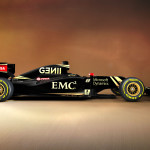
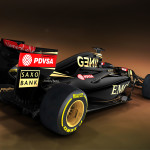
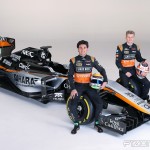
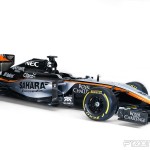
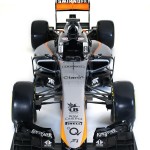
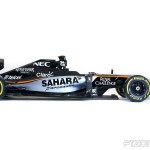
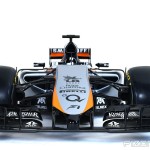
    If you found the 2014 aesthetics unpleasing and plain awkward you weren’t alone. Mercifully a tweak to the aero rules for the nose section means that the hideous duckbills and anteaters have been consigned to the scrap heap. Visually the majority of the field will have a relatively uniform look for the nose section of the car and it does constrict some of the eccentric individuality seen last year. Nevertheless, there is little doubt that most will be happy to have far better looking cars to ogle.

    For the sites that Formula 1 will visit the FIA has announced a twenty race calendar with a highly anticipated visit to Mexico City in late October. As predicted the Korean grand prix loses its spot on the calendar while the German grand prix will again be hosted at the Hockenheimring for 2015. Even though the deal struck with Bernie Ecclestone back in 2006 specifies an annual rotation between Hockenheim and the Nurburgring the latter’s change of ownership has left it in financial difficulty and without a deal in place for the coming season.

    scWhile safety is paramount in F1 the Safety Car periods have, on occasion, been far too long. It has been mainly lapped cars which has been the culprit in these long-winded intermissions. The FIA has shown some common sense by announcing that the Safety Car will no longer wait for lapped cars to catch the rear of the field before resuming the race.

    Along with a far more visually pleasing sport there will also be three rookies on the grid. Sauber has confirmed that Brazilian Felipe Nasr will be partnering with Marcus Ericsson for 2015. Nasr gained valuable seat time in F1 last year as the official test driver for the Williams team and he graduates to Formula 1 with a pretty solid CV. Nasr has won both the Formula BMW and British Formula Three championships before finishing third overall in last year’s GP2 campaign. It’s no secret that he comes with substantial financial backing from Banco do Brasil which is much needed by a struggling Sauber team. Neverthless, Nasr is a real talent and it’s more than worth it to keep an eye on his progress.

    At one stage it appeared as if Carlos Sainz Jnr’s introduction to Formula 1 would have to wait a few more years. The son of former double rally world champion Carlos Sainz was on course to be fast-tracked to F1 but he lost out to Russian driver Daniil Kvyat. It proved to be a momentary delay as Sebastian Vettel’s departure to Ferrari meant a promotion to the Red Bull team for Kvyat. This in turn opens the door for Sainz Jnr to slot into the vacant Toro Rosso seat.

    Max_VertappenHowever, it will be his Toro Rosso teammate who will undoubtedly carry the biggest weight of expectation of all the rookies in the field. Max Verstappen is the son of the not-so-successful former F1 driver Jos Verstappen. But that isn’t what makes his debut so spectacular. Instead, it’s the fact that when Max Verstappen takes to the starting grid in Australia he will be seventeen years old. He will be the youngest driver ever to compete in the sport and probably the first, should he score a podium, who cannot legally have a sip of the celebratory champagne. Verstappen’s racing biography is rather limited given his age but he nevertheless boasts some impressive wins including third place in last year’s European Formula Three championship.

    There are many who believe that if you’re fast enough you are old enough. To a degree this plays true but handling the pressure of Formula 1 is a big ask for someone so young. It is clear that Red Bull’s motorsport director Helmut Marko has no qualms about piling on the pressure and has already compared the youngster to the great Ayrton Senna. As grand and fiery as the Verstappen PR has been he is a bit of an anomaly. Either Max Verstappen is going to be the greatest thing since Lewis Hamilton, read sliced bread, or he’s going to be something else which time will inevitably tell.

  • FIA Turn Around on Honda Engine Development

    FIA Turn Around on Honda Engine Development

    The FIA have reversed their decision to allow in-season engine development for McLaren’s new engine partner, Honda.

    The 2015 rules for engine homologation were left open after Ferrari’s James Allison pointed out that nowhere in the 2015 rules does it state that teams have to submit their homologated engines for the 2015 season. The deadline for the teams last year was 28 February 2014. The FIA conceded that the rules were open to interpretation and allowed engine manufacturers, namely Mercedes, Renault and Ferrari, to develop their engines up to 32 development tokens.

    Honda were left out the equation as the FIA felt that since all teams had to homologate their engines last year, its only fair for Honda to do the same this year despite it not stating this anywhere in the rules.

    As to be expected, Honda were not pleased with the decision and met with the FIA this past week. The result of the meeting was that Honda are now allowed to develop their engine during the season but with a few caveats.

    Honda will be able to develop their engine calculated by the average number of unused tokens by the other manufacturers before the first race of the season on 16 March 2015.

    It is unclear how many tokens Honda will have but it is believed that they will have a considerable amount to develop their engine throughout the season.

  • Hockenheim to Host 2015 German Grand Prix

    Hockenheim to Host 2015 German Grand Prix

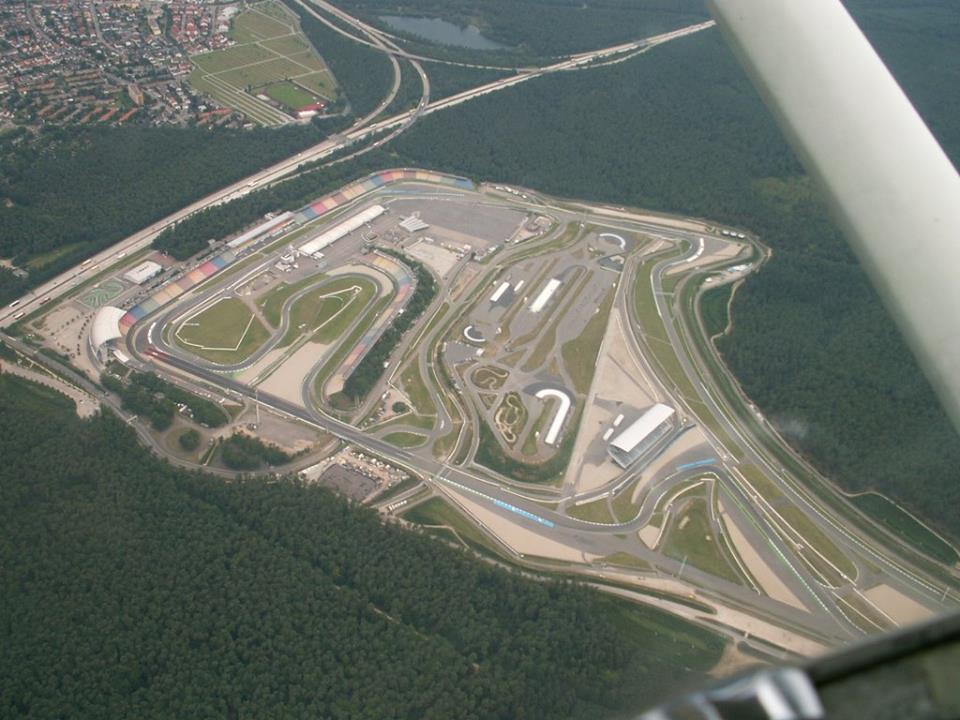
    Formula 1 boss Bernie Ecclestone confirmed that the German Grand Prix will take place at Hockenheim and not the Nurburgring due to financial reasons.

    Hockenheim alternates with the Nurburgring each year to host the German Grand Prix but due to financial reasons the Nurburgring is unable to host this years race.

    The date for the German Grand Prix was confirmed on the FIA calendar but no venue was set. Speaking to Reuters, Ecclestone said that they need to change the dates on the contract for Hockenheim.  “It’s going to be at Hockenheim,” he said. “We just have to amend the years of the contract. It was alternating with Nurburgring so we’ll just take that out.”

    The Nurburgring, as a host venue was cast into doubt in 2012 when the venue experienced financial difficulties and almost filed for bankruptcy. It looks as though Ecclestone and the new owners of the Nurburgring could not come to an agreement to host this years German Grand Prix.

  • F1 2015: Engine Rule Game Changer?

    F1 2015: Engine Rule Game Changer?

    It has always been recognised and celebrated that Formula 1 has some of the most complex and advanced engine technology in the world. It’s a sport of innovation after all and the introduction of hybrid engines for 2014 well and truly proved that. Last year, Formula 1 went racing on a third less fuel than in 2013 with a 1.6 litre turbo engine and still it produced quicker cars.

    It didn’t quite go to plan as far as it being an all-out nail biter between the teams. Instead the rest of the field watched forlornly and from a considerable distance as Mercedes thrashed the lot of them and strolled to both championship titles. Mercedes’ enormous 2014 advantage emanated mostly from an exceedingly superior power unit which left rival manufacturers shamefaced.

    Throughout the year Ferrari and Renault fought hard for permission to introduce upgrades during the 2015 season.  As a change of rules can only be achieved through a unanimous decision by the teams Mercedes’ refusal to yield seemingly put an end to Ferrari and Renault’s hopes. Yet, for as much as F1 is known by its advanced technologies, the rules that ‘govern’ the sport seemingly has an infinite amount of grey area. You would think that for as long as these experts have been sitting around shiny boardroom tables they’d by now have an idea of how to create a rule that leaves no wiggle room for the infinitely brighter teams. Instead the engine homologation rule is saturated with enough grey area to make you cringe.

    Pascal Wehrlien Abu Dhabi Test 2014At a meeting with the FIA in Abu Dhabi Ferrari technical director James Allison pointed out that the lack of an exact date by which the final 2015 engine must be lodged. Subsequently, and to appear less dense, the FIA have told teams that the “most logical and robust” way to proceed would be to assume that there is no homologation date for the 2015.

    Honda has been purposefully left out of the equation because according to the rule a new manufacturer must homologate its engine by 28 February 2015. The Japanese manufacturer in partnership with McLaren feels it is “unfair” to allow its opposition to make progress while its own power unit will remain unchanged throughout the season.

    You would think that this means Renault and Ferrari powered cars will have a good and proper shot at the Mercedes. Few things have ever been that uncomplicated in Formula 1 and this is no exception. This is a win for Ferrari and Renault but it’s a relatively small one. Bear in mind how the development of the engine is divided and that in-season development and upgrades are not a free for all. On its introduction in 2014 only 92 % of the hybrid engine was open for development. From here, manufacturers selected 48% to develop. This 48 % is split into 32 tokens which are assigned to various parts of the engine. The various sections each carry a value of one to three tokens depending on its influence on performance.

    fiaNow there is the regulation surrounding the homologation which itself has led to several wordless moments of some pretty hefty squinting and head-tilting. Rule 28.5 states that “only power units which have been homologated by the FIA…may be used at an Event during the 2014-2020 Championship seasons.” This rule makes no explicit mention of how many engines can be homologated per year. It is clear however that for an engine to be used during a race weekend it must be homologated. Should this rule be applied as it’s read it would mean that teams have several opportunities throughout the year to bring upgrades to their engines, to homologate as they go. Keep in mind that each driver will only be allocated four engines for the entire season which brings into play the certainty of a grid penalty with each engine change after the allotment.

    On the other hand, if the rule is to be interpreted differently it means that once an engine has been homologated for 2015 no changes can be made to it at any stage. By this understanding the advantage of the loophole is only a few extra weeks of development before the start of the season in Australia. Furthermore, up until an engine has been lodged with the FIA, for homologation, the 2014 engine will be the only option to run with. New rules are created to bring clarification, they said.

  • Virtual Safety Car Rules Finalized for 2015

    Virtual Safety Car Rules Finalized for 2015

    The FIA have finalized the procedures for the new Virtual Safety Car (VSC) system that will be used to neutralize races in 2015.

    The VSC was brought about after Jules Bianchi’s accident at the Japanese Grand Prix last year where he crashed out of the race with serious head injuries under yellow flag conditions.

    The new VSC rules have been integrated into the 2015 sporting regulations and will be used to neutralize a race or “normally be used when double waved yellow flags are needed on any section of track and competitors or officials may be in danger, but the circumstances are not such as to warrant the use of the safety car itself”.

    Under the VSC rules, drivers are not allowed to enter the pits except to change tyres, this means that stop-and-go penalties may not be served during the VSC period. Drivers will have to stick to a minimum delta time set by the FIA in each sector. To ensure drivers do not drive too slow, the rule makes provision for drivers that drive erratically and “unnecessarily slowly. If a driver is found to breach these rules, a penalty will be imposed. A penalty will also be imposed for drivers who do not stick to the delta time.

    Once the race director is satisfied and it is safe to resume racing, teams and drivers will be notified via the official lighting system. Once the notification is given, a green flag signal will be given on the FIA light panels. Drivers can continue to race from that point on.

  • McLaren-Honda and Ferrari set to launch in late January

    McLaren-Honda and Ferrari set to launch in late January

    The McLaren Formula One Team looks set to launch its Honda powered 2015 car at an event at their Woking headquarters on 29 January. According to various international media sources, the new Ferrari will be presented either a day earlier, or a day later.

    While McLaren intend hosting an event to unveil their car, Ferrari’s launch is likely to only be a release of multimedia items on the internet, according to Italy’s La Gazzetta dello Sport.

    Reports are in that the Ferrari livery will again be red and white with a dash of black carbon and the La Gazzetta report added that sources at Maranello are suggesting that the latest wind tunnel results are “encouraging”.

    “There is optimism that much of the aerodynamic deficit has been bridged,” La Gazzetta reported.

    “And combined with the political victory on the engine side that will improve performance and economy, there is a feeling of moderate optimism.”

    The report went on to say that the project, codenamed ‘666’ will be launched between the 28th and the 30th of January, with the exact date “depending on the assembly of the car”.

    Photo Credit: Mclaren-Honda

  • Korean GP officially dropped from 2015 F1 Calendar

    Korean GP officially dropped from 2015 F1 Calendar

    The 2015 F1 Calendar has been reduced to 20 races from the proposed 21, following the official removal of the Korean Grand Prix.

    The race featured on the first official calendar published at the end of last year, but was still subject to confirmation by the FIA and was apparently added without the knowledge of the Korean GP organisers.

    The Korean GP was scheduled to take place just one week before the Spanish GP in Barcelona but there was little doubt that it would be removed.

    In December 2014, F1 supremo Bernie Ecclestone said that the Korean GP was on the race calendar for legal reasons.

    “[The organisers] would rather it not happen,” Ecclestone said last month. “We have a contract with Korea, we have to put it on the calendar. If we had not done they could have sued us. We let them off for a year on the understanding they would be back.”

    The removal of the Korean GP sees the return of a three-week break between the Bahrain Grand Prix (April 19) and the Spanish Grand Prix (May 10).

    Here is the updated 2015 F1 Calendar:

    Australian GP – Albert Park, March 15
    Malaysian GP – Sepang, March 29
    Chinese GP – Shanghai, April 12
    Bahrain GP – Sakhir, April 19
    Spanish GP – Barcelona, May 10
    Monaco GP – Monte Carlo, May 24
    Canadian GP – Montreal, June 7
    Austrian GP – Spielberg, June 21
    British GP – Silverstone, July 5
    German GP – Nurburgring, July 19
    Hungarian GP – Hungaroring, July 26
    Belgian GP – Spa-Francorchamps, August 23
    Italian GP – Monza, September 6
    Singapore GP – Marina Bay, September 20
    Japanese GP – Suzuka, September 27
    Russian GP – Sochi, October 11
    US GP – Austin – October 25
    Mexican GP – Mexico City, November 1
    Brazilian GP – Interlagos, November 15
    Abu Dhabi GP – Yas Marina, November 29

    Korean GP Photo Credit: Caterham F1 Team

  • FIA release details of new Super Licence points system from 2016

    FIA release details of new Super Licence points system from 2016

    Formula One governing body, the FIA, has released details of a new Super Licence points system that will make it more difficult for drivers to become eligible for F1 racing.

    From 2016 onwards, drivers must have accumulated 40 points over a three-year period in order to be eligible to apply for a super licence to compete in Formula One. Points allocation will be based on which other motorsport series’ they have competed in and the results they achieved.

    The changes follow much criticism of Toro Rosso’s new 17 year old recruit, Max Verstappen. In future, drivers will have to be at least 18 years old before being allowed to compete in F1 and will also need to spend at least two years in junior single-seater categories.

    Furthermore, all drivers will be required to hola valid road driver’s licence and pass a test on the Formula One sporting regulations. The existing requirement of completing 300 kilometres in a recent F1 car will also remain.

    The junior categories eligible for points, in order of weighting, are: a future FIA F2 championship (60 points for winner), GP2 (50), FIA F3 European championship (40), FIA WEC (LMP1 only) (40), IndyCar (40), GP3 (30), Formula Renault 3.5 (30), Japanese Super Formula (20), national FIA-certified F4 championships (10), national F3 championships (10) and Formula Renault (EuroCup, ALPS or NEC) (5).

    Daniel Ricciardo, winner of the Belgian Grand PrixThese new super licence rules would have prevented ten current F1 drivers from making their grand prix debuts in the last five seasons. They include Red Bull driver Daniel Ricciardo who made his debut in 2011 and scored three race victories last year. Paul di Resta, Marcus Ericsson, Giedo van der Garde and Jean-Eric Vergne are also amongst those who would not have met the requirements to apply for a super licence.

    The new super licence regulations also make it more difficult for drivers to make comebacks following a break from the sport. In order to automatically qualify for a superlicence drivers need to have started at least 5 F1 races in the previous year, or at least 15 in the previous 3 years. This means that Michael Schumacher, who returned to F1 after a four-year break, would not have automatically qualified for a new super licence.

  • Williams engineering team shake-up for 2015, Massa gets new engineer

    Williams engineering team shake-up for 2015, Massa gets new engineer

    The Williams F1 Team has announced a number of changes to their engineering team ahead of the 2015 season.

    This includes recruiting Dave Robson from McLaren to take over as Felipe Massa’s new race engineer.

    Robson, who spent several years at McLaren working as Jenson Button’s race engineer, will report to Williams’ Head of Vehicle Performance Rob Smedley who was Massa’s race engineer at Ferrari.

    Felipe Massa, Williams F1 Team, Austrian Grand Prix QualifyingThe shake-up sees Massa’s former engineer Andrew Murdoch promoted to the role of Senior Performance Engineer where he will lead the performance group at Williams’ Grove base and work on developing new techniques and processes within the team to ensure that performance improvements are rolled out to both cars throughout the 2015 season.

    Murdoch will still be seen on the pit wall as he will remain part of the trackside team, focusing on Valtteri Bottas’s car. Bottas will still be engineered by Jonathan Eddolls.

    Carl Gaden who joined the Williams team in 1988 and has served 22 years as their chief mechanic has also been promoted. He will take on the role of Senior Car Systems Engineer and will now be responsible for system reliability. Mark Pattinson, previously Number One Mechanic on Felipe Massa’s car, has been promoted to replace Gaden as Chief Mechanic for the team.

    “Off the back of a great 2014 campaign Williams is determined to continue this positive momentum into the new season, and these recent changes show our commitment to that goal,” said chief technical officer Pat Symonds.

    “We are proud to be able to promote our existing talent to help strengthen every area within our engineering team and we will continue to invest in new talent where necessary to ensure we have the support and resources to achieve our on-track ambitions throughout 2015 and beyond.

    “Our engineering team for the coming season is looking strong and I’m excited to get the new season underway.”

    Williams finished the 2014 season in 3rd place in the Constructors’ Championship – their highest finish since 2003.

  • All the F1 2014 Action in this 2014 season review video montage

    All the F1 2014 Action in this 2014 season review video montage

    The fact that the same team pretty much won every race in the 2014 season does not mean that there was no action to be had throughout. 2014 was action packed and the battle for the title went down to the final race. Relive all the best F1 action of the 2014 season in this awesome 2014 season review video montage which is aptly named, ‘ART OF F1 2014 – Season Review’. It’s packed with all the top highlights of the 2014 Formula One season and is brilliantly edited. Enjoy!