Tag: toro rosso

  • 2013 Canadian Grand Prix Technical Round Up

    2013 Canadian Grand Prix Technical Round Up

    There’s a lot going on behind the scenes on an F1 weekend that we don’t always get to hear enough discussion about. How the cars are set up to specifically suit the track and drivers, what updates are brought to each circuit etc. Here’s a technical roundup of the action packed F1 Canadian Grand Prix.

    The Gilles Villeneuve circuit in Canada is one of the fastest Circuits on the Formula 1 calendar. Most teams are known to run medium to low down force settings on their cars. This means very shallow rake angles on the rear wings to maximise the speeds on the straights.

    Due to the stop start nature of the track, it is more biased towards mechanical grip rather than aerodynamic grip. Williams and Toro Rosso both ran very different specification low down force rear wings. Williams had the main plane curving upwards which was the same as the wing that they used in the 2012 F1 Canadian Grand Prix, and Toro Rosso had the main plane at a downward curve.

    Interestingly enough, Sauber, who started the season with a similar design to to Toro Rosso have now reverted to a more conventional straighter design.

    Ferrari have had a few updates to the front wing. The main change was that the pillars that extend down from the nose of the car were straighter in Canada than the previous races. The other change on the front wing was the second flap above the main plane.

    FerrariCanadaFrontWing2

    The previous wing had the flap extending out of the end plate, the Canada specification has the second flap extending out of the main plane with a gap between the end plate and the main plane. They also ran the new side pod airflow conditioners they tested in Barcelona on both cars in the race.

    Ferrari front wing at the Canadian Grand Prix
    Red Bull ran a rather interesting modification with small vertical vanes on the main plane of their front wing and under the second wing element.

    Red Bull Racing front wing for the Canadian Grand PrixIt is a very similar principal to the vortex generators above the side pods that some cars run. They help guide the air along the top of the surface of the side pods by disturbing the boundary layer of air above them.

    These vertical vanes under the second wing element have a similar function, except they guide the air along the underside of the second element.

    This allows the air underneath the wing to move away quicker and helps in the creation of vortex generation. The same airflow will flow around the tyres and onward to the the side pods and eventually out the rear of the formula one car.

    What are your thoughts on the updates and the set up of the cars for the Canadian Grand Prix? Let us know what you think in the comments below.
     

  • F1 2013: Toro Rosso aligns with Renault

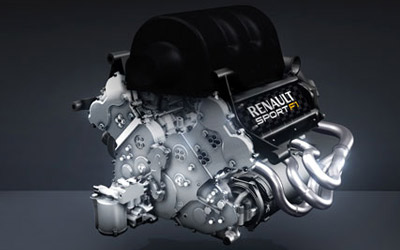
    The Toro Rosso team has announced that they will switch engine manufacturers for next year. renault-2014-engine

    The sister team to Red Bull, formely known as Minardi, have been using Ferrari engines since 2007 but will switch to the French manufacturer for 2014. The engine regulations that come into affect for the 2014 season stipulates the use of 1.6 litre V6 turbo.

    The announcement of the deal comes with the confirmation that Red Bull has extended its deal with Renault. Renault chairman Carlos Ghosn released a statement outlining the future partnership with the two teams.

    “I am pleased to announce the strengthening of the partnership existing between Renault and the Red Bull group with the renewal of the agreement with Infiniti Red Bull Racing on one side and the extension of this agreement in terms of powering the cars to the Toro Rosso team,” said Ghosn in a press conference in Monaco this morning. It is a great recognition by Red Bull of the performance of the Renault engines and technology and, particularly, we are very glad that Toro Rosso is switching from another major supplier to us.”

    In a bid to closely align the two teams Toro Rosso will be running Red Bull gearboxes from next season.

    The Toro Rosso announcement bring the number of teams powered by Renault, for 2014, to three. Caterham boss Tony Fernandes has confirmed that his team will be staying with the French company.

  • 2013 Spanish Grand Prix – F1 Technical Round Up – Part 2

    2013 Spanish Grand Prix – F1 Technical Round Up – Part 2

    The second part of this f1 technical round up will focus on Sauber, Toro Rosso, Red Bull and Caterham.

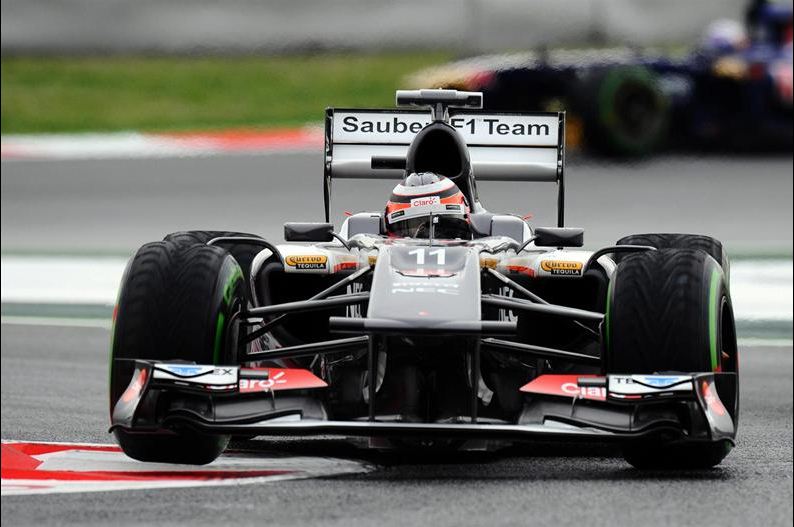
    Sauber: Sauber’s biggest change was the new rear wing. For the first few races the team ran a wing with a dipped central section. This little dip in the middle of the main plane allows for more down force but does not add to drag. They’ve tested a more conventional version in the races preceding Barcelona and have reverted to the conventional design in Barcelona.

    Toro Rosso: Toro Rosso made a number of changes to the bodywork of their car. The biggest change is to the rear of the car where they’ve took a leaf from their big brother team, Red Bull, and they’ve added the cross under tunnel solution which Red Bull has had on their car since 2012. The way it works is that the air from the side of the side pod, moves around the outside of the side pod and down towards the floor, the air then  moves underneath the coanda exhaust towards the central part of the rear diffuser. They exhaust exits are also very similar to the Red Bull solution. The only difference for Toro Rosso would be the Ferrari engines. The engine would make a difference in tuning the coanda exhaust to work with this solution. Another big update was the detached front side pod. This helps attach the airflow over the top of the side pod along the bodywork which better aids the coanda exhaust.


    Caterham_NewBodywork_spainCaterham: Caterham brought an almost “B-Spec” car to the CT-03. They brought along a new side pod air flow conditioner. It is now a twin element airflow conditioner with the rear section curving around the top of the side pod and attaching to the top edge of the side pod. They’ve also added a vanity panel to the front which gets rid of the stepped nose. Another addition was the horizontal vane under the wing mirrors. This little vane creates a vortex that will attaches the airflow to the top of the side pods.


    Red Bull: There weren’t that many updates that were reported on the Red Bull car. One of the updates was to their rear wing. They’ve gone from curved rear wing end plate louvres to more horizontal louvres. This brings them in line with the other teams on the grid. They’ve also made some changes to the rear of the car. More specifically around the rear wheels/exhaust area. They’ve added and additional vane on the floor ahead of the rear wheels. These vanes “catch” the air flow off the tyres due to the tyres’ rotation (tyre squirt) and channel the air towards the rear of the car. This does help to minimise tyre squirt, but it’s not a cure.

    This coming week see’s the Formula 1 circus head to Monaco. We can expect to see lots of additional wings and vanes on the front wings of the cars all to get that extra bit of down force. We can also expect to see heavily raked rear wings, anything for extra down force. Mercedes will be quite strong here as they are quite strong with the slow speed corners and we cant discount Red Bull.


  • Video: F1 Ted’s Development Corner – Spanish Grand Prix

    Video: F1 Ted’s Development Corner – Spanish Grand Prix

    Ted Kravitz of Sky Sports F1 gives us a brief overview of all the updates that were brought to Barcelona by the teams and focuses on the rather interesting one’s.

  • F1 Testing in Barcelona

    Formula One and @F1_Madness fan, Laura Rocchigiani (@Yzzzma) was lucky enough to go to Barcelona and watch the pre-season F1 testing live. She sent us a few of her photos of the f1 cars heading around the testing track and we must say we are very envious and most impressed!