TEAM REPRESENTATIVES – Rémi TAFFIN (Renault Sport), Monisha KALTENBORN (Sauber), James KEY (Toro Rosso), Pat SYMONDS (Williams), Jock CLEAR (Ferrari), Guenther STEINER (Haas)
PRESS CONFERENCE
Monisha, if we could start with you: a very positive news story both for Sauber and for Formula One following the buyout of the team by Longbow Finance. Can you tell us a little bit more about the new owners? Who are these people who have bought one of the most prestigious brands in Formula One?
Monisha KALTENBORN: Well, Longbow Finance is a Swiss company. They have been active in financial investments for more than 20 years, from Switzerland. Their operation involves, well typically private equity investment for international client and of course investment portfolio management.
So when are we going to start seeing the benefits and when are you going to start seeing the benefits of the buyout – something this year?
MK: Well, we are working on that, but you know these things take time. We have had a rough time these past few months and the first target of course of the new owners is to stabilise the entire group. So you have to settle matters and then of course, again, to get back to your business as usual to have then a basis for being competitive. I’m sure we’ll have a few things still coming up this year, I mean we still have a few things to do, we don’t want to end up where we are, but of course we are focusing more on next year and there I am very confident you will see a lot more.
Thank you. Guenther, coming to you, we’re half way through your first season in Formula One, can you just give us a half-term report? How do you feel it’s gone?
Guenther STEINER: I think it has gone pretty well. I would just like to take this occasion to thank Gene Haas for the trust he has put in all of us, you know that we can come here, because I think the Haas story, an F1 team from America is good news, like good news that Sauber found an investor. Back to where it has gone, we had a very good start, for us, sure some people might think differently, if you are Mercedes or Ferrari, but we are very happy. Then we had a bit of a downturn, which wasn’t massive, I mean we still finished 11th. We finished 11th three times, so we were almost there but not really there. But we got back. The team has grown a lot in these 10 races up to now, if you saw it in the beginning. I wouldn’t say we were bad in the beginning, but if you are new it take some to gel and we always knew this and maybe we were lucky to get these points in the beginning because it gave us confidence, we knew where we were, that the car is good or that it is decent and we were building on it. And then when we had the four races where we didn’t score, we didn’t lose our head or get nervous. We just kept on working, we said “we know we can do it, we just have to do it again”, and I think we did it again, we finished eighth and then in Austria we finished in the points again, so all in all, very happy. Now we are at the point where we look to next year, well we started before now to look to next year, but now it’s full steam ahead on the new car and the race team is just getting better and better because they learn more and more every weekend. We are getting more people in on aero development for next year because we want to be even better next year. I hope we can achieve that. Everybody in the team can be proud of what they achieved and I would like to thank everybody in them because they worked hard because the first three races weren’t easy. They were difficult for everybody. People worked day and night. But they pulled through and now we are where we are, we’ve got 28 points and we are proud of them.
You say the team is growing, you’ve got more people in the aero department, what about the infrastructure in Banbury? Do you feel confident enough to take on more of the manufacturing of next year’s car in-house?
GS: No, that was never our plan. We continue a few years like we are. We want to grow in a few areas like race engineering and aero development, but design staff and manufacturing we don’t want to take, because we don’t want to get distracted. I think our principle works – to buy as much as we can from somebody else. We want to keep doing that because there is not a lot in it if you go to do it yourself, not a lot of speed we think is in it in the car. We would just distracted we don’t want anything of that to happen, so we keep on with our business plan, as we set out in the beginning.
Thank you. James if we could come on to you please. An impressive double points finish for the team at Silverstone. Do you think you pre-season target for the season of fifth in the Constructors’ Championship is still on? Can you catch Force India?
James KEY: Well, we’ve got a long way still to go, so you’d hope so, we’ve done just about half the season so far. Force India have done a really good job recently and they’ve made the most of some good opportunities, where perhaps we haven’t. We’re not happy with the number of points we’ve scored. We’ve got developments to come to the car, which could give us a chance later in the season, so there’s more to come from us. You clearly can’t give up in the middle of the season; you have to keep pushing. I know a bit of a gap has developed, that was really only made over a couple of races, a couple of big scoring races for them. So the same has got to happen for us to close up, so we’re not going to give up on our chase but it’s not easy.
You say you’ve got some chassis developments coming but there will be no power unit developments because you’re using the year-old Ferrari engine. How much of a frustration is that for you now?
JK: Well, we knew it was going to get more and more difficult as the season went on. The pace of power unit development has continued at a pretty high level. It was never an advantage for us to have an established power unit but one that was a year old, it was always a disadvantage – that’s no disrespect to Ferrari, but clearly they have made good steps on their own ’16 unit and we’re not benefiting from any of that. So it’s deeply frustrating really, but we knew what to expect. We have to try to compensate with chassis and make better use of our opportunities.
Thank you. While we’re on the subject of power units, Rémi, if we could turn to you please, how satisfying has the development of the power unit been, given where you were a year ago?
Rémi TAFFIN: I think it only be a good satisfaction, because where we were coming from was a difficult year last year and now we can see the improvement on track and everything we got out from the factory to the track was working well, so that was a good step forward, either first race or actually Monaco/Montreal specification we introduced. It’s all working well. I just have to say we’re on it, but we have a good way to go.
What’s next on the roadmap fro Renault? When are we going to see the next upgrade?
RT: I think it will be next year. The big step we will have will be next year’s engine, race one. Until we get to the end of the season now we will be working on the specification we have now, trying to extract the most out it, but there won’t be any more let’s say big step as we had for race one and six.
Thanks. Pat if we could turn to you now please, it’s been a difficult year for Williams, not least in Austria and Silverstone, the last two races, two tracks where you went so well in recent years. Have you discovered the cause of the problems at those two tracks? Were they track specific or was there something more serious at hand?
Pat SYMONDS: Well, I think we’re getting on top of it. It does seem that Canada was a long while ago – we were on the podium there – but it was only five weeks ago. But three races since then, Baku, Austria, Silverstone, and I feel in all three of those we haven’t performed in the way I expected to. S we are looking into it. We are looking at various things that we have introduced. We’re making sure that we understand them; that’s a process that’s been going on even today. But it’s quite an intense period, you know. Over a period of just five weeks we’re actually doing four races and one test – five events in five weeks. It’s hard to catch your breath when it’s going at that sort of pace. But I’m pretty confident we’re getting on top of things. We had a good day today. I was pleased with how it went, particularly on the long runs, and I think we’re getting back where we should be.
Where’s the focus in Grove now, is it on 2017? Do the 2017 technical regulation changes come at a good time for you, a chance for you to press the reset button if you like?
PS: Well, they come at the same time for everyone. We all have equal opportunities and I really do regard it as an opportunity. In answer to the first part of your question, we’re pretty focused on 2017 now, as I’m sure all the teams are, because there is so much work to do. There is so much to be gained in the early part of the learning curve that you can’t afford to leave things too late. It makes it quote challenging of course. If you are in a fight in 2016, as indeed we are, but you’ve still got an eye on the future, you have to balance things pretty carefully. But of course not all development is aerodynamic and while the wind tunnel is pretty devoted to 2017 work, there are other areas where principles do carry over, so we’re still carrying on in those areas.
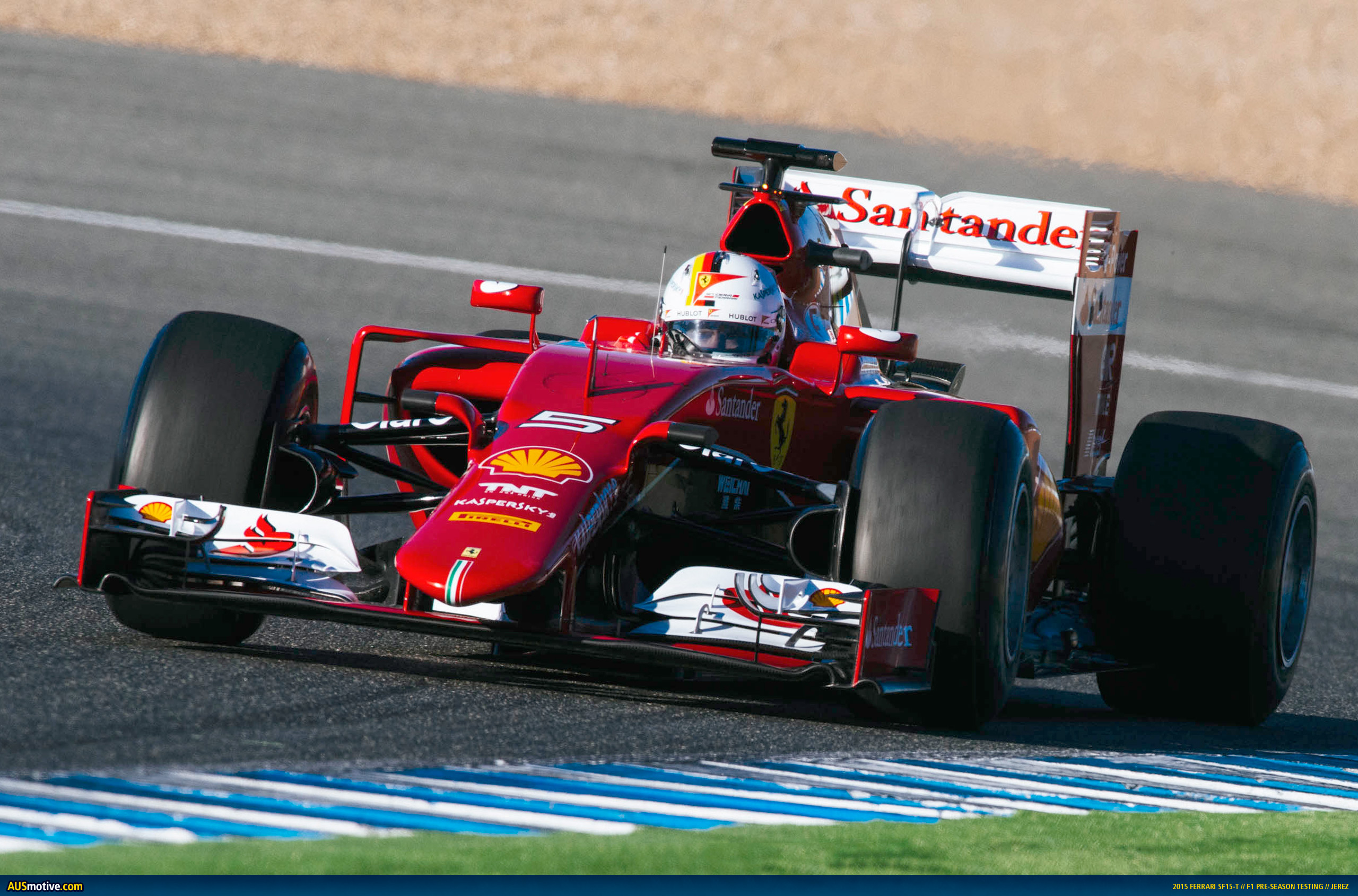
Thank you, Pat. Jock, turning to you: like Williams, Ferrari hasn’t been able to maintain the momentum it built up towards the end of last year. Why is that? Are you simply losing ground in the development race or are there more fundamental problems than that?
Jock CLEAR: Firstly, apologies for keeping everybody waiting. I don’t thing we feel that we are losing a huge amount of ground if you see what I mean. From my point of view I have recent knowledge of the opposition and a huge respect for what we are trying to beat effectively. Our performance has come under a bit more scrutiny now that Red Bull are putting us under pressure, but again that is a testament to how strong they are as a team. We haven’t lost a huge amount of ground to the leaders. If you look at it over the course of the last couple of races, in Canada we were very close and in Silverstone we were a long way off. I think we have learned a lot about some of the areas where the car is weak and that has helped us to identify where we need to work and we are under no illusion that Mercedes are going to continue to be strong and Red Bull are going to continue to be strong. All the teams are working hard. It’s the ongoing challenge. We are working as hard as we can on closing that gap and sorting out the issues, but as everybody has said already, we can’t take our eyes off next year, because that’s a big opportunity. So we’re now having to measure that resource and measure that balance between keeping some momentum or looking to get some momentum later in the year but also putting a lot of resource on what, as Pat says, is a huge challenge for everybody next year. That balancing act is very difficult for all of us. And as I say, it’s just a testament to the guys at the front how well they are continuing to develop and that puts us under pressure because we are not closing the gap as quickly as we’d want to be and that’s racing.
You say you have recent knowledge of Mercedes. That gives you a unique perspective on the two teams. How are Mercedes and Ferrari different from an operation point of view?
JC: Sorry to be no fun but I’d rather not share those details if you like. Obviously my own experience at Mercedes I take with me into this position and those sort of insights are really helpful to Ferrari and we’ve talked about those long and hard – the areas where actually Ferrari are stronger, the areas where Ferrari are weaker, again filling in all those details. It doesn’t happen overnight. I was never going to arrive and change things overnight. Far be it from me to think I’ve got anything like that much influence. I’m just here to try and get the race team to do the best we can with the package we’ve got and make sure we’re feeding back the right things to Ferrari at Maranello. That’s the same structure as all the teams I’ve ever worked at. The dynamic is different, the people are different, but again that’s probably true wherever you go. There are no obvious stark differences that I can share with you, but there are those details that obviously I’ve shared with Ferrari.
Maybe no differences, but many similarities?
JC: Oh absolutely, many similarities. The passion. If anybody was under any illusion that Ferrari is not as passionate as they used to be in the halcyon days of Ferrari, it’s incredibly for the passion. That is a huge, huge boos for all of us. It’s a pleasure to be part of that passion. Some times it’s our Achilles heel, sometimes we know very well that passion can make things quite difficult for you, but on the whole it is just a huge positive and it is a joy to be part of.
QUESTIONS FROM THE FLOOR
Q: (Dieter Rencken – Racing Lines) Question for Monisha. Following the non-starts that were Qadbak and with the Russian investors, I’m sure that you did some due diligence on Longbow Finance, so you are in a position to confirm or deny that the Rausing family are participants in Longbow Finance please?
MK: What I can tell you is that our partner is Longbow Finance, it operates in Switzerland. All disclosures that are required in Switzerland are done and that is important to us, who exactly our partner is. And that is Longbow Finance.
Q: (Viktor Bognár – Magyar Szó) Question to Pat. We have some new technical directives about the radio communication between the engineer and the drivers. Is there any fear that it causes some over-complication of the rules? What would be the best solution in your opinion?
PS: It’s an interesting question. I think that the interpretation that’s been put on the rules is quite harsh. The rules that are taking about is a rule that says the driver must drive the car alone and unaided. I think it was put there many, many years ago to perhaps limit some of the electronic controls and things like that. Indeed it was that very rule that was cited in the banning of traction control, for example. To bring it in to the sphere of communication with the driver is odd. I’ve always through of Formula One as being a team sport and I’ve always thought, as teams, we should participate together to assist our driver. And you know, you can ask where the limit is. If the driver is to do everything alone and unaided, should he change his own tyres at the pitstop? Clearly ridiculous but that could be the logical extension of it? But I think what’s particularly interesting is that, I think it’s rather a shame that something that’s really unique in motorsport is something that we are doing away with. If you cast your mind back just a few weeks, we have the Euro football championship going on, that fantastic game, Italy and Germany, it’s going to penalties, wouldn’t you have loved to have heard what was being said? Three penalties missed. Would you have not wanted to hear what the goalkeeper was saying? Would you not wanted to hear what those strikers were saying? Now in Formula One we actually have the ability to engage our fans and allow them into the cockpit to get that sort of level of immersion… and we’ve allowed it to go away. I think that’s the biggest shame of all.
Q: (Joe Saward – Auto X) This is a question for everybody, specifically based on what Pat was saying. We’ve got six races in eight weekends. Is that sensible?
Guenther, why don’t we start with you?
GS: You’re asking me about sensible! It is a lot of work, it is tough. I think for us we didn’t feel the difference so much because we started off new and we were just running anyway, so a littlebit more or less is not a difference. Is it sustainable? I don’t think so. I think we should try to make it a little bit more scheduled. A better schedule that you don’t have six events in six weeks because it gets old pretty quick. Sometimes these things happen and maybe change is in the future, I don’t know – but asking if it’s sensible… no.
James, your thoughts
JK: I think when you have 21 races you’re always going to get a compressed timescale for things – unless you lengthen the season, which I don’t think any of us would like to see. So, whether it’s sensible or not, difficult to say but I think as long as you’ve got that many races in a season, you’re going to get a situation where you get six weeks of enormous activity, particularly in the middle of the year.
Pat?
PS: I think that… we examined, I think around 2008, how we were going to go racing in the future and we decided that 20 races was very much the tipping point. Now, of course, you say, “20 races, what about testing and things like that,” we do still have two in-season tests, we have reduced to only two pre-season tests – but what we’ve done is get rid of test teams, so there’s an awful lot for the race team to do. On top of that next year… well, firstly, we’re not at 20 races any more, we’re at 21 and who knows whether that will go beyond, but we’ve also got tyre testing to take into account next year, so I think we’re way past the tipping point and we, as a team, and I think most teams, are looking at a completely different structure because we cannot ask our personnel to maintain the level of activity that’s being asked of them. And therefore we’re going to have to look at rotation. It’s an incremental cost, we have to put people in there and, y’know, I’ve been in racing now for 40 years and this is the first time when I’m starting to see people say, “well, actually, y’know, we don’t want to go racing. We love Formula One, we enjoy working in the factory but it’s actually too much of a drain on family life and quality of life to be on the road all the time.
Jock, Monisha or Remi, do you have anything to add?
JC: Just to support Pat, his point on pushing people and people making that level of commitment. Big sports play very well off the bench these days – and that’s a big part of rugby, big part of football is what you do with your substitutes. We don’t have that luxury I’m afraid, and we’ve got a lot of guys out there who, during this five-week period who are really, really up against it to get enough sleep and, as you say, to find time to look after their families. It’s beyond the tipping point, as Pat says. I don’t think it’s necessarily not sensible, I don’t think we’re worried about the safety of it, we’re still very comfortable that we can put those cars out there safely for Seb and Kimi every week – but people are just very, very tired and we’re only halfway through that five week four race period.
Q: (Ralf Bach – Auto Bild Motorsport) A question to Jock. One of your drivers told us yesterday that we shouldn’t write that negative about Ferrari, we should write more positive. So maybe we could start right now. Could you tell us some areas where Ferrari is stronger than Mercedes?
JC: Ha! I would rather not share those areas. As I say, I’m sorry to not play to the party. The comparisons are very, very difficult. It’s a very different culture, it’s a very, very different way of working. Just the geography of the setup is very different. And that naturally arrives at a different solution. The people involved are all very, very experienced in F1. They’ve all had different upbringings through either the British teams or the Italian teams and that arrives at a different result. As I say, the difference are not necessarily those that are going to make the difference between whether you’re on the front of the grid or not. That still boils down to how well you can get the results out of your wind tunnel, how well you can develop your power unit, and I would say the key, key point with Ferrari and all of the teams is that with this new hybrid engine, it’s much more integrated than ever before. You can’t just say “right, that’s your aero, that’s your chassis, that’s your engine,” and those three will come together. They’re all so closely linked nowadays and that integration is a strength of Ferrari because nobody has a closer relationship with their engine manufacturer than we do. Even at Mercedes, geographically, they’re not in the same place. So we have that advantage. That’s one that’s obvious to everybody – but it is an advantage. And having that close community with the engine side and the chassis side, not that we have this hybrid unit where they’re so closely integrated, with the aero, with the cooling systems, that is a strength that we need to work on and we need to make the most of.
Q: (Kate Walker – motorsport.com) I’ve got a question for all of you please. Recently we’ve heard comment from Paul Hembery of Pirelli talking about his preference to return to some form of warm-weather testing for 2017, particularly with the changes in the tyres and everything else. Could each of you please tell me what your position is on warm-weather testing, whether you’re pro- or against it and what you see as the key advantages and disadvantages?
Remi, if we start with you.
RT: I’m not sure I’m really well-placed to comment on tyre testing. The only thing I maybe would comment on that one is something we already covered: the resources we’d have to put in front and the people we have to get on board for that. Apart from that, I guess I’m not going to comment on tyres, to be fair.
Monisha?
MK: Technically, it’s difficult for me to argue anything on that but I think the picture I have here is we had good reasons to get rid of these kinds of testing activities. We’ve seen times where there was unlimited testing, lot of tyre testing was done at the time, basically with one team and we all got those tyres. And we had at that time, when there were many manufacturers actually in the sport, where money was not that much an issue, we still got rid of these kind of things and, step-by-step, we are getting back to areas again that we never wanted at that time. So, I just wonder where this is all going to. We’ve again got in-season testing, fine, we got something else away, but it’s just becoming more and more expensive, costs are just going up and I just feel it will end up somewhere in a very, very bad situation and I think we should learn from the steps we have taken in the past and not again wait for something to happen where people again may be leaving the sport. It’s not always just the small ones. It could equally happen, which we’ve seen years ago, how bigger… how manufacturers have left. I think we should be very cautious in opening up these kind of shows again. I think as teams we should probably not have that much liberty with regard to tyres. It would probably be easier if we were to just let the tyre manufacture do what he does and focus on other things.
PS: We are actually evaluating the costs at the moment. It is an incremental cost, there’s no doubt about it. If you have the situation where you could test in the venue where you were racing, you can limit some of those costs, and indeed many years ago we used to do that. We used to start the season in Brazil and test there. We started the season in South Africa and we tested there. You can stop on the way and this is the sort of Middle East on the way to Australia and you can mitigate your costs by not bringing things back to base, in our case, back to the UK. It is an incremental cost and one of the problems is that you’re always sending a lot of people to these tests; there are so many systems that need looking after. From the UK, a flight to Barcelona is £50 or something. To Abu Dhabi, it’s significantly more and so it doesn’t come at no cost. But I think that we have got a problem but the problem is probably greater than you might realise because the rule that came in for this season, which allows the teams to chose their tyres and chose three tyres from the five available – which incidentally, I think is a very good rule and it has done quite a lot to spice up the racing and to bring a little bit of randomness into some of the strategies – it really does fall down next year because we have to make those tyre choices before Christmas, before we’ve even run a car with the tyres and indeed, I think by the time we’ve done our testing, we will have supposedly chosen tyres for the first five or six races. Now that hands an enormous advantage, in my opinion, to the teams that have done the testing, even if it’s blind testing, even if we’re getting that data, you won’t pick up all the nuances that the test teams have had. So I think what’s far more important is that we look at that problem and perhaps for a year or for the first half of the season or something like that we suspend the right of the teams to make that tyre choice so that we all live together, we don’t hand that advantage to Ferrari, to Red Bull and to Mercedes, because we would love to have been involved in that testing and we got quite a long way down the path to designing a car for it but we simply couldn’t afford to do a test like that and these costs just keep on adding up all the time.
JC: Yeah, obviously we were very much like Pat, very keen to be involved in that and we have the advantage of having the resource and being able to put a car together, not specifically because we thought it would give us a huge advantage. I think we’re all comfortable – I would like to hope – with the way that data is going to be shared and the way the tests are going to be run but Pat is absolutely right, there will be nuances that you will get out of it by being there at the time and the drivers involved will get a feel for it so there’s an advantage there and certainly, for all of us, I think we’re well aware that making decisions for what tyres we’re going to be racing at the beginning of next year when even we will have had very little touch on them is very difficult to do, so Pat’s very correct on what he says. That probably needs to be looked at. We certainly don’t… and we never envisaged our involvement with the Pirelli testing as an opportunity to steal a yard on everybody else and as such, we would be quite happy to go along with that if some way were found to even out that possible advantage early season. More about the Pirelli testing: I think we sympathise with Pirelli in their plight to make the best tyres they can. They come under a lot of pressure every now and then and they don’t have much testing opportunity in the same way as we don’t and obviously, they’re always going to be pushing to do testing and warm weather testing is important because a lot of these races are in the warm weather. So again, I think we have to sympathise with Pirelli’s position and a season that is long, and as we’ve discussed before, has 21 races and doesn’t have test teams any more, those sort of long distance, long haul tests that you could put after the flyaway races are just going to add to a hugely busy programme already. So it’s finding the team as well as the resources as well as the money; it’s all pushing the boundaries in every direction. We’re almost at explosion point in fitting everything into a year.
JK: I think I’d add a query to Jock’s points. I think to be fair with Pirelli they do need to be given a bit of a break with this. We’ve had a significant demand on them from our new regulations. There’s some targets for them to try and meet which are tough and they haven’t got so long to do it. Tyres are big players now, tyre management and all the science that goes into it just from the tyre point of view is significant and I think it’s going to be the same or probably more so next year, they’re going to be a very big part of the 2017 regs. A cold Barcelona isn’t the best place to try and learn exactly what these things are going to do, neither for Pirelli nor the teams so although of course there’s a financial implication which has to be carefully considered, the bang for buck of going somewhere which is more representative and gives both the tyres – well, both Pirelli tyre information and the teams the sort of tyre information which is useful and makes testing useful – is significantly better perhaps at going to warm weather conditions than the cold Barcelona.
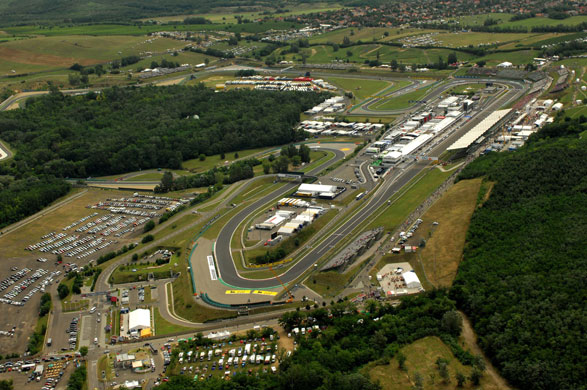
Q: (Peter Farkas – Auto Motor) This is primarily for Pat, Jock and James: could you tell us how you found the new asphalt (here) in terms of grip, in what way is it different from the old one, the kerbs and what kind of driver feedback did you get today?
PS: I think we were pleasantly surprised. There were some problems in the European F3 race that was held here a little while ago, there was quite a lot of blistering on the tyres and we were aware of that so we were thinking that maybe we were going to have a tough day today but in actual fact, even the supersoft tyre has actually held up very well today in the longer runs, better than we had expected. The track is quite smooth, the kerbs are quite good, we’re pretty happy with the work that’s been done.
JC: Yup, absolutely the same feedback as Pat really. We had some fears and they’ve not really been founded today. We’ve had a reasonably comfortable day on the tyres, both the types that we’ve tried. The kerbs are smoother, I think you see that the lap times are considerably quicker than last year but I think a lot of that is the softer kerbs, basically. The grip level for us is similar to last year but certainly the kerbs are making a difference on lap time.
JK: It’s similar for us. We had a troublesome day today so it’s a bit difficult to make quite the same judgements but it hasn’t been as big a surprise as we thought.
Q: (Dieter Rencken – Racing Lines) Remy, when the 2014 engine regulations were introduced, one of the points was in fact the token system to save costs etc. That of course has been changed totally going forward. You’re talking about a big upgrade for next year. This is a time when major companies start putting together their budgets so what has the effect of the change of the regulations been on budgets?
RT: I think the short answer is not a lot to be fair, because we’re not really limited already by the number of tokens so that’s not really changed our world and since we look at what we’re going to be doing next year and the year after, it’s not going to be changed so I guess the short answer is nothing.
Q: (Joe Saward – AutoX) We have these fantastically efficient hybrid engines at the moment and it takes 350 trucks to move the Formula One circus from one race to another. Are we getting confused, here?
GS: We haven’t got 350, I think we’ve got nine. I think if that is what it needs, you know, we are highly efficient, absolutely. I don’t know what to say to this one. It’s like we are putting a show on, if this is what it takes to put the show on we need to do it. I don’t think it has a lot to do with what we are doing out on the track, how we bring it here. It’s actually a good number. I never knew that number, that there are so many trucks involved in getting this circus up and running. We try to be efficient, just to let Joe know. We have got only nine out of… there’s 11 teams so everybody should have about 30. We’ve only got nine so we are very efficient which goes along with the efficient engine in our F1 car.
Q: Jock, Ferrari would have more than nine trucks, what’s your take of it?
JC: Well, obviously in my new role I suddenly became aware of how much of this we ship around the world. It was one of the first questions I asked and they told me that most of them are there to deliver the breakfasts for the journalists! But no, as Guenther says, we’re putting a show on. Are we getting confused? We’re here to race racing cars as fast we can around the track, that’s never been any confusion for me. What the circus looks like is just as much a part of what you guys want, what the fans want, what we want. I don’t think Ferrari are chosing to put more and more trucks on the road. I think we’re just part of this circus and if it wants to go in a different direction, Ferrari are willing to with it. It’s our sport, it’s your sport but from my point of view, I’m here to make a racing car go fast around the circuit.
PS: Well, I think like you, Joe, I was quite surprised as I walked into Silverstone and thought I’d arrived at the truck Grand Prix rather than the Formula One Grand Prix. I think we shouldn’t confuse things. We have produced a very very efficient power unit. It is the way of the future and I think it is a pretty good contribution to automotive engineering. If you start looking at the fuel used going Grand Prix racing where do you stop? Do you count all the cars in the car park? I’ve often argued that actually the person who is sitting at home watching our race on television is not using any fuel and if we didn’t have a race, he would probably be driving around the countryside going shopping or something so where do you draw the line? I don’t think we should confuse the fabulous job that the power unit manufacturers have done with putting on a bit of a show.
MK: I know that Joe got a bit confused the other day when he saw a few Sauber trucks going in different directions and he wondered if we’d got lost. I think there are other points we’d rather look at if we talk about confusion but I do agree that if you compare us to other big sporting events – if you look at, for example, the entire carbon footprint we have – I think Formula One in spite of being racing and the automotive factor, is much better than compared to football or so because most of our audience is at home it’s been said, as compared to at these big games or big events, 80,000 that are travelling actually to the event. So I think we’re not doing a bad job on that.
Q: (Daniel Johnson – The Telegraph) Jock, you’ve worked with lots of drivers. Fernando left Ferrari after five years, I think, because he became frustrated that there wasn’t a championship there. What’s your impression of Sebastian and how patient he will be, because he’s been very admirable on what he’s said about how you’re doing this year but he’s a winner and wants to keep winning?
JC: Yeah, as you say I’ve worked with a lot of drivers and I think I said in Australia when that comparison was asked of me in that sense, Seb is every bit the four time World Champion that you people know him to be and he is a very very integral part of what we’re trying to do to win another World Championship at Ferrari. How patient will he be? He is a racing driver who is used to winning and passionate about winning – all racing drivers are passionate about winning – but as I say, he’s used to winning so it hurts, it cuts him deep to be not being able to compete side by side with Lewis and Nico at the moment. But having spoken to him, he’s up for the battle. He enjoys the fight, he said as long as we can go there on a Sunday and we can have a battle, even if it’s not at the front, if it’s with the Red Bulls, he enjoys racing, he just loves racing racing cars. He’s a bit like Michael when he came back into Mercedes; he just loves racing racing cars. Now, yes of course he wants to win but he believes in us, we believe in him, he’s part of this Ferrari team, he doesn’t consider himself an outsider. He’s part of this as much as we are and he considers his contribution will be measured by whether we make it or not as well. We often talk about whether we can deliver a winning car to the driver; well I think we all now know over the last few years it’s probably been true for many years in F1 that the driver is an integral part of bringing that together. It’s no coincidence that the great drivers end up at the best teams if you see what I mean; that’s because they’re part of creating the best teams and Seb will be a central part of that and we look to him to help us get there and he looks to us to help him get there and we’ll do it together.
Q: (Silvia Arias – Parabrisas) Mr Clear, I would love to know if it’s true or not that Ferrari had a contact with Ross Brawn and in this case, if Ferrari’s looking for a somebody – an engineer or somebody like that?
JC: Honestly, that sort of discussion is certainly not something we would talk about in public. I don’t know anything about it directly, so I really can’t comment. I’m obviously well aware that it might be speculation in the press but it’s not a conversation we’ve had at Ferrari that I know of and as I say, those sort of discussions, anyway, would certainly not be for public consumption.
Q: (Daniel Johnson – The Telegraph) Just a quick one again on drivers. Pat how would you feel about having Jenson at the team? Is that something you’d push for internally?
PS: I think Jenson’s a great driver and of course he started his career at Williams, so there’s quite a lot of affection for him. As a person, I regard him as someone I have been friendly with for many years. He drove for us at Benetton when I was there, he’s a great driver, he’s still showing to be very strong. I hope that he’s in Formula One next year, whether it be with Williams or elsewhere.
Q: (Dieter Rencken – Racing Lines) Guenther, obviously a team in your situation needs stability going forward and one of those components is on the driver front. What are your plans for next year, when can we expect to know what your driver line-up will be like for next year?
GS: We decided to wait, to talk internally even about drivers until the European season is over so after Monza, because at the moment we are quite happy with what we are doing. So we don’t want to get distracted or get the drivers distracted by talks, what will happen, what will not happen. We just wait until after Monza and then we sit down and try to make a decision as soon as possible so we keep that stability going.
 The Italian team have been thrown a bit of curveball with the departure of tech chief James Allison. It’s never a good sign when one of the head honchos leaves mid-way through the season but it is likely that Allison did not in order to spend time with his young children. The immediate impact on Ferrari won’t be too significant. They still have scheduled updates to fit to the 2016 car throughout the season as they shift focus to their 2017 challenger.