Mercedes’ Nico Rosberg made it two from two this afternoon after topping the time sheets in Friday’s second practice session.
Lewis Hamilton finished in 2nd while the Ferrari’s of Fernando Alonso and Felipe Massa finished off 3rd and 4th respectively. The session wasn’t without incident this time round as Romain Grosjean had a little meeting with the barrier at the exit of Sainte Devote (Turn 1). Grosjean out braked himself into T1, locked up and went straight on towards the barrier. He ripped off his front left suspension and that was the end of his session. Shortly after the Grosjean incident the session was red flagged to allow the marshals to repair the kerbs at the swimming pool section (T13-T14).
There’s lot of talk of two stop strategies. Some even speculating that some teams might gamble with a one stop. And we all know how well the Lotus cars take care of their tyres. But for the moment Mercedes and Ferrari look very strong with Red Bull and Lotus not very far off the pace.
Nico Rosberg topped the timing sheets in Free Practice 1 of the Monaco Grand Prix.
On a sunny and warm Thursday in Monaco Merdeces’ Nico Rosberg was the fastest with a 1:16.195. Ferrari’s Fernando Alonso was second only 0.087s off the pace with a 1:16.282. Felipe Massa put his Ferrari in 4th with a 1:16.394. Lewis Hamilton could only manage 5th. The surprise was Williams’ Pastor Maldonado in 6th. The two Red Bulls of Vettel and Webber were 9th and 7th respectively. Lotus’ Kimi Raikkonen could only manage 13th. His team mate, in the other Lotus, Romain Grosjean, finished in 3rd.
As we all know from Free Practice, these times are not representative of the absolute pace of the cars. We only get to know that during qualifying and to some extent in FP3.
We’ll be back again for Free Practice 2 at 14:00. As always you can follow us on Twitter at @F1_Madness for live updates.
For more times than I could remember I have imagined a Formula 1 car hurtling down my street, braking hard for the ninety degree turn just beyond my gates and planting the throttle which would induce that chill down the back of your spine as the magnificent whine of that V8 engine bounces off the surrounding buildings. If you live in Monte Carlo, this is no fantasy.
In one way or another, since 1929, racing cars have flashed through the sun drenched streets of Monte Carlo and through the decades has become the most prestigious motor race in the world. The 2013 edition of the Monaco grand prix will mark the 71st race to be run in the Principality.
Throughout its rich history many drivers have left their mark in the annals of this track’s history books. As a result of five victories around the famous streets, Graham Hill was christened ‘Mr Monaco’ and Formula 1 legends Alain Prost and Michael Schumacher took five victories a pair. The undisputed master around the tight and twisting Monte Carlo streets was unquestionably the incomparable Ayrton Senna. Of the Brazilian idol’s six unforgettable victories it was the 1989 race that yielded one of Senna’s most memorable quotes. “There is a rhythm… something like a perfect melody. Not always… but in any case I am always looking for that melody. And when I have found it I drive in a different dimension. I sense and I feel much more than I calculate. These rare moments are marvellous.”
Now it is time for someone else to become the winner of this extraordinary race. The winner may be amongst the current contenders for the world championship. Fernando Alonso has big momentum on his side and a tremendously fast Ferrari; Kimi Raikkonen brings to Monaco a car that has shown improved pace in qualifying – immensely important around the Anthony Noghes circuit. The championship leader, Sebastian Vettel wants to re-assert his dominance but problems with the tyres and a more than handy teammate around the streets may scupper his plans.
Mercedes could throw their hat into the ring and almost certainly will come qualifying. But will qualifying performance mean anything in the face of severe rear tyre wear in the race? Whichever driver is to be the eventual winner on Sunday it is nearly impossible to win the race from anywhere but the first two rows of the grid. “Overtaking is almost impossible, so to really enjoy racing there you have to be in the front,” said 2005 winner Kimi Raikkonen.
There isn’t just something special about the Monaco grand prix, everything about it is exceptional. The quick changes of direction between Ste Devote and Casino Square, the dark, very fast and loud tunnel, the mega fast left-right chicane just after Tabac at the entry to the swimming pool – all unite in the most exhilarating experience for both driver and fan.
*A small reminder that free practice 1 and 2 at Monaco will be run on Thursday as opposed to Friday.
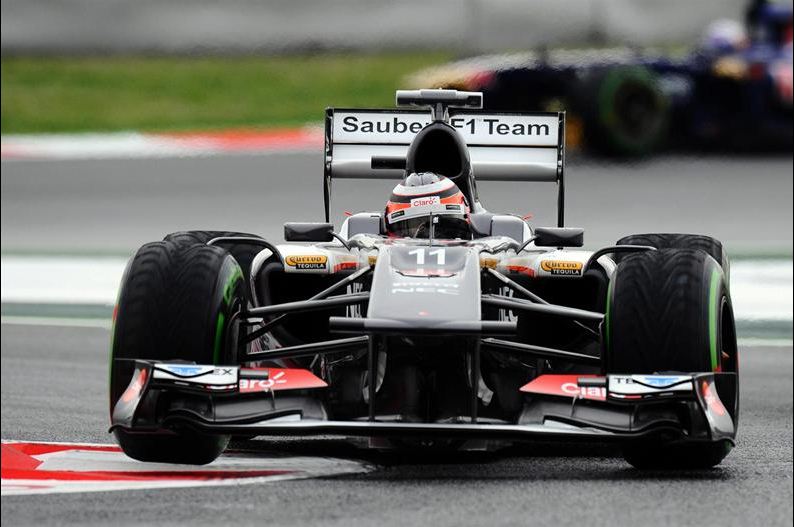
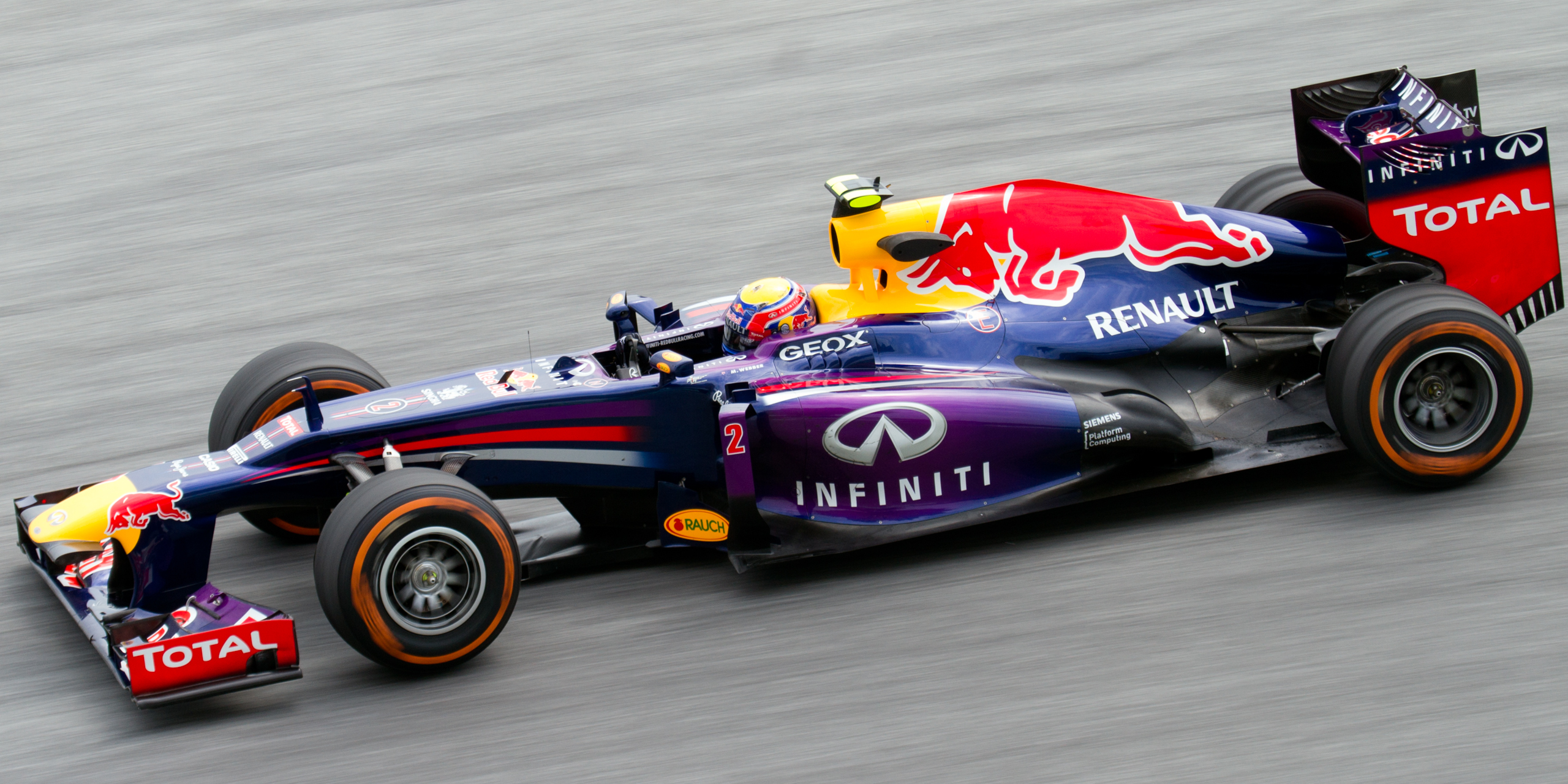
The second part of this f1 technical round up will focus on Sauber, Toro Rosso, Red Bull and Caterham.
Sauber: Sauber’s biggest change was the new rear wing. For the first few races the team ran a wing with a dipped central section. This little dip in the middle of the main plane allows for more down force but does not add to drag. They’ve tested a more conventional version in the races preceding Barcelona and have reverted to the conventional design in Barcelona.
Toro Rosso: Toro Rosso made a number of changes to the bodywork of their car. The biggest change is to the rear of the car where they’ve took a leaf from their big brother team, Red Bull, and they’ve added the cross under tunnel solution which Red Bull has had on their car since 2012. The way it works is that the air from the side of the side pod, moves around the outside of the side pod and down towards the floor, the air then moves underneath the coanda exhaust towards the central part of the rear diffuser. They exhaust exits are also very similar to the Red Bull solution. The only difference for Toro Rosso would be the Ferrari engines. The engine would make a difference in tuning the coanda exhaust to work with this solution. Another big update was the detached front side pod. This helps attach the airflow over the top of the side pod along the bodywork which better aids the coanda exhaust.
Caterham: Caterham brought an almost “B-Spec” car to the CT-03. They brought along a new side pod air flow conditioner. It is now a twin element airflow conditioner with the rear section curving around the top of the side pod and attaching to the top edge of the side pod. They’ve also added a vanity panel to the front which gets rid of the stepped nose. Another addition was the horizontal vane under the wing mirrors. This little vane creates a vortex that will attaches the airflow to the top of the side pods.
Red Bull: There weren’t that many updates that were reported on the Red Bull car. One of the updates was to their rear wing. They’ve gone from curved rear wing end plate louvres to more horizontal louvres. This brings them in line with the other teams on the grid. They’ve also made some changes to the rear of the car. More specifically around the rear wheels/exhaust area. They’ve added and additional vane on the floor ahead of the rear wheels. These vanes “catch” the air flow off the tyres due to the tyres’ rotation (tyre squirt) and channel the air towards the rear of the car. This does help to minimise tyre squirt, but it’s not a cure.
This coming week see’s the Formula 1 circus head to Monaco. We can expect to see lots of additional wings and vanes on the front wings of the cars all to get that extra bit of down force. We can also expect to see heavily raked rear wings, anything for extra down force. Mercedes will be quite strong here as they are quite strong with the slow speed corners and we cant discount Red Bull.
Pirelli’s planned ‘tweaks’ to the 2013 tyres from the Canadian GP onwards has been reigned in by the FIA.
A ruling made by the sport’s governing body has stipulated that it will only allow changes to be made to the tyres on the grounds of safety. As a result the expected changes will be less significant that intially planned.
The FIA has clearly stated that it will not accept changes aimed at cutting down on the number of pitstops much less to reduce tyre degradation. Instead of reverting back to 2012 specification tyres Pirelli have been instructed to make adjustment to the current specification of tyres.
Article 12.6.3 of the technical regulations have been cited by the FIA with regard to their decision. The rule states:
“Tyre specifications will be determined by the FIA no later than 1 September of the previous season. Once determined in this way, the specification of the tyres will not be changed during the championship season without the agreement of all competing teams.”
There is however a different clause within the regulations which states that changes could be introduced “if the tyres are deemed by the tyre supplier and technical delegate as technically unsuitable.” But the FIA is adamant that the current ‘issues’ with the 2013 tyres falls within the purview of this rule.
Pirelli motosport director Paul Hembery admitted that the changes to the tyres would now be of a more modest nature. “Let’s wait and see exactly what changes we will be making, but we are doing everything we can to minimise what will be different,” he said.
The prospective changes were expected to benefit teams such as Mercedes and Red Bull who have been struggling to get on top of the tyres. In contrast, Ferrari and Lotus will breathe a sigh of relief as they look to maintain their tyre advantage.
Ted Kravitz of Sky Sports F1 gives us a brief overview of all the updates that were brought to Barcelona by the teams and focuses on the rather interesting one’s.
Red Bull Racing advisor, Dr Helmut Marko, has reiterated his dissatisfaction with the current F1 tyre situation and has called for further tyre changes from Pirelli.
Despite ongoing pressure from Red Bull and other teams, Pirelli has stood their ground and announced that they will only be making a minor tweak to the ‘hard’ compound tyre for next month’s Spanish Grand Prix, and beyond.
Marko told a group of journalists at the Red Bull Ring in Austria, “We want a tyre that does not restrict our potential.”
“It should be that you are able to get the maximum out of your car. Currently it is a compromise, the car has to be adjusted to minimise pit-stops.”
Marko went on to argue that the Pirelli tyres are punishing the best of the cars on the grid – like Red Bull’s RB9.
He went on to say that the team had two top drivers, “which is not cheap.”
“To tell your drivers that they are not allowed to drive some corners properly is not easy,” he added. “This distorts competition.”
Despite their complaints, Red Bull hold a 16 point lead in the Constructors’ World Championship – ahead of their nearest rivals, the Lotus F1 team.
In 2009 Brawn GP had the double diffuser, in 2010 McLaren had the F-Duct, 2011 saw Red Bull pioneer and perfect exhaust blown diffusers. In 2012 we had Mercedes bring out the Double DRS. Every year in Formula One there is a new development that one team brings out and is touted as a game changer, which naturally teams complain about the legality of such a device, but eventually end up copying.
The Lotus F1 team uses the FRIC suspension. Photo: Lotus F1 team
It is no different in 2013. The new development this season is the FRIC suspension. FRIC stands for Front and Rear Interlinked suspension, which is being used by Mercedes and Lotus as far as we can tell. The basic principle behind FRIC suspension is to essentially keep the car at a constant ride height under braking, acceleration and during cornering.
This is not a new technology, it’s merely a redevelopment of the early active suspension that Williams ran on their FW14 and FW14B in the early 1990’s, which was subsequently banned for the 1994 season.
The only difference between today’s FRIC system and Williams’ is that the FRIC system is totally passive and it is not controlled by any electronics. Which makes it perfectly legal and falls within the FIA technical regulations.
The FRIC suspension controls the pitch and roll of the car. Pitch is when a car’s nose dives under braking, the weight and balance of the car gets transferred forward. During acceleration the weight and balance of the car shifts towards the rear, the nose of the car lifts up. Roll is when a car corners the weight and balance of the car gets transferred to the opposite direction of the turn. I.e. if you’re turning right, the weight and balance of the car gets transferred to the left and vice versa.
The FRIC system passively controls the pitch and roll of the car by moving hydraulic fluid through a series of pipes, valves and cylinders to keep the car at a constant ride height.
Sergio Perez may have been thrown in the deep end says Reynard Gelderblom. Photo: Mclaren.com
Sergio Perez certainly caused a few Formula One fan’s hearts to skip a few beats during the Bahrain Grand Prix. Reynard Gelderblom sent us his thoughts on how raw, young talent is introduced to front running teams and how we can avoid such hot-headed rough-around-the edges type racing in future.
A new hope in reckless abandon
The 2013 Bahrain Grand Prix was for sure a cracker of a race. Sebastian Vettel, Kimi Raikkonen and Romain Grosjean drove their way to well deserved podium finishes. Paul Di Resta showed great heart and fight – in many ways he was my driver of the day.
For some teams, it didn’t go as planned: Mercedes didn’t deliver on their qualifying pace and by now I’m sure you’ll get shot for uttering the word “wing” in the Ferrari garage. For others, it almost ended in tears: As if McLaren doesn’t have enough issues with pace to take back to the drawing board, they’ll certainly need to address another issue that came up during the last two races – Sergio Perez.
Perez showed pace during the early part of the 2012 season and with Lewis Hamilton’s departure, he finally got his rewards when McLaren signed him as replacement. The problem is, since his podium in Monza, he’s gone right off the boil.
A promising start to the 2012 season was concluded with some silly incidents and fairly mediocre finishes. Things didn’t start off too well at McLaren either. Constantly being outdone by team mate Jenson Button brought on some questions over his head as early as the Malaysian Grand Prix… but wait, it got worse when we got to China.
In the early stages of the Chinese GP, Raikkonen became the victim of Perez weaving around excessively. Given that the damage was minimal this didn’t end up being too big an issue, but then we got to Bahrain. After having another fairly quiet first half of the race, Perez in the second half can at best be described as an utter lunatic.
Now don’t get me wrong, I’m all for a good inter-team mate rivalry but a hot-headed, hammer and nail assault is hardly what you call good sportsmanship. Granted, Perez may be starting to feel the pressure, but there are surely more suitable ways to show that you belong in a top team like McLaren.
This however does beg the question, how are future prospects being prepared for when they step up to a front running team. Didn’t we see this before? Felipe Massa was certainly a bit rough around the edges when he moved to Ferrari and I’m sure we’ll never forget Romain Grosjean during the early part of 2012. So much time and money is spent on new technology by all the teams each year, but are they making sure that the people they entrust this to are properly prepared to control it?
Red Bull will certainly claim to have the right answer with the Torro Rosso team, yet we’ve only really seen Vettel progressing to the flagship team. Perhaps this is a good time to reintroduce the third car for Friday’s second free practice session where the third driver gets an opportunity. Maybe it’s time to look at a mentoring system where young guns get to spend some time with former drivers during the race weekend. I’ve never driven an F1 car so I don’t have any real answers, but I do have some valid questions.
To me, it just looks like we’re taking tomorrow’s talent and tossing them into the deep end – like coins into a wish pond.