
Mario Isola details the tyre choices for the German Grand Prix at the Nurburgring and gives us a brief explanation about tyre marbles and when the track rubbers in
Tag: pirelli
-

F1 2013 Tyre Update: Pirelli ringing the changes
Pirelli will introduce completely new tyres for the 2013 Hungarian grand prix.
The announcement comes after the Italian tyre manufacturer was put in the spotlight with several tyre failures during the Silverstone grand prix. The all new tyres, which will feature 2012 construction combined with 2013 compounds, will be introduced for Hungarian grand prix. These new tyres will be tested at the young driver’s test at Silverstone in mid-July.
For the immediate future, and this weekend’s German grand prix, teams will be provided with the kevlar-belted rear tyres that were tested at the Canadian grand prix. Teams will also be banned from swapping left and right tyres and strict limitations will be placed on camber and tyre pressures. Pirelli believe that a combination of these factors were to blame for the spectacular failures at the British grand prix.
 To prevent a repeat of the failures Pirelli have requested that their engineers be allowed access to real time tyre data, including pressures and cambers, during a race. “What happened at Silverstone was completely unexpected and it was the first time that anything like this has ever occurred in more than a century of Pirelli in motorsport,” said Pirelli motorsport director Paul Hembery.
“These incidents, which have upset us greatly, have stressed the urgency of the changes that we already suggested – which will be introduced for free practice in Germany on Friday.
“We would like to acknowledge the willingness of the FIA, FOM, teams, and drivers to act quickly to find an immediate solution to the problem.
“In particular, the adoption of winter tests, arranged with the FIA, that are more suitable for tyre development, and the possibility of carrying out in-season testing will contribute to the realisation of tyres with increasingly improved standards of safety and performance.”
Hembery went on to stress that the Pirelli tyres are safe for use. “I’d like to re-emphasise the fact that the 2013 range of tyres, used in the correct way, is completely safe,” he said.
-
2013 Young Driver’s Test – FIA set out the rules
 Formula 1’s govering body, the FIA, has announced that it will send its own observers to this month’s young driver’s test.
The recent Mercedes-tyregate debacle has prompted the FIA to appoint a ‘security guard’ to ensure that no current race drivers do any work on car development. On the back of multiple tyre failures at the British grand prix the governing body changed testing regulations to allow for the regular race drivers to help out with the tyre work at the test. The Silverstone grand prix circuit will be used from July 17 – 19 for the test.
However, the FIA has stipulated that no current race driver will be only be allowed to work on an emergency testing programme for tyre manufacturer Pirelli. The observers will scrutinise the running programs of every team to ensure that all development work is done by the ‘young’ driver who still be present at the test.
Pirelli also has two further private tests planned in the coming weeks for which the FIA have told Pirelli motorsport director, Paul Hembery, that it would be willing to allow the tyre company to use a 2013 car if required.
-
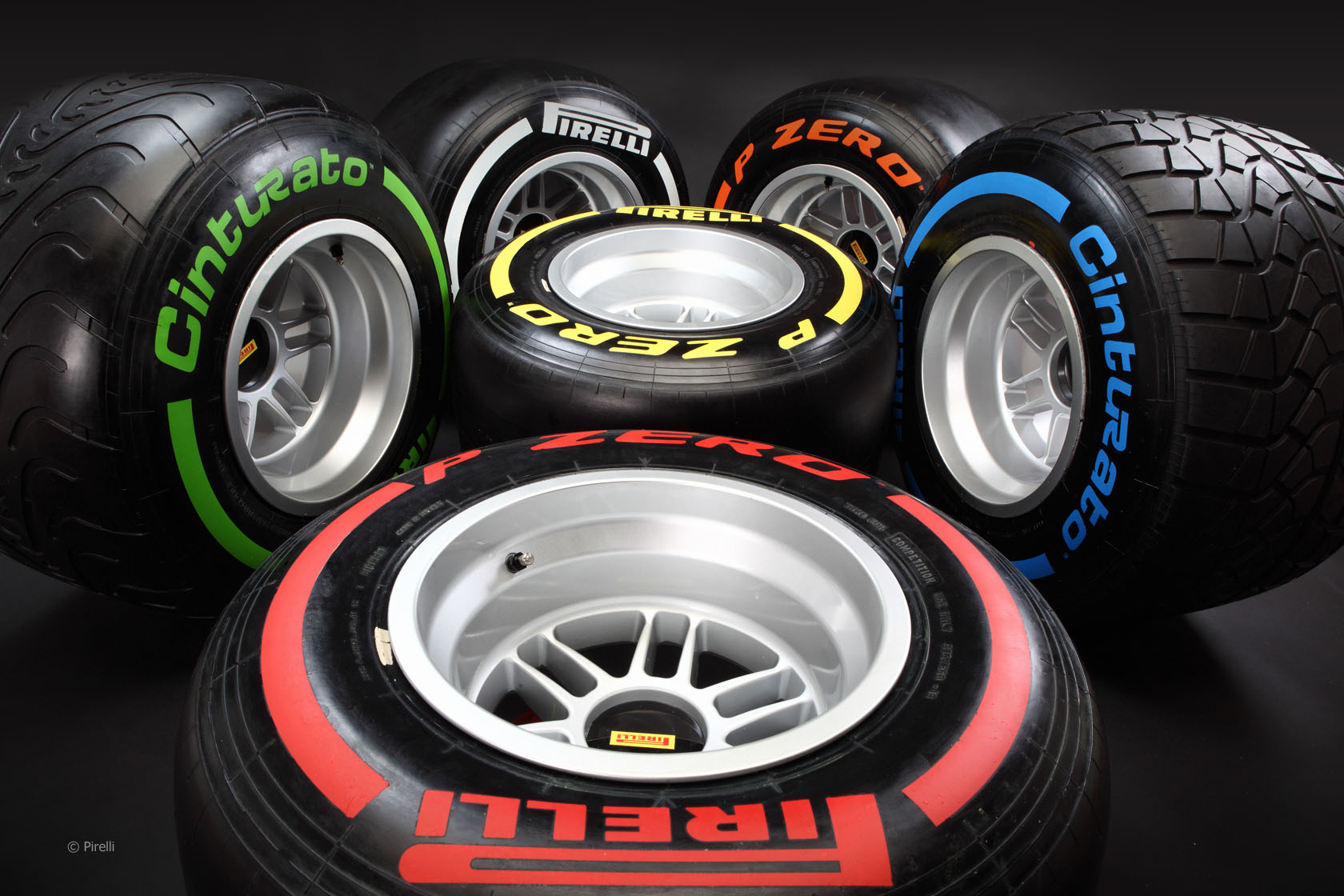
Let’s talk tyres … again – a fan’s perspective by @Reynardg
Reynard Gelderblom, Motorsport Editor of Streetmotion, sent us his perspective on the entire tyre debacle.
We’d love to hear your thoughts too! Let us know what you think in the comments below, or let us know if you’d like us to publish your opinion too.
Here’s what Reynard had to say:
I’m starting to feel like I’ve become a stuck record, but yet again the topic after the race is tyres. In fact, I’ve mentioned the name Pirelli so much during the 2013 season that I should start asking them to pay me for doing so.
With F1 moving back to a purpose-built racing circuit for the first time since Barcelona and the controversial ‘testgate’ scandal, everyone was waiting in anticipation to see what Mercedes would’ve gained. With the penalty for their part in this being nothing more than an eighth grade teacher telling you “If I catch you smoking behind the rugby pavilion again…”.
Lewis Hamilton and Nico Rosberg ensured a Mercedes front row, but we’ve seen them strong in qualifying before this season. Soon after the start, Hamilton’s left rear tyre called it a day with what seemed to be a puncture and a dramatic delamination. One lap later Ferrari’s Felipe Massa’s left rear did the same at almost the same spot.
 “Okay, debris on the circuit or something about that curb” is what we thought. A few laps later Jean-Eric Vergne’s left rear and our theory blew out at the end of a straight. After the first round of pitstops, Red Bull reported something that resembled cuts in the left rear tyre that came off Sebastian Vettel’s car. Then the news broke that the general talk in the paddock was that this might be caused by the heat generated on the faster straights. Near the end of the race, McLaren who already had a bad weekend, suffered another blow out with Sergio Perez.
Earlier in 2013, I said the FIA asked Pirelli to supply a tyre which won’t last till half race distance, but I don’t think that anyone wanted anything like what we’ve seen at Silverstone. This has taken the tyre concerns from being something for the teams to work around, to being something outright dangerous. After everything that has been said over the secret tests with Mercedes at Barcelona, you at least would think that 1 000km of testing with a 2013 car would’ve provided some valuable data for further development.
Shortly after the GP, Pirelli came out with a statement that the new bonding process is not to blame for this, although they themselves appear to be clueless for now on possible causes.
Or do they just prefer to remain quiet? The FIA still needs to announce the sole tyre supplier for 2014. Hankook is one of the names which have been mentioned, but there is speculation that the FIA would love to see Michelin back in F1 in the near future. However, despite no contract yet, changing tyre leftovers may prove to be a bit easier than changing a tyre supplier. The money and advertising aspect alone would provide Pirelli with enough grounds for a better day in court than at the races.
With only six months remaining in the 2013 season, there’s not nearly enough time to start a legitimate tender process and then still expect a manufacturer to come up with something which will be reliable. So the immediate future of Pirelli in F1 may not be as uncertain as we would like to think.
A suitable solution needs to be found though – and soon. With fast circuit races like the Belgium, Italian and Indian GPs coming up I’m sure I’m not the only one who wouldn’t like to see a repeat of what we saw at Silverstone.
Even the night race in Singapore features some fairly fast straights for a street circuit and the bumpy surface at the Brazilian GP with it’s fast main straight could be a genuine reason for concern.
Nor would I think anyone would like to see a repeat of the 2005 USA GP when teams participated in a strike action due to safety issues relating from tyres, but you have to ask: With drivers putting their lives on the line at more than 300km/h, and having to rely on the equipment they’ve been given – how far are we away from someone saying “I’m boxing this lap, these tyres are unsafe”?
An even worse thought – are we going to have to see someone die on a live TV broadcast before we start coming up with ideas on how this could’ve been prevented?
Surely the British GP served as a stark warning that for the safety of all the competitors and spectators involved, someone should come up with answers and solutions that are better than extra sets of tyres or controversial secret tests.
Hopefully the questions of when something is going to be done about this will only be asked by happy fans next to a bar counter and not by a crying family member next to an open grave.
Reynard Gelderblom is the motorsport editor for Street Motion.
Keep up to date with the latest local motorsport news by following Street Motion on Twitter.

-

Pirelli: full statement regarding the Silverstone debacle
Pirelli has issued the following statement tonight, regarding what happened at Silverstone – and what they plan to do next.
After exhaustive analysis of the tyres used at Silverstone, Pirelli has concluded that the causes of the failures were principally down to a combination of the following factors:
1) Rear tyres that were mounted the wrong way round: in other words, the right hand tyre being placed where the left hand one should be and vice versa, on the cars that suffered failures. The tyres supplied this year have an asymmetric structure, which means that they are not designed to be interchangeable. The sidewalls are designed in such a way to deal with specific loads on the internal and external sides of the tyre. So swapping the tyres round has an effect on how they work in certain conditions. In particular, the external part is designed to cope with the very high loads that are generated while cornering at a circuit as demanding as Silverstone, with its rapid left-hand bends and some kerbs that are particularly aggressive.
2) The use of tyre pressures that were excessively low or in any case lower than those indicated by Pirelli. Under-inflating the tyres means that the tyre is subjected to more stressful working conditions.
3) The use of extreme camber angles.
4) Kerbing that was particularly aggressive on fast corners, such as that on turn four at Silverstone, which was the scene of most of the failures. Consequently it was the left-rear tyres that were affected.
The only problems that had come to light before Silverstone were to do with delamination, which was a completely different phenomenon. To stop these delaminations Pirelli found a solution by suggesting that the teams use the tyres that were tried out in Canada from Silverstone onwards. When this proposal was not accepted, Pirelli found another solution through laboratory testing, with a different bonding process to attach the tread to the carcass. So the problem of delamination has nothing at all to do with what was seen in Great Britain.
Following the conclusions of this analysis, Pirelli would like to underline that:
1) Mounting the tyres the wrong way round is a practice that was nonetheless underestimated by everybody: above all Pirelli, which did not forbid this.
2) In the same way, under-inflation of the tyres and extreme camber settings, over which Pirelli has no control, are choices that can be dangerous under certain circumstances. Because of this, Pirelli has asked the FIA for these parameters will be a topic of accurate and future examinations. Pirelli has also asked for compliance with these rules to be checked by a dedicated delegate.
3) Pirelli would also like to underline that the 2013 tyre range does not compromise driver safety in any way if used in the correct manner, and that it meets all the safety standards requested by the FIA.
 The logical conclusion is that it is essential for tyres with the performance and technical sophistication of the 2013 range to be regulated and carefully controlled by Pirelli itself. In order to ensure the optimal functioning of the tyres, the Italian firm would need real-time data from the teams regarding fundamental parameters such as pressure, temperature and camber angles. While waiting for new regulations that would permit Pirelli access to this data, vital for the development and management of these state-of-the-art tyres, the following measures are proposed for the forthcoming grands prix, in agreement with the FIA, FOM, the teams and the drivers:
1) The use of the evolution of the current tyre that was tested in Canada (and proved to be completely reliable) for the German Grand Prix this weekend. This represents the best match for the technical characteristics of the Nurburgring circuit. In particular, the rear tyres that will be used at the German Grand Prix, which takes place on July 7, have a Kevlar construction that replaces the current steel structure and the re-introduction of the 2012 belt, to ensure maximum stability and roadholding. Given that these tyres are asymmetric as well, it will be strictly forbidden to swap them round. The front tyres, by contrast, will remain unaltered.
2) From the Hungarian Grand Prix onwards, the introduction of a new range of tyres. The new tyres will have a symmetrical structure, designed to guarantee maximum safety even without access to tyre data – which however is essential for the optimal function of the more sophisticated 2013 tyres. The tyres that will be used for the Hungarian Grand Prix onwards will combine the characteristics of the 2012 tyres with the performance of the 2013 compounds. Essentially, the new tyres will have a structure, construction and belt identical to that of 2012, which ensured maximum performance and safety. The compounds will be the same as those used throughout 2013, which guaranteed faster lap times and a wider working range. This new specification, as agreed with the FIA, will be tested on-track together with the teams and their 2013 cars at Silverstone from 17-19 July in a session with the race drivers during the young driver test. These tests will contribute to the definitive development of the new range of tyres, giving teams the opportunity to carry out the appropriate set-up work on their cars.
What do you think about Pirelli’s statement? Is it reasonable to be shifting the blame to the teams? What are your thoughts? Leave us a comment below.
-
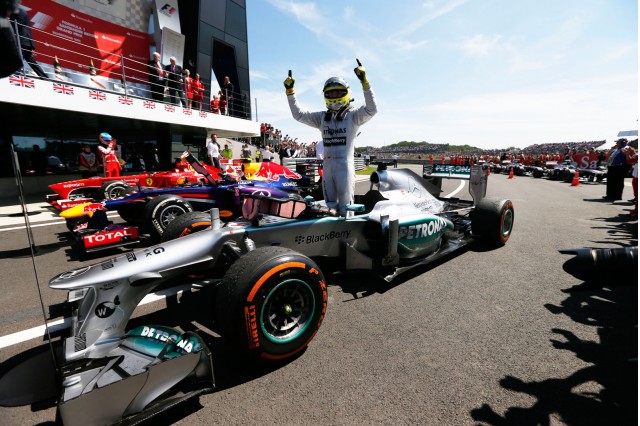
F1 2013: British GP Review – Rosberg tops at dramatic Silverstone
Formula 1 in 2013 hasn’t been short of drama but it well and truly ramped up for the eighth round of the season at Britain’s Silverstone grand prix.
It was home-grown hero Lewis Hamilton who thrashed the field to take only his second pole position at the famous circuit. The margin between the 2008 champion and teammate Rosberg was the biggest it had been all season as Mercedes locked out the front row of the grid. Sebastian Vettel was ever present in third ahead of retiring teammate, Mark Webber.
Force India’s Paul Di Resta delivered an excellent lap for fifth but would later be excluded from qualifying for an underweight car. The Lotus of Kimi Raikkonen and Ferrari of Fernando Alonso seemed to struggle in qualifying trim as the duo only managed to start eighth and ninth.
Lewis Hamilton led cleanly away from pole position as Vettel slotted into third ahead of Rosberg. Mark Webber’s race was made a lot tougher after a clash with Romain Grosjean left the Australian with damage to the front-wing. A bit of damage to a front-wing would be the least dramatic issue of the day.Lewis Hamilton easily in the lead of the race and steadily building a gap over Vettel would become the first driver to suffer a left rear tyre blowout. The Pirelli tyre seemed to completely disintegrate without any indication whatsoever. Somehow Hamilton was able to return his Mercedes to the pits but his chances of victory had been thrown out the window.
It looked like horrible luck for Hamilton until two laps later Felipe Massa’s Ferrari suffered the exact same failure. Jean-Eric Vergne became the third driver to suffer a tyre blow-out on lap 15 as his left rear spectacularly exploded on the Hangar straight.
The Toro Rosso driver’s tyre failure brought out the safety car as debris from the blowout littered the circuit. McLaren’s Sergio Perez would be the final driver to suffer an identical tyre blow-out on lap 46. At this point drivers were being told to avoid the kerbs in case they were the cause for the tyre problems. But Fernando Alonso didn’t share the same opinion after the race. “I have been racing here 12 years & never had this problem (tyre). I think the kerbs were perfectly ok,” said the Ferrari driver.
Racing resumed on lap 22 with no certainty of whose Pirelli could fail next but there was still a race to be had as Vettel led Rosberg over the start/finish line. The Red Bull driver extended his advantage over Rosberg to two seconds but the Mercedes driver was gradually starting chip away at his lead. Rosberg wasn’t required to do much more work in catching Vettel as the reigning world champion’s car grinded to a halt at the pit entry with a gearbox failure.
The stricken Red Bull prompted another safety car and Rosberg, Webber and Alonso dived into the pitlane for a fresh set of medium tyres. The only front-running driver not to take a fresh set of tyres was Kimi Raikkonen.
 Raikkonen was running second when he asked his team why they had not called him into the pits for fresh tyres. The Lotus pitwall had roughly half a lap behind the safety car to decide on a pitstop but responded to Raikkonen’s question with “I don’t know” and “It’s too late now.” On a day when championship leader Vettel failed to score any points the Lotus pitwall destroyed what could have been a significant gain in the championship stakes. Raikkonen eventually finished fifth, defenceless on hard tyres he had put on twenty laps earlier. It is on moments like this that championships are lost and won.
Mark Webber’s announcement of his retirement at the end of the season sent the rumours of Raikkonen joining the Red Bull team into overdrive. Lotus team principal Eric Boullier has said that they are doing everything they can to keep the Finn in the team. He believes that the ‘atmosphere’ within the team is enough to make Raikkonen stay put – it isn’t. During his two year hiatus from Formula 1 the Iceman let it be known that he is only interested in winning races – not fighting for second. The doubt is whether Lotus can consistently deliver up to that standard. Mistakes such as this will surely make Raikkonen’s decision to stay or leave a lot less difficult. Lotus are a good team but many suggest that the only thing making them great is Kimi Raikkonen. Since his return to Formula 1 he hasn’t put a wheel wrong and he has rekindled a kind of speed and driving class second to none. Give this guy what he needs and he will win you a world championship. Lotus’ mistakes could be more costly than they expect.
Mark Webber, recovered from front-wing damage, charged through the field in the closing laps to within seven tenths of race leader Rosberg. Similarly, Fernando Alonso’s fresh tyres allowed him pass several cars and finish third overall. Fernando Alonso was happy to salvage third place on a weekend where Ferrari look decidedly off the pace but called on his team to ‘raise their game’ in the coming races.
 Nico Rosberg inherited the lead of the race but he won the British GP on pure merit. Never putting a wheel wrong he soaked up the late-race pressure from Webber like a pro. Career victory number three was well deserved for the most improved driver of 2013.
 The Pirelli tyregate saga took a very dramatic turn during the British GP prompting the teams to angrily demand answers from the Italian tyre supplier. So serious was the tyre situation that race director Charlie Whiting admitted post-race that he was close to putting out the red flag.
Paul Hembery has failed to appear at press conferences at the last two races but at some point Pirelli and their motorsport director will have to face the music. Pirelli have been invited, by FIA President Jean Todt, to attend the Sporting Working Committee meeting at the Nurburgring next week in order to find a solution to the tyre problems.
The teams are now pushing for next month’s young driver’s test to be scrapped in favour of a fully fledged tyre test.
-
Formula One teams demand urgent action over Pirelli tyre failures
Formula One team bosses are demanding urgent action over the Pirelli tyre failures suffered during today’s F1 British Grand Prix at Silverstone.
According to McLaren team principal, Martin Whitmarsh, Formula One is in a “serious situation” as work needs to be done to come up with an urgent solution to the Pirelli tyre crisis witnessed at today’s race.
Meetings are scheduled for the upcoming week, including a Sporting Working Committee meeting on Wednesday but Whitmarsh has added to the sentiments of Charlie Whiting, saying that urgent action is required even before that.
“We clearly have a serious situation where we have to act responsibly, and respect Pirelli,” said Whitmarsh. “They have to do the best they can. We have to make a decision urgently, as it gives you a much better chance than talking about it on Wednesday when you want to drive out of the garage Friday.”
Whitmarsh said that the only way to avoid a repeat of the drama at the German Grand Prix next weekend, would be to revert to last year’s tyres.
“In 2012 we were not having this problem,” he said. “Therefore, if that is a known, established, durable specification, you would have thought that is the easiest thing to do.”Red Bull boss, Christian Horner has backed Whitmarsh’s view saying, “The most logical thing would be to go back to the tyres that worked well for them previously. The tyres they had last year did not have these failures. They need to find a solution, and they need to address it. Whether they go back to last year’s car or a different tyre they need a solution.”
Lotus team principal Eric Boullier also seems to think reverting to the 2012 rubber is a possible solution saying, “Going back to the Kevlar belt from last year would be one solution. I don’t know what they have in stock and how quick they can produce tyres. That is a question for Pirelli. It is a different track lay-out next weekend and first we need to find out what is causing these failures. But it is a concern.”
-

Pirelli say new bonding process not at fault
Pirelli have released a statement following the British F1 Grand Prix saying that they will closely investigate the cause of the left rear tyre failures during today’s Silverstone Grand Prix and that the new bonding process is not at fault.
Here is the full statement from Pirelli:
TYRE FAILURES TO BE CLOSELY EXAMINED NEW BONDING PROCESS NOT AT FAULT
Silverstone, June 30, 2013 – Nico Rosberg has given Mercedes its first victory in the British Grand Prix since 1955 with first place at Silverstone.
The were a number of rear-left tyre failures during the race, which affected Mercedes driver Lewis Hamilton, Felipe Massa (Ferrari), Jean-Eric Vergne (Toro Rosso) and Sergio Perez (McLaren). Pirelli engineers will investigate closely the cause of the failures ahead of next week’s German Grand Prix.
Pirelli’s motorsport director Paul Hembery said: “There have obviously been some issues with rear-left tyre failures which we have not seen before. We are taking the situation very seriously and we are currently investigating all tyres to determine the cause as soon as possible, ahead of the next Grand Prix in Germany. At the moment, we can’t really say much more until we have fully investigated and analysed all of these incidents, which is our top priority. However, we can exclude that the new bonding process, which we introduced at this race, is at cause for the tyre failures we have seen today. There might be some aspect to this circuit that impacts specifically on the latest version of our 2013 specification tyres but at this point we do not want to speculate but will now put together all the evidence to find out what happened and then take appropriate next steps should these be required.” -
Charlie Whiting says “I almost red-flagged the race”
Formula One Race director Charlie Whiting said today that he “almost red-flagged the race” referring to today’s British Grand Prix which saw four tyre delamanations during the race.
The safety car was deployed after the third tyre blow-out, suffered by Jean Eric-Vergne. Charlie said that not only were the drivers in danger, but the marshals too were being put at risk as they continually tried to clean up all the debris following the incidents.
“It was quite close to being red-flagged; it did occur to me to do that,” he said. “To clear up all the debris was putting marshals at risk, and it is not satisfactory. We haven’t seen a failure like this before – and that is what has been addressed. So we need to analyse it very carefully to see if we are able to establish the cause.”He went on to say that it was, “too early to draw conclusions” regarding the cause of the tyre issues but hinted that tyres that did not fail could provide vital information in Pirelli’s analysis.
“They have a lot of analysing to do. This includes the tyres that didn’t fail, because maybe we will find something there that was on the verge
of failing that will give us a better indicator of what happened.”Charlie added that although the failures are to be discussed at a meeting of the Sporting Working Group on Wednesday, a solution must be found in advance, that suits all parties since the German Grand Prix is only one week away.
-
Rosberg wins dramatic Silverstone British Grand Prix
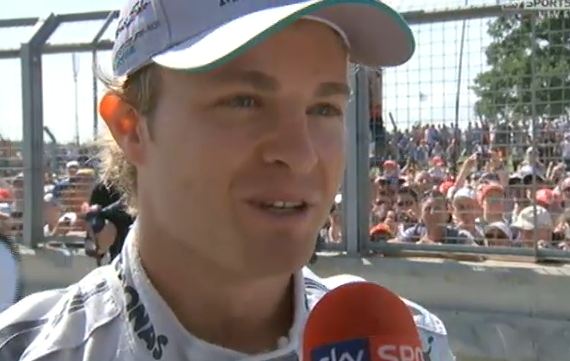
Nico Rosberg took the win at a dramatic Silverstone British Grand Prix riddled with tyre delamanations and blow outs today.
The two favourites for the win – Lewis Hamilton and Sebastian Vettel both lost their hopes of winning when Lewis suffered a tyre blow out and Vettel suffered a gearbox failure.
It was a thrilling race from start to finish but many questions will be raised around the Pirelli tyres and their safety going forward.
Full race review to follow.
Here are the results of the Silverstone F1 British Grand Prix.


