Tag: pat symonds

  • 2016 Formula 1 Japanese Grand Prix: Friday Press Conference

    2016 Formula 1 Japanese Grand Prix: Friday Press Conference

    TEAM REPRESENTATIVES – Ayao KOMATSU (Haas), Bob BELL (Renault), Luigi FRABONI (Ferrari), Paddy LOWE (Mercedes), Yusuke HASEGAWA (Honda), Pat SYMONDS (Williams)

    PRESS CONFERENCE

    Bob, let’s start with you: How have you been getting on rebuilding the staff at Enstone, where do you still lack and what will the effect of all this be on the 2017 car?

    Bob BELL: Well, I’m only a small piece of the team that is doing the rebuilding, as you call it, but it’s certainly a big challenger. I don’t think perhaps from the outside people realise how run down the Enstone squad had become in the last couple of years, so there’s a lot to do. As well as the process of rebuilding the team of course we had to build a car for this year and start work on an even better one for next year, which wouldn’t be terribly hard. It’s been a challenge, it continues to be so, but there’s a very strong spirit in Enstone as anybody who knows the place will testify to and we’re certainly up to the challenge.

    The updates in Malaysia made the car a lot better, with Kevin 14th on the grid and Jolyon taking his first championship point, yet some are saying that Renault has not really been making progress this year. What’s happening from your perspective and what’s the short-term plan if you like, between here and Abu Dhabi, based on what you’ve learned in the past week or two?

    BB: I think it’s probably fair to say that in the last few races our progress forward other than what the Viry guys have been able to do with the power unit, on the chassis side it’s been less to do with new bits and more to do with understanding how to get more out of what we’ve already got and we’ll continue that process until the end of the season. I’m sure like most teams we’re pretty much totally dedicated now in terms of development capacity to looking ahead to 2017.

    OK, thanks very much for that. Coming to Luigi Fraboni, head of power unit operations at Ferrari. Next season will be a token free season, what will that mean in practical terms as far as the preparation pre-season and the competition we’re going to see during the year?

    Luigi FRABONI: You know, as Ferrari, we are in favour of not having the tokens, this for us is a good thing. Of course next year you will have still the four power units so we need to follow the rule, but not have the tokens will give you more flexibility on making you plan and also on changes during the season. On our side, as you know, we already used the tokens this year so this means that we had quite a strong evolution during the season and so not having this this limit for next season is good and at the moment the development of the power unit for 2017 is proceeding quite well.

    Now, earlier in the season we had a discussion in one of these sessions about starting negotiations about the post 2020 engine formula. What’s your opinion? Do you see them being hybrid turbos, similar capacity, but what other directions would you like to see?

    LF: Honestly, at the moment I’m more focused on 2017, so I honestly don’t have any strong opinion on 2020. I would say that the rules for me are very challenging and I really like it.

    Would you like to start the discussions soon though about it?

    LG: My chairman for sure will start?

    OK, perfect. Hasegawa-san, Honda has made several updates to its power units in 2016, was the result as expected and will you be introducing any further updates before the end of the year?

    Yusuke HASEGAWA: Of course we have to shift our development for next year already, so I don’t think we can have some update for the rest of the event. But, last update, which we introduced in Malaysia, and Spa was a big update… I think we made a decent level of step up with this. We are not satisfied but we can feel a little bit happier.

    Part of the new FIA agreement regards manufacturers supplying more than one team – Eric Boullier was telling us in this conference in Malaysia it would be a good thing – but the Mercedes teams seem to be locked in to 2020, Renault has commitments with its teams, so are you feeling the need to press teams who are not yet committed?

    YH: Not yet committed, but we understand the situation, so we are preparing the organisation and we are preparing resource for that.

    To supply a second team?

    YH: Yes, that’s right.

    Komatsu-san, we’ve heard Romain Grosjean on the radio quite a bit in recent races getting quite annoyed with various aspects of the car. What’s the problem been and how are you addressing it?

    Ayao KOMATSU: Yeah, I think one of the problems is with consistency. We have very small amount of resource and a limited number of people. It’s not just getting one specification of the car – each component has to be put together really well and we have to monitor the quality and that area I think we really need to improve. Sometimes you’re putting on the same parts but the performance is not exactly the same. Sometimes our diagnostics are not good enough to understand what Romain is feeling straight away, so we really need to improve in every single area but we’re really working on that. With Romain, on the radio he’s quite an emotional guy but once he comes up in a debrief he’s very, very good. He’s got a really sense, he really helps us in understanding the car and where we need to go.

    It may just be an impression from the outside but your fortunes this season seem to have risen and fallen in parallel with Ferrari’s. Is that coincidence or is there more to it and what does that say about 2017?

    AK: For us really, trying to understand the fundamental things about the car, aerodynamics, tyres, that’s what we are focusing on, but again with our team being new, slightly inexperienced and still with all the analysis processes, data processes in their infancy we just need to start improving in those area. We really got to put our systems and process in place so we don’t have the same problems next year, so we can hit the ground running from February.

    Paddy, coming to you, can you give us a bit more detail on what failed on Hamilton’s engine in Malaysia? Was it related to having to push so hard in the middle of the race, as Red Bull would have us believe, and what have you done to mitigate against a repeat?

    Paddy LOWE: So, Lewis had a failure one of his big end bearings, at a very low mileage actually, a little over 600km, because he had three new engines from Belgium, when he took all the penalties. This was the second of those, first race Malaysia, to be used properly. It was a very young failure for that bearing and not at all typical of the model. And we were operating it within completely normal bounds. There were no parameters out of their normal range. No, he wasn’t pushing particularly hard, he was running in a normal race state at that part of the race, so totally unexpected for that reason. We are trying analyse why the bearing failed. We don’t understand it precisely. It’s very difficult on these occasions, you don’t often see it – the box of bits your get back from an engine blow-up. Very difficult to analyse that forensically and arrive at a root cause. But we’ve taken a number of precautionary changes across all eight power units that are on the grid to try to reduce the stress on that bearing.

    Now Nico Rosberg looks a different driver this year, I don’t know if you feel the same way. What changes do you see in his approach and his mentality and likewise how do you see the evolution of Hamilton?

    PL: I think Nico is an incredibly strong driver and I think we have seen over the last three years that he can qualify extremely well. I think, for me, the step that he has made this year is that he has improved his race craft considerably. He’s proving himself much better able to fight for the positions. He’s come across a few points along the way, with a few incidents that didn’t quite come off how he wanted, but overall that’s where he has made the step.

    And Lewis?

    PL: Lewis, I think he gets better every year. Very , very difficult guy to beat for Nico, so in one way that’s unfortunate for Nico to have such a strong team-mate but the two together are an incredible force for the team – they push each other. That’s what is fantastic. When you have two very strong team-mates is that they actually elevate the total performance of the team, and we see that. We have races such as Monza where Lewis was incredibly string and then Singapore where Nico was incredibly strong and that’s what you need, for each driver to push each other to new limits.

    Pat, Williams are locked in this battle with Force India, just three points in it, with five races to go. At the moment, though, they are consistently outscoring you – Monza was the only time since June that you’ve outpointed them in a grand prix. What can you point to that gives you confidence you can end this season ahead of them and launch yourselves into 2017 on the front foot?

    Pat SYMONDS: Well I think it’s going to be a close fight. They have done a great job with their upgrades this year and we appreciate that it’s not going to be an easy job. I think what we must do is ensure that we have perfect reliability and in the last race in Malaysia I thin Felipe could have been in there, in the mix – of course Valtteri beat both the Force Indias in Malaysia – but Felipe wasn’t able to join the party because of an electronics problem on the starting grid. So that sort of thing is really the sort of thing that can determine these championship fights. It’s unfortunate but I think our focus is on getting the reliability and our focus is on utilisation, because we’re not bringing big upgrades to the car – we have a small change on the front wing here. It’s really now about making sure that what we’ve got we use well, we use out tyres well, we get our strategy and our tactics right, and we take the fight right to the end.

    We’ve some quite a lot of evolution in the senior technical staff at Williams over the last couple of years, will we see more changes in technical management going forward?

    PS: We’re always looking. We are still relatively speaking a small team and we need to increase our knowledge and our capability in every way, so yes, we are looking a long way ahead now at where we might pick up people, We know we are weak in some areas, we know we have to improve in those areas, so yes, we are always on the lookout for good people.

    QUESTIONS FROM THE FLOOR

    Q: (Dieter Rencken – Racing Lines) Last Sunday a driver hinted that his car had been technically sabotaged. Is it possible in this day and age – with all the telemetry, all the data, with the long life engines and components – for a team to sabotage a driver? A question to all of you but Paddy if you don’t mind starting, I think you know why.

    PL: Yeah, I can’t agree with you that the driver hinted there was sabotage. Lewis has been very clear, certainly with us, that that’s completely out of the question. I think anybody with an ounce of intelligence analysing the situation would realize that the prospect of us designing a system that would cause a big end to fail at that precise point in the race… if we were that good we would win everything and control everything at every point. We’ve had other failures in the year that are very unfortunate and if we were good enough to arrange such sabotage we wouldn’t have any failures. It’s a very tough business Formula One. The engineering is operating right at the boundary of performance and things do go wrong. The complexity is incredible and trying to engineer something to happen on purpose on a car… it’s similar to when people say to us ‘you favour one driver over another’ and the idea that we might give better equipment to one driver or another. If we’ve invented something that makes our car quicker of course we want it on both cars, because we want to win the race. We never hold back or would ever even contemplate it, even if we could engineer it, which we couldn’t. Anyone intelligent could work that out.

    Anyone have anything to add? Hasegawa-san?

    YH: I didn’t get the question. I didn’t understand.

    I think the question was based on comments Hamilton made after he retired in the last, regarding whether or not someone or something wanted him not to win.

    PL: And interpretations of those comments.

    Q: (Abhishek Takle – Mid-Day) Question to Pat. Pat, there’s been some speculation about your future recently, including that you may be considering retiring. I wonder if you could shed some light on that for us please.

    PS: Yeah, I read that myself! I was quite surprised actually. It reminded me of Mark Twain. You will all know that Mark Twain was once taken ill while he was in London and a newspaper in New York picked up the story and actually published his obituary. He sent a very famous telegram to them, saying ‘rumours of my demise are greatly exaggerated’. I think I’d probably take the same view on my retirement.

    Q: (Daniel Johnson – The Telegraph) Question to Paddy, just returning to the previous subject. Regardless of the interpretation, Lewis did have some quite strong words on Sunday saying “I’ve got questions for Mercedes, this is unacceptable,” he said “something doesn’t feel right to me.” As the person responsible for the technical operation of the team, how hurtful is it to you and your guys even the insinuation that there may be some foul play involved?

    PL: I think the thing you have to bear in mind is that we’re all very rational people, certainly in the engineering area and we all know that you can throw three double-sixes in a row. That is possible, statistically – and yet when you see it done, emotionally you feel ‘how did that happen’. We have got a little bit of that scenario with Lewis. We have eight power units out there running around and, with the exception of one failure, they have all fallen to Lewis this year on his power unit and that is something that none of us can really understand, how things could turn out that way. But it is just the way the dice has been thrown. Things do go wrong. We understand that and it just so happens that, by pure coincidence, that has occurred repeatedly on Lewis’ car. We’re gutted about it. We just wish luck wouldn’t fall that way. Understandable that Lewis, as we all were feeling immediately after that blow-up, ‘how can that have happen again?’ Personally, I was only just getting over the idea of the consecutive failures he had in qualifying earlier in the year where already you felt the statistics had fallen very, very unfairly, and I was very happy for Lewis that he managed to recover his points back up to a place of level competition with Nico. So, y’know, it was a real blow. But we quickly try to become rational and just accept that these things happen and then you move on and look to the future.

    Q: (Sam Collins – Racecar Engineering) Question for the whole panel actually. There’s an engineering skill shortage currently in the UK which is well documented elsewhere. Is that causing problems for those of you who are actively recruiting at the moment and how do you see that developing over the next two to three years with the UK probably leaving the single market and freedom of movement and the EU, stuff like that?

    Bob, that’s a good one for you to start with, isn’t it?

    BB: What gives you the impression we’re recruiting heavily? Yeah, there is a shortage of skilled engineers, particularly if you want skilled engineers with Formula One experience and that is partially to do with the fact that most engineers in Formula One these days are locked down with long-term contracts which makes it difficult to get them at relatively short notice. I don’t think there’s necessarily a shortage of young, eager and very capable of graduates, for example, coming out of the education system. Most teams on the grid try and use that resource as much as they possibly can. And so, I think I would agree there is potentially a skill shortage but I think perhaps the difficulties that a team such as ours faces in recruiting is more to do with the difficulty of acquiring experienced F1 engineers already locked into existing teams. As for the influence of Brexit, it’s too early to tell what the consequence of that will be on the future of the supply of engineers in the UK. I think it would be great is the UK plc could develop a stronger industrial base. I think that would be good for the country and I think all of us in Formula One would be fully supportive of initiatives that helped develop that. Not only would it potentially provide more engineering candidates for us in recruitment – but I think it would be good for the country as a whole. But ultimately, what happens, post-Brexit, I don’t think any of us can really tell.

    Pat, your thoughts?

    PS: Yeah, I think I agree with what Bob said. In spite of what I said earlier about always looking for talent, we’re not a team that’s expanding rapidly in the same way that Renault are. We do run a very strong undergraduate program and I am continually amazed at the quality of the undergraduates that go through our team. They really are very strong indeed. And, of course, the undergraduate schemes are very good because they give us a chance to have a sort-of extended interview with people. We also run graduate schemes. We sometimes take on those that have been on the undergraduate scheme, sometimes others. We don’t find a problem at that level. We get very good people coming in. I do agree that getting the senior people is quite difficult. People are on long-term contracts, and we put a lot of time at Williams into succession planning. So we do try to look quite a long way ahead at where things are going. In terms of Britain leaving the European Union, I think it is too early to tell how it will be. We do employ a lot of Europeans. We have particularly in aerodynamics, there seems to be a very strong contingent from France. I hope that we still maintain relative ease of employing Europeans. It’s already very difficult to employ non-Europeans in the UK. In my opinion far too difficult. So I hope things don’t get any worse.

    Hasegawa-san, do you have a view on this? You were nodding a couple of times through what Pat was saying.

    YH: Yeah, actually I don’t know the exact situation but we have already concern about the effect of the Brexit. Maybe we can answer from the different aspect. It is obvious that we have a lot of good engineers from the UK but also the reason Honda is doing the Formula One is that we have to educate Asian engineers as well, so that we have to take this opportunity to hire more good engineers. But of course we always appreciate that the UK is very open to the world about this even. We don’t want to, I don’t want to lose this situation, so please minimize this effect of the Brexit. This is not place that we have to ask about.

    Paddy, anything to add?

    PL: I think we’re very fortunate in Formula One that it’s seen as a very attractive destination for engineers. That wasn’t the case in the past. We have things like Formula Student that have created a greater awareness of the sport and the engineering within it particularly. And I think because of that we have become increasingly international in the staff that we recruit – from Europe and also further afield. So, I see that continuing to grow. It is a great engineering activity. Formula One achieves great things and it is all about engineering. So I would like to see that develop in the future – and perhaps with Brexit we can become even more international. Maybe there’s a positive side to it. I hope that the UK would see Formula One as a particularly successful industry within the UK itself and therefore would see a way to making that work.

    Ayao, anything to add?

    AK: No. We’re  growing at the moment but so far we’re happy with our recruiting a mixture of young and experienced. No complaints really. It’s good.

    Luigi, you’re not based in the UK but anything to add?

    LF: No, nothing to add.

    Q: (Dieter Rencken – Racing Lines) Question to Bob. Bob, obviously a global automotive brand like Renault cannot be seen to running around in tenth place and being ecstatic when they score a point – but given the difficulties you outlined earlier on, particularly the way that the infrastructure imploded, what sort of objectives has Mr Ghosn set the team regarding regular points-scoring, podiums, wins and then championships. And do you think they’re achievable?

    BB: Yeah. Of course corporately we’re not satisfied running around in tenth place and scoring single points. Actually that single point meant a lot to us. I’ve won a lot of points in Formula One over the years and that point meant more to me than perhaps any other. It’s a great motivator and it really lifted team moral so actually it was quite an important achievement. Moving beyond that, Mr Ghosn is very clear in his objectives for the team. He’s not here to make up the numbers, he’s here to see the team succeed. He also, of course, has been through this cycle before and he knows what it takes and how long it takes to achieve that and he’s set us realistic objectives that are in line with that. Next year the obvious step forward for us is to move into the midfield and be competitive there. 2018 to be looking at podiums and so on, and then out beyond that, four, five years hence, looking at a proper championship-winning campaign. No rocket science in that. If you look at history, if you look at what it took when Red Bull bought Jaguar, when Renault previously bought Benetton or when Mercedes bought Brawn it took five years in each instance for them to win a championship. That’s the sort of timescale, the sort of road map we’ve set ourselves. I think it’s realistic and it’s in line with corporate expectation.

    Q: (Gaeton Vigneron – RTBF) Question for Yusuke Hasugawa: Stoffel Vandoorne will be in your car next year; what do you expect from him and having raced this year in SuperFormula does that facilitate his adaptation to the Japanese way of working?

    YH: Simply speaking, he’s very good and he’s very clever and he’s always calm, especially in Bahrain. I was very surprised how quickly he suited to the new car. Although he was joining some tests in the winter, I think Bahrain was the first moment he drove this year’s car but he did a great job. Of course he’s a very good driver but other than that, he’s very calm and stable. It is a very great point, I think.

    Q: And on the point about him racing here in Japan this year, culturally, in terms of working?

    YH: Yes, I think so. He started to be around the Japanese culture and how do we feel and how difficult it is to communicate with Japanese people. I think it will be a great help for us as well.

    Q: (Dieter Rencken – Racing Lines) To all of you: there’s a debate at the moment about tyre testing in February, whether to go to Barcelona or Bahrain, go to both etc etc. There are also some suggestions that people are more worried about engine cooling than they are about the tyre testing because they say the tyres can’t really be changed much after the tyre test in any event. Where do your individual teams stand on this question?

    PL: Yes, so the situation is that we have the biggest change in tyre regulations probably for one or two decades and Pirelli have asked the FIA if they would support testing in Bahrain, which is outside Europe. So by regulation it requires a process to get there. So as I understand, a majority of teams support that request. For me, the important point that Pirelli were asking for is some hot condition testing of the compounds particularly. The structure of the tyre is created and tested in the lab but the compounds they can only evaluate in real circuit conditions and unfortunately the mule car programme which is running at the moment has delivered three cars which are very helpful to the process but they are not delivering the level of aerodynamic load that will be seen next year. So for me it’s a matter of supporting Pirelli’s request to contain the risk of arriving at the first race as being the first event with hot conditions and there’s real risk to the show. We’ve seen what can happen , for example, in Indianapolis 2005. We mustn’t forget that we need to put on a show, we need to run a 300 kilometers race with sensible numbers of tyres, so that’s not an inconsiderable risk and should be covered. So that’s why we particularly support that request.

    Q: Pat, where’s Williams on this?

    PS: Diametrically opposed. The cost of doing a test outside of Europe is vast. Depending on exactly how you do it and how much you have to ship back to the UK, how much you can ship on to the first race – we’re talking of a minimum of £300,000, probably a maximum of £500,000 so a likely figure sitting in the middle of that. Now to a team like Mercedes, I’m sure that they can put contingencies in their budgets to cover things like that. A team like Williams simply can’t, it’s a significant amount of our budget, it is unaccounted for and therefore I think it is the wrong thing to do. Now the rules do have an anomaly in them in that I’m sure everyone knows that at this stage of the year you normally need unanimous agreement to change the rules, but there is an anomaly in that there’s just this very one thing where at the moment the rules do not allow you to test outside Europe but there is this anomaly that by majority you can agree to test outside Europe. We are opposed to that. The thing that the rules do not allow you to do is to split the testing so you can’t have some people testing in Europe, some people testing outside. Now Paddy mentioned we need to have safety and the Indianapolis situation and things like that but I think it’s very very clear in the requirements that Pirelli have signed up to and indeed that Pirelli have asked for that we’re not running cars to test the safety of tyres. That has to be done off the car, that has to be done before they ever see a track, so I don’t think that that’s an acceptable reason to go testing in the Middle East or elsewhere. Yes, there will be difficulties but you know we’re in the same boat. We are having the tyres selected for us for the first few races which personally I think is a good thing. If it does come about, then obviously people are going to have to do it because, as I say, we can’t split the testing but it’s going to make a very very serious dent in our budget. If we do it, I think we need to consider where we do it because we do act like sheep quite often in Formula One and there’s this thing of ‘oh well, we’ve tested in Bahrain before, let’s go to Bahrain.’ Personally I don’t think Bahrain’s a very good circuit to go testing. We have tested there in the winter, some people remember some years ago that there was  a test there which was effectively sand-stormed off rather than rained off. And even when we tested there as recently as 2014, the first few hours of the day were spent just cleaning the circuit up. If you accept you’re going to stop on the way to Australia, it really doesn’t matter where you stop. I think Abu Dhabi would be a much better place, maybe even Malaysia. But as a team we’re opposed to the idea.

    BB: I tend to agree with Pat from a personal point of view. I think it’s an unnecessary waste. I don’t think it will make a massive difference to the show for next year. I think it’s just money. All teams at whatever end of the grid could well do without having to spend.

    AK: Yeah, I’m in the same camp as Bob and Pat really. If we can test in Europe it’s much better for a small team like us and in terms of a logistical challenge it’s much more manageable, so yeah, in favour of testing in Europe but at the same time I see the logic for testing in more representative conditions. Again for a smaller team like us, it’s difficult to get a comprehensive set of data and to extrapolate from what you’ve got, so it’s quite good to test in the most representative conditions but overall I think if you had to chose, you’d chose testing in Europe.

    Q: Of course it’s not just tyres that are being testing, it’s power units and engines as well. Luigi, where do you stand with Ferrari?

    LF: We will see what is the final decision of course. On our side, we have to co-ordinate with all the parts because if we go to Bahrain it’s different compared to Barcelona.

    YH: I have no opinion. I basically leave it up to McLaren. From a Honda point of view I don’t care. Either is OK.

    PS: Paddy, I don’t think you got your majority, did you?

    PL: I need to correct Pat because I think you misstated what I said. I wasn’t talking about the safety of the tyre from a construction point of view, I made that clear. It’s just safety from a show point of view with the compound. If you have the wrong compounds then we will be trying to do six or seven stop races and we don’t have the tyres to do it. That was my point.

    Q: (Ken Kawakita – Weekly Playboy) It was last year here that Fernando Alonso shouted ‘GP2 engine, GP2 engine’ and this year Honda made very big progress and is fighting midfield or fighting for points at every race. How do the other power unit suppliers see the progress Honda have made since last year? Can I have some words from Ferrari, Renault and Mercedes if possible, and having heard that, can I have one comment from Hasegawa-san?

    LF: Clearly, in the races compared to last year Honda has done a big improvement, it was a good job done for them which they will continue pushing. On my side, we are doing continuing improvement and I hope that next year we will do an extra step and we will come back to the picture from the last years.

    BB: I think it’s great for Formula One if all of the power units end up being reasonably close, the so-called convergence band. I think that’s good and healthy for the sport and well done to Honda for making such progress so quickly.

    PL: I think it’s great to see. Honda had a huge challenge to come into the sport having not been in it for a few years and to come fresh in with a totally new formula in 2015. It was always going to be a huge challenge so it’s great to see Honda back playing for points and I’m sure we will see more of them in the future.

    YH: Thank you very much for the very kind social comment here in Japan. I’m really really embarrassed. I’m happy to show some progress  but it’s very clear that we are still behind but I really want Fernando to correct his comment this weekend. Still we need to push more, much harder.

    Q: (Sam Collins – Racecar Engineering) Bringing you chaps back to the subject of tyres again; for 2017, how much evolution has there been in the wind tunnel tyres that Pirelli have supplied you with over the last 12/15 months, and also, how much information are you feeding back to Pirelli in terms of the loads you expect to see going through those tyres in terms of not just aero but the full vehicle dynamic model as well?

    AK: To be honest I haven’t been really involved in the ’17 wind tunnel development so I’m not really qualified to comment.

    PS: We got the wind tunnel tyres quite late actually. I think it was towards the end of February and believe it or not, we ran our first model with rear tyres on all four corners to get some idea of what was going on because we didn’t have the tyres available. We haven’t really evolved the tyres yet because it’s a parallel programme. To answer the second part of your question about anticipated loads, we regularly – in fact we have just in the last few days… all teams have updated the FIA and Pirelli with their latest simulations and it’s an ongoing process. So as we refine our estimates of loads, as we refine the vehicle dynamics and the aerodynamics, we regularly have to feed information in a given template – all teams do the same and all confidentially – to the FIA who check it for the coherence of the data and then pass it on to Pirelli.

    PL: I would say just the same as Pat. We are regularly providing data to the FIA and then onwards to Pirelli via a prescribed process so as we get closer to the final cars we will build, the data is becoming more and more accurate, so I think we’re keeping Pirelli well-informed through that process.

    BB: Not much to add, honestly. The processes described by Paddy and Pat are being followed by all teams.


  • 2016 Formula 1 Hungarian Grand Prix: Friday Press Conference

    2016 Formula 1 Hungarian Grand Prix: Friday Press Conference

    TEAM REPRESENTATIVES – Rémi TAFFIN (Renault Sport), Monisha KALTENBORN (Sauber), James KEY (Toro Rosso), Pat SYMONDS (Williams), Jock CLEAR (Ferrari), Guenther STEINER (Haas)

    PRESS CONFERENCE

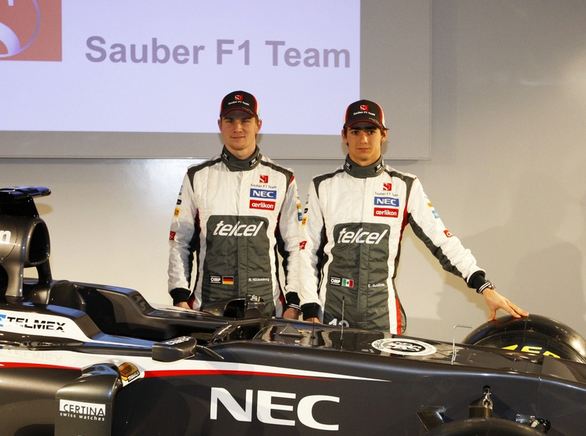
    Monisha, if we could start with you: a very positive news story both for Sauber and for Formula One following the buyout of the team by Longbow Finance. Can you tell us a little bit more about the new owners? Who are these people who have bought one of the most prestigious brands in Formula One?

    Monisha KALTENBORN: Well, Longbow Finance is a Swiss company. They have been active in financial investments for more than 20 years, from Switzerland. Their operation involves, well typically private equity investment for international client and of course investment portfolio management.

    So when are we going to start seeing the benefits and when are you going to start seeing the benefits of the buyout – something this year?

    MK: Well, we are working on that, but you know these things take time. We have had a rough time these past few months and the first target of course of the new owners is to stabilise the entire group. So you have to settle matters and then of course, again, to get back to your business as usual to have then a basis for being competitive. I’m sure we’ll have a few things still coming up this year, I mean we still have a few things to do, we don’t want to end up where we are, but of course we are focusing more on next year and there I am very confident you will see a lot more.

    Thank you. Guenther, coming to you, we’re half way through your first season in Formula One, can you just give us a half-term report? How do you feel it’s gone?

    Guenther STEINER: I think it has gone pretty well. I would just like to take this occasion to thank Gene Haas for the trust he has put in all of us, you know that we can come here, because I think the Haas story, an F1 team from America is good news, like good news that Sauber found an investor. Back to where it has gone, we had a very good start, for us, sure some people might think differently, if you are Mercedes or Ferrari, but we are very happy. Then we had a bit of a downturn, which wasn’t massive, I mean we still finished 11th. We finished 11th three times, so we were almost there but not really there. But we got back. The team has grown a lot in these 10 races up to now, if you saw it in the beginning. I wouldn’t say we were bad in the beginning, but if you are new it take some to gel and we always knew this and maybe we were lucky to get these points in the beginning because it gave us confidence, we knew where we were, that the car is good or that it is decent and we were building on it. And then when we had the four races where we didn’t score, we didn’t lose our head or get nervous. We just kept on working, we said “we know we can do it, we just have to do it again”, and I think we did it again, we finished eighth and then in Austria we finished in the points again, so all in all, very happy. Now we are at the point where we look to next year, well we started before now to look to next year, but now it’s full steam ahead on the new car and the race team is just getting better and better because they learn more and more every weekend. We are getting more people in on aero development for next year because we want to be even better next year. I hope we can achieve that. Everybody in the team can be proud of what they achieved and I would like to thank everybody in them because they worked hard because the first three races weren’t easy. They were difficult for everybody. People worked day and night. But they pulled through and now we are where we are, we’ve got 28 points and we are proud of them.

    You say the team is growing, you’ve got more people in the aero department, what about the infrastructure in Banbury? Do you feel confident enough to take on more of the manufacturing of next year’s car in-house?

    GS: No, that was never our plan. We continue a few years like we are. We want to grow in a few areas like race engineering and aero development, but design staff and manufacturing we don’t want to take, because we don’t want to get distracted. I think our principle works – to buy as much as we can from somebody else. We want to keep doing that because there is not a lot in it if you go to do it yourself, not a lot of speed we think is in it in the car. We would just distracted we don’t want anything of that to happen, so we keep on with our business plan, as we set out in the beginning.

    Thank you. James if we could come on to you please. An impressive double points finish for the team at Silverstone. Do you think you pre-season target for the season of fifth in the Constructors’ Championship is still on? Can you catch Force India?

    James KEY: Well, we’ve got a long way still to go, so you’d hope so, we’ve done just about half the season so far. Force India have done a really good job recently and they’ve made the most of some good opportunities, where perhaps we haven’t. We’re not happy with the number of points we’ve scored. We’ve got developments to come to the car, which could give us a chance later in the season, so there’s more to come from us. You clearly can’t give up in the middle of the season; you have to keep pushing. I know a bit of a gap has developed, that was really only made over a couple of races, a couple of big scoring races for them. So the same has got to happen for us to close up, so we’re not going to give up on our chase but it’s not easy.

    You say you’ve got some chassis developments coming but there will be no power unit developments because you’re using the year-old Ferrari engine. How much of a frustration is that for you now?

    JK: Well, we knew it was going to get more and more difficult as the season went on. The pace of power unit development has continued at a pretty high level. It was never an advantage for us to have an established power unit but one that was a year old, it was always a disadvantage – that’s no disrespect to Ferrari, but clearly they have made good steps on their own ’16 unit and we’re not benefiting from any of that. So it’s deeply frustrating really, but we knew what to expect. We have to try to compensate with chassis and make better use of our opportunities.

    Thank you. While we’re on the subject of power units, Rémi, if we could turn to you please, how satisfying has the development of the power unit been, given where you were a year ago?

    Rémi TAFFIN: I think it only be a good satisfaction, because where we were coming from was a difficult year last year and now we can see the improvement on track and everything we got out from the factory to the track was working well, so that was a good step forward, either first race or actually Monaco/Montreal specification we introduced. It’s all working well. I just have to say we’re on it, but we have a good way to go.

    What’s next on the roadmap fro Renault? When are we going to see the next upgrade?

    RT: I think it will be next year. The big step we will have will be next year’s engine, race one. Until we get to the end of the season now we will be working on the specification we have now, trying to extract the most out it, but there won’t be any more let’s say big step as we had for race one and six.

    Thanks. Pat if we could turn to you now please, it’s been a difficult year for Williams, not least in Austria and Silverstone, the last two races, two tracks where you went so well in recent years. Have you discovered the cause of the problems at those two tracks? Were they track specific or was there something more serious at hand?

    Pat SYMONDS: Well, I think we’re getting on top of it. It does seem that Canada was a long while ago – we were on the podium there – but it was only five weeks ago. But three races since then, Baku, Austria, Silverstone, and I feel in all three of those we haven’t performed in the way I expected to. S we are looking into it. We are looking at various things that we have introduced. We’re making sure that we understand them; that’s a process that’s been going on even today. But it’s quite an intense period, you know. Over a period of just five weeks we’re actually doing four races and one test – five events in five weeks. It’s hard to catch your breath when it’s going at that sort of pace. But I’m pretty confident we’re getting on top of things. We had a good day today. I was pleased with how it went, particularly on the long runs, and I think we’re getting back where we should be.

    Where’s the focus in Grove now, is it on 2017? Do the 2017 technical regulation changes come at a good time for you, a chance for you to press the reset button if you like?

    PS: Well, they come at the same time for everyone. We all have equal opportunities and I really do regard it as an opportunity. In answer to the first part of your question, we’re pretty focused on 2017 now, as I’m sure all the teams are, because there is so much work to do. There is so much to be gained in the early part of the learning curve that you can’t afford to leave things too late. It makes it quote challenging of course. If you are in a fight in 2016, as indeed we are, but you’ve still got an eye on the future, you have to balance things pretty carefully. But of course not all development is aerodynamic and while the wind tunnel is pretty devoted to 2017 work, there are other areas where principles do carry over, so we’re still carrying on in those areas.

    Thank you, Pat. Jock, turning to you: like Williams, Ferrari hasn’t been able to maintain the momentum it built up towards the end of last year. Why is that? Are you simply losing ground in the development race or are there more fundamental problems than that?

    Jock CLEAR: Firstly, apologies for keeping everybody waiting. I don’t thing we feel that we are losing a huge amount of ground if you see what I mean. From my point of view I have recent knowledge of the opposition and a huge respect for what we are trying to beat effectively. Our performance has come under a bit more scrutiny now that Red Bull are putting us under pressure, but again that is a testament to how strong they are as a team. We haven’t lost a huge amount of ground to the leaders. If you look at it over the course of the last couple of races, in Canada we were very close and in Silverstone we were a long way off. I think we have learned a lot about some of the areas where the car is weak and that has helped us to identify where we need to work and we are under no illusion that Mercedes are going to continue to be strong and Red Bull are going to continue to be strong. All the teams are working hard. It’s the ongoing challenge. We are working as hard as we can on closing that gap and sorting out the issues, but as everybody has said already, we can’t take our eyes off next year, because that’s a big opportunity. So we’re now having to measure that resource and measure that balance between keeping some momentum or looking to get some momentum later in the year but also putting a lot of resource on what, as Pat says, is a huge challenge for everybody next year. That balancing act is very difficult for all of us. And as I say, it’s just a testament to the guys at the front how well they are continuing to develop and that puts us under pressure because we are not closing the gap as quickly as we’d want to be and that’s racing.

    You say you have recent knowledge of Mercedes. That gives you a unique perspective on the two teams. How are Mercedes and Ferrari different from an operation point of view?

    JC: Sorry to be no fun but I’d rather not share those details if you like. Obviously my own experience at Mercedes I take with me into this position and those sort of insights are really helpful to Ferrari and we’ve talked about those long and hard – the areas where actually Ferrari are stronger, the areas where Ferrari are weaker, again filling in all those details. It doesn’t happen overnight. I was never going to arrive and change things overnight. Far be it from me to think I’ve got anything like that much influence. I’m just here to try and get the race team to do the best we can with the package we’ve got and make sure we’re feeding back the right things to Ferrari at Maranello. That’s the same structure as all the teams I’ve ever worked at. The dynamic is different, the people are different, but again that’s probably true wherever you go. There are no obvious stark differences that I can share with you, but there are those details that obviously I’ve shared with Ferrari.

    Maybe no differences, but many similarities?

    JC: Oh absolutely, many similarities. The passion. If anybody was under any illusion that Ferrari is not as passionate as they used to be in the halcyon days of Ferrari, it’s incredibly for the passion. That is a huge, huge boos for all of us. It’s a pleasure to be part of that passion. Some times it’s our Achilles heel, sometimes we know very well that passion can make things quite difficult for you, but on the whole it is just a huge positive and it is a joy to be part of.

    QUESTIONS FROM THE FLOOR

    Q: (Dieter Rencken – Racing Lines) Question for Monisha. Following the non-starts that were Qadbak and with the Russian investors, I’m sure that you did some due diligence on Longbow Finance, so you are in a position to confirm or deny that the Rausing family are participants in Longbow Finance please?

    MK: What I can tell you is that our partner is Longbow Finance, it operates in Switzerland. All disclosures that are required in Switzerland are done and that is important to us, who exactly our partner is. And that is Longbow Finance.

    Q: (Viktor Bognár – Magyar Szó) Question to Pat. We have some new technical directives about the radio communication between the engineer and the drivers. Is there any fear that it causes some over-complication of the rules? What would be the best solution in your opinion?

    PS: It’s an interesting question. I think that the interpretation that’s been put on the rules is quite harsh. The rules that are taking about is a rule that says the driver must drive the car alone and unaided. I think it was put there many, many years ago to perhaps limit some of the electronic controls and things like that. Indeed it was that very rule that was cited in the banning of traction control, for example. To bring it in to the sphere of communication with the driver is odd. I’ve always through of Formula One as being a team sport and I’ve always thought, as teams, we should participate together to assist our driver. And you know, you can ask where the limit is. If the driver is to do everything alone and unaided, should he change his own tyres at the pitstop? Clearly ridiculous but that could be the logical extension of it? But I think what’s particularly interesting is that, I think it’s rather a shame that something that’s really unique in motorsport is something that we are doing away with. If you cast your mind back just a few weeks, we have the Euro football championship going on, that fantastic game, Italy and Germany, it’s going to penalties, wouldn’t you have loved to have heard what was being said? Three penalties missed. Would you have not wanted to hear what the goalkeeper was saying? Would you not wanted to hear what those strikers were saying? Now in Formula One we actually have the ability to engage our fans and allow them into the cockpit to get that sort of level of immersion… and we’ve allowed it to go away. I think that’s the biggest shame of all.

    Q: (Joe Saward – Auto X) This is a question for everybody, specifically based on what Pat was saying. We’ve got six races in eight weekends. Is that sensible?

    Guenther, why don’t we start with you?

    GS: You’re asking me about sensible! It is a lot of work, it is tough. I think for us we didn’t feel the difference so much because we started off new and we were just running anyway, so a littlebit more or less is not a difference. Is it sustainable? I don’t think so. I think we should try to make it a little bit more scheduled. A better schedule that you don’t have six events in six weeks because it gets old pretty quick. Sometimes these things happen and maybe change is in the future, I don’t know – but asking if it’s sensible… no.

    James, your thoughts

    JK: I think when you have 21 races you’re always going to get a compressed timescale for things – unless you lengthen the season, which I don’t think any of us would like to see. So, whether it’s sensible or not, difficult to say but I think as long as you’ve got that many races in a season, you’re going to get a situation where you get six weeks of enormous activity, particularly in the middle of the year.

    Pat?

    PS: I think that… we examined, I think around 2008, how we were going to go racing in the future and we decided that 20 races was very much the tipping point. Now, of course, you say, “20 races, what about testing and things like that,” we do still have two in-season tests, we have reduced to only two pre-season tests – but what we’ve done is get rid of test teams, so there’s an awful lot for the race team to do. On top of that next year… well, firstly, we’re not at 20 races any more, we’re at 21 and who knows whether that will go beyond, but we’ve also got tyre testing to take into account next year, so I think we’re way past the tipping point and we, as a team, and I think most teams, are looking at a completely different structure because we cannot ask our personnel to maintain the level of activity that’s being asked of them. And therefore we’re going to have to look at rotation. It’s an incremental cost, we have to put people in there and, y’know, I’ve been in racing now for 40 years and this is the first time when I’m starting to see people say, “well, actually, y’know, we don’t want to go racing. We love Formula One, we enjoy working in the factory but it’s actually too much of a drain on family life and quality of life to be on the road all the time.

    Jock, Monisha or Remi, do you have anything to add?

    JC: Just to support Pat, his point on pushing people and people making that level of commitment. Big sports play very well off the bench these days – and that’s a big part of rugby, big part of football is what you do with your substitutes. We don’t have that luxury I’m afraid, and we’ve got a lot of guys out there who, during this five-week period who are really, really up against it to get enough sleep and, as you say, to find time to look after their families. It’s beyond the tipping point, as Pat says. I don’t think it’s necessarily not sensible, I don’t think we’re worried about the safety of it, we’re still very comfortable that we can put those cars out there safely for Seb and Kimi every week – but people are just very, very tired and we’re only halfway through that five week four race period.

    Q: (Ralf Bach – Auto Bild Motorsport) A question to Jock. One of your drivers told us yesterday that we shouldn’t write that negative about Ferrari, we should write more positive. So maybe we could start right now. Could you tell us some areas where Ferrari is stronger than Mercedes?

    JC: Ha! I would rather not share those areas. As I say, I’m sorry to not play to the party. The comparisons are very, very difficult. It’s a very different culture, it’s a very, very different way of working. Just the geography of the setup is very different. And that naturally arrives at a different solution. The people involved are all very, very experienced in F1. They’ve all had different upbringings through either the British teams or the Italian teams and that arrives at a different result. As I say, the difference are not necessarily those that are going to make the difference between whether you’re on the front of the grid or not. That still boils down to how well you can get the results out of your wind tunnel, how well you can develop your power unit, and I would say the key, key point with Ferrari and all of the teams is that with this new hybrid engine, it’s much more integrated than ever before. You can’t just say “right, that’s your aero, that’s your chassis, that’s your engine,” and those three will come together. They’re all so closely linked nowadays and that integration is a strength of Ferrari because nobody has a closer relationship with their engine manufacturer than we do. Even at Mercedes, geographically, they’re not in the same place. So we have that advantage. That’s one that’s obvious to everybody – but it is an advantage. And having that close community with the engine side and the chassis side, not that we have this hybrid unit where they’re so closely integrated, with the aero, with the cooling systems, that is a strength that we need to work on and we need to make the most of.

    Q: (Kate Walker – motorsport.com) I’ve got a question for all of you please. Recently we’ve heard comment from Paul Hembery of Pirelli talking about his preference to return to some form of warm-weather testing for 2017, particularly with the changes in the tyres and everything else. Could each of you please tell me what your position is on warm-weather testing, whether you’re pro- or against it and what you see as the key advantages and disadvantages?

    Remi, if we start with you.

    RT: I’m not sure I’m really well-placed to comment on tyre testing. The only thing I maybe would comment on that one is something we already covered: the resources we’d have to put in front and the people we have to get on board for that. Apart from that, I guess I’m not going to comment on tyres, to be fair.

    Monisha?

    MK: Technically, it’s difficult for me to argue anything on that but I think the picture I have here is we had good reasons to get rid of these kinds of testing activities. We’ve seen times where there was unlimited testing, lot of tyre testing was done at the time, basically with one team and we all got those tyres. And we had at that time, when there were many manufacturers actually in the sport, where money was not that much an issue, we still got rid of these kind of things and, step-by-step, we are getting back to areas again that we never wanted at that time. So, I just wonder where this is all going to. We’ve again got in-season testing, fine, we got something else away, but it’s just becoming more and more expensive, costs are just going up and I just feel it will end up somewhere in a very, very bad situation and I think we should learn from the steps we have taken in the past and not again wait for something to happen where people again may be leaving the sport. It’s not always just the small ones. It could equally happen, which we’ve seen years ago, how bigger… how manufacturers have left. I think we should be very cautious in opening up these kind of shows again. I think as teams we should probably not have that much liberty with regard to tyres. It would probably be easier if we were to just let the tyre manufacture do what he does and focus on other things.

    PS: We are actually evaluating the costs at the moment. It is an incremental cost, there’s no doubt about it. If you have the situation where you could test in the venue where you were racing, you can limit some of those costs, and indeed many years ago we used to do that. We used to start the season in Brazil and test there. We started the season in South Africa and we tested there. You can stop on the way and this is the sort of Middle East on the way to Australia and you can mitigate your costs by not bringing things back to base, in our case, back to the UK. It is an incremental cost and one of the problems is that you’re always sending a lot of people to these tests; there are so many systems that need looking after. From the UK, a flight to Barcelona is £50 or something. To Abu Dhabi, it’s significantly more and so it doesn’t come at no cost. But I think that we have got a problem but the problem is probably greater than you might realise because the rule that came in for this season, which allows the teams to chose their tyres and chose three tyres from the five available – which incidentally, I think is a very good rule and it has done quite a lot to spice up the racing and to bring a little bit of randomness into some of the strategies – it really does fall down next year because we have to make those tyre choices before Christmas, before we’ve even run a car with the tyres and indeed, I think by the time we’ve done our testing, we will have supposedly chosen tyres for the first five or six races. Now that hands an enormous advantage, in my opinion, to the teams that have done the testing, even if it’s blind testing, even if we’re getting that data, you won’t pick up all the nuances that the test teams have had. So I think what’s far more important is that we look at that problem and perhaps for a year or for the first half of the season or something like that we suspend the right of the teams to make that tyre choice so that we all live together, we don’t hand that advantage to Ferrari, to Red Bull and to Mercedes, because we would love to have been involved in that testing and we got quite a long way down the path to designing a car for it but we simply couldn’t afford to do a test like that and these costs just keep on adding up all the time.

    JC: Yeah, obviously we were very much like Pat, very keen to be involved in that and we have the advantage of having the resource and being able to put a car together, not specifically because we thought it would give us a huge advantage. I think we’re all comfortable – I would like to hope – with the way that data is going to be shared and the way the tests are going to be run but Pat is absolutely right, there will be nuances that you will get out of it by being there at the time and the drivers involved will get a feel for it so there’s an advantage there and certainly, for all of us, I think we’re well aware that making decisions for what tyres we’re going to be racing at the beginning of next year when even we will have had very little touch on them is very difficult to do, so Pat’s very correct on what he says. That probably needs to be looked at. We certainly don’t… and we never envisaged our involvement with the Pirelli testing as an opportunity to steal a yard on everybody else and as such, we would be quite happy to go along with that if some way were found to even out that possible advantage early season. More about the Pirelli testing: I think we sympathise with Pirelli in their plight to make the best tyres they can. They come under a lot of pressure every now and then and they don’t have much testing opportunity in the same way as we don’t  and obviously, they’re always going to be pushing to do testing and warm weather testing is important because a lot of these races are in the warm weather. So again, I think we have to sympathise with Pirelli’s position and a season that is long, and as we’ve discussed before, has 21 races and doesn’t have test teams any more, those sort of long distance, long haul tests that you could put after the flyaway races are just going to add to a hugely busy programme already. So it’s finding the team as well as the resources as well as the money; it’s all pushing the boundaries in every direction. We’re almost at explosion point in fitting everything into a year.

    JK: I think I’d add a query to Jock’s points. I think to be fair with Pirelli they do need to be given a bit of a break with this. We’ve had a significant demand on them from our new regulations. There’s some targets for them to try and meet which are tough and they haven’t got so long to do it. Tyres are big players now, tyre management and all the science that goes into it just from the tyre point of view is significant and I think it’s going to be the same or probably more so next year, they’re going to be a very big part of the 2017 regs. A cold Barcelona isn’t the best place to try and learn exactly what these things are going to do, neither for Pirelli nor the teams so although of course there’s a financial implication which has to be carefully considered, the bang for buck of going somewhere which is more representative and gives both the tyres – well, both Pirelli tyre information and the teams the sort of tyre information which is useful and makes testing useful – is significantly better perhaps at going to warm weather conditions than the cold Barcelona.

    Q: (Peter Farkas – Auto Motor) This is primarily for Pat, Jock and James: could you tell us how you found the new asphalt (here) in terms of grip, in what way is it different from the old one, the kerbs and what kind of driver feedback did you get today?

    PS: I think we were pleasantly surprised. There were some problems in the European F3 race that was held here a little while ago, there was quite a lot of blistering on the tyres and we were aware of that so we were thinking that maybe we were going to have a tough day today but in actual fact, even the supersoft tyre has actually held up very well today in the longer runs, better than we had expected. The track is quite smooth, the kerbs are quite good, we’re pretty happy with the work that’s been done.

    JC: Yup, absolutely the same feedback as Pat really. We had some fears and they’ve not really been founded today. We’ve had a reasonably comfortable day on the tyres, both the types that we’ve tried. The kerbs are smoother, I think you see that the lap times are considerably quicker than last year but I think a lot of that is the softer kerbs, basically. The grip level for us is similar to last year but certainly the kerbs are making a difference on lap time.

    JK: It’s similar for us. We had a troublesome day today so it’s a bit difficult to make quite the same judgements but it hasn’t been as big a surprise as we thought.

    Q: (Dieter Rencken – Racing Lines) Remy, when the 2014 engine regulations were introduced, one of the points was in fact the token system to save costs etc. That of course has been changed totally going forward. You’re talking about a big upgrade for next year. This is a time when major companies  start putting together their budgets so what has the effect of the change of the regulations been on budgets?

    RT: I think the short answer is not a lot to be fair, because we’re not really limited already by the number of tokens so that’s not really changed our world and since we look at what we’re going to be doing next year and the year after, it’s not going to be changed so I guess the short answer is nothing.

    Q: (Joe Saward – AutoX) We have these fantastically efficient hybrid engines at the moment and it takes 350 trucks to move the Formula One circus from one race to another. Are we getting confused, here?

    GS: We haven’t got 350, I think we’ve got nine. I think if that is what it needs, you know, we are highly efficient, absolutely. I don’t know what to say to this one. It’s like we are putting a show on, if this is what it takes to put the show on we need to do it. I don’t think it has a lot to do with what we are doing out on the track, how we bring it here. It’s actually a good number. I never knew that number, that there are so many trucks involved in getting this circus up and running. We try to be efficient, just to let Joe know. We have got only nine out of… there’s 11 teams so everybody should have about 30. We’ve only got nine so we are very efficient which goes along with the efficient engine in our F1 car.

    Q: Jock, Ferrari would have more than nine trucks, what’s your take of it? 

    JC: Well, obviously in my new role I suddenly became aware of how much of this we ship around the world. It was one of the first questions I asked and they told me that most of them are there to deliver the breakfasts for the journalists! But no, as Guenther says, we’re putting a show on. Are we getting confused? We’re here to race racing cars as fast  we can around the track, that’s never been any confusion for me. What the circus looks like is just as much a part of what you guys want, what the fans want, what we want. I don’t think Ferrari are chosing to put more and more trucks on the road. I think we’re just part of this circus and if it wants to go in a different direction, Ferrari are willing to with it. It’s our sport, it’s your sport but from my point of view, I’m here to make a racing car go fast around the circuit.

    PS: Well, I think like you, Joe, I was quite surprised as I walked into Silverstone and thought I’d arrived at the truck Grand Prix rather than the Formula One Grand Prix. I think we shouldn’t confuse things. We have produced a very very efficient power unit. It is the way of the future and I think it is a pretty good contribution to automotive engineering. If you start looking at the fuel used going Grand Prix racing where do you stop? Do you count all the cars in the car park? I’ve often argued that actually the person who is sitting at home watching our race on television is not using any fuel and if we didn’t have a race, he would probably be driving around the countryside going shopping or something so where do you draw the line? I don’t think we should confuse the fabulous job that the power unit manufacturers have done with putting on a bit of a show.

    MK: I know that Joe got a bit confused the other day when he saw a few Sauber trucks going in different directions and he wondered if we’d got lost. I think there are other points we’d rather look at if we talk about confusion but I do agree that if you compare us to other big sporting events – if you look at, for example,  the  entire carbon footprint we have – I think Formula One in spite of being  racing and the automotive factor, is much better than compared to football or so because most of our audience is at home it’s been said, as compared to at these big games or big events, 80,000 that are travelling actually to the event. So I think we’re not doing a bad job on that.

    Q: (Daniel Johnson – The Telegraph) Jock, you’ve worked with lots of drivers. Fernando left Ferrari after five years, I think, because he became frustrated that there wasn’t a championship there. What’s your impression of Sebastian and how patient he will be, because he’s been very admirable on what he’s said about how you’re doing this year but he’s a winner and wants to keep winning?

    JC: Yeah, as you say I’ve worked with a lot of drivers and I think I said in Australia when that comparison was asked of me in that sense, Seb is every bit the four time World Champion that you people know him to be and he is a very very integral part of what we’re trying to do to win another World Championship at Ferrari. How patient will he be? He is a racing driver who is used to winning and passionate about winning – all racing drivers are passionate about winning – but as I say, he’s used to winning so it hurts, it cuts him deep to be not being able to compete side by side with Lewis and Nico at the moment. But having spoken to him, he’s up for the battle. He enjoys the fight, he said as long as we can go there on a Sunday and we can have a battle, even if it’s not at the front, if it’s with the Red Bulls, he enjoys racing, he just loves racing racing cars. He’s a bit like Michael when he came back into Mercedes; he just loves racing racing cars. Now, yes of course he wants to win but he believes in us, we believe in him, he’s part of this Ferrari team, he doesn’t consider himself an outsider. He’s part of this as much as we are and he considers his contribution will be measured by whether we make it or not as well. We often talk about whether we can deliver a winning car to the driver; well I think we all now know over the last few years it’s probably been true for many years in F1 that the driver is an integral part of bringing that together. It’s no coincidence that the great drivers end up at the best teams if you see what I mean; that’s because they’re part of creating the best teams and Seb will be a central part of that and we look to him to help us get there and he looks to us to help him get there and we’ll do it together.

    Q: (Silvia Arias – Parabrisas) Mr Clear, I would love to know if it’s true or not that Ferrari had a contact with Ross Brawn and in this case, if Ferrari’s looking for a somebody – an engineer or somebody like that?

    JC: Honestly, that sort of discussion is certainly not something we would talk about in public. I don’t know anything about it directly, so I really can’t comment. I’m obviously well aware that it might be speculation in the press but it’s not a conversation we’ve had at Ferrari that I know of and as I say, those sort of discussions, anyway, would certainly not be for public consumption.

    Q: (Daniel Johnson – The Telegraph) Just a quick one again on drivers. Pat how would you feel about having Jenson at the team? Is that something you’d push for internally?

    PS: I think Jenson’s a great driver and of course he started his career at Williams, so there’s quite a lot of affection for him. As a person, I regard him as someone I have been friendly with for many years. He drove for us at Benetton when I was there, he’s a great driver, he’s still showing to be very strong. I hope that he’s in Formula One next year, whether it be with Williams or elsewhere.

    Q: (Dieter Rencken – Racing Lines) Guenther, obviously a team in your situation needs stability going forward and one of those components is on the driver front. What are your plans for next year, when can we expect to know what your driver line-up will be like for next year?

    GS: We decided to wait, to talk internally even about drivers until the European season is over so after Monza, because at the moment we are quite happy with what we are doing. So we don’t want to get distracted or get the drivers distracted by talks, what will happen, what will not happen. We just wait until after Monza and then we sit down and try to make a decision as soon as possible so we keep that stability going.

  • F1 2016: Refueling out of the question

    F1 2016: Refueling out of the question

    The issue of re-introducing refueling during Formula 1 race has been shot down again.

    The FIA president, Jean Todt, recently confirmed that the issue would come under discussion at a meeting in Geneva. However, as in 2015, the possibility of bringing back refueling was dismissed by the Strategy Group and the F1 Commission.

    The general feeling from the meetings was that the cost of re-introducing this aspect to the sport would be too costly. Williams technical director told Autosport that the costs of bringing it back into the sport would be “significant.”

    “Freight costs for shipping equipment is £175,000 and it’s probably £200,000-250,000 to buy and service the kit in the first year and ongoing cost of servicing it,” he said. “There is also one dedicated salaried person for looking after it so the costs are very significant.”


  • Williams F1 Team launch first images of FW37

    Williams F1 Team launch first images of FW37

    The Williams F1 Team has become the first team to reveal its 2015 Formula One title contender, with a computer rendered image of its FW37 appearing on the front cover of this month’s F1 Racing magazine.

    Following that, the team followed up with images of the Fw37 on their website along with a statement from the team.

    Ahead of the imminent launch of Force India’s new livery later today, the Williams team, who finished in third place in the 2014 Constructors’ Championship, showed off the FW37, which features a revised front nose in order to comply with the 2015 regulations and rule changes.

    The FW37 will be piloted once again by Felipe Massa and Valtteri Bottas, and the car will again be powered by Mercedes engines.

    Minor changes to the Martini-based livery are seen including new the appearance of new sponsors Rexona, Avanade and Hackett.

    Williams FW37 - F1Racing Mag“The notion for the FW37 was to look closely at the FW36 and its performances,” said Williams Martini Racing’s Chief Technical Officer Pat Symonds in a statement on the team website. “We then went about recognising what had worked well and identifying and resolving the areas that we felt needed to be improved. Although the aerodynamics of the car were impressive there is always room for improvement particularly as we handle the new 2015 nose regulations,” he continued.

    According to the statement the design of the FW37 has stemmed from the performance of the FW36 but the conceptual ideas came long before the 2014 successes.

    “The first conceptual stage of the FW37 came before the FW36 had turned a wheel,” Symonds continued. The main element to this is understanding the rule changes and how they will affect the design of the car, from here we can start see if our ideas will fit within the regulations”.

    The Williams team managed to rack up nine podiums throughout the 2014 season and also enjoyed a front row lockout at the Austrian Grand Prix. They placed third in the Constructors’ championship and are looking to continue their climb up the ladder.

    “The desire to beat Ferrari to third place in the Constructors’ in 2014 meant we pushed our development through to late autumn, but the size of the team is now at a point where it was able to sustain this development whilst still working on the FW37,” Symonds said.

    The layout phase of the FW37 was completed by the summer break in August, according to the team. Work on the new front bulkhead was a main priority for the designers and aerodynamicists due to the changes to the regulations for 2015.

    “The change in regulations offered us a slight headache,” Symonds explained. “The new front bulkhead and nose geometry had much more of an impact than we had initially anticipated and the effect on the aero was profound. The team have worked hard on pulling back the deficit these regulations have made for us”.

    But, the team has its eyes on more podiums this year and Williams is hoping to catch Mercedes with their FW37 this season.

    Williams FW37 launch“The more rule stability there is, the closer the field gets. I hope as a team we are more capable of maintaining the forward momentum to catch Mercedes, than the teams behind us are of catching us. It’s not just about stable regulations but also about the team and every individual that works here moving forward and improving.”

    Frank Williams, Team Principal concluded the team statement saying that, “The team had a fantastic season last year, we are aiming to replicate this development over the winter and to start the 2015 season in a strong position. We have an enormously talented group of people here at Williams who want nothing more than the team to do well. This passion produced a great turn around in fortunes for the team in 2014 and everybody has worked tirelessly to continue that climb up the grid.

    “We have added a few more high profile names to accompany the incredibly supportive group of partners we have,” Frank Williams added. “After a very strong first year with Mercedes we are looking to further develop the relationship as we look for more podiums in 2015. I feel this year will be equally as exciting as the last and look forward to seeing the FW37 on the grid at the first race.”

  • Williams engineering team shake-up for 2015, Massa gets new engineer

    Williams engineering team shake-up for 2015, Massa gets new engineer

    The Williams F1 Team has announced a number of changes to their engineering team ahead of the 2015 season.

    This includes recruiting Dave Robson from McLaren to take over as Felipe Massa’s new race engineer.

    Robson, who spent several years at McLaren working as Jenson Button’s race engineer, will report to Williams’ Head of Vehicle Performance Rob Smedley who was Massa’s race engineer at Ferrari.

    Felipe Massa, Williams F1 Team, Austrian Grand Prix QualifyingThe shake-up sees Massa’s former engineer Andrew Murdoch promoted to the role of Senior Performance Engineer where he will lead the performance group at Williams’ Grove base and work on developing new techniques and processes within the team to ensure that performance improvements are rolled out to both cars throughout the 2015 season.

    Murdoch will still be seen on the pit wall as he will remain part of the trackside team, focusing on Valtteri Bottas’s car. Bottas will still be engineered by Jonathan Eddolls.

    Carl Gaden who joined the Williams team in 1988 and has served 22 years as their chief mechanic has also been promoted. He will take on the role of Senior Car Systems Engineer and will now be responsible for system reliability. Mark Pattinson, previously Number One Mechanic on Felipe Massa’s car, has been promoted to replace Gaden as Chief Mechanic for the team.

    “Off the back of a great 2014 campaign Williams is determined to continue this positive momentum into the new season, and these recent changes show our commitment to that goal,” said chief technical officer Pat Symonds.

    “We are proud to be able to promote our existing talent to help strengthen every area within our engineering team and we will continue to invest in new talent where necessary to ensure we have the support and resources to achieve our on-track ambitions throughout 2015 and beyond.

    “Our engineering team for the coming season is looking strong and I’m excited to get the new season underway.”

    Williams finished the 2014 season in 3rd place in the Constructors’ Championship – their highest finish since 2003.

  • The Williams F1 Team’s FW36

    The Williams F1 Team’s FW36

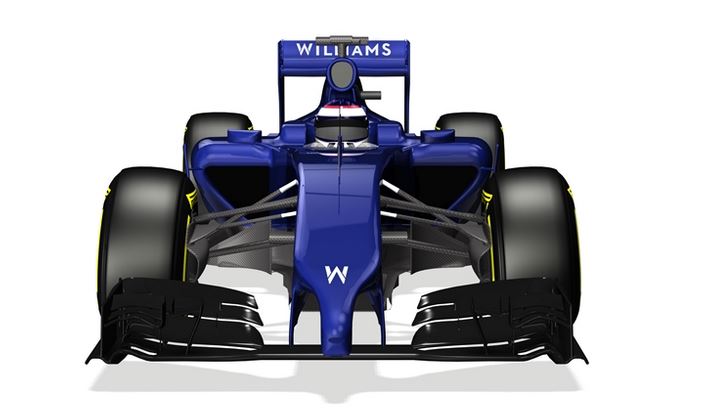
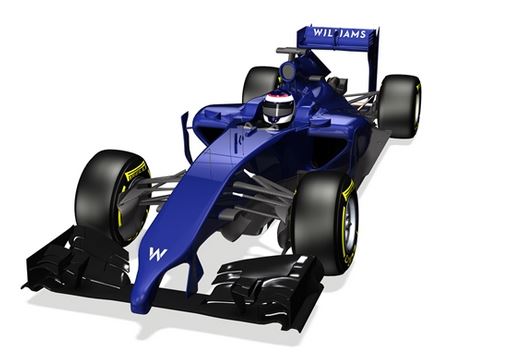
    The Williams F1 team revealed the first images of their 2014 contender, the FW36 on Thursday via its website and Twitter.

    The images released are a digital rendering of the car which is shown in an interim all-navy blue livery. The released images were met with much skepticism and criticism from fans on the social networks – specifically around the narrow nose which features on the FW36. The nose is far narrower and has even been reported to resemble that of an anteater but is necessary according to the team to meet FIA regulations while allowing for as much airflow as possible under the car. Most teams are expected to adopt similar solutions to meet the 2014 regulations.

    According to the team, the FW36 is one of the “most technologically advanced Formula One cars produced by Williams” and is the culmination of more than two years’ research and development by the team’s technical departments. It is also incorporates the power unit from the team’s new partner, Mercedes-Benz.

    The Williams FW36The FW36 will be the first Williams powered by a Mercedes engine, with the all new V6 turbo and Energy Recovery Systems. “This is the first time that Williams has worked with Mercedes in F1 and we’ve been very impressed,” says Williams Chief Technical Officer Pat Symonds. “Their professionalism and commitment have been notable and we’re as confident as we can be that the power unit will be competitive.”
    “There’s a lot more technology on the cars this year,” he continued. “We’ve had turbo-charged engines in F1 before; what’s different this time is that it is much more than just an engine change, it is a completely different system. We’ve gone from a slightly hybridised normally aspirated engine to a fully integrated hybrid power unit with novel technology at its heart.

    “Overall the cars will need more cooling this year. The demands on water and oil cooling may be slightly diminished, but the ERS system is significantly more powerful and hence needs more cooling. We also have to cool the charge air from the turbocharger compressor which requires a substantial intercooler.”

    According to the team, the FW36’s gearbox ran on the dyno for the first time at the beginning of November, before running with the full power unit several weeks later. It’s also the first eight-speed gearbox in Williams’ history.

    Symonds explained, “We finished the gearbox relatively early. It’s completed a lot of running on the test rig and at Mercedes HPP in Brixworth, but you can’t take reliability for granted. It’s a completely new ‘box and it has to cope with a lot more torque than was the case with the V8.”

    The Williams FW36The team also explained on their website that the weight of the car, when combined with the FIA’s ever more stringent crash tests, has been another big challenge  for them. But they’re proud of the fact that the FW36 was one of the first cars to pass its crash tests prior to Christmas.
    “The build of the new car has gone remarkably smoothly,” said Symonds. “But it’s been a challenge to get the car down to the weight limit. It’s been achievable, but it hasn’t been easy because the new power unit is heavier than the outgoing V8.”
    Most fans will be waiting to see the aerodynamic impact of the changes made on the FW36 which we’ll only get to see at testing next week but Symonds is confident that the team have made great strides forward and are closer to competing with the cars up front. “I’m confident that we’ll be closer to the front aerodynamically than we were last year,” he said. “Our ambition for the year ahead is to have a strong 2014 season.”
  • F1 2013 Mid Season Review

    F1 2013 Mid Season Review

    Starting with a hazardous Australian Grand Prix with ever changing weather conditions to a controlled race in Hungary we’ve had everything from tyre explosions to loose wheels, pitlane accidents, cars on fire and controversy galore. The 2013 F1 season has been a thrilling, wild ride for teams, drivers and fans alike.

    With ten races behind us, it’s time to look at the season so far and how things have been shaping up.

    Here is our F1 2013 Mid Season Review ahead of what is set to be an tumultuous second half of the season.

    Red Bull Racing – 277 points

    Sebastian Vettel – 172 points, Mark Webber – 105 points

    Red Bull is still the team to beat and are the only team to really maximise their results every race so far this season. Leading the championship with 60 points over Mercedes in second place, it’s bound to be business as usual for the team following the break. Sebastian Vettel is sitting pretty in the drivers’ championship too – 38 points ahead of his nearest rival, Kimi Raikkonen in second place.

    Sebastian Vettel Vettel has raced all out so far this season – even defying team orders to score an extra 6 points – and remains on track for his 4th world championship.

    Red Bull have an incredibly quick car – perhaps the quickest on the grid – and have remained incredibly consistent but have suffered like the other teams with tyre degradation issues and saw Vettel retiring from the British Grand Prix with mechanical failures. Vettel however will be very hard to beat going forward and his rivals know it.

    Mark Webber, who announced that he will be leaving F1 at the end of the season, has had a more inconsistent – and really unlucky – season. Webber has had no wins yet this season but you can be sure that he’ll be looking to add to his nine career wins before he bows out of F1. His frustration became very clear in Malaysia when Vettel defied team orders to pass Webber for what would have been his only win this season.

    Mercedes – 208 points

    Lewis Hamilton – 124 points, Nico Rosberg – 84 points

    Lewis Hamilton wins the Hungarian GP in his first win for MercedesWith Niki Lauda and Toto Wolff assuming high profile positions and Lewis Hamilton joining the Brackley based team, all eyes were on Mercedes even before the season got underway.

    Nobody expected Hamilton to be challenging for race wins in his first season at Mercedes, but he was on the podium within two races and took his first race win at the Hungarian Grand Prix.

    Team mate Nico Rosberg has already recorded two race wins so far this season and continues to impress.

    Mercedes has made quite a turn-around this season and their prospects are not looking bad at all. With a 69 point deficit to championship leaders Red Bull, it seems unlikely that they will challenge for the championship though.

    Ferrari – 194 points

    Fernando Alonso – 133 points, Felipe Massa – 61 points

    Fernando Alonso and Felipe MassaA mid season review of the Ferrari team’s performance so far this year, seems all too familiar. Ferrari started off really well with both drivers having a really good start to their season.

    Alonso banked a solid second place at the first race in Australia, and Massa also started off well – regularly out-qualifying his team mate and recording point finishes.

    But things have been on a downward spiral after Alonso’s wins in Spain and China. In contrast to the 2012 season when Alonso had a 40 point lead at the summer break, the team has lost their second place in the championship and qualifying seems to be a big problem for the team. Massa was struck by a number of crashes and race retirements pushing  him far behind his team mate as far the driver standings go.

    They’ve just not kept up with the pace of development at Red Bull. Alonso has slipped back into third place in the championship – but it would be silly to discount the Spaniard just yet – his entire championship lead was wiped clean by Vettel in the second half of the 2012 season so that should be a clear indication of how quickly things can change.

    Lotus – 183 points

    Kimi Raikkonen – 134 points, Romain Grosjean – 49 points

    Kimi Raikkonen, Lotus, at Hungarian GPThe Lotus F1 Team started the 2013 season on a high, with a win for Kimi Raikkonen at the Australian Grand Prix. But that early strong form has not led to further victories for Raikkonen or the team, with the Finn collecting five second-place finishes and teammate Romain Grosjean – the former ‘first lap nutcase’ added two third-places to his name.

    Lotus have been in the midst of the battle at every race. Their constant evolution and the way the tyres work for them has made this team a contender for the podium every race weekend. But their downfall is Saturday qualifying – the E21 has simply not had the outright pace in qualifying to make Sundays a little easier for the team.

    Raikkonen has moved up to second place in the championship, one point ahead of Alonso, but if he hopes to catch Vettel they’re going to need to start winning races and with technical director James Allison leaving for Ferrari, it remains to be seen whether they’ll be able to keep up the development pace that will be required to catch the Red Bull.

    Force India – 59 points

    Paul di Resta – 36 points, Adrian Sutil – 23 points

    For the purposes of a mid season review it can be said that Force India have had a pretty impressive season in general – especially in the earlier part of the calendar. Their car has far outshone the team’s resources and their drivers have both delivered on track, scoring points and making Force India’s mark as the strongest of the mid-field teams.

    sutil-clubforce-ydtAdrian Sutil, who recently celebrated his 100th race, has driven really well especially in Monaco when he fearlessly overtook his rivals on the narrow street circuit. But unfortunately, like his team mate Paul Di Resta, the pace has just not lasted and they’ve both been rather lack-lustre of late. The final two races before the mid season break were their worst of the year so far and the tyre change in Budapest seemed to affect them particularly negatively.

    Both drivers have worked really hard though and this has culminated in the team now ahead of McLaren in the Constructors’ championship. The Woking-based team is breathing down their necks though and they’ll have to pull up their socks in the remainder of the season if they hope to hold onto 5th place in the championship.

    McLaren – 57 points

    Jenson Button – 39 points, Sergio Perez – 18 points

    The fact that McLaren is being discussed this far down in the mid season review should be a clear indication of the difficult, disappointing season the Woking-based team have had. McLaren are used to being in the heat of the battle for the championship but are currently on 6th in the standings, behind Force India. The dramatic slump in their form will certainly be a surprise to most.

    jenson button, McLaren mercedes, 2013, MalaysiaTheir drivers both try really hard – sometimes a little too hard as is often the case with Sergio Perez, but their car can’t keep up and they’re left fighting the mid-field.

    Jenson Button’s strategy calls have been his only saving grace – in the last four races he was able to challenge for 5th and 6th places but this is obviously not where the team are used to being.

    McLaren has said that they are no longer developing their 2013 car and are now working on their 2014 car instead, so don’t expect too much from them in the second half of the season. Jenson Button however has said he is very positive going into the Belgian Grand Prix and has predicted a podium at Spa. Let’s wait and see how that pans out.

    Toro Rosso – 24 points

    Daniel Ricciardo – 11 points, Jean-Eric Vergne – 13 points

    ricciardo-ydt-redbullToro Rosso may not be fighting for titles and race wins but they have shown some significant progress during the season so far.

    Daniel Ricciardo, who is still first in line for Mark Webber’s Red Bull seat, has put in some very strong qualifying performances.

    Team mate Jean-Eric Vergne has brought home some very impressive race drives. With Vergne out of the running for the Red Bull seat, one can only hope that the Frenchman will still come out fighting for the rest of the season as the battle of the team mates has been the most interesting thing to watch within the Toro Rosso team.

    It is unsure how long Toro Rosso will continue development on their current car, given the mammoth task of developing the much-changed 2014 cars that lies ahead.

    Sauber – 7 points

    Nico Hulkenberg – 7 points, Esteban Gutierrez – 0 points

    Nico Hulkenberg and Esteban Gutierrez - Spanish Grand Prix Preview QuotesSauber has had a really challenging season so far and the mid season review of their performance leaves a disappointed taste in the mouth. Everyone had great hopes for Sauber – their car was the star of the 2013 car launches, but things have just not materialised for the team.

    I guess a lot can be blamed on their budget and financial troubles but from the very beginning Sauber were on the back foot with a car that has struggled from the word go, and two brand new drivers in the team.

    Nico Hulkenberg has done his best with the car he’s been given and has managed to secure 7 points for the team. His team mate Esteban Gutierrez has not done too badly for a rookie but has failed to bring home any points.

    Sauber have closed a deal with Russian investors to help save the team, so let’s hope that pans out well for them or we may never see a C-33.

    Williams – 1 point

    Pastor Maldonado – 1 point, Valtteri Bottas – 0 points

    maldonado-hungary-williams-twitterAt the back of the grid it’s been a very disappointing season for the Williams team. After winning a race last year in the FW34 we all expected much more from the FW35 but alas. They only scored their first point for the entire season at the Hungarian Grand Prix in Budapest.

    The car lacks downforce and both Pastor Maldonado and team mate Valtteri Bottas have found the car difficult to drive, resulting in the team doing a mid season review of their own and overhauling their technical team. Most notably, technical director Mike Coughlan has left the team and been replaced by former Renault and Marussia man, Pat Symonds. He is bound to make a huge difference to the team but I’m afraid it’s a little too late to expect it to make a difference for the 2013 season though so let’s hope they’re already working on next year’s car.

    Marussia – 0 points

    Jules Bianchi – 0 points, Max Chilton – 0 points)

    Max Chilton, Marussia F1 TeamMarussia continues their battle for tenth place in the championship with the Caterham team. They started the season very impressively and after the Australian Grand Prix you would have been forgiven for thinking they may even be set to trouble the mid-field teams this season, but instead they’ve pretty much been racing the Caterham team all season.

    They have gained a lot since last year though, especially in the form of rookie driver Jules Bianchi who has had some impressive performances.

    His fellow rookie team mate Max Chilton has struggled a little to come to grips with driving an F1 car but the Marussia team have been impressed by his consistency and the feedback they get from him.

    They’ve been dealt a pretty big blow with Pat Symonds leaving for Williams but for now, they still hold on to tenth place thanks to Bianchi’s 13th place finish in Malaysia.

    We’re not expecting much in terms of development from the Marussia team for the rest of the season but for now, it seems they should be able to stay ahead of the green machines for the remainder of the season.

    Caterham – 0 points

    Charles Pic – 0 points, Giedo van der Garde – 0 points

    vandergarde-ydt-mycaterhamCaterham’s season has been an uphill battle all the way. The team was targeting the mid-field but have just not managed to make any headway. It was only after Heikki Kovalainen was called in to advise the team that they started making some headway and finally in Bahrain – at the fourth race of the season – they managed to out qualify Marussia.

    Slowly but surely their car has been improving and their upgrades have steadily resulted in progress. In Hungary they were able to easily out qualify both Marussia’s.

    Both Giedo van der Garde and Charles Pic have put in solid performances, doing they best they can with what they have so they’ll be hoping that they can take back tenth from Marussia before the end of the season.


    And that’s a wrap on our mid season review of the 2013 Formula 1 season. The first half of the season has been a thrilling one but has been dominated by tyres. With that behind us, and teams now on revised Pirelli rubber, the second half of the season should see some real battles taking shape. As we head to Spa for the Belgian Grand Prix you can bet that everyone will be bringing their A game.

    What are you hoping for in the second half of the season? Share your thoughts in the comments section below.

    Photo credits:

    Photo of Bianchi’s car on fire – F1 Madness screen grab

    Photo of Vettel gearbox failure – F1 Madness screen grab, Sky Sports HD

    Lewis Hamilton after the Hungarian GP – Mercedes F1 Twitter Team

    Massa and Alonso – Ferrari F1 Twitter team

    Raikkonen – Lotus F1 Team

    Adrian Sutil – Force India Twitter team

    Jenson Button – Wikimedia Commons

    Daniel Ricciardo – Red Bull Twitter Team

    Sauber launch – Sauber F1 Team

    Pastor Maldonado – Williams F1 Twitter Team

    Max Chilton – Marussia F1 Twitter team

    Giedo van der Garde – MyCaterham Twitter team