Tag: paddy lowe

  • F1 2019: Australian GP Preview – Ready to go

    F1 2019: Australian GP Preview – Ready to go

    It’s been an awfully long wait but the start of the 2019 season is here. Twenty-one races, several countries and continents and a excess of expectation await.

    Everyone is clamouring to understand and predict the pecking order and while there is a rough idea of who sits where, at least at the top, Formula 1 has always been better when it’s been unpredictable. Still, the probability is that Ferrari are a smidge ahead of Mercedes on pace. But given the unique layout of Australia’s circuit this may not count for much.

    The traditional season-opener around the semi-permanent Albert Park circuit is unlike any other on the calendar and thus makes it an outlier in terms of performance. The fiddly track is akin to a street circuit albeit with a bit more run off area should the odd mistake arise.  The layout comprises a mixture of medium speed corners and places an emphasis on stability under the braking. It is highly possible for a car to go well around this circuit and not truly be one in the running come Abu Dhabi in December but there are still 25 points for the one who sees the chequered flag first which makes it as important as any of the races in the line-up.

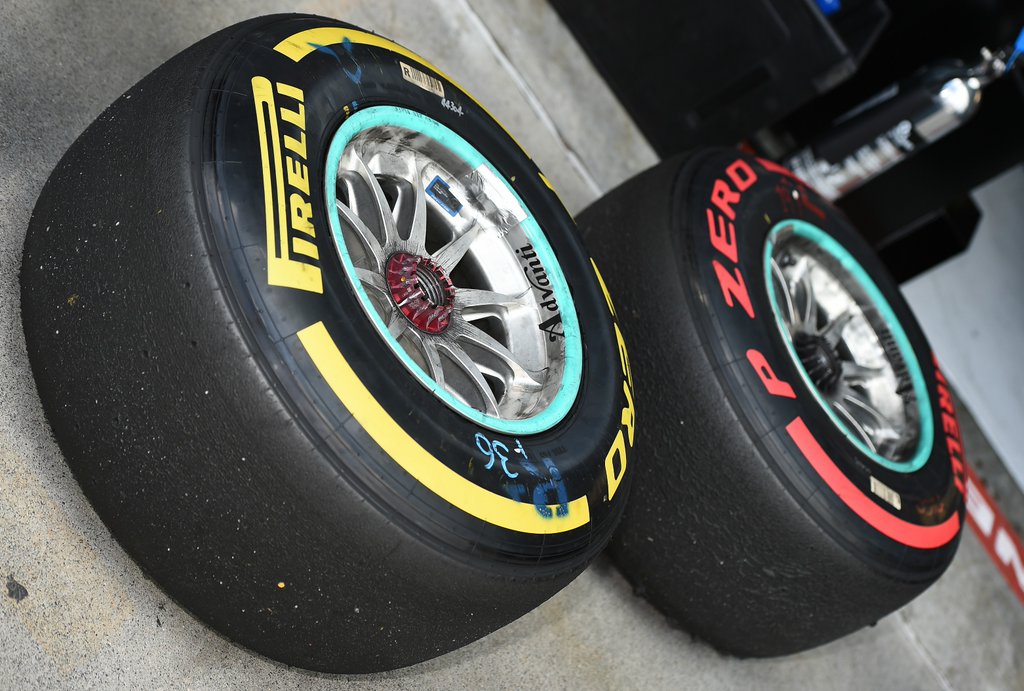
    New for 2019 are the aero regulations surrounding the front and rear wing area of the car as well as the simplification of the barge boards. In addition, three colours have replaced the rainbow selection of tyre compounds for this season. White, yellow, and red will make up the range of compounds with white being the hardest of the weekend, yellow the medium, and red the softest tyre available.

    Valtteri Bottas_Silverstone 2017_Thursday P1It’s a big year for the teammates. At Mercedes Valtteri Bottas has to impress Toto Wolff and co enough to keep Esteban Ocon out of his seat. Not in the Finn’s favour is the fact that in order to do so he has to beat, or at least match, his teammate and five-time world champion Lewis Hamilton. It’s a tall order for the Bottas but his task is crystal clear.

    At Ferrari expectations are high for young Charles Leclerc too. All indications are that the Monegasque driver has all the speed he needs to well at the Italian team but it remains to be seen how he’ll handle the pressure of racing for the most famous mark in motorsport.

    The rivalry between Max Verstappen and his new teammate Pierre Gasly hasn’t been given as much attention as the previous two but is no less intriguing. The French driver arrives from Toro Rosso where he easily had the beating of Brendon Hartley. It will be significantly more difficult to consistently out-perform someone like Verstappen.

    All of this and the incredibly tight battle for mid-field supremacy hasn’t even made into the conversation yet. While Williams, now sans technical director Paddy Lowe, are unfortunately expected to prop up the rear of the grid the battle between the likes of Renault, Haas, and Alfa Romeo appears especially tight. The most important thing that needs to be known, for now, is that Formula 1 2019 is here.

  • F1 2019: Ferrari – Gamble or Guile?

    F1 2019: Ferrari – Gamble or Guile?

    Much has been written about Ferrari’s drafting youngster Charles Leclerc into one of the most coveted seats in Formula 1. While expectations are exceedingly high for the young Monegasque driver there are other quite significant changes that have been made at Ferrari for the 2019 season.

    The sudden death of Sergio Marchionne was a big blow for Ferrari. As the architect and saviour of Ferrari Marchionne was a tremendously important figure for the company and the F1 team. It’s no surprise that, internally, his loss was felt in a big way.  A new CEO was announced in the form of Louis Camilleri, the former boss of Phillip Morris International and Ferrari board member. He immediately walked back Marchionne’s threats of quitting F1 and vowed to work in favour of keeping the iconic team in the world’s premier racing series.

    Camilleri also stated that there was no need for him to intervene or make any changes to the team given its positive performance. However, it wasn’t too long before he began to ring the changes. First, it was Charles Leclerc in for Kimi Raikkonen followed by an announcement that team principal Maurizio Arrivabene would be replaced by technical chief Mattia Binnoto. Rumours swirled throughout the season of unease between Arrivabene and Binnoto, which, at the time, were dismissed as untrue by Ferrari. However, the rumours sustained and grew to include several suspicions that the relationship between Sebastian Vettel and Arrivabene too wasn’t in a good way.

    Binnoto’s new role as team principal will mean that the technical department must be restructured too. After all, Binnoto can hardly be expected to wear both caps of team principal and technical chief at the same time. As team principal of Ferrari he will be tasked with and face an inordinate amount of pressure. First, he’ll be responsible for heading a team with a brand-new driver in the line-up. If, according to many expectations, Leclerc pushes teammate Vettel, ala Hamilton and Alonso in 2007, all the way he’ll have quite a job on his hands to contain such a situation. There is no doubt that as Ferrari team principal he will face relentless and unforgiving pressure to guide the famed team to championship success which has eluded them for a decade.

    It is curious however to know why Ferrari has chosen to restructure in this manner, as it isn’t a recipe followed by other front-running teams. At Mercedes it has been stability that has been one of its major strengths. As team manager Toto Wolff has James Allison, formerly of Ferrari, overseeing the technical side of the team while Christian Horner relies on Adrian Newey to keep his hand over the technical side of Red Bull. Even at Williams Claire Williams has Paddy Lowe at the helm of the technical department.

    The restructuring at Ferrari signals intent from the Italian team. But equally it reveals that they are still playing catch up with the likes of Mercedes and are yet to hit on an efficient method of running a cohesive team that can execute at the highest level week in and week out. The expectation will be that this reorganizing, across several departments, is the catalyst for finally getting the team onto the front foot from day one.

  • F1 2018: Haas and Williams Launch New Challengers

    F1 2018: Haas and Williams Launch New Challengers

    As a new season of Formula 1 approaches the period just before testing commences is the most optimistic time of the year. Right now all new cars are aerodynamically flawless, more powerful than anything that’s ever been built, and lighter than a feather. But all too soon a modest stopwatch will humble them.

    The first team to launch their 2018 car was the Haas F1 team. The American team chose to forego a typical launch and opted instead for to release a handful of images online. The release of digital images was no doubt a ploy be Haas to keep their competitors, quite literally, in the dark as to the nitty-gritty of their 2018 design.

    Nevertheless, what was obvious from the images is that Haas has adopted a strikingly similar side-pod design to what Ferrari pioneered in 2017 and a considerably more intricate front-wing. Additionally, this early version of the Haas is sporting a scaled down version of 2017’s sharkfin and a significant focus on a predominantly white livery. As the technical regulations have remained largely stable and unchanged the changes from 2017 to 2018 cars won’t be as visually obvious. The most noticeable difference is the inclusion of the Halo head protection system. While it is certainly a big adjustment and change to the aesthetic of the car chances are it probably wont take as long as some might think to get used to.

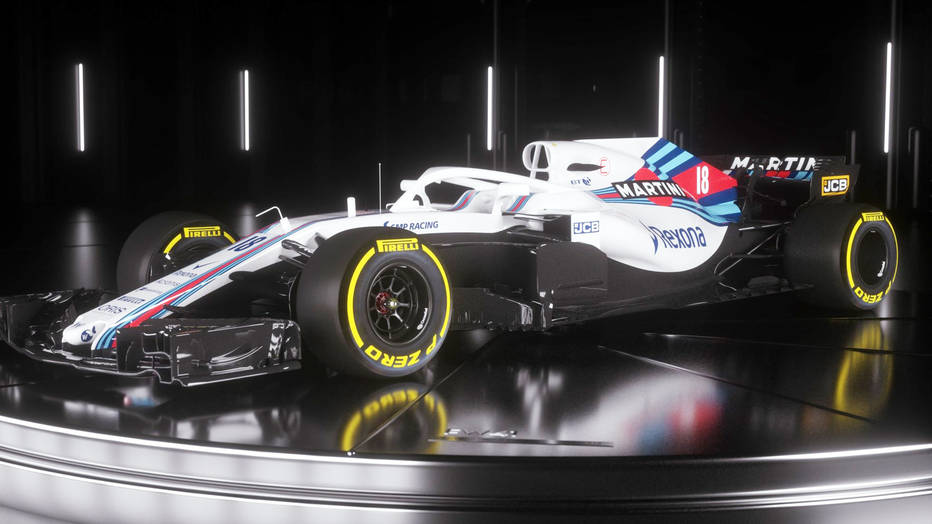
    sirotkinWilliams was the second team to introduce its car with a traditional online launch. Chief technical officer Paddy Lowe and head of aerodynamics Dirk de Beer have designed the FW41. Lowe said the car “has many new features, most of which are not all that obvious, but externally the team has pursued a very different aerodynamic concept which has allowed us some significant progress in aerodynamic performance.”

    “All Formula One cars are an evolution of what has gone before to some extent, but the FW41 does involve a number of departures from the directions that have been pursued in the past. Overall, the philosophy we are starting to see emerge is a new approach to the collaboration between aerodynamics and design to achieve the optimum working result.”

    While only lap times will tell if Williams have built a quick racecar the 2018 challenger undoubtedly looks more aggressive than its predecessor. In addition, the car has been designed with a longer wheelbase, which suggests that Williams have foregone the low-drag design philosophy of the last few years.

    Similar to Haas the Williams also sports the Ferrari-style side pods, which you’re likely to see on more of the mid-field cars this season. Naturally, and so as to avoid giving away any design secrets, some areas of the car has been shrouded in black paint.

    Haas1a_0Beyond the car that has been designed by Williams this season the other big unknown for the team is its driver line up. Nonetheless, de facto team principal Claire Williams has described the driver pairing for Sergey Sirotkin and Lance Stroll as “exciting” while highlighting Sirotkin’s impressive work with the technical team. Paddy Lowe echoed this sentiment by saying that the choice to sign Sirotkin was based purely on his ability.

    The Sauber and Renault teams are the next to launch their respective cars on the 20th of February followed by Ferrari and Mercedes on the 22nd, McLaren on the 23rd, and Toro Rosso on the first day of testing, the 26th of February.

  • 2017 Japanese GP: Friday Press Conference – Part 2

    2017 Japanese GP: Friday Press Conference – Part 2

    PART TWO: TEAM REPRESENTATIVES – Yusuke HASEGAWA (Honda), Ayao KOMATSU (Haas), Paddy LOWE (Williams)


    Q: Hasegawa-san, if we could start with you please. It’s been a good couple of races for McLaren-Honda, particularly Stoffel Vandoorne, seventh in both of the last two races. Just wondering how much satisfaction have those results given you and how confident are you of another good result on home turf this weekend?

    Yusuke HASEGAWA: Obviously in Singapore and Malaysia we got points which were very good but of course we are not satisfied. We are aiming higher all the time but we feel kind-of relieved to get a decent step. So, of course we try to keep the same performance for here, in Suzuka.


    Q: What can you hope for this weekend?

    YH: So far, that we get some points.


    Q: And with regard to next year, let’s just talk a little bit about the relationship with Toro Rosso. How do you think that relationship might differ to the one that you’ve had with McLaren?

    YH: I don’t think it’s a huge difference. We have already started the preparation for next year. They are very kind and they are very excited to have a new partnership, which we, of course, are feeling the same thing. No, there’s not a big difference, just a new partner.


    Q: Is the commercial relationship going to be the same as it was with McLaren?

    YH: Of course, the McLaren-Honda, the name of the McLaren-Honda is very famous – in Japan at least, maybe in other countries. From that point of view it could be that the expectation from the audience is a bit less, so we need to show that we can make it better. From that point of view, maybe I will feel a bit less pressure from the outside but from the inside there is no difference. We need to prove that we can do a better job for next year.

    Q: Ayao, second season of the Haas Formula One team, what is your perspective on how it’s gone? How would you sum up the last 18 months with Haas? How’s it gone?

    Ayao KOMATSU: It’s going well. Of course it could be better but from last year to this year we made a very big improvement and even though it may not be obvious to everyone but consistency is better than last year and our understanding is better, but I think now that we made a step from last year we now know again how much we need to improve for next year so really concentrating on the next step.


    Q: Now you’ve worked with Romain for a long time, drivers like to progress every year, just how have you seen him grow in a small team like that, because we hear him a lot on the radio and it’s not always complimentary?

    AK: Sure, I know Romain since 2009. I’ve done every single race he’s done in Formula One together so we understand each other pretty well, but yeah, he’s quite an emotional guy but then what comes out as negative on the radio is what actually makes him quick as well so you can’t have it both ways. We both understand the downside of that so we’ve just got to manage it, try to channel it in the right way so that everybody works in a positive direction.


    Q: Now I guess this is the time of year when you work through the good points and the bad points of the current car. You obviously want to translate the good points into next year. Could you elaborate a little bit on the good and the bad of the VF17?

    AK: I think our baseline is pretty good but the operating window is not very wide, so when we can get the tyres to work OK, you can see the potential, we can be in Q3 but there are some events where we really cannot switch the tyres on then we are fighting to get out of Q1. In Malaysia, Saturday was our lowest point, both cars out in Q1 so that’s the bad point. Next year, we really need to keep this good base but then trying to have the wider window so that we can work with… obviously next year you can have more different compounds as well so that will be the key, trying to work with different compounds, trying to get consistency out of it.


    Q: Paddy, let’s start by talking about drivers: there’s a lot of speculation in the press about who is going to partner Lance Stroll in the team next year. Can you just tell us a little bit about what you want from that driver and indeed, who is in the running?

    Paddy LOWE: It seems like we’re one of the last chairs available for next year. Of course Felipe is very much in the frame, very very high on our list of possibilities but we owe it to ourselves to take a look around and see what could be the best option for the team going forwards. As you say, that will be a partner to Lance. Lance has made great progress through the year, we’re seeing him performing consistently, particularly in the races so we need a driver to complement Lance on that side of the garage. But all options are under consideration, to be honest. You’ve probably seen a number of names that are floating around that we’re looking at but honestly the range is almost unlimited. We will consider all ideas. We’re not in a super hurry to do so and we’ll just make sure we land the best line-up we can.


    Q: But is the idea to have an experienced driver alongside Lance?

    PL: I think there are many attributes you could attach to different drivers and experience could be one of them, but we may weigh that against other things. We’re not fixed on any particular aspect.


    Q: Because where is Williams’s natural habitat in this pit lane at the moment? You’re lying fifth in the Constructors’ championship; are you looking for a driver who can help leapfrog you up to third? Is that the ambition for next season?

    PL: Yeah, we’re always ambitious to move forwards as all teams are and I think we recognise that the driver or drivers are a very key element in the team. Clearly you need a quick car as well, but the driver is probably the single most important factor in the end to take the package forward and score the points and indeed win races. I’ve seen that in the past, what a difference drivers can make to the race proposition, so it’s a very important decision.


    Q: And just tell us a little bit about next year’s car, what’s going on back in Grove? Are you encouraged by the signs you’re seeing in the windtunnel, for example?

    PL: Lots of good work going on. Yeah, we’re making quite a few changes. We see lots of opportunities out there that we’re determined to exploit and the project’s going well, yeah. At the same time, you know, we recognise we’ve got some very tough competition out there, some teams that we respect greatly who are also fighting to move forward so it’s going to be a tough space next year. We all want to have cars that can get safely into Q3, that’s a kind of mark of respectability really in Formula One, but there are quite a few teams that will be trying to squeeze into that quite small box.


    QUESTIONS FROM THE FLOOR


    Q: (Dieter Rencken – Racing Lines) Hasegawa-san, you’ve just heard what Paddy said, that the driver is a crucial element in the overall package. With McLaren, you had various World Champions driving for you. With Toro Rosso, although they haven’t confirmed their line-up, the chances of them having a Grand Prix winner let alone a World Champion are fairly remote at this stage. Do you believe that a driver is not important to drive a project forward, at the state that Honda finds itself in at the moment?

    YH: For the next year, you mean?  Of course the driver project is very important and of course we’d like to encourage the Japanese motor racing character we well so that to do that a Japanese driver is also very important. But currently we have nothing we can tell you about the drivers for Toro Rosso and we don’t have any contract about that. Actually, we don’t have any position to tell. Of course, we may negotiate with them so maybe we would like to discuss about that but it is not a contract matter, so that maybe they are just as a partner, as a friendship matter.


    Q: (Dan Knutson – Auto Action and Speedsport) Paddy, there have been reports that you were going to test Robert Kubica and Paul di Resta in a 2014 car. Can you enlighten us as to what is going to happen?

    PL: Yeah, you’re correct, we will test those two drivers. We won’t give away any information around what we do within those tests, that’s a private matter for us and I would stress that that doesn’t mean that they’re the only drivers under consideration. As I said earlier, we’re considering quite a large range of which they are only two possibilities.


    Q: (Dan Knutson – Auto Action and Speedsport) Paddy, can you at least tell us when this test will happen?

    PL: In the next few weeks.


    Q: (Dieter Rencken – Racing Lines) Hasegawa-san, I’d like to just clarify my question earlier on about the fact that it wasn’t so much aimed at Japanese drivers, but just generally whether you believe or not that a proven or an established driver line-up is important to develop your Honda engine project going forward because you had had World Champions, whereas at Toro Rosso you are unlikely to even have a Grand Prix winner. Do you believe that an established driver line-up is important?

    YH: Yeah, sorry, I don’t answer the question. Yep, of course, the driver’s feedback is very important to evaluate the engine itself and to find any issue from the engine and also to stop the engine as soon as something happens. From that point of view, Fernando, Jenson and Stoffel were perfect for that development driver and evaluator so yeah, it is very important. So far, as I mentioned, we cannot tell (about next year). I am very happy to have Pierre Gasly, he is a very talented driver, but actually I didn’t work with him directly but I expect him very much. So I don’t know for next year but we expect to have good drivers, of course.


    Q: (Jens Nagler – Bild) Paddy Lowe, how intense has your contact to Nico Rosberg been in the last weeks? And did the subjects you talk about change since he is managing Robert?

    PL: I didn’t fully understand the question but was it you were saying what contact had I had with Nico? Actually, honestly I’ve just had a couple of phone conversations with him, but as you point out, yeah, he’s now doing some work with Robert Kubica, so he has an interest in promoting that idea to us so I’ve had some conversations with him on that subject. As you say, a bit different from the previous conversations that I had with him the last few years.


    Q: (Dieter Rencken – Racing Lines) Paddy, you may have missed it earlier on when Cyril was here because you were outside doing the TVs but he said that the chances were pretty good that Marcin Budkowski would be starting early April in the role of executive director. Does it concern you that the gardening leave, for want of a better description or expression is not sufficient, given the relationship that he’s had with teams? What do you believe is the ideal time and what do you think of the situation?

    PL: First point is to congratulate Marcin. It looks like he’s got an excellent job, very senior role at Renault. I worked with Marcin in the past at McLaren so you know he’s a strong engineer and that’s great that he has that opportunity. But I think you’re correct; the concern amongst all the teams has been the very short period of isolation between a role as an officer of the FIA, very senior officer, and working with a team. And it’s very critical that the teams have a strong degree of trust in their work with the FIA; that really underpins the ability of the FIA to police the sport from a technical point of view. It’s an important subject, the teams will be discussing that with the FIA to understand what should happen in this case or cases in the future. So I don’t have any pre-set ideas around what solution should exist or even could exist. Amongst the teams, with senior engineers, we have very long notice periods, as you know, for the same sort of reasons.


    Q: (Sam Collins – Racecar Engineering) Question for Paddy Lowe and Komatsu-san: we’ve had almost a season of running with these new generation cars now and almost every team I’ve spoken to has mentioned the narrow operational window of these cars and getting the tyres to work. What is it about the current rule-set that makes that operational window so hard to exploit?

    PL: I think it’s just mainly down to tyres. The tyre defines, to a great extent, the operating window of the car because it’s fundamentally the temperature window of the tyre, sometimes the pressure window, where the tyre delivers the best performance. So depending on how narrow or wide or peaky that window is determines then how difficult it is to make the car work at the fastest level. I think that’s the subject. I don’t think it’s necessarily that much more difficult than last year, the levels of grip are higher, the lap times are quicker but I think it feels just about as difficult as it was last year, to me.

    AK: It’s exactly as I… I don’t think it’s the cars, it’s more to do with the tyres, and some tyres can work in any conditions, some tyres need specific conditions so yeah, it’s mainly down to tyres.


    Q: (Ken Kawakita – Weekly Playboy) Hasegawa-san, Komatsu-san: this is very domestic question but having someone like you in the FIA press conference as a key member of a Formula One team, giving a lot of hope for young Japanese boys who are dreaming of being in Formula One to work as engineers, is it possible to have any advice to make the dream happen for those young Japanese boys or girls? Any word?

    AK: Yeah, I was interested in Formula One since I was a junior high school student and I wanted to do Formula One so then I thought, OK, it’s better to come to England so I decided to leave Japan after doing high school so I guess the advice is don’t limit yourself, if you like, don’t ever think you can’t do it, just assume that you can do it and then try your best and then when you’ve tried your best, even if you failed, then I think you learn a great deal from it, so there’s no downside so just try and believe you can do it. If I can give advice, that’s the advice.

    YH: Yeah, I think I’m completely different from him, so that he was aiming to be a Formula One engineer but I was joining Honda and I was just working as a mass production development and I never expected to be a Formula One engineer, but I always concentrated on doing my job, all the time and to improve myself, so the chance will come from outside, so I didn’t expect… so just do your job and just do it and improve by himself or herself is the important thing, I think.


    Q: Paddy, can you just tell us a little bit about how international the teams are, how many different nationalities might you have at Williams?

    PL: I haven’t got a number but it is a very international sport, not just in terms of drivers but also in terms of engineers and all the staff within the teams. I think that’s what makes it such an exciting and rich industry, and I’d echo the comments of my colleagues here, that if you have the determination, actually it’s not as difficult as you may imagine to make the progress and achieve the position that you may want, working in a team or some other part of the industry, so never think it’s out of your reach, go after it.

  • 2017 Hungarian GP: Friday Press Conference Part 2

    2017 Hungarian GP: Friday Press Conference Part 2

    PART TWO: TEAM REPRESENTATIVES – Paddy LOWE (Williams), Nick CHESTER (Renault), Paul MONAGHAN (Red Bull)

    Q: Nick, if we can start with you, it’s been a difficult day for Jolyon in particular. Incidents in both of those sessions. What state is his car in now? He had the new floor this morning: how much damage this afternoon?

    Nick CHESTER: Well, we’ve got a little bit of work to do as you can probably guess from seeing the TV, so we’ll be changing his gearbox anyway because we normally change it on a Friday night, so the rear suspension will get refreshed with that. The floor that was damaged this morning will be repaired and that will go on tomorrow, so he’ll have the news-spec floor. To be honest there’s nothing that we’re not used to repairing. We’ll get it all sorted for tomorrow.

    Q: Silverstone a couple of weekends ago was a tremendous weekend for Nico Hülkenberg. The new floor seemed to give a lot of advantages there. Does that translate to even more performance around here? How is the performance of the car?

    NC: From what we’ve seen so far today it looks pretty similar. So, we’re seeing a pretty good performance here. I think Nico was seventh in P2. It’s performing like Silverstone really and we’re seeing that performance gain that we did see at Silverstone.

    Q: Given the different characteristics of the two circuits, is that very encouraging for you?

    NC: It is, yeah, because they’re two circuits that are very far apart, so if you can perform on Silverstone and Hungary, you should be in a reasonable place for the rest of the year.

    Q: And final question from me is about the Halo. Obviously it’s been confirmed that it’s going to be introduced in 2018. Do you see it an aero opportunity, as well as obviously the safety benefits. Are there any performance benefits that could come from it?

    NC: No, not really. I think Halo, for starters, it’s good to have something there that’s going to give the driver more protection and everyone’s behind that and wants to put it on the car for that reason. But in terms of aero, if anything it’s a detriment and, if anything, you have to work around it being fitted to the car. So, I don’t think they’ll be any huge tricks with it.  I think everyone will just want to put it on the car and make it the best they can for the drivers.

    Q: Paddy, you’ve been in this game a long time. Your thoughts on the Halo?

    Paddy LOWE: Yeah, there’s obviously a lot being written about it. It seems to be quite controversial, let’s say. I think it’s worth bearing in mind the context. Probably five or six years ago the TRM themselves had identified that the big risk they could see still in the sport was to the driver’s head and there were a number of near-misses, typically one per year that we all saw go by and thought one day that could end in tragedy. So that was the background to developing a solution, and we ended up here with the best option being the Halo. I know it’s not the most attractive device but I do think it’s the right decision to get it on the car. At least then we’re started, we can always make it better in the future. I’m sure we can improve it year on year but at least we’ve put in place that protection that we intended from the start.

    Q: Looking at today’s performance, difficult day for the team but in fact it’s been a difficult few races for the team and, if you look at the points this year versus last year, you’re on 41 now, at the same stage in 2016 you had 92 points. Obviously it’s a tougher season but where is the performance lacking this year with the FW40?

    PL: Yeah, definitely at the half-term report stage we’re not looking as good as we’d like. We’re very disappointed, the car is quicker than that points table would reflect. I think one of our biggest problems has been that we haven’t been scoring the points we should have done at the track with our speed of car. That’s for a number of different reasons. On top of that, we’ve seen a lot of variation from circuit to circuit. There are places that we significantly under-perform and we really need to have a car that will perform more equally at different destinations, so that’s a big focus for next year.

    Q: Have you ascertained why the car underperformed at those tracks?

    PL: Some of those things we understand, some of them we don’t. So there’s a lot of work to do. But we’re very much hoping we can have a better second half of the season and put some of that right.

    Q: Paul, well a very promising start to the weekend for you guys, particularly with Daniel. Your thoughts on how today’s gone – and what is Daniel saying about the car?

    Paul MONAGHAN: Today offers a lot of encouragement, doesn’t it? Both our drivers seem competitive and sadly we haven’t got 43 points from Friday afternoon. The bit that remains in our control is our car, so we’ll try to work on it overnight, improve it, get the drivers more settled with their setup choices and so on and so forth, and we’ll deploy ourselves tomorrow, keep it in good order and see what our competitiveness is like in qualifying and then obviously on Sunday in the race. That’s about all we can actually do. The pace of our competitors is down to them, isn’t it?

    Q: Is this performance track-specific or are you confident you can go forward and be competitive everywhere now?

    PM: Up until Silverstone I think Daniel had five podiums in a row, didn’t he, so we’ve been competitive at tracks where we thought we might be a bit weaker, we might have thought we might have been a bit better. In general our car is adept at dealing with most of the tracks. Some will suit us a bit more than others. That’s inevitable and that’s something true of all the cars in the pitlane. Coming to this one, OK, some of our weaknesses are masked, others are highlighted, but the bit that remains in our control is our car, and let’s see what we can do with it tomorrow.

    QUESTIONS FROM THE FLOOR

    Q: (Kate Walker – Motorsport . com) For all three of you please, on the halo: in the briefing yesterday, Charlie was saying that while there are aesthetic objections, you guys have got opportunities with fairings and whatnot to make the device slightly more palatable. I was wondering to what extent you’ve already begun looking at improving the aesthetics and the performance of the halo or is 2018 just going to be spec and move on from there?

    PM: The fairings were, I believe, agreed around about July 2016 or the extent of them. We will make use of the fairings, as Nick alluded to, to reduce the aerodynamic detriment of the halo and I think, beyond that, the aesthetics of it. Yes, if we can have a fairing which reduces some of the aerodynamic detriment and makes it –  to the eye of the beholder, shall we say, slightly more aesthetic, we’ll take that solution but I think the aesthetics of it, it’s not put on there for that reason, is it? It’s put on there as a safety device. We’ll put the fairings on it, we’ll do the work that Nick’s talking about, to reduce the detriment and that will be on for 2018.

    PL: Well, firstly the definition isn’t finally issued yet so we don’t exactly know what opportunities we’ll have but I believe we’ll have the space to minimise the aerodynamic detriment as Nick was saying, and hope within that, generally, we try and find a good aesthetic and these things often go together.

    NC: Not much to add. The fairings are allowed; it’s a fairly small fairing and as Paddy has said, not all of the regulations for fairings are finalised yet. We’ll be doing a little bit to reduce the aerodynamic deficit.

    Q: (Andrew Benson – BBC Sport) Nick, you’re testing Robert Kubica again on Wednesday. Can I ask you a few questions in one about that? How it initially came about? How long the team had stayed in touch with him? Who contacted who? Why now, after six and a half years? The mental fortitude and struggle it’s taken him to get to this point and what you’ve seen so far about his readiness to return to Formula One? 

    NC: OK. Yeah, quite a few questions there. Yeah, to start off, the background… I must admit I don’t fully know the background or how the contact was made but obviously we know Robert, we know him from when he drove in Renault before. He was a super driver. It’s nice to give him the opportunity to get back in a V8, get some mileage, see how he can handle it and then he’ll get another opportunity in current machinery in the test after Hungary and it’s a good opportunity to see what he can do and whether he can come back to Formula One someday.

    Q: (Andrew Benson – BBC Sport) From what you’ve seen so far, what would you say about his readiness and his physical limitations and whether they affect him in the car and what changes you’ve had to make to the car to adapt to those?

    NC: Yeah, well from what we’ve seen so far his mental fortitude is great, he’s pushed very hard to come back. Physically I think he’s passed all of his fitness tests and we’ve had to do very little to the car so he’s actually managed pretty well in a modern F1 car.

    Q: Nick, can you give us any more details about the steering wheel, have you had to make changes to how he changes gear or anything like that? 

    NC: We’ve made some little adaptations but nothing too serious.

    Q: (Roksana Cwik – SwiatWyscigow) Mr Lowe, we saw in the second practice that Felipe had a lot of problems in turns four and five. He also asked for the car to be checked. Can you say something more about those problems?

    PL: Yeah, Felipe did have a couple of spins in P2 which took him by surprise so we are still trying to understand and analyse those. At this point, we haven’t understood it. It was interesting that in that session, a lot of cars were going off at corner entry with very unstable balance so we don’t know whether it might be something to do with the tyres, some general characteristic or not or something to do with our car.

    Q: (Istvan Simon – Auto Magazin) Mr Chester, we have seen a pretty bad accident by Jolyon in free practice when he basically crashed the undertray of the car or the diffuser of the car. Do you know the reason? Was it a driver failure or a failure of the kerbs or anything else? 

    NC: Yeah, I think you’re probably referring to the free practice one accident. Yeah, he ran wide over the kerbs and just… there is a little drop on the outside of the kerbs and that’s enough to bounce the chassis and the floor and the front wing so yeah, it was just enough to rip the front wing off.

    Q: (Istvan Simon – Auto Magazin) Is it the same as we had last year?

    NC: The kerbs are slightly different so there was a single row last year, there’s now a double row so they are different and really the intention is the drivers shouldn’t be going right over the second set of kerbs.

    Q: (Istvan Simon – Auto Magazin) Do you have a spare part for this? 

    NC: Yeah, we do, fortunately. We’ve got a reasonably good stock of front wings and we’re repairing floors for him so we will be in good shape from tomorrow.

    Q: (Peter Farkas – Auto Motor) This is primarily for Paul but all three of you please… Even in P1 we saw a spectacular time from Daniel. He was only a couple of hundredths from the lap record, set in 2004 so was it a surprise that the track was so quick, even in P1? But in P2, there didn’t seem to be such a huge track evolution. I mean he only went a little bit better so do you have an explanation for that, did it surprise you that it was already so quick in P1 and why it wasn’t so much quicker in P2? 

    PM: OK. Hungary, as we used to come here years ago, you would see the plumes of dust behind the cars in P1 and there was a huge track evolution. I think to all of our benefits, the track is now superbly cleaned before we start running and as such on the slightly cooler track, if that suits your car and tyres a little bit better, then P1 is an opportunity to operate the car near its limits without being grip limited by dust and so on and exploiting track evolution. Therefore, as the track warms up, it’s not always possible to then have the evolution you typically see from some of the other tracks in P2 and I’m not surprised we didn’t see big steps for the second practice, to be perfectly honest. As for the actual lap time, when you do a simulation, you can obviously factor in an amount of grip on the track; we put in what we think is the aero model, what we think is the engine model, verification actually happens at the track so… Everybody can have a go at their simulation and then we’ll all say yes, we’re on it, or no we’re not or we’re quicker, we’re slower. It doesn’t actually matter. We don’t race the simulation tool. That helps the preparation, it helps everybody and now it’s down to Saturday and Sunday for the competition.

    Q: Paul, can you give us a guesstimate of what you think pole position might be tomorrow? What time?

    PM: I’m not going to do that, no. I’m going to duck that issue on the basis I can’t tell you how fast our competitors’ cars could be and nor am I going to tell you how fast our one can be.

    Q: From Paddy and Nick: any thoughts on the grip level available in FP1 and the track evolution or not?

    PL: Only to say, as Paul was saying, one of the tricky things in modern Formula One is tracking the evolution of the track but what was the track temperatures, these tyres are very sensitive to track temperature. It’s one of the challenges we face and you know that today was no better example.

    NC: Yeah, very similar. I think the cars are very sensitive to tyre temperature. The track temperature came up for the second session and it was a little bit windier as well so I think that made it a bit tougher for some of the drivers.

  • F1 2017: Chinese Gp Preview – China Set For Mercedes Reaction

    F1 2017: Chinese Gp Preview – China Set For Mercedes Reaction

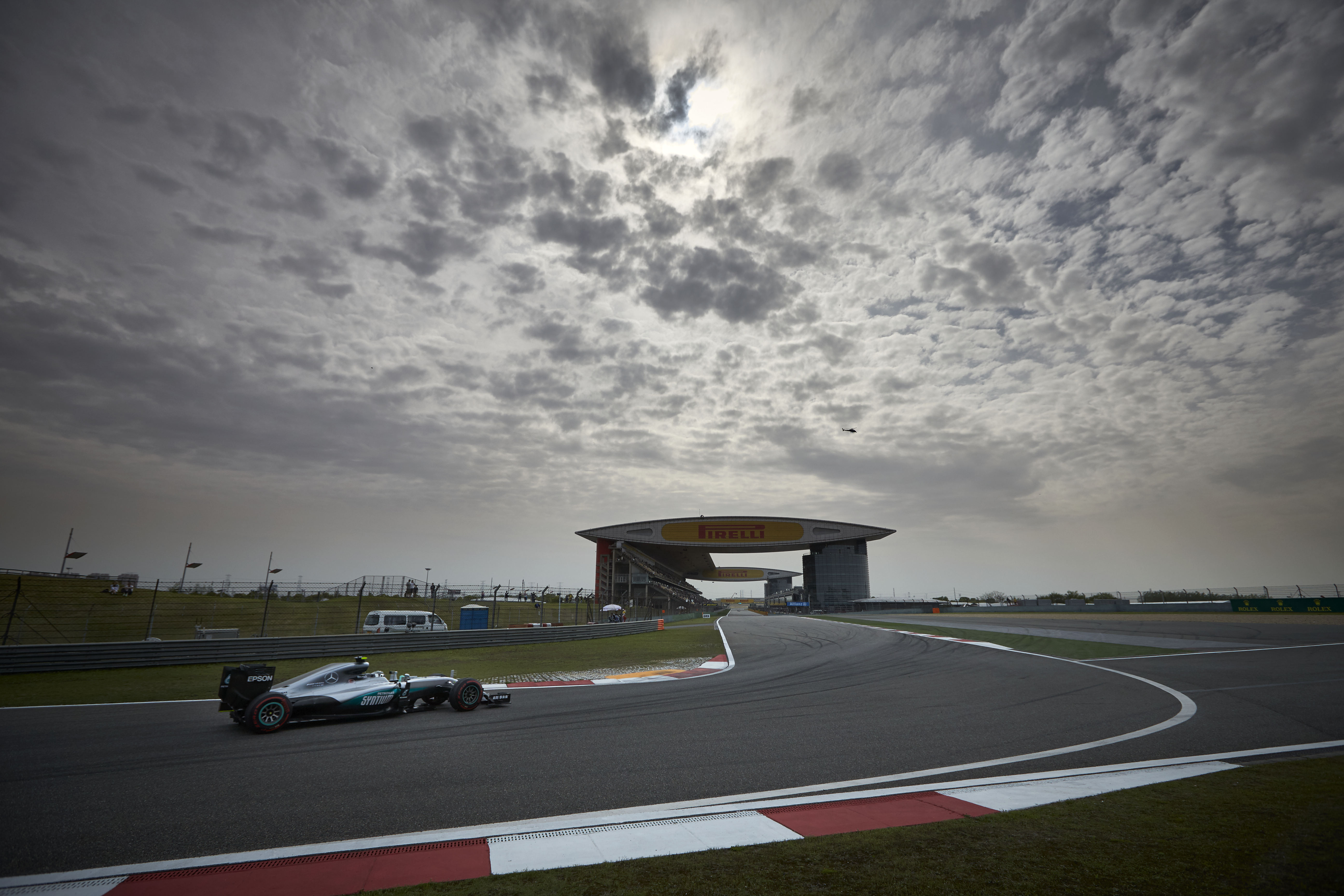
    From the quaint streets of the Albert Park circuit in Australia the Formula 1 paddock heads the grand architecture of the Shanghai International circuit in China for the second round of the 2017 season.

    Remarkably, F1’s latest visit to China marks the 14th year that the Shanghai circuit has been on the calendar. There is a bit of history about the circuit too. Its inaugural race in 2004 was won by then Ferrari driver Rubens Barrichello and in 2006 Michael Schumacher scored what would be his 91st and final victory. A year later Kimi Raikkonen’s win in changeable conditions would set up an unlikely championship triumph while, in 2012, the Chinese grand prix was also the very first race win for the reigning champion Nico Rosberg.

    Nevertheless, while these stats and victories remain firmly in the history books the 2017 crop arrives with what is still very much an era in its infancy. While Ferrari has won the first race of the season the Shanghai International circuit demands a far different type of car performance. For one, this circuit is far more front limited which means that a car will need to work well with its front tyres to set competitive lap times. The tyres too will be tested more than in Australia as the Chinese circuit is far more abrasive.

    Tyre wear may prove to be a significant factor, especially for Mercedes. It was this issue that Lewis Hamilton singled out as the reason for his defeat by Sebastian Vettel and Ferrari. What’s more, in Australia it was clear that Mercedes W08 is not as comfortable following other cars as the Ferrari appears to be which, by itself, can substantially influence tyre degradation and wear.

    Driver tyre choices for Chinese Grand PrixHowever, these aren’t the only issues Mercedes are facing and the team has admitted that it needs to reduce the weight of its 2017 car. An overweight car not only costs lap time but also takes away the teams ability to position ballast in the car to aid handling. What’s more, Haas team principal Guenter Steiner thinks that Ferrari’s 2017 power unit might be on a par with than that of Mercedes, if not better. The make up of the Chinese circuit, which includes several high speed corners, and long straits, will be a good test of Steiner’s theory.

    But by no means is Mercedes ruled out of taking the top step of podium this weekend. The prediction of fairly low temperatures for the race weekend will be in their favour as cooler condition will mean less overheating of their tyres. But they’ll have to work hard if they are to withstand the threat of Ferrari. For Red Bull the fight is highly unlikely to be for the podium considering the deficit of the Renault engine to that of Mercedes and Ferrari.

    Shanghai_F1_Circui_01Several critics have railed about the difficultly of overtaking in 2017. The detractors felt vindicated by the overall lack of overtaking in Australia but Albert Park, as a semi-street circuit, is not the best barometer in this case. While the jury is still out in what is still a fairly immature point of the season the Shanghai International circuit, thanks to its two long straits, will offer more overtaking opportunities. It will not be definitive but it will begin to reveal how easy or difficult overtaking will be in 2017.

    Since the start of the hybrid era in 2014 Mercedes have been an unstoppable juggernaut only rarely tripped up by themselves. In these three years the world has witnessed how the Mercedes team runs and conducts itself as the dominant force. At the start of 2017 they are by no means down and out but are, at the very least, perceived to be ever so slightly on the back foot. Therefore, it will be fascinating to observe how they respond.

  • 2017 Australian Grand Prix: Friday Press Conference

    2017 Australian Grand Prix: Friday Press Conference

    TEAM REPRESENTATIVES – Toto WOLFF (Mercedes), Eric BOULLIER (McLaren), Maurizio ARRIVABENE (Ferrari), Christian HORNER (Red Bull Racing), Paddy LOWE (Williams)

    PRESS CONFERENCE

    Q: Opening question to all of you gentlemen: obviously it’s the opening day of a new season of Formula One. Lots of changes on the cars but sum up how your first day went? Eric why don’t you kick us off?

    Eric BOULLIER: Reasonably well. Obviously we didn’t add as many laps as we were expecting but if you compare with the testing it was a little bit better. Obviously the cars look more spectacular more aggressive, It was a good working day for us.

    Christian, obviously you had the incident with Max that lost you a lot of track time but Daniel’s long run looked pretty reasonable.

    Christian HORNER: Yes, not too bad. Certainly the first session today was encouraging. The few changes that we made the drivers didn’t like too much. Max did a little bit of grass mowing at Turn 12 and that compromised his session in the late afternoon but we got a lot of good information and we’re generally quite encouraged.

    And Paddy, how was your first day of action at Williams?

    Paddy LOWE: It was sort of a mixed day because we had a great first session, some encouraging pace. [It was] Lance’s first practice ever in Formula One, so he was taking it steady, step-by-step, making good progress. But into the afternoon we had an electrical problem on Felipe’s car, a short circuit, and that really ended his session very early. So we didn’t get the homework we would have liked on that car. But overall, quite encouraging for tomorrow.

    Maurizio, did today go as you thought it would?

    Maurizio ARRIVABENE: We were working mainly on car balance. This morning we were struggling a bit more than normal. But then in the afternoon we were still working on the car balance, but nothing different versus our Friday programme.

    Toto, Lewis looking very much the man to beat.

    Toto WOLFF: Yes, he had a very good day overall. For the team it was one of the better Fridays. Having had some question marks over testing in Barcelona it was encouraging to bounce back in that way, but it is a day that doesn’t matter.

    Q: Eric, coming back to you. We hear you are collecting quite a lot of air miles at the moment going forwards and backwards to Japan. How serious are your problems and what steps are you taking with Honda to resolve them?

    EB: Well, obviously we had a very bad winter testing, a lot of troubles, didn’t do many miles, no race simulations but like you said we are having many, many meetings with Honda. We both take it very seriously. All the options are open. Today we discussed how we can catch up and recover from that situation.

    Q: Toto, they say you should never change a winning team, but here you are after three dominant seasons with a new technical chief and a new driver, so how has the dynamic in the team changed?

    TW: It’s a very large organization, between Brixworth and Brackley it’s almost 1500 people and the dynamic is positive. Every year we are trying to reinvent ourselves without compromising performance and we are in good spirits.

    Q: Christian, a slightly quieter testing period than with Ferrari and Mercedes, but lots of new parts arriving on the car today. Tell us how the development race will impact this year’s championship. Is it going to be the deciding factor and are you going to come out on the right side of it?

    CH: Well, I think it’s going to be a big factor. These regulations are still very immature and there are going to be a lot of gains in a short space of time and it’s a matter of who can most efficiently develop their car and effectively get components on the car that drive performance forward. It wouldn’t be unrealistic to expect the cars to be 1.5s quicker by the time we get to Abu Dhabi than where we are here today. It will ebb and flow during the season but at the front of the grid hopefully we get a bit closer to Toto’s guys and have some closer races this year.

    Q: Paddy, you’ve gone back to the team you did some winning with back in the early 1990s, a dominant period with Mansell and Prost. Why is this move to Williams the right thing to do at this time of your career?

    PL: I had a great three years in my previous team, some great success there, but there was a great opportunity, a challenge at Williams. As you say, it’s going back to the team where I started my career in Formula One. It was quite emotional and special going back there a week ago, seeing people I literally hadn’t seen for 24 years, but fantastic team and we look forward to making substantial progress over the years to come.

    Q: Maurizio you have been downplaying expectations going into this season, but what I’d like to know is, inside the team, how hard it was to build what looks to be a very competitive car given all the technical changes and staff upheaval that you had in the second half of last year?

    MA: If you change something, it’s for the better, not to get worse. We have a change, the team is working very well together. Over the winter the guys were exchanging information; they have a common goal. Working all together, having a common goal and exchanging all the information they have, the car becomes not the car of one but the car of everybody and this is what has driven us until today and into the future.

    QUESTIONS FROM THE FLOOR

    Q: (John McEvoy – Daily Mail) To Maurizio. Liberty have arrived, and one of the things they have said they want to do early on is make everyone more available to the media, but after arriving here it seems you have gone in the other direction. One of your drivers was unavailable yesterday in advance of this big race at the beginning of the season, from an organization as big as Ferrari. I was wondering why that is, whether that will go on or whether that will be addressed?

    MA: Define media. What do you mean by media? Today, defining media is quite large in terms of communication media. It’s also social media. It’s not only what we are thinking about. Yesterday we had Sebastian who was talking and we were using social media and posting something related to Kimi. Liberty also said that in this business at the moment the digital platforms are used at only 1% of the potential. So, the good thing is to find the right balance. Instead of having two drivers on Thursday and talking and doing a copy and paste of one versus the other with the same questions we made sure that Sebastian was talking in one way and Kimi in the other. So we cover all the communication platform. Making happy also Generation Z.

    Q: (Seff Harding – Xero Xone News) – To follow up on that, a question for all of you, do you feel that there does need to be a change in accessibility to the press, to arrange interviews that may be on social media, Facebook Live, Instagram, to reach out to other audiences, in other markets and of course to other demographics?

    CH: I think the changes that have been put in place this year have been positive. I think that relaxing the rules regarding the digital platforms, allowing content to be generated… non-circuit content giving the ability for fans and followers to get a little bit beneath the covers and closer to seeing the personalities of the drivers in the build-up to a grand prix or pre-season is certainly positive. It’s a media business at the end of the day. Formula One is a media business. We have to engage with the media. It’s important that we give access to the drivers, access to the fans or how else are we going to promote the sport.

    Toto?

    TW: I think like Maurizio said, we have to cover three different generations. We have to cover the long-time followers, so-called middle ages, the Millennials and Generation Z. You kind of need to play the full span. For example, when we launched the car we put some time into the car launch, which is a risk on the engineering side, you’re compromising your time, and we did a Facebook Live launch, 360, and we had almost a million views in 24 hours and it was successful. We have to embrace all that, not forget any audiences within these groups but target all of them and Liberty’s approach has been right so far, in opening up.

    Q: (Giles Richards – The Guardian) Question for all of you: we’ve had the big regulation change this season, can you tell me whether you think we will actually see better racing and the reason why this is so or why if not?

    Eric, why don’t you start?

    EB: I think the car, obviously it’s a hot topic with everybody talking about overtaking numbers and manoeuvres and whatever. I think 90 per cent of the overtaking is thanks to DRS since this device has been introduced. So as far as we are concerned the DRS is still on so I don’t think there will be many changes on this: the number of overtaking. The car philosophy stays the same as the previous generation and, as long as it is dictated by this front wing, you will have this loss of downforce effect into the corners. On the positive side, I think the drivers were the ones lobbying us, all of us, to have a faster car, fastest cornering cars and clearly we have achieved this, I think, with bigger tyres, more downforce, fastest cars today and obviously that’s going to facilitate, or help the bravest drivers to try or attempt some manoeuvres to overtake. So, I don’t think there will be a big difference compared with before. I think, and the drivers as well, I can already feel – and I’m talking for McLaren only – Fernando clearly was the one who was complaining about the previous generation, and he’s clearly happier now with this kind of car. He enjoys driving the car and you can see the cars today, in some fast corners they are flat-out already on Friday afternoon – so I think it’s a good sign about what we wanted to achieve. I think all the drivers happier should make the show better.

    Paddy, any thoughts?

    PL: Yeah, I agree with what Eric said but on top of that I think the other element we will see with much higher loads now in the car, with higher cornering speeds, driver endurance is much more demanding, so we may see more mistakes in races, drivers more on their human limits. So, I think that could be another interesting factor.

    Anything to add Christian?

    CH: I think the guys have covered it pretty well. I think the cars are going to stretch the drivers. I think sitting here, and we don’t know whether the racing is going to be better over the year or not, but I think the drivers are going to be working harder, you’re going to get perhaps more differential between drivers and they’re going to have to work harder for overtakes when arguably some of them have been a little bit too easy over recent years.

    Q: (Dieter Rencken – Racing Lines) Based on comments that Ross [Brawn] made earlier today and also previously, it appears that the Commercial Rights Holder could play a more active role in the regulatory process. Which means that possibly entertainment could take precedence over technology etc. How do you feel about this? About the commercial rights holder getting increasingly involved in the regulatory process?

    Toto?

    TW: This is an entertainment platform and it should be around the entertainment of the fans and I think with Ross in place it’s the right individual. He has seen it from the other side; he knows pretty much what matters to the teams and now trying to seek a good balance between keeping the DNA of Formula One, keeping it at the pinnacle for racing drivers and for engineering and equally making sure it’s the best possible show for our fans will be the main priority. I think we are definitely in an interesting place and it looks positive.

    Maurizio?

    MA: I think for the future cost and performance, they are two key factors. Reducing the cost and increasing the performance, they are the two key factors. Then, of course, it’s an entertainment, what we are doing here. It’s part of the entertainment business. Everybody, they’re open to discuss and talk about new ideas in the appropriate places. At the moment we have governance, so talking to everybody to help the sport to grow is fine until we are all aligned to the actual governance. Or, if we want to change it, we have to sit and discuss about this.

    Paddy?

    PL: yeah, we welcome a focus on entertainment. That is what this sport is all about. I think the really encouraging thing is that Ross is building a team behind him who are going to do proper research into proposals that are under consideration, so I think there’s every reason to feel positive about the future.

    CH: I personally think there is far too much emphasis on technology at the moment and we’re spectacularly bad at communicating that. I think the average fan and viewer understands very little about the technology that’s in a Formula One car which, as Maurizio alluded, is enormously expensive. So, I think the Commercial Rights Holder, it’s their business at the end of the day. They have to decide what they want the sport to be and, if the route is fan-attraction and creating a really exciting product, and at the end of the day they want to create great content on TV then it’s vital they come up with an outline of what their vision of Formula One is. And then, obviously, the FIA have a regulatory position and the teams need to be involved in that process. We have a process that that can be achieved in if two of the three parties agree.

    EB: All has been said I think

    Q: (Flavio Vanetti – Corriere della Sera) To Maurizio, given the results of the test and what happened today, do you have an accurate idea of the position of Ferrari?

    MA: Yes, we have it in Barcelona and in Barcelona we have our programme, we follow our programme since the last week and as well it’s what we are doing here on Friday. On Friday we are working on the balance of the car, as on Day One in Barcelona we were working on finding the best performance day after day without panicking, without being under pressure and being focussed on what we were doing.

    Q: (Luigi Perna – La Gazzetta dello Sport) Another one for Maurizio. Daniel Ricciardo recently told us in an interview that Sebastian Vettel becomes even quicker and more motivated when he has a winning car in his hands. Do you expect him to give an extra performance this season? And what do you need: Ferrari and Seb to go home together, to sign another contract for 2018?

    MA: I’ll start from the end of the question. Talking about contracts now is only distracting the attention of our drivers so I’m not ready to talk about any contracts. Then, I would like to see Sebastian happy during the season because if Sebastian’s is happy that means the car is very quick.

    Q: (Jon McEvoy – Daily Mail) Maurizio, do you have as much belief that you can win this race now, as you did this morning. I hear what you’ve said and the work you’ve done during the day – but do you have as much belief that you can win it as you did at the start of the day?

    MA: We want to keep our feet on the ground. It’s Friday. We have to work this evening. Tomorrow we continue our job and then, until Sunday, we have a lot of things to do, still. So, I don’t want to do any prediction.

    Q: (Louis Dekker – NOS) For Christian. It’s only Friday but can you imagine Daniel winning on Sunday or is the gap too big?

    CH: I think, being realistic, the performance we’ve seen today from Lewis, he’s the absolute favourite. He was the favourite coming here and all today has done is underline that. But then it’s motor racing and anything can happen. We’ve seen spurious results in opening grands prix in previous years and obviously to have a home winner would be an unbelievable result – but if you look at the pecking order at the moment that is a long shot.

    Q: (Andre Leslie – DPA) Question for Mr Wolff, to do with the makeup of your team this season, with Valtteri Bottas now replacing Nico Rosberg, obviously Nico leaves a big hole in the team but Valtteri is keeping pace brilliantly today – we’ve seen twice. How do you see his role going forwards this season?

    TW: It’s obviously very big shoes to fill. Nico is the reigning World Champion and Valtteri has to fill those shoes. He has a couple of days of testing behind him which were very positive and the work with the engineers went very well and today was the first proper day on a race weekend. I think that in terms of the mindset, he has settled in very well into the team and how he has to find his grip and benchmark himself against probably the best driver in Formula One at this time. I’m very confident he is going to find the pace and his place in the team.

    Q: (Heath McAlpine – Auto Action) For all of you: today’s first practice session saw minimal running from the teams worried about engine mileage. Would you support a change in the engine regulations to increase the Friday running for your teams?

    EB: Good question. I think if we don’t run it is because we may have some technical limitation or let’s say no interest to gather data at that stage so if we do between let’s say 18 and 30 laps per session it’s because it depends on the engine plan generally. I know you can have a different regulation to have more laps but we could do it simply by making sure there is an interest for the teams to run.

    PL: I don’t entirely agree with what you’re saying, really. I think the teams are running pretty much a full programme during both sessions. If anything they’re limited by tyres more than engine mileage.

    Q: (Dieter Rencken – Racing Lines) I would imagine that this is the first Grand Prix that any of you have attended without having Bernie Ecclestone in overall control and charge. Have you, today, thought about the fact that you can’t just pick up the phone and phone Bernie if there’s some sort of issue?

    CH: How do you know he’s not still in charge? What Bernie’s done for Formula One has been amazing. The sport is what it is today because of what he created. I think in the role that he has, he’s still going to be in a position to contribute, he still has a huge amount of historical knowledge, respect and relationships around the world and I think that harnessed and used in the right way is an asset to Formula One. I’m sure he’ll be at some forthcoming events and yeah, I think hopefully the new owners can use him constructively and beneficially to build on the good work that’s already been done.

    MA: I think that Bernie deserves all our respect because if we are here and if the sport grows it is thanks to him. I think that the new group that is owning Formula One is here to make this sport grow even more so there is no future without the good historical base. If we have a good historical base then I think the new owners are looking forward to continue to grow and that’s thanks to Bernie for everything he’s done and now we need to look forward.

    Q: (Mat Coch – pitpass.com) Earlier there was a question about cars not running on the circuit; what can be done in the interests of entertainment to spice up the Friday action which is comparatively dry for those at the circuit, given that everyone’s involved in their own programmes, preparing for the weekend?

    PL: I don’t know. We used to have qualifying on Friday as well as Saturday back in the old days. Maybe that could be considered. I think the great thing now is that we have an evolving process to consider the rules properly and develop a sport that incorporates new ideas.

    TW: I think you need to differentiate because we had a very busy afternoon with lots of track action. We had a morning which is completely normal and a green track so there is not a lot of interest in testing cars on a track that’s going to develop a lot with the limitation on tyres, with the limitation on engine mileage and if you start to open that up it’s like Pandora’s box because we’re trying to limit costs. The question is that as much as you need an entertainment most of the time entertainment on track, I think we have a good compromise at the moment.

    Q: (Sam Tickell – Flagworld.com) We’ve had a lot of positive reaction to the change and the look and the appearance of the cars this year and it was mentioned previously that Liberty are looking to research for the future. How radical to the change in the appearance of the car would teams like to go to in the future, should the research suggest that a major change should be needed?

    MA: Radical change with the new rules, everybody already changed their car and I think these regulations are offering the possibility to the designers of the cars, to the aeros, to exploit even more in terms of creative approach is the first step and then in the future we can do something more. We need to make sure that the car it’s still looking like a car and not something that is a bit strange, that’s for sure.

    CH: I think the looks of the car… I think they currently look great. I think it’s all about evolution. I think that rather than focus on the looks I would prefer to focus on the sound. I think the best sounding car we have here this weekend is a 12-year old Minardi that 12 years ago had the worst sounding engine in it and was hopelessly uncompetitive and I think that when you hear the acoustics of a V10, you’ve only got to go and see the faces around the circuit to see what it embodies in fans of Formula One, so I would be far more focused on addressing that element than the aesthetics of the cars at the moment.

    TW: I think we’ve changed the aesthetics of the car. I think trying to figure out what we could do next is maybe too far. Like Christian says, if we can work on the sound of the car and if we look into a future generation of engines that is something that needs to be considered. There wasn’t enough emphasis on the sound in the past and if we can combine great technology, affordable technology with a lot of horsepower and a good sound, that would be really ticking a box.

    Q: (Luigi Perna – La Gazzetta dello Sport) Last year Ferrari lost the pace compared to Red Bull for example in the second part of the season. Are you confident you can have a quick and a more efficient development during the season this year?

    MA: What I can tell you is that we are putting all our effort to do all our work best to avoid the same result as last year. That’s it. What more can I say?

    Q: (Leon Alepidis – F1fan) Regarding the new commercial deal and the discussions that will be taking place soon, we have already heard from the new owners that they are planning to scrap the historical status for a team and the money that that brings. Would you agree that in order to have a more fair distribution of the prize money and a more competitive sport or not and why?

    MA: This kind of discussion you do it with the people who have the contract with you and not in public.

    EB: I guess if you ask the people for more money they will be against and you ask less money they will be in favour but this is a discussion behind the scenes, not to be done in public.

    CH: Well, there’s probably not a team principal in the paddock that would say they are happy to take less money. If they are, they’re mad so therefore I think it’s a question of bringing the bottom up rather than the top down and hopefully that may well be achievable.

    PL: Sounds like a good idea, we’ll support that one, yeah

  • Williams Announce Paddy Lowe as Chief Technical Officer

    Williams Announce Paddy Lowe as Chief Technical Officer

    The Williams Formula One Team announced that former Mercedes Executive Director Paddy Lowe will join the Team as Chief Technical Officer with immediate effect.

    Lowe will also take a seat on the board of directors of Williams Grand Prix Holdings PLC and will also have a shareholding in the company.

    Lowe has a wealth of experience in F1 with his career beginning at Williams in 1987 as a control systems engineer. He joined McLaren in 1993. During his tenure at McLaren he took up various roles from Head of Research and Development, to Chief Engineer, to Engineering Director and finally Technical Director.

    “I‘ve always had a deep respect for Williams – my first team in Formula One,” said Paddy Lowe on his appointment at Wiliams.

    “It is a huge honour to return in this leadership position and to have the opportunity to become a shareholder. I am extremely motivated to play my part in bringing success back to the team.

    “The vision for the future set out by the Williams Board is powerful and has compelled me to join an organisation committed to building on its unique legacy and to reaching the pinnacle of Formula One once again.

    “I’m looking forward to this exciting new phase to my career working with Claire, Mike and Nick and with the rest of this great team – especially Frank himself, who is one of the most committed “racers” I know!”

    Claire Williams, Deputy Team Principal, added; “I am delighted that the team is welcoming Paddy back to Williams in the role of Chief Technical Officer.

    “Having someone of Paddy’s calibre and engineering competence is not only a morale boost for everyone at Williams, but I know it will also significantly support our efforts to return this team back to the front of the grid.

    “Our ambitions at Williams are unwavering, we want to win races and championships, but to do that you need the best talent in the business.

    “In Paddy we believe we have just that as well as a leader who will drive change. This is a game changer for us and once again makes us extremely excited about this team’s future.”

  • 2016 Formula 1 Japanese Grand Prix: Friday Press Conference

    2016 Formula 1 Japanese Grand Prix: Friday Press Conference

    TEAM REPRESENTATIVES – Ayao KOMATSU (Haas), Bob BELL (Renault), Luigi FRABONI (Ferrari), Paddy LOWE (Mercedes), Yusuke HASEGAWA (Honda), Pat SYMONDS (Williams)

    PRESS CONFERENCE

    Bob, let’s start with you: How have you been getting on rebuilding the staff at Enstone, where do you still lack and what will the effect of all this be on the 2017 car?

    Bob BELL: Well, I’m only a small piece of the team that is doing the rebuilding, as you call it, but it’s certainly a big challenger. I don’t think perhaps from the outside people realise how run down the Enstone squad had become in the last couple of years, so there’s a lot to do. As well as the process of rebuilding the team of course we had to build a car for this year and start work on an even better one for next year, which wouldn’t be terribly hard. It’s been a challenge, it continues to be so, but there’s a very strong spirit in Enstone as anybody who knows the place will testify to and we’re certainly up to the challenge.

    The updates in Malaysia made the car a lot better, with Kevin 14th on the grid and Jolyon taking his first championship point, yet some are saying that Renault has not really been making progress this year. What’s happening from your perspective and what’s the short-term plan if you like, between here and Abu Dhabi, based on what you’ve learned in the past week or two?

    BB: I think it’s probably fair to say that in the last few races our progress forward other than what the Viry guys have been able to do with the power unit, on the chassis side it’s been less to do with new bits and more to do with understanding how to get more out of what we’ve already got and we’ll continue that process until the end of the season. I’m sure like most teams we’re pretty much totally dedicated now in terms of development capacity to looking ahead to 2017.

    OK, thanks very much for that. Coming to Luigi Fraboni, head of power unit operations at Ferrari. Next season will be a token free season, what will that mean in practical terms as far as the preparation pre-season and the competition we’re going to see during the year?

    Luigi FRABONI: You know, as Ferrari, we are in favour of not having the tokens, this for us is a good thing. Of course next year you will have still the four power units so we need to follow the rule, but not have the tokens will give you more flexibility on making you plan and also on changes during the season. On our side, as you know, we already used the tokens this year so this means that we had quite a strong evolution during the season and so not having this this limit for next season is good and at the moment the development of the power unit for 2017 is proceeding quite well.

    Now, earlier in the season we had a discussion in one of these sessions about starting negotiations about the post 2020 engine formula. What’s your opinion? Do you see them being hybrid turbos, similar capacity, but what other directions would you like to see?

    LF: Honestly, at the moment I’m more focused on 2017, so I honestly don’t have any strong opinion on 2020. I would say that the rules for me are very challenging and I really like it.

    Would you like to start the discussions soon though about it?

    LG: My chairman for sure will start?

    OK, perfect. Hasegawa-san, Honda has made several updates to its power units in 2016, was the result as expected and will you be introducing any further updates before the end of the year?

    Yusuke HASEGAWA: Of course we have to shift our development for next year already, so I don’t think we can have some update for the rest of the event. But, last update, which we introduced in Malaysia, and Spa was a big update… I think we made a decent level of step up with this. We are not satisfied but we can feel a little bit happier.

    Part of the new FIA agreement regards manufacturers supplying more than one team – Eric Boullier was telling us in this conference in Malaysia it would be a good thing – but the Mercedes teams seem to be locked in to 2020, Renault has commitments with its teams, so are you feeling the need to press teams who are not yet committed?

    YH: Not yet committed, but we understand the situation, so we are preparing the organisation and we are preparing resource for that.

    To supply a second team?

    YH: Yes, that’s right.

    Komatsu-san, we’ve heard Romain Grosjean on the radio quite a bit in recent races getting quite annoyed with various aspects of the car. What’s the problem been and how are you addressing it?

    Ayao KOMATSU: Yeah, I think one of the problems is with consistency. We have very small amount of resource and a limited number of people. It’s not just getting one specification of the car – each component has to be put together really well and we have to monitor the quality and that area I think we really need to improve. Sometimes you’re putting on the same parts but the performance is not exactly the same. Sometimes our diagnostics are not good enough to understand what Romain is feeling straight away, so we really need to improve in every single area but we’re really working on that. With Romain, on the radio he’s quite an emotional guy but once he comes up in a debrief he’s very, very good. He’s got a really sense, he really helps us in understanding the car and where we need to go.

    It may just be an impression from the outside but your fortunes this season seem to have risen and fallen in parallel with Ferrari’s. Is that coincidence or is there more to it and what does that say about 2017?

    AK: For us really, trying to understand the fundamental things about the car, aerodynamics, tyres, that’s what we are focusing on, but again with our team being new, slightly inexperienced and still with all the analysis processes, data processes in their infancy we just need to start improving in those area. We really got to put our systems and process in place so we don’t have the same problems next year, so we can hit the ground running from February.

    Paddy, coming to you, can you give us a bit more detail on what failed on Hamilton’s engine in Malaysia? Was it related to having to push so hard in the middle of the race, as Red Bull would have us believe, and what have you done to mitigate against a repeat?

    Paddy LOWE: So, Lewis had a failure one of his big end bearings, at a very low mileage actually, a little over 600km, because he had three new engines from Belgium, when he took all the penalties. This was the second of those, first race Malaysia, to be used properly. It was a very young failure for that bearing and not at all typical of the model. And we were operating it within completely normal bounds. There were no parameters out of their normal range. No, he wasn’t pushing particularly hard, he was running in a normal race state at that part of the race, so totally unexpected for that reason. We are trying analyse why the bearing failed. We don’t understand it precisely. It’s very difficult on these occasions, you don’t often see it – the box of bits your get back from an engine blow-up. Very difficult to analyse that forensically and arrive at a root cause. But we’ve taken a number of precautionary changes across all eight power units that are on the grid to try to reduce the stress on that bearing.

    Now Nico Rosberg looks a different driver this year, I don’t know if you feel the same way. What changes do you see in his approach and his mentality and likewise how do you see the evolution of Hamilton?

    PL: I think Nico is an incredibly strong driver and I think we have seen over the last three years that he can qualify extremely well. I think, for me, the step that he has made this year is that he has improved his race craft considerably. He’s proving himself much better able to fight for the positions. He’s come across a few points along the way, with a few incidents that didn’t quite come off how he wanted, but overall that’s where he has made the step.

    And Lewis?

    PL: Lewis, I think he gets better every year. Very , very difficult guy to beat for Nico, so in one way that’s unfortunate for Nico to have such a strong team-mate but the two together are an incredible force for the team – they push each other. That’s what is fantastic. When you have two very strong team-mates is that they actually elevate the total performance of the team, and we see that. We have races such as Monza where Lewis was incredibly string and then Singapore where Nico was incredibly strong and that’s what you need, for each driver to push each other to new limits.

    Pat, Williams are locked in this battle with Force India, just three points in it, with five races to go. At the moment, though, they are consistently outscoring you – Monza was the only time since June that you’ve outpointed them in a grand prix. What can you point to that gives you confidence you can end this season ahead of them and launch yourselves into 2017 on the front foot?

    Pat SYMONDS: Well I think it’s going to be a close fight. They have done a great job with their upgrades this year and we appreciate that it’s not going to be an easy job. I think what we must do is ensure that we have perfect reliability and in the last race in Malaysia I thin Felipe could have been in there, in the mix – of course Valtteri beat both the Force Indias in Malaysia – but Felipe wasn’t able to join the party because of an electronics problem on the starting grid. So that sort of thing is really the sort of thing that can determine these championship fights. It’s unfortunate but I think our focus is on getting the reliability and our focus is on utilisation, because we’re not bringing big upgrades to the car – we have a small change on the front wing here. It’s really now about making sure that what we’ve got we use well, we use out tyres well, we get our strategy and our tactics right, and we take the fight right to the end.

    We’ve some quite a lot of evolution in the senior technical staff at Williams over the last couple of years, will we see more changes in technical management going forward?

    PS: We’re always looking. We are still relatively speaking a small team and we need to increase our knowledge and our capability in every way, so yes, we are looking a long way ahead now at where we might pick up people, We know we are weak in some areas, we know we have to improve in those areas, so yes, we are always on the lookout for good people.

    QUESTIONS FROM THE FLOOR

    Q: (Dieter Rencken – Racing Lines) Last Sunday a driver hinted that his car had been technically sabotaged. Is it possible in this day and age – with all the telemetry, all the data, with the long life engines and components – for a team to sabotage a driver? A question to all of you but Paddy if you don’t mind starting, I think you know why.

    PL: Yeah, I can’t agree with you that the driver hinted there was sabotage. Lewis has been very clear, certainly with us, that that’s completely out of the question. I think anybody with an ounce of intelligence analysing the situation would realize that the prospect of us designing a system that would cause a big end to fail at that precise point in the race… if we were that good we would win everything and control everything at every point. We’ve had other failures in the year that are very unfortunate and if we were good enough to arrange such sabotage we wouldn’t have any failures. It’s a very tough business Formula One. The engineering is operating right at the boundary of performance and things do go wrong. The complexity is incredible and trying to engineer something to happen on purpose on a car… it’s similar to when people say to us ‘you favour one driver over another’ and the idea that we might give better equipment to one driver or another. If we’ve invented something that makes our car quicker of course we want it on both cars, because we want to win the race. We never hold back or would ever even contemplate it, even if we could engineer it, which we couldn’t. Anyone intelligent could work that out.

    Anyone have anything to add? Hasegawa-san?

    YH: I didn’t get the question. I didn’t understand.

    I think the question was based on comments Hamilton made after he retired in the last, regarding whether or not someone or something wanted him not to win.

    PL: And interpretations of those comments.

    Q: (Abhishek Takle – Mid-Day) Question to Pat. Pat, there’s been some speculation about your future recently, including that you may be considering retiring. I wonder if you could shed some light on that for us please.

    PS: Yeah, I read that myself! I was quite surprised actually. It reminded me of Mark Twain. You will all know that Mark Twain was once taken ill while he was in London and a newspaper in New York picked up the story and actually published his obituary. He sent a very famous telegram to them, saying ‘rumours of my demise are greatly exaggerated’. I think I’d probably take the same view on my retirement.

    Q: (Daniel Johnson – The Telegraph) Question to Paddy, just returning to the previous subject. Regardless of the interpretation, Lewis did have some quite strong words on Sunday saying “I’ve got questions for Mercedes, this is unacceptable,” he said “something doesn’t feel right to me.” As the person responsible for the technical operation of the team, how hurtful is it to you and your guys even the insinuation that there may be some foul play involved?

    PL: I think the thing you have to bear in mind is that we’re all very rational people, certainly in the engineering area and we all know that you can throw three double-sixes in a row. That is possible, statistically – and yet when you see it done, emotionally you feel ‘how did that happen’. We have got a little bit of that scenario with Lewis. We have eight power units out there running around and, with the exception of one failure, they have all fallen to Lewis this year on his power unit and that is something that none of us can really understand, how things could turn out that way. But it is just the way the dice has been thrown. Things do go wrong. We understand that and it just so happens that, by pure coincidence, that has occurred repeatedly on Lewis’ car. We’re gutted about it. We just wish luck wouldn’t fall that way. Understandable that Lewis, as we all were feeling immediately after that blow-up, ‘how can that have happen again?’ Personally, I was only just getting over the idea of the consecutive failures he had in qualifying earlier in the year where already you felt the statistics had fallen very, very unfairly, and I was very happy for Lewis that he managed to recover his points back up to a place of level competition with Nico. So, y’know, it was a real blow. But we quickly try to become rational and just accept that these things happen and then you move on and look to the future.

    Q: (Sam Collins – Racecar Engineering) Question for the whole panel actually. There’s an engineering skill shortage currently in the UK which is well documented elsewhere. Is that causing problems for those of you who are actively recruiting at the moment and how do you see that developing over the next two to three years with the UK probably leaving the single market and freedom of movement and the EU, stuff like that?

    Bob, that’s a good one for you to start with, isn’t it?

    BB: What gives you the impression we’re recruiting heavily? Yeah, there is a shortage of skilled engineers, particularly if you want skilled engineers with Formula One experience and that is partially to do with the fact that most engineers in Formula One these days are locked down with long-term contracts which makes it difficult to get them at relatively short notice. I don’t think there’s necessarily a shortage of young, eager and very capable of graduates, for example, coming out of the education system. Most teams on the grid try and use that resource as much as they possibly can. And so, I think I would agree there is potentially a skill shortage but I think perhaps the difficulties that a team such as ours faces in recruiting is more to do with the difficulty of acquiring experienced F1 engineers already locked into existing teams. As for the influence of Brexit, it’s too early to tell what the consequence of that will be on the future of the supply of engineers in the UK. I think it would be great is the UK plc could develop a stronger industrial base. I think that would be good for the country and I think all of us in Formula One would be fully supportive of initiatives that helped develop that. Not only would it potentially provide more engineering candidates for us in recruitment – but I think it would be good for the country as a whole. But ultimately, what happens, post-Brexit, I don’t think any of us can really tell.

    Pat, your thoughts?

    PS: Yeah, I think I agree with what Bob said. In spite of what I said earlier about always looking for talent, we’re not a team that’s expanding rapidly in the same way that Renault are. We do run a very strong undergraduate program and I am continually amazed at the quality of the undergraduates that go through our team. They really are very strong indeed. And, of course, the undergraduate schemes are very good because they give us a chance to have a sort-of extended interview with people. We also run graduate schemes. We sometimes take on those that have been on the undergraduate scheme, sometimes others. We don’t find a problem at that level. We get very good people coming in. I do agree that getting the senior people is quite difficult. People are on long-term contracts, and we put a lot of time at Williams into succession planning. So we do try to look quite a long way ahead at where things are going. In terms of Britain leaving the European Union, I think it is too early to tell how it will be. We do employ a lot of Europeans. We have particularly in aerodynamics, there seems to be a very strong contingent from France. I hope that we still maintain relative ease of employing Europeans. It’s already very difficult to employ non-Europeans in the UK. In my opinion far too difficult. So I hope things don’t get any worse.

    Hasegawa-san, do you have a view on this? You were nodding a couple of times through what Pat was saying.

    YH: Yeah, actually I don’t know the exact situation but we have already concern about the effect of the Brexit. Maybe we can answer from the different aspect. It is obvious that we have a lot of good engineers from the UK but also the reason Honda is doing the Formula One is that we have to educate Asian engineers as well, so that we have to take this opportunity to hire more good engineers. But of course we always appreciate that the UK is very open to the world about this even. We don’t want to, I don’t want to lose this situation, so please minimize this effect of the Brexit. This is not place that we have to ask about.

    Paddy, anything to add?

    PL: I think we’re very fortunate in Formula One that it’s seen as a very attractive destination for engineers. That wasn’t the case in the past. We have things like Formula Student that have created a greater awareness of the sport and the engineering within it particularly. And I think because of that we have become increasingly international in the staff that we recruit – from Europe and also further afield. So, I see that continuing to grow. It is a great engineering activity. Formula One achieves great things and it is all about engineering. So I would like to see that develop in the future – and perhaps with Brexit we can become even more international. Maybe there’s a positive side to it. I hope that the UK would see Formula One as a particularly successful industry within the UK itself and therefore would see a way to making that work.

    Ayao, anything to add?

    AK: No. We’re  growing at the moment but so far we’re happy with our recruiting a mixture of young and experienced. No complaints really. It’s good.

    Luigi, you’re not based in the UK but anything to add?

    LF: No, nothing to add.

    Q: (Dieter Rencken – Racing Lines) Question to Bob. Bob, obviously a global automotive brand like Renault cannot be seen to running around in tenth place and being ecstatic when they score a point – but given the difficulties you outlined earlier on, particularly the way that the infrastructure imploded, what sort of objectives has Mr Ghosn set the team regarding regular points-scoring, podiums, wins and then championships. And do you think they’re achievable?

    BB: Yeah. Of course corporately we’re not satisfied running around in tenth place and scoring single points. Actually that single point meant a lot to us. I’ve won a lot of points in Formula One over the years and that point meant more to me than perhaps any other. It’s a great motivator and it really lifted team moral so actually it was quite an important achievement. Moving beyond that, Mr Ghosn is very clear in his objectives for the team. He’s not here to make up the numbers, he’s here to see the team succeed. He also, of course, has been through this cycle before and he knows what it takes and how long it takes to achieve that and he’s set us realistic objectives that are in line with that. Next year the obvious step forward for us is to move into the midfield and be competitive there. 2018 to be looking at podiums and so on, and then out beyond that, four, five years hence, looking at a proper championship-winning campaign. No rocket science in that. If you look at history, if you look at what it took when Red Bull bought Jaguar, when Renault previously bought Benetton or when Mercedes bought Brawn it took five years in each instance for them to win a championship. That’s the sort of timescale, the sort of road map we’ve set ourselves. I think it’s realistic and it’s in line with corporate expectation.

    Q: (Gaeton Vigneron – RTBF) Question for Yusuke Hasugawa: Stoffel Vandoorne will be in your car next year; what do you expect from him and having raced this year in SuperFormula does that facilitate his adaptation to the Japanese way of working?

    YH: Simply speaking, he’s very good and he’s very clever and he’s always calm, especially in Bahrain. I was very surprised how quickly he suited to the new car. Although he was joining some tests in the winter, I think Bahrain was the first moment he drove this year’s car but he did a great job. Of course he’s a very good driver but other than that, he’s very calm and stable. It is a very great point, I think.

    Q: And on the point about him racing here in Japan this year, culturally, in terms of working?

    YH: Yes, I think so. He started to be around the Japanese culture and how do we feel and how difficult it is to communicate with Japanese people. I think it will be a great help for us as well.

    Q: (Dieter Rencken – Racing Lines) To all of you: there’s a debate at the moment about tyre testing in February, whether to go to Barcelona or Bahrain, go to both etc etc. There are also some suggestions that people are more worried about engine cooling than they are about the tyre testing because they say the tyres can’t really be changed much after the tyre test in any event. Where do your individual teams stand on this question?

    PL: Yes, so the situation is that we have the biggest change in tyre regulations probably for one or two decades and Pirelli have asked the FIA if they would support testing in Bahrain, which is outside Europe. So by regulation it requires a process to get there. So as I understand, a majority of teams support that request. For me, the important point that Pirelli were asking for is some hot condition testing of the compounds particularly. The structure of the tyre is created and tested in the lab but the compounds they can only evaluate in real circuit conditions and unfortunately the mule car programme which is running at the moment has delivered three cars which are very helpful to the process but they are not delivering the level of aerodynamic load that will be seen next year. So for me it’s a matter of supporting Pirelli’s request to contain the risk of arriving at the first race as being the first event with hot conditions and there’s real risk to the show. We’ve seen what can happen , for example, in Indianapolis 2005. We mustn’t forget that we need to put on a show, we need to run a 300 kilometers race with sensible numbers of tyres, so that’s not an inconsiderable risk and should be covered. So that’s why we particularly support that request.

    Q: Pat, where’s Williams on this?

    PS: Diametrically opposed. The cost of doing a test outside of Europe is vast. Depending on exactly how you do it and how much you have to ship back to the UK, how much you can ship on to the first race – we’re talking of a minimum of £300,000, probably a maximum of £500,000 so a likely figure sitting in the middle of that. Now to a team like Mercedes, I’m sure that they can put contingencies in their budgets to cover things like that. A team like Williams simply can’t, it’s a significant amount of our budget, it is unaccounted for and therefore I think it is the wrong thing to do. Now the rules do have an anomaly in them in that I’m sure everyone knows that at this stage of the year you normally need unanimous agreement to change the rules, but there is an anomaly in that there’s just this very one thing where at the moment the rules do not allow you to test outside Europe but there is this anomaly that by majority you can agree to test outside Europe. We are opposed to that. The thing that the rules do not allow you to do is to split the testing so you can’t have some people testing in Europe, some people testing outside. Now Paddy mentioned we need to have safety and the Indianapolis situation and things like that but I think it’s very very clear in the requirements that Pirelli have signed up to and indeed that Pirelli have asked for that we’re not running cars to test the safety of tyres. That has to be done off the car, that has to be done before they ever see a track, so I don’t think that that’s an acceptable reason to go testing in the Middle East or elsewhere. Yes, there will be difficulties but you know we’re in the same boat. We are having the tyres selected for us for the first few races which personally I think is a good thing. If it does come about, then obviously people are going to have to do it because, as I say, we can’t split the testing but it’s going to make a very very serious dent in our budget. If we do it, I think we need to consider where we do it because we do act like sheep quite often in Formula One and there’s this thing of ‘oh well, we’ve tested in Bahrain before, let’s go to Bahrain.’ Personally I don’t think Bahrain’s a very good circuit to go testing. We have tested there in the winter, some people remember some years ago that there was  a test there which was effectively sand-stormed off rather than rained off. And even when we tested there as recently as 2014, the first few hours of the day were spent just cleaning the circuit up. If you accept you’re going to stop on the way to Australia, it really doesn’t matter where you stop. I think Abu Dhabi would be a much better place, maybe even Malaysia. But as a team we’re opposed to the idea.

    BB: I tend to agree with Pat from a personal point of view. I think it’s an unnecessary waste. I don’t think it will make a massive difference to the show for next year. I think it’s just money. All teams at whatever end of the grid could well do without having to spend.

    AK: Yeah, I’m in the same camp as Bob and Pat really. If we can test in Europe it’s much better for a small team like us and in terms of a logistical challenge it’s much more manageable, so yeah, in favour of testing in Europe but at the same time I see the logic for testing in more representative conditions. Again for a smaller team like us, it’s difficult to get a comprehensive set of data and to extrapolate from what you’ve got, so it’s quite good to test in the most representative conditions but overall I think if you had to chose, you’d chose testing in Europe.

    Q: Of course it’s not just tyres that are being testing, it’s power units and engines as well. Luigi, where do you stand with Ferrari?

    LF: We will see what is the final decision of course. On our side, we have to co-ordinate with all the parts because if we go to Bahrain it’s different compared to Barcelona.

    YH: I have no opinion. I basically leave it up to McLaren. From a Honda point of view I don’t care. Either is OK.

    PS: Paddy, I don’t think you got your majority, did you?

    PL: I need to correct Pat because I think you misstated what I said. I wasn’t talking about the safety of the tyre from a construction point of view, I made that clear. It’s just safety from a show point of view with the compound. If you have the wrong compounds then we will be trying to do six or seven stop races and we don’t have the tyres to do it. That was my point.

    Q: (Ken Kawakita – Weekly Playboy) It was last year here that Fernando Alonso shouted ‘GP2 engine, GP2 engine’ and this year Honda made very big progress and is fighting midfield or fighting for points at every race. How do the other power unit suppliers see the progress Honda have made since last year? Can I have some words from Ferrari, Renault and Mercedes if possible, and having heard that, can I have one comment from Hasegawa-san?

    LF: Clearly, in the races compared to last year Honda has done a big improvement, it was a good job done for them which they will continue pushing. On my side, we are doing continuing improvement and I hope that next year we will do an extra step and we will come back to the picture from the last years.

    BB: I think it’s great for Formula One if all of the power units end up being reasonably close, the so-called convergence band. I think that’s good and healthy for the sport and well done to Honda for making such progress so quickly.

    PL: I think it’s great to see. Honda had a huge challenge to come into the sport having not been in it for a few years and to come fresh in with a totally new formula in 2015. It was always going to be a huge challenge so it’s great to see Honda back playing for points and I’m sure we will see more of them in the future.

    YH: Thank you very much for the very kind social comment here in Japan. I’m really really embarrassed. I’m happy to show some progress  but it’s very clear that we are still behind but I really want Fernando to correct his comment this weekend. Still we need to push more, much harder.

    Q: (Sam Collins – Racecar Engineering) Bringing you chaps back to the subject of tyres again; for 2017, how much evolution has there been in the wind tunnel tyres that Pirelli have supplied you with over the last 12/15 months, and also, how much information are you feeding back to Pirelli in terms of the loads you expect to see going through those tyres in terms of not just aero but the full vehicle dynamic model as well?

    AK: To be honest I haven’t been really involved in the ’17 wind tunnel development so I’m not really qualified to comment.

    PS: We got the wind tunnel tyres quite late actually. I think it was towards the end of February and believe it or not, we ran our first model with rear tyres on all four corners to get some idea of what was going on because we didn’t have the tyres available. We haven’t really evolved the tyres yet because it’s a parallel programme. To answer the second part of your question about anticipated loads, we regularly – in fact we have just in the last few days… all teams have updated the FIA and Pirelli with their latest simulations and it’s an ongoing process. So as we refine our estimates of loads, as we refine the vehicle dynamics and the aerodynamics, we regularly have to feed information in a given template – all teams do the same and all confidentially – to the FIA who check it for the coherence of the data and then pass it on to Pirelli.

    PL: I would say just the same as Pat. We are regularly providing data to the FIA and then onwards to Pirelli via a prescribed process so as we get closer to the final cars we will build, the data is becoming more and more accurate, so I think we’re keeping Pirelli well-informed through that process.

    BB: Not much to add, honestly. The processes described by Paddy and Pat are being followed by all teams.

  • F1 2016: Mid-season Review

    F1 2016: Mid-season Review

    Formula 1 is two weeks into its mid-season break, which provides the perfect occasion to reflect on the first half of 2016.

    Mercedes brilliant but not without bruises

    The reigning champions rocketed out of the starting gate in 2016 and haven’t faced a consistently noteworthy challenge from anyone. Nico Rosberg obliterated the competition with four victories in a row and built a commanding lead over teammate Lewis Hamilton in the driver’s standings.

    It appeared that Rosberg had finally mastered his mental demons and would make a serious bid for championship glory. But Lewis Hamilton was calm the face of Rosberg’s domination and sometimes even a bit detached from his points deficit. Nearly a decade and several clutch moments in the sport provided Hamilton with an abundance of experience and the knowledge that the championship was far from out of reach.

    He not only closed the gap but also took over the lead on the driver’s table going into the break. The nagging question about Rosberg’s psychological toughness has roared back to life especially after that controversial collision with Hamilton in Spain and Austria.

    While Rosberg and Hamilton rub carbon fibre instead of wheels Toto Wolff and co has threatened to enforce team-orders. But this is unlikely to happen, as neither driver will accept it. The championship is far from over but it’s clear that right now Hamilton has the edge on form and crucially in mentality.

    Spanish Grand Prix, podiumRed Bull storm back into contention

    The team started the season with Daniel Ricciardo and Daniil Kvyat in the cockpit of a car seriously lacking in grunt. Two vital changes turned the season around for the Austrian team. First, Kvyat was demoted to Toro Rosso in favour of Max Verstappen. The young Dutchmen immediately repaid the faith but winning the Spanish grand prix.

    The second big change came in the form of a power unit upgrade from Renault. It not only catapulted Red Bull past Ferrari on pace but summarily halved the gap to Mercedes. Yes, there is still work to be done for Red Bull to be serious competition for Mercedes but the manner in which they’ve recovered their 2016 season is an impressive feat.

    Ferrari stutter

    In pre-season testing the Italian team looked set to challenge for victories and perhaps even a championship title if thing well, it didn’t. In Australia the wrong strategy call kept Sebastian Vettel from victory. Several dubious and costly strategy calls would follow throughout the first half of the season.

    With that several gearbox penalties dogged particularly Vettel as he started race after the race down the grid. Team principal Maurizio Arrivabene finally admitted that their aggressive approach might have cost them points on reliability.

    But the biggest blow came with the departure of chief technical director James Alison. Whatever the reason for Alison leaving the team it’s never a good sign when a senior member leaves a team midway through a season. Rumours are abounding that Ferrari are trying to bring Paddy Lowe and James Key into the stable.  However, while both these men as exceptional at their respective jobs bringing them in at this point is unlikely to have a significant impact.

    Ferrari is flailing in a manner that is unbecoming to its history and the only reason why it’s not being called catastrophic is because of their two drivers who somehow wring results out of their car.

    McLaren moving forward

    McLaren-Honda Canadian Grand PrixHonda has slowly but surely started to claw its way up the grid. Both Fernando Alonso and Jenson Button making regular appearance in the top 10 of qualifying and scoring the odd handful of points.

    Though it’s still not where either of these champions want to be the Japanese manufacturer is doing just enough to keep Alonso and Button satisfied and believing that 2017 may be their year.

    Haas’ good start fades

    The American Haas team started the F1 season in spectacular fashion with Romain Grosjean. Several solid point scoring races and brilliant strategy calls belied the fact that this was a new team in Formula 1.

    However, as the season progressed so the good times were consigned to the past. As other mid-field teams like Force India began to move forward and evolve their cars Haas seemed to stumble. Gone were the regular points scores to be replaced by a confused and frustrated Frenchman over the radio.

    The good news for Haas is that Esteban Gutierrez’ performances have improved from the start of the season. There also isn’t an impression of negativity from the pitwall or the team boss. They are well aware that trying to hack it as a new team in F1 is a difficult prospect. They’re keeping their eye firmly on the ball and that’s what matters.

    Force India resurgence

    Motor Racing - Formula One World Championship - Hungarian Grand Prix - Qualifying Day - Budapest, HungaryThe season started rather mundanely for Nico Hulkenberg and Sergio Perez. But a genuine improvement has allowed the team to close the gap to Williams in the constructor’s championship.

    While Sergio Perez has scored two podiums Hulkenberg has none. Some would be surprised at this stat as Hulkenberg is so highly regarded in the paddock. If the team can keep the car competitive in the mid-field the fights between its two drivers should develop into one worth keeping an eye on.

    The F1 season returns 26 August with the Belgium grand prix.