Tag: mclaren

  • FIA Friday press conference – Chinese GP

    FIA Friday press conference – Chinese GP

    Here’s a look at who said what at the Friday Press Conference following practice ahead of the Chinese GP.

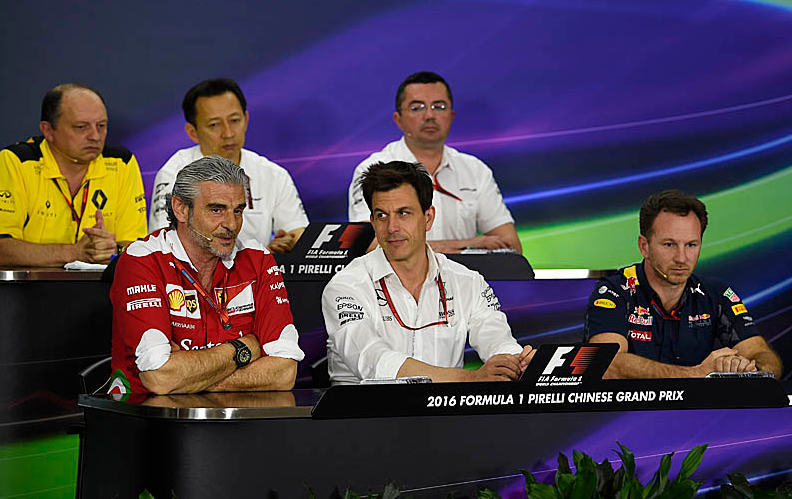
    TEAM REPRESENTATIVES – Frederic Vasseur (Renault), Yusuke Hasegawa (Honda), Eric Boullier (McLaren), Maurizio Arrivabene (Ferrari), Toto Wolff (Mercedes), Christian Horner (Red Bull Racing)

    PRESS CONFERENCE

    Maybe we could start with a general question for everyone. Obviously in the next couple of weeks there have got to be some decisions made on the future shape of Formula One, the regulations for 2017 and engines for 2018, so Christian, maybe we could start with you and how things are shaping up on the chassis side and where you think the discussion are, what shape we’re in and what we can look forward to?

    Christian Horner: Well, I believe that as far as the technical regulations are concerned, we’re pretty close to a conclusion on that. They were basically agreed at the last strategy meeting, so I think it’s just a formality to finalise those chassis regulations at the end of this month. I think most people are already tentatively looking towards next year based on those regulations anyway. As far as the engine regulations are concerned, again there have been some discussions recently, which again will go through the Strategy (Group) and subsequently onto the Formula One Commission but everything has to be fixed by the last day of this month for 2017, so I’m not expecting too many major surprises.

    And are you comfortable with where everything is at the moment, the shape of those regulations?

    CH: Well, they are the same for everybody at the end of the day. It represents a bigger change on the chassis side, so that inevitably is going to move things around a little. On the engine side there is obviously discussion still going on and that’s probably the bigger topic for the future, but as far as the chassis is concerned I think they are interesting rules, they add an element of variance compared to what we currently have, so you’ll see some different solutions no doubt from different teams, that you usually get from a regulations change such as that.

    Toto is that a situation that suits you, that there might be some variation in how the regulations suit the teams?

    Toto Wolff: Well, every variance challenges your organisation and I think we are well position to take up the challenge. Definitely making the cars look different, putting emphasis on new bits or innovation is interesting. Whether those rules can provide more interesting racing is another question. In hindsight, because we’ve voted on these regs already, we will see next if it works out. But yeah, I’m looking forward.

    Eric, what are your thoughts on this?

    Eric Boullier: Pretty similar to be honest to Toto and Christian. It’s exciting a little bit to have a new package. I guess the car will be faster and the drivers definitely will enjoy driving the car. So drivers happier, fans happier I guess. As far as we are concerned on the engine, we are seeking some stability, which would be the key to develop and have a better convergence in the future.

    Maurizio, Eric mentioned the fans there. These regulations are largely predicated on making Formula One more appealing, how important is it that Formula One gets these regulations right, now, for the next generation of Formula One fans?

    Maurizio Arrivabene: I think as my colleagues said, I think the regulations they are under discussion and nearly done, they are also especially to enhance the show in Formula One. Next year you are going to see a different car, tyres a bit larger and then if you want to make sure you do a good overtake you have to enlarge the track – no, I’m joking! I think it’s all following the direction to enhance the show and to make Formula One more interesting.

    Frederic, Renault has come back into the sport this year as a constructor, how difficult does it make it for you, or does it make it easier for you that everything changes next year?

    Frederic Vasseur: I don’t know if it will be easier or more difficult, but I think at least it’s new rules and it’s important for us also to start with this kind of game. But I think it’s not for sure much easier for us to start with a new regulation for next year, because we have to restructure the team and it’s not for us the best moment to change the regulations. But it doesn’t matter, it’s not the target, the FIA is not there to play the game for one team or another one but we have to try to push for Formula One and to find the most exciting way for the fan. And I think if the car is more impressive it will be much more fun for the fan and spectators.

    Hasegawa-san, welcome, your first time on this panel, and your second stint in Formula One. What’s Honda’s position on the engine regulations or the talks that are happening for 2018 in terms of power units for then? Are you satisfied with the progress that has been made there?

    Yusuke Hasegawa: As they mentioned still we need to have some further discussion but something like cost reduction and obligation. Yeah, from an engine manufacturer point of view, or as a member of Formula One society point of view, we have a kind of obligation to the fans and to this group, so Honda is happy to have that regulation, although we need to have some further discussion I understand.

    Just to the other people who engine manufacturers, what about the guaranteed supply that is being talked about for 2018. Is that something that you are comfortable with; is it deliverable? Toto?

    TW: It is a complex agreement. We have been given the task in coming up with solutions so that no team is left without an engine. I think all the engine manufacturers have acknowledged that, so we try to cover that. There is an aspect of price reduction, which is important to most of the teams, and we tried to cover that in the framework agreement. Obviously it’s very difficult to make everybody happy. Christian isn’t so happy. But I think we need to come up with a solution until the end of April. We need to ratify those regulations and at the moment everybody is working very hard to at least find the smallest common denominator.

    Christian, Toto mentioned that you may not be very happy. It’s obviously been an issue in the past. What’s your position on that supply going forward?

    CH: I think it’s a complex situation, but fundamentally there were four criteria that were requested by the governing body to be met to ensure stability moving forward. Those four criteria were: a significant reduction in cost to €12 million, the availability of supply or the guarantee of supply, power convergence to within a relatively small bandwidth and to address the noise. As we sit here now we are not anywhere near having met any of those criteria and I think unfortunately what will happen, as is often the case with these things, time will run out at the end of the month and nothing will be achieved and nothing will change. There is one more attempt in the Strategy meeting and the Commission meeting at the end of the month to discuss and table the concerns and where we’re at, but failing that regulations will inevitably stay as they are.

    Eric, Fernando back in the car today, maybe you could tell us what the process has been, how it worked with him today? And also maybe you could give us some insight into what Stoffel did at the last race and what he brought to the team.

    EB: Well, happily everything is back to normal. Fernando back in the car today was fine. The FIA wanted obviously to have another check and another go after practice one which was an easy one because he ran through practice one without any issues. He felt ready anyway before the Chinese GP weekend and I think this is a matter that is closed now. For Stoffel, obviously as far as we are concerned he did a very good job in Bahrain. Never easy to jump into an F1 car for a race weekend. I think he impressed everybody by how quiet he was and obviously by the good job he delivered. I think it’s a good driver for the future to have in our stable.

    Hasegawa-san, obviously the performance of McLaren has stepped up a little last year – what are your expectations for the rest of the season? Where do you see performance gains coming, when can you expect them to come?

    YH: It is too soon to say the exact number or position but obviously we’re not happy, we’re not satisfied with the current position. We can improve definitely with a decent level of step-ups so we are happy about that. Of course it is coming from the chassis as well but we can contribute with the power unit. It is important to show that we can improve in the step-ups. This is our target so far.

    Maurizio, one and two this afternoon, so a fairly good afternoon’s work. You’ve had two good results in Australia and Bahrain but a couple of technical issues as well. What’s been the response to those back at base and do you feel that that’s now been overcome?

    MA: What’s happened in Australia and Bahrain, we explained it very, very well and I think I don’t need to give further explanation because what we said, it was absolutely true, like it or not. Concerning here for the Chinese GP, it was a good Friday, not a bad one but unfortunately not gaining position on the grid or points in the championship. So, it’s a good short but the Chinese GP weekend is still long. Concerning the expectation of the season, I can say the Mercedes team of this year is the strongest one that I saw in the last ten years because it’s quite a lot of years that I’m around and, I mean, to be able to win against them, you have to work and be better than them. So, we are doing all our best to have good results.

    Toto, the best team in ten years! And Nico is performing very well at the moment. How have you seen him change over, not just the winter but if you look back to him in 2014-2015, do you think he came into the season with a different attitude? Is he a different driver?

    TW: Before answering the question I’d like to give the flowers back – they are pushing us very hard and you have seen today that it is raw performance and we have seen the performance in the last couple of races. Ferrari haven’t been able to pull it together because they made a big step from ’15 to ’16, similar to the step of ’14 to ’15 and in order to have the package rolled properly deliver and be reliable, that isn’t an easy task but in terms of sheer performance, they are really pushing us. And that is good; this is how the competition should be. In terms of Nico, he’s in a great place. I don’t see him oscillating a lot. People keep asking when Lewis had his winning streak last year, ‘is that going to knock Nico down?’ and then when he started winning after the championship was decided, ‘is it going to pull him up?’ Those guys perform on a very high level and it doesn’t particularly affect them whether they’ve had a good weekend or not. They’ve been in the job – or in motor racing – for 20 years or more, so the Nico I see today is developing as a personality, developing as a racing driver and learning – but also it’s not very much different to how I’ve known him the last couple of years.

    Frederic, you’re coming back to the grid as a constructor as we mentioned, you’ve had a couple of months now to assess where things are: what have you identified, or what did you identify as the things that needed immediate attention – and how is that progressing?

    FV: Nothing special and on every single matter because as we all know, we took over the company very late. The first challenge was to be on track for Barcelona and I think we did it but now, for sure, it’s a long term project and we have to improve on each area. There is no one, single matter to work on. We have to push on every single project and every single department of the company – but we know that it’s a long way and we are more than motivated and I hope that we will do it.

    Christian, these two gentlemen alongside you, they’re a little bit ahead but two fourth places in a row in Australia and Bahrain. Does that give you encouragement about the steps that have been made over the winter, not just on the chassis, on power unit as well. Where do you see it taking you this year?

    CH: Well we’re hoping to join their love-in. Sometimes two’s company, three’s a crowd… we’ve made good progress over the winter and I think at the last couple of races we’ve had arguably the third-fastest car. It’s a very tight pack fighting over that third place and the jump then to where these two teams are is quite a significant one. We’re hoping with further development on the power unit, that we expect around Montreal, to make good progress, certainly in the second half of the year and at certain circuits hopefully, try and get onto their shirt tails – but it’s quite a big gap that is inevitably going to take more than a season to close down.

    QUESTIONS FROM THE FLOOR

    Q: (Ben Edwards – Channel 4 TV) Frederic, about today, and about the tyre problem we saw on Kevin’s car and the decision not to run the car this afternoon; can you just explain that a little bit?

    FV: We investigated the problem at the end of FP1, that the problem came from the suspension and we had a lot of damage on the car and it was much better for us to stay in the garage for FP2 but we will be ready for tomorrow morning.

    Q: (Haoran Zhou – Top Driver) Question to everyone: during the last round of big regulation changes we heard that people like Ross Brawn were quoting downforce figures in the meeting to guide everyone how we should set these chassis rules. Presumably that sort of the discussion is present again in the strategy group; can you give us a rough range how much more downforce would next year’s car have on the chassis side? Is it one third or 20 points or something?

    TW: Interesting one! Around 80 percent! No, the numbers vary of course and they vary because of different interests so it goes from teams saying that it’s not a lot more than it is today until 30-35 percent.. So it could have quite a big effect on downforce which is in one sense good, because the cars will be more difficult to drive, will deploy much more G on the driver like in the past. But equally G isn’t visible for the spectator and the risk might be that overtaking could be more difficult and it will put an additional stress on the tyres. And all this is still in debate, but we have chosen the way forward and to come back to your question, that is the bit of the bandwidth I would say between zero and 30 percent.

    EB: It’s a little bit… yes, the debate was based as well on the tyres because we wanted to have more mechanical grip, let’s say, so there is a different tyre size, different compound and philosophy and all the discussion has been steered more about an improvement in lap time and on that point, I did agree with Toto. I think having a car with more downforce makes the drivers a little bit more confident to let’s say out-brake each other and obviously if you change the philosophy of the aero, less driven by the front wing, you improve the overtaking so I think it should be good.

    Q: (Joe van Burik – De Telegraaf) Mr Boullier, Stoffel Vandoorne received much praise for his performance in Bahrain; what more does he have to do to prove himself worthy of a fulltime racing seat or is that merely a matter of time?

    EB: Well, at this stage I don’t think he has to prove anything anymore, it’s just a question of having an opportunity.

    Q: (Haoran Zhou – Top Driver) Again, to presumably everyone: with the bigger tyre size for next year, presumably adding some weight, starting weight of the cars in race trim would be something like 820 kilograms and with Pirelli’s tyres being designed to degrade faster, that would significantly put a burden on how much the driver can push at the start of a race, which at the moment, at the start of the race, a Formula One car is not going that much faster than a GP2 car. Is there any way you can address that problem? And how much the drivers can push cannot really be solved by adding more aero to the cars in race trim.

    CH: First of all, I hope the cars aren’t 820 kilos. They’ve got a lot heavier with the new technology that’s been introduced over the last couple of years and compared to ten years ago, they’re more than a hundred kilos heavier than they were, almost approaching sports car weight, and that of course adds to the characteristic of making the car a little lazier than a lighter car but I disagree with you that by adding downforce and load back onto the car you’re going to give the driver a harder time. You’re going to give him much more of a workout. The drivers have been crying out for cars that are more challenging to drive. The cars that we have at the moment… it’s been discussed whether they are too easy to drive and I think that by making the cars edgier, by making them quicker you will get a bigger variance of drivers, the teams will get better value for money out of their drivers and they’ll have to start going to the gym again. So I think it’s a positive thing that we’ve got a regulation change but yes, the cars are a little bit on the heavy side. It would be nice to somehow get a hundred kilos out of them.

    FV: I think that Pirelli will adapt the tyres to the new regulations. It’s not a matter of downforce or degradation; it’s just the combination between the tyre regulations and degradation.
  • F1 2016: Chinese GP Free Practice 2 Report – Raikkonen On Top

    F1 2016: Chinese GP Free Practice 2 Report – Raikkonen On Top

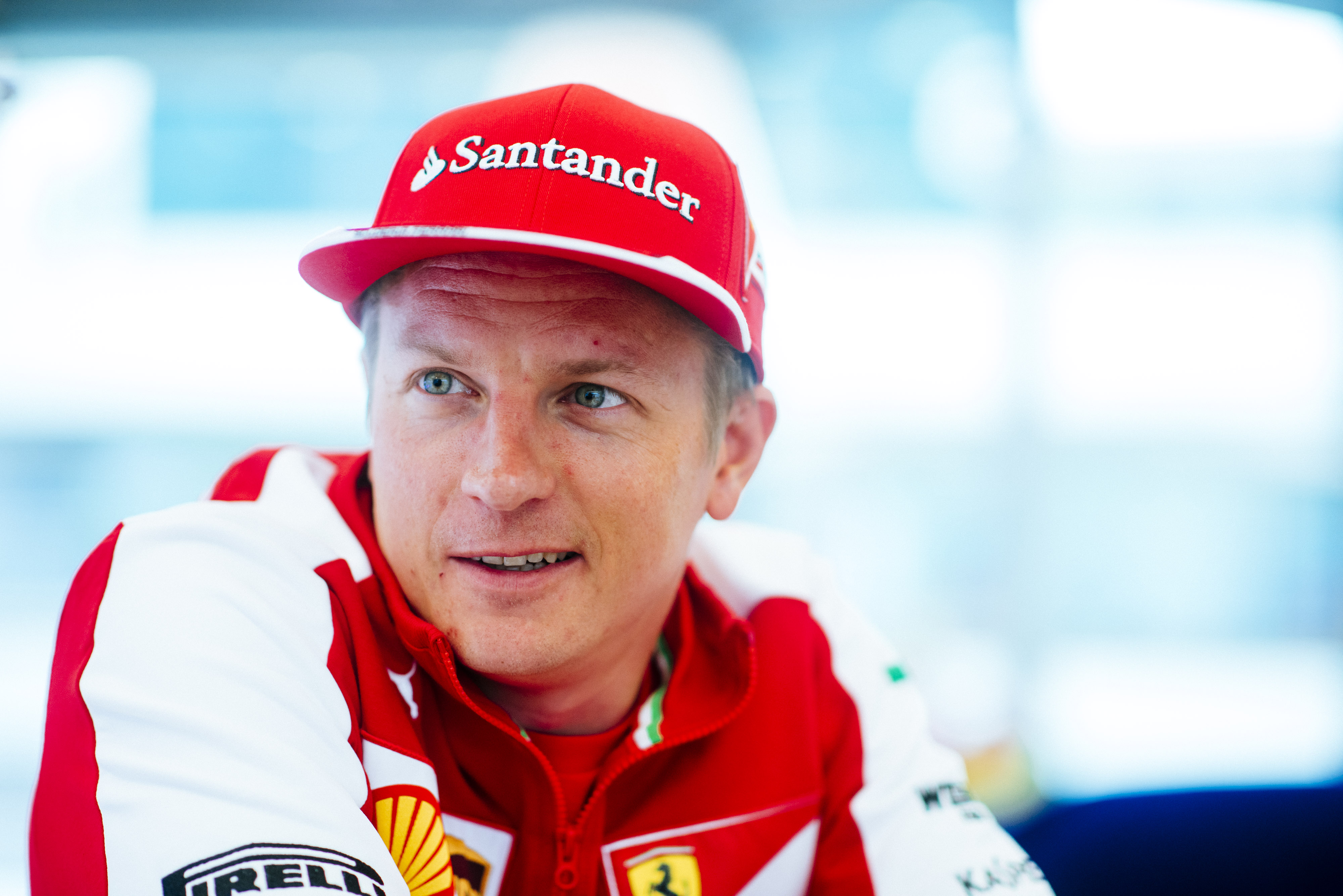
    Ferrari driver Kimi Raikkonen topped the second free practice session for the Chinese grand prix.

    The Finnish driver sets a quickest time of 1:36:896 on the red-walled supersoft tyre. Teammate Sebastian Vettel was one tenth adrift in second. Nico Rosberg was the first of the Mercedes in third, two and a half tenths off Raikkonen’s session topping time. Lewis Hamilton rounded out the top four in the sister Mercedes with a time of 1:37:329.

    The second free practice session of a grand prix weekend is customarily reserved for longer stints and evaluation of the different tyre compounds for Sunday’s race. As the softest tyre available this weekend the supersoft compound showed signs of degradation after a three lap quali sim and roughly eight laps on high fuel. The indications were that both Ferrari and Red Bull suffered less degradation on the supersoft than Mercedes. In particular, Nico Rosberg experienced a loss of three seconds in laptime over his stint on the supersoft tyres.

    However, Hamilton’s stint on the medium tyre, the hardest compound available this weekend, showed a consistent and fast pace. Comparatively, Vettel’s stint on the medium, earlier on in the session, was evenly matched to Hamilton’s.

    Although Friday practice sessions are difficult to decipher the signs point to what could be a very competitive Chinese grand prix between Ferrari and Mercedes.

  • F1 2016: Chinese GP Free Practice 1 Report – Rosberg Quickest

    F1 2016: Chinese GP Free Practice 1 Report – Rosberg Quickest

    Mercedes driver Nico Rosberg topped the first free practice session ahead of Sunday’s Chinese grand prix.

    The session stumbled into life as cars trickled out onto the Shanghai International circuit which was holding a track temperature of 33 degrees Celcius. Mercedes’ Nico Rosberg set the quickest time of the session, a 1:38:037, on the yellow walled soft tyre. Mercedes teammate Lewis Hamilton followed in second one and a half tenths adrift.

    The Ferrari of Sebastian Vettel, Red Bull of Daniel Ricciardo, and sister Ferrari of Kimi Raikkonen rounded out the top five positions. Fernando Alonso was back in the McLaren for the first free practice session and ended the session twelfth overall. Alonso has not yet been given the all clear to race for the remainder of the weekend and is expected to undergo his second medical check-up of the weekend fifteen minutes after the conclusion of the first practice session.

    The one and a half hour session was marred by two red flag periods brought about first by the Williams of Felipe Massa and secondly by the Renault of Kevin Magnussen. The first red flag was shown as a result of gravel on the circuit caused by the left-rear tyre on Massa’s car letting go. Peculiarly, once the track re-opened Massa ventured back out only to experience the same delamination on the left-rear tyre. There is no word as yet to the cause of the delamination however.

    The second red flag was a bit lengthier and required a bit more clean-up as the left-rear tyre on Kevin Magnussen’s Renault let go halfway down the back strait. On the face of it the two incidents for Massa and Magnussen don’t seem to be related. It was the McLaren teams opinion that Magnussen’s issue might have been caused by debris on the circuit.

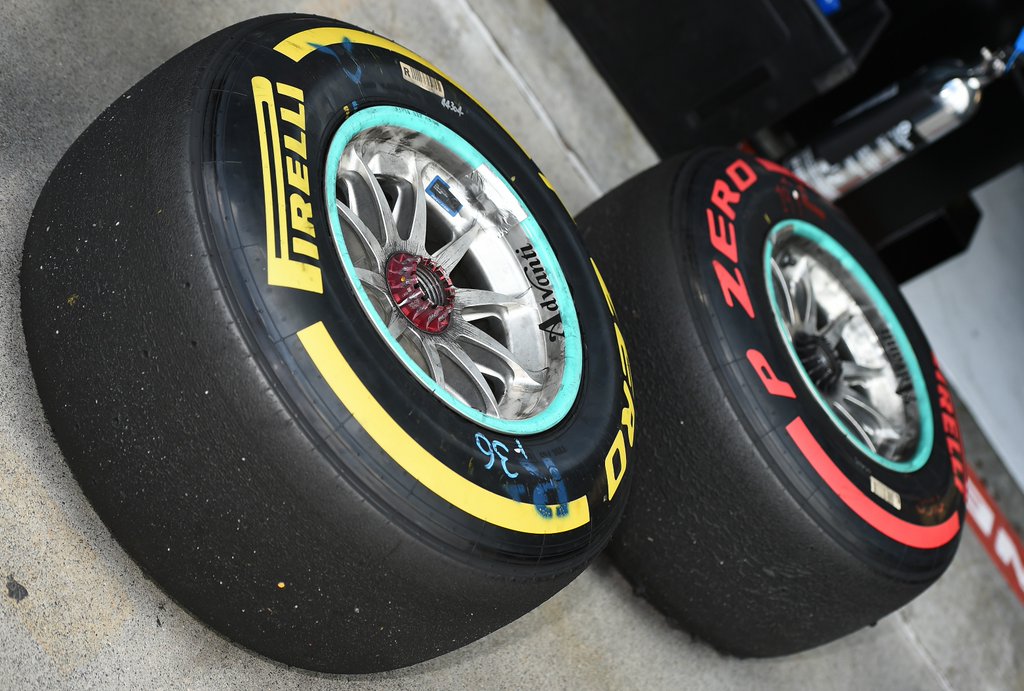
    The tyre compouds available this weekend are the medium (white), soft (yellow), and supersoft (red).


  • F1 2016: Chinese GP Preview – Tyre strategy name of the game in China

    F1 2016: Chinese GP Preview – Tyre strategy name of the game in China

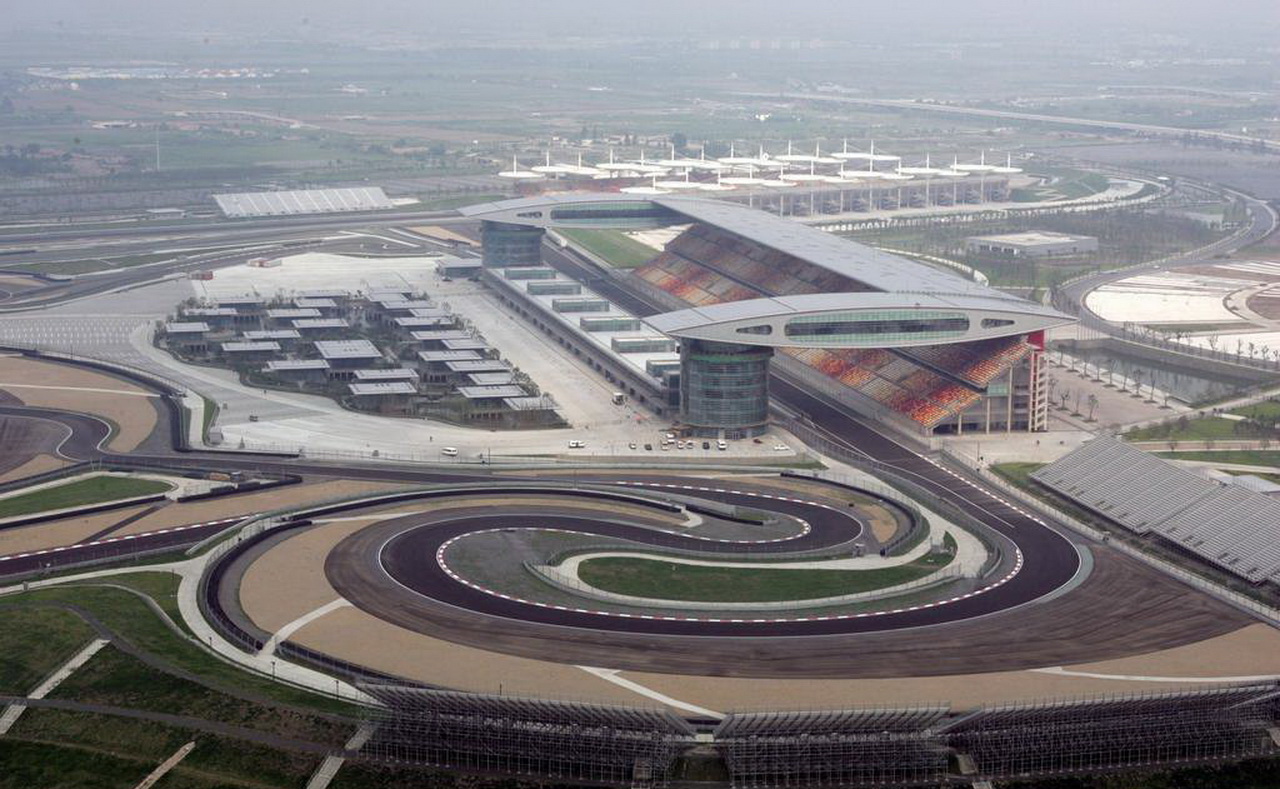
    From the desert circuit of Bahrain the Formula 1 paddock travels to mainland China and the Shanghai International circuit for the third round of the 2016 season.

    Good news is abounding before the weekend of racing even gets underway. A unanimous front by the eleven Formula 1 teams has force fed the FIA enough sanity to compel a reversion to the 2015 qualifying format for the remainder of the season. It wasn’t through lack of trying from the FIA though. The governing body, not wanting to accept defeat, tried one last time to impose itself by putting an aggregate-style qualifying on the table. Thankfully this too was unanimously shown the door.

    Besides the fact that it restores the much preferred 2015 version of qualifying, this decision sets a precedent for future decisions. Teams have now shown that if they stick together and push hard enough they can affect some change. And though the FIA and Bernie Ecclestone will try to spin this decision into something that makes them look a bit rosier it just isn’t true. The reality is that it wasn’t a decision by the FIA but rather a bending under the pressure from teams and fans.

    Because of this you’d hope that it’s significant also where the fans are concerned. Along with the teams’ unanimous front the fans’ disapproval on social media played its part too. The FIA and Ecclestone have been reluctant in the past to grant social media any clout. Hopefully they’re opinion has been informed enough to start moving the sport towards embracing social media more.

    Driver tyre choices for Chinese Grand PrixThe best news is that now the focus can return to the most important thing – racing. In 2015 Toro Rosso’s Max Verstappen brilliantly pulled off several overtaking manoeuvres into the extremely tight turn fourteen which follows on the kilometre long back-strait. Besides being one of the most unique first corners on the calendar the fast changes of direction in the middle sector will test just how good a chassis various teams have built for 2016.

    F1 first visited China’s Shanghai International circuit back in 2004 and has marked several landmark victories for drivers and teams. It was here in 2012 that Nico Rosberg won his first race and arrives in 2016 on the back of five consecutive victories and a good-looking lead in the driver’s standings. The best thing about Rosberg’s recent form is that it adds a new dimension to the championship.  It’s put Lewis Hamilton into a position not known to him in the last two years, the hunter rather than the hunted.

    But we’re talking about Merc as if they’re not facing a determined threat from Ferrari. Sebastian Vettel and Kimi Raikkonen have a good enough car to push Mercedes all the way to the chequered flag. But they don’t have good enough car to out-qualify Rosberg and Hamilton with. Therefore, tyre strategy becomes vital.

    China 2015_StartRaikkonen and Vettel have chosen an alternative tyre strategy to Merc for the Chinese GP. Both Ferrari drivers have chosen six sets of supersoft tyres while Rosberg and Hamilton have only five sets of the red-walled tyre. Should Mercedes run into rear tyre wear issues in China, as has been the case in the past, they won’t be able to run the supersoft tyre for as long.  Whereas Ferrari, who has traditionally been able to get more out of the supersoft tyre, will hold a strategic advantage of being able to run on the quicker tyre for longer.

    These permutations are only for the sharp-end of the grid. There is still an all-mighty battle in the mid-field which will undoubtedly rage throughout every one of Sunday’s 56 laps.

  • Alonso Cleared to Race In China

    Alonso Cleared to Race In China

    McLaren Driver Fernando Alonso has been cleared to race at this weekend’s Chinese Grand Prix.

    Alonso had to watch the Bahrain Grand Prix from the pit garage after FIA doctors declared him unfit to race due to inconclusive scans. McLaren flew in their reserve driver Stoffel Vandoorne to take his place.

    During the course of the weekend, however, McLaren tried every avenue they could find to get the FIA doctors to clear the Spaniard to race but they were unsuccessful in their attempts.

    After a medical check up at the Shanghai International Circuit’s medical centre on Thursday, the FIA medical delegates gave Alonso the all clear to race. There was however a condition attached to it. He has to undergo further tests after FP1 to determine if he is fit to participate for the rest of the weekend.

    Before the FIA reached their conclusion Alonso said that he felt good about participating this weekend.

    FIA Statement:

    “Since the accident at the Australian Grand Prix, McLaren Honda Formula 1 Team driver Fernando Alonso has been undergoing the process of “Reintegration” in accordance with Chapter II of Appendix L of the International Sporting Code. McLaren Honda have applied for Alonso to participate in the 2016 Chinese Grand Prix.

    As the injury to the driver was discovered some days after the Australian Grand Prix, the Reintegration does not strictly fall within the text of the Appendix. Therefore, the Stewards have taken advice from the FIA Medical Delegate, who in consultation with the Chief Medical Officer (CMO) of the Chinese Grand Prix and the driver’s doctors advise that he considers the driver provisionally fit to take part in the event. Given the exceptional circumstances, and having heard from the team, the Stewards have decided to exempt the driver from strict compliance with Art. 3(b) of Chapter II of Appendix L, relying instead on Art. 3(a) which has been satisfied.

    Therefore driver Fernando Alonso will be allowed to participate, subject to the provision below.

    The driver has been given directions by the FIA Medical Delegate and CMO which he is to follow (Art. 12.1.1.i of the International Sporting Code.) Further, in accordance with Art. 22.14 of the Formula One Sporting Regulations, he is instructed by the FIA Medical Delegate and CMO to undergo a further examination immediately following FP1 to determine his further eligibility to take part in the remainder of the Event”

  • Vandoorne Shows What he’s Capable of

    Vandoorne Shows What he’s Capable of

    GP2 Champion and McLaren Reserve Driver Stoffel Vandoorne showed just what he is capable of on his debut F1 weekend.

    Vandoorne, who stood in for Fernando Alonso after he was declared unfit to race by the FIA medical delegate on the Thursday ahead of the race, claimed the Woking based teams first points of the 2016 season with a 10th place finish at the Bahrain Grand Prix race.

    The young Beligian was in Japan when he got the call to fill in for Alonso on Thursday evening. He was immediately on a flight and he was at the Bahrain International Circuit just before Free Practice 1. As F1 debuts go, this was not the ideal situation, but Vandoorne took his challenge head on and went with it.

    With not much time to prepare he got in the car and finished 18th fastest in Free Practice 1. In Free Practice 2 he managed 11th fastest and 14th in Free Practice 3. After FP2 he remarked that he was comfortable in the car as soon as he climbed in. His qualifying performance was impressive. He out qualified his team-mate Jenson Button by going 12th fastest.

    Come race day he did not have it easy at the start. He almost got caught up in the chaos after Williams’ Valtteri Bottas tangled with Mercedes’ Lewis Hamilton at the start of the race into Turn 1. A relatively aggressive strategy of soft-soft-super soft together with some good overtaking moves earned him 10th place and a world championship point.

    “This result was more or less what I expected – I maximised the opportunity and I’m quite satisfied,” said Vandoorne after the race on Sunday.

    “The start was a little bit difficult. There was debris left and right – it was pretty hectic in fact – and there was a lot of fighting throughout that opening lap.

    “Since the beginning of the weekend, I’ve felt very confident in the car, and pretty comfortable that I could do a good job.

    “I’m pleased that I didn’t make any mistakes operationally – I was really focusing on that side of things – and I came away with a point, which was a nice bonus.

    “This weekend was a big opportunity for me: I made the most of it, I showed what I’m capable of, and now I just need to wait and see what happens next.

    “That’s not for me to decide – so let’s see what the future brings.”

    The young Belgian may not have to wait too long as Button is out of contract at the end of the season.


    Photo Credit: McLaren Honda Formula One Team

  • F1 2016: Bahrain GP Race Report – Desert Success for Rosberg

    F1 2016: Bahrain GP Race Report – Desert Success for Rosberg

    For nine years the Bahrain grand prix was run under the hot desert sun. For nearly a decade it wasn’t a race marked as one to look forward to and it almost always produced the most lacklustre racing of a season. But it would only take pushing back the starting time a few hours and a few thousand floodlight to ignite the Bahrain Gp into a spectacle of note. And in 2016 it delivered once more.

    As if to emphasise its transformation the drama started before a lap could be turned in anger. Ferrari’s Sebastian Vettel was forced into retirement on the formation lap. While Ferrari has stopped short of calling it an engine failure the plumes of smoke pouring from the rear of the car say otherwise. In Australia it was Raikkonen who retired with a turbo failure and there too Ferrari went out of its way to assure that there is no reliability concern. But even though its only two races into the season they’re developing a bit of an uncomfortable and undesirable habit of only getting one car to the chequered flag.

    Lewis Hamilton was sitting pretty in pole position with teammate Nico Rosberg alongside on the front row of the grid but it wasn’t to last very long for the Brit. Hamilton struggled to get off the line and ended up tangling with the Williams of Valtteri Bottas and dropped down to seventh.

    GP BAHRAIN F1/2016From fourth place Raikkonen made a poor start and dropped behind a pair of fast starting Williams’ and the Red Bull of Daniel Ricciardo. However, the Finn followed with some tenacious overtaking got himself into second place. By this stage the leading Mercedes of Rosberg was already eleven seconds up the road. The 2007 champion maintained a comparable pace with the Mercedes and even managed to reduce the gap to three seconds through strategy and occasional superior pace. But the number 7 Ferrari was never close enough to challenge for the lead of the race.

    As Hamilton recovered to third with some damage to the right-side barge board Rosberg wrapped up his fifth win in a row. For years we’ve been calling for Rosberg to step up his game and make it a championship battle worth watching and he’s done it now. There is still an incredibly long season ahead but Rosberg has started 2016 in the way that he’s needed to, in a way that will give Hamilton a lot to think about.

    With the top three positions established the rest of the points paying positions was an intense fight right to the chequered flag. The availability of three tyre compounds once again added a dynamism to the racing as drivers opted for strategies than ran the gamut of possibilities. Red Bull’s Daniel Ricciardo finished fourth thanks an early stop and rolling the dice by running the final stint on the medium tyres.

    GP BAHRAIN F1/2016As the race strategy engineer for the Haas F1 team Ruth Buscombe once again worked a brilliant strategy for Romain Grosjean. The Frenchman ran most of the race on the supersoft compound which allowed him to scythe through the field. He ran as high as fourth at one stage and ultimately finished fifth in what is turning out to be a fairytale debut for the American team.

    Toro Rosso’s Max Verstappen finished sixth ahead of Daniil Kvyat in seventh who recovered from starting fifteenth on the grid. After a difficult tyre strategy Felipe Massa and Valtteri Bottas finished eighth and ninth for Williams. Driver of the day belong the final points scorer Stoffel Vandoorne. The 24-year-old Belgian driver stood in for Fernando Alonso who is recovering from fractured ribs sustained in the Australian Gp crash. The difficulty of having to deal with the complexity of a 2016 F1 car, to understand the Pirelli tyres, and to fight with seasoned F1 drivers, must not be underestimated. Vandoorne put all of his talents on display and blitzed his F1 debut.

    The 2016 hasn’t begun to hit its stride and already an immense battle is brewing up and down the field. Roll on China.

    (All images courtesy of Pirelli Motorsport)

  • F1 2016: Bahrain Qualifying Report – Hamilton Wraps Up Pole

    F1 2016: Bahrain Qualifying Report – Hamilton Wraps Up Pole

    Lewis Hamilton wrapped up his second consecutive pole position of the season for the Mercedes F1 team.

    The much maligned qualifying format got underway on the floodlit Sakhir International circuit and claimed its fist victim as Sergio Perez. The Force India driver and his team miscalculated the timing clock which left the Mexican driver towards the back of the grid. Pascal Wehrlein impressed in his Manor F1 car and will start Sunday’s race in 17th place.

    The second session of qualifying saw the red light at the end of the pitlane malfunction prompting a marshal to wave a green flag to set the drivers on their way. Stand-in McLaren driver Stoffel Vandoorne out-qualified teammate Jenson Button and will line up in twelfth position. French driver Romain Grosjean sported a big smile as he will line up the Haas F1 car in ninth place on the grid.

    Lewis Hamilton_Bahrain 2016_QualifyingThe final session of qualifying produced a surprise for Daniel Ricciardo who will start in fifth position ahead of both the Williams drivers. Red Bull Racing team principal Christian Horner remarked earlier that they would have to deliver something special to come out ahead in the intensely close mid-field battle.

    The first run between both Mercedes and Ferrari team’s drivers saw laptimes split only by a couple of tenths. However, Mercedes and Lewis Hamilton upped the ante for the final run. The reigning champion secured pole position ahead of teammate Nico Rosberg but less than a tenth of a second. Sebastian Vettel and Kimi Raikkonen will share the second row of the grid as they did in Australia.

    Attention now turns to the start of Sunday’s race and the run down to the all-important first corner. Mercedes will be keen to improve on their starting prowess following the opening round of the season. And with the longer run down to turn one it will have to be inch perfect.

  • F1 2016: Bahrain Free Practice 1 Report – Rosberg On Top

    F1 2016: Bahrain Free Practice 1 Report – Rosberg On Top

    Mercedes driver Nico Rosberg topped the timing sheets in the first free practice session of the Bahrain grand prix.

    The first ninety minutes of practice for the 2016 Bahrain grand prix took place under natural light as opposed to the rest of the weekend which will be run on the floodlights which line the circuit.

    The first of the three free practice session ran without any major incident save for a few drivers locking up their front tyres as they attempt to find the limit of adhesion. With the news that Fernando Alonso is not medically fit to race this weekend came the debut of Belgian driver Stoffel Vandoorne. The highly rated rookie driver finished the first session in 18th place overall.

    Sergio Perez also stood aside for fellow countryman Alfonso Celis who piloted the Force India for the practice session. The 19 year old Mexican driver was twenty-first on the timing sheets. Nico Rosberg completed twenty-four laps and set the a quickest time overall of 1:32:294 on the yellow-walled soft tyre. Teammate Lewis Hamilton was second quickest with a 1:32:799.

    Ferrari split tyre strategy at the end of the session as Kimi Raikkonen set the third fastest time, a 1:34:128, on the soft tyre while Sebastian Vettel persisted with the medium compound tyre. The German ended the session in eleventh place with a quickest time of 1:35:037.

    Red Bull Racing driver Daniel Ricciardo completed twenty-seven laps and set a quickest time of 1:34:461 which was the fourth fastest time overall. Team principal Christian Horner noted that the team might struggle in qualifying trim this weekend but that they have high hopes for Sunday’s race.


  • 2016 Formula 1 Bahrain Grand Prix: Thursday Press Conference

    2016 Formula 1 Bahrain Grand Prix: Thursday Press Conference

    DRIVERS:

    Pascal Wehrlein (Manor)

    Max VERSTAPPEN (Toro Rosso)

    Romain GROSJEAN (Haas)

    Felipe MASSA (Williams)

    Nico ROSBERG (Mercedes)

    Fernando ALONSO (McLaren)


    PRESS CONFERENCE

    Fernando, we have to start with you: three times a winner here in Bahrain, but clearly we have to deal with the accident in Melbourne and the aftermath. You aren’t racing here this weekend. Tell us the process that led to that decision and how disappointed you feel?

    Fernando ALONSO: Well, yeah, a little bit disappointed obviously. We want to race. We are competitors, drivers and we like competition, and we love the sport. So when you come here and you cannot even try it’s always sad, but it’s understandable and I respect the decision. I try until the last moment to be able to race, at least to try in the practice. There has been some painful days, with some pain at home, but I was ready to go through this pain somehow in the car and make sure I could race, because at the end of the day the pain is manageable if you don’t think too much probably and [with] the adrenaline of driving, but there are some other risks that the doctors they think. So it’s a risk management that I understand, to minimise everything is the logical thing to do, so a little bit sad for that but it’s the only way to go.

    So, looking forward, how optimistic that it will be fixed and that you will be able to race at the next round in China?
    FA: Well, you know, it’s not 100 per cent. There will be another test that I need to do in the next eight or ten days and after that test the FIA will evaluate again, as they did now. First of all is the safety and then the performance, so hopefully everything is OK but it’s something we need to see with the next test.

    Thank you for that. Romain, coming to you, you’ve had some great days in Formula One, some emotional podiums and so on, including two right here in Bahrain, but where does that sixth place on Haas’ debut rank for you?
    Romain GROSJEAN: Well, it was a special race for us. We got a bit lucky with the red flag but we were unlucky on Saturday with the new qualifying format. It was a great debut, better than what we were expecting. It’s been one of those races that I will probably always remember, when I’m getting older and I tell the kids of my kids my stories. But I think it was good for everyone. It was good for Formula One. It was good for the team. I think a brand new team coming and showing that it’s possible to score points at the first venue, it was a very good thing. And for all my guys and everyone that has been working so hard in the last two months, it was just a good morale boost and a confirmation that the car we are driving is probably one of the best I’ve ever driven.

    Really? Because you did seem to have the pace to comfortably stay ahead of the Force, particularly after the restart. Is that about the level you think the team is at or will it fluctuate depending on circuit?
    RG: I think there is a lot we need to learn, there are a lot of things we could do better. We didn’t have any practice in Australia because of the rain and then the crash in the pit lane in FP3, so you know we put the car on track with barely any set-up work and guess where we should be, so I’m sure that whenever we get more running, more time in the car, there is more potential to be coming. I’m not saying we’re going to be in the top five here this weekend, I’m just saying that it’s the beginning for the team. But generally I think we will have up and downs, but the potential is big.

    Thank you. Pascal, welcome. You made your long-awaited Formula One debut in Australia, running as high as 13th for a while. Do you feel this car can get among the points this season?
    Pascal WEHRLEIN: I think so. I think it’s really depending on the track. Australia was great, especially in the race, my first lap was amazing and also the next few laps at the beginning were great. I could follow the other cars easily, so that was good, definitely, yeah.

    It’s interesting looking at the tyre selections for each race weekend from Pirelli, once again you’ve gone for a large quantity of medium tyres. What’s the strategy behind that?
    PW: I think the first things is that we want to drive a lot in free practice because we still have to learn a lot about the car and you know that’s easier with the medium tyres.

    OK, thank you. Felipe, coming to you, fifth place in the opening round in Melbourne, behind Mercedes, Ferrari and Red Bull. Is that about where Williams are at at this stage? Do you think you might get ahead of Red Bull this weekend, on this track?
    Felipe MASSA: Well, I think it was a good start for us. It was more or less where we expected to be. It’s also true that Red Bull was quite strong in the race and even the Toro Rosso; they were pretty strong. It was quite a big fight with them, including qualifying. I really hope here we can be in front. I hope we can be more competitive on this track, because we know that we are going to have a big fight with these two teams and maybe some other teams as well. I think we saw that Mercedes and Ferrari they were pretty strong, as expected. I hope this track can be better for us.

    Like Fernando, you have a good record here, you are a two-time winner on this racetrack. Tell us what you like about it, tell us about the challenge of this place?
    FM: Well, it’s a very nice track. I like to drive here. You have some nice corners but also some very tricky corners that you need a good car in terms of braking, in terms of traction as well. But it’s a nice track. I had some good races. Always when you have good races on a type of track, you enjoy, so this is what I’m looking forward to have another one on Sunday.

    Coming to the championship leader, Nico Rosberg: celebrating the 10th anniversary of your Formula One debut right here in 2006. Melbourne made it four wins in a row, how big a psychological boots was it to get off to such a good start?
    Nico ROSBERG: Yeah, of course it was a great start but it’s one race out of 21, so it’s really early days. But I’m really pleased with the car that we have. The team has done an incredible job to give us such a car again this year. It will be a great couple of races coming up for sure, but of course we are also looking closely at the battle with Ferrari.

    Well, one possible weakness appeared to be the race starts. Once again a problem for both Mercedes cars, the Ferraris got ahead. What steps have you and the team taken to address that?
    NR: Yeah, for sure we’ve worked on it, but it’s a challenge this year, because it’s one clutch lever that we’re only allowed to use due to the rule changes. So it has made it more difficult but it’s definitely an area we are focusing a lot.

    Max, coming to you finally. Positives from Melbourne: you were the first teenager for 55 years to qualify in the top five and also you personally went past the 50 championship points mark. But the negative, obviously, was the dispute over the Toro Rosso pit stop strategy. What lessons did you and the team take from that?
    Max VERSTAPPEN: First of all, I think we had a great qualifying, so we could be very happy with that. But of course the race didn’t pan [out] like we wanted to. But, yeah, we analysed a lot of things and hopefully we can try to come back stronger here even though I think this track hasn’t suited us so far in the history but we try to make the most of it that’s for sure.

    Both the Toro Rossos were right up the front in qualifying in Melbourne. Has the pace of this year’s car exceeded your expectations after testing?
    MV: Well, I wanted to be there, so yeah, we just kept working hard, we saw the improvements during the winter time of course but you still want to see how it goes on track and in winter testing you don’t know exactly where you are. But I think in the end to be P5 in qualifying was definitely a great achievement by the whole team, especially with such a short winter for us.

    QUESTIONS FROM THE FLOOR

    Q: (David Croft – Sky Sports) Fernando, what are the extent of your injuries that have prevented you from driving this weekend and what are the risks that you mentioned that the doctors brought up about keeping out this weekend?
    FA: Well, just to summarise a little bit. Last week I was OK Sunday – some knee pain but not big things. I had the green light from the doctors to leave the track and everything was OK. On Monday, I had a little bit of overall pain but nothing too serious. I flew back. I arrived in Spain and the pain was similar or a little bit more, so we decided to do a proper check – a CT scan. I had a small pneumothorax on the lung. So we took the advice from the doctors to relax at home and make everything come to normal and we repeat the scan last Monday. The pneumothorax is gone more or less but I have some rib fractures, so because of that there are the risks of driving, because Formula One is a very unique sport, a unique position on the car, and the G-Forces that a fracture could move into the lung as well, so yeah, it’s not like a broken leg or broken arm, that you can deal with the pain, this is in the chest where some organs are there and we cannot do much more.

    Q: (Alex Popov – NTV/Match TV) For all the drivers, about the start in Australia. How much it was different to last year considering it’s just one clutch lever and slightly less preparation for a bite point on the starting grid. And for Pascal, if you can compare the start to DTM.

    PW: DTM is completely different. We have the clutch pedal with the left foot, so it’s different, that one. Starting an F1 race, I only know this system. My start in Melbourne was really, really good and I made up seven positions – so I cannot complain about it!

    MV: I think quite similar. I had a good start so I was very happy about it but in general it just asks a bit more practice – but you can deal with it.

    RG: I think I prefer the old-style one. Why? Because it was more about the precision of the reaction time and at the end it didn’t change much of the procedure. I think some teams have done it better than others. We’re a brand new team and still have some work to be done. We didn’t have a great start but at the end it won’t change much.

    FM: I think it’s a little bit more difficult to do but I would say that after one or two, three races it will be similar to before.

    Nico, you spoke about the single clutch in your previous answer. Anything more to add?
    NR: It’s a good challenge. It makes it more difficult, there will be a bit more variability in the starts.

    Fernando?
    FA: The same comments. More challenging, so it’s good. There will be some random performance so it’s good for the show.

    Q: (Abhishek Takle – Mid-Day) Question to Fernando. Fernando, I just want to get your thoughts… every time you step into a Formula One car you take a risk. At what point does the risk outweigh the reward? In terms of the risk you’re taking and the performance you’re getting back for it. If I could have your thoughts on that. Thank you.
    FA: I think we don’t think about the risk at any point. Even you see it now, I have broken ribs and I’m here with some pain, not easy to sleep sometimes, depending which movements. I would like to sit in the car and see how is the pain in the car and how to enjoy driving the car. So, you understand that this is motorsport and anything can happen. Everytime you jump in the car. But yeah, you love it so much it’s completely transparent, the risk, when you jump in the car.

    Q: (Marco Canseco – Marca) For Fernando. You have started last season and this season with two accidents. Are you worried by that?
    FA: No, not really. I’ve been very lucky all my career. This is my sixteenth Formula One year and it’s normal that you have accidents here and there. It happened unfortunately in the last two years, two accidents that I miss one race. The last one in Australia that probably you all saw. It was quite a big impact, so I knew that it was risky, my possibility to race in Bahrain because it was only ten days from the big shunt. I tried my best, as I said, the team did a fantastic job preparing the car for this race, so I wanted to try until the last moment. I flew last night, I arrived this morning, I wanted to at least try to practice but I understand also the position. But now, yeah, I want to stay here for the weekend, help Stoffel because it’s a good opportunity for him and help the team – because I love what I do. I love Formula One and racing and I will miss this race but I want to learn from the outside also, how the team prepare the race and how are the actions around the new qualifying system, the race itself, the strategy, the pitstop moments. I want to get involved in everything from the outside because it could help me on the inside at the next race. It’s a step forward that we need to do together and yeah, hopefully help the team because I’m very thankful for the job they did last week.

    Q: (Ralf Bach – Auto Bild) A question to Fernando, and then a question for Pascal. Fernando, your broken ribs, have they something to do with the g-forces of the accident or maybe with the broken seat?
    FA: Just the g-forces of the accident. The impact.

    And Pascal, you see how quick it can be that a second reserve driver has to make the race. Would you be prepared in the Silver Arrow case to drive in this car at once from the mental side?
    PW: In general. Of course, I’m a member of the team since 2014 and I’ve done many days in the simulator and also a few tests and I was travelling to all the races last year so of course, I’m prepared.

    Q: (Dieter Rencken – Racing Lines) After the Australian Grand Prix the GPDA published a fairly hard-hitting open letter. To all of you, are you members of the GPDA, do you agree with the contents and, if so, what would you like to see changed?

    Fernando?
    FA: I think the letter says everything. We love the sport. We love it so much that maybe we think the last couple of years we’ve been a little bit moving left and right with not a clear direction and we want to help in any of the things the fans want, the drivers want, the sponsors want, that are quite clear in some of the things we’ve been searching in the last couple of years. Yeah, it’s just a letter of… a supporting letter from all of the drivers that we do care about our sport and we would like to get involved in some of the decisions or in some of the things that we could help somehow. It’s a start. It’s the way the sport is moving in the last couple of years, maybe we don’t see it completely right.

    Nico?
    NR: Yes, we’re all united on this opinion because we love the sport and can see the fans are criticising some aspects that we could do better. We could be even more exciting as a sport and we want to question whether or not the F1 governance cannot review the process in which decisions are made in all these things to try to get it to a point where we can get some better decisions done and become a more exciting sport. There’s recent examples, with this qualifying where the fans are just at home and they’re not happy with it. We’re racing for the fans. Mostly for the fans. That’s the examples that are now the recent cases. Even the rules for next year. We’re putting on more downforce although actually we should be trying to help overtaking. More downforce is known for making overtaking and following other cars more difficult. It’s not necessarily the right way. With all of these things we are saying that we would like to be more involved, have more of a say, us drivers – so let’s see where this takes us.

    Felipe?
    FM: The same. I totally agree with both of them. All the drivers are united on this letter that you guys saw. We just want to be part of… changing. To improve the sport.

    Romain?
    RG: I think Fernando resumed it pretty well: he has broken ribs and he wanted to race because we love the sport. We are fans of Formula One. We want it to be the best that it can be with the best drivers, the best car, the best shows. As Nico says, right now the decisions haven’t been so good in terms of fans replies, or media or the sponsors. We just want to help the sport that we love more than anything.

    Max – did you play a part in this?
    MV: I have nothing to add. I think it’s all explained very clear. I’m not a member.

    Pascal?
    PW: I just joined Formula One. I always dreamed of Formula One, then when you join it you want it to be on the best peak it could be. Definitely everyone is not 100 per cent happy today and we just have to improve that.

    Q: (Michael Schmidt – Auto, Motor und Sport) Fernando, it was obvious that after such an accident you wanted to leave the car as soon as possible.  Two questions on that: first of all, in such a moment, do you have the time and the nerves to watch whether the car could be under electrical power, because we saw this totally destroyed car, cables hanging out, hydraulic lines hanging out? Maybe there was still high voltage in the car? And the second thing is, do you think that with the halo fitted, you would have still been able to escape as quickly as you did in Melbourne?
    FA: First question: I didn’t see anything. You just want to get out of the car and at that point you just want to put your feet on the ground and walk away. This is the only thing you are thinking at that moment. The halo system? I don’t know if I could have got out of the car as quickly as I did. I guess so, because I’m sure the system is designed to look at all the scenarios but probably my only concern when I was rolling over was just to avoid hitting the head, because obviously I was very tight from the belts and I was flying but I didn’t feel any risk at all in the middle of the accident, apart from to my head, that I wanted not to crash with anyone, so the halo was probably very welcome in my accident as well. I would avoid that concern, when I’m flying.

    Q: (Daniel Johnson – The Telegraph) Fernando and Nico, just going back to the GPDA letter, you talked about the processes and the governance structure, what about the people at the top, because there’s a structure we work within but there’s also the people trying to bring in new rules? So can I just ask you specifically, do you both have your full confidence in Bernie, Jean to move the sport in the direction that you think it should go in?
    NR: It would be inappropriate now to mention any names or criticise any individuals or even compliment individuals, it’s just that we know that it’s not perfect the way it is, it could be better and so it needs to be reviewed and that’s what we’re trying to encourage.
    FA: Yeah, as Nico said, it’s not a problem of any names. Actually I think Bernie has been looking to protect the sport all the time and to improve the sport and to improve the show. I think Bernie, Jean, everyone is doing their best but the system is somehow a little bit old in terms of decisions. As Nico pointed out before, the new qualifying system, also the new rules, these radio restrictions now that seem very attractive for you guys and from the outside, it’s a little bit contradictory when we have a very complex car, very complex technology with hybrid engines, with everything to manage and now we cannot have any information about the cars. You cannot give us a spaceship and then not tell us anything when we are there. These kind of things are making drivers a little bit confused and a little bit… we need to help in the future for Formula One.

    Q: (Jon McEvoy – Daily Mail) Fernando first, have you re-run the accident in your mind? Do you get nightmares about it?
    FA: No, I don’t have any nightmares, I just have pain sometimes. As you all know, a broken rib is painful when you make some movements but apart from that, zero nightmares and really looking forward to jumping in the car and sad to miss this opportunity. The team told me ‘you will fly back home’ and I said no way. I want to hear the cars, I want to help Stoffel, I want to see the new updates in the car, how they work so this completely fine on that.

    Q: (Jon McEvoy – Daily Mail) And to the three drivers in the front row, not linked to that, do you feel that all the drivers should be members of the GPDA and that there would be a greater solidarity if everyone was a member?
    FA: Yes, it would be nice to have all the drivers inside the GPDA but I have to say also that in all the important decisions that we make in the last couple of years we are all united, it’s not that being part of the GPDA doesn’t make the group united in the important things. Yeah, it would be nice but we will see.
    NR: Yeah, this letter was signed by the GPDA but it is all the drivers, the whole grid, and that’s what counts.
    FM: Yes, I’m not a member but I totally agree with the letter and the help that the drivers can give to Formula One.

    Q: (Dieter Rencken – Racing Lines) Back to the GPDA situation, I’m sorry gentlemen, but on the Friday before Melbourne, Charlie Whiting suggested that the drivers weren’t using every single platform and forum available to them to voice their opinions and he gave examples, for example a visit to Pirelli to which not all the drivers went, to a meeting at testing in Barcelona, not all the drivers went. He also said that on the Friday in drivers’ briefing you have plenty of opportunities to voice your opinions. So what other platforms do you actually need, why aren’t these enough?
    RG: I was in the Barcelona meeting, I couldn’t make it to Pirelli for sponsors’ event. I think that’s unfortunately our lives and it’s going to be very hard to get all the drivers to come to meetings outside the paddock. I think we have been trying to raise our voices through different methods and I think Alex and the directors of the GPDA have been trying different ways before the letter was sent. I think again, all the drivers have been united on that subject and everyone is willing to help things to get better. We’re not saying we’ve got a magic fix, we’re not saying we’ve got the solution but we’re just trying to help the best we can.

    Q: (Ben Hunt – The Sun) Fernando, which side are your broken ribs? On your left side. And I just wondered if there were any concerns whether you would recover from this? There are no worries that you won’t recover from these ribs?
    FA: No, I will recover. I am already recovering from the pneumothorax and the problem is that the rib is just too fresh, it’s still not completely ‘glued’, let’s say. This thing could be a potential problem, very very low risk, also I didn’t have any respiratory issues at any time, so the risks are very very small but I understand that we all want zero risk. It’s just a question of time that the rib goes a little bit together and with that we will be OK. The next ten days should be OK for this but we cannot guarantee;  maybe ten, maybe five, maybe twelve. It’s just a normal rib.

    Q: (Ralf Bach – Auto Bild motorsport) Me Again …Question to all the drivers: normally if you write a letter you want to see a reaction but what will you do when there’s no reaction at all?
    NR: Well, let’s see. It’s a process. It’s a process where we want to try and integrate ourselves a bit more into the whole thing. Let’s see, step by step.
    FA: Yeah, it’s a process and I think it’s very early days and I’m sure that in the next couple of steps or in the next decisions, I’m sure that we will have a part.
    FM: As they say, it’s a process. I was in every meeting that happened before, even with the FIA, with Pirelli, I was everywhere and I think we need to try and give our opinion and this is part of trying to be closer to the decisions in the future. It’s a process. I hope it will work and I believe it will.

    Q: (Christopher Joseph – Chicane) Nico, you mentioned in some of your previous answers the fact that you feel that the decision-making process is flawed. Do you think then that this letter is the first step perhaps in integrating the drivers’ opinions and perhaps giving the drivers more say in the governance of Formula One?
    NR: First of all, I didn’t use those words. I think I just said ‘for sure it can be done better.’ We’re driving those cars, we know, we have a really good opinion on what would be best to make the racing more exciting. It makes sense for us to be more integrated into the whole process.