The 2016 Belgian grand prix may have had a familiar victor at the end of its 44 laps but little else was as predictable as Nico Rosberg on the top step of the podium.
The German Mercedes driver was in prime position after securing pole while teammate Lewis Hamilton was confined to the back of the grid after accruing several dozen penalties for a litany of power unit changes.
Rosberg made the most of his starting position to lead into turn one while chaos erupted behind him. The start was going well for Kimi Raikkonen who started third in the Ferrari enabling him to challenge front row starter Max Verstappen for his second place. But it transformed into a shower of carbon fibre moments later as Sebastian Vettel attempted to drive around the outside of both Verstappen and Raikkonen and made contact with his teammate. It was a daft move from the four-time champion, which utterly devastated Ferrari’s afternoon.
There is an argument that Verstappen was the culprit in this incident as he positioned his car inside of Raikkonen into turn one. But given Raikkonen’s vast experience as exceptional spatial awareness he would’ve recognized the Red Bull on his inside and opened his steering to avoid a coming together. But he was unable to do so with Vettel turning into him from the other side. While Ferrari has experienced several unfortunate and uncontrollable reliability incidents throughout the year their own hand has inexcusably exacerbated it.
The race had just begun to settle down as Renault’s Kevin Magnussen lost control at the top of Eau Rouge and slammed into the barrier with an enormous impact. The Danish driver exited the cockpit of his car only with a slight limp that was later confirmed as a cut to his ankle. The crash displaced the tyre-wall, which prompted race director Charlie Whiting to red flag the race in for repairs to take place.
By this stage, and after the carnage of the first few laps, Hamilton had made his way through the field to fifth behind McLaren’s Fernando Alonso in fourth. The red flag meant that Raikkonen and Verstappen’s damaged cars could receive much needed attention in the pitlane and all drivers could made adjustments if so inclined. While Verstappen received a new front-wing Raikkonen’s engineers were frantically trying to fix the plank underneath his car by bonding it with duct tape.
The race resumed with Rosberg in the lead and Daniel Ricciardo in second. The Red Bull driver was able to keep the Merc honest for the majority of the race but eventually finished second, 14 seconds adrift. Miraculously, Hamilton had worked his way up to third by the time the flag dropped. While Rosberg may have taken the honours on Sunday Hamilton should be over the moon with his performance. Not only does he still hold a 9-point lead in the standings but the Brit now also has the advantage of three new engines for the remainder of the season.
Nico Hulkenberg completed an impressive day for Force India with fourth while Perez finished fifth ahead of a recovering Sebastian Vettel in sixth. Fernando Alonso ran an impressive race for McLaren to finish seventh ahead of Williams driver Valtteri Bottas in eighth. After being a lap down before the red flag Raikkonen was able to recover to ninth ahead of Felipe Massa in tenth.
The Formula 1 paddock crosses the Belgian border to Northern Italy for one of the most passionate races on the calendar at Monza. Ferrari’s recent form doesn’t provide much hope for their ardent Tifosi but an engine upgrade for the most power-hungry circuit on the calendar could provide a boost.
EAM REPRESENTATIVES – Christian HORNER (Red Bull Racing), Claire WILLIAMS (Williams), Monisha KALTENBORN (Sauber), Eric BOULLIER (McLaren), Frédéric VASSEUR (Renault), Robert FERNLEY (Force India)
PRESS CONFERENCE
Eric, if we could start with you please. Let’s start by talking about the updated power unit you’re running in both cars this weekend. Where is it better than the old one and do you have any further reliability worries after what happened to Alonso this morning?
Eric BOULLIER: As whole it’s very easy to understand. The first is engine power from the ICE and obviously the power recovery you can get from the turbo and the MGU-H. So on that [Honda] did a brilliant job to improve both compounds, let’s say, on both systems. In terms of reliability, no, we don’t have any concerns. It was a small issue, which cost us a full power unit this morning and the session but you could see in practice two both cars ran faultlessly, so I think it’s far?
Can you put a number on the lap time gain you’ve found with this power unit?
EB: Yes I can, but I will not share it with you!
We’ve seen former motorsport director of Volkswagen Jost Capito with McLaren this weekend. When does he start with the team and can you explain to us where he’ll fit into the current management structure?
EB: Yeah, it’s very easy. He’s going to start very soon; it’s a question of days. He is here this weekend as an observer, that’s why he’s not wearing any team uniform. He’s going to be CEO of McLaren Racing, so chief executive officer.
Thank you, Eric. Claire if we could move onto you. I’d like to start by talking about drivers. Your technical boss Pat Symonds was quoted recently as saying that Williams is ready to sign a top driver. Now, one of the interpretations of that is that you don’t currently have a top driver, do you agree with him?
Claire WILLIAMS: I think actually Pat’s comments in that article that came out over shutdown were comments that were made in January, so it’s quite odd that they are now brought out. But Pat, when he was making those comments, was making a reference to one particular driver. It was not in reference to our current two. I think as we have said very clearly we are very happy with the job Felipe and Valtteri have done for us. I know everybody is waiting for our announcement now that lots of other teams have made theirs, but we are not ready to announce our line-up for ‘17 yet but we are working through all our options but I hope we will be able to make that announcement shortly.
When do you think we will get an announcement from you?
CW: By the end of the year.
OK. Moving on to Spa: this is a track where you have traditionally been very strong, although you seemed to have a few issues this afternoon, just 16th and 17th fastest. How confident are you of a good result this weekend?
CW: I think after our performance in the past few races where we expected the circuits to suit our car, it wasn’t the case for a number of reasons. We’ve obviously been working hard to try to analyse where we are going wrong and it is really frustrating fro the team and we do have a really tough battle with Force India at the moment – we don’t want them to take our fourth in the championship. It’s going to be another tough weekend, as much as this circuit does suit our care, but there are also elements of it that don’t. So I don’t know. After today’s performance, where we’re finishing 16th and 17th, we obviously had some issues, I’m not entirely sure where we are going to finish on Sunday but I certainly hope it’s in the points.
OK thank you Claire. Bob, Force India is another team that has a very good record here and things clearly going very well for you so far – third and fifth quickest this afternoon. You’re quick here today, do you have Williams in your sights, do you think you can beat them this weekend and what about the Constructors’ Championship?
Robert FERNLEY: Well, I think we’d like to beat them, but I think you have to look at it that probably Spa and Monza are going to be quite critical races, because as you rightly said earlier, they do tend to favour Williams. So, at the end of Monza we need to look at where the situation is and whether we’ve got ‘game on’ for a hard fight until the end of the season. I think these two races are quite critical because historically and on normal expectations you’d expect Williams to be stronger.
Let’s talk about drivers as well. Vijay Mallya said at the British Grand Prix that both Nico and Checo are under contract for 2017 but Checo has said that he’d make a decision after the summer break. Has he done that?
RF: Well first of all both Checo and Nico are both under contract and that’s the normal way you would work as obviously we need continuity in the drivers, we’d very much like to keep the two together, but with Checo come highly sophisticated and complex commercial negotiations and those obviously have got to play their part as well. But that can only come after we’ve secured the two drivers in the first place. That’s the process we’re under now and I would be very surprised if we’re not staying with the two drivers in 2017.
Fred, coming to you, your driver situation is equally fluid, so when do you expect to make a decision for next year?
Frédéric VASSEUR: Quite similar to Claire, before the end of the year. We are not under pressure to take a decision. We will take a decision in the next few weeks or months.
Are drivers for 2017 a priority for you or is it more important to get the technical structure of the team sorted?
FV: Drivers is the priority for everybody, you can’t race without being concerned by the drivers. [Remainder of answer inaudible]
What is the likelihood of Esteban Ocon coming back to you for next year as a race driver, because he’s done some FP1 sessions for you this year, he’s now gone to Manor. Is he a possible for next season for you?
FV: It is possible. Don’t worry we will take a decision soon.
Q: Monisha, like Renault, Sauber are rebuilding. Now that you’ve had new investment, what is the plan for the rebuilding? Is there a timeline?
Monisha KALTENBORN: Well, you want to do things as quickly as you can because we still have to achieve a few things this year and there are not than many races left. At the same time, we have such a big change coming up for next year where you also really don’t want to lose time, and get on straight away to that year. We are already in that process but now, with the new ownership we have, the trust we’ve been given, we are of course on a very different basis. Simultaneously and very quickly we have to look at the technical structures, people, drivers, the financial status. All of that has to be done actually in parallel, and is already happening.
Q: You said you still have things you want to achieve this year. Is one of those scoring points? You’re the only team on the grid that hasn’t done that this year, so we’ve got upgrades on the car this weekend, are we going to see more as you keep pushing to get that point?
MK: We’ll see a few bits and pieces still coming but nothing really extremely big because we are already on to the new car – but staying where we are is certainly no option. Now, we’ve had a season before where we didn’t score points. It had many reasons but it’s not enough to say that we’ll just manage it somehow again. We have to score at least a point, if not more and make sure that we’re getting back into the usual routine, the way we’re used to working.
Q: Christian, the team moved ahead of Ferrari at Hockenheim, last time out, on the evidence of today, you’ve stayed ahead. What are the prospects for the coming races. Do you see yourselves as staying ahead of Ferrari? Can you challenge Mercedes?
CH: They’re two very different things. One, staying ahead of Ferrari, obviously that’s our target and goal. I think the next two races represent our biggest challenges of the nine races remaining. Very power-dominated circuits, here at Spa and Monza in a week’s time. I think Mercedes, we know there’s a significant gap to. We’ve been closer at some races than others. Hopefully there will be opportunities in some of the race venues coming up – circuits spring to mind like Singapore – that we can give them a harder time. And, of course, they’ve got some issues to deal with this weekend with one of their cars. So that represents other opportunities.
Q: How important is second place in the Constructors’ Championship to you – or is it all about 2017. Is that the only thing that matters?
CH: It’s worth a few million pounds, obviously, like all these positions do, so it has a significant value to us. So there is a big push to carry the momentum that we’ve built over the last few races, right to the last race in Abu Dhabi. And then, of course, behind the scenes, as with all the teams, there’s a big development programme under way on the 2017 car with a big regulation change coming. So it’s a busy time, certainly in the factory at the moment.
QUESTIONS FROM THE FLOOR
Q: (Marc Surer – Sky Germany) A question for Fred Vasseur. Today, I think it was a premier that a car started on the track. Can you explain, first of all how it stopped and secondly how you got it restarted?
FV: During the session we had a sensor failure and we stopped the car, we decided to stop the car. Then we restarted the car with the MGU-K and the battery. It’s not the first time we did it. I think all the other teams did it in the past.
Q: (Oana Popoiou – F1 Zone) Question for Mr Fernley. Force India has a good chance this year to finish fourth. Is there a compromise to be made by focussing on the battle this year and developing the next year’s car?
RF: No. They’re two completely separate programmes. The battle obviously is for us to take to Williams. Williams are in the lead, they’re an extremely competitive and competent team and we’ve just got to battle hard to try to overtake them. As far as the ’17 car is concerned, that’s a factory issue and we’re flat-out in the factory, as I’m sure all the other teams are as well. So they’re two separate programmes entirely.
Q: (Thomas Lund Hansen – Morgenavissen Jyllands Posten) I have two questions for Mr Vasseur. You’ve said that Renault needs a leader. What characterises a leader and does Kevin Magnussen have these qualifications?
FV: We have to build up the project on a driver because I think it’s also a catalyst for the project, for the team. He needs to motivate the team. If you have a look at the success stories of the past, Sebastian with Red Bull or Michael Schumacher with Ferrari, all the good story and long success stories was built up also on the drivers. We have to do the same for the next six or seven years. Kevin is doing the job. I won’t come back on the fact that I have to take a decision on the drivers. I will do it quite soon, be sure, he is doing the job. We know that we have to improve too on the structure and it’s not a question just on the drivers be sure. I’m happy with my guys.
Q: (Dieter Rencken – Racing Lines) The current engine regulations took over five years to agree and they currently have about four and a bit years left to run before they expire at the end of 2020. We have an interesting spread here in that we have four customer teams, an exclusive partner team and a manufacturer. When do you believe that we should start looking at the new regulations for 2021 onwards and also what would you like to see included and enshrined in those regulations?
CH: Well, it’s very simple really: cheap, loud, fast engines. I think what we have now… obviously to abandon that fully would be irresponsible, an awful lot of development and R&D has gone into these engines but I think cost is a significant element, particularly for the teams that are paying for the engines. I think that we’re addressing the chassis side of things already for next year, making the car more aggressive, faster and so on, I think one of the elements that is missing from Formula One at the moment is the sound and I think that’s a key aspect that needs to be addressed in engine regulations moving forward. But probably not moving too far away from the architecture that we currently have. I think to rip it up in its entirety this far into the game would probably be the wrong thing to do.
EB: I think that if youwant to address the cost and obviously the convergence of performance we believe that the regulations should be extended after 2020 with the current ones. As Christian said, part of the show is maybe we miss better sound or better quality sound for the engines so that’s something that needs to be addressed technically but clearly if you have stability in the regulations and some longer term projects, obviously the convergence of performance will happen quicker and the cost will go down.
CW: I would echo what Christian and Eric have said. Obviously from an independent team’s perspective whereby we are a customer, having those regulations outlined beyond 2020 and stabilised inevitably will help us if we are to go out and look for our own engine partner past 2020 when our Mercedes relationship will come to an end will be really important. I obviously believe that the hybrid element of the current power unit is part of the architecture that we should maintain. I think it’s a very important message that Formula One can send out but yeah, I would echo everything that Christian and Eric have said.
FV: It’s quite similar to everybody else in that if you want to have more exciting racing then to close the gap between everybody, we need to get the convergence on the engine also and by the way, we would be able to reduce the cost for the future, but if you drastically change the regulations you will increase the costs because you will have to do research and development and at the other end you will increase the potential gap between everybody. But I think we have to stick to the current ones and for sure we have to adapt some points because it makes sense but not to change the regulations drastically.
MK: As an independent team that pays for its engines, for us of course the costs are extremely important and one thing is with stability to bring the cost down but equally important is the changes. Ancillary costs can get very high and this is something which independent teams equally suffer from because in addition to the costs with the engine itself brought in which were much higher than the previous engine, the costs you had around building that engine in the chassis side were extremely high for us so stability is very important. Of course as Christian said, you have to keep in mind that the show has to be a good one and we have seen this time a lot went wrong in introducing the engine. At the same time, you also have to make sure that the interests of the manufacturers are looke at because they have vital interests in introducing certain technologies. So I think looking at all these very different positions, it’s very important to start talks now, because we’ve seen in the past that engines were cancelled overnight, whilst different concepts were introduced, we really need a long time to be able to agree something sensible and not again be in a situation where in six months time you have to decide something.
BF: I think I would endorse what Christian said. We need to have something that’s very competitively priced, addresses the issues in terms of noise but I think we’re fooling ourselves if we think that as independent teams we have any say in these things. At the end of the day the manufacturers will decide what they’re going to do and we will be given a take-it or leave-it situation.
Q: (Silvia Arias – Parabrisas) For M. Bouillier, yesterday Fernando Alonso said he is not enjoying this Formula One. I would love to know what are your feelings about that, what it means to have a driver who is not enjoying driving?
EB: Well, I think we have been working on changing the regulations for next year and as McLaren was concerned we were pushing a little bit harder. It’s true that the regulations today… drivers enjoy qualifying today because we are now breaking records so I think it’s fast enough. Drivers enjoying driving a physical car to drive and clearly Fernando is one of the most experienced drivers on the grid so he remembers the cars in 2005 and 2006 where they were much more lateral Gs than cornering speed and this is what the drivers like. I think next year’s regulations will fix part of or most of the issues actually. They may have today by not enjoying the cars, the tyres get fatter, the cars… now you have to save fuel, save tyres to be competitive during the race and I think by changing the regulations they will enjoy it more. So we have discussed this matter many times, it’s understandable and I think F1 anyway should have this wow aspect. When a young driver comes in and realises that F1 is the pinnacle of motorsport and even including driving the car is the most difficult car to drive.
Q: (Louis Dekker – NOS.NL) Christian, it’s been a long time since Red Bull had a one-two in a race. Imagine there’s a possibility on Sunday in the closing stages, Ricciardo leading the race, Verstappen very quick, wants to win his home race. How do you prevent Mercedes-like problems in the closing stages?
CH: Well, we talk about these things beforehand, you discuss tactics, you try and come up with set rules in certain situations and then the race starts and everything gets forgotten. The guys are racers at the end of the day and if we were in a fortunate enough position to be racing for a victory and you’ve got a driver racing in front of – well, I think half of Holland is coming here this weekend by the looks of things – I can’t imagine that he wouldn’t go for it. I think it would be wrong for us to interfere with a race like that. All we ask of the drivers is give each other enough space to work with. If you’re going to race each other, race fairly and remember you’re carrying the aspirations of the 750-odd people that you represent when you’re driving those cars. It’s not just about the drivers.
McLaren’s Fernando Alonso will take a 35-place grid drop at the Belgian Grand Prix for replacing his power unit after a water leak kept him out of FP1.
Honda arrived at Spa with an updated engine after spending 7 tokens on upgrading the turbo and the combustion. Both Alonso and Button were given their 5th PU’s ahead of Free Practice 1.
After just three installation laps McLaren found a water leak on Alonso’s engine. This kept him out for the rest of the session.
As a precaution Honda took the decision to replace the entire PU which consists of the engine, turbo, MGU-H, MGU-K, energy store and control electronics. This means that Alonso takes a 6th of each component and gets a collective 35-place grid penalty.
With new regulations coming into place will mean that Alonso can only move to 22nd on the grid.
Mercedes’ Nico Rosberg topped the timing sheet at the end of the first free practice session for the 2016 Belgian grand prix.
The Formula 1 season resumed after its summer break with the legendary Spa-Francorchamps circuit bathed in glorious sunshine. Mercedes driver Nico Rosberg set the quickest time of the 90 minute session with a time of 1:48:348 ahead of teammate Lewis Hamilton who set a time of 1:49:078. Both Mercedes drivers set their quickest time of the session on the red-walled supersoft tyre.
Ferrari’s Kimi Raikkonen set the third quickest time at a 1:49:147 but only ran the yellow-walled soft tyre. Sergio Perez was fourth for Force India as the second Ferrari of Sebastian Vettel rounded out the top five.
Several drivers including Red Bull’s Daniel Ricciardo ran the Halo head protection system in an installation lap as further development ahead of the introduction of the system. Pirelli further offered teams two prototype set of tyres to test in preparation for 2017. The test tyres were focused on the construction of the tyre as opposed to outright performance.
Renault’s Jolyon Palmer lost the last twenty minutes of the session with a technical issue. However, McLaren’s Fernando Alonso failed to set a lap time as his car suffered a water leak early in the session. It has been confirmed that Lewis Hamilton will incur a 15 place grid penalty after changing two elements his power unit.
It is almost as if it’s scripted that Formula 1 returns after it’s summer break to the greatest circuit in the world. Belgium’s majestic Spa-Francorchamps is set in all of its famed glory to host the 13th round of the 2016 season.
It doesn’t come as a surprise that Spa is often rated as the most popular races by fans. The circuit, 7.004 km in length, boasts several overtaking opportunities, significant elevations changes, and a bevy of challenging corners. It provides an equally stern test to the cars as it demands an efficient aero package through its high-speed corners, and good power out put and delivery for its long straights and climbs.
It’s not just a great circuit on paper either. Since it’s first race in 1950 Spa has delivered victors, moments, and memories that will last forever. From Mika Hakkinen’s stunning pass, for the lead, on Michael Schumacher and backmarker Ricardo Zonta in 2000, to Kimi Raikkonen’s 2004 win from tenth on the grid, to Mark Webber’s spine-tingling 2011 overtake of Fernando Alonso around the outside into Eau Rouge.
In 2016 another chapter is ready to be written into the glorious history of this mythical circuit. Mercedes start the weekend as favourites but it’s not a given that they’ll dominate the 44 laps on Sunday.
The tyres selected by the sharp end of the grid have revealed quite a big disparity between the front running teams. Mercedes has chosen the conservative route on tyre selection, as each of their drivers will have only four sets of the red-walled supersoft tyre. Meanwhile, Ferrari’s Vettel and Raikkonen have opted for seven sets a piece of the supersoft tyre. Ferrari has shown a preference for the supersoft tyre throughout the first half of the season, which could have factored into their decision making. The cooler temperatures and difficulty in heating the tyre to their operating temperatures would have been another consideration for Ferrari.
As fascinating as the tyre strategy could turn out this weekend it may not play out at all. This circuit, situated in the foothills of the Ardennes Mountains, is notorious for its changeable and unpredictable weather. Add to this the vastness of the Spa-Francorchamps circuit and it often results in rain at one end of the track while sunshine dominates the other half.
There is also the question of spotty reliability of Lewis Hamilton’s side of the garage. The unreliability that dogged his early season means that Hamilton, already on his fifth engine element, is close to incurring a grid penalty. A sixth engine would mean a painful ten place grid penalty however it has been confirmed that Hamilton will take the ten place knock at the Italian grand prix.
Ferrari hasn’t had the season that they and most expected them to have. Nevertheless, team principal Maurizio Arrivebene has confirmed that there will be another engine upgrade but has not confirmed whether it will be forthcoming in Belgium or Italy. They do have Raikkonen in their arsenal who has been dubbed The King of Spa. But before the summer break they had clearly fallen behind Red Bull.
This next round of the 2016 F1 season has everything going for it. The best drivers in the world sweeping through Eau Rouge, Pouhon, and Blanchimont on the greatest circuit ever built is surely a match made in Formula 1 heaven.
After the Saturday qualifying session Mercedes’ Nico Rosberg was on top of the world after delivering a stunning lap, for pole, under extreme pressure.
But the German’s euphoria on home soil was short lived as teammate Lewis Hamilton rocketed into the lead of the race. Hamilton went on to taste the sweet success of victory at the German grand prix while teammate Rosberg stumbled at home.
Not only did Rosberg fall behind his teammate but also both Red Bulls of Daniel Ricciardo and Max Verstappen. For several fleeting moments it appeared that Rosberg would have the pace to recover to second place. But the afternoon went horribly pear-shaped for the Merc driver. In an attempt to overtake Verstappen he tried an Austria-esque move, which, again, didn’t pan out. It resulted in a 5-second penalty and despite being in the cockpit of the most dominant car on the grid Rosberg slunk home in fourth place.
After the Russian grand prix Rosberg had a 43-point lead over Hamilton. But now we’ve seen a 62-point swing in Hamilton’s favour. There’s only so many times you can accept losing points to a teammate before it becomes awkward. Yes, there is still half a season to go but this dramatic swing in points will do nothing to quell the questions Rosberg’s psychological make-up.
Red Bull Racing completed a satisfactory day at the office with their first double podium since the 2015 Hungarian Gp. Ricciardo led home teammate Verstappen and ensured that Red Bull head into the month-long break ahead of Ferrari in the constructors standings.
With 5th and 6th for Sebastian Vettel and Kimi Raikkonen Ferrari have big concerns heading into the summer break and are now behind Red Bull not only on points but also in terms of raw pace.
Nico Hulkenberg delivered the best Force India could hope for with seventh place while drive of the day belongs to McLaren driver Jenson Button in eighth. The Brit summarily out-performed his highly acclaimed teammate Fernando Alonso who finished twelfth.
It was easy to discern the great spirit of the two McLaren drivers from the radio comms between them and their pitwall. It hasn’t been easy for these two champions to endure this car but it does reveal a great deal of their passion for racing for still being as spirited as ever behind the wheel.
Hamilton now leads the driver’s standings by 19 points. There is no doubt that Rosberg is a talented driver but the questions and doubts about his mental strength will be raised once more.
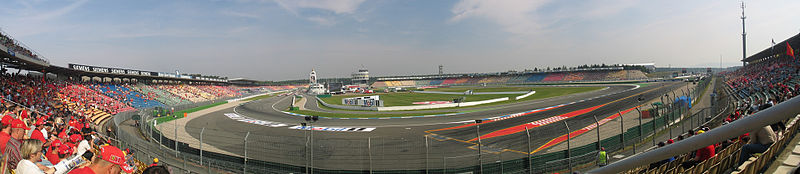
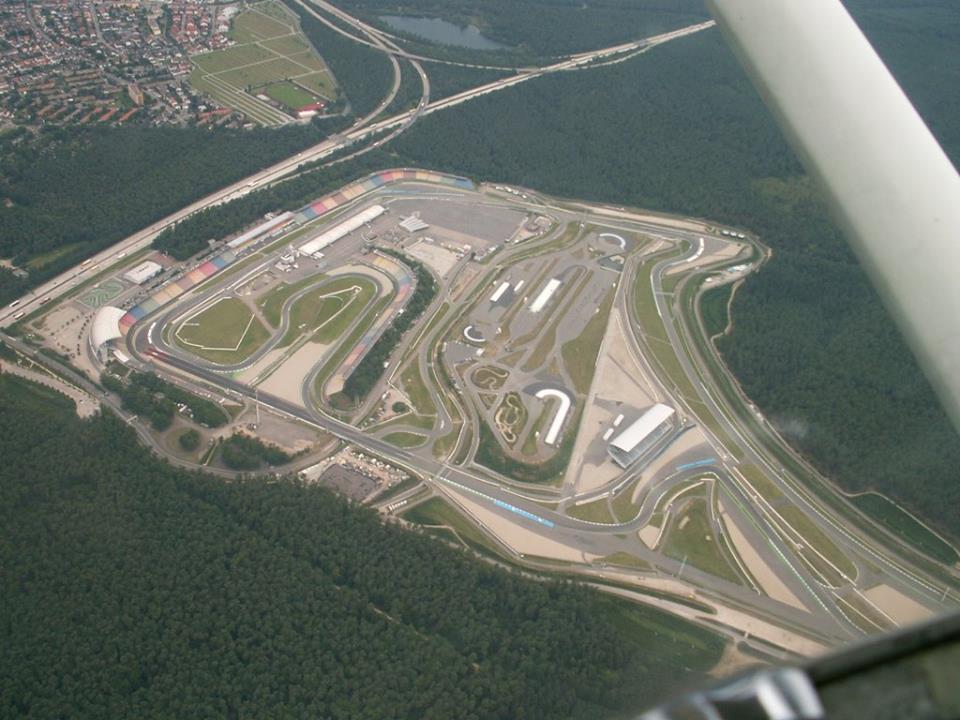
The last time the F1 paddock visited Germany’s Hockenheimring was in 2014. Back then Mercedes’ dominance was just getting into its stride and Sebastian Vettel was still a Red Bull driver.
Given the amount of things that have changed it feels impossible that the race around the Hockenheimring was just two years ago. In 2016 Lewis Hamilton is a triple world champion, Sebastian Vettel has settled into life as a Ferrari driver, and there was no American team on the grid.
What remains unchanged is the mystic and attraction of the Hockenheimring. They will all be fighting it out on a German circuit that varies quite a bit from what was seen two weeks ago in Hungary. The layout includes just two high speed corners as the rest of the lap is comprised of medium speed corners. This requires stability under braking and conversely good traction out of the slower speed corners.
Overtaking here is easier than at the Hungaroring but Red Bull and Ferrari are unlikely to have enough to challenge Mercedes. For Red Bull the fact that the German circuit is very much power limited will have a big impact on their pace. However, expect to see Daniel Ricciardo and Max Verstappen loitering near the top few positions and likely giving the Ferrari’s a tough fight.
The Italian team have been thrown a bit of curveball with the departure of tech chief James Allison. It’s never a good sign when one of the head honchos leaves mid-way through the season but it is likely that Allison did not in order to spend time with his young children. The immediate impact on Ferrari won’t be too significant. They still have scheduled updates to fit to the 2016 car throughout the season as they shift focus to their 2017 challenger.
In Germany the cooler weather may once again be Ferrari’s foe. Throughout the season the team has consistently struggled with maintaining optimum tyre temps in cooler conditions.
The run down to turn one tightens quite quickly and it remains to be seen how hard the two Merc boys will fight for dominance when the light goes out. You can’t help feeling that if Rosberg is beaten by Hamilton here it may be championship over for the German.
The Hungarian grand prix marked the theoretical mid point of the 2016 season. Yet, after ten races a singular point was all that divided Nico Rosberg and Lewis Hamilton in the championship fight.
Throughout the weekend’s practice sessions and qualifying it was Rosberg who looked most comfortable. But it wasn’t long before Hamilton got the drop on his pole-starting teammate and seized the lead of the race. Although it was not as dominant a drive from Hamilton he always maintained a big enough gap to Rosberg to ensure his fifth win around the Hungaroring.
The Silver Arrows held a distinct pace advantage over the rest and were hardly challenged by third placed Daniel Ricciardo. The Red Bull driver threatened Rosberg’s second place by momentarily closing the gap to 4.5 seconds in the second half of the race but couldn’t make any further impression.
The embattled Ferrari’s ran better in race trim but still fell short of reaching the podium. Sebastian Vettel, who started fifth, closed to within half a second of Ricciardo as the race drew to its ends but was unable to overtake on the notoriously difficult Hungaroring.
Max Verstappen and Kimi Raikkonen were embroiled in a fight for fifth towards the end of the race. Verstappen managed to hold off Raikkonen who started 14th after a timing error on Saturday. However, the manner in which Verstappen defended his position was questionable, at best. In trying to keep Raikkonen at bay Verstappen changed direction twice which is prohibited under FIA regulations. While stewards saw no cause for investigation the young Red Bull driver’s actions was met with scorn on social media. Raikkonen eventually brought the Ferrari home in sixth and set the fastest lap of the race.
Although a fair distance adrift Fernando Alonso scored some points for the McLaren in a legitimate seventh place ahead Carlos Sainz in the Toro Rosso and the Williams of Valterri Bottas. The final point went to a rather anonymous Nico Hulkenberg as the only retirement of the day came in the form of a Jenson Button whose McLaren suffered an oil leak.
Lewis Hamilton landed a hammer blow as he not only secured a fifth win at the Hungaroring but with it took over the lead in the driver’s championship. By successfully overcoming a 43 point deficit it also strikes a significant psychological blow to Nico Rosberg. Remarkably, the battle for championship glory is far from over and has all the possibility of turning on its head once more as ten races still remain on the 2016 calendar.
The stewards have ruled that Nico Rosberg did, in fact, slow down for the yellow flags in qualifying and will keep pole position for the Hungarian Grand Prix.
Rosberg was called to stewards late on Saturday evening after an alleged breach of Appendix H, Article 2.4.5.1 b) of the FIA Sporting Regulations. It was alleged that Rosberg did not slow down for the yellow flags at Turn 9 in Q3 after McLaren’s Fernando Alonso spun and came to a stop with his car partially on the track.
Rosberg’s team-mate Lewis Hamilton was on a flying lap and the yellow flags meant that he had to back out of the lap. By the time Rosberg had reached Turn 9, Alonso had already cleared the area and was on his way back to the pits. The yellow flag conditions, however, persisted. When Rosberg had reached T9, the yellow flags were still out. On board shots of Rosberg going through Turns 8 and 9 showed that he had lifted off.
The stewards ruled that no further action should be taken on Rosberg as telemetry had showed that he had slowed down.
In a statement the stewards said: “The telemetry demonstrated that the driver reduced speed significantly into turn 8.”
Photo credit: Mercedes AMG Petronas Formula One Team

 The race had just begun to settle down as Renault’s Kevin Magnussen lost control at the top of Eau Rouge and slammed into the barrier with an enormous impact. The Danish driver exited the cockpit of his car only with a slight limp that was later confirmed as a cut to his ankle. The crash displaced the tyre-wall, which prompted race director Charlie Whiting to red flag the race in for repairs to take place.
 Nico Hulkenberg completed an impressive day for Force India with fourth while Perez finished fifth ahead of a recovering Sebastian Vettel in sixth. Fernando Alonso ran an impressive race for McLaren to finish seventh ahead of Williams driver Valtteri Bottas in eighth. After being a lap down before the red flag Raikkonen was able to recover to ninth ahead of Felipe Massa in tenth.