Tag: mattia binotto

  • F1 2020: Austria Gp Preview – It’s A GO….Finally

    F1 2020: Austria Gp Preview – It’s A GO….Finally

    It is finally here. After months of no on-track action to speak off this weekend the 2020 Formula 1 season will finally kick-off.

    The season-opener will run around the picture-perfect Red Bull Ring situated at the foothills of the Styrian Mountains. It’s been more than half a year and an awfully long dry spell for all involved but the Austrian grand prix may make the wait more than worth it.

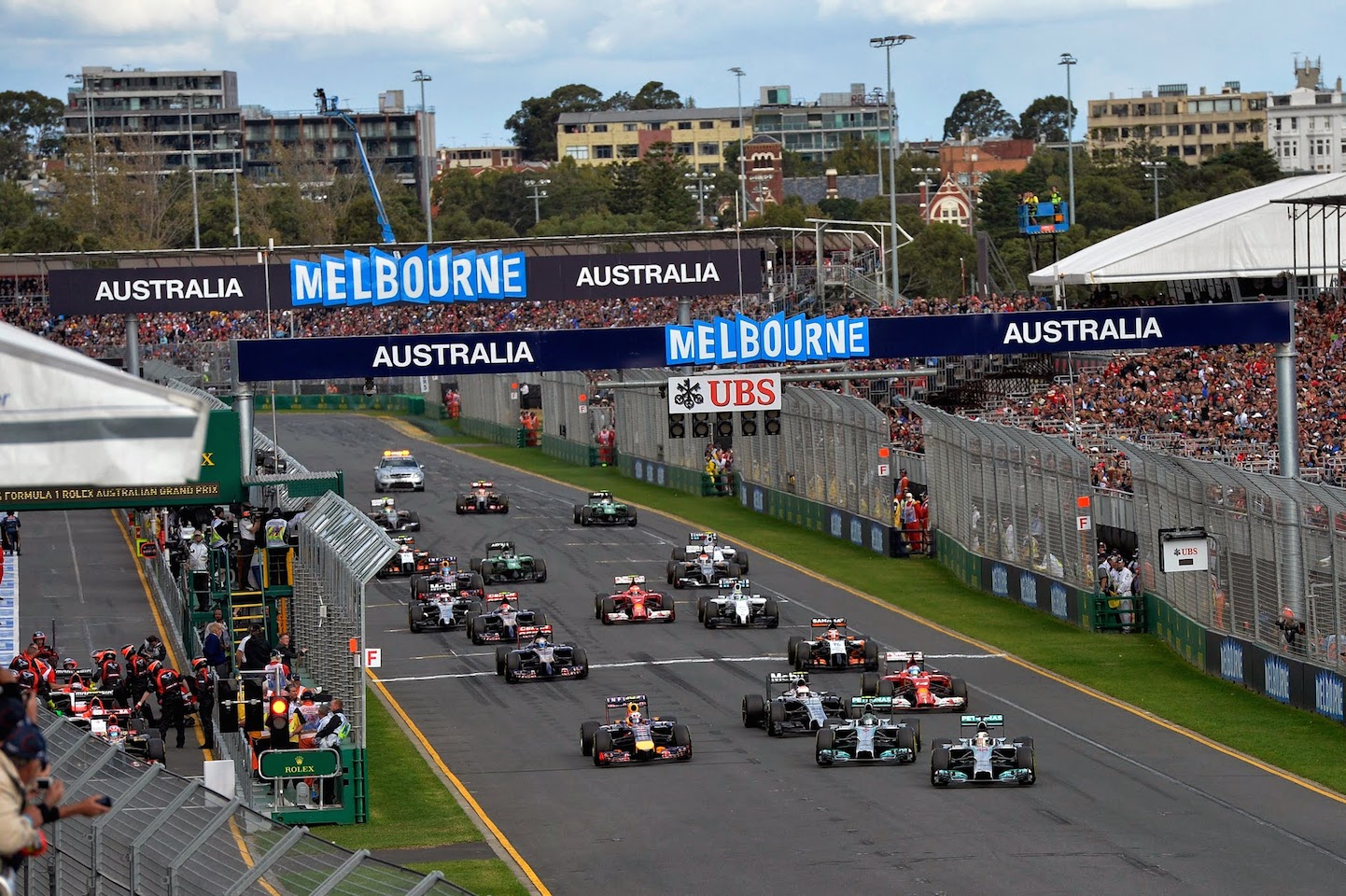
    At the outset every new season there are unknowns. Pre-season testing may have provided a rudimentary pecking order but the Red Bull Ring is a far different prospect than the traditional first race of the season around Australia’s Albert Park circuit. Instead of the unique semi-permanent street circuit F1 2020 will start on an Austrian circuit dominated by straights and heavy braking.

    Though the teams all observed a compulsory shutdown period work on improving their cars has been progressing. Mercedes and Ferrari are guaranteed to bring a raft of upgrades to their cars. The number of parts may vary in comparison to the bigger teams but all teams are likely to run updated packages this weekend. Ferrari are supposedly bringing only ‘minor’ upgrades to their car. But it is believed that a new smaller and narrower nose configuration will also be introduced. Reports also suggest that Ferrari are readying an engine upgrade that is rumoured to be worth 20 to 30 BHP which could prove valuable on a circuit dominated by straights.

    At Mercedes Technical chief James Allison confirmed that the team has made “significant progress” on the 2020 car and will bring a “chunk” of upgrades to Austria. It might mean that Mercedes will maintain the pre-season favourites tag. But Austria hasn’t been overly kind to Mercedes in the last few years. For one, the traditionally sky-high temperatures have severely affected the Merc on several occasions. However, as it stands the weather is forecast to be in the low twenties with 60% chances of showers on Sunday.

    2020 Barcelona February testing IThe more than three month delay to racing, caused by the coronavirus pandemic, ensures that the 2020 F1 season will long being remembered as one of the most unusual. In addition to the conjecture around Ferrari’s pace and Mercedes’s ability to preserve their dominance Red Bull too enter into the equation. It’s been seven years since they last won a title and the biggest question around the Austrian-owned team is whether or not a sustained challenge can be mounted for the championship. The opening rounds of this season, which include the double-header in Austria and a third round in Hungary, are circuit tailor-made to the characteristics of the Red Bull car. It is as good a chance as they’ve ever had to assert themselves in the championship fight.

    In the midfield too there is great sense of anticipation. Can McLaren maintain their position as best-of-the-rest? They have momentum on their side but team’s financial difficulties add an extra layer of pressure to maximise every point-scoring opportunity. Was the pace shown by Racing Point in pre-season testing legitimate and can they keep their eye on the ball despite the team’s imminent re-branding as Aston Martin? Dubbed the ‘pink Mercedes’ due to its overwhelming similarity to the 2019 Merc the Racing Point team made a big statement in testing. It’s now though that they’ll need to prove that their pace is legitimate. Will Renault, undoubtedly under pressure from France, move forward? For a works team Renault has been languishing further down the field than it should be and must begin to show progress up the grid if it is justify its participation in the sport. Has Williams produced a car capable of scoring points? There were signs early on that the 2020 Williams was at least better than its predecessor. However, the 2019 car didn’t exactly set a high bar. The team seemed cautiously optimistic that it is moving in the right direction.

    The 2019 Austrian grand prix, which culminated in a last gasp win for Max Verstappen, was easily one of the best races of the season. If the 2020 Austrian grand prix has even the slightest resemblance to it then we’re in for a cracker.

  • F1 2020: Breaking News – F1 Calls Off Season-Opener

    F1 2020: Breaking News – F1 Calls Off Season-Opener

    Formula 1 has announced that it is calling off the opening round of the 2020 season.

    The first race of the new F1 season was scheduled to take place around Australia’s Albert Park circuit this weekend. Despite fears of the coronavirus pandemic F1 surged ahead with plans to kick of its season of racing while several other major sporting codes have called a halt to activities.

    Earlier on Thursday afternoon the McLaren team released a statement detailing their withdrawal from the race weekend due to a positive coronavirus test by a team member.

    Towards midnight on Thursday all team principals were huddled in a meeting to discuss the way forward. By three am Australian time no decision had been made despite several rumours running rampant that the season-opener was to be postponed. Fans and journalists alike waited seemingly in vain for an official update from the power that be but nothing was forthcoming. It wasn’t until several hours later than an announcement was made that a majority of the teams had decided against racing this weekend.

    “We appreciate this is very disappointing news for the thousands of fans due to attend the race” the official statement read. “All parties took into consideration the huge efforts of the AGPC [Australian Grand Prix Corporation], Motorsport Australia, staff and volunteers to stage the opening round of the 2020 FIA Formula One World Championship in Melbourne, however concluded that the safety of all members of the Formula 1 family and the wider community, as well as the fairness of the competition take priority”.

    Though there are several aspects that needed to have been considered the amount of time that was taken before an official announcement was forthcoming has not endeared F1 to the racing community of its fans.

    While Bahrain has already announced a race ‘behind closed doors’ it is difficult to imagine that it can go ahead. Similarly, the threat that Vietnam could soon be added to the postponement list, along with Australia and China, remains very real. The best-case scenario for F1 2020 is a season-opening race in Zandvoort. But even this remains up in the air.

  • F1 2020: Testing Diary – Week 1

    F1 2020: Testing Diary – Week 1

    The first four-day test has concluded at Spain’s Circuit de Barcelona Catalunya and has raised numerous talking points and more than a few eyebrows.

     The Big Three

     Ferrari team principal Mattia Binotto said in a press conference that the Maranello-based team might well be behind both Mercedes and Red Bull in the early part of the season. But the initial reports from both Seb Vettel and Charles Leclerc is that the 2020 car, dubbed the SF1000, is a definite improvement from last season’s car.

    This is a different approach from Ferrari. In 2019 the team were upbeat and seemingly sure that they were heading to Australia well ahead of Mercedes. It wasn’t the case and the team spent the better part of the season playing catch up. This year they’ve taken what appears to be a more measured approach. There were no performance runs in the first week of testing and the engines were run at a very conservative mode for most of it too. It could be that they’ve decided to take the same, more cautious, approach with what they are saying too. It might well be smoke and mirrors and Ferrari’s attempt to not get ahead of themselves after being burnt in 2019.

    Here is what we do know for sure. The long runs during the first test showed a car quite heavy on the tyres with the laptimes deteriorating quite a bit quicker than nearest rivals Merc and Red Bull. The team is also expected to introduce a bevy of new parts for the second test that could, if Binotto’s admissions are true, push them closer to their competitors.

    2020 Barcelona February testing IThere is a good feeling around the Red Bull garage that they have unquestionably taken a step forward. Max Verstappen racked up more than 100 laps in his first day in the car and declared it “fast everywhere”. How much of a step forward they have made and whether it is enough to beat Mercedes remains a mystery. But there is real optimism that Red Bull has produced a car that could well fight for the championship from the beginning of the season. It remains to be seen however if this optimism is a genuine reflection of pace or merely hype.

    One of the biggest talking point to come out of the first test is Mercedes’s introduction of a moveable steering wheel which tech director James Allison has named DAS – Dual Axis Steering. From on-board footage of Lewis Hamilton’s car it became clear that he was pulling the steering wheel towards himself and then pushing it back before braking for either turn one or turn nine on the Catalunya circuit. It is believed, but unconfirmed by Mercedes; that the DAS system alters the toe, the lean angle of the front wheels, on the straits.

    By adjusting the toe out it straightens the wheels thereby creating less aero drag and less scrub on the front tyres as they are now pointing straight ahead instead of at an angle. It is speculated that because the tyres point straight ahead it creates less resistance and therefore aids with tyre temperature and wear. The question remains as to how much of an advantage this system gives Merc. Some in the paddock believe that DAS is not a game-changer and that the rest of the Mercedes package for 2020 is far more important in providing performance.

    Nevertheless, the DAS system is an incredibly feat of engineering that strikes right at the heart of what makes F1 technology the dazzling marvel that it is. While some might wish for the DAS to be illegal Merc has confirmed that the FIA has known about the system for some time and that they are confident of its legality.

    Racing Point

    When the Racing Point pulled out of the garage and rolled down the pitlane on the first day of testing it raised more than a few eyebrows and it wasn’t because of the slightly brighter pink livery either. You don’t need any technical nous to understand that Racing Point had produced, virtually, a carbon copy of Mercedes’s 2019 car. From the slightly bulbous nose through to the rear suspension it’s so similar that it has been nicknamed the ‘Pink Mercedes’ in the paddock.

    2020 Barcelona February testing IRacing Point isn’t trying to hide the effective ‘photocopying’ of the 2019 Merc either. Along with tech director Andy Green they have patently admitted to taking thousands of photos of the 2019 Merc and simply copying the design. And it’s worked too, at least to some degree as a smiling Sergio Perez proclaimed that he finally has a racecar to fight with.  

     Williams

    The Grove-based team could hardly have done worse than they did in 2019. The good news is that from all indication they are doing significantly better than twelve months ago. Not only was the team ready and raring to go on the first day of testing but also they were first onto track with a clear statement of intent.

    George Russell, now in his second year with the team, is confident that the team wont simply be making up the numbers this year and that they will be racing in 2020. De facto team principal Claire Williams too was positively buoyant and with a smile on her face said that the target is getting into Q2, the second part of quali, points finishes, and a comprehensive upgrade schedule for 2020. There is unlikely to be a single person in the paddock who wouldn’t be happy that Williams has started to climb out of the doldrums of the last few years.

    The second test, scheduled to run at Catalunya this week, is expected to see the focus shift somewhat towards more work on performance, meaning more focus on shorter runs and ultimate pace.

    All images courtesy of Pirelli Motorsport
  • 2019 Formula 1 Japanese Grand Prix: Thursday Press Conference

    2019 Formula 1 Japanese Grand Prix: Thursday Press Conference

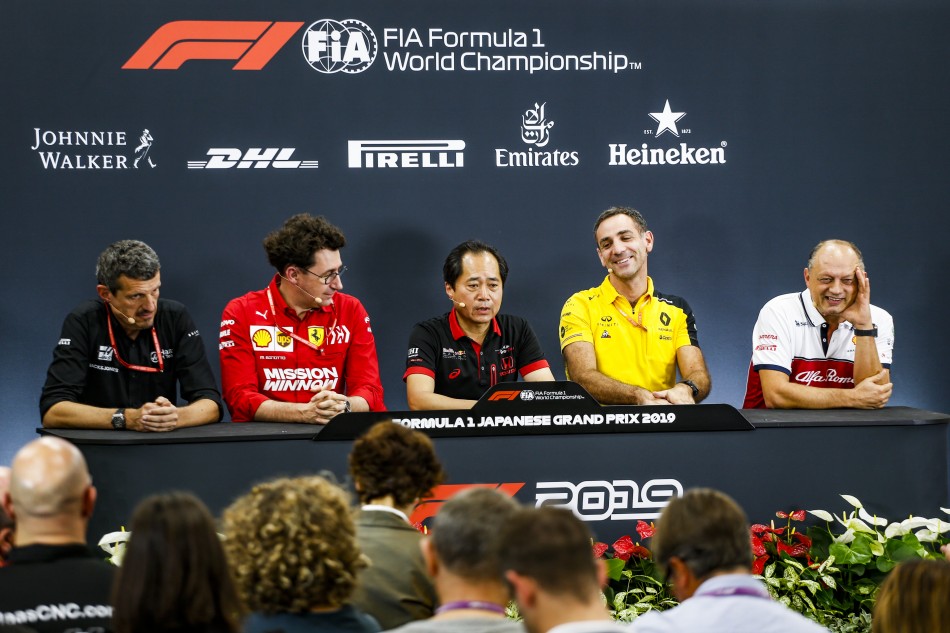
    TEAM REPRESENTATIVES – Guenther STEINER (Haas), Mattia BINOTTO (Ferrari), Toyoharu TANABE (Honda), Cyril ABITEBOUL (Renault), Frédéric VASSEUR (Alfa Romeo)

    Q: Tomorrow’s programme has been called due to the typhoon. Can we get your thoughts on that decision and could you explains how it has affected your programme today. Perhaps we can start with Fred?

    Frédéric VASSEUR: I think that it’s safety first and probably it makes no sense to ask the spectators to come on track and then to be in a big mess. In terms of schedule and programme for the team. We already thought about this yesterday evening honestly. OK, it will change the programme but I think we can afford the weekend with two free practices. Perhaps it will be a good exercise for the future.

    Q: Thank you. Cyril?

    Cyril ABITEBOUL: Well, nothing really to add. It has happened before and it will happen in the future. There is enough time on Sunday to conduct both qualifying and the race. I think maybe it will give us an impression of Formula E, maybe a little bit, so not a bad thing. That’s for my neighbor on the left, and on the right.

    Q: Tanabe-san?

    Toyoharu TANABE: First, I’m sorry to the fans willing to be here Saturday, but in terms of our programme we will just prepare for the qualifying and the race this afternoon and then maybe analyse the data and then ready for the qualifying on Sunday and the race.

    Q: Mattia?

    Mattia BINOTTO: I would join certainly his comment, as first I think it’s a shame for the fans but it’s a fully respectable decision, safety is first. In terms of programmes, certainly it’s a lot more intense now. We are certainly skipping one session, which is FP3. Qualifying may be occurring on Sunday morning. But it means that today it will be a lot more intense. We’ve got, eventually, more tyres to be used – the ones from FP3. We need to set up the car for the Quali on Sunday morning. There’s just a session less. Things are more complicated but certainly a great challenge but I’m pretty sure it should be a good show and spectacle on Sunday.

    Q: Guenther?

    Guenther STEINER: Nothing to add from a sporting side. I think it was the right decision from the organisers, safety is first, and the rest is set.

    Q: Thank you gentlemen. Tanabe-san, if I could come back to you, please? It’s always special to race here at Suzuka and Honda has a good chance of getting a good result this weekend. How exciting is it to be in that situation?

    TT: Yes, it is a very special race. The Japanese Grand Prix is our home race, and then the Suzuka circuit is owned by Honda. All Japanese fans are willing it to have a good result from Honda-powered cars. On the other hand, it’s kind of pressure for us, but fans give us more power. In terms of the weekend preparation, the setting is the same as the other races. So, we just set up the PU accordingly and do our best.

    Q: Can we get a word too on the performance of Naoki Yamamoto this morning in the Toro Rosso. He was only one tenth slower than Dany Kvyat. How would you assess his performance today?

    TT: Considering it’s his first run on a grand prix weekend I think he did a good job. Comparing the lap time against Dany is a bit difficult because they are doing different strategy in the practice. But he did a decent job for the team to set up the car in the first session of the weekend and then his run today will definitely encourage Japanese young drivers. So, thank you Toro Rosso and Red Bull and it’s good for the Japanese fans as well.

    Q: Thank you. Fred, coming back to you: there are five races left this year, so when you look back at this season, has it been a success?

    FV: It was a really up and down season. We had the first four or five races where we scored a lot of points and then we had a bad momentum around Monaco and Barcelona and then we went back. The last four races were very difficult. It’s up and down. But let’s see in the last five if it’s up and hopefully the last five will be OK.

    Q: What can you do to level out the performances?

    FV: It’s small things and small details honestly. If you compare with Sochi that we were, with Antonio, we were P13 in Quali but we were two tenths off compared to P7 in Q2 and it’s very, very tight and for small details sometimes you can be completely out of the classification but we have to take care when you are doing the analysis. But it’s true also that we made too many mistakes over the last three or four weekends – teams, drivers, everyone in the same basket – but at the end of the day we have to wake up a little bit and to come back to the pace and top score points in the last four events.

    Q: And how has the experience of Kimi Räikkönen helped the team?

    FV: He’s staying calm. He’s not a big nervous. I think it’s good also for us to stay focused on the real issue and not to start to try to go in every single direction. We know what did wrong on the last two or three events and I hope that we will be able to correct it for Suzuka and the next ones, and that’s it.

    Q: Guenther, if we could come to you now please. In Russia, Kevin Magnussen scored his first points since the German Grand Prix. What aero was he running on his car that weekend and is that the direction going forward?

    Guenther STEINER: I don’t know what aero he was running because we are mixing it up a little bit. There is no definitive spec what we could call it. It’s a hybrid, we call it and, going forward, in the moment we are on a very similar spec like we had in Russia. Going forward, we test a few things and I cannot tell you what we do in the next race because we just try to get better and get a better understanding so we are not in this position next year. But, I mean, it seemed to be working a little bit better in Russia. So, let’s hope we can find a few more points on our way to the end of the season.

    Q: Knowing what you know now, what would you have done differently with the development of this year’s car?

    GS: A lot. It’s like… I don’t want to go into the specifics of technical stuff but we should have listened a little bit more to the drivers when they gave their opinion about what the car is doing and whatnot. And sometimes listen more to drivers than look at numbers. That’s what we have to learn out of this. And now I think we need to get what drivers say correlated with what the numbers say and get an understanding so we can move forward. As I said, we would have done a lot different from Barcelona onwards.

    Q: Cyril, tell us about the progress with your car, particularly this weekend, and what feedback you’ve had from your drivers about the new front wing?

    Cyril ABITEBOUL: It’s as always when you bring this type of parts, in particular with these current regulations, it’s a very sensitive part. I think everyone here would say the same thing. So, it always takes a little bit of time to understand properly, to measure, we’ve done a number of back-to-back tests. The guys are currently looking at the data at the factory – and also listening to drivers, Guenther, we are also doing that – and no, there is nothing really bad but I think there is more to come in pace and in balance in particular. But this is a very complex area of development of the car. It’s highly loaded so it creates some instability. It’s complex.

    Q: Can you tell us any more about what the drivers were saying about the car this morning?

    CA: I don’t want to go into specifics but I think the balance was not exactly where it was supposed to be, so we need to review that in particular, make sure that the data do back up what they were experiencing on track. And if that does, we’ll be making some set-up change in FP2 to see if we can indeed get it to work a bit better.

    Q: OK, and looking a bit further ahead, it looks like you won’t be supplying any customer teams in 2021. How will that impact on your power unit development?

    CA: In particular for next year there is no impact because the engine for next year is done, it’s on the dyno already, you know that it’s a long lead-time development, so nothing is going to impact what we are doing for 2020. It’s going to impact what we could be doing for 2021 on the basis that, when you have multiple customers, in particular the way that Renault is doing it, we always try to satisfy everyone to take on board all the comments in terms of installation, and so on and so forth, so that will be one less distraction. We will be able to focus on ourselves and just on ourselves. And that’s it. From an economic perspective, there is absolutely no impact and nothing in it, because we sell, more or less, at a cost. Due to the price cap limitation. So, frankly, it’s nothing, that it’s good news, because, you know, it’s always satisfying to see your product being used by multiple teams but in terms of what we need to achieve and deliver for Renault it has absolutely no impact.

    Q: Mattia, we understood from Charles yesterday that you spoke to both drivers in Maranello last week. How confident are you that another situation like the one we saw in Russia won’t arise again?

    Mattia BINOTTO: First, it’s not the first time we are speaking in Maranello. It’s true that I met both of them this week, they were in Maranello for some activities: simulator etc., I think we had positive, constructive, honest, fair, transparent discussions with both of them, individuals. I think what happened in Sochi, nothing really bad but certainly something that needs to be improved and addressed and I think it’s only an opportunity of lesson learned and trying to do better in the future. But how much I’m confident it will not happen, I’m not at all. I think these are both very good drivers. They are all going for a single objective which is winning themselves but I think what again is more important is that at least we between us we’ve got clarity and fairness and I think that’s key.

    Q: You say they’re both very competitive drivers. What have you learnt about Sebastian and Charles over the last two grand prix weekends?

    MB: I think that they are both performing very well and, as I’ve often said this season, it’s somehow a luxury for a team principal having this situation. I’m very pleased for the racing performance of Sebastian, as I am for the one of Charles since, let’s say, the start of the season and his progresses. What I’ve learned, that we’ve got a very competitive line-up. But I don’t think I learned it. It’s not a surprise, it’s something on which we’re simply happy.

    Q: And what about this weekend. How’s your car performing and what do you make of the pace of the Mercedes this morning in FP1?

    MB: It’s only FP1, very difficult normally to judge. We cannot neglect that we set the four poles in the last four grands prix but we’ve seen as well that our competitors have brought some upgrades here. The Red Bull and the Honda will be very competitive this weekend as well. The weekend will be shortened because of tomorrow. Sunday morning the conditions can be very difficult for everybody after, let me say, the bad weather of tomorrow. So, I think it will be a difficult and challenging weekend for everybody. More important that we are focused on ourselves. We’ve got some homework after FP1 certainly to do. A few balance issues to be addressed. Again, I think the benchmark are still the cars which are ahead in the Championship and we are still the challengers but I’m pretty sure we can be competitive and this is our objective.


    QUESTIONS FROM THE FLOOR


    Q: (Eric Bielderman – L’Equipe) To all managers: would you regard this afternoon’s FP2 as a potential qualification session due to the fact that Sunday morning, with the wind, it might not be possible… there is a slight chance it might not be possible to run the qualification process?

    GS: I wouldn’t say a qualification but I think a lot of us will try to put in a fast time to prevent…  if qualifying is cancelled on Sunday morning, they are discussing it now, we need to look at the weather. But for sure, we have got more tyres available as well because we are not running tomorrow so it’s a judgement for everybody to do, to see if they can do a good lap but I think it will be quite interesting as Mattia said before, this afternoon, with not having FP3, there will be a lot of running out there this afternoon so hopefully we have got an interesting programme going.

    MB: Not much more to add. I think the answer was completely clear. I don’t think the main objective of this afternoon will be to set the best lap time. The main activity, certainly, will be to address any set-up issues that we got in the morning, making sure that we are ready for Sunday because still, I think, the most likely will be to have qualifying on Sunday morning and then the race in the afternoon. But no doubt, if we can, we will try to do at least a good lap, just in case.

    TT: In terms of a PU settings point of view, we just set up our PU for the qualifying and the race this afternoon and we will see. I hope the typhoon goes very quick after landing on the Japan island.

    CA: Yeah, it’s going to be a bit of a balancing exercise because we still need to prepare the race and particularly, in our case, because of the development parts, we still need to understand (them) a bit better and look at that but in parallel, we will keep that in the back of our minds. As far as we are concerned, we have elected to stay with our Friday engine, which is down on power because it’s an engine which we were using initially at the start of the season, so it’s costing a little bit but on balance we still believe that Sunday will be decent enough so that qualifying can be run so we prefer to stay with that plan.

    FV: Not much to add that I think at the end it will be a mix between FP2 and FP3 and in case of non-quali on Sunday, I hope that we won’t take the race number for Antonio!

    Q: (Dan Knutson – Auto Action, Speedsport) Fred, when will the team decide who Kimi’s team-mate will be next year?

    FV: We will take the decision quite soon but honestly, if you have a look at the last event I think that Antonio is doing a very strong job, that he was matching Kimi in the last six or seven qualifyings in a row. He was in front in Sochi. OK, the first lap was not a good one for us but he’s doing the job and he’s improving step-by-step but this morning we had an issue on the car and he was not able to show the pace but he’s doing the job, he’s improving and I’m very confident with Antonio.

    Q: (Kate Walker – Financial Times) I have a two-part question for Mattia: first off, I was wondering if you could talk us through the progress on the 2021 rules from the perspective of Ferrari and secondly, what is your current position on the use of the veto?

    MB: 2021, there will be a meeting with the FIA and F1 next week on the 16th which I think will be very important because that’s the last one, altogether, before the end of the month when there will be a new vote. I think there are still a lot of open points and discussions are still ongoing so how will be the conclusion of all these discussions, it is very difficult to say at the moment. There are various interests between teams, between the teams and the F1 and the teams and the FIA. But certainly, as Ferrari, we are intending to play our role, we believe as Ferrari because of what Ferrari represents for F1, we’ve got a voice, an important voice in the discussions but no doubt that there’s still a lot of points to be addressed. In terms of the veto – you mentioned the veto – as I said I think last time in Sochi that will really be a shame. I don’t think that should be the case at all. I think we’ve got a good and open discussion with the stakeholders at the moment and I’m as well somehow hopeful that we can find the right compromise at the end.

    Q: (Julien Billiotte – AutoHebdo) Gunther, you’ve been summoned to the FIA stewards for what you said over the radio in Sochi. Are you surprised, are you upset, do you believe you have a strong defence case?

    GS: I don’t know what they’ve got to say. I’m going to see them in five minutes, I will be leaving here early actually, because the two dates clashed. I don’t know what they’re going to tell me. You read the same as I read so I don’t know any more information than that. I can tell you something a little bit later but I hope I don’t get a penalty for leaving the press conference early!

    Q: (Martin Moravec – dpa) Mattia, when you look at this intense rivalry between Sebastian and Charles, do you fear that at some point you could lose control of your drivers?

    MB: No, no I don’t think there is the risk of losing control because there is a difference between not managing drivers and at least having the intent to manage them. There is always a solution which is not manage them, maybe someone may do so, I think our intention is to try to manage the situation to the benefit of the team and secondly to the benefit, overall, as well, of the drivers. We may do a few things that can be addressed or improved and I think that is what we are building and trying to do for the future.

  • 2019 Formula 1 Hungarian Grand Prix: Friday Press Conference

    2019 Formula 1 Hungarian Grand Prix: Friday Press Conference

    TEAM REPRESENTATIVES – Andreas SEIDL (McLaren), Christian HORNER (Red Bull), Mattia BINOTTO (Ferrari), Claire WILLIAMS (Williams), Beat ZEHNDER (Alfa Romeo)


    PRESS CONFERENCE


    Q: Christian, Max Verstappen is the man of the moment, having won two of the last three races. Can you just give us your thoughts on his current level of performance? Have you worked with a better driver? And how tough is it for any team-mate to match him?

    Christian HORNER: I think Max, not just in the last three races but during the course of the whole of this seasons, indeed pretty much Montreal last year, he’s been driving incredibly well at a very high standard. It’s certainly started to come together over the last few races. The win in Austria was a watershed moment, we were competitive at Silverstone, and obviously the race, the excitement of last weekend was a phenomenal performance by him, to keep his head, to have the pace in all varying conditions, and come out on top and win the grand prix. So, yeah, he’s in great form and you know, hopefully we can continue that form into the summer break and out of the other side as well. He’s certainly delivering at an extremely high level.

    Q: How tough for any team-mate to match him?

    CH: I think very tough. If you go up against Verstappen at the moment, for me arguably he is the most in-form driver on the grid. That’s an enormous barometer for any driver to go up and be measured against. As a competitor you always want to measure yourself against the best that you can. So, he’s a benchmark that obviously Pierre is measuring himself against.

    Q: Mattia, if we could come onto you please. Rollercoaster weekend for the team at Hockenheim – the disappointment of qualifying and then the brilliant comeback drive by Sebastian. How do you begin to analyse a weekend like that?

    Mattia BINOTTO: I think, as you said, the disappointment at first. I think we knew that we’d got a good car at Hockenheim, we’d been fast on Friday, Saturday and in the race itself. We didn’t score the pole but we believed that we’d got the potential for it. And certainly when you’re starting a race on the front row or the back of the grid, it’s two different scenarios. Again disappointment, because it’s more the empty glass. I think it’s really a missed opportunity again for us, to have a victory in Hockenheim. And I think as a team it’s where we need to focus: first of witnesses of what was wrong during the weekend. On the other side, I think still positive feedback, and we should not forget about them. I think we got, as I said, a competitive car whatever the conditions from hot conditions on Friday or cooler temperatures on Sunday, even the wet, so I think a lot of positives, the strategy of the team, the way we managed strategy, the pit stops during the race, race situations. And the team somehow kept focused after the disappointment of Saturday, and somehow were prepared for a good race. And a good race for Seb. No doubt. We are all pleased for him. I think it was important for him to have such, let me say, a race in Germany with a hometown and the crowd there. So, all pleased by that but I think overall we keep the disappointment of the weekend.

    Q: Claire, you scored a point at Hockenheim, pending the appeal by Alfa Romeo. Your team has scored 3561 points in its history – but what did this point mean to you? Was it just reward for all the hard work?

    Claire WILLIAMS: I think the point Tom, that you made about the number of points that Williams has scored in our history. I think for us to get excited about one point would probably be slightly erroneous. Everybody at Williams has been working so hard this year, it has been another brutal season for us, so I suppose to get any kind of reward, we should take and we should accept gladly – but as you say, Alfa have submitted their appeal against that so I think we’re going to have to wait and see – but one point for me, I think, as a Williams, I can’t personally be happy with that and I don’t think anyone in our team is necessarily ecstatic about it.

    Q: Let’s move on to Beat and talk about that appeal. You’ve lodged the appeal after the race. Can you tell us what you’ve done that?

    Beat ZEHNDER: We’ve been penalised after the race and we went for appeal, which is the normal procedure if you want to fight, and you think you have some arguments to win – otherwise you wouldn’t do it.

    Q: What were the mitigating circumstances? Why have you lodged that appeal?

    BZ: It’s an ongoing process and I cannot give you any information. Everything will be disclosed on the 24th of September when the hearing will take place in Paris.

    Q: OK, let’s cast the net a bit wider then. You’ve now been at Sauber for 32 years – the team in all its different guises. What’s your assessment of the path that Alfa is now on? Do you feel more comfortable than you’ve been for several years?

    BZ: Of course, we’re in a better situation, especially on the financial side. We’ve gone through very difficult times in 2014, 2015, 2016; we’ve been close to shutting down the company. And I think this is, with Alfa Romeo and with the new ownership, we’re in a much better situation and I think the big achievement of the team is that we’re still around.

    Q: Andreas, it’s been an impressive season for McLaren. You’re now 31 points ahead of Renault. Does the size of that gap surprise you in any way?

    Andreas SEIDL: It’s obviously good that we have all these points in the pocket with not necessarily having the fourth fastest car for all the races, so that’s good but at the same time it’s not something we get carried away with. We have seen, for example at the last race, you just need one crazy race where Hülkenberg, for example is scoring P2 and we have no points and we would have a different discussion today. It’s important for us to keep our heads down, to just keep pushing, to bring more and more updates on the track, and keep this positive journey up. But, of course, it’s nice to be in this P4 at the moment and we try to fight for that until the end of the season.

    Q: Tell us more about this positive journey, because last time you were here you said you’d arrived at a team on the rise. Just how far can you go? Can you challenge Red Bull?

    AS: The reality is that we’re still getting lapped. If there’s a normal race. So there’s still a lot of hard work in front of us. But, as I said before, it’s important that we keep progressing as a team together with our drivers. It’s good to see that the updates are working and hopefully we can make the next step with our car, also for next year. This is really what my focus is on. There’s no magic, as we know, in Formula 1. It’s down to hard work, to stay focused, and this is what I try, together with the team.


    QUESTIONS FROM THE FLOOR


    Q: (Luke Smith – crash.net) Question for Christian. Tom touched on Max’s incredible recent form – I think he’s been in the top five for all the last 20 races. He really appears to have hit the potential that we saw in the early part of his career. What changed with Max to cause this form recently? You said Montreal last year. Was it that rough start to last season? How important was that to him do you think?

    CH: I think that Max is obviously still a young guy, he’s only 21 years of age – but he’s now in his fifth season of grand prix racing and he’s now got the benefit of experience under his belt as well. His speed, his race craft, has never really been in any doubt but he’s got that collection of knowledge and experience now. I think, you know, obviously last year, the beginning of the year was a little challenging for him with some missed opportunities. I think he reflected on that and really turned the corner from Montreal last year. That run of performances really since then has been phenomenal. I think he’s continuing to evolve. I think that this year he really has stepped up as well as the senior driver, and he’s performing at a very level – and that in turn pushes the team very hard as well. I think with the new relationship with Honda, he’s enjoying that working environment, that working relationship as well. And so, there’s certainly a very positive vibe around him at the moment.

    Q: (Scott Mitchell – Autosport) To all five please. The talk about expanding the calendar. If we go up to 22 races do you think we would need to increase the number of engines and engine components you are allowed to use over the course of the season? Would that be one of the defining factors? And what does that do for the costs involved. Obviously F1 wants to bring down the cost, but adding more races, using more engines is expensive. Your thoughts on that please?

    AS: Yeah, in principle we support the direction of going for 22 races next year. There’s a discussion ongoing at the moment about what that means actually in terms of the number of components to be used and also the costs for a team like us, so that’s still ongoing. I think if you look at the bigger picture for us, it’s simply important now also to be a bit careful not to increase the number of races even further – for two reasons really. First of all, I think we really need to look after our people and make sure that we don’t ask for too much there, because I think if we go now for the next step of even more races we definitely have to change some things inside our organisations, for all teams. And then, yeah, that’s pretty much it. The second point of course we understand the commercial point of view but I think it‘s also important that we keep this exclusivity for each of the events, which doesn’t necessarily get better by adding more and more races.

    CH: The commercial rights holder has come to us to say, you know, that 22 races is a possibility for next year and would we support it. I think in principle, yes, is the answer, but it has to be combined with what other activities are going on in terms of: do we need to do as much in-season testing as we currently do; do we need to do as much pre-season testing? And I think if we are to introduce a 22nd race the majority of teams are taking penalties and using four engines anyway, so one would assume that it would make sense to increase the allocation on power units and components and perhaps if we look at the ratio and say ‘well, OK, rather than using engines for going testing and if we reduce the in-season testing and pre-season testing slightly, if that frees up an engine that the majority of teams they’re going to use anyway. From the next race there is going to be a whole raft of penalties coming through, and we’re only just halfway through the season, so introducing another race on top of that and expecting teams to get through on three engines and three sets of components is a bit of a tall ask.

    MB: I think very similar to the first answers. We are supportive on a 22nd race if that means some more revenues but we need to certainly be careful on the costs, the extra costs. If you look as well at 2021 at the moment we are discussing for 24 races but no extra engines, no extra units, so I think it’s only a path to 2021, so increasing the number of units for next year would be simply wrong, because it would mean, yes, more revenues, but then more costs, which would make no sense overall and so it should be on the power unit manufacturer to try to do an effort which is in the direction of 2021 to afford an extra race with the components we’ve got.

    Q: Would you like to see a reduction in testing as well, like Christian?

    MB: I think it’s certainly something we need to discuss but it could be a great idea, yes.

    Q: OK. Claire?

    CW: Yeah, I would probably just echo what everybody else has said. I there is a lot more conversation to be had around it, particularly around the components. From a financial perspective, we need to just make sure that it’s going to work, that it cover all our costs, and we are at that point now where we’d say yes it would. But I think most importantly from our side it’s consideration of our team personnel. I think pretty much they are pushed to the limit at the moment with what we are asking them to do with 21 races and the tests on top of that and then the work they have to do in the factory in between. In our team we don’t necessarily have the luxury of rotating staff in and out, we are at capacity on head count. So it would be around looking into that and working out whether we need to bring in more people to support it. I think from our perspective again, I wouldn’t want to see a triple-header on the calendar. I think we have been assured that there wouldn’t be one. I think that broke a lot of people last year, but also from a logistical perspective that is just a nightmare; it’s a disaster. Going to Austria I think it was when we all took makeshift motorhomes, it doesn’t look great for the race but it’s just not good for anyone’s cost base either.

    Q: Beat?

    BZ: I see it more from an organizational point of view. I’m not too concerned about PU elements; I’m more concerned about team members. As a small team we’re at the limit with 21 races already. Any additional race will make it more difficult and we have to think about increasing the number of race team members and establishing a rotating system in a way.

    Q: (Phil Duncan – PA) Christian, have Mercedes approached Red Bull about Max’s availability and would it be a good thing, do you think, for the sport to have Lewis and Max together in the same car?

    CH: Toto has certainly not spoken to me about it. He speaks to almost every driver on the grid, so I would think if he has had a conversation it’s been direct not through the team. The situation with Max is clear and as with other drivers there are always trigger points. But in terms of having those two in one team, I haven’t heard from Lewis either that he wants to join next year. You can see positives and negative in that. I think that ideally we want to see teams going head to head and the drivers are obviously very much part of that team. It would be great to see Ferrari with their drivers, Red Bull with our drivers and Mercedes with their drivers all fighting it out, and whoever else can get up there as well. It doesn’t necessarily mean that two drivers have to be in the same team.

    Q: (Andrew Benson – BBC Sport) For everybody, on the 2021 rules. How concerning is it that less than three months to go before the deadline you are still discussing major, fundamental issues like refueling and how heavy the cars are? How has it ended that way, with such a short amount of time left, and what are the risks of the F1 rules, as intended, not actually happening as a result?

    MB: How much concerning it is? I think certainly there is very little time now from until the end of October and certainly there is quite a long list of open items, open subjects. But more important, I think, is that the discussions ongoing. I think it would be a lot worse if no discussion would take place and somebody is deciding for everybody. So the fact that we have go discussion is certainly what’s positive and it’s in our hands to make sure that we properly collaborate with F1 and the FIA and the teams to address the main points for 2021. And as I often indicated I think, we have certainly got common goals and common objectives for 2021 – sustainability is a key factor – but I think we need as well to pay attention not to overreact in terms of technical, because do we need a better show? I think if you look at the last races, certainly we may still have a good show in certain conditions, but certainly these conditions need to be identified and pursued, so I think changing the car, changing the technical means, spending, re-engineering, proof of concepts, so whatever we may choose, we need to choose it because we are fully all convinced that it is going in the right direction. But yeah, there is very little time and it’s a lot to discuss, but good that we are still discussing.

    CH: Well, I pushed very hard to get the rule process to be moved from end of June to what’s now the end of October because I think if we would have had regulations just introduced we would have been in a real mess. So I think the key thing now is how we use that time during the next three months to ensure that the regulations that we do end up with on October 31, as Mattia says, that we focus on the right things. There is a series of collective meetings that between now and the decision point where we really need to get into the detail of what is the objective of the change and does the change of regulation achieve those objectives, from a show point of view, from a cost point of view. I think we really have to drill into detail over the next few meetings to ensure that with what is presented on October 31 there is a sensible theme to.

    AS: From our point of view we see it clearly it different. I think it’s about time now to simply stop discussing. We all have downloaded our input. We do this since two years, all teams. I think FIA, Formula 1 has a clear idea of what they want to put in place, they presented that also to you guys two weeks ago. We simply want to see action now and we can move on.

    CW: Not a whole lot to add. I think everybody has said it already. The regulations were delayed a little bit but I don’t think they were in the right place in order to sign them off anyway back in June. It gives us a bit more time to debate. I suppose my bigger concern is not that we won’t get it done it’s more about what’s going to change between June and October. We had some foundation principles in place and we fundamentally agreed with those at Williams and I’d like to see those stuck to as best as possible between now and then, but I think it’s par for the course this process in Formula 1 and we have to have those regs signed in October, whatever they will be, so we’ve got to do a good enough job between now and then to make sure they are the best they can be.

    BZ: There is a lot of work to do in all the several working groups. What slows down the process is probably is that there are new elements coming on the table every now and then, like refueling. Six months no one talked about refuelling and we have to consider it carefully. There was a reason we stopped refuelling in 2009. It was not only for financial reasons. It was not good for the sport. Before we talk about re-introducing we should carefully assess whether it is good for the show and good for the sport.

    Q: (Alan Baldwin – Reuters) I wonder if I could get an update maybe from Mattia and Christian about the unsafe release situation. Has there been an assurance from the FIA as to how they are going to handle this in the future? Obviously, Mattia, your team was fined rather than being handed a time penalty at Hockenheim.

    MB: Several races are difficult situations, difficult situations to judge, difficult situations to act on. During the weekend at Hockenheim, I think that the drivers met with the FIA on the Thursday and discussed the approach. What was key was certainly to be safe respective to the mechanics in the pit lane which was a key factor and for example, in the case of Charles, the Red Bull team was ready for a pit stop and was just in front of him and I think the way that somehow Charles drove was very safe in respect of the mechanics and the pit crew. Yes, he had to slow down to be careful with the cars coming in but that’s a racing situation and I think that as a team, when you’ve got such traffic, again, I think what is key is safety first and then in a racing situation where we have been fined, I don’t think there will be a much different situation or different judgement in the future. I think the way it has been judged was the proper one.

    CH: I slightly crapped myself when I saw Romain Grosjean heading for me at the pit wall. From my point of view it looked really unsafe, pretty frightening prospect that. Yeah, it’s a tricky one isn’t it? Max got a penalty in Monaco for what was an unfair release and it was deemed that it was because he touched the car of Bottas. It’s a tricky one, they are slightly different incidents but I think that what you want to see more than anything is an element of consistency because otherwise, from a team point of view, from the guy that’s releasing the car, what call does he make when he’s making that release now? It’s a difficult one. Where there are pit lanes like in Silverstone, we actually had a good scenario where the two cars were released and there was enough room for them to go side-by-side down the pit lane.

    Q: (Viktor Adorján – GP-Hírek) Going back to the topic of logistics, there was a road accident involving one of the Renault trucks earlier this week, coming from Hockenheim. Can you please tell us facts and figures about the level and volume of equipment that you brought here and what kind of security measures do you take in order to ensure that this precious equipment actually arrives safe and sound to European locations?

    BZ: Obviously, as a team you are well prepared for back-to-backs and all the other European races you normally have external truck drivers, or truck drivers, team truck drivers who have rested on the Sunday and only drive when they’re supposed to. You don’t have team members like twenty years ago who worked the whole day and then in the evening jumped in the truck and then drove to the next event, so everything is safe and sound and accidents like this can happen. I think we’re moving more than 400 lorries from one event to the next and considering that, there are not a lot of accidents happening.

    CW: First, I don’t have an update from the driver that was driving that truck and I hope that he’s alright. Thank you. I don’t know, necessarily, I apologise for it, I don’t necessarily know the tonnage of equipment that we send between back-to-back races – I know it’s an awful lot, there are an awful lot of people involved in the logistics in our team and they do a fantastic job of it and as has been said, we do everything to comply to the regulations that are out there by how many hours the drivers can drive, they’re not working prior to them driving etc, so you do take the best approach that you can to avoid those situations. But sometimes those situations are unavoidable but in this case, I think we’re all just pleased that the driver was OK.

    MB: Not much to add. I think that Beat made the picture and the picture is very similar for all the teams. As he said, the drivers are not people that are working throughout the weekend, especially not at a back-to-back. Certainly we as team principals of teams are taking care of our people, making sure that what they are doing at the tracks or driving, we are always doing that in a safe manner with the proper way of applying things, let me say. But what happened is to be considered serious, no doubt, and whatever is happening, as a team, we have the responsibility to review what happened and there is a necessity to try eventually to improve. I don’t have the details in that case but as Ferrari we would certainly consider if we can even do better in the future.

    CH: It’s a big challenge getting all the equipment, the cars, the engineering centre, in our case the Energy Station – I think we’re in excess of 40 trucks to get to an event and when you’ve got a back-to-back event, that’s an added pressure, that they’ve got to be here really by Tuesday, Tuesday afternoon so it’s another thing to take into consideration, with the logistics of an increased calendar is not putting too much tension on the movement of parts and people from one venue to another. Accidents do happen and I don’t know the details of the accident, thankfully the driver, from what I heard, was OK but it’s inevitable that, unfortunately accidents do happen and I think the most important things are you try and mitigate that as best you can and as others have said, with contract drivers it’s not like the old days when the truckies – well, the truckies don’t drive trucks any more. I don’t know why they’re still called truckies. In fact I think we’ve only got one truck driver who can drive a truck. Everybody has contractors that specifically are here just to move the vehicles around.

    AS: Yeah, nothing to add, really. Happy that the driver is OK on the Renault side and as mentioned, each team puts a lot of effort into making sure our people are well protected, get their sleeping times, resting times and so on and luckily, as Beat said at the beginning, with all the movements that are happening we can be lucky that not more is happening.

    Q: (Ian Parkes – New York Times) To the four people either side of Mattia: I was just wondering if I could get an appreciation please from you all of Mattia, his longevity in F1 and his handling so far of probably arguably the toughest job in motor sport?

    CH: How long have you been at Ferrari? Thirty-five years? Twenty-five. Crikey, you must have just left school and gone straight there. Well, look, running Ferrari obviously has pressure. I think Mattia has obviously been managing the technical side and team principal side of things but he’s great to work with… it’s strange talking about your competitor when he’s next to you but he seems to be doing OK so far.

    AS: Obviously I respect all of my colleagues here inside the paddock a lot. But I have my own dream job and that’s the focus on so not a lot to comment really. Colleague, good to talk to.

    CW: Did you say that Mattia has the hardest job in F1 at the moment? I thought that was me at the moment! Mattia goes to work for Ferrari. He probably gets a free… How many free Ferraris do you get, Mattia? Probably about ten in your driveway! No, all joking aside, I’ve only had the privilege of working with Mattia for a short amount of time in our strategy groups etc but I have all due respect for him and I hope that he stays with us for a long time. Obviously Ferrari have had a lot of chopping and changing with their TP so it would be great to have some stability.

    BZ: I’ve known Mattia for a very long time and appreciate him very much and his work. I think every team principal at Ferrari has a difficult job if they’re not winning races but as Claire said, every other team principal has a similar task and a difficult job, especially if you don’t have a competitive car or if you have financial difficulties so it’s not only the top shots, it’s the bottom end as well.

    Q: (Peter Farkas – Auto Motor) Mattia, before the start of this season, you pointed out that one of the things that was missing at Ferrari maybe in the last couple of years was having fun with the racing. Obviously, as the season has turned out, is it possible to have fun in this situation and to restore that fun, and if so, what are you going to do to restore it? Or if not, how can you manage the mood?

    MB: You’re right, I think having fun is important if you think of how many days we are here at the race tracks or back at the factory and how much time we are really spending for what we are doing, so having fun is important, it is something which we are trying to pursue. Not winning doesn’t make the task easier no doubt but I think having fun is a matter of team spirit as well, how the team is behaving together, with the drivers, with the engineers, the mechanics and if there is anything I can say is that I think we have got a great team spirit at the moment and that is that the people are happy to come to the race track for at least challenging the next race and we are all here to seek our victory which didn’t happen so far. I think there have been a few missed opportunities but I think again the fun is in the spirit and that can be done whatever the results.

    Q: (Dániel Horváth – The Paddock Magazine) Andreas, as you mentioned earlier, McLaren made a big step forward this year and you already have more points than last year. What course will you set for 2020?

    AS: The targets for 2020. I think it’s simply important to make the next step as a team, together with our drivers and also in terms of car performance. Next year will be first car under the full leadership of James Key compared to the previous cars; also I think we are somehow back to a more normal rhythm in terms of timing, when we started with the concept phase of the car, but again there’s no magic in Formula One. I hope we can fully make the next step but at the same time we shouldn’t get carried away and dream of challenging for race wins or stuff like that next year.

  • 2019 Spanish Grand Prix: Friday Press Conference

    2019 Spanish Grand Prix: Friday Press Conference

    TEAM REPRESENTATIVES – Mattia BINOTTO (Ferrari), Frédéric VASSEUR (Alfa Romeo Racing), Guenther STEINER (Haas), Franz TOST (Toro Rosso), Mario ISOLA (Pirelli)


    Q: Guenther, a promising start for the Haas team here in FP1 but it’s been another difficult start to the season for Romain Grosjean. Are we seeing a repeat of last year or is it a different set of problems for him?

    Guenther STEINER: I hope that he hasn’t got the same problems here as he had last year. I think a lot of people would not enjoy that. I think we’ve struggled as everyone has seen. In Australia we were performance-wise not too bad but we had the pit stop issue. In the races afterwards… I shouldn’t say it because I’ve got Mario beside me, but we had some issues, we couldn’t get the tyres to work, which he will disagree with heavily, I forewarn you. But here it seems to be working. But it’s too early to say, it’s FP1, you know. We at least have to go through FP2 to get to some conclusions. This morning was a good session; it was enjoyable again. Let’s hope we can repeat it for the rest of the weekend and we don’t do any damage in the race.


    Q: But from Romain’s point of view are you seeing more consistency from him this year than at the same stage last year?

    GS: Absolutely. He’s very calm. He cannot do anything about it. He stays very calm, he stays focused, and I’ve all the confidence that he doesn’t repeat what happened last year.


    Q: Now, you’ve already touched on tyres. You were quite outspoken about them after the race in Baku two weeks ago. Just tell us what the issues were?

    GS: Mario knows better than me. He’s the expert on tyres, not me you know. We have got issues, we cannot get them to work, we cannot get the heat into them on certain kinds of tracks and that is our problem. I said in Baku that we would be struggling, beforehand. Here I was more confident, not completely, be should get them to work here and we get them to work here. But we have an issue that we cannot get the tyres to work at each track, so that is our issue.


    Q: Thank you and good luck this weekend. Mario, perhaps we could get your reaction to some of the comments Guenther came out with in Baku?

    Mario ISOLA: Yeah, I believe that Baku is quite a unique circuit, where you have an asphalt that is very smooth and so is not going to generate energy into the tyre, you have a long straight, cold weather conditions, the tyres are losing a lot of temperature and we know from the past the characteristics of the circuit. Last year, when we developed the current product, we were require to have a product without blistering – you remember last year we had some race with blistering – and to reduce overheating. That was a clear request from the drivers. So basically, our tyres have been developed with this in mind. Also, the working ranges are probably a bit higher than last year. But we didn’t experience any issue here in Barcelona in the pre-season test. We had good weather, but it was February, March, and the same in Melbourne. In Bahrain, OK, I had a chat with Guenther, I know their situation, and I hope they find a solution to that but I cannot say that it is a common problem to everybody. In Baku, because of the circuit characteristics it was a bit more difficult to keep the front and rear tyres in the right operating window. The operating windows cannot be narrower than last year because don’t forget that we have two compounds, that we call C3 and C4, that are the same compounds as we had last year, so at least with these two compounds we have the same operating window, and this is the analysis I can do now.


    Q: Apart from the two compounds that are the same as last year, have the new compounds become harder to work with for the teams?

    MI: I don’t think so, because the C1 and C2 are slightly softer than last year and with the C5, which is equivalent to what we called the hypersoft in 2018, the main issue was the graining and the new compound has a better mechanical stability with the same or wider operating window. Obviously we have to discover that in the next few races, where we are going to use this compound. They tested this compound in Abu Dhabi, they tested it in Barcelona, because it was a free choice of all the five compounds, and I believe that the new compounds are not more difficult to manage.


    Q: Looking a little bit further ahead, you announced yesterday that Formula 2 will use 18-inch tyres in 2020. What can you tell us about your testing programme ahead of Formula 1 making the same changes in 2021? Have you decided how that’s going to work yet?

    MI: Yeah, for Formula 2 we obviously have a very packed test programme because we have to develop the tyres in six or seven months. We already agreed a test schedule with the promoter and with the FIA. For Formula 1 the intention is to have three sessions – September, October and November – and three teams are going to supply the mule car, and they are Mercedes, McLaren and Renault. And we are going to offer the opportunity to provide a mule car for 2020 again to all the teams, it’s their choice if they want to do that or not. So it’s the same system and the same procedure that we have used in the last few years. We offer to everybody, teams can accept or not and then we make a plan according to the number of teams that accept it. We have 25 days of testing for next year, as it was in the last few years, so we have a short development plan for 2020 in the first half of the season and then we switch on 18-inch tyres from September onwards.


    Q: Thanks. Franz, perhaps we could move on to you. We heard from Guenther an overview of Haas’ start to the season, perhaps you could give us your thoughts after the opening four races from Toro Rosso’s point of view?

    Franz TOST: Toro Rosso has a competitive package. We have a car that works well, we have a powerful engine from Honda, and two drivers that are also competing quite good. We scored points in all the races apart from Baku but I think Daniil could have finished there in the ninth or tenth position but unfortunately he was involved in a collision with Ricciardo. I’m quite positive that we can also be here within the first ten. Generally speaking I think we are in the position to come with at least one car in qualifying three and to score points.


    Q: OK. A word about Alex Albon as well. He was something of an unknown quantity coming into this season. Has he surprised you with how quickly he has adapted to Formula 1?

    FT: Yes, it was a positive surprise, because as you know, if a young inexperienced driver is coming into Formula 1 there is always a questions mark, but I said already during the test sessions here in Barcelona in February that Alex could become the driver surprise of the year and so far he has done really a very good job, with good technical feedback on the mechanical side and the aero side, but also regarding the tyres he understands how to use the tyres in the best possible and we are really very happy to have him in the team.


    Q: Thank you, Franz. Fréd, coming to you, we saw some compliance issues with the front wing of Kimi Räikkönen’s car in Baku a couple of weeks ago. How have you resolved that for this race? Have you reverted to an older spec or have you updated the Baku wing?

    Frédéric VASSEUR: Just to clarify, that I think first we were out of the spec, we did a mistake, and perhaps you could consider that the decision was a bit harsh, but it’s like this, we have to clean in front of our door first and I think the mistake was on our side and for sure that we are not coming in Barcelona with the same wing.


    Q: It’s been a strong start for Alfa Romeo this year, particular on Kimi Räikkönen’s side of the garage. But we saw progress from, Antonio in Baku. How confident are you that he’s made a breakthrough and that he can progress and challenge Kimi for the rest of the season?

    FV: I think if you look at the first four races I think he was into the pace but I think we made on his side too many mistakes. He had some reliability issues. He got the penalty in China first, he didn’t do the quali and then in Baku… OK it’s far too much, we have to give him a clean sheet one week and to do a proper job, but I think he is improving. He was in front of Kimi in Baku, and he did a very strong quali also in Melbourne. No, I’m quite confident that he is very focused and motivate and the results will come and will help.


    Q: OK, thanks Fréd, good luck with that. Mattia, we’re back Barcelona, where two months ago Sebastian in particular was singing the praises of your car. The driveability then seemed to drop away when we went racing. After FP1 today can you tell us, are you back where you were in March?

    Mattia BINOTTO: I think we never dropped away. I think that certainly we had a strong winter testing, but I think that our main competitors were as strong as we were at the time, and on the last day of winter testing they scored the same lap time as us. As a matter of fact, I think we already mentioned that they would have been very strong as well. I think that since then we are both developing our car. The car developed, so coming here it’s certainly not any more the same car we had at the time, the weather conditions are completely different, the heat is certainly a different factor. So, are you exactly, let me say, on the same page? I don’t think you can compare. I think more important that it’s a relative competition so it’s more important that we are focusing on the weekend and trying to optimize the car and the package, and we are doing our best.


    Q: You’ve bought a host of upgrades to this race. A lot has been made of the power unit upgrade that is a couple of races early. Can you just tell us what’s been going on in Maranello to bring these updates forward? Are people working even harder than normal?

    MB: Obviously when you are planning such a change on your schedule you need to do it a few weeks ago. It’s not something we decided within that week. Having started the season in Melbourne we recognized that somehow we may have been late on our let me say performance compared with our competitors and we tried simply to push on all the main items where we were already planning developments. We were simply looking for opportunities in anticipating some of the programmes. We did it already with an aero package in Baku which was somehow introduced earlier compared to our initial programme. We did it here as well for the power unit. You simply achieve that by trying maybe sometime to shortcut or intensify the activity. I have to say that the people back at Maranello have worked very hard, we intensified our activities, and we are working still very hard, as it seems that’s what we need to do at the moment.


    QUESTIONS FROM THE FLOOR

    Q: (Frederic Ferret – L’Equipe) Question to all of you: has the success of the Netflix series helped you to have an agreement with them for the Season Two?


    Franz, have you signed something with them for the second season?

    FT: No, not that I’m aware of.

    Will you sign with them?

    FT: We will see.


    Do any of you just want to give us your thoughts on the success of the Netflix series, and what you think it’s done?


    GS: I didn’t see it – but everyone tells me. I don’t know how successful it is because there were no ratings, so I’m told and Netflix never gives them, but I think everybody was positive about it, so I guess it helps. It should help to bring people in who don’t normally watch the races, who see this. There are more people watching Netflix than F1, I would say. If the people watch it and then get interested in F1, that should help us. That should help us all, and it’s a good thing in my opinion.


    And Guenther, to follow up on Fred’s question, would you be willing to help Netflix with a Series Two.

    GS: Yes!


    Mattia, will we see Ferrari involved?

    MB: I think that, as Guenther said, it’s certainly an interesting programme. We were not participating last season as Ferrari. We are considering it at the moment. We have not taken our final decision, so it’s something we will do in the next few weeks.


    Q: (Sam Collins – Racecar Engineering) Looking to the future, in 2021 to 2024, we’re going to have single make brakes and wheels. I’m a little bit interested to know how that’s going to affect your teams and, in terms of Pirelli, how it’s going to affect your company, both commercially and technically. That’s to everybody.

    MI: On our side, having a standard rim is obviously… you know that at the moment each team is designing his own rim and that could make things a bit complicated for us. Sometimes it’s difficult to fit a tyre. And heat exchange with the rim is also an item we are able to consider so, for sure, it’s a standardisation that could help on our side. The brakes as well.

    GS: Standardisation. First of all, I think it hasn’t been decided how much we do standardisation so I think we’re getting ahead of ourselves here to say that it’s been decided for ’21. I don’t know if anyone signed an agreement that it will be standardised. A lot of parties looked into it because the tenders went out – but it could go both ways, y’know? Sometimes you get some parts which just work, and sometimes you get parts that everybody’s got the same and some people get them to work with their car. The worst bit for me, we need to make sure that Formula One keeps its DNA. And the DNA of F1 for me, it’s developing… it’s the only motorsport that is free for technology. Once you start standardisation, it can be a slippery slope in my opinion. We need to be careful not going down that slope and all of a sudden ending up with all the same cars. A lot of people are interested in our technology and that is why they’re watching F1. I don’t know. First of all, we need to see what is happening with standardisation before I make a final comment how I think about it.


    Mattia, what’s your view?

    MB: Very much aligned with Guenther. So, first it’s not decided yet, yes, true there are some tenders and discussions are on-going. As Ferrari, we always relay that we are against the standardisation principle – but we know as well that we need to control the costs and expenses – and obviously there is a budget cap so we need to find the right balance. Standardisation only makes sense if you may save money, which has to be proved first. And as well we need to take care of the DNA of F1, as Guenther said. For example, if we take the rims, all the cars with exactly the same rims – I think that, in terms of aesthetics, is not good for F1 from the outside, because you’re not differentiating any more the cars from one car to the other, maybe just the paint. But it’s not something we should look at. We are going through an entire process, together with the FIA tenders. I think first we should look at the result of the tenders and then to a proper evaluation and make it carefully.


    Fred?

    FV: F1 was able to do it on the ECU 15 years ago. I think that we can manage a situation on the brakes or the rims. The only issue, for me, would be the timeline. We need to be aware quite soon, and we need to have more details quite soon about the technical aspects. If we are in a rush then everything is more and more expensive.


    And Franz?

    FT: First of all we have to wait, what the regulation at the end will say. Standardisation of parts, there are two reasons: first to come down with the costs; the second also to bring the performance together of the different teams. I don’t agree to say the DNA of Formula One is just to develop, we have to find a way to come down with the costs and no-one takes care which brakes we have in the car, or which rims they have. The people want to see some interesting races, some overtaking manoeuvres. They don’t care about the form of the rims or about the brakes. They just want to see interesting races. And we have to come down with the costs. Therefore I am in agreement with as many standardised parts as possible.


    Q: (Scott Mitchell – Autosport) Mattia, you talked about the upgrades and the earlier upgrades and rejigging the schedule. I just wanted to check what the longer-term consequences of that will be this season – because obviously it’s a long season. Does this, by bringing it at race five, does that lock you into probably a fourth engine at the end of the year – and could you introduce an additional spec at the end of the season?

    MB: No, that’s not the plan. The early introduction doesn’t mean that we cannot still use PU1 in some races. Maybe that can be an option – but certainly we are not hoping to have four engines per season per driver plan.


    Q: (Dieter Rencken – Racing Lines / racefans.net) Mario, given all the talk about the tyres etc., obviously when you came into the season, you had some form of objective list, your target letter etcetera. Are you quite comfortable that you’ve achieved all of those in terms of compounds, of degradation etcetera – and at which stage do you phase-out of developing 13-inch tyres and concentrate purely on 18-inch?

    MI: I would say, as I’ve said before, one of the targets was to eliminate the blistering that we had last year. And the other one was to reduce the overheating to give the opportunity for drivers to push more. I believe we are in the right direction. Last year we started the development of the new produce with some other ideas – and we want to conclude this phase for 2020. That’s why we have decided to keep the development of 13-inch tyre in the first part of the season for next year, so the plan is also to find new compounds with a wider working range, that is what they are asking for. And to upgrade another step in the construction. Then obviously we will focus on 18-inches, that is a big challenge.


    Q: (Ian Parkes – New York Times) Question to all four team principals. Given your respective starts to the season, could you give us an idea as to whether it has been worse, or better than expected, and the reasons behind that. And what your expectations are for the rest of the season, now you have a decent idea as to where you are performance-wise.

    FT: From Toro Rosso’s side, I must say we had a reasonably good start into the season. As I mentioned beforehand, we scored points and we have a competitive package. From the different race tracks, I must say Australia was really a big success. Many people were there, it was also not so bad in Bahrain and Baku. From the race entertainment itself, I must say it was not so exciting because we have two cars in front which are winning race after race and that’s not, I think the best for Formula One because it starts to become boring as far as friends of mine say to me: don’t watch F1 any more because always the same are winning. This I think is not good.


    Alfa Romeo’s perspective?

    FV: For Alfa Romeo racing, probably a good start to the season that we score points on every single event and it’s so tight in the midfield that you can – as Franz said before – that from one session to another one, or one race to another one, you can move from P4 to P10 and it’s very difficult to make any prediction. But I think at least at this stage of the grid it’s exciting, and when you arrive in Barcelona, you never know if you will be P7 or P20. I think that the fun is there and everybody is pushing like hell to bring updates and to push and get results on the next one. I think I’m quite happy with the job done so far – and for Alfa Romeo Racing it was a good one.


    Mattia?

    MB: Difficult answer. Certainly we are not happy for the points we’ve scored so far. I think we have missed a great opportunity in Bahrain where we certainly could have done a fantastic result compared to the one we did. I think as well in Baku we could have done a better race and certainly a better quali – so if you make the sum at the end, we are missing points, we are missing points compared to where we believe is our potential. Our objective certainly is not to be where we are in terms of – again – points and classification, so we cannot be happy on the start of the season. But assessing that from the performance overall, it’s not a drama at all. I think we have got still a good car. The competition is very, very strong and that, I think, was known and it’s not a surprise but I think we are still in the battle and we could to every single racing with the willing to do well – and we can do it.


    GS: I think we clearly underperformed from Australia onwards, because of our issues which we cannot get a grip of, and we need to do a better job going forward on that one. I think, as Fred said, the competition in the midfield is very tight which makes it interesting for F1 but I think, if you ask, maybe we should have more points but we don’t. The good thing is, it’s very close together. Nobody in the midfield went away with 30 or 40 points so you can make up a lot in one race. As long as we don’t keep on doing what we did up until now, we should be OK – but I would say, I’m happy on one side – the car is very competitive – but we didn’t get the maximum out of it. We just need to do a better job as a team altogether.


    Q: (Alan Baldwin – Reuters) Mattia, you mentioned earlier about Netflix. Another area that Ferrari have not been involved and I’m sure it’s well down your list of priorities is e-sports. I just wondered if you’d made the decision whether you were going to be competing in it and what are the pros and cons for a team like Ferrari of getting involved?

    MB: I think e-sports and Netflix – both of them are certainly great programmes. E-sport is increasing in terms of interest and certainly as Ferrari we are looking seriously into it. We are not yet fully committed to the programme but it’s something where the discussions are ongoing and we will very soon make our own decision.


    Q: (Joe van Burik – Racing News 365) It seems very likely, a year from now, we will be racing in Zandvoort for the Dutch Grand Prix. What are your personal experiences with that track and what do you expect of that event?

    MI: I don’t have a lot of experience in Zandvoort. We go there with GT racing but to be honest, I don’t know the circuit very well.

    GS: I have been once in Zandvoort with DTM, a long time ago and I think it’s a great place to go racing. It’s a race track near cities, for sure there will be a lot of Dutch fans there and I think it’s always exciting to go to new places. I know Zandvoort is not new but it’s new again for Formula One. I think it’s exciting because we reach out to more people who are sometimes in areas where they cannot go to other races and it’s interesting, new things to learn, new things to see and I actually look forward to it.

    MB: It’s new for me as well, I have never been in Zandvoort so it will be the very first time. Quite interested and exciting to be there. I think it’s good to have another race in Europe and the Netherlands, as Guenther said, a lot of Dutch fans so I’m pretty sure it will be a good race so I’m looking forward (to it).

    FV: Yeah, I went a couple of times to Zandvoort for the F3 and DTM and it was always a great and exciting event with a lot of fans. I think it’s a good place.

    FT: We did a lot of races in Zandvoort in Formula Ford, Formula Three. It was very positive, I must say I like it there, it’s close to the sea, it’s close to Amsterdam. They have, I think a fantastic infrastructure, interesting track and I expect many many spectators will come there and it will become a very exciting race for Formula One, therefore I hope that we go there.


    Q: (Christian Menath – Motorsportmagazin.com) First part of the question for you, Mario: can you talk us through the process, how you chose the three teams for the 18 inch tyre tests this year and how many teams offered the possibility? And for the team principals: what are your feelings about that, you were probably not chosen or you didn’t offer your cars? Do you think this could be a disadvantage, especially for Mattia? Your main competitor, Mercedes, is delivering a car. Could this be a disadvantage for you?

    MI: OK, the process is the one I described before. We offered the opportunity to test to all the teams and three teams replied in a positive way and obviously everybody knows that the development is not just in these three sessions in 2019, so as I said, all the team can decide to participate in 2020. The three teams that replied positively have been chosen and we are planning three sessions so it’s quite easy to give one session each.

    MB: Yeah. Obviously we have been offered. It has been our own choice not to participate. Been short on time and the resources for the programme so as Ferrari we decided simply not to take part in this test in ’19 but we are preparing ourselves to do it obviously in 2020. I’m pretty sure that we will have the opportunity to do it. Will that be a disadvantage? Certainly you cannot do everything and you need to make your own priorities as some stage and that again has been our own choice but there is still a process put in place where Pirelli anyway are sharing the data with all the teams, of the output and the results of the new tyre testing so we are certainly counting on that one for actually the very first test.

    FT: Everybody could decide. We from Toro Rosso can not afford to do this test because we simply don’t have the manpower and also not the financial resources and therefore three teams decided to do it and that’s fair.

    FV: If Mattia is short of resources to do the test, you can imagine that for us it’s not easy.

    GS: We are working hard to figure out the ’19 tyres so we have no time for the ’21 tyres.


    Q: (Sergio Rodriguez – Formula Rapida) Yesterday we saw that PIrelli will use F2 as a way to develop the 18 inch tyres. Do you think that F2 can be used as a development platform for the new revolutions coming in 2021? Not only that but in the future as well? Do you think F2 can be used as a platform test?

    FT: Of course. First tests with F2 makes sense. Pirelli can get a lot of information, data about it and in parallel to this, anyway test with the three Formula One teams and I think the way they are doing it is the right one.

    FV: Yeah, they will get live experience with Formula Two. I think it’s also good for young drivers in F2 to be used to drive with the 18 inch tyres and then I think each team will try to build up a collaboration with GP2(F2) teams and to have a look.

    MB: The question has been asked of the four team principals but for me Pirelli is the best person to reply, whether that is useful or not as a platform. The cars are quite different, the level of performance is certainly quite different. The level of downforce and loads on the tyres are different but those are things that Pirelli is obviously aware of but at least it’s a good starting point. They can get some experience on a different platform, a different formula and whatever they can do there will be of help for Formula One, but I’m pretty sure that they are pretty aware that on the F1, the exercise will be much more difficult.

    GS: I think there are no negatives to test them in F2 but the technicalities… I will leave that one to Mario to explain because as Mattia said, the loads and the forces, I think they are different, unless Mario disagrees with me!

    MI: No, no. I never disagree with you. He’s right. The forces, especially after 2017 when Formula One decided to move on to the wider size and the cars are faster and faster, it’s a good opportunity to get some experience from our side but we cannot compare the F2 tyre with a Formula One tyre. We will develop the Formula One tyre with the new cars, with a representative performance and otherwise we make a mistake for sure. We have to develop a bespoke tyre for Formula One but the effect we are anticipating with Formula Two is helpful because we can have some experience with single-seaters on 18 inches but don’t forget we are supplying a lot of other championships with 18 inch tyres, like GT and touring cars and so on, but the stress and the energy that is going into the tyre on a Formula One car is not comparable.


    Q: (Dieter Rencken – Racing Lines, racefans.net) Mattia, the way that I understand it, the veto that Ferrari has is a contractual right, not a lifetime right. How important is it to Ferrari to retain this veto right after 2020, in other words from 2021 onwards? Is it a sticking point in your negotiations or are you happy to forfeit it?

    MB: No, certainly the veto right is something important for Ferrari but I believe it’s something important for F1 overall as well because somehow it’s not only protecting us but it’s protecting all the teams maybe against some decisions which could be against the spirit or the interest of the teams themselves, something that we are starting discussing with both the FIA and F1. I think we are doing well in that respect and hopefully we can keep the same rights.


    Q: (Scott Mitchell – Autosport) Fred, just wanted to clarify what you said at the beginning about the front wing hereafter what happened in Baku. So is it correct to say you haven’t had to change the specification, it’s just that you’ve had to replace it with one of the other front wings that you had?

    FV: No, we changed the hook and the fixation.
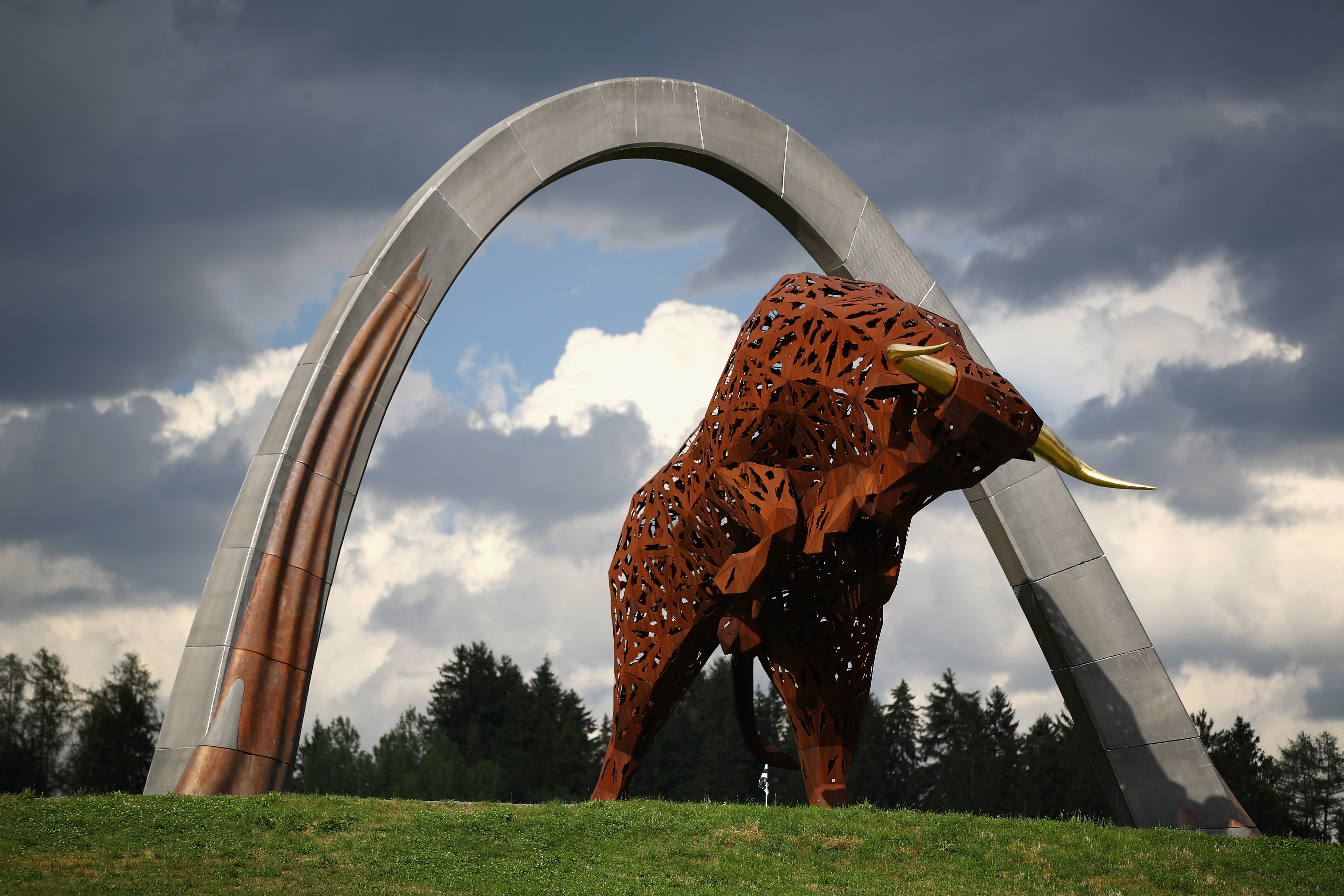
  • F1 2019: Baku Gp Review – Bottas 2.0 Wins Again

    F1 2019: Baku Gp Review – Bottas 2.0 Wins Again

    Since joining the Mercedes team at the start of the 2017 season Valtteri Bottas has had impressive races. But there was recognition by all other drivers that if you show him a front wheel he’d, embarrassingly, give way. But the Valtteri Bottas that has been unleashed at the start of the 2019 season is far removed from the driver of the last two seasons.

    Finns are notoriously measured in how much they say and at the start of Sunday’s Baku grand prix Bottas let his peerless driving do all the talking. The manner in which he held his car inches from teammate Hamilton made it clear that he wasn’t going to budge nor was going to simply give up the lead of the race if he could help it. His statement was clear – you’re going to have to go through me. That tenacity kept him the lead of the race off the start line and he backed it up with a faultless drive to secure the fifth win of his F1 career.

    Mercedes, quite literally, could not have started the season in a more perfect manner than scoring a one-two victory in all four of the races so far in 2019. Operationally, there are no teams on the grid that can touch the might of Mercedes. They arrived on Friday genuinely unsure of their pace. It appeared that Ferrari easily had the measure of the circuit and a pace advantage that seemed insurmountable. But if nothing else Mercedes must be respected and lauded for the stunning work they do behind the scenes.

    2019 Azerbaijan GPIf it’s organizational brilliance at Mercedes then at Ferrari it is the calamitous opposite. The dubious decision to put both cars out on the medium compound tyre for the second session of qualifying was the beginning of Ferrari’s unraveling this weekend. Not only was the track temperature not conducive to the medium tyre but also strategically it made little sense for Sunday’s race, more on that later.

    It resulted in both drivers hitting the turn 8 wall with Leclerc coming off worst with a wrecked front suspension. Vettel was able to carry on but only managed third on the grid after failing to cash in on the slipstream benefit. Ferrari had gone from a near guaranteed front-row locked out to third and eighth on grid.

    But still they had a chance; At least until it came time to make their strategy call. Leclerc made decent headway on the more durable medium tyre in the opening stint of the race and looked set for good result, perhaps even a podium. But Ferrari has become rather infamous for mad strategic calls and it was no different in Baku. They left Leclerc out on track despite the fact that he was losing, often, more than a second per lap to the chasing pack of Bottas, Hamilton, Vettel, and Verstappen. Eventually Bottas and Hamilton made their pitstops, closed down Leclerc and passed him on track. Leclerc eventually finished fifth with a strategy only Ferrari would be able to explain. A late pitstop for fresh tyres earned the Ferrari driver the consolation of an extra point for fastest lap.

    2019 Azerbaijan GPAhead Bottas had the race firmly in control despite a late VSC (Virtual Safety Car) deployed for the stricken Red Bull of Pierre Gasly. Elsewhere the other biggest incident of the race was a misjudgment on the brakes from Renault’s Daniel Ricciardo who took out himself and Toro Rosso’s Daniil Kvyat. To add to his blushes Ricciardo strangely reversed into side of Kvyat when trying to rejoin the track and has been given a three-place grid penalty for the next race in Spain.

    While Bottas and Hamilton secured yet another one-two victory for Mercedes Vettel trundled home third in the Ferrari. Though the German driver was only a handful of second adrift of the Silver Arrows it will be scant comfort on a weekend where Ferrari brought several updates to their car. Max Verstappen finished a solid fourth for Red Bull ahead of Leclerc in fifth.

    Twice a podium finisher in Baku Sergio Perez was sixth for Racing Point ahead of the McLaren duo of Carlos Sainz and Lando Norris. Lance Stroll made it a double-points finish for Racing Point in ninth ahead of Kimi Raikkonen in tenth who started the race from the pitlane in his Alfa Romeo.

    At the start of the season Valtteri Bottas noted that, during the off season, he’d spent a lot of time hiking in the Finnish woods and eating porridge. Whatever he discovered in those woods and whatever is in that porridge it has transformed Valtteri Bottas into an uncompromising and unapologetic racing machine. Long may it continue.

    All images courtesy of Pirelli Motorsport 
  • F1 2019: Azerbaijan Gp Preview: Must Win For Ferrari

    F1 2019: Azerbaijan Gp Preview: Must Win For Ferrari

    The Baku circuit, the newest street track on the F1 calendar, was first introduced in 2016 and delivered one of the most stunning races of the year. Amid a melee or crashes and safety cars a year later Daniel Ricciardo emerged to take victory ahead of Valtteri Bottas and a surprised third place finisher in the form of then Williams driver Lance Stroll.

    Against a stunning backdrop of the old town the circuit is characterized by two distinct but opposite sections. The massively long start/finish straight is perfect of slipstreaming but after Turn 1 the layout quickly transforms into a tight and twisty tour through the city’s medieval walls. The close proximity of the walls means that the slightest mistake is more often than not punished severely. The dichotomy of the track layout also prompts a compromise in car set-up, as one half requires downforce and the other less drag to achieve the ultimate top speed.

    It should ostensibly favour Ferrari then as, in China, their advantage in straight-line speed was considerable. But on race day that supposed advantage was nowhere to be found. This could be an indication that Ferrari is not running its power unit to its full potential on race day due to reliability concerns. What adds fuel to this fire is the fact that all Ferrari-powered cars, except Alfa Romeo were forced into changing the control electronics ahead of the Chinese grand prix. Alfa’s reluctance to not change the system ended in regret as it kept Antonio Giovinazzi from competing in the qualifying session.

    GP MESSICO F1/2016If reliability isn’t a genuine concern for the Italian squad that Baku’s enormously long straight should play well into their hands. But already team principal Mattia Binotto has played down any suggestions of a performance advantage. “I don’t think there is much on the straights in between us and the others”. And on top of the standings Mercedes are sitting pretty without having been truly pushed in 2019. Yes, if Leclerc didn’t have a reliability issue in Bahrain he would’ve won the race by the reality is that he didn’t and Ferrari are already playing catch-up in several areas heading into only the fourth races of the season.

    There is no doubt that behind the scenes Mercedes are pushing to the absolute limit to extract everything from its car, engineers, and drivers. But from the outside there is something very comfortable about the situation in which they find themselves. Even psychologically they’re playing the game better than their rivals by continually pushing the message that Ferrari have the quicker car. It’s obvious that Ferrari need desperately to get some momentum going in their 2019 campaign and this weekend’s Azerbaijan grand prix is where it has to start.


  • F1 2019: Australian GP Preview – Ready to go

    F1 2019: Australian GP Preview – Ready to go

    It’s been an awfully long wait but the start of the 2019 season is here. Twenty-one races, several countries and continents and a excess of expectation await.

    Everyone is clamouring to understand and predict the pecking order and while there is a rough idea of who sits where, at least at the top, Formula 1 has always been better when it’s been unpredictable. Still, the probability is that Ferrari are a smidge ahead of Mercedes on pace. But given the unique layout of Australia’s circuit this may not count for much.

    The traditional season-opener around the semi-permanent Albert Park circuit is unlike any other on the calendar and thus makes it an outlier in terms of performance. The fiddly track is akin to a street circuit albeit with a bit more run off area should the odd mistake arise.  The layout comprises a mixture of medium speed corners and places an emphasis on stability under the braking. It is highly possible for a car to go well around this circuit and not truly be one in the running come Abu Dhabi in December but there are still 25 points for the one who sees the chequered flag first which makes it as important as any of the races in the line-up.

    New for 2019 are the aero regulations surrounding the front and rear wing area of the car as well as the simplification of the barge boards. In addition, three colours have replaced the rainbow selection of tyre compounds for this season. White, yellow, and red will make up the range of compounds with white being the hardest of the weekend, yellow the medium, and red the softest tyre available.

    Valtteri Bottas_Silverstone 2017_Thursday P1It’s a big year for the teammates. At Mercedes Valtteri Bottas has to impress Toto Wolff and co enough to keep Esteban Ocon out of his seat. Not in the Finn’s favour is the fact that in order to do so he has to beat, or at least match, his teammate and five-time world champion Lewis Hamilton. It’s a tall order for the Bottas but his task is crystal clear.

    At Ferrari expectations are high for young Charles Leclerc too. All indications are that the Monegasque driver has all the speed he needs to well at the Italian team but it remains to be seen how he’ll handle the pressure of racing for the most famous mark in motorsport.

    The rivalry between Max Verstappen and his new teammate Pierre Gasly hasn’t been given as much attention as the previous two but is no less intriguing. The French driver arrives from Toro Rosso where he easily had the beating of Brendon Hartley. It will be significantly more difficult to consistently out-perform someone like Verstappen.

    All of this and the incredibly tight battle for mid-field supremacy hasn’t even made into the conversation yet. While Williams, now sans technical director Paddy Lowe, are unfortunately expected to prop up the rear of the grid the battle between the likes of Renault, Haas, and Alfa Romeo appears especially tight. The most important thing that needs to be known, for now, is that Formula 1 2019 is here.

  • F1 2019: Ferrari – Gamble or Guile?

    F1 2019: Ferrari – Gamble or Guile?

    Much has been written about Ferrari’s drafting youngster Charles Leclerc into one of the most coveted seats in Formula 1. While expectations are exceedingly high for the young Monegasque driver there are other quite significant changes that have been made at Ferrari for the 2019 season.

    The sudden death of Sergio Marchionne was a big blow for Ferrari. As the architect and saviour of Ferrari Marchionne was a tremendously important figure for the company and the F1 team. It’s no surprise that, internally, his loss was felt in a big way.  A new CEO was announced in the form of Louis Camilleri, the former boss of Phillip Morris International and Ferrari board member. He immediately walked back Marchionne’s threats of quitting F1 and vowed to work in favour of keeping the iconic team in the world’s premier racing series.

    Camilleri also stated that there was no need for him to intervene or make any changes to the team given its positive performance. However, it wasn’t too long before he began to ring the changes. First, it was Charles Leclerc in for Kimi Raikkonen followed by an announcement that team principal Maurizio Arrivabene would be replaced by technical chief Mattia Binnoto. Rumours swirled throughout the season of unease between Arrivabene and Binnoto, which, at the time, were dismissed as untrue by Ferrari. However, the rumours sustained and grew to include several suspicions that the relationship between Sebastian Vettel and Arrivabene too wasn’t in a good way.

    Binnoto’s new role as team principal will mean that the technical department must be restructured too. After all, Binnoto can hardly be expected to wear both caps of team principal and technical chief at the same time. As team principal of Ferrari he will be tasked with and face an inordinate amount of pressure. First, he’ll be responsible for heading a team with a brand-new driver in the line-up. If, according to many expectations, Leclerc pushes teammate Vettel, ala Hamilton and Alonso in 2007, all the way he’ll have quite a job on his hands to contain such a situation. There is no doubt that as Ferrari team principal he will face relentless and unforgiving pressure to guide the famed team to championship success which has eluded them for a decade.

    It is curious however to know why Ferrari has chosen to restructure in this manner, as it isn’t a recipe followed by other front-running teams. At Mercedes it has been stability that has been one of its major strengths. As team manager Toto Wolff has James Allison, formerly of Ferrari, overseeing the technical side of the team while Christian Horner relies on Adrian Newey to keep his hand over the technical side of Red Bull. Even at Williams Claire Williams has Paddy Lowe at the helm of the technical department.

    The restructuring at Ferrari signals intent from the Italian team. But equally it reveals that they are still playing catch up with the likes of Mercedes and are yet to hit on an efficient method of running a cohesive team that can execute at the highest level week in and week out. The expectation will be that this reorganizing, across several departments, is the catalyst for finally getting the team onto the front foot from day one.