TEAM REPRESENTATIVES
Federico GASTALDI (Lotus)
Finbarr O’CONNELL (Caterham)
Christian HORNER (Red Bull Racing)
Otmar SZAFNAUER (Force India)
Toto WOLFF (Mercedes)
Claire WILLIAMS (Williams)
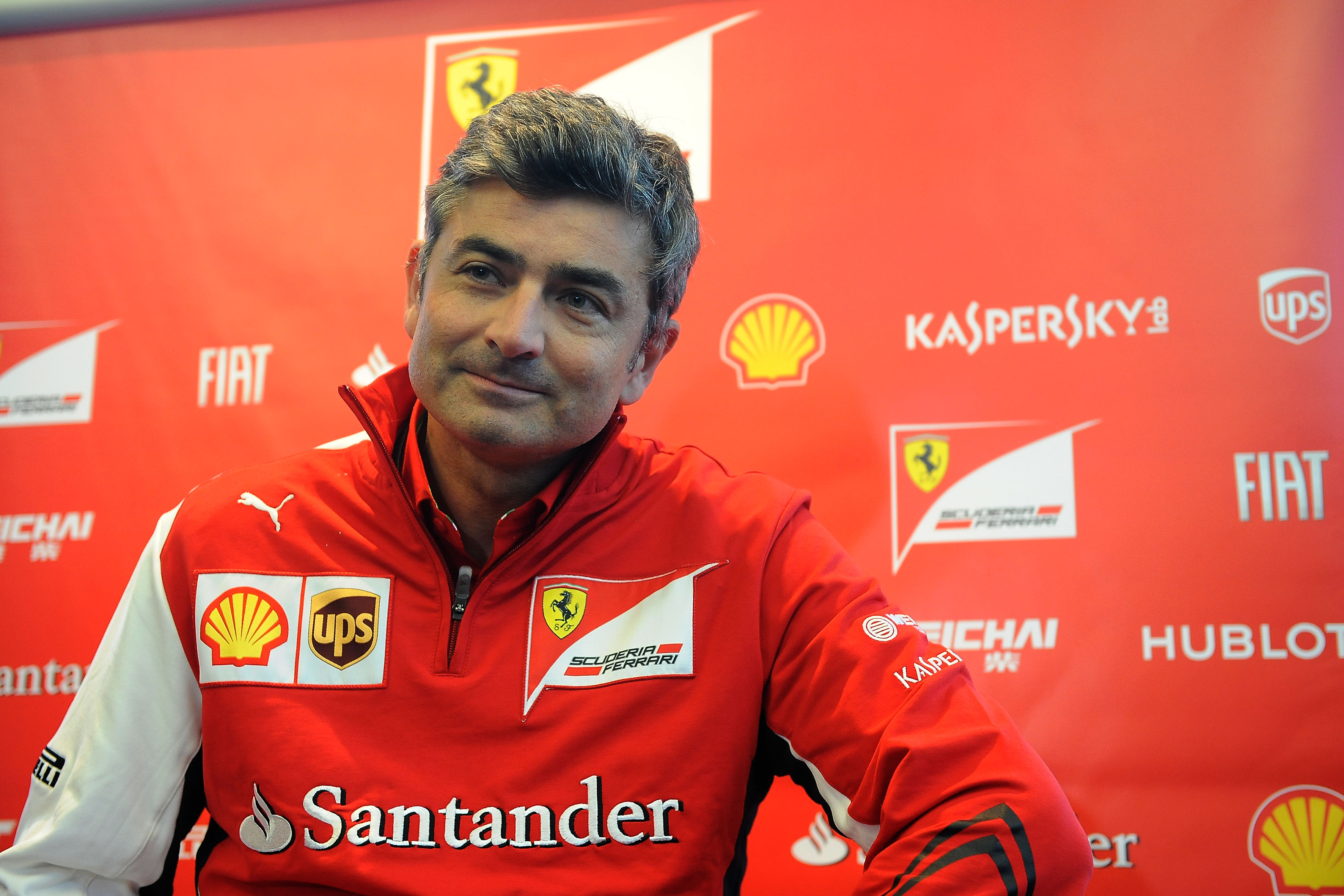
Marco MATTIACCI (Ferrari)
PRESS CONFERENCE
Toto, we have to start with you. Obviously the showdown this weekend between your two drivers Lewis Hamilton and Nico Rosberg; how tense is the atmosphere in the garage this weekend and how do you feel about today’s performance?
Toto WOLFF: Hi everybody. The tension is on I would say, and it is pretty normal. It has come to the last race now, it’s between the two of them, it’s the all-defining, decision-making race and it’s pretty normal. I wouldn’t say that there is more tension than expected in the garage. There is a good spirit. Today was a good day. It might sound a bit boring but we did our programme, lots of running. We did the long runs we expe3cted so all OK for Friday.
Now I don’t know if you know this but the last time that one engine maker managed to take every pole position during a season was back in 1969. How does it feel to be on the verge of that particular record?
TW: I wasn’t so much into statistics before this season but breaking these kind of records is a great achievement for the team and makes me really proud. I remember when I was a child the McLaren records, these orange and white cars would dominate everything and now us being in such a position and having equalled those records and beaten some of the records is very satisfying indeed.
Thank you for that, Finbarr, coming to you. At the other end of the grid, obviously your team is also in the spotlight this weekend. Can you give us an idea of the logistics of getting the team here this weekend?
Finbarr O’CONNELL: Yes, it’s been absolutely crazy. I think about two-and-a-half weeks ago I met all the employees of the Caterham company. They weren’t my employees at the time, I wasn’t even appointed to 1MRT at that stage. And we just spoke about the position they were in and how they hadn’t heard anything from 1MRT. We moved from that to a couple of days later thinking if we could get here and actually showcase the team, show the world it was still there and needed new ownership that I would have a much better chance of getting someone in to buy it, to thinking up the idea of going for the crowd funding – we got 6,500 fans and supporters who have put money in there and huge support from the all of the people we work with, and that’s basically Red Bull and Renault, Pirelli, Dell and Total as well. With their support we’ve raised the money, raised the support, amazing. We’ve signed a new English driver, which is extremely exciting as well. We’re there today. Our purpose here to show people we are here. We’re not a blank canvas, but we are an operational team that somebody can effectively buy an F1 team off the shelf and become part of the most amazing club in the world I would say.
The other half of that question is, how optimistic are you that you will find a buyer? Have you got any interested buyers that you think might come through?
FO’C: Yeah, I’ve got a number of people who could acquire. It’s just persuading people to make that decision. It’s a huge acquisition decision because of everything… everybody knows what you have to do, those budgets you have to meet etc etc. But we have people who could do it and with the achievements we’ve had up until now I really hope and believe we’re going to get there.
Thank you very much. Claire, coming to you. A slightly tricky start to free practice one for the Williams team. Do you think you have the pace though to get involved at the front?
Claire WILLIAMS: We have to; we don’t have a choice. We’re here to secure P3 in the championship and with the double points that’s going to be even harder for us. We do always tend to have, not a difficult Friday, certainly not as strange as the one we had today but we’ve resolved the problem. So we’re looking forward to going into qualifying tomorrow. We’ve just got to do the job on Sunday and that’s all that we’re focused on.
You’ve had the second-fastest car very often this season. Do you think it should have been quick enough to have finished second in the championship rather than third and what have you got in the pipeline to try to move things forward for next year?
CW: I think Red Bull have done a great job, as you would expect them to do. We didn’t start really scoring the points or the podiums that we needed to in order to take that challenge to them until much later on in the season. To make that transition, to make that jump that we’ve done this year, from where we were last year in P9 and then to take that up to P3, I think the team can be really proud of the job we’ve done. And, you know, moving forward it’s just about making sure that we can sustain that position and to be closing the gap to Mercedes next year and to Red Bull and to hopefully taking the challenge to them.
OK, thank you. Marco, obviously this weekend you have announced the departure of Fernando Alonso and the arrival of Sebastian Vettel. Can you say a few words about both situations and why you feel that Vettel is the right man for you going forward?
Marco MATTIACCI: First, we need to thank Fernando for all he has done for us, what we have done together over the last five years. But at the same time it is clear to everybody that we want both to open new cycles but it was important to do it with the utmost motivation and commitment. With Sebastian we get one of the youngest world champions ever, four championships. I met him personally in the last few months. He is an extremely hard-working guy, humble, disciplined. I’m sure he will bring the phenomenal experience that he went through Red Bull and the enthusiasm needed to go through certain difficult moments that are waiting for us, but again sharing the overall project that I think is to go back to the top.
It’s been quite a year for you. Twelve months ago you were in America thinking a 2014…
MM: Seven months ago I was in America!
Exactly! You were then thinking about selling road cars and now you find yourself here at the end of your first part season as a team principal. What have you learned from this whirlwind year?
TW: He hopes to wake up from this nightmare!
MM: (Laughs) No, the intensity, the complexity but also the incredible amount of talented people that are in Formula One. How amazing is this sport, that is a global platform, the visibility that specifically in my case I don’t like for myself, but which is a consequence of the job. But it’s definitely the pinnacle of motor sport. The level of competition, aggression is really high, so a lot to learn, but at the same time I think I brought understanding of people, choosing the right people and from here how to create an organisation for the future.
Thank you very much. Christian, I guess the other half of the question I just put to Marco a moment ago. Obviously this is Sebastian’s final race for Red Bull Racing. Your feelings on losing him to Ferrari and what you’ve achjeved together and any lingering sadness or regret about this?
Christian HORNER: Obviously we’ve had a wonderful relationship with Sebastian. He’s been with the Red Bull family since he was 12 years of age. He’s grown through the junior programme, through the junior categories, into his opportunity in Formula One with Toro Rosso, winning a grand prix in Toro Rosso and then coming to Red Bull Racing. Four world championships and 38 grand prix victories later I think we can look back with a huge amount of pride. We’ve grown together. He came to the team, which was still a young team at the time, and together we’ve grown into a race-winning and championship-winning combination. But as in life all things move on and evolve. Obviously this opportunity has come up for Seb, he’s felt it’s the right time for him and I think probably in reality it’s the right time for the team too. Whilst we’ll be very sorry to him go and close his career with Red Bull on Sunday evening, we’ll wish him the very best of luck and he’ll be a good friend of the team for life and as of the first of January he’s a competitor. Obviously more than that, I think it’s not just the experiences you share on track, we’ve got some wonderful memories from this circuit, it’s outside the cockpit and as not much more than a boy when he arrived, he now leaves us a young man, as a father and he can be incredibly proud of what he’s achieved and I think he’s been a tremendous ambassador for the sport and we’ll certainly miss him.
Well Daniel Ricciardo is going to be third in the championship, with three wins this season. He now becomes the team leader, how do you feel about that: him as your man going forward?
CH: I think Daniel has had the most amazing year this season. I think that anybody that could have predicted the performance from Daniel… we couldn’t have predicted it, I don’t think even he could. The way he has raced, the way he has driven this year has been outstanding. I think that what he has done on track, he deserves that third place. He’s the only driver to have beaten a Mercedes driver this year and he’s done it three times so far. So obviously we’re hoping for some kind of misdemeanor between the two Mercedes drivers and a huge points deduction and Daniel to be crowned world champion but obviously that’s rather unlikely in the circumstances we’ve got.
Thank you. Otmar coming to you. You’re running Jolyon Palmer next week, the GP2 champion, in the test here at Abu Dhabi. Is he under consideration for something in 2015?
Otmar SZAFNAUER: That’s not the purpose for running him. Shortly, maybe even later on this weekend, we’ll announce our full driver line-up. It’s for the future. As you know we’ve run young drivers in the past. We’ve often run them in FP1 even during the season to help out. Jolyon having won the GP2 championship, we thought he’d be a good driver for us to run in the test post this weekend. He’s driven our simulator and has performed very well. We also want to see how that correlates to track performance but we anticipate he will do a good job for us. It’s also a test for us, so we need good feedback from him as well.
Going into this weekend, yourselves, Lotus and Sauber called for a meeting on revenue sharing. Where are you at with those discussions?
OS: Fortunately I haven’t been in any of those meetings, so it’s hard for me to answer that question. I focus on other things at the team – mainly performance and seeing how we can compete with some of these people behind me and that’s what I’ll be doing this weekend.
Thank you. Federico, same question to you really. What are your feelings on the financial discussions going on at the moment?
Federico GASTALDI: Well, to be honest, Gerard [Lopez] has been involved in dealing and wheeling and leading with the rest of the guys all the conversations, all the meetings with Mr Ecclestone. So it’s up to them, they are putting together a programme that they are working with, so not much to say, obviously.
On the young driver front, Esteban Ocon ran for you this morning in FP1. How did he do and what plans do you have for him?
FG: Well, we’re very happy because he comes from Gravity’s young driver programme and he won the FIA F3 championship and we are now looking to put him on the next step, so we are trying to work out on the GP2 team programme for next year, we are talking to different teams at the moment. So very pleased with the experience this morning so we will see how it goes next week in the test.
QUESTIONS FROM THE FLOOR
Q: (Joe Saward – Grand Prix Special) I’d like to know from all of you what you consider the demographic of your target audience in Formula One, both in terms of sex and age, and geographic location? Marco?
MM: I know where you are going but to be honest, you know, as Toto was saying my previous background is on the car side, selling cars, and I met a lot of customers that told me they decided to dream of Ferrari when they were between eight or 10 years old, when they had the first poster hanging in their room or watching Gilles Villeneuve racing. I think it depends on the purpose, it depends on the objective. But for an aspirational brand like Ferrari definitely our demographic is from the moment they can switch on TV or they can enter in a Ferrari store until when they can afford a car. Our brand is more a culture, a passion, so we really don’t have that kind of segmentation less than we discuss about when we sell cars, but Formula One is a great platform to attract, to engage with a wide range of audience. The sooner we start that engagement, the sooner we start that connection, because you can foster and nurture that kid to become someone in the Ferrari family. Geographically, today, as Ferrari we are in almost 65 countries, so we target the world, that’s why I think Formula One is a great platform. Female, male, I don’t think it’s a debate for us, we sell cars to everybody, that’s not under discussion.
Toto?
TW: There’s not a lot to add actually to what Marco said. I think it needs early education that this is the highest form or competition with cars and obviously for Mercedes this is important as well. Educate the children and you grow them into being customers and understanding that Mercedes is successful on the racing track in Formula One and, yeah, what Marco said.
Christian, obviously Red Bull is a fairly youth-oriented brand?
CH: Yeah, Red Bull is very much about youth and absolutely the team has a huge following from the youth segment, that’s male or female it’s irrelevant of sex, or age or race, it’s a sport as well that is accessible to everybody. I know where Joe’s question is getting at and the comments it’s referring to but what you have to remember is that when you’re 84, a 70-year-old is still pretty young.
Otmar?
OS: Well, our brands on the car are varied and, like Christian says, Red Bull focuses on the young and ours might be a little bit older than that. We have Smirnoff and Kingfisher so there’s some age restrictions on drinking some of those products, so we’re focussed on a bit older – but maybe not 70. We also have Claro and Telcel and teenagers these days are on the phone all the time so, we’ve got a varied audience that follows the team.
Finbarr, anything to add?
FO’C: I think all I would say is that we’ve got the Renault engine and the Red Bull gears and that’s what people associate with our car and the name, a number of people I’m talking to have said that they would probably change the name if they acquired the team, so I think it is just at the moment the Renault engine and the Red Bull.
Federico?
FG: Well, we’re not a car manufacturer as everyone knows but we are linked to very big sponsors that actually are linked with the youth market so yes, we need to try to educate as soon as possible the next generations in order to make sure that we are all in the same boat.
And final word on this subject from Claire.
CW: Not a lot – except that we’re not discriminatory. We want everyone to love Williams and we want everyone to love Formula One.
Q: (Jerome Pugmire – AP) Question for Toto. Yesterday there appeared to be some tension here between Lewis and Nico – is there any message that you’re going to give to them before the race tomorrow? What will you say to them?
TW: No. I think at that stage the team doesn’t need to interfere anymore in the relationship between the two. It’s down to them, we need to give them the best car so that they can fight it out on track. It makes no sense to try to pretend a… schmoosing – it that how you say it? – environment. They are out there to win the World Championship. It’s man against man and the tension is there, all in a respectful manner.
Q: (Dan Knutson – Auto Action / National Speedsport News) Finbarr, what will a buyer get besides the entry? Will they get the factory, equipment? And will they have to assume some or all of the debt outstanding?
FO’C: They will get the factory, equipment, the entry. Any purchaser will then have to enter into negotiations with all the race partners. This car, as I said earlier, is linked into Renault and to Red Bull. Pirelli is clearly an important race partner for us, and also Dell, so it will have to enter into discussions with all those people.
And the debt?
FO’C: Well, that will be a matter of discussion with all of those as regards, this will be a new relationship and how do both parties see that relationship going. And I think depending on the answer to that question will be the answer to the first question.
Q: (Kate Walker – crash.net) I have a question for the members of the strategy group. We’re now coming to the end of the first season where you’ve had significant input and we had a number of misses in terms of things of overthrowing cost control, the radio communications flip-flop. I was wondering first what the long-term strategy you guys had for the sport: what it was, how you see it, and secondly, what role the strategy group has a regulatory body?
CH: Lovely to get all the easy questions. I think that, look the strategy group is a forum to sit down and discuss the bigger issues. Y’know, we’ve done that, we haven’t always agreed – obviously – this year and of course we have another meeting coming up next week followed by a Formula One Commission meeting. As far as the regulatory value of the strategy group, anything that the strategy group discusses has to still go through the Formula One Commission that every team is represented on, as are the promoters and the FIA, before it’s passed into being a regulation. So it’s very much a discussion forum. Of course there are some big issues at the moment and y’know, a team like Caterham is in this situation because of the costs. The costs are too high and I think one of the crucial aspects in those costs is the power unit and that’s something the strategy group, as well as the other players within Formula One have a duty of care to look at very carefully and I think, whilst probably not a lot can be done for 2015, I think an awful lot can be done for 2016 and maybe we need to even go as far as looking at a different engine, y’know, a new engine. Maybe still a V6 but maybe a more simplified V6 that controls the cost. Cost of development, cost of supply to a team and to the privateer teams. I think that’s something we need to have a serious discussion about during the next strategy group.
Toto, what do you think about that?
TW: On governance, everything has been said. I think that the big teams have a responsibility towards Formula One. We need to be open-minded, we need to discuss, we need to keep the small teams alive, keep the grid together and all that is being addressed. As Mercedes we take that responsibility pretty seriously. We have addressed the issues and will continue to address the issues.
Marco, do you agree with Christian about maybe looking at a different kind of power unit for 2016?
MM: Definitely we need to look at something different 2016. In terms of power unit and in terms of regulation. 2015 is clear we will have to – at the moment – accept the status quo but definitely we are not going to accept the status quo for 2016. The cost of the power unit is a problem. The fact that we cannot enhance our power unit during the season is a cost for us, for not performing. So, the difficulties that that the small teams are facing is an issue on the table – so I think all these problems are very well connected. I think that the strategy group and the F1 Commission are the proper arena where to touch these points trying to find a common direction but, indeed, 2016 is sort-of different.
Claire, what’s your perspective on that?
CW: The strategy group, I think it provides a forum for debate which I think is always sensible in a sport when we haven’t had that necessarily before. This year it’s obviously been exploratory. It’s been it’s first year and everybody’s got their agendas and their own issues that they want to talk about. For Williams, that group, the purpose of it, has always been to ensure the sustainability of our sport. I think we’d like to see more conversations around that. I think with the kind of comments around engines and looking at potentially changing the engines, I think potentially it’s too soon but Williams has always been very vocal about our position around cost control. I think that’s one of the disappointments for us this year – that the strategy group wasn’t able to come to achieve any cost control within Formula One. I think we have to consider very carefully any changes around the power units. We’ve already ploughed a huge amount of money into them, into developing them. The manufacturers have done that, all the teams have had a… a fifth of our budget is spent on our engine. There are important messages around those engines as well, with their hybrid technologies which are relevant to us and relevant to the sponsors that we’re trying to pitch to at the moment. I think making a U-Turn so quickly, I’m not sure is a way we want to go. I’m not sure it puts us in a very credible position. But again, the strategy group is a forum for that debate and one that we’ll probably end up having.
And finally a word from Federico.
FG: All has been said. I think, again, cost control, a cost cap has been a major failure this year. I mean, after all the meetings we have had. On the other hand, I think that we pretty much should, all the teams here, on each of their capacities to put the best possible… to push for a better situation for all of us and be more secure and more stable in the future.
Q: (Dieter Rencken – Racing Lines) Based on what’s just been said about the strategy group. Claire, you used the word ‘forum’, Christian, you used the word ‘forum’. You also said that everything that’s been discussed needs to go to the Formula One Commission. Claire, you said that consensus wasn’t reached on cost controls. If we take these two statements, does this not imply that the strategy group is, in fact, not a forum? Because if it needs to reach consensus, that’s not a forum for discussion. But apart from that, looking at it from a legality perspective, if everything needs to go to the Formula One Commission, why did cost control not go to the Formula One Commission if it was, in fact, blocked by the strategy group in the first place.
CW: It’s a forum for debate, that’s exactly what it is – but there’s a process around voting within that group in order to send proposals up to the Commission. FOM have a number of votes, FIA do and the teams as a collective do as well. So if that doesn’t reach majority in there, it doesn’t go up to the Commission.
Christian?
CH: I think what you have to remember about the stragegy group is that the members of that group are the teams that have given a guarantee that they will be in the sport until 2020 – and so they’ve got a vested interest and long term interest in the sport being attractive, sustainable and addressing all of those issues. Now, of course, there has to be a process that things are agreed on or disagreed on, otherwise what’s the point of that group at all? We have a simple majority basis of it being moved on to the Commission or not. Therefore should a team – even Finbarr will be able to sit on the Commission next week and, if there’s something he doesn’t like he has the opportunity, certainly for 2015, to either block it or voice his position for 2016.
Toto?
TW: Nothing to add.
Q: (Luigi Perna – La Gazetta dello Sport) A question for Mattiacci. What kind of arguments did you use during your meetings with Sebastian Vettel to let him join this new challenge with Ferrari. And what kind of guy is he, in your opinion?
MM: [no sound] …very straightforward. I think I was really impressed with how clever he is, and being an extremely clever person and with great passion for Ferrari. I think the arguments have to be solid arguments. That was a discussion about the project, the investment, typical when you want to bring in a four time world champion, you don’t just over-sell, you talk about a few things.
Q: (Dieter Rencken – Racing Lines) Christian, sorry to belabor the point but you said that Finbarr can actually vote for/against something at the Formula One Commission next week. It if doesn’t reach it because it’s been blocked by the strategy group, how could he for example, vote for or against cost control because it didn’t reach the Formula One Commission, having been blocked before then?
CH: Well, each team obviously participates in different forums as well for items to arrive in the strategy group. So, there are discussion forums where issues can be discussed, whether that’s technical or sporting, before it gets to the strategy group but the strategy group are the teams that have given a parent-company guarantee to be in the sport for the long term, up to a minimum of 2020. I think they’re the teams that do have the right to say, potentially, what the future does hold, that have a responsibility strategically, to discuss where or not the sport should go. Obviously there are some big issues on the table at the moment.
Q: (Walter Koster – Saabrucker Zeitung) Mr Wolff, how do you appreciate the share of Mercedes success in person under the management of Ross Brawn, and your time, your start and the team. Secondly, how does the team celebrate the title Sunday evening, and why without winner T-shirts?
TW: Welcome back to the press conference! Ross had a big influence in the team. When he joined the team in 2010, or when he took it over into the Mercedes era, it went through a couple of difficult years but then he initiated the first crucial steps of what we see today, the success we see today. So, he has played a very important role in this year’s success. In terms of the winners T-shirt, we will have a driver who is going to win the world championship and a driver who is going to come second. I think through the year as a team we have tried to balance it out between the two of them and keep it neutral. They are valuable members of the team, we are going to continue with them next year, and although we are going to honour and celebrate the world championship-winning driver, you need to respect that, for the other guy, it’s going to be a very difficult day in his life. This is why we would like to maintain our role as being fairly neutral in that situation.
Q: (Hoaran Zhou – F1 Express) Two questions, both for Toto, Christian and Marco. The first one is, do you have a deadline on the engine freeze because now it’s effectively the end of November and you can’t release a press release on December 31 at 11.59pm, can you? The second question is now the first year of the V6 turbo hybrid has passed, you’ve gathered enough data. Can you give us a figure as to how much fuel-saving has been done through the combustion engine and how much fuel-saving is done through the hybrid part, because Toyota, this year, in the World Endurance Championship has shown that a nice-sounding, naturally aspirated engine, partnered with a huge hybrid can give topline performance and good fuel efficiency?
TW: I have a difficult one. There is a governance in place, a governance states a certain timing, the timing is clear for 2015. For 2016, power unit regulation changes, that needs to happen until March 1, so that’s 2015, March 1 2016. The answer to your second question is, I can’t really tell you the exact percentage. What we can see is that the development on the internal combustion engine and on the hybrid system has been tremendous this year, with the fuel reduction of a third. We’ve had almost equal performance today, comparing free practice one to free practice one last year in Abu Dhabi with a car that has been sized down in aerodynamic performance so that is a pretty impressive performance.
Q: Marco, any thoughts on deadlines with regards to the engines?
MM: Let’s say at the moment we are targeting what the regulations are telling us so we are working on what governance, as Toto was saying, has suggested, so there is no difference to what we did this year.
Q: And do you have a view on the amount of fuel saved with these V6 hybrid turbos?
MM: No, at the moment no. I would have to talk with the engineers. There’s a great focus on making the combustion engine as efficient as possible to weekly improve the energy recovery but I can’t give you figures.
Q: And Christian?
CH: I think the engine question is an interesting question. If you roll back the clock for when this engine was thought about, you go back to Max (Mosley’s) rule, we’re talking about a four cylinder engine and it was quite different. Those regulations were given to engineers, engineers then discussed them and there was a compromise sought because a four cylinder was felt to be wrong for Formula One. The four cylinder at the time was supposed to bring in more manufacturers into Formula One and the compromise was to go to a V6. And then, unfortunately when a bunch of engine engineers are left on their own to come up with a set of regulations, they’ve come up with something tremendously complicated and tremendously expensive. The engines that we have today are incredible bits of machinery, incredible bits of engineering but the cost to the collective manufacturers has probably been close to a billion euros in developing these engines, and then the burden of costs has been passed on, unfortunately, to the customer teams so unfortunately, I think we have to recognise what’s been done from an engineering point of view and now look to simplify things, potentially retaining the V6 philosophy, perhaps going to a twin turbo that would address the sound issues that we’ve had this year and maybe even a standard energy recovery system would dramatically reduce the costs, dramatically reduce development and therefore the supply price to the customer teams also. So I think that’s something that the strategy group need to discuss and look at.
Q: When you say a standard energy recovery system, do you mean standard across all teams like a standard ECU?
CH: Absolutely, we’ve had a standard ECU, why not potentially take it a step further and it would negate obviously an enormous amount of development cost.
Q: (Joe Saward – Grand Prix Special) Just a quick first question: anyone here who’s not committed until 2020, can you please raise your hand?
CH: You ought to ask who’s guaranteed they’ll be here, it is a different question, Joe, I think.
Q: (Joe Saward – Grand Prix Special) Alright, who has to guarantee they’ll be here until 2020 and what do you have to pay if you don’t turn up?
(Visual reaction)
Q: Right, I think you’ve got your answer there.
Q: (Joe Saward – Grand Prix Special) OK, the last one is on a question of philosophy: is it logical that the competitors in the sport make the rules, philosophically speaking?
CW: I knew you were going to do that to me. It is what it is, isn’t it? We don’t have an alternative and until we do, that’s the option available to us. From Christian’s comments, you can tell we all care about Formula One, we all care about its future and the group that sits around that strategy group table… our overarching agenda is to ensure that we protect the future of our sport and we’re looking at ways to do that. There’s an argument perhaps to say well, who better to make the rules than the competitors? Failing an alternative, there isn’t an alternative at the moment and if there’s one in the future, then that could bring its disadvantages as well.
OS: If we all get a chance to make the rules then I’m all for it but it shouldn’t be a small group.
Q: (Ian Parkes – Press Association) Christian, two weeks ago in Russia you suggested the possibility but the highly unlikely possibility of reverting back to the V8 engine. Now you’re talking about a V6 engine with lots of different standardised parts. Why would three manufacturers that have spent a billion euros developing this current power unit for the sake of the motor sport industry itself and the car industry per se, want to revert back to something that’s similar? Are you not sounding like someone who’s desperately clutching at some of straws because your team is no longer winning the championship? Just give us your thoughts please.
CH: Well, first of all, two weeks ago I wasn’t in Russia. Look, I think that… you know, I can understand your question but I think the scenario is such that it’s unsustainable, it’s unsustainable for manufacturers, any of the manufacturers, to keep spending at the level that they are, and therefore, rather than perhaps going backwards with the V8, maybe we should potentially keep the basis of what’s been achieved but look at simplifying it because if the development costs stay at where they are, we will not attract new manufacturers into the sport and we may well drive current manufacturers out of the sport. So we have to think, not just about today but about the future. 2015, there’s very little that can be done with the regulations but for 2016, an awful lot can be done and I think that the teams, together with the FIA and the promoter, have to have that responsibility to ensure that those issues are addressed and the sport is sustainable and attractive to new manufacturers to come in.
Q: Toto, you haven’t spoken on this. Do you have a rebuttal?
TW: Yes. First of all, I fully agree that we have a big responsibility for all teams and we need to look at the costs but you can’t turn the time back. Formula One is the pinnacle and the pinnacle of technology as well and it is important to attract engine manufacturers in the sport, and actually have brought Honda back into the sport. The current format of power units was actually being proposed by Renault back then and for us, as Mercedes, it’s a hugely important showcase of technology, road-relevant technology, hybrid technology, the future. It helps us to attract sponsorship and for us, as a car manufacturer – and I guess the same was the case for Renault when they came up with the idea – that is very important. It’s less important for Red Bull, for sure, but for us it’s crucial.
Q: (Michael Schmidt – Auto, Motor und Sport) Toto, for next year, the other two manufacturers cannot do very much if you don’t agree on what they want, but are you not afraid that in 2016 they could force you either into complete open development of the current engine or as Christian just said, into a completely different format or let’s say a similar engine format which costs less and you can’t do very much about it because the others have the majority?
TW: We are all talking about costs and if you would open up the regulations in the way it has been described in that press conference, that clearly means you don’t care about costs because that would be like digging a grave for Formula One. We have spent considerable amounts in the development of the power unit, far away from the billion, I would say it’s ten percent of that in our case. But anyhow, I think we need to be sensible and we need to come up with solutions which enable the small teams to survive and which still enable the big teams to showcase the technology. Reversing everything, changing the format, changing the engines would just increase costs, it would be the opposite for what we need for Formula One at the current stage. And to come back to your question: yes, in terms of the governance, if we become insensible and if these decisions are being made for 2016, in my opinion that would be disastrous for the sport. We will be very vocal in addressing that issue.
Q: (Kate Walker – crash.net) Finbarr, the vast majority of crowd-funding sites actually return money to donors if the target is not met. Does Crowdcube work like that and if so, how are you going to go about returning funds to your six and a half thousand fans?
FO’C: Kate, the principle of what we did was to set it up on the basis… the objective was to get here and to race and to showcase the team and that’s clear on the website. So the fact that we are here shows that we have reached that objective and the funds we’ve raised have actually been spent in actually getting here. If we hadn’t made the decision to come which we made on November 14, then the funds raised at that stage would have been returned.
Q: (Leigh O’Gorman – Walker Watson Ltd) Finbarr, how long do you have to make a final decision on a buyer and in addition to that, how far down the line were the design team with the ’15 car? And bearing in mind how much it’s going to cost to actually buy a new team, can you actually make it worthwhile for any buyer, considering the new season only starts in four months time?
FO’C: Sure. I’m talking to a number of people who have got different interests. I’m talking to some people who are interested in making a decision in the next few weeks and if that happens, they can take over the team as it currently stands. The employees have all kept together, they’ve all been made redundant. Even though they’ve been made redundant, it meant they are absolutely fantastic people. They’ve come here to showcase the team and between themselves, 120 of them have all agreed that they will come back and work for any purchaser. So one option is, in the next few weeks, that something like that happens. I’m also talking to people who are interested in the facilities, in the building, in the facilities we have and in looking at a longer strategy, whereby they would use that as the basis for beginning a new team, and that team, clearly would look for a new racing licence in the future. As regards the car, my engineering team tell me that it’s not hugely advanced but that if a purchaser comes along now, it will race in the championships next year.
Q: (Thomas Maher – formulaspy.com) Finbarr, first of all, are you enjoying your time in Formula One and is your current position one that you consider may be long term? And secondly, we’ve been reading that Mike Gascoyne has said that he has greater faith in your administration in terms of safety. Can you shed any light on why he might have had any doubts about the previous management’s running of the cars?
FO’C: I cannot. I know there were issues in the press in a previous race which did shine a torch on safety issues in the car. The business I’m in, I’m not somebody who just decides I’m going to have a punt and race this car. Safety is absolutely huge and we wouldn’t be here racing these cars unless I was absolutely certain they were completely safe and I think people have seen the cars out there today. Going back to your other question, this is a sport that people love, they are hugely enthused by it and that’s fantastic but all I can feel really is a responsibility, responsibility for this team, the absolutely wonderful people who have come here and I would happily hand over my team principal badge straight away to anybody who would take it out of my hands and then I could go and sit in the stands and enjoy the Grand Prix. I will enjoy it if I can achieve my objectives, but it is a professional assignment and a responsibility and the team are probably watching this and that’s the sort of person that I think they would want to be him.
Q: (Chris Medland – crash.net) Finbarr, how difficult is it for you to try and convince a buyer to buy your team when, as the contents of this press conference has shown, there’s squabbles over how much it costs for engines, no one can agree on what to do with them? You’ve got groups where the members can’t always get voted in what they want to do and when the sport’s in this situation.
FO’C: Yes, I think that any potential purchaser would prefer there to be more certainty on the way forward. I don’t think the uncertainty is unusual or strange. Every sport, every business goes through times like this. It probably doesn’t help any potential purchaser, I would say.
Q: (Daniel Ortelli – Agence France Presse) I would like an instant survey: we have a team who is considering using 2014 engines next year to save costs. Is anybody on this panel – that’s six other teams – against this perspective, that is, to save costs and maybe save Caterham?
CH: We’d have absolutely no problem in Caterham or any other team using 2014 power unit if that assisted cost-saving, but that would mean a change in the regulations.
OS: No issues for us. For sure we would support that.
FG: No issues for us either.
TW: We would need to look at the regulations how we can make that happen and whether it saves costs and if it does, we need to find a way.
CW: Yeah, agreed.
MM: No problem, that’s why no issues for us.
Q: (Joe Saward – Grand Prix Special) Claire, you said that there was no choice but to use the strategy group. Surely the FIA is an alternative rule-making body which it has been for many many years. Surely that would be the most logical thing to do?
CW: It would but that’s not my decision to make. At the moment, the structure that we have is that we have a strategy group that the FIA is a part of, that was the group that was set up at the start of this year. We agreed to it and that’s how the sport is run currently.