Tag: Lotus

  • F1 2014: US GP Review – Hammer-time In Texas

    F1 2014: US GP Review – Hammer-time In Texas

    In general terms a conundrum is defined as a difficult and confusing problem. In Nico Rosberg terms the conundrum is Lewis Hamilton. The latest win in Texas gives Hamilton five consecutive race victories and leaves Rosberg without any answers.

    As the weekend started to take shape it was Rosberg who stepped up to the qualifying plate. The German got the better of Hamilton by a hefty four tenths which Hamilton would later chalk up to “brake issues.” Nevertheless, at the first hurdle it was Nico Rosberg who pulled it off.

    The first stint of the race too was all Rosberg as he controlled the initial laps. The sting was taken out of the start of the grand prix as a collision between Force India’s Sergio Perez and Sauber’s Adrian Sutil brought out the safety car on lap one. Both drivers’ race was ended by the coming together and Perez has been given a seven place grid penalty for the Brazilian GP.

    The two Williams drivers, very much embroiled in a constructor’s fight with Ferrari, shadowed the Mercedes duo for the first stint of the race without ever being able to launch a serious threat on any of the first two positions. For the most part Felipe Massa looked set for the final step of the podium but Red Bull’s plucky Aussie once again lived up to his billing. Daniel Ricciardo snatched third from the Brazilian in yet another afternoon of mighty fine wheel-to-wheel racing.

    Lewis Hamilton Press ConferenceBy lap 24 Hamilton has eroded the two-and-a-half second gap that Rosberg had steadily built and flung his car down the inside of Turn 12 and into the lead of the race. It wasn’t a swashbuckling, throw caution to the wind kind of move either from Hamilton. It was calculated and infused with an ominous hunger. Five straight race wins sends quite an imposing message to the other side of the garage.

    For once Valterri Bottas finished second to teammate Massa in a quiet fifth place. Fernando Alonso dragged a reluctant Ferrari up to sixth and managed to hold off a late charge from Sebastian Vettel. The Red Bull driver’s didn’t look sharp after a pitlane start but a late stop for fresh rubber breathed some life into his afternoon. Kevin Magnussen brought his McLaren home in eighth ahead of Lotus’ Pastor Maldonado. The Lotus turned out to be the surprise package of the weekend and ran competitively in the points for most of the afternoon.

    Jean-Eric Vergne was stripped of ninth place after incurring a penalty for a collision with Romain Grosjean. The Frenchman ultimately finished tenth. The mid-field battle for points was responsible for some spicy wheel-to-wheel battles as several drivers duked it out. Both Jenson Button and Kimi Raikkonen finished outside the points and a lap down on the leaders.

    Besides the mega quick Lewis Hamilton-shaped conundrum that Nico Rosberg has he faces an even bigger dilemma. Rosberg’s problem isn’t thatNico Rosberg he can’t win it; it’s that he doesn’t know how to win it. He hasn’t had to deal with an unrelenting teammate before certainly not while at the same time being the focus of so much attention. Hamilton’s move to take the lead of the race came from pretty far back and it was Rosberg’s caution that consigned him to second best. This isn’t a call to throw all rationality out of the window but through all of this sport’s history it has been courage that has made and defined its champions. As impressive and consistent as Rosberg has been this season he just doesn’t seem to have the uncontained hunger to win it.

    It is far from over and Brazil’s legendary Autodromo Carlos Pace has always been the wildcard in the Formula 1 calendar. Here, the unpredictability seems to ratchet up a notch or two and it tends delivers some of the most astounding results. Rosberg faces a deficit of twenty-four points and call to unleash all he has on a near unbeatable teammate.

  • Vergne Slapped With 5-Second Penalty

    Vergne Slapped With 5-Second Penalty

    Toro Rosso’s Jean-Eric Vergne was slapped with a 5-second penalty after the United States Grand Prix for his collision with Lotus’ Romain Grosjean in the closing stages of the race.

    Vergne finished the race in P9, but after being handed a 5-second penalty, he was classified as P10.

    Vergne crashed into Grosjean towards the end of the race with somewhat of a late dive down the inside into T1. Both did, in fact, make the corner, but Verge carried more speed and ran wide which resulted him in colliding with Grosjean’s Lotus. Grosjean was pushed wide and conceded another place to his team mate, who moves up to P9 after Vergne’s penalty.

    “Jean-Eric came into Turn 1 and bumped into me, broke my front wing and my floor and I couldn’t really recover,” said Grosjean

    “I was on the radio saying ‘guys, that’s not fair, he [should] get something’, because I could have got P8.

    Vergne-Grosjean Incident CoTA 2014

    “I may not get my points and position but it’s good that Pastor scored and we were finally able to fight with Ferrari and Toro Rosso.”

    Vergne who is fighting for a 2015 seat at Toro Rosso felt that he needed to do something and he could not just wait behind his fellow countryman.

    “I had to do something, I was not going to stay sitting behind waiting,” Vergne explained.

    “I saw the opportunity and I went for it. He closed the door but it was too late.”


    Photo credit: Scuderia Toro Rosso F1

  • 2014 Formula 1 United States Grand Prix: Friday Press Conference

    2014 Formula 1 United States Grand Prix: Friday Press Conference

    Team representatives:

    Eric Boullier (McLaren)

    Monisha Kaltenborn (Sauber)

    Toto Wolff (Mercedes)

    Vijay Mallya (Force India)

    Gerard Lopez (Lotus)

    Q: Let me start with a general question to all of you if I may, about Formula One and the United States. Many of your teams have been involved in activities in the build up to this event. How do you assess the growth of Formula One here and what’s the potential for Formula One in the USA? Eric, maybe you would start?
    Eric Boullier:
     Well, good question. We have seen, obviously, after the first year, which was very well attended and crowded, you could see the interest in Austin went through the roof. We obviously have some American partners on our shirts but it is true that all the fans here… I mean, it’s been fully crowded. You can see the activation and the activities as well in the city. It’s just unbelievable how the weekend is built around F1 and it became one of the major events in the F1 season. It’s very promising to see the interest massively growing around this race in Austin and obviously we all know that F1 is maybe looking at having another race in the US. It’s very promising for F1, for the fans and I think F1 needs the US market.

    Q: Thank you for that. Toto, your thoughts on that and the possibility of other races here in the US?
    Toto Wolff: 
    It’s a great place and it feels almost like it has been on the calendar, at least for me, since a long time. It’s part of Formula One. They’ve done a really awesome job over here. We’ve had some events before coming to Austin. We’ve had Lewis and the Formula One car in New York. We’ve been with NBC and you can see there is a momentum in the US behind Formula One and that’s great. Next year… 2016, we have an American team joining us and the interest in the US has grown. We have a new shareholder in Williams, who is an American entrepreneur and it’s nice to see that Formula One is starting to make an impact in the US.

    Q: Vijay, your thoughts?
    Vijay Mallya: 
    Well, you know the United States is a large continent and could have more than one Formula One race. The motor racing culture and passion exists in this country, in terms of NASCAR, in terms of Daytona, in terms of the Indy 500, I mean motor sport is basically a very, very popular sport here in the United States and there is no reason why Formula One should not be equally entertaining and gather a lot of fans in this continent. I mean, if we can have as many races [as we do] in the geographical region of Europe then one or maybe even two races in the United States would hardly be enough. But more significantly given the overall financial situation of Formula One, I mean a market as huge as the United States can help revenues on one side and help those teams that need more and more sponsorships on the other hand.

    Q: What about you Monisha? Do you think that more races in this region would be the secret to growth?
    Monisha Kaltenborn: 
    Well, definitely that’s something we are going to have to have a look at. If you look at the race here, the first race we had here was an excellent event and then we were concerned if next year is going to stay like this or maybe it will decline but the opposite happened and you still see it’s a fantastic atmosphere, so many fans coming over. You look at the synergies which you can create with the race coming up in Mexico as well, so you see it’s starting to grow on the continent itself. It’s interesting to see when we came here earlier on, you landed usually at some other airport when you came in and then when they asked you why you were here and you said Formula One, people didn’t really know much about it. This time when I landed the person said “well, that’s taking place in Austin isn’t it?” That tells you how it is expanding and the interest is growing in this country.

    Q: Gerard, a final word on this?
    Gerard Lopez: 
    I think everything has been said, but I would just say the US is the largest professional sports market in general and any sport that succeeds here tends to be economically viable, so I think it’s a key market and indeed having one or two more races wouldn’t be bad.

    Q: Okay, secondly, again to all of you, with the events of the last two weeks, with two teams going into administration, where should the initiative come from for controlling costs and is there a sense now amongst your peer group that this time effective measures must be achieved? Toto maybe you’d like to start with that?
    TW:
     Why don’t you start with Gerard – the other way round this time?
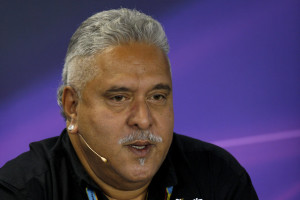
    Vijay Mallya_Press Conference 2014Q: Okay, we’ll start with Vijay in fact!
    VM:
     I have been very vocal about this. I have said that you can’t have Formula One with only manufacturer teams. You need smaller teams, it’s part of the DNA of Formula One for several decades and the FIA on one hand, and the commercial rights holder on the other hand must both work closely to ensure that it is viable and sustainable going forwards. We’ve talked about cost caps a number of times and finally I think the large teams or the manufacturer teams were opposed to it. But I think that was a good initiative that didn’t quite see the light of day to make any meaningful difference. On the other hand, as far as the revenue share is concerned, I think it’s probably a unique sport, where the participating teams get the least amount of revenue as compared to the income. When you compare it to any other sporting activity globally, we unfortunately are at the rough end. I am very sad that two teams are no longer with us on the grid here in Austin and I think such a thing should not be allowed to happen and that’s my firm view.

    Q: Gerard?
    GL:
     Toto mentioned, because I tend to have a pretty brutal view on things, but I think the disappearance of two teams is pretty unfortunate but it actually… probably now is the time to say things as they are. Number one: the distribution model of revenues is completely wrong. Whether the size of what is distributed or not is right or wrong is debatable and Vijay has mentioned one side of the thing. But then, you know, when you’ve got teams showing up to the championship that get more money just for showing up than teams spending a whole season then something is entirely wrong with the whole system and so that cannot be allowed to happen, number one. And now is the time to not be talking about it but the time to be acting about it, so we will see what’s going to happen in the next couple of weeks. The second thing is the cost cap. We always find excuses not to have a cost cap. There are reasons why certain areas should not be capped but there are also reasons why certain areas should be. And, again, now is the time to be acting rather than talking about it. And finally, this is an odd sport. We say things and then we tend to do the opposite. I’ll just give one example. The birth of the new engines happened when we started talking about cutting costs and so forth. The fact is that the new engine, which from a technology perspective is a great thing, the costs were passed on to all the teams. In our case this year, between the engine and development we probably spent something like US$50-60 million. That’s not cost cutting in our books, that’s essentially throwing money out the window. So we tend to also do completely the wrong things in terms of… if we unfreeze the engines now, which is the next topic that is coming up. All we are going to do is again essentially force everybody to keep developing and so on and so forth. At the end of the day, the revenue split, the capping of costs, have an immediate impact on the sport and not taking decisions has had an immediate impact on the sport in the last couple of weeks with two teams disappearing. So, as far as I am concerned… it’s really interesting to have the press conference but it’s going to be really interesting to find out what’s going to happen in the next couple of weeks around this topic.

    Q: Okay, thanks. Monisha?
    MK:
     Well, I mean, if we don’t act now together then you have to ask yourself what else needs to still happen? You look at simply the facts: we are sport here, in my view still one of the best global sporting platforms, we have turnovers of billions of dollars and the sport as such, together with the stakeholders, are not in a position to actually maintain 11 teams. And we’ve often enough discussed what it means to have a third car, where that can go to, and we could probably sit very long, arguing the pros and cons about it but that’s not what we should do in this sport. It’s time that we focus on reducing the costs. We’ve discussed that enough times, what we can do. Like Gerard has said, if you don’t want to do something, you’ll never get to a point where you agree. But you really have to ask yourself what is being done to the sport here? We are sending out messages where fans are being involved in topics they really don’t want to talk about. They should be talking about the excellent races we have, what a great experience it is to come here but yet they are discussing financials, costs, teams going into administration. That is a very bad image we are creating to the outside where new partners are going out and saying “do we really want to enter this kind of a sport with all these troubles, which are normally not meant to be in sport but into other economic areas”. So we really need to react, look at that, we need to look at the equitable sharing of the income we have, so that you can really maintain more teams than just the big ones. We also need to see on the technical side that there is a certain stability and continuity there, because you often hear from bigger teams that whatever we have agreed has always led to more cost but you should first of all see who has agreed to it – it’s usually the high end. So everything is lying there but it is high time we take some action now.

    Q: Well, there you go Toto, you’ve heard the views. Is it time to act or is it just two of 135 teams that have come and gone in the history of the sport?
    TW:
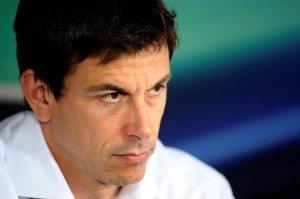
     It’s probably a longer answer now! You know I read an article in the Financial Times two months where they had exactly the same topic in the English Premier League. How can you – and they have the Financial Fair Play – how can you bridge the gap between the very top and the very bottom and if you look at the budgets of Marussia and then you compare the highest spender, whoever it is, Ferrari or Red Bull, you are talking about a gap from US$70 million to US$250 million, so if you want to start with a cost cap, how do that? Where do you cap it? And if you cap it on the lower end, well, do you make two thirds of the people redundant in the big teams. How does it function? That’s one point. The other point is: how do you control it? The competition is so fierce at the very top that the cost cap… the cost cap was never implemented because there was no way of policing it and controlling it. Some of the teams have various set-ups, various companies all around the world, multi-nationals behind them in Japan, in Germany, in Italy. If you look at Ferrari, they have a severe issue of being transparent enough to cope with a cost cap. If you have everything in one entity and you are building road car and you are building engines and you are building race cars, various race cars from GT to Formula One, well, how does it function? Because it is so competitive, we need to have clarity, how do you control that. So this is the problem I see on the cost cutting side. Obviously two teams disappearing, I have an emotional and a pragmatic view. The emotional view is that there is personal drama behind it. There are families who need to pay mortgages, there are kids going to school and these people don’t have any jobs today anymore and that is a drama and it is painful and I am sorry for that. The rational side of things is that we have seen in the past that teams come and go. We have seen great teams who have folded, went into liquidation or administration. Great names: Brabham, Arrows, Ligier, Prost, Larousse, Leyton House… I mean there are 20 others. That was part of Formula One. Now, is that something that should happen? No, of course it shouldn’t. But when Formula One was opened up for new teams to join, you can’t compare the agenda of the teams. You know in our case we are representing a multi-national car company. This is a branding exercise, we are showcasing our technology. And on the other side if you look at Marussia and Caterham when they joined the sport it was an entrepreneur deciding to join Formula One and maybe underestimating what itTotoWolff_Mercedes2014 meant joining that field. You have other examples, such as Vijay, who is extremely successful in his business and who had stamina and size enough to cope with the challenges until today. I have great respect for what Tony Fernandes and Andrey Cheglakov have done in their businesses but maybe Formula One is just a different ball game, because you have these various agendas. So I think it is time to sit down and reflect and think what can we do? Because the remaining nine teams are part of the DNA of Formula One, they are heart and soul, names like Sauber, Force India and Lotus need to stay in the business. I think we all need to sit down, not with our own little narrow agenda of wanting to win the championship – and this is why I am paid, and why Eric is paid – but by looking at the whole of Formula One. But I think there are… like in any other sport, like in any other industry, this is the pinnacle. This is the pinnacle of motor racing and if you want to complete at the pinnacle of motor racing then you need to have the resources of competing there. This is a high entry barrier sport. I’m getting overboard now, but if you want to set up an airline tomorrow, it’s going to be difficult, because Lufthansa is going to eat you up. If you want to go motor racing and you want to do Formula One like the new teams decided four or five years ago, you need to understand that this is the very top. So it’s a very difficult topic, I could go on for another two hours.
    Q: Well, I’m sure we’ll be here for a little while longer. Eric, you’ve gone from a team that very much supports the idea of a cost cap to one of the grandee teams – McLaren. Do you feel you have a responsibility to ensure the sustainability and the depth of the grid or do you have a different perspective now that you are in the situation you are in?
    EB:
     Definitely maybe a different perspective, yes! But back to the comments that have been said before. Obviously we are all sad to not see our colleagues in the paddock this weekend. I think there is a common sense to say, yes, we need maybe to definitely get to actions now to make sure the sustainability of the existing teams in the pit lane is assured or guaranteed in the future. At the same time, talking about the cost cap, yes my perspective has changed a little bit, for the same reason Toto said. Marussia and Caterham were joining as part of an entrepreneur scenario and was told in these days that there would be a US$40m or something like this budget cap in these days. So their business model was built around, I guess, these kind of figures. But when you see teams, especially teams like McLaren, that have been in Formula One more than 50 years, invested heavily in terms of image and whatever technology there is and participating to make Formula One is today, you can’t accept to run such a budget cap. As you said we lost two teams today and this is very sad for the families and the people working there because they were all friends but if you start to cut by two thirds in the top teams it’s going to hurt Formula One much more. We need to be emotionless but we need to be rational in what we need to do. Is it a question of how the money is shared? Is it a question of how the business is growing, fast or not? There are many questions that still need to be answered. What is sure today is I think we all have a common sense to regroup and to make sure we want a sustainable business, even for the teams.

    QUESTIONS FROM THE FLOOR

    Q: (Ian Parkes – PA) I think I’d politely like to suggest that we’ve just witnessed over the past few minutes the perfect example of where Formula One stands at the moment. We have three teams on the back row pleading for cost cuts, pleading for any kind of restrictions. We have two teams on the front row ready to argue against it. How on Earth do you ever propose to ever come together when over the past few minutes we can see that you don’t agree at the moment?
    EB:
     It’s a very good question but, once again, I guess this is the wrong forum. Each of us wants to beat everybody. We are competitors. If we compete with a bottle of water, if we compete with a Formula One team, we want to beat the others – and we will do it by any means. So, this is normal. Even, actually, as you say in the back row, they want to still compete and actually beat everybody. So, this is not… we can… I’m pretty sure we can sit down and agree drastic decisions altogether – but this has to be led by the governance body and by the people who are running the show. Not the competitors. Do you ask football players about the Fair Play problems in Premier League? No. Ask the clubs or ask the people who own or who run Premier League.

    Q: Vijay – you were smiling…
    VM:
     Well, if you work for a team, you have a different view, if you own a team you have a radically different view. That’s also pretty obvious. If you own a team, you’re writing the cheque. If you run a team, you’re receiving a cheque so… there’s got to be a divergence of opinion. I respectfully disagree with what Toto said about a cost-cap leading to redundancies of workman of the big teams. The same thing applies if small teams shut down. The same redundancies occur then as well. I don’t think there’s rocket science involved in people sitting down together to find a mechanism. It doesn’t necessarily have to be policing. It can be self-certification of what they spend. I agree that when one team spends $60million or less and another team spends $250million or more, then it’s perhaps difficult to bridge the gap. We have to find some viable medium here – but what is actually compounding the problem is that the revenue-share model is skewed completely towards the teams who can afford to race at the pinnacle of sport at the direct expense of those who perhaps are marginal. And that’s why two of the smaller teams have disappeared. I would also like to take this opportunity of saying that sustainability in F1 is necessary for the sport but when large corporations like Toyota and Honda decide, for corporate reasons, that they want to walk out, they go. At the end of the day there has to be a fine balance. The DNA of F1 – I repeat myself – is to include big and small teams and to provide as level a playing field as is practically possible. I think that if all the stakeholder sit together we can find a solution. It doesn’t have to be a radical solution that would dent the hopes, aspirations and passion of the big teams – but equally it could make sure that everybody survives and the sport continues to be enjoyed with the same level and a growing fan following globally as well.

    Q: Gerard?
    GL:
     I’d like to comment on the numbers a little bit because they tend to give some fun reading, y’know? Because people in F1 actually do care about racing, some of them forget some economic realities – and there’s something called the Law of Diminishing Returns. I take a GP2 team, or a GP2 car, and I make it race around this track. It’s not going to be ridiculous. It’s going to be down by a couple of seconds, four, five, six, maybe seven seconds. The whole GP2 team for the whole season is going to cost €4million. Are we really that much better? I mean are we really better to the point that a team needs to spend €300 million to be six seconds faster? We’re not. I wouldn’t accept that argument from anybody. We’re not €300 million better if you take the top teams compared to a GP2 team. So it’s a bit ridiculous to say that you need to spend that kind of money to have that kind of performance – because that makes us the worst managers in the world. If I took a financial view of this sport, comparing GP2 to F1, and the so-called Law of Diminishing Returns, we are most probably the worst managers there are. And we pride ourselves of not being. So, if we’re not, we really need to think about… and I’m not saying that suddenly Mercedes needs to cut down because I understand that for Mercedes it’s a small portion of their overall budget but a very important budget in terms of image. So, nobody’s saying Mercedes suddenly need to spend 20 per cent more than the cheapest team in F1, if I may say so, but what we’re saying is, where the money goes – which is essentially developing the cars and so on and so forth, if we need to spend €300 million more than a GP2 team to make the car go six or seven seconds faster, that’s not a very efficient use of capital – and so that’s where the issue is. So nobody – certainly I am not saying – that we should take the budgets down to a fixed amount. What I’m saying is we should take the budgets down to an amount where everybody can spend whatever they want on whatever they want – as long as the technological development, the development of the car [unintelligible] is done within a framework that makes financial sense – and that can be measured. Because it doesn’t have to be measured in dollars, euros or pounds, but it can be measured in wind tunnel, number of packages, updates, so on and so forth. That’s the difference. I’m not going to argue with… and I love Eric to bits, so I’m not going to argue with his joining the dark forces but the fact is that there is a certain issue with the way we see money in F1, compared to the performance we’re getting out of that capital – and it’s not very efficient.

    Q: Monisha, do you have a comment on this? And perhaps where the initiative is going to come from, getting back to that point.
    MK:
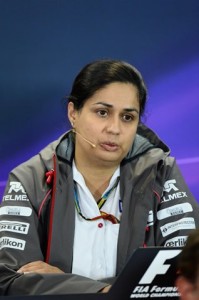
     Well, first maybe saying a few things about what’s been said earlier. We’ve been around in times when nobody really spoke about costs. You had at that time private teams, you had manufacturers in there but this was never really a topic because the whole setting was so different. And that’s what we need to realise, that today we don’t live in those times. Through manufacturers coming in, bigger companies coming in, costs have Monisha Kaltenborn_Press Conference 2014just gone sky-high. We experienced that ourselves not too long ago when we were a manufacturer team ourselves. This is where, like Gerard says, we have to start right there and bring it down to decent levels. We can endlessly argue about if you can control it or not – and I could probably give you five reasons you could – but it’s not really going to get us anywhere. We have to realise that the sport has gone into a direction that can no longer be kept up like this for the entire group of participants, not just for single ones out there. The other thing which was asked earlier was how you think we can agree. I don’t think there’s any basis at all. And that’s again a big difference to not too long ago. We had more manufacturers in the sport not too long ago and yet I do remember and incident from that time where there was a team which was in a difficult situation and the manufacturers got together to support that team. They were willing to even support that team financially. I’m not saying now that we expect this – not at all – but this is just to tell you what the thinking was at that time, even from five or six teams which could easily have afforded to spend double the amount they were at that time – which didn’t even need money probably from the commercial rights holder because it took long ‘til we got it when we signed our deals. Even there, we realised that you do have to have all teams in there. And this kind of common basis is not there at the moment because, if as a small team you go and say something out there you immediately get the response that we’re just scrabbling around because we’re not getting enough. And that thinking is so wrong. We have a right to be in the sport. We are not expecting that we get that much that we can be a world champion, we know we have to do that on our merits like Mercedes has done. But at least we should be getting enough share that we should be to live decently and not to always think ‘are we going to make it to the next season or not’. In our case, we’ve been now more than 22 years in the sport and there’s nothing you can just wipe out because things have gone in the wrong direction. And about the initiative, I think it doesn’t really get us very far if we start pinpointing at each other and saying ‘it’s this side or that side’. We really have to all sit together. We teams sent a letter to the FIA as our federation, which should be in charge of the sport, the reputation of the sport and the FIA had actually agreed that they will take measures to reduce the costs – so I don’t know what more it takes for them to react that two teams are now not also on the grid.
    Q: Final word on this question Toto. Would you accept the idea of Gerard, of a framework of a reduced number of packages, things that can be audited, things that can be controlled?
    TW:
     I think many of the arguments we have heard are valid arguments. For us, again, you could probably reduce it to a very brutal reality. Gerard mentioned the words ‘economic reality.’ If today you run a team, it’s like running a company. And this shouldn’t be sounding arrogant in any way – but you’re not obliged to spend more than you have. There are different agendas. If you run a company today and you own it, you should probably run it in a sensible way. And that means spending what you have. And if you decide to invest or to go into debt because you believe that there is a sound business case behind it, this is what you should do. Now, I find it disturbing as well that you need to spend one hundred million, or you want to spend one hundred million if your income is only 60 or 70 million. In my time back at Williams that was the philosophy. You spent what you have. And if you decide to follow a more aggressive strategy, you need to know what happens tomorrow. I have a lot of respect for everybody sitting on the stage, from an entrepreneurial view, but that is the economic reality and the economic reality is valid for any company out there and for any sports team.

    Q: (Kate Walker – Crash.net) I have a general question for everybody. The one thing that you do seem to agree upon is the fact that you can’t agree. You all have competing interests. Given that it’s impossible for your competing interests to see you all on the same page, would any of you, particularly you two in the front row, support the disbanding of the F1 Strategy Group? Because you shouldn’t really have a say in the regulations. And also, would either of you be interested in refusing any constructors’ bonus payments that you receive before you even start racing – just to level-up the playing field and give everyone else a chance?
    EB:
     No.

    Q: Toto?
    TW:
     We laugh about Eric’s answer but this is why he’s paid. He’s paid to bring performance to the team, sporting performance and financial performance. And, again, this is like it is out there in any other businesses. Now, I think we are all… and here we are having good relationships and we understand that we need to look at Formula One in total and overall… but would you… I wouldn’t know any entrepreneur out there – and I’m getting a cheque and I’m writing one actually so I’m in a different role – any entrepreneur giving up on an upside… would you let a client go, would you not accept the income. The answer is no. None of us, none of the five of us would.

    Q: Gerard would like to make a point…
    GL:
     I would like to make a point, which is very simple. If you take… I take the example of Marussia, of Caterham. I kinda guess what they must have paid for the engine this year and what they have paid for developing around that engine and I guarantee that in the budgets that they have, there was not a whole lot left – so it’s not like they had a choice. And the choice of the engine was not made by these guys – and this is one of the examples I gave before. It’s all good and fun and so on to say that you shouldn’t spend more than what you what you have or not. But at the end of the day, certain decisions on budget are forced up on you. Just by the fact that that’s what the market is giving you. If I went to Pastor or Romain, I told them that next year they’re pedalling their car, they’re not going to be particularly excited. It would be way cheaper for us, and financially for me, as an entrepreneur it makes a lot of sense for me ‘cos I might actually make money – but it’s not going to be very competitive. So if you want to stay competitive at a minimum level, you are forced to spend at a certain level. And again, nobody is sat here – and Monisha made a point that we should get the same amount of money, that, y’know whatever other teams get – and I’ve said it before, there are teams that get 160-170 million just for showing up – but what I have said is that the amounts need to be given should allow a team to perform at a basic level, given the costs that are forced onto that team which have nothing to do with any luxury. I mean, taking an engine today, I guarantee you that of the teams, let’s say the back row teams, if there was an engine manufacturer out there that could offer an engine for five million, or six or seven, that would have decent performance, I guarantee you that everybody would take that engine. Now, we’ve in the lucky position, we took a Mercedes engine for next year. Seems to be the better engine – it clearly is – but the fact is we still have to pay. And I’m not finger-pointing because they’re the same price, all of them, but the fact is there’s a minimum budget that is required today to even exist in Formula One. And that minimum budget has actually killed two teams. And they did not decide to spend their money on the kind of things that they had to spend it on.

    Q: Monisha?
    MK:
     Well, most of it has already been said, before we start repeating ourselves there. But, it’s been mentioned often that entrepreneurship and thinking like that and ideas coming from there… and entrepreneur should also think a bit long term at least. If you do that, it would be interesting where that strategy leads to. We just go on the way we are and too bad for some teams that can’t make it because they’re not investing enough and it’s such a high motorsport level that you really have to have maybe three-digit million figures of budget that then in F1 are normal, for the outside world, not really. Let’s see where that will lead us to. Eventually you’ll have four – probably – participants with endless amount of cars. Let’s see where that show will gets you. How much of income you have there. And amongst the four participants, you probably all have big names, so you’ll have three losers every year. So, it’ll result into that. As a big name – and we’ve experienced that again – if you lose, you have to invest more. But a big corporation does that maybe for one year, for two years but the third year, it definitely gets too much for them. Because, surprisingly, those corporations do have budgets they control, they can control, and they have ways to measure what they are doing – and that system will just collapse at some point in time. So, I think, we probably could, most of us, agree on that kind of development happening. I don’t think anybody can say this could change Formula One in such a way that it would be far more exciting than it is with the nine or the 11 teams today. And that’s where I think we really should realise that we have to change something in the system now. Which is about all what’s been said before.

    Q: Vijay, anything to add?
    VM:
     No, I think it’s all been said.

    Q: (Daniel Ortelli – Agence France Presse) Since the cost cap is impossible to put in place – obviously, since there is a very big gap between the small teams and the big teams – do you think the sport is now ready to face a change in its organisation with two leagues instead of one: one for the manufacturers who wish to spend as much money as possible and one for the smaller teams who are likely to agree on the cost cap or all of them? And these two leagues would participate in the same races, on the same tracks as opposed to other major sports where you have a Pro A and Pro B or league one, league two. Do you think the time is right to now make that decision all together? And the second question is: do you think it’s about time, since the Concorde Agreement has not been validated in its new version, to decide on a radical change about the revenue share, which is at the core of the problem, because you have been discussing it for ages? So that’s two questions: two leagues instead of one, and revenue share modified radically to allow the smaller teams to survive?
    TW:
     I think it (two leagues) could be a concept which needs to be explored. It’s the first time I’ve heard about it. You see that in sports car racing and other series. Is that the way forward for Formula One? I think Formula One should stick to its roots somehow. That’s my gut feeling. Obviously if that doesn’t get us any further and you see more teams leaving the sport, then maybe it’s one of the paths to explore. I don’t know.
    MK: I would like to say that if you compare to another championship, for example you have three big car manufacturers like in DTM. We see where that’s led to. They have similar problems in competitiveness. They don’t have the problem of money which some teams have here in Formula One and we’re seeing where that concept is going to. DTM also had to react, because there was suddenly a big gap and if one of those big names, like I told you before, is not doing so well, then you have to find other ways so maybe look at the technical side there because again, money is no issue. So I don’t think that that’s the way Formula One should go. It would totally distort the sport.

    Q: About the Concorde Agreement revenues? Is it contractually bound for the future? Is that it?
    GL:
     Yeah, it is. A lot of people like to criticise CVC for instance and unfortunately sometimes I have to take their side because in my real life that’s where I work, that’s the type of business I do, and the fact is that close after taking over the business, I think the sport was distributing about around $300m to the teams, something like that – three, three-forty. Today it’s almost $900m but it’s not distributed equally otherwise we would all be smiling here and saying there is no issue. So the amount might be an issue but certainly the distribution is a huge issue because – I’m not going to say it’s pareto rule, it’s not like 80% goes to 20% but close enough. A lot of the money goes to the top teams and it’s almost like – how can I say this? – it’s a self-fulfilling prophecy, essentially, that the ones that have more, get more and as a result want more and want to spend more and so on, and the ones that have less, get less. There is something entirely wrong with the distribution model right now.

    Q: (Dieter Rencken – Racing Lines) A question primarily aimed at Eric and Toto: were there to be a more equitable distribution of wealth, of income, then one of your major concerns is the fact that your employees would actually have to be reduced but is it not logical that if the teams in the back row, they could afford to pay more people and therefore whatever people you would lose would actually still be employed and therefore the sport wouldn’t lose anyone whatsoever, if there was an equal distribution of wealth?
    TW:
     I think that is a nice idea but it doesn’t work in reality. As I said before, I think the gaps and the agenda are completely different. The gaps are huge, the agenda is different. I think it is very difficult to close that gap and you see us arguing, discussing, there is lots of frustration in the room. I don’t know how to solve it.
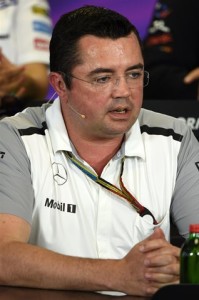
    EB: Well it’s a discussion we’ve had since the beginning. The real problem, in fact, is nothing as… to be competitive, you need to spend a Eric Boullier_Press Conferenceminimum amount of money and today this level of money spent is too high with the economic. You can blame the distribution model, you can blame the revenue, you can blame anything, but the reality is that to be competitive, you have to spend a minimum. Because we are all competitors, we all want to spend this money to be competitive. We all want to be competitive and we have to spend this money. At the end, there is so much emotion this weekend because of the absence of these two teams. It’s true that maybe by making the revenue higher for the poorer teams, yes, the first thing they will do is to hire people, they will be going to big numbers because they want to be competitive. You don’t fix the problem by doing this. So yes, you save jobs but nothing else.
    Q: (Michael Schmidt – Auto, Moto und Sport) Question mainly to Toto and Eric Boullier: we now have only nine teams, so P8 and P9 are last and last but one. Three weeks ago it was P10 and P11. Next year it might be P6 and P7, last and last but one. If only big teams are left, are you not afraid that one day you might be among them and then your whole business model doesn’t pay off any more because you’ve spent much more money to lose than the current teams are spending to lose, which are at the bottom of the field?
    TW:
     We are nine teams today, 18 cars and we have lost two teams which is not nice and I’ve said that before. I think the teams who are in Formula One today should stay in Formula One and we should all look at the situation and come up with a short term plan: how to have a healthy grid, and a long term plan. We are talking about money distribution that is an issue for the commercial rights holder, and I don’t have a solution. I can come up with many ideas which can be short term solutions but it comes back to the principle and what’s been said before: whatever you give to the teams, they are going to spend it.
    EB: Not much to add, to be honest. It’s always the same story: either you get more revenue or you spend less, so at the end it’s a question of… as you said, distribution should be discussed with the commercial rights holder and then, as we also said before, I think there is a wake-up call maybe, for everybody, to make sure we can act all together. We will try in the best effort for Formula One.

    Q: ( Agustino Fontevecchia – Forbes Magazine) The sport generated an estimated $1.7bn in revenue in 2013. We said distribution was something like $900m. Maybe isn’t the problem that not enough is being distributed and then there should be the issue of – speaking of distribution – shouldn’t maybe that increase?
    VM:
     I’ve always said that the model has to be more equitable. The commercial rights holder is entitled to make its profit by owning the commercial rights for the sport, and as far as the distribution is concerned, I think Gerard very clearly explained that it was skewed mainly towards the big teams which is basically what is causing the problem with the smaller teams. I think what I’ve heard in the last few minutes is that if the smaller teams got more by way of income, that they would necessarily spend a lot more. I disagree with that completely because I think that the three of us sat here in the back row are smart enough to know how much to spend without going the Marussia and Caterham way. And as Toto said, if I can use his expressions as an indicator of how the big teams think, well if you can afford to be in Formula One, you’re welcome. If you can’t, get out. Fine. I think the FIA must decide this, not the participants because after all it is the FIA Formula One World Championship and if it is to be designed to be affordable to those big boys in the business, who of course benefit hugely in terms of their regular core businesses. That’s one way of looking at it and if it is meant to be racing in sportsmanlike terms, with big teams, small teams that compete with each other… Look at Williams: I’m sure Williams doesn’t spend a fraction of what the big teams are spending and look at their performance this year. Until the last race, Force India and McLaren were competing head-to-head. So money doesn’t necessarily buy performance. Equally, spending is discretionary and if the big teams want to spend $300m, it’s discretionary. That cannot be used against the smaller teams. The smaller teams must get a revenue share that makes it financially viable or sustainable. That’s the point.

    Q: (Pablo Juanarena – Marca) I want to ask about sport but I don’t know if it’s the day. In this building we are talking about money and Eric, Toto, don’t you think it’s a mistake for all the sport to talk about money for one hour in this room? Money, the drivers have to pay, the tracks are losing money, small teams disappear, big teams lose money too. Do you think it’s a big mistake for this sport to talk so much time about money?
    EB:
     If you ask me… obviously we are sitting here and we have to answer your questions so we are not leading the show, if I may say this. So if you ask questions about money it’s because there is obviously some concern and we know why, this weekend. As we always say, I guess, there was too much negative said about the sport and I think this is another wake-up call we should all have, to stop being negative about our sport because there are also some positives. We don’t want to hide, obviously, we have to raise and to act and to fix all the issues but we also need to be positive about our sport and we have spent one hour, as you’ve said, talking about money where we should have talked about the big show which has been set up outside and what happened on the track today.
    TW: Yes, I agree, it’s an absolutely valid question. We haven’t heard the names of Hamilton, Ricciardo, Vettel, Rosberg – none of the drivers today. We haven’t talked about McLaren’s performance today. What we are talking… we are using this as a panel to express our frustration and how everything is bad and we are talking the whole thing down. It’s like a vicious circle, so I tend to agree with your question.

    Q: (Graham Harris – Motorsport Monday) On the question of drivers, Eric, have you made a decision yet for next year? What’s going to happen? You’re the only leading team yet to announce some definitive plans for either driver.
    EB:
     No. Sorry, no, I’m just joking. Your first question: no, we have not made our decision yet so obviously we have nothing to announce or to decide.

    Q: (Graham Harris – Motorsport Monday) When do you plan to?
    EB:
     Before the end of the season, as we said.

    Q: (Daniel Ortelli – Agence France Presse) Toto, there’s a big debate about third cars. You said recently that a third car would cost twenty or thirty million dollars or euros per year. Don’t you think it could be exciting for the fans if the third car in the big teams, allowed by the budget, was given to a younger driver and whether it scores points or not, do you think it would be more exciting to see a guy – it could have Jules Bianchi in a Ferrari or anybody else – and we in this room are also moved because of what happened to Jules, so that’s why everybody is so emotional – but don’t you think it would be more exciting for the fans to see a promising talent in a third Ferrari or a third Mercedes instead of in a Caterham or Marussia that goes as fast as a GP2 car?
    TW:
     I think, first of all, I’m not a big fan of third cars. I think if there is money left over, it should be distributed to the smaller teams to secure the grid. That’s my personal opinion. If a third car is needed, because the level of cars on the grid drops to a critical number, now we could discuss what the critical number is, and the big teams are being asked to fill in a third car then we should make it exciting and the ideas which have been discussed is giving it to a young driver like you say, to somebody who hasn’t had an awful lot of experience in Formula One. It would be exciting to see how he performs against the superstars. Definitely some interesting ideas around that, making it a rookie championship.

    Q: (Dieter Rencken – Racing Lines) A question to the three at the back: much has been made now and I fully understand your concerns about the distribution of income etc, but why did you people then sign contracts that allowed this situation to happen?
    GL:
     As I’ve said before: there’s a number of things that have changed, even in a very short period of time. I’m one of those who complains about the distribution of amount. I wish the pot was bigger but I’m not necessarily complaining about that but we haven’t seen in the last 24 months, we haven’t seen any major sponsors trying this sport. We’ve said that 135 teams have come and gone. Well, I can tell with the current cost hurdle to enter Formula One, you’ve got to have a lot of courage to come and try to compete at whatever level, even to be dead last. That’s why, when there was an opening for teams to actually participate there wasn’t a whole lot of teams that appeared. It was not that there was a waiting line of teams to actually enter the sport, so what might have been true, what seemed OK on an individual basis a couple of years ago is not OK today. The other thing is the leverage that we would have, for instance, compared to other teams that received much more, is very limited, so that at the end of the day, that if your leverage is no big amount, smaller amount of nothing, guess which one you’re going to take, right? So there are a number of components there, it’s not just black and white, there’s a lot of greys in there. As I said, one of them is… the world has probably not developed in the way we all expected but secondly, I’ll be very frank, there wasn’t a whole lot of leverage to get a whole lot more. At the end of the day, if I had gone to Bernie, for instance, and said you know what, I just don’t want to do this any more, he might have been sad – maybe – to see me go, but he might have thought OK, that’s the way it is. If somebody wearing red had done the same thing, that’s a whole different leverage effect.
    MK: I think that’s exactly the point. You have to make sure that your team is going to be there, that you can have stability from that perspective and then you simply have so much that you can do and you just have to accept things. Of course, all of us expected other things to happen. When you look at the last Concorde, it even said teams have to actually sign up to cost control. That’s no longer there today. So much changed but at the end of the day, you have the responsibility towards your team and your employees.
    VM: I think I agree with what Monisha and Gerard said. There’s been many game changes that have happened in the last two years but nevertheless, as every sensible organisation or any group of stakeholders must necessarily do every so often, is review and update the situation and to make it workable and pragmatic for all stakeholders involved. Just because we signed something, based on a certain set of assumptions and things have changed, doesn’t mean that we’re stuck in the sands of time. We need to move on, we need to review, we need to correct things so that the show can become bigger and bette

  • 2014 Formula 1 United States Grand Prix: Thursday Press Conference

    2014 Formula 1 United States Grand Prix: Thursday Press Conference

    Drivers:

    Daniel Ricciardo (Red Bull Racing)

    Lewis Hamilton (Mercedes AMG Petronas F1)

    Valtteri Bottas (Williams)

    Sergio Perez (Force India)

    Romain Grosjean (Lotus)

    Esteban Gutierrez (Sauber)


    PRESS CONFERENCE

    Let’s start with the world championship leader. Lewis, 17 points ahead, the biggest lead you’ve had this year so far, which poses the greater threat do you think: Nico or reliability from here on?

    Lewis HAMILTON: It’s a good question. I don’t know, I think they are both relatively de cent threats. But the guys have worked very hard to eradicate those through the year so I hope that we can all go through these next races together as a tea, without any of those issues.

    Do you feel a bit more in control of things now, though?

    LH: It doesn’t really feel any different to several races ago really. As I keep saying: just fighting and chasing the ultimate goal.

    You’ve won twice here in the US, once in Indianapolis and then the first race here at COTA. You have a great affinity for this country, how do you see the potential for Formula One here in the US?

    LH: I think there is a huge market for Formula One. I think if you watch all the different sports here the people in this country are so passionate about sports in general, whether it be basketball, baseball or NFL or even NASCAR and IndyCar, so they are extremely enthusiastic about competition and wheel-to-wheel racing or just real out and out heart racing or competition. Whilst we only have one race here, there’s lots of opportunity here for it to grow. I’ve just definitely seen from 2007, even though we missed out quite a few years, there’s still quite a lot of growth here. I was in New York yesterday for example and there were people waiting outside this building, with signs and just Formula One fans with our team tops on, which was huge.

    Thank you for that. Daniel, coming to you, nice look you’re sporting this weekend. Third in the drivers’ championship, you’re 10-6 against Sebastian in qualifying, which means that whatever happens from here to the end of the season in the head-to-head he can’t beat you. How does that feel?

    Daniel RICCIARDO: Yeah, I’ve said it I think before that I’ve been really happy with the season. Yeah, I guess it’s exceeded my expectations and probably everyone else’s as well. A few more races left, I would love to get another… or ar least a few more top results. I think Austin is a good chance for us. A circuit I’ve personally enjoyed a lot the last few years. I think it’s not only fun to drive but for racing it provides… I honestly think it’s the best circuit on the calendar for overtaking. I think there are more spots around the lap here for overtaking opportunities than any other, so that’s always exciting. Yeah, so we’ll see how we go. I think we should be alright here.

    Well, the Red Bull boss has obviously spelled out that you’re the new team leader of Red Bull Racing for 2015. The target then is now on your back. How big a threat do you see Kvyat being to you, to do to you what you have done to Sebastian this year?

    DR: I feel a bit still young to the team but yeah I guess I will be the old guy next year. But yeah, I know Dani, I know him pretty well from a few years already. I definitely won’t take him lightly. I know he’s very quick and just because he’s still inexperienced in Formula One I’m sure he’s going to bring a lot to the team and a lot to the table. I’ll keep working on myself, try to keep improving. I feel I’m not at my peak yet, so I’ll try and get there personally first and then see where Dani fits in. I’m sure we’ll have a good working relationship, we joke around a bit already now, so I think that light sort of humour will remain in the team.

    Valtteri, coming to you, you scored your first ever Formula One points here at the Circuit of the Americas 12 months ago, and what a 12 months it’s been since then for you, five podiums and now you’re fourth in the drivers’ championship. Is it realistic to think that you can improve on this for next year, which are the areas?

    Valtteri BOTTAS: Yeah, I have really good memories from here, it’s so good to be back. It’s a nice circuit, everyone really likes to drive here. The atmosphere, everything is great. And like you said: what a 12 months it’s been. It’s been really good for us, we’ve been improving step by step, we made a big step in the winter and now we are in a really good position. But I do think we can still improve next year; that’s the goal. We aim to do better than this season and I’m sure it is possible.

    Looking at the characteristics of this Austin circuit, it looks like a track that should suit the Williams, like a number of places we’ve been this year. Is that the way you guys are reading it too? Do you think you can be a bit of a threat this weekend?

    VB: Yeah, I think it should be not bad. I think we can be strong here. It could be difficult to be close to the Mercedes as we were in Sochi but still I think it should be good and we’re going to have a good fight with Red Bull and Ferrari for sure.

    Romain, coming to you, you finished second here last year, great memories there, but you’ve only had two points finishes since that fantastic result. Are you committing your future to Lotus? Can you tell us any more about that and whether Lotus is the right team for you?

    Romain GROSJEAN: Yeah, very good memories from last year, not so good to remind me that I only scored two times this year. For a long time I’ve said that Lotus will be much better next year than they are this year, for a few reasons. There’s been a lot of work at the factory and the fact that the team brings a new nose here just to try to prepare for 2015 is a strong sign. I have a contract with the team. I have the option to leave if I want to – this is from some performance clause. So far there are still places available at top teams or they haven’t been confirmed and that’s there where I want to be in the near future and that’s what we try to do.

    It sounds like the ball is in your court. In terms of news, of course you’ve got some good news. I understand you’re going to have another. So at the end of a difficult year a nice bit of news for you and your wife.

    RG: At least that worked! So, pretty good timing as well for next year. I think personally I had a tough season with the results but outside the track I lost four people that were very close to me, the next one being the boss of Total, Christophe de Margerie, last week or the week before. So I thought it was important to announce good news. We have support in tough times but now we have support in good times and I am glad to be the father of a family of almost four people.

    Many congratulations to you. Staying on the theme of next year, Sergio, if we could come to you, your team-mate, Nico Hulkenberg, has confirmed for 2015 with Force India, where are you with the process? Is the deal almost done?

    Sergio PEREZ: Yes, it’s getting very close. Obviously it’s getting close to the end of the season, so things are getting very close to sort out the deal for the team. I definitely want to stay longer in the team. I want to establish myself in the team. I’m four years in Formula One and I’ve been moving around probably too many times. So I want to do a second year with the team and that’s my target. So hopefully everything goes right and we can announce things soon.

    Obviously we’re very close to Mexico here and presumably you’ve been back home in the past couple of weeks or so. Can you give us any updates on how the track is coming on, what the mood is like, what the expectation is for next year?

    SP: It’s really high. There are a lot of enthusiasts back home and the people are really excited to have the grand prix back home. I know the circuit is getting rebuilt; there was an event a couple of weeks ago. So, yeah, things are moving on very quick and Mexico is very excited to have all of you, all the drivers, all the teams all together, so it will be a very nice event.

    Staying on that theme, Esteban, obviously next year the US Grand Prix will be paired with Mexico on the calendar. What do you think that will do for the development of Formula One in this region?

    Esteban GUTIERREZ: I think it’s very positive in many ways to have more and more races in America. So I think now complimented with the Mexican Grand Prix and to have all the Mexican energy and also the American energy, in combination to that, it’s, I think, very positive to all of that.

    A quick thought on your championship position with Sauber. You’re still behind Marussia in the constructors’ championship, but they aren’t here. How hopeful are you that you will come out ahead at the end in the constructors’ championship?

    EG: Well, we are fighting all weekend. We’ve been doing that in the second half of the season, we have been very close to score the points on many occasions. We’ve had some technical issues which made it very difficult to consolidate those results but we still have three more chances and probably out of those three maybe only one or two! So we have to get the most out of what comes up as an opportunity and we are fighting all the way and, yeah, let’s hope we get the points that we want. 

    QUESTIONS FROM THE FLOOR

    Q: (Dan Knutson – Auto Action / National Speedsport News) A question for Lewis and Romain: Lewis, guys like Lauda and Prost took a year or two off, came back, won races and championships. Given how intense F1 is these days, the lack of testing, how much momentum would you lose if you took a year off. And Romain, you did take a year or so off, how much momentum did you lose?

    LH: It’s not something I’m thinking about. I would imagine, yeah, naturally you would definitely lose some traction and then coming back into testing, you don’t have a lot before the season, and particularly with all the controls, the new updates every single year, the technology’s constantly evolving, so to be on top of that, I imagine that would definitely take a while to come back into. So it wouldn’t be helpful. But perhaps back in the day, there was more running and testing, so perhaps… Niki could tell you more. But I’m sure, perhaps, it was a little bit easier for them to come back in.

    Romain?

    RG: Yeah, I think there it two ways of seeing things. Of course you do lose some of the confidence that you had in the car and the stuff you could do – but on the other hand, you learn in a tough time. And when your car is not so nice to drive, you learn some new tricks and learn to do around. And the day you jump back in a good car, it may feel very easy and quick.

    Q: (Dieter Rencken – Racing Lines) With the demise of the two teams, there’s been a lot of talk about third cars and teams. For the front running teams that obviously means it could dilute your efforts if the team is running three cars instead of two. And for the mid-grid teams it means you’re inevitably going to finish further down the order than you would at the moment. How do you drivers feel about third cars and teams?

    DR: I think from our position it’s something, if we’re requested to have a third car, I think we’ll definitely look into it and try to make it happen. From my side, let’s say, having another team-mate, I wouldn’t see any negatives. I remember 2008, I think I had six team-mates in Formula Renault, so it was like being in a school classroom. I wouldn’t see any downside from a driver’s point of view.

    Lewis?

    LH: I haven’t really thought about it to be honest but I think, as you said, we would have to expand the team to make sure the efforts aren’t diluted, as you said. But yeah, if it’s a position for a younger driver, it could be quite good. Especially bringing then on, giving them the best experience  and especially putting them alongside top drivers who have the experience. Perhaps they will come along a lot more than they ever have in the past. When I think about the two teams that have dropped out, my biggest concern really is just for all the employees in those teams that have to provide for their families that perhaps don’t have a job now. If we do do this perhaps they still have space in other teams.

    Valtteri?

    VB: Not too much to add really. Just I really think it’s an interesting topic. Everyone wants to see more cars on the grid and the more is better, so we just need to find out how soon that would be possible for the teams to make it happen. I think it would be quite interesting. I don’t see, as a driver, any downside in it really.

    Esteban, does it create opportunities as well?

    EG: Yeah, it could bring more opportunities for the drivers and also I think it would be good for the level of competition overall, so, yeah, all in all, it’s a positive.

    Romain – I’m sure you’ve thought about this.

    RG: Yeah. It really depends where you are. If you are one of the smaller teams, you see it as a non-chance of scoring points and showing what you’re capable of. On the other side, if you put it on a good team and you’re racing in the same cars as what we call the superstars, then it gives you an opportunity to show how strong you and then get called one of those superstars. I think whoever is doing a good job as a driver, bringing them to the good team, like Daniel, showing that he’s capable of winning races. A third car would certainly help some of us to have a good reputation.

    Sergio, your thoughts.

    SG: I think it will definitely help the opportunities of the drivers. Obviously there will be a bit more of a chance. Formula One is really limited. The spaces where you can go and where you can  actually win during a year, so it can create a bit more opportunity to the drivers, as a driver point of view. I think it’s also sad to not have so many people set out from Marussia and Caterham – so hopefully they can be in a better position for the future and, if it’s good for the sport, why not? I think we should all help this sport to get better.

    Q: (Paolo Ianieri – La Gazzetta dello Sport) Very probably we’re going to have Sebastian Vettel, who is the World Champion, not taking part in the qualifying on Saturday because of the change of the power unit. Don’t you think this is quite bad of the sport to promote? To have the World Champion not taking part, or any of you not be able to take part in a qualifying session just to preserve the engine?
    Daniel, can you clarify this? Hasn’t there been a question raised about this?

    DR: Yeah, he’s been asked quite a bit and I don’t think anything’s 100 per cent yet.  I think it’s… if he qualifies on pole he still has to start from pitlane so its… why would you put miles on the engine? It’s not 100 per cent but that’s the though behind everything. It’s… yeah… not ideal for him and for everyone, for the fans if that is the case. You want to be out there. You want to drive. For yourself, you want to learn more, you want to be on track, and yeah, you want to give the fans what they came for, so, yeah, we’ll obviously see what happens but that’s the rules and the regs for this year, and unfortunately that’s a negative from it – if that is the case.

    Lewis, do you have a view?

    LH: I agree with Daniel.

    Q: (Sef Harding – Zero Zone News) This questions for Lewis. Lewis, what is it about new tracks that you enjoy so much, being that you won here back in 2012 for the inaugural race, and you won the inaugural race in Sochi three weeks ago?

    LH: I like the fact it’s just a new challenge for us, y’know? We get every year… I’ve been in Formula One now eight years and every year you go to those tracks and you’ve experience them before. You’re always trying to better yourself at the tracks you know but the new circuits, you want to be the one that masters it before everyone else, that kind of thing. Of course, when you get a car that you’re able to do that, it’s even more exciting. One of the most exciting races for me was here in 2012. Being about to follow… it’s very, very difficult to follow in one of these cars but, as Daniel mentioned, this is one of the circuits that enables you to. For whatever reason, it’s just the way the corners are laid out, you can follow a Formula One car. And when I was able to follow Sebastian and actually attack a Red Bull – which was the dominant car that year. And also, the amount of people that were here for that race. Sochi, that was a great new circuit again, and to have a car that I was able to fight and obviously be ahead of. In ten years time you’ll look back and know that Hamilton was at the forefront of those debut races – that’s quite cool for me. I look back at history and at Michael who’s got the world record on all the laps on all these previous circuits and also won the first time. Hopefully in the future I’ll have a couple of these.

    Q: (Livio Oricchio – Universo OnLine) Lewis, your numbers, your statistics are the best this year and maybe, in the last race of the championship something bad happens to you and you lose the World title because of the double points in the last race. First, is it fair for you and do you think it should be re-thought for next year? 

    LH: I think the question is ‘what is fair?’ This is the rule that they have brought in for the first time; do I really agree with it? I don’t know if any of us agree with it or do not agree with it, but it is the way it is and you just have to deal with it and just hope for the best really. It would suck if that was the case – big time – but I’m not even going to put that negative energy out there. I’m just going to try and do the best job I can with the car that I have and what will be will be, I guess.

    For the future, I wouldn’t perhaps advise it for the following years but…

    Q: (Ian Parkes – Press Association) Lewis, you touched earlier on your trip to New York yesterday. What do appearances like that do for Formula One, when you appear on a major American TV programme? And secondly, you’re wearing quite an interesting item around your neck, could you give us an insight as to what exactly that is, whether it’s got any significance, any special meaning? 

    LH: New York was just very… it was incredible really. I just remember growing up watching all these movies and you see it in New York, all the cool taxis and then to be in the middle of New York, in the street with the Formula One car and actually people had arrived at 5.30 in the morning for the 8.30 show. There were fans there with team tops and it’s just something I just wouldn’t have perhaps expected over here. It really was a great buzz these guys had. There’s more and more excitement growing here in the States and as I said, they are massive sports fans over here. I really hope that it continues to grow, and obviously with this race, they did such an amazing job from 2012 until now and I hope that continues to grow. Over here, they have a good recipe for good shows. When you go and watch an NBA game you know you’re excited the whole way through. Same with NFL and the same with baseball and so they have a good recipe for entertaining fans and we can perhaps take a bit of that and add it into this race and maybe others and make it even more attractive.

    And then just my piece; I’m really into art. I couldn’t afford the real Andy Warhol painting so I thought I would get it on a miniature scale so that’s what I have, it’s the Mercedes 300SL cars.

    Q: (Greg Creamer – COTA PA) To all of you – perhaps Lewis, as a former winner here, you will take this first – with the changes this season with less downforce, more weight on the cars, more torque, in the past couple of years you’ve been able to do this with one stop. You’ve got these sections from (turns) three to nine and then from 12 through 15, are you seeing anything on the simulator, any kind of indication as to what the toll is going to be on the tyres this year and how they will work? 

    LH: I personally haven’t yet, but I’m going to speak to my engineers shortly after this but I hope that we’re doing more than one stop. One stop is not really particularly exciting and I think it’s good for the fans to see it all changing. To have degradation… I know in the past we maybe complained about too much degradation but having at least two stops I think would maybe be good for the fans to see. Otherwise it becomes a bit of a procession.

    VB: I think it’s definitely going to be more difficult to do one stop just because with all the changes from last year and also we have one step softer set of tyres here so I think it’s definitely going to be more difficult. Let’s hope there’s… for the fans more than one is better so we will see.

    EG: I agree with both of them. I hope that we can get more than one stop to play a bit more with the strategy and to make it more interesting for everybody.

    Q: Sergio, you’ve done a few  strategy things in your time and got good results. Do you see any opportunities here this weekend?

    SP: To be honest not. I think it will quite likely be a one stop. The tyres are just too hard. Most probably we will see one stop for many people.

    Q: (Dieter Rencken – Racing Lines) Sticking to the topic of tyres; since Sochi, Pirelli have announced that they’ve come softer a grade each for Brazil after two drivers had voiced their concerns. Did you people have similar concerns about the choice of tyres for Brazil and are there any other choices in the past where you’ve had particular concerns? 

    RG: I think there have been a few places where we knew we could race softer tyres, especially when you have to remember that this year everything is… tyres are one step harder than they were last year. So it just makes things harder and even the rear we have soft and medium whereas last year was medium and hard. At the end of the story, they’re exactly the same tyres. Yeah, a few places we knew they were too hard. I think Brazil used to be supersoft, I wasn’t racing in Formula One then, it was before I came, it was supersoft down there so when hard and medium came, they were a bit too hard.

    DR: Nothing further.

    Q: Valtteri, you’ve been caught out a few times this year.

    VB: Yeah, well, not much to add really. I think sometimes there have been races where they could have been a bit more aggressive but now at least I think Pirelli’s reacting, making changes for the rest of the year, so that’s a good thing so I think everyone is learning more and more all the time about new compounds and we will see in the future. Possibly there are some things which could have been done better but it’s always easy to say afterwards.

    Q: Final thoughts on this, Lewis, because the Mercedes has always been able to make the harder tyres work this year, hasn’t it?

    LH: Yeah, I think I agree with what was just said. I think it’s important to remember that Pirelli have actually done a really solid job this year, and OK, whilst the tyres are sometimes a little bit too hard for us, it’s what we’ve asked for and they’re learning and they’re improving and hopefully these next steps will be… but you know, safety has not been an issue this year which is huge because this last year it was sometimes a concern. Yeah, it would be good to move forward with a tyre that does (not) allow anything worse to happen. A few more problems in terms of pit stops would not be too bad.

    Q: (Carlos E. Jalife – Fast Mag, Mexico) You’re going to be racing in Mexico in 2015 and Azerbaijan in 2016, yet we do not have a French Grand Prix. What do you think about losing all these traditional sites and yet racing in a place like Azerbaijan – I’m not saying Mexico because Mexico started in 1962 and it’s older than everything else except for seven of the other locations, it has an older tradition. What do you think, starting maybe with Romain, about not racing in France which had the first Grand Prix in 1906? 

    RG: I’ve missed racing in France; I’ve never raced Formula One in my own country. I’m sure it’s something special so I wish it would come back one day, but there are different… I think it’s quite good as well that we discover new places, for example, Austin. Indianapolis was not a very good end and then we came here the first year and I was very surprised to see how many fans came so it’s good to see new countries, it’s good to see new tracks and it’s good to see that fans love it. I think it goes on and off and things change.

    DR: I think it’s definitely nice having some traditional places. It would definitely be a shame to lose some of the iconic – let’s say European – circuits but with that, I also love coming to new places as well. I’ve been very vocal about Austin, my love for this place, my love for the venue, the circuit, everything. I think it’s definitely been one of the (best) if not the best of the new generation circuits in Grand Prix for us. I’m also really excited for Mexico next year. I know Esteban and Sergio are pretty crazy people so I’m sure we’ll get a good following there. We definitely have to keep some of the iconic ones in Europe. It would definitely be a shame to lose those. As for moving further away from those and exploring new places, I think that’s also great for the sport.

    LH: I think it’s probably already been said but the old circuits… growing up and seeing the history of Formula One, I remember when I was younger, watching a lap of Senna’s, for example, around Monaco and then dreaming of one day driving that track and knowing the history of it, even way before and then driving it for the first time, that feeling was just unreal, I can’t really describe it. Obviously you’re into a new circuit, there is none of that history, so there is that difference but we’re coming to a new age where in fifty years’ time people will be talking about these circuits which are at the beginning of the history here. Inevitably, things are going to change a bit. Something in Paris would be cool.

    SP: Obviously I’m a big fan of Formula One for a long time so I love the historical circuits: when we go to Spa, Monza, Silverstone, those kind of races are very special for a driver to live the tradition that those places have but also when we go to new places, for example when we came to Austin, it was great and every time we come here it’s fantastic. When we go to Mexico, there are really some special venues coming up but obviously the traditional ones must remain in Formula One, I think.

    EG: Yeah, I like exploring new places. I’ve been enjoying racing on new tracks a lot, ever since I came into Formula One. To get to know a new track is very exciting and as long as the fans love it, I think we’re going to be very happy anyway.

    VB: Yeah, I also like discovering new places, new tracks, I think it’s nice but it’s also really good to have the history of Formula One as part of the calendar so it’s important to have a good combination of both, I think, which I think, at the moment we more or less have

  • Lotus to be Powered by Mercedes-Benz Engines in 2015

    Lotus to be Powered by Mercedes-Benz Engines in 2015

    The Lotus F1 team have confirmed it will be powered by Mercedes Benz power units from 2015 onward.

    The Enstone based team agreed to be supplied with Mercedes-Benz Power Units by Mercedes AMG High Performance Power-trains (HPP) based in Brixworth, UK. The power units will use the Fluid Technology Solutions designed by Mercedes technology partner, Petronas. This will also bring an end to the partnership with French energy company Total. Lotus will, however, continue to manufacture their own transmissions.

    The deal was reportedly penned in July, but could only be confirmed once the split with Renault was finalised. This comes after a very poor showing in the first season under the V6 turbo hybrid regulations. Going forward, Renault plans to focus on its works relationship with Red Bull Racing.

    “We are pleased to have been chosen by Mercedes AMG High Performance Powertrains in a significant long term deal”, said Matthew Carter, CEO, Lotus F1 Team. “We intend to return to the front of the field with the goals of winning Grands Prix and being a strong championship contender once more and we see this new agreement as one step towards this aim.

    “At this juncture we would also like to thank Renault, who have been so closely associated with the team over its history and for the joint success we have achieved together.”

    Andy Cowell, Managing Director of Mercedes AMG HPP added: “We are delighted to welcome Lotus F1 Team as a customer of Mercedes AMG High Performance Powertrains from the 2015 season. Lotus F1 Team is a strong technical group with excellent facilities and I am confident that together we will deliver a step forward in track performance next year.”


  • 2014 Formula 1 Japanese Grand Prix: Thursday Press Conference

    2014 Formula 1 Japanese Grand Prix: Thursday Press Conference

    Drivers:

    Nico Hulkenberg (Force India)

    Jules Bianchi (Marussia)

    Romain Grosjean (Lotus)

    Sebastian Vettel (Red Bull Racing)

    Kamui Kobayashi (Caterham)

    Jenson Button (McLaren)

    PRESS CONFERENCE

    Q: Kamui, as we’re at your home race, can we start with you? Last time we saw you here you were on the podium. Just tell us what that was like for you to be on the podium at your home Grand Prix?
    Kamui Kobayashi: 
    Well, first of all, thank you for this special seat! I think in 2012, my first podium ever, in Suzuka, it’s a great memory. After 2012 I break for a year and then come back in 2014. It’s a very difficult situation right now but still I’m back at Suzuka. Of course, I think we have a lot of rumour before coming here but at least we can announce that we are here and we will race this week. I’m very happy about that.

    Q: Indeed. In terms of the likelihood of being on the podium, it’s perhaps a different story this year, but what do you say to those who have supported you. You’ve got a huge amount of fans here and of course it’s a fantastic Grand Prix in terms of the home crowd?
    KK: 
    Yeah, I really appreciate all the support. I’m here because of only fan donation and these donations are very important for me and we show how the Japanese supporter is always supporting Formula One, also myself as well. Next year, Honda will be back and I think this will be helpful for all the Japanese fans and also maybe other Japanese companies as well. This could help one day. At least I’m here for this year and I think it will be really exciting and still it’s only Thursday so many fans try to get [things] signed and it’s still very nice to see for me.

    Q: Thanks, I hope you have a great weekend. Jenson, you sometimes say that this is a home Grand Prix for you as well and I remember being told you’re very much a Honda driver as well, which we’ll talk about in a moment, but first tell us what you feel about this race. You’ve finished 14 out of 14 Japanese Grands Prix, plus one win, it’s a remarkable record.
    Jenson Button: 
    Yeah, I think the one win stands out for me as a result, rather than just finishing 14 races. Winning here in 2011 was a very special victory for me and also being chased down by Fernando and Sebastian at the end of the race was a proper climax. Really stands out in my Formula One career.

    Jenson Button_Press Conference 2014Q: But a little bit of a shadow on the horizon at the moment, in that we don’t know which way your career is going. What do you know? What can you tell us? Is it likely to be decided fairly soon?
    JB: 
    I… I don’t know! As you know I can’t discuss anything to do with the contract.

    Q: It’s the same with your team-mate?
    JB: 
    Exactly.

    Q: So, what are your hopes for the Grand Prix this weekend?
    JB: 
    I hope that we can race on Sunday, that’s the first thing, I think. With a typhoon coming this way it’s always very tricky. Hopefully it will miss us. It’s going to be a mixed weekend in terms of weather; tomorrow there’s a good chance of rain as well. I think it’s really just thinking on your feet and staying on top of all the different weather forecasts. But this is a circuit I think we all love. It’s fast, it’s flowing, there’s a lot of support here from the fans, not just for Japanese drivers but for every driver in Formula One as a whole, so it’s always great coming here and I’m looking forward to getting out there tomorrow.

    Q: Nico, if I can come to you next. Since the summer break you’ve been beaten by your team-mate at every single race. What’s changed? What’s happened there?
    Nico Hulkenberg: 
    I think obviously race weekends didn’t go as flawlessly as before and for one or other reasons we didn’t always achieve our maximum on my side of the garage but nothing too concerning I think. Obviously Hungary was a mistake, technical issues in Monza, unlucky in Singapore, so there is always a story behind it. But overall, if we put it together we are still a candidate for points and still looking competitive.

    Q: And your team principal is full of praise for both drivers, so what does the future hold?
    NH: 
    We’ll see. I think there’s not much to report at the moment but everything is looking quite positive.

    Q: OK, Jules, just rate your season so far, how do you think it’s gone?
    Jules Bianchi: 
    After the break it was a bit more difficult for us. In Spa I had an issue and in Monza we were not so competitive and then Singapore was a difficult race again. I think overall it was a good season and I’m quite happy. Now I hope we can do some good results again.

    Q: You’ve sort of served your apprenticeship, if you understand that expression, at Marussia. Do you think you have achieved all you need to achieve there to continue in Formula One and to move up?
    JBi: 
    Well, you can always do better for sure but it was a good season for me. I’m still trying to do my best in the next races we’re going to have and we will see. But for sure I have no regrets.

    Q: Romain, also rate your season so far if you would.
    Romain Grosjean: 
    Kind of missed the podium. It’s a tough season for all of us. We started a little bit on the back foot and it takes time to recover but things are going slightly better since Singapore. I think we have seen that the car was a little bit more competitive and hopefully it will be the case until the end of the season. There are a few updates coming. Even though they are small pieces it makes a good difference in how you prepare for the future. I think the key now for Lotus is to get on top of issues to prepare as good as we can for next year.

    Q: The frustrations clearly spilled over a little bit in Singapore, as we heard on the radio messages. How difficult a seasonRomain Grosjean Press Conferece has it been for you?
    RG: 
    Well, the season is difficult. Of course part of the frustration… part of that radio message was frustration from the beginning of the year. When you’re racing in Singapore it’s certainly one of the toughest tracks to race, qualifying lap, you give 120 percent of everything you can, you take every single risk to get close to the walls without kissing them too much and the straight line your engine cuts – so I wasn’t very happy with that. I think it was clear. But we’ve found the issue with Renault, they solve it for the race and things were going better. I think it was just the fact that it was hot, humid and trying to get 100 per cent of everything and suddenly you get issues on the straight line where it’s easy not lose time.

    Q: Sebastian, you’ve obviously had a remarkable record here, you’ve been on the podium the last five years plus the wins as well. And you’ve just had your best result of the year in Singapore. Has a corner been turned? Is it the new chassis? What’s made the difference?
    Sebastian Vettel: 
    I think it’s all the small bits coming together. Obviously we hardly ran the first half of the season, we had lots of issues in winter to overcome and then a lot of issues on my side in the first half – which is never great to get the right feeling and get things lined up the way things should be lined up. I think now we had a little bit more consistent weekends, a bit more time to look at all the stuff and I think it’s coming our way – but there’s still huge potential which I feel we are getting closer but there’s a lot of work ahead of us to make sure we extract it in the next couple of races as well.

    Q: You know the podium here very well – is there the possibility to be back on it?
    SV: 
    I think there always is. Yeah, there’s some discussions on the weather. Kamui just gave me a brief update on the Typhoon. I think chances are a bit 50:50 but there’s always a chance to do well, race well. This circuit suits me, suits our car so I think we should be a little bit closer this weekend again. Whether we are as strong as Singapore is difficult to say. It’s a different nature of track – but a track I definitely enjoy and an atmosphere that I really enjoy, so I’d love to be on the podium, yes.

    Q: But there is a little bit of a shadow hanging over a lot of drivers at the moment with the possibility of penalties. How do you approach that?
    SV: 
    Well, I’m one of them! Yeah. The rules are as they are but surely at some stage we have to take some penalties, which penalties those will be is not entirely clear yet. We’re waiting for some parts, we’re hoping that we get as far as we can but it’s inevitable to go for an extra engine on my side – which is already ten positions after qualifying. Potentially there is more waiting for us – which is only a consequence of the poor season we had, first half of the season, in terms of reliability. But that’s something we knew back then. Now we have to figure out what is the smartest plan, let’s say, and the smartest track to come up with a penalty.

    QUESTIONS FROM THE FLOOR

    Q: (Anne Giuntini – l’Equipe) Question to Jules. Considering the many rumours developing at the moment, if it would occur that a seat would become available – vacant – at Ferrari, would you feel ready to go there? And why?
    JBi: 
    Well, yes of course I feel ready. I have been working for that since I’m in the Academy, end of 2009. So, now I did nearly two seasons in Formula One. I think I have good experience and I feel ready for that, for sure. It looks like the logical step for me if something happens like this. Obviously at the moment both drivers have a contract so it’s not the question but if there is the opportunity I feel it would be good for me and I feel good.

    Q: (Paolo Ianieri – La Gazzetta dello Sport) Jenson, is it for you McLaren or nothing more for the future?
    JB: 
    In Formula One I’m hoping you mean. It’s the best option.

    Q: (John Westerby – The Times) Question for Sebastian. We have a 17-year-old driving here this week. I wonder if you could compare when you came into F1, perhaps with the cars in particular. Does this mean cars are easier to drive now then when you came into the sport?
    SV: 
    I think one of the biggest differences is that I was able to drive myself from the hotel to the track – which I think he isn’t. He doesn’t have a driver’s licence. I think Formula One has changed a lot, especially this year so it’s not a secret cars got slower. Different to drive to previous years, probably a little bit more technical but less demanding in terms of the corner speeds we are taking. Especially on a track like this. But, y’know, I’m as excited as you to see him running. Obviously he was only done half a year, three-quarters of a year in Formula 3. I think he has a remarkable record in go-karting. So, yeah, I think he has the potential. On the other hand, you need to give him time, as much as he needs. When I was 19, joining Formula One, the first time. Of course, you always feel ready and you don’t say no if somebody gives you the opportunity to race or drive a Formula One car – but you have to take your time to get used to all the things. Not just the car but also working with the team, which is completely different in Formula One to all the other categories.

    Q: (Daniel Johnson – The Telegraph) On that topic, Seb, you have a number of the records for youngest race winner, pole position, world champion, I think. From what you’ve seen of Max so far and he’s part of the Red Bull family as it were, do you think he’s set to take those records from you?
    SV: 
    Well, I think records are there to be broken. Obviously he starts quite a bit younger than all the rest of us but it’s hard to say, but one day I think there will be somebody to break these numbers and one day there will be somebody again to break the numbers again, so I think that’s normal.

    Q: (Anne Giuntini – L’Equipe) Romain, it’s the usual question yet I would like to know how can you keep motivated during such a hard season, to keep going?
    RG: 
    Well, because you wake up in the morning and you’re still a Formula One driver. It took me quite a long time to get to Formula One. I lost it once, at the end of 2009 and when I came back in 2012, I realised… you know, when you lose something, you realise how much you like it. So even though it’s a tough season, I still have mechanics that give 100 percent of themselves and I still love what I’m doing. Of course, it’s much more fun to fight at the front and for victories but it’s still a very good job.

    Vettel_Press_ConferenceQ: (Paolo Ianieri – La Gazzetta dello Sport) Sebastian, even if you say that your future next year is with Red Bull, your name still comes up a lot and it comes to Ferrari and Fernando, who might possibly leave. Anything to say to that?
    SV: 
    Well, I think there has always been rumours over the last couple of years, especially around this time of the season. I think probably more for Jenson; he already has 17 teammates for next year. I have been one of them, a couple of weeks ago, maybe next week I will be again. It’s not really in my head. As I said, coming from back… coming from the back at Singapore we made some progress and I hope that we can carry that momentum into this race and that’s really where the focus lies.

    Q: (Ben Edwards – BBC TV Sport) Just a quick question for everybody following on the Max Verstappen question: what was the most powerful car/engine that you drove when you were 17 years old?
    JB: 
    I’m trying to think. It was a long time ago now. At 17, I will still be racing in karts, I was racing in – as it was then – Formula Super A. I’d driven three Formula Ford cars before that, when I was 14, so 30 horsepower, I guess.

    KK: I think I did Formula Renault but I think that’s it, and I don’t remember how much horsepower.

    SV: I think I did a test, when I was 17, in ChampCar in America so around 750 horsepower.

    NH: Same as Jenson, karts.

    JBi: Yeah, I was racing go-karts. I think I did a test in Formula Renault, so 180 horsepower.

    RG: Technically, in horsepower, I think it was my mother’s Subaru. On a race track, for the record.

    Q: (Daniel Johnson – The Telegraph) Kamui, obviously your home race gives you lots of reasons to be cheery and look forward to the weekend but back in Oxfordshire, the team is going through its own troubles at the factory. I wonder if you could summarise what the mood is like in the team, has that affected it at all or is it as usual?
    KK: 
    Well, first of all, I won’t get the same information to the boss because I think that our boss is flying over here, so we are waiting what happens really. I think it’s very difficult to say. At the moment, I think we can still communicate with the UK so I think it looks as if the company is OK but I don’t know the rest really. Unfortunately.

  • F1 2014: Japanese GP Preview – Who Will Be The Man In Japan?

    F1 2014: Japanese GP Preview – Who Will Be The Man In Japan?

    In Japan there is a circuit known as Suzuka, it is roughly 5.8 km in length and throughout its history has witnessed the both the greats of the sport and some of the most dramatic moments in the history of Formula 1.

    Adored by drivers and fans Suzuka is simultaneously one of the most iconic circuits on the calendar and one of its biggest challenges. Beyond the narrow strip of asphalt there are run off areas, no second chances. Here, a bit of gravel is all that precedes brutal punishment.  This degree of difficulty is why Suzuka is so revered by one and all. The level of skill required around these parts are second to none and the reward for a driver, when he gets it right, is huge sense of achievement and most likely a pretty good lap time to boot.  “When you finish a lap at Suzuka you really appreciate it because you know both the car and you have been really tested. You can be proud if you have got the maximum from everything,” says last year’s podium finisher Romain Grosjean.

    The refreshing Daniel Ricciardo describes the first sector of the lap as a delight. “It’s a dream. You have those fast changes of directions through the Esses, hard around the Dunlop Curve and then, arguably the best bit, turns Eight and Nine: Degner. Through Eight you’re hanging on, it’s so narrow and there’s no room for error but you want to push as hard as you can.”

    Suzuka_CircuitThe great thing about Suzuka is that the lustre isn’t all contained in the first sector.  Sector two is distinguished by the Spoon curve and the frighteningly flat-out 130R which follows on from the back straight. Despite the near non-existent margin for error and narrow track surface a few overtaking opportunities exist. Turn one is a popular choice but has to be preceded with a decent exit off the final chicane and a respectable straight-line speed. Another occasion for overtaking could present itself under braking into the final chicane and if a driver is feeling particularly adventurous, and perhaps a tad desperate, the first part of the Spoon curve may even be an option.

    The demand for downforce isn’t as great around the Japanese track. However, striking the balance between having enough grip in the twisty bits and ensuring that they can reach reasonable speed down the straights is the key to set-up. It bodes well for Red Bull to be the best of the rest behind the outlandishly fast Mercedes.

    The sinister underbelly of Formula 1 has struck once more. At least this is what the Formula 1 conspiracy theorists have been peddling. Giving 800px-2012_Japan_GP_-_at_startrise to their frenzied ramblings was a Mercedes announcement that Rosberg’s retirement in Singapore was caused by a contaminated substance and subsequent electronics short circuiting of his car. It turns out, after a thorough examination, that the steering column electronics were contaminated by an undetectable substance.  The loudest of the conspiracy theorists maintain that Rosberg’s car was deliberately sabotaged by the Mercedes management. Besides the fact that the team lost out on scoring points, and the cash that goes with it, what possible explanation could there be for deliberately taking one of its cars completely out of the race?

    From a perspective more slanted towards the neutral the Rosberg retirement wasn’t exactly a full blown tragedy. Yes, for at least ten minutes we all felt bad for Rosberg and we sympathised with his desperate attempts to get going. But after this period of gloominess subsided the realization of F1’s skulking unpredictability sunk in. And just maybe you would’ve concluded that this little sequence of events could result in a cracking end to the season.  Now we head to Japan with a slender three-point gap between the duelling teammates. Neither Hamilton nor Rosberg has ever won here which tees up the battle perfectly. All that is needed is for Messrs Rosberg and Hamilton to set it on fire.

  • 2014 Formula 1 Singapore Airlines Singapore Grand Prix: Thursday Press Conference

    2014 Formula 1 Singapore Airlines Singapore Grand Prix: Thursday Press Conference

    Drivers:

    Marcus Ericsson (Caterham)

    Pastor Maldonado (Lotus)

    Sergio Perez (Force India)

    Kimi Raikkonen (Ferrari)

    Adrian Sutil (Sauber)

    Jean-Eric Vergne (Toro Rosso)

    PRESS CONFERENCE

    Q: First of all, a question to all of you about the ban on large amounts of radio traffic between the team and the driver. What’s your reaction to this? Sergio, perhaps you could start?
    Sergio Perez: 
    Hi everyone. I don’t think it’s ideal that they, suddenly from one race to another, they change it dramatically that you cannot get certain calls. But it doesn’t influence it much. I don’t see it as a big deal, it’s something that we as drivers need to get more used to. We will have, definitely, more information and we’re going to be a bit more busy throughout the race to basically try to keep everything under control – fuel loads and engine modes, all that kind of stuff. I don’t see a problem to get used to, it’s just a dramatic change from the last race to this one.

    Q: Kimi, you famously told the team “leave me alone, I know what I’m doing.” Does that mean you welcome this change?
    Kimi Raikkonen: 
    Well, obviously we don’t speak a lot on the radio in my case usually, when there are no issues – but obviously it might get quite complicated if there are some problems with the car and you have to change certain things to try to finish the race. I don’t know how the rule goes at those times. Obviously it makes it more complicated for us but it’s part of the game so it’s OK.

    Q: Pastor, your thoughts on it.
    Pastor Maldonado: 
    For sure it’s not a great thing, especially with all the complex systems we have at the moment – but it’s the same for everyone so it doesn’t matter.

    Q: What about from a rookie perspective. Presumably there’s been quite a lot of coaching going on over the radio Marcus, so far this season. Are you going to miss it? Particularly on the approach to the start, getting everything prepared for a start, for example?
    Marcus Ericsson: 
    No, I think…I like the idea, to be honest. I think it’s good to get the drivers more in focus. I think it’s good. But for us as a small team I think it’s a bit trickier because our steering wheel, we don’t have a big display. A lot of the other teams, I think they have a big display, so they can show a lot of stuff on this, whereas we have a very small one. So it’ll be a bit more tricky – but yeah, like I said, I like the idea and I think it’s good to make us drivers a bit more in focus.

    Q: Jean-Eric, are you supportive as well?
    Jean-Eric Vergne: 
    I don’t mind it. I think it will be more or less the same as before. I like to do things by my own and many times this year I changed the settings before my engineer told me, so yeah, I will be a bit more lonely on the radio – but it should be fine.

    Q: Adrian?
    Adrian Sutil: 
    No problem really. I think all manageable. It’s a bit more work but we’ll handle it.

    Kimi Raikkonen Press ConferenceQ: Kimi, coming back to you, obviously this season hasn’t been quite what you expected it to be – but did you expect to have your problems sorted out by now? And what’s your focus for the remaining six races or so?
    KR: 
    Obviously to do as well as we can and have good results for the team and for myself. I expect it to be difficult. Probably the team didn’t expect to have such difficulties over all. We expected to be stronger overall. It’s part of the game and we have to try to sort things out. I think we have done pretty good improvements – compared to where we started – as a team and obviously then I’m getting more happy with things but obviously still not where we want to be in the end. Still a lot of work to do.

    Q: Pastor, front row qualifier here two years ago with Williams, it’s always been a strong Lotus track – so is there some optimism there for a top ten result maybe this weekend?
    PM: 
    I hope. For sure, the qualifying pace is always a bit tricky for us but during the race, for any reason we are able to recover the pace and sometimes we are much more competitive. So hopefully here we can be a bit more competitive than Monza for sure but it’s difficult to say something before we get in the car.

    Q: Sergio, you’ve scored points in all three of your appearances here at Singapore and you’ve come off the back of two strong results, so your thoughts on this race? And also how close you are to committing to Force India for another season?
    SP: 
    I think things are settling down and I think we should be very close to committing for next year with the team but you never know; I have experience from the past so you never know what’s going to happen. Yeah, we are really optimistic for this weekend. We have a good upgrade package and I believe we can be competitive and definitely our target is the McLarens which we are fighting with really closely and hopefully we can score more points than them this weekend with both cars and the upgrade package gives us some boost.

    Q: Adrian, like Sergio you’ve scored points in your last three races here in Singapore but there’s no getting away from the fact that Sauber is yet to get into Q3 this season, so what’s the rescue package and what lies ahead for the rest of the season?
    AS: 
    We have a good package here, the last one, but it should give us a little bit more speed. We have to try it out on Friday. We’re not so far away – especially in qualifying – from the group in front and it’s just missing a little bit to the top ten normally but Monza was quite tricky, especially in the race. We were losing a bit too much time and our performance was a bit slower but this track is very special and very different so I hope it suits our car. There’s a lot of work, we need some points and this is the main target for the moment.

    Q: Marcus, since the last round, obviously the team principal has moved on so can you tell us a bit about the structure now at the team and the plan for upgrades and so on?
    ME: 
    We’re still pushing hard like we’ve done the last couple of races and bringing some more updates for here, so not much has changed. Obviously Christijan left which is a shame, we got along very well, but still I think the team is pushing on quite a lot and it’s a positive atmosphere from everyone. We just have to wait and see this weekend, see how it suits our car but in general I have a good feeling. I had a really strong race last time out on a street track so I think hopefully we can try and repeat something similar to that.

    Q: Jean-Eric, still six races to go but you’ve already scored points more times this year than you did last year so what’s the plan now for you for the rest of this season and what about next season? Have you made any progress yet with your plans for 2015?
    J-EV: 
    Yeah, talking about this weekend and the race and the season, I really want to end the season strongly. I think we should have had a lot more points with our team if we didn’t have so much bad luck but I think now that’s behind. I really want to make the best out of the last six races with Toro Rosso and then find a good option for next year.

    QUESTION FROM THE FLOOR

    Q: (Heikki Kulta – Turun Sanomat) Kimi, it’s two hours in very humid conditions; Nico Rosberg said that the last laps are always very painful here because it’s physically so demanding. How painful are they for you?
    KR: 
    I don’t know. Everybody has their own feelings so I can’t know how they feel like but in the past it hasn’t been a problem. It doesn’t feel as hot or humid in the last years unless the course has slowed in the race, so I don’t see why it should suddenly be a problem.

  • Whitmarsh Officially Leaves McLaren

    Whitmarsh Officially Leaves McLaren

    Former McLaren Team Principal, Martin Whitmarsh has officially left the Woking based outfit.

    Whitmarsh was relieved of his position as McLaren Team Principal earlier in the year and the former Lotus Team Principal, Eric Boullier was appointed in his position. This all took place after Ron Dennis returned to the Group CEO position.

    Despite Boullier being in charge of the Formula 1 team, Whitmarsh was still under contract. Following discussions with Ron Dennis over the past few months a final settlement was reached. McLaren would not disclose any details about the settlement but have revealed that Whitmarsh and McLaren have parted amicably.


  • 2014 Formula 1 Shell Belgian Grand Prix: Thursday Press Conference

    2014 Formula 1 Shell Belgian Grand Prix: Thursday Press Conference

    DRIVERS :

    Jules BIANCHI (Marussia)

    Daniil KVYAT (Toro Rosso)

    Romain GROSJEAN (Lotus)

    Felipe MASSA (Williams)

    Nico ROSBERG (Mercedes)

    Daniel RICCIARDO (Red Bull Racing)


    PRESS CONFERENCE

    Can I start with a question to all of you? We had news this week that next season there will be a 17-year-old driver on the grid. Can I have your reaction from a driver’s point of view? And maybe we’ll start with Felipe.

    Felipe MASSA: Definitely, he’s a very quick driver. He shows talent in a go-kart, in Formula 3, winning many races; I think he’s second in the championship. It’s his opportunity. First of all, I think it’s great that teams are still interested in the talent of the driver and not the money and I think that’s really positive, it’s good for the sport in general. I’m happy for that. Seventeen is a little bit young! For sure, we need to wait and see how he’s going to perform in his first year. I think the most important thing is that he has the talent; I mean he’s quick. I hope he can be clever as well, to learn everything from Formula One. There’s a lot that be will learn and I hope he’s quick enough to learn and to be consistent in Formula One and that he can stay, not just staying for one or two years and not doing what he’s supposed to do. Until now he shows great talent and I hope he can show the same in Formula One, so I’m happy.

    Nico, your thoughts?

    Nico Rosberg Press ConferenceNico ROSBERG: The same as Felipe said. All the journalists are always asking ‘is it only with money that you can get to the sport?’ and things like that. It’s great to see that if you have the talent and you really deserve it… there have been many examples recently that have made it into F1. That’s important, that’s good. Of course, it’s very young but I think we’ll be OK.

    Daniel, your thoughts on this?

    Daniel RICCIARDO: Not much more to add. It makes me feel a bit old! Definitely the Red Bull Junior Team and the programme for me worked a treat; helped me get to where I am. Obviously it’s good they’re now helping out Max. Obviously the age is the question mark but the talent, as Felipe said, is there. It’s going to be interesting but, yeah, it’s good.


    Romain, what about you? Like the three guys before you, you all started in your 20s, what about starting so young in Formula One?

    Romain GROSJEAN: It’s a wonderful opportunity that he has and it’s something quite special to come to Formula One. As everyone says, he has shown great talent early in his career but he will have a lot of homework to do to learn everything about racing in higher categories – tyre deg, speed, a lot of things. But it’s good to see fresh blood, but a bit sad for JEV.

    Jules?

    Jules BIANCHI: Obviously as everyone says it’s a great opportunity for him and it’s great that some teams still invest in young drivers like that. I’m sure he will be doing well. He’s really quick; we saw that in Formula 3. He won everything in go-karts. I’m also sad for JEV, I hope he will find something else but this is how it is now.

    And Daniil, you’ll be driving alongside him next year, you started at 19 this year, what are your thoughts?

    Daniil KVYAT: Yeah well, I think we will see how it is going to be. I think we’re going to be team-mates. I think it’s not as complicated as it looks to all of you. For the rest you just come and see what you can achieve. For every driver it’s the same. It’s not my job to analyse all the things deeply and so we will just wait and see.


    What’s not as complicated as it looks?

    DK: I think any driver can come to Formula One, can adapt, can get up to speed. I think everybody is coming to Formula One for some reason – because he has talent, because he has been successful somewhere; there is always a reason why someone comes to Formula One but then there are many different things that make the difference, so it’s as simple as that.


    Jules coming to you. Two classic tracks coming up: Spa and Monza the next two races. One of your relatives is in a photograph over here, driving a Ferrari from the past. But what are your feelings on racing here and the prospects for you and the team and are they pushing hard do you feel?

    JB: It’s special for me to be in Belgium and here in Spa because of my family; my great uncle won here in GT cars and I feel a bit like being at home again, so I’m good here, I’m happy. We’re trying to push hard with the team, trying to stay ahead of Caterham. This is still our target, so we’ll try to achieve that. For sure, it won’t be easy because they are pushing hard as well. They are not giving up. That’s why we will keep fighting. We will have to see how it will be in Spa. Monza will be another challenge but at the moment I’m focused on this race.


    Romain, you said you’re reviewing you options for 2015. Obviously Lotus have secured Mercedes engines for next year. What are the next steps forRomain Grosjean Press Conferece you and the team? 

    RG: I think we still have to understand and analyse a bit more this difficult season. There were many reasons why we started on the back foot but I’m sure we can still learn a lot. The idea is to prepare the future as good as it can be for Lotus. They have been designing wonderful cars in the last two to four years and I don’t see reason that it’s not the case again in the future. Hopefully things get better but so far we still need to do our job, understand things and what we can learn from that difficult season.


    Daniil, coming to you. As this Daniel was saying, just picking up on his points from earlier on, you know with the Toro Rosso programme you’ve got around about two years to prove yourself and obviously in Jean-Eric’s he moves on. Tell us, when you’re in that situation, does it feel reassuring to know that you’ve got those two years, you’ve got that time to prove yourself or does it add to the pressure?

    DK: It all depends on how you take it. Obviously you can take it from two sides. Obviously you have to think that you’ve been given the chance and you just try to use it as good as you can. You cannot really be thinking too much about there is some limited time about it, but yeah, so I’ve been given a chance and I’m just doing my best all of the time, trying to make the best out of it. There’s no special trick.


    Felipe, on paper this race and the next one should be two of your strongest tracks this season. What are you and Williams hoping to take out of these two races, particularly coming off the back of the strong result you had last time out? What’s your minimum expectation?

    FM: Well, I hope it can be more than just on the paper. I hope we can show good performance on the track in this race and in Monza. But I would say maybe most of the races we can be competitive. Maybe Singapore will be the most difficult one but I would say that at most of the tracks we can be there, we can be competitive. I hope that we can show that and I hope that we can be… still growing, still improving, like we did from the first race until now. It would be great to have a very competitive car and very good race here and Monza but also in the second part of the season. We’re still fighting. We know how important is the points. We’re going to fight; we’re going to do everything we can to be competitive.


    Daniel coming to you. The first win obviously is always special. The second one, four races later, suggests it’s becoming something of a habit. Tell us about your confidence level at the moment and how you see the second half of the season for yourself and Red Bull in terms of opportunities and objectives?


    DR: Yeah, just keep building on the first half of the year we had. It was really nice to get a couple of wins in the first 11 races, so yeah, for confidence, for motivation, for myself and the team it’s obviously really high. Spa and Monza are circuits which on paper aren’t circuits that are going to suit us the most but we’re coming in with a bit of momentum so we’ll try to pull off a good result here and in Monza and then we’ve got a few tracks that will really come to us after that. So not much changes, just to keep building as always, keep learning and keep enjoying it. That’s important: that’s what I’m doing this year, I really am loving it, and just let that continue.


    Q: Nico, a number of talking points coming after the Hungary race, going into this one, one of them the team saying they’re not going to bother giving calls to either driver to let the other one through, even if there are strategy considerations. What were your own learnings from Hungary and what were you taking on from here?

    NR: I gather it was a bit of a mess afterwards, after Hungary, so it’s best I don’t add too much I think and I continue to not give too many details. In general of course we discussed it after the race – just because it’s important to review a situation like that and know how to move forward. Now we’re moving forward but of course, I have also learned various things from that race which I will try to adapt for the future.


    QUESTIONS FROM THE FLOOR

    Q: (Mike Doodson – GPWeek) To follow up the first question you were asked today. All six of you were racing as teenagers – one of you actually in Formula One – but a couple of you had to take a holiday from Formula One for a while. My question is, to all six of you, do you think each of you would have been ready for Formula One at the age of 17?


    Nico – didn’t you test an F1 car at 17 or 18?

    NR: Yeah, I tested an F1 car at 17. Driving-wise I would have been ready, I feel, but the limitation at the time was physically. That was a big limitation because at the time it was still V10, big downforce – I’m not sure if more downforce than now but the tyre grip was higher, y’know? That was the big limitation at the time for me as, a 17-year-old. But nowadays it is a little bit easier physically, definitely, so that will help.


    Dan, I think you were 21 when you came in – would you have been ready at 17?

    Daniel_Ricciardo_Press_ConferenceDR: Let’s say… no. I think I was still racing karts at 16 and then, yeah, I hadn’t driven many formula cars when I was 17, I think it was maybe my first season, so then I didn’t feel ready, no. Obviously my path was probably a bit different as well. I grew up a bit later.


    Romain, similar story for you?

    RG: 17 I was competing in my first races in single-seater. It was a Formula Renault 1.6l and no, I wasn’t ready.


    Daniil?

    DK: It’s an interesting question. I think I was racing in [FR] 2.0 at 17 and, if I have to come back again and do some pole laps that I did that year, maybe I couldn’t even do them again. In terms of pure performance, pure driving it’s a very similar driver: me now and me back at 17. But, many factors, of course form mental side and physical side. But, like I said, everybody’s different, so we just have to wait and see.


    Jules, you have a similar kart background to Max but you put a few years in, in the junior categories. What do you think, where would you have been at 17?

    JB: I was not ready at 17. It was my first year in Formula Renault 2.0, so I cannot say I was ready, for sure. I was doing mistakes there. So, if you still do mistakes in the previous categories, you cannot be ready for Formula One.


    Felipe, you were 20, I think, when you made your Formula One debut.

    FM: Yeah, I think when I started, when I drove first time the race car, I was 15. It was a Formula Chevrolet in Brazil. I think it was never a problem to be quick, it was a problem to understand – especially in Formula One. I was 20, I think it was a little bit too early for me. I really agree with what Nico says. Physically, at that time, it was a lot more difficult than now. Now I would say the race if very easy from the physical point of view, which is easier for a young driver to learn and understand – but at that time it was a lot more difficult from the physical point of view.


    Q: (Paolo Ianieri – La Gazzetta dello Sport) Coming to what Felipe and Nico just said, also Lewis said in last few days that he feels this F1 is too easy for him, he would like to come out of the car exhausted, pushed to the limits. With these new cars it’s not the same any more. Would you also like it to be more difficult, more challenging, this Formula One?

    NR: In the first instance we’re here for the fans, yeah? So we need to do great racing. At the moment we’re seeing great racing, so that’s a big positive. That’s the first and most important thing – and then we need to work on the sound, which seems to be quite important to the fans, which I can understand. So those are the sort of things that are important. Then, from a driver’s point of view, yes, in an ideal world… I mean it’s great as it is, that’s a fact, but maybe it was a little bit better if I could do quali laps every lap with the tyres lasting forever, just proper qualifying every single lap in the race and harder physically. All of that would make it slightly better, yes, but I don’t really think about that because it is the way it is now, and that’s great, the way it is now.


    Daniel, do you agree with Lewis’ point of view?

    DR: Yeah, I think not much more to say. The racing is the first thing that needs to be good and it is. And maybe we should sweat a little bit more than we are. We’ll see.


    Felipe, you come from an era when you did sweat quite a lot. What are your thoughts?

    FM: I agree 100 per cent with what Nico said but the physical, to be harder or easier is related first of all to the refuelling. This is the first point. And on that time we had a loFelipe Massa_Press Conference more grip on the tyres as well. I think that’s the two things that make it more difficult to drive the car. To have more grip, and when we had the refuelling to have maximum 60kg in the car, 55kg all the time. It was a lot quicker, most of the laps. That’s why it was a lot more difficult from a physical point of view.


    Jules, this is the only F1 you’ve known. What are your thoughts? Would you like it to be a little bit more physically challenging?

    JB: Yeah, it would be good. I have no problem with that, for sure we are not like completely dead at the end of a race. We still have energy. So maybe it would be better for the people outside to see that when we get out of the car, we fall down, I don’t know what they like but, for sure, it’s not like this at the moment, so if we can improve this, yeah, let’s do it.


    Your perspective, Daniil?

    DK: Well, I testing last year’s car so I can rely on that a little bit. For me it wouldn’t be a problem, to be honest, to drive last year’s car in terms of the physical point and speed-wise as well. But in the end I don’t think the cars of this year are easier to drive than last year’s cars in terms of just driving because we lost some downforce, we have to fight. I’m pretty sure this Eau Rouge corner here is going to be quite interesting and challenging again. It’s been so easy flat the last few years. I don’t think it’s going to be so easy now. It’s always some negative and some positive sides everywhere. Everybody has a different opinion in the end, so it’s hard to make everyone happy.


    Romain, your view.

    RG: Yeah, well I think the first point is that the last few races have been really cool. I could watch, unfortunately, a bit of these grands prix. But on the other hand, don’t get us wrong, the cars are not easy to drive. They’re still performing very well. And yes, physically they are easy, but there are other challenges. I think it’s still a tough job. I remember my time in 2009, and already then the cars were physically harder to drive. I would like more: the quicker it goes the more we enjoy it. We are racing drivers. If you give us 200 more horsepower and more grip, we will take it – but what we want is to really have good races.


    Q: (Ian Parkes – Press Association) Nico, you mentioned earlier about the talks that followed the Hungarian Grand Prix regarding the team orders situation. First of all, were those talks resolved to your satisfaction? Secondly, you also mentioned about learning things but you didn’t really expand. Are you able to expand at all on what you did learn, going forward now for the rest of the season in your battle with Lewis?

    NR: Yeah, sorry, I don’t really want to go into much more detail than that. As I said, we sat down, discussed it all. That is important after such an occasion, such a situation, and then review, if we need to change something for the future and that’s what we’ve done.


    Q: (Thomas Bastin – La Derniere Heure) To the most experienced – probably Felipe and Nico – we are now in the second part of the season with the new cars. Do you think that for the fans they are more spectacular to see and are they also more difficult to drive?

    FM: Well, I think it is definitely very nice for the fans. They see a lot of overtaking but maybe it’s the noise. The noise is really something that makes it more spectacular, like we had in the past. But the fights, they can see. Every race there are always big fights between the cars. I think it’s really interesting for the people. The noise is definitely something that we’re missing.

    Q: And your thoughts, Nico, particularly picking up on the point that Daniil made a moment ago, that with much less rear end downforce this year, corners like Eau Rouge can be much more of a challenge, right?

    NR: No, it’s that we have a little bit less grip in some places, but it’s not really… It depends on which car, of course. I think to watch from the outside it’s still awesome to watch these cars. They’re still the fastest cars that there are in terms of corner speed and things like that and just the sound… I understand that we need to keep on working on that and hopefully we can find a solution. Maybe we just put some big loudspeakers on the car. That’s the direction of electric cars in the future anyways.


    Q: (Paulo Ianieri – La Gazzetta dello Sport) Nico, I’ve see that you’ve been pretty active the last few weeks, hunting for pizza in Napoli, having parties in Ischia or Capri. How badly did you need this break for you in such a hard and tense season, fighting every second weekend for victory?

    NR: Needed, not really. After Hungary I wanted the next race to be the next day and just continue like that so it’s not like I needed a holiday but of course it was there and it was great. We had a great time with friends and family. I find it quite good that there’s the two weeks where everything is shut down because otherwise, even on a day off, there’s still e-mails with the team and this and that coming through and like that there is nothing. In those two weeks there’s really nothing happening and it’s quite a good thing for everybody.


    Q: (Angelique Belokopytov  – AutoDigest) To all of you: you know every driver has his beliefs to have luck during a race, someone wears white shirts, another doesn’t shave, so what about you? What will you do or not do before a race?

    JB: Well, there’s one that I won’t tell you, there’s one that I can tell you: that I always get into the car from the right side. That’s it.

    DK: There’s no luck, I think.

    RG: I used to have superstitions when I was younger and once I forgot things that I used as superstitions and I won the race, so I thought that was useless but there are certainly routines: I always put on my suit the same way, I always jump in the car from the right hand side and with the seatbelts always the same way. It’s just the fact that you get ready to race.

    DR: It’s an excuse for something to go wrong! It’s nonsense.

    NR: I keep my underwear from qualifying if I’m on pole for the race! And they’re not allowed to be washed either.

    FM: Yeah, me too! Not to be on pole, you know, because otherwise I have just one this time. If I start the weekend in a good way and I use the same on Saturday and Sunday. I also go inside the car from the left side, to put my right foot first in the car. So many things that don’t change anything but you just feel well.


    Q: (Oana Popoiu – F1 Zone) Daniil, your team will have the youngest line-up next season; could that be a bit of a disadvantage when it comes to developing the car?

    DK: To be honest, this season is still going on for me and there are eight races to go and I’m still not thinking about that. I think, as I said, getting up to speed is not such a big problem so then there are many many different details and factors that decide what’s going to happen for the future of the driver, whoever he is, so I think obviously it’s good, getting as young as possible to Formula One because then you have plenty of time but it’s all up to how you can develop. At the moment, I really don’t know how to say. I don’t think it’s going to be a big problem. We will develop OK.


    Q: (Daniel Johnson – The Daily Telegraph) Nico, you said at the beginning, when James asked you, that there was a bit of a mess after the last race, given what happened with the team orders. Is that why you seem fairly reluctant to elaborate – which is fair enough – but is that why you’re reluctant to explain more about it?

    NR: No, sorry, let me make that more precise. I gathered that there was a bit of a mess in the media and so it wouldn’t be useful for me to give another extra bit to that at the moment, it’s better to let it all calm down. That’s what I meant.

    FM: You fight, after the race, with…?


    Q: (Silvia Arias – Parabrisas) For Jules Bianchi: there are a lot of people saying that you deserve a better car than the Marussia. What are your expectations for next year? Do you feel the same?

    JB: Well, I’m trying to do my best now while I’m with Marussia because it’s the same I’m with at the moment and I’m happy to be with Marussia, for sure. They gave me the chance to get a Formula One drive so I can’t complain. Obviously my manager and Ferrari has to work out what I will do next year, it’s still not sure yet so we’ll have to wait and see but for me, at the moment, I just want to finish the championship well. I will try to do as we started, stay in front of Caterham and then we will see.