Tag: japanese grand prix

  • Rosberg claims Suzuka pole after Kvyat crash

    Rosberg claims Suzuka pole after Kvyat crash

    Mercedes driver Nico Rosberg claimed pole position for the Japanese Grand Prix at Suzuka in a red flagged qualifying session following a massive crash for Red Bull’s Dany Kvyat.

    Rosberg, claiming his second pole position for the 2015 Formula One season, set a time of 1:32.584 – 0.076s clear of team mate Lewis Hamilton.

    Hamilton made a mistake at the hairpin, locking up and was denied a final flying lap after Kvyat’s crash.

    Kvyat lost control of his Red Bull after dipping two wheels onto the grass coming up to the hairpin and rammed into the barriers, flipping his car along the way.

    Suzuka, Dany Kvyat crashThankfully Kvyat was able to get out of his car unaided and was was able to walk away uninjured.

    With only a half a minute of the session remaining, it was not restarted handing Rosberg the pole position.

    Valtteri Bottas finished third for Williams ever so slightly ahead of Ferrari’s Sebastian Vettel. Felipe Massa and Kimi Raikkonen will line up behind them with Daniel Ricciardo starting in seventh place.

    Romain Grosjean was eighth for Lotus while Sergio Perez did not manage to set a time in ninth place, ahead of Kvyat in tenth.

    Nico Hulkenberg qualified in 11th place for Force India but will drop three places as a result of his penalty for causing a collision with Felipe Massa at the Singapore Grand Prix.

    Carlos Sainz Jr. who finished 12th will move up to 11th place, ahead of Pastor Maldonado and Fernando Alonso.

    Suzuka, Max VerstappenMax Verstappen was 15th after stopping his car on the circuit due to a loss of power and was unable to take any further part in qualifying.

    Jenson Button brought his McLaren home in 16th place, qualifying outside the top 10 at Suzuka for the first time in his career. His first run was not satisfactory as his team had not given him the correct engine setting and he felt that the double yellows for Verstappen’s car on the circuit cost him his best lap.

    Marcus Ericsson was 17th after spinning off at Spoon early in the session and his team mate Felipe Nasr was also eliminated.

    The Manor Marussia pair of Will Stevens and Alexander Rossi will line up on the back row of the Suzuka grid.

    Suzuka qualifying photo credits:

    Nico Rosberg: Mercedes AMG Petronas

    Screengrabs: FOM


  • 2015 Formula 1 Japanese Grand Prix: Friday Press Conference

    2015 Formula 1 Japanese Grand Prix: Friday Press Conference

    TEAM REPRESENTATIVES:

    Jonathan NEALE (McLaren)

    Yasuhisa ARAI (Honda)

    Luigi FRABONI (Ferrari)

    Paddy LOWE (Mercedes)

    Christian HORNER (Red Bull Racing)

    PRESS CONFERENCE

    Arai-san, Suzuka is Honda’s home grand prix. How do you feel to be back home here and are you getting pressure from within the company and from fans?

    Yasuhisa ARAI: So, it is great to be back home, our home. Suzuka is such a special place for us and for Honda’s 200,000 employees and associates and many fans. They supported us and they want success [from] our team. So it is a little bit big pressure I have got. But there is a very good feeling, not only for Honda but McLaren-Honda.

    You’ve had two very difficult weekends, in Spa and Monza, with updated power units, and even in Singapore you had issues when you were expecting points. Realistically, what do you expect from the race here in Suzuka?

    YA: You know I think Suzuka is the most difficult circuit in the world – for the driver and also the machine, power unit, so it is not so easy to get a good place but we will do our best as a team.

    OK, thanks you very much. Let’s move on to Jonathan Neale. Jonathan it’s been a difficult year for McLaren, with most of the focus on Honda and the power unit but how happy are you with your side of the team’s performance?

    Jonathan NEALE: I think we’ve difficult made steps to improved the McLaren racing organisation over the last 18 months. We’re not where we want to be but we can see progress. We see progress on the chassis; we see progress in aerodynamics. It was frustrating that we didn’t score the points that we should have done in Singapore; at this game you don’t expect a double DNF, so that was massively frustrating, But we’re definitely moving forward; we have a lot of work to do as a team and a very busy winter [ahead].

    OK, let’s move to what happened yesterday, when Jenson Button was in this press conference. He said he was exploring “plenty of opportunities”; those were his words I think. Is one of those with you and if so how are the talks going?

    JN: With me personally?

    It’s up to you – if you are starting a team that’s fine!

    JN: I get the sense from the media there was a big anti-climax yesterday and there was a lot of discussion about where Jenson was at. Jenson is a fantastic guy, a world champion and a big part of the family at Honda and McLaren – he’s been with us for six seasons – and we’re contracted with him, we want him to stay, we like him very much. But if your driver doesn’t really want to be in the seat we have to respect that. I really hope that we have done enough between us to continue those discussions with him and have the confidence to have him with us, and that’s what we’d like.

    Thank you for that. Let’s come down to the front row and move on to Luigi Fraboni from Ferrari. Ferrari had a really good result in Singapore but in very different conditions to here in Suzuka. What do you expect from the race this weekend?

    Luigi FRABONI: Yea, of course, here is completely different. Let me say that we were very pleased with the great weekend in Singapore. We are looking forward to what is going to happen here. Today, of course, it was wet so it is difficult to say. We know that things are a little bit different but on the other side we are waiting to see what is going because for sure on our side we have improved and we are confident we can do a good job here.

    How happy are you with the engine performance and do you think there are other tracks this season at which Ferrari can challenge?

    LG: Well, of course, on engine performance, because I did all the last year’s season and I know what it mean. This year we did a big improvement and I think I have the opportunity to say thanks to all the guys at home because it was really a fantastic job. I had today in Maranello… after Singapore I was pleased to see the face of all the guys that are working in the department because it is a good motivation for us. During the season we have some improvement and we are happy about what we are doing and I think we can do even more and we are also completely focused on the project for next year. About the other tracks, I think that we think that in every track that we will play our cards and do our best, because I think that the pack is competitive.

    Q: Paddy, have you worked out what happened last time out in Singapore – and maybe more importantly, are you confident it won’t happen again?

    Paddy LOWE: I keep getting asked that actually. It’s not a simple answer at the end of the day. One of the things we’re very clear on is that, even if we got everything right in Singapore, that doesn’t necessarily mean we would have been at the front. We’ve got some strong competitors, the two gentleman on my sides here [Horner, Fraboni] came to Singapore with very strong packages. So, there are things we didn’t optimise for that circuit. It’s a very unusual circuit and, in fact, it was our weakest one last year as well in qualifying. So we’ve definitely learnt some lessons from that. We still have a lot more to learn but our focus now is on this race, which is a very different track so some different things to apply and get right – and we don’t take for granted, again, that we will be strong here but we’ll do our best.

    Q: As the season progresses you switch more of your resource towards the 2016 season. How far advanced are you in that process given that you’re leading both the Constructors’ and the Drivers’ Championship by some points.

    PL: It’s fairly normal. All the teams have to migrate their resource through the year, more and more to the next year. Slightly different this year because we have an extra month – apparently – next March with the current provisional calendar but I think probably we’re not unusual. Everybody will have moved pretty much to next year by now, so we’re almost all there but still a few more things to do.

    Q: Christian, where are you with Ferrari and with Renault?

    Christian HORNER: In Japan actually! Where are we with Ferrari and with Renault? Well, our situation with Renault, there’s obviously a lot of column-inches that’s filled. All I can really tell you is that there’s some positive discussions going on behind the scenes with Renault. I think both Red Bull’s position and Renault’s position is fairly clear in what we want to achieve and hopefully that should be concluded within the coming days. As far as anything else, it’s purely speculative but of course we’re having various different conversations.

    Q: How real is the threat to quit?

    CH: Well, Dietrich Mateschitz, he doesn’t talk very often but when he does you have to sit up and take notice – and I think he’s somewhat disillusioned with Formula One at the moment. He’s been very consistent in that statement. It’s my job to try and find a solution. We have a big commitment to Formula One, a big workforce, a very talented team and I’m doing my best to try and ensure that we find a competitive engine to power the team next year – but of course if that’s not the case there is a risk because Red Bull’s position is different to teams such as McLaren or Williams or Ferrari. Formula One has to provide a return. A marketing return globally. And, in order to do that, you need to be able to not be restricted in terms of the tools at your disposal.


    QUESTIONS FROM THE FLOOR

    Q: (Kate Walker – Motorsport.com) I’ve got a question for Christian, Paddy and Jonathan please. Over the last couple of weeks we’ve had a lot of speculation about the future of wind tunnels in Formula One. I was wondering: can any of you three see a future without wind tunnels? And, if you can, what safety concerns do you have about that hypothetical future?

    JN: I think the answer is: I think it’s possible. The progressive march forward of supercomputing and the software and CFD and the ability to run sensors on the car use the car more as a full scale wind tunnel is definitely a direction that’s happening. I wouldn’t like to predict a pace or timescale on that. I know there have been discussions recently about the proposal to eliminate wind tunnels from the process. We are fairly neutral about that. I personally don’t have concerns from a safety point of view. I think there are plenty of other ways of validating that what you have works.

    PL: I think there will come a day when we will stop using wind tunnels all on our own – because new technology becomes superior. I think the timing of that is a long way off. Many, many years. At the moment CFD is a great compliment to the wind tunnel process – but only when it has the ability to be calibrated against the tunnel on a regular basis. I think I’d have to disagree with Jonanathan there to some extent, that there is an overriding safety demand. We’ve seen other formulae in which cars become unstable at high speed. We must make sure the cars are fully validated from that point of view and the wind tunnel, at the moment, is the only reliable way of doing that.

    Christian?

    CH: I guess what you’ve got to remember is that they’re both simulation tools ultimately and a wind tunnel to feed and to run is extremely expensive compared to, in comparison, CFD. I think the strategic discussion to have is at some point CFD will become strong enough and powerful enough to replace the wind tunnel. At what point is that? I think the Strategy Group are having responsible discussions about what the time frame, if that scenario happens, is. Because we all have big investments. Every team in the pitlane has multi-million pound investments in this technology and to unravel yourself from that isn’t an overnight scenario. So, I think we all need to get on the same page about it, take away competitive advantage or differences. And if we do that by looking far enough down the road, then a road map hopefully can be achieved.

    Q: (Dieter Rencken – Racing Lines) Jonathan, by my calculations in 2013 McLaren Racing lost about £12m. You haven’t yet published 2014’s results but I would estimate it to be probably double that because you lost your title sponsor, plus your results went south. This year’s even worse. If we add all these together, we are probably looking at a figure of fifty or sixty million pounds over three years. How much longer can a team actually sustain this sort of loss?

    JN: Well you’re right. I don’t want to make light of that financial situation, Dieter, but the reality is McLaren Racing is part of the McLaren Technologies Group and to some extent that’s a source of strength for us, it’s not something to be taken lightly or be complacent about. Of course, if we finish way down in the Constructors championship, that has an impact on prize money for next year and of course that will be part of our focus, as I say, but we are fortunate in having a technology group on which we can at least shelter for some of these difficult times. But it’s not something that we can sustain indefinitely.

    Q: (Andrea Cremonesi – La Gazzetta dello Sport) Luigi Fraboni, I would like to ask you about the fifth engine that you are supposed to be using in Austin. How will be the characteristics of the engine, I suppose it will be the engine that you will use next year?

    LF: Well, at the moment we are happy with the power unit that we have. We are continuing to develop the engine on the dyno. We have four tokens to play so if there is the opportunity, and we saw that this was to do then can introduce a fifth power unit but at the moment there is nothing defined especially for Austin.

    Q: (Koji Taguchi – Grand Prix Tokusyu) Arai-san, if next year any other power unit company doesn’t have enough capacity to deliver a power unit, does Honda have any chance to give their power unit to other teams?

    YA: I have had lots of the same question. We don’t have any offers right now. I think that for Honda and for the other power unit suppliers it is a very difficult time to prepare for next year, to supply other partners. And also, Honda has a strong relationship as a works team, McLaren-Honda. We don’t have any plans.

    Q: (Dieter Rencken – Racing Lines) Christian, you spoke earlier on about your big commitment to Formula One and when I say your commitment, I mean your team’s commitment to Formula One. But there is obviously talk about possibly withdrawing from Formula One. Over the last two years or so, you’ve actually justified Red Bull’s position on the strategy group and as a CCB team etc on the basis that it had given a commitment through to 2020. So how does this square with the threats to withdraw? Are there financial penalties which you are prepared to carry or will Red Bull just walk?

    CH: Well, as Bernie Ecclestone would say, circumstances change and circumstances now are very different, obviously, to when we entered into that agreement. Our intention is to find a solution and there’s an awful lot of work going on in the background to try and find a solution. Some of that is out of our hands but rest assured that every effort is going in to ensure that Red Bull will be here until 2020 and hopefully beyond, but there’s some big questions that obviously need answering.

    Q: (Andrea Cremonesi – La Gazzetta dello Sport) Another question for Luigi about the technical possibility to support two more teams, Red Bull and Toro Rosso, for next year?

    LF: Well, honestly I’m not involved in all this stuff so the only thing that… this kind of decision is taken by our president and by our team management, so at the moment I cannot tell you anything of this. For sure they have all the information that they need in order to have the right collaboration for next year.

    Q: (Andrea Cremonesi – La Gazzetta dello Sport) Is it technically possible?

    LF: I think it could be, yes.

    Q: (Kazuki Kasahara – Car Watch) I would like to ask Jonathan and Arai-san: in the 1990s and 1980s, McLaren-Honda had a special feature, a Suzuka version. Do you have any special features for this Suzuka?

    JN: Special feature, that’s a tough question. The short answer is no, other than it’s a great opportunity for us to spend some time here at a fantastic race circuit but also behind the scenes together, getting our engineers and people together, looking at what we have to do to put ourselves in a competitive position. We have the guys from Exxon Mobil here as well so for the Esso and the Mobil 1 brands there’s a good chance for us to get together with the guys at Honda and really give that a push. Everybody’s working very hard, but we don’t have any unique feature on the car that’s special for here yet. We will wait until we’re winning before that starts.

    YA: As I answered before that this is a very special circuit for Honda but unfortunately the current regulations cannot apply such kind of special feature. But my heart and Jonathan’s heart has a passion, very very special for Suzuka.

  • Kvyat Fastest in Wet Second Practice for 2015 Japanese Grand Prix

    Kvyat Fastest in Wet Second Practice for 2015 Japanese Grand Prix

    Red Bull driver Danill Kvyat set the fastest time in a wet second Free Practice at Suzuka.

    Kvyat’s time of 1:48.277 was 0.023s quicker than Mercedes’ Nico Rosberg who set a time of 1:48.300. Lewis Hamilton ended his session 3rd fastest with a time of 1:48.853.

    Kvyat set his time just before the rain started falling again halfway through the session.

    Daniel Ricciardo was 4th fastest for Red Bull with Sebastian Vettel and Kimi Raikkonen ending their sessions in 5th and 6th respectively. FP1 pace setter Carlos Sainz finished 7th fastest ahead of his team-mate Max Verstappen in 8th for Toro Rosso.

    Felipe Nasr in the Sauber and Pastor Maldonado in the Lotus finished 9th and 10th respectively to round out the top 10.

    Finishing 11th fastest was Nico Hulkenberg for Force india with Jenson Button in the McLaren ending his session 12th fastest. Marcus Ericsson finished in 13th and Sergio Perez in the sister Force India finishing 14th.

    Romain Grosjean was 15th fastest with Felipe Massa finishing 16th for Williams. Valtteri Bottas in the other Williams chose not to run this session because of the wet conditions.

    Fernando Alonso finished 17th after setting a very late time in the session. The two Manor cars of Will Stevens and Alexander Rossi were 18th and 19th.

    The rainy conditions that dominated the Friday for FP1 and FP2 are not expected to be repeated for the rest of the weekend. We can expect sunny and dry weather for FP3 and Qualifying on Saturday.

  • Weather Report for the 2015 Formula 1 Japanese Grand Prix

    Weather Report for the 2015 Formula 1 Japanese Grand Prix

    Round 14 of the Formula 1 World Championship brings us to Suzuka, Japan for the Japanese Grand Prix and home to one of the few “old school” circuits on the F1 calendar.

    While we see some of the most passionate fans that attend the race weekend, the drivers seem to really enjoy the layout of the Suzuka Circuit. It has the characteristics that the drivers appreciate and enjoy. It’s fast and flowing. The Esses in sector one is a series of left-right-left-right-left-right corners where the exit of one corner becomes the entry to another corner. After that, the drivers head very quickly to the Degner curves which is a series if two right and bends each with an increasing radii.

    Lets not forget about 130R, a corner which is names after its radius, which is usually taken flat out before braking hard for the final chicane. There have been some heart stopping moments around 130R when some drivers attempt to pass on the outside. Its fantastic to watch.

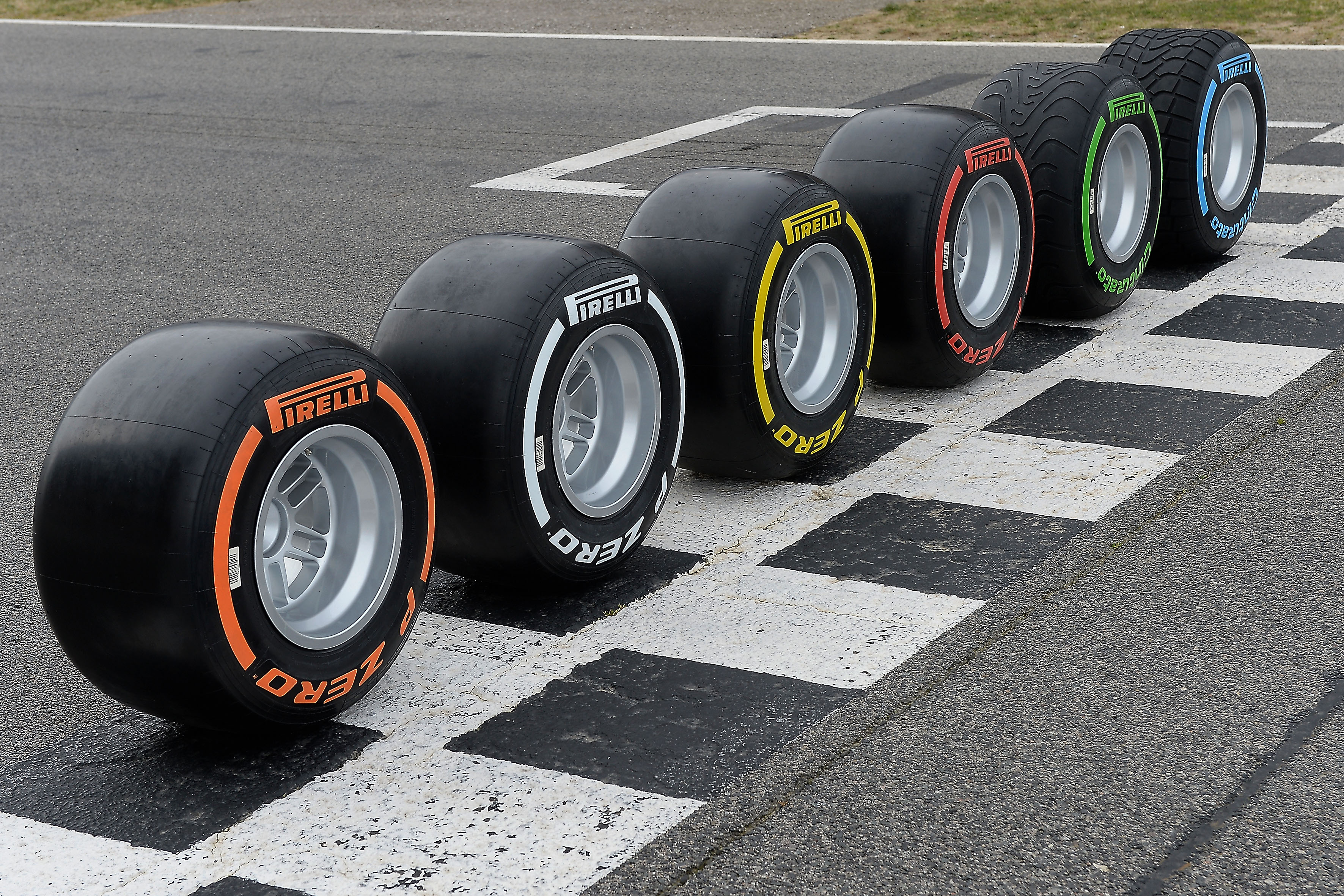
    Because of the high lateral loads Pirelli have nominated the two hardest compound tyres available to them. The white medium compound (option) and orange hard compound (prime) tyres. Some of the corners around Suzuka are the most demanding of the year and the two tyre compounds are the best suited around the track.

    With a tropical storm closing in on Japan the weather will be quite unpredictable throughout the weekend. It will be cloudy with some rain forecast for Friday’s practice sessions with temperatures hovering in the low 20’s. Saturday is expected to be sunny with some clouds around with a low probability of rain. Race day is expected to be clear and sunny with temperatures in the mid 20’s.

    Japan 2015 Weather


  • Pirelli announces tyre choices for Singapore, Japan and Russia

    Pirelli announces tyre choices for Singapore, Japan and Russia

    Formula One tyre supplier Pirelli has announced its tyre compound choices for the Singapore, Japanese and Russian grands prix, with with Italian manufacturer opting to bring softer tyres to Russia compared to its 2014 choices.

    As usual, we’ll see the Super Soft and Soft tyres in Singapore, in order to cope with the high demand for maximum mechanical grip at the Marina Bay Street Circuit.

    The Medium and Hard compounds will be brought to the Japanese Grand Prix due to the high-energy demands and fast corners which are a prominent feature of Suzuka’s fast circuit.

    Pirelli F1 tyresBoth of these tyre nominations correlate with the choices from 2014, but Pirelli has opted to go one step softer with its compounds for the Russian Grand Prix at Sochi.

    The Super Soft and Soft tyres will be used in the Russian Grand Prix at Sochi Autodrom as “the asphalt has not changed significantly since its debut last year, and looking at the data from 2014, a softer step is possible.”

    Last year’s Russian Grand Prix featured a one-stop strategy for almost all teams, with tyre wear not an issue at all during the race.


    Photo Credits:

    Photos courtesy of Pirelli

  • Jules Bianchi Update: Condition ‘more terrible than if he had died,’ says his father

    Jules Bianchi Update: Condition ‘more terrible than if he had died,’ says his father

    Jules Bianchi’s father, Philippe, has admitted that he is becoming a lot less optimistic about the chances of his son recovering from the injuries suffered during a horrific crash at last year’s Japanese Grand Prix.

    Jules Bianchi remains in a coma at a hospital in Nice, nine months after his horrific collision with a recovery vehicle at the grand prix at Suzuka and his father describes the situation as one that his putting the Bianchi family through “daily torture”.

    Bianchi suffered severe brain injuries in the crash and his family have remained hopeful, remaining at his bedside, but his father wass a lot less optimistic in an interview with France Info, a local radio station.

    “It’s unbearable, it’s a daily torture,” Philippe Bianchi told the radio station. “We sometimes feel like we’re going crazy, because for me, it certainly is more terrible than if he had died. For we’re not able to help him more than we can.

    Jules Bianchi“Time goes by and I am now less optimistic than I may have been two or three months after the crash, when we could hope for a better evolution. At some point, you need to be well-grounded and realise how serious the situation is.”

    Bianchi, who was driving for Marussia and was part of Ferrari’s young driver programme, has not made any significant progress in his recovery. His father went on to say that waking up from the coma would lead to further complications as he struggles with a conversation he had with Jules following Michael Schumacher’s skiing accident in December 2013.

    “If he finds himself with huge disabilities, we’re pretty sure it’s not at all what Jules would want. We had talked about it. He told us that if he were to have an accident similar to Michael Schumacher’s, if he were even just not to be able to drive anymore, it would be very hard for him to accept it. Because it was his life.”

    We all continue to hope for a full recover for Jules and our thoughts remain with the Bianchi family throughout their struggle.

    #ForzaJules

  • Jules Bianchi update

    Jules Bianchi update

    Philippe Bianchi, father of Jules Bianchi, has provided an update on Jules’ current medical situation, as well as voiced his anger around the FIA investigation which blames his son for the horror crash at the 2014 Japanese Grand Prix.

    The 25-year old Bianchi remains in a coma in Nice more than six months after that terrible day at Suzuka. His father agreed to an interview with a local Nice newspaper “out of respect for all the people who continue to send Jules their beautiful wishes, encouragement and affection every day”.

    He did however admit that there is very little to report about Jules’ progress medically.

    “The only thing we can say is that he fights with force and with the same strength that he has always fought with, before and after the accident,” Bianchi told the local Nice-Matin newspaper.

    “Every day, Jules does a marathon. From a medical point of view, his condition is stable. He is fairly autonomous — no physical problems.

    “All of his organs are working without assistance. But for now, he remains unconscious.”

    When asked whether neurosurgeons are seeing any improvement in Bianchi’s brain state, he admitted that this is something that will take a very long time, “For this kind of trauma, we know the evolution is very slow,” he said.

    Jules Bianchi“But compared to what the Japanese professor who operated on him told us, it is already night and day. There, when we arrived to see Jules, there was no hope. There was talk of irreversible damage.

    “It was said he could not be transferred before one year, but it was done after seven weeks, as Jules quickly began to breathe again on his own.

    “Now, the doctors tell us there is no specific intervention they can do. Most important is to stimulate Jules so that he feels a constant presence at his side.

    “So we take turns every day — his mother, his sister, his brother and me. He also has his German girlfriend, Gina, who lives here now,” Philippe told Nice-Matin.

    “From time to time, at his bedside, we see that things are happening. Sometimes he is more active, he moves more, squeezes our hand, but is it mere reflex or is it real?

    “Hard to know,” Mr Bianchi said.

    He said it continues to be a terrible time within the Bianchi family, a “daily torture”.

    “Our universe collapsed on 5 October 2014. The questions that no one can answer now: will he make it? If so, will he be disabled or can he live normally? I think that in this type of accident, it hits harder than a death. The suffering is relentless. A daily torture,” Bianchi explained.

    “To those people who think of him, I want to thank each one and tell them that we will give news when there is any, good or bad.”

    When asked about the FIA investigation which placed blame on Jules Bianchi for the horror crash, Philippe was furious.

    “It was an internal investigation,” he abruptly replied. “Only those who were involved were engaged.

    “Regarding this, I have nothing new to say,” Mr Bianchi continued. “Very good people are involved now to defend the interests of Jules.

    “If someone is responsible some day, he will have to pay. Frankly, I’m too upset to talk about it. I prefer to focus my energy on Jules now”.

    Our thoughts remain with Jules Bianchi, his father Phillipe and his family, friends and fellow race drivers. Keep fighting, young man! #ForzaJules

  • Virtual Safety Car Rules Finalized for 2015

    Virtual Safety Car Rules Finalized for 2015

    The FIA have finalized the procedures for the new Virtual Safety Car (VSC) system that will be used to neutralize races in 2015.

    The VSC was brought about after Jules Bianchi’s accident at the Japanese Grand Prix last year where he crashed out of the race with serious head injuries under yellow flag conditions.

    The new VSC rules have been integrated into the 2015 sporting regulations and will be used to neutralize a race or “normally be used when double waved yellow flags are needed on any section of track and competitors or officials may be in danger, but the circumstances are not such as to warrant the use of the safety car itself”.

    Under the VSC rules, drivers are not allowed to enter the pits except to change tyres, this means that stop-and-go penalties may not be served during the VSC period. Drivers will have to stick to a minimum delta time set by the FIA in each sector. To ensure drivers do not drive too slow, the rule makes provision for drivers that drive erratically and “unnecessarily slowly. If a driver is found to breach these rules, a penalty will be imposed. A penalty will also be imposed for drivers who do not stick to the delta time.

    Once the race director is satisfied and it is safe to resume racing, teams and drivers will be notified via the official lighting system. Once the notification is given, a green flag signal will be given on the FIA light panels. Drivers can continue to race from that point on.

  • Jules Bianchi FIA Crash Report

    Jules Bianchi FIA Crash Report

    A few weeks after Marussia’s Jules Bianchi crashed at the Japanese Grand Prix, the FIA appointed a panel to investigate the crash. Today, at the World Motor Sport Council meeting in Doha, the report was presented to the FIA with the findings and recommendations for improvements which are relevant to all motor sport.

    The panel was chaired by FIA Safety Commission President Peter Wright. Former Ferrari Team Principal Stefano Domenicali and former Team Principal of Mercedes, Ross Brawn were also part of the panel among others. The 396 page report was accepted by the FIA who also gave a mandate to implement the recommendations of the report.

    The complete list of findings and recommendations are listed below:

    The review of the events leading up to Bianchi’s accident indicate that a number of key issues occurred, which may have contributed to the accident, though none alone caused it:

    1. The semi-dry racing line at T 7 was abruptly narrowed by water draining onto the track and flowing downhill along it. Both Sutil, and Bianchi one lap later, lost control at this point in T 7.

    2. Sutil’s car was in the process of being recovered by mobile crane when Bianchi approached Sectors 7 and 8, which include the part of T 7 where the recovery was taking place. Sectors 7 and 8 were subject to double yellow flags.

    3. Bianchi did not slow sufficiently to avoid losing control at the same point on the track as Sutil.

    4. If drivers adhere to the requirements of double yellow flags, as set out in Appendix H, Art. 2.4.5.1.b, then neither competitors nor officials should be put in immediate or physical danger.

    5. The actions taken following Sutil’s accident were consistent with the regulations, and their interpretation following 384 incidents in the preceding 8 years. Without the benefit of hindsight, there is no apparent reason why the Safety Car should have been deployed either before or after Sutil’s accident.

    6. Bianchi over-controlled the oversteering car, such that he left the track earlier than Sutil, and headed towards a point “up-stream” along the barrier. Unfortunately, the mobile crane was in front of this part of the barrier, and he struck and under-ran the rear of it at high speed.

    7. During the 2 seconds Bianchi’s car was leaving the track and traversing the run-off area, he applied both throttle and brake together, using both feet. The FailSafe algorithm is designed to over-ride the throttle and cut the engine, but was inhibited by the Torque Coordinator, which controls the rear Brake-by-Wire system. Bianchi’s Marussia has a unique design of BBW, which proved to be incompatible with the FailSafe settings.

    8. The fact that the FailSafe did not disqualify the engine torque requested by the driver may have affected the impact velocity; it has not been possible to reliably quantify this. However, it may be that Bianchi was distracted by what was happening and the fact that his front wheels had locked, and been unable to steer the car such that it missed the crane.

    9. Bianchi’s helmet struck the sloping underside of the crane. The magnitude of the blow and the glancing nature of it caused massive head deceleration and angular acceleration, leading to his severe injuries.

    10. All rescue and medical procedures were followed, and their expediency are considered to have contributed significantly to the saving of Bianchi’s life.

    11. It is not feasible to mitigate the injuries Bianchi suffered by either enclosing the driver’s cockpit, or fitting skirts to the crane. Neither approach is practical due to the very large forces involved in the accident between a 700kg car striking a 6500kg crane at a speed of 126kph. There is simply insufficient impact structure on a F1 car to absorb the energy of such an impact without either destroying the driver’s survival cell, or generating non-survivable decelerations.

    It is considered fundamentally wrong to try and make an impact between a racing car and a large and heavy vehicle survivable. It is imperative to prevent a car ever hitting the crane and/or the marshals working near it.
    Recommendations:

    A number of recommendations for improvements have been proposed, relevant in many cases to all of motorsport. They include the following:

    1. A new regulation for double yellow flags:

    Proposed new Appendix H Article (possibly under 2.4.5.1 b):

    The Clerk of the Course will impose a speed limit in any section of track where double yellow flags are being displayed.

    It is proposed that a Working Group, made up of FIA Race Directors and Stewards should meet and draw up detailed regulations and guidelines for the application of this new regulation, in time to apply it in 2015 across international circuit racing.

    2. Safety critical software:

    A review of safety critical software and measures to check its integrity will take place.

    3. Track drainage:

    Guidelines on circuit drainage will be reviewed, to include drainage off access roads.

    4. 4-hour Rule:

    Article 5.3 of the F1 Sporting Regulations states that:

    However, should the race be suspended (see Article 41) the length of the suspension will be added to this period up to a maximum total race time of four hours.

    It is proposed that a regulation or guideline be established such that the Start time of an event shall not be less than 4 hours before either sunset or dusk, except in the case of night races.

    It is also recommended that the F1 Calendar is reviewed in order to avoid, where possible, races taking place during local rainy seasons.

    5. Super Licence

    It is proposed that drivers acquiring a Super Licence for the first time should undertake a course to familiarise themselves with the procedures used by F1 in running and ensuring the safety of an event.

    It is also proposed that new licence holders pass a test to ensure that they are familiar with all the relevant regulations.

    6. F1 risk review

    Consideration will be given to a review of F1 risk, in order to ascertain whether there are any significant holes in the safety defences, such that an unforeseen combination of circumstances could result in a serious accident.

    7. Tyres

    It is part of the challenge of a racing driver to drive his car as fast as possible given the track conditions combined with the characteristics of his tyres. Although the characteristics of the wet weather tyres provided by Pirelli did not influence Bianchi’s accident or its outcome in any significant way, it is recommended that provision is made for the tyre supplier to develop and adequately test wet weather tyres between each F1 season, such that it is able to supply the latest developments to the first event.

  • Jules Bianchi Out of Artificial Coma But Remains Critical

    Jules Bianchi Out of Artificial Coma But Remains Critical

    The family of Marussia driver Jules Bianchi have released and update about the Frenchman’s condition.

    Bianchi has been in an artificial coma for the past 7 weeks after suffering from massive head injuries from crashing out at the Japanese Grand Prix.

    According to the statement Bianchi is out of his artificial coma, but he is still unconscious. The other bit of good news is that he is breathing on his own and that his vital signs are stable. The statement goes on to say that his condition remains critical.

    “Jules is no longer in the artificial coma in which he was placed shortly after the accident, however he is still unconscious,” read the statement.

    “He is breathing unaided and his vital signs are stable, but his condition is still classified as ‘critical’. His treatment now enters a new phase concerned with the improvement of his brain function.

    Bianchi has been moved from the Mie General Hospital in Japan to the Le Centre Hospitalier Universitaire de Nice in the south of France. He was transported by plane during the night and he has reached the medical facility in France safely.

    “We are relieved, therefore, to confirm that Jules was transferred aeromedically last night from the Mie Prefectural General Medical Center in Yokkaichi, Japan, to Le Centre Hospitalier Universitaire de Nice (CHU), where he arrived just a short time ago. Jules is now in the intensive care unit of Professors Raucoules and Ichai, where his care will also be monitored by Professor Paquis, Head of Neurosurgery Service.

    The family are relieved that Bianchi is closer to home now as more of his family and friends will be around him. The family went on to express their gratitude for the doctors and nurses at the Mie General Hospital.

    “We are thankful that the next phase of Jules’ treatment can continue close to home, where he can be surrounded and supported by his wider family and friends. We have nothing but praise for the outstanding care provided by the Mie Prefectural General Medical Center since the accident.

    “We owe the medical staff there an enormous debt of gratitude for everything they have done for Jules, and also for our family, during what is a very difficult time for us. In particular, we would like to extend our thanks to Doctors Kamei and Yamamichi, and also to Mr Ogura, all part of the team of personnel caring for Jules in Japan.”