Tag: imola

  • F1 2020: Opening Races Officially Announced

    F1 2020: Opening Races Officially Announced

    For most 2020 has been an unprecedented year, so far. Nearly all the plans and ideas and intentions have fallen by the wayside or at the very least significantly delayed. Amongst many other areas of life the world of sport has found itself in suspended animation for several months. Astonishingly, it has been six months, or half a year, since the last F1 race in Abu Dhabi.

    Fortunately the official announcement of the opening eight races for the 2020 season signals an end to the long wait. With due considerations towards health and safety Formula 1, in partnership with the FIA and teams, has facilitated a return to the track. F1 will look markedly different in this new world, as all eight races will take place behind ‘closed doors’. The thought of no fans at Monza, devoid of the passionate Tifosi is nearly unimaginable. But these are the compromises that had to be made in order to go racing.

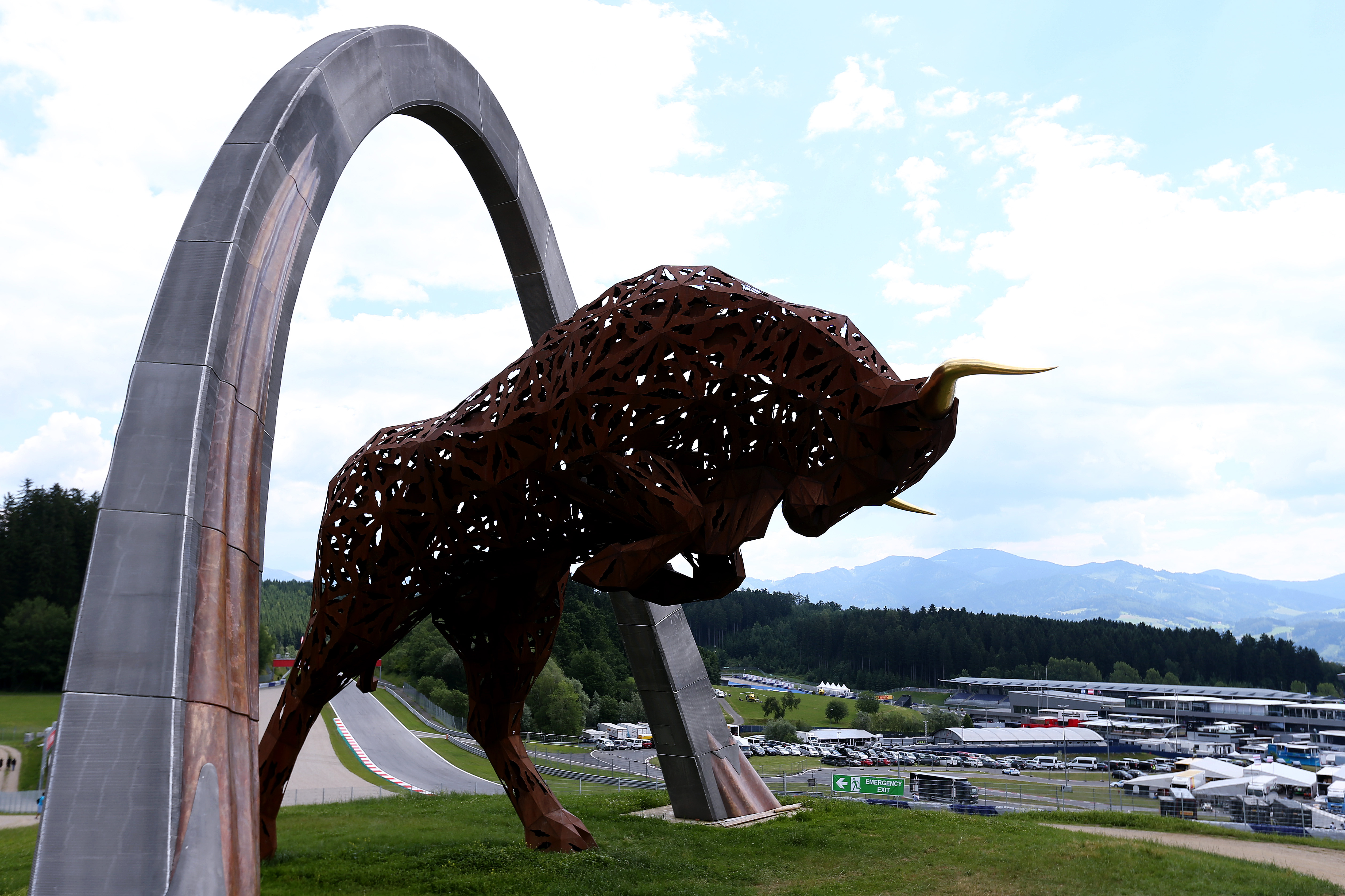
    The opening two rounds will take place at Austria’s Red Bull Ring. The race scheduled for 3 – 5 July will officially be known as the Formula 1 Rolex Grosser Preis von Osterreich while round two, slated for 10 – 12 July will be known as the Formula 1 Pirelli Grosser Preis der Steiermark.

    The paddock will be sans motorhomes for the opening stint of the season and team members will make use of the paddock club facilities for mealtimes. Teams will also keep to themselves during the race weekend and not mingle with members from other teams so as to insure a relative isolation.

    The third round of the season will take place at Hungary’s Hungaroring from 17 – 19 July. Though the 2020 cars have not turned a wheel in anger Austria’s Red Bull Ring and the Hungaroring are traditionally strong circuits for Red Bull. It could be just what Max Verstappen and co needs to be serious contenders right off the bat.

    After several long consultations Formula 1 and other elite sports have obtained a special exemption from the British government to forego the compulsory 14-day self-quarantine upon entering the country. It means that the British grand prix can go ahead. In fact, the brilliant Silverstone circuit will host back-to-back race weekends with the first to take place from 31 July to 02 August. The second race, on 07 – 09 August, is being billed as the Emirates Formula 1 70th Anniversary Grand Prix. As the site of the first ever Formula 1 world championship race in 1950 it seems more than fitting.

    From 14 – 16 August Formula 1 will be at the Circuit de Barcelona Catalunya in Spain for round 6 of the championship. Interestingly, the much hotter weather could have a significantly impact on the racing as Spain’s traditional slot on the F1 calendar sees much cooler conditions.  Round 7 of the calendar has been reserved for the Belgian grand prix around the famed Spa-Francorchamps circuit. The Belgium grand prix retains its original of 28 – 30 August. One week later, on 04 – 06 September, Monza has been penned in as round 8

    While only eight races have been announced the expectation is to run a calendar of 15 – 18 races, which is expected to end in December. Ferrari, which owns the Mugello circuit, has given their consent for a race to be run on the Italian track. Amongst others, Hockenheim and Imola are also believed to be in the mix for addition to the 2020 F1 calendar.

  • Italian Grand Prix close to securing 7 year Monza deal

    Italian Grand Prix close to securing 7 year Monza deal

    Formula One’s Temple of Speed, the historic and spectacular Monza, is closing in on a new deal to secure a seven year deal for hosting the Italian Grand Prix.

    The future of the circuit has been in some doubt for a while now after failing to agree to new terms for an extension beyond 2016 with F1 supremo Berni Ecclestone. Financial issues led to Ecclestone stating last August that there was a “good chance” that Monza could be dropped. A number of alternatives to Monza for hosting the Italian Grand Prix. These included the possibility of taking the race to Imola – hosts of the former San Marino Grand Prix.

    Italian Grand Prix Monza 2015A new deal has however become more affordable for Monza, with an amendment to Italy’s Stability Law which now allows the Automobile Club of Italy (ACI) to aid with funding the event in the future.

    ACI chief Angelo Sticchi Damiani reported that they are “close” to signing a seven year deal with the FOM and says that talks for a new deal are now progressing well. He expressed his confidence in a deal being completed soon to keep Monza on the Formula One calendar.

    “The Autodromo di Monza has had difficult times, but the worst is over and now we are close to signing with Ecclestone to have Formula One in Brianza for another seven years,” he told the Gazzetta dello Sport.”We’re going to win a battle that led to the ACI making tremendous sacrifices.”

    Monza is the fastest fastest circuit on the F1 calendar and has featured in every Formule One world championship season except 1980.

  • Ayrton Senna – An Enduring Legacy

    Ayrton Senna – An Enduring Legacy

    The 1st of May will mark twenty years since the death of the great Ayrton Senna – The last driver to die in a Formula 1 race.

    Before the fateful day and for many years afterwards Professor Sid Watkins was at the forefront and leading the vital charge towards a safer sport. His desire was to make the sport safe so that no driver would ever again lose his life in a racing car. Twenty years after one the darkest days in the history of the sport Prof Watkins is no longer around to see the result of his and many other’s groundbreaking work.

    The evolution of safety in Formula 1 is brilliantly documented in the film 1: Life On The Limit. It starts with Martin Brundle’s crash at the 1996 Australian grand prix. Despite looking horrific from the outside Brundle jumps out of the car, uninjured, and runs down the pitlane to his spare car; a seemingly ordinary occurrence in modern Formula 1.

    The film spans the 1950s, 60s and 70s – the most dangerous era of the sport. Three-time world champion Jackie Stewart was just one of the pioneers of making Formula 1 a safer sport. He describes getting out of the cockpit after the 1968 German GP:

    life“We had a driver die every month on the same weekend for four consecutive months. And we were racing on the fifth weekend in circumstances that we should never have been allowed to go out in. You couldn’t see 60 metres of visibility because of the fog and heavy rain. And the very first question I asked when I got out of the car was, “Is everybody OK?”

    It is a tragic reality that because of those who lost their lives in this deadly era of the sport improvements to safety became paramount. Throughout the film Jackie Stewart, Emerson Fittipaldi, Mario Andretti and Niki Lauda recount how they strove to make the sport safer.

    Bernie Ecclestone and Max Mosley feature heavily in the film as well. The link between Ecclestone and the decrease in fatalities after he takes control of the sport is unmistakable. Several instances are depicted where Ecclestone refuses to race at certain tracks if the necessary medical facilities were not available and up to standard.

    The film includes some unsettling footage which includes the fatal crash of, amongst others, Jochen Rindt. From these painful scenes the film starts to build on the incremental improvements in safety. Medical centres and medical helicopters became mandatory at every racing track, barriers and circuit are re-designed and helmet technology is completely transformed.

    The film creates a stark contract between the first three decades of the sport and what we know it as now. Drivers getting into their cockpits hadwatkinssenna no idea if they would survive the race or which of their friends might die that. In stark contrast Lewis Hamilton said during his interview that he has never feared or worried about death and that “it’s almost like you have control of the danger.”-An astonishing statement in relation to those early years.

    On the 1st of May as Professor Sid Watkins attempted to assist the injured Senna he recounts that as the clouds parted over Imola he knew there was nothing that could be done for his great friend. Since that day and thanks to pioneers such as Prof Sid Watkins, who delivered four decades of unprecedented service to Formula 1, no driver has lost his life since.

    As we remember the day Formula One lost Ayrton Senna, you can read our special tribute to Senna here. Or watch the full 1994 San Marino Grand Prix here.


  • F1 Video: 1994 San Marino Grand Prix Full Race

    F1 Video: 1994 San Marino Grand Prix Full Race

    One of the saddest days in Formula One history: The 1994 San Marino Grand Prix. Ayrton Senna’s final race. This is the full race video.