Tag: honda

  • McLaren to Debut Honda Engine in Interim Car

    McLaren to Debut Honda Engine in Interim Car

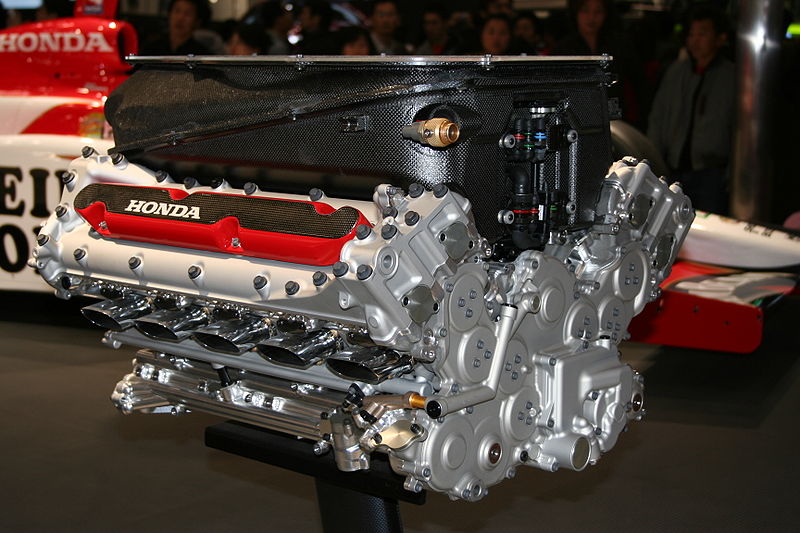
    The McLaren Formula 1 Team have announced they will debut Honda’s new F1 engine at a promotional event at Silverstone on Friday.

    McLaren’s development car, the MP4-29H/1X1, will lap around the Silverstone Circuit alongside two other McLaren Honda’s. The Woking based outfit have been working on the MP4-29H to test the installation and integration of the new turbocharged V6 Honda unit ahead of the 2015 season. The promotional event at Silverstone, which is limited to 100km of running and may only be run with demonstration tyres, will give the team a chance to learn about the car and the engine and various other systems before the Abu Dhabi test which will take place after the Abu Dhabi Grand Prix.

    Honda are confident that they are ready for the test after releasing pictures and announcing their readiness a few months ago.

    “To make sure that we are ready at the launch of the new cars in 2015 we’ve decided to build a development car, as Honda needs to check all the multiple systems,” explained McLaren Team Principal Eric Boullier.

    “We also need to check the IT link between track and Woking and between track and Japan. So as not to have to focus on these things too much in the test season, we’ve decided to run a development car programme.

    “In terms of car design it will be very similar to this one. We don’t want to burn money on unnecessary areas. We just have to make sure that some technical options for next year are already on the car.”

    McLaren test driver, Oliver Turvey, will be the first one to take the wheel of the MP4-29H/1X1. Test driver Stoffel Van Doorn will also be given a chance at the wheel of the new car.

    With the demonstration day tomorrow, the mystery of who the two McLaren drivers will be for 2015 still remains. Fernando Alonso has been tipped to be their first driver but there is still not word on their second driver. We are expecting an announcement very soon.

  • 2014 Formula 1 Japanese Grand Prix: Friday Press Conference

    2014 Formula 1 Japanese Grand Prix: Friday Press Conference

    Team representatives:

    Pat Fry (Ferrari)

    Andy Cowell (Mercedes)

    Remi Taffin (Renault)

    Paul Monaghan (Red Bull Racing)

    Yasuhisa Arai (Honda)

    Jonathan Neale (McLaren)

     
    Q: Arai-san, if I can start with you please. What’s the current state of the Honda project? Is Honda on target with development?
    Yasuhisa Arai:
     First of all, thank you very much to sit in centre. I am glad to be here again after Shanghai. Our progress is right now almost on schedule and I hope that in the year 2015, March we will make [a good start] together with our partner, get a good start on the grid.

    Q: Would you like to run the power unit in a McLaren before the end of the year? Is that feasible? Are you allowed to do that?
    YA:
     Everyone asks this to me! McLaren and Honda work together to design and create an experimental test vehicle to check the power unit system but unfortunately we don’t have an actual test plan but I hope if possible we will drive just before next season.

    Q: You can’t say any more than “just before next season”?
    YA:
     Just before next season. End of the season and next season, during that time. That’s my hope.

    Q: What lessons have you learned from the efforts from the other power unit manufacturers? Are there particular areas that you’ve noticed they’ve had troubled with?
    YA:
     I’ve learned very small things because most of the data we don’t know. So, very difficult to learn on the track.

    Q: You’ve seen the failures that they have had. Are there particular areas you have concentrated on?
    Jonathan Neale: 
    If I may, just to help my partner here, as Arai-san says it’s very difficult at arm’s length to focus on any particular area. Honda and McLaren have a lot of work to do together in a short period of time and I’m sure if you were to ask – I don’t want to put words in the mouth of either Andy or Remi here – but if you were to ask them what it felt like for them at this time of year before they were starting with the V6 engines, they’ll know what we’re going through at the moment.

    Q: Thank you for that. If I can come to the back row now: a couple of questions for all of you. First of all, what is your state of development at this stage for 2015 with your engines? Remi, if I can start with you?
    Remi Taffin: 
    It’s all about on plan. It’s basically now a few months we are working on that and we now have got a few examples on the dyno, so it’s a work in process. I think we are going in the right direction. It’s always difficult to know if we’ll hit all our targets but that’s where we are at the minute.

    Q: Andy?
    Andy Cowell: 
    We’ve been doing lots of development ever since we froze the specification of this year’s engine in February, so we’ve been doing lots of development on research engines and using this year’s engine as a prove-out but our final specification of engine won’t be complete until the early part of next year, because for all of us we’re in the development phase until the.

    Q: Thank you. And Pat?
    Pat Fry: 
    Our development is very similar to Andy’s really. As soon as the engine was frozen we’ve obviously been developing as hard as we can and trying to improve the power unit in all areas. There is a huge amount for us still to do. Very little of next year’s spec engine actually exists, which I expect to be the same for everyone here. It will all finally be coming together at the start of January.

    Q: Can I ask you your feelings about unfreezing in-season power unit development and where is that discussion actually going? Remi?
    RT:
     Where is that discussion? I think at the moment it is at the upper level than the one we are here and what I think about it, or what Renault thinks, is that it is not going to really change the way we are working. As Andy says we are developing our engine for next. There won’t be many parts that will be looking like the one from this year. Whether we will be able to put all the parts, all the development into one engine for Melbourne is difficult to say. Of course we will push as much as we can, because the more we put for the first race, the more performance we will get for the whole season. If we’ve got a slot at some point in the season to introduce some more development, they will be on the shelf, because obviously we just keep on working all through the year. It’s not really decisive in how we achieve our development. We will just take the opportunity if it is there.

    Q: What are your feelings about this Andy?
    AC:
     I think it would be a change to the way we are structured. We froze the performance specification of this engine in January/February of this year and started working on a 12-month development programme and if you’ve got one introduction point or two introduction points, it is a change. And often it is the prove-out – taking that performance specification into something that is reliable enough to do five race weekends – that’s the costly aspect, because you’ve got to have several sets of bits and often you have to go back around, because fatigue failures occur and you’ve got to redesign and go again. The regulations were put together several years ago with the opportunity to do an annual performance update. If we change to a mid-season as well as a start-of-season update, we all just need to consider that carefully. I think we all acknowledge that it would affect the financial situation. Perhaps the engineering directors would love the opportunity but the finance directors would have a furrowed brow at the thought of doing it. It needs to be discussed and considered carefully.

    Q: Pat, what does Ferrari think of this?
    PF:
     I think we are continually developing all through the year. It’s not like we’re targeting a fixed point, we’re developing as quickly as we can in every single area – some parts of that will be ready in January and some might not. But even then we don’t stop, we’ll carry on developing all through the following year. I think the changes that are being discussed still stay within the technical regulations and the number of tokens that you are allowed – it’s exactly the same number – it just gives you the opportunity to upgrade in one extra point, mid-season. I think for us the cost implications are not huge. As I said we would be doing all that development work anyway and also trying to improve the reliability of bits, so it doesn’t make a huge difference for us from that point of view.

    Q: Jonathan, we’ve heard the state of the engine development for next year. What’s the state of the chassis development?
    JN:
     Well, as Arai-san has said, we’ve been developing an experimental vehicle to support the engine and transmission integration. We continue to develop the car on the circuit this year, aerodynamically. And while we are not comfortable with where we’re at, we’re much more confident about the direction in which we’re taking the team and the progress that we’re seeing on the track. The gap to Mercedes still looks pretty eye-watering at times, so we’ve got a lot of work to do. The changes that Eric and I have made to the organisation, I’m happy that that’s going in the right direction. We’ve just got to get out heads down now and get on with it now. It’s going the right way.

    Q: We’d remember in the past McLaren and Honda would be pounding around here for weeks on end… not possible these days.
    JN:
     Well the world has changed a bit since that time, not least of which the engine regulations, chassis regulations, aerodynamic restrictions – it’s an energy-constrained series. All of these things, I think, have been good for the sport. They have their challenges, the rate of development, or the rate of aerodynamic development has definitely been restricted by the amount of wind tunnel time that’s available – not so sure that that’s actually restricted the amount of aerodynamic cost because the reality is that a unit of time in capacity is worth so much more at the moment but that’s probably a wider discussion – but we are very optimistic that the steps we’re taking in the organisation are the right ones and we will be a competitive team.

    Q: And finally – and I’m sure you’re expecting this one – when are going to hear about the drivers? What are the criteria for choosing the drivers for next year?
    JN:
     That’s a really interesting question and I think it depends on who you ask. I’ll give you my view. We have two very good drivers in the car who have been working incredibly hard this year, not always with the easiest car but with an improving car nonetheless. Having a world champion in the team is fantastic from a development and a confidence part of view, and having the Viking charger is also a joy to work with and good for us. In terms of setting our stall out for the future, then in our longer range, longer term conversations both with the shareholders and with our colleagues in Honda, then we have an eye on what’s happening in two, three, four, five years’ time. Where does the team want to be? In the short term, I read the same magazines that you do. I look with interest and note that everybody’s in contracts – but this is Formula One and anything can happen at a moment’s notice. I’m never surprised by what Formula One will throw up.

    Q: Paul, Sebastian in particular is on five units of certain parts of the engine. Is there any way you can manage that? Is there any way of managing how you take those penalties if there’s going to be a penalty? He says there’s going to be a penalty. How do you manage that?
    Paul Monaghan: 
    As carefully as you can, with the minimum damage to the team’s performance. Obviously we have a few people breathing down our necks for second place in the Constructors’ title, so we have to keep ourselves in a competitive situation. I think on a race-by-race basis we review where we are, what we’ve got, how far we think we can take it? When is it least damaging to take any penalty? And we’ll have to make that call in the near future.

    Q: Unless it springs up on you beforehand…
    PM:
     We’ll deal with it if it does.

    Q: You are entering into a much closer relationship with your engine manufacturer Renault. How is that coming along, what are the benefits of that?
    PM:
     I think we’ve always had a close relationship with Renault. Don’t forget we’ve got four Drivers’ and Constructors’ titles with them. I think a closer collaboration will only benefit both parties. So if we can bring some additional skill-sets to the party to complement those which Renault possess, we’ll get a better package out of it, not just the power unit but its integration into the car, and ultimately our performance. That’s our aim, and that’s what we’ll do.

    Q: How far advanced is that?
    PM:
     It’s taking shape at the moment and I think a few early projects are starting to bear fruit looking towards next year. We hope to pick up a few more and, as Remi said, when all the pieces come together, then we’ll see how big a step we can make with it all.

    QUESTIONS FROM THE FLOOR

    Q: (Paolo Ianieri – La Gazzetta dello Sport) Arai-san, there are rumours today saying that Alonso has signed with McLaren-Honda. Can you confirm this, and if not, how desperate or hungry is Honda to have Alonso in its car next year?
    YA:
     [to JN] Should I answer? McLaren-Honda know this idea, what driver should be used to drive our car. There is many rumours but my understanding that Formula One driver is just 22 drivers in the world. All of the drivers, I have great respect and so of course not only McLaren-Honda but also the other teams want to keep the good driver. Not only McLaren-Honda but also the team, everyone keeps the good driver. We don’t decide yet.

    Q: (Kaz Kawai – Fuji Television) Pat, we’ve all heard that Steve Clark has won his job back. Do you have any idea when he’s coming back or have you been told by your boss when he’s coming back in?
    PF:
     I think that’s all being negotiated and sorted out at the moment, so I’m sure we’ll know in a few days.

    Q: (Kate Walker – crash.net) Pat, we’ve heard some stories today about the movement of technical staff from Red Bull, possibly moving to your team. Does this mean that Seb has signed for Ferrari as has been rumoured?
    PF:
     Technical team… we have had a few people join in the recent months but in terms of drivers, it’s got no link to drivers whatsoever.

    Q: (Sumie Dan – The Hochi Shimbun) Question for Arai-san: I understand that your new engine power target is over 600hp. Did you achieve this target now?
    YA:
     Sorry, I never said the number of our target. Where did you get such kind of a number? But of course our target is very clear. This season, the Mercedes is top of top so next season we shall achieve that same competition or power. Everyone understands that and wants to exceed that power. Lots of work.

    Q: (Dieter Rencken – Racing Lines) To Andy, Remy and Arai-san if he would like to comment as well: obviously any change to the engine freeze situation requires regulation change. Given Formula One’s present governance process, that means that the teams would actually be voting for that rather than the engine suppliers. How much of a frustration is it that your destiny is not ultimately in your own hands?
    RT:
     Difficult to answer or difficult question, I don’t know, but I will give one. That’s the way it is, as you say, that’s the regulations so obviously we have to follow that, and again, as I said a bit earlier, it’s not going to be changing the way we are working so whether we are going to have a change or not, we’re just pushing like elves to try to get back to where we should be, so at the upper level and whatever we will get for next year… it will just be a plus, I would say, if we have this change. I would not say we are frustrated.
    AC: Yeah, I would support Remy’s comments. It’s not frustrating, that’s how Formula One is set up and one of the great things about Formula One is that the boundary conditions do change and you do well if you can adapt quickly, if you can react quickly, change your organisation, not slow down but accelerate and make sure that you’re in a strong place. And that’s what we’ll do. So as soon as we’ve got any change to the regulations, we’ll all react, we’ll all take the race on and we’ll all see who’s done the best job when we get to the first race.

    Q: (Dieter Rencken – Racing Lines) Andy, I must come back to your comment earlier on that it’s got to be very carefully managed, any changes, and yet you won’t have any input into that process and that’s really what I’m getting at. How would you ensure that it is carefully managed?
    AC:
     You’re asked your opinion, so collectively we’ve got lots of years’ experience developing engines, KERS systems, ERS systems and we’ve all got a clear breakdown as to how many people we’ve got, how much we spend on material, how loaded our dynos are so based on a different set of criteria, different set of regulations, we can all work out what the consequences are, what the opportunities are and do we want to take on those opportunities or not. So of course we’re all consulted on that and regulations are often a compromise, not everybody is completely happy but as soon as the regulations are clear and fixed, you react, you respond quickly, motivate the staff and you go racing into the first race with those regulations as we’ve seen at the start of this year.
    YA: Just a small comment: from the engineers and many fans, they and we want to keep the competition so in a season, to develop the many parts and to keep the competition is very important, just from engineering and fans’ side.

    Q: (Kate Walker – crash.net) Arai-san, when you first announced your engine development programme, you said that there would be the possibility of supplying more than one customer team from 2016 onwards. Have you already entered into any negotiations or discussions with potential customers?
    YA:
     Not yet, because no one knows of our potential. Of course, we prepare many cards but no one has checked my card.

    Q: (Paolo Ianieri – La Gazzetta dello Sport) Mr Arai, what is your target for next year, realistically. What level do you think your power unit will be able to perform at and do you think that you have been doing enough at this stage, to convince a top driver to join your team?
    YA:
     Our development progress is still on plan but we need to be careful to achieve top competition power within five months, so I need more time but finally our target, the McLaren-Honda target will be to keep a good position to compete in the championship. That’s our target.

    Q: (Ken Kawakita – Weekly Playboy Magazine) Arai-san, we’ve seen at the debut this year, a lot of engine manufacturers facing problems in testing as this whole system is so complicated and integration of the whole components is a colossal issue. And as far as we’ve heard, you start properly testing from next year with only one partner. That means that the information and data that you can gather from that is quite limited. Do you think this could be a disadvantage for your engine programme? Do you have any concerns about this situation?
    YA:
     I don’t think so. Our partner is very strong and I think one of the best teams. Of course that means just one team’s data, but maybe that’s enough, I think. So we already discussed with our partner and set a target and already we have agreed whether the target is good or not. Then finally, maybe in March 2015 we will be in a good position.

    Q: (Dieter Rencken – Racing Lines) Paul, obviously Adrian has started moving out and moving on within the group. What will the restructure look like? Who will be appointed in what positions, come next year?
    PM:
     As I understand, a group of four will step into the void created by Adrian’s step-back. That’s Rob Marshall, Dan Fallows, Pierre Wache and myself. So we all get a dose more responsibility. Adrian hasn’t left, he will still be involved in the F1 programme and that’s how it will be divided up

  • Honda reveals image of 2015 F1 engine

    Honda reveals image of 2015 F1 engine

    Honda has revealed the first image of its new power unit which will be used by the McLaren Formula One team as of next season.

    Honda is making a return to F1 after a seven year absence from the sport, and have signed a long-term deal with the McLaren team. Honda previously enjoyed much success in the late 1908s and early 1990s with McLaren and will be looking forward to repeating their successes together.

    “Working toward Honda’s Formula 1 participation starting in the 2015 season, development of the power unit is entering its prime phase at our research and development facility in Sakura, where we transferred our automobile motor sports development earlier this year,” Yasuhisa Arai, Senior Managing Officer of Honda, said.

    “In addition to conducting simulations, we have moved onto the next stage where we conduct full-fledged bench tests of the engine while connecting the turbocharger and energy recovery systems.

    “In the meantime, our racing operation base in Milton Keynes, United Kingdom, has become fully operational. At this time, we are unveiling an image of our power unit that is under development. The whole team is concentrating on this development, getting ready for the forthcoming start of Formula 1 participation in six months.”

    Honda 2015 F1 Power Unit


  • Jenson Button Calm On F1 Future

    Jenson Button Calm On F1 Future

    Jenson Button is in no hurry to wrap up his Formula 1 career. Nor is the 2009 champion under pressure to close on a deal with the McLaren team.

    The 2014 season marks Button’s fifth season with the Woking based team. Despite starting the season with a podium finish in Australia the season has been mainly below for team and driver. However, Button believes that the team’s position is steadily moving in the right direction. However, the Brit has stated his determination to turn his and the team’s performances around and that retirement is not in his plans.

    “I still feel very young at heart, fitter than ever, and I have all that experience,” Button told Autosport. I am in a great position, I have a lot more to give in the future in F1. I definitely cannot see an end to my career. This is where I want to be in my future.”

    Button is no stranger to underperforming cars in Formula 1 having endured several season in an uncompetitive Honda. Nevertheless, thanks to his extensive experience of 253 GP starts he knows that its patience that will be rewarded in the end.

    “It just takes time – things don’t change overnight even though we are pushing very hard.”

    Jenson Button is currently partnered by rookie driver Kevin Magnussen.

  • 2014 Formula 1 UBS Chinese Grand Prix: Friday Press Conference

    TEAM REPRESENTATIVES

    Pat FRY (Ferrari)

    Charlie WHITING (FIA)

    Yasuhisa ARAI (Honda)

    Andy COWELL (Mercedes AMG HPP)

    Rob WHITE (Renault Sport F1)


    PRESS CONFERENCE

    If we can start with you Charlie? The new power units have excited a lot of debate since the beginning of the year. Will you once again briefly take us through the philosophy behind this technology and why F1 believes it was the right time to introduce it?

    Charlie WHITING: I think it was fairly clear, we’re going back a little while now, that Formula One, being the foremost single seat category, should be at the forefront of technology. I think bit was also clear at the time that the motor manufacturers were also looking towards conservation. So we felt we had to go that way. I think to ignore that would have been rather silly. I think we would have possibly lost some manufacturers and certainly deterred others from coming in.

    I guess efficiency plays a part in that as well?

    CW: Of course that was the major goal. We started four years ago with the engine manufacturers. We had quite big meeting with lots of them assembled in Paris. It was the 27th of April, in fact, in 2010. We assembled them all together and the initial goal was to have a 50 per cent increase in efficiency but over a period of time that became diluted somewhat because it appeared that was rather ambitious for the start of this new engine era. So we ended up with what we have now and that is an engine that everyone can see is about 35 per cent more efficient than the previous engines.

    So, Andy Cowell, does that represent a small step in the right direction or a giant leap?

    Andy COWELL: It represents a giant leap – going from internal combustion engines, naturally aspirated at about 30 per cent thermal efficiency up to engines where we’re all targeting 40 per cent thermal efficiency is a huge step, a huge introduction of new technology both on the internal combustion engine for efficiency and also on the two energy recovery systems that we’ve got on the power unit.

    What do Mercedes expect to get from this project in terms of technology that can be eventually transferred to the road? Is that a long way in the future or is it already happening?

    AC: It’s already happening. The regulations were specifically written to take some of the ideas are already in the road car world, so downsizing, downspeeding and turbocharging but adding some new, interesting technologies in there such as the electric turbocharger as a specific example and those sort of projects are already being worked on.

    Can I ask the same question of Rob White. What does Renault expect to get from this project in terms of road cars.

    Rob WHITE: It’s a big leap, as Andy says. I share the remarks that transfers are already happening. The transfers are not only specific technologies, the e-turbo being one of them, but also the fundamental alignment of the mission we have. Our challenge now is to race, to go as fast as we can with the given fuel allocation, which is a very, very similar mission to our road car colleagues who have to use the smallest amount of fuel to get a given mission done and that’s extremely close.

    There’s been quite a lot of talk about how the power units are contributing to racing and we’ve heard some unusual suggestions for things might be changed. Firstly, do you think there are problems with the racing this year? Secondly, what do you think of ideas such as shortening races, raising fuel limits etc. Do those suggestions miss the point?

    RW: The main problem I see so far is that Andy has won rather more than I’d like and we have win less than I’d like. The specific suggestions are just shifting the goalposts rather than doing anything fundamental and I think as Charlie indicated the basic parameters that we’re now racing with were decided well upstream in sufficient time that we knew what to do with them. I honestly feel that the numbers were well judged and I think the 100kg/h fuel limit and the 100kg for the race, as well as having the benefit of being nice round numbers, also play out more or less as predicted in terms of the level of performance and the level of fuel saving needed to get to the end of the race. I think we’ve seen in the early races that there hasn’t been an excessive amount of fuel saving that would perhaps have damaged the show. I think we’ve seen more recently, particularly in Bahrain… We all enjoyed the race there, it was the first one I saw from the comfort of my living room and it was certainly an exciting one to watch.

    Now we’ve heard from two of the manufacturers currently involved in F1 but let’s get the thoughts of a manufacturer that will next year return to the sport after six seasons away? Thank you very much Mr Arai for coming to our press conference. What is it in the new regulations that has encouraged Honda to come back into Formula One at this time?

    Yasuhisa ARAI: Thank you very much. I am delighted to be here and to be given this opportunity by the FIA to speak at this conference. As you mentioned we will return in the year 2015 for the Formula One. One of the major reasons for our decision was the new regulation introduced this year and that the various environment… I mean green technologies in the new Formula One power unit, as well as the total energy management are both very challenging and significant. The new regulation encourages each power unit supplier to pursue the ultimate combustions efficiency and high pressure direct injections, such as many, many new technology. Thus the challenge is to convert each unit of gasoline into energy and this is expected to be reflected on the huge production mode. That’s the reason why.

    Q: You’re setting up a new base at Milton Keynes in the United Kingdom. What will that facility be responsible for in the coming years?

    YA: That, we will open June this year. Now still under construction but that factory is to do the engine maintenance for the races and rebuilding the Formula One engine and also to go to the race-track for the trackside service. That’s Milton Keynes.

    Pat Fry_Press ConferenceQ: Pat, as someone more responsible for the chassis side of things at Ferrari, let’s talk about how you integrate these new power units with the cars. Have you found that the chassis and engine departments have needed to work closer together this year or is the relationship pretty much the same as always?

    Pat FRY: I think with the changes to the power unit this year, there’s obviously a huge amount more technology to understand and that has definitely pulled the chassis department and the engine department closer together. That starts everywhere from the simple, basic simulations that you do before an event to tuning the car. Everything is now inter-related. So where you used to play with a diff and brake balance and whatever, you’ve now got all the various ERS levels of charging and deciding what to do with waste gates and turbos. So there’s a huge amount more interaction between the two groups.

    Q: Has the engine department given you a power unit on the minimum weight or are you having to shed weight from the car?

    PF: We’re fairly close to the weight limit. I’m sure everyone is struggling. The combination of an engine on the weight limit and just all the bits and pieces we want on a standard car, it’s quite a challenge to get down to the weight limit anyway. But yeah, we’re just on that limit.

    QUESTIONS FROM THE FLOOR

    Q: (Dieter Rencken – Racing Lines) Question to Andy and Rob and Mr Arai if you would like to contribute as well please: Andy, you were talking about 40 per cent efficiency. Now, we’ve got relatively immature technology at the moment. What sort of progress in terms of efficiency do you engine manufacturers foresee over the seven-year lifecycle of these engines?

    AC: It’s a difficult one to predict. We’re working hard to improve the efficiency of the internal combustion engine, make sure that every single drop of fuel that goes in… and that’s where working with Petronas helps tremendously to get us to the point we’re at today and to move forwards race by race with fuel developments. And then it’s just mastering the conversion efficiencies – so every single step where we’re converting the energy, just improving little by little and then with a new power unit homologated next year. I guess I’m not coming up with a prediction for exactly how much we’re going to improve year by year – but I imagine it’s going to be very similar to when we were in the naturally-aspirated era, where there were times when we thought 13,000rpm was impressive and we all ended up well over 20,000rpm. So it’ll be a similar level of development.

    Rob?

    RW: I think Andy was cautious when saying 40 per cent. I think to be competitive you need to be a bit better than 40 per cent already. I think we shouldn’t underestimate just how important that is in terms of automotive technology. I think these power units are fantastic pieces of kit in terms of the raw, thermal efficiency that is achieved. Better than any road car engine by a margin. And I think it’s also important to draw attention to the fact that the energy management challenge is also part of the real efficiency of the race car which is in addition to the thermal efficiency of the power unit. There will be rapid progress even during the course of this year. We’ve seen progress in the early races without any change to the underlying hardware. That’s something that will continue during the season. That’s something that will take another step forward over the winter – as Andy as suggested – when we homologate a new version of the power unit for 2015. This is another mirror-image of what happens in the big, wide world outside, where every iteration of our road car product brings with it a significant step forward in fuel consumption, which of course is the same thing for us: a step forward in performance for the same fuel flow or fuel limit.

    Mr Arai, would you like to comment or is it a bit too early for you to make any predictions.

    YA: There is a strange feeling because our door for 2015 is still not open yet. So I can make just a small comment. How to make the good efficiency is just a three major fields. Technology fields. One is combustion itself – combustion chamber design, another one is how to recover the energy, that’s very important for these new regulations and finally the torque management. Positive and negative torque management is very important to make a good, fast car. That’s my comment.

    Q: (Gary Anderson – Autosport) As you were saying Andy, revs, that’s always been the push, everybody wanted to get more revs, more revs, more revs. This year the regulation maximum is 15,000 but on a good day you might see twelve. Do you see that changing, and if it did change do you see that helping the noise?

    AC: You’re correct with regard to the revs that we’re running on the track. I don’t see that changing, I don’t see the need for the revs to change to change the noise of the power unit. The principal reason why the engine is quieter is the turbine wheel and the muffling effect that you get from that. That’s one of the key technologies for recycling the waste energy that would normally go down the tailpipe so it’s a key aspect of the technology that we’ve got. There are other things we can do though with the tailpipe, perhaps, to change the noise.

    Q: (Gary Anderson – Autosport) Could I just add a second part: why is it 12,000 rpm instead of 15,000rpm?

    AC: The fundamental reason is the fuel flow rate formula so you get the 100 kilograms per hour once you’re at 10,500 rpm. If you rev an engine faster, you generate more friction and friction is the enemy of an engine and the enemy of a race car because you have to reject it to the radiators and there’s then an aerodynamic deficit from doing that. None of us want to be below 10,500 rpm but none of us want to be at high revs because all you do is create heat.

    RW: There’s not much to add. The fuel flow curve, the fuel law is the thing that fixes the engine speed as Andy indicated. We hear a little bit less about the slope below 10,500 than the maximum which is 100 kilos but it is that knee point that fixes the rpm at which the engines make the best power and best efficiency and the engine speed above that is to do with the spread needed to pass the gear ratios.

    Q: (Marc Surer – Sky Germany) It’s in a similar direction, my question for the motor engineers: what can you do to increase the noise? There’s a lot of talk about it but I haven’t heard a solution yet.

    RW: First thing to say is that the noise of the current engine is a consequence of the overall layout, the architecture and so forth. I think in terms of the possible adjustments to change the noise it makes, I think we’re at the beginning of a consultative process that will kick off in about an hour’s time. Andy’s alluded to tail pipe changes – that’s something that could be a way to go. I think the scope to fundamentally and profoundly alter the noise of the engines is extremely limited by the type of technology that we have deployed and therefore I think we need to be realistic about the scope of any action that we might take but of course we’re sensitive to the subject and we’ll certainly participate in any of the studies that might lead to actions being taken.

    PF: I think the engine people in the room know the problem a lot more than I do. I think what Andy said about… you’ve got the turbo there to try and take all the energy that we can out, so it’s always going to be quieter. There’s a round of meetings starting today, in fact, that will discuss and try and work out how to improve the situation.

    Q: (Dieter Rencken – Racing Lines) Mr Arai, if we have a look at Mercedes, they’re supplying their own team and three customers. Renault are doing four customers; Ferrari are doing one plus two. Next year, you’ve got McLaren. Could you give us some insight into your plans for both 2015 and thereafter in terms of customer teams, whether your relationship with McLaren actually permits that, please?

    YA: So, for year 2015, McLaren is our only customer. I don’t think about the future, because we want to concentrate on next season.

    Q: (Dieter Rencken – Racing Lines) I understand your philosophy there but surely you must have done costing and recovery against the units and that must surely include some sort of sale or customer-type project or do you not have any plans for customers at all?

    YA: Of course we want to have good results next season and see the results from other manufacturers. Please chose our power unit for next season. If teams want to use our engine or power unit, we can deliver after year 2016 but right now there are no plans.

    Charlie WhitingQ: (Gary Anderson – FOM) Rob, it’s been fairly well documented that you obviously haven’t started the season the way you intended to. Do Renault need any concessions from other manufacturers or the FIA, to do the improvements that you need or are you happy to work within the regulations and do what you’re allowed at the moment to catch up?

    RW: I think the first thing to say is that the technical and sporting regulations are the same for all the engine suppliers. We knew what we were getting into and we’re in it now. We’re not lobbying for any regulatory change. I think that for the time being our priority is to continue the recovery actions that we’ve put in place and I expect to pursue that over the course of this season.

    Q: (Michael Schmidt – Auto, Motor und Sport) Question to Charlie: the rules allow changes to the engines if it is for reliability, cost-saving and safety. But let’s say if you do a change for reliability reasons and you make a certain component stronger, isn’t that – let’s say – automatically gaining horsepower through the back door?

    CW: I think that the system that we have now is the same as it’s been since 2006. If an engine manufacturer asks for changes for reliability, we always assess that, we always try to see if there is a possible – as you put it – back door route to get more performance but we are absolutely confident that the changes that we’ve allowed so far this season are purely for reliability and we also have the fall-back of consulting all the other engine manufacturers so if we agree to some changes for reliability and we then circulate it among the other engine manufacturers, they have the opportunity to highlight any potential back door treatment, as you put it.
  • Ross Brawn to Leave Mercedes at the end of the Season

    Ross Brawn to Leave Mercedes at the end of the Season

    The BBC reported that Mercedes AMG Pertronas Team Pricipal Ross Brawn will leave the Brackley based team at the end of the 2013 Formula 1 season.

    This comes after much speculation of Brawn’s future after Mercedes hired Paddy Lowe from McLaren earlier this year. The plan Mercedes had in mind was for Brawn to eventually hand over to Lowe in the future, but no specific time was given. He made it very clear that if he were to stay on, he was to retain his influence in the team.

    Despite Niki Lauda urging Brawn to stay and with both Nico Rosberg and Lewis Hamilton expressing their opinion that Brawn should stay on it seems that talks between Brawn and Mercedes have broken down with either party unable to agree on terms which left Ross Brawn with no option but to leave.

    From next season Mercedes will be run by their two executive directors, Toto Wolff and Paddy Lowe. Wolff will run the financial and commercial aspects of the team while Lowe will take over the operations and technical side of the team.

    With Brawn being a free agent from next season there is lots of speculation where he may end up. Word is that he might move to McLaren with them being powered by Honda engines from next year since he’s had experience with Honda in 2007 and 2008. Some are hoping that he goes back to Ferrari to bring the team to its former glory.


    Update: After the the report Mercedes neither confirmed nor denied that Ross Brawn will leave the team at the end of the year.


  • Sound of Honda’s new 2014 F1 engine

    Sound of Honda’s new 2014 F1 engine

    Listen as Honda fires its new 2014 F1 Engine for the first time.


  • Suzuka to keep Japanese Grand Prix until at least 2018

    Suzuka to keep Japanese Grand Prix until at least 2018

    Suzuka will remain on the Formula 1 calendar until at least 2018 following the signing of a new contract with F1 Supremo Bernie Ecclestone.

    Ecccelstone met with Suzuka president Hiroshi Soda in London this week to agree to the terms of a new five-year deal which starts in 2014.

    This means that Honda, the Japanese car manufacturer which owns the Suzuka circuit, will get a home race when it returns to F1 as engine supplier for the McLaren F1 team in 2015.

    Ecclestone told Autosport, “It is great to see Honda back in F1 in 2015. I am sure that the Japanese Grand Prix will attract greater attention than ever.”

    Suzuka remains a favourite amongst racing fans and drivers alike so it’s good to see it remain on the calendar despite previous concerns around the fact that the Japanese Grand Prix gets no investment or backing from the Japanese government.

    Suzuka president Soda told Autosport that it made financial sense to still have the Japanese GP at the circuit.


    Photo By Morio (Own work) [CC-BY-SA-3.0], via Wikimedia Commons


  • Formula 1 Breaking News: McLaren and Honda together again

    Formula 1 Breaking News: McLaren and Honda together again

    Japanese manufacturer Honda has announced its return to Formula 1.

    Honda has not competed in Formula 1 since shutting down its works team at the end of 2008. However, as a result of Formula 1’s planned change to 1.6 litre turbocharged V6 engines it has announced a ‘joint project’ with McLaren starting in 2015.

    Rumours about a reunion between McLaren and Honda have been making the rounds for quite some time and the manufacturer is believed to be well advanced in the development of their an all-new 1.6 litre V6 turbo Formula 1 engine.

    Ayrton_Senna_1991_MonacoHonda is no stranger to Formula 1 or McLaren and have won both the drivers’ and constructors’ titles four times. The Japanese manufacturer’s previous partnership with McLaren stretched from 1988 to 1992. This alliance brought back fond memories for McLaren team principal Martin Whitmarsh. “Together Honda and McLaren have a great legacy; we formed a uniquely successful partnership that took on and beat the world,” he said. “Together, we created some of the greatest, most iconic Formula 1 moments of all time which are still being talked about today all around the world.”

    Jenson Button, Honda F1 Works team, 2006Jenson Button, a former works Honda driver, was equally chuffed about the announcement.

    “I’m so thrilled and excited about what is not only a fantastic opportunity for the team but also a great development for Formula 1 fans and the sport as a whole,” said the former champion. “I grew up watching McLaren-Honda Formula 1 cars racing and winning around the world – they wrote their own glorious chapter of F1 history.”

    This brings to an end McLaren’s long-standing relationship with German engine maker Mercedes. The Woking based team have been using the Mercedes powerplant since 1995. Gone will be the familiar McLaren Mercedes to replaced, and re-named, McLaren Honda.

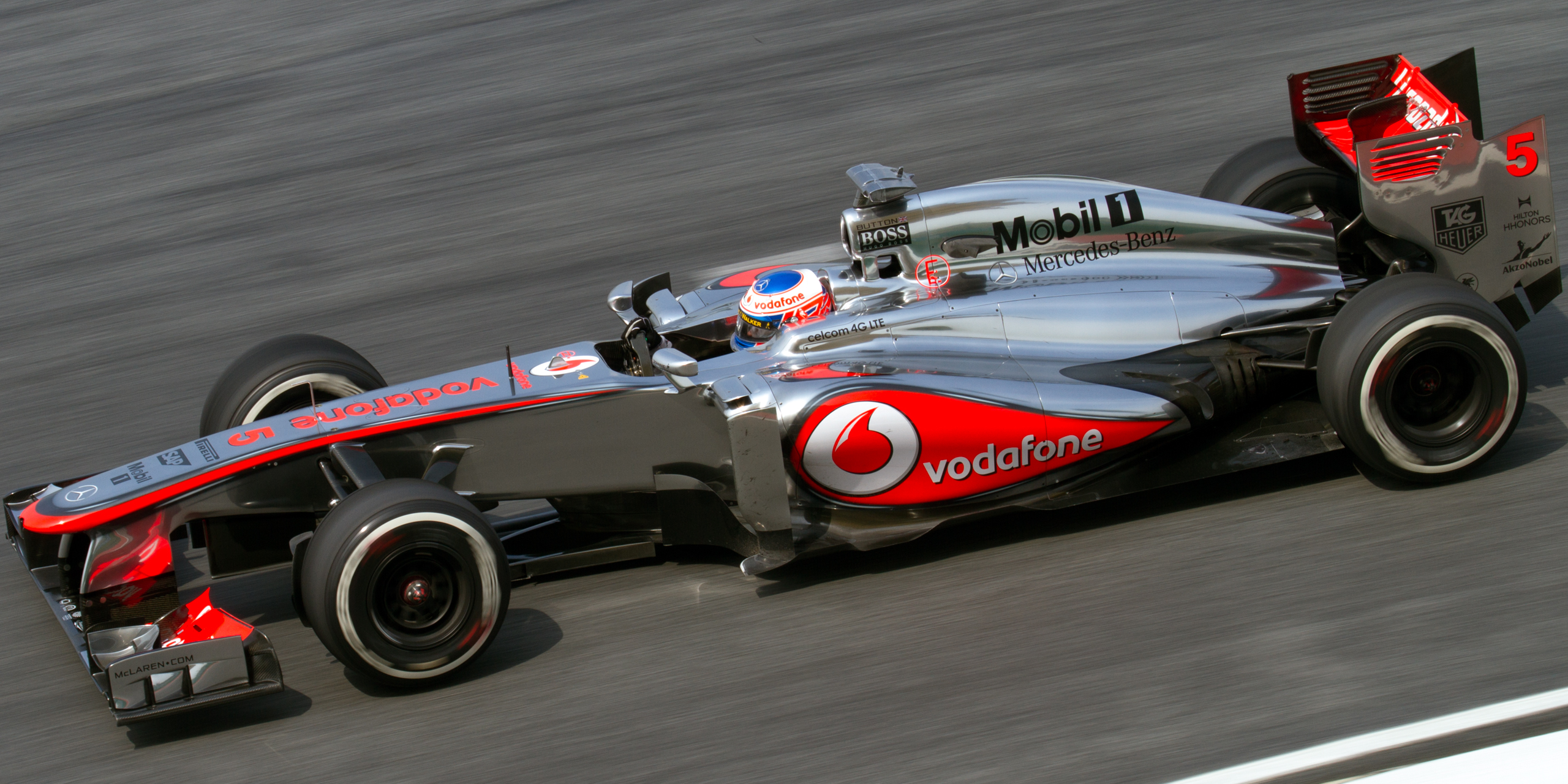
    jenson button, McLaren mercedes, 2013, MalaysiaHopefully, the gleaming silver livery of McLaren will still feature prominently as Honda doesn’t exactly have the best track record when it comes to the design of livery – the 2007 ‘earth dreams’ paint scheme being the perfect example.

    Could this be the dynamic step that McLaren so desperately need to get back on track?

  • Breaking News: McLaren and Honda re-unite

    Breaking News: McLaren and Honda re-unite

    Honda has confirmed that it will return to Formula 1 in 2015 as engine supplier to McLaren.

    The Japanese manufacturer has not competed in F1 since shutting its works team at the end of 2008, but has decided to return as a result of the change to 1.6-litre turbocharged V6 engines.

    It has been known to have been in talks with McLaren for some time and has already made significant progress with design work on its new engine.

    Honda previously supplied McLaren with engines from 1988-1992, winning both the drivers’ and constructors’ championship four times.

    Source: autosport.com
    Photo: Jmex60, cropped/retouched by Morio (Own work) [GFDL or CC-BY-SA-3.0-2.5-2.0-1.0], via Wikimedia Commons