Tag: gene haas

  • F1 2018: Haas and Williams Launch New Challengers

    F1 2018: Haas and Williams Launch New Challengers

    As a new season of Formula 1 approaches the period just before testing commences is the most optimistic time of the year. Right now all new cars are aerodynamically flawless, more powerful than anything that’s ever been built, and lighter than a feather. But all too soon a modest stopwatch will humble them.

    The first team to launch their 2018 car was the Haas F1 team. The American team chose to forego a typical launch and opted instead for to release a handful of images online. The release of digital images was no doubt a ploy be Haas to keep their competitors, quite literally, in the dark as to the nitty-gritty of their 2018 design.

    Nevertheless, what was obvious from the images is that Haas has adopted a strikingly similar side-pod design to what Ferrari pioneered in 2017 and a considerably more intricate front-wing. Additionally, this early version of the Haas is sporting a scaled down version of 2017’s sharkfin and a significant focus on a predominantly white livery. As the technical regulations have remained largely stable and unchanged the changes from 2017 to 2018 cars won’t be as visually obvious. The most noticeable difference is the inclusion of the Halo head protection system. While it is certainly a big adjustment and change to the aesthetic of the car chances are it probably wont take as long as some might think to get used to.

    sirotkinWilliams was the second team to introduce its car with a traditional online launch. Chief technical officer Paddy Lowe and head of aerodynamics Dirk de Beer have designed the FW41. Lowe said the car “has many new features, most of which are not all that obvious, but externally the team has pursued a very different aerodynamic concept which has allowed us some significant progress in aerodynamic performance.”

    “All Formula One cars are an evolution of what has gone before to some extent, but the FW41 does involve a number of departures from the directions that have been pursued in the past. Overall, the philosophy we are starting to see emerge is a new approach to the collaboration between aerodynamics and design to achieve the optimum working result.”

    While only lap times will tell if Williams have built a quick racecar the 2018 challenger undoubtedly looks more aggressive than its predecessor. In addition, the car has been designed with a longer wheelbase, which suggests that Williams have foregone the low-drag design philosophy of the last few years.

    Similar to Haas the Williams also sports the Ferrari-style side pods, which you’re likely to see on more of the mid-field cars this season. Naturally, and so as to avoid giving away any design secrets, some areas of the car has been shrouded in black paint.

    Haas1a_0Beyond the car that has been designed by Williams this season the other big unknown for the team is its driver line up. Nonetheless, de facto team principal Claire Williams has described the driver pairing for Sergey Sirotkin and Lance Stroll as “exciting” while highlighting Sirotkin’s impressive work with the technical team. Paddy Lowe echoed this sentiment by saying that the choice to sign Sirotkin was based purely on his ability.

    The Sauber and Renault teams are the next to launch their respective cars on the 20th of February followed by Ferrari and Mercedes on the 22nd, McLaren on the 23rd, and Toro Rosso on the first day of testing, the 26th of February.

  • 2017 Italian Grand Prix: Friday Press Conference – Part 2

    2017 Italian Grand Prix: Friday Press Conference – Part 2

    PART TWO: TEAM REPRESENTATIVES – Robert FERNLEY (Force India), Claire WILLIAMS (Williams) Gene HAAS (Haas)

    Q: Bob, let’s start with you. We’ve seen the Pérez-Ocon situation escalating from a rivalry to something perhaps more damaging. Does the team feel that you’ve managed it well up to this point – and what can you really realistically do to impose instructions in future situations without favouritism?

    RF: I didn’t think I’d get that question! Our team manages things. The outside judges rather than the inside. From an internal point of view we’re working very closely with the drivers. We’re very blessed to have two very talented and equally very competitive drivers. They’re at different stages of their careers. You will expect, as is often the case in that sport, where you’ve got an elbows-out for a little while, that’s happened. I think it probably reached a crescendo in Spa. I think both of them realise they’ve probably not done themselves any good in terms of their reputation or their careers, and Vijay I’m sure has certainly made sure he tells them that form that point of view. What we need to do is to regroup, which we have done. They’ve been individually talked to. They’ve sat down together. I feel very strongly that they’re intelligent and very, very good team players. They’ve just lost their way a bit – and I don’t expect any problems going forwards.

    Q: Obviously there’s a great opportunity for you this weekend for some big points given that both Red Bulls are going to be starting from the back of the grid. You could be fifth and sixth on Sunday – so you have to execute. Right?

    RF: I think the lady next door to me is looking for that! Absolutely. We’ll both be fighting. It’s a Mercedes track. There’s no question it benefits our power unit and we are going to have to optimise that position and we don’t want anybody making in-roads on that fourth position. We want to consolidate it and that will require both our drivers to deliver.

    Q: Quick final question on this. It’s no secret that both of your drivers are on the wishlists of competitor teams for next season – in some cases the same competitor team. How determined are you to retain them both in 2018?

    RF: I think from our side we are fully committed to retaining them both and that will be our objective. There’s no question of that. But, y’know, driver markets are driver markets and it’s quite right and proper that their managers, and in particular Checo’s manager, is out looking at other programmes. He’s got to keep us on our toes. If he didn’t do that, he wouldn’t be doing his job, and we’ve got to make sure that we close that off and retain him for next year and keep the pairing. It’s a phenomenally exciting pairing. Might be difficult to control a little bit – but I’d like to have that problem.

    Q: Gene, already ahead on points compared to last season with eight races still to go so is it time already to take the next step and what kind of investment does that need to go up to that level?

    Gene HAAS: Well, I’m not comfortable with the points lead we have because I think in any given race we could drop back a position or two in the Constructors’ series because we’re all so close. If anything, I feel a little bit on needles because our biggest problem is execution, minimising mistakes, that seems to be our worst (indistinct) ourselves. We’ve had some component failures we’ve executed poorly and I think we’ve left 15 or more points on the table, even at this point. That’s really where we need to perform is just running a race team with less mistakes, more consistency and that’s what’s going to earn us our points. I think both of our drivers are very very capable racers. I think that they’re much much better racers than they are at practice and qualifying. I know Kevin has shown the ability to sometimes get two to three positions just at the start of the race so he’s an aggressive driver. I think Romain’s more reserved, he knows that you have to finish the race to get the points, so I think the combination of these two drivers bodes well for us in the race but we do need to finish the race.

    Q: Now the Ferrari chairman, Sergio Marchionne, said he would like a team to help develop Ferrari’s junior drivers like Giovanazzi and Leclerc. You seem to have gone the opposite way in driver choices for this year and next, as you’ve just highlighted. Do you rule out working with Ferrari on juniors in the future?

    GH: No, I don’t think we rule it out but from a business model it doesn’t really make a lot of sense. There’s no secret that it costs $60m to put a car on the track for the season and if someone gives you a driver and not just from Ferrari, from anybody, and they’re going to pay you five or six million dollars, there’s $55m deficit there somewhere, so it doesn’t really make sense to want to run let’s say a partner or a paid driver for compensation. I think our point of view has always been that we need to obtain points and that’s how we generate moving forward and making money, so that’s our business model. I think Ferrari respects that and based on that, if there’s some mutual agreement that we could come to we probably would be more open to that.

    Q: Claire, obviously this season’s not gone according to plan and the car just clearly isn’t fast enough is the core of it. The 2018 car will be the first obviously under Paddy Lowe’s technical stewardship, what’s he doing to step things up?

    Claire WILLIAMS: Yeah, as you would expect someone of Paddy’s calibre has a plan and ever since he joined us back in March this year he’s been undertaking a full analysis of the team back at the factory but also the race team operations on the ground trackside in order to understand where the weaknesses lie. We’ve gone through that as a board and now we’re looking at how we allocate resources moving forward into 2018 so that we can address those weaknesses. I think a lot of our weaknesses appeared at the midpoint in last year’s season and we can’t go into another season having the same issues that we’ve had so we have full trust in Paddy but also we’ve brought in a number of other senior personnel to work alongside, so Dirk de Beer heads our aerodynamic department now as well, comes from Ferrari this year to us, and some other senior engineers who are hopefully going to turn things around for us. But as I said, we can’t have another year like this.

    Q: You got a bonus year out of Felipe, is there another year in him or are you casting the net wider for a teammate for Lance Stroll for next year?

    CW: Yeah, Felipe has done a fantastic job like you say, it’s been a bonus year for us. He very kindly came back and he’s really delivered for us. Obviously the past couple of races have been tough for him with his medical issue but we’re through that now  and we’re looking forward to him delivering for the rest of the year and we really just have to wait and see. I think I’ve made it really clear that the team at the moment are focusing on the Constructors’ championship, we need to make sure that we consolidate our P5. I don’t think we’re going to close the gap to Bob, unfortunately, but there’s a lot of teams behind us that would love to overtake us and take that P5 and we can’t afford that, so for us the focus really has to be on track performance at the moment rather than diluting that effort with thoughts about driver line-up so there’s still eight races to go, there’s plenty of time to be thinking about next year.


    QUESTIONS FROM THE FLOOR

    Q: (Inaudible) Question to everybody: on Thursday, there was the launch of the new Formula Two car and it’s pretty similar to a Formula One car. On this occasion, Ross Brawn and Charlie Whiting were saying that the plan for the next years FIA and Formula One is to encourage Formula One teams to work closely with Formula Two teams. Do you think that makes sense from your point of view?

    BF: Well, I think historically we’ve tried to do that anyway. It’s not just a case of working closer with the teams. Usually you have some sort of driver link and that’s the bit that brings the two together so I don’t see any changes to that. Where you can, you support it but to have a direct link between the Formula One team and the Formula Two team is not easy. There are certain people who are doing it very well but all teams can’t embrace it because of the costs.

    CW: Yeah, I probably echo what Bob says really. Obviously we’re all looking at drivers in that championship and if there’s ways in which we can work with teams from that perspective then fine but I think from our perspective as a team at the moment we have our own issues that we need to be concentrating our full efforts on rather than diluting that down again with maybe other projects such as working with a Formula Two team.

    GH: We have an association with several F2 drivers and quite frankly it’s a learning experience but going forward, I think we could see ourselves working closely with the teams as development drivers. That would be a great way of bringing up talent which obviously we need. It would be a great way of maybe bringing up some teams, too.

    Q: (Dan Knutson – Auto Action and Speedsport) There’s been a lot of talk about what direction Formula One should take in the future. Auto manufacturers are interested in Formula E. Where, as representatives of independent teams, do you think F1 should go, bearing in mind road car relevance and also that it has to remain entertaining?

    GH: Well, certainly the battery revolution in cars is among us. I think we have to pay attention to these new drivetrain developments because it’s the future. I wouldn’t be surprised if we do see either more mainstream car companies get involved in this new sport of Formula E. How it relates to Formula One, what we can do, I think… we’re kind of the minnows here so we can’t really drive that technology but certainly today’s engine is somewhat of a hybrid technology, very very similar to the hybrid cars out there. There’s a lot of technology that goes into these cars so I think it’s an exciting new venture. Quite frankly, I don’t think I would mind being in it myself if I understood it better but we have our hands full of Formula One so I think it’s great.

    CW: I think from our perspective and as a business model, looking at it from that perspective I think there are some concerns we would have as an independent team, where Formula One could eventually be heading if we don’t take ownership of that direction now. Obviously we’ve got the manufacturers in our sport who are spending huge amounts of money and then independent teams in the middle that can’t ever dream of achieving that kind of expenditure in Formula One and that delta between our expenditure is creating the situations that we have at the moment in our business, certainly, where we are looking ahead at every year and really trying to make sure that we secure budgets in order just to be sustainable in this sport and that needs to change. There’s a huge amount of money that washes around Formula One and there should be enough for ten teams to be able to compete competitively amongst each other without being four seconds apart on the grid. So from my perspective, I’d really like to see Formula One move in a positive direction from a financial perspective, cost controls and budget caps, and I think that would bring about the entertainment that we need to see remain in Formula One but improving Formula One as well. I think we all want to see Formula One grow and I think the new owners have a handle on that. I think I’m personally really looking forward to seeing what they’re going to bring about from 2018 onwards. From that perspective I think they’ve done some great or brought about some great initiatives this year alone but I think there’s probably more to come and I think we need to grow the sport collaboratively as a whole with everybody’s best interests at heart rather than just a few.

    BF: Yeah, I completely agree with Claire. Force India in particular has been very vocal about the disparity between the top teams and the rest of the grid and you can’t have… we’re almost getting into a two tier championship at the moment where the top three teams are significantly far away from the fourth team and below. And to be able to say well we need to compete… the only way you can compete on that is adding 200m to your budget is quite ridiculous and we need to get that under control.

    Q: (Dieter Rencken – Racing Lines) Taking what the three of you have just said variously in reply to a question, it appears as though Liberty are intent on introducing a budget cap of about $150m by the end of 2020. This will have certain exceptions like engines etc but is $150m or $200m all in; is it actually a realistic figure, can it be policed and what would it do for your individual prospects as race teams compared to the big three or four?

    GH: Well, that would actually be an increase for us so we would fall under that budget cap at the moment. I think the bigger problem though is the bigger teams… I was over at Ferrari yesterday and they have a huge R&D department as I’m sure Mercedes do too and the question is where do these teams go and what they do and that’s even more of a question because they’re the ones that really bring the DNA of Formula One to the track. Formula One is considered to be the ultimate sport and after being in it for a while, I find that’s the most fascinating aspect of it is this technology that they develop and the extent and passion with which a company like Ferrari puts into developing these things. Having a budget cap and suddenly saying that you’re going to have to shelve 500 people is going to be extremely difficult and that’s where the new owners are going to run into some big obstacles when they simply say ‘ah well, here’s your new marching rules.’ If it’s contrary to where a company’s put 50 years into that’s just not going to work so that’s the dilemma they have is, trying to radically change something that’s been around for so long and it’s so firmly put into concrete. You just can’t change it overnight and I’m glad that I don’t have to be part of that decision at the moment.

    CW: There are some points that Gene has made that I would share. I think that it would be very difficult – or will be very difficult – if a cost cap comes in to that degree, $150m for teams like Ferrari and Mercedes and Red Bull to bring down their operations but in the past we’ve operated on those kinds of budgets and I think to say that those teams are the teams that bring the DNA to this sport is just incorrect. I think that teams like Williams are the very fabric of this sport  that we operate in and teams like Williams and Force India, the independents that have been in this sport for 40 years and delivered a huge amount of technology that have had benefits to other industries as a result, need to be protected as well. So from my perspective of course we would be absolutely behind the cost cap whatever that may be but from my perspective equally, I would want to see it come in a lot sooner than that.

    BF: We would want it to come in as soon as possible. The 150m is above our budget but I’d much rather be able to say that Force India was capable of bridging the deficit of 30m than 200m which is where it is at the moment, and I think it’s very important, I think, for the sport to have five or six teams that are capable of achieving a podium on merit. At the moment, that’s not possible. Even the top fourth, fifth and sixth teams are only capable of getting it on opportunity at this point and we need to be able to change that round to make the sport the spectacle that it is and to give the competition there. Teams like Mercedes, Ferrari, Red Bull will always have the advantage in terms of the fact that drivers’ salaries will be out of that budget cap and they will have the money to spend on the better drivers, but it means that we’re going to be to be looking at talented drivers which means we’re bringing through drivers and drivers become one of the key elements then going forward which to me is very very important.

    Q: (Ysef Harding – Xiro Xone News) Gene, the work that your foundation has done, the Gene Haas Foundation which has provided scholarships for young people and their communities, I was curious to know, are you planning to expand or have plans to expand that scholarship programme into your team, to where those young people would be interested in aerospace or engineering or want to get a position in F1?

    GH: Well, the foundation primarily funds the projects in relationship to community projects of teaching young people about manufacturing with an emphasis on machining. Whether a person decides to build race cars or rocket ships or simply work on next generation cars is fully up to them and I try not to… I don’t spend any of our foundation money particularly on racing. We are working in collaboration with Dallara and Ferrari on trying to set up a school that teaches, like, say, five axis machining so that’s probably as close as we’ve got into that so it’s mainly there to teach young people about manufacturing in today’s world and I can look at the racing as being a subset of that but not a primary goal to teach kids about racing. That’s the way we’re running it and that’s probably the way it will continue.

    Q: (Peter Hartig – BMF1) This has nothing to do with economy: Gene, at the magazine, we noticed that you tried the F1 experience so I have two questions for you: how was it to sit to ride on the back of a V10, beautiful noisy V10? And by the way, how is the back of your neck?

    GH: You know, I’ll tell you what, it’s exactly what they say: it’s an F1 experience. I think pulling out of the garage and the acceleration, going through gears, it just throws you in the back and then you come into turn one and your whole body goes to the… you know, slams into the front of the car. I never experienced that and then it feels like you’re pulling 5G side load going through the turns and quite frankly, I started to feel a little queasy doing that. It’s a heck of an experience, I would highly recommend it if you’re a thrill seeker but being an F1 driver is not easy. I don’t think I would ever want to be able to do that because to do that for 50 laps, that must just take the life out of you. It’s exciting, it’s a real experience and they did a great job, from everything from bringing you into the experience with the suit, the helmet, bolting you into the car, it’s all very very nicely done. I say I was pretty much exhausted by the time I got out of the car. It didn’t bother my neck at all. It didn’t bother it at all.

  • 2017 Monaco GP: Thursday Press Conference – Part 2

    2017 Monaco GP: Thursday Press Conference – Part 2

    PART TWO: TEAM REPRESENTATIVES – Jonathan NEALE (McLaren), Gene HAAS (Haas), Franz TOST (Toro Rosso)

    Q: Jonathan, can we start with you? P11 and P12 in free practice and Jenson Button, not having sat in a Formula One car for six months or something is three one hundredths of a second slower than Stoffel Vandoorne. Tell us about your day?

    Jonathan NEALE: Yeah, it’s been a good day for us. We’ve run problem-free, which is nice. Everything that we brought in terms of changes to the car seem to be OK, from what I know, we’re still crunching some of the data. There’s certainly some more lap time to come. I think the drivers are some way off the limit at the moment. It was nice to see some confidence in Stoffel and rookie JB back in the car is good, yeah.

    Q: So it’s the race of two worlds you’re calling it this weekend. It’s going pretty well so far for Fernando Alonso starting fifth on the grid for the Indianapolis 500. But here in Monaco the pressure is kind of on Jenson and Stoffel a bit after Sauber got those points in Spain. You don’t want to be sitting there in P10 with zero points for much longer, so you’ve got to turn this into some points haven’t you?

    JN: That would always be the aim, but looking at a couple of points here or there, or whether it’s P10 of P9, yes, it’s a matter of fact but our issues are larger than that. We came off P6 at the end of last year, should have made a step forward and didn’t and that’s far and away the biggest issue, which is what we’re working on. Without being too discounting about it, we’re taking those issues much more seriously than that. But here, where anything can happen and with a car where perhaps some of the power unit plays less of a determining role, it’s exciting to see what we can do.

    Q: So finally, what is the latest on Honda’s recovery strategy? When will see a significant step in performance and reliability from them?

    JN: I think that’s something that’s better addressed by Honda actually. Let’s see what happens; let them talk about their plans.

    Q: Gene, coming to you, your second Monaco Grand Prix as a Formula One team boss. How have you analysed the value of your presence in Formula One to your business, as obviously that’s why you came in? And what do you make of the new owners of Formula One and their push to get a second US Grand Prix and maybe even more than that?

    Gene HAAS: Well, I think the new owners are doing everything correctly that I see. They’ve visited us several times in our hospitality suite, so they’re making an effort to find out what we think is important and ask our opinion. They seem to have lots of ideas. Some of them are becoming more evident, small ones, more access to video clips and things. I think all of that is very, very positive. As far as the relationship to my business, it’s given us an impact, a notoriety. It’s a premium product and we associate a premium machine tool with a premium product, so I think that’s good. It’s a long-term strategy. We are more here to learn than to race at the moment. As we go forward… it’s a process. I’m very happy where we are right now. I don’t really know what the future holds, but right now we’re content.

    Q: Now a bit like Jonathan, you’re also racing in two worlds, you’re at Charlotte this weekend with your NASCAR team. There’s clearly a lot of focus on Indianapolis as well, so what do you think of Fernando Alonso’s performance so far on his first experience on an oval? You’re very experienced with ovals, so you’re probably best qualified to judge how impressive his performance has been so far.

    GH: Well, I can’t speak in terms of what a race car driver would think about Indy, but I do know that it’s a very, very nerve-racking type of drive. You’re basically talking 230mph on the straightaways and you slow down to 225mph in the turns. Most Formula One driver don’t experience that, with very little grip. The way you set up the cars is you put a lot of grip in there and then they keep removing it until the driver just can’t stand it anymore, because he thinks he’s going to hit the wall. So it’s an incremental process very unlike what you would find in Formula One. That kind of racing I think is different. One driver once explained it as like driving on black ice. Trying to control a car that’s on the verge of spinning out all of the time is not easy to do. I think it’s great. I think everybody wants to see how a Formula One driver does in Indy, just as much as they would like to see NASCAR drivers in Formula One.

    Q: Franz, P4 and P5 today in free practice, out on the track the car looks nice and supple. Are you feeling optimistic this weekend?

    Franz TOST: Yeah, I think we have a very competitive package together. The car works well. We found a really good set-up here for Monaco. Both drivers like Monaco, they’re also experienced and I hope that we can repeat this performance on Saturday as well as on Sunday because this is what counts.

    Q: Obviously it comes off the back of a double points finish in Spain but it looks like you could still do with a bit more horsepower; when do you expect some more from the Renault upgrade coming along?

    FT: We will see. Renault is making some small steps. First of all, they have to get everything under control from the reliability side. We must not forget that Renault came up with a completely new design of an engine and this takes time. We all know that the power unit now is very very complicated and I’m convinced that within the second half of the season they will provide us with a very good, powerful engine. I must say that so far we are quite happy with the performance with Renault.

    Q: So there’s no frustration there, because obviously you went from last year having an old spec engine that wasn’t going to develop and you’ve gone to something you thought was going to be… there’s no sense of frustration here, you can wait to the second half of the season can you?

    FT: No, there’s no frustration. It always depends where you are coming from. Last year we had a one year-old engine and now we are even happy to have this year’s engine and as I just mentioned before, I’m convinced that Renault will do the steps forward which they promised.

    QUESTIONS FROM THE FLOOR

    Q: (Peter Farkas – Auto Motor) Jonathan, could you please share some details of how well Jenson has settled back into the rhythm and how different he found the car from last year’s car and what did he say after the first few laps?

    JN: Great questions. So I think the… Jenson elected not to do the test after Bahrain because he was confident enough in the simulation tools. I think as well the car is still and was then developing quite quickly so whatever he got into and adjusted to was subsequently going to be different again by the time we got to Monaco. So he’s been in and… you know, Jenson’s been with us for some time now so we know the pattern, the rhythm and how he likes to set himself and the car up, so we’ve had several simulator sessions, seat fits, system checks, just sort of running through the basics. He’s a World Champion, so we don’t need to do that much so that feel and that competitiveness is still there. He’s a relaxed individual until you get him in the car, put somebody next to him who’s close in  terms of speed and then the internal competition starts and that’s fun for the garage as well as for the fans. In terms of from last year to this year, of course the cars are wider but everybody apart from one this morning was off the barriers. I think that there’s still quite a bit to come from both drivers and from the car but there’s so much more downforce this year compared to last year so the brake points are all completely different. But as he said before he came in, he’s having fun and as he said it’s fun to be in the car. He was going to be with us but it’s a lot more fun driving than just sitting on the side.

    Q: (Dan Knutson – Auto Action and Speedsport) Gene, towards the end of last  season, you jokingly said that if you had known how difficult F1 was you might not have entered. The team knows the ropes a lot better now, but is it a case of actually being more difficult because the more you know, the more you realise what a challenge it is?

    GH: Yes, I really didn’t know the depth of the technical challenges in Formula One and probably like most of the fans, they really don’t know how complex these cars are but it’s intriguing, it’s fun to get involved in it. We have great partners and I think we’re doing OK. We were a little bit lucky last year and now our luck has got more normal, it’s more normal luck that you typically have in racing so it’s a challenge. It’s very hard competing against some of these… all these teams, they’re all very good at what they do. We’re weak in areas like tyre strategy and we’re a little weak in our pit areas. We get caught behind cars that cost us positions. All these ten little things that all add up to a tenth of a second. That’s really where we lose a lot of time and I think that as we develop, we get better at that.

    Q: (Silvia Arias – Parabrisas) For Mr Jonathan Neale: is there any possibility that we’re going to see Jenson next year if Fernando retires at the end of the year?

    JN: I think that’s really a question for Jenson. I think in the recent media, Jenson’s been saying that this is a one-off. It’s a question for Jenson. In terms of speculating about what he feels at the end of the season, or what might happen to Fernando, maybe it’s just that, it’s speculation.

    Q: (Dieter Rencken – Racing Lines) There have been suggestions from Liberty that they’re going to move away from a fixed-term contract, Concorde-type agreement into an open-ended partnership or constitution, possibly even with equitable revenue distribution. How do you feel about this and how will this impact on your teams?

    FT: If we get more money I’m more than fine.

    GH: I understand that the new owners are typically going to do what new owners do: go out and raise revenue and cut costs and that’s exactly what they’ll do and since we’re on the cost side of it, it’s a little nerve-wracking what they have in mind. On the other hand, F1 is kind of a crown jewel so maybe they’ll tread lightly  and everything will work itself out.

    JN: Yeah, I think it’s a question of… if you look back over 15 or 20 years then Formula One as an investment, as an entity, has done very well for itself, but what got us here won’t get us there. The world is changing, the business is changing, the nature of partnerships, commerciality is changing and I think for some time a number of us, yourself included Dieter, have looked at the grid: well how many sustainable business models are there, in terms of the teams’ structure, forget the FOM side of things, just the teams structure? We know that there have been pressures in that sustainability. To your point about whether some read baseline of the cost structure or the income line grows as has been said by my colleagues here, then I think it’s a question of looking at the package as a whole and I think that’s what the new owners are doing which I think is really exciting. I think they’ve got the right people – by the looks of it – around the table but if Formula One does what Formula One has historically done, which is: see the big picture and then take a very narrow fix and do a one thing and then wonder why the consequences over here were not what was expected, then I think it will be extremely difficult and very challenging but it looks to me like the whole thing has been thought out and we’ll see what gets put to us. But we’re open-minded and I think generally supportive of the way that the Liberty guys and the new owners are going because we recognise that what has been has had its time I think.

    Q: (Dieter Rencken – Racing Lines) Gene, that comment of yours that what they have in mind is nerve-wracking – sorry, could you expand on that please, it’s rather an intriguing comment you made?

    GH: You know most savvy businessmen in the US are public companies and it’s bottom line, let’s face it, it is very much to it but since we’re the newcomers in this business, our revenue stream from Formula One is nothing so anything we get will be greatly appreciated but I think we just have to be very very careful in how you redistribute the wealth because there are some teams at the top that have spent fifty years doing this, that have earned some entitlement to how the costs are distributed. I’m not saying that the teams at the bottom don’t deserve more but I’m still saying teams at the top deserve more. You can’t just arbitrarily redistribute that because quite frankly winning races should come with rewards and it should not be a socialistic type structure. Other than that, everything else is open to negotiation but I think in racing, even in NASCAR we’re having struggles with that. The team owners are typically on the bottom rung of the income stream and they’re struggling – as viewership goes down, sponsors go down. It’s been very very difficult in NASCAR and I think to some degree that teams that rely on sponsorship are starting to find it’s very very difficult to attract a major sponsor. A $25m sponsor is a huge sponsor. Today, that is practically non-existent. Most of the sponsors – at least I know from NASCAR, they’re more in the $5m to $10m range and you have to have multiple sponsors on your cars at different races. There’s some adaptability to that but at the same time there’s a lot of demand from media, so how that money gets redistributed seems to be the question but unfortunately the teams don’t have a real strong position there to speak up about how it will get distributed because we don’t own Formula One.

    Q: (Peter Farkas – Auto Motor) Sorry, this is more of a technical question maybe but are this year’s tyres even more tricky to manage than last year’s, because they were supposed to be a bit easier to manage but there are lots of complaints, from team to team, that they are very hard to get into the temperature window? Is it just a new challenge and it’s alright or it’s a bit like playing roulette, it’s too arbitrary?

    JN: I don’t think it’s… it’s easy to get it wrong but I don’t think it’s the tyre issue. We don’t find it particularly challenging. Sometimes when we’ve brought a harder compound – I mean the medium compound in Barcelona, on the nature of that tarmac was a bit trickier to get to work but I don’t think the tyres are a big or detrimental story to Formula One this year. I think the racing’s been good, I think the general direction of the technical regulations in introducing more downforce was the right thing to do and closing up the gap on the power unit manufacturers… I think that’s been the… it’s still the dominant stories. I don’t think tyres are an issue for us.

    FT: The tyres are a challenge, to understand them, how they work, but it’s good for the engineers as well as for the drivers to find out in which window they can get their earliest peak and they can get the most out of it. But in motor sports they have to understand the tyre because it’s a performance differentiator and therefore I can only say positive (things) about Pirelli because in my opinion they do a good job and today I saw the same for all the teams and we have to find the best possible solution and get the most out of it. And there are always complaints; either they are too soft or they are too hard or this or that. Forget it, they should sit in the car and should push. That’s it.

    GH: Well, in Barcelona, when the safety car came out, we came in and we went on the medium tyres which were about a second slower than the softs and we stayed way too long on the medium tyres and we feel that cost us a chance at some points. We had done some degradation testing in the pre-practices but we didn’t get enough time on them, we only got like five or ten laps but if we had a better tyre strategy we would have stayed out on the mediums a very short time. The tyres do have a lot of differences between the different ones that are available and you have to know how to gauge that in order to make time. As much as the tyres are very good, tyre strategy is key.

  • F1 2017: Chinese Gp Preview – China Set For Mercedes Reaction

    F1 2017: Chinese Gp Preview – China Set For Mercedes Reaction

    From the quaint streets of the Albert Park circuit in Australia the Formula 1 paddock heads the grand architecture of the Shanghai International circuit in China for the second round of the 2017 season.

    Remarkably, F1’s latest visit to China marks the 14th year that the Shanghai circuit has been on the calendar. There is a bit of history about the circuit too. Its inaugural race in 2004 was won by then Ferrari driver Rubens Barrichello and in 2006 Michael Schumacher scored what would be his 91st and final victory. A year later Kimi Raikkonen’s win in changeable conditions would set up an unlikely championship triumph while, in 2012, the Chinese grand prix was also the very first race win for the reigning champion Nico Rosberg.

    Nevertheless, while these stats and victories remain firmly in the history books the 2017 crop arrives with what is still very much an era in its infancy. While Ferrari has won the first race of the season the Shanghai International circuit demands a far different type of car performance. For one, this circuit is far more front limited which means that a car will need to work well with its front tyres to set competitive lap times. The tyres too will be tested more than in Australia as the Chinese circuit is far more abrasive.

    Tyre wear may prove to be a significant factor, especially for Mercedes. It was this issue that Lewis Hamilton singled out as the reason for his defeat by Sebastian Vettel and Ferrari. What’s more, in Australia it was clear that Mercedes W08 is not as comfortable following other cars as the Ferrari appears to be which, by itself, can substantially influence tyre degradation and wear.

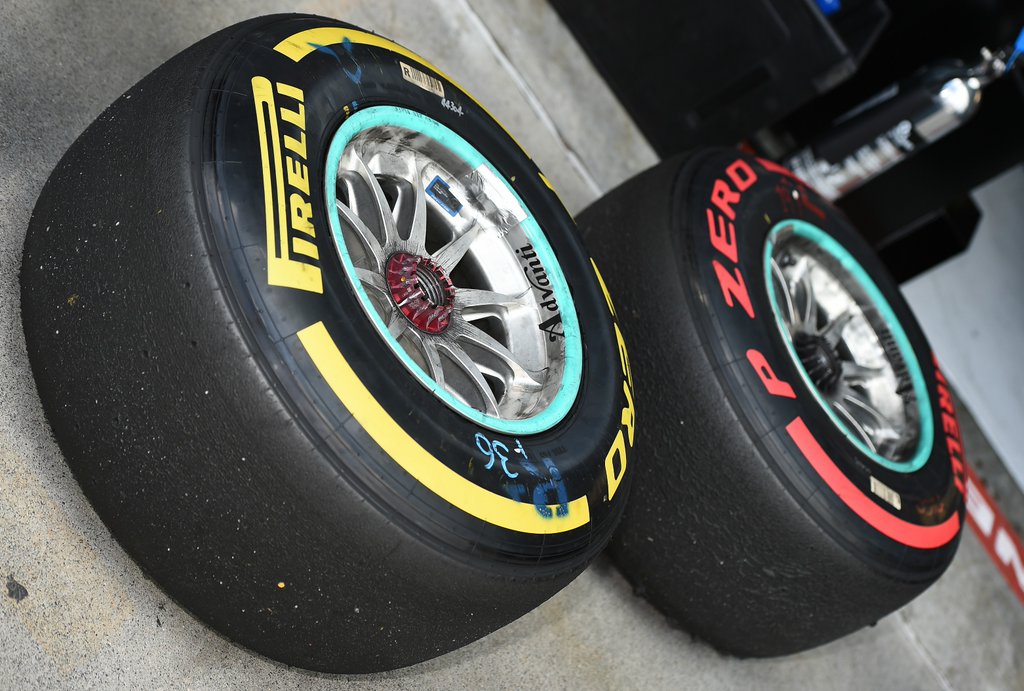
    Driver tyre choices for Chinese Grand PrixHowever, these aren’t the only issues Mercedes are facing and the team has admitted that it needs to reduce the weight of its 2017 car. An overweight car not only costs lap time but also takes away the teams ability to position ballast in the car to aid handling. What’s more, Haas team principal Guenter Steiner thinks that Ferrari’s 2017 power unit might be on a par with than that of Mercedes, if not better. The make up of the Chinese circuit, which includes several high speed corners, and long straits, will be a good test of Steiner’s theory.

    But by no means is Mercedes ruled out of taking the top step of podium this weekend. The prediction of fairly low temperatures for the race weekend will be in their favour as cooler condition will mean less overheating of their tyres. But they’ll have to work hard if they are to withstand the threat of Ferrari. For Red Bull the fight is highly unlikely to be for the podium considering the deficit of the Renault engine to that of Mercedes and Ferrari.

    Shanghai_F1_Circui_01Several critics have railed about the difficultly of overtaking in 2017. The detractors felt vindicated by the overall lack of overtaking in Australia but Albert Park, as a semi-street circuit, is not the best barometer in this case. While the jury is still out in what is still a fairly immature point of the season the Shanghai International circuit, thanks to its two long straits, will offer more overtaking opportunities. It will not be definitive but it will begin to reveal how easy or difficult overtaking will be in 2017.

    Since the start of the hybrid era in 2014 Mercedes have been an unstoppable juggernaut only rarely tripped up by themselves. In these three years the world has witnessed how the Mercedes team runs and conducts itself as the dominant force. At the start of 2017 they are by no means down and out but are, at the very least, perceived to be ever so slightly on the back foot. Therefore, it will be fascinating to observe how they respond.

  • Red Bull, Haas, and Toro Rosso Launch 2017 Challengers

    Red Bull, Haas, and Toro Rosso Launch 2017 Challengers

    No less than three Formula 1 teams launched their 2017 challengers on the 26th of February.

    On the eve of the commencement of official testing in Barcelona, Spain Red Bull Racing, Haas F1, and Scuderia Toro Rosso took the opportunity to launch their new-for-2017 F1 cars.

    Red Bull Racing’s RB13

    Red Bull was first out of the gate with a short and sweet pre-recorded clip released on several social media sites. The premise of Red Bull’s launch video centered on superstition as 2017 car is the 13th built by the Austrian team. The RB13 retains, mostly, the same livery as in 2016 with subtle changes including a bit more red than is normally present. Nevertheless, the matte finish, introduced, in 2016 has been maintained for the new season. Along with the launch of the RB13 the team touted a new hashtag playing up the connotations of the number 13.

    “We are like a swan on the surface and paddling furiously underneath but that is the same as every preseason so generally we are on target,” said Team Principal Christian Horner.

    Chief Engineering Officer Rob Marshall said: “The car is expected to be between three and five seconds a lap faster and most of that gain will come through cornering speeds where the increased downforce on the car will mean the car will go around the corners quicker.”


    Haas F1 Launches the VF-17

    VF17_RIGHT_FRONT_TQA day after filming day pictures were leaked on Twitter, the Haas Formula One team launched their 2017 contender the VF-17.

    In their second year in Formula 1 and their first rule change, the Haas F1 team had a monumental task ahead of them in developing their 2017 car.

    After starting very well in 2016 their season tapered off and although picking up some points they did not finish the 2016 season as strongly as they started.

    The 2017 car with some major changes seems promising for the Kanapolis based team in their mid field fight.

    “I think the pedal box is the same, but all the rest is very different from last year’s car,” said Guenther Steiner, Team Principal of Haas F1.

    “You always try to make a faster car, which is normally a lighter car. Now we can put on more ballast and get better weight distribution.

    “The aero is completely new, as are the tires, so we needed to have some built-in adjustability.

    “Aesthetically, the car has a more aggressive look. It’s lighter and more aerodynamically efficient. Everything we learned from our first car has been applied to our new car.”


    Scuderia Toro Rosso’s STR12

    Toro Rosso was the last team to launch their car for the 2017 season. The launch took place at the Circuit de Catalunya a day before the first day of the pre-season test.

    Toro Rosso unveiled their new car the STR12 with a striking new blue and chrome livery. We at F1Madness think that this is the best livery from all the teams.

    Speaking about the new car, Technical Director James Key says that the 2017 rule changes are the biggest changes he’s seen on a car that he can remember.

    “In my 20 years in F1 it’s the biggest chassis change I can remember,” said James Key.

    “In ’98 the narrow track had just arrived and there were various tweaks up to 2009, when a larger change occurred, but other than the front wing it was still based around principles that we knew. These rules however, include a track change, significantly different tyres and a new aero regulation as well.

    “From a chassis point of view it’s all encompassing with a lot of new things to learn.”

    Key believes that teams now have more aerodynamic freedom with car development this season.

    “It’s nice to have a bit more freedom. We probably haven’t had as many aerodynamic tools to play with since 2008, But then the rules tightened up in 2009 and even further in 2014. Now, some freedom has returned and that’s a great challenge for the aero department.”

    Toro Rosso are expecting more this year after switching to Renault Power Units and feel that after last years turn around they can finish higher in the points this season.


  • F1 2016: Mid-season Review

    F1 2016: Mid-season Review

    Formula 1 is two weeks into its mid-season break, which provides the perfect occasion to reflect on the first half of 2016.

    Mercedes brilliant but not without bruises

    The reigning champions rocketed out of the starting gate in 2016 and haven’t faced a consistently noteworthy challenge from anyone. Nico Rosberg obliterated the competition with four victories in a row and built a commanding lead over teammate Lewis Hamilton in the driver’s standings.

    It appeared that Rosberg had finally mastered his mental demons and would make a serious bid for championship glory. But Lewis Hamilton was calm the face of Rosberg’s domination and sometimes even a bit detached from his points deficit. Nearly a decade and several clutch moments in the sport provided Hamilton with an abundance of experience and the knowledge that the championship was far from out of reach.

    He not only closed the gap but also took over the lead on the driver’s table going into the break. The nagging question about Rosberg’s psychological toughness has roared back to life especially after that controversial collision with Hamilton in Spain and Austria.

    While Rosberg and Hamilton rub carbon fibre instead of wheels Toto Wolff and co has threatened to enforce team-orders. But this is unlikely to happen, as neither driver will accept it. The championship is far from over but it’s clear that right now Hamilton has the edge on form and crucially in mentality.

    Spanish Grand Prix, podiumRed Bull storm back into contention

    The team started the season with Daniel Ricciardo and Daniil Kvyat in the cockpit of a car seriously lacking in grunt. Two vital changes turned the season around for the Austrian team. First, Kvyat was demoted to Toro Rosso in favour of Max Verstappen. The young Dutchmen immediately repaid the faith but winning the Spanish grand prix.

    The second big change came in the form of a power unit upgrade from Renault. It not only catapulted Red Bull past Ferrari on pace but summarily halved the gap to Mercedes. Yes, there is still work to be done for Red Bull to be serious competition for Mercedes but the manner in which they’ve recovered their 2016 season is an impressive feat.

    Ferrari stutter

    In pre-season testing the Italian team looked set to challenge for victories and perhaps even a championship title if thing well, it didn’t. In Australia the wrong strategy call kept Sebastian Vettel from victory. Several dubious and costly strategy calls would follow throughout the first half of the season.

    With that several gearbox penalties dogged particularly Vettel as he started race after the race down the grid. Team principal Maurizio Arrivabene finally admitted that their aggressive approach might have cost them points on reliability.

    But the biggest blow came with the departure of chief technical director James Alison. Whatever the reason for Alison leaving the team it’s never a good sign when a senior member leaves a team midway through a season. Rumours are abounding that Ferrari are trying to bring Paddy Lowe and James Key into the stable.  However, while both these men as exceptional at their respective jobs bringing them in at this point is unlikely to have a significant impact.

    Ferrari is flailing in a manner that is unbecoming to its history and the only reason why it’s not being called catastrophic is because of their two drivers who somehow wring results out of their car.

    McLaren moving forward

    McLaren-Honda Canadian Grand PrixHonda has slowly but surely started to claw its way up the grid. Both Fernando Alonso and Jenson Button making regular appearance in the top 10 of qualifying and scoring the odd handful of points.

    Though it’s still not where either of these champions want to be the Japanese manufacturer is doing just enough to keep Alonso and Button satisfied and believing that 2017 may be their year.

    Haas’ good start fades

    The American Haas team started the F1 season in spectacular fashion with Romain Grosjean. Several solid point scoring races and brilliant strategy calls belied the fact that this was a new team in Formula 1.

    However, as the season progressed so the good times were consigned to the past. As other mid-field teams like Force India began to move forward and evolve their cars Haas seemed to stumble. Gone were the regular points scores to be replaced by a confused and frustrated Frenchman over the radio.

    The good news for Haas is that Esteban Gutierrez’ performances have improved from the start of the season. There also isn’t an impression of negativity from the pitwall or the team boss. They are well aware that trying to hack it as a new team in F1 is a difficult prospect. They’re keeping their eye firmly on the ball and that’s what matters.

    Force India resurgence

    Motor Racing - Formula One World Championship - Hungarian Grand Prix - Qualifying Day - Budapest, HungaryThe season started rather mundanely for Nico Hulkenberg and Sergio Perez. But a genuine improvement has allowed the team to close the gap to Williams in the constructor’s championship.

    While Sergio Perez has scored two podiums Hulkenberg has none. Some would be surprised at this stat as Hulkenberg is so highly regarded in the paddock. If the team can keep the car competitive in the mid-field the fights between its two drivers should develop into one worth keeping an eye on.

    The F1 season returns 26 August with the Belgium grand prix.

  • 2016 Formula 1 European Grans Prix: Friday Press Conference

    2016 Formula 1 European Grans Prix: Friday Press Conference

    TEAM REPRESENTATIVES:

    Frédéric VASSEUR (Renault)

    Roberto BOCCAFOGLI (Pirelli)

    Eric BOULLIER (McLaren)

    Gene HAAS (Haas)

    Toto WOLFF (Mercedes)

    Claire WILLIAMS (Williams)


    PRESS CONFERENCE

    If I could start with you Eric: you had both cars in the points in Monaco a couple of races ago but it was a tougher race for you in Montreal. How do you reflect on the team’s performance in Canada?
    Eric BOULLIER: We know obviously that some track layouts are suiting are package, chassis, power unit, and some others are not. Clearly you have a long straight line in Montreal and downforce level obviously different from the other track layouts, so you have to specifically design your downforce levels there. Conditions were better for us on one lap on Friday and Saturday but the race was a bit difficult and we had also a slow stop due to a technical issue. But I think we are still on the move and proving every weekend that we are improving by bringing more updates and I think this is a positive.

    Well, where do you go from here? IN terms of development, the drivers want you to keep pushing for 2016, but is the prudent thing to focus on 2017 now?
    EB: I think you still have to mix both of them. We don’t want to stop developing this year’s car. Even if there is a strong change for next year into the technical regulations I think we can still carry over some of the development we are having now.
    Thank you. Gene, if I could come to you: Esteban Gutierrez appears to be growing in confidence while Romain Grosjean has struggled a little bit more in recent races. How do you explain the shift in performance between your two drivers?
    Gene HAAS: I think a lot of it is just the learning curve of trying to get the tyres to work. We’ve struggled with tyre temperatures. We’ve had issues when the Safety Car comes out that once the tyres come out of their optimum temperature we just lose pace rather quickly. So that’s probably the biggest problem – trying to maintain the tyre temperatures, especially when you’re in back of the pack where you’re always going to be a few seconds off the leaders and that differential makes a huge impact on how hard the tyres are worked and also their temperature.

    You had an emphatic start to the season, but your last points finish was in Russia and after a strong start to the campaign do you feel that you are now starting to lose out in the development race?
    GH: No, not really. Actually, I think the team is coalescing together quite well. There’s no more scrambling to figure out why this didn’t work or that didn’t work. We had a lot of problems with the simple things like radio communications and electrical boxes and at the last few races we don’t have those issues anymore. So they’re starting to sort out how the cars work, what it takes to put them together. So I think I feel very, very comfortable with the progress the team is making.

    Thank you. Frédéric, you’ve said on many occasions that this is a transitional year for Renault, but only the one points finish so far, so how do you assess the team’s performance?
    Frédéric VASSEUR: To be honest, even if I told you it is a transition year, we have to stay focused and don’t give up the season. It’s very important to keep everybody under pressure. For sure the last two races were a bit difficult and we had too many issues. But we are on a good improving curve and I’m sure we will be quite soon.

    Those issues that you refer to in the last couple of races: both drivers had accidents, unfortunate, but how do you sum up the job that Kevin Magnussen and Jolyon Palmer are doing for you?
    FV: You don’t have to forget that Jo is a rookie and Kev didn’t run last year and I think so far they did a good job. For sure we had some crashes over the last weekend but so far they did a good job. I think they are improving in terms of collaboration with the team and we are on a good direction.

    Roberto, today the FIA has rubber-stamped Pirelli’s new three-year deal with Formula One. What does that mean for both Pirelli and the sport?
    Roberto BOCCAFOGLI: For Pirelli it means a big satisfaction of course. As we can imagine it is the final step of a very long path. We know already for quite a long time that we are remaining in Formula One for the next three years, but when it gets ‘officialised’ by the FIA it gets really true. Now it is. We found a very good agreement, a very good collaboration. Everybody knows that next season many new things will be happening in Formula One from the technical point of view and also many modifications are very strongly related to the new tyres for next year. We are ready to start our job, which is a very important job for next season.

    Well, you gave us a glimpse of those tyres at the Monaco Grand Prix a few weeks back. What can you tell us about the testing programme that you are going to do with the 2017 tyres for the remainder of this season?
    RB: With the 2017 tyres things are still to start. They are expected to start for possibly, for us, hopefully, in August, very shortly after the grand prix in Hockenheim. We have 25 days’ testing with these wider tyres. As everybody knows we will start with three teams. Many details still need to be fixed but we know the three teams are Ferrari, Mercedes and Red Bull. We should be starting very early in August and then we should be testing again immediately in September before going away from the long hauls to the east and to America and possibly a last testing session by the end of the championship. It is a very big job to be done.

    Thank you. Claire if I could come on to you please. It was a frustrating start to the season in many ways fro Williams, so how much of a shot in the arm was Valtteri’s podium last weekend in Canada?
    Claire WILLIAMS: Yeah, it was great for everybody in the team to have that. It’s been a long time coming. I wasn’t there, so I was gutted. I did tell Valtteri not to dare get a podium in Canada if I wasn’t there, but he did and it was great for the team to have that and I think we have come here really much more motivated. This hopefully will be a good race for us as well. We’ve got a string of races coming up where the circuits will all suit our car, so hopefully we’ll have a positive few races in the next ones to come.
    Q: Let’s talk about third place in the Constructors’ Championship. You currently lie fourth, 49 points behind Red Bull Racing. Do you feel you have to strike now, at these tracks that you’ve just mentioned if you’re going to stand a chance of regaining that third place?

    CW: Yeah, I think we absolutely have to capitalise on these races: this one here and then obviously the ones coming up in Austria, Silverstone, etcetera. They will suit our car and we have to make the most of it. But then that’s not to say we haven’t got to ensure we have a chassis that can compete competitively at all the circuits so that we can take the fight to Red Bull. Obviously all the work’s still going on in the factory to make sure the car remains competitive – or as competitive as it can be for the remaining rounds. Because we do want to take the fight to Red Bull. We aren’t happy lying in fourth. Unfortunately that gap’s opened up a little bit but we have to work hard and make sure we can keep closing that gap and taking the fight to them.

    Q: Toto, both of your cars were passed by Sebastian Vettel at the start of the Canadian Grand Prix. Can you just talk up through what went wrong and why with both of your cars?
    Toto WOLFF: The purpose of the change in regulation last year was to make the starts more unpredictable and more variable – and this is exactly what’s happening. You cannot see a pattern throughout the field that some teams always get it right or some teams always get it wrong. We have had some amazing starts before Montréal and in Montréal both of the cars didn’t really have a good getaway. This is now the nature of the sport. Having said that, you still need to optimise – and there is room for optimisation in the clutches and its operation and the execution with the drivers, all needing to remember it’s a tricky operation. But we’re working on it.

    Q: We’ve seen in the last few races a momentum swing from Nico Rosberg’s side of the garage towards Lewis Hamilton. After Nico’s strong start to the season, how do you feel he’s coping with his current difficulties?
    TW: We always have the discussion that if one wins and the other one doesn’t, is there the change of momentum or has the balance swung? It didn’t. As a matter of fact, both of them are very close: Nico had a brilliant run, winning seven races in a row and it was clear that would eventually stop, and it did. And the balance has swung more towards the direction of Lewis and some of the other drivers and that’s normal: it doesn’t mean that he’s going to fall into depression because it doesn’t continue. These guys are very professional and they don’t swing a lot emotionally or mentally – so I have no doubt it is not a big issue for him.

    Q: Is there any evidence the current contract negotiations are weighing on Nico’s mind?
    TW: No, first of all he had a brilliant adviser who is pretty experienced in negotiating good contacts, and that was very clever because he took himself out of it and I don’t think it affects him at all.

    QUESTIONS FROM THE FLOOR

    Q: (Chris Lines – AP) Question for Roberto. There were reports from some of the teams that the damage on the tyres today from the kerbs, getting cuts and that kind of damage on the tyre. Could you tell me, did you notice anything here in this circuit damage-wise that was different to what you would get in a normal practice session.
    RB: We saw during the season some cuts which were, I just want to underline, cuts with no air loss. We told it to FIA as a normal procedure because we normally say, we normally tell FIA when we see something on our tyre which could mean something strange on the track. We simply told FIA. FIA made their checks, you know what was going on afterwards and… nothing strange.

    Q: (Ben Edwards – Channel Four) Question for Toto and for Eric. Can we have a summary of today’s running? It’s the first time we’ve been to this Baku street track, so what kind of feedback are you getting from the drivers? Is it as we expected? How’s it going to be in terms of setting the cars up for tomorrow and are we likely to see positions change quite a lot for tomorrow when we get into qualifying, do we think?
    TW: For us it went pretty well. Immediately you realise when you put the car down and you just hit the sweet-spot or not. Today that was the case. The track has everything: it has that high-speed straight line, we’ve seen more than 350km/h, that’s pretty exceptional, and then the very narrow part through the old city. It’s still a matter of getting the tyre in the right window mechanically and aerodynamically – and that has functioned pretty well for us. I personally find the track very exciting: it’s something new and certainly very challenging for the race, in terms of virtual safety cars and safety cars. Probably strategy’s going to play quite a crucial role on Sunday.

    Eric?
    EB: Well first, the drivers didn’t complain, so that means it must be good. And I agree with Toto: it looks a fantastic place. The general feedback from the paddock is very positive. I think you know with the tools we have at home now, the simulation tools, we can see the car was more or less set up for this track. We see there is huge track evolution: this is the first time we are running on this track, the tarmac is very slippery. Couple of glitches this morning obviously but this is normal when we hit a new venue. But I think globally it was a positive day. It is a track where over the weekend there will be huge track evolution, long straight lines so favouring the higher power PUs, so I think the show on Sunday will be good, will be great. You could see a lot of cars went off in the runoff, so that means it is going to be a challenge as well for the race as well on Sunday.

    Q: (Christian Nimmervoll – Motorsport Total.com) There is the long straight at the end of the circuit; is slipstreaming between teammates going to be an issue or Saturday, or something that you might consider?
    FV: I think that will be difficult to manage, because you will disadvantage one of your two drivers so I don’t think anybody will play this kind of game.
    CW: Nothing to add.
    GH: Well, I talked to the drivers a little bit. They really like the track, they like the high speed straightaways. I don’t know so much about slipstreaming as much as it is getting your brakes to work, very very high speeds going into a left hand, right hand turn, you have to get that right and I think that’s really where they’re going to pull a lot of their times, getting the brakes to work.
    TW: Since I have been in motor racing in the early nineties, I have never seen slipstreaming between two teammates work for both of them in any category so I don’t see that really.

    Q: (Silvia Arias – Parabrisas) Question to Claire; Claire I would love to know… you have been given a big honour just a few days ago, coming from the Queen. I would love to know how important that is for you and what it really means for you and if you ever expected anything like that?
    CW: No, I’m still a bit speechless about it to be honest. I never expected it and it is a real honour to receive an award in the Queen’s birthday honours. But from my perspective, it’s a team effort, we always say that at Williams. I wouldn’t have been able to have done what I’ve done without the support of all seven hundred people at Williams, so the honour is for everybody at Williams, not just for me.. I’m just the figurehead that gets to run it after their name but is an enormous privilege and I’m delighted that we have it.

    Q: (Chris Lines – AP) Toto, do you have any diagnosis yet on what happened with Nico, why he had to pull over? He called it an engine and drive issue.
    TW: We don’t know yet. We have to look at it, what exactly it is so I can’t really give you a comment on that at the moment but it’s a Friday engine so whatever the outcome is, it’s not dramatic.

    Q: (Christof Becker – Frankfurter Allegemeiner Zeitung) Question to follow up on some of the discussions on the situation of human rights here in Azerbaijan which was going on yesterday. You will have heard what Bernie Ecclestone has said. About the situation today that there were reports that an Azeri news agency did not get accredited although the situation here is being said or handled differently than before at other races of Formula One, there have not been any calls for boycotts. What are your thoughts on the situation here?

    TW: Look, I think we are responsible for sport, for the sports and sporting side and sport should unite and not divide and I think if we can add our bit in bringing people together and putting on a good spectacle then this is all we can do. The federation and the commercial rights holder are fundamentally responsible for hosting the race. It’s not that we are closing our eyes, on the contrary, but we need to know what we need to do and this is sports.

    CW: As Toto said, we are not politicians, we run sports teams and we’ve come here to race. Bernie and Jean believe that it’s right to race here and we go where the calendar asks us to go. And from our perspective, I think the organisers have done a fantastic job of putting on some great facilities for us to do that, but as Toto says again, sport is supposed to unite people and we just want to put on a good race on Sunday.

    GH: … it’s a very controversial topic. I know in the US human rights are extremely important and the American people have a tendency to throw their weight around to make sure that people do get treated equally in the world. But I think, as Toto said, I think racing is a sport that brings people together to see that differences between people can be overcome. Sometimes when I go to races – like I was in Russia  and I think the US has had a long history of rub-ins with Russian people but they are so friendly and it was so great to be there. So I really think that our sport can help smooth over some of those problems and hopefully when the politicians get to it, they can come to an agreeable solution.

  • 2016 Formula 1 Australian Grand Prix: Friday Press Conference

    2016 Formula 1 Australian Grand Prix: Friday Press Conference

    TEAM REPRESENTATIVES:

    Cyril ABITEBOUL (Renault Sport)

    Toto WOLFF (Mercedes)

    Eric BOULLIER (McLaren)

    Maurizio ARRIVABENE (Ferrari)

    Christian HORNER (Red Bull Racing)

    Gene HAAS (Haas F1)


    PRESS CONFERENCE

    Cyril, let’s begin with you – welcome back as a Renault works team. Great history, 35 wins, two world championships and 100 podiums. How tough will it be to repeat those records against today’s competition?
    Cyril ABITEBOUL: I think it will be very tough and I know that there were a lot of comments regarding the time that it took us to make our decision last year. It’s not so much the appetite to be in Formula One but to be in a capacity to be successful in Formula One, that was the question mark. So we come in that competition with lots of humility. As you mentioned we have been there fro quite a long period of time, almost 40 years but we equally we know that the level has raised considerably. So we know it’s going to take time; it’s a long journey, a long-term plan but we think we have all the ingredients – financial, technical, the support of a large group – to make that a successful one. We’re going to take it step by step but it’s absolutely possible.

    What’s the plan for the engine this year? You’ve not used so many tokens so far. Do you expect to be close to Ferrari and Mercedes by the end of the season?
    CA: Well, actually, I think that this is a demonstration that we have used little tokens but I hope in connection to the fact that we have made a substantial step in terms of performance will be actual evidence that there is no connection between token use and performance. You can use a lot of tokens and bring absolutely nothing in terms of lap time, which actually is maybe something we did last year. I think the whole debate of tokens should go away and we should focus on performance. There is a plan to use more tokens during the course of the season, that’s the plan and we have made lots of comments about that. Hopefully it will happen, both for the benefit of the Renault works team and also Red Bull.

    Maurizio, coming to you – Sebastian told us here yesterday in the press conference he feels Ferrari has enough to challenge Mercedes this year. Tell us about the effort that has gone on behind the scenes to raise the level?
    Maurizio ARRIVABENE: We are doing our job. We are working very hard during the winter and we know where we are, but where you really are depends on what the other competitors are going to be. During this weekend we will know.

    We’ve got some new rules this year, qualifying rules, team radio rules, tyre rules etc coming into force, what differences do expect these to make, especially in the qualifying we’ll see tomorrow.
    MA: I don’t want to be against any changes, Ferrari don’t want to be against the change, I simply think that maybe giving a bit more time to the team to work on ideas was better. But I can’t say so with a certainty. The only certainty is that more probably tomorrow at the beginning of the qualifying we are going to see a line like on Saturday at the cashier of the supermarket – everybody wants to go out. Then we will see. It’s not fair to criticize before that has happened.

    Eric, your thoughts on that, the new regulations?
    Eric BOULLIER: Well, we’ll see this weekend. There is some upside and downside. The qualifying format we had before, I think we all agree, was a successful format. We were used to it. I think it is true that there will be more traffic at the beginning of each qualifying segment and there should be more unpredictability for the final result, but we will see.

    It was a tough year for McLaren last year to say the least. What’s the winter been like at Woking and what do you expect for 2016?
    EB: Well, I think every year we keep working harder and harder. It was a very, very busy winter for us. We’ll see. Obviously there is a lot of progress. We have been able to work through this Friday this weekend, which is good for both Honda and McLaren. We will see where we are. Obviously we don’t want to overpromise everything. We will go step by step and there is still some more to come.

    Coming to you Gene, a very warm welcome to Formula One. Your start-up has been a few years in the development. How does the reality match up to the expectation?
    Gene HAAS: Well, I’m nervous. I think there are a lot of things going on here that I’m new to and the team is new too. So, putting all of the pieces of the puzzle together along with all the personnel and having it all come together for the first time has been a learning experience. That’s really what we’re here for is to learn how Formula One really operates from the ground floor. Your can watch this racing your whole life but there’s nothing like being a participant to really understand it and I have a lot of respect for the teams that are here and the level of technical competence you have to have to even start one of these races. I’m pretty much in awe. It’s a challenge and I hope it’s a lot of fun.

    You’ve done it before, of course. You built a NASCAR team from scratch, won races, won championships. Formula One is obviously a different ball game from NASCAR but what would success in Formula One on a global scale mean to you?
    GH: I think you have to look at it in terms of years. I have the feeling that if you over-anticipate what you can do in the sport it will humble you very quickly. I think the first year or two just to be able to come to the races, be competitive, not make any major mistakes would be a tremendous achievement. I know a few of our drivers are hoping to score some points and that would certainly be an accomplishment.

    Christian, coming to you – a new season, several new partnerships for the team. It feels, maybe from the outside, a little bit like a team in transition. What’s the plan for the next stage?
    Christian HORNER: I think that it’s exactly that. I think we are in transition and I think we are hopefully getting on an upward curve now. We’ve had a positive winter, a busy winter. All the teams work hard. You know if you come into Formula One everybody works hard and arguably the smaller teams work the hardest as they have the least resource. But it’s about working smartly and I think this winter the team has worked not only hard but creatively and cleverly. We have a good basis of a car to develop throughout the year and with the different partnerships we have introduced, some exciting partnerships, welcoming Tag Heuer to the team not only as a sponsor but as branding on our power unit and also the announcement yesterday with Aston Martin, it’s very exciting for Red Bull Advanced Technologies.

    Coming back to the discussion about the rules, specifically on the team radio I’m interested. What are your thoughts on those restrictions and the repositioning of the driver as very much the man in control, the decision-maker?
    CH: Well I guess like modern technology these days and how people communicate, we’re working by text – maybe to SMS the driver would be an easier way, because we’re not allowed to say much these days. I think it’s going to be a voyage of discovery and I hope we haven’t gone too far on the radio stuff, because that’s taking away an element of dialogue between the engineer and the driver and some of that from behind the scenes can be quite entertaining, some it X-rated, but quite enthralling for the fans. We’ve got quite a few changes to take on board this year, let’s see how it goes.

    Coming to you Toto, obviously the last couple of years some records that pushed the boundaries a bit beyond where they have been before. But nothing lasts forever, as I’m sure Christian will tell you. How nervous do you feel and do you think you have enough this year to hold everyone at bay?
    Toto WOLFF: Before I answer the question, first of all I’d like to welcome the group and if you listen to what he says, that is certainly the right approach to enter Formula One. He’s been successful in NASCAR and obviously with his own company and I have no doubt that you will be successful in what you do here. You have to stay on your toes, that’s clear. You can be caught out quickly, either by regulations or just by not taking the right decisions and we’ve seen that over the last couple of years. There is a constant skepticism whether we have done a good enough job over the winter and we’re going to know more tomorrow.

    Mercedes has some young drivers coming through the system – Pascal Wehrlein racing here with Manor, Esteban Ocon coming through and seconded to Renault as a reserve. Will we see more of this sort of development of drivers coming through from Mercedes in the next couple of years?
    TW: I think it’s a good development. In the past it was only Red Bull holding up young drivers and transitioning them into Formula One on merit and now with Renault coming in and having Esteban Ocon, Kevin Magnussen being back in a car, Pascal Wehrlein in a Manor and an additional team which has financial resource, I think it’s good news and hopefully we will see more good young people come into Formula One based on merit. For us certainly it’s about finding the right places. It doesn’t make a lot of sense to start an inflationary system and just enter many young kids if you don’t have a place in Formula One. With Esteban and Renault I think we found a good solution for our mutual benefit. Equally with Pascal, a completely different challenge for him this year than last and we’ll see how that pans out.

    QUESTIONS FROM THE FLOOR

    Q: (Martin Moravec – DPA) Maurizio, last year you said that if Ferrari would win four races then you would go into the hills of Maranello barefoot. What would you do this year if Ferrari becomes World Champion?
    MA: I’ll let you know when it’s happened.

    Q: (Dieter Rencken – Racing Lines) Last month the Commercial Rights Holder was quoted as saying “this sort of thing is what is commonly known as a cartel and cartels are illegal. We are running something that is illegal. On top of all that it is anti-competitive.” Given the EU laws etcetera and also the complaint that’s also recently been filed, is Formula One really being run as a cartel? How do you feel about this comment? Any comeback on that?

    TW: Hi Dieter! It’s nice to start all over again. First of all, when you’re looking at today’s press conference, there’s a lot of positivity around what’s happening. Red Bull has bought Aston Martin back into the sport, a mega-brand. Renault is back as an official works team, Haas has entered the sport, an American team. But having said that, I don’t think there is any cartel around here, nor is the sport run as a cartel. Bernie is always good for controversy and throwing one in. If that were to run like a cartel we wouldn’t be sitting here. Some of us are part of multi-national global companies and we’re taking compliance very seriously. So… it just causes headlines but nothing else.

    Maurizio?
    MA: I think this talk of a cartel is simply ridiculous. Simply ridiculous. Everybody, they are doing their job, they try to do their best. We are talking here about brands who have a long story. They are not going to throw out of the window their story, their reputation for this comment that they don’t deserve even one word. I have to say, it’s strange because in this world you have to be careful sometimes because, if you are talking a bit more with somebody, if I’m going to go to the dinner with Toto or Cyril, I do a cartel? It’s simply a dinner! We have to learn something from rugby, that when you are in the field, you play very hard, you punch, whatever you have to do. And then afterwards, they go to the dinner and no-one is talking about having a cartel or creating some mismatch during the match. It’s simply ridiculous.

    Cyril?
    CA: No, I would not agree with that definition of cartel for the simply reason that we are all in a competitive environment, so at the end of the day Ferrari wants to win against Mercedes and hopefully one day Renault will want to win, I don’t know, against Ferrari. So, for that simple reason, any sort of unity will not last. So I will not agree with you. I will not concur with that. Plus, you have to accept that only a limited number of manufacturers have the financial capacity to subsidise the cost of the technology in accordance with the current regulation that we have all accepted. So no, I would not concur with that view.

    Christian, you’re on the outside of the manufacturer equation, what’s your perspective?
    CH: Look, I think you can understand that Bernie’s frustrated and his comments are borne out of frustration of being unable to influence change. You’ve got a dynamic in Formula One at the moment where the manufacturers collectively have a lot of strength. That primarily is through the technical regulations and the current situation regarding the power unit. I think Bernie’s frustration as a promoter is that he can’t influence that at this point in time. His comments obviously I think have come off the back of that. Our situation is different to that of a manufacturer team. As an independent team we rely on the manufacturers for the supply of an engine and, of course, there’s been great debate as to what price that engine should be, what format it should be and, of course, you have a divergence of performance as well. So, there’s some key issues that do need to be addressed. Hopefully consensus and agreement can be found on that in the near future.

    Eric, do you have a view on that?
    EB: I think it’s been debated.

    Gene?
    GH: Well, I think the complexity of the engine- turbo-electrical package was maybe underestimated by everybody, including Bernie and the teams of how hard it would be to build. It would seem to me that maybe in hindsight that maybe if there had been a price that had been set initially that said ‘this is what is has to be built for and what you have to sell to the teams for’ maybe the manufacturers would have had to make a compromise, saying “well, we can’t build the current package for that money, we’ll have to compromise.” I think it’s something that just wasn’t anticipated and unfortunately… I can certainly tell you what I know about the Ferraris is that the money they put into their [power unit] is probably well worth what they charge us for those packages but unfortunately that kind of technology doesn’t really make it back to the fan base, which is the people that we rely on. So, going forwards, those sort of things, cost, has certainly to be part of the equation before they make any kind of rulings.

    Q: (Peter Habicht – The Auto Channel) I have to two-part question, Gene, the first is to you and the next is to the team principals. So Gene, all credit to you, Gunther and the team and bringing America back to the sport after nearly 30 years. While there’s been little time for nostalgia, now that you’re here has there been anything more you’d like to share about your experience so far this weekend with American fans back home. And, to the rest of the team principals, do you have any words of advice for Gene?
    GH: Well, I tell you all of a sudden I’m sitting here in awe that I’m sitting among all these team principals from Ferrari, Mercedes and Renault and Honda and Red Bull, that’s pretty awesome for someone who… you look at these things in magazines. To be sitting among this group of elite is humbling, I can say that. It’s been a long journey, I’m not sure how I really got here but here I am. I think, if you probably ask everybody here, how you wind up here is somewhat unique. Things in life, I guess  you have to grab them. This is just part of the process of being able to compete at this level. It’s just awe inspiring. I know there’s some hard times ahead but I’m looking forward to it. Looking forward to the challenge.

    As for words of advice from the other team principals, maybe start with Christian.
    CH: I think it’s fantastic to have Haas join Formula One as an independent team, as a really credible independent team. Formual One’s a big challenge, it’s great to have an American, and a true American presence in Formula One. Words of advice… get a good lawyer!

    Eric?
    EB: Very similar. I think it’s very exciting for Formula One to have, as Christian said, a true American team and an American character like Gene joining us who had a deep understanding of racing, who has also useful experience in America with NASCAR, which he could share and I would be very happy to hear sometime. I don’t have any advice to give. He knows about racing enough and he is serious about what he had built already and I think it is going to be a nice surprise and maybe a difficult but a nice journey in Formula One.

    Cyril, you’re in a Renault shirt now but you were a team principal of a start-up. Any advice for Gene?
    CA: I was expecting that one. No. I think it’s interesting. I understand that you’re following and it’s interesting to see a new model, in particularly a collaboration with Ferrari because I think that there is a whole field of collaboration between teams which is not explored at this point in time by most teams, so I think I’ll be really curious and, to be honest, a bit frightened to see what it gives on Saturday. In terms of pieces of advice, I’ve heard a lot of people come in with big plans, willing to do things completely differently. So, don’t try to do things too differently because the good old recipes, they also work.

    Toto?
    TW: I think Gene doesn’t need any advice. He has done it very successfully in NASCAR and much more successful than all of us with his own company. If there is advice in Formula One it’s to manage expectations – because pressure is going to increase the better the results are and, the way you’ve been doing it, keeping both feet on the ground and staying humble, I think is the right approach.

    And Maurizio, presumably you speak all the time?
    MA: I think that what I have to say, we are talking most of the time about teams that left or want to leave Formula One and not enough about people like Gene. He’s a serious person, financially reliable, committed and with a lot of experience. I don’t have to give him any advice – but I have to congratulate people like Gene Haas, that they want to invest in Formula One and they want to take this sport seriously and not as a kind of speculation. In terms of a lawyer, he got a good lawyer – but he’s using his lawyer properly.

    Q: (Flavio Vanetti – Corriere della Serra) Maurizio, yesterday we read some quotes from president Marchionne. Is he putting too much pressure on the team or is he right to say that Ferrari is ready to win all the time?
    MA: If your editor is asking you to sell more copies, it is putting pressure on you. It’s normal that the president, when you do something, is not asking you, the following year, to do less than what you have done. The role of the president is to push his people to do better, better and better. If he’s going to create pressure this is normal, this is part of our job, this is part of any kind of job. He’s doing his role. He was giving to us what we were asking for and he’s pushing us to strive for the best.

    Q: (Peter Windsor – F1 Racing) Christian, you expressed some misgivings about the radio communication rules, which I’m sure some of us agree with. I personally agree with you but is there not a disconnect here, because we tend to think that nothing happens unless you guys have agreed to make it happen? Or am I wrong there? Can we not blame you for having it in the first place?
    CH: Not me personally, hopefully not. Look, I think out of well intention, sometimes we don’t think through the consequences. The intention of restricting the radio is that the drivers need to drive the car and I don’t think anybody enjoys hearing a driver being told how to operate his car. I think the problem that we have is that the complexity of these cars is so great now and the assistance that is required from the pit wall and behind the scenes is very different to Formula One of even three, four years ago. And it’s finding that line: is it right to help a driver find a bit of clear space in traffic or to pit now and so on? I think it’s going to be a bit of a voyage of discovery with this rule and I think applying it to the operation of the car is one thing; applying it to other sporting measures… we need to find that right balance and I’m not sure we’re going to achieve that immediately in one weekend.
    Q: (Peter Windsor – F1 Racing) Just to come back on that point, if you’re going to take away the radio, surely the logical thing is to replace that with other radio, because the fans do love to hear the radio, it’s part of the show now? And hearing the technology on the radio was actually a good thing, I think.
    CH: Absolutely, I think there’s entertainment through the radio and I think that what’s fascinating is to hear these guys communicating at the speeds that they’re achieving and in the heat of the battle – that radio content can produce good entertainment behind the scenes for the fans and it’s finding that balance. The bit that you should really hear is the intercom because there’s a far more interesting discussion going on on the pit wall on the intercom than there is on the radio and we, for sure, would love to hear the Mercedes intercom.

    Q: (Leon Alepidis – F1Fan.gr) Question to Mr Boullier: we presume that this season McLaren will be fighting with the midfield teams instead of at the front for the title, no title sponsor yet and two expensive drivers. Would you say that for now or with hindsight for the past that there has been a mistake, plans for investment for the development of the car instead of putting all this money into the drivers without having an actual good car to drive from the start of the project?
    EB: Well, definitely we at McLaren had a difficult year last year and we are not where we want to be and definitely we have the ambition to be. If you want to be the winning team you need to have all the best elements and if you have the best drivers before the best chassis or the best engine it’s a risk but it’s also a challenge than for the chassis and the engine to be the best. I think that as far as we are concerned, in terms of money, we have signed three new sponsors this year: Chandon, Richard Mille, Volvo Trucks. We have renewed another three sponsors. We are part of the McLaren Group which is profitable this year so I don’t think we have any issues on this part of the business. After that, it is just to be the best combination to catch Mercedes, Ferrari and Red Bull and others.

    Q: (Dieter Rencken – Racing Lines) Cyril, amongst all the announcements and personnel movements and promotions, one name wasn’t mentioned at all and that’s Rob White. Is he still with the company, what is he doing, is he involved?
    CA: Yes, he’s involved, he’s part of the company. There will be more announcements regarding the exact management structure in Enstone and in Viry but in particular in Viry after the appointment of Remy Taffin as our new technical director, so there will be more coming, so I will invite you to the staff meeting that we will do in that respect.

    Q: (Dan Knutson – Auto Action and Speedsport Magazines) Christian, in this room yesterday, Dan Ricciardo was asked about these rumours of Ferrari and among the things he said was that he’s completely focused on Red Bull and this season and then “not exactly out of contract either.” I realise these things are confidential but can you enlighten us a bit?
    CH: Yeah, he’s under contract, so I think he was pretty accurate with his comment. Red Bull invests in these guys at a young age, they develop them, they give them the opportunity through the Junior team and Toro Rosso. Sebastian Vettel was a prime example of that, Daniel Ricciardo is doing an excellent job, Dany Kvyat and the two exciting talents we obviously have in Toro Rosso. The contractual situation we have with Daniel Ricciardo is extremely clear. How long? That’s confidential.
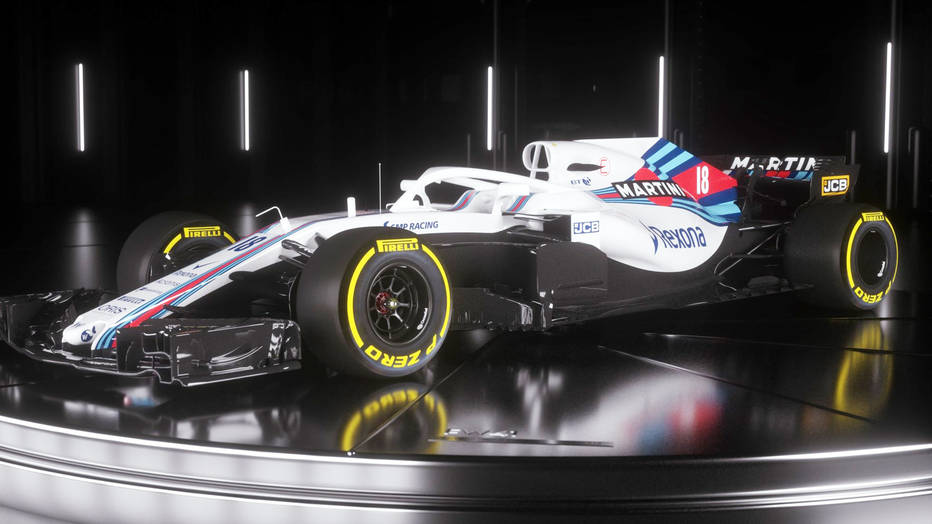
  • F1 2016: What to look out for in F1 2016

    F1 2016: What to look out for in F1 2016

    2016 is here and it brings with it the opportunity to create a dynamic, and with any luck, an unforgettable new chapter of Formula 1 racing. Already an array of topics from driver line-ups to power unit suppliers is demanding attention.

    Ferrari expectations

    The Italian marquee’s 2015 season while not earth shattering has created big expectations in Italy. The rest of the world, who’s perspective is a bit more realistic than that of the passion infused Tifosi, know that even matching the might of Mercedes is not a foregone conclusion. Since joining the team in 2013 Technical director James Alison is now firmly entrenched in Ferrari. The turnaround from a disastrous 2014 to a race-winning 2015 means serious pressure on Alison and his team to perform in 2016. It will be the responsibility of team Principal Maurizio Arrivabene to keep his team focused on its goals and to temper the expectations of the Ferrari board and its fans.

    Mexico Grand Prix Preview Quotes - Mercedes F1 TeamMercedes quandary

    It’s no question that where it concerns driver line-ups the spotlight will be squarely focused on the “relationship” between Mercedes drivers Nico Rosberg and Lewis Hamilton. Through their partnerships both have enjoyed spectacular and conversely poor moments and spent plenty of time sulking in respective corners. Up until now the team has been able to handle its drivers without too much issue. But the balancing act between placating both drivers and avoiding a full blown war between the two is a tenuous line.

    If Mercedes finds itself as runaway leaders of the pack again team director Toto Wolff has said it may prompt them allow the drivers free reign when it comes to strategy, thereby “improving the show.” For the sake of the show let’s hope Mercedes has a real challenger.

    Renault resurgence

    The French manufacturer’s purchase of the Lotus F1 Team has been made official which will see the championship winning constructor return to the sport as a fully-fledged works team. 2016 is a big year in many ways for Renault of which priority number one will be to silence the boisterous criticism of its power unit.

    Venezuelan driver Pastor Maldonado has been retained by Renault for 2016 and will be partnered by British rookie Jolyon Palmer. Together these two drivers will form one of the weakest driver line-ups of the season. While Palmer appears to be a solid driver any rookie is a leap into the unknown. Normally, a teammate with five years worth of experience would be useful for someone like Palmer. But when that teammate is Pastor Maldonado it’s a bit of a different story.

    Many will attest to the fact that you could hardly meet a greater gentleman than Pastor Maldonado in the F1 paddock. He has shown glimpses of real potential throughout his F1 career including the stunning victory at the 2012 Spanish grand prix. But the Venezuelan has a big chink in his armour – his habitual tendency to crash frequently and expensively. For Renault the conservative objective is to finish solidly in the top ten and perhaps snatch a podium or two should the frontrunners fail to reach the chequered flag. Their drivers will have to step-up is this is to be achieved.

    Haas F1_Grosjean AnnouncementHaas’ sure-fire plan

    Gene Haas is American racing royalty but he isn’t banking on his stateside fame and success to make it in Formula 1. The team has forged an alliance with Ferrari who will supply Haas with a power unit. In addition, Ferrari can also supply the American team with front and rear suspension and share in the R&D costs. While Ferrari supply the mechanical side of the Haas car Italian manufacturer Dallara has designed its chassis. This resourceful recipe should catapult this team firmly into the midfield.

    The next step in preparation for the 2016 season is for the customary shakedown tests of the new cars to be completed before they’re unveiled to the world. Most teams have announced mid-February launches for the respective cars just ahead of the vital first test session of the season.

  • Gutierrez To Make F1 Return With Haas F1

    Gutierrez To Make F1 Return With Haas F1

    In what was another one of Formula 1’s worst kept secrets, Mexican driver Esteban Gutierrez was confirmed on Saturday morning that he will complete the Haas F1 Team’s 2016 line up.

    Gutierrez will partner with Romain Grosjean at Haas F1 for 2016 after spending a year at Ferrari as their test and reserve driver. Gutierrez’s time at Ferrari seen him doing quite a bit of simulator work back at the factory at Maranello and he also took part in the two in season tests this season in Spain and Austria.

    The Haas F1 team’s technical partnership with Ferrari made Gutierrez the top candidate for the job although it was rumored that Kevin Magnussen and Jean-Eric Vergne , who is also a Ferrari development driver, were in the running for the seat at Haas.

    “I got to know Esteban through our relationship with Ferrari, and after looking at the success he’s had to earn his role there, it became clear he was an excellent choice for our race team,” said the owner of Haas F1 Gene Haas.

    “He’s young and hungry, but not inexperienced.

    Esteban Gutierrez_Haas“His two years running a full F1 schedule has given him some very good race experience, and having spent this season at Ferrari as their third driver allowed him to see firsthand the methodology that makes Ferrari such a power in Formula One.

    “We’re very happy to have Esteban as a part of our race team. Between him and Romain, we have a strong driver lineup that will help us develop our car and, ultimately, score some points in our inaugural season.

    Gutierrez will get his first taste of Haas F1 machinery at the first pre-season test which runs from 22-25 February 2016 at the Circuit de Catalunya in Spain.

    “This is an excellent opportunity that builds on my time with Ferrari and I will make the most of it,” Gutiérrez said.

    “Gene Haas believes in me and I believe in how he’s going about competing in Formula One.

    “To have a race seat in a competitive car with Ferrari power is very special, and I appreciate the faith he has in me. I trust we’ll be able to achieve great things together.”

    *the announcement starts at 16:46


    Photo credit: Scuderia Ferrari Formula 1, Haas F1 Team