Tag: force india

  • F1 2016: Chinese GP Free Practice 1 Report – Rosberg Quickest

    F1 2016: Chinese GP Free Practice 1 Report – Rosberg Quickest

    Mercedes driver Nico Rosberg topped the first free practice session ahead of Sunday’s Chinese grand prix.

    The session stumbled into life as cars trickled out onto the Shanghai International circuit which was holding a track temperature of 33 degrees Celcius. Mercedes’ Nico Rosberg set the quickest time of the session, a 1:38:037, on the yellow walled soft tyre. Mercedes teammate Lewis Hamilton followed in second one and a half tenths adrift.

    The Ferrari of Sebastian Vettel, Red Bull of Daniel Ricciardo, and sister Ferrari of Kimi Raikkonen rounded out the top five positions. Fernando Alonso was back in the McLaren for the first free practice session and ended the session twelfth overall. Alonso has not yet been given the all clear to race for the remainder of the weekend and is expected to undergo his second medical check-up of the weekend fifteen minutes after the conclusion of the first practice session.

    The one and a half hour session was marred by two red flag periods brought about first by the Williams of Felipe Massa and secondly by the Renault of Kevin Magnussen. The first red flag was shown as a result of gravel on the circuit caused by the left-rear tyre on Massa’s car letting go. Peculiarly, once the track re-opened Massa ventured back out only to experience the same delamination on the left-rear tyre. There is no word as yet to the cause of the delamination however.

    The second red flag was a bit lengthier and required a bit more clean-up as the left-rear tyre on Kevin Magnussen’s Renault let go halfway down the back strait. On the face of it the two incidents for Massa and Magnussen don’t seem to be related. It was the McLaren teams opinion that Magnussen’s issue might have been caused by debris on the circuit.

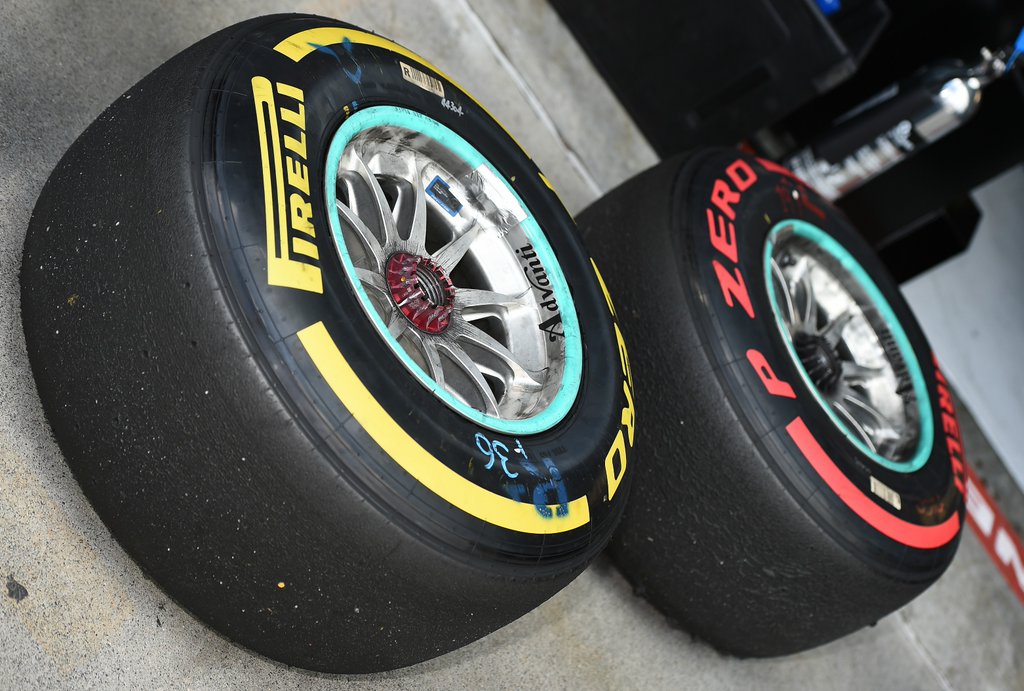
    The tyre compouds available this weekend are the medium (white), soft (yellow), and supersoft (red).


  • F1 2016: Chinese GP Preview – Tyre strategy name of the game in China

    F1 2016: Chinese GP Preview – Tyre strategy name of the game in China

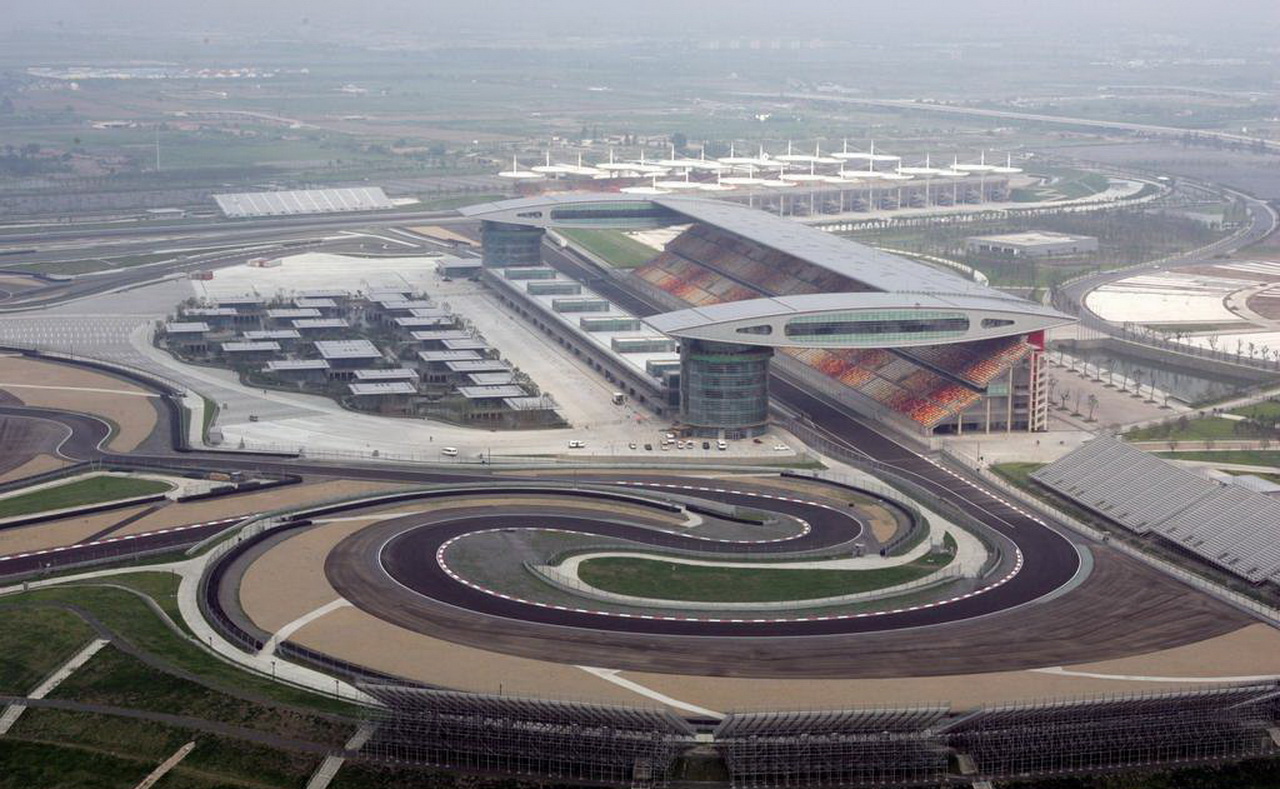
    From the desert circuit of Bahrain the Formula 1 paddock travels to mainland China and the Shanghai International circuit for the third round of the 2016 season.

    Good news is abounding before the weekend of racing even gets underway. A unanimous front by the eleven Formula 1 teams has force fed the FIA enough sanity to compel a reversion to the 2015 qualifying format for the remainder of the season. It wasn’t through lack of trying from the FIA though. The governing body, not wanting to accept defeat, tried one last time to impose itself by putting an aggregate-style qualifying on the table. Thankfully this too was unanimously shown the door.

    Besides the fact that it restores the much preferred 2015 version of qualifying, this decision sets a precedent for future decisions. Teams have now shown that if they stick together and push hard enough they can affect some change. And though the FIA and Bernie Ecclestone will try to spin this decision into something that makes them look a bit rosier it just isn’t true. The reality is that it wasn’t a decision by the FIA but rather a bending under the pressure from teams and fans.

    Because of this you’d hope that it’s significant also where the fans are concerned. Along with the teams’ unanimous front the fans’ disapproval on social media played its part too. The FIA and Ecclestone have been reluctant in the past to grant social media any clout. Hopefully they’re opinion has been informed enough to start moving the sport towards embracing social media more.

    Driver tyre choices for Chinese Grand PrixThe best news is that now the focus can return to the most important thing – racing. In 2015 Toro Rosso’s Max Verstappen brilliantly pulled off several overtaking manoeuvres into the extremely tight turn fourteen which follows on the kilometre long back-strait. Besides being one of the most unique first corners on the calendar the fast changes of direction in the middle sector will test just how good a chassis various teams have built for 2016.

    F1 first visited China’s Shanghai International circuit back in 2004 and has marked several landmark victories for drivers and teams. It was here in 2012 that Nico Rosberg won his first race and arrives in 2016 on the back of five consecutive victories and a good-looking lead in the driver’s standings. The best thing about Rosberg’s recent form is that it adds a new dimension to the championship.  It’s put Lewis Hamilton into a position not known to him in the last two years, the hunter rather than the hunted.

    But we’re talking about Merc as if they’re not facing a determined threat from Ferrari. Sebastian Vettel and Kimi Raikkonen have a good enough car to push Mercedes all the way to the chequered flag. But they don’t have good enough car to out-qualify Rosberg and Hamilton with. Therefore, tyre strategy becomes vital.

    China 2015_StartRaikkonen and Vettel have chosen an alternative tyre strategy to Merc for the Chinese GP. Both Ferrari drivers have chosen six sets of supersoft tyres while Rosberg and Hamilton have only five sets of the red-walled tyre. Should Mercedes run into rear tyre wear issues in China, as has been the case in the past, they won’t be able to run the supersoft tyre for as long.  Whereas Ferrari, who has traditionally been able to get more out of the supersoft tyre, will hold a strategic advantage of being able to run on the quicker tyre for longer.

    These permutations are only for the sharp-end of the grid. There is still an all-mighty battle in the mid-field which will undoubtedly rage throughout every one of Sunday’s 56 laps.

  • F1 2016: Bahrain GP Race Report – Desert Success for Rosberg

    F1 2016: Bahrain GP Race Report – Desert Success for Rosberg

    For nine years the Bahrain grand prix was run under the hot desert sun. For nearly a decade it wasn’t a race marked as one to look forward to and it almost always produced the most lacklustre racing of a season. But it would only take pushing back the starting time a few hours and a few thousand floodlight to ignite the Bahrain Gp into a spectacle of note. And in 2016 it delivered once more.

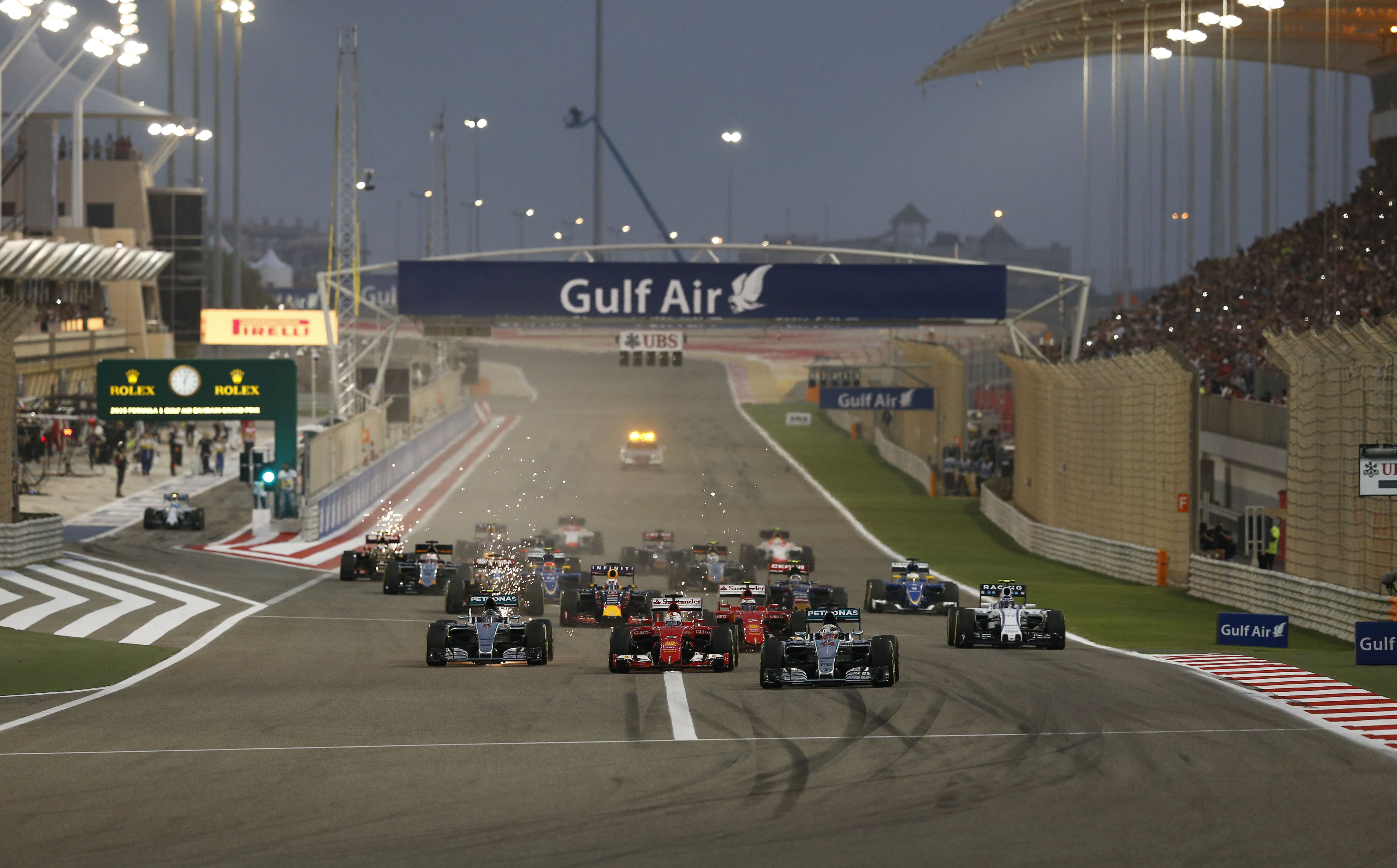
    As if to emphasise its transformation the drama started before a lap could be turned in anger. Ferrari’s Sebastian Vettel was forced into retirement on the formation lap. While Ferrari has stopped short of calling it an engine failure the plumes of smoke pouring from the rear of the car say otherwise. In Australia it was Raikkonen who retired with a turbo failure and there too Ferrari went out of its way to assure that there is no reliability concern. But even though its only two races into the season they’re developing a bit of an uncomfortable and undesirable habit of only getting one car to the chequered flag.

    Lewis Hamilton was sitting pretty in pole position with teammate Nico Rosberg alongside on the front row of the grid but it wasn’t to last very long for the Brit. Hamilton struggled to get off the line and ended up tangling with the Williams of Valtteri Bottas and dropped down to seventh.

    GP BAHRAIN F1/2016From fourth place Raikkonen made a poor start and dropped behind a pair of fast starting Williams’ and the Red Bull of Daniel Ricciardo. However, the Finn followed with some tenacious overtaking got himself into second place. By this stage the leading Mercedes of Rosberg was already eleven seconds up the road. The 2007 champion maintained a comparable pace with the Mercedes and even managed to reduce the gap to three seconds through strategy and occasional superior pace. But the number 7 Ferrari was never close enough to challenge for the lead of the race.

    As Hamilton recovered to third with some damage to the right-side barge board Rosberg wrapped up his fifth win in a row. For years we’ve been calling for Rosberg to step up his game and make it a championship battle worth watching and he’s done it now. There is still an incredibly long season ahead but Rosberg has started 2016 in the way that he’s needed to, in a way that will give Hamilton a lot to think about.

    With the top three positions established the rest of the points paying positions was an intense fight right to the chequered flag. The availability of three tyre compounds once again added a dynamism to the racing as drivers opted for strategies than ran the gamut of possibilities. Red Bull’s Daniel Ricciardo finished fourth thanks an early stop and rolling the dice by running the final stint on the medium tyres.

    GP BAHRAIN F1/2016As the race strategy engineer for the Haas F1 team Ruth Buscombe once again worked a brilliant strategy for Romain Grosjean. The Frenchman ran most of the race on the supersoft compound which allowed him to scythe through the field. He ran as high as fourth at one stage and ultimately finished fifth in what is turning out to be a fairytale debut for the American team.

    Toro Rosso’s Max Verstappen finished sixth ahead of Daniil Kvyat in seventh who recovered from starting fifteenth on the grid. After a difficult tyre strategy Felipe Massa and Valtteri Bottas finished eighth and ninth for Williams. Driver of the day belong the final points scorer Stoffel Vandoorne. The 24-year-old Belgian driver stood in for Fernando Alonso who is recovering from fractured ribs sustained in the Australian Gp crash. The difficulty of having to deal with the complexity of a 2016 F1 car, to understand the Pirelli tyres, and to fight with seasoned F1 drivers, must not be underestimated. Vandoorne put all of his talents on display and blitzed his F1 debut.

    The 2016 hasn’t begun to hit its stride and already an immense battle is brewing up and down the field. Roll on China.

    (All images courtesy of Pirelli Motorsport)

  • F1 2016: Bahrain Qualifying Report – Hamilton Wraps Up Pole

    F1 2016: Bahrain Qualifying Report – Hamilton Wraps Up Pole

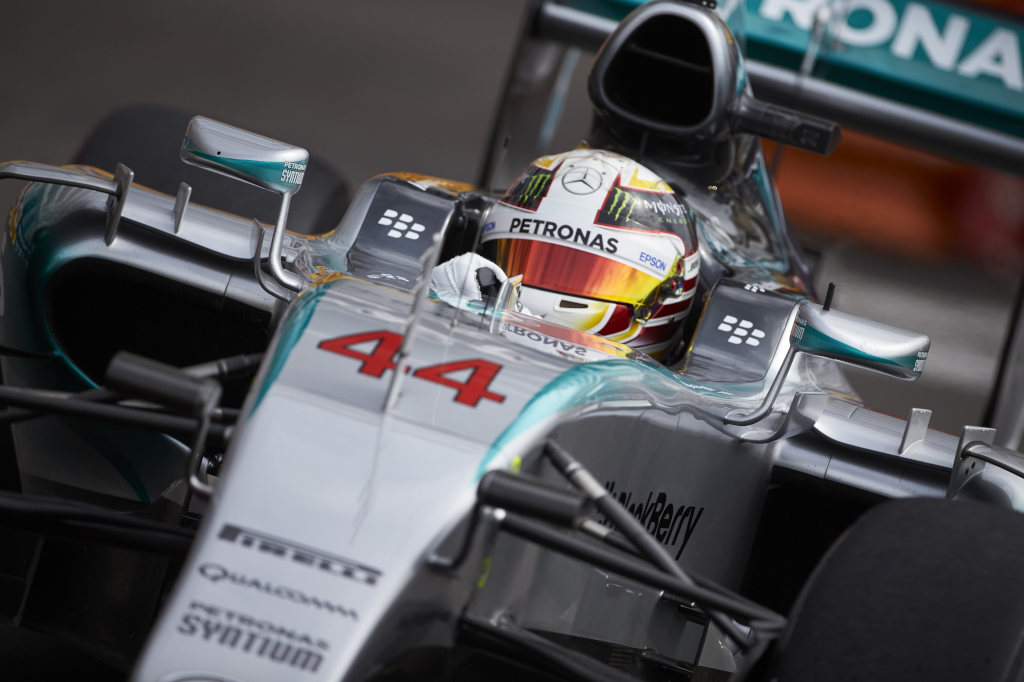
    Lewis Hamilton wrapped up his second consecutive pole position of the season for the Mercedes F1 team.

    The much maligned qualifying format got underway on the floodlit Sakhir International circuit and claimed its fist victim as Sergio Perez. The Force India driver and his team miscalculated the timing clock which left the Mexican driver towards the back of the grid. Pascal Wehrlein impressed in his Manor F1 car and will start Sunday’s race in 17th place.

    The second session of qualifying saw the red light at the end of the pitlane malfunction prompting a marshal to wave a green flag to set the drivers on their way. Stand-in McLaren driver Stoffel Vandoorne out-qualified teammate Jenson Button and will line up in twelfth position. French driver Romain Grosjean sported a big smile as he will line up the Haas F1 car in ninth place on the grid.

    Lewis Hamilton_Bahrain 2016_QualifyingThe final session of qualifying produced a surprise for Daniel Ricciardo who will start in fifth position ahead of both the Williams drivers. Red Bull Racing team principal Christian Horner remarked earlier that they would have to deliver something special to come out ahead in the intensely close mid-field battle.

    The first run between both Mercedes and Ferrari team’s drivers saw laptimes split only by a couple of tenths. However, Mercedes and Lewis Hamilton upped the ante for the final run. The reigning champion secured pole position ahead of teammate Nico Rosberg but less than a tenth of a second. Sebastian Vettel and Kimi Raikkonen will share the second row of the grid as they did in Australia.

    Attention now turns to the start of Sunday’s race and the run down to the all-important first corner. Mercedes will be keen to improve on their starting prowess following the opening round of the season. And with the longer run down to turn one it will have to be inch perfect.

  • 2016 Formula 1 Bahrain Grand Prix: Friday Press Conference

    2016 Formula 1 Bahrain Grand Prix: Friday Press Conference

    TEAM REPRESENTATIVES:

    Franz TOST (Toro Rosso)

    Dave RYAN (Manor Racing)

    Robert FERNLEY (Force India)

    Claire WILLIAMS (Williams)

    Not in attendance: Monisha KALTENBORN (Sauber)

    Paul HEMBERY (Pirelli)
    PRESS CONFERENCE
    Bob, the car showed some flashes of real speed in pre-season in testing and in Melbourne you had a good result with seventh. How confident are you that you’ll be able to take a step on from the fifth place overall the team achieved last year? ?
    Robert FERNLEY: I wouldn’t say that I was overly confident but optimistic. I think that Toro Rosso have done a good job. Williams are always strong. Red Bull are coming back and the engine’s proving well there. So I think the competition for that third to sixth place in the Constructors’ Championship is going to be very, very challenging this year and very tough and we’ve just got to prove that we’re up for it.

    Talking about Toro Rosso and other teams, in the second half of the race in Melbourne, Romain Grosjean in particular was able to stay ahead of the Force India. Were you surprised at the pace of the Haas and do you think that everybody has closed up behind you, quite tightly?
    RF: I don’t think that necessarily the Melbourne pace was something worrying. Melbourne’s just a very difficult circuit to overtake on and I think the red flag played in the favour very much of Haas. In our case I think it went against us slightly. So I don’t think it was a pace issue particularly, just a circuit-related issue.

    Thanks for that. Franz, coming to you, you got off to a good start in Australia, with a double points finish, and the car clearly has some pace. That obviously puts the team in the spotlight, in many different ways. Does the improvement in the team’s pace make you attractive again for outside investors?
    Franz TOST: I hope so. At Toro Rosso the doors are always open for people who bring money, because we have many ideas how to invest it in a proper way. Of course it’s easier to negotiate with partners if you are successful at the race track. This year, so far, we have a very competitive package. The STR11 shows a good performance; also both drivers are very skilled and very fast. The engine is also good and the team has improved as well and therefore I expect to have a successful season and I hope that we can find additional money.

    That improvement in pace was evident in Melbourne but you might not have got the race result you wanted. Obviously, we all saw what happened with Carlos and with Max in the pit stops. Have you spoken to the drivers in between and how has that been resolved?
    FT: Yeah, we had a very good first part of the race until the red flag. After the red flag we lost the pace. The reason why we called in Carlos was that he had a lot of vibration on the front axle and for safety reasons we wanted to change the tyres. Max then came into the pits and the team didn’t know this and we were too late with the tyre change. Therefore, he came out behind the group of Grosjean, Hulkenberg, Palmer and behind Carlos and then of course there was a little bit of a fight between them. But that’s normal. That’s competition. We discussed everything after the race, we analysed everything and we explained to the drivers what happened. Everything is sorted out and I expect from them a good and competitive race here as well.

    The battle between the drivers looks like it might shape up to be one of the season’s most intense. How do you, in the team’s best interest, manage them, given that they a relatively young partnership?
    FT: You must not forget that both of them are very young. Both of them want to make a career in Formula One and therefore they are fighting for every millimetre. This is what we want to see and therefore why we also have them in the team. At Toro Rosso the philosophy is not to come out with a team order, to say ‘you have to let the other past’. Only if we change the strategy, of the drivers are on a different strategy and if we think it will be an advantage for the team, then of course, but otherwise there are no team orders. We expect discipline from the drivers. What do I mean by discipline? That they respect each other, that they let the other driver the space to survive, that they don’t crash on each other and that they compete on the race track like people want to see it and then we will see who will be the better.

    Dave, welcome back, a couple of questions for you. Your car seemed fairly comfortable running in the lower midfield in Melbourne. What kind of result of results do you expect from the rest of the season, what’s achievable? 
    Dave RYAN: I’d like to think we can run with the pack. We haven’t been able to do that in previous years. If we can do that then we can be in a good position to seize opportunities that come our way. I believe we can score points and we need to score points, and that’s the goal.

    You’re almost six months into your tenure at Manor. When you arrived what did you feel were the things that most urgently needed addressing and now where do you feel the team is at now in terms of personnel, resource and operational stability?
    DR: The team was clearly, or had been, in a very difficult place. They did a fantastic job last year. They were in a bit of a holding pattern really. Most of last year was spent looking forward to getting a package together for this year. Stephen Fitzpatrick, our team owner, did a great job on that front: he secured a terrific engine deal, a great transmission arrangement. After that, it was just a question of putting a good car together, which our guys have done. So, last was a bit of a holding pattern and it was all about getting ready for this year. We’ve got a pretty good package. There are no excuses on the engine front, the driveline, and it’s down to us to show we belong here – and we do. And we’ve managed to change the team considerably. We’ve got a lot of new people. There were a lot of good people anyway. Even from Melbourne to this race it’s developed, it’s changed a lot and we’re going forward and that’s what we need to see.

    And what about your drivers? They are both quite inexperienced. What do you see is the potential from both of them?
    DR: I see huge potential. First of all they’re both young guy, a bit like Franz was saying. I enjoy their enthusiasm. Having youngsters around is very invigorating. They’re both very, very switched on young guys. Quite different personalities but fierce determination in both of them to succeed and I’m sure we’ll see two very good drivers develop during the year.

    OK, thanks. Claire, coming to you, lonely at the front there…
    Claire WILLIAMS: I have no friends!

    Williams have finished third in the past two seasons. This year, do you see it as the same battle again, against Red Bull for that third position, or has there been that step over the winter that will allow you to take the fight to Ferrari and Mercedes?
    CW: I’d like to think so. As you say, we’ve come third in two consecutive seasons now, which is a fantastic achievement for Williams. But we did come into this year knowing and understanding that it was going to be much harder to try to maintain that position, let alone push forward and try to catch the Ferraris and Mercedes, but of course that was the target for the guys back at Grove over the winter period. I think in Melbourne it was far too early to tell really where anybody is on the grid this year, so we’re going to have to give it a few races to see where we are, but of course the target for us as a team is always to make improvements. We’d love to be able to close the gap to Ferrari and Mercedes, but I think we’ve seen in Melbourne that the competition has closed around us. The Force Indias, the Reds Bulls, the Toro Rossos, they are all there. We had a great fight in Melbourne and I expect the rest of the season will be like that, so we have our work cut out if we are to maintain third, let alone push forward.

    One of things you have been working on is the new short nose that is supposed to be arriving. Are we going to see that tested tomorrow? Has it arrived? Is it arriving?
    CW: It is winging its way here as we speak, so I very much hope it will be on the car, it’s going on Felipe’s car tomorrow in P3, and we’ll just have to understand where it is, what performance it’s giving us and then decide whether we run it in qualifying or not.

    QUESTIONS FROM THE FLOOR

    Q: (Kate Walker – motorsport.com) A question for everybody please. We’ve had an awful lot of doom and gloom – and I’ve very over that. Could everybody please tell me one thing that you’re looking forward to about the 2016 season. Something that excites you, that makes you passionate.

    RF: If you look at it from the point of view that probably the first… the manufacturing teams in terms of Mercedes and Ferrari are clearly ahead of the game, I think what’s exciting for me is what Claire’s just hit upon: I think we’ve got four or five teams that are really fighting hard for those third to sixth places. I think that’s going to be an incredible battle through the year. If that was the front of the Formula One field, think how wonderful it would be for the fans.

    Franz?
    FT: We have a very competitive midfield where all the competitors are very close together, we go to Azerbaijan and see a new race, and we have 21 races.

    Claire?
    CW: The same as what everyone else has said: I think the competition this year is going to be phenomenal. I think we’ve had a couple of good years of racing. As I said, Melbourne really demonstrated that it’s going to be a really close fight for everybody this year, up and down the order, which is really exciting. I’m really pleased with what you said about the doom and gloom, because I’m totally over it as well and I think it would be really nice if we recognised the positives of our sport, of which there are so many. I think actually now Formula One, from a strategic perspective, and looking at where we’re moving forwards to into the future to into the future, now coming close to signing off the new power unit regulations – hopefully – in addition to the new 2017 regulations, I think there’s a lot to hopefully look forwards to. I think the driver aids situation, as much as there’s been a lot of talk around that, positive and negative, I think that’s really exciting: the drivers have what they wanted, and that’s to be drivers in the car again and to take control of their cars. For me, to see drivers going out there, having a fight, I think it will be a really exciting season. That’s what I’m looking forward to.

    David, it’s a new role for you…
    DR: Yes, I endorse that. Melbourne showed, or gave every indication of the season to come. For me personally it’s going to be… I’m really looking forward to the season and I’m going to enjoy seeing Manor Racing progress. That’s what I’m looking forward to most.

    Q: (Dieter Rencken – Racing Lines) A question to Robert Fernley. Bob, there’s been a fair amount of negative coverage about your team owner, team principal Vijay Mallya recently. He’s not here so I need to ask you. Is the team endangered in any way? We hear some stories of $400million dollars being offered in repayment. How does that affect the team?
    RF: You know Dieter, I didn’t see you behind the camera – I thought I’d got away with it for this meeting! Vijay’s issues are well publicised but, like all things, I think there’s been a bit of media over-reaction, especially from India on all of that. It’s something, just to give you an idea of India itself, I’ve been in and out of India for well over 30 years and the only thing I’ve learnt in 30 years is how little I know about India, so I think you’ve just got to let that flow and for Vijay to deal with it. Force India is blessed with a very good technical team and that technical team has progressively moved Force India up the Constructors’ table and I think today we are realising some of the best returns the team has ever had from the payments side of things, even though we complain about the disparity – which is a separate issue. And we also have a very good commercial team. And I think the commercial team is allowing Force India pretty well now to stand on its own feet and, whilst the shareholders are always there to help us – and Vijay’s been the main person in doing that over the last nine years. It’s not a short term, nine years, to be keeping a Formula One team going. I don’t think there’s any concerns for Force India.

    Q: (Dieter Rencken – Racing Lines) Claire, very brief one to you. You’ve just said you’re signing off the 2017 powertrain regulations and ‘hopefully’ the 2017 aero regulations. Can you elaborate on why you use the word ‘hopefully’? I doubt you normally use words willy-nilly.
    CW: I think I should have applied ‘hopefully’ to both. We have a Strategy Group meeting that’s just been scheduled coming up, and as we all know in Formula One, things are fluid. I said ‘hopefully’ just to temper it. I don’t think you should put too much emphasis on that word.

    …so there is a chance that they may not go through, based on that?
    CW: I doubt it. I think it’s becoming far too late in the day. I think we pushed the date anyway and we need to get these signed off if we’re all to be ready for 2017.

    Q: (Dieter Rencken – Racing Lines) My second question to all of you. There’s been a lot of noise coming from the GPDA recently and one of their points of concern is that they’re not being heard, particularly when it comes to the governance structure, regulations changing etc. given that two of you people are on the Strategy Group and the other two on the Formula One Commission, have the drivers aired their concerns to you at all as team principals on the various commissions and groups?

    BF: No, I’ve not spoken to any of the drivers on that Dieter. I think the drivers have got a role to play. They do have a meeting every race weekend with Charlie so they do represent their views at that meeting and those are transmitted to us through Charlie, which is the correct way of doing it. I think it’s very difficult to have a member of the GPDA on the F1 Commission. It’s very difficult to represent 22 people with one opinion. We have enough difficulty doing it with six on the Strategy Group, so I’m not sure where that would go. Clearly the voice of the drivers is very, very important and we should be listening to them.

    Claire?
    CW: Yeah, I echo what Bob has said. The drivers are one of the key stakeholders of our sport, as are the teams, the media and our fans and we have to listen to all those stakeholders if we’re to create a sport that’s going to sustain in the long term. I’m pleased that they’ve come out and talked about their concerns. I think now we have to go away and think about them and address them and to see how we can engage them. Personally, in the team we have a constant and open dialogue with both our drivers and they always feedback information. On the converse, I think drivers have been listened to, probably more than they have in recent times, talking about the driver aids and the cars we are producing for them for next year – but as Bob said, it’s difficult to represent such a wide group. And then, how does that potentially fit in to the current governance structure that we have at the moment.

    Dave, your thoughts on this.
    DR: I think the drivers are the great personalities of this sport. I think they should be listened to. I think their opinion is really valued and we should heed what they say. We should certainly take notice, that’s for sure.

    Finally, Franz.
    FT: Our drivers are fortunately young, they are not so involved in all of this political issues. Generally the drivers are here for driving and, regarding the Formula One rules, there are so many parties being involved, it’s unnecessary to bring in another party. Nevertheless, the drivers can come up with ideas – but not after regulations are being defined. Like now, the 2017 regulations. To come now and say ‘this is not good’, it’s too late: because this has been defined. They should do it before. Generally, they should be concentrated to drive. That’s their job.

    Q: (Sanjeev Palar – Fox Sports Asia) The fans are holding their breath to try and understand and then figure out what’s happening with qualifying, so perhaps someone can tell us how is it going to be resolved, are there going to be any more changes that we see this season, and what is the process and opportunity to implement such changes?
    DR: We’re holding our breath as well.
    FT: We’ve discussed this qualifying procedure many times and the reason why this new qualifying came into play is because the organisers wanted to increase the show. Now, we saw in Melbourne that qualifying three ended up in a mess, because during the last four or five minutes  no car was out there, but this was already mentioned before, because the calculation of all the teams showed that at the end, maybe one or two cars would have tyres to go out twice in qualifying three. The new qualifying model itself is not so bad but in qualifying three, the eight cars need to have two sets of tyres so that all the cars are out there. Why? Because qualifying three is the most important part of the qualifying, it’s when pole position is being decided and therefore the cars need to be out on the track and neither the old qualifying… all this would be good, in combination with the new one because then the drivers would be out only at the last one or two minutes and with the new qualifying we know that the last four or five minutes no one is out any more. Therefore, in my opinion, we should go back to the old qualifying when we know that the cars will be on the track and will race for pole position.
    CW: In qualifying, the revised form in Australia came out and we said we would give it a go and if it didn’t work we would revert and come back to the drawing board, and obviously that meeting happened on Sunday and everybody agreed that we would revert back to the 2015 format until we could all come together and decide and actually try and come up with a well considered revised process for qualifying. Unfortunately that obviously has happened in the interim, we’ve had a new vote among strategy group members which then went to the commission. Now we have this hybrid system which we’re running tomorrow. Personally, from a Williams perspective, we would have rather to have gone back to the 2015 format as a holding pattern, to give us time to meet again as a group and to actually have time to go through what a new system could look like rather than kind of go to a hybrid system which might not work again. I think we have to wait anyway and see whether that will work or not tomorrow and then take the time to actually think about it. I think otherwise our fans are just going to look at our sport and go ‘what are they doing?’ You can’t do this in the second race of a championship so it’s really important to us that we get this resolved as quickly as possible but to do it in a well-thought through manner.
    Q: Dave, your drivers were probably disadvantaged in Q1 last time out, it didn’t probably go according to plan. What’s your feeling about it?
    DR: No, it didn’t go according to plan for us in Melbourne. I think the important thing is that the regulations were changed for Melbourne, we did give it a try and it clearly didn’t work for many reasons. But the fans have overwhelming said ‘we didn’t like it’. We did have the meeting on the Sunday morning and we did agree to change it. However, since then circumstances have intervened and we’re now back to what we had in Melbourne, so I guess we’re going to go through it again and just see how it pans out. Maybe we’ll all be a bit better prepared for it this time round and maybe it will be a bit different. So let’s see what happens in qualifying tomorrow and we’ll review it again on Sunday morning.
    Q: Bob, do you think teams will be a bit more comfortable with the process tomorrow and it might go a bit more smoothly than it did in Australia?
    BF: For sure I think teams will be better prepared. There still could be issues with it. From a personal point of view, I would like to have seen the compromise programme come in because I think that actually Q1 and Q2 were quite exciting. Clearly we got it wrong for Q3. I would have liked to have seen a little bit of an adjustment before we stopped everything but we have to go, at the end of the day, with the way the governance system works and we are where we are and let’s see how it goes tomorrow.

    Q: (Sanjeev Palar – Fox Sports Asia) Everyone has expressed their opinion on what they prefer but I think what we’re trying to understand and what we’re trying to convey to the fans is what process happens to decide what the final qualifying system will be for 2016, because it doesn’t seem like we have one. We had one in Australia, then we thought it’s gone all over the place, so what is the actual process to finalise the qualifying system that we’re going to have for this season?
    BF: It has to go through the strategy group and then from the strategy group it has to go through the F1 commission. You need 100 percent of the votes from the teams, the F1 commission, and then if it gets the majority that’s necessary, it will go back to the world council to be put into sanction, so that’s the process. There is no other process.
    DR: I think it’s true to say that once it passes through the strategy group for the Formula One commission, it can’t be changed so it can only be approved or disapproved from that point on, both at the Formula One commission and beyond. We only get what comes through from the strategy group, so that’s the process and then we vote on it and it’s a yes or a no, not a maybe we can do this instead, so that’s the process, it is very clear cut in fact.

  • F1 2016: Bahrain GP Preview – Bahrain Battle Between Merc & Ferrari

    F1 2016: Bahrain GP Preview – Bahrain Battle Between Merc & Ferrari

    Formula 1 has long been known as a sport that is both complicated and the technical supreme of motorized sport. This and the allure of speed and victory and glamour is what draw millions of fans to it. But recently the sport, which celebrates more than six decades of existence, has been anything but glorious.

    Of late all of what makes Formula 1 great has been overwhelmed and buried under the awkward mess of the new qualifying format. The elimination style qualifying format was universally slammed by all who tuned into the farcical hour that would determine the starting grid.

    The qualifying change was an idea cooked up by Jean Todt’s FIA, F1’s governing body. It put the choice of the ill-conceived elimination-style quali or a reversed starting grid before the teams.  Rather than choose the preposterous idea of a reversed grid they opted for the lesser of two evils and so elimination-style quali came to pass. Subsequent to scorching criticism a reversion to the previous quali session was called for. However, F1’s strategy group has decided to give the new format another chance in Bahrain. It’s difficult to imagine that the new format will suddenly transform unenthusiastic opinion it’s currently viewed with.

    The qualifying debacle has, unfortunately, dominated headlines for the last two weeks. It’s nearly made us forget that as the opening round of the 2016 season the Oz Gp was a compelling race. The choice of three tyre compounds in the race worked well and produced several different strategies up and down the field which is an exciting precursor for the rest of the season. And although Mercedes were eventual victors with a 1-2 finish they were pushed to the limit of what they could produce.

    Rosberg_Bahrain2014As Formula 1 tracks go the Albert Park circuit is unique. Its street-style layout is not a definitive barometer for car performance and it’s difficult to overtake on. As the second round of the season Bahrain’s Sakhir International circuit presents a bigger test on performance and more chances for overtaking. “The last corner flows quite well and if you can get close for DRS you can get a good run [to overtake] into Turn 1,” said Red Bull driver Daniel Ricciardo. “If you don’t get it into Turn 1, then there’s Turn 4 or the middle sectors where it’s easy to make mistakes. There’s probably four places you can pass on the track which is pretty good.”

    As you might expect tyre strategy will play its role in determining what the final result on Sunday will be. The medium, soft, and supersoft Pirelli tyres are the choices available to drivers. Ferrari’s Sebastian Vettel and Kimi Raikkonen has opted for three sets of medium tyres each while Lewis Hamilton and Nico Rosberg has taken only one set of the medium compound. It indicates that Ferrari hasn’t ruled out an alternative strategy of a long stint on the medium tyre should conditions be suitable. In 2013 Kimi Raikkonen pulled off a two stop strategy to finish second for Lotus.

    Kimi Raikkonen, Ferrari, Bahrain Grand PrixThe Finn has a record of seven podiums at the Desert track and despite being inches away from winning the grand prix in 2015 has never stood on the top step of the podium here. As the Sakhir International circuit is clearly a venue where Raikkonen excels the 2007 champion may not be a bad bet for the spoils this weekend.

    The Bahrain grand prix exploded into life on account of its transformation into a night race.  In 2014 it produced an exhilarating wheel-to-wheel battle between Lewis Hamilton and Nico Rosberg. In this race it was Hamilton who emerged a memorable victor. In 2016, it could produce a battle between Mercedes and Ferrari that you do not want to miss.

  • F1 2016: Australian GP Free Practice 1 – Hamilton Tops Wet/Dry Session

    F1 2016: Australian GP Free Practice 1 – Hamilton Tops Wet/Dry Session

    Mercedes driver Lewis Hamilton topped the first free practice session for the 2016 Australian grand prix.

    The 2016 season got underway as Ferrari’s Sebastian Vettel ventured out onto track with the full wet Pirelli tyres fitted to his car. Overnight rain and a consistent drizzle in the morning had ensured a wet start to the first practice session.

    The track seemed to dry quickly with a blustery wind but just as driver were getting into their stride on the yellow-walled soft tyres the rain appeared once more. So it continued throughout the session which was difficult to classify either wet or dry.

    Lewis Hamilton set the quickest time of the session with a 1:30:364. The Red Bull duo of Dannil Kvyat and Daniel Ricciardo were second and third as the chequered flag dropped to signal the end of the session. Rather embarrassingly, Ricciardo dropped the Red Bull into the gravel at the end of the session. Given the slippery conditions and the fact that Ricciardo was on slicks means we can give him the benefit of the doubt.

    Force India’s Nico Hulkenberg and Toro Rosso’s Max Verstappen rounded out the top five. The 18 year old Verstappen had earlier spun his Ferrari-powered car but, luckily, didnt sustain any damage. Nico Rosberg, Fernando Alonso, Jenson Button,  and Sergio Perez rounded out the top ten.

    The changeable weather conditions mean that the first free practice session of the season didnt represent anything as to how the rest of the weekend may pan out.

  • F1 2016: Australian GP Preview – F1 season of possibility

    F1 2016: Australian GP Preview – F1 season of possibility

    The question at the forefront of everything is can Ferrari take the fight to Mercedes. All indications are that the Italian team has made strides since last year and has closed the gap to Mercedes. All that remains to be seen is how close they can get.

    As F1 2016 gets under way this season will be longest in the sport’s history with 21 races. Germany’s Hockenheim makes a return to the calendar and Azerbaijan hosts its first ever race on the Baku City streets. The confirmation of the US grand prix gives the teams an added bonus. The F1 sporting regulation state that one engine must be used for four race weekends. As the US Gp makes it 21 races the teams will be given a fifth engine thanks to the wording of the rule.

    When the change to the qualifying format was announced it left many perplexed. The quali format hadn’t been a bad one so why fix something that isn’t broken? But, let’s give it chance and see how it pans out.

    The one hour session will still consist of three parts. Q1 will be 16 minutes, after the first seven the slowest car is eliminated. Thereafter, the slowest car is eliminated every 90 seconds. Seven drivers will be eliminated while 15 advance to Q2.

    Hamilton-Australia-MercedesQ2 will be a 15 minute session with the slowest driver eliminated after 6 minutes. Likewise, every 90 seconds will see the slowest car eliminated. Seven drivers will be eliminated in this session with eight advancing to Q3.  The Q3 session will run for fourteen minutes with the slowest driver eliminated after five minutes. The slowest driver will continue to be eliminated every 90 seconds. Two drivers will remain in the final 90 seconds of the session to shoot it out for pole position.

    An interesting aspect of this style of qualifying will be that the quickest cars will no longer be able to rely on getting through to the second part of qualifying on the harder of their tyre selection. It’s sure to throw the cat amongst the pigeons when there is rain about, and if it’s a lap longer than 1 minute 30 seconds. And let’s be honest anything that adds a bit of drama and intrigue is never a bad thing. What the new format has in its favour is that it takes the excitement from the final ten minutes of the session and spreads it throughout the entire hour.

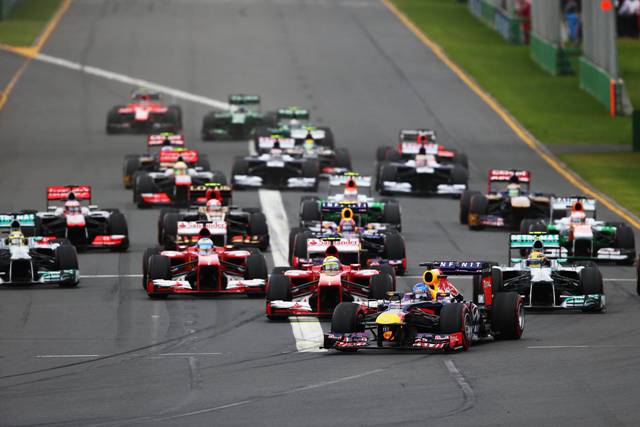
    australiaThe Albert Park circuit is a well known one. But there are many unknowns at the first race of the season. A new qualifying format, new tyre regulations, more driver freedom on strategy calls, to name a few. The clampdown on radio communication from the pitwall carries its own connotation, especially where the start of the race is concerned. Drivers are not allowed any feedback during the formation lap and are only being allowed to use one clutch at the start. This combined with Albert Park’s tight turn one could result in dramatic start to the grand prix. And all of this has the potential to combine into an explosive season-opening race.

    Mercedes has chosen to play up Ferrari’s performance so far. Choosing to send both Nico Rosberg and Niki Lauda into the press with statements of Ferrari being a great threat. It could just be some clever psychological play by the champions. Or it could be real and we could in for a F1 season to be remembered. One way or the other the more than 100 day wait is finally over.

  • F1 2016: Testing Numbers and Stats

    F1 2016: Testing Numbers and Stats

    With the 2016 pre-season tests done and dusted the attention turns to the first race in Melbourne Australia in just a little over a week for the F1 season opener.

    There are quite a number of stats and number that were thrown around. The lap count and distance completed by Mercedes is one that stands out the most. The Mercedes team completed a total of 1 294 laps between their drivers that covered a total distance of 6 023.57km. This is quite a long way from Toro Rosso who completed the second highest test distance of 4 883.095km completeing 1 049 laps. That’s almost 19% less than Mercedes in terms of distance.

    Laps Per Team

    Total KM per Team

    The 6 023.57km completed by Mercedes translates into almost 20 complete race distances based on the 307.104km race distance of the Circuit de Catalunya track layout.

    Race Distances

    With 4 manufacturers supplying power units, its no surprise to see Ferrari and Mercedes very close to each other in terms of distance covered. Both manufacturers supply 4 teams each.

    KM per Manufacturer

    Total Number of Laps Per Driver

    Driver Team/Car Laps Distance (KM)
    1 Nico Rosberg Mercedes F1 W07 Hybrid 656 3053.68
    2 Lewis Hamilton Mercedes F1 W07 Hybrid 638 2969.89
    3 Max Verstappen Toro Rosso-Ferrari STR11 534 2485.77
    4 Carlos Sainz Toro Rosso-Ferrari STR11 515 2397.325
    5 Kevin Magnussen Renault R.S.16 509 2369.395
    6 Sebastian Vettel Ferrari SF16-H 488 2271.64
    7 Daniel Ricciardo Red Bull Racing-TAG Heuer RB12 457 2127.335
    8 Felipe Nasr Sauber-Ferrari C34/C35 455 2118.025
    9 Valtteri Bottas Williams-Mercedes FW38 445 2071.475
    10 Felipe Massa Williams-Mercedes FW38 411 1913.205
    11 Jenson Button McLaren-Honda MP4-31 377 1754.935
    12 Kimi Raikkonen Ferrari SF16-H 364 1694.42
    13 Daniil Kvyat Red Bull Racing-TAG Heuer RB12 358 1666.49
    14 Nico Hulkenberg Force India-Mercedes VJM09 357 1661.835
    15 Fernando Alonso McLaren-Honda MP4-31 333 1550.115
    16 Sergio Perez Force India-Mercedes VJM09 289 1345.295
    17 Jolyon Palmer Renault R.S.16 267 1242.885
    18 Romain Grosjean Haas-Ferrari VF-16 257 1196.335
    19 Pascal Wehrlein Manor Racing-Mercedes MRT05 252 1173.06
    20 Rio Haryanto Manor Racing-Mercedes MRT05 232 1079.96
    21 Esteban Gutierrez Haas-Ferrari VF-16 217 1010.135
    22 Marcus Ericsson Sauber-Ferrari C34/C35 187 870.485
    23 Alfonso Celis Force India-Mercedes VJM09 133 619.115


    Looking at the overall fastest times for the 8 days of testing Ferrari’s Kimi Raikkonen was the fastest with his 1:22.765 on the ultra soft tyres. These times should be taken with a shovel of salt when considering them as it is always hard to get the true pace of a car during testing. There are too many variables that factor into the final times.

    Pos. Driver Team/Car Best Time Gap
    1 Kimi Raikkonen Ferrari SF16-H 1:22.765
    2 Sebastian Vettel Ferrari SF16-H 1:22.810 0.045
    3 Nico Rosberg Mercedes F1 W07 Hybrid 1:23.022 0.257
    4 Nico Hulkenberg Force India-Mercedes VJM09 1:23.110 0.345
    5 Carlos Sainz Toro Rosso-Ferrari STR11 1:23.134 0.369
    6 Felipe Massa Williams-Mercedes FW38 1:23.193 0.428
    7 Valtteri Bottas Williams-Mercedes FW38 1:23.229 0.464
    8 Max Verstappen Toro Rosso-Ferrari STR11 1:23.382 0.617
    9 Daniel Ricciardo Red Bull Racing-TAG Heuer RB12 1:23.525 0.760
    10 Lewis Hamilton Mercedes F1 W07 Hybrid 1:23.622 0.857
    11 Sergio Perez Force India-Mercedes VJM09 1:23.650 0.885
    12 Kevin Magnussen Renault R.S.16 1:23.933 1.168
    13 Daniil Kvyat Red Bull Racing-TAG Heuer RB12 1:24.293 1.528
    14 Jenson Button McLaren-Honda MP4-31 1:24.714 1.949
    15 Fernando Alonso McLaren-Honda MP4-31 1:24.735 1.970
    16 Felipe Nasr Sauber-Ferrari C34/C35 1:24.760 1.995
    17 Alfonso Celis Force India-Mercedes VJM09 1:24.840 2.075
    18 Jolyon Palmer Renault R.S.16 1:24.859 2.094
    19 Pascal Wehrlein Manor Racing-Mercedes MRT05 1:24.913 2.148
    20 Marcus Ericsson Sauber-Ferrari C34/C35 1:25.031 2.266
    21 Romain Grosjean Haas-Ferrari VF-16 1:25.255 2.490
    22 Esteban Gutierrez Haas-Ferrari VF-16 1:25.422 2.657
    23 Rio Haryanto Manor Racing-Mercedes MRT05 1:25.899 3.314


    Best Times per Compound

    Tyre Driver Team Best Time Gap to H Gap to M Gap to S Gap to SS Gap to US
    Hard Bottas Williams 1:25.402 – 1.276 2.393 2.55 2.637
    Medium Rosberg Mercedes 1:24.126 -1.276 – 1.117 1.31 1.361
    Soft Raikkonen Ferrari 1:23.009 -2.393 -1.117 – 0.157 0.244
    Super Soft Vettel Ferrari 1:22.852 -2.55 -1.274 -0.157 – 0.087
    Ultra Soft Raikkonen Ferrari 1:22.765 -2.637 -1.361 -0.244 -0.087 –
  • Rosberg On Top at Second Barcelona Test

    Rosberg On Top at Second Barcelona Test

    Nico Rosberg stamped Mercedes’ authority on day one of the second test in Barcelona by going quickest on the day.

    Rosberg’s fastest time of 1:23.022 just told half the story. Lewis Hamilton took over in the afternoon session and went on to complete a very impressive race simulation. Between the Mercedes drivers they managed to rack up 169 laps.

    “It was a great afternoon of running with great mileage,” said Hamilton.

    “We did a race simulation and after that I feel I’m ready for race one.

    “The car is feeling great and was consistent all day.”

    Valtteri Bottas ended his day second fastest with a time of 1:23.229 with 123 laps under his belt.

    Finishing third fastest was McLaren’s Fernando Alonso with a time of 1:24.735 ahead of Ferrari’s Kimi Raikkonen in 4th with a best time of 1:24.836. Both Raikkonen and Alonso brought out the red flags today with Alonso stopping at the end of the pit lane at the end of the morning session and Raikkonen in the mid afternoon with a gearbox problem.

    Daniil Kvyat in the Red Bull finished 5th fastest with Hamilton in the Mercedes 6ht.

    In the new liveried Toro Rosso, Max Verstappen ened his day 7th fastest with the highest lap count of the day at 144. Another solid day of running for Nico Hulkenberg in the Force India seen him finish 8th fastest. Tom McCullough, Chief Race Engineer at Force India called it “another routine day.”

    The Sauber C35 made its debut today at the hand of Felipe Nasr who completed 103 laps to place 9th fastest ahead of Kevin Magnussen in the Renault R.S.16 in 10th. Magnussen clocked up 119 laps until he came to a stop at Turn 3 just 10mins before the end of the day.

    Haas F1 had one of their worst testing days so far with Esteban Gutierrez confined to the garage for most of the day after a problem with the fuel system.

    It was not much different for Rio Haryanto in the Manor. The car suffered from an oil leak which kept in the pits for most of the morning session.

    POS Driver Team/Car Best lap Gap Laps
    1 Nico Rosberg Mercedes F1 W07 Hybrid 1:23.022 – 82
    2 Valtteri Bottas Williams-Mercedes FW38 1:23.229 +0.207 123
    3 Fernando Alonso McLaren-Honda MP4-31 1:24.735 +1.713 93
    4 Kimi Raikkonen Ferrari SF16-H 1:24.836 +1.814 72
    5 Daniil Kvyat Red Bull Racing-TAG Heuer RB12 1:25.049 +2.027 69
    6 Lewis Hamilton Mercedes F1 W07 Hybrid 1:25.051 +2.029 90
    7 Max Verstappen Toro Rosso-Ferrari STR11 1:25.176 +2.154 144
    8 Nico Hulkenberg Force India-Mercedes VJM09 1:25.336 +2.314 121
    9 Felipe Nasr Sauber-Ferrari C35 1:25.493 +2.471 103
    10 Kevin Magnussen Renault R.S.16 1:25.760 +2.738 119
    11 Esteban Gutierrez Haas-Ferrari VF-16 1:26.661 +3.639 23
    12 Rio Haryanto Manor Racing-Ferrari MRT05 1:27.625 +4.603 45