Tag: fia

  • FIA Confirm Changes to Qualifying Format

    FIA Confirm Changes to Qualifying Format

    The Formula 1 Governing body the FIA have approved changes to the F1 qualifying format on Friday 4 March. These changes will be introduced at the first round of the 2016 F1 season at Melbourne in two weeks time.

    A statement by the FIA said that the changes were unanimously accepted by the F1 commission.

    Qualifying will now be in a form of a knock out style with the slowest drivers being eliminated every 90 seconds instead of at the end of the session. The sessions remain unchanged from the previous format with three sessions.

    Q1

    • 16 minutes
    • After 7 minutes, the slowest driver is eliminated
    • Slowest driver will be eliminated every 1 minute 30 seconds (90 seconds) thereafter until the chequered flag.
    • 7 drivers eliminated, 15 progress to Q2.

    Q2

    • 15 minutes
    • After 6 minutes, the slowest driver is eliminated
    • Slowest driver will be eliminated every 1 minute 30 seconds (90 seconds) thereafter until the chequered flag.
    • 7 drivers eliminated, 8 progress to Q3

    Q3

    • 14 minutes
    • After 5 mins, the slowest drivers is eliminated
    • Slowest driver will be eliminated every 1 minute 30 seconds (90 seconds) thereafter until the chequered flag.
    • 2 drivers left in the final 1 minute 30 seconds to fight for pole position.

    The final wording for the new regulations will be submitted to the F1 Strategy Group and F1 Commission.

    The deadline for the 2017 Sporting and Technical regulations has been extended to 20 April 2016 to allow all the stakeholders to finalize all the relevant work. “Especially with regard to Power Unit regulations focusing on the four key areas of supply cost, obligation to supply, performance convergence, and further improvement of noise,” read the statement from the FIA.

    The bodywork regulations for 2017 have also been approved by the World Motorsport Council which was proposed by the F1 Commission and early indications point to cars being 4-5 seconds faster per lap on some circuits.

  • F1 2016: Refueling out of the question

    F1 2016: Refueling out of the question

    The issue of re-introducing refueling during Formula 1 race has been shot down again.

    The FIA president, Jean Todt, recently confirmed that the issue would come under discussion at a meeting in Geneva. However, as in 2015, the possibility of bringing back refueling was dismissed by the Strategy Group and the F1 Commission.

    The general feeling from the meetings was that the cost of re-introducing this aspect to the sport would be too costly. Williams technical director told Autosport that the costs of bringing it back into the sport would be “significant.”

    “Freight costs for shipping equipment is £175,000 and it’s probably £200,000-250,000 to buy and service the kit in the first year and ongoing cost of servicing it,” he said. “There is also one dedicated salaried person for looking after it so the costs are very significant.”


  • F1 2016: McLaren on the up?

    F1 2016: McLaren on the up?

    McLaren has passed a mandatory crash test for the front-end of its MP4-31.

    The Woking based team reportedly completed and passed a dynamic test of the front of their 2016 car. The nosecone of the McLaren is rumoured to be similar in style to what the Red Bull Racing team ran in 2015. However, the longer nose as seen on the 2015 McLaren has not been ruled out as a viable option.

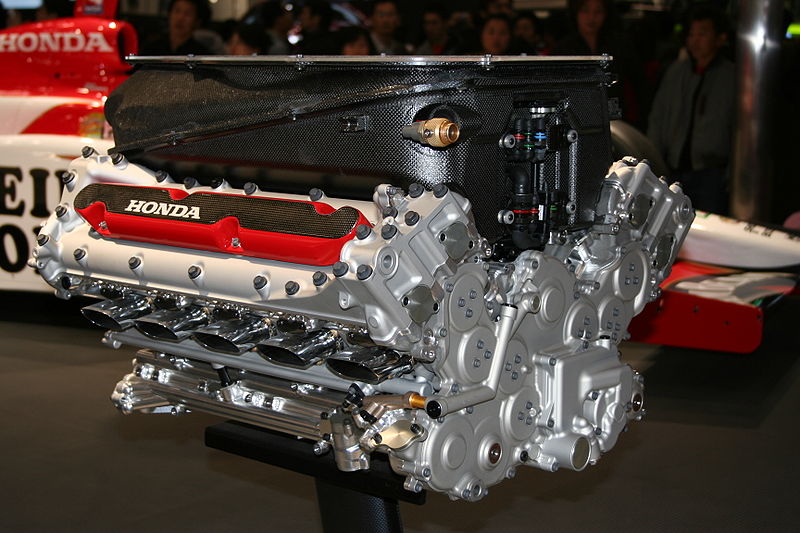
    McLaren’s MP4-31 will be launched on February 21 in the pitlane of Spain’s Circuit de Catalunya. Rumours have also emerged that team has overcome it’s power unit deficiency. Honda, who struggled throughout the 2015 season, are alleged to have solved the issue surrounding its energy recovery system. Some put the rumoured gains that have been made by the Japanese manufacturer in the region in 223 horsepower.

    If it is the case the the Honda engine should be on par with that of Ferrari and Mercedes however it still doesn’t answer the question of the woeful reliability the team endure throughout their 2015 campaign.

    As the first test of the season draws closer you’d have to expect that rumours of such significant gains will remain pure speculation until the team and its drivers can get out on track and prove it.

  • F1 2016: Ferrari Passes Crash Test

    F1 2016: Ferrari Passes Crash Test

    The 2016 Ferrari car is well on course to make its debut in February after passing a mandatory FIA crash test.

    The safety regulations of the FIA dictate that all critical areas of a Formula 1 car pass a standardised crash test before it is allowed to be officially entered into any official FIA race.

    The latest team to pass the crash test is Ferrari who received the official stamp of approval after undergoing several tests. Reports are that the Italian team needed several attempts at passing the test because sampled more than one nose for their 2016 challenger. The Ferrari team’s 2016 car is already reported to be quite different from it’s 2015 predecessor and is rumoured to be introducing a short nose concept for the new season. The new nose isn’t so much a reproduction from what we’ve seen on other cars in 2015 but more a mixture between the nosecone sported by Mercedes and Toro Rosso.

    The 2016 Ferrari, still unnamed, is expected to be launched towards the end of February as testing for the 2016 season gets underway in Spain.

  • FIA and F1 engine manufacturers reach agreement on power unit cost cap

    FIA and F1 engine manufacturers reach agreement on power unit cost cap

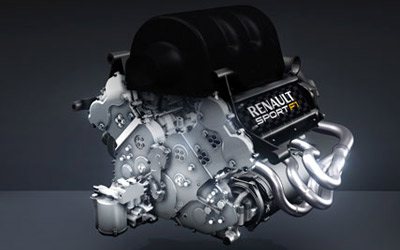
    Formula One’s governing body, the FIA, is expected to implement new rules at the start of the 2018 season which will regulate the costs of F1 engine supply going forward. This follows an agreement being reached by the current F1 engine manufacturers to reduce the cost of a V6 Hybrid power unit considerably, thereby ensuring that customer teams will not be left without an F1 engine deal.

    consensus was reportedly reached between the FIA and F1 engine manufacturers during a meeting in Geneva on Tuesday. Various proposals guaranteeing cost effective supply for all teams were put forward and all indications are that the cost to customer teams will be significantly reduced.

    F1 engine manufacturers had been put under pressure by the FIA who wrote out a public tender for an alternative engine formula in F1. This pressurised current suppliers to come up with a viable solution to alleviate customer teams who are currently struggling just to keep their heads above water as a result of the extremely high power unit costs. The deal is expected to remain in place until at least 2020.

    McLaren Honda F1 enginePower unit prices are targeted to come in at around £12m. This results in a substantial cost reduction – teams are currently paying up to 50% more than that amount.

    In addition, the number of gearboxes allowed for the season have also been reduced to three, as a part of the cost cutting initiative.

    The changes will need to be formally ratified by the FIA’s World Motor Sport Council (WMSC) after which the power unit discussion should be settled for the near future at least.

  • WATCH: FIA 2015 Prize Giving Highlights

    WATCH: FIA 2015 Prize Giving Highlights

    The FIA recently held their annual prize giving. Watch this short highlights clip to catch up on who was awarded and what they had to say.

  • Mandate To Change F1 Given to Ecclestone and Todt

    Mandate To Change F1 Given to Ecclestone and Todt

    The World Motor Sport Council (WMSC) has approved a mandate to FIA President Jean Todt and Formula 1 Supremo Bernie Ecclestone to make changes to the sport.

    Ecclestone and Todt will put forward their proposal by 31 January 2016 with will tackle issues such as governance and Power Units and cost reductions.

    “The World Motor Sport Council approved, by a near unanimous number (just one vote against), a mandate for the FIA President, Jean Todt and the Representative of the Commercial Rights Holder, Bernie Ecclestone to make recommendations and decisions regarding a number of pressing issues in Formula One such as governance, Power Units and cost reduction,” read the statement by the FIA.

    Changes to the technical regulations were also approved. A new manufacturer entering the sport will be allocated 15 development tokens for their first year in the sport and 32 tokens for the second year.

    The power unit tokens for in season development for current teams will be allocated as follows:

    • 2016: 32 tokens
    • 2017: 25 tokens
    • 2018: 20 tokens
    • 2019: 15 tokens

    Sporting Regulation Changes

    • Formula 1 tyre supplier, Pirelli, will now provide three dry weather compounds per race instead of two.
    • Of the 13 sets of tyre available to the driver over the race weekend, Pirelli will choose two sets for the race(one of which must be used in the race) and one set of the softest compound available that can only be used in Q3. A driver will then be able to choose their remaining 10 sets from the available compounds.
    • If a race is declared a dry race, a drive must use at least two different dry-weather tyre compounds, of which one set must be the set chosen by Pirelli.
    • DRS will now be enabled immediately after the Virtual Safety Car (VSC) period. The VSC has also been extended to be used in Free Practice to minimise stoppages in the session.
    • Power units that were homologated in the previous season may be re-homologated for 2016.
    • The FIA have agreed to supply a fourth customer team with a 2015-specification power unit for 2016. Under the 2015 sporting regulations no manufacturer could supply more that one specification Power Unit. i.e. current year and previous year specification engines were not allowed.

    With the confirmation that Ferrari is supplying a fourth team next year, we can safely assume that the fourth team is Toro Rosso.


  • FIA Confirms Biggest Ever F1 Season Calendar for 2016

    FIA Confirms Biggest Ever F1 Season Calendar for 2016


    At the World Motor Sport Council (WMSC) meeting held on Tuesday the FIA confirmed the Formula 1 Calendar for 2016 making it the biggest F1 calendar in the history of the sport with 21 races.

    The Mexican Grand Prix was scheduled in the provisional calendar to go back-to-back with the Brazilian Grand Prix. It has now been moved to go back-to-back with the US Grand Prix in Austin. The US Grand Prix is subject to an agreement with the promoter and the sporting authority.

    The Azerbaijan Grand Prix is penciled in for 19 June 2016 which is the same day at the 24 Hours of Le Mans. The FIA have scheduled the race to avoid any conflict with Le Mans.

    The 2016 Calendar features 6 back to back races.

    Date City Country
    20 March 2016 Melbourne Australia
    3 April 2016 Bahrain Bahrain
    17 April 2016 Shanghai China
    1 May 2016 Sochi Russia
    15 May 2016 Barcelona Spain
    29 May 2016 Monte Carlo Monaco
    12 June 2016 Montreal Canada
    19 June 2016 Baku Azerbaijan*
    3 July 2016 Spielberg Austria
    10 July 2016 Silverstone United Kingdom
    24 July 2016 Budapest Hungary
    31 July 2016 Hockenheim Germany
    28 August 2016 Spa-Francorchamps Belgium
    4 September 2016 Monza Italy
    18 September 2016 Singapore Singapore
    2 October 2016 Sepang Malaysia
    9 October 2016 Suzuka Japan
    23 October 2016 Austin USA**
    30 October 2016 Mexico City Mexico
    13 November 2016 Sao Paolo Brazil
    27 November 2016 Abu Dhabi United Arab Emirates
  • Ferrari Veto’s Cost Cap For Standardized Engines for Customer Teams

    Ferrari Veto’s Cost Cap For Standardized Engines for Customer Teams

    The FIA have released a statement saying that Ferrari has vetoed a decision to implement a cost cap on customer engines. This move has lead the FIA to open up tenders for a cheaper, standardized engine.

    “The FIA, in agreement with FOM, suggested the principle of setting a maximum price for engine and gear box for client teams at the last Strategy Group meeting,” read a statement by the FIA

    “These measures were put to the vote and adopted with a large majority.

    “However, Ferrari SpA decided to go against this and exercise the right of veto long recognised under agreements governing F1.

    “In the interest of the Championship, the FIA has decided not to legally challenge Ferrari SpA’s use of its right of veto.”

    With the FIA deciding not to challenge the decision, it opens up the door for them to call for tenders for a standard engine.

    “The FIA will initiate a consultation with all stakeholders regarding the possible introduction of a client engine, which will be available as of 2017. Following this consultation a call for tenders for this client engine, the cost of which would be much lower than the current power unit, could be undertaken,” the statement continued.

    “Supported by FOM, the FIA will continue in its efforts to ensure the sustained long-term development of the Championship and look for solutions enabling it to achieve this.

    ” It asks all of the teams to make a positive contribution to the success of this approach through proposals and initiatives in the interest of the Championship and its continuation over the long term.”


  • In Season Engine Development for 2016, Teams and FIA Agree

    In Season Engine Development for 2016, Teams and FIA Agree

    The FIA and Formula 1 engine manufacturers have agreed to in season engine development for 2016.

    The current rules state that the engines need to be homologated before the end of February next year and that no further engine development can take place throughout the season which is basically what happened in 2014.

    At a meeting in Geneva by the bosses of Ferrari, Renault, Mercedes and Honda, together with members of the FIA including FIA President Jean Todt an agreement was reached not to tighten the regulation for 2016.

    This decision will be welcomed by Renault who have been playing catch-up with their engine development from 2014. Honda will also welcome the decision considering the tough first season they’ve been experiencing so far this season.

    The rule to allow only 1st tier engines to customer teams was also dropped and it was agreed that manufacturers will be able to provide 2nd tier engines to customers.

    These proposals, however, still need to be agreed upon at the F1 Commission and would require unanimous support, which is expected to happen. It will then be taken to the World Motorsport Council in December and it is expected that it will also pass without any issues.

    Red Bull are in curious position with this new proposal. They have been pushing for 1st tier engines from Mercedes and Ferrari this new proposal rules it out for them. Having said that, a 2015 Mercedes engine is still better than anything on the grid at the moment but would they go for it or will the still push for 1st tier engines?

    Toro Rosso on the other hand will have to take the 2015 Ferrari engine but should get the 2016 engine further on into the 2016 season ableit a 2nd tier one.