Tag: fia

  • F1 2020: Australian Gp Preview – Expectations & Anticipation

    F1 2020: Australian Gp Preview – Expectations & Anticipation

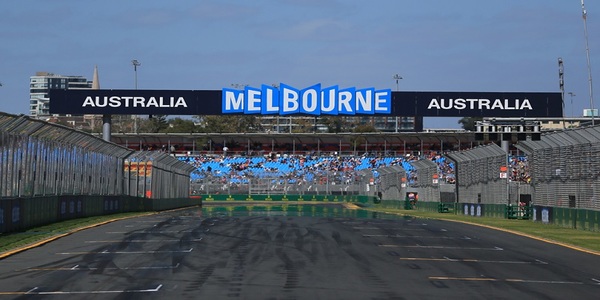
    The wait is nearly over as the 2020 Formula 1 season is poised to commence this weekend at Australia’s Albert Park circuit.

    The Formula 1 paddock will travel nearly halfway around the globe to reach the destination of the first round of the new season. They’ll leave behind not only their base of operations but also the expectations that six days of running in pre-season testing may have suggested. The testing at Spain’s circuit de Barcelona-Catalunya plays a crucial part in the teams’ own understanding of what they have produced for the first few races of the 2020 season. And while they may have some inclination as to where everyone stands it wont be absolutely confirmed until Sunday’s race.

    The threat of coronavirus has already prompted Formula 1 to announce a postponement of the Chinese grand prix. A few days ago the Bahrain grand prix organizers, in conjunction with F1, revealed that the race would go ahead but without any spectators in the stands. German commercial broadcaster RTL has said that it will not be sending any journalists to the first three races of the season. RTL holds free-to-air broadcast rights for Formula 1 and will be broadcasting remotely. Italy too has announced a quarantine of spanning large parts of the country. Nevertheless, Ferrari and Formula 1 are confident that all will be in place for the season-opening race.

    2020 Barcelona February testing IWith the show set to go on there is also the added complexity of the make-up of the Albert Park circuit. The temporary, semi-street track is unlike any other on the calendar. The mixture of medium speed corners and three relatively short straight bits puts a bigger emphasis on braking stability. Still, Australia isn’t always the best indication of the pecking order. But there is still a potential twenty-six world championship points up-for-grabs for whoever wins the race and/or set the fastest lap.

    Though the sharp-end of the grid seems likely to be dominated by the Big Three the mid-field promises to be an incredibly close battle. The stagnant regulations have meant that the 2020 cars are evolutions of their predecessors. It has, potentially, given teams the opportunity to put right any missteps there may have been in 2019 and the occasion to improve their designs for this season.

    The expectation is that Mercedes will arrive in Australia with the quickest car with Red Bull and Ferrari, in that order, trailing the Silver Arrows. But Formula 1 is after all a sport that is infamously unpredictable, especially at the start of a new season. There are still questions however. Has Mercedes sorted the reliability issues suffered in pre-season testing? Did Ferrari run to their full capability? Is Racing Point genuinely nipping at the heels of the Big Three?
  • 2019 F1 Calendar Confirmed and Other Rules Changes from the FIA World Motorsport Council

    2019 F1 Calendar Confirmed and Other Rules Changes from the FIA World Motorsport Council

    The third FIA World Motorsport Council of 2018 was held today in Paris where a number of decisions regarding sporting and technical regulations were taken.

    The 2019 F1 Calendar was approved. Not much will change from this year except there will not be any triple header next year. The United Stated Grand Prix is subject to approval but should be confirmed for 2019.

    In addition to the calendar being confirmed, technical and sporting regulations were confirmed for the 2019 season.

    Sporting Regulations confirmed for 2019:

    • Changes to the Safety Car regulations to ensure there is a consistent point at which drivers may overtake when the Safety Car returns to the pits. This will now be the same in all three types of restart
    • The teams will now be responsible for initial scrutineering of their cars. Before the cars go on track for the first time, teams must declare conformity with all safety related matters
    • The official end-of-race signal will now be a chequered light panel, although the chequered flag will still be shown
    • The team personnel curfew will increase from eight to nine hours

    Technical Regulations confirmed for 2019:

    • Changes to the mirror regulations and also associated rear wing changes (height) for rear view visibility and safety (Articles 3.6 and 14.3)
    • The on-board camera regulations will be modified to improve the TV spectacle (Article 21)
    • Rear endplate lights are to be added for safety (Article 14.5)
    • Minor modifications to the halo fairing (Article 15.2.6) are to be made for safety reasons during a potential driver extraction

    2019 F1 Calendar:

    2019 Calendar

  • F1 2018: Italian Gp Review – Hamilton Snatches Victory

    F1 2018: Italian Gp Review – Hamilton Snatches Victory

    What a difference a day can make. On Saturday the Tifosi were in raptures as Ferrari locked out the front row of the grid with Kimi Raikkonen setting the fastest lap, in terms of average speed, in Formula 1 history.

    But Ferrari’s front row lockout didn’t go anything like they would’ve planned.While it was a relatively clean start for polesitter Kimi Raikkonen the other Ferrari of Sebastian Vettel got caught up with Lewis Hamilton into the second chicane. Vettel and Hamilton came together with the Ferrari driver coming off worse for wear and with a broken front wing which dropped him to plumb last.

    The move by Hamilton was deemed a racing incident and rightly so. Though Vettel may want to believe that the Merc driver didn’t leave him enough space it simply isn’t the case. Instead Vettel could benefit from some serious self-reflection. The old adage goes that you cannot win a race in the first corner but you can certainly lose it. In this instance Vettel should have kept calm and bided his time. But in the moment, as has happened before, he failed to see the bigger picture. This result could have serious ramifications for Vettel and his bid for a fifth driver’s title.

    Hamilton had briefly taken the lead but Raikkonen brilliantly regained it with a move around the outside of the Mercedes driver into the Della Roggia chicane. The Safety Car was deployed to recover the stricken Toro Rosso of Brendon Hartley but Raikkonen handled the re-start easily and maintained the lead of the race. From there Raikkonen kept his Ferrari ahead albeit by a scant second.

    0041The speed of racing around Monza meant the pitstop phase was upon the drivers fairly quickly. Mercedes sent out a pitcrew into the pitlane suggesting that they would call in Hamilton. However, no pitstop eventuated and the mechanics trundled back into the garage. Subsequently, the FIA has clarified that mock pitstops are illegal and will be policed more strictly going forward.

    As it were, Raikkonen set a blistering pace immediately after his pitstop that left with a six second gap over Hamilton. But Mercedes played the perfect strategic hand by using Valtteri Bottas to back Raikkonen into Hamilton. Though the Ferrari driver was able to hold off Hamilton for quite some time with a hand full of laps to go it was clear that his rear tyres were in a critical state. Hamilton, on slightly fresher tyres, was able to take the lead of the race and ultimately the victory.

    In fact, Raikkonen’s rear tyres were in such a critical state it’s a bit of a surprise that he managed to get to the chequered flag. This too could be viewed as a strategic error by Ferrari but one committed long before they even got to Italian grand prix. Ferrari paid the soft tyre next to no mind when it came time to select the compounds for the race. It eventually meant that the team, and Raikkonen, had little to no data and understanding as to how the compound would react and wear in long runs. Hence, they were unable to predict tyre life and likely made their pitstop too early.

    0123Much further adrift Max Verstappen finished third on the road for Red Bull but had five seconds added to his race time for banging wheels with Bottas going into turn one. This promoted Bottas to third while Vettel was ultimately able to recover to fourth. It left Verstappen in fifth while his Red Bull teammate Daniel Ricciardo failed to reach the chequered flag with a confirmed clutch failure.

    Haas F1’s Romain Grosjean finished sixth on the road but his car was subsequently disqualified as the FIA deemed the leading edge of the floor to be illegal. The American team has since lodged an appeal. Grosjean’s disqualification promoted Esteban Ocon to sixth with his Force India teammate Sergio Perez in seventh. Carlos Sainz was eighth for Renault, the team that lodged the complaint against Haas, while Williams’ Lance Stroll was ninth and Sergey Sirotkin scored the first point of his F1 career in tenth.

    Hamilton’s win gives him a thirty point lead in the drivers standings over Vettel heading into Singapore in two weeks time.

    All images courtesy of Pirelli Motorsport 
  • F1 2018: German Gp Review – Hamilton Delivers Miraculous Win

    F1 2018: German Gp Review – Hamilton Delivers Miraculous Win

    How dramatically the Formula 1 pendulum can swing. For most of the German grand prix pole sitter Sebastian Vettel seemed well in control and seemingly heading towards a first win at the Hockenheimgring.

    He led Valtteri Bottas and Kimi Raikkonen cleanly from the start and was eking out the first stint on the ultrasoft compound. Meanwhile Hamilton, starting 14thafter a mechanical failure in quali, was scything his way through the field on the soft compound tyre. Nevertheless, before too long he was a pitstop adrift of the race leader.

    Raikkonen pitted first of the front-runners on lap fifteen. On the soft tyre the Finn delivered a string of fastest laps, which ultimately netted him the lead of the race after the pitstop phase. However, as Vettel’s tyres were twelve laps fresher the Ferrari pitwall instructed Raikkonen to let his German teammate through. Hamilton and his Mercedes team chose not to pit and completed a stunningly impressive stint of 42 laps on the soft tyre. It was unquestionably a master class in tyre management.

    By now Daniel Ricciardo, starting from the back of the grid due to penalties had pulled out of the race after reporting that he was “losing power”.  On lap 46 the rain came in and prompted several drivers, including Verstappen, into the pitlane for intermediate tyres. While the track remained slippery unfortunately for them the rain didn’t increase and they had to switch back to slicks.

    Vettel’s race too would be dramatically affected in the slippery conditions. as the race plunged into chaos with a dozen laps to go. Caught out by conditions Vettel dumped his Ferrari into the barriers and out of the race. It brought out the safety car which Raikkonen and Bottas took advantage off by switching to fresh ultrasofts.

    0090Hamilton too was initially called in only to be told to stay out. The Brit stayed out by controversially cutting the pit entry line. Post race a Mercedes team representative and Hamilton were summoned to the stewards for breaching Appendix L, Chapter IV Article 4 (d) of the FIA International Sporting Code. The regulation states that crossing the pit entry line is prohibited. While Raikkonen received a five second penalty for breaching the same rule in the 2016 Azerbaijan grand prix Hamilton was given only a reprimand. Remarkably, the stewards considered the fact that the “team candidly admitted the mistake and the fact that there was confusion” as a mitigating factor.  Considering this and the inconsistency of the rule application teams will undoubtedly store this nugget for future reference.

    Nonetheless, Hamilton’s drive was a stellar one. His control on the soft tyre and ability to master the slippery conditions makes this victory, arguably, one of the best of his career. The one two victory for Mercedes regains them the lead in the constructors standings by eight points while Hamilton returns to the top of the driver’s standings as well. Raikkonen’s third place, his fourth podium in four races, keeps his third in the standings and some would say still within striking distance should all thing be equal.

    0112Elsewhere, Verstappen finished fourth after a gamble on the intermediate tyres didn’t pay off. Renault’s Nico Hulkenberg proved best of the rest in fifth with Romain Grosjean, Sergio Perez, Esteban Ocon, Marcus Ericsson, and Toro Rosso’s Brendon Hartley rounding out the top ten. Meanwhile, in addition to Vettel and Ricciardo both McLaren drivers and both the Williams’ failed to reach the chequered flag.

    Hamilton now takes a 17-point lead to the Hungarian grand prix next weekend where Ferrari and especially Red Bull are expected to have the upper hand.

    All images courtesy of Pirelli Motorsport

  • Aero Changes for F1 in 2019

    Aero Changes for F1 in 2019

    The FIA, together with the F1 Commission, the World Motorsport Council and the F1 Strategy group approved regulation changes for the 2019 season that will hopefully improve the racing and overtaking.

    Early in the season at the Bahrain Grand Prix, the teams were presented with proposals to improve racing and overtaking for 2019. Together with most of the teams, the FIA then got to work to find technical solutions and these solutions, among others were ratified yesterday.

    The changes, approved by e-vote, are as follows:

    • Simplified front wing, with a larger span, and low outwash potential
    • Simplified front brake duct with no winglets
    • Wider and deeper rear wing

    “Yesterday’s vote follows an intense period of research into the FIA’s initial proposals, which were made with the support of the F1 Commercial Rights Holder, conducted by a majority of the F1 teams,” said the FIA in a statement.

    “These studies indicated the strong likelihood of a positive impact on racing and overtaking within F1 and as such have now been ratified for implementation in 2019.

    “The approved changes are separate to the ongoing work being undertaken in regard to defining Formula 1’s regulations for 2021 and beyond.

    “In addition to the aerodynamic changes ratified yesterday, the FIA is continuing to evaluate a range of other measures aimed at encouraging closer racing and boosting overtaking in F1.”

  • “Positive Steps” in FIA & F1 Commission Meeting

    “Positive Steps” in FIA & F1 Commission Meeting

    The Formula 1 Commission and the Formula 1 Strategy Group met at the FIA headquarters today regarding the future of the sport.

    FIA President Jean Todt and F1 CEO Chase Carey were also in attendance at the meeting.

    “Positive and constructive discussions were held regarding the future of Formula 1,” said the FIA in a statement about the talks that were held.

    Changes to the 2019 technical regulations were discussed and below changes were agreed upon to go to the World Motorsport Council to be ratified.

    • Increase the fuel allowance for the race from 105 to 110 kg, in order to be able to use the engine at full power at all times
    • Separate the weight of the car from that of the driver
    • Require all drivers to wear biometric gloves to increase safety and facilitate medical rescue.

    Discussions on aerodynamics changes are ongoing. The FIA are working with the teams to find solutions. Their research is scheduled to be completed at the end of April 2018.

    The FIA, at the meeting, also presented their 2021 power unit proposals which entail the following:

    • 1.6 litre engine
    • V6 Turbo-Hybrid
    • The deletion of MGU-H exhaust energy recovery

    Talks will continue with current manufacturers and potential future manufacturers with a view of concluding the 2021 engine regulations before the end of May 2018.

  • Grid Girls Out, Grid Kids In

    Grid Girls Out, Grid Kids In

    Formula One together with the FIA have announced that Grid Kids will replace Grid Girls.

    The initiative called Grid Kids will work with the Grand Prix promoters and ASNs – the FIA-recognised national sporting authorities – who will in turn provide a unique experience for youngsters and their parents to experience the build up to a race on the grid.

    The FIA said in a statement that the youngsters on the grid will be chosen by their motorsport clubs on merit, or by lottery, and will already be competing in karting or junior formulae.

    Grid kids will be chosen for each Formula 1 race and for the major F2 and GP3 series. They will be accompanied by their parents who will have paddock passes for the Sunday.

    “Formula 1 is the pinnacle of motor sport and the dream of every young racer competing the junior series that make up the FIA’s single-seater pyramid, from karting all the way to F1,” said Jean Todt, President of the FIA.

    “We are therefore delighted to bring that dream a little closer by giving the future champions of our sport the opportunity to stand alongside their heroes on the grid in the build-up to the race start.

    “For the wider FIA, this is an excellent initiative that provides additional support to our member ASNs in their efforts to grow motorsport worldwide through a unique reward they can make available to youngsters participating in their national series.”

    Sean Bratches, F1 Managing Director of Commercial Operations said: “This will be an extraordinary moment for these youngsters: imagine, standing beside their heroes, watch as they prepare to race, the elite of the elite in motorsport, to be there, alongside them in those precious few minutes just before the start.

    “What an unforgettable experience, for them, and their families.

    “An inspiration to keep driving, training and learning so that they can dream of one day being there themselves. What better way to inspire the next generation of Formula 1 heroes.”


    Photo Credit: Sahara Force India Formula One Team

  • 2021 Formula One Engine Specifications Set Out by FIA

    2021 Formula One Engine Specifications Set Out by FIA

    Formula One Team Representatives, FIA President Jean Todt, the commercial rights holders for Formula One and potential engine suppliers all met at the FIA headquarters in Paris Tuesday 31 October 2017 to discuss the 2021 engine regulations and the way forward for the sport.

    Manufacturers were presented with a road map for the development of the next generation of F1 technical regulations. This road map was in-line with the FIA’s objectives for the sport which include cost reductions, maintaining road relevance of the hybrid technology, and improving the spectacle for the fans and the sound of the cars.

    “The proposals shared today have been developed jointly by the FIA and by F1 using data and input from teams, power unit suppliers and outside experts, and the overall framework for the 2021 power unit definition will be in place and published by the FIA at the end of 2017,” said the FIA in a statement.

    The objective of the meeting was not to finalise any regulations but to rather present the way forward with the input of the various stake holders in Formula One.

    On the cost reduction front, the teams will continue to work to define certain elements of the power unit. The final specifications, of which, will be made available at the end of 2018. This ensures teams continue to develop the current power units.

    Key new features of the 2021 Power Units

    • 1.6 Litre, V6 Turbo Hybrid
    • 3000rpm higher engine running speed range to improve the sound
    • Prescriptive internal design parameters to restrict development costs and discourage extreme designs and running conditions
    • Removal of the MGU-H
    • More powerful MGU-K with focus on manual driver deployment in race together with option to save up energy over several laps to give a driver controlled, tactical element to racing
    • Single turbo with dimensional constraints and weight limits
    • Standard energy store and control electronics
    • High Level of external prescriptive design to give ‘Plug-And-Play’ engine/chassis/transmission swap capability
    • Intention to investigate tighter fuel regulations and limits on number of fuels used

    There was no mention of any change to the fuel flow restriction which is what limits the high revving nature of the cars. The current rev limit is set at 15 000 rpm. During qualifying and the race the teams limit the cars to 12 000 rpm because of the fuel flow rate limit. If the limit is not increased, it will make no difference to the sound of the engines.

    The change to the manual deployment of the electrical energy brings us back to pre-2014 where the drivers could deploy the extra electrical energy when they felt necessary. This should put more control in the drivers hands.

    Formula 1, Managing Director, Motorsports Ross Brawn said: “The 2021 power unit is an example of the future way the FIA as regulators, F1 as commercial right holders, the teams and the manufacturers as stakeholders will work together for the common good of the sport.

    “The proposal presented today was the outcome of a series of meetings which took place during 2017 with the current teams participating in the FIA Formula 1 World Championship and the manufacturers who showed their interest to be part of the pinnacle of motor sport.

    “Also, we’ve carefully listened to what the fans think about the current PU and what they would like to see in the near future with the objective to define a set of regulations which will provide a powertrain that is simpler, cheaper and noisier and will create the conditions to facilitate new manufacturers to enter Formula 1 as powertrain suppliers and to reach a more levelled field in the sport.

    “The new F1 has the target to be the world’s leading global sports competition married to state of the art technology.

    “To excite, engage, and awe fans of all ages but to do so in a sustainable manner. We believe that the future power unit will achieve this.”

  • Halo Head Protection Confirmed for 2018

    Halo Head Protection Confirmed for 2018

    The FIA have confirmed that the Halo head protection device that was trailed in 2016 will be implemented for the 2018 season.

    For the first time, all the F1 teams were represented at the Strategy Group Meeting. Observers from Renault, Toro Rosso, Sauber and Haas were present at the meeting.

    A few enhancements will be made to the Halo before implementation. We should see those enhancements later on in the season.

    “Following the unanimous agreement of the Strategy Group, in July 2016, to introduce additional frontal protection for Formula One and the repeated support from the drivers, the FIA confirms the introduction of the Halo for 2018,” said the FIA in a statement.

    “With the support of the teams, certain features of its design will be further enhanced.

    “Having developed and evaluated a large number of devices over the past five years, it had become clear that the Halo presents the best overall safety performance.”

    While the main topic of discussion was the Halo, cost cutting measures were discussed. A new approach was presented that received unanimous support. To further explore this cost cutting approach a working group will be setup which will consist of representatives from the Formula One Group, the FIA and the teams to explore various solutions to ensure the sport remains sustainable.

    The halo has had a mixed reaction since it made it’s debut last year for trails. The same reaction can be expected once the Halo gets implemented.

  • F1 2017: Austria Gp Preview – Advantage Mercedes

    F1 2017: Austria Gp Preview – Advantage Mercedes

    From the confines of Baku City Formula 1 returns to the sprawling vista of Austria for the ninth round of the 2017 championship.

    Situated in Spielberg the Red Bull Ring is a short circuit consisting of nine corners in total. These corners are linked with several long straits and though it may be a power-dominant circuit its layout allows more than a few good spots for overtaking. “At any kind of power circuit like Austria you want to be smooth and get good exits in order to give yourself the best chance on the long straights,” said Red Bull’s Daniel Ricciardo. “The compromise is always the aero package. In the middle to the end of the lap you want more downforce because the corners are quite fast but more downforce means you are slower on the straights, so the key is to find a good balance throughout the lap”.

    The Austrian circuit is of course owned by Red Bull which makes the weekend all the more important for the team. Ironically the layout of the Red Bull Ring and its demand on engine power has never been a Renault strong suit. Nevertheless, a minor upgrade, brought by Renault in Baku, has moved them slightly forward in terms of ultimate power output. What’s more, both Red Bulls ran relatively well in Baku, which is similarly in its demands on the power unit. It is perhaps unlikely that Ricciardo or Verstappen could, on pure pace, beat either Mercedes or Ferrari but likewise, they’ll likely not be challenged by either Williams or Force India who traditionally perform well at low drag circuits. Red Bull and their drivers are probably the most canny drivers on the grid and they will be close enough to snatch up any positions should something go awry.

    GP EUROPA F1/2016The Pirelli tyre compounds available this weekend, the ultra- and supersoft, would ordinarily play to the strength of the Ferrari. While they’ll still likely fair better on the ultrasoft compound the low level of degradation will limit any creativity on pit stop strategies. What’s more the ultrasoft tyre is effectively last year’s supersoft tyre and on a circuit where drivers made do with a one-stopper in 2016 it’s unlikely that any one team will carry a significant advantage.

    The FIA had announced that there would be no further punishment for Vettel behaviour in Baku during which he turned his Ferrari into the side of Hamilton’s Mercedes behind the safety car. While the outcome of the re-investigation has gone in Vettel’s favour it is an important weekend for the Ferrari driver regardless. As it stands Vettel remains in the lead of the championship but there’s no denying that Canada and Baku were messy races, which has somewhat, stalled Ferrari’s momentum. This will not be an easy weekend for Ferrari either. The circuit layout means that Mercedes start the weekend as clear favourites and you can bet that the media will still be posing questions about the Baku-incident. In fact, it wouldn’t come as a surprise if Ferrari institutes a media blackout on their drivers this weekend.

    Sebastian Vettel - Italian Grand Prix qualifyingWhatever your opinion of Vettel’s behaviour and what sort of punishment he does, or does not deserve, he must deliver this weekend. The best way to put the last race behind him and to control the story is by delivering on track. It wont be easy though. Hamilton and Mercedes not only start the weekend as clear favourites and without the incessant and uncomfortable attention of the media, but, vitally, with a sort of momentum that can quickly become ominous.