Tag: ferrari

  • 2015 Formula 1 Austrian Grand Prix: Friday Press Conference

    2015 Formula 1 Austrian Grand Prix: Friday Press Conference

    TEAM REPRESENTATIVES

    Mattia BINOTTO (Ferrari)

    James KEY (Toro Rosso)

    Rob WHITE (RenaultSport)

    Tom McCULLOUGH (Force India)

    Pat SYMONDS (Williams)

    Paul MONAGHAN (Red Bull Racing)

    PRESS CONFERENCE

    Mattia, if we could start with you. This morning Sebastian had some engine-related problems and this afternoon there were other problems, seemingly gearbox-related. Could you please explain what happened and if these problems are related?

    Mattia BINOTTO: The two problems are different. This morning it was not engine-related it was a problem related to the transmission on the back of the car. It is something that we have seen, we have analysed, we are confident to sort it out for the rest of the weekend. While in the afternoon, it just happened, we analysed, apparently it’s on the gearbox but again we’ll try to analyse and fix it for the rest of the weekend.

    Do they have any relationship?

    MB: No relationship between the two.

    OK. In Canada, Ferrari introduced upgrades or an upgraded engine, but from the outside we couldn’t really assess what the improvement or the gains had been, especially with Vettel’s penalty. Could you elaborate a little bit and tell us if we are expecting any further improvements here?

    MB: You are right, we introduced an improvement in Canada, especially on the power unit. We spent already some tokens, which is something the regulations allowed us, so we introduced what for us is a step in terms of engine performance. Obviously we take the entire weekend looking at the telemetry and we can confirm that the spec and step in performance that we were expecting was effectively there and available. As you said, we had some problems during the weekend – qualifying, Vettel – difficult to assess the overall performance of the car and the vehicle. I have to say that in the race itself we missed the podium, which was the first time for the season, so we cannot be happy with the overall performance. On the other side, looking at the data it seems our pace was not so bad finally and we are really expecting this weekend really to try to have some more indications and hopefully let’s try to demonstrate what we are able to do.

    Thank you very much? Moving on to you Paul now. [Daniel] Ricciardo is using his fifth engine here, therefore there is going to be a penalty on Sunday, but [Daniil] Kvyat is not. Is there any rationale behind it? Is it something related to mileage on the engine or is it something more strategically minded at Red Bull’s home race?

    Paul MONAGHAN: There’s nothing strategic really. We knew we had this coming. It’s our choice and need to do so, so at the moment Daniel’s got the new one in and as and when we need to we’ll do the other one as well.

    There’s also a new chassis for Ricciardo at this race. Is this something that was already in the agenda or was it a precautionary measure?

    PM: There’s nothing precautionary; the chassis was becoming available. We looked at doing in for Canada but it’s a bit of a rush and then take it to the other side of the Atlantic and if the preparations are poor it’s a bit more painful to sort out. So it fell to be introduced here and nothing more to it than that really.

    Thank you very much. Moving to you now Rob: Honda introduced an upgrade in Canada, so did Ferrari, Mercedes spent most of its tokens at the beginning of the season. Renault has got 12 tokens available and has used none, so the question everyone is asking at this point? Because I’m sure there’s a masterplan behind it.

    Rob WHITE: I think tokens have taken on a bit of a life of their own and maybe we should calm down about tokens a bit. We clearly have tokens in hand and tokens in hand partly because we reassessed our options before the season to take account of the late-breaking news that the riles interpretation would be different to how it was expected, so you’re quite right: tokens not spent thus far because we had to divert our attention to other matters. We had an obvious big reliability moment that required our full attention. As Paul mentioned a little bit earlier, we knew we were in bother right from the start and we knew that the management of the sporting penalties would be an issue for us right from the start of the season and now we’ve got to make all that come together with all the performance upgrades that are now back on course but will of course arrive later than we had originally planned and the direct consequence of having to deal with the reliability matters.

    You’re talking about performance and recently Christian Horner mentioned that these couple of weeks, these coming weeks are going to be crucial for engine development because of some tests happening on the dyno at Viry. He said that he is expecting a major impact on future performance but is it  short-term or mid-term performance and also which timescales are we really talking about?

    RW: Engine development is a long, hard slog and the weeks in front of us are important, both for now, for preparing the races that are directly in front of us and preparing for the rest of the season, because coming back to the previous matter about token introduction then there becomes a kind of juggling act in which you have to plan, by counting back from the end of the season, when it makes sense to spend tokens, when it’s possible to make a planned introduction and then there’s another kind of tactical dimension which is that you might choose to have a spec available that is not planned but is available in case opportunity presents itself, so the weeks we are in now are kind of crucial for both of those short-term matters and of course we also have to keep our eye on the longer-term future, including the forthcoming season, because it’s now back at base at the factory that those things are built. So the answer is, unfortunately, not easy and the forthcoming weeks are extremely important to us on all three fronts.

    Thank you very much. Moving to you Tom. Tom, we’ve seen an increased performance for Force India, especially in Canada a couple of weeks ago and now we’re coming into another power track – a few really – this one, Silverstone, so where is Force India at the moment in the pecking order at this time?

    Tom McCULLOUGH: We’re in a very tight, competitive part of the grid, so that changes from race to race, track to track. We were obviously on the back foot at the start of the year, missing some winter testing, and it takes you a while just to catch up the understanding of the car and the tyres. A lot of things changed for us over the winter, so we didn’t really get the most out of our package in the first few races. We picked up points where we could do. I think with our existing car, we’ve got a reasonable understanding of it, both in Monaco with Sergio’s strong qualifying and race and as you say with Nico in Montreal. But we’re in such a tight part of the grid, little mistakes by our competitors, even ourselves, one tenth here and there, the nature of the last few circuits makes a big difference come race day, so it’s just about really maximising what you’ve got.

    Next week’s test is going to be very important for everybody but especially for you guys – introducing this long-awaited B-spec car. How much of a difference do you think it’s going to male?

    TMcC: Yeah, so the plan from the early part of the year was always to introduce that for the Silverstone race and that’s still on target. We’ve been slowly introducing some of the parts in the background actually, some of them mechanical, some of them on the aero side, and that really started from the Barcelona test onward, so it’s a continual process. We’re really looking forward to getting the new package, it is quite different; there are a lot of parts changing between now and the Silverstone race and we’re evaluating quite a few of those next week at the test here. Until we see it on the track we won’t know for sure, but we’re pretty encouraged from what we see on the numbers side of things.

    Thank you very much and coming to you James: keeping on with the testing topic, next week’s test is probably going to be very important for Force India, but Toro Rosso introduced its big package in the beginning of the season with minor upgrades later on. So how valuable do you see this next test being for you at Toro Rosso?

    James KEY: Testing is always valuable because there is always stuff you want to do and things you want to learn, so we have an absolutely full test list for two days. We introduced the biggest package of the season in test three in Barcelona before the beginning of the season and that was the basis, if you like of the race car we wanted rather than the launch-spec car, but actually we’ve introduced quite a bit since then. It’s been some little subtle changes that are not so obvious… actually, the biggest change is this race believe it or not, so we’ve actually got a lot of stuff on the car, much of it under the bodywork this event. So we’ve got quite a bit going on and I think we will certainly evaluate some of the stuff we’ve brought here in more detail at the test and test some bits for the future as well. So there’s plenty to do.

    Toro Rosso has made a big step forward, a big change compared to last year, on many different fronts – chassis, operational. How do you take it to the next step?

    JK: I think you first need to figure out how far we’ve gone! I think there’s still more to do. We’re not happy with the points we’ve scored so far, there have been missed opportunities so far this year for various reasons. So we’re not maximizing our abilities right now, that’s the first step we have to make in the short term. Longer term you just have to keep chipping away. At the end of the day your performance is all relative to everyone else, so you can do the same thing and find you’ve taken a step or not. So we’ve got to set ourselves some ambitious targets for next year and chip away at that and we have got lots of little things in the background to try to help us on the operational side, on the production side, take that a step further and so on. It’s a continuation of the process really.

    Moving to you now Pat: Williams’ biggest step was probably made last year where the differences were a lot bigger. This season the difference seems to be a lot smaller, so the little gains that would be seen as positives last year, this year seem to be maybe a bit disappointing or that Williams is not where it should be or where everyone is expecting. Is it hard to manage expectations this season, especially coming into a race like Austria, which was one of the breakthroughs for Williams last year?

    Pat SYMONDS: Yeah, I think you need to put things in perspective. Of course last year was a huge jump from ninth in the championship to ultimately third in the championship, but remember this time last year we were sixth in the championship with about 53 points, I can’t remember exactly, we’re nearly double those points now. By most measures we’re having a pretty good year. Of course we’d like to move forward, you know, that’s what we’re all here for. Everyone in this room just wants to win. But I think we’re pretty pleased with the way things are going. We’ve again brought new parts to this race; we keep on pushing forwards and, yeah, I think it’s a pretty successful year.

    I wanted to ask about these upgrades, because this is the major upgrade for Williams, at least so far this season. Is it matching the expectation? Is it what you thought it was going to be or is there still something that needs tweaking?

    PS: No. It’s certainly met all the expectations. We took a slightly cautious approach this morning, checked each thing out, went a little bit further in the afternoon and certainly the analysis of this morning’s results show exactly what we expected and at first glance this afternoon’s look good, although of course the engineers here and back at Grove are analysing all the runs from this afternoon right at the moment.

    QUESTIONS FROM THE FLOOR

    Q: (Frédéric Ferret – L’Equipe) A question to Mattia Binotto and Paul Monaghan: would you think of using a third driver on Friday morning? Do you think there is a technical explanation to change driver from FP1 to FP2?

    MB: In terms of technical I don’t think there is any benefit. By the terms that you have good drivers in the car, that are used to driving your own car I think that’s the most that can give you the real feedback and technical feedback. But that’s not all. Technical is not all. We have to think of young drivers. We have to think of how to grow up with our drivers and I think that finally it’s a very good opportunity. When you manage a team, you do no0t manage only the technical, but the sportive, the drivers, your people, your technicians and it’s the overall balance that is important, so it’s a great opportunity, it’s important to try to take it and I think that’s the point.

    Paul?

    PM: On the technical front, as we stand at the moment, I wouldn’t see any merit in putting a third driver in our car of a Friday morning. Obviously one of our drivers is in his second season so he is still learning as he goes and I think they both benefit from mileage in the car at the moment. Later on in the season if there was some interest in taking a third driver of course we can accommodate it. You sometimes get a different view on the car, which can be quite interesting but as we stand at the moment I wouldn’t change.

    Q: (Peter Farkas – Auto Motor) A question to all of you. One of the complaints fans frequently make is the drivers are instructed too much on the radio. I understand that, at the moment, it wouldn’t be possible for them to manage all the systems of the car themselves because they are too complex. Do you think it would be possible to reprogram the systems and make some displays available for them so they can manage things like fuel saving and brake temperature and things like that themselves without any outside help? Because maybe they would seem to be managing the race without any help and that would look better from the outside.

    Mattia, would you like to start?

    MB: I’d be happy for someone else to start! James?

    JK: It’s a big topic actually because it’s not so easy. The cars are complex now and since last year considerably so with the power units that we use. The thing for a driver now, when he presses the throttle there’s a lot of stuff going on compared to before. You have electrical machines switching in and out, you’ve got the various motive recharge maybe happening there as well, you’ve got driveability which may change the way the engine… blah, blah, blah… so it’s not ‘press the throttle and go’ anymore. There’s a lot of stuff going on in the background and sometimes you need to change the way that’s working and you need to instruct the driver to do it. But he can’t feel any of that. That’s really instruction to him. Obviously you’d like to automate all of those things but actually doing that is a huge task. If you look at the number of engineers who have to monitor all of these systems from a reliability point of view, a performance point of view – and a safety point of view to a certain extent – that we have to have in the garage now. Both on the chassis and the engine side. It’s quite considerable numbers. And to automate all of their tasks at the track is a very big and expensive thing to do. So maybe in the future you could do it – but right now you have to give the driver some idea of what to do to make use of these cars. He can’t feel what’s going on and he couldn’t possibly understand what’s going on. I guess the second thing is that the only way he could find out if he has to do something is to look at his dashboard on the steering wheel or maybe listening to something in his earpiece. You can’t do that when you’re going around Monaco or Singapore. You need to keep your eyes on the track. So, for them to monitor information that, again, all these engineers are doing in the background, is extremely difficult. I think we’ve got ourselves to the point at the moment where we have to manage the car in a certain way. Possibly in the future it will get a little bit easier.

    Tom?

    TMcC: I think James has covered a lot of it. The cars are a lot more complicated this year. Ultimately there’s various different aspects to it. We’re very focused often on performance. It’s a global optimization game we’re playing, so we’re trying to maximize every single thing. But, take Canada for example, we’ve been going there for many years, the brakes have always been pretty difficult, you can sit and watch on TV, dust coming out the side of the front wheels as the drivers hit the brakes hard, so it’s been many years that we’ve been informing drivers. Brake wear sensors have been on the cars for ten, fifteen, maybe even longer, you know? So I don’t think a lot of it’s new, obviously a lot of it is now communicated on the TV, so people are a lot more aware of it. There’s lots to it.

    Pat?

    PS: It’s interesting, isn’t it. Because, on the one hand, the FIA particularly, don’t want us to have driver aids. Now, where does a driver aid start and stop? A lot of the instructions we give them could be automated – but then one might argue that they are driver aids. So, what’s the role of the driver? It does change over the years, and these systems are complex, and probably, given time, we will automate more and more of them. I think with the different power unit manufacturers at the moment, the level of automation is probably different for each one. I don’t find it particularly obnoxious that we assist the driver in these ways.

    Paul?

    PM: In answer to your question directly: yes we could. In reality, because we’re a prototype business and things are continually evolving, it would simply add to the burden of trying to evolve the car. I think, as James has already mentioned, it would be an enormous task to take on the automation of the entire process. There’s a sort-of blend between what we can do in software and what we rely on the driver to activate through the steering wheel or whatever controls we’re asking him to do it with. There was a bit of a clarification towards the end of last year on what we can and cannot do and I think we’ve reached a sensible compromise in which, as Pat’s noted, we don’t necessarily aid the driver but there’s reliance on both parties to work together. So, it comes together via team action, the driver’s part of the team and everybody seeks to just make the car go as fast as possible and get to the end. So that’s where we stand at the moment. I think the compromise is about right.

    Mattia?

    MB: No doubt that the current power unit are a lot more complex compared to the past and there is a lot of engineering and, as James said, a lot of people in the back looking at telemetry and trying to manage the entire situation. But I think that finally, trying to optimize the performance of the car has always been true, even in the past and even when we didn’t have such a complex – maybe – power unit there was still a lot of communication with the drivers, trying to optimize corners: entry, mid-corner, exit of the corner, switching and whatever. I think the intensity of the communication was there in the past, is still there today. It’s only a matter that maybe today you’re trying to manage the complexity of the power unit and yesterday you were doing something else. But, you will never stop it at a certain stage because it’s a matter of whatever you can do to optimize and improve yourself.

    Rob, as an engine manufacturer and supplier is there anything you’d like to add?

    RW: Just that there’s an awful lot of stuff that’s already very automated. I share the view that we could go a lot further if it was an absolute requirement – but we’d need to deal with the problems that Pat’s identified. And then there’s another thing we need to be a little bit aware of, which is that there’s always something unintended that comes out of one of these shots from the hip and we should be extremely conscious of the unintended consequences: it would for sure be a massively costly undertaking which would be another big background cost and activity invisible from the stands and make perhaps Formula One even more deviant.

    Q: Joe Saward (Grand Prix Special) I have a general question because we’ve heard a lot of people talking about new technology and the sport and whether it’s beneficial or not. Do you think that hybrid technology has been beneficial for Formula One – and is it really something that can be used on road cars?

    RW: Beneficial for Formula One? I’m sure there are as many opinions as there are opinion holders and therefore difficult to give one. For sure, applicable to road cars: absolutely. Not necessarily the same organs, not necessarily the same components but the exact same design, development objectives and some of the technologies are directly transferable. Road cars becoming more and more sophisticated. The challenge of markets all over the world requires this family of technology and without them it’s not possible to satisfy the regulatory requirements, it’s not possible to satisfy the market requirements, so for sure there’s a direct relevance to the road car industry.

    MB: As Rob said, no doubt there’s a relevance for the road cars. I think the hybrid is the future of the power unit and if you look as well in terms of fuel consumption, efficiency, the whole systems, what we are achieving currently in F1 is really something quite impressive compared to the current, let me say, achievements on the road cars. So, somehow it’s good for F1 to be there and there is a lot to be done. We are speaking about overall efficiency of our power units, road cars are slightly over 30 per cent, maybe in terms of the best power unit. All of us are clearly over 40 per cent and even higher than that – overall efficiency, so it’s a technology which is important, and somehow I think we are doing very well for the road cars as well in F1.

    Paul?

    PM: I’m going to look at it a different way. There’s a set of rules there, and someone’s got to win at the end of the season, and we’re all going to chase the same title, and whether you put a different engine in the back, change the rules somewhat, the game stays the same, we want to win. So yes, there’s been a power unit change. I would agree with Rob that it has some relevance to road cars and will drive that aspect of it along quite well – but at the end of the day, all we want to do is make the car go as fast as we can, and that’s what we’ll chase.

    Pat?

    PS: I think Joe, it would be interesting, had we not done it, would you be asking the question in reverse? In other words, would you be saying “why hasn’t Formula One gone greener?” With the car industry heading for fleet averages of 100g of CO2 per kilometer, that doesn’t come for free. I think when we took the decision to produce these highly hybridized engines it was a time when CO2 was very firmly coming onto the scene. It’s still there. What wasn’t on the scene at the time, of course, was recession, so some of the timing was unfortunate – but I really do believe that, if we were still producing very inefficient gas-guzzlers, I think people would be looking at us and saying: “are you really doing the right thing?” So, I’m very sure that we did do the right thing.

    James?

    JK: I agree with the points that both Pat and Paul have made, actually. I think as a technology it’s for sure relevant. It puts it very much out there in a racing environment. It’s not an unglamorous environment in the end and that’s probably a good thing for a green technology, so I think it’s relevant – and I think that’s a positive thing and the right thing to do. But equally, we are here as race teams and most of us are chassis constructors and, y’know, you want to go out and do your best as well. So, I guess the question is: have we pitched the regs right for this technology? Maybe – and this is purely with hindsight – but if you could go back and think ‘have we got this exactly as we’d want it and will it work as we’d want it?’ Maybe we’d tweak it a bit. It’s a bit late for that now. But I think probably we need to question whether what we’ve ended up with is absolutely the right thing for now, rather than the principal of it.

    Tom – is there anything you’d like to add?

    TMcC: Not really much more to add – I think it’s been said. I think the costs have definitely gone up for us doing it. I agree with the points that have been made, for the independent team that’s put a big burden on our shoulders because the cars are a lot more expensive to manufacture and so are  the power units. So, I think for the sport to be sustainable for the independent teams going forward, that is an issue – but it does drive the technology forwards for sure.

    Q: (Dieter Rencken – Racing Lines) Question to the two engine representatives. Did your companies… were they in favour of the token system when it was originally mooted and, if so, do you now regret it in hindsight, given the complexity and the logistics of managing the entire system?

    MB: We are Ferrari were in favour. We are in favour because we knew we were behind compared to our main competitors and, for us, it represents somehow a opportunity for a continuous development and a continuous catch-up. We do not regret it and we have still tokens to play and we are very happy somehow with what we are achieving and what we are doing. We know that there is still room of improvement, there is maybe still a gap compared to the main competitors but we know that, overall, we are really progressing well and, again, we are not yet middle of the season, still tokens to be played, and very happy that we have tokens available.

    RW: There’s two questions nested. At the time, when they were created, then it was seen as a way of managing development over a number of years. It seemed like a decent compromise at the time. As I said earlier, it seems like they’ve taken on a bit of a life of their own, which has honestly, in my opinion, been excessive. Like Mattia, when the subsidiary question of tokens during the season became clear, then we were in favour and remain in favour. And for that reason, as I said earlier, I don’t feel like there’s anything to regret about the current token status during this year. We will also, of course, want to be consistent and would also be in favour of that same mechanism in future years. Which is not currently the case, bearing in mind the 2016 sporting regulations as they are now written.

    Q: (Viktor Bognar – Magya Rszo) Question to Pat and Mattia: recently there was an interesting comment from Lotus technical chief Nick Chester who said that today’s engines and gearboxes are so reliable – or at least some of them – that the cars would be able to compete in and finish a 24 hour race, providing they have the fuel and tyres. Do you agree with that and if yes, do you think it sends a positive message about Formula One which is considered a sprint race?

    PS: I have to admit my ignorance of not knowing what distance they cover in 24 hours at Le Mans. 5300 kilometers? Well, we could certainly do that on a gearbox, I’m sure. We probably haven’t achieved that yet but we’ve certainly been well over four thousand kilometres on test gearboxes, so I don’t think that’s a real problem, and actually engines have, I believe, got up there as well, so yes, we could do it. But that’s not to say that it means that Formula One isn’t a sprint race and in fact, I think that Le Mans is a 24 hour sprint race these days, so I think we’re always operating at maximum performance. I think that it’s the massively improved engineering and understanding of the componentry that’s occurred in the last few years that has allowed us to reach these high levels of reliability and in doing so, they have of course reduced costs considerably, from the days when we used to fit a fresh engine every day.

    MB: It seems that Pat was quite completing the answer. Our engines and power units and power trains are doing the distance that Le Mans is somehow doing, not completely far from it and in that respect, I think yes, they can do it.

    Q: (Daniele Sparisci – Corriere della Sera) Mattia Binotto, in Canada you have introduced a new engine spending tokens and Mercedes too did some upgrades but apparently without spending tokens. From what we have seen until now, how do you see the gap to Mercedes? Do you feel you are closing it in terms of performance and power?

    MB: So it’s difficult to judge the difference in performance in power units, because finally what you can judge eventually is the difference in performance between the cars. We know what we’ve done on our side, we cannot know what Mercedes have done so far. It’s true we’ve spent tokens, you spend them for performance, so what we did was clearly an upgrade on performance in Canada, while Mercedes has not spent any tokens yet. They simply tried to fix some reliability problems, so whatever was modified in the second units introduced in Canada was for the only purpose of reliability. Now what you can do is try to compare GPS data on different cars, try to understand the different profile of acceleration and try to extract from it eventually what could be the difference or the gap in overall power in performance. It’s clear that compared to what was the situation of last year now the difference has been reduced by a lot and obviously you are doing… when you are doing such an exercise you do it on a statistical basis, difficult to really have an accurate value on a single lap, on a single comparison but we believe that currently the situation is really close and eventually, race by race, you can have some results which can go in that direction or another, but after Canada we believe that Mercedes is still in front but by a quantity which becomes really reduced at the moment.

    Q: (Joe Saward – Grand Prix Special) Is it possible to get a thousand horsepower out of the current engines and without changing the amount of fuel being used?

    PM: I would refer you to the gentleman in the yellow shirt behind me to answer that question!

    RW: The answer is a thousand horsepower from the engine – I think you said engine, power unit – there’s a big old load of horsepower washing around in the electrical machines. A thousand horsepower all the time without more fuel flow rate is very difficult in the short term, impossible in the short term, unlikely in the longer term. The question is all around the efficiency to which Mattia alluded earlier and of course the thing that fundamentally controls the power coming out of the power unit is the amount of  fuel rate going into the hundred kilograms per hour limit and the efficiency of the power unit so the short answer is not yet and in order to get a thousand horsepower out of the current family of power units, a modest increase in fuel flow would be the shortcut.

    MB: I think Rob is right when he says that in the short term it will be very difficult but that in the medium long term there is something that is achievable so I think that even without touching the current fuel flow it’s something that with our overall power units it’s a level of performance that you could achieve. No doubt that by increasing the fuel flow would be a shortcut and the only thing is that it could even be something interesting to increase the overall performance of the cars and affect the colour of F1.

    PS: Yeah, I bow to the engine specialists. I think that we would need more fuel if we assume that the electrical side is held constant, because of course you could increase the electrical power and you could do that using the same amount of fuel but you couldn’t keep it sustained of course. It depends on the size of the energy stored, it depends on the size of the recovery so yes, it could be done but it would be for a limited time. But is that really what we want to do? Why do we want a thousand horsepower, it’s quite an emotive number isn’t it? We’ve just been talking about WEC cars, they’re way over a thousand horsepower. Are they actually more spectacular? Personally, I’d rather see the hundred kilogram race fuel limit go down year on year so it forced us into more efficient solutions.

    JK: Well, again, I would defer to what Rob has said. I think he’s certainly (inaudible) better than I. I wouldn’t entirely agree with Pat’s fuel limit change right now but yeah, as Rob, Matteo said, maybe in the future it would be possible unless there’s a short term measure that could help plus the electrical stuff as well.

    TMcC: I agree with Pat really. I think efficiency is definitely important, going forward from the marketing point of view as well.

    Q: (Dieter Rencken – Racing Lines) To the four race team people if I could call them that, particularly the two Red Bull representatives; how difficult is it – and I’m sure that at some stage in your careers your teams have signed up for the wrong sort of engine if I can term it that – how difficult is it to live with the demotivating factor, knowing that for an extended period of time you probably aren’t going to win, particularly if it’s a power driven formula, the way that we have at the moment?

    PM: I would challenge your summation that it’s demotivating. I think it would be very difficult to ask the guys who work hard in the garage – and those that attend the track that work far harder than I do – to say we’re going to go along but don’t worry about it. The drive and determination that exists in our garage is unstinting and it’s a credit to the people that are in there and a credit to the  substantial workforce in Milton Keynes that there’s no loss of motivation. We’ve enjoyed some years in the limelight and we’ve enjoyed four world titles and I think the legacy of that is that we are keen to get back there. It’s a partnership with whichever engine supplier you have and in our current circumstances we will work as hard as we can with Renault, we’re not demotivated, we want to pull ourselves back up to winning races and challenging for titles, there’s no lack of motivation. If you look at the timescales in which Ferrari have turned themselves around, they’ve done it in a year and they’ve done it as a package. Last year, arguably we were a little bit quicker than those guys, now the roles are reversed, so it can be done in perhaps a shorter scale that you’re alluding to and that’s the aim, it is achievable. Will we do it or not? Time will tell, won’t it?

    JK: I tend to agree with Paul. I think it’s not demotivating. Actually, you obviously work hard and support your partner. We work very hard with Renault and they’re working very hard to push things along. In a way it motivates you more because in the short term you have to compensate with the chassis a little bit while you’re waiting for the updates to come and that’s what we’ve been working on. So our targets haven’t changed for… I’m sure Paul’s haven’t changed at all, they’re trying to get back to the top and ours certainly haven’t changed. We’re trying to have a gradual rise through the championship because of the situation that we face now. We just have to do it as best we can with Renault and on the chassis side.

    TMcC: I haven’t too much to add. If I think of my role and the role of most of the people in the factory, it is a global optimisation game. The power unit is one of them and it’s obviously being spoken about a lot at the moment but there are so many other aspects that make our job very challenging and being on top of all of those, not ignoring any of the other factors is what’s important. Take Monaco for an example: it’s not really a power circuit, as a team we definitely struggled coming up to that event. We knew if we were on top of our game we could qualify well within the top ten. Both our drivers are on top form at the moment. Sergio on that day qualified seventh I think, and we raced to seventh and that was due to lots of factors: getting the most out of the car, the drivers, the people, so that motivates us a lot.

    PS: I don’t really know why you focus on the power unit. Motor sport is…  all sport is a meritocracy. In motor sport there are many elements of it and in our case we have a competitor who uses the same power unit who is regularly beating us. I don’t find that demotivating, I find it inspirational, I want to beat them. I think it applies to every aspect of the many faculties of engineering that we have to bring together in a Formula One car.

  • 2015 Formula 1 Austrian Grand Prix: Thursday Press Conference

    2015 Formula 1 Austrian Grand Prix: Thursday Press Conference

    DRIVERS:

    Daniel RICCIARDO (Red Bull Racing)

    Fernando ALONSO (McLaren)

    Carlos SAINZ (Toro Rosso)

    Nico ROSBERG (Mercedes)

    Nico HULKENBERG (Force India)

    Sebastian VETTEL (Ferrari)

    PRESS CONFERENCE

    Nico, if we can start with you. First of all, congratulations on winning Le Mans, a great achievement, especially at your first attempt. How was it?

    Nico HULKENBERG: Yeah, it was quite amazing obviously. A very intense and long week. I flew from Montreal to Paris and then straight to Le Mans. But yeah, to come there, first attempt, and to win it with my team and my team-mates has just been incredible. You know, very emotional moments and a great experience that I don’t want to miss obviously, so very proud about what we’ve achieved there.

    In Canada we saw a performance lift for Force India, scoring points again and also for yourself. There’s a B-spec car coming relatively soon. So how optimistic are you, looking at the future?

    NH: Yeah, quite, to be honest. I think, like you say, recently we’ve made good progress, we had a car in the points four of the last five grands prix, so we see signs that it is getting better. In Silverstone we’ll get some new parts and major upgrades, so I really look forward to those. I’m quite we can have a really strong second half of the season, which hopefully then will make up for the first bit, which wasn’t quite to plan.

    Thank you very much, Nico. Daniel, coming to you, Canada was a very difficult weekend and you left not knowing what the problem was really. There has been talk about chassis, replacing [it]… Have there been any solutions implemented and did you identify the problems in Canada?

    Daniel RICCIARDO: Yeah, we understood quite a lot post-Canada. I think a lot of it as well was… I probably came in there quite in a way emotional from what happened there a year earlier and probably just hoping for too much. So that already probably set the target too high from the start and it sort of spiralled into a poor weekend, for obviously some other reasons as well. We come here now with let’s say a fresh approach on it all. I have a new chassis. I think we’ve got any variables that were maybe there in Canada and ready to have a good weekend. We know the track doesn’t realty suit everything for our performance right now but hopefully have a good weekend here in front of the home fans.

    There’s also been talk about you replacing engines and taking penalties here at a track that is probably not the best for you guys. Would this be the most sensible option this weekend?

    DR: It’s likely. We’re definitely looking into it. I think we’ll have a decision probably by this evening as to what we’ll do this weekend. It’s likely we’ll take a penalty here. If it’s not here it’s in the next few. We have to see as well what chance we have coming up in Silverstone and Budapest. Wouldn’t be a surprise if we see it here but probably a few hours away from a decision.

    Thank you very much Daniel. Moving on to you Nico Rosberg. Monaco last year seemed to be a turning point in your championship challenge and this season seems to be shaping up the same way. Is that your impression?

    Nico ROSBERG: I don’t know. I don’t think so much about the past or things like that. For me it’s now. Lately, yeah, it’s been going OK. Of course, Canada not such – I lost out there. But I’m feeling good, feeling good. It’s great to be here; I won here last year, so arriving here very optimistically, we have a great car, so it should be a great weekend.

    Speaking about the car, Lewis recently said he’s feeling much happier with the 2015 car than he was with the 2014 car. What’s your impression?

    NR: Pretty much the same. It’s very similar, you know, because not much has changed in the regulations, so it’s just ongoing development, so it’s very similar.

    Thank you very much Nico. Moving on to Carlos now. Carlos this is a home race for the Red Bull family but probably not the best suited to the Toro Rosso’s strengths, but neither was Canada and there you finished very close to the points, you finished ahead of the one of the Red Bulls. How do you see this weekend panning out for you?

    Carlos SAINZ: Yeah, it should be another quite difficult weekend. Probably not as difficult as Canada because Canada was really not playing to our strengths because there were not really any high-speed corners, it was all either slow speed or a long straight. Here we have a couple of really quick corners that we know that our car is quite strong over there. We are also bringing a couple of upgrades that should also make us a bit quicker, and from there on expect another tough weekend, but maybe not as tough as Canada.

    We’re almost half way through the season and how do you rate it so far, because it’s been a pretty good start?

    CS: Yeah, I must say I am very happy with how things have gone in the first seven races. I think it has been a great achievement by all the team, especially with all the small problems we are having. The car is very, very competitive; it’s a great car to drive. Also the team is helping me a lot in all the areas to improve. I keep learning; every single time I go out in the car I enjoy, I learn. I’m very happy with it. Also there were a lot of new tracks for me, something like four or five new tracks, so it’s been a good first part of the season for sure.

    Thanks very much. Moving on to you Seb: a pretty promising performance in Canada, despite the penalties on the grid. Given the package you have at the moment, and also considering a good grid start, a positive start, how do you see this weekend panning out and do you see yourself challenging for victory here?

    Sebastian VETTEL: I think ideally we always try to fight for the win. I know that we have a strong package this year, a strong car, so if everything goes normal then we should be a little bit further up again, especially on Saturday this weekend. In general, looking forward to the weekend. It’s a great place, a great venue. I think all of us really enjoy coming here. But we also have to be realistic [in] challenging the Mercedes. We know that first of all we need to have a flawless weekend, a perfect weekend and maybe hoping for them to have a little bit of a struggle. But in normal circumstances it is quite difficult to beat them as they are still the favourites going in and there is still quite a big gap.

    Canada, again despite the penalties, seemed to be a pretty enjoyable race for you, with all the overtaking moves, the fights on track. How good was it to have to battle through the field?

    SV: For sure it was more entertaining than the races before. It’s normal when you come from the back. Obviously first of all you go through cars that are slower than you. In general, obviously it was busier and at the end once I had my position I think I could extract a little bit more the pace of the car. But overall it was quite exciting and it was a good recovery, valuable points. We avoided all the risk in the opening lap which is always a bit messy if you are in the back of the field, but fortunately it all worked out and as I said we could get good points.

    Thank you very much. And last but not least, hola Fernando there at the back. You were involved in one of these very exciting fights on track [in Canada]. For you personally, as a racing driver, was this one of the highlights of the season so far – these battles, not giving up, fighting as much as you could?

    Fernando ALONSO: Probably that’s a little bit too much, you know to be one of the highlights. I think it was nice to battle a little bit but it was for half a lap, what I could do, so I prefer to do a little bit longer than that. I am enjoying the starts, the first laps. In Barcelona I think I was P8 in corner three. In Canada I also was ninth or eighth in corner six and then slowly you are losing positions on the straight with our lack of speed, so that’s a little bit a not ideal situation but at least the starts and the first lap I’m enjoying it.

    We’re coming to a track that they say is a little bit similar to Canada, maybe a little bit less extreme than Canada and Canada was a very difficult weekend for McLaren-Honda and for yourself as well. Do you think that this weekend could be a lot different, in terms of that you are bringing upgrades and still working on the car and identifying the problems as well?

    FA: Well, it will be another weekend where it’s going to be tough, where the results will not look good especially because there are probably some penalties to pay, so I think it’s going to be a test weekend for us, very important, there are some updates on the car, so hopefully we go out of this weekend with some answers and there is the test next week as well. Important days ahead for us. I’m quite optimistic with the things that are coming to the car and for the near future but as I said in terms of result it will not change too much this weekend or probably it will be even worse.

    QUESTIONS FROM THE FLOOR

    Q: (Peter Farkas – Auto Motor) A question for all the drivers. We have been hearing a lot about lift and coast since Canada and Mercedes issues a press release in the last couple of days trying to explain what lift and coast was and they stated that from a driving point of view it was not easy to do lift and coast because you have to find a different braking point because of the different speed that you were arriving at the corner. Could you please, as a driver, shed some light on how difficult it is to lift and coast and to find your braking point and also a question specifically to Nico Hulkenberg: Nico, how much lift and coast you have to do at Le Mans?

    NH: I think to do lift and coast in Formula One is quite easy – you just left off and coast down. The difficulty is to do it efficiently and to lose as little lap time as possible. Like you say, when you do it your braking point varies, so it’s quite difficult for us to judge, you know, where the actual braking point has moved. To get close to that target, I think that’s the art, that’s what makes it difficult. In WEC we also have quite a bit of lift and coast. They have different fuel regulations, they’re even tighter than here in Formula One, so fuel management is quote crucial there.

    Fernando as one of the most experienced drivers can you please explain a little about lift and coast?

    FA: Well, as Nico said, there’s not much secret – you lift, you coast to the corner, you brake. We are professional drivers, so we should know where is the point of braking, depends on the speed we arrive. There are other implications on fuel saving – the state of charge, the battery you may have at that point of the race, how much deployment you have on the straights in terms of the K deployment, so yeah, we drive maybe eight or ten different cars in a weekend. We drive low fuel, high fuel, maximum deployment, no deployment, fuel saving, new tyres, old tyres, so there are a variable of four or five seconds in the car during different stages of the free practice, qualifying or the race, so that’s the biggest difficulty, but we are professional drivers, we are ready to do that.

    Seb?

    SV: Nothing to add.

    Nico?

    NR: Well, lift and coast is the most efficient way to save fuel, they did it even in the 80s. I remember my dad racing with Alain Prost at McLaren and they had to save fuel because everybody was running out of fuel at the end of the race, so nothing has changed there. Just that it’s become more professional now and more accurate and more detailed. That doesn’t mean… still even if we’re doing that, we’re driving at the absolute limit of the car – it’s just a different kind of driving style, y’know? And even that driving style is very challenging, and you’re still pushing like crazy, you’re just driving a different way. That’s it.

    And Carlos, as one of the new guys, Can you explain what your experience is with it?

    CS: Yeah, for me something quite new. I have not been used to that… never in my life. And personally, it’s not a thing I really like, especially because I have to do it from very early in the race, probably after the first lap you have already the engineers telling you to lift and coast. I remember Australia was very big, Canada was again very big. You have to adapt and you have to be quick – but probably the amount that I was doing in the last… these two races was probably a bit too much for my opinion. But it’s something that I have to do, something that I have to learn and I will adapt.

    Q: (Dieter Rencken – Racing Lines) Question to you Nico. You’re the only driver here Nico – in fact the only driver in Formula One – who’s been able to drive with two completely different tyre brands over consecutive weekends, different in terms of philosophy, construction etcetera. Can you, from a driver perspective, give us the difference between the Pirellis you use here and the Michelins you use in Le Mans please?

    NH: Yeah, it’s obviously a different tyre but it’s also a completely different car – so it’s a bit like comparing apples and pears. I think here we have more tyre degradation, which makes racing exciting and stuff, and in Le Mans the tyres obviously have to last a lot longer. The race is 24 hours and not just 300km, so it’s a completely different game – but otherwise it’s difficult to just take the tyre, isolate it from the rest of the car and the differences and compare that.

    Q: (Ralf Bach – Sport Bild) Question for five guys – apart from Nico Hülkenberg – and one after especially for Fernando. Could you imagine in future to take part as well in Le Mans? And for you Fernando, how do you rate the victory of Nico – because I have learned you have been very close to a Porsche deal as well for this year.

    FA: Yes, I considered to race in Le Mans. In the future – and when in the future I don’t know – I just said it was very close this year, so maybe next year. I don’t know.

    Daniel?

    DR: Yeah, it would be fun. I watched quite a lot of it actually, about 18 hours. I’m a fan! Yeah, it was cool. Racing is what we do, it’s fun, it’s nice to have a weekend off but when I was watching it I was obviously thinking it would be nice to be racing as well, on this weekend off. So, if we could manage to do more, like they did in the old days as well, there was drivers jumping from categories. Fortunately Nico’s made us all look good and I think he’s made it all seem possible for us now. So, maybe we’ll get the praise from our teams to venture into these things for the future.

    Nico, have you considered racing at Le Mans?

    NR: No, not really. At the moment I’m pretty focussed on this year so I haven’t thought about that.

    And you Seb?

    SV: A little bit along the lines of Daniel. I think it’s great to watch, especially as everyone has the impression that, a 24 Hour race, people tend to take it easy because the race is so long and so many things can happen, but it was great to see the guys were actually flat out from the first lap. For all of the race, basically. So, I think as racing drivers that’s what we’re after, to push every single lap and for a long time, obviously that means more fun. So, might be something in the future to think about. Obviously massive respect for what Nico did.

    Carlos, it might be a long way on the horizon but would you consider it?

    CS: Or not, who knows! If an offer comes, why not take it. For sure, its professionally one of the most prestigious races in the world and, to participate in that, after participating in F1, it would be something mega. Of course, I’m more than open. Anything that has four wheels and a steering wheel and an engine I would like to drive – so whatever.

    Q: (Istvan Janos Simon – Auto Magazine) Daniel, last year you came here on the back of a great win in Montreal with high spirits to Austria, to Spielberg, to the home of the Red Bull Racing team. Now, after a year it’s a completely different atmosphere within the team I guess. Could you talk to me about this morale of the team? How do you prepare? What is different compared to last year at the same time – for you and for the team?

    DR: I think that now it’s… yeah, we’re in a different position this year. Obviously a massive high. I think sitting at this press conference last year… I think it’s just reassess and re-evaluate our, or my, let’s say, expectations for what we’re capable of at the moment. And yeah, obviously I experienced some of the lows in Canada and then after that weekend I looked back on it all and said ‘OK, we have to, unfortunately for now, lower the bar and just try to not really look at the big picture of getting a podium or getting inside the top five, it’s just making sure we can just maximise our weekend for now and try and bring the team forwards as quick as possible. I know there’s lots of updates coming, some have worked more than others – but obviously we’re still pushing, we’re still trying. Like all things, they do take time, I think. You hope it turns around quicker but that’s the nature of the sport sometimes. Just learn to be a bit more patient I guess, and just make sure at least that I’m maximising my weekend. Obviously Canada wasn’t a good weekend, so just try and get back, let’s say, on the front foot this weekend and whatever position it puts us in, we’ll accept it and just try and keep the head down and more forwards.

    Q: (Silvia Arias – Parabrisas Magazine) Fernando, you said this weekend maybe going to be worse in terms of your performances. The car performances. Did you expect it takes so long to get the right performance – or let’s say, a good one. And how do you keep the optimism in this case?

    FA: Obviously the position we found ourselves in winter testing was not ideal. Probably we expect a little bit more – but it is the way it is. I think the performance has been always improving race after race. I think here it will be the case as well. The thing of this weekend is just the final result. We don’t know if it’s going to be good enough to make us happy – because probably with the penalties we will start a little bit already at the back and pay some extra penalties. So that will be not ideal. In terms of performance, we expect a lot from the car in the next month or two months. So we will see how we end up before summer and how we end up at the end of the year. That will give us some hopes for next year, let’s say. It’s the way it is. Why I remain optimistic? Because I see a lot of things inside the team, I see the group of people we have, I see the programme that we have in terms of chassis and in terms of engine. I see the resources, I see the talent of the team, so it’s a question of time when we will be competitive. Hopefully we will make it very short, that period of learning that we are having at the moment – but I’m optimistic.

    Q: (Barna Zsoldos –  Nemzeti Sport) Daniel, Carlos and Sebastian; from next year, we will have a new super licence system which is based on earning points. For the GP2 title, you will get 50 points, for a European Formula Three title you will get 40 points and for a Formula Renault 3.5 title you get only 30 points. Do you also feel that success in Formula Renault 3.5 is worth less than the other two categories?

    DR: I never raced in GP2 and I know when I was doing World series it was the old spec car so it wasn’t even as fast as they are now and I thought that was already a very good stepping stone. I thought that car taught me a lot to – let’s say – prepare me well for Formula One and now I believe it’s… I see it’s quite a lot closer. Yeah, I would say it should be closer than that, we should get a bit more points than… did you say Formula Three is getting more points? OK. Judging on the speed of the car, obviously, and let’s say the lap time and whatever, I think the field is good in World series so I would expect it to have at least the same amount of points as Formula Three.

    SV: Well, I think all three of us gained our experience in Formula Renault 3.5 or World series. Obviously I also drove the old car but I thought it was a great car, a great championship, you’re the main event so everything happens around you, so you get a lot of time on the track which obviously is very important. I think it should be appreciated more, probably if you express it in points but equally I don’t see the reason why young drivers have to score points. I think it’s clear when someone is ready, someone has the talent to make the step. It doesn’t matter where he comes from, from Formula Three, from Formula Renault or GP2 so I guess it’s just another thing implemented to help confusing.

    CS: Judging by my experience last year and my experience this year, I just can only say that 3.5 prepared me very well for Formula One. It’s a very quick car, especially the last spec, very very quick, has a lot of downforce and I felt that when I stepped up to Formula One I was ready so probably more points would have been – in my opinion – I would give it more points, for sure.

    Q: (Gerhard Kuntschik – Salzburger Nachrichten) This is a question for all the drivers in manufacturers’ teams: are you dealing with the history of your manufacturers and are you interested in vintage cars and would you like to try some of these in the near future?

    NR: Yeah, very interested in the history. I like to watch the videos and read the books and everything. I’m really into vintage cars also, a big fan. Actually yesterday I drove a 300SL roadster from Stuttgart all the way to Schaffhausen in Switzerland which was awesome. It was such an incredible experience to drive those old cars and how advanced they already were back in those days so I always like driving them, yeah.

    SV: Yeah, almost a dream came true in this regard this year(to join Ferrari), great to see the history. I think it’s a very very special brand in racing in particular. So there’s a lot of cars from the history, especially old racing cars and it’s nice to see that they try to keep most of them intact and ready to go, so if there’s some time, hopefully I’m allowed to do a couple of laps around Fiorano in some of the old cars.

    FA: Yeah, obviously I’ve been lucky, feel privileged to drive for McLaren-Honda, for Ferrari, for Renault to some extent. Definitely when you see all those cars and some of them are the cars which you watched on television when you were a kid so definitely it’s nice to see the history behind a team or behind a manufacturer and also to drive those cars is always a little gift when you have that opportunity and we enjoy every minute.

    Q: (Joe van Burik – NU.NL) Daniel and Fernando: you have both voiced your frustration regarding the performance of your cars, most notably in Canada. Does this encourage you to look around for other opportunities?

    DR: Yeah, I expressed some frustration in Canada and I think – as I said – it was a bit of a spiral effect from year one, from probably the best day of my life to obviously a tough weekend. Yeah, I let some frustration out but as I said, I got back after the race, back home to Europe and – let’s say – assessed the weekend. Unfortunately, sometimes, you have to be a bit patient and for sure I’m set now with Red Bull and I would love to try and get back on the top step with them. Yeah, just got to be patient and just try and work out with them as a team and hopefully let out some frustration on track if I need to in a good positive way. But yeah, for now obviously my target is to get back on top with them and then we will see. The future is long but short term that’s where I look.

    FA: Same.

    Q: (Luigi Perna – La Gazzetta dello Sport) Seb, you said that the gap to Mercedes is still very high at the moment. Are you confident that you, Ferrari,  can reduce it in the second part of the season, considering that you are introducing upgrades in the second part of the season, as are Mercedes, or will it be more difficult?

    SV: Well, first of all I think you have to see that it is natural that from track to track it might vary a bit but I think we’ve already done an incredible job. If you look at winter testing and where we are now, I think we consider ourselves to be quite a bit closer. Yeah, obviously it’s not that easy to make the gap smaller and smaller because Mercedes is a strong team and obviously they are improving as well. They introduced a new spec of engine in Canada so they’re also making progress but our target for sure, is to make bigger progress to finally close the gap, so for sure, we are hoping that in the second part of the season, we are starting to get closer – closer than we are now.

    Q: (Peter Vamosi – Vas Nepe Kiadoi) To all the German drivers but mainly for Sebastian as ambassador for the ADAC: who do you think could be the next German driver in Formula One? It seems that right now the juniors are not represented in Formula Three or Renault 3.5. Mick Schumacher is one who seems to be coming to Formula One. Can there also be other names?

    SV: Well, obviously you’ve mentioned the Formula 4 championship. Obviously that’s not the closest to Formula One so short term I think it’s always tricky. Obviously there’s a couple of German guys around  and I think it’s completely normal to have sometimes more, sometimes less drivers from your country represented in Formula One. I remember a couple of years ago I think when I joined, when Nico joined there was a period when we had six German drivers on the grid so obviously we were quite lucky because we had young drivers and experienced drivers. Now, at that time, I  remember there were no French drivers and the French press was desperate because there weren’t any French drivers on the grid. They asked the questions: what is the secret, why are there so many German drivers? So I think it’s natural that it goes up and down. If you look at the grid now, there’s a couple of French drivers for quite a couple of years now. I think that’s normal and then you need to give everyone time. I think if you talk about guys that are now 15, 16 years old, obviously it could turn around quick. You can, obviously, drive a Formula One car at the age of 17 but if you look at it in a normal way, it takes quite a couple of years from there where you need to develop yourself. I think it’s wrong, now, to give you a name because it’s wrong to put pressure on any of these young drivers but I think there’s a couple around. It’s true that maybe it’s less if you look at the number compared to ten years ago but as I said, I think it’s completely natural if you then look further down the road to go-karting. Still in Germany, there’s one of the strongest championship in the whole of Europe with the German kart championship for juniors and for seniors. Seniors are considered guys from 15 years to probably 18 years old so I’m not worried. There’s a lot of attention for the guys, great championships to start from. As I mentioned, go-karting and then Formula 4 as a platform and then on to Formula Three Euroseries, so there’s plenty of stuff to do.

    NH: Not much more to add.

    NR: Well, Pascal Wehrlein, our test driver for example, he’s surely the best candidate short term.

    Q: (Zsolt Godina – Fana Media) Nico Hulkenberg, could you please tell us about your new package?

    NH: It’s a couple of new parts. As you can imagine; it’s going to be quite a lot: front wing, floor, side pods so you’ll see it, it’s going to be quite different, I would expect.

    Q: (Manuel Franco – Diario AS) Sebastian, Daniel and Fernando: what is your opinion about Carlos Sainz’s start of his first season in Formula One?

    FA: Probably I’m on one side but yeah, I think it’s been perfect so far. It has been surprising everybody, not so much me because I have known him for many years and he’s showing his talent now in F1 with sometimes competitive cars, sometimes not but he’s always putting in some top performances together with a strong teammate as well, so that’s very positive in the first year, no mistakes. He will be the future of our country so I definitely hope the best for him.

    DR: Yeah, not much to add really, he’s obviously doing very well. I won’t give him too much of a big head because he’s sitting pretty close to us. In a way, obviously, it’s a bit of a compliment to the Red Bull programme. I think they’ve got a bit of a gift for selecting some drivers that have turned out to be pretty successful and Carlos and again also his teammate Max, they’ve obviously started off very well in their rookie year. Dany my teammate now, obviously just having his rookie year last year, showing good signs. Carlos is definitely on the right path. Obviously it runs in the blood with his family as well.

    SV: I think he’s had a great start. I think he has all the ingredients, he’s quick and he’s willing to learn. I remember when he was probably in a not so nice role as one of the support drivers for us at Red Bull Racing, the last couple of years. Until last year, he was pushing very hard and he’s willing to learn and he’s willing to make progress and I think that’s very important if you want to make it.

  • F1 2015: Austrian Grand Prix Preview – Power King At Red Bull Ring

    F1 2015: Austrian Grand Prix Preview – Power King At Red Bull Ring

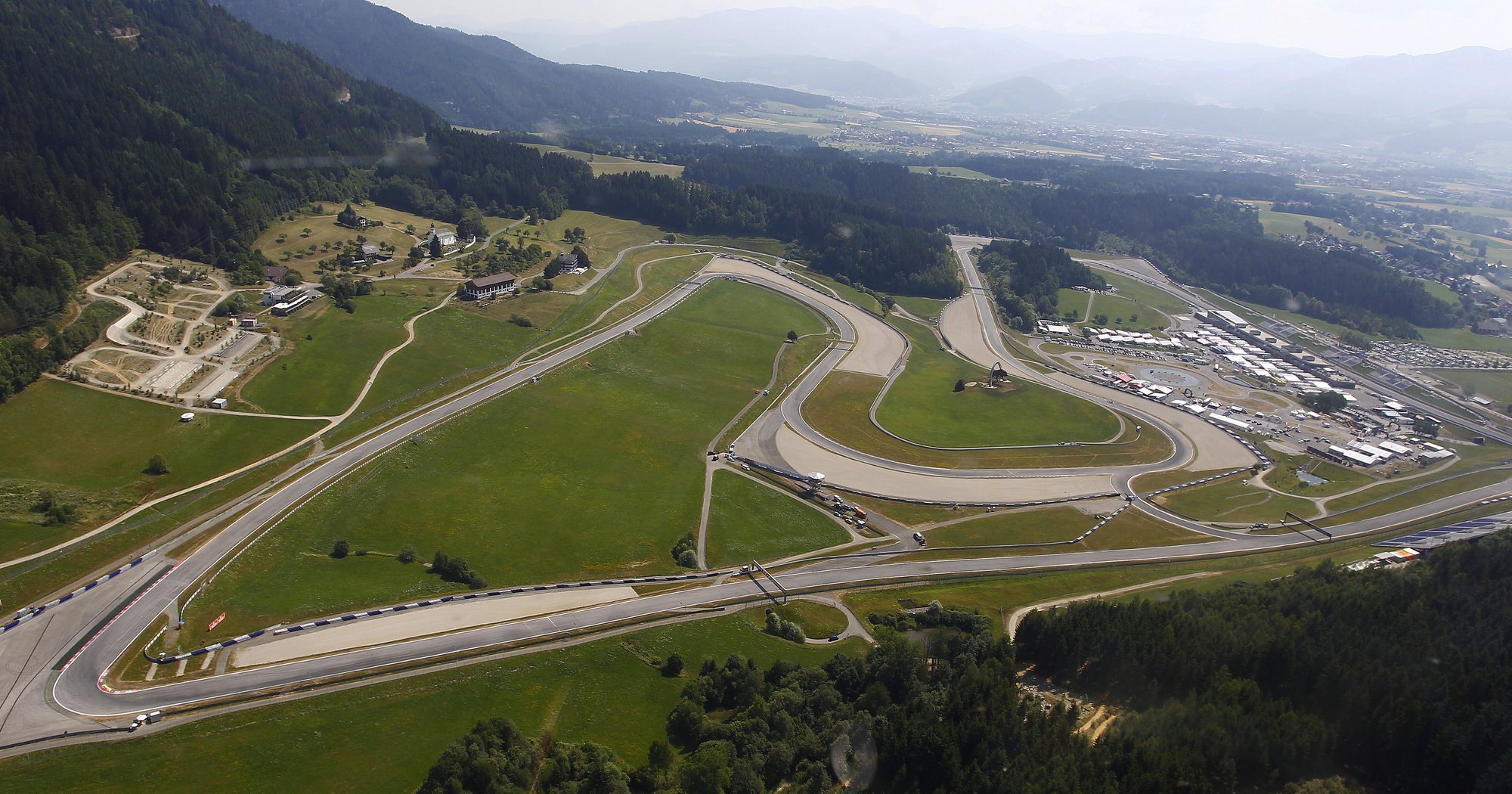
    Power is defined as the capacity to move with great speed or force. As the Austrian Grand Prix’s four and a half kilometres circuit has only nine corners amongst its three long straights is it the classic power circuit.

    Austria’s interest in Formula 1 was indifferent at best until the rise of Jochen Rindt in the mid 1960s. Rindt arrived at the first ever race around the Osterreichring in 1970 but lost out to Jacky Ickx in the Ferrari. He would never return to his home grand prix as he fatally crashed at the following Italian Grand Prix. Rindt remains the only posthumous world champion in the sport.

    Austria’s love affair with Formula 1 would be renewed with the revelation of Niki Lauda who would go on to win three Formula 1 world championships. Decades later it would be renamed the A1 Ring and be re-introduced to the Formula 1 calendar in 1997 and host a yearly grand prix until 2003. The controversial 2002 race in which Rubens Barrichello handed victory to teammate Michael Schumacher is inscribed in its and in Formula 1’s infamous history of the Austrian Grand Prix.

    Red Bull Ring - Austrian Grand PrixIn 2011 the circuit was rebranded and brought back to Formula 1 in 2014 as the Red Bull Ring. It was here, twelve months ago, that the Williams duo of Felipe Massa and Valtteri Bottas stunned the paddock by locking out the front row of the grid. In the end victory went to Mercedes driver Nico Rosberg ahead of teammate Lewis Hamilton with Valtteri Bottas in third.

    In Canada Williams secured their first podium with Bottas but they can hardly be considered as having turned a corner. If it was not for fellow Finn Kimi Raikkonen’s spin in the Canadian Grand Prix, the podium would have been highly doubtful. It’s been a tricky season for the Grove based team which hasn’t reached the heights of 2014. With all things being equal Massa and Bottas will likely not be at the sharp-end on Sunday but they could still make life very difficult for Ferrari and perhaps even Mercedes in Saturday qualifying.

    Besides those with the potential for victory the mid-field battle is worth keeping an eye on as it invariably delivers the most exciting battles of a race. Thanks to their Mercedes power unit Lotus is looking forward to a strong weekend and a decent haul of points. “Looking at the circuit and talking to our drivers and engineers it’s a place that could suit us so we’re feeling quite positive heading there, especially after the E23 showed pretty well in Canada,” said Deputy team Principal Federico Gastaldi.

    Seventy percent of the lap around the Red Bull Ring is spent at full throttle bringing the power unit well and truly to the centre of the picture this weekend. Ferrari introduced an upgraded engine during the Canadian Grand Prix weekend but was unable let loose it’s potential. It may not be as simple this weekend either as cooler temperatures in the Styrian Mountains will complicate Ferrari’s potential. When Ferrari has shown a pace advantage this season it has come from being able to switch on and look after the Pirelli tyres in warmer conditions.

    The Formula 1 headlines over last little while have been quite spectacular. As Williams’ co-founder Patrick Head received a knighthood from the Queen and Nico Hulkenberg won the Le Mans 24 hours in a LMP1 Porsche it’s now over to Formula 1 to deliver an Austrain Grand Prix worthy of its celebrated history.

  • Broadcast Times for the Formula 1 Grosser Preis Von Osterreich 2015

    Broadcast Times for the Formula 1 Grosser Preis Von Osterreich 2015

    The hills will be alive to the sound of Formula 1 for round 8 of the Formula 1 World Championship at the Red Bull ring for the Austrian Grand Prix.

    In the picturesque Styrian mountains lies the 4.326km track ready and waiting to host another round of the F1 Championship. The circuit is a power hungry circuit with its long straights and fast corners. With the track high up in the mountains, it may dull the power of some power units, which McLaren have already warned about. There are not that many slow corners around the circuit but the few that are there require good mechanical grip to get back quickly onto the power.

    Many teams will be bringing a second round of major updates to their cars for the Austrian Grand Prix this weekend. The final in-season test that takes place on the Wednesday and Thursday after the race will give teams an extra chance to test their new parts for the coming races before the summer break.

    Speaking ahead of this weekend, Mercedes have said that they feel Ferrari have not yet shown their true pace after running their upgraded engine in Canada. Ferrari’s podium chance was dealt a blow a fortnight ago after Kimi Raikkonen spun at the Turn 10 hairpin at the Circuit Gilles Villeneuve during the race. Mercedes think that they will get a true sense of Ferrari’s pace this weekend at the Red Bull Ring. The expectation is that Ferrari will have made some gains but will still be 2 to 3 tenths off the pace.

    Williams have set their sights firmly on Ferrari and believe that they will have the pace to get close and possibly finish ahead of Ferrari this weekend. After a solid 3rd place finish for Valtteri Bottas in Canada, spirits are high in the team and they will be hoping they can carry that momentum through the weekend. Elsewhere in the paddock, Lotus think that they have the pace to overhaul Red Bull at their home race.

    McLaren are anticipating a difficult weekend ahead of them. With them already being down on power, Yasuhisa Arai – the Chief Motorsport officer of Honda – has said that the high altitudes will have a negative effect on engine performance.

    This weekend will be interesting to see how the top teams stack up against each other in terms of engine performance.

    With the race in Europe, we return to normal viewing times. All times are GMT+2

    Free Practice 1: Friday 10:00

    Free Practice 2: Friday 14:00

    Free Practice 3: Saturday 11:00

    Qualifying: Saturday 14:00

    Race: Sunday 14:00

  • Williams sets its sights on closing Ferrari gap in Austria

    Williams sets its sights on closing Ferrari gap in Austria

    The Williams Martini Racing Formula One team is confident that it can close the gap to its Ferrari rivals at this weekend’s Austrian Grand Prix, following its good performance at the Canadian Grand Prix.

    Williams has been comfortably the third best squad for most of the 2015 season so far and secured their first podium position for the season in Canada with Valtteri Bottas collecting the third place trophy.

    Last year, Williams locked out the front row of the Austrian Grand Prix grid in a very strong qualifying session and managed to hold on to third and fourth positions being beaten only by their Mercedes rivals.

    Ferrari is currently 76 ahead of Williams in the Constructors’ championship and the Williams team intend closing that gap this weekend.

    Williams Martini Racing, Canadian Grand PrixWilliams’ Rob Smedley: “We are coming out of a race where we’ve shown great pace and good tyre management so going into Austria we can be confident of aiming for the front again.”

    “It’s a circuit that is very rewarding for power and drag and we know that our car is strong in these areas, so we’re confident.

    “It’s a great little track out in the countryside, you get a lot of fans there who are big fans of Formula 1 which is always nice.

    “Third is looking even more solid but we can’t take anything for granted and it isn’t just about third. We want to push on and try to close up to Ferrari. It’s a circuit where we can make points on them and that is our target.”

    Photo Credits: Williams Martini Racing


  • Renault urges Red Bull to stop public bashing

    Renault urges Red Bull to stop public bashing

    F1 engine manufacturer Renault has urged the Red Bull Racing team to stop “publicly bashing” its efforts to improve on the performance of its power unit as it’s doing more harm than good, according to Cyril Abiteboul, Renault Sport’s F1 managing director.

    Renault has spent its 2015 season struggling to adapt to the new F1 engine regulations. The manufacturer still has quite a power deficit compared to its Ferrari and Mercedes rivals and has only now begun to manage its reliability issues.

    Christian Horner, Red Bull RacingBoth the Red Bull and its customer racing team Toro Rosso have voiced their complaints and concerns with Red Bull Racing being very local about its disapproval of the manufacturer’s efforts. Renault is of the opinion that this has hurt its confidence and Abiteboul believes that this is a key factor in their ability to improve.

    “What I think was needed more than anything was to again build confidence in ourselves,” Abiteboul told Autosport.

    “I compare the situation to 2005 when we designed and built one engine which allowed us to win the championship. I look at the confidence we had back then to do that sort of thing, to shortcut all the processes in terms of validation.”

    “Now, each time we try and speed things up we immediately get sacked on track because of various issues. There’s a vicious circle we need to invert.”

    Abiteboul says that Red Bull needs to stop publicly bashing Renault and says that he is working on changing this factor within their relationship.

    “That is one of the difficulties we have with our relationship with Red Bull. When you are not one single team it is more difficult to again build up the confidence in a group than when you are completely integrated,” he added.

    “That’s one of the things we are working on. We are trying to get Red Bull to support us rather than bash us publicly.”

  • Ferrari still targeting two 2015 race wins

    Ferrari still targeting two 2015 race wins

    Ferrari team boss Maurizio Arrivabene has said that Ferrari will not change its target of two race wins for the 2015 Formula One season following on a below average Canadian Grand Prix. The Ferrari boss likened the idea of changing their target to surrending which he is most definitely not ready to do.

    After not recording a single win during the 2014 F1 season, Ferrari returned to the top step of the podium after only two races, with Sebastian Vettel taking the victory in Malaysia.

    Despite using engine tokens to close the gap to pace setting rivals Mercedes, Kimi Raikkonen and Sebastian Vettel managed only fourth and fifth places at the end of the Canadian Grand Prix.

    Arrivabene however sees no reason to change their expectations despite the dissapointing result. “No, absolutely no change,” Arrivabene said. “If I change the objectives it’s like if I say, ‘I surrender’, and we don’t surrender.”

    “Going to the podium every race is boring, but when you go down from the podium it’s the worst,” he continued. “I think we need to look up and not down, but don’t change the objectives, no way.”

    He added that engine upgrades brought to the Canadian Grand Prix were in line with their expectactions and that Ferrari need to accept that Mercedes is just a lot stronger at the moment.
    “The engine upgrade was giving us the positive answer that we were asking for,” he said.

    “Unfortunately it was not a good weekend, but the response we had from the engine was good.

    “We need a bit of humility to recognise at the moment they [Mercedes] are stronger than us, without thinking, ‘OK, now we have closed the gap so we can beat them every race’.

    “This is not realistic, but the answer that we get during the weekend is quite good.”

    Photo Credit: Scuderia Ferrari


  • F1 2015: Canadian GP Review – Mercedes Dominate In Montreal

    F1 2015: Canadian GP Review – Mercedes Dominate In Montreal

    Most would hold the opinion that the Canadian grand prix was far from the riveting showpiece it typically delivers. In terms of on track action they would be right but there were a number of significant goings-on for various teams.

    It wouldn’t have been considered outlandish to expect McLaren to be threatening the outskirts of the top ten by race seven of the 2015 championship. The reality however is far from this lofty expectation. Neither Jenson Button nor Fernando Alonso saw the chequered flag at the end of the Canadian grand prix and whilst they were running it wasn’t pretty.

    An ERS (energy recovery system) failure on Jenson Button’s number 22 McLaren meant that the Brit had to sit out qualifying which was the preface to yet another retirement this time due to an exhaust issue. The sister McLaren of Fernando Alonso ran until lap 44 until he too was forced into his third consecutive retirement. The Spaniard’s race was rather painful as the double world champion appeared as nothing more than a mobile chicane with cars sauntering past him with embarrassing ease.

    Fernando Alonso_Canada 2015The McLaren drivers have been measured in their comments to the press since the start of the season but the frustrations are starting to show. First it was Jenson Button who described the McLaren as a scary car to drive which he then promptly walked back with a bit of PR spin. And then there is Fernando Alonso who remains adamant that he does not regret his departure from Ferrari.

    The driver’s statements to the press are more often than not just PR drabble regimented by the team.  But occasionally we are privy to the radio comms between car and pitwall and here the unadorned feelings often come to light in very colourful ways.

    Fernando Alonso irritation was evident as he told his team over the radio that he was being made to look like “an amateur” during the race. Similarly, when he was asked to save fuel after a meagre twenty-four laps Alonso responded with “I don’t want, I don’t want.”   As much as the blame has been placed at Honda’s doorstep McLaren’s racing director Eric Boullier accepted that improvement is needed “everywhere.”

    This year’s Canandian grand prix was far less dramatic for Mercedes than twelve months ago when brake failure devastated Lewis Hamilton’s race and severely impeded Nico Rosberg’s progress.  But even though Hamilton and Rosberg appeared to be untroubled as they secured a dominant one-two victory several issues needed managing throughout the race. At various stages both Hamilton and Rosberg were instructed to manage sky rocketing brake temperatures and the inevitable phase of fuel saving to get to the end of the grand prix.

    GP CANADA F1/2015Just when it looks as if Ferrari has taken a step towards closing the chasm to Mercedes it’s found to be off base. The long run pace in the second free practice session suggested that the Ferrari was looking in great shape to take the fight to Ferrari. Besides the reality that Ferrari is still off the Merc pace, circumstances combined to make it a difficult weekend.

    Sebastian Vettel’s ERS issue in qualifying and subsequent 5 place penalty for overtaking under red flag relegated him to the back of the grid. Yet, the German was able to make his way through to a solid fifth place by the end of the race. Kimi Raikkonen’s Saturday afternoon had a far better outcome with a season’s best third place on the grid.

    The race itself wasn’t going too badly for the Finn who was keeping both Mercedes in sight. Alas, a couple of laps after switching onto the yellow side-walled soft tyre a spin at the exit of the turn ten hairpin comprised his afternoon’s work. The spin was eerily similar to one Raikkonen suffered in last year’s Canadian grand prix which was prompted by a difference in the torque map.  The Ferrari driver, who had now slipped to fourth, confirmed on the radio that the spin was “the same as last year.” A second pitstop for the supersoft tyre didn’t lose the number seven Ferrari any positions but left it nearly twenty seconds adrift of the third placed Williams of Valtteri Bottas. Despite Raikkonen’s best efforts his fellow Finn still held a five second gap by the time the chequered flag was unfurled.

    Williams driver Felipe Massa too suffered issues in qualifying which dropped him to the back of the starting grid. The Brazilian was able to recover to sixth overall which included an inch perfect overtake on Sauber’s Marcus Ericsson. Pastor Maldonado, Force India’s Nico Hulkenberg, Red Bull driver Daniil Kvyat and the second Lotus of Romain Grosjean rounded out the top ten.

    Canada 2015_StartLast year’s Canadian Gp winner Daniel Ricciardo described his race as horrible beyond his wildest dreams. And this less than pretty statement was followed with a threat from Renault, via Christian Horner, that they may quit the sport in 2016. Notably Carlos Sainz junior out-performed his highly fancied teammate Max Verstappen.

    Contrary to Canadian grand prix history the 2015 edition was a meek outing with little to amp up the excitement factor. There were several overtaking manoeuvres but no close dices for position. Lotus’ Romain Grosjean was slapped with a five second penalty for clipping the edge off Will Stevens’ Manor.

    Often we get caught up in the chaotic world of Formula 1 to the point where the bigger picture is sometimes overlooked. Yes, Lewis Hamilton is in the most magnificent car built for at least the last decade; but what has been truly impressive is make-up of Hamilton and how he has evolved. The Monaco grand prix debacle was undoubtedly a tough moment but the driver he is now and the temperament he has now allows not for a showy comeback but rather a deafening response which declares that he can surmount whatever obstacle is placed in his way.

  • Renault Could Walk Away From F1 if 2016 Rules Are Not Changed

    Renault Could Walk Away From F1 if 2016 Rules Are Not Changed

    Red Bull Team Principal Christian Horner has warned that Renault may walk away from F1 if the 2016 rules are not changed.

    A loophole in the 2015 season rules was discovered and after a successful challenge by the teams, they were finally allowed to develop their engines during the season using a set number of tokens. Since the challenge, the FIA has moved to close the loophole and in season development of the engines during the 2016 season is now forbidden. The teams are required to use up their tokens and homologate their engines by 28 February 2016.

    With Mercedes in such a strong position in the championship for the second season running, they will want to maintain their advantage and oppose any change to the rules which Ferrari, Renault and Honda are pushing for. The rule change would require unanimous support from all the teams and with Mercedes in the position that they are in at the moment, it is unlikely they will agree to any changes in the rules.

    “The situation is we are at a precarious point in terms of Renault’s commitment to the future,” Horner said.

    “If you are effectively shutting that down [the engine development] in February, you are almost waving goodbye to them,” he added.

    Horner is calling for level heads to prevail at the FIA and Mercedes and he urges the parties involved to see the bigger picture and to consider the future of F1 as a sport.

    “Mercedes need to have a bit of a grown-up think about it, and the FIA as well, to say what is in the best interests of Formula 1.

    “If Formula 1 can afford to lose an engine manufacturer, then stick to February 28.”

    Renault have been on the back foot since the start of the season with their engines. They have fallen further behind with their development and they have not spent any development tokens this season. It’s been a tough first quarter of the season for them with Red Bull already using their 4th and final allocated engine of the season for both of their drivers due to unreliability. Red Bull have been rather vocal about their issues and place the blame with Renault.

    There were several high level meeting taking place at the Canadian Grand Prix where team bosses from Ferrari, Mercedes, Red Bull and McLaren were present. Many believe discussions about customer teams have taken place and they may have taken place. But what about the engine rules? Surely there must have been a word or two about it.

  • 5-Place Grid Drop for Vettel ahead of Canadian Grand Prix

    5-Place Grid Drop for Vettel ahead of Canadian Grand Prix

    Sebastian Vettel will drop 5 places down the grid ahead of Sunday’s Canadian Grand Prix for passing under red flag conditions in free practice three.

    Together with the 5-place drop he will be docked three points on his super license.

    Vettel qualified in 15th after and MGU-H problem which seen the German eliminated at the end of the first qualifying session. The 5 place drop will see him start at the back of the grid. Ferrari may take advantage of the grid drop and make changes to Vettel’s car which may see him start from the pit lane.

    The incident in question happened after the second red flag during practice three. Vettel was behind Roberto Merhi in the Manor and passed the Spaniard on the back straight between Turn 12 and Turn13. Vettel argued that he thought the Manor had an issue as it was moving very slow, the stewards felt that a grid penalty was necessary.

    Elsewhere on the grid, Toro Rosso’s Max Verstappen was handed a 5 place grid drop for his collision with Romain Grosjean at the Monaco Grand Prix, and a further 10 places for replacing an engine and exceeding his allocated engine allowance for the season. Although not confirmed, Jenson Button thinks that he may incur a grid drop after sitting out qualifying due to an ERS issue on his McLaren in practice.


    Photo Credit: Scuderia Ferrari Formula 1