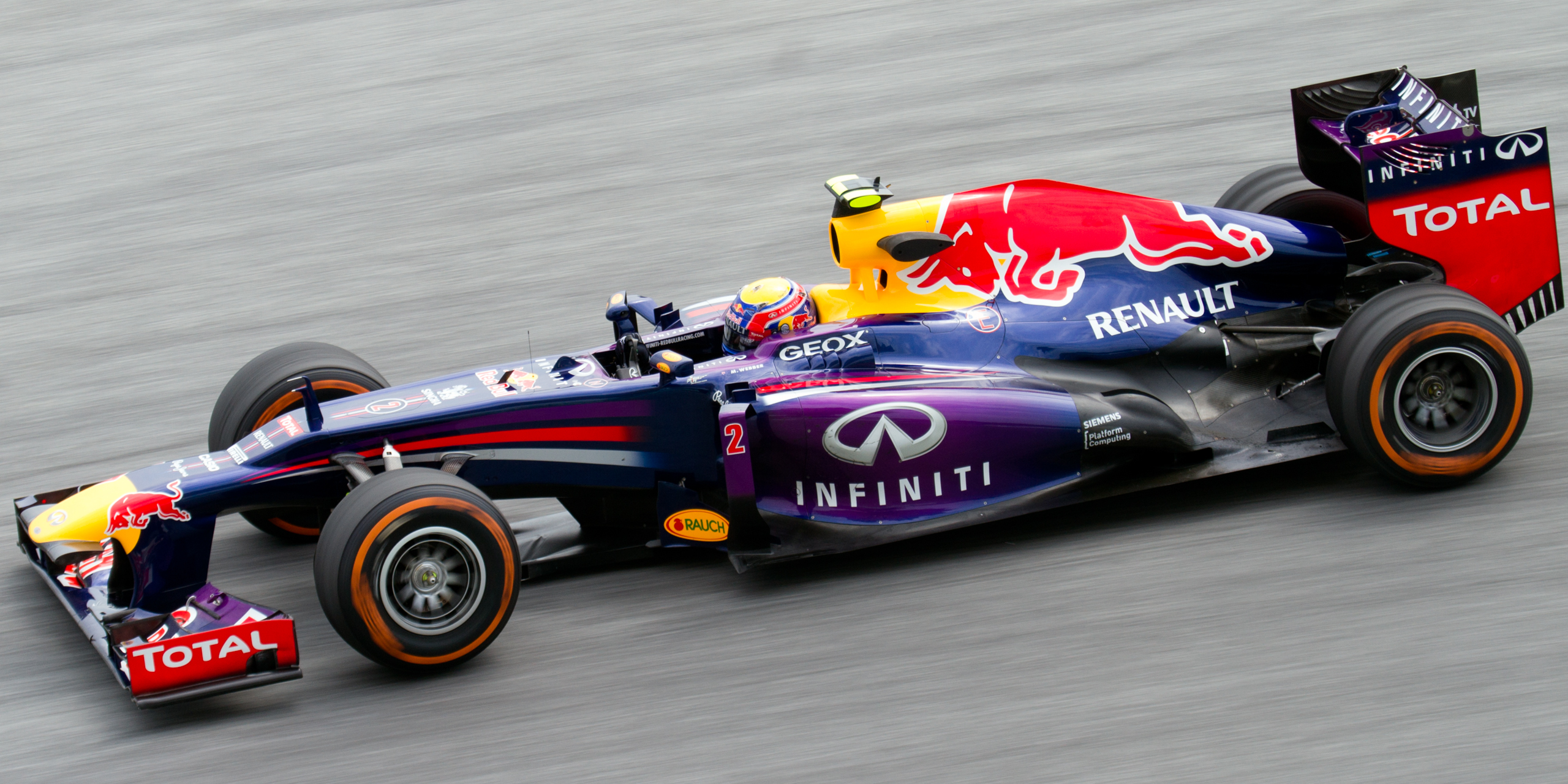
Tag: F1Tech

  • Bigger, Faster, Wider in 2017

    Bigger, Faster, Wider in 2017

    With the 2017 field about to head into pre-season testing and with all the cars about to be unveiled the anticipation is building. The narrative for the new 2017 rules is that cars will be wider, bigger and faster with some saying that the cars will be 4-5 seconds a lap faster. Hence, several circuits on the F1 calendar have been advised to beef up their safety measures and increase the layers of armco at some high-speed corners.

    The cars will look very different this year too. The most noticeable changes are the wider and lower rear wings and the wider tyres. The general idea behind these changes is to make racing more exciting for the fans by making the cars faster and tougher to drive which will make it more physically demanding on the drivers.

    The Front Wing

    The front wing is undoubtedly one of the most important aerodynamic pieces on an F1 car. It is the first component to receive airflow and it affects other aerodynamic elements behind it. The front wing channels the air under, over and around the sides of the car to be used by the other components such as the barge boards, side pod wings, diffuser and rear wing.

    For 2017 the width of the front wing has been increased to 1800mm , up from the 1650mm from 2016. The overall shape of the wing will take on a deltoid (swept back) shape with the middle of the wing further forward than the outer most edge.

    The overall width of the car has been increased from 1800mm to 2000mm and further back, the maximum width of the floor and sidepods has been increased to 1600mm, up from 1400mm. The increase in width means an increase in the size of the barge boards to better deal with the tyre wake from the front wheels.

    Tyres

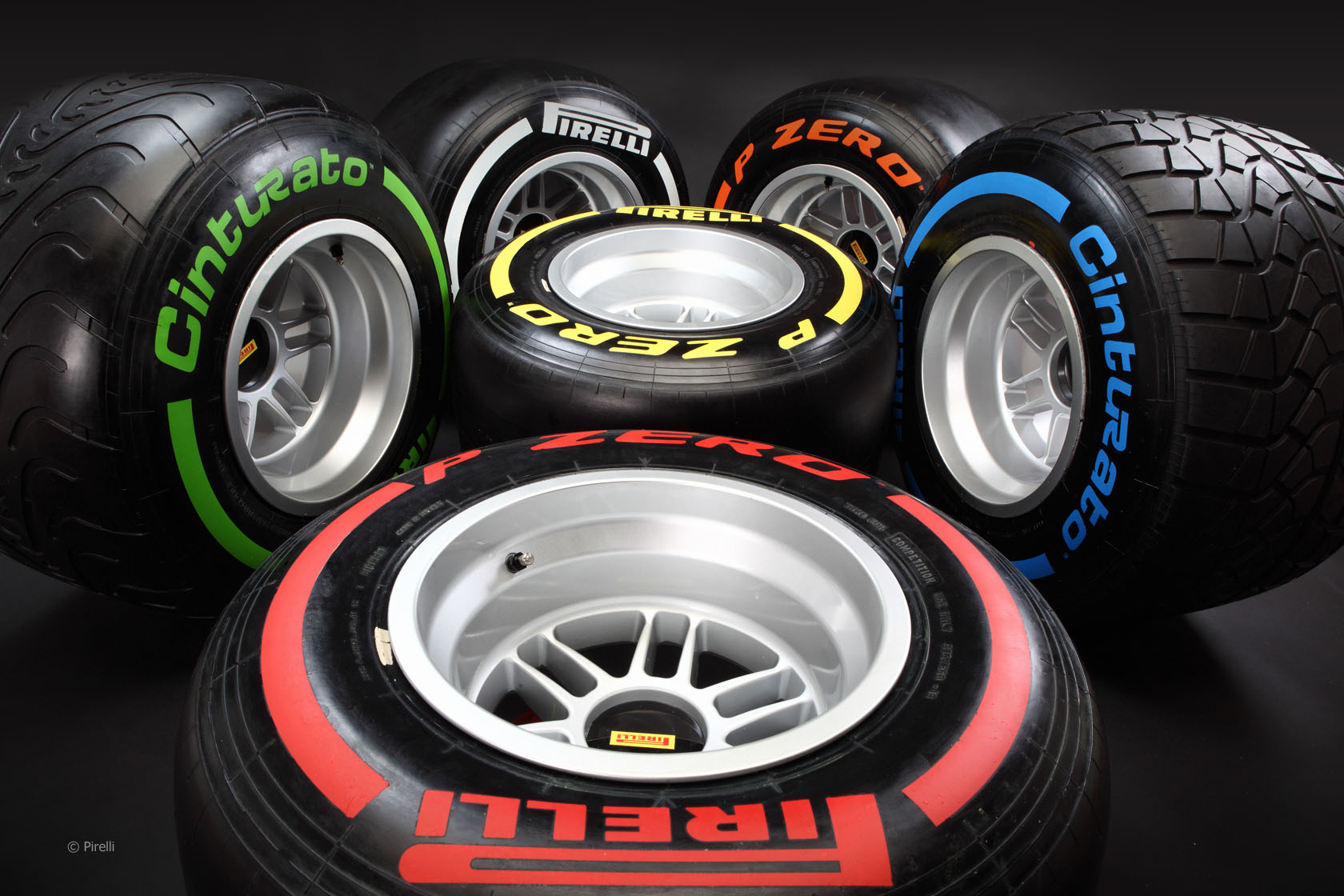
    The 2017 tyres have been drastically changed by the F1 tyre supplier, Pirelli. In order to aid the faster cornering speeds and faster cars, the tyres have been made wider and bigger.

    The front tyre width increases from 245mm to 305mm while the rear tyres increase in width from 325mm to 405mm. The diameter of the front and rear tyres has increased by 10mm. However, the rim size of 13-inches remains unchanged.

    Rear Wing & Diffuser

    The rear wing will look very different this year as well. The rear wing structure for 2017 has been moved 150mm rearwards and 150mm lower, down from 900mm which will give it a swept back look. In addition to the lower rear wing the overall width has also been increased from 750mm to 900mm. The new rules make further provision for the rear wing to start narrow and curve outward to the wider width.

    With the swept back rear wing, the height of the diffuser will be increased from 125mm off the ground to 175mm off the ground. Teams will now be able to start the incline of the diffuser 175mm ahead of the rear wheels compared to right at the rear wheels in 2016.

    The plank length under the car will be reduced by 100mm as well.

    With all the modifications and the wider tyres, the minimum weight of the cars is set at 728kg. This is a considerable increase when considering that in 2016 the minimum weight of the cars was set at 702kg. The increase in weight should mean slower lap times, but the increased mechanical and aerodynamic grip on the cars has effectively cancelled out the loss in time and has actually translated into a gain in lap time.

    Demand on Drivers

    The faster cornering speeds expected this year places a bigger physical demand on the drivers. The cars are expected to be harder to drive and with the added weight of the bigger tyres, harder to steer.

    Ahead of the 2017 drivers have been giving us a sneak peak of their training regimes. The faster cornering speeds expected this year require the neck muscles of the drivers to be much stronger. There have been some interesting exercise techniques being used by drivers to strengthen their neck muscles ahead of the start of the season.

    One thing’s for certain. The drivers this year will be the fittest and the strongest they’ve ever been.
     

  • 2013 Formula 1 Mid Season F1 Technical Round Up – Part 2

    2013 Formula 1 Mid Season F1 Technical Round Up – Part 2

    In this second part of our F1 technical round up we take a look at McLaren, Lotus and Force India.

    McLaren

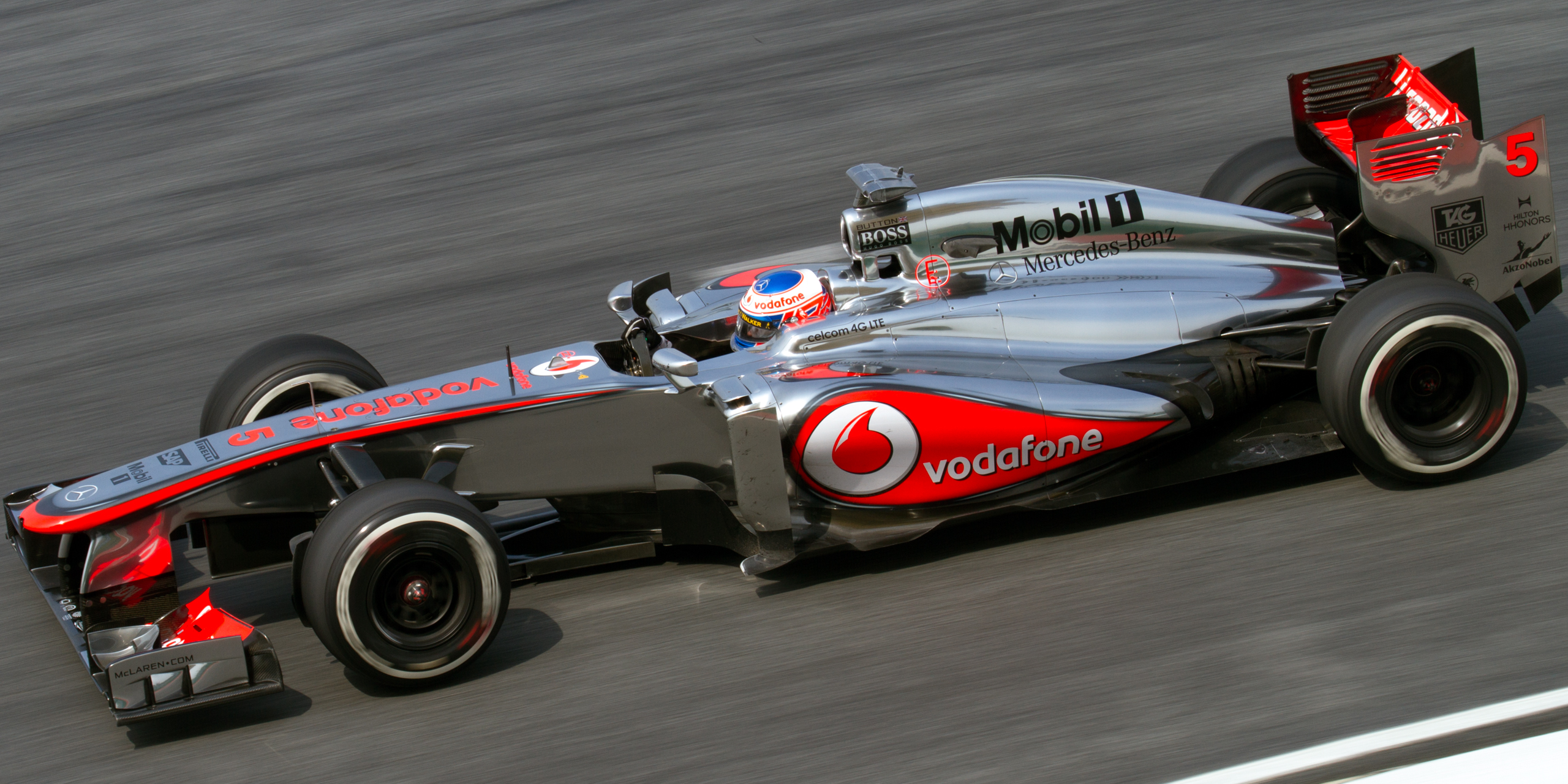
    McLaren have had a very tough start to the season. Their 2013 car is nowhere near their 2012 contender, the MP4-27. With a whole new front suspension setup, McLaren have had their fair share of hardship this season.

    At the front of the car, McLaren have kept most of the design of their front wing from the 2012 car. While other teams are are sporting 5 to 7 tiered wings, the front wing on the McLaren has three tiers. This configuration has hardly been touched throughout the season and they’ve been running the same front wing for the past few races.

    McLaren_MP4-28_VortexGenAround the side of the car, they’ve ditched the horizontal side pod airflow conditioners at the top of the side pods for curved vertical vortex generators from the Spanish Grand Prix with the Red Bull type “D” wing to condition the flow around the side of the car.

    Towards the rear of the car, they’ve tightened up the bodywork in the coke bottle region. They’ve added a vertical slot on the rear wing endplate to minimise tyre squirt.

    With McLaren now concentrating on next season’s car, it is unlikely that they will make many further updates to the current car. We should see development parts for the 2014 car surface during free practice in the last few races.

    Lotus F1 team

    Lotus kicked off their 2013 campaign very well with a victory in the F1 season opener in Australia and Kimi Riakkonen has also consistently scored points for the Enstone based team.

    LotusE21FrontWingLotus is running a 4 tiered front wing with a split vertical element. The split element helps to direct the airflow whenever the car changes direction. They’ve also added a curved horizontal vane on the front wing endplate to help create a vortex of air around the side of the car.

    In a few races this season, they’ve run a bulge on the underside of the nosecone, which helps the airflow along the underside of the car.

    Lotus are also running a similar cross-under tunnel to Red Bull, where the air from the outer edge of the side pods is directed to the center of the car to exit at the diffuser.

    LotusE21DRDThe one big F1 technical development which Lotus were testing throughout the second half of the 2012 season and again at the British and German Grands Prix is their passive DRS or DRD.

    The device works by receiving high speed air from intakes around the air box above the driver’s head. The air then travels down the back of the car and exits from a periscope type outlet just below the rear wing, which then stalls the rear wing at high speed. This reduces the rear wing’s effect and it gives the car a higher speed.

    The trick to this device lies in when the wing stalls. You don’t want it to stall half-way through a high speed corner. Nor do you want to it not to stall down a straight where DRS is not active. It’s quite tricky to get it right but it looks as if Lotus have found a way around this problem. They’ve added a bleed pipe that exits just above the monkey seat. The reason that this is legal is that it requires no input from the driver to activate. It uses the speed of the air coming into the airbox to stall the wing.

    Force India

    Force India have been the strongest of the mid-field teams so far this season. They’re currently even ahead of McLaren in the Constructors’ ForceIndia_FWing_GuideStrakesChampionship.

    As far as their F1 technical upgrades go, Force India have a 4 tiered front wing with the same vertical guide vanes on the main plane of the wing that we can see on the Red Bull.

    These guide vanes work in conjunction with the guide vanes on the back of the wing to guide the air to the edge of the wing for better vortex generation.

    On the underside of the nose cone, they have followed the top teams in splitting the turning vanes. The split in the turning vanes helps to keep the airflow under the car a bit more constant when the car changes direction.

    And around the back of the car, they too, have a slot in the end plate of the rear wing that helps to minimise the tyre squirt.


    And that’s it for part two of our F1 technical Round Up. In part three we’ll look at the Sauber, Toro Rosso, Williams, Caterham and Marussia F1 teams.

  • 2013 Formula 1 Mid Season F1 Technical Round Up – Part 1

    2013 Formula 1 Mid Season F1 Technical Round Up – Part 1

    With the 2013 Formula 1 season already halfway through, we thought we’d give you a little technical round up of some of the major changes the teams have made to their cars. There were some drastic changes and some not so drastic. A big complication for the teams has been the tyres deforming under load and changing the aerodynamic properties of the tyre and indirectly, the car. Teams have had to become rather creative in their efforts to minimise the effects of the deforming tyres.

    Red Bull

    Red Bull Racing front wing for the Canadian Grand PrixRed Bull have made significant changes to their front wing.

    They now have a 7 tiered front wing with  the biggest change being  the addition of vertical vortex generators at the bottom of the wing (bottom tier). These vortex generators serve two functions. Firstly, they help direct airflow more efficiently over the top of the first tier and below the bottom of the second tier. It also allows them to run the wing at a greater angle of attack without stalling it to some extent. The second function is that it also prevents rubber marbles from being lodged between the elements which can affect the efficiency of the wing.

    The nose of the RB9 has also undergone some changes. The “hammer head” nose has been dropped and the FOM cameras are now being placed further back along the nose of the car.

    RBR_RearFloorAt the rear of the car, just in front of the tyre, Red Bull have added three slots in the floor along with a second vertical vane. The slots in the floor help to minimise the tyre squirt, which affects the efficiency of the diffusers. The extra vertical vane helps to better channel the exhaust gasses towards the rear diffuser. The rear wing features the same vertical slot on the endplate as seen on the McLaren, Marussia and Force India. This also helps to minimise the effect of the tyre squirt.

    Tyre squirt is the turbulent air around the tyre that is generated by the spinning tyre while the car is moving forward.

    Ferrari

    Starting at the front with Ferrari, they’ve added an additional slot on the outer section of the front wing endplate. Unlike Red Bull, their front wing has only 6 tiers.

    FerrariCanadaFrontWing2

    The front wing pillars have changed from their launch spec. It now features a straighter design, instead of the previous stepped configuration.

    There was also a different low down force configuration front wing which was used at the Canadian Grand Prix. It is very likely that we’ll see this wing again at the Italian Grand Prix.

    The new side pod airflow conditioners that run across the top of the side pod, which we’ve seen at the Spanish Grand Prix, have been dropped for the more conventional design the car had on when it was launched. They’ve never reverted back to the new design since.Ferrari_AirflowConditioner_Spains

    There’s also been an addition of another horizontal vortex generator just ahead of the wing mirror. This improves the airflow around the side of the car and over the side pod to assist the coanda exhausts.

    Behind the side pods, but just ahead of the exhaust, Ferrari have introduced a series of cooling ducts. These ducts help with the cooling, but also aid in re-attaching the airflow around the bottom of the car.


    Mercedes

    The Brackley based Mercedes F1 team have given us the impression that they’ve been working much harder than all the other teams, especially with their very high tyre degradation problems. They’ve introduced lots of changes around the car in order to find the balance between their qualifying pace and their race pace.

    Starting with the front wing, the most noticeable change is that they now have a 5 tiered wing. This was done by adding an additional slot to the main plane and creating and extra upper flap.

    FrontWing SideThe vertical element has also been changed by adding a turning vane to the leading edge. The front wing pillars have a similar took to the Ferrari solution and extend from the nose of the car downward to the wing.

    Under the nose cone, Mercedes have been running slotted turning vanes. The slots allow for improved airflow around fast corners.

    Mercedes F1

    Under the wing mirrors they’ve replaced the three horizontal vortex generators with

    The floor in front of the rear wheels features one slot, as opposed to the three slots that Red Bull are running. There is also a longer strake running perpendicular to the tyre to better manage the exhaust gas flow to the diffuser.one large one to better control the airflow over the side pods.


  • 2013 Canadian Grand Prix Technical Round Up

    2013 Canadian Grand Prix Technical Round Up

    There’s a lot going on behind the scenes on an F1 weekend that we don’t always get to hear enough discussion about. How the cars are set up to specifically suit the track and drivers, what updates are brought to each circuit etc. Here’s a technical roundup of the action packed F1 Canadian Grand Prix.

    The Gilles Villeneuve circuit in Canada is one of the fastest Circuits on the Formula 1 calendar. Most teams are known to run medium to low down force settings on their cars. This means very shallow rake angles on the rear wings to maximise the speeds on the straights.

    Due to the stop start nature of the track, it is more biased towards mechanical grip rather than aerodynamic grip. Williams and Toro Rosso both ran very different specification low down force rear wings. Williams had the main plane curving upwards which was the same as the wing that they used in the 2012 F1 Canadian Grand Prix, and Toro Rosso had the main plane at a downward curve.

    Interestingly enough, Sauber, who started the season with a similar design to to Toro Rosso have now reverted to a more conventional straighter design.

    Ferrari have had a few updates to the front wing. The main change was that the pillars that extend down from the nose of the car were straighter in Canada than the previous races. The other change on the front wing was the second flap above the main plane.

    FerrariCanadaFrontWing2

    The previous wing had the flap extending out of the end plate, the Canada specification has the second flap extending out of the main plane with a gap between the end plate and the main plane. They also ran the new side pod airflow conditioners they tested in Barcelona on both cars in the race.

    Ferrari front wing at the Canadian Grand Prix
    Red Bull ran a rather interesting modification with small vertical vanes on the main plane of their front wing and under the second wing element.

    Red Bull Racing front wing for the Canadian Grand PrixIt is a very similar principal to the vortex generators above the side pods that some cars run. They help guide the air along the top of the surface of the side pods by disturbing the boundary layer of air above them.

    These vertical vanes under the second wing element have a similar function, except they guide the air along the underside of the second element.

    This allows the air underneath the wing to move away quicker and helps in the creation of vortex generation. The same airflow will flow around the tyres and onward to the the side pods and eventually out the rear of the formula one car.

    What are your thoughts on the updates and the set up of the cars for the Canadian Grand Prix? Let us know what you think in the comments below.


  • Revised F1 Tyres To be Used in Canada Free Practice – Pirelli

    Revised F1 Tyres To be Used in Canada Free Practice – Pirelli

    Pirelli have announced that they will be supplying a revised specification F1 tyre for Friday’s Free Practice at the Canadian Grand Prix.

    The new revised P Zero White medium compound will only be available in Friday’s Practice Sessions to all the teams and not for the entire race weekend. The new specification tyres, according to Autosport, will feature a 2012-style kevlar belt rather than the steel belt used in the current race tyres. The new specification F1 tyres will make their race debut at the British Grand Prix.

    The priority for the modifications were to reduce tyre wear on the 2013 F1 tyres. The modifications will now focus more on the tyre construction in order to prevent the tread of the tyre coming off the structure. There will also be a slight modification to wear characteristics but they will not be as significant as originally intended.

    Each team will receive two sets to test the new rubber in Friday Practice.

    “Following feedback from the teams and drivers, the new specification of F1 tyre is then set to be introduced from the British Grand Prix at the end of June, and will remain in place until the end of the year,” said Pirelli.

  • Monaco Grand Prix 2013: Ted’s Notebook

    Monaco Grand Prix 2013: Ted’s Notebook

    Ted Kravitz rounds up the Monaco Grand Prix

  • Video: F1 Ted’s Development Corner – Spanish Grand Prix

    Video: F1 Ted’s Development Corner – Spanish Grand Prix

    Ted Kravitz of Sky Sports F1 gives us a brief overview of all the updates that were brought to Barcelona by the teams and focuses on the rather interesting one’s.