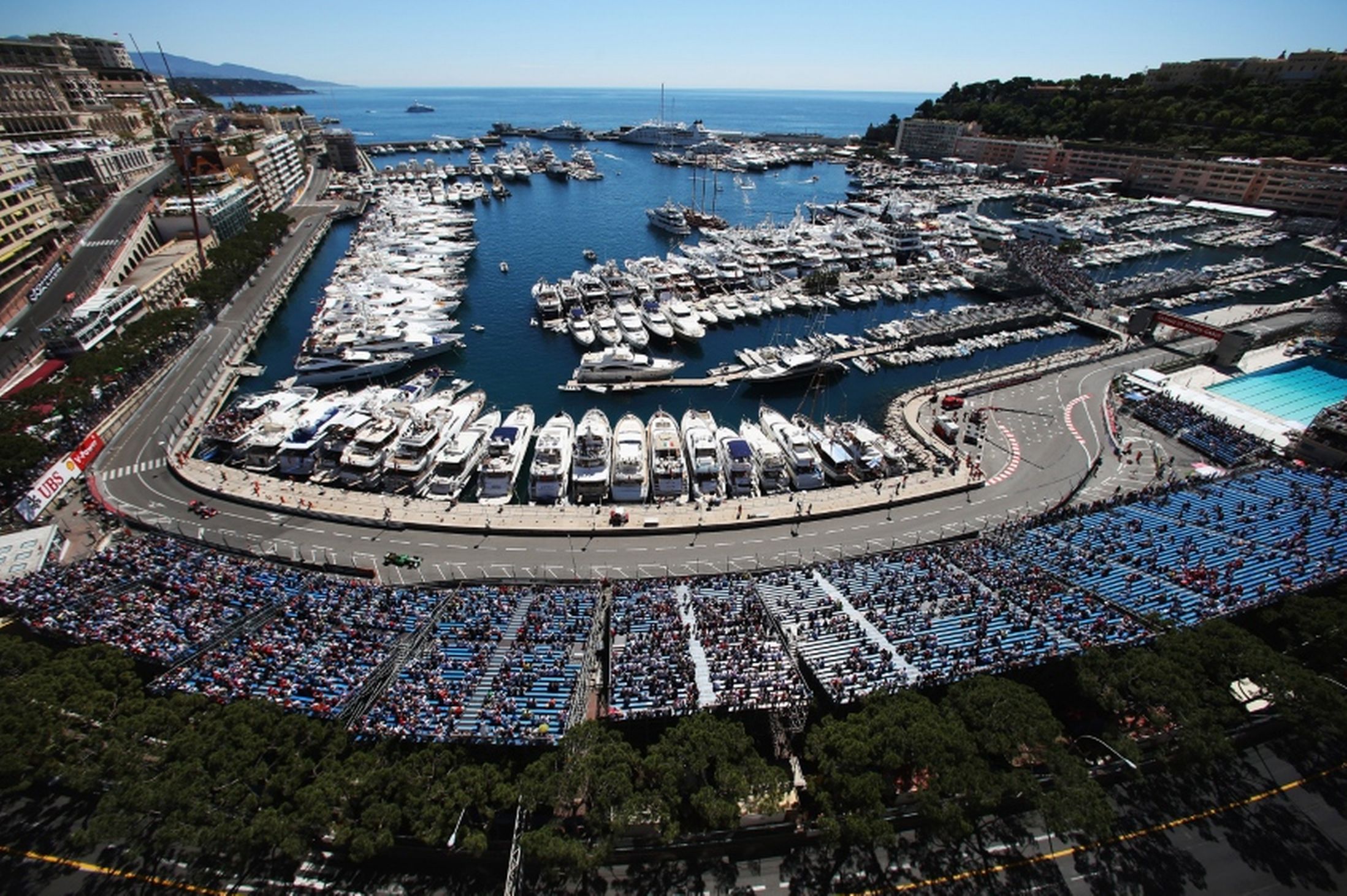
Tag: circuit de monaco

  • Monaco GP 2017: Post Race Press Conference

    Monaco GP 2017: Post Race Press Conference

    DRIVERS

    1 – Sebastian VETTEL (Ferrari)

    2 – Kimi RÄIKKÖNEN (Ferrari)

    3 – Daniel RICCIARDO (Red Bull Racing)


    PODIUM INTERVIEWS

    (Conducted by Nico Rosberg)

    Q: Sebastian, great weekend, first Ferrari win in 16 years, how does it feel?

    Sebastian VETTEL: Unbelievable. I think it was a very intense race. I was hoping at the start to have a bit of a better launch but Kimi had a good start. I had nowhere to go, so I had to be patient. Then, there was a phase in the first stint that was really tricky, The tyres started to slide, I think you remember how that feels, it was quite uncomfortable. I think Valtteri and the pack was catching up a bit; we were facing some traffic. But then I had a… I don’t know, a second attempt, a second set of tyres. I had a couple of laps where the car was really, really good. I pushed, everything I had, because I knew if there is a chance to win then that’s it. So I was able to use that window and came out ahead, so at that point I could control the race. After the restart it was really tricky with the cold tyres. I think every one of us was really struggling, Daniel said he brushed the wall in Turn 1 first lap. So it was really difficult but after a couple of laps I was able again to control the gap to behind, so fantastic job, the team has done really well, so great thanks to them and a fantastic weekend for Ferrari.

    Q: Was that planned, that when Kimi comes in, you stay out a bit longer?

    SV: No, not really. I don’t think there… we couldn’t plan much. The plan was to try and pull away, which we did. Then, Valtteri had really good pace. I think we were struggling a little bit, both, with our rears and at that point the window opened. So as soon as Valtteri pitted, Kimi responded. For me, I think I still had a bit of a gap, nothing to lose in P2, so I tried to push as hard as possible and within two laps I was surprised myself to be able to pull a gap to be able to come out in front.

    Q: Congrats. Kimi, I think it’s fair to say the whole F1 community would have been very happy as well to see you get that win today. What are your thoughts? You lost it during the pit stops of course, what are you thoughts on that?

    Kimi RÄIKKÖNEN: It’s hard to say really. Obviously it’s still second place, but it doesn’t feel awful good but this is how it goes sometimes and we go for the next race and try to do better but it’s one of those days that you wish you get a bit more.

    Q: I know how it feels. It is not a good feeling. But great result anyways. Daniel, a great recovery after a problem in qualifying. You’re pleased with that?

    Daniel RICCIARDO: Yeah, happier today, for sure.  Just yesterday I felt that we had so much more to offer and it was just a shame not to be able to really show our potential around here. I got my chance today when Max and Bottas pitted. I had the track to myself for a few laps and just managed to get some good times, good times in those tyres. I did some consistent laps and got in the overcut, so I was happy with that.

    Q: Turn 1 after the Safety Car looked like a bit of a hit, was it scary in the car?

    DR: Yeah! I didn’t enjoy that. I wasn’t sure if I damaged anything and then I saw Bottas trying to get inside me. These tyres, man, when you get a Safety Car they’re like driving on ice. It was hard. That was not a fun moment, but happy to hold it.

    Q: Sebastian, back to you, the Ferrari car is looking good at the moment, do you think you are going to be able to keep it up for Canada?

    SV: We hope so. Canada is a completely different track but to be honest, for now I am just going to enjoy the win here. You know yourself, it’s very, very special to win here. I think we’ll have a fun night and then we have enough time to prepare for Canada.

    Q: Where’s the party?

    SV: I don’t know, you tell me! You won more times than me here!

    PRESS CONFERENCE

    Q: Sebastian, there are wins and there are big wins. First Ferrari Monaco victory for 16 years, as Nico was saying, first Ferrari one-two since 2010 and more importantly perhaps a 25-point lead over Lewis Hamilton in the drivers’ championship, so what does today mean to you?

    SV: If you want the honest answer, I think it’s most important that we had a very, very good day, a win. A supreme day for Ferrari; it’s been a long time. Yeah, I think it means an awful lot to the team. I will not find the right words but for me it was a pretty special race. At some point I was thinking, “there must be a Safety Car” and then it came at the end when I didn’t really need it but fine. I dreamt all night about how to get ahead of the start because I knew that would probably be the only chance I would get. It didn’t work. Kimi had a good start, mine was OK, so I couldn’t really go anywhere. Then, I think in the first stint I was just trying to pace myself, trying to stay within range. At some point I was really uncomfortable with the rear tyres, they were sliding quite a bit. I think when the gap opened again that’s when Kimi pitted. I knew that if I have any chance that might be it until I get the call because Valtteri was on fresh tyres so it’s likely that he will go quicker, so I just tried to push as hard as I can and wait for the call to box. When it came and then when I came out ahead of Kimi even, I was surprised myself. But for sure I take it. It’s a great win. Those couple of laps were really crucial, I was pushing flat out. I had better laps than in quali today in the race. I was very happy with how the race went. The car was great. So to sum it up, it’s just been fantastic, a fantastic weekend for the team and a great reward. This team is working very hard. Obviously this year is very different to last year but the people are the same, the spirit is the same, so it’s important that we keep pushing, improving the car. We had again a couple of new bits for this race. Yeah, the next race will be completely different but I don’t really care now, just looking forward to tonight.

    Q: Kimi, coming to you, obviously you lost the race in the pit stops. The normal wisdom in Monaco is that when you’re leading you’re not the first one to make a move. But just before you made your stop we heard a radio message exchange with your engineer in which you were asking about pitting. So to be clear, were you asking for the stop or did they call it?

    KR: No, I was called in and that’s about it.

    Q: How do you feel about the first one to move?

    KR: I don’t know, obviously it didn’t work out very well for me. But apart from that, I have no idea. I mean… that’s about as much as I can say about it right now. I got the bad end of the story today. I mean it’s still second place but obviously it doesn’t count a lot in my books at least.

    Q: Thanks for that. Daniel, the story today was that the overcut was more effective: Hamilton gained six places, Sebastian got the win because of it, and you picked up two place spectacularly through that pit stop sequence. Extremely fast once you got some clean air. Tell us about your approach today?

    DR: Yeah I’m really pleased to be up here. You don’t often start fifth and get a podium here. It’s hard to make any positions. I was just frustrated yesterday because I knew we had so much more to offer here, so much more to give than what we showed. I felt like I didn’t really also get to show my pace around here. It was how the pit stops worked, the two cars pitting before me and that allowing me to show a bit more my pace. That was perfect and we got into a realty good rhythm, I think we were doing 16 dead, 16 dead and at the time I think that pace was really strong and I was able to do a good overcut. It was a good combination of obviously the lap times coming from me and the team leaving me out there and allowing me to run in clean air. That was fun. That definitely made my race. The Safety Car nearly ruined my race. At the restart I hit the wall in Turn 1. I hit it pretty hard, so I thought I had damage. I assumed I would have damage. And then I saw Valtteri. You don’t see much in these mirrors. I know Jenson has talked about it. Obviously he hasn’t been in the cars this year, but he has been vocal about it. You certainly see it here and I knew Valtteri was kind of there, in my blind spot but I just managed to hold on at the restart and then I was quite happy to see the chequered because the tyres after restarts are so tricky to get going.

    QUESTIONS FROM THE FLOOR

    Q: (Viktor Bognar – Magyarszo) Kimi, do you think it would have been possible to cover Sebastian if you are stopping later?

    KR: I don’t know. Obviously, this is what we got today. The end results. And obviously for the team it’s a great result. Who knows? This is really the end, we can say ‘if’ as much as we want but it doesn’t change anything.

    Q: (Andrew Benson – BBC Sport) Kimi, when you pitted you came out behind some traffic and Bottas was also behind Sainz at the time. Have you had an explanation as to why they pitted you at that point?

    KR: I don’t know. Obviously, I have just finished the race. I have no idea. Obviously they have reasons for whatever we did do. It doesn’t matter here or any other race. It’s not up to me to answer that.

    Q: (Ben Anderson – Autosport) Kimi, in the first stint, you seemed to have really strong pace in the early part and then from about lap 20 your pace dropped off quite substantially. Was there an explanation for that? Were you struggling with something in the car?

    KR: Not really. I think the worst place was when we had lapped cars and got stuck behind them on quite a few laps but apart from that the car was behaving well. Not really having any issues. I think we had to take it a little bit easier here and there but nothing to complain really. The most lap time we lost behind the lapped traffic but that’s about it.

    Q: (Dan Knutson – Auto Action / Speed Sport) Daniel, yesterday you told us maybe you’d go for the overcut but was that a decision on the fly by the team – and how did the team decide whether to pit you first or Max first?

    DR: I’m not sure what position Max was in with the tyres at the time – I don’t know if he wanted to make the pitstop and try to undercut Valtteri. I assume that was probably the thinking behind it. Obviously I was at the tail of that pack and we had pretty good communication with my engineer. We were going back and forth and I think he had a pretty good idea of what my pace was and what I could do. Yeah, then once we got clear air, I think probably a couple of laps before that I closed in a bit on Max who I think was closing in on Valtteri, so we seemed to bunch-up. And it looked like they were struggling more, probably, with the tyres at that time, from what I could see, so yeah, I was happy certainly to stay out there. Then it was pretty evident that I could keep going quicker and quicker. So, it was nice to push. Especially… if you don’t start on pole here you’re normally in traffic for a lot of the race and you can’t really get a time to feel the car on the limit on Sunday – but it was good to get that block of laps in. Even though the tyres were sliding around a bit with the rear, it was still quite fun in that session of the race.

    Q: (Paul Johnson – Australian Associated Press) Daniel, obviously really encouraging performance with the pace you had today throughout the middle sector of the track. How encouraged are you moving forwards? Also, can you take us through exactly what happened coming out of the Safety Car into Turn One?

    DR: Yeah. Today I felt like, particularly that point of the race where we had clear track and were able to show our speed, I felt that was more representative of what we could of probably done yesterday. It was nice to at least show something this weekend and now at least get a podium for it. After the Safety Car… I knew getting behind the Safety Car, I could see Kimi in front of me trying to warm the tyres – well, keep them warm. I was trying to do the same: doing burnouts and trying to scrub the front tyres and get them going. They just turned to concrete blocks. They’re so slippery. So, I think we were all dreading the restart, to be honest. At one point you see it as an opportunity and I saw it as a potential opportunity to maybe jump Kimi but as the same time it’s… you see it as a potential risk. Coming into Turn One I didn’t feel like I came in hot at all – but as soon as I turned it, I just kept going straight and the wall got closer until I hit it. I think I hit it flush, which meant I avoided damage. Yeah, not fun.

    Q: (Mike Doodson – Honorary) A bit more about the same thing. There were several incidents at Turn One you may not have known about – several people, a couple of other people crashed there. The track was breaking up – did that contribute to your accident – or your smack of the wall?

    DR:  If I can use it as an excuse, sure! No, certainly not. It was in my control. The excuse I guess is just cold tyres. We can see the temperatures on our dash, so we’re aware when they’re cold. We can feel them, we don’t always need to see the numbers but I could see they were very cold. They just lose temperature really quick. We’re all aware of that but we’ll see. Maybe in years to come we can have a super, super, supersoft tyre for Monaco. I think will that be not only more fun in quali but avoid scary moments like that in the race. I guess it keeps it exciting for everyone at home.

    Q: (Luigi Perna – La Gazzetta dello Sport) Question for Seb. Seb, you looked very emotional on the podium. What were you thinking about in those moments? And what does it mean to have 25 points ahead of Lewis Hamilton at this point in the season?

    SV: It’s a long way so I’m not really bothered about that. It was more the fact to stand up there and see the team. I think obviously, it’s a small part that we have here at the track but thinking of everyone else back in Maranello in the factory. We got a lot of hard times last year and this year everything seems to be upside down – but the team is the same, the people are the same so it’s really clear to them. I guess in these small moments you just realise that it’s a special group of people. If things go well, we’ll work hand in hand, we must make sure we keep the momentum up in the next couple of races – but I think we’re just having a great time. Obviously, we wanted today to have the one-two and we got it. So for the team obviously it means a lot. It’s been a long time – you know the numbers better than I do – since Ferrari won here and then to get a one-two is just fantastic. I think you can see when the guys are singing the Italian anthem. I think it’s impossible not to get goosebumps and feel very special standing up there representing them. For me, I think that’s what makes racing so special. I love driving, I loved driving today, I loved a couple of laps that I had where I could really, really push to the limit and I was so close to touch the wall, a couple of times I thought, ‘OK, I’ll lose the car’ and I just managed to get it back, so that’s obviously great fun. Big adrenaline around here because you don’t have any room for error – but then to have the rewards, standing on the podium, just send a message to base, to the factory, is what it’s made for.

    Q: (Beniamino Casadei Lucchi – Il Giornale) Question for Seb. It’s a fantastic victory. But now, if you were Kimi, what do you think?

    SV: Well, obviously I… we were right behind each other. In that case I think it’s normal that the lead car gets the priority because you go normally faster on the new set of tyres, and I when I got the lap times from Valtteri, he was doing 16.1, I think, and Daniel was a little bit faster with the old tyres with 16.0. I was, at that point, at 16.4, so I was a little bit slower, so I was assuming Kimi must do something like Valtteri. So I just… I knew that the team would call me as soon as we were really tight to Valtteri. We had a little bit of a cushion. I was just going flat-out, trying to go as fast as I can because for me it means that I’m staying ahead of Valtteri, first of all, and close to Kimi. I was surprised myself when I came out ahead. So, yeah, I think the warm-up on the supersoft was fine. Arguably you can say it worked for Daniel and for myself today, it worked well to stay out longer but I think if you were looking at it before the race then you couldn’t predict. We are racing, we get along well, I can understand that Kimi’s not entirely happy today. He drove well in the first stint and then obviously you get the message to go in. You do the pitstop and then you push. Obviously it’s a bad surprise when somebody comes out ahead. For me, I take it, there’s no reason to lie, obviously I’m very happy but I can understand obviously that he’s upset.

    Q: (Daniele Sparisci – Corriere della Sera) Seb, how do you feel to be the first Ferrari driver to win here after Michael Schumacher and compared to the other victories with Ferrari, does Monaco have something special?

    SV: Well, I think Monaco is always something special, it’s just the nature of the weekend: a lot of attention, a lot of people which is great, a lot of support. Definitely I felt that with the beginning of the season that we had, Ferrari fans and Ferrari flags are increasing so that’s nice. A lot of people screaming, from outside, Forza Ferrari. A lot of Italian lines which in the recent years maybe I didn’t get so much so that was great to see. It’s obviously a great day for the team. I’m just… I’m pretty exhausted now, to be honest, so I’m very happy and it’s great to get the points, it’s great to get the win so it’s been a fantastic day for all of us. To be the first one after Michael for Ferrari – I don’t know, I wasn’t aware (of that). I think the most important thing is that we won today. I’m sure there were occasions more recently where Ferrari could have won but the most important is what happens today.

    Q: (Andrew Benson – BBC Sport) Seb, there’s nothing wrong with team orders, they’re not illegal and you are the leading driver in the championship and it wasn’t clear before the race whether the overcut or the undercut would be the best strategy. So was there a plan to give you a chance to get ahead of Kimi at some point?

    SV: Not really. We spoke about the race before. It was clear that, as I said, I think they had the same plan to be honest so the lead car normally gets priority so if I had a choice at that point, sitting behind Kimi, if I was going in the pits first, that’s maybe what you like to do because you are sooner on the fresher tyres so I think it’s probably one of the rare occasions where the overcut turned out to be positive, so I’m really glad I made that work. From the team point of view, there was no plan of any team orders or anything and as I said, I can understand that obviously Kimi’s not happy, I would feel exactly the same, one hundred per cent the same, but as I said myself, I was surprised that the overcut… I don’t think Daniel had priority over Max going into the race. I don’t know where they are in terms of points and so on so I don’t think they look into that but I think the rule of thumb… the rule is pretty clear when you qualify ahead and you are ahead in the first stint, you get priority on the first stop and that’s what happened. As it turned out, obviously today it worked in my favour which, as I said, I will take it but we are a team at the end of the day and I can see that Kimi’s not happy.

    Q: (Peter Farkas – Auto Motor) To Kimi and Sebastian, obviously now it seems that Mercedes is sometimes very quick but at other tracks they have serious problems. Of course it’s early in the championship but do you think this consistency of the Ferrari car can really win you the championship this year?

    SV: I don’t know.

    KR: It’s quite an early part of the year so we’ll see. It’s very hard to know what happens in the future but we will keep trying and try to make the best out of every weekend and just do what we can do. We cannot control what the others will do but no, I’m sure everybody will have some difficult weekends during the year. We will try to minimise those. When you have a hard time, try to make the best out of it.

    Q: (Silvia Arias – Parabrisas) Kimi, talking about lapping cars, do you think the blue flag for Button came out a little bit too… not at the right moment? The blue flag which signals to let you past immediately?

    KR:  I don’t know. There are obviously rules and I’m pretty sure I was – I don’t know if it was one second or one and a half seconds but I was pretty close in the hairpin and I was told that I have to be longer inside their time, so it was not enough to be once, it was something that I’d never hard before but anyhow that’s what happened and it cost a bit but that’s how it is.

    Q: (Stuart Codling – F1 Racing) Kimi, given that your team will have known that when you pitted you would emerge in the vicinity of traffic, with those two slower cars ahead, do you feel that you could have gone quicker in those laps, before your pit stop, had you known this?

    KR: I don’t know. We tried to figure out something that is impossible to know right now, at least from my side. No, obviously it wasn’t ideal to end up behind a lapped car and obviously it is something that definitely doesn’t help but the end result is what it is but we have to see. We just finished the race and I only know what happened and that’s it. Obviously I got second place but yeah, for the team good but not for myself, not so great.

    Q: (Marco Giachi – Paddock) Kimi, as a driver, could you reject the instructions? From a technical point of view, did you have enough information to decide by yourself or are you 100 percent in the hands of the engineers?

    KR: Obviously I can stop the car if I want! I’m driving it. We have a team, we work as a team and if you start… if you don’t believe what you’ve been told or how we work then it will get very complicated sometimes because we always try to work as best as we can and today, as a team, we won it one-two, that happened, but as for myself it could have been better, but like I said, we just finished the race  and who knows? We will talk about it and I guess there are some reasons for everything that happens in life but we will see. As a driver, I can obviously do what I want but that’s not how we work as a team. Simple as that.

    Q: (Livio Oricchio – GloboEsporte.com) Sebastian, did you expect that Kimi would stop on lap 33 before the first part of the race and then when you knew that, did you think this is my chance to overtake him? And were you informed of Lewis’s position during the race?

    SV: Well, I was told at some point where Lewis was but I didn’t really care so… You have to do your own race around here. Daniel clipped the wall at the restart, I brushed the wall on the laps to the grid so it’s really close. You try to go as close as possible to the walls and you must not allow yourself to drift away… your thoughts to drift away for even one corner so you need to stay at it. Small mistakes, like Ericsson had yesterday in qualifying, they have a big consequence and this can happen to all of us. We all try to chase the limits, we all try to go close. I wasn’t too keen to know what others were doing. Obviously we have a plan before the race. I didn’t look down and count and say OK, we are getting to the window but when I saw that Valtteri pitted, I saw it also on the screen, and then I was told that Bottas is in the pits at the same time, then I knew that he would try to undercut, otherwise what was the point for him to pit. If he believes that it’s faster then he will stay out and try to put us under pressure once we pit, so he was obviously waiting for his chance, went for it and then I was told in the same lap that Kimi’s obviously getting the pit stop and I know that I can’t pit at the same time, we were too close behind each other to come in on the same lap, so I knew that at least I get one lap, maybe I get two, I don’t know, depending on the gap to Bottas which increased again to three, four seconds before the stop. At that point I was just trying to go flat out, that was my race, obviously it made my race today which, looking at the final result, it’s easy to say but at that point it was impossible to predict.  When I heard the lap times of Bottas, the first lap, I think 16.1s, I was really… OK, I need to stretch myself. As I said, I was surprised that I could take so much pace from the car and I was going even below the 16s. At the same time, Daniel was lapping in 16.0s so there seemed to be a second tyre somehow, because the laps before I was struggling as much as Kimi was with the rears so yeah, I think there were a couple of laps where we weren’t comfortable at all, Valtteri was closing the gap, that was not the plan.

    Q: (Ben Anderson – Autosport) Kimi, when you look back at a race, do you feel that you were just unlucky with traffic and the way things fell or do you think Ferrari’s strategy just cost you the victory?

    KR: I don’t know. Like I said, I haven’t seen… I only know what happened when I was in the car but I haven’t seen the bigger picture. I only know that we came second, Seb won, the team got one-two, obviously great for the team, but the rest… Until we have our meeting then obviously you can see all the graphs, I don’t know.

  • 2017 Monaco GP: Thursday Press Conference – Part 2

    2017 Monaco GP: Thursday Press Conference – Part 2

    PART TWO: TEAM REPRESENTATIVES – Jonathan NEALE (McLaren), Gene HAAS (Haas), Franz TOST (Toro Rosso)

    Q: Jonathan, can we start with you? P11 and P12 in free practice and Jenson Button, not having sat in a Formula One car for six months or something is three one hundredths of a second slower than Stoffel Vandoorne. Tell us about your day?

    Jonathan NEALE: Yeah, it’s been a good day for us. We’ve run problem-free, which is nice. Everything that we brought in terms of changes to the car seem to be OK, from what I know, we’re still crunching some of the data. There’s certainly some more lap time to come. I think the drivers are some way off the limit at the moment. It was nice to see some confidence in Stoffel and rookie JB back in the car is good, yeah.

    Q: So it’s the race of two worlds you’re calling it this weekend. It’s going pretty well so far for Fernando Alonso starting fifth on the grid for the Indianapolis 500. But here in Monaco the pressure is kind of on Jenson and Stoffel a bit after Sauber got those points in Spain. You don’t want to be sitting there in P10 with zero points for much longer, so you’ve got to turn this into some points haven’t you?

    JN: That would always be the aim, but looking at a couple of points here or there, or whether it’s P10 of P9, yes, it’s a matter of fact but our issues are larger than that. We came off P6 at the end of last year, should have made a step forward and didn’t and that’s far and away the biggest issue, which is what we’re working on. Without being too discounting about it, we’re taking those issues much more seriously than that. But here, where anything can happen and with a car where perhaps some of the power unit plays less of a determining role, it’s exciting to see what we can do.

    Q: So finally, what is the latest on Honda’s recovery strategy? When will see a significant step in performance and reliability from them?

    JN: I think that’s something that’s better addressed by Honda actually. Let’s see what happens; let them talk about their plans.

    Q: Gene, coming to you, your second Monaco Grand Prix as a Formula One team boss. How have you analysed the value of your presence in Formula One to your business, as obviously that’s why you came in? And what do you make of the new owners of Formula One and their push to get a second US Grand Prix and maybe even more than that?

    Gene HAAS: Well, I think the new owners are doing everything correctly that I see. They’ve visited us several times in our hospitality suite, so they’re making an effort to find out what we think is important and ask our opinion. They seem to have lots of ideas. Some of them are becoming more evident, small ones, more access to video clips and things. I think all of that is very, very positive. As far as the relationship to my business, it’s given us an impact, a notoriety. It’s a premium product and we associate a premium machine tool with a premium product, so I think that’s good. It’s a long-term strategy. We are more here to learn than to race at the moment. As we go forward… it’s a process. I’m very happy where we are right now. I don’t really know what the future holds, but right now we’re content.

    Q: Now a bit like Jonathan, you’re also racing in two worlds, you’re at Charlotte this weekend with your NASCAR team. There’s clearly a lot of focus on Indianapolis as well, so what do you think of Fernando Alonso’s performance so far on his first experience on an oval? You’re very experienced with ovals, so you’re probably best qualified to judge how impressive his performance has been so far.

    GH: Well, I can’t speak in terms of what a race car driver would think about Indy, but I do know that it’s a very, very nerve-racking type of drive. You’re basically talking 230mph on the straightaways and you slow down to 225mph in the turns. Most Formula One driver don’t experience that, with very little grip. The way you set up the cars is you put a lot of grip in there and then they keep removing it until the driver just can’t stand it anymore, because he thinks he’s going to hit the wall. So it’s an incremental process very unlike what you would find in Formula One. That kind of racing I think is different. One driver once explained it as like driving on black ice. Trying to control a car that’s on the verge of spinning out all of the time is not easy to do. I think it’s great. I think everybody wants to see how a Formula One driver does in Indy, just as much as they would like to see NASCAR drivers in Formula One.

    Q: Franz, P4 and P5 today in free practice, out on the track the car looks nice and supple. Are you feeling optimistic this weekend?

    Franz TOST: Yeah, I think we have a very competitive package together. The car works well. We found a really good set-up here for Monaco. Both drivers like Monaco, they’re also experienced and I hope that we can repeat this performance on Saturday as well as on Sunday because this is what counts.

    Q: Obviously it comes off the back of a double points finish in Spain but it looks like you could still do with a bit more horsepower; when do you expect some more from the Renault upgrade coming along?

    FT: We will see. Renault is making some small steps. First of all, they have to get everything under control from the reliability side. We must not forget that Renault came up with a completely new design of an engine and this takes time. We all know that the power unit now is very very complicated and I’m convinced that within the second half of the season they will provide us with a very good, powerful engine. I must say that so far we are quite happy with the performance with Renault.

    Q: So there’s no frustration there, because obviously you went from last year having an old spec engine that wasn’t going to develop and you’ve gone to something you thought was going to be… there’s no sense of frustration here, you can wait to the second half of the season can you?

    FT: No, there’s no frustration. It always depends where you are coming from. Last year we had a one year-old engine and now we are even happy to have this year’s engine and as I just mentioned before, I’m convinced that Renault will do the steps forward which they promised.

    QUESTIONS FROM THE FLOOR

    Q: (Peter Farkas – Auto Motor) Jonathan, could you please share some details of how well Jenson has settled back into the rhythm and how different he found the car from last year’s car and what did he say after the first few laps?

    JN: Great questions. So I think the… Jenson elected not to do the test after Bahrain because he was confident enough in the simulation tools. I think as well the car is still and was then developing quite quickly so whatever he got into and adjusted to was subsequently going to be different again by the time we got to Monaco. So he’s been in and… you know, Jenson’s been with us for some time now so we know the pattern, the rhythm and how he likes to set himself and the car up, so we’ve had several simulator sessions, seat fits, system checks, just sort of running through the basics. He’s a World Champion, so we don’t need to do that much so that feel and that competitiveness is still there. He’s a relaxed individual until you get him in the car, put somebody next to him who’s close in  terms of speed and then the internal competition starts and that’s fun for the garage as well as for the fans. In terms of from last year to this year, of course the cars are wider but everybody apart from one this morning was off the barriers. I think that there’s still quite a bit to come from both drivers and from the car but there’s so much more downforce this year compared to last year so the brake points are all completely different. But as he said before he came in, he’s having fun and as he said it’s fun to be in the car. He was going to be with us but it’s a lot more fun driving than just sitting on the side.

    Q: (Dan Knutson – Auto Action and Speedsport) Gene, towards the end of last  season, you jokingly said that if you had known how difficult F1 was you might not have entered. The team knows the ropes a lot better now, but is it a case of actually being more difficult because the more you know, the more you realise what a challenge it is?

    GH: Yes, I really didn’t know the depth of the technical challenges in Formula One and probably like most of the fans, they really don’t know how complex these cars are but it’s intriguing, it’s fun to get involved in it. We have great partners and I think we’re doing OK. We were a little bit lucky last year and now our luck has got more normal, it’s more normal luck that you typically have in racing so it’s a challenge. It’s very hard competing against some of these… all these teams, they’re all very good at what they do. We’re weak in areas like tyre strategy and we’re a little weak in our pit areas. We get caught behind cars that cost us positions. All these ten little things that all add up to a tenth of a second. That’s really where we lose a lot of time and I think that as we develop, we get better at that.

    Q: (Silvia Arias – Parabrisas) For Mr Jonathan Neale: is there any possibility that we’re going to see Jenson next year if Fernando retires at the end of the year?

    JN: I think that’s really a question for Jenson. I think in the recent media, Jenson’s been saying that this is a one-off. It’s a question for Jenson. In terms of speculating about what he feels at the end of the season, or what might happen to Fernando, maybe it’s just that, it’s speculation.

    Q: (Dieter Rencken – Racing Lines) There have been suggestions from Liberty that they’re going to move away from a fixed-term contract, Concorde-type agreement into an open-ended partnership or constitution, possibly even with equitable revenue distribution. How do you feel about this and how will this impact on your teams?

    FT: If we get more money I’m more than fine.

    GH: I understand that the new owners are typically going to do what new owners do: go out and raise revenue and cut costs and that’s exactly what they’ll do and since we’re on the cost side of it, it’s a little nerve-wracking what they have in mind. On the other hand, F1 is kind of a crown jewel so maybe they’ll tread lightly  and everything will work itself out.

    JN: Yeah, I think it’s a question of… if you look back over 15 or 20 years then Formula One as an investment, as an entity, has done very well for itself, but what got us here won’t get us there. The world is changing, the business is changing, the nature of partnerships, commerciality is changing and I think for some time a number of us, yourself included Dieter, have looked at the grid: well how many sustainable business models are there, in terms of the teams’ structure, forget the FOM side of things, just the teams structure? We know that there have been pressures in that sustainability. To your point about whether some read baseline of the cost structure or the income line grows as has been said by my colleagues here, then I think it’s a question of looking at the package as a whole and I think that’s what the new owners are doing which I think is really exciting. I think they’ve got the right people – by the looks of it – around the table but if Formula One does what Formula One has historically done, which is: see the big picture and then take a very narrow fix and do a one thing and then wonder why the consequences over here were not what was expected, then I think it will be extremely difficult and very challenging but it looks to me like the whole thing has been thought out and we’ll see what gets put to us. But we’re open-minded and I think generally supportive of the way that the Liberty guys and the new owners are going because we recognise that what has been has had its time I think.

    Q: (Dieter Rencken – Racing Lines) Gene, that comment of yours that what they have in mind is nerve-wracking – sorry, could you expand on that please, it’s rather an intriguing comment you made?

    GH: You know most savvy businessmen in the US are public companies and it’s bottom line, let’s face it, it is very much to it but since we’re the newcomers in this business, our revenue stream from Formula One is nothing so anything we get will be greatly appreciated but I think we just have to be very very careful in how you redistribute the wealth because there are some teams at the top that have spent fifty years doing this, that have earned some entitlement to how the costs are distributed. I’m not saying that the teams at the bottom don’t deserve more but I’m still saying teams at the top deserve more. You can’t just arbitrarily redistribute that because quite frankly winning races should come with rewards and it should not be a socialistic type structure. Other than that, everything else is open to negotiation but I think in racing, even in NASCAR we’re having struggles with that. The team owners are typically on the bottom rung of the income stream and they’re struggling – as viewership goes down, sponsors go down. It’s been very very difficult in NASCAR and I think to some degree that teams that rely on sponsorship are starting to find it’s very very difficult to attract a major sponsor. A $25m sponsor is a huge sponsor. Today, that is practically non-existent. Most of the sponsors – at least I know from NASCAR, they’re more in the $5m to $10m range and you have to have multiple sponsors on your cars at different races. There’s some adaptability to that but at the same time there’s a lot of demand from media, so how that money gets redistributed seems to be the question but unfortunately the teams don’t have a real strong position there to speak up about how it will get distributed because we don’t own Formula One.

    Q: (Peter Farkas – Auto Motor) Sorry, this is more of a technical question maybe but are this year’s tyres even more tricky to manage than last year’s, because they were supposed to be a bit easier to manage but there are lots of complaints, from team to team, that they are very hard to get into the temperature window? Is it just a new challenge and it’s alright or it’s a bit like playing roulette, it’s too arbitrary?

    JN: I don’t think it’s… it’s easy to get it wrong but I don’t think it’s the tyre issue. We don’t find it particularly challenging. Sometimes when we’ve brought a harder compound – I mean the medium compound in Barcelona, on the nature of that tarmac was a bit trickier to get to work but I don’t think the tyres are a big or detrimental story to Formula One this year. I think the racing’s been good, I think the general direction of the technical regulations in introducing more downforce was the right thing to do and closing up the gap on the power unit manufacturers… I think that’s been the… it’s still the dominant stories. I don’t think tyres are an issue for us.

    FT: The tyres are a challenge, to understand them, how they work, but it’s good for the engineers as well as for the drivers to find out in which window they can get their earliest peak and they can get the most out of it. But in motor sports they have to understand the tyre because it’s a performance differentiator and therefore I can only say positive (things) about Pirelli because in my opinion they do a good job and today I saw the same for all the teams and we have to find the best possible solution and get the most out of it. And there are always complaints; either they are too soft or they are too hard or this or that. Forget it, they should sit in the car and should push. That’s it.

    GH: Well, in Barcelona, when the safety car came out, we came in and we went on the medium tyres which were about a second slower than the softs and we stayed way too long on the medium tyres and we feel that cost us a chance at some points. We had done some degradation testing in the pre-practices but we didn’t get enough time on them, we only got like five or ten laps but if we had a better tyre strategy we would have stayed out on the mediums a very short time. The tyres do have a lot of differences between the different ones that are available and you have to know how to gauge that in order to make time. As much as the tyres are very good, tyre strategy is key.

  • 2017 Monaco GP: Thursday Press Conference – Part 1

    2017 Monaco GP: Thursday Press Conference – Part 1

    PART ONE: TEAM REPRESENTATIVES – Andrew GREEN (Force India), Paul Monaghan (Red Bull Racing), Jörg Zander (Sauber).

    PRESS CONFERENCE

    Q: Andy, let’s start with you. Stunning start to the season: 53 points; clear fourth place and even breathing down Red Bull’s neck in the championship. With the resources that you have, how have you managed to do it?

    Andy GREEN: It’s been, yeah, it’s been a good start to the season but as we proved last season, you can’t take anything for granted and our lead over fifth place is a lot smaller than where we were behind the Williams last year. So, reminding the guys that it’s a long season and we’re only a quarter of the way through it with a long way to go where a lot can happen. So, we need to keep pushing, keep developing, do what we’re doing – we’re on a good trajectory at the moment – and not to slack and see where we end up in the end. So far it’s gone better than expected and I think we’ve capitalised as much as we could of in those first five races. I don’t think you look back at those first five and think ‘what if?’ I think we’ve basically got the best out of it.

    Q: In Spain only three cars finished on the lead lap, which is the fewest since 2008 so obviously, does that speak to the problem that the field in Formula One, with these new regulations, has become very spread out? Do you think that’s going to remain the case for the rest of the season?

    AG: I hope not. It was another point I did make to the factory last week. I hate being lapped. It just shows the potential that there is in these regulations and how much there is to find. We look at it as an opportunity to make the car even faster, knowing that there’s that much performance left in it.

    Q: Paul, coming to you, 75 seconds behind at the finish in Spain last time out but a clear and very promising looking P2 in practice today with last year’s pole-sitter. What’s your overview of today’s running and how competitive do you think you’re going to be this weekend?

    Paul MONAGHAN: It’s nice to see us nearer the sharp end than we’ve arguably been at points this year. Our overall competitiveness… it’s still hard to tell. I’m not sure Mercedes showed their full hand today. I think it’s going to be pretty tight on Saturday and you need to have a reasonable qualifying around here to then capitalise for Sunday. So, I’m not going to count any chickens yet. We just knuckle down, do what’s within our control, get the most out of our car, and get the most out of it on Saturday and see where we end up.

    Q: So where’s the shortfall been then in the first five races of this season – some way behind, as we said, in Spain. Is there still belief that you can catch them over the span of the season?

    PM: There’s belief, yes, and a strong desire as well. I think if we lost belief it would be a fairly early end to our season. So, there’s a strong belief, a strong desire and a real determination to get more out of this car and close on the others – because they’re not standing still and as such our development rate has to exceed those guys. I think it can. It’s fair to say that we’ve not extracted as much as we can in terms of points-scoring from the first four and there’s a little bit of performance coming each race. We set out on a pathway to catch them, let’s see if we can.

    Q: But where’s the shortfall? It’s fair to say you haven’t extracted the most from the regulations. You’d have expected, looking at the way they were framed, that this was going to play to Red Bull’s strengths, particularly on the aerodynamic side.

    PM: Well it’s strange thing, isn’t it? In that, within our own control is our own destiny and what others do will always be judged against that. And yes, it’s fair to say we don’t have the leading car at the present time. I wouldn’t want to say that it’s one area. It’s going to be several areas and it’s up to us to identify the ones that have the greatest returns that we can alter, capitalise upon those and get the most out of our car. It’s only what lies within our control. Can’t do anything about what the others do. We will identify the shortfalls – I don’t think it’s going to be a singular – it will be a plural, and we will chip away at them as we have been for some time now.

    Q: Jörg, welcome to you. Very valuable points, obviously, for your team in Spain that puts you ahead of McLaren in the Constructors’. How optimistic are you that you can stay there?

    Jörg ZANDER: First of all there was obviously a massive boost for the morale and motivation of the team. We actually didn’t expect us to be there in Barcelona. The upgrade package which we planned for Barcelona, we moved to this event. So somehow things seem to have been turned upside down. We didn’t expect us to be on P19-20 today. It was a bit more of a difficult start for us, into the season and it was affected by various parameters. As you know, we didn’t have Pascal for the first two races, so we had to go with Giovinazzi and, of course, that introduced quite a bit of a change to the operational side. So we had a very young, new driver into the car, which we needed to get adapted – but obviously, let me say, from a development point of view, we do understand that the car is behind, compared to our, let me say, defined competition, which is the midfield, primarily because we started pretty early in the season to develop that car, so we have to try and catch-up. But the parameter we fight here, of course, is time and it’s difficult to gain time over the competition. They have a certain time available as we have, so there’s not any difference. The thing is, of course, about resources, and these resources, we’re just about to configure and to adapt. We have made plenty of recruitments but these are all new people so there is a human factor involved, with regards to getting more out of this operation – and these are the kind of difficulties that we are fighting at the moment, let me say.

    Q: You mentioned today P19-20. It looked a bit of a struggle, lap time-wise. I was out on circuit. The car didn’t look too bad but the times were a long way off the next-slowest car. What’s going on?

    JZ: There’s definitely something wrong. It’s a little bit more work ahead of us. At the moment we don’t seem to get the tyres to work, at all. So, as I said, it was a bit of a surprise. We came here with a new aero upgrade which works according to the data, actually quite fine. So, as expected. We thought we could draw some more potential from it. Of course, now while the tyre temperature management worked very well in Barcelona and panned out very well for us on both compounds, supersoft and the medium, yeah, we do seem to struggle at the moment. The same is true of both compounds: ultrasoft, supersoft. We don’t’ really seem to be able to put the energy into the tyres that it needs to develop the grip which is required.

    QUESTIONS FROM THE FLOOR

    Q: (Ralf Bach – Autobild Motorsport) A question to Paul. I read last week that Adrian Newey said that he was more or less not involved in the new cars. Not his car. Can you tell us how much involved he really was?

    PM: In terms of hours, I can’t tell you how he’s split his time. He’s part of our team, has been for a long time and continues to be so. He was involved in the process of developing the car and continues to be so.

    Q: (Jerome Pugmire – AP) Question for Andy. Esteban was saying yesterday that he’s confident that he can get a podium this season. How confident are you that he can do that and how impressed have you been with his start?

    AG: Well, I can tell you how impressed I am: very, very impressed with the way that he’s come into the team, adapted, the speed at which he acclimatised himself to this track especially this morning, for me shows what a talent he is. Undoubtedly. I watched him for quite a long time in the simulator last week, pounding around the lap here, and his car control was incredible. He could put the front wheel through the barrier by an inch every time. He just needed to bring it back an inch! He’s an amazing talent. Can he get a podium? Well, we need to give him the car to do that – because ultimately on our current car pace and ranking, if everybody finished we would never get a podium so it would need a big slice of luck. But he has an uncanny ability to finish races. He races really well on a Sunday. He has a lot of mental capacity remaining, when he’s driving the car, which is a really, really good sign. If he’s given the opportunity, I’m sure he’ll take it.

    Q: (Peter Farkas – Auto Motor) A question to Paul. I think if you look at qualifying in Barcelona, corner speeds of the new Red Bulls were quite encouraging. If that is so, how encouraging is that regarding the new upgrades. And also, has there been a change of philosophy towards more downforce versus less drag with the new update introduced in Barcelona.

    PM: OK, the first part of your question then. The changes made to the car for Barcelona yielded improvements to it, undoubtedly. There’s always a simulation target and then what the real car delivers – and the testing of the real car is usually imperfect. So, as far as we can tell, they’ve done what we expected to do – I’m encouraged by that – we did pick up a bit of speed. I think it gave the drivers more confidence and that’s another little bonus that you can take. In terms of change of philosophy, no, not really. We have efficiency targets that determine do pieces go on the car or not. It’s perhaps easier to judge that than it is your expected lap time gain of an update package. We’re not changing our philosophy: you can see how the car is set up; we’ve been pursuing that for some time and that remains. I think a change of philosophy at this stage would be, for us, unwise. What we do longer term is entirely our choice and our business.

    Q: (Dieter Rencken – Racing Lines) Jörg, if we look at your career, you’ve always worked with very, very well-funded teams: Toyota, Honda, in sportscars Audi, with BMW-Sauber when it was manufacturer-backed. How difficult is it to reset the engineering mind set to operate and work in a team with a more modest budget the way that Sauber is right now?

    JZ: First of all, I think we have actually quite a good budget, so we have all opportunity that you can find in other midfield teams to do a decent development and dover those development processes.  So, from that perspective I think we are not too badly adjusted at all. The other point is that, the way I see Sauber is actually, from the point of talent level, actually quite good. We have very experienced people, very, very… people have a good talent, they are very competent. They have been in the sport for a long time, so I think you may want to look into the economic side of things, which are really decent but you have to look from a human resource point of view as well: what kind of quality level of human resource do you have available for your developments. I think Sauber is actually placed very well in that regard.

    Q: (Sam Collins – Racecar Engineering) There’s been a lot of talk about the frontal cockpit protection system being introduced for the 2018 season. What have you heard from the FIA and their research institute about what form it will take, in terms of technical regulations. Also, what’s the latest in terms of monocoque design and lead times in manufacturer to start working and introduce it into the car?

    AG: Well, there has been a meeting a couple of weeks ago, the first meeting for the installation of the Shield. We weren’t part of that meeting but there is another meeting tomorrow that we are having with the FIA to discuss it further. We’ve seen some preliminary models. We’ve been looking at how we integrate those into the chassis next year. There are a lot, a lot of question marks over it. There’s a lot of work to do in the timeframe that we have been given. So we need to make some smart decisions going forward. Hopefully we’ll be discussing that tomorrow, with a view to how we answer all those questions in the time period we’ve got.

    PM: To answer your question, ‘what’s the deadline?’ I think it depends which colour shirt you have on. We, as a team, can be amongst the later, but we are going to very, very tight to get this on to a car for ’18. I think the research into its functionality and protection, it’s got to happen almost in parallel with the installation, which makes it quite a tricky job, because whatever they change in terms of screen then has an implication to a chassis and if you have cut your patterns then you are in a fairly awkward situations. I think if it all happens in parallel then the cut-offs are going to be somewhat team dependent. As Andy said, there is a hell of a lot to get through to ensure that this is a thoroughly developed and sorted package to put on next year’s car.

    JZ: With regard to the deadline, so usually we would by the end of July, beginning of August, define the monocoque. Of course the fundamental question here is about the integration of the shield and the attachment, so there is a question about structural integrity, but again, as my colleagues said, we are going to discuss this tomorrow, so we need those detailed informations of course. At the moment, as far as I know, we want to test this system at some point in September, which I think is good. I think the enhancement of safety, improving safety is a fundamental let me say job of ours and I think we should support that, we do support this. But of course we have to makes sure that these things are worked out sensibly and that they fit within the time schedule. But we are working together with the FIA in order to achieve this, don’t we Paul?

    PM: Absolutely.

    Q: (Jerome Pugmire – Associated Press) I just wanted to follow up on what I was asking about Esteban before. Could you just talk about his capacity and desire to learn, because he has said that he does hours and hours of simulator work and, quote, “intense debriefs with engineers”, so that shows his application. Could you talk about his desire to learn and willingness to improve?

    AG: He’s like a school child. He’s like a sponge and he just absorbs information as fast as you can give it to him. His want and his desire are unquestionable. He absolutely wants this and he has the talent to do great things but he is going about it the right way. He’s doing it a step at a time. He’s doing the learning at the pace he wants to and that we allow him to do and I have no doubts that he is going to get to where he wants to be in a few years’ time.

    Q: (Silvia Arias – Parabrisas) A question for everybody. Did you need to change the jack support at the back of the car after Laurent Mekies’ document, and what do you think about it, will it really help in the case of accidents?

    PM: To answer your first question: yes, we were requested to change, so we have changed. We’ve taken a bigger step than some of our competitors by the looks of it and we have done a new jack, we’ve modified the associated receptacle on the back of the rear impact structure. As for the note, well, it’s given to us, and it’s up to us to interpret it, deal with it, liaise with the FIA, achieve a design that design that satisfies them and equally that we could get here, and with a lot of hard work and dedication we’ve got a solution here.

    JZ: It’s the same for us. It added a little bit of complexity to our operations as well, but that’s what we have done. Of course, we have a Ferrari gearbox, so there’s a rear impact structure that is homologated by Ferrari. So we had to work this out in co-operation with our colleagues in Italy. So there was immediate action required which we did and yes, of course, we have had extra support here to make sure that it all works nicely. But then again, as I said before, it’s a safety critical subject, so we do understand and if there is urgency because of that then we would support that. That’s what we did.

    AG: We didn’t need to change our rear impact structure, we just changed our livery.

    PART ONE: TEAM REPRESENTATIVES – Andrew GREEN (Force India), Paul Monaghan (Red Bull Racing), Jörg Zander (Sauber).

    PRESS CONFERENCE

    Q: Andy, let’s start with you. Stunning start to the season: 53 points; clear fourth place and even breathing down Red Bull’s neck in the championship. With the resources that you have, how have you managed to do it?

    Andy GREEN: It’s been, yeah, it’s been a good start to the season but as we proved last season, you can’t take anything for granted and our lead over fifth place is a lot smaller than where we were behind the Williams last year. So, reminding the guys that it’s a long season and we’re only a quarter of the way through it with a long way to go where a lot can happen. So, we need to keep pushing, keep developing, do what we’re doing – we’re on a good trajectory at the moment – and not to slack and see where we end up in the end. So far it’s gone better than expected and I think we’ve capitalised as much as we could of in those first five races. I don’t think you look back at those first five and think ‘what if?’ I think we’ve basically got the best out of it.

    Q: In Spain only three cars finished on the lead lap, which is the fewest since 2008 so obviously, does that speak to the problem that the field in Formula One, with these new regulations, has become very spread out? Do you think that’s going to remain the case for the rest of the season?

    AG: I hope not. It was another point I did make to the factory last week. I hate being lapped. It just shows the potential that there is in these regulations and how much there is to find. We look at it as an opportunity to make the car even faster, knowing that there’s that much performance left in it.

    Q: Paul, coming to you, 75 seconds behind at the finish in Spain last time out but a clear and very promising looking P2 in practice today with last year’s pole-sitter. What’s your overview of today’s running and how competitive do you think you’re going to be this weekend?

    Paul MONAGHAN: It’s nice to see us nearer the sharp end than we’ve arguably been at points this year. Our overall competitiveness… it’s still hard to tell. I’m not sure Mercedes showed their full hand today. I think it’s going to be pretty tight on Saturday and you need to have a reasonable qualifying around here to then capitalise for Sunday. So, I’m not going to count any chickens yet. We just knuckle down, do what’s within our control, get the most out of our car, and get the most out of it on Saturday and see where we end up.

    Q: So where’s the shortfall been then in the first five races of this season – some way behind, as we said, in Spain. Is there still belief that you can catch them over the span of the season?

    PM: There’s belief, yes, and a strong desire as well. I think if we lost belief it would be a fairly early end to our season. So, there’s a strong belief, a strong desire and a real determination to get more out of this car and close on the others – because they’re not standing still and as such our development rate has to exceed those guys. I think it can. It’s fair to say that we’ve not extracted as much as we can in terms of points-scoring from the first four and there’s a little bit of performance coming each race. We set out on a pathway to catch them, let’s see if we can.

    Q: But where’s the shortfall? It’s fair to say you haven’t extracted the most from the regulations. You’d have expected, looking at the way they were framed, that this was going to play to Red Bull’s strengths, particularly on the aerodynamic side.

    PM: Well it’s strange thing, isn’t it? In that, within our own control is our own destiny and what others do will always be judged against that. And yes, it’s fair to say we don’t have the leading car at the present time. I wouldn’t want to say that it’s one area. It’s going to be several areas and it’s up to us to identify the ones that have the greatest returns that we can alter, capitalise upon those and get the most out of our car. It’s only what lies within our control. Can’t do anything about what the others do. We will identify the shortfalls – I don’t think it’s going to be a singular – it will be a plural, and we will chip away at them as we have been for some time now.

    Q: Jörg, welcome to you. Very valuable points, obviously, for your team in Spain that puts you ahead of McLaren in the Constructors’. How optimistic are you that you can stay there?

    Jörg ZANDER: First of all there was obviously a massive boost for the morale and motivation of the team. We actually didn’t expect us to be there in Barcelona. The upgrade package which we planned for Barcelona, we moved to this event. So somehow things seem to have been turned upside down. We didn’t expect us to be on P19-20 today. It was a bit more of a difficult start for us, into the season and it was affected by various parameters. As you know, we didn’t have Pascal for the first two races, so we had to go with Giovinazzi and, of course, that introduced quite a bit of a change to the operational side. So we had a very young, new driver into the car, which we needed to get adapted – but obviously, let me say, from a development point of view, we do understand that the car is behind, compared to our, let me say, defined competition, which is the midfield, primarily because we started pretty early in the season to develop that car, so we have to try and catch-up. But the parameter we fight here, of course, is time and it’s difficult to gain time over the competition. They have a certain time available as we have, so there’s not any difference. The thing is, of course, about resources, and these resources, we’re just about to configure and to adapt. We have made plenty of recruitments but these are all new people so there is a human factor involved, with regards to getting more out of this operation – and these are the kind of difficulties that we are fighting at the moment, let me say.

    Q: You mentioned today P19-20. It looked a bit of a struggle, lap time-wise. I was out on circuit. The car didn’t look too bad but the times were a long way off the next-slowest car. What’s going on?

    JZ: There’s definitely something wrong. It’s a little bit more work ahead of us. At the moment we don’t seem to get the tyres to work, at all. So, as I said, it was a bit of a surprise. We came here with a new aero upgrade which works according to the data, actually quite fine. So, as expected. We thought we could draw some more potential from it. Of course, now while the tyre temperature management worked very well in Barcelona and panned out very well for us on both compounds, supersoft and the medium, yeah, we do seem to struggle at the moment. The same is true of both compounds: ultrasoft, supersoft. We don’t’ really seem to be able to put the energy into the tyres that it needs to develop the grip which is required.

    QUESTIONS FROM THE FLOOR

    Q: (Ralf Bach – Autobild Motorsport) A question to Paul. I read last week that Adrian Newey said that he was more or less not involved in the new cars. Not his car. Can you tell us how much involved he really was?

    PM: In terms of hours, I can’t tell you how he’s split his time. He’s part of our team, has been for a long time and continues to be so. He was involved in the process of developing the car and continues to be so.

    Q: (Jerome Pugmire – AP) Question for Andy. Esteban was saying yesterday that he’s confident that he can get a podium this season. How confident are you that he can do that and how impressed have you been with his start?

    AG: Well, I can tell you how impressed I am: very, very impressed with the way that he’s come into the team, adapted, the speed at which he acclimatised himself to this track especially this morning, for me shows what a talent he is. Undoubtedly. I watched him for quite a long time in the simulator last week, pounding around the lap here, and his car control was incredible. He could put the front wheel through the barrier by an inch every time. He just needed to bring it back an inch! He’s an amazing talent. Can he get a podium? Well, we need to give him the car to do that – because ultimately on our current car pace and ranking, if everybody finished we would never get a podium so it would need a big slice of luck. But he has an uncanny ability to finish races. He races really well on a Sunday. He has a lot of mental capacity remaining, when he’s driving the car, which is a really, really good sign. If he’s given the opportunity, I’m sure he’ll take it.

    Q: (Peter Farkas – Auto Motor) A question to Paul. I think if you look at qualifying in Barcelona, corner speeds of the new Red Bulls were quite encouraging. If that is so, how encouraging is that regarding the new upgrades. And also, has there been a change of philosophy towards more downforce versus less drag with the new update introduced in Barcelona.

    PM: OK, the first part of your question then. The changes made to the car for Barcelona yielded improvements to it, undoubtedly. There’s always a simulation target and then what the real car delivers – and the testing of the real car is usually imperfect. So, as far as we can tell, they’ve done what we expected to do – I’m encouraged by that – we did pick up a bit of speed. I think it gave the drivers more confidence and that’s another little bonus that you can take. In terms of change of philosophy, no, not really. We have efficiency targets that determine do pieces go on the car or not. It’s perhaps easier to judge that than it is your expected lap time gain of an update package. We’re not changing our philosophy: you can see how the car is set up; we’ve been pursuing that for some time and that remains. I think a change of philosophy at this stage would be, for us, unwise. What we do longer term is entirely our choice and our business.

    Q: (Dieter Rencken – Racing Lines) Jörg, if we look at your career, you’ve always worked with very, very well-funded teams: Toyota, Honda, in sportscars Audi, with BMW-Sauber when it was manufacturer-backed. How difficult is it to reset the engineering mind set to operate and work in a team with a more modest budget the way that Sauber is right now?

    JZ: First of all, I think we have actually quite a good budget, so we have all opportunity that you can find in other midfield teams to do a decent development and dover those development processes.  So, from that perspective I think we are not too badly adjusted at all. The other point is that, the way I see Sauber is actually, from the point of talent level, actually quite good. We have very experienced people, very, very… people have a good talent, they are very competent. They have been in the sport for a long time, so I think you may want to look into the economic side of things, which are really decent but you have to look from a human resource point of view as well: what kind of quality level of human resource do you have available for your developments. I think Sauber is actually placed very well in that regard.

    Q: (Sam Collins – Racecar Engineering) There’s been a lot of talk about the frontal cockpit protection system being introduced for the 2018 season. What have you heard from the FIA and their research institute about what form it will take, in terms of technical regulations. Also, what’s the latest in terms of monocoque design and lead times in manufacturer to start working and introduce it into the car?

    AG: Well, there has been a meeting a couple of weeks ago, the first meeting for the installation of the Shield. We weren’t part of that meeting but there is another meeting tomorrow that we are having with the FIA to discuss it further. We’ve seen some preliminary models. We’ve been looking at how we integrate those into the chassis next year. There are a lot, a lot of question marks over it. There’s a lot of work to do in the timeframe that we have been given. So we need to make some smart decisions going forward. Hopefully we’ll be discussing that tomorrow, with a view to how we answer all those questions in the time period we’ve got.

    PM: To answer your question, ‘what’s the deadline?’ I think it depends which colour shirt you have on. We, as a team, can be amongst the later, but we are going to very, very tight to get this on to a car for ’18. I think the research into its functionality and protection, it’s got to happen almost in parallel with the installation, which makes it quite a tricky job, because whatever they change in terms of screen then has an implication to a chassis and if you have cut your patterns then you are in a fairly awkward situations. I think if it all happens in parallel then the cut-offs are going to be somewhat team dependent. As Andy said, there is a hell of a lot to get through to ensure that this is a thoroughly developed and sorted package to put on next year’s car.

    JZ: With regard to the deadline, so usually we would by the end of July, beginning of August, define the monocoque. Of course the fundamental question here is about the integration of the shield and the attachment, so there is a question about structural integrity, but again, as my colleagues said, we are going to discuss this tomorrow, so we need those detailed informations of course. At the moment, as far as I know, we want to test this system at some point in September, which I think is good. I think the enhancement of safety, improving safety is a fundamental let me say job of ours and I think we should support that, we do support this. But of course we have to makes sure that these things are worked out sensibly and that they fit within the time schedule. But we are working together with the FIA in order to achieve this, don’t we Paul?

    PM: Absolutely.

    Q: (Jerome Pugmire – Associated Press) I just wanted to follow up on what I was asking about Esteban before. Could you just talk about his capacity and desire to learn, because he has said that he does hours and hours of simulator work and, quote, “intense debriefs with engineers”, so that shows his application. Could you talk about his desire to learn and willingness to improve?

    AG: He’s like a school child. He’s like a sponge and he just absorbs information as fast as you can give it to him. His want and his desire are unquestionable. He absolutely wants this and he has the talent to do great things but he is going about it the right way. He’s doing it a step at a time. He’s doing the learning at the pace he wants to and that we allow him to do and I have no doubts that he is going to get to where he wants to be in a few years’ time.

    Q: (Silvia Arias – Parabrisas) A question for everybody. Did you need to change the jack support at the back of the car after Laurent Mekies’ document, and what do you think about it, will it really help in the case of accidents?

    PM: To answer your first question: yes, we were requested to change, so we have changed. We’ve taken a bigger step than some of our competitors by the looks of it and we have done a new jack, we’ve modified the associated receptacle on the back of the rear impact structure. As for the note, well, it’s given to us, and it’s up to us to interpret it, deal with it, liaise with the FIA, achieve a design that design that satisfies them and equally that we could get here, and with a lot of hard work and dedication we’ve got a solution here.

    JZ: It’s the same for us. It added a little bit of complexity to our operations as well, but that’s what we have done. Of course, we have a Ferrari gearbox, so there’s a rear impact structure that is homologated by Ferrari. So we had to work this out in co-operation with our colleagues in Italy. So there was immediate action required which we did and yes, of course, we have had extra support here to make sure that it all works nicely. But then again, as I said before, it’s a safety critical subject, so we do understand and if there is urgency because of that then we would support that. That’s what we did.

    AG: We didn’t need to change our rear impact structure, we just changed our livery.

  • Alonso eyeing points in Monaco

    Alonso eyeing points in Monaco

    Fernando Alonso is eyeing to score his first points for the season at this weekend’s Monaco Grand Prix and is optimistic that McLaren can challenge for points.

    McLaren has had a dismal start to their season and is yet to score a point since reuniting with Honda at the start of 2015. At the Spanish Grand Prix, Alonso progressed through to Q2 during qualifying but retired from the race when a visor tear-off strip caused a brake failure. His team mate Jenson Button also had a very difficult run, labeling the car as being “scary to drive” and finished in 16th position.

    Alonso however is hopeful that McLaren-Honda can compete for a top 10 postition around the streets of Monte Carlo.

    “Monaco is one of those circuits that’s in its own league,” Alonso said. “Although it’s almost impossible to overtake there, it still produces one of the most impressive and exciting shows on the Formula 1 calendar.

    “As a circuit and as a place, it’s completely unique, and this is what makes it so special. There are three areas you have to focus on for this Grand Prix – qualifying, concentration, and strategy.

    “Saturday is where you can increase your chances of getting a good result from the weekend, so this will be our first objective, and I’m hopeful we can continue to strengthen our qualifying performance and improve our starting position.

    “On Sunday, the most important thing is concentration – the streets are so narrow and twisty that there is no margin for error – so if you can do this and also maximise your strategy, you have the best chance of moving up the order by the end of the race.

    “My home race in Barcelona was obviously a frustrating weekend for the whole team; we were unlucky with how my race ended and we firmly believed we could’ve achieved a positive result there.

    “Our fighting spirit is still strong though, and we’re determined to take that to Monaco and see how much progress we can make there. I’m hopeful our car will perform better there than in Spain, and we’ll be pushing again to get into the points.”

    Fernando Alonso Photo Credit: McLaren F1

  • Broadcast Times for the Formula 1 Grand Prix de Monaco 2014

    Broadcast Times for the Formula 1 Grand Prix de Monaco 2014

    Sun, sea, glitz, glamour and Formula 1. Mix them all together and you get the Monaco Grand Prix. Round 6 of the Formula 1 world championship.

    The most anticipated and one of the most famous grands prix on the F1 calendar. Although very exciting, the race usually turns out to be a procession. With very little room for overtaking. The winner is usually the one who gets out of turn 1 at the start of the race unscathed.

    There has been lots of chatter about Mercedes’ advantage being eroded with Red Bull staging a recovery after Sebastian Vettel’s strong performance at the Spanish Grand Prix. Lotus put in a rather strong performance at the Spanish Grand Prix and there’s word that they will finish ahead of Ferrari in Monaco. Talking about Ferrari, they seem to have gone backwards. There is talk that they will be much better in Monaco, but thats exactly what it is at this moment, talk.

    Be that as it may, Mercedes are still the team to beat and with the superior performance of the W05 it looks like we’re in for another weekend where Mercedes will dominate.

    The Monaco street circuit is tight, and twisty and narrow with little to no room for driver error. Its physically as well as mentally demanding on the drivers. The Red Super Soft compound tyre from Pirelli makes its debut this season along with the Yellow Soft compound.

    With this being the Monaco Grand Prix, things work a bit differently. Free practice 1 and 2 will be on Thursday with Friday being a rest day.

    Below are the broadcast times for the Formula 1 Grand Prix de Monaco 2014(GMT+2):

    Free Practice 1: Thursday 10:00

    Free Practice 2: Thursday 14:00

    Free Practice 3: Saturday 11:00

    Qualifying: Saturday 14:00

    Race: Sunday 14:00


    We will bring you updates of the standings during free practice on Thursday and live updates of practice 3, qualifying and the race on our Twitter account @F1_Madness

  • Weather Report for the Formula 1 Grand Prix De Monaco 2013

    The Monaco Grand Prix is the most glamorous race of the F11 calendar. Sun, sea and Formula 1.

    It will be quite warm for Thursday’s practice. Qualifying will be much cooler with a chance of light showers. Predictions for the race will remain dry, with a very small chance of showers.

    Monaco weather