Tag: chinese grand prix

  • 2014 Formula 1 UBS Chinese Grand Prix: Friday Press Conference

    TEAM REPRESENTATIVES

    Pat FRY (Ferrari)

    Charlie WHITING (FIA)

    Yasuhisa ARAI (Honda)

    Andy COWELL (Mercedes AMG HPP)

    Rob WHITE (Renault Sport F1)


    PRESS CONFERENCE

    If we can start with you Charlie? The new power units have excited a lot of debate since the beginning of the year. Will you once again briefly take us through the philosophy behind this technology and why F1 believes it was the right time to introduce it?

    Charlie WHITING: I think it was fairly clear, we’re going back a little while now, that Formula One, being the foremost single seat category, should be at the forefront of technology. I think bit was also clear at the time that the motor manufacturers were also looking towards conservation. So we felt we had to go that way. I think to ignore that would have been rather silly. I think we would have possibly lost some manufacturers and certainly deterred others from coming in.

    I guess efficiency plays a part in that as well?

    CW: Of course that was the major goal. We started four years ago with the engine manufacturers. We had quite big meeting with lots of them assembled in Paris. It was the 27th of April, in fact, in 2010. We assembled them all together and the initial goal was to have a 50 per cent increase in efficiency but over a period of time that became diluted somewhat because it appeared that was rather ambitious for the start of this new engine era. So we ended up with what we have now and that is an engine that everyone can see is about 35 per cent more efficient than the previous engines.

    So, Andy Cowell, does that represent a small step in the right direction or a giant leap?

    Andy COWELL: It represents a giant leap – going from internal combustion engines, naturally aspirated at about 30 per cent thermal efficiency up to engines where we’re all targeting 40 per cent thermal efficiency is a huge step, a huge introduction of new technology both on the internal combustion engine for efficiency and also on the two energy recovery systems that we’ve got on the power unit.

    What do Mercedes expect to get from this project in terms of technology that can be eventually transferred to the road? Is that a long way in the future or is it already happening?

    AC: It’s already happening. The regulations were specifically written to take some of the ideas are already in the road car world, so downsizing, downspeeding and turbocharging but adding some new, interesting technologies in there such as the electric turbocharger as a specific example and those sort of projects are already being worked on.

    Can I ask the same question of Rob White. What does Renault expect to get from this project in terms of road cars.

    Rob WHITE: It’s a big leap, as Andy says. I share the remarks that transfers are already happening. The transfers are not only specific technologies, the e-turbo being one of them, but also the fundamental alignment of the mission we have. Our challenge now is to race, to go as fast as we can with the given fuel allocation, which is a very, very similar mission to our road car colleagues who have to use the smallest amount of fuel to get a given mission done and that’s extremely close.

    There’s been quite a lot of talk about how the power units are contributing to racing and we’ve heard some unusual suggestions for things might be changed. Firstly, do you think there are problems with the racing this year? Secondly, what do you think of ideas such as shortening races, raising fuel limits etc. Do those suggestions miss the point?

    RW: The main problem I see so far is that Andy has won rather more than I’d like and we have win less than I’d like. The specific suggestions are just shifting the goalposts rather than doing anything fundamental and I think as Charlie indicated the basic parameters that we’re now racing with were decided well upstream in sufficient time that we knew what to do with them. I honestly feel that the numbers were well judged and I think the 100kg/h fuel limit and the 100kg for the race, as well as having the benefit of being nice round numbers, also play out more or less as predicted in terms of the level of performance and the level of fuel saving needed to get to the end of the race. I think we’ve seen in the early races that there hasn’t been an excessive amount of fuel saving that would perhaps have damaged the show. I think we’ve seen more recently, particularly in Bahrain… We all enjoyed the race there, it was the first one I saw from the comfort of my living room and it was certainly an exciting one to watch.

    Now we’ve heard from two of the manufacturers currently involved in F1 but let’s get the thoughts of a manufacturer that will next year return to the sport after six seasons away? Thank you very much Mr Arai for coming to our press conference. What is it in the new regulations that has encouraged Honda to come back into Formula One at this time?

    Yasuhisa ARAI: Thank you very much. I am delighted to be here and to be given this opportunity by the FIA to speak at this conference. As you mentioned we will return in the year 2015 for the Formula One. One of the major reasons for our decision was the new regulation introduced this year and that the various environment… I mean green technologies in the new Formula One power unit, as well as the total energy management are both very challenging and significant. The new regulation encourages each power unit supplier to pursue the ultimate combustions efficiency and high pressure direct injections, such as many, many new technology. Thus the challenge is to convert each unit of gasoline into energy and this is expected to be reflected on the huge production mode. That’s the reason why.

    Q: You’re setting up a new base at Milton Keynes in the United Kingdom. What will that facility be responsible for in the coming years?

    YA: That, we will open June this year. Now still under construction but that factory is to do the engine maintenance for the races and rebuilding the Formula One engine and also to go to the race-track for the trackside service. That’s Milton Keynes.

    Pat Fry_Press ConferenceQ: Pat, as someone more responsible for the chassis side of things at Ferrari, let’s talk about how you integrate these new power units with the cars. Have you found that the chassis and engine departments have needed to work closer together this year or is the relationship pretty much the same as always?

    Pat FRY: I think with the changes to the power unit this year, there’s obviously a huge amount more technology to understand and that has definitely pulled the chassis department and the engine department closer together. That starts everywhere from the simple, basic simulations that you do before an event to tuning the car. Everything is now inter-related. So where you used to play with a diff and brake balance and whatever, you’ve now got all the various ERS levels of charging and deciding what to do with waste gates and turbos. So there’s a huge amount more interaction between the two groups.

    Q: Has the engine department given you a power unit on the minimum weight or are you having to shed weight from the car?

    PF: We’re fairly close to the weight limit. I’m sure everyone is struggling. The combination of an engine on the weight limit and just all the bits and pieces we want on a standard car, it’s quite a challenge to get down to the weight limit anyway. But yeah, we’re just on that limit.

    QUESTIONS FROM THE FLOOR

    Q: (Dieter Rencken – Racing Lines) Question to Andy and Rob and Mr Arai if you would like to contribute as well please: Andy, you were talking about 40 per cent efficiency. Now, we’ve got relatively immature technology at the moment. What sort of progress in terms of efficiency do you engine manufacturers foresee over the seven-year lifecycle of these engines?

    AC: It’s a difficult one to predict. We’re working hard to improve the efficiency of the internal combustion engine, make sure that every single drop of fuel that goes in… and that’s where working with Petronas helps tremendously to get us to the point we’re at today and to move forwards race by race with fuel developments. And then it’s just mastering the conversion efficiencies – so every single step where we’re converting the energy, just improving little by little and then with a new power unit homologated next year. I guess I’m not coming up with a prediction for exactly how much we’re going to improve year by year – but I imagine it’s going to be very similar to when we were in the naturally-aspirated era, where there were times when we thought 13,000rpm was impressive and we all ended up well over 20,000rpm. So it’ll be a similar level of development.

    Rob?

    RW: I think Andy was cautious when saying 40 per cent. I think to be competitive you need to be a bit better than 40 per cent already. I think we shouldn’t underestimate just how important that is in terms of automotive technology. I think these power units are fantastic pieces of kit in terms of the raw, thermal efficiency that is achieved. Better than any road car engine by a margin. And I think it’s also important to draw attention to the fact that the energy management challenge is also part of the real efficiency of the race car which is in addition to the thermal efficiency of the power unit. There will be rapid progress even during the course of this year. We’ve seen progress in the early races without any change to the underlying hardware. That’s something that will continue during the season. That’s something that will take another step forward over the winter – as Andy as suggested – when we homologate a new version of the power unit for 2015. This is another mirror-image of what happens in the big, wide world outside, where every iteration of our road car product brings with it a significant step forward in fuel consumption, which of course is the same thing for us: a step forward in performance for the same fuel flow or fuel limit.

    Mr Arai, would you like to comment or is it a bit too early for you to make any predictions.

    YA: There is a strange feeling because our door for 2015 is still not open yet. So I can make just a small comment. How to make the good efficiency is just a three major fields. Technology fields. One is combustion itself – combustion chamber design, another one is how to recover the energy, that’s very important for these new regulations and finally the torque management. Positive and negative torque management is very important to make a good, fast car. That’s my comment.

    Q: (Gary Anderson – Autosport) As you were saying Andy, revs, that’s always been the push, everybody wanted to get more revs, more revs, more revs. This year the regulation maximum is 15,000 but on a good day you might see twelve. Do you see that changing, and if it did change do you see that helping the noise?

    AC: You’re correct with regard to the revs that we’re running on the track. I don’t see that changing, I don’t see the need for the revs to change to change the noise of the power unit. The principal reason why the engine is quieter is the turbine wheel and the muffling effect that you get from that. That’s one of the key technologies for recycling the waste energy that would normally go down the tailpipe so it’s a key aspect of the technology that we’ve got. There are other things we can do though with the tailpipe, perhaps, to change the noise.

    Q: (Gary Anderson – Autosport) Could I just add a second part: why is it 12,000 rpm instead of 15,000rpm?

    AC: The fundamental reason is the fuel flow rate formula so you get the 100 kilograms per hour once you’re at 10,500 rpm. If you rev an engine faster, you generate more friction and friction is the enemy of an engine and the enemy of a race car because you have to reject it to the radiators and there’s then an aerodynamic deficit from doing that. None of us want to be below 10,500 rpm but none of us want to be at high revs because all you do is create heat.

    RW: There’s not much to add. The fuel flow curve, the fuel law is the thing that fixes the engine speed as Andy indicated. We hear a little bit less about the slope below 10,500 than the maximum which is 100 kilos but it is that knee point that fixes the rpm at which the engines make the best power and best efficiency and the engine speed above that is to do with the spread needed to pass the gear ratios.

    Q: (Marc Surer – Sky Germany) It’s in a similar direction, my question for the motor engineers: what can you do to increase the noise? There’s a lot of talk about it but I haven’t heard a solution yet.

    RW: First thing to say is that the noise of the current engine is a consequence of the overall layout, the architecture and so forth. I think in terms of the possible adjustments to change the noise it makes, I think we’re at the beginning of a consultative process that will kick off in about an hour’s time. Andy’s alluded to tail pipe changes – that’s something that could be a way to go. I think the scope to fundamentally and profoundly alter the noise of the engines is extremely limited by the type of technology that we have deployed and therefore I think we need to be realistic about the scope of any action that we might take but of course we’re sensitive to the subject and we’ll certainly participate in any of the studies that might lead to actions being taken.

    PF: I think the engine people in the room know the problem a lot more than I do. I think what Andy said about… you’ve got the turbo there to try and take all the energy that we can out, so it’s always going to be quieter. There’s a round of meetings starting today, in fact, that will discuss and try and work out how to improve the situation.

    Q: (Dieter Rencken – Racing Lines) Mr Arai, if we have a look at Mercedes, they’re supplying their own team and three customers. Renault are doing four customers; Ferrari are doing one plus two. Next year, you’ve got McLaren. Could you give us some insight into your plans for both 2015 and thereafter in terms of customer teams, whether your relationship with McLaren actually permits that, please?

    YA: So, for year 2015, McLaren is our only customer. I don’t think about the future, because we want to concentrate on next season.

    Q: (Dieter Rencken – Racing Lines) I understand your philosophy there but surely you must have done costing and recovery against the units and that must surely include some sort of sale or customer-type project or do you not have any plans for customers at all?

    YA: Of course we want to have good results next season and see the results from other manufacturers. Please chose our power unit for next season. If teams want to use our engine or power unit, we can deliver after year 2016 but right now there are no plans.

    Charlie WhitingQ: (Gary Anderson – FOM) Rob, it’s been fairly well documented that you obviously haven’t started the season the way you intended to. Do Renault need any concessions from other manufacturers or the FIA, to do the improvements that you need or are you happy to work within the regulations and do what you’re allowed at the moment to catch up?

    RW: I think the first thing to say is that the technical and sporting regulations are the same for all the engine suppliers. We knew what we were getting into and we’re in it now. We’re not lobbying for any regulatory change. I think that for the time being our priority is to continue the recovery actions that we’ve put in place and I expect to pursue that over the course of this season.

    Q: (Michael Schmidt – Auto, Motor und Sport) Question to Charlie: the rules allow changes to the engines if it is for reliability, cost-saving and safety. But let’s say if you do a change for reliability reasons and you make a certain component stronger, isn’t that – let’s say – automatically gaining horsepower through the back door?

    CW: I think that the system that we have now is the same as it’s been since 2006. If an engine manufacturer asks for changes for reliability, we always assess that, we always try to see if there is a possible – as you put it – back door route to get more performance but we are absolutely confident that the changes that we’ve allowed so far this season are purely for reliability and we also have the fall-back of consulting all the other engine manufacturers so if we agree to some changes for reliability and we then circulate it among the other engine manufacturers, they have the opportunity to highlight any potential back door treatment, as you put it.

  • Hamilton Sets the Pace in Second Practice in China

    Hamilton Sets the Pace in Second Practice in China

    Mercedes’ Lewis Hamilton set the pace in Free Practice 2 for this weekends Chinese Grand Prix.

    Hamilton set a time of 1:38.315 on the options to set the fastest time of the session. In what looks like a complete turn around for the Italian team, Ferrari’s Fernando Alonso finished the session in P2 with a time of 1:38.456, just 0.141s slower than Hamilton’s time. Nico Rosberg in the other Mercedes finished in P3 with a 1:38.726. He was somewhat disadvantaged by a yellow flag when Lotus’ Pastor Maldonado crashed at the pit entrance. The two Red Bulls of Daniel Ricciardo and Sebastian Vettel finished in P4 and P5 respectively.

    Maldonado was the only casualty of the session with his crash at the entrance to the pit lane. It’s rather embarrassing for the Venezuelan who is no stranger to crashes. It looked as he was a little late on the brakes into the pit lane, the car under-steered and he was on the gravel and into the barrier. The rest of the session was incident free although many drivers were being caught out at turn 14 under braking with many drivers locking up and running wide. There were also a few drivers that were caught out at turn 6 under braking.

    The practice session seemed like a complete turn around for Ferrari and it looks to be turning out to be a very competitive weekend for them. From being more than a second off the pace in Bahrain to sitting within a tenth of Mercedes looks very promising. Mercedes however, still looks the quickest in both long run and qualifying pace. We’ll only know for sure the true pace of the cars once qualifying is over.

    The full timing sheet for the session is included below:

    China_FP2

  • 2014 Formula 1 UBS Chinese Grand Prix: Thursday Press Conference

    2014 Formula 1 UBS Chinese Grand Prix: Thursday Press Conference

    DRIVERS:

    Adrian SUTIL (Sauber)

    Sergio PEREZ (Force India)

    Esteban GUTIERREZ (Sauber)

    Daniel RICCIARDO (Red Bull Racing)

    Lewis HAMILTON (Mercedes)

    Fernando ALONSO (Ferrari)


    PRESS CONFERENCE

    Daniel, some bad news earlier on at the start of this week for you, what was your reaction to that?

    Daniel RICCIARDO: Obviously a little bit disappointed but at the same time I had moved on already. I think Sunday night in Melbourne the damage was already done and I went from a big high to a pretty big low, so I’d sort of already moved on. I hoped but didn’t really expect too much to come from it. So that’s it. I’m here now in Shanghai and that’s it. There’s no more ifs or buts, it’s here, I have 12 points and i just have to play catch-up.

    Fernando, it’s also been an interesting week for you with some interesting news from the team.

    Fernando ALONSO: Yeah, there has been some news from the team and we’re here to try to improve the situation a little bit, be a little bit more competitive, more than we have shown in the first three races. We’re here to fight back.

    Is that slightly unsettling for you?

    FA: I think we need to be honest with our situation. It’s not where we wanted to be. I think there is a lot of room to improve. We need to become better in all the areas from the car. There is a long way to go, the championship is very long and we know that probably in the first (part) of the championship we will not be as competitive as Mercedes or some of the teams that now they are on top but as I said we need to maximise what we have in our hands now, try to score as many points as possible and hopefully we can be very competitive later in the season.

    Lewis, a fantastic race for you in Bahrain and an interesting quote from you saying it was a “real racer’s race”, using the skills that you had acquired as a karter. Are we going to see lots more of that and have you had a look at the race and seen what was happening all the way down the field?

    Lewis HAMILTON: Yeah, it was quite an exciting race, I got to spend some time at home with the family at the weekend and we watched the highlights. Yeah, it was quite interesting to see the duel between each team and between team-mates. As I said it was a bit more like a go-kart race. Whether or not it will always be like that… that was a great race, I hope there are more races like that through the year.

    Lewis Hamilton_Press ConferenceIt was always interests me, as a karting dad, as I have been, when you guys start talking about karting and how it is the purest form of racing. It’s extraordinary that you can race like that, almost like a karter, in a Formula One car.

    LH: Yeah, it is. You don’t see it too often. Obviously in karting you don’t have downforce, you just have mechanical grip, so it is more exciting in general. But to have the staggered tyres, difference between different cars enabling that racing in the last race was quite unique.

    Well any time you like; we’d like some more of it. Esteban can I come to you now? First of all, you said this was one of your best races last year. Obviously we saw you end the last race in not the best way and hopefully there is no lasting damage but tell us about this race from your point of view.

    Esteban GUTIERREZ: Well, yes it was very challenging, especially as the performance at the moment is not where we want to be and this puts everything in a very difficult position. The whole team is really pushing very hard, we are trying to recover our pace and to really be where we belong and where we are aiming to. We have a great team behind and everyone is pushing very hard to achieve that very soon, hopefully very soon.

    And you were perfectly alright the next day after the crash?

    EG: Yeah definitely. Nothing happened. This was the most important thing on the weekend and on the incident as well, apart from really actually what happened. Afterwards it was just necessary to do all the check up and be sure that everything was fine.

    Q: Sergio, obviously an excellent race for you in Bahrain as well. What is it that’s making Force India so competitive at the moment?

    Sergio PÉREZ: It was a great race for the team as well. Nico finishing fifth, a lot of points, second in the Constructors’ so it’s a big motivation for the team. Right now we are maximising every opportunity that we are having. I had a little bit of a difficult start of the season, I struggled in Malaysia with some issues. We managed to come into Bahrain and do a great job and I think right now we have a good package with Mercedes but I think as well the car. We’re beating all the other Mercedes engine [customers], so we’re doing a good job as a team, we are maximising what we have and hopefully we can… we come into a different challenge here in China, very different track to Bahrain so I think it will be a good target for us to try to do as good as we did in Bahrain. It will be a big challenge for us here.

    Q: Adrian, I think there’s quite a few areas that Sauber have to improve. Did you make some progress at the test? What are the areas still to work on?

    Adrian SUTIL: Yes. A little progress has been made at the test with the test drivers in Bahrain, so it was quite conclusive. Of course at the moment we are far too slow. Not really enjoyable but we are looking ahead. It will get better. It’s just a question of time. We need to be a bit patient. So, for here, there are a few things changed already. So, I’m quite excited to see how the car will be. But our plan, especially for the next races going to Europe and going to Barcelona and on, the car should definitely be a different one to drive. It’s not only one area, quite a few areas of the car. It’s the power unit, it’s the weight – and I’m fighting also personally a little bit here and there. It will get there and as soon as we do progress every race weekend, I’m happy. Fingers crossed it’s going to happen very soon.

    QUESTIONS FROM THE FLOOR

    Q: (Flavio Vanetti – Corriere della Sera) Fernando, the new team principle of Ferrari, Marco Mattiacci has no experience related to Formula One. Could it be an issue in your opinion, or not?

    FA: Well, I think we need to give him time and try to see how he settles down. It’s too early to say if, y’know, it will be a very good thing or very bad. I think we need to make sure he has all the facilities ready, all the technical stuff ready, all the team behind him, try to help him settle down as fast as possible. And, yes, try to put him in a condition to feel comfortable from day one. I certainly hope… we are really hoping it will be a successful managing of the team and everyone is looking forward.

    Q: (Kate Walker – Crash.net) A question for all six of you. We’ve heard an awful lot about this year’s technology and how it’s changing the future of Formula One. Looking further ahead, how do you see the role of the driver evolving as the technology becomes more complex?

    FA: I think it’s going to be pretty similar to what we saw in the last couple of years. Drivers still have an input on the result and developing the car – but as we know Formula One is a category that is dominated by the performance of the car, in a way. We saw in Bahrain also in the last couple of laps, they were fighting two team-mates, two team-mates, two team-mates until the tenth or twelfth position. It’s difficult to get away from that order. It has been more or less like this in the past. I don’t see any big difference. Probably it’s a little bit more extreme now with all the technology as you said. In the past there were some strange cases in races like Monaco or things like that, maybe a midfield car could fight for a podium etcetera. In this last couple of years it’s difficult to see that but, y’know, you take it or you go in another category. It is what it is.

    Sergio?

    SP: I fully agree with Fernando. I think you are as good as your car. The level your team is and the performance your team has. We’ve seen it in the past. Drivers changing teams and sometimes you can be in a very good team and show very strong potential, win some races. Sometimes you don’t even go into the points – and it’s related to the level of the car. But I think the drivers still have a big influence on the development and the result but it’s a factor now that Formula One is dominated by the car and how quick your car can be.

    Q: (Livio Oricchio – Universo On Line) Fernando, what were you celebrating at the end of the last race as you tookAlonso Press Conference the chequered flag and took your hand out of the cockpit and punched the air?

    FA: Yeah, I was saying thanks to the mechanics. I said it a hundred times after the race also. They’d been working hard on Saturday. As you know, we had a problem on the engine side, on the power unit that slowed us a little bit in Q1, Q2 and then furthermore in Q3. We didn’t have the solution for the problem, even on Sunday at 12 o’ clock so we still were not completely sure that the car was perfectly OK and then in the race, we had everything in place – they did a fantastic job so when we crossed the line, they were on the pit wall saying hallo and I said hallo to them.

    Q: (Luigi Perna – La Gazzetta dello Sport) Fernando, it was quite shocking, the replacement of the team principal after three races. I don’t know if you agree but in your opinion, is that enough to solve the problem – to save the season – or not?

    FA: Well, I think we need to assess what Stefano decided. He was probably not any more in  the mood to continue and with the feeling of taking the weight on his shoulders. He made a very responsible move. It’s not easy, when you have a very privileged position in one Formula One team to be able to step back and to say ‘maybe it’s better to move’. But he did it, just for Ferrari’s interest and improvement so that’s something that we cannot forget and now we have to respect that decision. From that point, for sure, it’s not that in this race we will improve one second, because I don’t think Stefano was doing the front wing or the rear wing or whatever by his hands, so probably we need to wait a little bit of time and see what we can improve and try to help all the team with the new people coming to make us a little bit stronger and try to get back some of the success from the past.

    Q: (Qian Jun – Oriental Morning Post) To all of you, this year the FIA has introduced a penalty point system. After just three Grands Prix, Jules Bianchi has four points and Pastor has three points. Do you think anybody will reach 12 points this season, and what’s your opinion on this regulation?

    AS: I think it’s OK. I’m not sure if anyone will reach the full 12 but after three races, having four, then he should reach it very soon. Let’s see how it’s going to be. Most important is that there was a change from last year because there were at certain times some penalties,  especially for the backmarkers, which were not doing anything. If you’re last and you get a ten place penalty you’re still last and that’s it. This is a little bit different and I think there was a reason why it should be changed and now we need a little bit of time to see if it is working. I hope so.

    DR: Yeah, I think you reach 12 if you’re a bad boy but yeah, I think this system is OK. It’s trying to keep us in line, really, so if it helps then yeah.

    EG: I think it’s a good system. It puts some conscience on ourselves to not do wrong moves and to respect each other and to race in a fair way, which is how racing should be.

    Q: (Luis Fernando Ramos – Racing Magazine) To Lewis and Fernando, as World Champions. We will have the 20th anniversary of Ayrton Senna’s death in a few weeks. I wanted to ask what are your memories from that day and if Senna was the driver that you most looked up to when you were in karting in those days?

    LH: Yeah. For me, it’s not unknown, I always comment on it: when I was a kid I had all the books, all the videos, he was the driver I looked up to, way before I even started racing. He kind of inspired me to even be a driver and of course, on the day of his passing, his death was… it was very difficult for me to show my emotions in my family so I went off to a quiet place and it was very difficult for several days to really… your hero’s gone. But an incredible legend; you can still learn things from how he approached racing and how he drove. You like to think that one day you may be recognised as someone that was able to drive similarly to him.

    FA: Yeah, the same for me: he was an inspiration. I remember some of the races that we could see in the news in Spain, because we didn’t have the TV coverage of Formula One, but yeah, I remember I went to school – on my book, I didn’t have (pictures of) girls, obviously I was too young to have girls on the book but I had Ayrton there and the same in my room. I had a big poster of Ayrton and even my first go-karts were in the colours of Ayrton’s McLaren because my father also liked him. It was a very sad moment. I know there is something happening at Imola in Italy in the next weekends and I intend to be there, just to be close on this unfortunately important day.

    Q: (Jerome Bourret – L’Equipe) Fernando, have you already had a discussion with your new team principal about the things you would like to change in the team and if not, what are the points you would like to discuss with him?

    FA: No, I haven’t had the chance… I don’t know if he’s coming here, I guess so, so it would be a good time to welcome him. I don’t really have much to say. I drive the car. He will be good enough to recognise what are the weak areas of the team, what are the strong areas of the team and hopefully improve them. I think that as drivers, we will try to drive as fast as we can, Kimi and I, and try to help him in whatever field our help is required.

    Q: (David Croft – Sky Sports F1) Fernando, you’ve worked and driven under a variety of team principals in Formula One. Where would Stefano Domenicali rank amongst your other team bosses and what do you think Ferrari will miss most about him?

    FA: I think that Stefano was a great man, first of all. I’m a close friend of his, not just on the circuit. We ski together every January 1st in Italy in the mountains. We still have a close relationship. We’ve been talking all the week long. I think that will continue, because we have known each for many years and we have worked very closely for this couple of years, so that’s important, to separate work from friendship. Then, as a team principal, I think he made good choices, good things. Obviously we missed opportunities in 2010, in 2012. They missed opportunities in 2008 with Felipe (Massa). If not, he could probably have three championships in his pocket. I think he brought in Pat Fry, he brought James Allison, Raikkonen, so I think all the things that people ask from him he was giving to them, probably, as I said, the results in the sports are important and the pressure at Ferrari is also quite big, so he made his decision which we respect and we will try to move forward in different directions but try to move forward. I’m happy with the time that we passed together.

    English

  • Broadcast Times for the 2014 Formula 1 UBS Chinese Grand Prix

    Broadcast Times for the 2014 Formula 1 UBS Chinese Grand Prix

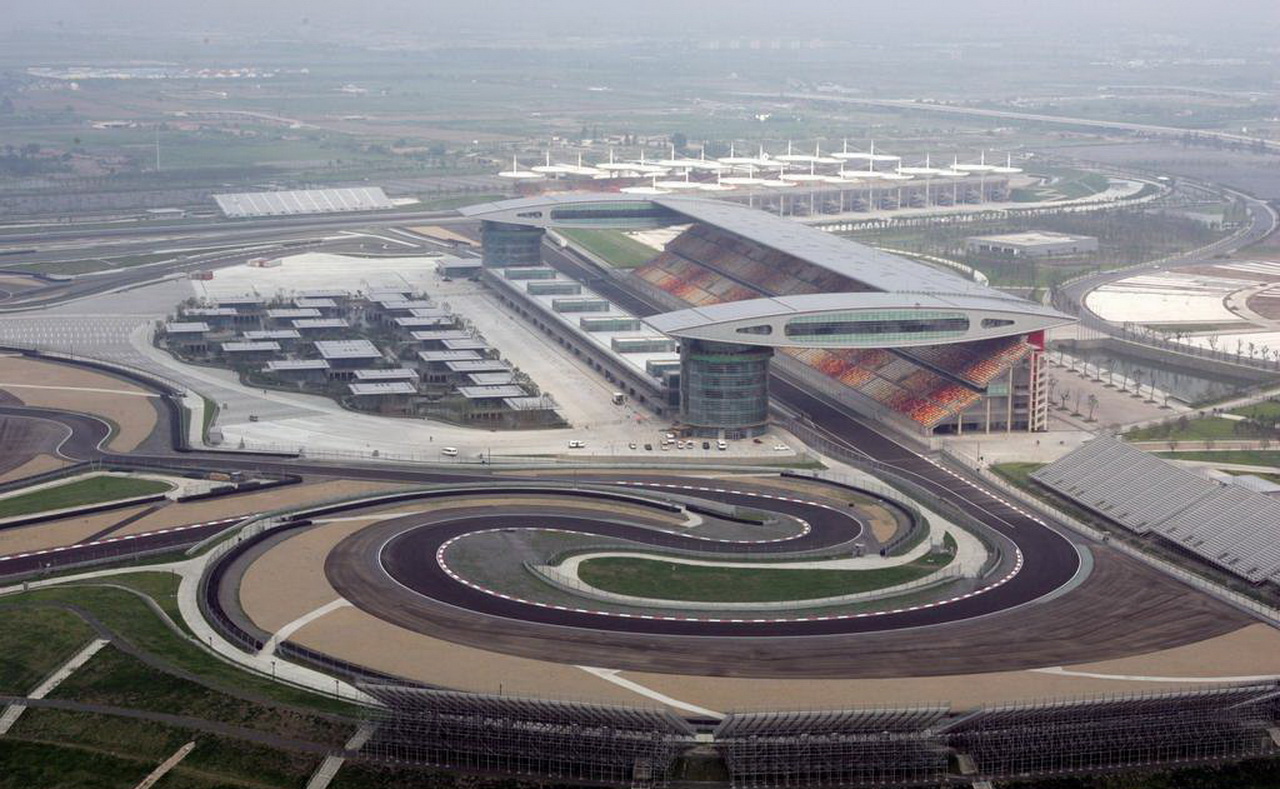
    We are in Shanghai, China for the fourth round of the formula 1 world championship.

    The Shanghai International Circuit plays host to the 10th Chinese Grand Prix. Its been hosting the Chinese Grand Prix since 2004.

    The circuit is a mix of tightening radius corners with some fast switch back corners and one long straight. We can expect Mercedes to be very strong at this track with Red Bull not far off the pace.

    We can expect more early times for the Chinese Grand Prix weekend. Below are the broadcast times for the 2014 Formula 1 UBS Chinese Grand Prix:

    Free Practice 1: Friday 04:00

    Free Practice 2: Friday 08:00

    Free Practice 3: Saturday 05:00

    Qualifying: Saturday 08:00

    Race: Sunday 09:00

    All times are GMT+2.

    As always you can catch our updates on our Twitter account (@F1_Madness).

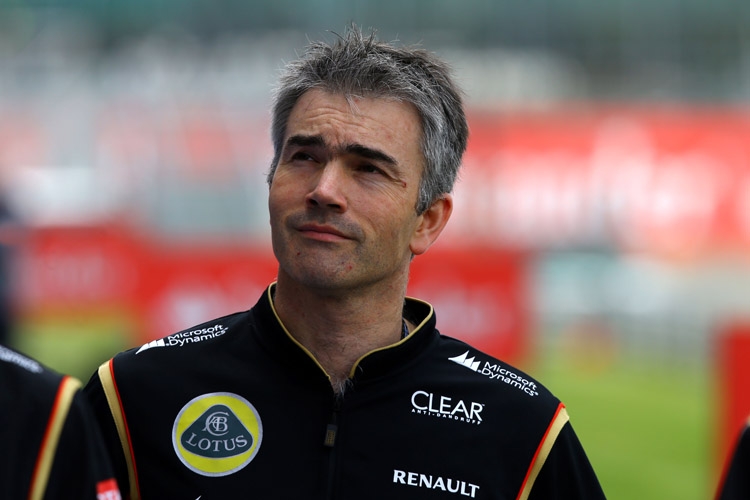
  • Q & A: Lotus’ Nick Chester says the E22 has “great potential”

    Q & A: Lotus’ Nick Chester says the E22 has “great potential”

    Lotus’s Nick Chester talks about the E22’s potential, the upcoming Chinese Grand Prix, qualifying, and car development.

    Q: Where does the E22 stand heading to China?
    Nick Chester: The E22 has tremendous potential even if we are only gradually unlocking it. in the Bahrain grand Prix we
 were closer to Mercedes, Williams and McLaren than we have been previously. Our race-pace gap to the Williams and McLaren is now half a second and it was over a second in Sepang, so we’ve made a decent incremental improvement. although we were still not quick enough in Bahrain, we actually don’t need to find much more performance before we can be regularly in the points, which when you consider where we started from, is encouraging. We are about level with Toro Rosso for pace at the moment. Were it not for the safety car incident in Bahrain, Pastor would have been fighting for our first point. That’s not where we want to be, but we’re on the edge of the points during what are still very early days for the E22.

    Q: We seem to struggle in qualifying at present?
    Nick Chester: Our qualifying pace hasn’t been on the same level to our race pace. We made quite a bit of progress during Bahrain, getting quicker during each session. in Q2 a further 1.2 seconds would have put us fourth, rather than 16th. We know we are still at a very early stage with the E22 – more so than our rivals – and there are clear areas where we know the performance can be extracted.

    Q: Just how much more is there to come from the car?
    Nick Chester: I think we’ve got a lot more to learn about the E22 than the other teams. We learn something every time the car takes to the track, with every lap. We’ve also got some aerodynamic developments that should be interesting to evaluate for China, when we are hoping for a bit more out of the power unit as well, both reliability and pace wise.

    Q: Why was track time so limited at the Bahrain test?
    Nick Chester: It was all power unit issues unfortunately. We’re working very closely with Renault Sport F1 to understand why we have faced so many challenges in this regard. Clearly we all want to put reliability concerns behind us so we can focus on performance and showing our true pace.

    Q: How has the relative lack of track time affected the development programme?
    Nick Chester: It means you have to prioritise what parts to evaluate, so we’ve had to adapt our programme for China because of this. We’re going to attempt to get as much as we can out of FP1 and FP2 in Shanghai to test new parts, but ultimately we’ve delayed the introduction of some key developments until Barcelona now.

    Q: What areas are you focusing on with the new parts?
    Nick Chester: We have a lot of aero parts we want to evaluate throughout the E22, including an evolution to our nose. Expect to see some bodywork upgrades in China and then a bigger upgrade in Barcelona.

    Q: What is the outlook for China?
    Nick Chester: It should be better than Bahrain. Bahrain was an obvious power circuit, as you could see from the way the cars lined up on the grid. China’s got a long back straight, however there are more slow and medium speed corners than Bahrain, so that gives us the chance to try and get closer to the front.

    Q: Where will the biggest performance gains come from with the E22?
    Nick Chester: There are quite a few areas. Partly because of how immature the car is we haven’t managed to evaluate all the performance capabilities we want to yet. The big areas i would say are braking, aero and the power unit.

    Q: Pastor was attempting to try a different tyre strategy in Bahrain. Has the E22 inherited the gentle tyre-wear characteristics of its predecessors?
    Nick Chester: It’s possibly a bit early in the season to say, but it did look like Pastor was going to be quite good on his tyres in Bahrain. The 2014 generation of Pirelli is certainly different from last year’s, but there are always strategy gains to be made from prolonging the tyre performance longer than our rivals.

    Source: Lotus F1 Team


  • F1: A game of chess, not checkers

    Reynard Gelderblom (@Reynardg), Motorsport Editor of Street Motion sent us his thoughts on the role that strategy plays in Formula one, following the Chinese Grand Prix.

    If you’d like us to publish your Formula One related opinions, just email us and we’ll add it to the Fan Pages of this website.


    F1: A game of chess, not checkers

    Formula One Strategy
    Formula One Strategy – much like a game of chess

    A thought which came up quite a few times while watching this past weekend’s Chinese Grand Prix is: “I don’t ever want to play chess against any of these team managers.”

    F1 is very much about strategy these days, with the tyres playing a huge part of planning throughout the weekend. All of us will still remember this same race in 2012 where one lap meant the difference between second and fourteenth for Kimi Raikkonen.

    I’ve heard many complaints over the past weekend though from people calling this boring, most notably during the third qualifying session on Saturday. For me, this was extremely exciting. Then again, whenever I go to the casino you’ll be sure to find me at the Blackjack table and never at a slot machine. Formula One is truly the thinking man’s sport.

    The race weekend starts on Friday morning with all teams receiving an equal amount of tyres from two Pirelli compounds. Friday practice teams need to gather enough information about the tyres, how long they’ll last, what will work in which conditions etc. Come Saturday morning, your strategy for tyres needs to be in place. Effectively Saturday qualifying is when you start your race these days. A good example was with Red Bull in China. There’s no doubt that Vettel could’ve qualified higher than ninth, but making up grid slots would’ve cost the team dearly in the race.

    Then comes the race: Webber’s failure to supply a fuel sample after qualifying got him pushed to the back of the grid. Again the team took advantage of this by changing the gearbox and gear ratios and thereby willingly choosing to start from the pits. Hamilton started first with Alonso third. Again, Alonso could’ve easily gotten pole position, but at what cost? As the race progressed, this played out as expected.

    Then there was the question of the option tyre. All teams must make use of both tyre compounds during a normal dry race. For this race, Pirelli’s softer compound clearly had no real lifespan to talk of – just six laps. Most teams just wanted to get this over and done with. For this one, Vettel had an entirely different strategy to anyone else: take the option tyres with six laps to go. All of a sudden, Hamilton was under pressure and with one lap to go third spot would’ve gone to the one who could keep it together on the tyres.

    Of course fingers can be pointed to Pirelli. Shouldn’t they maybe have supplied the teams with better tyres? Shouldn’t they gather as much team data as they can to come up with a better solution? One thing to keep in mind is that this is not 2005 when tyre changes weren’t allowed. We certainly won’t see any scenes like we did back in the USA Grand Prix of that year where all but six cars pulled off the circuit prior to the start for safety reasons. Tyre changes are part of the game now – and it’s a variable teams have to take into account.

    What’s more, it does in fact bring a level of excitement to a GP as well. I watched this race along with another group of motoring journalists at one of our favourite restaurants in Cape Town. I can’t remember when last it took me an hour to finish a proper fried up breakfast and the reason for this is simply because I didn’t want to look away from the screen. I didn’t want to miss any slight sign of the tyres starting to fade on someone’s car or a single radio message. This was pure thrills from start to finish.

    Balancing equations of minimum quantities of fuel, KERS, DRS, tyres, ideal track position after pit stops, when to make what move… all while trying to win a race. As I said, I wouldn’t want to play a game of chess against these guys.
    By Reynard Gelderblom

    Reynard Gelderblom is the motorsport editor for Street Motion.

    Keep up with the latest local motorsport news by following for Street Motion on Twitter.

    streetmotion


  • Chinese Formula One GP Review: Phenomenal Fernando rules China

    Chinese Formula One GP Review: Phenomenal Fernando rules China

    Since the start of the Formula One season several teams have been particularly vocal in condemning the 2013 Pirelli tyres. As far as this upset lot were concerned tyres would dominate the Chinese grand prix headlines.

    Instead it was Fernando Alonso that wrote his name into the headlines. A third place in Saturday’s qualifying session behind Raikkonen and polesitter Hamilton underlined the pace of the Ferrari and El Nano never looked back.

    Lewis Hamilton maintained first off the starting grid as Kimi Raikkonen was overwhelmed by Alonso and Massa. As it was, Raikkonen’s start was compromised by a change to the starting sequence made by the team moments before the start. It wasn’t long before both Ferrari drivers were hounding the back of Hamilton’s Mercedes which ended with Hamilton simultaneously overtaken, on either side, on the entry to turn one.

    The tyres were still an issue and the frontrunners got rid of the delicate soft tyres on after only six laps. It left them able to run to the flag using the more robust medium compound. In contrast, those who had opted to start on the medium tyre, Vettel, Button and Hulkenberg, were now running at the front-end. In a strategic move, Button and Vettel selected to not set a flying lap in the third session of qualifying; putting them out of sequence with the frontrunners.

    Nevertheless, no sort of strategy manipulation was ever going to trip-up Fernando Alonso. Electric off the start and clinical when overtaking, it was from this point onwards where Fernando Alonso started to deliver a metronomic drive of the highest calibre. Whilst tyre life and levels of degradation certainly had an impact in the Chinese GP it had no influence on who the victor would be.  Leading from the front Alonso was never under pressure from his pursuers in the shape of Raikkonen and Hamilton. By controlling his tyres and setting a ferocious and unmatchable pace he fashioned an extremely impressive path to his 31st victory.

    Kimi Raikkonen’s pace was slightly hindered by nose and front-wing damage after an incident with somewhat wild Sergio Perez. Bruised and battered Raikkonen still managed to hold off Lewis Hamilton for a fine second place. Eighteen points closes the gap to championship leader Sebastian Vettel to three points. By finishing nineteen of the last twenty races in points scoring positions Raikkonen has proven his near bulletproof consistency – a highly prized commodity in any championship fight.

    Lewis Hamilton lacked the pace required to challenge for victory though Mercedes will be thrilled with his performance. But the final step of the podium very almost wasn’t his as Sebastian Vettel’s alternative strategy nearly paid off. Armed with a new set of soft tyres the Red Bull destroyed the fourteen second gap to Hamilton in a mere four laps.

    Despite Vettel’s late charge and fourth place finish, Red Bull’s indifferent record at the Chinese GP continued.  For Mark Webber it started with a fuel-pressure glitch that dropped him out of qualifying on Saturday. Red Bull’s choice to change the gearbox and ratios on Webber’s car meant the Australian had to start from the pitlane; but would do so with a car better equipped at overtaking. It made no difference however as Webber’s Red Bull sustained damage in clash with Toro Rosso’s Jean-Eric Vergne. Still not the worst of it, Webber was forced into retirement as his right rear tyre made a break for it and rolled across the track. What would injury be without insult? For his part in the Vergne incident Webber was given a three-place grid penalty for next week’s Bahrain GP.

    Jenson Button finished a solid fifth ahead of Felipe Massa whose pace dropped off after the first round of stops. Daniel Ricciardo delivered a great drive and brought the Toro Rosso home in seventh ahead of Di Resta, Grosjean and Hulkenberg.

    There may have been twenty-two drivers on the Shanghai circuit but Fernando Alonso was in a class of his own.


  • Chinese Grand Prix Post Race Press Conference

    Chinese Grand Prix Post Race Press Conference

    Here’s what was said at the post race press conference of the Formula One Chinese Grand Prix.

    PRESS CONFERENCE

    Q: Fernando, congratulations, well done. You were a winner here in 2005, how does it feel to have won again? It seemed to be a perfect race for you.
    FA:
    It feels good. Obviously a long time from the victory here – eight years. Definitely it was nearly a perfect Sunday for us, with not any problem in the race. The start was clean; it was good. We managed to overtake Kimi. And then in the first stint we managed to pass Lewis as well. The car felt a little bit better on the degradation side let’s say. And then in the rest of the race, obviously you need to take care of the tyres a little bit, you need to manage the gap with the guys behind. It was not so easy to understand the race sometimes. We were overtaking the McLarens, Hulkenberg, Sebastian, so it was a little bit of a mix. So it was not an easy race and there were some moments of action let’s say and the risk is there when you have to do an overtaking manoeuvre and you have to manage that as well. The team did a perfect job with the set-up of the car for quali and the race, perfect pit stop times and pit stops executed let’s say. At the end of the race the victory is a good reward for the team, well deserved after the disappointment in Malaysia and you know, the car felt good. The two races we finished, one was second and the victory today, so definitely it’s a positive start to this championship. We need to keep going like that, in this direction, with good weekends, with not any extra risk and hopefully in Bahrain we can score some good points again.

    Q: Kimi, obviously a bit of a problem at the start there, tell us about that, and also how much pressure was there at the end as well?
    KR:
    I think we just had wrong settings. The practice start was very good but then it was really bad the real start and we lost some positions and after that the car was okay, but I had a little accident, some problems with Perez and we damaged the nose and the front wing. I was surprised there was no more damage because I hit him quite hard. Also bit surprised that we didn’t have any more problems after that. A bit too much understeer and destroying the front tyre because of that but we still could fight for second place and get quite a good result in the end. Obviously we wanted to try to win but today with all the issues it was not possible.

    Q: Lewis it was kind of tight at the end with Sebastian closing on you and obviously you were trying to put pressure on Kimi. Tell us about it.
    LH:
    Yeah, it was a good race for me. Quite happy with third. Of course I would have liked to have won but congratulations to Fernando, he did a great job and so did Kimi. They were both a little bit too fast for us during the race. I was seeming to be able to apply a little bit of pressure to Kimi but not enough to get close to him and overtake. My tyres were shot at the end and there was nothing I could do really to hold off Sebastian. A little bit unlucky with some traffic. Still, to get on the podium, really happy. Really happy with the points as well.


  • Chinese F1 Grand Prix Podium Interviews

    Chinese F1 Grand Prix Podium Interviews

    Podium Interviews Conducted by David Coulthard

    Q: Fernando, congratulations. A fairly dominant victory in the end and your 31st victory, putting you fourth on the all-time list just behind Ayrton Senna. What does this one mean to you?
    Fernando Alonso:
    Well, hello everybody first of all and thank you for the support all weekend. Amazing fans all weekend and it’s very nice to race here. About the race: yes, definitely it was a fantastic race for us, from the start to the end, without big problems with the car. The tyre degradation was better than expected probably, so we managed more or less the pace. Yeah, it feels great after the retirement in Malaysia, we had some pressure to finish the race. The two races we finished this year; one second place and today the victory so definitely the start of this 2013 campaign is looking good so we are very optimistic.

    Q: We heard the team talking to you during the grand prix telling you not need to push. They were trying to slow you down in some respects and you were saying ‘I’m not pushing’.
    FA:
    Well, you always push. In a Formula One race it’s impossible not to push but it’s true that we had some pace, maybe, in the pocket. Not easy to know when to use it depending on the state of the tyres. A little bit more potential and hopefully we can show it in Bahrain in one week.

    Q: Kimi Raikkonen, that’s your 20th consecutive finish in Formula One. You’re certainly Mr Consistency. You had to work hard for that second place today. You had some damage to the front wing of your car after some contact, so tell us about that and also how it affected the balance?
    Kimi Raikkonen:
    I think in the end it was a pretty okay result. Obviously we want to win but after a bad start the car was handling well but then overtaking Perez, I was next to him and he just pushed me on the kerb but I tried to avoid him but I went on the grass and hit him on the rear I think and damaged the front. That didn’t help but luckily it didn’t affect so much the handling, it was just a bit too much understeery but we could still fight for second place. For sure without the damage we could have been quite a bit faster. Anyhow, good points and we try to do better next time.

    Q: We come to Lewis Hamilton, our pole-sitter. It didn’t quite work out for you there on race pace. You really dropped away towards the closing stages, under a lot of pressure from Vettel but some great racing nonetheless.
    Lewis Hamilton:
    Yeah, I’m really happy with today’s result. Great result for the team, very happy with the points. The team did a fantastic job all weekend. Unfortunately, we didn’t have the kind of pace these two have but still very fortunate to get on the podium.

    Q: Fernando, a closing question for you. Only one week until Bahrain. What are you expecting in terms of performance there and what’s the celebration going to be like tonight with your Ferrari team?
    FA:
    I expect a tough race again. In Bahrain I think we will see different conditions and who knows how competitive anyone can be. But definitely, as I said before, from the races that we finished this year the car seems to be able to be on the podium, so we hope to be on the podium again in Bahrain. The celebration tonight? Nothing special. I have a flight very early for Bahrain, so tonight I think some dinner. I think they guys will celebrate more than me.