Tag: ayrton senna

  • What’s in a number?

    What’s in a number?

    The FIA announced late last year that drivers would be issued with permanent numbers to be carried throughout their Formula 1 careers. All drivers were asked to nominate two numbers between #2 and #99 as Sebastian Vettel has an automatic hold on #1 as the current F1 champion.

    The complete list of numbers that the drivers will carry, starting in 2014, was recently announced by the FIA with many of the choices revealing the nostalgic sentimentality of several drivers.

    Current world champion Sebastian Vettel will race with the #1 while he has reserved #5 not so much as an homage to former British champ Nigel Mansell but rather as a return to the number he used as a child in karting. Should Vettel not make it five world titles in 2014 he will run with the #5 in 2015. Red Bull Racing teammate Daniel Ricciardo has also chosen his first number in karting but tweeted that #3 is also a result of being a fan of NASCAR driver Dale Earnhardt.

    nigeLewis Hamilton continued the trend of karting numbers and the 2008 champion will race with #44 emblazoned on both his helmet and car. Nico Rosberg has chosen his number as a tribute to his father Keke Rosberg who carried #6 during his championship winning year in 1982. However, the number six seems to run in the Rosberg family as Nico also secured the 2002 Formula BMW title while carrying the same number.

    Fernando Alonso carried the nostalgic trend further as he too reminisced about his karting days with the choice to race #14. Believe it or not Fernando Alonso is the only driver on the grid to have won the Karting World Cup and he did so using kart #14 when he was 14 years old.

    While sentimentality overflowed Kimi Raikkonen delivered his trademark, unaffected reasoning for his choice. “It was my number the previous year so I saw no reason to change it,” he said. Raikkonen will race with #7.

    Romain Grosjean has similarly elected to retain his 2013 number. However, the Frenchman revealed that his choice to retain #8 is based on the fact that he had experienced his best ever season last year. Newly signed teammate Pastor Maldonado has brought back #13 to Formula 1 which is considered to be unlucky in many circles. However, Maldonado’s choice could be down to the fact that this particular number in considered lucky for Venezuelans. Several Venezuelan Baseball players all carry #13.

    Jenson Button has returned to his championship winning season of 2009 with the choice of #22 while rookie teammate Kevin Magnussen is continuing the trend of karting numbers with #20.

    Nico Hulkenberg’s choice of #27 hasn’t been given much clarification as yet but the romantics amongst the F1 fans would like to think that German’s choice is in honour of the great Gilles Villeneuve. Coincidentally, Ayrton800px-Ferrari_126_CK Senna clinched the 1990 world driver’s championship with #27. Mexican Sergio Perez has picked #11 as the second Force India driver. “Ever since I was a kid I always wore the 11, in karting. Actually my email has 11 in it as well,” he grinned. “A lot of things have to do with 11 so I identified myself with that number,” said Perez.

    Adrian Sutil, a Sauber driver for 2014, will run #99 which was the highest possible number up for grabs. Esteban Gutierrez will race #21. Jean-Eric Vergne hand-picked his karting number 25 while rookie teammate Danniil Kvyat has confirmed #26.

    Williams driver Felipe Massa has selected #19 which could be in honour of Ayrton Senna as this was the Brazilian’s first number in Formula 1. Finnish teammate Valtteri Bottas has seen the marketing potential in his choice of #77 as it resembles the letter ‘T’ in his name. Marussia driver Jules Bianchi had to be content with his third choice of number 17. The FIA has confirmed Max Chilton as the second driver at Marussia for 2014 but the Brit is yet to select a number. Caterham are still to announce their driver pairing for the upcoming season.

    The issuing of permanent numbers is a great homage to the history of Formula 1. Gilles Villeneuve will always be as synonymous with #27 as Nigel Mansell will be with #5. Now it is the chance of a different era of drivers to breathe new life into these legendary numbers.
  • F1 engine builder Brian Hart dies

    F1 engine builder Brian Hart dies

    Former Formula One racing driver and engineer, Brian Hart, has died at the age of 77 after a long battle with illness.

    Hart is well known for having built engines for the likes of Jordan and Toleman.

    Starting his racing career in 1957, Brian Hart enjoyed great success in single seater racing even and qualified for the German Grand Prix at the Nurburgring in 1967 – his sole outing in F1. He retired from racing in 1971 after starting his own company, originally preparing Ford engines for F2 cars before developing his own engine for Toleman’s F2 team.

    Following a one-two in the 1980 European F2 championship, Toleman graduated – along with Hart – in to Formula One. With their limited budget the opening seasons were a struggle, but by 1984 Hart was also supplying engines to Spirit and RAM.

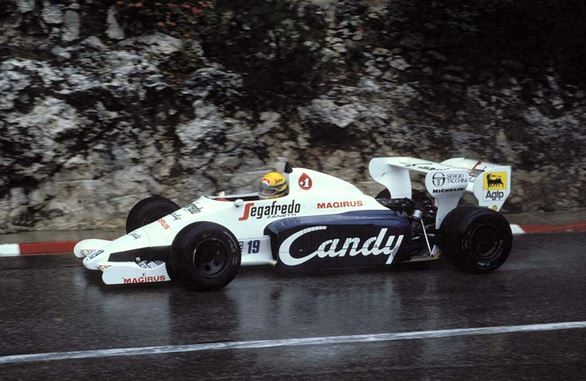
    Their engine secured its first podium finish at the 1984 Monaco Grand Prix when Ayrton Senna finished second for Toleman.

    More podiums followed and 1985 saw Toleman’s Teo Fabi take the first pole position for the pairing, but a year later Hart dropped out of Formula One, not able to compete with the large budgets available to the likes of larger engine manufacturers like Honda and Renault.

    In 1993 Hart returned to F1 with Jordan and enjoyed a podium a year later at the Pacific Grand Prix with Ruben Barichello while the Brazilian driver also claimed a pole position in Belgium.

    When Jordan then opted for Peugeot engines, Hart supplied Footwork – yielding a podium at Adelaide in 1995. Tom Walkinshaw Racing bought the engine company in 1997 and Brian Hart left TWR in 1999 after deciding to quit F1.


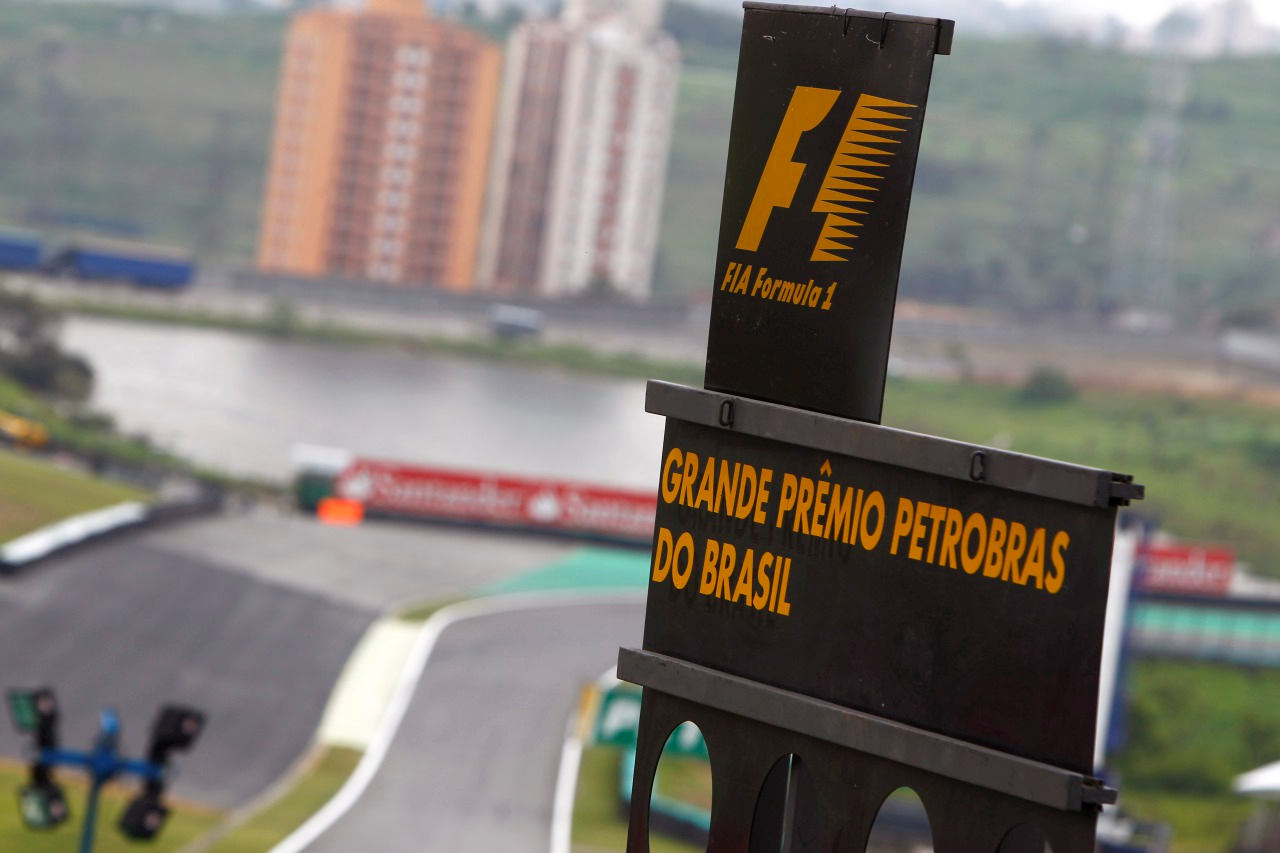
  • F1 2013: Brazilian GP – The End Of An Era

    F1 2013: Brazilian GP – The End Of An Era

    Transformation and evolution are as much a part of every Formula 1 season as the champagne flavoured victories and those breathtaking flashes of brilliance. The 2013 Brazilian grand prix will be more than a race, it will be the end of an era.

    The South American city of Sao Paulo has within its hills one of the most historic racing circuits in all of motorsport. Several world titles have been clinched on its hallowed ground including those of  Fernando Alonso, Kimi Raikkonen, Lewis Hamilton, Jenson Button and most recently Sebastian Vettel. The original circuit layout stretched to nearly eight kilometres with twenty-six turns with a lap record of 2:21.40 held by Jean-Pierre Jabouille. However, the circuit was streamlined in 1990 to the 4.3 km lap that is now familiar as the Interlagos circuit. Despite the shortened lap the anti-clockwise circuit is still a commanding venue with a distinctive challenge. The track is best known for its high speed sectors which are separated by twisty in-field section that requires good grip and stability from the car. The altitude of Interlagos additionally provides a unique challenge for the engines.

    “Sao Paulo is around 800m above sea level, which has a big impact on the power of the engine. As the altitude increases the air pressure drops and the air is thinner with a lower oxygen content,” said Renault Sport F1 head of track operations Remi Taffin. “For every 100m the engine loses around 1 percent of its potential power output, meaning the RS27 will produce around 8 percent less power than at a sea-level race such as Korea.”

    Autodromo-Jose-Carlos-Pace-Interlagos-Brazil-aerial-viewBut Brazil is more than just the Interlagos circuit. The country’s list of motorsport greats runs from Emerson Fittippaldi to three time champion Nelson Piquet to the transcendent Ayrton Senna. More recently Rubens Barrichello and Felipe Massa has enjoyed the fervent support of the Brazilian fans. “The passion of the Brazilian fans is amazing and it’s fantastic to see their support over the weekend,” said Lewis Hamilton.

    The weather around the Autodromo Carlos Pace has a tendency to dramatically veer to both ends of the extreme. Track temperatures of 63 degress Celcuis has been recorded here in the past and on the other end of the scale epic levels of rain is nothing spectators and drivers havent seen before. The forecast for this weekend is fickle at best with some rain predicted during the weekend. Given the dominance of Sebastian Vettel and Red Bull several drivers will be hoping for the unknown weather element to shake up the pack.  “The weather forecast for Interlagos looks interesting this weekend and if it does rain, that would be a good opportunity for us as our car is generally quick in the wet,” said Mercedes driver Nico Rosberg.Mark Webber

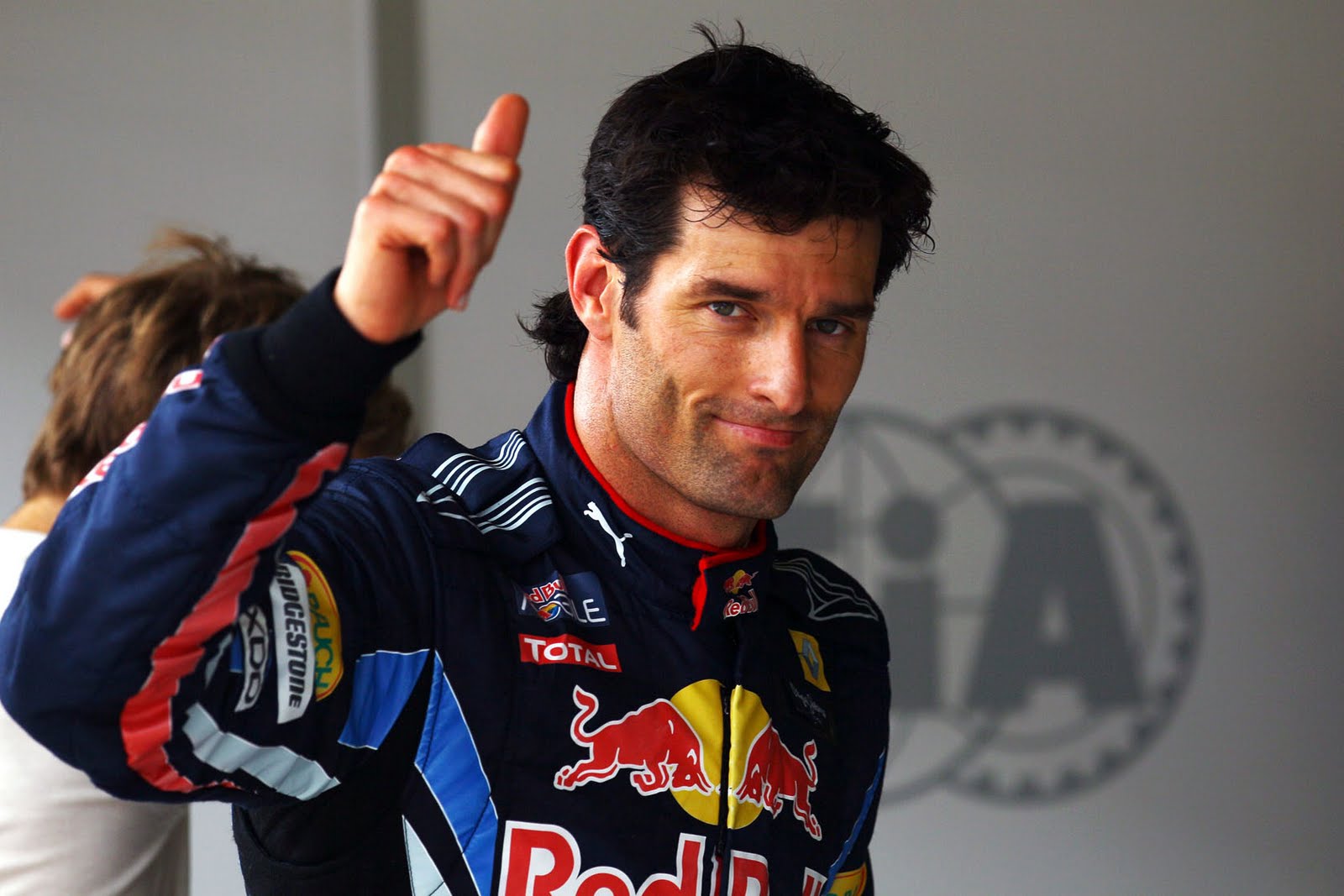
    When the chequered flag falls after 71 laps of Sunday’s Brazilian grand prix it will bring with the end of an era. Twelve years ago an Aussie named Mark Webber started his first Formula 1 career behind the wheel of a Minardi. He scored points on debut at his home race but this was only to be cusp of what would become a great Formula 1 career. Webber joined Jaguar for the 2003 and 2004 season and qualified a career best second at the 2004 Malaysian grand prix. In 2005 Webber joined the Williams team with whom he would record several points finishes. The Red Bull partnership would commence in 2007 and be highlighted by several sublime victories. Webber’s first race victory at the 2009 German GP saw the Aussie deliver one of the most memorable drives of his career.

    Webber has since won eight more races and through all of them he has been the straight-talking Aussie that many have to revere as one of the greatest racers Australia has produced. There aren’t many people who wouldn’t want to see Webber on the top step of the podium for the final time this weekend. Few people have raced and conducted themselves with more integrity than Mark Webber and whatever may happen AussieGrit and his tenacious character will be remembered in Formula 1 circles for some time to come.

    felipeFerrari bid farewell to Felipe Massa this weekend after eight seasons. Eleven race victories and an achingly close championship battle in 2008 tells the story of a glittering Ferrari career for Felipe Massa. At some points there were few drivers could match the Brazilian in terms of pace and he all but owned the Bahrain and Turkish grand prix circuits; winning at Istanbul three consecutive times. The memorable moments of Massa’s career with Ferrari have been etched into Formula 1 history not least of all being his emotional victory at the 2006 Brazilian GP. Massa became the first Brazilian driver since Ayrton Senna in 1993 to win at Interlagos. Felipe Massa repeated victory at his home race in 2008 as he came perilously close to becoming the Formula 1 world champion. But gracious in defeat to Lewis Hamilton Massa dedicated his victory to the fans. Massa starts the next chapter of his Formula 1 career as a Williams driver in 2014. He will unquestionably be a great asset to his new team.

    The 2013 Brazilian grand prix will mark the end of the V8 engine era after eight seasons in Formula 1. Fernando Alonso became the first ever V8 champion in 2006. French engine manufacturer Renault will end the V8 era as the most successful manufacturer with five constructor’s and five driver’s world championship titles. The Renault engine annihilated the competition with 59 wins, 65 pole positions and 55 fastest laps.

    The conclusion of the 2013 season brings with it the end of an era as we bid farewell to Mark Webber and the V8 engine. There is no more fitting place to do so than a magical racing circuit named Interlagos.

    Photo credits:

    lotusf1team.com

    Daily Mail

  • F1 2013: Japanese GP Preview – Spectacular Suzuka

    F1 2013: Japanese GP Preview – Spectacular Suzuka

    There are few things that are greater than the sport Formula 1. But if there was ever a possibility of it being transcended, of something being greater than the sport that so is beloved then Japan’s Suzuka circuit would be that mystical exception.

    The circuit lap record is held by Kimi Raikkonen, set during the exceptionally memorable 2005 Japanese GP. Suzuka made its debut on the Formula 1 calendar in 1987 and this race, where Raikkonen blasted his way through the field from seventeenth to first, is highly regarded as one of the best Japanese GP in F1 history.

    The history of this circuit is saturated with some of the sport’s most unforgettable moments. One of the most grandiose and infamous moments between Ayrton Senna and Alain Prost, the rivals who defined F1 in the 90s, transpired here. Both in contention for the 1990 world title Senna’s cunning plan was set into motion the moment the lights turned to luminous green. As Prost turned his Ferrari into turn 1 Senna held station in his McLaren resulting in a collision that sent both into the turn 1 gravel trap. Both retired from the race and Senna was crowned champion ensuring not only one the most memorable moments in Japan but in all of Formula 1.

    Lewis Hamilton, Mercedes F1 TeamAside from its history, drivers are unanimous in their praise of Suzuka calling “one of the best tracks in the world.” The circuit’s old school, classic, layout and limited run-off area is reminiscent of traditional F1 tracks that required intense concentration and precision. The 5.807 km long lap is uncompromising and ready to punish the slightest lapse in discipline. “If you touch the grass at any point, it’s going to spin you off into the wall, so it’s a much more demanding circuit in terms of precision, positioning and turning points for each corner,” said Lewis Hamilton.

    The adrenaline charged layout is a combination of medium to high-speed with first sector of the lap characterised by the flowing Esses, more commonly known as the Snake. Spoon curve, a double apex left-hander in sector two, is taken at fairly high-speed and is crucial for a good end to the lap as it leads directly onto the back straight. The figure-of-eight layout adds the element of elevation changes to the mix along with hairpins, Esses, 130R and a chicane, Suzuka is the perfect blend of a prodigious racing track.

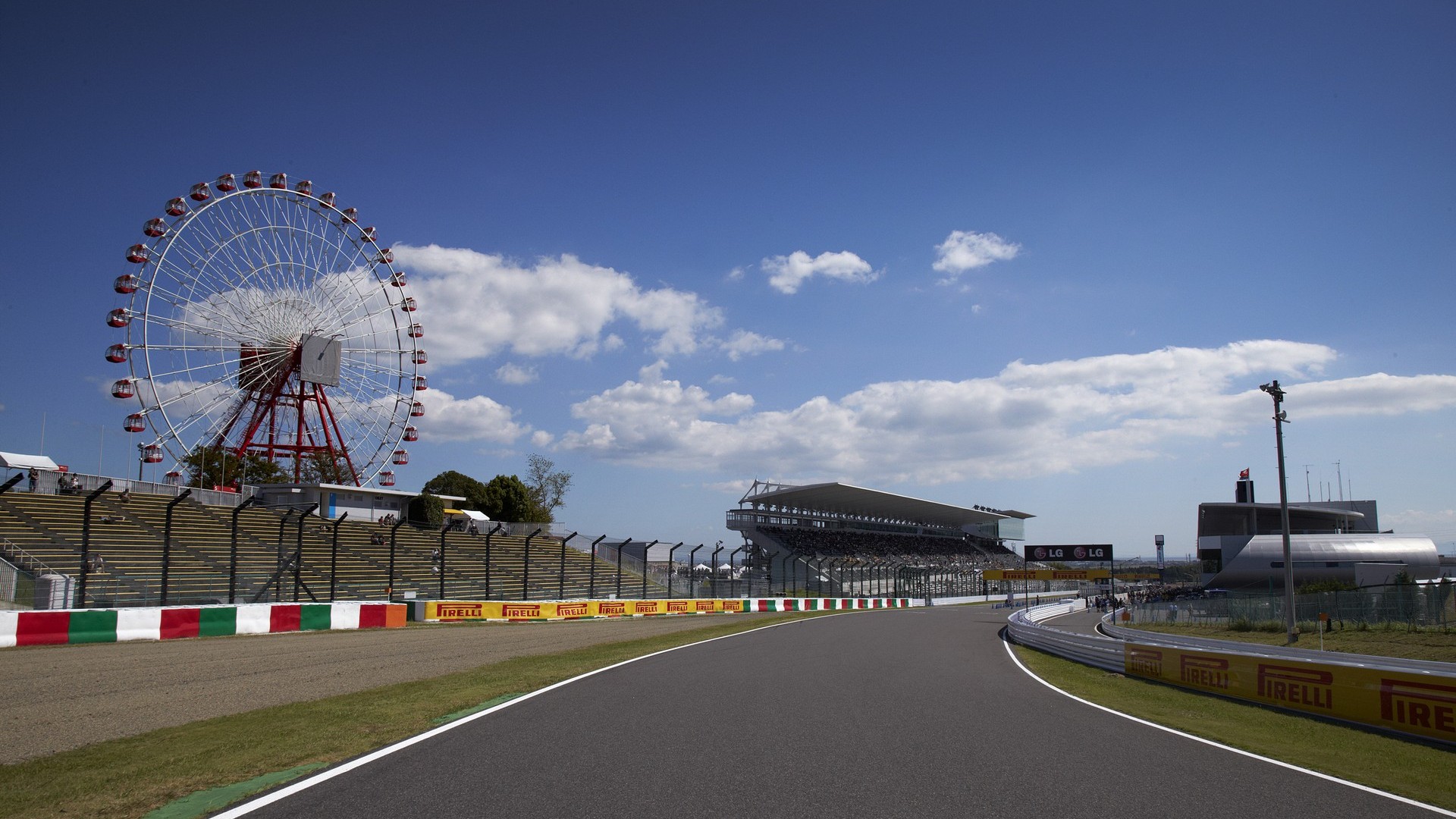
    Suzuka_FerrisWheelA good front-end, a descent amount of drag and few mistakes should translate into a good result at the end of the 53 lap Japanese GP on Sunday. Both Lotus drivers, Kimi Raikkonen and Romain Grosjean, showed good pace in Korea and could be a threat this weekend. As throughout the year the Lotus has shown adequate long run pace in comparison to its one lap speed; at least in the case of Raikkonen. A better run in qualifying should put Raikkonen in prime position to challenge for race victory; assuming that a certain Mr. Vettel isn’t able to unleash his Singapore-style pace.

    Of late, Ferrari’s challenge seems to have faded and not even Fernando Alonso’s Samurai inspired tweets have been enough to enthuse his championship bid. Given that the Suzuka circuit is similar, in terms of corner speed, to Silverstone it may be yet another uphill battle for the Italian squad.

    It’s all over bar the singing as Sebastian Vettel’s run of recent victories has led to the possibility that he could clinch his fourth consecutive title in Japan. Four world championships crowns in a row has only been achieved twice in the history of F1; first by Juan Manuel Fangio and secondly, by Michael Schumacher who racked up five consecutive titles between 2001 – 2004. Should Sebastian Vettel find himself first to the chequered flag this weekend, and  closest rival Fernando Alonso finishes ninth or lower, the German will secure a fourth driver’s world title at the Japanese GP.

    There appears to be no a definite challenge to the all-conquering dominance of Sebastian Vettel. But perhaps the splendour and palpable history is a combination great enough to conjure a Japanese GP to remember.


  • Video: Ayrton Senna’s McLaren Honda Sound Around Suzuka

    Engineers recreate Ayrton Senna’s record lap around the Suzuka track by using telemetry from the car and the sound of the engine.

  • F1 2013: Hungarian GP Preview – Qualifying king at the Hungaroring

    F1 2013: Hungarian GP Preview – Qualifying king at the Hungaroring

    After a three week gap the 2013 Formula 1 season restarts with the Hungarian grand prix.

    In its own right the Hungarian GP has written its own part in Formula 1 history. The circuit has rewarded Damon Hill (1993), Fernando Alonso (2003) and very memorably Jenson Button (2006) with their first victories in Formula 1.

    The first grand prix held at the Hungaroring was the first to be held behind the Iron Curtain. Formula 1 has been frequenting the Hungarian grand prix since 1986 and the Budapest located circuit is a guaranteed staple of a Formula 1 race calendar until 2016.

    As a high downforce circuit the Hungaroring is famous for its tight and twisting nature. The dusty track surface confirms how little action the track sees which makes track evolution at the Hungaroring a crucial aspect for judging a qualifying effort. Throughout the 4.381 km lap the Hungaroring’s old-school layout is packed with fourteen corners.

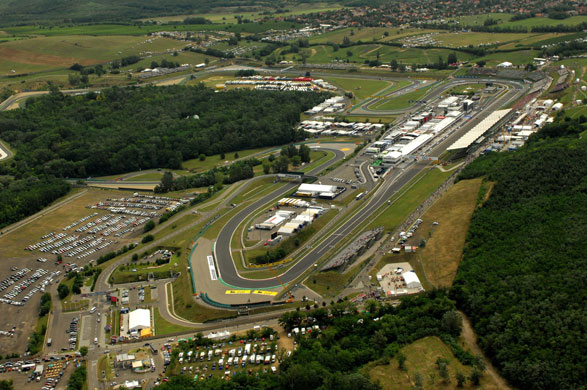
    Hungaroring_AerialThe Hungaroring is technically demanding, bumpy and narrow, loved by drivers and adored by fans for its traditional atmosphere. The key to a good result here is a good grid slot. Having the fastest car will mean nothing if you’re stuck in the pack. In 1990 Thierry Boutsen in a sluggish Williams held off a much quicker Ayrton Senna to win the race. The chances of overtaking, even with DRS, are slim to none. No one knows the frustration of not being to overtake better than Lotus’ Kimi Raikkonen. The Finn has finished second at the Hungarian GP on four separate occasions.

    The new tyres, tested during the three days of the young driver’s test at Silverstone last week, will be used this weekend in Hungary. The test was opened to current race drivers by the FIA to assist Pirelli. Sauber’s Nico Hulkenberg pointed out that testing the new tyres wasn’t a “day and night” difference and that running on the new compounds for the first time in Hungary “will be fine too.” The 2013 Pirelli P Zero tyres have been matched with 2012 construction to enhance consistency and improve safety.

    Pirelli’s initial conservative choice of the medium and hard compounds would’ve hampered teams such as Lotus and Ferrari who thrive on getting the softer tyre to its working temperature quicker and stretching the life of the tyre. However, coupled with high temperature, forecast at mid-thirties, Pirelli’s reversion to the medium and soft compound will play to the strengths of the two teams.

    McLaren have won eleven of the twenty-seven Hungarian grands prix but victory this weekend is unlikely to be a possibility for the Woking based team. Jenson Button believes that the team are moving the right direction. “A win in 2013 is going to be difficult, but I actually think the team is working very well right now: in Germany, our tyre-usage, strategy and management of the race was as good as it’s ever been.”

    Sebastian Vettel was the quickest of the drivers at the three day young driver’s test at Silverstone last week. He will no doubt want to continue in the same vein this weekend. Red Bull has never been very prolific at the Hungaroring and of the two it is only Mark Webber who has won here before. Then again, a few weeks ago Vettel hadn’t won the German GP either.

    Mercedes have proven their prowess in qualifying which makes the likelihood of the Silver Arrows locking out the front-row of the grid, or getting a car on pole very good. Given the lack of overtaking on the circuit they will have a prime opportunity to control the race and win it. However, the unknown for Mercedes this weekend will be their performance on the new Pirelli tyres.

    Fernando Alonso’s Ferrari hasn’t looked anything special in qualifying trim but his lightening starts can potentially transform fifth on the grid to second – a vital part to a successful race. The key to this weekend is having a car that can cope with the twisting demands of the Hungaroring. But even more so, qualifying and making a good start to the race can be the difference between winning or not.


  • F1 Retro Video: Rainmaster Ayrton Senna’s Dramatic 1989 Canadian GP

    F1 Retro Video: Rainmaster Ayrton Senna’s Dramatic 1989 Canadian GP

    A dramatic finish to a dramatic race for Ayrton Senna in Montreal at the 1989 Canadian Grand Prix. One of Senna’s best ever performances in the wet despite the result which saw Senna not able to finish the race with a blown engine – after building up a lead of over 20 seconds! This is a perfect demonstration of why Ayrton Senna became known as the Rainmaster. He even made driving on slicks in the wet look easy!

  • F1: 2013: Monte Carlo, timeless perfection

    F1: 2013: Monte Carlo, timeless perfection

    For more times than I could remember I have imagined a Formula 1 car hurtling down my street, braking hard for the ninety degree turn just beyond my gates and planting the throttle which would induce that chill down the back of your spine as the magnificent whine of that V8 engine bounces off the surrounding buildings. If you live in Monte Carlo, this is no fantasy.

    In one way or another, since 1929, racing cars have flashed through the sun drenched streets of Monte Carlo and through the decades has become the most prestigious motor race in the world. The 2013 edition of the Monaco grand prix will mark the 71st race to be run in the Principality.

    Throughout its rich history many drivers have left their mark in the annals of this track’s history books. As a result of five victories around the famous streets, Graham Hill was christened ‘Mr Monaco’ and Formula 1 legends Alain Prost and Michael Schumacher took five victories a pair. The undisputed master around the tight and twisting Monte Carlo streets was unquestionably the incomparable Ayrton Senna. Of the Brazilian idol’s six unforgettable victories it was the 1989 race that yielded one of Senna’s most memorable quotes. “There is a rhythm… something like a perfect melody. Not always… but in any case I am always looking for that melody. And when I have found it I drive in Casino_Monte_Carloa different dimension. I sense and I feel much more than I calculate. These rare moments are marvellous.”

    Now it is time for someone else to become the winner of this extraordinary race. The winner may be amongst the current contenders for the world championship. Fernando Alonso has big momentum on his side and a tremendously fast Ferrari; Kimi Raikkonen brings to Monaco a car that has shown improved pace in qualifying – immensely important around the Anthony Noghes circuit. The championship leader, Sebastian Vettel wants to re-assert his dominance but problems with the tyres and a more than handy teammate around the streets may scupper his plans.

    Senna_and_Mansell_at_1992_Monaco_Grand_PrixMercedes could throw their hat into the ring and almost certainly will come qualifying. But will qualifying performance mean anything in the face of severe rear tyre wear in the race? Whichever driver is to be the eventual winner on Sunday it is nearly impossible to win the race from anywhere but the first two rows of the grid. “Overtaking is almost impossible, so to really enjoy racing there you have to be in the front,” said 2005 winner Kimi Raikkonen.

    There isn’t just something special about the Monaco grand prix, everything about it is exceptional. The quick changes of direction between Ste Devote and Casino Square, the dark, very fast and loud tunnel, the mega fast left-right chicane just after Tabac at the entry to the swimming pool – all unite in the most exhilarating experience for both driver and fan.

    *A small reminder that free practice 1 and 2 at Monaco will be run on Thursday as opposed to Friday.

  • F1 Video: Monaco GP Retro F1 Senna vs Mansell 1992

    F1 Video: Monaco GP Retro F1 Senna vs Mansell 1992

    F1 Flashback Retro memories. Here’s Senna vs Mansell in 1992 at Monaco

  • F1 Video: 1994 San Marino Grand Prix Full Race

    F1 Video: 1994 San Marino Grand Prix Full Race

    One of the saddest days in Formula One history: The 1994 San Marino Grand Prix. Ayrton Senna’s final race. This is the full race video.