Tag: aerodynamics

  • F1 2015: Spanish GP Preview – Formula 1 To Raise Its Game In Spain

    F1 2015: Spanish GP Preview – Formula 1 To Raise Its Game In Spain

    The three week wait is over and the battle is ready to resume at this weekend’s Spanish GP. The question is which battle; will it be a battle between Mercedes teammates or will Ferrari ascend to true championship contenders?

    The Spanish GP doesn’t necessarily have the definitive answer to these questions but it will be more than indicator for the rest of the season. The first European round of a Formula 1 season coincides with the first major upgrade package of the year. It’s the first point in the season where teams can potentially raise their game.

    The Lotus F1 team is planning to up the ante by fitting a major upgrade package to its E23 while Ferrari team Principal Maurizio Arrivebene confirms that the Italian team will be arriving for the Spanish GP with its own bits and pieces. “I heard a lot of teams are coming with new things,” he said.”We are now preparing, as all the others are, some solutions for Barcelona. We are doing all of our development step-by-step but I think in Barcelona, we are going to finally take a good package.”

    christian-hornerThe three week gap will have helped French manufacturer Renault who has faced serious pressure to produce a better power unit. Since the Bahrain GP Red Bull team principal Christian Horner has made a stop at the Paris factory to urge Renault into speeding up their development plan.  “For Barcelona we will be bringing a few bits and pieces, as will all the teams,” said Horner. “The significant thing for us is what specification of engine will we have in Barcelona, because it’s a bit earlier than Renault had in their plan for the next step.”

    One of McLaren’s upgrades for the Spanish GP will include a new livery. Sadly, it’s rumoured to be rather dull shades of grey scheme, yes you read that correctly, as described by the team. The new livery is seen more as a move away from the Silver that characterised their latter partnership with Mercedes.

    More significant is the team’s progress on track and Ron Dennis’, still steadfast, prediction that they will be winning races … soon. There is something however that has been troubling about the McLaren Honda partnership. The claims that 2015 is a “development year” are complete rubbish. There can be no such thing at the pinnacle of motorsport and it is embarrassing for a company of Honda’s pedigree to say so. What McLaren could have and should have done is hold off on bolting the Honda to the back of their car until 2016 while the Japanese company offered their “development” unit to a smaller team to iron out the kinks. It would have saved McLaren more than a few awkward teething problems.

    McLaren Pit WallMcLaren has definitely made progress, taken huge steps even, since the opening round of the season. Where they were four seconds a lap off the ultimate pace in qualifying its Honda powered car is now less than two seconds off in quali trim. Here’s hoping that their upward trend continues in Barcelona.

    Formula 1 has never been an easy sport topredict. It doesn’t solely depend on a driver’s form or ability but a piece of highly engineered, but fallible, machinery. Given this, Mercedes should, and does, start the weekend as favourites for the Spanish GP win. After all, they have the quickest car with the most in-form driver behind the wheel.

    But with an aggressive strategy, a few new upgrades to play with, and higher temperatures Ferrari will be a good deal stronger than they have been at any point in the season. Given the volatility of the sport why not flirt with the forecast of a Ferrari victory?

    The three week gap has made for a long wait but the first European round of the season at Spain’s circuit de Catalunya, and all it involves, automatically doubles the keenness to see Formula 1 back in action.
     

  • F1 2015: New rules, new looks, new faces

    F1 2015: New rules, new looks, new faces

    In less than two months Melbourne will become the epicentre for start of the 2015 Formula 1 season. As with its predecessors there is much to be excited about for the new season.

    If you found the 2014 aesthetics unpleasing and plain awkward you weren’t alone. Mercifully a tweak to the aero rules for the nose section means that the hideous duckbills and anteaters have been consigned to the scrap heap. Visually the majority of the field will have a relatively uniform look for the nose section of the car and it does constrict some of the eccentric individuality seen last year. Nevertheless, there is little doubt that most will be happy to have far better looking cars to ogle.

    For the sites that Formula 1 will visit the FIA has announced a twenty race calendar with a highly anticipated visit to Mexico City in late October. As predicted the Korean grand prix loses its spot on the calendar while the German grand prix will again be hosted at the Hockenheimring for 2015. Even though the deal struck with Bernie Ecclestone back in 2006 specifies an annual rotation between Hockenheim and the Nurburgring the latter’s change of ownership has left it in financial difficulty and without a deal in place for the coming season.

    scWhile safety is paramount in F1 the Safety Car periods have, on occasion, been far too long. It has been mainly lapped cars which has been the culprit in these long-winded intermissions. The FIA has shown some common sense by announcing that the Safety Car will no longer wait for lapped cars to catch the rear of the field before resuming the race.

    Along with a far more visually pleasing sport there will also be three rookies on the grid. Sauber has confirmed that Brazilian Felipe Nasr will be partnering with Marcus Ericsson for 2015. Nasr gained valuable seat time in F1 last year as the official test driver for the Williams team and he graduates to Formula 1 with a pretty solid CV. Nasr has won both the Formula BMW and British Formula Three championships before finishing third overall in last year’s GP2 campaign. It’s no secret that he comes with substantial financial backing from Banco do Brasil which is much needed by a struggling Sauber team. Neverthless, Nasr is a real talent and it’s more than worth it to keep an eye on his progress.

    At one stage it appeared as if Carlos Sainz Jnr’s introduction to Formula 1 would have to wait a few more years. The son of former double rally world champion Carlos Sainz was on course to be fast-tracked to F1 but he lost out to Russian driver Daniil Kvyat. It proved to be a momentary delay as Sebastian Vettel’s departure to Ferrari meant a promotion to the Red Bull team for Kvyat. This in turn opens the door for Sainz Jnr to slot into the vacant Toro Rosso seat.

    Max_VertappenHowever, it will be his Toro Rosso teammate who will undoubtedly carry the biggest weight of expectation of all the rookies in the field. Max Verstappen is the son of the not-so-successful former F1 driver Jos Verstappen. But that isn’t what makes his debut so spectacular. Instead, it’s the fact that when Max Verstappen takes to the starting grid in Australia he will be seventeen years old. He will be the youngest driver ever to compete in the sport and probably the first, should he score a podium, who cannot legally have a sip of the celebratory champagne. Verstappen’s racing biography is rather limited given his age but he nevertheless boasts some impressive wins including third place in last year’s European Formula Three championship.

    There are many who believe that if you’re fast enough you are old enough. To a degree this plays true but handling the pressure of Formula 1 is a big ask for someone so young. It is clear that Red Bull’s motorsport director Helmut Marko has no qualms about piling on the pressure and has already compared the youngster to the great Ayrton Senna. As grand and fiery as the Verstappen PR has been he is a bit of an anomaly. Either Max Verstappen is going to be the greatest thing since Lewis Hamilton, read sliced bread, or he’s going to be something else which time will inevitably tell.

  • Ferrari: Anyone for a revolution?

    Ferrari: Anyone for a revolution?

    Once upon a time the legendary Ferrari Formula 1 team was spoken of in awe and starry eyed worship. The dream team of Michael Schumacher, Jean Todt and Ross Brawn and their towering supremacy defined the entire era of the 90s and early 2000s. The crimson red of Ferrari was in every corner of the world, worn proudly by their dedicated Tifosi.

    Since then the wave of Ferrari’s success has dramatically diminished. A disappointing 2014 campaign has effected several changes in the team’s structure but the new regulations haven’t been solely to blame for their struggles. The 2008 constructor’s title was the team’s last championship triumph and since then a few second place finishes is all the team has to show for itself. In the world of Ferrari second place is wholly unacceptable, even downright appalling. Here the only thing that matters is being the best, being number one. Here, the walls of the Maranello factory are saturated with the legacy of success and here being the best is ingrained in the very fabric of its existence.

    In 2014 alone several incidents have combined to provide a decisive indication of a team in decline. In Australia someone forgot to fasten Kimi Raikkonen’s seat in the practice session; later the team fitted the wrong tyres to the car, and several glaringly dubious strategy calls in qualifying and races have had significant consequences on grid slots and results. It’s as if the clinical racing machine that was Ferrari has slowly perished over the last several years to be replaced by a slapdash team of headless chickens.

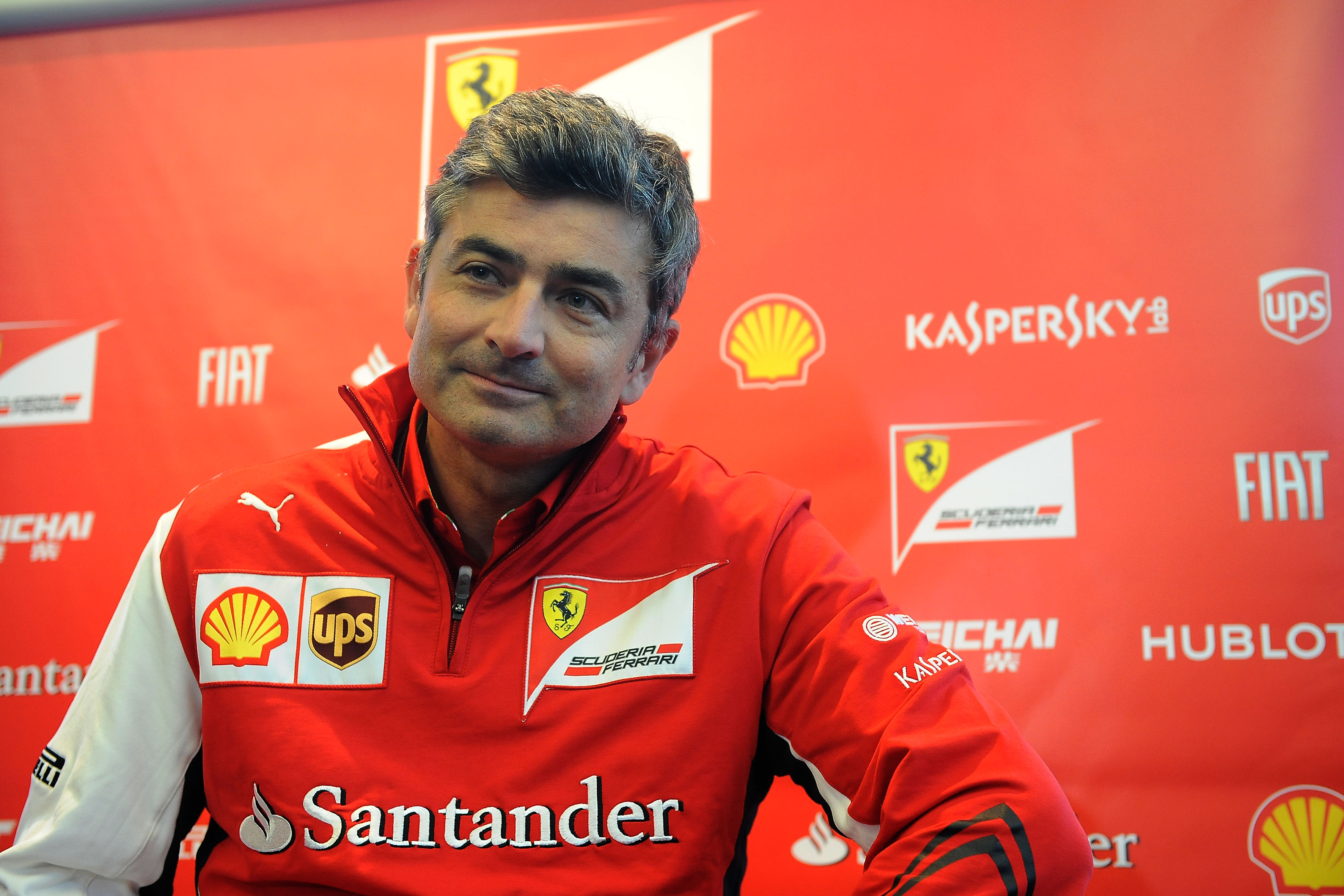
    GP CINA F1/2014For all of their struggles and non-informative press statements and less than convincing promises of improvement Ferrari has had one thing going for it – the belief that they can do better. That belief, along with major changes in the organisation, has seen it start the transformation it so badly needs. First, team Principal Stefano Domenicalli was expelled and replaced with Marco Mattiacci. The CEO of Ferrari in North America Mattiacci’s appointment was somewhat surprising. The silver-haired Italian is a suit, used to boardrooms and PowerPoint. Yet, the move makes sense. He doesn’t have a blinding infatuation with the Scuderia and he isn’t lovesick about its near mythical greatness. He is a man used to setting out a singular strategy and remaining focused on the objective of reaching it. Mattiacci is no fool either; he knows what changes need to happen where. “It’s not just the power units, the aerodynamics, [or] the chassis; it’s the team, the car – it’s a huge amount of work that needs to be done.”

    Last year, James Allison joined the team but not with enough time to have an impact on the design of the F 14T. Allison, second only to Adrian Newey in reputation, is a level-headed bloke. He doesn’t profess to have the secret to fixing Ferrari’s problems overnight. He is a solid team man though with an impressive technical mind. His last two cars, the 2012 and 2013 Lotus were good pieces of kit which allowed for development and improvement. Contrastingly, the F 14T is right mess. It started the 2014 season with a grossly deficient and overweight power-unit. The horrors weren’t confined to one area though. It yearns for downforce and its loose rear-end makes it a nightmare to balance.

    The F 14T is fundamentally flawed in design which means any significant improvement can only be made with a remodel of the chassis. In other words, it’s not happening in 2014. But the team can put the groundwork in place for next year. They’ve put Allison in charge of leading the 2015 project and he has already presented his plans to Fernando Alonso and Kimi Raikkonen. Yes, unlike previous years Allison’s plan is for both drivers to have a say in the design principles of the car.

    A dodgy and erratic power-unit hasn’t done the team any favours this season and the result is a restructuring in the engine Ferrari - James Allison and Fernando Alonsodepartment. Engine chief Luca Marmorini has been sacked by the team in favour of Mattia Binotto who will serve as the chief-operating-officer of the power-unit department. The design of the power-unit will fall on Lorenzo Sassi who has been with the team since 2006.

    Ferrari has responded to news of engineering director Pat Fry’s dismissal by rejecting it as mere “rumours.” However, as Allison has all but slotted in as the de facto technical head it fuels speculation as to where Fry will fit into the all-new shiny Ferrari line-up.

    You are in an era of change Ferrari fans and this team should be commended for that. They’ve realized their miscalculations and they’re big enough to admit their mistakes and, more importantly, to do something about it.

  • F1 Personnel Wars: Williams Add Aero Staff

    F1 Personnel Wars: Williams Add Aero Staff

    The Williams Formula 1 team has announced the signing of two new employees from Red Bull Racing and the Lotus F1 team.

    Shaun Whitehead joins Williams from Red Bull as head of aerodynamic process while Dave Wheater joins the team from Lotus to become the head of aerodynamic performance.

    “These two appointments show our commitment to both improving the process of aerodynamic development while focusing on the application of that development to true on-track performance,” added the team’s chief technical officer Pat Symonds.

    “Dave and Shaun bring a wealth of experience to our team and I welcome them both to Grove and fully expect them to make significant contributions to the renewed competitiveness that we are all working so hard to achieve.

    “With Dave and Shaun on board, and under Jason’s stewardship, we will be well positioned to make gains in this important area and support the continuing task of developing the FW36 in what promises to be an exciting year for the sport in 2014.”

  • Vortex Generators in Formula One

    A vortex generator is a small aerodynamic surface which consists of a small vane that creates a vortex. They’re mostly used on aircraft to delay or disturb the separation of the flow of air from the boundary layer of a surface.

    In Formula One they’re used just above the sidepods of the f1 car to “re-attach” the airflow above the sidepods so that the air flows along the coke-bottle shape of the car. This better aids the use of the coanda exhaust system that Formula One teams are using to create more downforce at the rear of the car by utilising the exhaust gasses. This extra airflow, together with the coada exhaust, are what teams have used to create extra downforce at the rear of their cars since the exhaust blown diffusers were banned.

    F1 Teams have used different methods to re-attach this airflow over the sidepods. Ferrari are using a series of horizontal vanes that are alongside the driver on either side of the car just behind the wing mirrors.

    Mercedes F1 are running a combination of the horizontal vanes along the cockpit and a series of vortex generators above the sidepod.

    Horizontal vanes and vortex generators on the Mercedes F1 car. Photo: F1.com
    Horizontal vanes and vortex generators on the Mercedes F1 car. Photo: F1.com

    Mclaren and Lotus seem to be running a slightly different configuration. They have a horizontal flap that extends across the top of the sidepod.

    McLaren F1 horizontal flap across the top of the sidepod. Photo: F1.com
    McLaren F1 horizontal flap across the top of the sidepod. Photo: F1.com

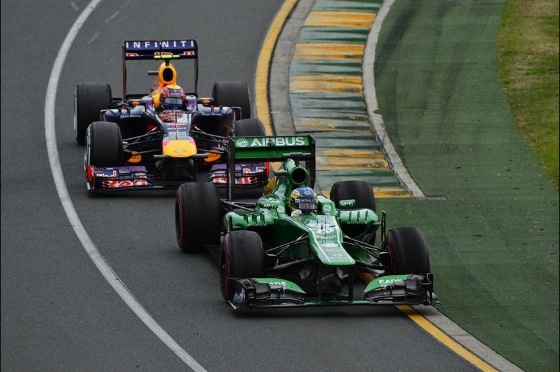
    The rest of the teams, Red Bull, Torro Roso, Caterham and Force India are running vertical  vane vortex generators above the sidepods. The number of vanes varies between the teams, but we’re mostly seeing two to three vanes.

    Vertical vanes seen on the Caterham and Red Bull. Photo: F1.com
    Vertical vanes seen on the Caterham and Red Bull. Photo: F1.com

    Williams, Sauber and Marussia are yet to employ the use of vortex generators on their F1 cars. We’re only at the beginning of the season so it’s safe to say that somewhere along the line we will see them with it on their cars.

    The height of a vortex generator usually indicates the height of the boundary layer they want to disturb. Which is why some teams have tall vortex generators and others have short ones.