Tag: adrian newey

  • F1 2019: Ferrari – Gamble or Guile?

    F1 2019: Ferrari – Gamble or Guile?

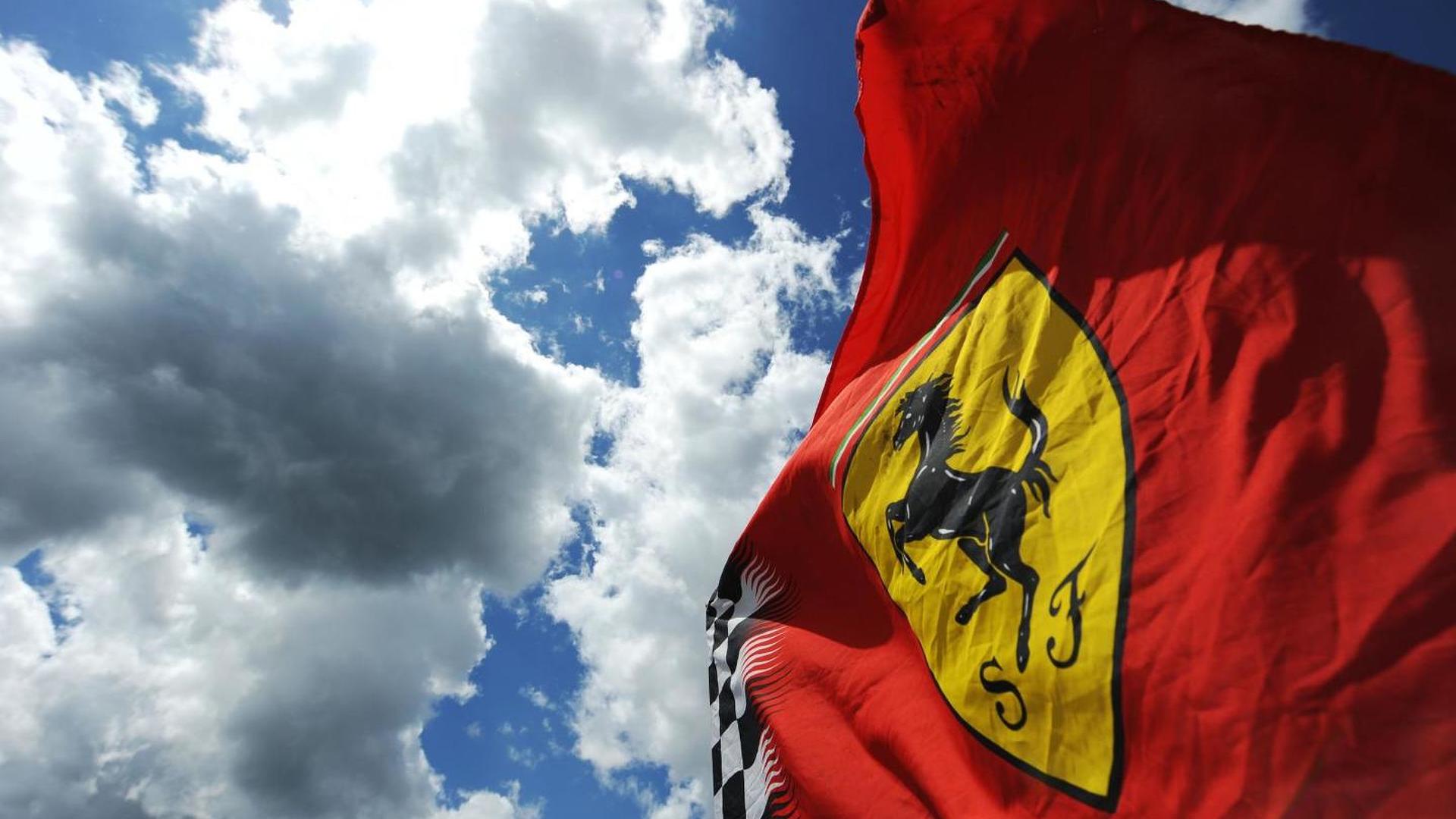
    Much has been written about Ferrari’s drafting youngster Charles Leclerc into one of the most coveted seats in Formula 1. While expectations are exceedingly high for the young Monegasque driver there are other quite significant changes that have been made at Ferrari for the 2019 season.

    The sudden death of Sergio Marchionne was a big blow for Ferrari. As the architect and saviour of Ferrari Marchionne was a tremendously important figure for the company and the F1 team. It’s no surprise that, internally, his loss was felt in a big way.  A new CEO was announced in the form of Louis Camilleri, the former boss of Phillip Morris International and Ferrari board member. He immediately walked back Marchionne’s threats of quitting F1 and vowed to work in favour of keeping the iconic team in the world’s premier racing series.

    Camilleri also stated that there was no need for him to intervene or make any changes to the team given its positive performance. However, it wasn’t too long before he began to ring the changes. First, it was Charles Leclerc in for Kimi Raikkonen followed by an announcement that team principal Maurizio Arrivabene would be replaced by technical chief Mattia Binnoto. Rumours swirled throughout the season of unease between Arrivabene and Binnoto, which, at the time, were dismissed as untrue by Ferrari. However, the rumours sustained and grew to include several suspicions that the relationship between Sebastian Vettel and Arrivabene too wasn’t in a good way.

    Binnoto’s new role as team principal will mean that the technical department must be restructured too. After all, Binnoto can hardly be expected to wear both caps of team principal and technical chief at the same time. As team principal of Ferrari he will be tasked with and face an inordinate amount of pressure. First, he’ll be responsible for heading a team with a brand-new driver in the line-up. If, according to many expectations, Leclerc pushes teammate Vettel, ala Hamilton and Alonso in 2007, all the way he’ll have quite a job on his hands to contain such a situation. There is no doubt that as Ferrari team principal he will face relentless and unforgiving pressure to guide the famed team to championship success which has eluded them for a decade.

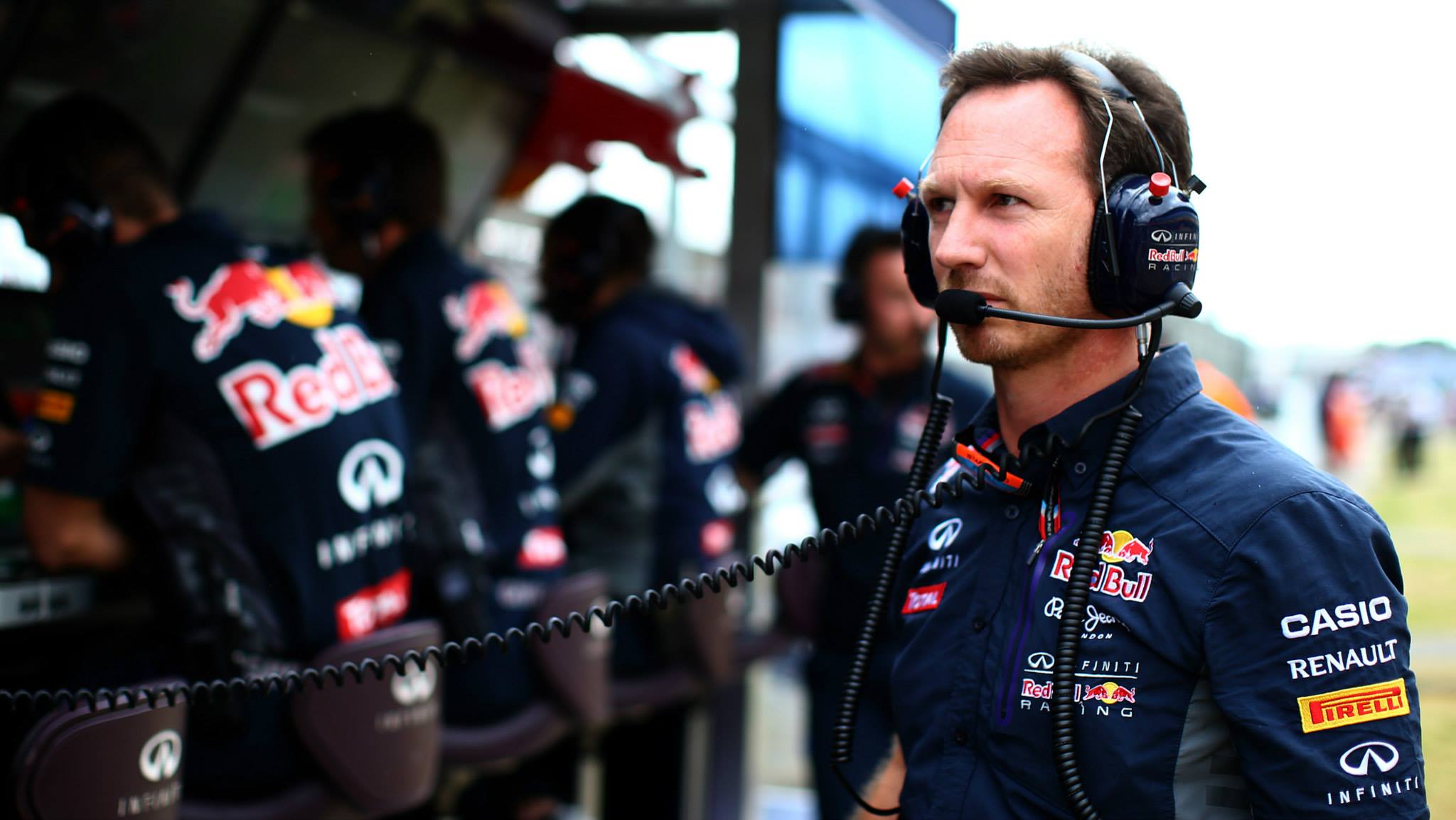
    It is curious however to know why Ferrari has chosen to restructure in this manner, as it isn’t a recipe followed by other front-running teams. At Mercedes it has been stability that has been one of its major strengths. As team manager Toto Wolff has James Allison, formerly of Ferrari, overseeing the technical side of the team while Christian Horner relies on Adrian Newey to keep his hand over the technical side of Red Bull. Even at Williams Claire Williams has Paddy Lowe at the helm of the technical department.

    The restructuring at Ferrari signals intent from the Italian team. But equally it reveals that they are still playing catch up with the likes of Mercedes and are yet to hit on an efficient method of running a cohesive team that can execute at the highest level week in and week out. The expectation will be that this reorganizing, across several departments, is the catalyst for finally getting the team onto the front foot from day one.

  • Red Bull Racing’s 2016 F1 Challenger – the RB12

    Red Bull Racing’s 2016 F1 Challenger – the RB12

    Red Bull released the first images of its 2016 Formula One title challenger, the RB12, ahead of debuting the car on track at the opening day of pre-season testing at the Circuit de Catalunya.

    The team released studio photos via its various media channels moments before the RB12 hit the track with Daniel Ricciardo at the wheel. Three-time race winner Ricciardo and Daniil Kvyat will race the RB12 this year.

    Following very troubled 2015 season, the team will be hoping that the TAG Heuer-badged Renault powered RB12 will have what it takes to return to its former glory once again. The team claimed four successive titles between 2010 and 2013 but quickly fell behind when the F1 introduced V6 power units in 2014. The 2015 F1 season held only two podiums for the team and saw them finishing fourth in the constructor standings.

    Red Bull Racing RB12 launchA late decision to stick with Renault power – albeit under the guise of new Red Bull partner Tag Heuer – after approaching the three other engine suppliers looking to switch for 2016, has the team on a back foot ahead of the start of the season.

    Team boss Christian Horner: “Obviously the late engine decision last year was a challenge but we found a solution in time and the whole team has worked incredibly hard to recover over the winter.

    “Therefore, we’re looking to build on the significant progress we made in the second half of 2015 and to carry that momentum into the early races of this season.

    Red Bull Racing RB12 launch“My hopes for this season are that we genuinely make progress from where we were last year; that we get our heads down and we really develop the car well and hopefully with some performance coming on the power unit side as well, that will allow us to get closer to some of our immediate rivals.”

    According to chief technical officer Adrian Newey development on the RB12 was focussed around developing a cohesive package for all the parts. “I’m often asked what area of the car I’m most pleased with, but with the stable regulations we have at the moment it’s difficult to find any major new areas to exploit,” Newey said of the RB12.

    “Therefore, what we’ve really tried to concentrate on with this car is getting a cohesive package for all the parts – the suspension, the chassis dynamics, aerodynamics – that they all work together in harmony.

    “I think we’ve managed to build on the lessons of last year and all the indications from our simulations suggest that this year’s chassis should be strong.”

    Red Bull Racing RB12 launchChief engineering officer Rob Marshall hopes that the RB12 can win some races this year: “With the RB12, we are optimistic that we have made some good gains, but the difficulty is the wind tunnel and CFD numbers we’re seeing are our numbers and unless you can see everyone else’s numbers you don’t know where you are. We are happy that we are going in the right direction from our own point of view, but we won’t know until Melbourne.

    “As far as this car is concerned, I hope we can win some races. That might sound farfetched after last year, where we struggled at the beginning of the year, but I hope this year we can make a bit of a step power-wise and that will level the playing field a bit.”

    RB12 Photo Credits: Red Bull Racing


  • Red Bull Q&A with Christian Horner

    Red Bull Q&A with Christian Horner

    The 2013 Formula One season saw Red Bull Racing win 13 grands prix as well as both the Drivers’ and Constructors’ Championship titles. The 2014 F1 season, they managed only three race wins. They’re expected to complete the 2015 season without a single race win.

    The former champions have literally gone from hero to zero due the complete lack of performance and reliability fo their Renault power unit and rule changes compromising their chassis design.

    Red Bull Racing team principal Christian Horner spoke exclusively to the official Formula One website about how he and the team are coping and how they intend turning things around.

    Here’s what he had to say:

    Q: Christian, back in Canada Red Bull’s motorsport consultant Helmut Marko said that Renault’s new project was on the dyno, and you would know its potential in three weeks’ time. That window closed at Silverstone – so what is the state of affairs?

    Christian Horner: I think this is a question to be answered by Renault because it is their business, not ours. But as far as I am aware I think that they are making good progress on their dyno. They now have some strategic decisions about implementation, and the direction they want to take their development for the rest of this season – and that has an enormous impact on next year.

    Q: What does their timeframe mean for you then?

    Christian Horner: Of course it tests our patience. Like any competitive team we want performance yesterday, and unfortunately with engines the lead time is a lot longer than with the chassis. Patience is something that we are not really good at. We want to have performance as soon as possible…

    Q: What is ‘as soon as possible’? The next three weeks?

    Christian Horner: From where the concept is at the moment you are probably looking at least at a couple of months. Two to three months. It needs to happen this year – but also what you learn this year will help you next season.

    Q: Both Renault and Red Bull have reportedly drawn up exit scenarios – but given that you recently signed a personal contract renewal with Red Bull, can we understand that their exit is now off the table?

    Christian Horner: Hah! I signed that contract a short while ago. We are determined to get back to a competitive position. It hurts when you are not competitive, and unfortunately there are certain elements we are not in control of. But where we are in control, we are working flat out so that when the power upgrades do come, we are in a position to make best use of them.

    Q: Are you satisfied with the chassis situation right now?

    Christian Horner: We are never satisfied. Here you always try to get better. The regulation changes over the winter did hurt us – probably more than we anticipated – but we now have a pretty good understanding of the areas where we need to improve – and how to improve.

    Red Bull Racing, Toro Rosso at the British Grand PrixQ: Is there interest in trying to bring James Key over from Toro Rosso? He is showing what is possible on a slim budget…

    Christian Horner: No interest at all. We have a strong technical team. Adrian (Newey) is still involved in all the things that are going on and with Rob Marshal, Pierre Wache and Dan Fallows we have a strong technical group – so no desire to change anything.

    Q: What about Renault? There has been speculation that they could purchase Lotus. What would that mean for the two Red Bull teams? Boss Carlos Ghosn reportedly said it is very unlikely Renault will play the part of engine supplier in 2017…

    Christian Horner: Those are decisions that they have to make. It would hold a certain irony if they buy back the team they sold. But as far as our position is concerned, we have a very clear agreement with Renault, which guarantees us priority status. Any of those scenarios requires having a competitive engine – and doesn’t really matter based on the agreement that we have.

    Q: Some suggested Red Bull Racing have been ‘flirting’ with Ferrari recently. Could that be a short-term remedy? For sure it doesn’t appear to be a long-term solution if you want to win titles again…

    Christian Horner: Ah, I think it would be an exaggeration saying that Red Bull is ‘flirting’ with Ferrari. Obviously Red Bull Group had a relationship with Ferrari for many years as engine supplier for Toro Rosso. Sergio (Marchionne) made a generous offer without any details when he attended the Austrian Grand Prix – but right now our focus is on what we have at this point in time.

    Q: 2016 is one thing – but what about 2017?

    Christian Horner: That could be a completely different ball game.

    Q: Would you ever have imagined after so many successful years that you would find yourself in the doldrums so quickly – and with no obvious way out?

    Christian Horner: Things change here very quickly. The vast majority of the people that helped us win eight titles and 50 Grands Prix are still here. But the circumstances have changed. Unfortunately the element that has the biggest effect on our competitiveness is one we are not in control of.

    Q: You have said that even were Sebastian Vettel still racing for Red Bull Racing, you would still be in the same bad situation…

    Christian Horner: If Sebastian was still with Red Bull our position would be no different because the drivers aren’t our issues.

    Q: Would you really be in the same situation with Sebastian? Does the driver make so little impact?

    Christian Horner: We would be poorer!

    Red Bull Racing at the British Grand PrixQ: Bernie Ecclestone has suggested that F1 racing will be simpler – and more exciting – in 2017. Why did it take so long to understand that the sport was being pushed in the wrong direction?

    Christian Horner: The fact is that if you have a bunch of ‘experts’ who all believe that they know what should be done, you end up with confusion. I think that the reality has only recently been understood – and as a result of that there is more alignment on what needs to be done.

    Bernie was always right saying that F1 is about man and machine at the limit. It needs to be dramatic, it needs to be fast, it needs to be loud and it needs to be sexy. In one word, it needs that ‘wow’ factor to it.

    We need to go back to these principles, which is relatively easy to achieve if everybody wants to achieve the same thing. They are not all quite sure how to achieve it – but they now have agreed on what they want to achieve!

    Image Credits: Infiniti Red Bull Racing / Getty

  • Prodromou Back at McLaren

    Prodromou Back at McLaren

    Peter Prodromou was announced as McLaren Racing’s design departments Chief Engineer

    Prodromou worked at McLaren between 1991 and 2006. He then left for to work at Red Bull Racing, where he enjoyed much success with the team under Adrian Newey.

    He is now back at McLaren after a few contractual disputes between Red Bull and McLaren. This is a key appointment for McLaren as they push ahead with the next years MP4-30.

    “It’s fantastic to return to McLaren, and to see a mixture of faces old and new,” said Prodromou

    “Of course, I have first-hand experience of just what a passionate, focused and capable race team exists within these walls, and I’ve already seen the enthusiasm and positivity that exists to return McLaren to world championship-winning glory, he added”

    “I, too, am determined to work flat-out to do everything I can to help initiate a new chapter of success in McLaren’s history.”

    Racing Director at McLaren, Eric Boullier welcomed Prodromou’s appointment, saying he arrived at just the right time.

    “On behalf of everyone at McLaren, I’d like to welcome Peter to the team,” said Boullier

    “He joins us at an auspicious time; we’ve spent much of 2014 working to develop and organise our design department, and his arrival neatly coincides with the conclusion of that restructuring.

    “Peter has proved beyond doubt that he’s one of the most capable and intelligent engineers in Formula 1, and everyone at McLaren is looking forward to the contribution he’ll make as we push ahead with our ambitious plans for the future.”

  • Red Bull appeal verdict to be announced on Tuesday

    Red Bull appeal verdict to be announced on Tuesday

    The General Secretary of the FIA’s International Court of Appeal has said that a verdict on Red Bull’s appeal against the disqualification of Daniel Riccardo at the Australian Grand Prix, will only be given on Tuesday.

    “We will announce the decision tomorrow morning at the latest,” said Jean-Christophe Breillat following a six-hour long hearing at the FIA’s headquarters in Paris today.

    He has also confirmed that only the verdict will be given and then a full explanation around the reasoning behind the decision will be made available “by the end of the week”.

    Red Bull argued that the technical directive (16:14) relating to fuel flow sensors is not regulatory. As such, they believe that the team cannot be punished for ignoring the FIA’s request to reduce its fuel flow, since the directives are generally regarded as advice. The team also tried to prove that the team had not exceeded the maximum fuel flow at any point during the Australian Grand Prix.

    Both Chief Engineer of Car Engineering, Paul Monaghan and Chief Technical Officer Adrian Newey were called as Red Bull witnesses and subjected to questioning. For the FIA, Head of Powertrain Fabrice Lom was called.

    Observers from McLaren, Lotus, Williams and Force India were also present at the hearing.

    Daniel RicciardoMercedes team representative Paul Harris – who previously represented the team at the Pirelli Tyregate hearing – was most vocal at today’s hearing, accusing the Red Bull team of “knowingly and repeatedly” ignoring the FIA’s instructions to turn down the fuel flow on Ricciardo’s engine.

    He desribed Red Bull’s approach as a “flagrant breach” of the FIA’s direction and called for the court to impose a suspended further sanction on top of the original exclusion due to fears that the Austrian team will repeat the alleged offence in future.

    “We are, frankly, and with great respect, concerned that Red Bull have shown such a flagrant and deliberate disregard for these rules that there is a real risk that they will do it again,” he said. “We are here to seek to ensure that does not happen. We must have a level playing field going forward for the remainder of the season.”

    “We respectively submit that the most effective way of ensuring that Red Bull do not flout further written and oral instructions from the FIA – at least for the remainder of this season – is for this court to recognise the severity of their infringement and to impose a further sanction upon them, which is to be suspended for the remainder of the season so that they are acutely alert for the remainder of the season that there is no possibility of them transgressing the boundaries again.”

    He dismissed Red Bull’s claims that the FIA’s approved sensors were unreliable and argued that their alternative system used to measured the flow was also not “100 per cent” accurate. He also backed the FIA’s official sensors saying that they are “rigorously tested and rigorously calibrated.”

  • Q&A with F1 technical genius Adrian Newey

    Q&A with F1 technical genius Adrian Newey

    Few people would argue with the statement that Adrian Newey is the greatest technical mind of the current Formula One generation. Newey’s CV is unparalleled and in this interview he turns his thoughts to the 2014 Formula One season discussing the impact of next season’s technical changes and challenges, his approach to design and his massively successful career.

    Q: You are the most successful Formula One designer of recent years. Lately cars have mainly been evolutions of the previous year’s design, but 2014 brings with it massive changes. How do you go about that? Do you really start with a clean sheet of paper as legend suggests?
    Adrian Newey:
    The first thing that you do is to read the regulations – very, very carefully. You try to read what they actually say, rather than what they intend to say, as this is not always the same thing. After that I’m actually breaking it down into bite-size chunks. Then you try to understand from the regulations the aerodynamic and mechanical packaging that appears to be the best solutions for those different areas. You go away and research them and at some point try to bring it all back together again. For me that is the important bit: the end product should be a whole and not pieces thrown together into one cluster.

    Q: How many people are involved in this process?
    Adrian Newey:
    We have over 100 engineers. In terms of the early key layout it is a smaller group. For the RB10 we started by dividing the task into the front and the back end (of the car) aerodynamically, and the middle in terms of packaging the engine and the cooling. Cooling will be a huge challenge next year.

    Q: Is the blank sheet of paper and a 7B pencil still reality?
    Adrian Newey:
    To some extent it is still habit. I graduated in 1980 – obviously long before CAD systems – so I have always used a drawing board and never took the time to learn a CAD system. (laughs) For me what you’re used to is almost like a language – and you stick to the one that you know best. I love the drawing board because most of the work I do is of half scale, so I can have the complete car in front of me, whereas the CAD system limits you to the size of the screen. Having said that, for an organization like us it would be much too intense to have too many people like me working on a drawing board, because everything has to go on to the computer to go through CFD and later be manufactured.

    Q: Red Bull team principal Christian Horner said of you that you are completely crazy and absolutely fearless. Is that what it takes to design the most successful F1 cars of recent years – and to take on this 2014 challenge, where you can arguably only lose?
    Adrian Newey:
    I am not sure. I guess it’s less about being crazy and more about having confidence that what you are doing is going into a good direction. Equally you have to be passionate about it and believe that what you’re doing is correct. You might call it the artistic side of it – but then you have to be able to stand back and try to be objective: is that a good direction, or isn’t it? If the answer is ‘no, it is not’ then you have to be prepared to say that the last hour, the last day, the last week is in the bin.

    Q: The design process at other teams is probably not that different to what you’ve just described, so what makes the difference? Do you have an inner voice that tells you the good from the bad?
    Adrian Newey:
    No, no inner voice. I call it the 24-hour rule: does it still look a good idea after 24 hours? That decides whether it gets a tick or a cross. Actually, you develop a sensibility for that procedure. The brain is an amazing thing: you might be doing something completely different – maybe making a cup of tea – and suddenly you know right from wrong!

    Q: You have created so many successful cars that gave now legendary drivers the chance to win: drivers like Nigel Mansell, Ayrton Senna, Alain Prost, Mika Hakkinen and now Sebastian Vettel. Did you take their strengths and weaknesses into account?
    Adrian Newey:
    When I was a young designer Robin Herd came up with a March that was designed around Ronnie Peterson’s reactions. I honestly cannot say that I have ever consciously done that: to design a car on the belief of a driver’s reactions.

    Q: So it was never a Mansell, Prost or now Vettel car, but rather a Newey car…
    Adrian Newey:
    Well, what does happen is that when we have continuity in drivers like we’ve had for the last few years with Sebastian and Mark (Webber) then you listen to their feedback and the car evolves at least in parts as a result of their feedback. That does happen.

    Q: When you look back at all those names – Senna, Prost, Mansell etc – where would you rank Seb? What would be your personal ranking?
    Adrian Newey:
    It would be unfair to go into rankings – to put one above the other – but what I would say is that Seb, without question, is one of the true greats. Of the great drivers I have been lucky enough to work with, what they all tended to have in common is intelligence. They all have the ability to drive the car and have the spare mental capacity to understand what they are doing when they drive the car, and to have great recall when they get out of the car – they can play back in their own minds what they’ve just experienced and combine that with a great work ethic in the evening in terms of talking to the engineers.

    Q: You have been in motorsport for 30 odd years. What have those years taught you?
    Adrian Newey:
    Formula One is hard work! (laughs) I like to think that I haven’t changed too much in those years – that Formula One hasn’t changed my personality, if you like. When I look back to my university days, most of my fellow students wanted to design aircraft, whereas I always wanted to be a race car designer. They then subsequently worked on projects where you could see the results in 10 or 15 years’ time – where feedback on whether it was good, bad or indifferent was ‘light years’ away. That wasn’t for me. The exciting thing about Formula One is you get a high level of feedback. It’s painful when you’re going badly, but at least you know. And then there’s trying to stay on top of the changes. When I graduated I went straight to Fittipaldi – a small F1 team at that time – and I was hired as a junior aerodynamicist, which when I started turned out to be chief aerodynamicist, as I was the only one! Even when I moved to Leyton House, as a team we were a total of 55 people, with six engineers in total, with me doing the aerodynamics, designing the car and manufacturing it with this tiny little team. You cannot comprehend this nowadays. Now you have Red Bull Racing with 600 plus employees, with a hundred plus engineers – so things have gone up tenfold or more. So trying to stay on top of the technology changes and the managerial changes has been an exciting task. Coming back to what all these years have taught me: standing still is deadly.

    Q: Are you satisfied with yourself? Do you sit back in those rare quiet moments and think ‘not bad at all’?
    Adrian Newey:
    No, I never sit back reflecting on such things. I am trying to play to my interests, yes, and hopefully my interests are also my strength. I try not to attend too many meetings. I try to spend at least 50 percent of my time behind the drawing board and the rest with my colleagues at the factory going over their findings. At the races, of course, I spend time with the drivers and that gives me the chance to be involved in many different things which I find very stimulating.

    Q: Does your job have an expiry date? Do you ever say to yourself ‘three more years and then I call it quits’ for example? Or contemplate telling Christian Horner or Helmut Marko one day, ‘Hi guys, I’m not coming into the office today – or ever again in fact…’?
    Adrian Newey:
    That wouldn’t be my style. I have been involved with Red Bull Racing from the start, so I feel a great deal of loyalty to the staff. I would never stop without giving anybody a good period of notice. But the honest truth is that as long as I keep enjoying it, I will keep going. Probably the closest I came to stopping in Formula One was around 2002. There seemed to be so much politics – Ferrari and the FIA – that it was quite a difficult time.

    Q: Have you ever gone terribly wrong with a car? Something that you’ve regretted ever since…
    Adrian Newey:
    Wrong yes, regret no. The cars that didn’t go nearly as well as I would have hoped: the 1989 Leyton House car, the successor of the 1988 car that changed the direction of Formula One a bit as well. We’d designed the car more or less purely on an aerodynamic base and then tried to package the mechanical parts. At that time – the turbo era – most people were doing it the other way round. They first designed a mechanical car and then looked at the aerodynamic side, so we were completely different in our ‘preferences’. But back to the story: coming out with a good 1988 car, we’d grown overambitious in 1989. The 1989 car was simply too complicated for the size of the team – and our experience. That was something to learn from. The other car – a similar situation – showed that I didn’t learn the lesson completely. It was the McLaren MP4-19A – the 2004 car. Ferrari was ‘cleaning up’ at that time and we felt that we needed to make a big step – or at least push to make a big step. And again, we made a mistake by pushing too hard. We were pushing so hard that we didn’t make our homework good enough.

    Q: Do you get offers from other teams – even though everybody knows that you are so close to Red Bull Racing?
    Adrian Newey:
    Yes, I do. The usual stuff. If I didn’t, I would be worried! (laughs)

    Q: Coming on to 2014. Everybody says that from what they’ve seen so far, the 2014 cars look ugly…
    Adrian Newey:
    Well, it’s the regulations that define the car. And, of course, ideally the car is fast and has a stylish design. But everybody in the paddock will give a fast car preference over an attractive car – that’s the way it is. Yes, for me it would be good if a bit more consideration was given to aesthetics in the drafting of the regulations. But fast is paramount over beauty.

    Q: Coming to the regulations, years ago they had the characteristics of Swiss cheese: many holes and much room for interpretation. How much interpretation is possible today?
    Adrian Newey:
    It’s less and less. The F-duct was a very clever example of getting around regulations; the exhaust duct was a good way of getting around them; little bits and pieces where we’ve found small loopholes in the regulations. But it is increasingly getting smaller. To have been an engineer in the seventies – the early seventies – would have been fascinating for me. You had almost no regulations, but on the other hand you also had very little research capabilities. You came up with a car, ran it, and if you were lucky it was a good idea and it ran well. If not, then you ran the previous year’s car and hoped for next year.

    Q: Keyword 2014: Could it be that suddenly somebody is two seconds faster than the rest?
    Adrian Newey:
    Let’s start with the regulations. You can divide them into two parts: the powertrain and the aerodynamic changes. The aerodynamic changes are big, but they are smaller than the changes we had in 2009. So yes, there is the chance that one team comes up with a car that is better than their rivals’, but on top of that you have the engine changes and what is absolutely unclear is whether one engine manufacturer will be able to come up with a significant advantage. But the car that will brush aside all others will be a car having the combination of good engine and good chassis – if one side is letting you down you will have a problem. But who will come up with the ideal combination? That’s the big guessing game for all of us and will add spice to the 2014 season.

    Q: Can Adrian Newey really switch off?
    Adrian Newey:
    Believe it or not, I can. Then I go the Caribbean for a few days and make my mind stop racing. Yes, that I do. But Formula One is a very consuming taskmaster – and one of the tricks is to keep it in balance, as it would be very easy to end up doing nothing but work.

    Q: What would happen to the team should you decide that a few days off is not enough – that you need much more time to recharge the batteries?
    Adrian Newey:
    They would carry on.

    Q: But how?
    Adrian Newey:
    I am only one person – hopefully an important person – but things carry on, they always do. (laughs) But since I’ve been at Red Bull I’ve never tried it – only back in the times when I switched teams.

    Q: Finally, you are known as a design genius – and your track record confirms that – but how well suited are you to daily life? Can you cook for example?
    Adrian Newey:
    I can do a Sunday roast and I can cook spaghetti, but that’s about as far as it goes. (laughs) I think I am a normal guy, although my family might completely disagree.


    Photo credit: Photo taken by Morio [CC-BY-SA-3.0], via Wikimedia Commons