Tag: 2026

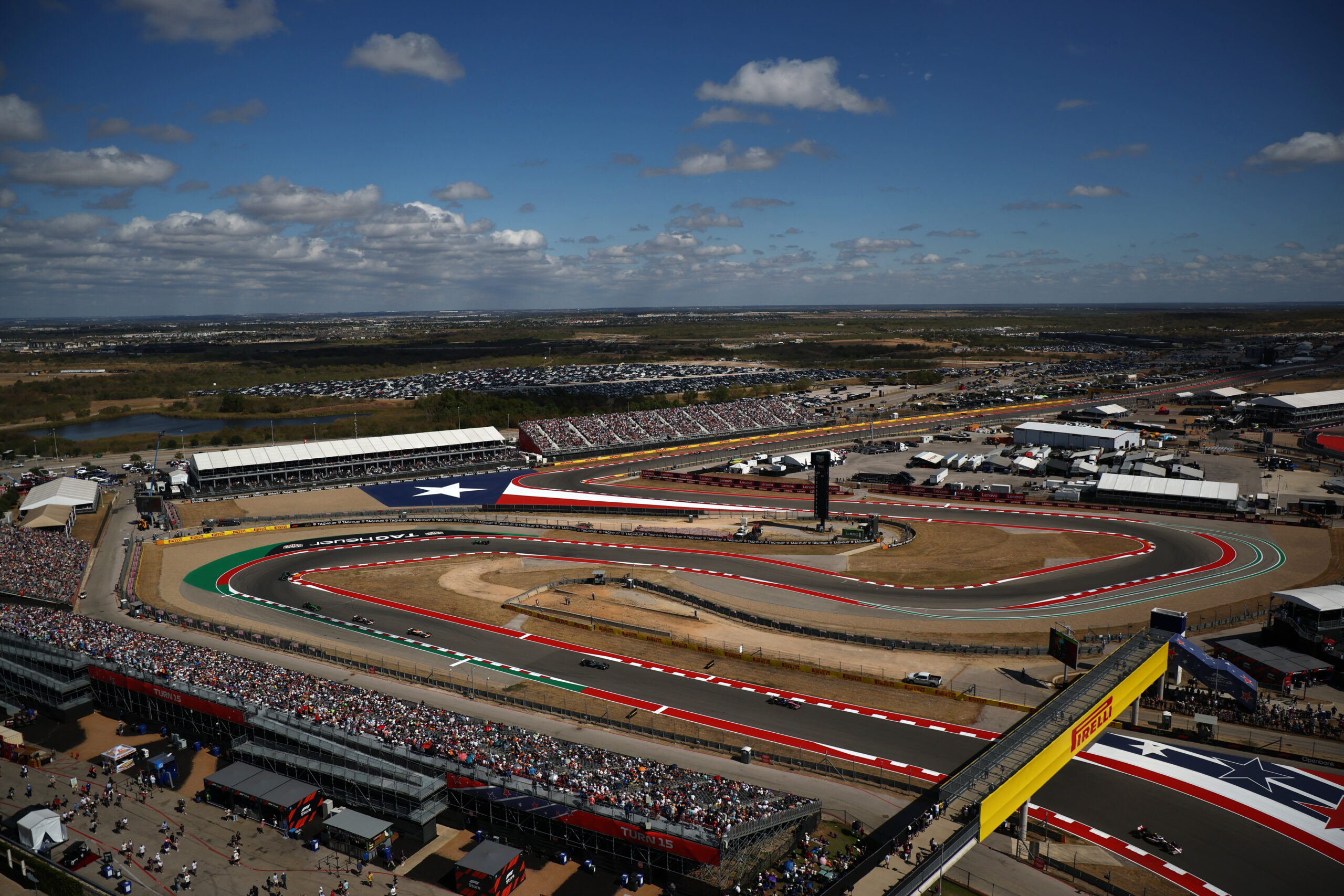
  • 2026 United States Grand Prix preview: Antonelli’s title shot, McLaren’s mess and Red Bull’s momentum

    2026 United States Grand Prix preview: Antonelli’s title shot, McLaren’s mess and Red Bull’s momentum

    The short version

    • Kimi Antonelli can clinch the championship in Austin, but only if he wins, George Russell finishes ninth or lower, and Lewis Hamilton finishes fifth or lower. At 20 years and 61 days he would be the youngest world champion in F1 history.
    • Max Verstappen has won the last two races and cut McLaren’s constructors’ lead to seven points. Lando Norris’s sprint crash with Oscar Piastri didn’t help McLaren.
    • There is no sprint this weekend, and the forecast is hot and dry.

    Antonelli: the youngest champion ever, maybe

    Antonelli leads Russell by 102 points, 340 to 238. A title in Austin would make him 20 years and 61 days old, taking the youngest-champion record from Sebastian Vettel, who was 23 years and 134 days when he won in 2010.

    The maths is stricter than the headline suggests. Five rounds remain after Austin, which leaves 125 points on the table. A win takes Antonelli to 365. If Russell finishes ninth he reaches 240, a gap of exactly 125. A tie on points would go to race wins, and Antonelli would have nine against a maximum of eight for Russell. So ninth is the cut-off for Russell. Hamilton, on 229, must finish fifth or lower, because fourth would keep him inside the gap.

    Austin resultWhat it means
    Antonelli wins, Russell P9 or lower, Hamilton P5 or lowerChampion in Austin
    Antonelli wins, but Russell or Hamilton finish higherTitle decided in Mexico at the earliest
    Antonelli doesn’t winCan’t clinch this weekend

    A win would also end the title hopes of Verstappen (119 back), Leclerc and Norris. Verstappen is mathematically alive unless Antonelli outscores him by six or more.

    The catch is that Russell, who is on 238 points, has to have a bad day. He did finish ninth in Singapore, but from the back of the grid after a power unit penalty. Short of a mechanical failure or one of Mercedes’ puzzling weekends, he’s more likely to be on the podium. The most probable outcome is that the party gets postponed.

    Red Bull’s surge

    Verstappen has taken the last two grands prix and the Singapore sprint, and was second in Baku. He was seven points short of a perfect score across that triple-header. He’s fourth in the standings on 221 points, and Red Bull’s recent form has people asking who really has the quickest race car. Mercedes lead the championship but are still working out the upgrade they brought to Malaysia.

    McLaren: how to lose points to yourself

    On the final lap of the Singapore sprint, Norris dived up the inside of Piastri at Turn 5 and the two collided. Piastri retired and Norris limped home eighth. McLaren banked one point from what should have been about nine. The stewards took no action, ruling that both drivers contributed.

    Norris’s reaction took two days to arrive. On Saturday he insisted the move was on. On Sunday, after finishing fourth in the race, he reversed himself. He said he should never have attempted it, even if the move was on, apologised to the team and said he’d been told off in internal talks. Piastri, for his part, said he wasn’t that bothered by a sprint result. The team principal was blunter, calling the damage to the team material.

    Constructors’ points are the cost. The gap to Red Bull was 18 before Singapore, then 11 after the sprint, then 7 after the race. One former technical director estimated the lost points could cost McLaren around $10 million, although how he got to that number isn’t explained, so take it as a ballpark. McLaren are bringing further upgrades to Austin.

    Constructors’ standings and the midfield

    TeamPoints
    Mercedes578
    Ferrari444
    McLaren339
    Red Bull332
    Racing Bulls100
    Alpine68
    Haas30
    Audi23
    Williams12
    Aston Martin7
    Cadillac0

    The top four is a proper fight. Ferrari are 105 clear of McLaren, but McLaren and Red Bull are separated by seven. The midfield is less tight than it sounds. Racing Bulls lead Alpine by 32, and Alpine are 38 clear of Haas. The real scrapping is further down. Haas lead Audi by seven, Williams lead Aston Martin by five, and Aston Martin lead Cadillac by seven. Cadillac are the only team still without a point, and with no sprint in Austin there are fewer points to go around.

    The weather

    After Malaysia and Singapore, Austin should feel like a holiday. Forecasts put highs near 30°C on Friday and Saturday and around 29°C on Sunday. Rain chances are low: about 3% on Friday and 7% on Saturday and Sunday. The only weather problem is heat, which will test tyre management.

    Also in the paddock

    F1 has signed a 10-year deal for a Rwanda Grand Prix, its first African race since Kyalami in 1993. Haas have also signed Rafael Camara for 2027 to partner Oliver Bearman.

    What to watch

    A 20-year-old could be crowned on Sunday. Verstappen is chasing a hat-trick of wins. McLaren have a mess to clean up, and the whole thing starts at 22:00 on a hot Texas evening with no rain in sight. Clear your Sunday night and stock up on coffee.

    Image courtesy Pirelli Motorsport
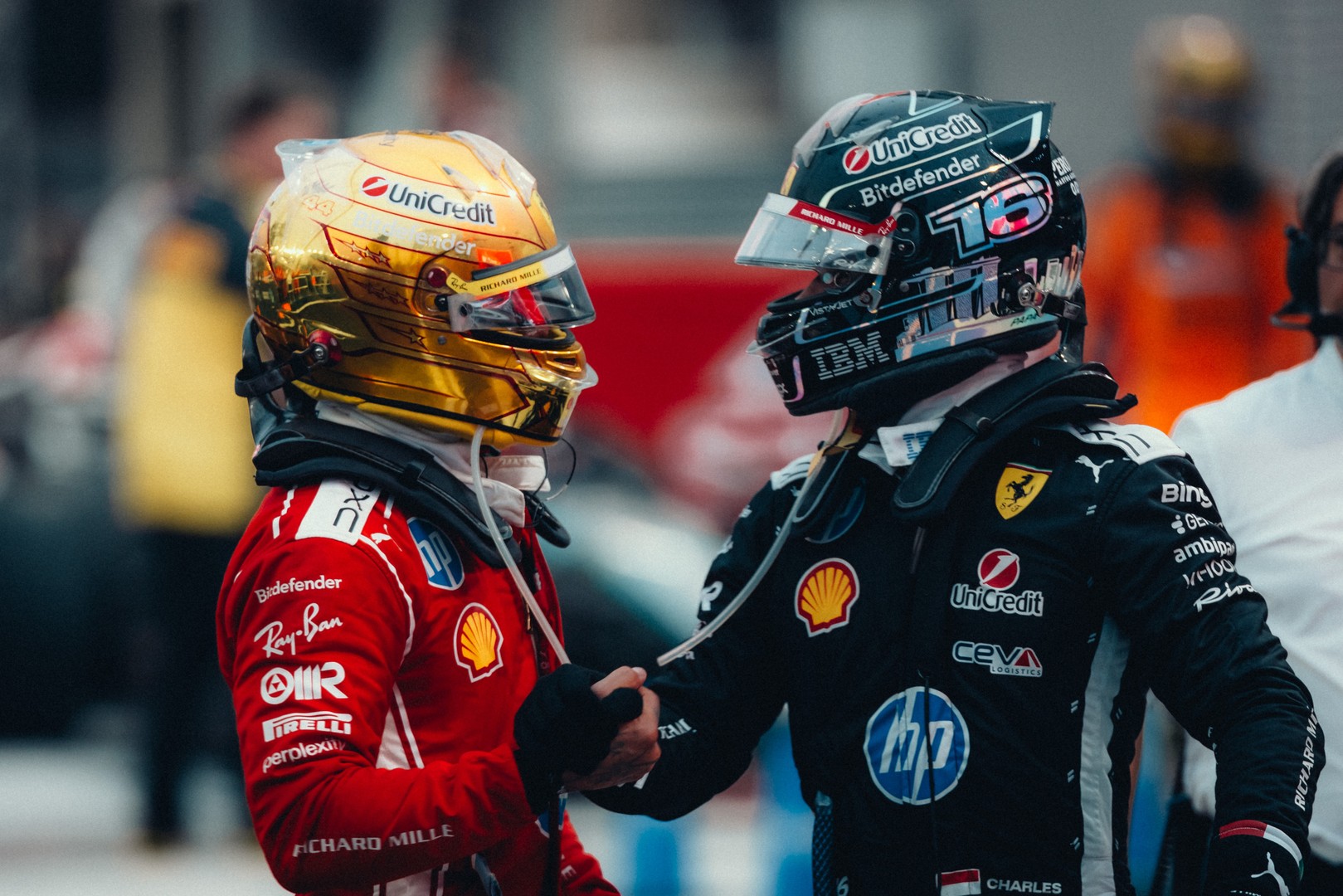
  • Ferrari strategy in Singapore: a sound plan, a costly call and a trust problem

    Ferrari strategy in Singapore: a sound plan, a costly call and a trust problem

    The short version

    • Verstappen won the Singapore Grand Prix by 7.0 seconds from Charles Leclerc. Lewis Hamilton went from third on track to sixth after staying out under the Virtual Safety Car.
    • Ferrari say they told both drivers to pit. Hamilton says he missed the pit entry, then chose to stay out, and has taken the blame. Both can be true, and the radio that would settle it hasn’t been published.
    • Ferrari already have more points than in the whole of 2025 (444 against 398). That is real progress. At Ferrari, progress is not a result.

    Ferrari strategy has always been a spectator sport, and Singapore added another episode. A split plan, a Virtual Safety Car, a missed pit entry and an apology on the cool-down lap. What it doesn’t settle is the bigger question: when the pit wall and the driver disagree, who is supposed to win the argument?

    How the race went

    Verstappen took pole, Leclerc was second and Hamilton third. Verstappen and Leclerc started on softs. Hamilton started on mediums, Ferrari’s way of covering both bets on a tyre nobody could read. Leclerc had a run at Turn 1, Verstappen closed the door, and Leclerc stayed within a second for the first 15 laps. Then Verstappen pulled away.

    LapWhat happened
    StartVerstappen pole. Leclerc P2 on softs, Hamilton P3 on mediums
    19Hamilton pits from the fading mediums to softs
    25Leclerc pits for mediums, about 9s behind Verstappen
    33Verstappen pits and keeps the lead
    39VSC for Lance Stroll’s stopped car. Leclerc pits for softs, about 17s behind. Hamilton stays out
    FinishVerstappen, Leclerc (+7.0s), Antonelli, Norris, Piastri, Hamilton

    Hamilton’s old softs faded. Leclerc passed him, then Antonelli, Norris and Piastri all followed him past. A likely podium became sixth place.

    The strategy: clever or chaotic?

    Splitting the strategies at the start was defensible. Ferrari were unsure whether the medium or the soft would last, and the sprint, affected by wet running, gave them poor tyre data. The medium turned out to be the worse race tyre, so Hamilton stopped early. That is a plan working as designed, not a plan going wrong.

    The trouble came after. One analysis of the race argues Leclerc’s lap-25 stop dropped him in front of Hamilton, who was quicker at that point, and cost Hamilton roughly two seconds. Reports say Hamilton asked to be let through, and offered to swap back, and heard nothing. Vasseur defended the call. Whichever side you take, the optics are the same: two cars, one team, and a driver asking a question the pit wall didn’t answer.

    The VSC call

    This is the part everyone is arguing about. Vasseur says Ferrari called both cars in for a double stack and Hamilton chose to stay out. Hamilton says the team called him in, he missed the pit entry, and he then decided to hold track position. After the flag he said: “Sorry boys. I let you down today with that strategy.”

    There is also a theory, popular online, that the pit call never reached him. The evidence for that is a gap in the published radio, which proves nothing either way. What is reported, though not confirmed by Ferrari, is that Hamilton had asked for the pace of soft-tyre runners at the end of their stints and was given current lap times. If true, that is thin information to base a gamble on.

    The cost was real. Vasseur said P2 and P3 were on offer. One analysis has Hamilton losing about 2.5 seconds per lap to Leclerc over the closing stint. Hamilton has taken full responsibility, which deserves to be said plainly. Whether the information he had justified the decision is a separate question, and that’s the one Ferrari need to answer.

    Does Hamilton trust the pit wall?

    Three recent races tell the story, and none of them paints Hamilton as a rebel.

    RaceThe situationHamilton’s responseResult
    ZandvoortFerrari didn’t swap him past a slower Leclerc on older tyresSarcastic radio, then compared Ferrari unfavourably with MercedesP4
    SepangPit wall floated an intermediate gamble on lap 5Declined and stayed on slicksP3, 4.9s behind Verstappen
    SingaporeCalled in under the VSCStayed outP6

    Sepang was a week earlier, and it taught Hamilton that overruling the pit wall can work. Singapore taught him it can also cost a podium. Neither race proves he distrusts the team. They show a driver who backs his own read when the information is thin, and a team that has handed him thin information more than once. Zandvoort suggests the communication is the pattern, not the exception.

    Could Leclerc have won?

    Probably not. Verstappen led by about 9 seconds when Leclerc stopped on lap 25 and about 17 when he stopped under the VSC. Leclerc finished 7.0 seconds behind, so on fresh softs he took about 10 seconds back in 23 laps. That sounds promising until you remember Verstappen was managing his race.

    Leclerc himself said Red Bull had too much pace in the opening stint. He also thinks he misjudged Verstappen’s early power deployment problems and didn’t spend battery to force a pass. He doesn’t think that changes the result. Had he got ahead at Turn 1, he would have led with the faster car sitting behind him on a track where passing is hard. That’s a long way from a win. The honest answer is that second was the realistic ceiling, and Ferrari got it.

    The Ferrari tax

    Context matters. In 2025 Ferrari finished fourth with 398 points, with no wins, and Hamilton had no podiums. This year they are second with 444 points, two wins and a seven-time champion who is third in the drivers’ standings. Mercedes have 11 wins, so Ferrari are clearly the second-best team on the grid and clearly not the best.

    That is the Ferrari problem. Anything short of a win is failure, a seven-time champion in red adds extra scrutiny, and every sketchy call arrives with an audience. Sepang’s slick gamble and Singapore’s split-and-pray plan did the team no favours.

    And then there is Vasseur

    Strong rumours have been circulating since late September that Ferrari’s senior leadership has a succession plan to ease Vasseur out after this season. Nothing has been confirmed, and nobody has ruled it out either. Ferrari moved quickly, saying within days that they have full confidence in him. Both drivers backed him publicly: Hamilton called him a fantastic leader and Leclerc said he trusts him. Vasseur says his relationship with CEO Benedetto Vigna and chairman John Elkann is a very good one. Christian Horner, a man with time on his hands, called Ferrari a dream job.

    None of that is confirmed, and Ferrari have publicly backed him. But the story hasn’t gone away for weeks and reappears after every race. Smoke isn’t fire. Still, a team that issues a vote of confidence and then has to repeat it a week later is telling you something. No change has been announced at the time of writing. Austin is next.

    📸 courtesy Ferrari Media

  • 2026 Singapore Grand Prix preview: Mercedes need answers, the FIA needs dry weather

    2026 Singapore Grand Prix preview: Mercedes need answers, the FIA needs dry weather

    The short version

    • Round 17 is the final sprint weekend of 2026.
    • George Russell, last year’s winner, starts Sunday’s race from the back after taking a fifth power unit. Kimi Antonelli leads him by 84 points and cannot clinch the title this weekend.
    • The FIA says it has found the cause of Sepang’s software failure. Nothing new is planned for Singapore, and a further wet-weather update is due before Austin.

    Mercedes: a penalty and a question

    Mercedes were quickest in two of three practice sessions at Sepang, then lost their pace in qualifying. Deputy team principal Bradley Lord blamed a mix of the new upgrade, track temperature and surface. He said the drivers were on the throttle in slow corners, which hurt tyre temperatures. Marina Bay has plenty of slow corners.

    Russell’s lap-50 retirement was a mechanical failure on the power unit side, Lord said, and the root cause is still unknown. The replacement is Russell’s fifth unit of the year, beyond the four-unit allocation, so he starts Sunday from the back of the grid.

    Antonelli leads 320 points to 236. Singapore offers 33 per driver (eight for the sprint, 25 for the race), which is not enough to settle anything. The earliest he can clinch is the US Grand Prix on 25 October. Even then he would need to outscore Russell by at least 42 points across the two weekends, out of a maximum possible swing of 58. A long shot, but not a closed door.

    What the FIA found at Sepang

    The FIA’s review is complete. It blames a bug in the power unit software that limits electrical power around the lap. In the wet a 250kW reduction applies, and some cars running low revs in certain sectors lost more power than intended and could not recover it. That is how a formation lap became a car park. The FIA says it found the fault within minutes and sent teams a revised configuration during the red flag. It rejects the suggestion the code was never tested, saying it ran in simulation and in first practice at the Belgian and Dutch Grands Prix. Whether a bug that sailed through those sessions counts as tested is a question for the philosophers.

    For Singapore no further changes are planned. If it rains, cars revert to what reports call the Malaysia configuration, though they don’t say whether that means the original or the patched version. A further wet-weather update is due before the US Grand Prix.

    The forecast is less settled than the software. There is chance of rain at 30% on Friday and 40% on Saturday and Sunday. Humidity could reach 83% at the start of the race. Weather forecasts in F1 are proving less reliable than the Aston Martins at this stage. Things could change.

    Ferrari: a podium, a stall and noise upstairs

    Lewis Hamilton’s third place was his first podium since Silverstone, and it followed a scare. His car stopped on the straight during the formation lap and had to be restarted. Ferrari still can’t explain why, and Fred Vasseur said on Sunday he had no clear answer. Ferrari are second on 405 points, 151 behind Mercedes.

    The leadership story has not moved. Ferrari said on 29 September that it had made its choices and had full confidence in Vasseur. Hamilton said on 1 October that “there are also people above” the team principal, and Vasseur called his relationship with Benedetto Vigna and John Elkann a very good one. No change has been announced as of Thursday.

    Red Bull and McLaren

    Max Verstappen arrives with Red Bull Ford’s first win and first pole, level with Lando Norris on 188 points. Red Bull sit 18 behind McLaren in the constructors’ table. Singapore remains a gap on his record: four podiums, three of them second places, and no win.

    McLaren concede the MCL40 may not suit Marina Bay’s slow 90-degree corners, and say the latest upgrade hasn’t delivered in Baku or Sepang. They did win here in 2024 and clinched last year’s constructors’ title at this race.

    The circuit and the tyres

    Marina Bay is 4.927km, with 19 corners and 62 laps, and Hamilton holds the lap record: 1:33.808, set last year. Every edition up to and including 2023 had at least one Safety Car, 24 deployments in total, but 2024 and 2025 had none. Russell won last year’s race from pole without one, so the old certainty has been downgraded to a tendency.

    Pirelli bring the C3, C4 and C5 (hard, medium and soft) again and expect a one-stop to be the preferred strategy. The soft may get a look from more than one team on Sunday. With a single practice hour, the sprint is where teams will learn how it behaves.

    Midfield

    TeamPoints
    Racing Bulls90
    Alpine68
    Haas27
    Audi17
    Williams12
    Aston Martin7
    Cadillac0

    Racing Bulls lead Alpine by 22 after Alpine failed to score at Sepang. Fernando Alonso’s eighth place there was Aston Martin’s best result of a difficult season and cut the gap to Williams to five points. Cadillac remain the only team without a point, though the sprint pays down to eighth, which gives the back of the grid a second chance this weekend.

    Sepang showed what happens when everything that can go wrong does. Marina Bay, with its humidity, one practice hour and a sprint thrown in, is a decent venue for a rematch. Bring a towel.

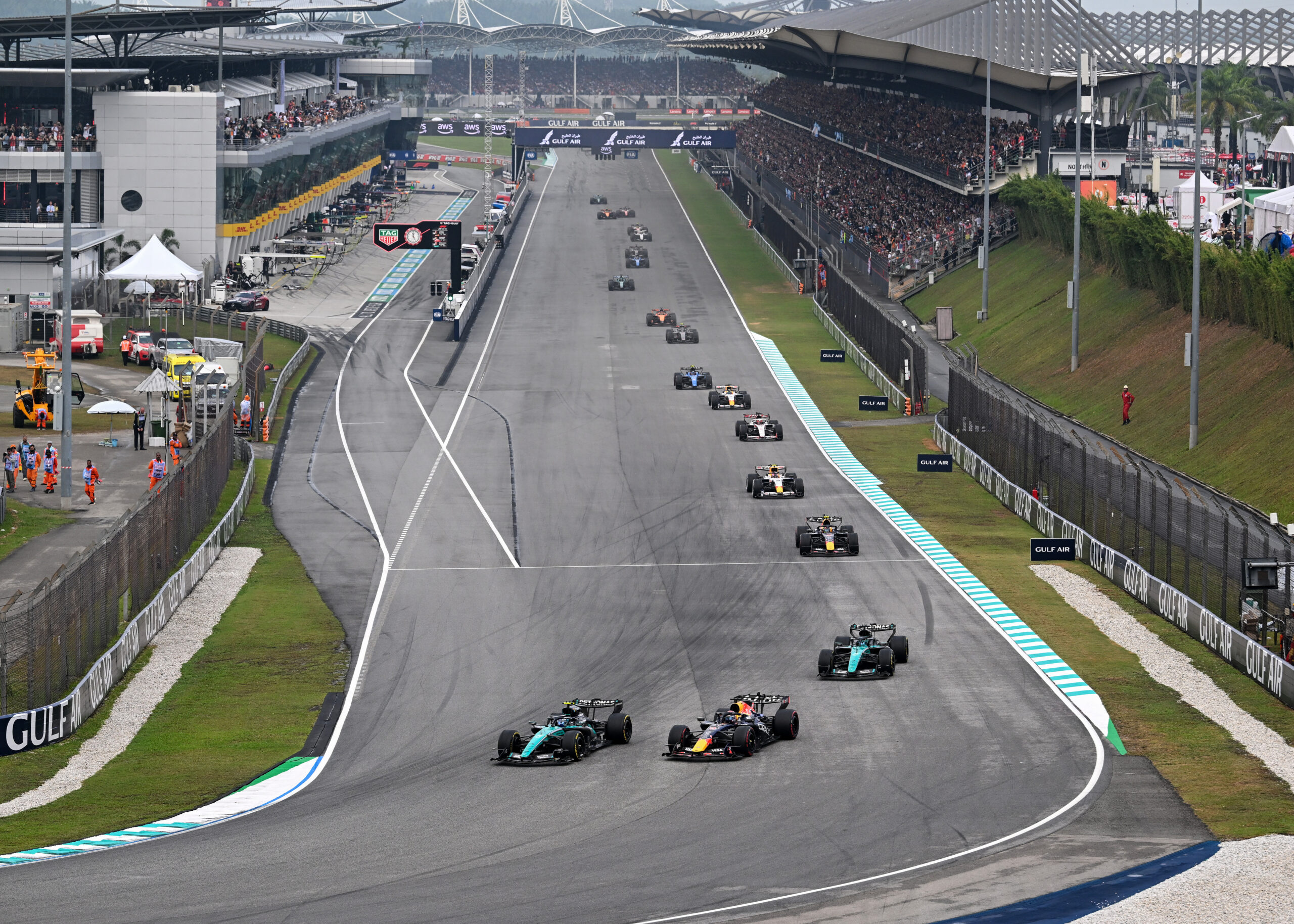
  • 2026 Bahrain Grand Prix: Verstappen wins Sepang’s long, wet afternoon as Russell’s title hopes fade

    2026 Bahrain Grand Prix: Verstappen wins Sepang’s long, wet afternoon as Russell’s title hopes fade

    Formula 1 came back to Sepang after nine years and found it much as it left it: hot, wet and unpredictable. What nobody expected was a software problem. By the time the field was finally racing, the Bahrain Grand Prix in Malaysia had already been through a thunderstorm, a red flag and an emergency software update. Max Verstappen was the only man who seemed untroubled by any of it.

    The Dutchman had been quickest in all three parts of qualifying. His 1:35.130 put him three tenths clear of Lewis Hamilton. It was his first pole of the season and the first for the Red Bull-Ford partnership, and Ford’s first pole since Rubens Barrichello’s Stewart at Magny-Cours in 1999. Isack Hadjar qualified third but took a five-place engine penalty, which promoted Kimi Antonelli to third on the grid. Mercedes had brought an upgrade to Malaysia and looked baffled by it. George Russell qualified eighth and started seventh.

    A storm arrived just before the scheduled start, and the start was delayed by 40 minutes. When the field finally left on the formation lap on intermediates, the queue bunched up and several cars nearly stopped. A number of them, Verstappen and Hamilton among them, then would not go again. The drivers had their feet on the throttle and nothing happened. The red flag came out.

    The explanation is simpler than it sounded on the radio. Nearly half of a 2026 car’s power is electrical, and the way that power is deployed is governed by standard software the FIA supplies. That software had a flaw nobody had found, because this season has produced almost no proper wet running to test it. When a car slowed to a near standstill, the bug stopped the electrical power from being released again. FIA single-seater director Nikolas Tombazis admitted the software had not been tested as thoroughly as he would have liked. His engineers wrote a fix on the spot, sent it to the teams, and the teams loaded it onto every car. The fix itself took about 20 minutes. Getting the race restarted took 53. Sergio Pérez compared the experience to a rental kart running out of time. Fernando Alonso, whose Aston Martin has failed to finish half its races this season, joked that nobody had ever stopped a race on his account.

    When they finally got underway, only nine cars started on intermediates, among them Verstappen, both Mercedes and Hadjar. The Ferraris, the McLarens and most of the midfield gambled on slicks. Piastri, Stroll, Hülkenberg and Bortoleto lost their nerve and pitted for intermediates before the standing start. The Mercedes pair got away better than Verstappen, and Liam Lawson flew into fourth. The slick runners lost time by the lap, and Leclerc, having clipped Hülkenberg, gave up and pitted at the end of the first lap.

    Verstappen passed Russell on lap six and was all over Antonelli when Valtteri Bottas beached his Cadillac in the Turn 13 gravel. The safety car came out just as slicks had become the faster tyre. The leaders got a cheap change onto slicks and the gamblers got a reprieve. On the restart Verstappen went around the outside of Antonelli at Turn 1, and Russell took his teammate at Turn 5. Antonelli eventually repassed Russell on lap 21 without any help from the pit wall, and Verstappen’s lead had grown to 11 seconds by the second round of stops. Alex Albon’s stopped Williams brought out a virtual safety car and then a full one. Verstappen pitted, briefly lost the lead and took it back a lap later when Antonelli stopped. With four laps left he controlled the restart and won by 2.3 seconds. It was Ford’s first Grand Prix victory since 2003.

    Ferrari needed a good afternoon and got one. Hamilton went from the front row to 15th on the slick gamble, worked his way back to fifth by lap 22 and passed Hadjar into Turn 1 three laps from home for his first podium since Silverstone. Leclerc came from the pit lane on lap one to finish fourth. After a week in which the Italian press was openly writing Fred Vasseur’s successor’s name, a 27-point haul will not settle the question, but it gives his critics less to work with.

    Russell had the worst of it. He was running third on lap 50 when his power unit failed, his third retirement of the year. Toto Wolff said the failure had nothing to do with the safety car and apologised on the radio. Antonelli now leads by 84 points with seven Grands Prix and a sprint remaining. The arithmetic still allows a comeback. Russell needs to outscore Antonelli by around twelve points every weekend from here, and he himself called a fightback exceptionally unlikely. The Italian has eight wins and a teammate with an unreliable car. Short of something dramatic, the title is his.

    Further back, Lawson’s seventh and Arvid Lindblad’s tenth put Racing Bulls 22 points clear of Alpine, who failed to score. Esteban Ocon ran sixth early and finished fifteenth. Red Bull closed to within 18 points of McLaren. Alonso’s eighth place is Aston Martin’s best result of the season and moves them to within five points of Williams. Lance Stroll finished twelfth, which at Aston Martin this year counts as news.

    Honourable mentions go to Lawson for the start of the day, Hadjar for climbing from eighth on the grid to fifth, Norris for recovering to ninth after a trip through the gravel, and Pérez, who reached the flag after seven pit stops.

    Singapore follows next Sunday. Mercedes have a week to find the speed they lost here, Red Bull arrive with momentum for the first time this season, and Vasseur will face the same questions again.

    Media courtesy Pirelli Motorsport