Tag: 2015

  • F1 2015: Jerez Testing – Day 1 Round-Up

    F1 2015: Jerez Testing – Day 1 Round-Up

    Day one of winter testing ahead of the 2015 season kicked off today at the Jerez circuit in southern Spain.

    Sebastian Vettel set the fastest time overall for the Ferrari team with a time of 1:22:690. The German completed a total of 59 laps. Fernando Alonso completed the least amount of laps, six,  in his McLaren Honda.

    A relatively cool start to the day, weather wise, was amped with the official launch of several cars. Red Bull stole the limelight with a rather different livery. The Williams FW37 also launched with its official colours in the pitlane while Lewis Hamilton and Nico Rosberg unveiled the 2015 Mercedes. The Lotus team were absent from the pitlane following their announcement that were not quite ready to run the E23. Fernando Alonso took charge of the McLaren Honda for the first day Ron Dennis has said that the McLaren livery will change from its current guise but has remained coy on exactly when that will happen.

    RB11Last year’s stuttering start to testing at Jerez saw Kimi Raikkonen set the fastest time of the day in his Ferrari, a time of 1:27:104. Twelve months later, and a whole lot more knowledge on the turbo era of the sport, the cars have clocked times considerably quicker.

    It was a remarkable day for Mercedes who clocked 157 with Nico Rosberg. Although Mercedes did have a shakedown earlier in the week at the Silverstone circuit to clock 157 laps in a day is an extremely good sign for the defending champions.

    The first day of winter testing is always highly anticipated among fans, teams and drivers alike. It’s the opening salvo ahead of a new season and one that is keenly watched from all around the world. It is also a day for the teams to find their proverbial feet with their 2015 challengers and one where they look iron out small niggles while ensuring that all the systems run smoothly.

    Thus the first runs and opening couple of days are hard to read into and it is unwise to do so. There is one thing however that is not in doubt; for 2015 the teams have produced stunning pieces of machinery that are very pleasing to the eye.

    Daniel Ricciardo photo courtesy of @redbullracing

    Unofficial Laptimes from Jerez de la Frontera:

    day1

  • F1 2015: New rules, new looks, new faces

    F1 2015: New rules, new looks, new faces

    In less than two months Melbourne will become the epicentre for start of the 2015 Formula 1 season. As with its predecessors there is much to be excited about for the new season.

    If you found the 2014 aesthetics unpleasing and plain awkward you weren’t alone. Mercifully a tweak to the aero rules for the nose section means that the hideous duckbills and anteaters have been consigned to the scrap heap. Visually the majority of the field will have a relatively uniform look for the nose section of the car and it does constrict some of the eccentric individuality seen last year. Nevertheless, there is little doubt that most will be happy to have far better looking cars to ogle.

    For the sites that Formula 1 will visit the FIA has announced a twenty race calendar with a highly anticipated visit to Mexico City in late October. As predicted the Korean grand prix loses its spot on the calendar while the German grand prix will again be hosted at the Hockenheimring for 2015. Even though the deal struck with Bernie Ecclestone back in 2006 specifies an annual rotation between Hockenheim and the Nurburgring the latter’s change of ownership has left it in financial difficulty and without a deal in place for the coming season.

    scWhile safety is paramount in F1 the Safety Car periods have, on occasion, been far too long. It has been mainly lapped cars which has been the culprit in these long-winded intermissions. The FIA has shown some common sense by announcing that the Safety Car will no longer wait for lapped cars to catch the rear of the field before resuming the race.

    Along with a far more visually pleasing sport there will also be three rookies on the grid. Sauber has confirmed that Brazilian Felipe Nasr will be partnering with Marcus Ericsson for 2015. Nasr gained valuable seat time in F1 last year as the official test driver for the Williams team and he graduates to Formula 1 with a pretty solid CV. Nasr has won both the Formula BMW and British Formula Three championships before finishing third overall in last year’s GP2 campaign. It’s no secret that he comes with substantial financial backing from Banco do Brasil which is much needed by a struggling Sauber team. Neverthless, Nasr is a real talent and it’s more than worth it to keep an eye on his progress.

    At one stage it appeared as if Carlos Sainz Jnr’s introduction to Formula 1 would have to wait a few more years. The son of former double rally world champion Carlos Sainz was on course to be fast-tracked to F1 but he lost out to Russian driver Daniil Kvyat. It proved to be a momentary delay as Sebastian Vettel’s departure to Ferrari meant a promotion to the Red Bull team for Kvyat. This in turn opens the door for Sainz Jnr to slot into the vacant Toro Rosso seat.

    Max_VertappenHowever, it will be his Toro Rosso teammate who will undoubtedly carry the biggest weight of expectation of all the rookies in the field. Max Verstappen is the son of the not-so-successful former F1 driver Jos Verstappen. But that isn’t what makes his debut so spectacular. Instead, it’s the fact that when Max Verstappen takes to the starting grid in Australia he will be seventeen years old. He will be the youngest driver ever to compete in the sport and probably the first, should he score a podium, who cannot legally have a sip of the celebratory champagne. Verstappen’s racing biography is rather limited given his age but he nevertheless boasts some impressive wins including third place in last year’s European Formula Three championship.

    There are many who believe that if you’re fast enough you are old enough. To a degree this plays true but handling the pressure of Formula 1 is a big ask for someone so young. It is clear that Red Bull’s motorsport director Helmut Marko has no qualms about piling on the pressure and has already compared the youngster to the great Ayrton Senna. As grand and fiery as the Verstappen PR has been he is a bit of an anomaly. Either Max Verstappen is going to be the greatest thing since Lewis Hamilton, read sliced bread, or he’s going to be something else which time will inevitably tell.

  • F1 2015: Engine Rule Game Changer?

    F1 2015: Engine Rule Game Changer?

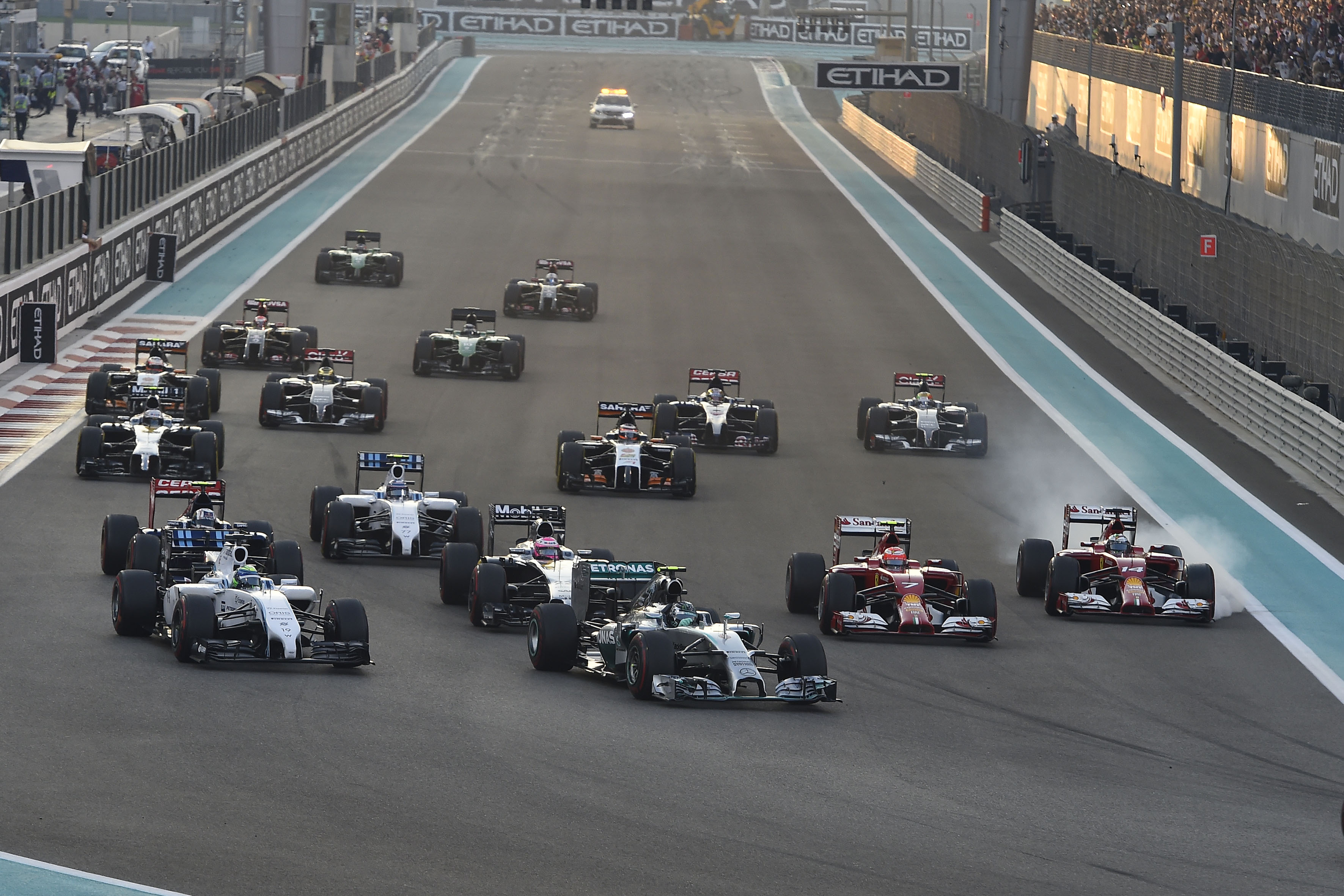
    It has always been recognised and celebrated that Formula 1 has some of the most complex and advanced engine technology in the world. It’s a sport of innovation after all and the introduction of hybrid engines for 2014 well and truly proved that. Last year, Formula 1 went racing on a third less fuel than in 2013 with a 1.6 litre turbo engine and still it produced quicker cars.

    It didn’t quite go to plan as far as it being an all-out nail biter between the teams. Instead the rest of the field watched forlornly and from a considerable distance as Mercedes thrashed the lot of them and strolled to both championship titles. Mercedes’ enormous 2014 advantage emanated mostly from an exceedingly superior power unit which left rival manufacturers shamefaced.

    Throughout the year Ferrari and Renault fought hard for permission to introduce upgrades during the 2015 season.  As a change of rules can only be achieved through a unanimous decision by the teams Mercedes’ refusal to yield seemingly put an end to Ferrari and Renault’s hopes. Yet, for as much as F1 is known by its advanced technologies, the rules that ‘govern’ the sport seemingly has an infinite amount of grey area. You would think that for as long as these experts have been sitting around shiny boardroom tables they’d by now have an idea of how to create a rule that leaves no wiggle room for the infinitely brighter teams. Instead the engine homologation rule is saturated with enough grey area to make you cringe.

    Pascal Wehrlien Abu Dhabi Test 2014At a meeting with the FIA in Abu Dhabi Ferrari technical director James Allison pointed out that the lack of an exact date by which the final 2015 engine must be lodged. Subsequently, and to appear less dense, the FIA have told teams that the “most logical and robust” way to proceed would be to assume that there is no homologation date for the 2015.

    Honda has been purposefully left out of the equation because according to the rule a new manufacturer must homologate its engine by 28 February 2015. The Japanese manufacturer in partnership with McLaren feels it is “unfair” to allow its opposition to make progress while its own power unit will remain unchanged throughout the season.

    You would think that this means Renault and Ferrari powered cars will have a good and proper shot at the Mercedes. Few things have ever been that uncomplicated in Formula 1 and this is no exception. This is a win for Ferrari and Renault but it’s a relatively small one. Bear in mind how the development of the engine is divided and that in-season development and upgrades are not a free for all. On its introduction in 2014 only 92 % of the hybrid engine was open for development. From here, manufacturers selected 48% to develop. This 48 % is split into 32 tokens which are assigned to various parts of the engine. The various sections each carry a value of one to three tokens depending on its influence on performance.

    fiaNow there is the regulation surrounding the homologation which itself has led to several wordless moments of some pretty hefty squinting and head-tilting. Rule 28.5 states that “only power units which have been homologated by the FIA…may be used at an Event during the 2014-2020 Championship seasons.” This rule makes no explicit mention of how many engines can be homologated per year. It is clear however that for an engine to be used during a race weekend it must be homologated. Should this rule be applied as it’s read it would mean that teams have several opportunities throughout the year to bring upgrades to their engines, to homologate as they go. Keep in mind that each driver will only be allocated four engines for the entire season which brings into play the certainty of a grid penalty with each engine change after the allotment.

    On the other hand, if the rule is to be interpreted differently it means that once an engine has been homologated for 2015 no changes can be made to it at any stage. By this understanding the advantage of the loophole is only a few extra weeks of development before the start of the season in Australia. Furthermore, up until an engine has been lodged with the FIA, for homologation, the 2014 engine will be the only option to run with. New rules are created to bring clarification, they said.

  • F1 2014: All Change At Sauber

    F1 2014: All Change At Sauber

    The Sauber F1 team has announced the signing of both Marcus Ericsson and Felipe Nasr for the 2015 season.

    The Swede, Ericsson, was the first driver announced by the mid-field team and team principal Monisha Kaltenborn believes that the 24-year-old has shown enough during the season to warrant his signing.

    “He did not have an easy rookie season this year in Formula 1, however, he kept calm and improved continuously, mainly in the last races. We are convinced that signing Marcus can give the team a fresh impetus,” said Kaltenborn.

    Ericsson’s future in the sport was in doubt as his Caterham team were placed under administration and faced the threat of not returning to the Formula 1 grid. “Fresh from a very turbulent week, I was suddenly given my best early Christmas present ever,” he said.”It will be a great challenge. I will give my very best to develop both as a driver, and to be part of the challenge to put Sauber back closer to the front where it belongs.”

    Brazilian GP2 driver Felipe Nasr will join Sauber as Ericsson’s teammate for 2015.

    “We have been following Felipe’s career path for some time now. He fully deserves his position in Formula 1 having had a very successful career in the junior categories. We are happy that he will be driving for our team next year. This means that Brazil will have one more young and talented driver in the sport,” explained Kaltenborn

    In addition to racing successfully in the GP2 series Nasr has spent the 2014 season as the reserve and test driver for the Williams Martini team.

    “This is an unforgettable moment that I owe to all of those who have supported me,” he said. “I had a wonderful year at Williams, where I learned a lot and prepared myself to be a race driver in Formula 1.””Today the dream has come true. Sauber was responsible for the arrival in F1 of great names such Felipe Massa, Kimi Raikkonen, Robert Kubica and Sebastian Vettel. I am proud now to also be part of this racing family.”

    Meanwhile, current Sauber driver Adrian Sutil has said that expected to be retained by the team for next season. The German was quoted in Austin as saying that he was committed to the team and was looking forward to improving its performance and position in the field.


  • Ferrari: Anyone for a revolution?

    Ferrari: Anyone for a revolution?

    Once upon a time the legendary Ferrari Formula 1 team was spoken of in awe and starry eyed worship. The dream team of Michael Schumacher, Jean Todt and Ross Brawn and their towering supremacy defined the entire era of the 90s and early 2000s. The crimson red of Ferrari was in every corner of the world, worn proudly by their dedicated Tifosi.

    Since then the wave of Ferrari’s success has dramatically diminished. A disappointing 2014 campaign has effected several changes in the team’s structure but the new regulations haven’t been solely to blame for their struggles. The 2008 constructor’s title was the team’s last championship triumph and since then a few second place finishes is all the team has to show for itself. In the world of Ferrari second place is wholly unacceptable, even downright appalling. Here the only thing that matters is being the best, being number one. Here, the walls of the Maranello factory are saturated with the legacy of success and here being the best is ingrained in the very fabric of its existence.

    In 2014 alone several incidents have combined to provide a decisive indication of a team in decline. In Australia someone forgot to fasten Kimi Raikkonen’s seat in the practice session; later the team fitted the wrong tyres to the car, and several glaringly dubious strategy calls in qualifying and races have had significant consequences on grid slots and results. It’s as if the clinical racing machine that was Ferrari has slowly perished over the last several years to be replaced by a slapdash team of headless chickens.

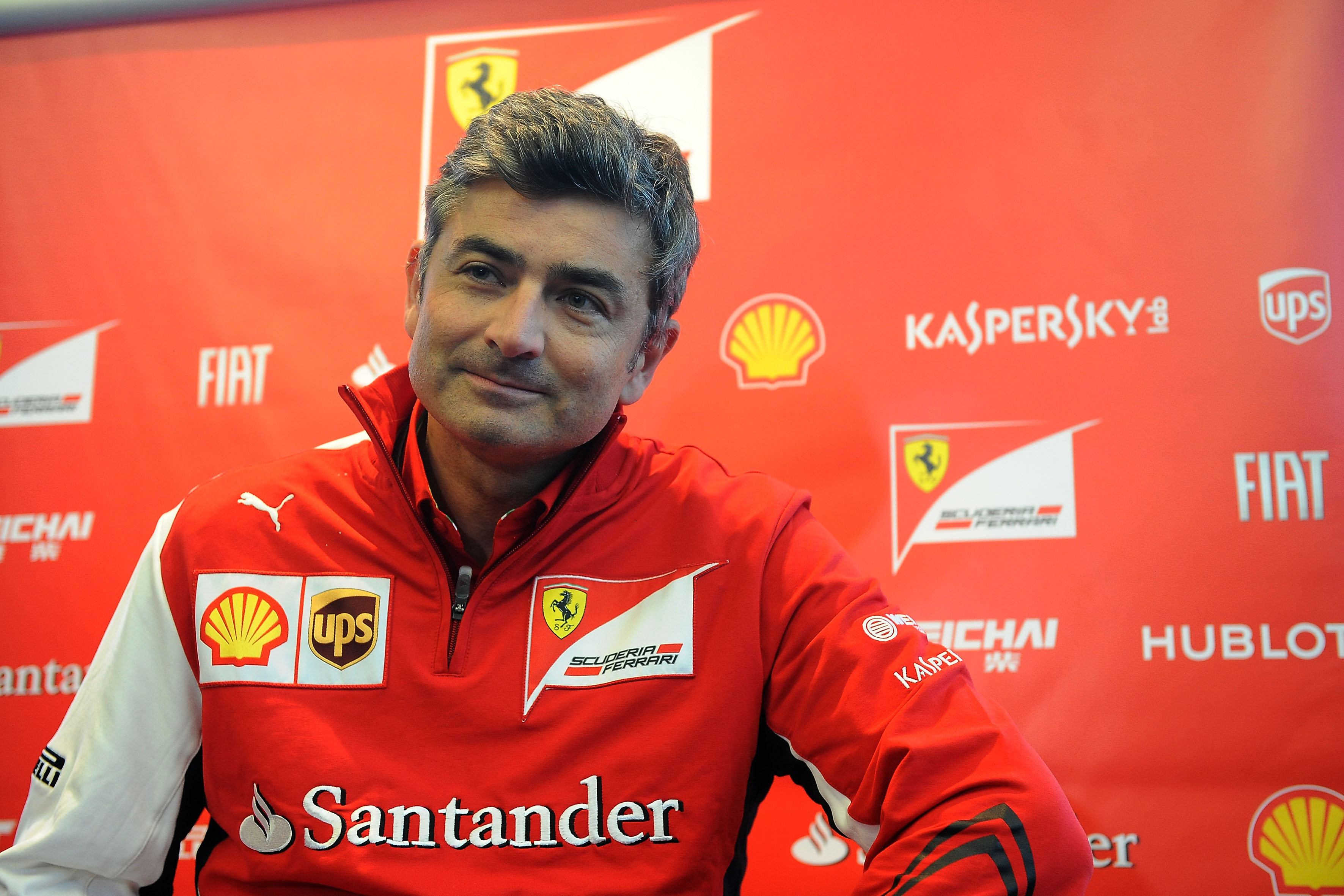
    GP CINA F1/2014For all of their struggles and non-informative press statements and less than convincing promises of improvement Ferrari has had one thing going for it – the belief that they can do better. That belief, along with major changes in the organisation, has seen it start the transformation it so badly needs. First, team Principal Stefano Domenicalli was expelled and replaced with Marco Mattiacci. The CEO of Ferrari in North America Mattiacci’s appointment was somewhat surprising. The silver-haired Italian is a suit, used to boardrooms and PowerPoint. Yet, the move makes sense. He doesn’t have a blinding infatuation with the Scuderia and he isn’t lovesick about its near mythical greatness. He is a man used to setting out a singular strategy and remaining focused on the objective of reaching it. Mattiacci is no fool either; he knows what changes need to happen where. “It’s not just the power units, the aerodynamics, [or] the chassis; it’s the team, the car – it’s a huge amount of work that needs to be done.”

    Last year, James Allison joined the team but not with enough time to have an impact on the design of the F 14T. Allison, second only to Adrian Newey in reputation, is a level-headed bloke. He doesn’t profess to have the secret to fixing Ferrari’s problems overnight. He is a solid team man though with an impressive technical mind. His last two cars, the 2012 and 2013 Lotus were good pieces of kit which allowed for development and improvement. Contrastingly, the F 14T is right mess. It started the 2014 season with a grossly deficient and overweight power-unit. The horrors weren’t confined to one area though. It yearns for downforce and its loose rear-end makes it a nightmare to balance.

    The F 14T is fundamentally flawed in design which means any significant improvement can only be made with a remodel of the chassis. In other words, it’s not happening in 2014. But the team can put the groundwork in place for next year. They’ve put Allison in charge of leading the 2015 project and he has already presented his plans to Fernando Alonso and Kimi Raikkonen. Yes, unlike previous years Allison’s plan is for both drivers to have a say in the design principles of the car.

    A dodgy and erratic power-unit hasn’t done the team any favours this season and the result is a restructuring in the engine Ferrari - James Allison and Fernando Alonsodepartment. Engine chief Luca Marmorini has been sacked by the team in favour of Mattia Binotto who will serve as the chief-operating-officer of the power-unit department. The design of the power-unit will fall on Lorenzo Sassi who has been with the team since 2006.

    Ferrari has responded to news of engineering director Pat Fry’s dismissal by rejecting it as mere “rumours.” However, as Allison has all but slotted in as the de facto technical head it fuels speculation as to where Fry will fit into the all-new shiny Ferrari line-up.

    You are in an era of change Ferrari fans and this team should be commended for that. They’ve realized their miscalculations and they’re big enough to admit their mistakes and, more importantly, to do something about it.

  • Friday Practice To Be Revamped

    Friday Practice To Be Revamped

    The current format of the Formula 1 weekend is set to be overhauled for the 2015 season.

    The proposed changes will mainly affect Friday running. An agreement has been reached amongst the team to scrap the two 90 minute practice sessions in favour of a single 90 minute session to be run later on a Friday afternoon. The biggest motivating factor behind the proposed change in believed to be a cost-cutting measure.

    Several other changes have also been approved by the team among which is call to ban in-season testing, and stricter rules for fitting last minute upgrades to cars.

    Despite the fact that the teams have signed off on the Friday practice session revamp the proposal still has to be given the green light by the Formula 1 Commission and the FIA World Motorsport Council. The proposal will be considered later this month.


  • Formula 1 Budget Cap for 2015

    Formula 1 Budget Cap for 2015

    A budget cap is set to be introduced to Formula 1 in 2015.

    It has been announced that a working group will be established to finalise the regulations of the budget cap. This group will comprise of members from the FIA, the commercial rights holder in addition to members from the various F1 teams. This team has been set the task of finalising the regulations for the cap by then end of June 2014.

    It is not clear what the budget cap will apply to; however previous proposals have included exemptions for driver salaries and marketing campaigns. Previous attempts to institute budget caps in the sport have been opposed several teams in the past.

  • Formula 1 Breaking News: McLaren and Honda together again

    Formula 1 Breaking News: McLaren and Honda together again

    Japanese manufacturer Honda has announced its return to Formula 1.

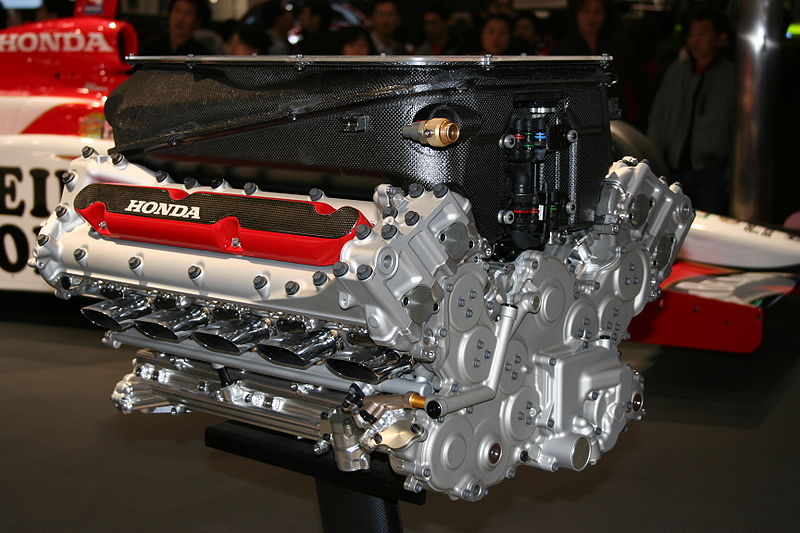
    Honda has not competed in Formula 1 since shutting down its works team at the end of 2008. However, as a result of Formula 1’s planned change to 1.6 litre turbocharged V6 engines it has announced a ‘joint project’ with McLaren starting in 2015.

    Rumours about a reunion between McLaren and Honda have been making the rounds for quite some time and the manufacturer is believed to be well advanced in the development of their an all-new 1.6 litre V6 turbo Formula 1 engine.

    Ayrton_Senna_1991_MonacoHonda is no stranger to Formula 1 or McLaren and have won both the drivers’ and constructors’ titles four times. The Japanese manufacturer’s previous partnership with McLaren stretched from 1988 to 1992. This alliance brought back fond memories for McLaren team principal Martin Whitmarsh. “Together Honda and McLaren have a great legacy; we formed a uniquely successful partnership that took on and beat the world,” he said. “Together, we created some of the greatest, most iconic Formula 1 moments of all time which are still being talked about today all around the world.”

    Jenson Button, Honda F1 Works team, 2006Jenson Button, a former works Honda driver, was equally chuffed about the announcement.

    “I’m so thrilled and excited about what is not only a fantastic opportunity for the team but also a great development for Formula 1 fans and the sport as a whole,” said the former champion. “I grew up watching McLaren-Honda Formula 1 cars racing and winning around the world – they wrote their own glorious chapter of F1 history.”

    This brings to an end McLaren’s long-standing relationship with German engine maker Mercedes. The Woking based team have been using the Mercedes powerplant since 1995. Gone will be the familiar McLaren Mercedes to replaced, and re-named, McLaren Honda.

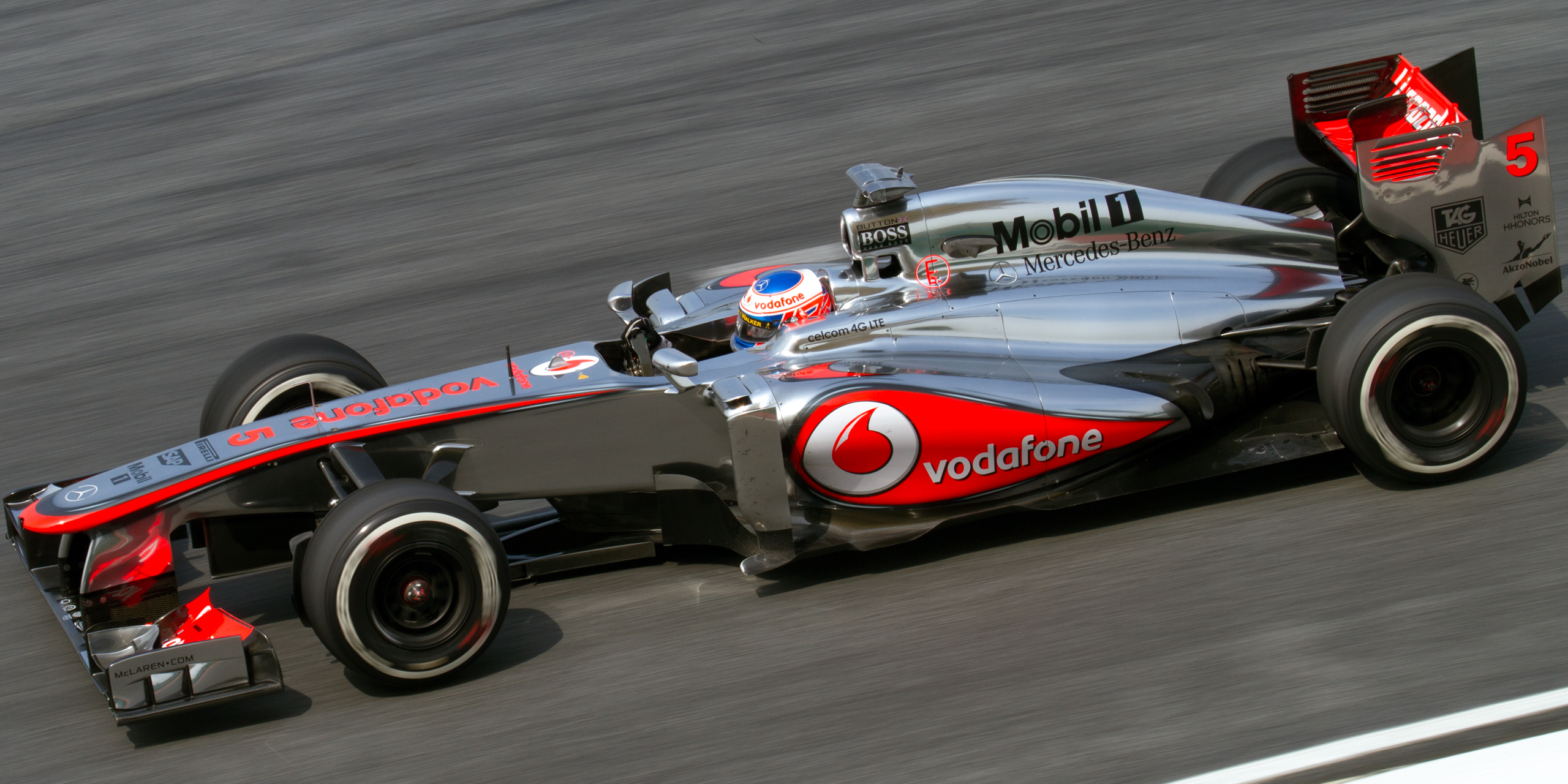
    jenson button, McLaren mercedes, 2013, MalaysiaHopefully, the gleaming silver livery of McLaren will still feature prominently as Honda doesn’t exactly have the best track record when it comes to the design of livery – the 2007 ‘earth dreams’ paint scheme being the perfect example.

    Could this be the dynamic step that McLaren so desperately need to get back on track?