Author: Natalie

  • F1 2016: Australian GP Free Practice 1 – Hamilton Tops Wet/Dry Session

    F1 2016: Australian GP Free Practice 1 – Hamilton Tops Wet/Dry Session

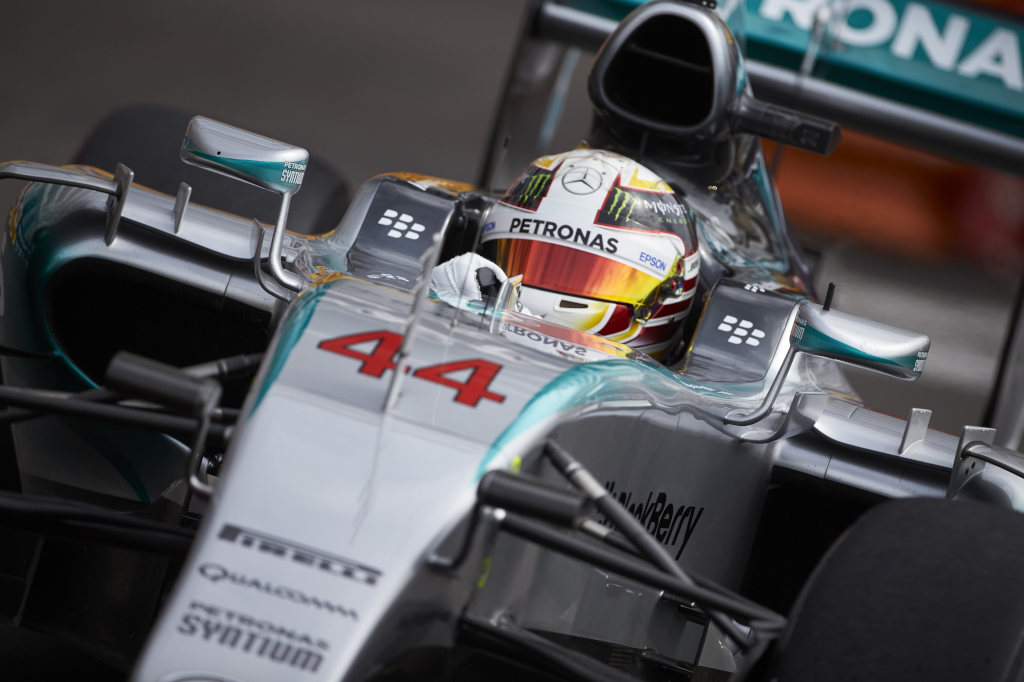
    Mercedes driver Lewis Hamilton topped the first free practice session for the 2016 Australian grand prix.

    The 2016 season got underway as Ferrari’s Sebastian Vettel ventured out onto track with the full wet Pirelli tyres fitted to his car. Overnight rain and a consistent drizzle in the morning had ensured a wet start to the first practice session.

    The track seemed to dry quickly with a blustery wind but just as driver were getting into their stride on the yellow-walled soft tyres the rain appeared once more. So it continued throughout the session which was difficult to classify either wet or dry.

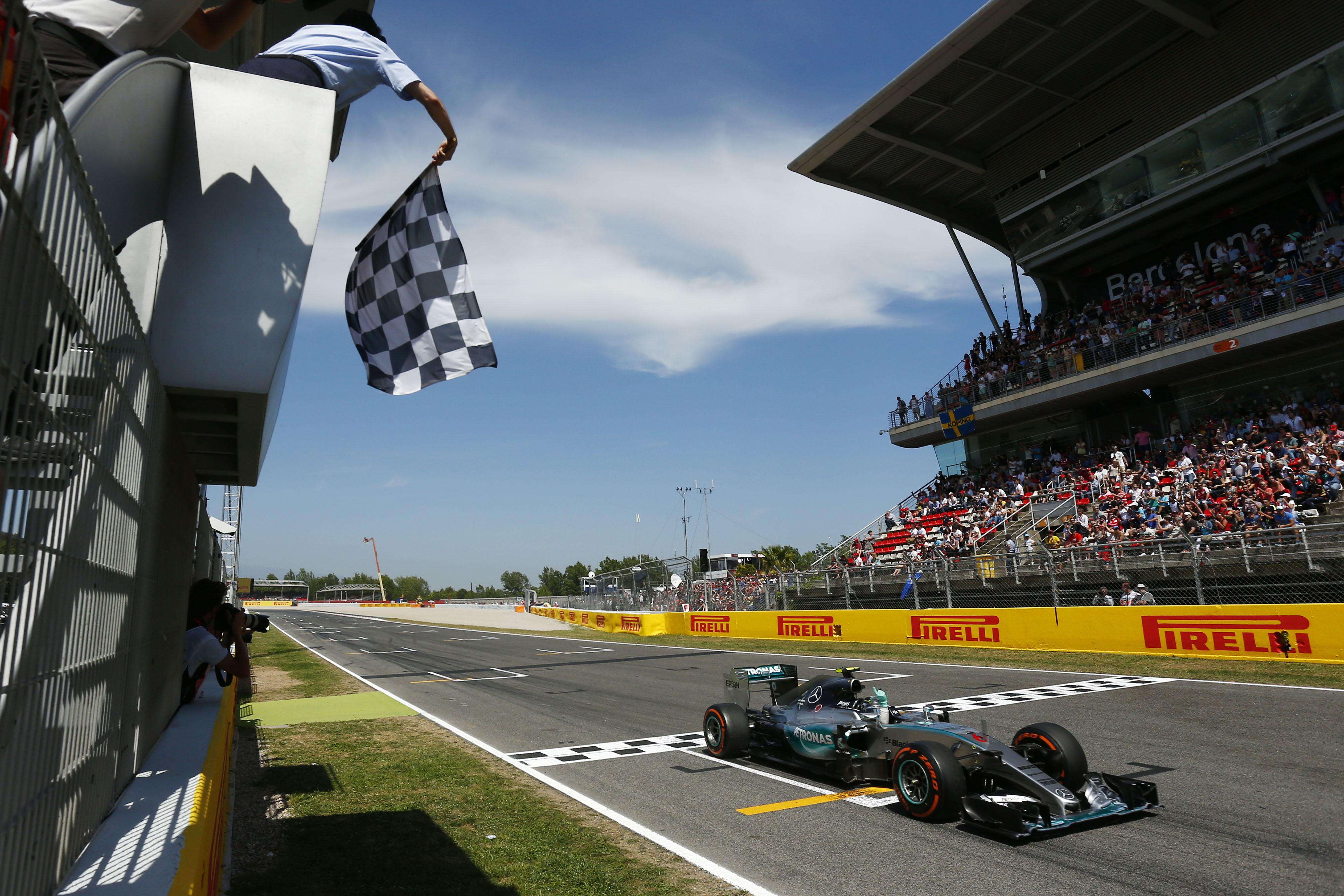
    Lewis Hamilton set the quickest time of the session with a 1:30:364. The Red Bull duo of Dannil Kvyat and Daniel Ricciardo were second and third as the chequered flag dropped to signal the end of the session. Rather embarrassingly, Ricciardo dropped the Red Bull into the gravel at the end of the session. Given the slippery conditions and the fact that Ricciardo was on slicks means we can give him the benefit of the doubt.

    Force India’s Nico Hulkenberg and Toro Rosso’s Max Verstappen rounded out the top five. The 18 year old Verstappen had earlier spun his Ferrari-powered car but, luckily, didnt sustain any damage. Nico Rosberg, Fernando Alonso, Jenson Button,  and Sergio Perez rounded out the top ten.

    The changeable weather conditions mean that the first free practice session of the season didnt represent anything as to how the rest of the weekend may pan out.

  • F1 2016: Australian GP Preview – F1 season of possibility

    F1 2016: Australian GP Preview – F1 season of possibility

    The question at the forefront of everything is can Ferrari take the fight to Mercedes. All indications are that the Italian team has made strides since last year and has closed the gap to Mercedes. All that remains to be seen is how close they can get.

    As F1 2016 gets under way this season will be longest in the sport’s history with 21 races. Germany’s Hockenheim makes a return to the calendar and Azerbaijan hosts its first ever race on the Baku City streets. The confirmation of the US grand prix gives the teams an added bonus. The F1 sporting regulation state that one engine must be used for four race weekends. As the US Gp makes it 21 races the teams will be given a fifth engine thanks to the wording of the rule.

    When the change to the qualifying format was announced it left many perplexed. The quali format hadn’t been a bad one so why fix something that isn’t broken? But, let’s give it chance and see how it pans out.

    The one hour session will still consist of three parts. Q1 will be 16 minutes, after the first seven the slowest car is eliminated. Thereafter, the slowest car is eliminated every 90 seconds. Seven drivers will be eliminated while 15 advance to Q2.

    Hamilton-Australia-MercedesQ2 will be a 15 minute session with the slowest driver eliminated after 6 minutes. Likewise, every 90 seconds will see the slowest car eliminated. Seven drivers will be eliminated in this session with eight advancing to Q3.  The Q3 session will run for fourteen minutes with the slowest driver eliminated after five minutes. The slowest driver will continue to be eliminated every 90 seconds. Two drivers will remain in the final 90 seconds of the session to shoot it out for pole position.

    An interesting aspect of this style of qualifying will be that the quickest cars will no longer be able to rely on getting through to the second part of qualifying on the harder of their tyre selection. It’s sure to throw the cat amongst the pigeons when there is rain about, and if it’s a lap longer than 1 minute 30 seconds. And let’s be honest anything that adds a bit of drama and intrigue is never a bad thing. What the new format has in its favour is that it takes the excitement from the final ten minutes of the session and spreads it throughout the entire hour.

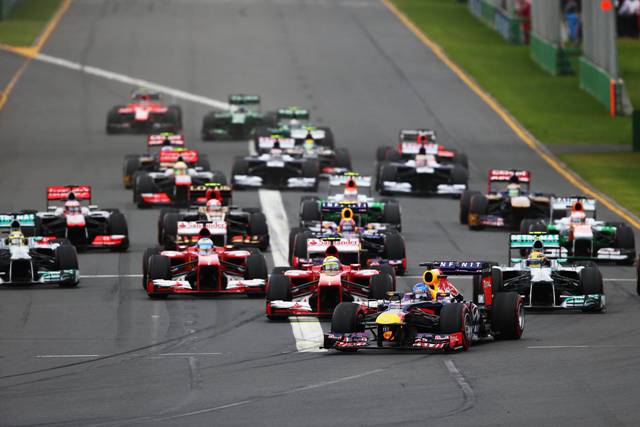
    australiaThe Albert Park circuit is a well known one. But there are many unknowns at the first race of the season. A new qualifying format, new tyre regulations, more driver freedom on strategy calls, to name a few. The clampdown on radio communication from the pitwall carries its own connotation, especially where the start of the race is concerned. Drivers are not allowed any feedback during the formation lap and are only being allowed to use one clutch at the start. This combined with Albert Park’s tight turn one could result in dramatic start to the grand prix. And all of this has the potential to combine into an explosive season-opening race.

    Mercedes has chosen to play up Ferrari’s performance so far. Choosing to send both Nico Rosberg and Niki Lauda into the press with statements of Ferrari being a great threat. It could just be some clever psychological play by the champions. Or it could be real and we could in for a F1 season to be remembered. One way or the other the more than 100 day wait is finally over.

  • F1 2016: Pre-season Test 1 Day 3 – Hulkenberg On Top

    F1 2016: Pre-season Test 1 Day 3 – Hulkenberg On Top

    The third day of testing at Spain’s circuit de Catalunya was headed by Force India driver Nico Hulkenberg.

    The morning running was marked with the introduction to Formula 1 of Indonesia’s first ever grand prix driver Rio Haryanto. The rookie Manor driver seemed comfortable in the early running and put together a solid first few stints. A slight error later on in the morning saw the Manor end up in the gravel trap of turn 5 which prompted the second red flag of the morning.

    The first red flag of the day was prompted by the Toro Rosso of Carlos Sainz as the Spaniard was forced to stop at the exit of the pitlane with a loose rear wheel. The morning was a complete write-off for Ferrari driver Kimi Raikkonen as the team struggled to get on top of a fuel pick-up issue. The Finnish driver was only able to complete three installation laps before lunch.

    Meanwhile, Nico Rosberg continued with Mercedes’ run programme by putting together several race simulation runs in the morning. As lunch rolled around it was Nico Hulkenberg in the Force India heading the timing sheet with a 1:25.286. The German would later improve his time to a 1:23.110.

    The session after lunch saw the two Mercedes drivers swop around with Lewis Hamilton taking over testing duties for the remainder of the day. Kimi Raikkonen was able to put Ferrari on the board after lunch and the Finn completed xx laps for the day. Felipe Massa was the first driver to reach 100 laps on day three of the first pre-season test in the Williams whilst Carlos Sainz also put more than 100 laps on the board in his Toro Rosso.

    Late on in the day’s running Renault driver Kevin Magnussen brought out the red flag as his car stopped on the start/finish strait. It proved a minor blip on the radar as proceedings got underway within minutes. Haryanto was first out on track in the Manor Mercedes on the medium compound tyres. By this stage no driver had opted to strap on the ultrasoft compound.

    McLaren called an end to their day’s running thirty minutes before the close of the session. Jenson Button’s car, which completed only 51 laps, suffered an hydraulic leak.Williams too brought an early end to proceedings after discovering an oil leak of Felipe Massa’s car.

    Toro Rosso driver Carlos Sainz ended the day with 161 laps on the board while Hulkenberg in the Force India heads Romain Grosjean, in the Haas, at the top of the leaderboard.

    POS Driver Team/Car Best lap Gap Laps
    1 Nico Hulkenberg Force India-Mercedes VJM09 1:23.110 – 99
    2 Romain Grosjean Haas-Ferrari VF-16 1:25.874 +2.764 82
    3 Kimi Raikkonen Ferrari SF16-H 1:25.977 +2.867 78
    4 Kevin Magnussen Renault R.S.16 1:26.014 +2.904 111
    5 Nico Rosberg Mercedes F1 W07 Hybrid 1:26.084 +2.974 74
    6 Carlos Sainz Toro Rosso-Ferrari STR11 1:26.239 +3.129 161
    7 Felipe Nasr Sauber-Ferrari C34 1:26.392 +3.282 115
    8 Lewis Hamilton Mercedes F1 W07 Hybrid 1:26.421 +3.311 88
    9 Daniil Kvyat Red Bull Racing-TAG Heuer RB12 1:26.497 +3.387 74
    10 Felipe Massa Williams-Mercedes FW38 1:26.712 +3.602 109
    11 Jenson Button McLaren-Honda MP4-31 1:26.919 +3.809 51
    12 Rio Haryanto Manor Racing-Mercedes MRT05 1:28.249 +5.139 78


  • F1 2016: Elimination style Qualifying for F1

    F1 2016: Elimination style Qualifying for F1

    Formula 1 looks set to introduce an elimination style qualifying session in 2016.

    A meeting in Geneva between the Strategy Group and the Formula 1 Commission saw a unanimous vote passed to revamp the qualifying session for the 2016 season. The session will still remain as a one hour session split into three segments. However, with the new format all drivers will have to be on circuit until they are eliminated from qualifying.

    Teams have agreed to a general outline for how the qualifying hour will run while the finer details are yet to be decided. The decision to change the qualifying format must be ratified by the World Motorsport Council on March 4. For now, here is a breakdown of how the qualifying hour will progress:

    Q 1 – 

    • Session will last 16 minutes;
    • After seven minutes have elapsed the slowest driver is eliminated;
    • Thereafter, after every 1 minute 30 seconds, until the end of Q1, the slowest driver is eliminated;
    • Seven drivers will be eliminated in Q1 and 15 will advance to Q2.


    Q 2 –

    • Session will last 15 minutes;
    • After six minutes have elapsed the slowest driver is eliminated; 
    • Thereafter, after every 1 minute 30 seconds, until the end of Q2, the slowest driver is eliminated;
    • Seven drivers will be eliminated in Q2 and 8 will advance to Q3.


    Q3 – 

    • Session will last 14 minutes;
    • After five minutes have elapsed the slowest driver is eliminated;
    • Thereafter, after every 1 minute 30 seconds the slowest driver is eliminated;
    • 2 driver will remain in the final 1 minute 30 seconds of the session to determine pole position.


    In addition, a penalty system was discussed by the F1 Commission. The penalty system proposes for time to be added to a driver’s qualifying lap time based on his championship position. The good news is that the penalty system didn’t gain much support amongst F1 teams at the meeting.

    The introduction of a new qualifying format is rather perplexing. The last qualifying format had very little, if anything, wrong with and easily managed to both deliver drama and build excitement throughout the session. If the aim is to ‘improve the show’ with this radical change then F1 should beware of compounding the complexity of the sport for a new viewer/fan.

  • F1 2016: Pre-season Test 1 Day 2 – Vettel Quickest Again

    F1 2016: Pre-season Test 1 Day 2 – Vettel Quickest Again

    The second day of testing got underway with the circuit de Catalunya bathed in bright sunshine.

    Mercedes driver Nico Rosberg was the first driver on track and the first to set a flying lap as the second day of testing got underway.The majority of the first two hours of the morning were spent on gathering important data that the teams will carry through to the first few races of the 2016 season. Ferrari’s Sebastian Vettel emerged from the garage around mid-day to set the fastest lap of the morning – a 1:24:940.

    By this stage Vettel was the only driver to break the 1:24 barrier. Soon after Red Bull’s Daniel Ricciardo dipped in the 1:24 to go second fastest overall. Fernando Alonso and Lotus’ Jolyon Palmer gave the yellow-walled soft tyre a trundle but did not set a representative time on the softer tyre. The first red flag of the session was brought out by Max Verstappen as his Toro Rosso grinded to a halt in the final sector of the circuit. As the Toro Rosso was recovered to the pits testing was underway again. Nico Rosberg immediately shot to the top of the timing sheets with a 1:24:867.

    A switch onto the quicker, red-walled, supersoft tyre took Ricciardo quickest before the Ferrari of Sebastian Vettel emerged to set a 1:23.658 on the same tyre. Just before the lunch break Daniel Ricciardo fitted the new-for-2016 ultra-soft tyre. He quickly took over at the top of the timing sheet only to be outdone by Vettel’s own run on the purple-walled tyres. The Ferrari driver set a time of 1:22.810.

    haasThe session after lunch was interrupted by the stoppage of Jolyon Palmer’s Renault which had to be recovered to the pits on the back on a flatbed truck. Reports later surfaced that the Renault’s issue may have been turbo related. It brought an early end to Renault’s running with Palmer only able to complete 42 laps for the day.

    By mid afternoon Nico Rosberg had again underlined the reliability of the new Mercedes by reaching the 100 lap mark without any issues. Most of the teams settled into longer stints in the afternoon. Williams driver Valtteri Bottas bucked the trend and opted to run a stint of laps on the orange-walled hard tyres. Similarly, Vettel opted instead for the ultrasoft tyres for run. The Ferrari driver completed only a handful of laps before the drop off in performance forced him back into the pits.

    McLaren can breath a sign of relieve as Fernando Alonso racked 100 laps two hours before the of the day’s running. In stark contrast to McLaren’s fortunes twelve months ago both Alonso and Jenson Button have already reported a much more positive feeling with the 2016 car. Several other drivers including Max Verstappen, Valtteri Bottas, Daniel Ricciardo, Marcus Ericsson, Sergio Perez and Sebastian Vettel all completed more than 100 laps. But it was Nico Rosberg and his Mercedes that set the most laps of the day with a mammoth 172 laps.

    By the end of the day’s running Sebastian Vettel’s 1:22:810 remained quickest overall.

    POS Driver Team/Car Best lap Gap Laps
    1 Sebastian Vettel Ferrari SF16-H 1:22.810 – 126
    2 Daniel Ricciardo Red Bull Racing-TAG Heuer RB12 1:23.525 +0.715 112
    3 Sergio Perez Force India-Mercedes VJM09 1:23.650 +0.840 101
    4 Nico Rosberg Mercedes F1 W07 Hybrid 1:24.867 +2.882 172
    5 Marcus Ericcson Sauber-Ferrari C34 1:25.237 +2.427 108
    6 Esteban Gutierrez Haas-Ferrari VF-16 1:25.524 +2.714 79
    7 Valtteri Bottas Williams-Mercedes FW38 1:25.648 +2.838 134
    8 Pascal Wehrlein Manor Racing-Mercedes MRT05 1:25.925 +3.115 71
    9 Fernando Alonso McLaren-Honda MP4-31 1:26.082 +3.272 119
    10 Jolyon Palmer Renault R.S.16 1:26.189 +3.379 42
    11 Max Verstappen Toro Rosso-Ferrari STR11 1:26.539 +3.729 121

  • F1 2016: Ultrasoft Tyre Makes its debut

    F1 2016: Ultrasoft Tyre Makes its debut

    Pirelli’s ultrasoft compound tyre has made its debut in the second day of pre-season testing in Spain.

    The morning’s running was capped by the first-ever glimpsed of purple side-walled ultrasoft Pirelli tyre. It was Red Bull Racing’s Daniel Ricciardo who first ventured out on the brand new compound. The Australian excelled to the top of the timing sheets with a time of 1:23:525.

    A short while later the Ferrari of Sebastian Vettel emerged from the pitlane also sporting the ultrasoft soft tyres. The German champion smashed the quickest time of Ricciardo by seven tenths of a second and took over the top of the timing sheet with a time of 1:22:810.

    The Mercedes of Nico Rosberg remained in the pits as the session winded down towards lunch. Hopefully we’ll see what sort of time the mighty Mercedes can achieve on the ultrasoft after lunch.

  • F1 2016: Honda Replaces F1 boss

    F1 2016: Honda Replaces F1 boss

    Japanese manufacturer Honda has announced that motorsport boss Yasuhisa Arai will be vacating his post.

    The announcement of Arai’s departure was made after a board meeting in Tokyo. Yusuke Hasegawa will replace Arai and take up the reigns of managing the F1 project while Arai will slot in as the senior manager of Honda Research and Development.

    The change of leadership doesn’t come as much of a surprise given Honda’s difficult re-entry into F1 with the McLaren team. In a season blighted by unreliability and a serious deficiency in the engine department there was an inevitable feeling that some heads would have to roll.

    “We didn’t have any experience with the complex system [in 2015], so you can imagine the challenge, but we learned a lot and we have the confidence we can catch up,” Arai told Autosport.


  • F1 2016: Ferrari Launches 2016 Challenger – The SF16-H

    F1 2016: Ferrari Launches 2016 Challenger – The SF16-H

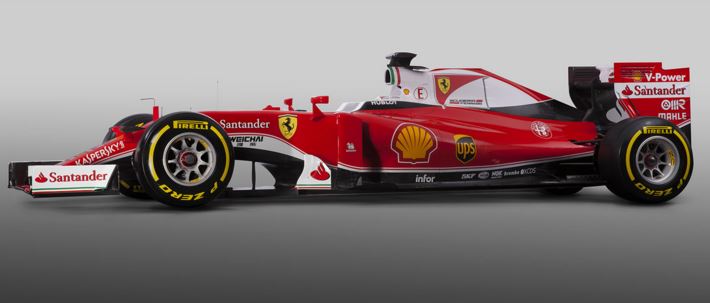
    In a week dominated by car launches Ferrari has joined the party by unveiling its challenger for the 2016 season – the SF16-H.

    In an online launch, hosted by F1 journalist James Allen, Kimi Raikkonen and Sebastian Vettel pulled the covers off their new car which Ferrari are calling the SF16-H.

    The first, most notable, change is the livery which has a distinctively more retro feel with the addition of the white inlay over the cockpit and airbox.

    Ferrari SF16-HTeam principal Maurizio Arrivebene was also in attendance for the unveiling of the SF16-H and shared his hope that the team and car will be able to challenge for the championship this season.

    “Normally I am not setting the objectives, my boss sets the objective for the team. I think this year, we need to push a bit more. We would like to fight until the end for the championship,” he said.

    “I know that is not going to be easy, because our competitors are not sleeping, but we are committed to do our best.”

    Ferrari SF16-HThe nose of the SF16-H is noticeably shorter than its predecessors and after an arguably failed attempt at running pullrod suspension Ferrari has opted to run a pushrod suspension configuration for 2016.

    Technical director James Alison noted that the SF16-H is different in “a number of areas.”

    “Last year was a decent step forward and we hope this car will be another good step forward to make us properly competitive,” he added.

    “We have improved across the board. All our hopes are in this car, and we can’t wait to see it on the track.”

    (SF16-H Images courtesy of ferrari.com)


  • F1 2016: The truth about Michael Schumacher

    F1 2016: The truth about Michael Schumacher

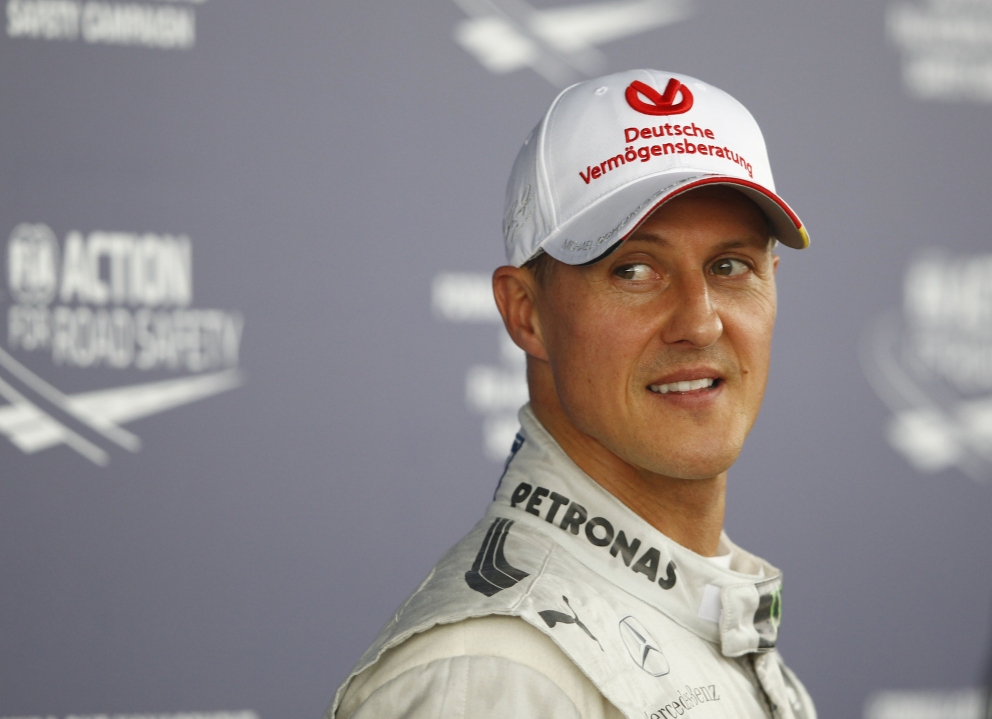
    It has been more than two years since Michael Schumacher sustained severe brain injuries following a skiing accident in the French Alps. The seven times world champion spent several months in an induced coma in Grenoble hospital before being moved to a hospital in Lausanne. In September 2014 he was finally moved to his Switzerland home where he receives round the clock medical attention.

    Since then, by the family’s request, little information has been shared about Schumacher’s condition. While some close friends, such as former Ferrari colleagues Jean Todt and Ross Brawn, have visited Schumacher no definitive report has been released on his recovery or condition. Instead, Todt and Brawn, have made the occasional statement that he “is still fighting.”

    Sabine Kehm, the official spokesperson for the Schumacher family, has repeatedly warned that only official statements, from her, be accepted. Recently, she’s quashed rumours that the former champion is able to walk as “irresponsible and offering false hope.” It’s safe to assume, from the way that she intervened to dismiss these rumours that Schumacher is likely in the same condition and making, at best, slow progress.

    It’s a question that most people ask when the subject is Formula 1 – how is Michael Schumacher? The truth is that only a few people know the answer to this question and they aren’t sharing it. Some feel entitled to news on his condition and it’s not unreasonable that they do. An argument could be made for releasing sporadic statements. Perhaps even one a year could put an end to any speculation on Schumacher’s condition.

    However, not even this is likely to satisfy some circles of the media. The inevitable course of events that would ensue is the likely reason for the family remaining silent. In a society where respect and ethics are rare commodities it will undoubtedly prompt tabloids to analyse every word, hire so-called experts to comment and ultimately prompt more speculation.

    Michael Schumacher still fighting - #KeepFightingMichaelMost recently, a statement by former Ferrari president Luca di Montezemolo has prompted a fresh batch of speculation. Montezemolo was quoted as saying that he has “no good news” about Michael Schumacher. “I have news of him continuously and it is not good,” he said. It is puzzling why the former Ferrari boss would make such a statement which has given rise to new-found conjecture. He surely knows the family’s position on sharing information.

    Most of the interest in Schumacher’s condition is born from a place of genuine concern and not morbidity. But the best that Michael’s legions of fans can do is to respect the family’s wishes for privacy. And accept that if there was anything to share that they would do so. Until then, keep fighting Michael.

  • F1 2016: Refueling out of the question

    F1 2016: Refueling out of the question

    The issue of re-introducing refueling during Formula 1 race has been shot down again.

    The FIA president, Jean Todt, recently confirmed that the issue would come under discussion at a meeting in Geneva. However, as in 2015, the possibility of bringing back refueling was dismissed by the Strategy Group and the F1 Commission.

    The general feeling from the meetings was that the cost of re-introducing this aspect to the sport would be too costly. Williams technical director told Autosport that the costs of bringing it back into the sport would be “significant.”

    “Freight costs for shipping equipment is £175,000 and it’s probably £200,000-250,000 to buy and service the kit in the first year and ongoing cost of servicing it,” he said. “There is also one dedicated salaried person for looking after it so the costs are very significant.”